The thought of an interview can be nerve-wracking, but the right preparation can make all the difference. Explore this comprehensive guide to Energy Economics and Forecasting interview questions and gain the confidence you need to showcase your abilities and secure the role.
Questions Asked in Energy Economics and Forecasting Interview
Q 1. Explain the concept of price elasticity of demand in the context of energy markets.
Price elasticity of demand measures the responsiveness of the quantity demanded of an energy source to a change in its price. In simpler terms, it tells us how much the demand for something like gasoline or electricity will change if the price goes up or down. A highly elastic demand means a small price increase leads to a significant drop in demand (think of luxury goods), while an inelastic demand means price changes have little impact on consumption (like essential medicines or, to some extent, gasoline in the short-term).
In energy markets, elasticity varies widely depending on the type of energy, the time horizon considered, and the availability of substitutes. For example, electricity demand tends to be relatively inelastic in the short-term because people need electricity for essential services. However, in the long-term, consumers may adjust their consumption habits (using more energy-efficient appliances) or switch to alternative sources, making demand more elastic. Similarly, gasoline demand is more inelastic in the short-term due to limited immediate substitution options for car travel, but longer-term options like public transport or electric vehicles can increase its elasticity.
Understanding price elasticity is critical for energy companies in setting prices and forecasting demand. If a company incorrectly estimates elasticity, it could lead to either lost revenue (pricing too high on an elastic good) or unmet demand (pricing too low on an inelastic good).
Q 2. Describe the different types of energy forecasting models and their applications.
Energy forecasting models vary widely in complexity and application. They broadly fall into these categories:
- Econometric Models: These statistical models use economic variables (GDP growth, population, prices) to predict energy demand. They’re powerful for long-term forecasting but may not capture short-term fluctuations.
- Engineering Models: These models focus on the physical characteristics of energy systems (e.g., power plant capacity, transmission grid limitations) to forecast supply and reliability. They are vital for grid planning and capacity expansion decisions.
- Agent-Based Models (ABM): These sophisticated models simulate the interactions of various actors in the energy market (consumers, producers, policymakers) to project future scenarios. They can handle complex interactions and uncertainties but require substantial data and computational power.
- Time Series Models: These statistical models analyze historical energy consumption data to identify patterns and trends. Methods like ARIMA or Exponential Smoothing are commonly used for short-term forecasting.
- Machine Learning Models: These models, including neural networks, can capture non-linear relationships and complex patterns in energy data. They require significant data and expertise but can offer high accuracy, especially for short-term forecasting.
The choice of model depends on the specific forecasting objective (short-term vs. long-term), the available data, and the required level of detail. For instance, a utility company might use time series models for daily load forecasting, while a government agency might employ econometric models to plan long-term energy policy.
Q 3. How do you account for uncertainty and risk in energy forecasting?
Uncertainty and risk are inherent in energy forecasting. Several techniques help account for them:
- Scenario Planning: Develop multiple future scenarios (e.g., high-growth, low-growth, policy change) and forecast energy demand under each scenario. This provides a range of potential outcomes instead of a single point forecast.
- Probabilistic Forecasting: Instead of producing a single point estimate, this method generates a probability distribution of future energy demand or prices. This highlights the uncertainty associated with the forecast.
- Monte Carlo Simulation: This technique uses random sampling to simulate the impact of uncertain variables (e.g., fuel prices, technological breakthroughs) on the forecast. By running the simulation many times, we obtain a distribution of potential outcomes.
- Sensitivity Analysis: This assesses the impact of changes in key input variables (e.g., economic growth, energy efficiency improvements) on the forecast. This helps identify the variables that are most critical and where further research is needed.
Combining these techniques provides a more robust and realistic forecast, better informing decision-making under uncertainty.
Q 4. Discuss the impact of government regulations on energy prices and consumption.
Government regulations significantly impact energy prices and consumption. Regulations can either increase or decrease prices depending on their nature:
- Carbon Taxes/Emissions Trading Schemes: These policies aim to internalize the environmental costs of fossil fuels, leading to higher prices for carbon-intensive energy sources and incentivizing a shift toward cleaner alternatives. This results in increased renewable energy adoption and potentially lower overall consumption.
- Subsidies for Renewables: Governments often subsidize renewable energy technologies (solar, wind) to make them more competitive with fossil fuels. This lowers the price of renewables, stimulates their adoption, and influences overall energy consumption patterns.
- Regulations on Energy Efficiency: Building codes, appliance standards, and vehicle emission regulations force improvements in energy efficiency, reducing overall energy consumption and indirectly impacting energy prices.
- Price Controls: Price ceilings on energy can lead to shortages if the price is set below the market equilibrium, while price floors can lead to surpluses. These measures usually lead to unintended consequences and distortions in the market.
The overall impact of regulations depends on their design, enforcement, and interaction with other market factors. Well-designed regulations can drive a transition to a cleaner and more efficient energy system, but poorly designed policies can lead to economic inefficiencies and market distortions.
Q 5. Analyze the role of supply and demand in determining energy prices.
The interaction of supply and demand is fundamental to determining energy prices. Similar to any other market, the equilibrium price is where the quantity supplied equals the quantity demanded.
Supply: This is influenced by factors like the availability of resources (oil reserves, uranium deposits), production costs (extraction, processing, transportation), technological advancements, and government policies (taxes, subsidies). A decrease in supply (e.g., disruption to oil production) would generally lead to higher prices, while an increase in supply (e.g., new renewable energy capacity) would lower prices.
Demand: Energy demand is driven by economic activity (GDP growth), population growth, energy intensity (energy used per unit of output), consumer preferences, and weather conditions. Increased economic activity or a colder winter would typically raise energy demand and prices. Technological advancements, like energy-efficient appliances, could decrease demand.
The interplay between supply and demand creates a dynamic market where prices adjust to balance supply and demand. Disruptions to either side, such as a sudden increase in demand or a decrease in supply caused by geopolitical events or natural disasters, can cause significant price volatility.
Q 6. Explain the concept of energy security and its implications for national economies.
Energy security refers to a nation’s ability to access reliable, affordable, and sustainable energy sources to meet its economic and social needs. It encompasses several aspects:
- Supply Diversification: Reducing reliance on a single energy source or supplier to avoid vulnerabilities from disruptions.
- Energy Efficiency: Improving energy efficiency reduces reliance on external energy supplies.
- Energy Infrastructure Resilience: Ensuring that energy infrastructure (power grids, pipelines) can withstand natural disasters and cyberattacks.
- Strategic Reserves: Holding sufficient energy reserves (e.g., oil, natural gas) to address supply disruptions.
- Technological Innovation: Developing domestic energy resources and fostering the development of clean energy technologies.
Lack of energy security can have severe implications for national economies. It can lead to higher energy prices, economic instability, social unrest, and even national security risks. Countries strive for energy security through a combination of policies, investments, and international cooperation.
Q 7. How do you assess the economic viability of renewable energy projects?
Assessing the economic viability of renewable energy projects requires a comprehensive analysis considering various factors:
- Capital Costs: The initial investment required for project development (land acquisition, equipment purchase, construction).
- Operating Costs: Ongoing expenses (maintenance, operation, insurance).
- Energy Production: Estimating the amount of energy the project will generate, considering factors like solar irradiance, wind speed, and capacity factors.
- Electricity Prices: Projecting future electricity prices to determine the revenue stream from energy sales.
- Government Incentives: Considering any available subsidies, tax credits, or feed-in tariffs that could reduce costs or enhance profitability.
- Financing Costs: Evaluating the cost of financing the project (interest rates, loan terms).
- Environmental Costs & Benefits: Considering any environmental impacts (e.g., land use changes) and potential carbon emission reductions.
- Financial Modeling: Creating a discounted cash flow (DCF) model to calculate the net present value (NPV) and internal rate of return (IRR) of the project. A positive NPV and an IRR exceeding the cost of capital indicate economic viability.
By systematically analyzing these factors, investors and developers can determine whether a renewable energy project is financially sound and a worthwhile investment.
Q 8. What are the key drivers of energy demand growth?
Energy demand growth is driven by a complex interplay of factors, primarily economic growth, population increase, and changes in energy intensity. Let’s break it down:
- Economic Growth: As economies expand, so does energy consumption across various sectors – industry, transportation, and residential. Think of a developing nation industrializing; its energy demand will skyrocket to power factories and infrastructure.
- Population Growth: A larger population naturally translates to higher energy demand for housing, transportation, and other necessities. A growing city needs more electricity for homes and businesses, and more fuel for transportation.
- Energy Intensity: This refers to the amount of energy required to produce one unit of economic output. Improvements in energy efficiency lower energy intensity, while technological changes or shifts in economic activity (e.g., increased reliance on energy-intensive industries) can increase it. For example, a shift towards more electric vehicles could lower energy intensity in transportation, but the rise of data centers greatly increases energy intensity in the IT sector.
- Climate Change: Ironically, climate change itself can impact energy demand, with extreme weather events necessitating more energy for heating, cooling, and disaster relief. Heatwaves, for instance, lead to surging electricity consumption for air conditioning.
Understanding these drivers is crucial for accurate energy forecasting and policymaking. For example, governments can incentivize energy efficiency improvements to mitigate the impact of population growth on energy demand.
Q 9. Describe the challenges in forecasting energy prices in volatile markets.
Forecasting energy prices in volatile markets is incredibly challenging due to the inherent uncertainty surrounding several key factors. These include:
- Geopolitical Events: International conflicts, political instability in major producing regions, and trade disputes can dramatically disrupt supply chains and prices. The Russian invasion of Ukraine serves as a stark recent example, causing significant volatility in natural gas prices globally.
- Supply Chain Disruptions: Unexpected events like natural disasters, pandemics, or infrastructure failures can severely impact the production, transportation, and delivery of energy resources. Think of hurricanes impacting oil refineries or a major pipeline shutdown.
- Technological Advancements: Breakthroughs in renewable energy technologies or improvements in energy efficiency can quickly alter the energy landscape, making existing forecasts obsolete. The rapid cost reduction of solar power is a prime example of this disruptive force.
- Speculation and Market Sentiment: Investor sentiment and speculation can significantly influence energy prices, often decoupling them from fundamental supply and demand dynamics. A sudden surge in investor confidence in a particular energy source can drive prices up independently of its actual production or consumption.
- Economic Fluctuations: Global economic downturns or recessions can dampen energy demand, while strong economic growth can drive prices up. Recessions typically lead to lower energy consumption, while booming economies often see a spike in demand.
To address these challenges, sophisticated forecasting models often incorporate scenario analysis, Monte Carlo simulations, and advanced statistical techniques to account for various possible outcomes and uncertainties. However, even the most accurate models cannot entirely eliminate the inherent risks associated with volatile markets.
Q 10. How do you incorporate climate change considerations into energy forecasting?
Incorporating climate change considerations into energy forecasting requires a multi-faceted approach. It’s no longer sufficient to project energy demand and supply based on historical trends without accounting for the potential impacts of a changing climate.
- Climate Change Impacts on Energy Supply: We must assess how climate change (e.g., droughts, floods, extreme temperatures) might affect the availability of different energy resources such as hydropower, nuclear power, and fossil fuels. For instance, prolonged droughts can significantly reduce hydropower generation.
- Increased Demand for Climate Mitigation and Adaptation: Forecasts must consider the growing demand for renewable energy sources and energy efficiency improvements to reduce greenhouse gas emissions. The transition to a low-carbon economy requires significant investment in renewables and energy storage solutions.
- Feedback Loops: We need to model the feedback loops between energy systems and climate change. For example, increased reliance on air conditioning due to rising temperatures can increase overall energy demand and emissions.
- Policy Scenarios: Different climate policies (carbon pricing, renewable energy standards) can dramatically alter energy market trajectories. Forecasts should explore various policy scenarios to gauge their potential impacts on energy systems.
- Data Integration: Integrating climate models and energy models is crucial for comprehensive forecasting. This allows for better understanding of the interactions between the climate system and the energy sector.
This holistic approach is critical to building robust and relevant energy forecasts that guide policy decisions aimed at climate change mitigation and adaptation.
Q 11. Explain the concept of carbon pricing and its impact on the energy sector.
Carbon pricing is a mechanism designed to internalize the environmental costs of carbon emissions. It places a price on carbon dioxide (CO2) and other greenhouse gases, incentivizing businesses and individuals to reduce their emissions.
- Methods of Carbon Pricing: Two main approaches are carbon taxes and emissions trading schemes (ETS or cap-and-trade). A carbon tax directly levies a tax on each ton of CO2 emitted, while an ETS creates a market where companies can buy and sell emission permits.
- Impact on the Energy Sector: Carbon pricing significantly alters the energy sector’s economics. Fossil fuels, which are high-carbon sources, become more expensive, while low-carbon alternatives (renewables, nuclear) become relatively more competitive. This encourages a shift towards cleaner energy sources and technologies.
- Examples: Many countries and regions have implemented carbon pricing mechanisms. The European Union’s Emissions Trading System is a prominent example of a cap-and-trade system, while Sweden has a relatively high carbon tax.
- Challenges: Implementing effective carbon pricing can face political and economic challenges. Concerns about competitiveness and potential regressive impacts on low-income households often arise. Careful design and implementation, including revenue recycling mechanisms, are crucial to address these challenges.
Carbon pricing is a powerful tool for decarbonizing the energy sector, but its success depends on its design, scope, and the broader policy environment.
Q 12. Discuss the role of technological innovation in shaping the future of energy.
Technological innovation is reshaping the energy landscape at an unprecedented pace. Advancements in various areas are transforming energy production, transmission, storage, and consumption.
- Renewable Energy Technologies: Improvements in solar photovoltaic (PV) technology, wind turbine efficiency, and energy storage solutions (batteries, pumped hydro) are driving down the costs and enhancing the reliability of renewable energy sources.
- Smart Grids: Smart grid technologies enhance the efficiency and reliability of electricity distribution networks by integrating renewable energy sources and optimizing energy consumption patterns.
- Energy Storage: Efficient and cost-effective energy storage is crucial for integrating intermittent renewable sources like solar and wind power. Advances in battery technology, pumped hydro storage, and other storage methods are crucial for the energy transition.
- Carbon Capture, Utilization, and Storage (CCUS): CCUS technologies aim to capture CO2 emissions from fossil fuel power plants and industrial processes and either utilize them or store them underground. While still under development, CCUS could play a significant role in mitigating emissions from existing infrastructure.
- Nuclear Power: Advances in nuclear reactor technology, including small modular reactors (SMRs), could improve safety, reduce costs, and enhance the sustainability of nuclear power.
- Hydrogen Technologies: Green hydrogen, produced using renewable energy, offers a potential clean fuel source for various applications, including transportation and industry.
The pace of technological innovation continues to accelerate, presenting both opportunities and challenges for the energy sector. Effective policies and investments are needed to support research, development, and deployment of these technologies.
Q 13. How do you evaluate the environmental impact of different energy sources?
Evaluating the environmental impact of different energy sources requires a comprehensive assessment across their entire life cycle, from resource extraction to waste disposal. Key factors to consider include:
- Greenhouse Gas Emissions: This is perhaps the most critical aspect, considering the contribution of each energy source to climate change. Fossil fuels have significantly higher greenhouse gas emissions compared to renewable energy sources.
- Air Pollution: Fossil fuel combustion releases various pollutants, including particulate matter, sulfur dioxide, and nitrogen oxides, which have adverse health and environmental impacts. Renewable sources generally have much lower air pollution emissions.
- Water Consumption and Pollution: Some energy sources, such as hydropower and nuclear power, can have significant water consumption needs. Fossil fuel extraction and processing can lead to water pollution.
- Land Use and Habitat Loss: Energy infrastructure, such as power plants, transmission lines, and mines, can impact land use and wildlife habitats. The extent of this impact varies among different energy sources.
- Waste Management: Nuclear power plants generate radioactive waste, requiring careful management and disposal. Fossil fuel extraction and processing also create waste products that need to be handled responsibly.
Life cycle assessment (LCA) methodologies provide a structured framework for evaluating the environmental impacts of energy sources, considering all stages of their life cycle. Such assessments are critical for informing energy policy and investment decisions.
Q 14. What are the economic benefits and costs of energy efficiency improvements?
Energy efficiency improvements offer substantial economic benefits and, while some initial costs are involved, they often lead to substantial long-term savings.
- Economic Benefits:
- Reduced Energy Bills: Improved efficiency lowers energy consumption, leading to significant cost savings for households and businesses.
- Increased Productivity: In industrial settings, energy efficiency improvements can boost productivity by reducing downtime and operational costs.
- Enhanced Competitiveness: Businesses with higher energy efficiency can gain a competitive advantage by reducing their operational costs.
- Job Creation: Investments in energy efficiency create jobs in manufacturing, installation, and maintenance.
- Economic Costs:
- Upfront Investment: Implementing energy efficiency measures requires initial capital investments in new equipment, technologies, or building retrofits.
- Maintenance Costs: Some efficiency upgrades may require ongoing maintenance and repairs.
- Potential Disruption: Retrofitting existing infrastructure or equipment can cause temporary disruption to operations.
- Overall: While initial investments are necessary, the long-term economic benefits of energy efficiency improvements significantly outweigh the costs. The reduced energy consumption translates to lower bills, increased profitability, and reduced environmental impact.
Cost-benefit analyses are crucial to assess the economic viability of specific energy efficiency projects. Government incentives, such as rebates and tax credits, can help to overcome the initial investment barrier and encourage widespread adoption of energy efficiency measures.
Q 15. Explain the concept of energy poverty and its societal implications.
Energy poverty refers to a lack of access to modern energy services, including electricity and clean cooking fuels, that negatively impacts the well-being of individuals and communities. It’s not just about the absence of energy; it’s about the inability to afford, obtain, or utilize sufficient energy to meet basic needs.
Societal implications are far-reaching. Lack of electricity hinders education (no light for studying), healthcare (limited access to medical equipment), and economic development (impeding business activity). Reliance on polluting fuels like wood or charcoal for cooking leads to respiratory illnesses and environmental damage. This can exacerbate existing inequalities, trapping vulnerable populations in a cycle of poverty.
For example, in many Sub-Saharan African countries, energy poverty is widespread, leading to lower life expectancy, reduced educational attainment, and hindered economic growth. Addressing energy poverty requires targeted interventions, such as expanding energy infrastructure, providing subsidies or financial assistance, and promoting the use of efficient and cleaner energy technologies.
Career Expert Tips:
- Ace those interviews! Prepare effectively by reviewing the Top 50 Most Common Interview Questions on ResumeGemini.
- Navigate your job search with confidence! Explore a wide range of Career Tips on ResumeGemini. Learn about common challenges and recommendations to overcome them.
- Craft the perfect resume! Master the Art of Resume Writing with ResumeGemini’s guide. Showcase your unique qualifications and achievements effectively.
- Don’t miss out on holiday savings! Build your dream resume with ResumeGemini’s ATS optimized templates.
Q 16. How do you use econometric modeling to forecast energy demand?
Econometric modeling is crucial for forecasting energy demand. We build statistical models that relate energy consumption to various factors, allowing us to predict future demand based on anticipated changes in these factors. This typically involves time-series analysis, incorporating historical data on energy consumption and relevant explanatory variables.
A typical model might include variables like GDP growth (economic activity), population size, energy prices, climate conditions (affecting heating and cooling needs), and technological advancements (efficiency improvements). We use techniques like regression analysis (e.g., ARIMA, VAR) to identify relationships between these variables and energy demand. The model is then used to project future demand under different scenarios – for example, simulating the effect of a carbon tax or rapid economic expansion.
Example: EnergyDemandt = β0 + β1GDPt + β2Pricet + β3Temperaturet + εt
This simple model shows energy demand (EnergyDemandt) is a function of GDP, energy price, temperature, and an error term (εt). The β coefficients are estimated using historical data.
Model validation is critical; we test the model’s accuracy using historical data and compare its predictions to actual outcomes to ensure reliability. Regular updates and refinements are necessary to account for changes in energy technologies, economic conditions, and policy interventions.
Q 17. Describe the different types of energy storage technologies and their economic impacts.
Energy storage technologies are vital for integrating renewable energy sources like solar and wind, which are inherently intermittent. Different technologies cater to different needs, each with varying economic impacts.
- Pumped hydro storage: Water is pumped uphill to a reservoir during off-peak hours and released to generate electricity during peak demand. It’s mature, cost-effective at scale, but geographically limited.
- Batteries (Lithium-ion, flow batteries): Offer shorter-duration storage, ideal for grid-scale and behind-the-meter applications (homes and businesses). Costs are decreasing, but large-scale deployment faces challenges in raw material supply and recycling.
- Compressed air energy storage (CAES): Air is compressed during off-peak hours and expanded to drive turbines. It’s suitable for larger-scale applications but has efficiency limitations.
- Thermal energy storage: Stores heat or cold using molten salts or other materials. Useful for concentrated solar power and district heating systems.
Economically, storage technologies influence electricity prices by smoothing out supply fluctuations, reducing the need for expensive peaking power plants. However, the initial capital costs can be high, and the economic viability depends on factors such as the cost of electricity, available storage capacity, and government incentives.
The falling cost of battery storage, for instance, is driving its increased adoption, making renewable energy sources more competitive. However, the environmental impact of battery production and disposal remains a significant consideration.
Q 18. Explain the concept of peak demand and its implications for power system planning.
Peak demand refers to the highest point of electricity demand within a specific period, usually daily or annually. This occurs when the combined energy consumption from various sources reaches its maximum, often during hot summer afternoons or cold winter evenings.
Implications for power system planning are substantial. Power systems must have sufficient capacity to meet peak demand without interruption. Failure to do so leads to blackouts and brownouts. Planning involves determining the optimal mix of generation capacity, including baseload plants (always running) and peaking plants (operating only during peak periods). Peak demand influences the investment decisions of power companies, prompting them to invest in flexible and responsive generation technologies to efficiently manage demand.
For example, a utility company needs to accurately forecast peak demand to ensure sufficient power plant capacity is available. They might invest in additional gas turbines (fast-ramping) to cover peak demand, while relying on nuclear or solar for baseload generation. Demand-side management programs, such as time-of-use pricing, can also help to reduce peak demand by incentivizing consumers to shift their energy consumption to off-peak hours.
Q 19. How do you assess the potential for energy market integration?
Assessing the potential for energy market integration involves evaluating the feasibility and benefits of connecting previously isolated electricity markets. This involves analyzing various aspects to determine if integration would lead to enhanced efficiency, cost savings, and improved reliability.
Key aspects to consider include:
- Transmission infrastructure: Sufficient transmission capacity is needed to transfer electricity across regions.
- Market design: A well-designed market structure is essential to ensure fair competition and efficient resource allocation.
- Regulatory frameworks: Harmonization of regulations across participating regions is crucial to facilitate seamless operations.
- Renewable energy integration: The impact of integrating intermittent renewables needs to be assessed.
- Security of supply: The potential risks to grid security need to be carefully evaluated.
We employ various analytical tools, including network modeling, cost-benefit analysis, and market simulation, to assess the potential economic benefits and risks of integration. A cost-benefit analysis will compare the investment required for transmission upgrades, software and regulatory changes, against the predicted savings due to increased competition, improved efficiency, and greater use of renewable energy.
The European Union’s internal energy market is an example of successful energy market integration, though challenges remain in ensuring equal access and competitive pricing across all member states. Successful integration requires careful planning, strong regulatory frameworks, and coordination among stakeholders.
Q 20. Discuss the geopolitical factors influencing global energy markets.
Geopolitical factors significantly influence global energy markets, creating volatility and uncertainty. These factors can impact energy production, trade, prices, and security of supply.
- Political instability: Conflicts or political unrest in major oil- or gas-producing regions can disrupt supply chains, leading to price spikes.
- International relations: Sanctions, trade disputes, and shifting alliances can affect energy trade flows and access to resources.
- Energy security concerns: Countries strive to secure reliable energy supplies, often leading to strategic investments in diverse energy sources and infrastructure.
- Climate change policies: Government policies aimed at reducing greenhouse gas emissions influence investment in renewable energy and fossil fuel production.
- Resource nationalism: Countries increasingly assert control over their energy resources, impacting global energy markets.
The ongoing war in Ukraine, for example, has dramatically impacted global energy markets, leading to significant increases in natural gas prices due to reduced supply from Russia. The resulting energy crisis has highlighted the interconnectedness of global energy markets and the vulnerability of countries heavily reliant on specific energy sources or suppliers.
Q 21. Explain the role of energy derivatives in managing price risk.
Energy derivatives are financial contracts whose value is derived from the price of an underlying energy commodity (e.g., crude oil, natural gas, electricity). They are crucial tools for managing price risk in the energy sector.
Common energy derivatives include:
- Futures contracts: An agreement to buy or sell a specific quantity of energy at a predetermined price on a future date.
- Options contracts: Give the buyer the right, but not the obligation, to buy or sell energy at a specific price on or before a certain date.
- Swaps: Agreements to exchange cash flows based on the price differences of two energy products or indices.
Companies use derivatives for hedging – mitigating the risk of price fluctuations. For example, an electricity utility company might purchase futures contracts to lock in a future price for natural gas, protecting itself from potential price increases. Speculators also use derivatives to profit from price movements, adding liquidity to the market.
Effective risk management using derivatives requires understanding market dynamics, accurately assessing risk exposure, and employing appropriate hedging strategies. Sophisticated models and financial expertise are required to effectively utilize these tools, balancing risk and reward.
Q 22. How do you evaluate the financial performance of energy companies?
Evaluating the financial performance of energy companies requires a multifaceted approach, going beyond simple profit and loss statements. We need to consider several key performance indicators (KPIs) specific to the energy sector’s volatility and long-term investment nature.
- Revenue Analysis: Examining revenue streams from various sources like oil & gas production, electricity generation, or renewable energy projects is crucial. Analyzing the price volatility of energy commodities and their impact on revenue is essential. For instance, a company heavily reliant on natural gas might face significant revenue fluctuations based on market price swings.
- Cost Structure Analysis: Understanding operating expenses, including exploration & production costs, refining costs (for oil companies), and transmission & distribution costs (for utilities) is critical. Efficiency in operations directly impacts profitability. Comparing cost structures across competitors helps identify areas for improvement.
- Debt Management: Energy projects often involve significant capital investment, resulting in high levels of debt. Analyzing debt-to-equity ratios, interest coverage ratios, and the overall debt maturity profile is critical in assessing financial risk. A company with high debt levels and volatile revenue might be considered high-risk.
- Cash Flow Analysis: Because of the capital-intensive nature of energy projects, free cash flow is a more reliable indicator of financial health than net income. Analyzing free cash flow helps to understand a company’s ability to repay debt, invest in future projects, and distribute dividends.
- Sustainability and ESG Factors: Increasingly, investors consider Environmental, Social, and Governance (ESG) factors. Analyzing a company’s carbon footprint, commitment to renewable energy, and social responsibility initiatives is crucial, as it can directly impact investor sentiment and access to capital.
In summary, a holistic evaluation combines financial statement analysis with an understanding of the energy market dynamics, commodity pricing, and the company’s operational efficiency and sustainability strategies. Think of it like evaluating a marathon runner – you need to assess their pace, endurance, and overall health, not just their speed at a single point in time.
Q 23. Describe the challenges in modeling the interaction between energy and other sectors.
Modeling the interaction between the energy sector and other sectors presents significant challenges due to the complex interdependencies and feedback loops. Energy is a fundamental input for almost every sector, and its price fluctuations have cascading effects.
- Data Availability and Quality: Comprehensive and reliable data across different sectors is often scarce, especially for emerging economies or less-developed energy markets. Inconsistencies in data collection methods add further complexity.
- Feedback Loops and Non-Linearities: Changes in energy prices affect transportation costs, industrial output, agricultural production, and even consumer behavior. These changes, in turn, feed back into energy demand, creating complex, non-linear relationships that are difficult to capture in simple models.
- Policy Interactions: Government policies related to energy (e.g., carbon taxes, renewable energy mandates) interact with policies in other sectors (e.g., transportation, agriculture), making model calibration and forecasting even more intricate. For example, a carbon tax might impact the competitiveness of certain industries, leading to job losses and shifting demand for different energy sources.
- Technological Change: Rapid advancements in energy technologies (e.g., electric vehicles, renewable energy sources) constantly shift the underlying relationships between energy and other sectors. Models must account for these changes, which is often difficult due to technological uncertainty.
- Behavioral Dynamics: Consumer and producer behavior plays a crucial role. For example, the adoption of energy-efficient technologies depends on consumer preferences and investment decisions, which are difficult to predict accurately.
Addressing these challenges requires the use of sophisticated modeling techniques, such as agent-based modeling, system dynamics modeling, and econometric models that incorporate various feedback loops and non-linearities. Data integration from multiple sources is also essential to improve model accuracy and reliability. It’s like solving a giant jigsaw puzzle with pieces from many different boxes, where some pieces are missing and others might not fit perfectly.
Q 24. Discuss the role of international cooperation in addressing climate change.
International cooperation is paramount in addressing climate change, as it’s a global problem requiring coordinated global action. No single country can effectively tackle climate change in isolation.
- Global Emission Reduction Targets: International agreements like the Paris Agreement set ambitious targets for reducing greenhouse gas emissions. Cooperation is needed to ensure countries meet their commitments and achieve collective goals. For example, nations might share best practices for carbon capture technologies or collaborate on renewable energy projects.
- Technology Transfer and Capacity Building: Developed countries can play a significant role in supporting developing countries through technology transfer and capacity building initiatives in renewable energy and climate adaptation. Financial and technical assistance are crucial for developing nations to transition to cleaner energy sources.
- Carbon Pricing Mechanisms: International cooperation can help establish effective carbon pricing mechanisms, such as carbon taxes or emissions trading schemes. These mechanisms create incentives for emissions reduction and level the playing field for businesses across countries. Harmonizing these mechanisms across borders is crucial for their effectiveness.
- Research and Development: Joint research and development efforts are critical for advancing clean energy technologies and developing innovative solutions for climate change mitigation and adaptation. Sharing research findings and collaborating on projects accelerates the pace of innovation.
- Climate Finance: Developed countries have committed to providing climate finance to support developing countries’ climate action efforts. Meeting these commitments requires substantial financial contributions and effective mechanisms for channeling funds to where they are most needed.
However, challenges remain. Differing national interests, economic priorities, and political landscapes can hinder effective cooperation. Building trust and achieving consensus among nations with diverse needs and capabilities is crucial for success in tackling this global crisis.
Q 25. How do you interpret and apply energy market data?
Interpreting and applying energy market data involves a systematic approach combining statistical analysis, economic modeling, and an understanding of market dynamics.
- Data Collection and Cleaning: The first step is gathering data from reliable sources, including government agencies, industry associations, and market research firms. Data cleaning is crucial to remove inconsistencies and errors. This might involve handling missing values, correcting outliers, and ensuring data consistency across different sources.
- Time Series Analysis: Energy prices and consumption patterns often exhibit strong temporal dependencies. Time series analysis techniques like ARIMA (Autoregressive Integrated Moving Average) modeling or exponential smoothing can be used to identify trends, seasonality, and other patterns in the data. Forecasting future energy demand or price fluctuations often relies heavily on time series methods.
- Econometric Modeling: Econometric models are used to analyze the relationships between various economic variables, such as energy prices, economic growth, and energy consumption. These models can help identify factors driving changes in energy markets and quantify their impact.
- Market Structure Analysis: Understanding the market structure (e.g., competitive, monopolistic, oligopolistic) is crucial for interpreting data. Different market structures have different implications for price formation and market behavior. Analyzing market concentration, barriers to entry, and the degree of competition provides insights into the overall dynamics of the energy market.
- Scenario Analysis: Developing different scenarios based on various assumptions about future factors (e.g., economic growth, technological advancements, policy changes) helps to assess the potential impact on energy markets. This provides a range of possible outcomes, allowing for better risk management.
For example, analyzing historical oil price data using time series analysis could help forecast future prices, taking into account seasonality, economic growth, and geopolitical events. Combining this with econometric models that incorporate energy demand and supply factors would provide a more robust forecast. It’s like building a weather forecast – you look at historical data, current conditions, and predictive models to give a best guess of what will happen.
Q 26. Explain the different types of energy subsidies and their effects.
Energy subsidies are government interventions that artificially lower the price of energy or reduce the cost of energy production. They come in various forms, each with different effects.
- Direct Subsidies: These are direct payments to energy producers or consumers, such as tax credits for renewable energy or direct cash transfers to reduce electricity bills. Direct subsidies lower the cost of energy, potentially stimulating consumption but also distorting markets and hindering the development of cleaner technologies.
- Indirect Subsidies: These are implicit subsidies embedded in policies, such as tax breaks for fossil fuel extraction, loan guarantees for energy projects, or underpricing of water resources used in energy production. These can have unintended consequences, such as favoring environmentally damaging energy sources over cleaner alternatives.
- Price Controls: Government price caps on energy can artificially lower prices for consumers, but they can also lead to shortages, inefficient allocation of resources, and suppressed investment in new energy infrastructure. The effect depends on the level of the price cap and market conditions.
- Tax Incentives: Tax breaks on fossil fuels encourage consumption and production. Tax credits for renewable energy, on the other hand, incentivize the development and adoption of clean energy sources. The effects differ according to the incentives’ design and implementation.
The effects of energy subsidies are complex and depend on several factors. While they can lower energy costs in the short term, they can also lead to: increased energy consumption, environmental damage, market distortions, inefficient resource allocation, and a slower transition to cleaner energy sources. Think of it like using a crutch – it helps in the short-term, but makes it harder to walk independently later.
Q 27. How do you analyze the impact of technological breakthroughs on the energy sector?
Analyzing the impact of technological breakthroughs on the energy sector requires a careful assessment of their cost-effectiveness, scalability, and societal acceptance.
- Cost-Effectiveness Analysis: Assessing the cost of implementing new technologies, including research & development, infrastructure investments, and operational costs, is crucial. Comparing the costs to the benefits, such as reduced emissions or increased energy efficiency, is essential to determine their viability.
- Scalability Assessment: Technological breakthroughs might be successful on a small scale, but the ability to scale them up to meet the growing global energy demands is crucial. Analyzing the factors limiting scalability, such as resource availability, manufacturing capacity, or regulatory hurdles, is important.
- Market Penetration Analysis: Even with cost-effectiveness and scalability, widespread adoption depends on market forces, such as consumer preferences, policy incentives, and the competitiveness of existing technologies. Analyzing the factors driving market penetration is crucial for estimating the impact of the new technology.
- Environmental Impact Assessment: Evaluating the environmental impacts of new technologies, including greenhouse gas emissions, water consumption, and waste generation, is essential. Comparing the environmental benefits of new technologies with the environmental burdens of existing ones is crucial.
- Social and Economic Impacts: Considering the social and economic implications, including job creation or displacement, energy security, and affordability, is critical for a holistic assessment. For example, the transition to electric vehicles will require the development of new infrastructure like charging stations, which has economic implications.
For example, analyzing the impact of advancements in battery technology on the electric vehicle market requires examining battery cost reductions, improvements in range and charging times, and the expansion of charging infrastructure. These factors, along with consumer preferences and government incentives, determine the speed of market penetration.
Q 28. Discuss the ethical considerations related to energy production and consumption.
Ethical considerations in energy production and consumption are increasingly important, encompassing environmental justice, economic equity, and human rights.
- Environmental Justice: The environmental burdens of energy production, such as pollution and resource depletion, are often disproportionately borne by marginalized communities. Ensuring equitable distribution of environmental benefits and burdens is a key ethical consideration.
- Economic Equity: Access to affordable and reliable energy is crucial for economic development and social well-being. Ethical energy systems should strive to ensure equitable access to energy for all, regardless of income level or geographic location.
- Human Rights: Energy production and distribution can have significant human rights implications, including labor exploitation, land displacement, and impacts on indigenous communities. Ethical considerations demand the respect of human rights throughout the energy value chain.
- Resource Depletion: Finite resources used for energy production need sustainable management to ensure future generations have access to essential energy resources. Ethical resource management practices are essential.
- Climate Change Responsibility: The impacts of climate change resulting from energy production and consumption raise ethical concerns about intergenerational equity and the responsibility to future generations. Ethical approaches to energy must prioritize reducing greenhouse gas emissions.
For instance, the siting of fossil fuel power plants near vulnerable communities raises significant environmental justice concerns. Similarly, the extraction of rare earth minerals for renewable energy technologies can have negative impacts on local communities and the environment, highlighting the need for ethical sourcing and responsible resource management.
Key Topics to Learn for Your Energy Economics and Forecasting Interview
Ace your interview by mastering these crucial areas. Remember, understanding the “why” behind the concepts is just as important as knowing the “how.”
- Energy Markets and Market Structures: Understand different market designs (e.g., spot markets, futures markets), their strengths and weaknesses, and how they influence price discovery and investment decisions. Consider analyzing real-world examples of market dynamics.
- Demand Forecasting: Explore various forecasting methodologies (e.g., time series analysis, econometric modeling) and their applications in predicting energy consumption patterns. Practice interpreting and presenting forecasting results effectively.
- Supply-Side Analysis: Grasp the intricacies of energy resource extraction, production, and transportation. Analyze factors affecting supply chains and their influence on energy prices and security.
- Energy Policy and Regulation: Familiarize yourself with different energy policies (e.g., carbon pricing, renewable energy mandates) and their economic impacts. Analyze how regulations shape the energy landscape.
- Renewable Energy Economics: Understand the economics of renewable energy sources (solar, wind, hydro), including costs, subsidies, and intermittency challenges. Be prepared to discuss their role in a transitioning energy system.
- Energy Efficiency and Conservation: Explore the economic benefits of energy efficiency improvements and conservation measures. Analyze cost-effectiveness and potential policy interventions.
- Financial Modeling in Energy: Develop your skills in using financial models (e.g., discounted cash flow analysis, real options analysis) to evaluate energy projects and investments.
- Data Analysis and Visualization: Master data manipulation and visualization techniques to effectively communicate your insights derived from energy data.
Next Steps: Unlock Your Career Potential
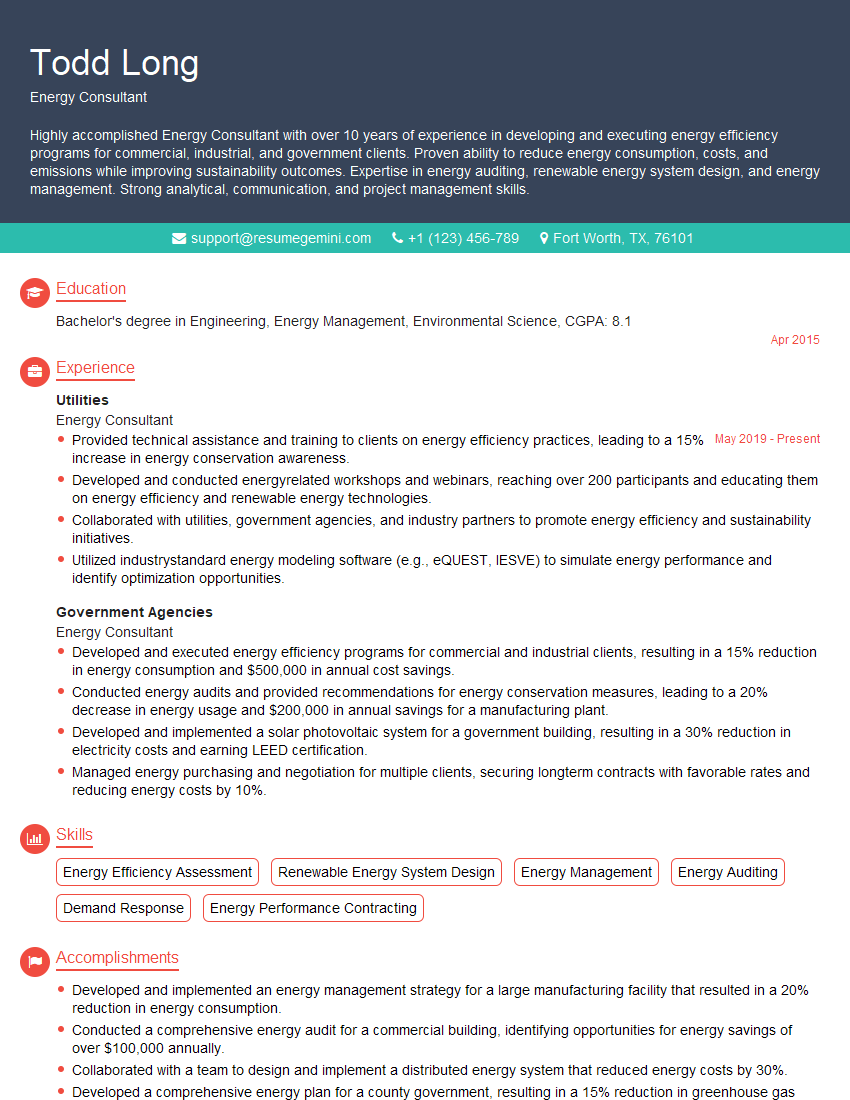
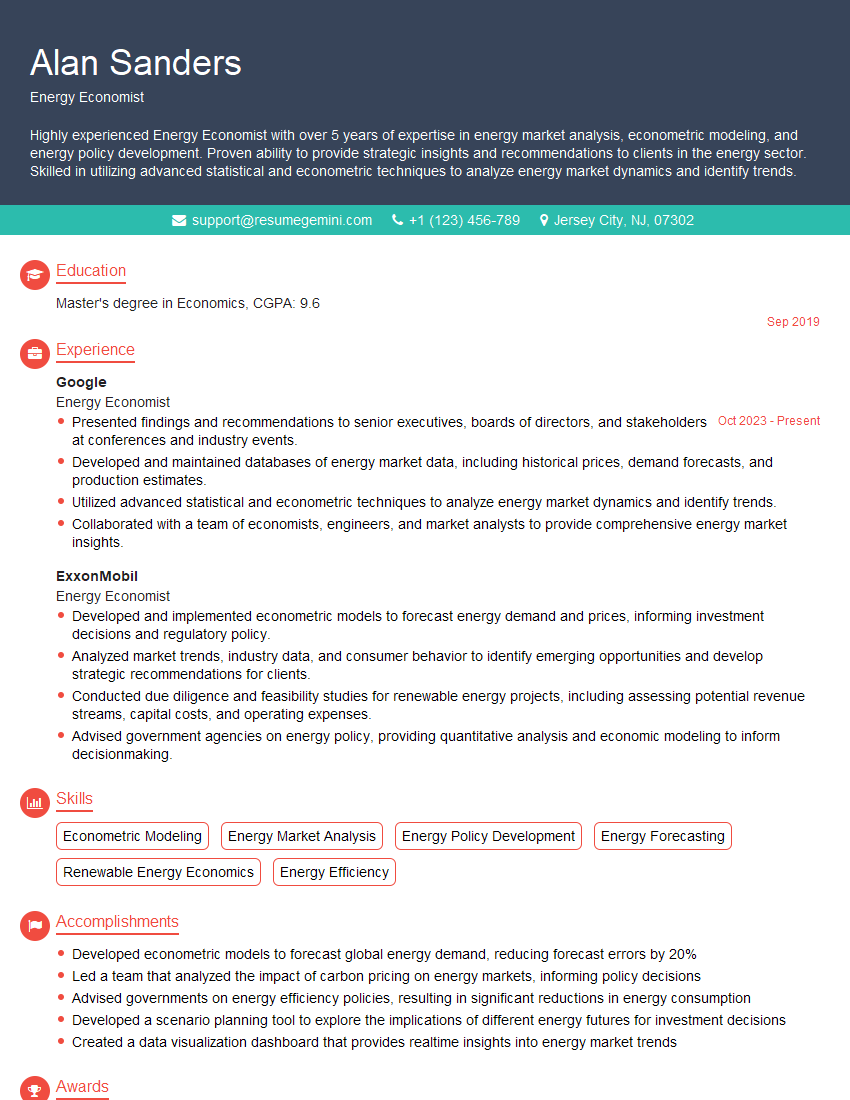
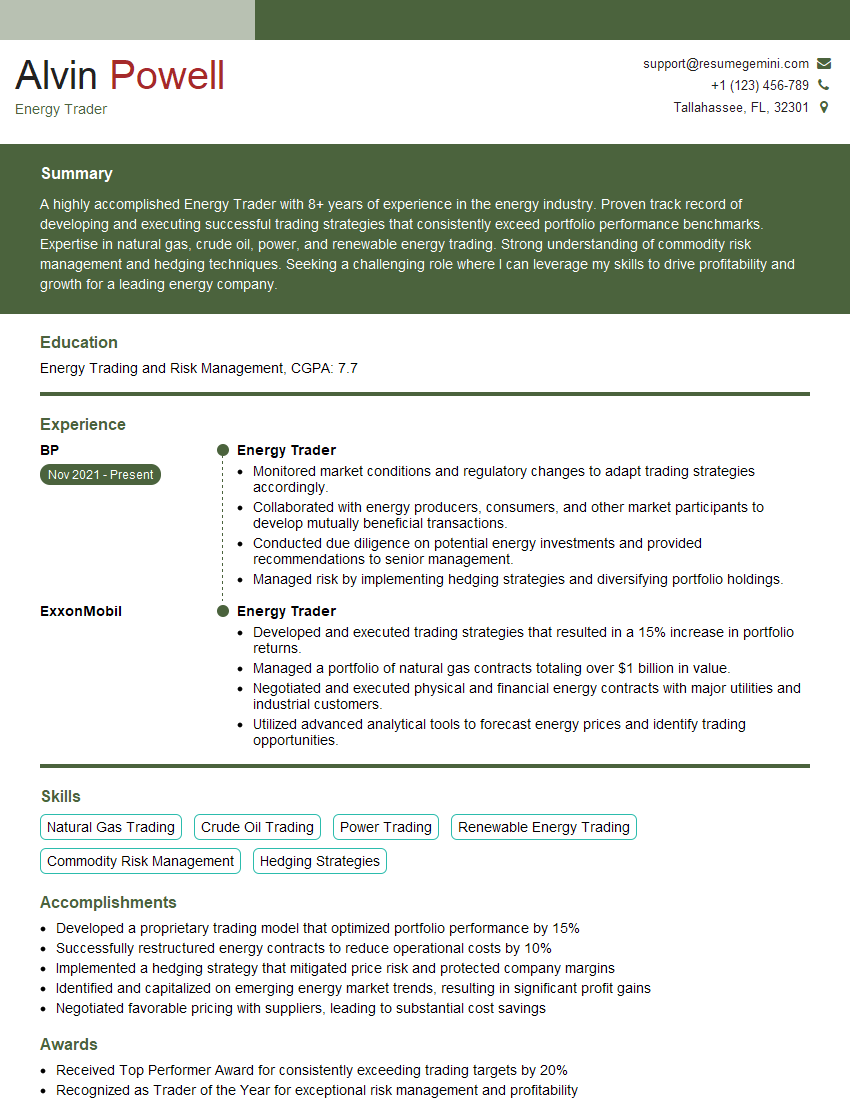
Mastering Energy Economics and Forecasting opens doors to exciting and impactful career opportunities. To maximize your chances, a strong resume is critical. An ATS-friendly resume ensures your qualifications are effectively highlighted to potential employers. We highly recommend using ResumeGemini to build a professional and impactful resume tailored to the energy sector. ResumeGemini provides examples of resumes specifically designed for Energy Economics and Forecasting roles to help guide you. Take advantage of this resource and position yourself for success!
Explore more articles
Users Rating of Our Blogs
Share Your Experience
We value your feedback! Please rate our content and share your thoughts (optional).
What Readers Say About Our Blog
Very informative content, great job.
good