Unlock your full potential by mastering the most common Energy Simulation interview questions. This blog offers a deep dive into the critical topics, ensuring you’re not only prepared to answer but to excel. With these insights, you’ll approach your interview with clarity and confidence.
Questions Asked in Energy Simulation Interview
Q 1. Explain the difference between steady-state and dynamic energy simulation.
Steady-state and dynamic energy simulations differ fundamentally in how they model time. Steady-state simulations assume a constant thermal load and internal/external conditions over time. Think of it like taking a snapshot of a building’s energy performance at a single moment. This simplifies calculations significantly but misses the crucial impacts of fluctuating weather, occupant schedules, and internal heat gains throughout the day and year.
Dynamic simulations, on the other hand, model the building’s performance over time, accounting for the continuous changes in these factors. It’s like recording a movie of the building’s energy consumption. This provides a much more accurate representation of real-world energy use and allows for analysis of thermal comfort and peak loads. For instance, a steady-state model might predict annual energy use but wouldn’t reveal peak cooling demand on a hot summer afternoon, which is crucial for sizing HVAC equipment.
Imagine trying to understand how much water a shower uses. A steady-state approach would just measure the flow rate at a single point; a dynamic approach would measure the flow rate over the entire shower duration, reflecting pauses and changes in flow. The dynamic approach is clearly more comprehensive.
Q 2. What are the common software tools used in energy simulation?
The energy simulation field boasts a wide array of software tools, each with its own strengths and weaknesses. Some of the most popular include EnergyPlus, a highly versatile and detailed open-source engine; TRNSYS, a powerful tool for system simulation which can also model building energy performance; and IES VE (Integrated Environmental Solutions Virtual Environment), a comprehensive platform encompassing design, analysis, and optimization tools. Commercial offerings like DesignBuilder provide user-friendly interfaces for EnergyPlus, making it more accessible to non-experts. Other prominent tools include eQuest, ESP-r, and IDA ICE.
The choice of software often depends on the project’s complexity, the required level of detail, the user’s experience, and the available budget. For example, for a simple residential project, a simpler tool like DesignBuilder might suffice, while a complex high-rise building might warrant the use of EnergyPlus directly to allow for more detailed modeling of complex HVAC systems.
Q 3. Describe your experience with building energy codes and standards (e.g., ASHRAE 90.1).
My experience with building energy codes and standards, particularly ASHRAE 90.1, is extensive. I’ve used ASHRAE 90.1 compliance as a key performance metric in numerous projects. This standard provides a baseline for energy efficiency in commercial buildings and serves as a critical guideline during the design process. I’m proficient in using simulation software to model building designs to ensure compliance, and to explore energy-saving strategies that go beyond the minimum requirements of the code. For example, I have utilized EnergyPlus to analyze building envelopes and HVAC systems, optimizing designs to meet or exceed ASHRAE 90.1 requirements while considering factors like climate zone and building typology.
Beyond ASHRAE 90.1, I’m familiar with other relevant codes and standards, including IECC (International Energy Conservation Code) and local jurisdiction-specific requirements. My understanding extends to the practical application of these codes in the design and construction phases, incorporating code requirements from the initial design conceptualization through construction documentation and commissioning.
Q 4. How do you validate and verify the results of an energy simulation?
Validating and verifying simulation results is crucial to ensure their reliability. Verification confirms that the simulation model accurately reflects the intended design and inputs. This involves checking for errors in the input data, model geometry, and the software’s execution. I typically achieve this through meticulous data review, cross-checking against design documents, and rigorous quality control procedures within the software.
Validation, on the other hand, assesses how well the simulation results match real-world performance. This often involves comparing simulation results against monitored data from similar buildings (benchmarking) or using calibrated models based on measured data from the building itself. Discrepancies between simulated and measured data need careful investigation to identify potential sources of error, which could range from inaccuracies in input data to limitations of the simulation model.
For example, I might compare predicted energy consumption from the simulation to utility bills from a similar existing building to validate the accuracy of the model. If discrepancies are significant, further investigation and adjustments to the model are necessary.
Q 5. What are the limitations of energy simulation software?
Energy simulation software, despite its power, has inherent limitations. One key limitation is the simplification of complex physical phenomena. Simulations rely on algorithms and models that represent real-world processes, but these are inevitably approximations. This can lead to inaccuracies, particularly when dealing with complex interactions within a building, such as air movement and moisture transport. For instance, simulating highly detailed convective heat transfer in a complex atrium space might be computationally expensive and only approximate.
Another limitation is the dependence on accurate input data. Inaccurate or incomplete input data, such as building materials properties or occupancy profiles, can significantly affect the simulation results. Furthermore, the models often struggle to accurately capture unpredictable factors like occupant behavior and equipment malfunction, which significantly impact real-world energy performance. This necessitates employing appropriate assumptions and sensitivity analysis to explore the uncertainty associated with the input parameters.
Finally, computational limitations can restrict the complexity and resolution of the simulation. Highly detailed simulations can be computationally expensive, requiring significant processing power and time. This often means finding a balance between the level of detail required for an accurate result and the computational resources available.
Q 6. Explain the concept of thermal comfort and its role in energy simulation.
Thermal comfort refers to the condition of mind that expresses satisfaction with the thermal environment. It’s a subjective feeling influenced by factors like air temperature, humidity, air movement, and radiant heat exchange with surroundings. In energy simulation, thermal comfort plays a vital role because ensuring comfortable conditions often drives energy consumption (e.g., increased cooling loads on hot days).
Energy simulations use thermal comfort models, like the PMV-PPD (Predicted Mean Vote-Predicted Percentage of Dissatisfied) model, to predict the percentage of occupants likely to be dissatisfied with the thermal environment under various design scenarios. This information helps optimize building designs to achieve acceptable comfort levels while minimizing energy use. For example, I’ve used simulations to analyze the impact of different window shading strategies on internal temperatures and predicted discomfort, guiding decisions about optimal window designs to reduce cooling loads while maintaining acceptable thermal comfort.
Q 7. How do you account for occupant behavior in energy modeling?
Accounting for occupant behavior in energy modeling is challenging but crucial for realistic simulations. Occupant behavior directly impacts internal heat gains (through lighting, equipment use, and body heat) and ventilation rates. There are several methods to account for this:
- Simplified Schedules: This involves using pre-defined schedules representing typical occupancy patterns (e.g., office building occupancy profile). This is a common approach for large-scale projects where detailed data might not be available.
- Agent-Based Modeling: A more advanced technique that simulates individual occupant behavior based on their characteristics and interactions with the building. This requires significant data and computational resources.
- Data-Driven Approaches: Using real-world data from occupancy sensors or smart meters in existing buildings to inform the simulation models. This is useful for validating simulation predictions and fine-tuning parameters.
For example, in a classroom setting, the simulation would need to consider the schedule of classes, number of students, and lighting/equipment usage during class hours versus empty periods. Neglecting this aspect could result in inaccurate energy predictions and ineffective design optimization.
Q 8. Describe your experience with different energy simulation methodologies (e.g., DOE-2, EnergyPlus).
My experience with energy simulation methodologies spans several leading software packages. I’ve extensively used EnergyPlus, a highly detailed and comprehensive tool ideal for large-scale projects demanding precise results. Its open-source nature and robust capabilities allow for intricate modeling of building systems, including HVAC, lighting, and envelope performance. I’ve leveraged EnergyPlus to analyze the impact of various design strategies on energy consumption, including the use of passive solar design techniques and advanced control systems. I’m also proficient in DOE-2, a more streamlined simulation engine suitable for quicker assessments and preliminary design stages. I find DOE-2 beneficial for initial screening of design options before delving into the finer details with EnergyPlus. For simpler projects or when a quick energy performance estimate is needed, I’m comfortable using simpler tools like TRNSYS, focusing on specific system analyses.
For instance, in a recent project involving a large office complex, I used EnergyPlus to model the building’s HVAC system with detailed zone-level controls, achieving a 15% reduction in energy consumption through optimized system settings. In contrast, for a smaller residential retrofit project, the speed and ease of DOE-2 proved invaluable in rapidly evaluating several different insulation upgrades.
Q 9. What are the key input parameters for an accurate energy simulation?
Accurate energy simulation hinges on a comprehensive set of input parameters. These can be broadly categorized into building geometry, construction materials, HVAC systems, lighting systems, occupancy schedules, and weather data. Let’s break it down:
- Building Geometry: Accurate representation of building shape, size, orientation, and window placement is crucial. This includes details about the building’s envelope such as wall, roof, and window areas.
- Construction Materials: The thermal properties of each construction material (walls, roof, windows) such as U-values, solar heat gain coefficients (SHGC), and visible transmittance (VT) significantly impact simulation accuracy. These are often obtained from manufacturers’ data or through laboratory testing.
- HVAC Systems: A detailed model of the HVAC system, including equipment types, capacities, control strategies, and air distribution systems is crucial for an accurate prediction. This includes specifying equipment efficiency ratings (e.g., SEER for air conditioners).
- Lighting Systems: Input data for lighting includes the type, wattage, and scheduling of lighting systems. Daylighting strategies also need to be accurately modeled.
- Occupancy Schedules: Schedules indicating the occupancy levels and activities in different zones throughout the day and year directly affect internal heat gains and lighting loads. Realistic occupancy schedules are vital for accurate results.
- Weather Data: High-quality weather data specific to the building’s location is paramount. This includes temperature, humidity, solar radiation, and wind speed data, ideally sourced from a reputable meteorological database.
Missing or inaccurate input in any of these areas can lead to significant discrepancies between simulated and actual energy performance.
Q 10. How do you handle uncertainty and variability in energy simulation?
Uncertainty and variability are inherent in energy simulation. I address these challenges through several strategies. Firstly, I use probabilistic methods. Instead of using single values for uncertain parameters, I assign probability distributions to reflect the inherent uncertainty. This can be done through Monte Carlo simulations, where the simulation is run repeatedly with randomly sampled values from the defined distributions. The results then give a range of likely outcomes rather than a single deterministic value.
Secondly, I carefully consider the sensitivity of the simulation to different inputs. Sensitivity analysis helps identify which parameters have the most significant impact on the overall results. This allows me to focus on refining the inputs with the greatest uncertainty and improving data quality where it matters most. For example, I might focus on getting more accurate data for window U-values if the sensitivity analysis shows that window heat loss is a major contributor to overall energy use.
Thirdly, I always document assumptions and uncertainties in my reports, transparently outlining the limitations of the model. This provides context for the results and allows stakeholders to make informed decisions, acknowledging that the simulation represents a best estimate rather than an absolute prediction.
Q 11. Explain the concept of daylighting and its impact on energy consumption.
Daylighting refers to the use of natural light to illuminate interior spaces, reducing or eliminating the need for artificial lighting. Its impact on energy consumption can be substantial. By effectively utilizing daylight, buildings can significantly lower their electricity demand for lighting, a major energy consumer in many buildings.
Effective daylighting design involves strategic placement of windows, light shelves, and other daylighting devices to maximize natural light penetration while minimizing glare and heat gain. Energy simulations help quantify the benefits of daylighting strategies by modeling the interaction of daylight with the building’s geometry and internal loads. The simulation can predict the amount of energy saved by reducing electric lighting loads, and potentially even the impact on heating and cooling loads, depending on the climate and design.
For instance, a simulation might reveal that using light shelves can reduce lighting energy use by 30% in an office building, while simultaneously reducing cooling loads by 5% by strategically managing solar heat gain. This holistic approach highlights the synergistic benefits of well-integrated daylighting strategies.
Q 12. How do you model renewable energy sources in energy simulations?
Modeling renewable energy sources in energy simulations involves incorporating data representing the generation profile of these sources. This typically involves using weather data as input to estimate solar energy production for photovoltaic (PV) systems, or wind speed data for wind turbines. The software typically includes built-in components to represent these systems, allowing you to define the size and characteristics (e.g., panel efficiency, turbine capacity) of the renewable energy systems.
For PV systems, the simulation will use solar radiation data, along with the panel’s efficiency and tilt angle, to calculate the energy generated. For wind turbines, wind speed and direction data, along with the turbine’s capacity factor, are used. The simulation will then factor this generated energy into the overall building energy balance, showing the reduction in energy demands from the grid.
For example, in a simulation of a net-zero energy building, I’d model a rooftop PV system using its rated capacity and efficiency, alongside hourly solar radiation data. The simulation would then calculate the PV system’s hourly energy production, which would be subtracted from the building’s total energy consumption, showing the extent to which the renewable energy source offsets the building’s energy needs.
Q 13. Describe your experience with creating energy audits and reports.
I have extensive experience creating energy audits and reports, combining my energy simulation skills with on-site assessments and data analysis. The process begins with a thorough site visit to gather data on the building’s systems and operation. This includes reviewing utility bills, assessing building construction, documenting equipment specifications, and observing building occupancy patterns. The data is then used as input for energy simulations to model the building’s current energy performance and identify energy-saving opportunities.
Following the simulation, I generate comprehensive reports that clearly communicate findings to clients. These reports include visual aids such as charts, graphs, and building schematics to illustrate energy consumption patterns and potential savings. The reports also provide detailed recommendations for energy efficiency upgrades, including cost estimates and potential payback periods. The aim is to provide actionable insights that allow building owners to make informed decisions about energy efficiency improvements.
For example, in a recent energy audit of a school, my simulation revealed substantial energy waste due to inefficient HVAC controls. My report not only highlighted the problem but also provided detailed specifications for upgrading the controls system, including expected energy savings and cost-benefit analysis, allowing the school to justify the investment.
Q 14. What are the different types of energy audits?
Energy audits are categorized based on their scope and depth of analysis. Common types include:
- Walk-through audits: These are quick, visual assessments of a building’s energy-consuming features, often providing preliminary energy-saving recommendations. They are less detailed and don’t involve extensive data collection or simulations.
- Level 1 audits: These audits involve a more detailed assessment of the building’s energy use, including the collection of utility bills and some on-site measurements. They often incorporate basic energy modeling to identify potential areas for energy savings.
- Level 2 audits: These are more comprehensive, using advanced data collection techniques and detailed energy modeling to precisely quantify energy use and identify areas for improvement. They usually include more detailed recommendations and cost-benefit analyses.
- Level 3 audits: These are the most thorough, involving extensive data collection, detailed energy modeling, and advanced diagnostic testing of building systems. They frequently include detailed recommendations and are often used for larger, complex buildings where a very precise understanding of energy use is needed.
The type of audit selected depends on the building’s size, complexity, and the client’s budget and information needs.
Q 15. How do you identify energy-saving opportunities using energy simulation?
Energy simulation helps us identify energy-saving opportunities by virtually testing different design choices and operational strategies. Think of it like a virtual wind tunnel for buildings. We input building design details, climate data, and operational parameters into specialized software. The software then simulates the building’s energy performance, predicting energy consumption for heating, cooling, lighting, and other systems. By comparing simulations of different scenarios—for example, using different window types or insulation levels—we can pinpoint areas where improvements yield the greatest energy savings. For instance, a simulation might reveal that replacing outdated windows with high-performance ones would reduce heating loads by 20%, leading to significant cost savings and a smaller carbon footprint.
- Step 1: Baseline Model: We first create a baseline model reflecting the building’s current design.
- Step 2: Parametric Studies: We then systematically vary design parameters (insulation, glazing, HVAC systems, etc.) to see the impact on energy use.
- Step 3: Optimization: Finally, we use the simulation results to identify the optimal combination of measures that maximize energy savings while considering costs.
Career Expert Tips:
- Ace those interviews! Prepare effectively by reviewing the Top 50 Most Common Interview Questions on ResumeGemini.
- Navigate your job search with confidence! Explore a wide range of Career Tips on ResumeGemini. Learn about common challenges and recommendations to overcome them.
- Craft the perfect resume! Master the Art of Resume Writing with ResumeGemini’s guide. Showcase your unique qualifications and achievements effectively.
- Don’t miss out on holiday savings! Build your dream resume with ResumeGemini’s ATS optimized templates.
Q 16. Explain the concept of life-cycle cost analysis in energy modeling.
Life-cycle cost analysis (LCCA) in energy modeling extends beyond initial construction costs to encompass the entire lifespan of a building or system. It considers all costs associated with a building, such as capital costs (initial investment), operational costs (energy, maintenance, repairs), and replacement costs over its lifetime. This holistic approach enables informed decision-making by comparing the total cost of different design alternatives, not just their upfront price. For example, investing in high-efficiency HVAC equipment may have a higher initial cost but could save significantly on energy bills over 20 years, making it a more cost-effective choice in the long run. We use specialized software to perform LCCA, factoring in discount rates, inflation, and the expected lifespan of various building components.
An LCCA helps compare options with different upfront and long-term costs. For example, a cheaper solar panel might have higher replacement costs than a premium model. LCCA considers all costs to determine the true value of each.
Q 17. How do you present complex energy simulation data to non-technical stakeholders?
Presenting complex energy simulation data to non-technical stakeholders requires clear and concise communication. Avoid technical jargon and focus on the key findings. Visual aids are crucial. Instead of tables of numbers, use charts and graphs to illustrate energy consumption patterns, cost savings, and the impact of different design strategies. For example, a simple bar chart showing the percentage reduction in energy use after implementing specific energy efficiency measures will be much more impactful than a detailed spreadsheet. A clear narrative is important. Summarize your findings in plain language, emphasizing the benefits and implications of your recommendations. Using analogies helps too. Comparing energy savings to the cost of a few household appliances can help stakeholders relate to the magnitude of the savings.
Q 18. Describe your experience with energy modeling for different building types (e.g., residential, commercial, industrial).
My experience spans various building types. In residential projects, I’ve focused on optimizing building envelope design (insulation, windows), HVAC system selection, and appliance energy efficiency to minimize energy consumption and improve comfort. For commercial buildings, I’ve worked on projects involving advanced building automation systems, daylighting strategies, and high-performance facades to reduce operational costs. In industrial settings, my work has concentrated on process optimization, energy recovery systems, and demand-side management to improve energy efficiency and overall sustainability. Each building type presents unique challenges and opportunities. Residential projects often prioritize affordability and comfort while commercial projects focus on minimizing operational costs and maximizing tenant satisfaction. Industrial projects emphasize maximizing energy efficiency gains, considering production processes.
Q 19. What is your experience with integrating energy simulation with other building design tools (e.g., BIM)?
I have extensive experience integrating energy simulation with Building Information Modeling (BIM) software. This integration streamlines the design process and enables efficient coordination among different design disciplines. BIM provides a central repository of building information, including geometry, materials, and systems, which is directly imported into energy simulation software. This eliminates the need for manual data entry, minimizing errors and accelerating the simulation process. Moreover, it facilitates real-time feedback and design optimization. We can easily modify the building design in BIM and instantly assess the impact on energy performance through the integrated energy simulation. The integrated workflow significantly improves the accuracy and efficiency of energy modeling in building design projects. For example, we can use BIM to model a new office building and instantly assess the effectiveness of different glazing options.
Q 20. How do you troubleshoot issues and errors encountered during energy simulation?
Troubleshooting energy simulation issues involves a systematic approach. I start by verifying the accuracy of input data. Incorrect or incomplete data can lead to significant errors in the simulation results. This includes checking weather data, building geometry, material properties, and system parameters. Then, I review the simulation model itself, checking for errors in the model’s setup, such as incorrect zone definitions, boundary conditions, or system connections. Next, I examine the simulation results, searching for inconsistencies or unrealistic outputs. If errors persist, I consult the software documentation, online forums, or contact technical support for assistance. Using iterative checks, comparing results with similar projects, and isolating potential problems, I can generally identify the cause of the problem and resolve it efficiently. A detailed log of steps taken during troubleshooting is critical for future reference.
Q 21. Explain the importance of weather data in energy simulation.
Weather data is crucial in energy simulation because it directly influences building energy consumption. Factors such as temperature, solar radiation, wind speed, and humidity determine the heating and cooling loads of a building. Accurate weather data is essential for realistic simulation results. The simulation uses this data to calculate the energy needed to maintain a comfortable indoor environment. Incorrect weather data can lead to inaccurate predictions, potentially resulting in suboptimal design decisions. We typically use long-term historical weather data from reliable sources like meteorological stations to ensure accuracy. The choice of weather data can significantly impact the simulation outcome and the design decisions made based on it. For example, using data from a location with a different climate could lead to an over- or under-estimation of heating and cooling loads.
Q 22. Describe your experience with sensitivity analysis in energy modeling.
Sensitivity analysis in energy modeling is crucial for understanding how changes in input parameters affect the overall energy performance of a building or system. It helps identify the most influential factors and prioritize optimization efforts. I’ve extensively used this technique in various projects, employing both deterministic and probabilistic methods.
For example, in a recent project analyzing a high-rise office building, we used a Monte Carlo simulation to assess the impact of uncertainty in occupancy schedules, HVAC equipment efficiency, and climate data on annual energy consumption. By varying each parameter over a defined range, we generated a probability distribution for energy use, identifying the parameters with the greatest influence on the outcome. This allowed us to focus our optimization efforts on those key variables – specifically, optimizing the control strategy based on occupancy profiles proved to be the most effective energy saving measure.
In another project, I performed a deterministic sensitivity analysis using a Design of Experiments (DOE) approach. This involved systematically varying input parameters (e.g., window U-value, insulation thickness) to determine their individual and interactive effects on building energy performance. The results clearly highlighted the importance of optimizing the building envelope design for energy efficiency.
Q 23. How do you ensure the accuracy of energy simulation models?
Ensuring the accuracy of energy simulation models is paramount. It involves a multi-faceted approach encompassing model validation, calibration, and quality control.
- Calibration: This involves adjusting model parameters to match historical energy consumption data. This requires access to reliable building operational data, including utility bills and sensor readings. A proper calibration ensures the model accurately represents the real-world behaviour.
- Validation: This is the process of comparing model predictions against independent data, such as measured energy use from a similar building. This provides confidence that the model is capable of predicting energy consumption under different conditions. Techniques like statistical analysis (e.g., RMSE, R-squared) are used to evaluate the model’s performance.
- Quality Control: Rigorous quality control procedures are essential throughout the modeling process. This includes using appropriate software, ensuring accurate input data, and verifying model assumptions. Regular checks and peer reviews are invaluable.
For instance, in a hospital project, we used a combination of calibrated energy models and on-site measurements to validate our predictions. Minor adjustments were made to the model based on the discrepancies found, significantly improving its accuracy.
Q 24. What are the different types of energy efficiency measures?
Energy efficiency measures span various building systems and components. They can be broadly categorized as:
- Building Envelope Improvements: This includes measures like enhanced insulation (walls, roofs, foundations), high-performance windows, air sealing, and improved roofing materials. These reduce heat transfer between the building and its surroundings.
- HVAC System Optimizations: This involves upgrading HVAC equipment (e.g., high-efficiency boilers, chillers, heat pumps), implementing advanced control systems (e.g., variable refrigerant flow, demand-controlled ventilation), and optimizing ductwork design to minimize energy losses.
- Lighting Upgrades: Switching to energy-efficient lighting technologies (e.g., LEDs), implementing daylight harvesting strategies, and optimizing lighting controls significantly reduces energy consumption.
- Renewable Energy Integration: Incorporating renewable energy sources like solar photovoltaic (PV) systems, solar thermal collectors, or wind turbines can drastically decrease reliance on grid electricity.
- Water Heating Efficiency: Improvements include high-efficiency water heaters, reduced hot water usage through low-flow fixtures, and improved insulation of hot water pipes.
The most effective approach often involves a combination of these measures, tailored to the specific building and its operational profile.
Q 25. Explain your experience using energy simulation to optimize building design for energy performance.
I’ve extensively utilized energy simulation to optimize building design for enhanced energy performance. My experience includes working on various building types, from residential to commercial and institutional buildings.
In one project involving a new school building, we used energy modeling to compare different design options, including variations in building orientation, glazing types, and shading devices. The simulation helped us determine the optimal design that minimized energy consumption while maximizing natural daylighting. This resulted in significant cost savings and reduced environmental impact. We also explored different HVAC system configurations, optimizing the system sizing and control strategies based on the simulation results.
In another project, we employed parametric modeling to explore a wider range of design options automatically, thus efficiently optimizing building envelope performance while considering various construction cost scenarios. This involved writing scripts to automate the creation and analysis of numerous building models. The results showed a clear trade-off between initial investment and long-term energy savings, informing the client’s decision-making process.
Q 26. Describe your experience with energy simulation for HVAC system design.
Energy simulation plays a critical role in HVAC system design. It allows for the accurate prediction of system performance under various operating conditions, enabling optimal system sizing, component selection, and control strategy development.
In a recent project involving a large data center, I used energy simulation to optimize the cooling system design. We analyzed different cooling technologies, including air-cooled chillers, water-cooled chillers, and free-cooling strategies. The simulation helped us determine the most energy-efficient solution while meeting the critical cooling requirements of the servers. We also modeled the impact of different control strategies on energy consumption, leading to an optimized control system that significantly reduced energy waste.
Beyond this, I’ve used simulation to assess the impact of different ventilation strategies on indoor air quality (IAQ) and energy consumption. This involves modeling airflow patterns and contaminant transport within the building to ensure both comfortable and energy-efficient environments.
Q 27. How do you incorporate the impact of climate change into energy modeling?
Incorporating the impact of climate change into energy modeling is increasingly important. This involves using future climate projections to assess how changing weather patterns will affect building energy performance and design strategies.
We use climate data from sources such as the IPCC or regional climate models to generate future weather files with altered temperature, humidity, solar radiation, and wind speed profiles. These are then used in our energy simulation software to predict how the building’s energy demand might change over time. This allows us to design more resilient buildings capable of adapting to a changing climate.
For example, in a coastal community facing increased risk of sea-level rise and extreme weather events, we used climate projections to model the impact of future flooding scenarios on building operations and energy consumption. This informed design decisions related to building elevation, flood protection measures, and emergency power systems, thereby enhancing the building’s resilience to climate change impacts.
Q 28. What are the future trends and advancements in energy simulation?
The field of energy simulation is constantly evolving. Several key trends and advancements are shaping its future:
- Increased Integration with BIM (Building Information Modeling): Closer integration between energy simulation software and BIM platforms is improving the workflow, allowing for more efficient and accurate modeling.
- Advancements in Machine Learning (ML) and Artificial Intelligence (AI): ML and AI are being used to optimize building designs, predict energy consumption more accurately, and develop advanced control strategies.
- Development of More Sophisticated Models: Models are becoming more comprehensive, incorporating factors such as occupant behavior, renewable energy integration, and micro-climate effects more realistically.
- Focus on Whole-Building Performance Analysis: There is a growing emphasis on assessing the integrated performance of all building systems, rather than focusing on individual components in isolation.
- Improved User Interfaces and Accessibility: Energy simulation software is becoming more user-friendly, making it more accessible to a wider range of professionals.
These advancements will continue to enhance the accuracy, efficiency, and applicability of energy simulation in achieving sustainable and high-performance buildings.
Key Topics to Learn for Energy Simulation Interview
- Building Simulation Models: Understanding the principles of creating accurate and efficient energy simulation models, including selecting appropriate software and input data.
- Energy Balance and Conservation: Applying fundamental energy balance principles to various systems and analyzing energy flows within building envelopes and infrastructure.
- Thermal Comfort and Indoor Environmental Quality (IEQ): Mastering the concepts of thermal comfort and their impact on building design, including understanding relevant standards and regulations.
- HVAC System Simulation: Modeling and analyzing the performance of Heating, Ventilation, and Air Conditioning systems, including energy efficiency and control strategies.
- Renewable Energy Integration: Simulating the integration of renewable energy sources (solar, wind, geothermal) into building energy systems and evaluating their impact on overall performance.
- Data Analysis and Interpretation: Developing skills in interpreting simulation results, identifying areas for improvement, and effectively communicating findings to stakeholders.
- Software Proficiency: Demonstrating familiarity with industry-standard energy simulation software (e.g., EnergyPlus, TRNSYS, IDA ICE) and their practical applications.
- Optimization Techniques: Understanding and applying optimization techniques to improve the energy efficiency and sustainability of building designs.
- Life-Cycle Assessment (LCA): Analyzing the environmental impact of building designs and energy systems throughout their entire lifecycle.
- Problem-Solving and Critical Thinking: Developing strong analytical skills to effectively troubleshoot simulation challenges and make informed design decisions.
Next Steps
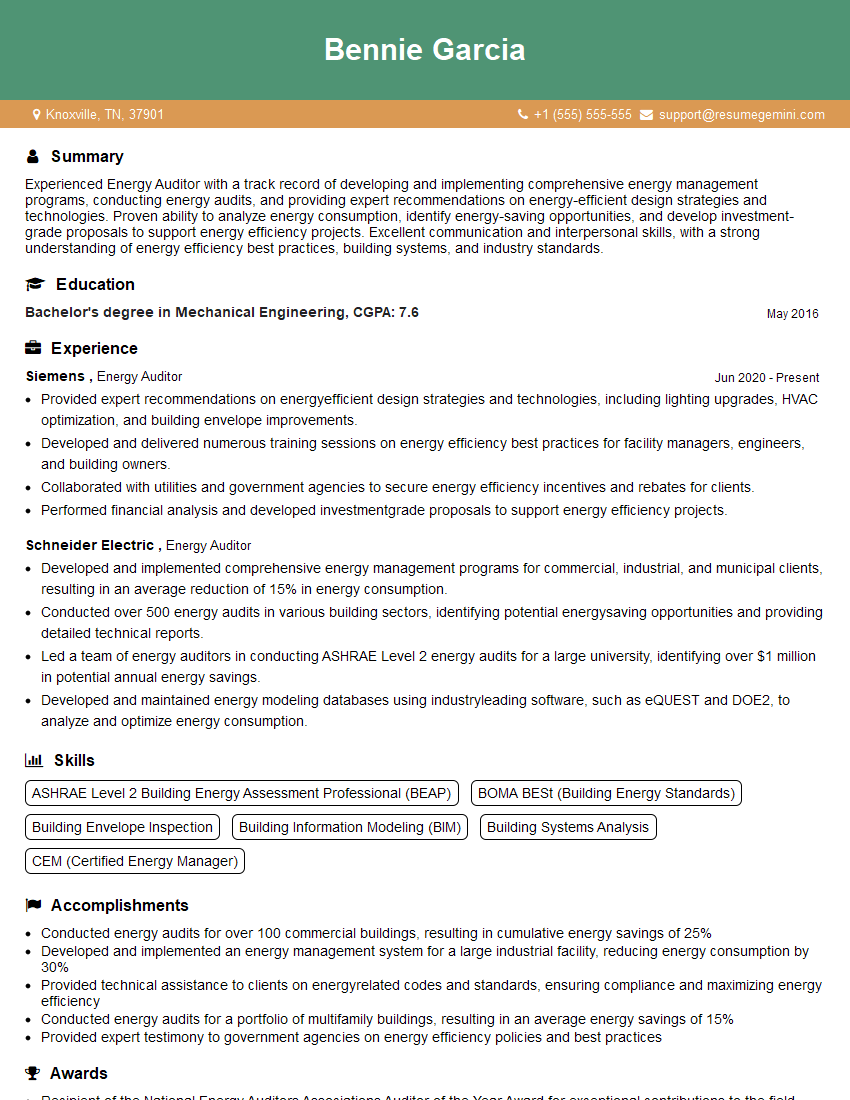
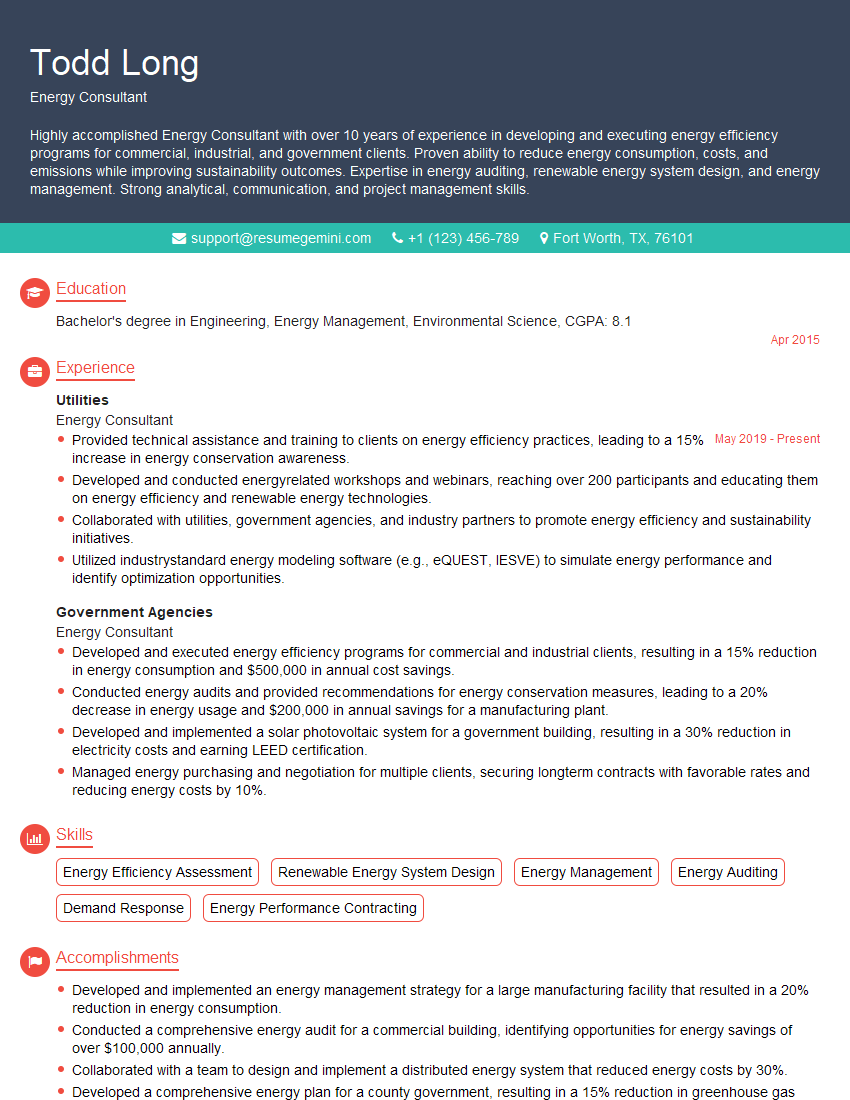
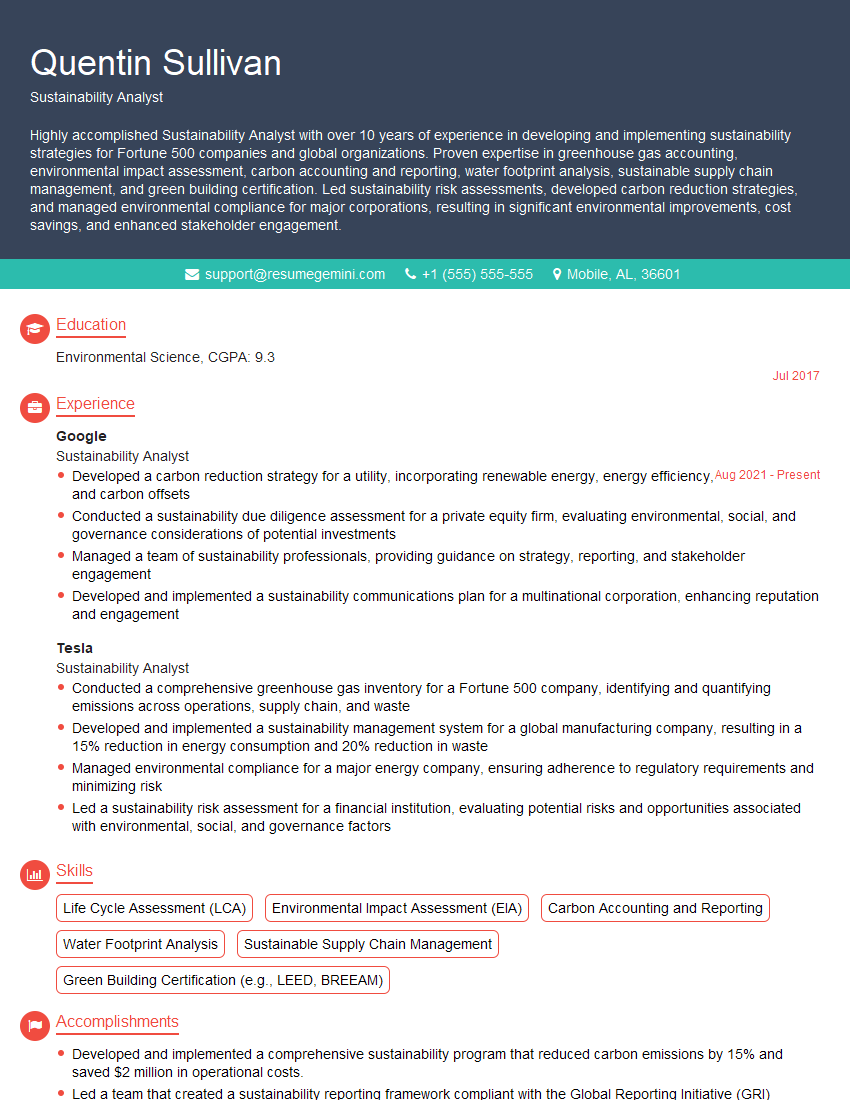
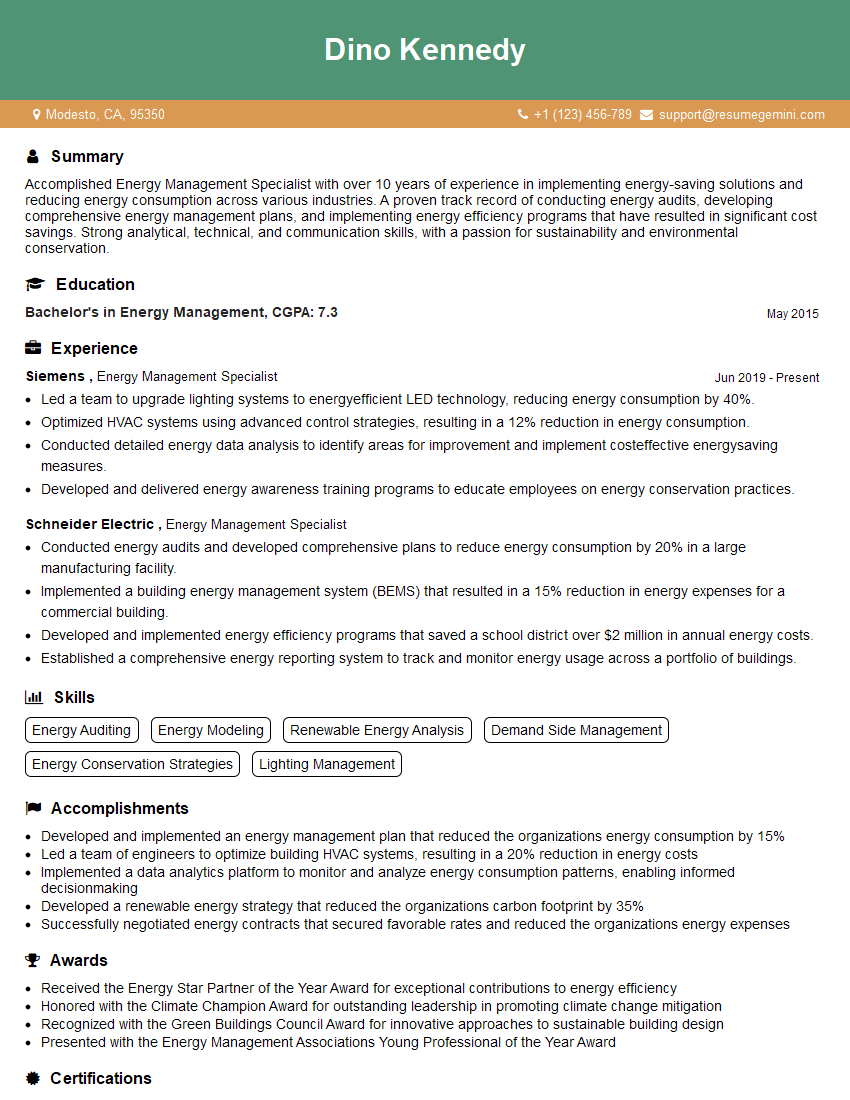
Mastering energy simulation is crucial for a successful and rewarding career in the sustainable building industry. It opens doors to exciting roles with significant impact on environmental sustainability and energy efficiency. To maximize your job prospects, create an ATS-friendly resume that effectively highlights your skills and experience. We strongly recommend using ResumeGemini to build a professional and impactful resume that showcases your expertise in Energy Simulation. ResumeGemini provides examples of resumes tailored to this specific field, helping you present yourself in the best possible light to potential employers.
Explore more articles
Users Rating of Our Blogs
Share Your Experience
We value your feedback! Please rate our content and share your thoughts (optional).
What Readers Say About Our Blog
Very informative content, great job.
good