The right preparation can turn an interview into an opportunity to showcase your expertise. This guide to Engine Room Assist interview questions is your ultimate resource, providing key insights and tips to help you ace your responses and stand out as a top candidate.
Questions Asked in Engine Room Assist Interview
Q 1. Describe your experience with main engine maintenance procedures.
Main engine maintenance is crucial for ensuring the vessel’s safe and efficient operation. My experience encompasses a wide range of procedures, from routine inspections and lubrication to more complex tasks like overhaul and repair. I’m proficient in following manufacturer’s recommendations and using diagnostic tools to identify potential problems before they escalate.
For instance, daily maintenance includes checking oil levels and pressure, inspecting fuel lines for leaks, and verifying the proper functioning of various sensors and gauges. Weekly tasks might include more thorough inspections of components like the exhaust system and turbochargers, checking for wear and tear and potential fouling. More extensive maintenance, such as valve adjustments or cylinder head inspections, are carried out according to a planned maintenance system (PMS) schedule, often based on running hours.
I have experience working on various engine types, including slow-speed two-stroke and medium-speed four-stroke engines. My approach always prioritizes safety and adherence to established procedures to avoid any potential accidents or equipment damage. I document all maintenance activities meticulously in the engine room logbook for traceability and future reference. I also actively participate in the development and review of the PMS, ensuring it’s up-to-date and effective.
Q 2. Explain the function of a centrifugal pump.
A centrifugal pump uses rotational energy to move fluids. It works by spinning an impeller, a rotating component with curved blades, inside a casing. As the impeller spins, it creates a centrifugal force, pushing the fluid outwards towards the pump’s discharge port. The increase in velocity translates to an increase in pressure, allowing the pump to move the fluid against pressure differences.
Imagine a spinning fan; as it rotates, it pushes air outward. A centrifugal pump works on a similar principle but with liquids. They’re commonly used in various marine applications, such as supplying seawater for cooling, providing lubricating oil to the main engine, and transferring fuel. The key parameters to monitor are flow rate, pressure, and temperature, which can be measured using various sensors and gauges. Regular maintenance, including lubrication and inspection for wear and tear, are crucial for ensuring a long operational lifespan.
Q 3. How do you troubleshoot a malfunctioning fuel injection system?
Troubleshooting a malfunctioning fuel injection system requires a systematic approach, starting with the identification of the symptoms. This might include rough running, loss of power, excessive smoke, or complete engine failure. A thorough visual inspection for leaks or damage should be the first step.
Once the symptoms are identified, I use diagnostic tools such as pressure gauges to measure fuel pressure at different points in the system. This helps pinpoint whether the problem lies in the fuel supply, the injection pump, or the injectors themselves. If the problem is identified in the injectors, individual injector testing may be required, using specialized equipment to assess their spray pattern and atomization quality. In more complex cases, specialized diagnostic software connected to the engine’s control system may be needed to identify and resolve electronic faults. I’m proficient in using both traditional diagnostic methods as well as the latest digital diagnostic tools.
Safety is paramount during this process. Always ensure the fuel system is depressurized before undertaking any maintenance or repairs. Proper personal protective equipment (PPE), including safety glasses and gloves, should be worn at all times.
Q 4. What are the safety procedures for entering a confined space in the engine room?
Entering a confined space in the engine room, such as a tank or void space, presents significant safety hazards, including oxygen deficiency, toxic gas buildup, and potential engulfment. Strict adherence to safety procedures is therefore mandatory.
- Permit-to-work system: A permit-to-work is always required, authorizing entry after a risk assessment and implementation of safety measures.
- Atmospheric testing: Before entry, the atmosphere must be tested for oxygen levels, flammable gases, and toxic gases using a multi-gas detector. Acceptable levels must be confirmed before entry.
- Ventilation: Adequate ventilation is necessary to ensure a breathable atmosphere. This often involves using forced ventilation systems to purge the space of any hazardous gases.
- Personal Protective Equipment (PPE): Appropriate PPE, including safety harness with lifeline, self-contained breathing apparatus (SCBA), and appropriate clothing, is essential.
- Entry and monitoring: Entry should be made with a minimum of two people, with one acting as an attendant to monitor the person inside the space and provide assistance if needed. Continuous monitoring of atmospheric conditions is critical.
- Emergency procedures: Emergency procedures, including rescue plans and communication protocols, must be established and known to everyone involved.
Never enter a confined space alone. Failure to follow these procedures can have severe consequences, including injury or death. I always ensure that all the necessary precautions are taken before entering any confined space.
Q 5. Describe your experience with emergency shutdown procedures.
Emergency shutdown procedures are critical for preventing accidents and damage in the event of an emergency. My experience includes executing emergency shutdowns due to various scenarios, such as fire, engine malfunction, or a sudden loss of power. The process is always conducted in a calm and methodical manner, prioritizing safety.
The procedure generally involves sequentially stopping the main engine, closing fuel valves, stopping auxiliary machinery, and activating fire fighting systems as needed. The specific steps vary depending on the nature of the emergency and the type of engine but all involve securing the engine room to prevent further damage or injury. Once the emergency is under control, a full assessment of the situation is conducted before restarting any systems. I’m well-versed in different emergency scenarios and the appropriate response procedures. Regular drills and training are essential to maintain proficiency in these critical procedures and I actively participate in all such exercises.
Q 6. Explain the principles of lubrication in marine engines.
Lubrication in marine engines is vital for reducing friction, preventing wear and tear, and maintaining optimal operational efficiency. It involves supplying a lubricating oil film between moving parts to minimize contact and heat generation.
The principles of lubrication involve selecting the right type of oil with appropriate viscosity for the operating conditions. This ensures the oil maintains its film strength even under high pressures and temperatures. The oil also needs to provide cooling to reduce the operating temperature of the engine components. The lubrication system itself needs to be maintained effectively, which includes regular oil changes, filter replacements, and monitoring oil pressure and temperature. Regular oil analysis can help detect potential problems early, like metal particles indicating wear or contamination indicating a potential leak. A well maintained lubrication system is fundamental to engine longevity and operational efficiency.
For instance, choosing the wrong viscosity oil could lead to excessive wear, while inadequate oil pressure could result in catastrophic engine failure. I have extensive experience maintaining and troubleshooting lubrication systems and am familiar with the diverse requirements of various engine types and operational conditions.
Q 7. How do you perform a routine check on the engine room’s fire protection system?
Routine checks on the engine room’s fire protection system are vital for ensuring its readiness in case of fire. The checks should be performed regularly, as detailed in the ship’s safety management system (SMS).
These checks might include:
- Visual inspection of fire extinguishers: Checking pressure gauges, condition of hoses, and overall physical condition.
- Testing of fire detection systems: Manually activating smoke detectors or heat detectors to verify their functionality.
- Inspection of fire hoses and hydrants: Checking hose pressure, ensuring hydrants are unobstructed, and inspecting the condition of the hoses and nozzles.
- Checking of fire pumps: Verifying that fire pumps are running and capable of delivering adequate water pressure.
- Inspection of sprinkler systems: Checking for any damage or obstructions to the sprinkler heads. In some cases, a partial test of the sprinkler system might be conducted.
- Reviewing of fire plans and emergency procedures: Ensuring all crew members are aware of the ship’s fire fighting procedures and location of firefighting equipment.
Proper documentation of all checks is crucial for demonstrating compliance with regulations and maintaining a safe working environment. I understand the critical role of fire prevention and am always diligent in performing these checks to ensure that our engine room is well protected in case of a fire.
Q 8. What are the different types of marine diesel engines?
Marine diesel engines are broadly classified by several factors, including their speed, construction, and application. The most common distinctions are based on the engine’s cycle and configuration.
- Two-Stroke vs. Four-Stroke: Two-stroke engines complete a power cycle in two piston strokes (one revolution), while four-stroke engines require four piston strokes (two revolutions). Two-strokes offer higher power-to-weight ratios but are generally less fuel-efficient and produce more emissions. Four-strokes are more fuel-efficient and environmentally friendly but are heavier and bulkier for the same power output.
- In-line vs. V-type: In-line engines have cylinders arranged in a single row, while V-type engines have cylinders arranged in two banks forming a V-shape. V-type engines offer a more compact design and better balance than in-line engines at higher speeds.
- Slow-speed vs. Medium-speed vs. High-speed: This categorization refers to the engine’s operating speed in revolutions per minute (RPM). Slow-speed engines (under 300 RPM) are typically used in large container ships for fuel efficiency. Medium-speed engines (300-1000 RPM) find applications in smaller vessels and power generation. High-speed engines (above 1000 RPM) are common in smaller boats and auxiliary systems.
- Crosshead vs. Trunk Piston: In crosshead engines, the piston is connected to the crankshaft via a crosshead, improving piston rod guidance and enabling higher cylinder pressures and improved efficiency. Trunk piston engines are simpler and less expensive but are typically limited in size and power output.
For example, a large container ship might utilize slow-speed, two-stroke, crosshead engines for optimal fuel efficiency during long voyages, while a smaller tugboat might use a medium-speed, four-stroke, in-line engine for maneuverability and responsiveness.
Q 9. Explain your understanding of engine room logbook maintenance.
Maintaining an engine room logbook is crucial for tracking operational data, maintenance activities, and any unusual occurrences. This document is a vital record for ensuring safe and efficient operation, meeting regulatory compliance, and facilitating troubleshooting. A well-maintained logbook should include:
- Daily Entries: Readings of all critical engine parameters (RPM, temperatures, pressures, fuel consumption, lubricating oil levels and pressures, etc.). Any noteworthy events, such as unusual noise or vibrations, should be recorded.
- Maintenance Records: Detailed records of all scheduled and unscheduled maintenance, including the date, time, work performed, personnel involved, and spare parts used. This includes filter changes, oil changes, and any repairs.
- Fuel Consumption: Daily recording of fuel levels and consumption for each engine. This is vital for cost analysis, voyage planning, and monitoring overall engine efficiency.
- Defect Reporting: Any identified defects or malfunctions, along with the corrective actions taken. This allows for trend analysis and proactive maintenance to avoid future breakdowns.
- Spare Parts Inventory: Tracking available spare parts can prevent delays during maintenance or repairs.
A well-maintained logbook can be instrumental during audits and is a valuable resource for future troubleshooting and analysis of engine performance. In one instance, I used the logbook to identify a gradual decline in oil pressure over several weeks, which allowed us to address a potential bearing failure before it caused a significant breakdown.
Q 10. How do you handle a sudden engine failure?
A sudden engine failure requires immediate and decisive action. My approach is based on a structured protocol that prioritizes safety and damage control:
- Emergency Stop: Immediately shut down the affected engine using the emergency stop button or procedures. This prevents further damage and reduces risk.
- Safety Precautions: Ensure the safety of personnel, implementing emergency procedures to secure the engine room and prevent any injury.
- Assess the Situation: Determine the extent of the failure, looking for visible signs of damage, smoke, or leaks. Check the engine room alarm systems to identify potential cascading failures.
- Inform Bridge: Immediately notify the bridge of the engine failure, providing updates on the situation and any potential implications for the vessel’s operation.
- Damage Control: Take steps to mitigate any immediate threats, such as fire or flooding. If possible, secure any hazardous materials or components.
- Troubleshooting: Following standard operating procedures and manufacturer’s recommendations, attempt preliminary diagnosis to assess the cause of the failure. This may include checking oil and fuel levels, examining gauges and readings, and visual inspections.
- Repair or Replacement: Depending on the severity and nature of the failure, initiate repair procedures, or if necessary, prepare to replace critical components.
- Documentation: Thoroughly document all actions taken, including observations, repair procedures, and any parts replaced. This is crucial for any subsequent investigation or insurance claims.
During a recent emergency, a sudden loss of lubrication pressure in one of the main engines triggered an immediate shutdown. By following the emergency procedures, we contained the damage to a minor oil leak. Detailed documentation of the event facilitated a rapid and efficient repair during the subsequent port call.
Q 11. Describe your experience with hydraulic systems in the engine room.
Hydraulic systems are essential in engine rooms, playing a critical role in various operations, including steering gear, cargo handling systems, and other heavy machinery. My experience encompasses the maintenance, troubleshooting, and repair of these systems.
- Maintenance: Regular maintenance is crucial. This includes checking fluid levels, filter integrity, and the operation of pumps and valves. Regular fluid sampling and analysis can detect potential contamination or degradation issues.
- Troubleshooting: Identifying problems can range from simple leaks to more complex malfunctions in pumps, valves, or cylinders. Troubleshooting involves systematically checking pressure gauges, fluid flow, and the components of the hydraulic circuits.
- Repair: Repair work can include replacing seals, hoses, filters, or even more complex components like pumps or valves. Knowledge of hydraulic schematics and the ability to interpret pressure readings are crucial.
- Safety: Working with hydraulic systems requires strict adherence to safety protocols. High-pressure fluid can cause serious injury, so caution and protective equipment are essential. Understanding the system’s pressure relief valves and safety mechanisms is vital.
In a particular case, a failure in the steering gear’s hydraulic system was diagnosed by meticulously checking pressure drops across various components. Replacing a faulty valve solved the issue, preventing potential navigation difficulties.
Q 12. Explain the principles of boiler operation and maintenance.
Boiler operation and maintenance involve several key principles centered around generating steam safely and efficiently. The principles are based around generating steam from a heated water source.
- Water Treatment: Maintaining high-quality boiler water is paramount to prevent scale build-up and corrosion. Water treatment involves chemicals that soften the water, preventing scaling and maintaining the boiler’s efficiency. Regular water testing is essential.
- Fuel Supply and Combustion: Efficient and safe combustion of fuel (often fuel oil) is essential. This requires correct fuel atomization, adequate air supply, and efficient heat transfer. Monitoring flue gas composition (O2, CO) helps optimize combustion.
- Steam Generation and Distribution: Maintaining the correct steam pressure and temperature is crucial for the various applications that require steam. Control valves and safety systems maintain the required conditions.
- Safety and Monitoring: Boilers are high-pressure systems and require a comprehensive suite of safety devices, such as pressure relief valves, high-level alarms, and low-water level alarms. Regular inspection of these safety mechanisms is paramount.
- Maintenance: Scheduled maintenance includes cleaning of internal surfaces (to remove scale), inspection of pressure vessels, and testing of safety systems. This proactive approach extends the boiler’s lifespan.
One instance involved troubleshooting a boiler that was consistently producing lower than expected steam pressure. Through meticulous checks of water quality and fuel combustion, we identified a partially clogged fuel injector, causing inefficient combustion and reduced steam output. Replacing the injector restored optimal performance.
Q 13. How do you monitor and control engine room temperatures?
Monitoring and controlling engine room temperatures is critical for preventing overheating and ensuring efficient operation. Several strategies and techniques are employed:
- Temperature Sensors: Numerous temperature sensors are strategically placed throughout the engine room to monitor critical components. These include sensors on engine bearings, cylinder liners, lubricating oil, coolant, and exhaust gases.
- Monitoring Systems: Modern engine rooms often incorporate computerized monitoring systems that display all temperature readings on central panels, allowing for immediate detection of any anomalies.
- Alarm Systems: High-temperature alarms are integrated into the monitoring system to provide immediate alerts in case of critical temperature excursions.
- Cooling Systems: Engine room cooling systems are designed to maintain optimal operating temperatures. These include seawater cooling systems and freshwater cooling systems, which are vital to dissipate the heat generated by the engines and other equipment.
- Control Mechanisms: These include adjusting cooling water flow rates, adjusting fuel injection rates, and operating ventilation systems to manage ambient temperature.
During one incident, an unexpected increase in lubricating oil temperature was quickly detected via our monitoring system. This allowed for an immediate response, preventing potential damage to the engine bearings.
Q 14. What are the different types of compressors used in the engine room?
Several types of compressors are used in engine rooms, each serving specific functions. These fall into two broad categories: reciprocating and rotary.
- Reciprocating Compressors: These compressors use a piston that moves back and forth to compress air or gas. They are generally more robust but can be noisier and less efficient than rotary compressors.
- Rotary Compressors: These compressors use rotating components to compress air or gas. They offer quieter operation, higher efficiency and compact design. There are different types of rotary compressors, including:
- Screw Compressors: Use two intermeshing helical screws to compress air. They are known for their high capacity and efficiency.
- Scroll Compressors: Use two spiral-shaped scrolls to compress air. They are compact and generally quieter than screw compressors.
- Centrifugal Compressors: Use centrifugal force to increase the pressure of the air. Typically used for higher airflows, but not as common in engine rooms as reciprocating or rotary screw type compressors.
The choice of compressor type depends on the specific application. For instance, a large air-starting system for main engines might utilize a reciprocating compressor for its reliability and high pressure, while smaller air systems for pneumatic tools might utilize a more compact and quieter scroll compressor.
Q 15. Explain your experience with air conditioning and refrigeration systems.
My experience with air conditioning and refrigeration systems encompasses both their operation and maintenance. I’m proficient in troubleshooting various issues, from refrigerant leaks to compressor malfunctions. Understanding the refrigeration cycle – encompassing evaporation, compression, condensation, and expansion – is crucial. For example, I once diagnosed a low-pressure issue in a ship’s chiller plant by systematically checking refrigerant levels, compressor performance, and condenser efficiency, ultimately identifying a faulty expansion valve. In addition to troubleshooting, I’m experienced in preventative maintenance, ensuring optimal performance and preventing costly breakdowns. This includes regular checks of refrigerant levels, oil levels, and pressure readings. I’m also familiar with different refrigerants and their environmental impact, adhering to all relevant safety and environmental regulations.
Career Expert Tips:
- Ace those interviews! Prepare effectively by reviewing the Top 50 Most Common Interview Questions on ResumeGemini.
- Navigate your job search with confidence! Explore a wide range of Career Tips on ResumeGemini. Learn about common challenges and recommendations to overcome them.
- Craft the perfect resume! Master the Art of Resume Writing with ResumeGemini’s guide. Showcase your unique qualifications and achievements effectively.
- Don’t miss out on holiday savings! Build your dream resume with ResumeGemini’s ATS optimized templates.
Q 16. Describe your experience with waste management in the engine room.
Waste management in the engine room is a critical aspect of maintaining a clean and safe working environment while adhering to MARPOL regulations. My experience covers the entire process, from segregation of different waste streams (oily water, garbage, hazardous materials) to their proper disposal. We use dedicated receptacles for each waste type, ensuring strict adherence to labeling and handling procedures. I’m familiar with the operation and maintenance of oily water separators and incinerators, crucial for responsible waste disposal at sea. For example, I’ve been responsible for logging and monitoring the oil content of oily water discharges to ensure compliance with environmental regulations. Regular cleaning and maintenance of waste storage areas are also part of my duties to prevent potential leaks or spills.
Q 17. How do you ensure the safe handling and storage of hazardous materials?
Safe handling and storage of hazardous materials is paramount in the engine room. We follow a strict regime based on the Safety Data Sheets (SDS) for each substance, understanding its hazards and necessary precautions. This includes proper labeling, storage in designated areas, and the use of appropriate Personal Protective Equipment (PPE). All personnel are trained on the proper handling procedures, emergency response protocols, and the location of safety equipment. For instance, we store paints and solvents in a well-ventilated, designated area, away from ignition sources, with appropriate spill containment measures in place. Regular inspections ensure the integrity of storage containers and the proper handling procedures are being followed. Any spills or leaks are immediately reported and addressed according to the established emergency procedures.
Q 18. What are the regulations concerning engine room emissions?
Regulations concerning engine room emissions are stringent and constantly evolving, primarily governed by the International Maritime Organization (IMO) MARPOL Annex VI. These regulations limit the sulfur content of fuel oil (SOx), nitrogen oxides (NOx), and particulate matter (PM). Compliance is achieved through various measures, including using low-sulfur fuels, employing exhaust gas cleaning systems (scrubbers), and optimizing engine operation. Regular monitoring of emissions is crucial, often involving specialized equipment and analysis. For instance, we meticulously record fuel consumption and maintain detailed logs of emissions data to ensure compliance and to identify potential areas for improvement in fuel efficiency and emission reduction. Failure to comply can result in significant penalties and operational restrictions.
Q 19. How do you perform a visual inspection of a main engine?
A visual inspection of a main engine is a crucial part of preventative maintenance. It involves a systematic check of all visible components, looking for signs of wear, damage, or leaks. I start by visually inspecting the exterior of the engine, checking for leaks of oil, fuel, or coolant. I then move on to inspect the various components like the cylinder heads, connecting rods, and crankshaft for any signs of damage or wear, such as cracks, corrosion, or excessive vibration. I also pay close attention to the condition of the lubricating oil, checking its level and clarity. I inspect the exhaust system for leaks and unusual discoloration. Any anomalies found, however minor, are documented and reported to the Chief Engineer for further investigation. Regular visual inspections allow us to identify potential problems early on, minimizing the risk of major failures.
Q 20. Explain the principles of fuel efficiency in marine engines.
Fuel efficiency in marine engines is crucial for both economic and environmental reasons. It involves optimizing engine operation and reducing fuel consumption. Key principles include proper engine tuning, preventative maintenance, and the use of fuel-efficient technologies. Optimizing propeller design and hull cleanliness also play a significant role. Regular cleaning of fuel injectors and proper fuel storage practices help prevent fuel contamination and ensure optimal combustion. For example, we monitor fuel consumption regularly and make adjustments to engine settings to achieve the best possible fuel efficiency without compromising performance. Regular servicing ensures optimal performance and minimizes fuel wastage. Investing in fuel-efficient technologies and operational strategies helps to significantly reduce the ship’s carbon footprint.
Q 21. Describe your experience with troubleshooting electrical faults in the engine room.
Troubleshooting electrical faults in the engine room requires a systematic approach, combining practical knowledge with diagnostic tools. I begin by identifying the nature of the fault, such as a complete power outage, a malfunctioning component, or a blown fuse. Then, I utilize various diagnostic tools like multimeters, insulation testers, and circuit diagrams to pinpoint the cause of the problem. For instance, when a specific pump failed to operate, I first checked the power supply using a multimeter, then inspected the motor windings for shorts or opens using an insulation tester. The fault turned out to be a broken wire in the motor’s wiring harness. Safety is paramount during electrical troubleshooting; proper lockout/tagout procedures are followed to prevent electrical shocks. Understanding electrical schematics and the different components of the engine room’s electrical system is essential for efficient and safe troubleshooting.
Q 22. How do you maintain proper ventilation in the engine room?
Maintaining proper ventilation in the engine room is crucial for the safety and well-being of the crew and the efficient operation of the machinery. Poor ventilation can lead to the buildup of hazardous gases like carbon monoxide, leading to health risks and even fatalities. It also affects the performance of equipment by causing overheating.
My approach involves a multi-pronged strategy. Firstly, I ensure all ventilation systems are operational and regularly inspected. This includes checking fans, ducts, and dampers for obstructions or damage. I’ll also regularly monitor the CO levels using dedicated gas detectors placed strategically throughout the engine room. Secondly, I follow a strict schedule for opening and closing vents depending on weather conditions and the operation of specific machinery, maximizing fresh air intake while minimizing the risk of adverse weather impacting the space. Thirdly, I ensure all machinery exhausts are properly routed to the outside, preventing the accumulation of exhaust fumes within the engine room. Finally, I’m attentive to any unusual smells or sounds that might indicate a ventilation problem. For instance, a noticeable increase in the smell of diesel exhaust might indicate a leak, requiring immediate investigation and rectification.
Think of it like this: the engine room is like a kitchen; you need proper ventilation to remove the fumes and heat generated by cooking (the machinery). Neglecting ventilation can be catastrophic.
Q 23. Explain your understanding of the International Safety Management (ISM) Code.
The International Safety Management (ISM) Code is a mandatory international standard for the safe management and operation of ships and for pollution prevention. It establishes a safety management system (SMS) that requires companies to implement procedures and responsibilities to ensure safety at sea, environmental protection, and the security of personnel and ships. It’s not just about rules; it’s about a culture of safety.
My understanding includes the key elements of the ISM Code, such as the company’s safety and environmental protection policy, assigned responsibilities, operational procedures, resource allocation for safety, emergency preparedness, and the continual improvement of the SMS. I’ve been involved in drills and exercises to test our readiness for various emergency situations, such as fire, flooding, and man overboard. I am also familiar with the documentation requirements of the ISM Code and how to maintain them.
During my time aboard, I actively participate in safety meetings and contribute to improving our safety procedures. For example, I suggested a new procedure for handling oil spills in the engine room, which improved response time and reduced the environmental impact of a potential spill. The ISM Code isn’t just a set of rules; it’s a mindset we all have to adopt and contribute to.
Q 24. What is your experience with engine room automation systems?
I have extensive experience with various engine room automation systems, including those used for monitoring and controlling the main engine, generators, and auxiliary machinery. This includes systems that provide real-time data on engine parameters such as RPM, fuel consumption, and temperature, which enable proactive maintenance and problem detection.
I’m proficient in using alarm systems and troubleshooting automated systems using onboard diagnostic tools. I’ve worked with both older, more mechanically-driven systems and newer, more technologically advanced systems incorporating digital displays and sophisticated control algorithms. For example, I was involved in the upgrade of our vessel’s engine room automation system, learning the intricacies of the new system through hands-on training and by contributing to the troubleshooting phase post-installation. I’m comfortable working with different manufacturers’ systems and adapting to new technologies quickly. This experience includes understanding data logging systems and integrating that information into preventative maintenance strategies.
Q 25. Describe your experience working with various types of marine machinery.
My experience encompasses a wide range of marine machinery, including main engines (both diesel and gas turbines), generators, auxiliary engines, pumps (fuel, lubricating oil, bilge, and seawater), compressors, and refrigeration systems. I am also familiar with various types of steering gears and stabilizing systems. I understand the operational principles, maintenance requirements, and troubleshooting procedures of these systems.
For instance, I’ve worked extensively on four-stroke diesel engines, conducting routine maintenance tasks like oil changes, filter replacements, and inspections. I’ve also participated in major overhauls of the auxiliary engines, gaining valuable knowledge about the internal workings of these machines. My experience also includes troubleshooting problems relating to faulty pumps, resolving issues by identifying the root cause and implementing the necessary repairs. Each piece of equipment requires specific procedures to maintain and repair properly, and my experience spans a broad range.
Q 26. How do you prioritize tasks during a busy watch?
Prioritizing tasks during a busy watch requires a systematic approach. I use a combination of urgency and importance to determine task order. I use a method that prioritizes the safety of the vessel and crew first. Next, I focus on tasks that directly impact the vessel’s operational capability and then move to tasks that contribute to the maintenance schedule and overall operational efficiency.
For example, if a high-priority alarm sounds indicating a problem with the main engine, I’ll immediately address that before attending to other tasks, regardless of how seemingly important they appear. A visual check of critical parameters followed by a thorough evaluation of the situation would then dictate the next steps. If multiple tasks seem equally important, I’ll use a checklist to make sure I’m not missing any important steps. This structured approach reduces stress and maximizes effectiveness during high-pressure situations.
Q 27. Explain your experience with preventative maintenance schedules.
I have extensive experience working with preventative maintenance schedules (PMS). I understand that a well-structured PMS is essential for maintaining the reliability and longevity of marine machinery. I’m proficient in using computerized maintenance management systems (CMMS) to track and manage maintenance activities, ensuring all tasks are completed on schedule and accurately recorded.
My role involves actively participating in the implementation of the PMS, performing routine inspections, and logging results accurately. I understand the importance of adhering to manufacturers’ recommendations and using the correct procedures and tools for each task. This includes proactively identifying potential issues before they escalate into major problems, saving time and resources in the long run. For instance, by closely monitoring engine oil condition through regular analysis, I was able to identify a potential problem with a bearing early on, preventing a much more significant and costly breakdown later.
Q 28. What are your strengths and weaknesses as an Engine Room Assistant?
My strengths lie in my problem-solving abilities, my attention to detail, and my commitment to safety. I’m a quick learner, able to adapt to new technologies and procedures efficiently. I’m also a proactive team player and always willing to assist my colleagues. I am thorough in my work, performing preventative maintenance diligently and accurately.
As for weaknesses, I sometimes tend to be overly meticulous, which can occasionally slow down my workflow. I’m actively working on improving my time management skills by utilizing checklists and prioritization strategies to optimize efficiency without compromising quality. I believe that continuous self-improvement is key, and this conscious effort to manage my perfectionism while staying thorough reflects my commitment to professional growth.
Key Topics to Learn for Engine Room Assist Interview
- Main Engine Systems: Understanding the operation, maintenance, and troubleshooting of diesel engines, including fuel systems, lubrication systems, and cooling systems. Practical application: Being able to explain the process of conducting a routine engine check and identifying potential issues.
- Auxiliary Systems: Knowledge of pumps, compressors, generators, and other auxiliary equipment. Practical application: Describing how you would respond to a failure in a critical auxiliary system, prioritizing actions and explaining safety procedures.
- Electrical Systems: Familiarity with shipboard electrical systems, including power generation, distribution, and safety measures. Practical application: Explaining the process of isolating a fault in the electrical system without causing further damage or risking safety.
- HVAC Systems: Understanding the principles of heating, ventilation, and air conditioning systems on board a vessel. Practical application: Troubleshooting common HVAC problems and explaining how to maintain optimal climate control.
- Safety Procedures and Regulations: In-depth knowledge of relevant safety regulations, emergency procedures, and fire prevention techniques. Practical application: Describing your role in a fire drill or emergency situation.
- Maintenance and Repair: Understanding preventative maintenance schedules, troubleshooting techniques, and repair procedures for various engine room equipment. Practical application: Explaining how you would diagnose and repair a malfunctioning component.
- Logbook Maintenance: Properly recording maintenance activities, repairs, and operational data in the engine room logbook. Practical application: Demonstrating your understanding of the importance of accurate record-keeping and its role in ensuring compliance and safety.
Next Steps
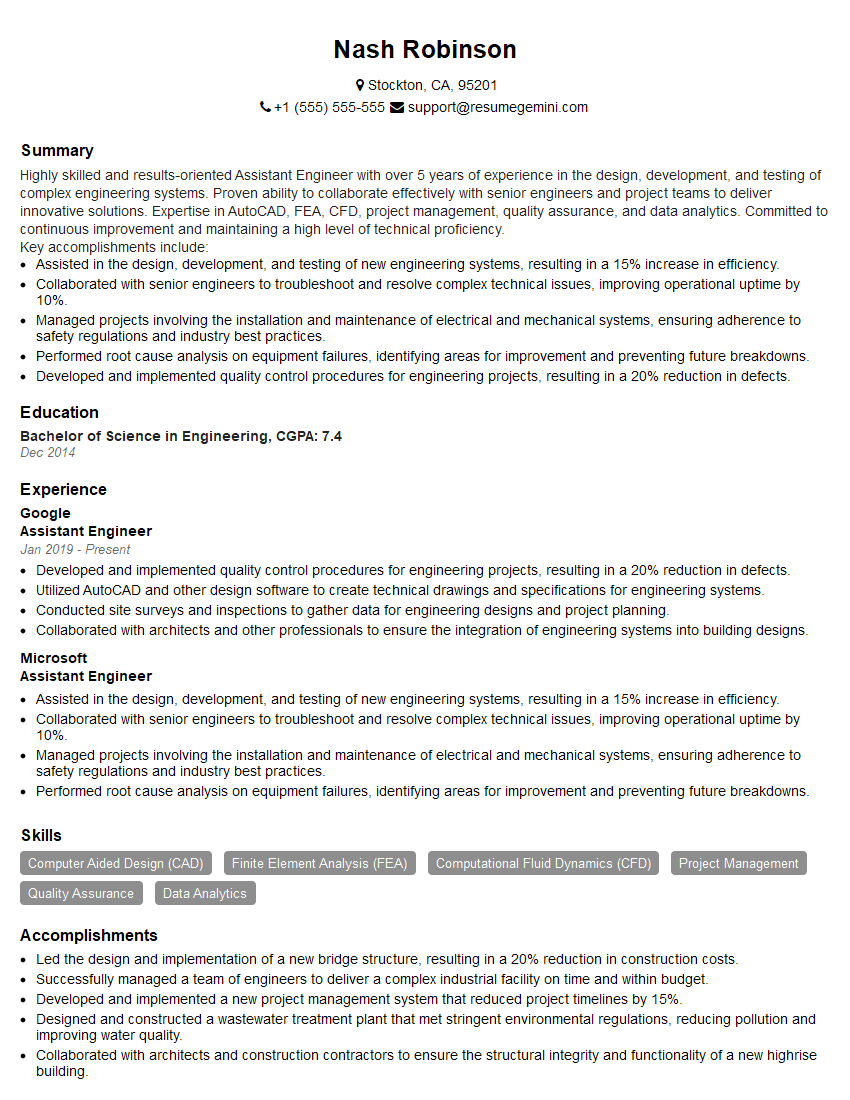
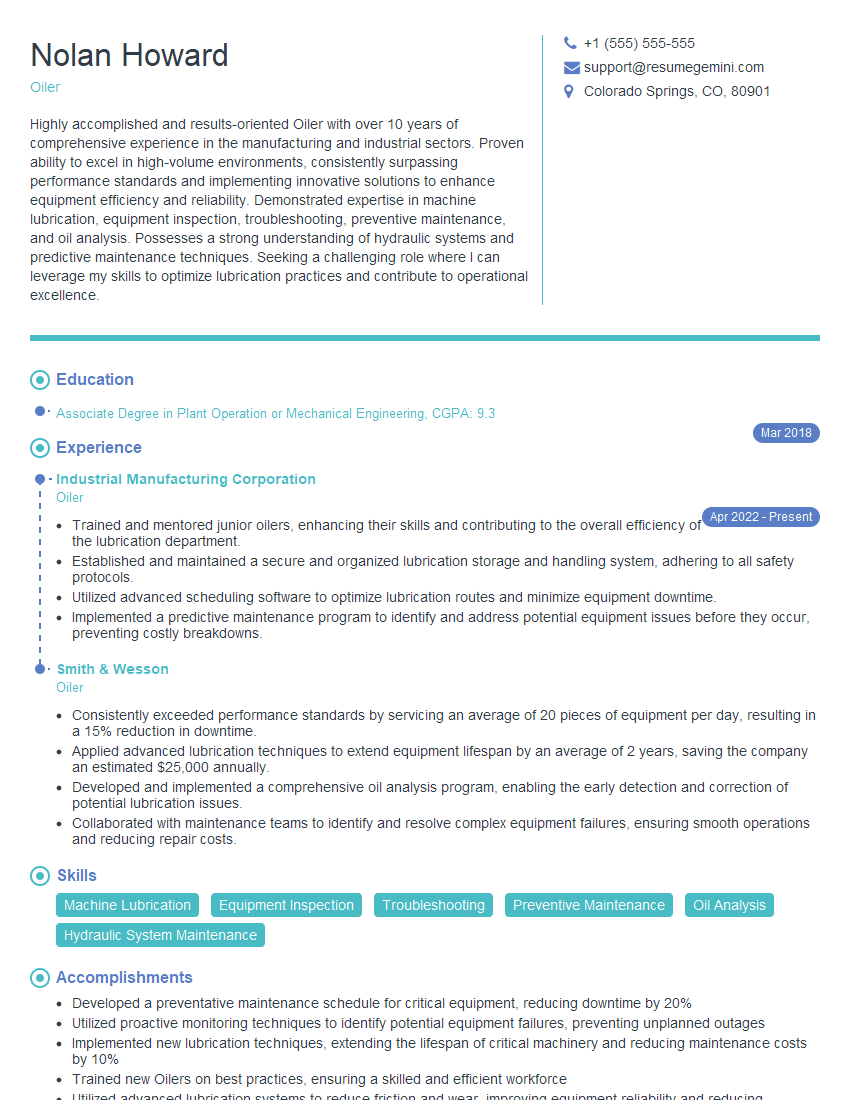
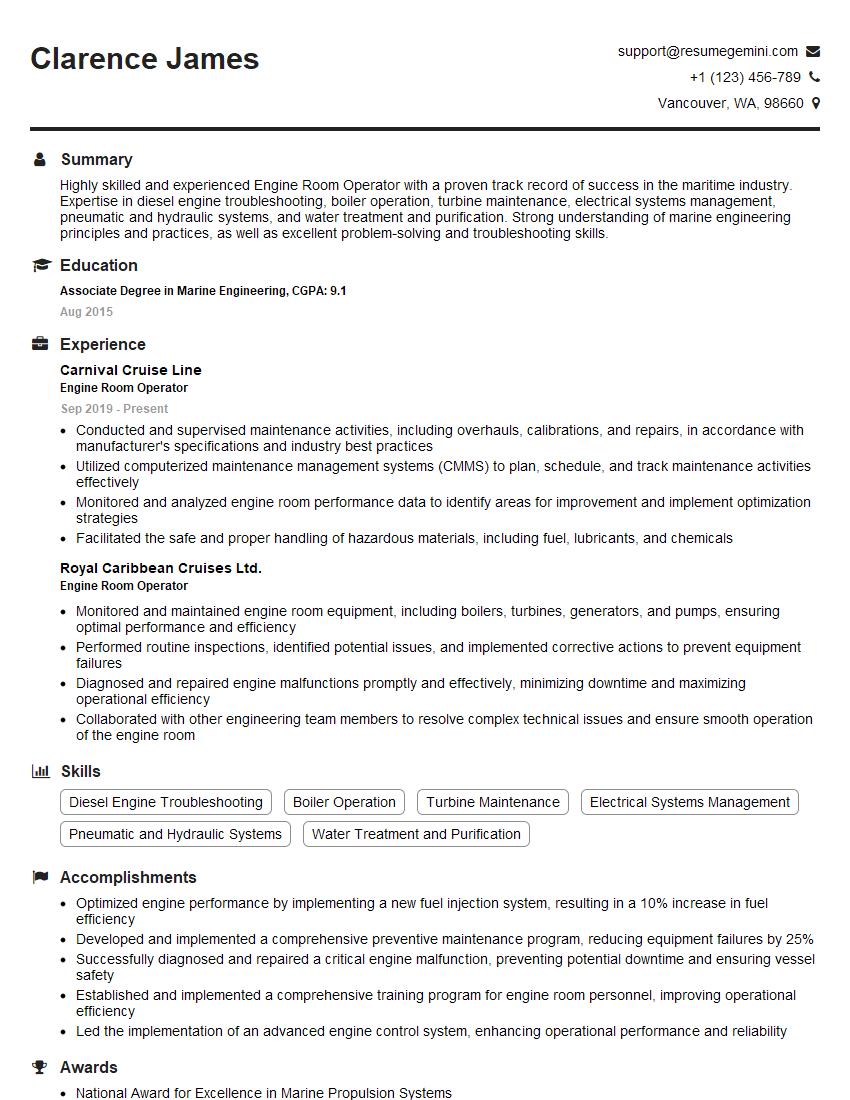
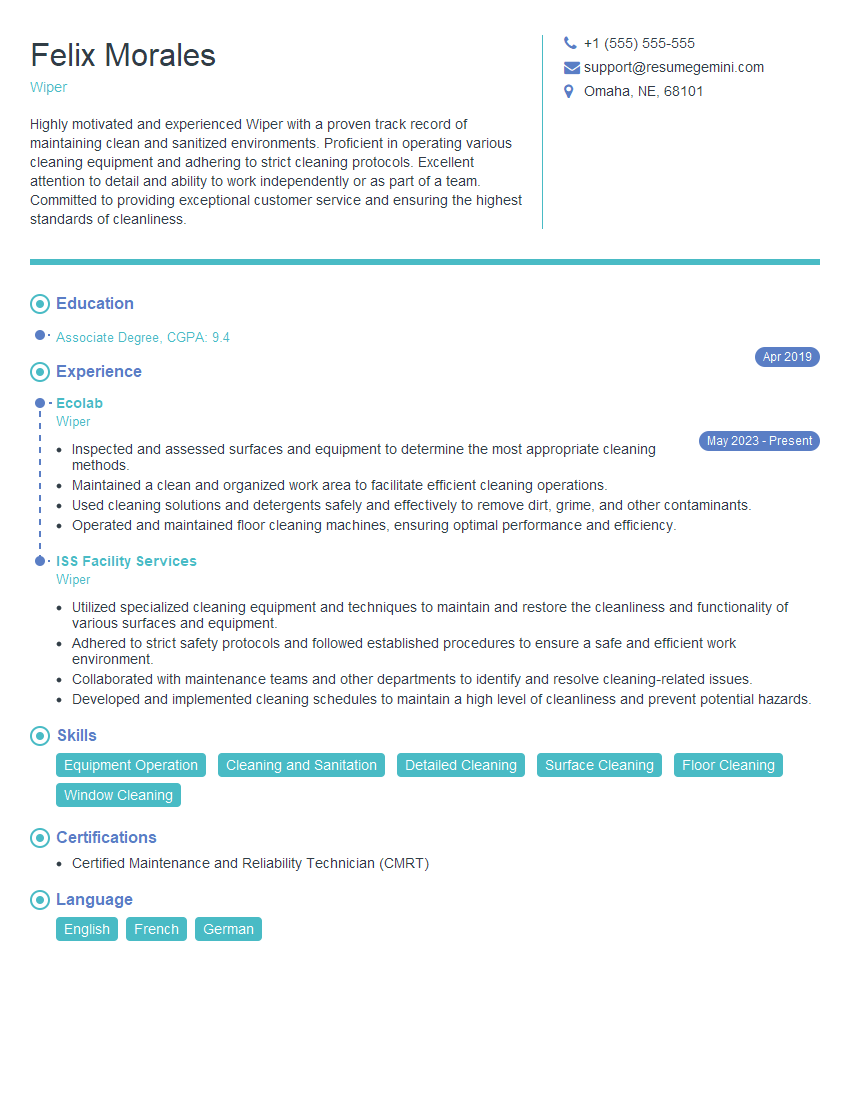
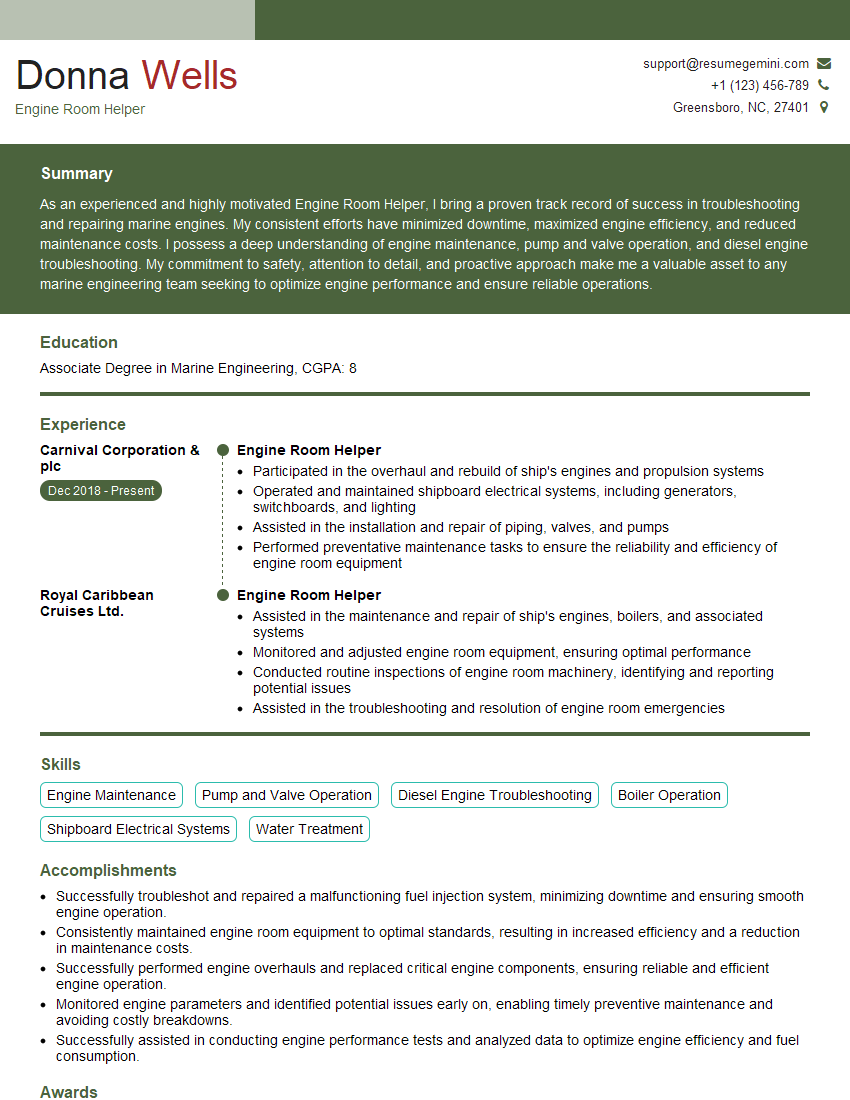
Mastering Engine Room Assist principles is crucial for career advancement in the maritime industry, opening doors to more senior roles and higher earning potential. To significantly improve your job prospects, creating a well-structured, ATS-friendly resume is essential. We highly recommend using ResumeGemini, a trusted resource for building professional and impactful resumes. ResumeGemini provides examples of resumes tailored to Engine Room Assist roles, allowing you to craft a compelling application that showcases your skills and experience effectively.
Explore more articles
Users Rating of Our Blogs
Share Your Experience
We value your feedback! Please rate our content and share your thoughts (optional).
What Readers Say About Our Blog
Very informative content, great job.
good