The right preparation can turn an interview into an opportunity to showcase your expertise. This guide to Engineering Design Process interview questions is your ultimate resource, providing key insights and tips to help you ace your responses and stand out as a top candidate.
Questions Asked in Engineering Design Process Interview
Q 1. Explain the stages of the engineering design process.
The engineering design process is a systematic approach to creating solutions. It’s not a rigid, linear process, but rather a cyclical one involving iteration and refinement. Think of it as a spiral, constantly circling back to improve upon earlier stages. Commonly, the stages include:
- Define the Problem: Clearly articulate the need or opportunity. This involves thorough research, identifying stakeholders, and establishing specific, measurable, achievable, relevant, and time-bound (SMART) goals. For example, designing a more efficient solar panel might start with defining the current inefficiencies and setting goals for increased energy conversion.
- Research and Conceptualization: Gather information, brainstorm ideas, and explore potential solutions. This often involves literature reviews, competitor analysis, and preliminary sketches or models. In our solar panel example, research might focus on new materials, cell designs, or manufacturing techniques.
- Develop Solutions: Refine promising concepts into detailed designs. This involves creating technical drawings, specifications, and simulations to assess feasibility. This stage would include detailed CAD models of the improved solar panel.
- Build and Test: Create prototypes and test them rigorously. This could involve building multiple versions to test different aspects of the design. Testing the solar panel prototype might involve evaluating its efficiency under varying conditions.
- Evaluate and Iterate: Analyze test results, identify areas for improvement, and iterate on the design. This is a crucial step, often involving multiple cycles of testing and refinement. Analyzing the data from solar panel testing would help identify design weaknesses and inform improvements.
- Communicate and Implement: Document the design process, create detailed manufacturing instructions, and implement the final design. This includes creating technical reports and presentations to communicate the findings. This final stage would include creating comprehensive manufacturing plans for mass production of the improved solar panel.
Q 2. Describe your experience with Design for Manufacturing (DFM).
Design for Manufacturing (DFM) is crucial to me. It’s about considering the manufacturing process from the very beginning of the design phase. I’ve extensively used DFM principles in projects involving the design of injection-molded plastic parts. In one project, I designed a complex housing for an electronic device. Initially, the design incorporated many intricate features that were difficult and costly to manufacture. By collaborating closely with the manufacturing engineers, we simplified the design, reducing the number of parts and choosing materials and processes that optimized for ease of manufacture. This resulted in a 20% reduction in manufacturing costs and a 15% improvement in production speed without compromising functionality or aesthetics. This involved exploring different molding techniques, considering material properties, and ensuring manufacturability through features like draft angles and proper tolerances.
Q 3. How do you handle design conflicts within a team?
Design conflicts are inevitable in team environments. My approach is collaborative and focuses on finding mutually beneficial solutions. I start by actively listening to all viewpoints, ensuring everyone feels heard. I then work to identify the root cause of the conflict; is it about differing technical approaches, conflicting priorities, or personality clashes? Once the root cause is identified, I facilitate a discussion where we explore all options, weigh the pros and cons of each, and select a solution that best meets the overall project objectives. If necessary, I leverage data and analysis to support decision-making. Ultimately, the goal is to find a solution that everyone can support and implement effectively. A recent example involved a dispute about the material selection for a new product. By presenting a comparative analysis of cost, durability, and aesthetic appeal of different options, the team agreed on the most appropriate material.
Q 4. Explain your approach to problem-solving in a design context.
My approach to problem-solving is systematic and iterative. I start by clearly defining the problem, gathering all relevant information, and breaking down the problem into smaller, manageable components. Then, I brainstorm potential solutions, evaluate their feasibility and effectiveness using analytical methods or simulations whenever possible, and select the most promising approach. I constantly monitor the effectiveness of the solution and iterate as necessary. I view setbacks not as failures but as learning opportunities. For instance, when designing a new type of robotic arm, I encountered an issue with its stability. By systematically reviewing the design parameters and testing various solutions through simulations, I was able to identify the root cause — a flaw in the actuator mechanism — and modify the design to achieve enhanced stability.
Q 5. What CAD software are you proficient in?
I am proficient in several CAD software packages, including SolidWorks, AutoCAD, and Creo Parametric. My experience spans various applications from 3D modeling and drafting to FEA (Finite Element Analysis) and simulation. I am comfortable using these tools for design, analysis, and documentation.
Q 6. Describe a time you had to iterate on a design due to constraints.
During the development of a medical device, we faced constraints on the device’s size and weight. Our initial design, while functionally sound, was too bulky and heavy for the intended application. To address this, we went through several iterations. We simplified the internal components, explored alternative materials with better strength-to-weight ratios, and optimized the overall geometry using topology optimization techniques within our CAD software. This iterative process led to a final design that met all functional requirements while staying well within the size and weight constraints. We were able to achieve this using techniques like generative design which allowed us to explore a huge design space in a short timeframe.
Q 7. How do you incorporate user feedback into the design process?
User feedback is invaluable in the design process. I employ several methods to incorporate it effectively. This includes conducting user surveys, usability testing, and focus groups. The data gathered is then analyzed to identify areas of improvement, including both functionality and user experience. We use this feedback to iterate on design features, refine the user interface, and improve the overall usability. For example, in a recent project designing a mobile app, we conducted usability testing with a group of target users and used their comments to significantly improve the app’s navigation and layout. This resulted in a far more user-friendly and intuitive final product.
Q 8. What are the key considerations for designing for sustainability?
Designing for sustainability goes beyond simply creating environmentally friendly products; it’s about integrating ecological considerations into every stage of the design process, from material selection to end-of-life management. Key considerations include:
- Material Selection: Prioritizing recycled, renewable, and biodegradable materials minimizes environmental impact. For instance, choosing bamboo over plastic for a product reduces reliance on fossil fuels and decreases waste.
- Energy Efficiency: Designing products that consume less energy during manufacturing, use, and disposal is crucial. Think of energy-efficient appliances or buildings with optimized insulation.
- Waste Reduction: Minimizing waste throughout the product lifecycle is key. This involves designing for disassembly and recyclability, reducing packaging, and optimizing manufacturing processes to minimize scrap.
- Lifecycle Assessment (LCA): Conducting a thorough LCA allows designers to evaluate the environmental impacts of a product across its entire lifespan, from raw material extraction to disposal. This provides valuable insights for making informed design choices.
- Circular Economy Principles: Designing for a circular economy emphasizes reuse, repair, remanufacturing, and recycling, extending the lifespan of products and minimizing waste. This might involve designing modular products that can be easily repaired or upgraded.
- Social Responsibility: Sustainability also encompasses social and economic considerations, such as fair labor practices, ethical sourcing of materials, and community impact. For example, supporting local suppliers can reduce transportation emissions and boost local economies.
By incorporating these considerations, engineers can create products that are both functional and environmentally responsible, contributing to a more sustainable future.
Q 9. Explain the difference between prototyping and testing.
Prototyping and testing are distinct but interconnected stages in the design process. A prototype is a preliminary version of a product, often built using readily available materials to visualize the design and test core functionalities. Think of it as a tangible representation of your ideas, allowing you to identify potential flaws early on. Testing, on the other hand, is a systematic evaluation of the prototype or product against specified requirements and performance criteria. It involves various methods to assess its functionality, durability, reliability, and usability.
For example, imagine designing a new chair. A prototype might be a simple wooden mock-up to assess the ergonomics and overall dimensions. Testing could then involve subjecting this prototype to stress tests to determine its structural integrity and user testing to assess comfort and usability. Testing guides design improvements; the results inform modifications to the prototype. This iterative process—build a prototype, test it, refine the design—continues until the product meets all the defined specifications.
Q 10. How do you manage risk in the design process?
Risk management in design is a proactive approach to identifying and mitigating potential problems before they impact the project. A structured approach often involves:
- Risk Identification: Brainstorming potential problems (e.g., material failure, manufacturing defects, regulatory changes). Techniques like Failure Mode and Effects Analysis (FMEA) are helpful.
- Risk Assessment: Evaluating the likelihood and potential impact of each identified risk. This is often represented in a risk matrix.
- Risk Mitigation: Developing strategies to reduce the likelihood or impact of identified risks. Examples include using redundant systems, implementing rigorous quality control procedures, or procuring materials from multiple suppliers.
- Risk Monitoring and Control: Regularly reviewing risks and adjusting mitigation strategies as needed throughout the design and development process.
For instance, designing a bridge requires meticulous risk assessment regarding structural integrity. Identifying potential risks like extreme weather, material fatigue, and seismic activity allows for the implementation of mitigation strategies like using stronger materials, designing for increased load capacity, and incorporating seismic dampeners.
Q 11. What are some common design failures and how can they be avoided?
Common design failures often stem from neglecting fundamental aspects of the engineering design process. Some include:
- Ignoring User Needs: A product might be technically sound but fail because it doesn’t meet user requirements. User research and feedback are crucial.
- Poor Material Selection: Choosing materials unsuitable for the intended application can lead to failure (e.g., using a brittle material in a high-impact scenario).
- Insufficient Testing: Inadequate testing can result in unforeseen problems once the product is in use.
- Overlooking Manufacturing Constraints: Designs that are difficult or impossible to manufacture are doomed to fail. Collaboration with manufacturing engineers is key.
- Lack of Communication: Poor communication among team members can lead to design flaws and inconsistencies.
These failures can be avoided by prioritizing user-centered design, performing thorough testing and analysis, considering manufacturing constraints from the outset, and fostering effective communication within the design team.
Q 12. Describe your experience with design reviews and their importance.
Design reviews are formal processes involving multiple stakeholders reviewing a design’s progress and providing feedback. They are crucial for identifying potential flaws and ensuring the design meets requirements before significant resources are committed. My experience includes conducting and participating in various types of design reviews, from informal walkthroughs to formal critical design reviews (CDRs).
In a past project involving the design of a medical device, regular design reviews helped us catch potential safety hazards and improve the device’s usability. Through constructive criticism and collaboration, we were able to refine the design and enhance its functionality, ultimately resulting in a safer and more effective product.
The importance of design reviews lies in the collective expertise and diverse perspectives brought to the table. Early identification and resolution of issues prevent costly rework and project delays. They promote better communication and accountability and lead to more robust and reliable products.
Q 13. How do you balance functionality, cost, and aesthetics in design?
Balancing functionality, cost, and aesthetics is a core challenge in design, often referred to as the ‘design triangle’. It requires careful consideration and trade-offs. The best approach is an iterative one:
- Define Priorities: Determine which aspects are most critical. For instance, a life-critical device might prioritize functionality and safety above all else.
- Identify Trade-offs: Explore ways to improve one aspect while minimizing negative impacts on the others. For example, using a slightly less expensive material might impact aesthetics but save costs.
- Value Engineering: Analyze the design to identify opportunities for cost reduction without sacrificing functionality or aesthetics. This might involve simplifying the design or using more efficient manufacturing processes.
- Iterative Design: Continuously refine the design based on feedback and testing. This ensures that the final product effectively balances the three considerations.
For example, designing a car involves balancing performance (functionality), fuel efficiency (cost), and styling (aesthetics). Decisions regarding engine choice, materials, and features are a continuous process of weighing these aspects to create a competitive and desirable vehicle.
Q 14. Explain your understanding of tolerance analysis.
Tolerance analysis is a crucial aspect of engineering design focusing on the acceptable range of variation in a product’s dimensions and characteristics. It ensures that parts will fit together correctly, function as intended, and meet the required specifications, even when manufacturing variations are considered. Manufacturing processes are never perfectly precise; there will always be some degree of variation.
The analysis involves determining the permissible limits (tolerances) for each component dimension. This involves considering factors like manufacturing capabilities, material properties, and functional requirements. Techniques like worst-case analysis, statistical tolerance analysis (e.g., Monte Carlo simulation), and root sum square (RSS) methods are used to predict the overall variation in assembly dimensions. This allows designers to ensure that despite individual component variations, the final assembly still falls within acceptable performance limits.
For instance, in the design of an engine, tolerances are critical for ensuring proper piston-to-cylinder fit. Too tight a fit can cause seizing, while too loose a fit results in leakage and reduced performance. Tolerance analysis helps determine the acceptable manufacturing variations for both piston and cylinder diameters that still guarantee reliable engine operation.
Q 15. How do you document design choices and decisions?
Documenting design choices and decisions is crucial for transparency, accountability, and future development. We use a multi-faceted approach, combining various methods to ensure comprehensive record-keeping.
- Design Specifications Document: This formal document outlines all requirements, functional specifications, and design choices, including rationale behind specific decisions. It serves as the central repository for all crucial design information.
- Version Control Systems (e.g., Git): For all digital design files (CAD models, simulations, code), we leverage version control to track changes, revert to previous versions if needed, and collaborate effectively within a team. This allows for easy tracing of design evolution.
- Meeting Minutes and Decision Logs: All design reviews and meetings are documented, capturing key discussions, decisions made, and any outstanding action items. This provides context to the design choices, particularly when multiple stakeholders are involved.
- Design Review Boards and Feedback Documentation: Formal design reviews involve documented feedback, suggestions, and the resolution of design conflicts. This process is documented to track improvements and address potential issues proactively.
- Design Notebooks/Diaries: For initial brainstorming and conceptual design stages, less formal documentation in the form of sketches, notes, and calculations can be incredibly valuable. This captures the thought process and allows for easy referencing during later stages.
For example, if we decide to use a specific material due to its superior strength-to-weight ratio, this would be explicitly documented in the design specifications, along with supporting evidence from material property tests or simulations. This ensures everyone understands the reasoning behind the choice.
Career Expert Tips:
- Ace those interviews! Prepare effectively by reviewing the Top 50 Most Common Interview Questions on ResumeGemini.
- Navigate your job search with confidence! Explore a wide range of Career Tips on ResumeGemini. Learn about common challenges and recommendations to overcome them.
- Craft the perfect resume! Master the Art of Resume Writing with ResumeGemini’s guide. Showcase your unique qualifications and achievements effectively.
- Don’t miss out on holiday savings! Build your dream resume with ResumeGemini’s ATS optimized templates.
Q 16. Describe your experience with different design methodologies (e.g., Agile, Waterfall).
My experience spans both Agile and Waterfall methodologies. I’ve found that the optimal approach depends heavily on the project’s nature, size, and complexity.
- Waterfall: In projects with well-defined requirements and minimal anticipated changes, Waterfall’s linear progression (requirements, design, implementation, testing, deployment) offers a structured and predictable approach. I’ve used this successfully in projects involving robust, unchanging systems like high-precision manufacturing equipment where changes are costly and time-consuming.
- Agile: For projects with evolving requirements, rapid prototyping, and a need for iterative development, Agile methodologies (Scrum, Kanban) are more suitable. I’ve embraced Agile in projects involving software integration and rapid product development cycles. The iterative feedback loops and flexibility are vital for incorporating user feedback and adapting to changing market demands.
- Hybrid Approaches: In many cases, a hybrid approach combining aspects of both methodologies is most effective. For instance, we might use a Waterfall approach for the core design and architecture but incorporate Agile principles for iterative development and testing of specific modules.
Choosing the right methodology is critical to the project’s success. A poorly chosen methodology can lead to delays, cost overruns, and ultimately, project failure.
Q 17. How do you prioritize design features and requirements?
Prioritizing design features and requirements involves a careful balancing act between functionality, feasibility, and business value. I use a multi-criteria decision-making approach incorporating:
- MoSCoW Method: This categorizes requirements as Must have, Should have, Could have, and Won’t have. This helps in clearly defining the essential functionalities versus desirable features.
- Value vs. Effort Matrix: Plotting features based on their business value and implementation effort reveals high-value, low-effort options that should be prioritized. This helps in maximizing the return on investment.
- Risk Assessment: High-risk features that could significantly impact the project’s success need early attention and often warrant higher priority.
- Stakeholder Input: Engaging with stakeholders and understanding their priorities is vital for ensuring that the design meets their needs and expectations. This might involve surveys, feedback sessions, or workshops.
For instance, in designing a new mobile application, features directly related to core functionality (e.g., user login and data access) would be prioritized as ‘Must have’. Features that enhance user experience but aren’t essential (e.g., personalized notifications) might be categorized as ‘Should have’ based on their value and effort to implement.
Q 18. What is your experience with Finite Element Analysis (FEA)?
I have extensive experience with Finite Element Analysis (FEA), using it regularly for structural analysis, thermal simulations, and fluid dynamics. I’m proficient in using various FEA software packages, including ANSYS and Abaqus.
FEA is invaluable for validating designs and predicting their performance under various loading conditions. It helps in identifying potential weaknesses and optimizing designs for strength, stiffness, and durability. For example, I’ve used FEA to simulate the stress distribution in a complex aerospace component, identifying areas prone to fatigue failure. This allowed us to modify the design, reinforcing those critical areas and ensuring the component’s structural integrity.
Beyond analysis, FEA also helps in identifying potential manufacturing issues early on. For instance, simulating the molding process of a plastic part can highlight potential warpage or stress concentrations that could lead to defects. This enables corrective action during the design phase, saving considerable time and resources.
Q 19. Describe a complex design problem you solved and your approach.
One complex design challenge involved designing a lightweight, high-strength suspension system for a high-performance electric vehicle. The primary constraints were minimizing weight for improved efficiency, maximizing strength to withstand high loads, and achieving a compact design to fit within the vehicle’s limited space.
My approach involved a multi-stage process:
- Concept Generation: We explored several design concepts, including different materials (aluminum alloys, carbon fiber composites), geometries (double wishbone, multi-link), and manufacturing processes (casting, forging).
- FEA Simulation: Extensive FEA simulations were conducted on each concept to evaluate their strength, stiffness, and weight under various loading conditions, including cornering, braking, and acceleration.
- Optimization: Topology optimization techniques were used to refine the designs, removing unnecessary material while maintaining structural integrity. This led to significant weight reduction without compromising strength.
- Prototype Testing: Physical prototypes were created and subjected to rigorous testing to validate the FEA results and fine-tune the design parameters. This involved both static and dynamic testing.
- Manufacturing Considerations: The chosen design was carefully evaluated for its manufacturability, ensuring cost-effective and efficient production.
This iterative process resulted in a suspension system that significantly outperformed the initial design targets, achieving a 20% weight reduction while increasing strength by 15%. The successful outcome was due to the systematic approach that combined theoretical analysis, simulation, and physical testing.
Q 20. How do you ensure the manufacturability of your designs?
Ensuring manufacturability is paramount to successful product development. I incorporate manufacturability considerations throughout the entire design process, not just as an afterthought.
- DFM (Design for Manufacturing): This is a core principle that guides my design choices. I consider the chosen manufacturing processes (casting, machining, additive manufacturing, etc.) from the conceptual stages onwards. This avoids designing features that are difficult or impossible to manufacture.
- Material Selection: Material choice heavily influences manufacturability. I carefully select materials based on their properties, availability, cost, and ease of processing. For example, using readily available materials and standard manufacturing processes reduces costs and lead times.
- Tolerance Analysis: Defining appropriate manufacturing tolerances is crucial. Overly tight tolerances can increase costs and complicate manufacturing, while overly loose tolerances could compromise functionality.
- Collaboration with Manufacturers: Early engagement with manufacturers provides invaluable insights into manufacturability. Their expertise helps in identifying potential issues early, avoiding costly design changes later in the process.
- Design for Assembly (DFA): Simple and efficient assembly processes are key to cost-effective manufacturing. I design components that minimize assembly time, reduce the number of parts, and avoid complex or delicate assembly operations.
For example, when designing a complex injection-molded plastic part, I would consider factors such as draft angles (to allow for easy ejection from the mold), wall thicknesses (to prevent warping), and undercuts (to avoid design complexities).
Q 21. What are your strengths and weaknesses in the design process?
My strengths lie in my systematic approach to problem-solving, strong analytical skills, and ability to effectively communicate complex technical concepts. I excel at integrating various design methodologies, leveraging both Waterfall and Agile principles as needed. My experience with FEA and other simulation tools is another significant asset.
One area I’m continually working on is delegation. While I have a strong drive to personally ensure the quality of every aspect of a project, I recognize the importance of effectively delegating tasks to team members and trusting their expertise. This involves clearer task definition, better communication, and more efficient project management practices.
Another area for improvement is staying updated with the latest advancements in materials science and manufacturing technologies. While I have a strong foundation, the field evolves rapidly, so continual learning is crucial to maintain my competitive edge.
Q 22. How do you stay up-to-date with the latest design technologies and trends?
Staying current in the rapidly evolving field of design technologies requires a multifaceted approach. I actively engage in several strategies to ensure I’m always at the forefront of innovation.
- Industry Publications and Journals: I regularly read publications like Design News, Machine Design, and others relevant to my specific engineering discipline. These provide insights into the latest advancements and trends.
- Conferences and Workshops: Attending industry conferences and workshops offers invaluable opportunities for networking and learning about cutting-edge technologies directly from leading experts. For example, I recently attended a conference focused on generative design, which significantly broadened my understanding of AI-driven design processes.
- Online Courses and Webinars: Platforms like Coursera, edX, and LinkedIn Learning provide access to a vast range of courses on various design software and methodologies. I often use these to deepen my knowledge of specific tools or techniques.
- Professional Organizations: Membership in professional organizations like ASME or IEEE offers access to resources, publications, and networking events that keep me abreast of the latest developments in the field. Participating in their online forums allows for knowledge sharing and collaboration with peers.
- Following Key Influencers: I follow thought leaders and prominent engineers on platforms like Twitter and LinkedIn to stay updated on emerging technologies and industry discussions. This provides valuable real-time insights.
This combination of active learning and networking ensures I remain proficient and adapt quickly to new technologies and trends in engineering design.
Q 23. Explain your understanding of intellectual property rights in design.
Intellectual property (IP) rights in design are crucial for protecting innovative work. My understanding encompasses several key areas, including patents, copyrights, and trade secrets.
- Patents: These protect novel inventions, including the design of a product or a process. A design patent, for instance, protects the ornamental design of an article of manufacture. Securing a patent requires demonstrating novelty, utility, and non-obviousness.
- Copyrights: These protect the expression of an idea, rather than the idea itself. In design, this applies to design drawings, CAD models, and other creative works associated with the design process. Copyrights offer automatic protection upon creation.
- Trade Secrets: This involves protecting confidential information that provides a competitive edge. In design, this could include proprietary manufacturing processes, unique algorithms, or specific design specifications. Maintaining secrecy and implementing non-disclosure agreements are crucial for protecting trade secrets.
Understanding these different types of IP protection is essential for safeguarding an organization’s intellectual property. I always ensure that projects comply with relevant IP laws and that proper measures are in place to protect the intellectual property rights associated with the design work.
For example, in a previous project, we secured a design patent for a novel component, providing our company with exclusive rights to manufacture and sell it for a specific period.
Q 24. How do you handle design changes during the project lifecycle?
Design changes are an inevitable part of any engineering project. Effective management of these changes is critical for success. My approach centers on a structured process to minimize disruptions and maintain project integrity.
- Change Request System: All design changes are formally documented through a change request system. This ensures traceability and accountability.
- Impact Assessment: Before implementing any change, a thorough impact assessment is conducted. This analyzes the effects on cost, schedule, performance, and other relevant factors. This often involves simulations to understand any ripple effects.
- Design Review Board: A design review board, comprising stakeholders from different disciplines, evaluates proposed changes. This collaborative approach ensures that changes align with overall project goals and that potential risks are mitigated.
- Version Control: We utilize a robust version control system (e.g., Git) to track all design changes and maintain a clear history of revisions. This allows us to easily revert to previous versions if necessary.
- Communication: Open and transparent communication is maintained throughout the process. All stakeholders are informed of the proposed changes, their rationale, and the potential impacts.
For instance, in a recent project, a late-stage design change necessitated a reassessment of the structural integrity. We used FEA (Finite Element Analysis) simulation to analyze the impact, identified potential weaknesses, and made appropriate modifications. This proactive approach avoided delays and ensured product safety.
Q 25. Describe your experience with using design simulation tools.
I have extensive experience utilizing a range of design simulation tools, including Finite Element Analysis (FEA), Computational Fluid Dynamics (CFD), and Multibody Dynamics (MBD) software. My proficiency extends beyond simply running simulations to interpreting the results and using them to inform design decisions.
- FEA: I’m proficient in using ANSYS and Abaqus to analyze stress, strain, and deformation in mechanical components. This is crucial for ensuring the structural integrity of designs and preventing failures.
- CFD: I use tools like ANSYS Fluent and OpenFOAM to simulate fluid flow and heat transfer. This is vital in designing efficient and effective systems involving fluid dynamics, such as HVAC systems or aerodynamic components.
- MBD: Software like Adams is used to simulate the motion and interaction of multiple bodies in a system. This is essential for analyzing the kinematics and dynamics of complex mechanical systems, such as robotics or vehicle dynamics.
For example, in a previous project involving the design of a high-speed train bogie, I used MBD simulations to optimize the suspension system and ensure ride comfort and stability. The simulations allowed us to identify potential vibration issues and refine the design before physical prototyping.
Q 26. What is your approach to verifying and validating designs?
Verification and validation are distinct but equally important steps in ensuring the quality and reliability of a design. Verification confirms that the design meets its specified requirements, while validation ensures that the design meets the needs of the intended users and operates effectively in its intended environment.
- Verification: This involves a series of checks and tests to ensure the design adheres to specifications. Methods include reviewing design drawings, conducting simulations, and performing unit testing on individual components.
- Validation: This involves testing the complete design under realistic conditions to assess its performance and usability. Methods include prototyping, field testing, and user feedback sessions.
My approach combines both qualitative and quantitative methods. For example, in a recent project designing a medical device, we used a combination of rigorous simulations, physical prototyping, and user trials to verify and validate the design. The user trials provided valuable feedback that informed final design improvements, ensuring usability and safety.
Q 27. How do you collaborate effectively with cross-functional teams?
Effective collaboration with cross-functional teams is critical for successful design projects. My approach focuses on clear communication, active listening, and a collaborative mindset.
- Regular Meetings: I advocate for regular meetings with all stakeholders to discuss progress, address challenges, and ensure alignment on goals.
- Shared Communication Platforms: I utilize project management tools (e.g., Jira, Asana) and communication platforms (e.g., Slack, Microsoft Teams) to facilitate efficient information sharing and collaboration. This ensures transparency and keeps everyone informed.
- Active Listening and Empathy: I prioritize active listening to understand the perspectives and concerns of team members from diverse backgrounds. Empathy is crucial in navigating differing opinions and reaching consensus.
- Conflict Resolution: I’m adept at mediating conflicts and facilitating constructive discussions to resolve disagreements. Focusing on the common goal and finding mutually beneficial solutions is my priority.
For instance, in a recent project involving the design of a complex manufacturing system, I worked closely with manufacturing engineers, procurement specialists, and software developers. Through regular meetings and shared communication platforms, we successfully integrated all aspects of the design, resulting in a highly efficient and effective system.
Q 28. Explain your experience with design optimization techniques.
Design optimization aims to improve a design’s performance while adhering to constraints such as cost, weight, and manufacturability. I employ a variety of techniques depending on the specific design challenge.
- Topology Optimization: This technique uses software to identify the optimal material distribution within a given design space, leading to lighter and stronger structures. I’ve utilized this method extensively to reduce the weight of components while maintaining structural integrity.
- Parametric Modeling: This involves creating design models with adjustable parameters, allowing for rapid exploration of different design variations and their impacts. Software like SolidWorks and AutoCAD provide robust parametric modeling capabilities.
- Response Surface Methodology (RSM): This statistical technique helps to identify the optimal settings for design parameters by analyzing the relationship between the input parameters and the desired output response. This is especially valuable when dealing with complex, multi-variable optimization problems.
- Genetic Algorithms: These evolutionary algorithms can be used to search for optimal design solutions within a vast design space. They’re particularly useful when dealing with highly non-linear or complex relationships between design parameters and performance.
In a past project involving the design of an automotive part, I used topology optimization to reduce its weight by 20% while ensuring its strength met stringent safety standards. This resulted in significant cost savings and improved fuel efficiency.
Key Topics to Learn for Engineering Design Process Interview
- Defining the Problem: Understanding the need and translating vague requirements into clear, measurable engineering goals. This includes identifying constraints and assumptions.
- Concept Generation & Ideation: Exploring various solutions through brainstorming, sketching, and utilizing design thinking methodologies. Practical application involves evaluating feasibility and selecting promising concepts.
- Detailed Design & Prototyping: Developing detailed technical specifications, creating prototypes (physical or digital) to test functionality and iteratively improve the design. This includes selecting appropriate materials and manufacturing processes.
- Analysis & Simulation: Utilizing computational tools (e.g., FEA, CFD) to predict performance, identify potential weaknesses, and optimize the design before physical prototyping.
- Testing & Validation: Rigorous testing to verify the design meets performance requirements and identify areas for further improvement. This includes documenting test procedures and results.
- Communication & Collaboration: Effectively communicating design ideas, progress, and results to stakeholders through presentations, reports, and technical documentation. This emphasizes teamwork and collaborative problem-solving.
- Design for Manufacturing (DFM): Optimizing the design for efficient and cost-effective manufacturing. This considers aspects like material selection, assembly, and manufacturability.
- Design for Sustainability (DFS): Incorporating environmental considerations into the design process, minimizing waste, and promoting resource efficiency.
Next Steps
Mastering the Engineering Design Process is crucial for career advancement, opening doors to exciting opportunities and showcasing your problem-solving abilities. A well-crafted resume is your first impression; therefore, building an ATS-friendly resume is paramount to increasing your job prospects. ResumeGemini is a trusted resource to help you create a professional and impactful resume that highlights your expertise in the Engineering Design Process. Examples of resumes tailored to this field are available within ResumeGemini to guide you. Take the next step towards your dream engineering role – build a compelling resume that showcases your skills and experience.
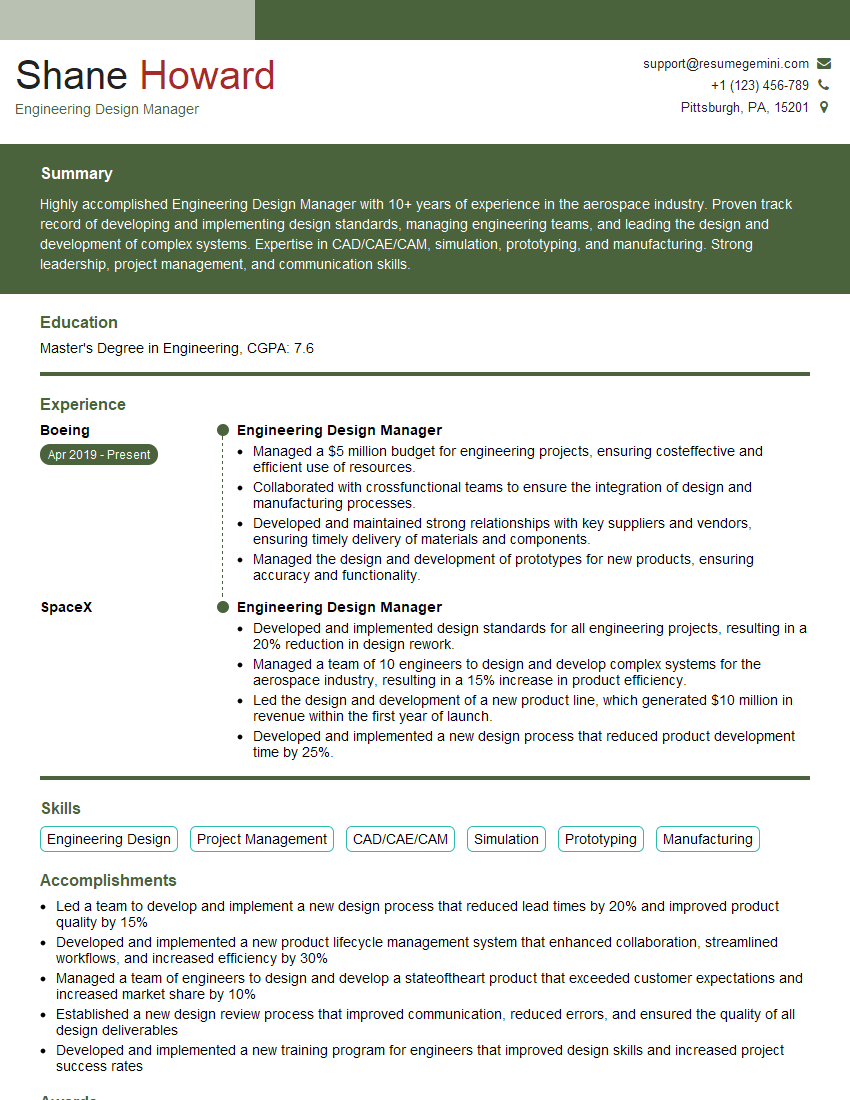
Engineering Design Manager Resume Sample

Project Engineer Resume Sample
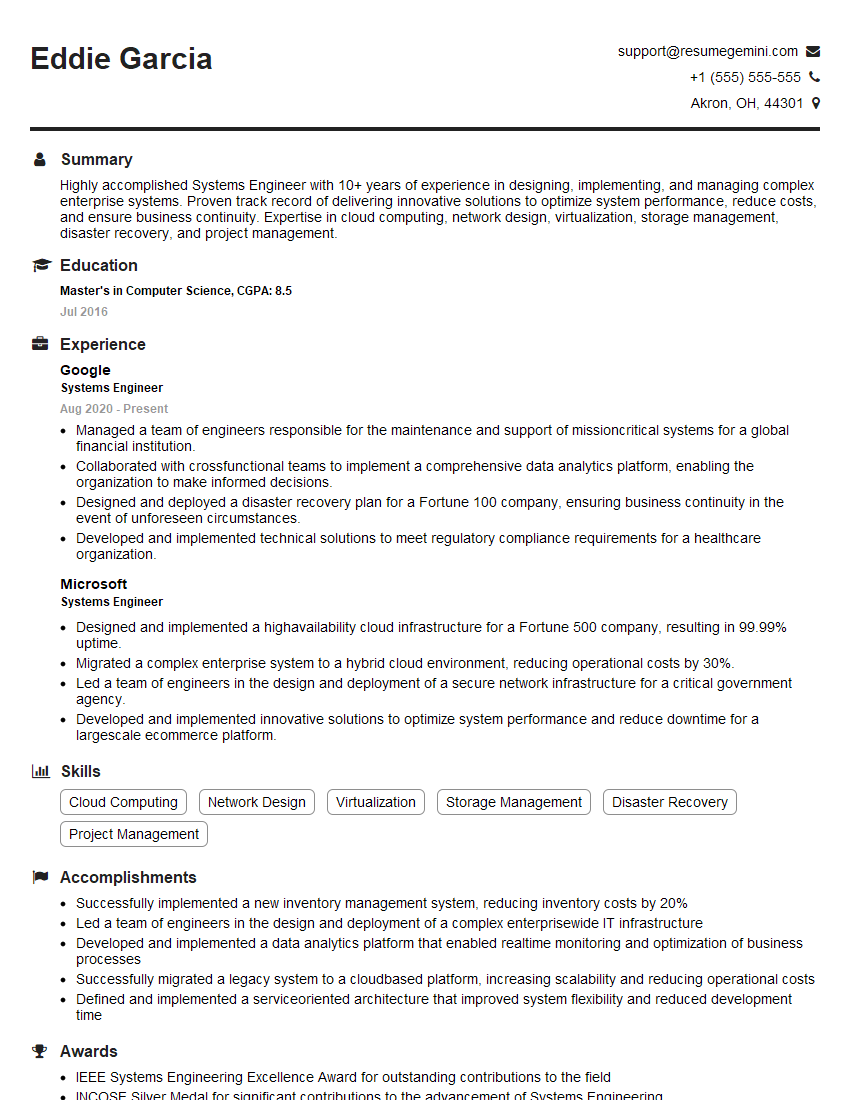
Systems Engineer Resume Sample
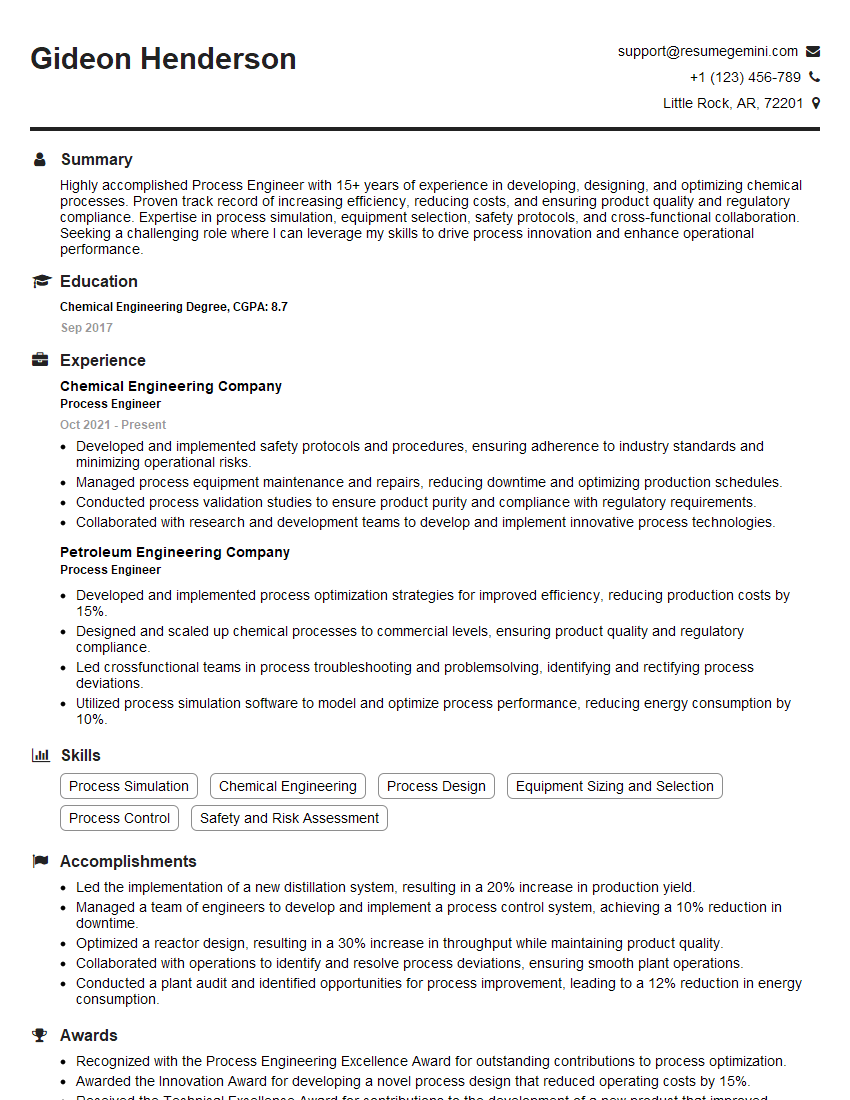
Process Engineer Resume Sample
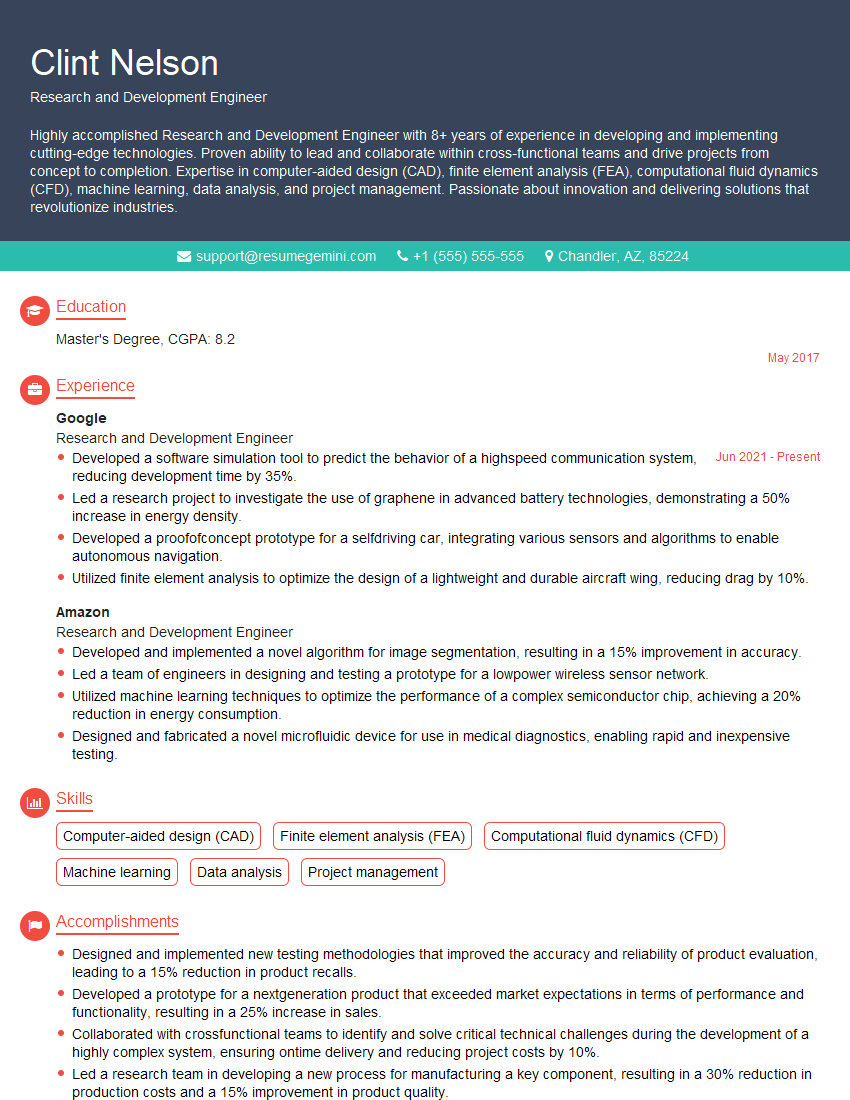
Research and Development Engineer Resume Sample
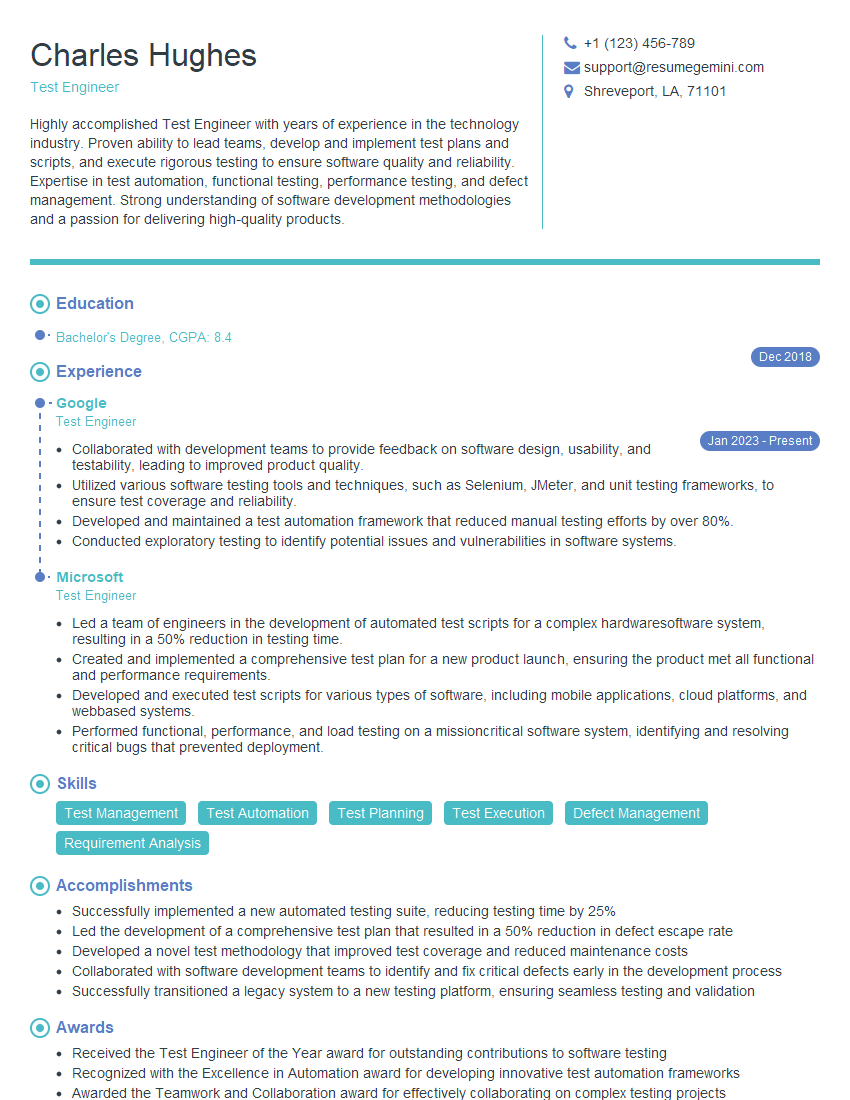
Test Engineer Resume Sample
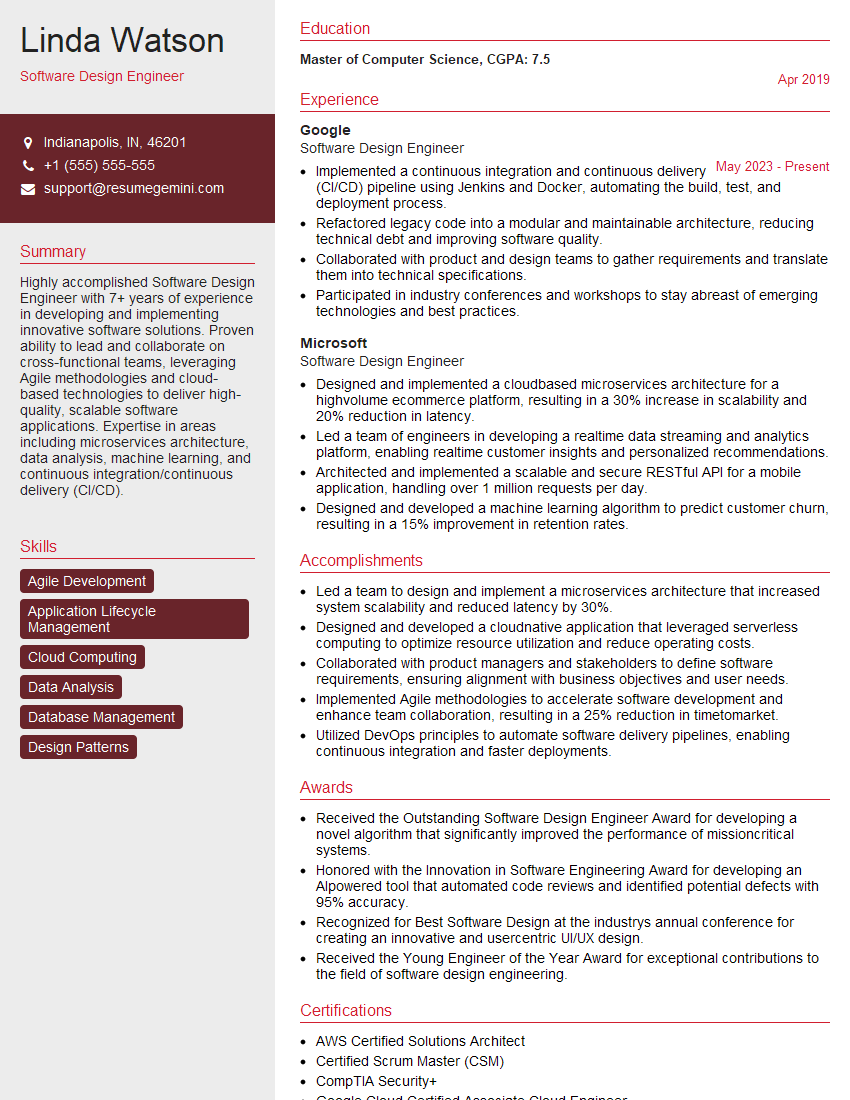
Software Design Engineer Resume Sample
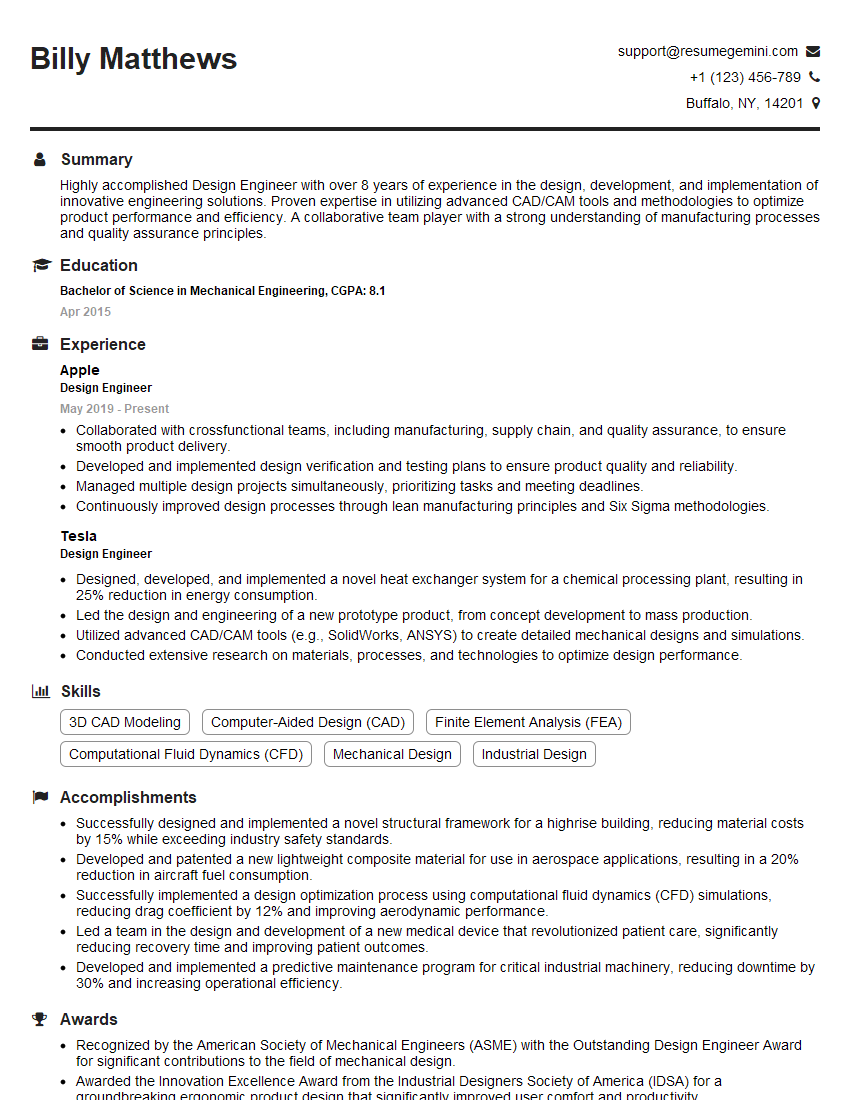
Design Engineer Resume Sample
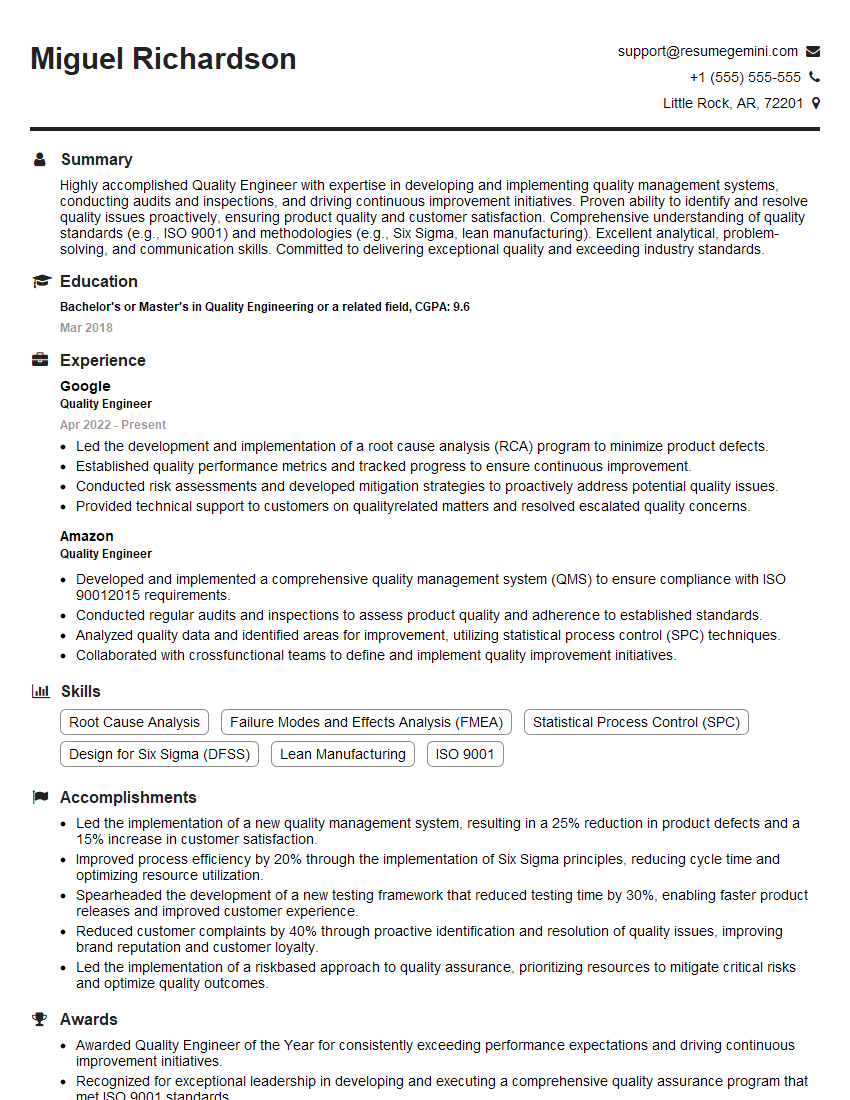
Quality Engineer Resume Sample
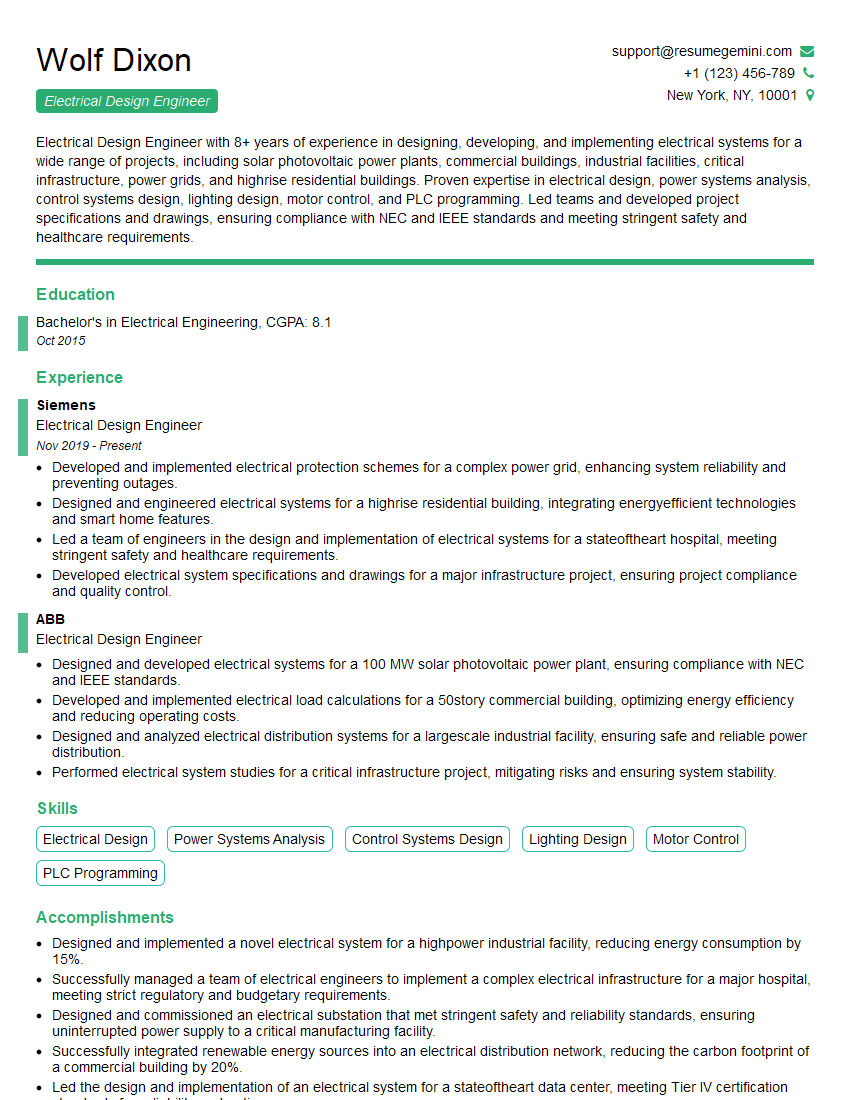
Electrical Design Engineer Resume Sample
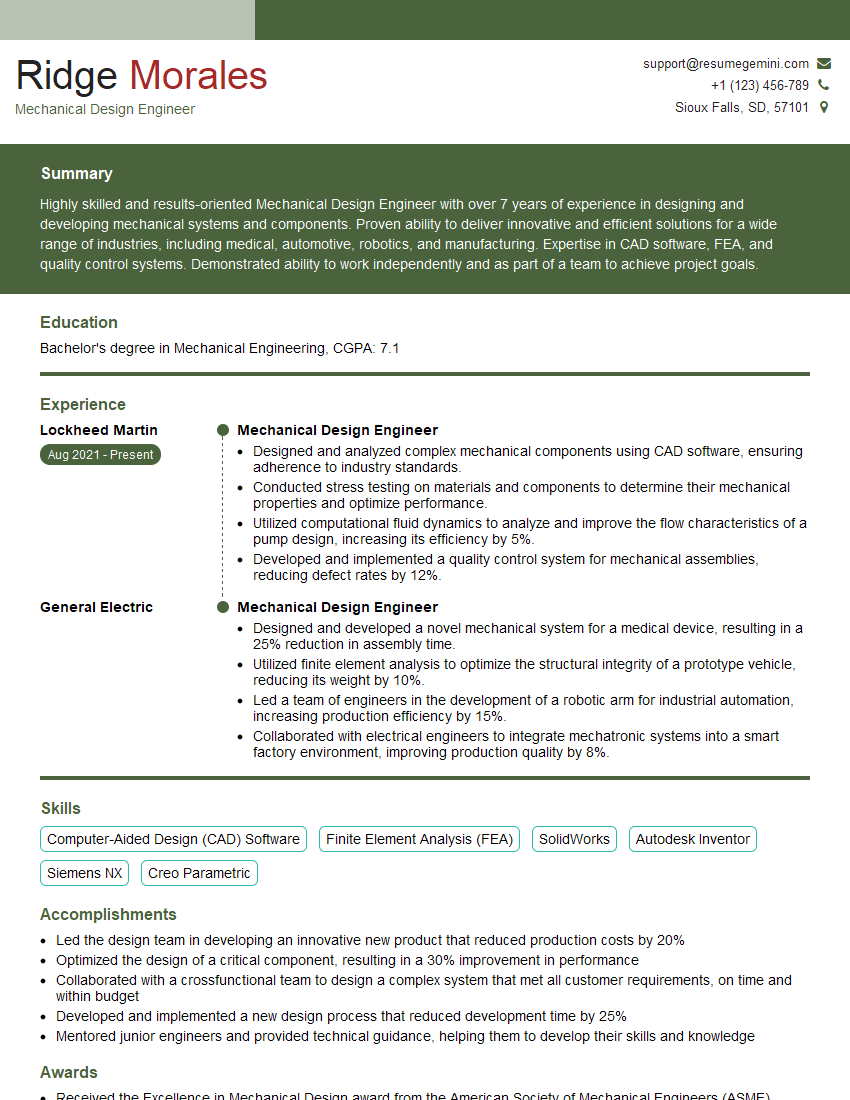
Mechanical Design Engineer Resume Sample
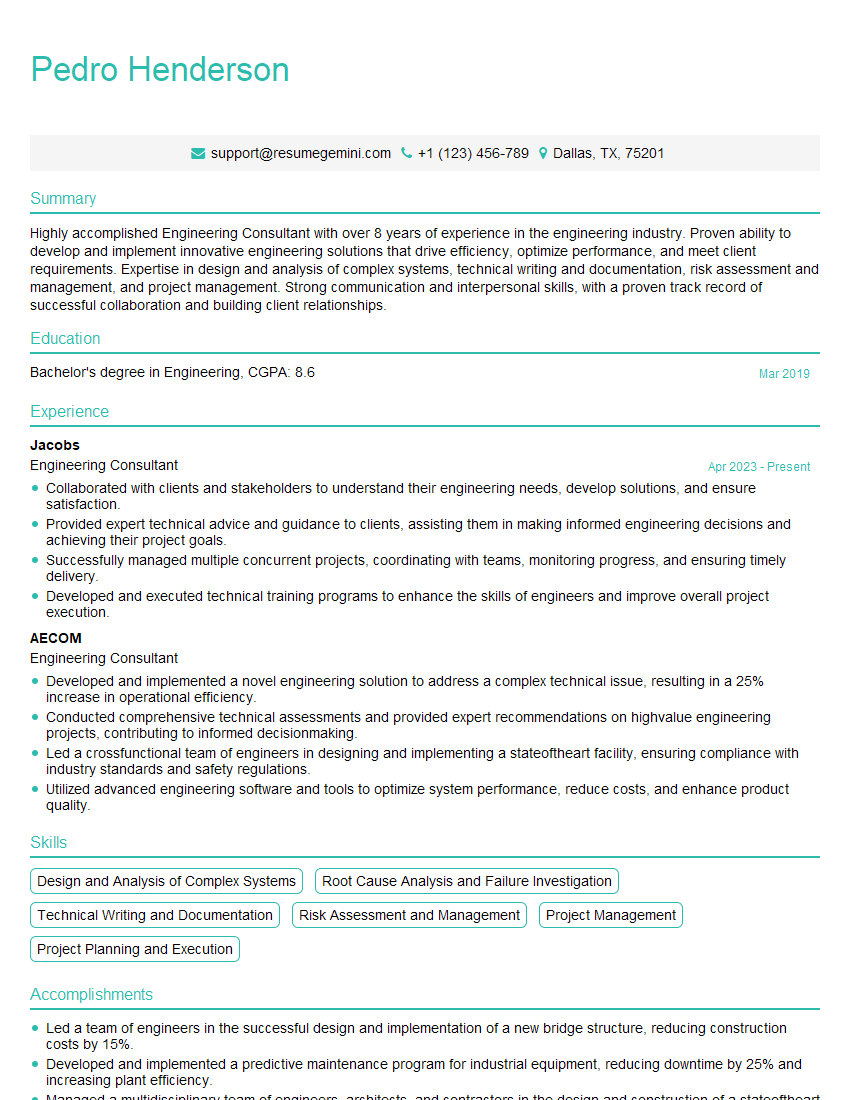
Engineering Consultant Resume Sample
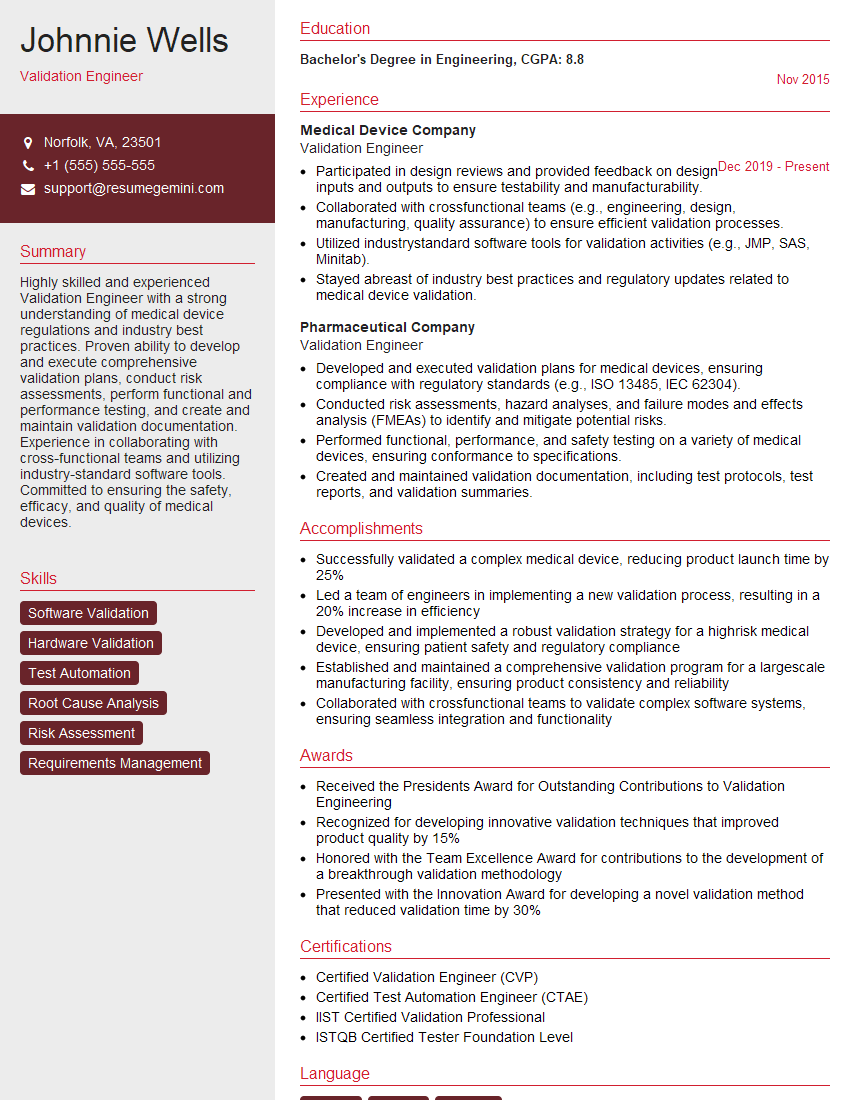
Validation Engineer Resume Sample
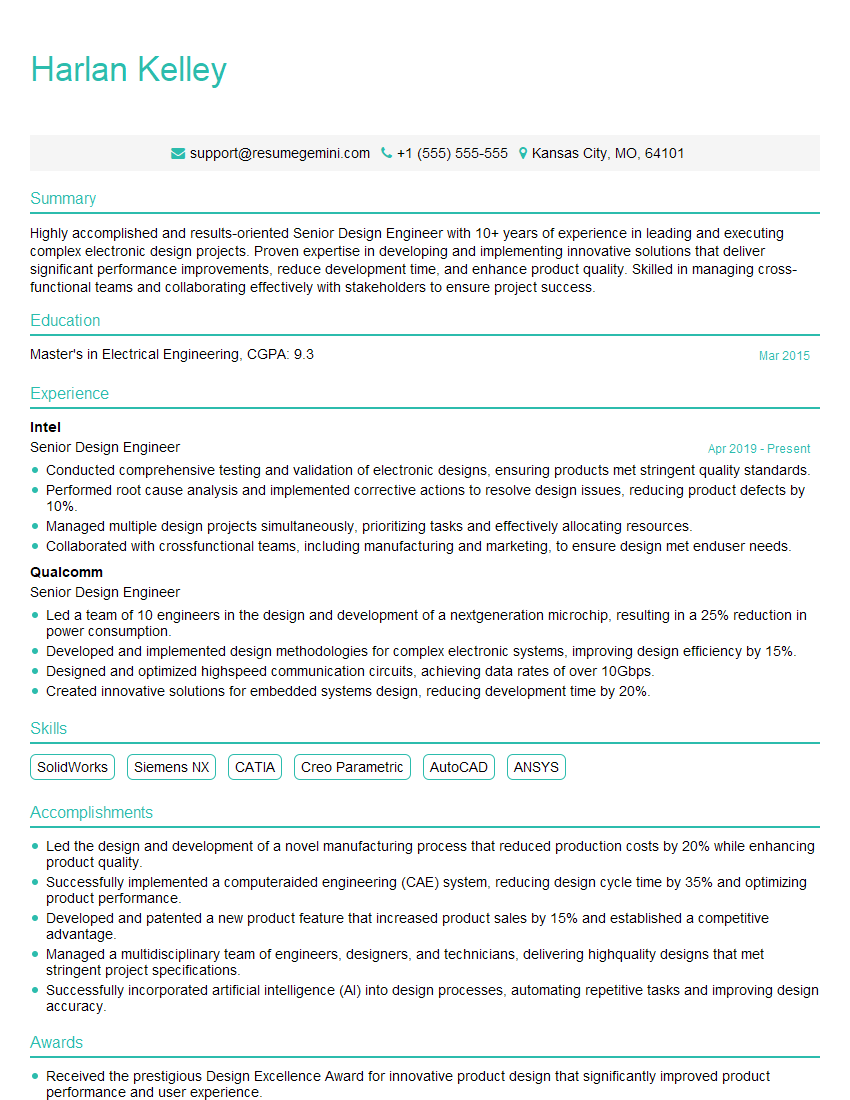
Senior Design Engineer Resume Sample
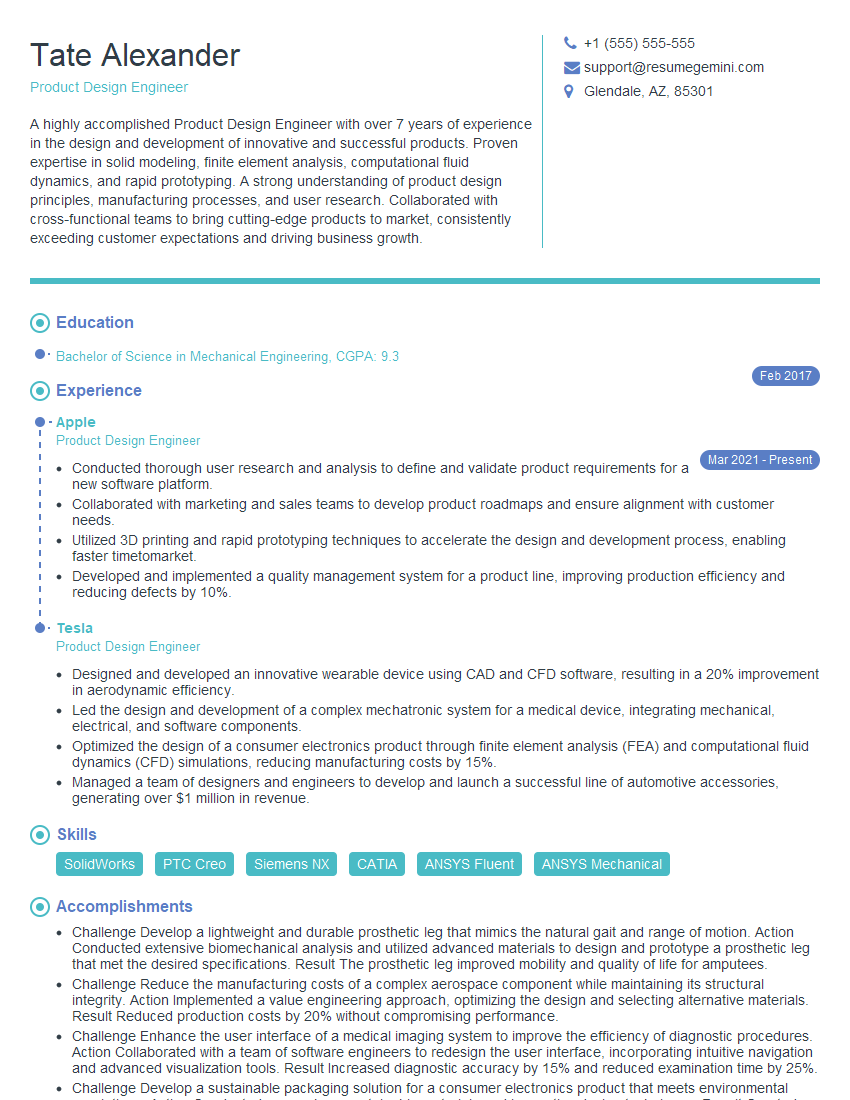
Product Design Engineer Resume Sample
- Engineering Design Manager
- Project Engineer
- Systems Engineer
- Process Engineer
- Research and Development Engineer
- Test Engineer
- Software Design Engineer
- Design Engineer
- Quality Engineer
- Electrical Design Engineer
- Mechanical Design Engineer
- Engineering Consultant
- Validation Engineer
- Senior Design Engineer
- Product Design Engineer
Explore more articles
Users Rating of Our Blogs
Share Your Experience
We value your feedback! Please rate our content and share your thoughts (optional).
What Readers Say About Our Blog
Very informative content, great job.
good