The right preparation can turn an interview into an opportunity to showcase your expertise. This guide to Ensemble Management and Leadership interview questions is your ultimate resource, providing key insights and tips to help you ace your responses and stand out as a top candidate.
Questions Asked in Ensemble Management and Leadership Interview
Q 1. Describe your experience managing diverse personalities within an ensemble.
Managing diverse personalities in an ensemble requires a nuanced understanding of individual strengths, weaknesses, and working styles. It’s like conducting an orchestra – each musician brings unique talent, but success hinges on harmonious collaboration. My approach involves:
Individualized communication: I tailor my communication style to each member. Some respond better to direct feedback, while others need more encouragement and support.
Strengths-based delegation: I assign tasks based on individual expertise, fostering a sense of ownership and accomplishment. For example, if one member excels at visual design, I’ll delegate design-heavy tasks to them.
Open communication channels: Regular check-ins, team meetings, and informal discussions create a space for open dialogue and address potential issues proactively. This allows me to understand individual concerns and address them before they escalate into larger conflicts.
Building trust and respect: Creating a culture of mutual respect is critical. I demonstrate empathy, actively listen to concerns, and acknowledge individual contributions, fostering a sense of camaraderie and shared purpose.
For instance, in a previous project, I had a team member who was highly detail-oriented but struggled with deadlines. By understanding this, I adjusted my expectations and offered support with time management techniques, resulting in a significant improvement in their performance and overall team productivity.
Q 2. How do you handle conflicts among ensemble members?
Conflicts are inevitable in any team, but addressing them constructively is crucial. My approach emphasizes:
Early intervention: Addressing minor disagreements promptly prevents them from escalating into larger conflicts. I encourage open communication and facilitate discussions to understand the root causes.
Mediation and facilitation: When conflicts arise, I act as a neutral mediator, guiding the involved parties towards a mutually acceptable solution through active listening and collaborative problem-solving. I focus on finding common ground and compromise rather than assigning blame.
Establishing clear guidelines and expectations: Clear communication from the outset regarding roles, responsibilities, and processes reduces misunderstandings and potential conflict points.
Conflict resolution techniques: I’m proficient in several conflict resolution techniques, such as collaborative problem-solving and principled negotiation, which help in finding win-win solutions.
For example, I once had a conflict between two team members regarding the design direction of a project. I facilitated a discussion where each member explained their perspectives, leading to a compromise that incorporated elements from both designs, satisfying both parties and ultimately resulting in a stronger final product.
Q 3. Explain your approach to setting and communicating performance goals within an ensemble.
Setting and communicating performance goals is paramount for ensemble success. My approach involves:
SMART goals: I ensure that goals are Specific, Measurable, Achievable, Relevant, and Time-bound. This clarity provides a common understanding and direction for the entire ensemble.
Collaborative goal setting: I actively involve ensemble members in setting goals, fostering a sense of ownership and commitment. This participatory approach ensures that goals are realistic and reflect the collective capabilities of the team.
Clear communication: I communicate goals clearly and concisely, utilizing various methods such as written documentation, presentations, and regular check-ins to ensure everyone understands their individual roles and contributions to the overall objective.
Regular progress reviews: I conduct regular progress reviews to track performance, provide constructive feedback, and make necessary adjustments to goals or strategies. This ensures that the ensemble remains on track and that any emerging challenges are addressed proactively.
For example, when working on a musical production, I collaborated with the ensemble to set specific goals for each rehearsal, such as mastering a particular section of music or improving synchronization during a specific dance sequence, making sure they aligned with the overall performance objective.
Q 4. Describe a time you had to motivate an underperforming ensemble member.
Motivating an underperforming ensemble member requires a sensitive and supportive approach. My strategy focuses on:
Understanding the root cause: Before addressing the performance issue, I investigate the underlying reasons. Is there a lack of skills, insufficient training, personal problems, or other factors affecting their performance?
Providing constructive feedback: I offer specific, actionable feedback, focusing on behaviors rather than making personal judgments. This feedback is delivered in a supportive and encouraging manner.
Offering support and resources: Depending on the root cause, I provide additional training, mentoring, or other resources to help the member improve their performance. This might involve pairing them with a more experienced colleague or offering access to relevant workshops.
Setting realistic goals: I work with the member to set achievable, incremental goals that build confidence and demonstrate progress.
Celebrating successes: Recognizing and rewarding even small achievements boosts morale and motivates continued improvement.
In one instance, a musician was struggling with a technically challenging piece. By providing targeted practice exercises, offering extra coaching sessions, and celebrating their gradual progress, they eventually mastered the piece and contributed significantly to the ensemble’s overall performance.
Q 5. How do you foster collaboration and teamwork within a large ensemble?
Fostering collaboration in a large ensemble requires a structured approach. My strategies include:
Team-building activities: Regular team-building activities help to build relationships and foster a sense of camaraderie among ensemble members.
Smaller working groups: Dividing the ensemble into smaller, more manageable working groups can improve communication and collaboration.
Clear communication protocols: Establishing clear communication channels and protocols ensures everyone is informed and can contribute effectively. This might include regular meetings, project management software, or a dedicated communication platform.
Shared goals and vision: Ensuring that all members understand and share the same overall goals helps to maintain focus and drive collaboration towards a common objective.
Recognition and appreciation: Recognizing and appreciating individual and team accomplishments fosters a positive and collaborative environment.
In a large-scale theatre production, I used a combination of smaller rehearsal groups focused on specific scenes and regular full-ensemble rehearsals to build both individual skills and overall cohesive performance.
Q 6. What strategies do you use to manage time constraints and deadlines in ensemble projects?
Managing time constraints and deadlines in ensemble projects necessitates proactive planning and efficient execution. My approach involves:
Detailed project planning: A well-defined project plan with clear timelines, milestones, and responsibilities is crucial. This involves breaking down the project into smaller, manageable tasks.
Regular progress tracking: Closely monitoring progress against the project plan, using tools such as Gantt charts or project management software, allows for early identification of potential delays.
Prioritization and delegation: Prioritizing tasks based on urgency and importance and effectively delegating responsibilities ensures that resources are used efficiently.
Flexible scheduling: Maintaining some flexibility in the schedule allows for unexpected delays or unforeseen challenges without compromising the overall timeline.
Effective communication: Open and transparent communication regarding progress, challenges, and potential delays keeps everyone informed and allows for timely adjustments.
For instance, when working on a short-film project with a tight deadline, we utilized a detailed shot list, a production schedule broken into daily tasks, and regular progress meetings to ensure the project was completed on time and within budget.
Q 7. How do you evaluate the overall performance and progress of your ensemble?
Evaluating ensemble performance requires a multi-faceted approach. My methods include:
Performance metrics: Establishing specific, measurable metrics relevant to the project objectives allows for objective assessment of progress and overall performance. These metrics could include task completion rates, adherence to deadlines, or quality standards.
Regular feedback sessions: Conducting regular feedback sessions with individual members and the entire ensemble provides opportunities for self-reflection and constructive feedback. This feedback can be both qualitative and quantitative.
Peer review: Encouraging peer review among ensemble members provides valuable insights and fosters a culture of continuous improvement.
Self-assessment: I encourage ensemble members to regularly self-assess their contributions, identifying areas of strength and areas needing improvement.
Qualitative analysis: Beyond metrics, I also consider qualitative factors like teamwork, communication, and overall team morale, assessing the effectiveness of collaboration and the overall team dynamics.
In a recent project, we used a combination of quantitative metrics (e.g., on-time delivery of components) and qualitative feedback (e.g., team satisfaction surveys) to assess the overall success of the project. This comprehensive approach provided a more complete picture of ensemble performance than either method alone.
Q 8. Explain your approach to providing constructive feedback to ensemble members.
Constructive feedback is crucial for ensemble growth. My approach focuses on a three-step process: observation, specific feedback, and collaborative solutions. I begin by carefully observing performances and rehearsals, noting both strengths and areas needing improvement. Then, I provide specific, actionable feedback, avoiding vague generalizations. Instead of saying ‘your performance was lacking,’ I’d say something like, ‘In the second movement, your entrance was slightly rushed, affecting the overall tempo. Let’s work on improving your timing using this metronome exercise.’ Finally, I encourage a collaborative discussion to find solutions together. This fosters a sense of ownership and empowers ensemble members to actively improve.
For example, if a string section consistently struggles with intonation, I’d schedule a focused rehearsal segment devoted to ear training and intonation exercises. I’d also involve them in choosing supplementary material that addresses this challenge. This approach transforms feedback from a criticism into a shared problem-solving opportunity.
Q 9. Describe your experience with budget management and resource allocation within an ensemble.
Budget management and resource allocation are critical for ensemble sustainability. My experience involves creating detailed budgets that encompass all aspects – musician salaries, venue rental, marketing, instrument maintenance, and travel expenses. I utilize budgeting software to track expenses, ensuring transparency and accountability. Resource allocation is based on priorities, aligning them with artistic goals and long-term strategic plans. For instance, if a major fundraising initiative is successful, I’d allocate a portion of the additional funds towards upgrading our instruments or investing in professional development workshops for our musicians.
Prioritizing is crucial. During times of budget constraints, I’d involve ensemble members in identifying areas for potential cost savings without compromising artistic quality. This collaborative process ensures buy-in and reinforces shared responsibility for the ensemble’s financial health.
Q 10. How do you build and maintain relationships with stakeholders (e.g., patrons, sponsors)?
Building and maintaining strong stakeholder relationships is vital for an ensemble’s success. My strategy centers around clear, consistent communication and demonstrating genuine appreciation. I regularly update patrons and sponsors through newsletters, social media, and personalized communications. This keeps them informed about our progress, upcoming performances, and the impact of their support. I organize events and gatherings allowing for direct interaction, fostering a sense of community and shared investment. For example, we might host post-performance receptions, allowing sponsors to meet the musicians and experience the outcome of their contribution firsthand.
Active listening is paramount. I make a point of understanding their needs and perspectives, ensuring their feedback informs our strategies. This two-way communication creates a culture of mutual respect and shared commitment, strengthening the partnership.
Q 11. How do you ensure the ensemble maintains a high level of artistic quality?
Maintaining high artistic quality requires a multi-faceted approach. It begins with selecting exceptional musicians during auditions – technical proficiency and musicality are paramount. Regular rehearsals are crucial, emphasizing precision, interpretation, and stylistic authenticity. We incorporate regular masterclasses and workshops led by renowned musicians, offering opportunities for professional development and improvement. Furthermore, I ensure that all rehearsals are clearly structured and goal-oriented, leading to a focused and productive work environment.
Critically, I cultivate a collaborative artistic environment where musicians are encouraged to share ideas and engage in constructive dialogue about interpretation. The ensemble’s artistic director’s vision guides the overall aesthetic, while individual musicians’ input enriches the performance.
Q 12. Explain your approach to identifying and developing leadership potential within the ensemble.
Identifying and developing leadership potential is crucial for ensemble growth and sustainability. My approach involves observing ensemble members during rehearsals and performances, identifying individuals who demonstrate initiative, problem-solving skills, and a commitment to teamwork. I then provide opportunities for them to take on increased responsibility, such as leading sectional rehearsals or mentoring newer members. We’ll also participate in leadership training programs, workshops focusing on communication, conflict resolution, and collaborative leadership skills.
I also encourage a culture of mentorship, pairing experienced musicians with those who are newer to the ensemble. This not only helps develop leadership skills but also strengthens the overall team cohesion and morale. By offering opportunities and support, I cultivate future leaders within the ensemble.
Q 13. How do you address challenges related to rehearsal scheduling and logistics?
Rehearsal scheduling and logistics can be challenging, but effective planning and communication are key. I start by creating a detailed rehearsal calendar that considers musician availability, venue bookings, and the overall performance schedule. This calendar is shared well in advance, allowing for prompt adjustments based on any scheduling conflicts. I utilize online scheduling tools to streamline communication and ensure everyone remains informed about changes. Additionally, clear communication regarding rehearsal protocols, such as punctuality and preparation, is essential for maximizing efficiency.
Addressing unexpected challenges, such as musician absences, requires flexibility and adaptability. I might need to reschedule rehearsals or adjust the rehearsal plan to accommodate those absences, ensuring minimal disruption to the overall rehearsal process. Open communication is critical, and I maintain flexibility to address issues promptly.
Q 14. Describe your experience in selecting repertoire for an ensemble.
Selecting repertoire is a crucial process that requires careful consideration of several factors: the ensemble’s capabilities, artistic goals, audience appeal, and available resources. My approach involves a collaborative process that considers both the ensemble’s strengths and the desired artistic direction. This might involve discussing various options with the ensemble, taking into account the musical preferences and technical capabilities of the musicians.
We consider various factors, including the historical significance, stylistic diversity, and overall impact of the proposed works. Audience preferences also play a role; we aim for a balance of familiar and lesser-known works, ensuring a diverse and engaging program. Furthermore, logistical aspects, such as the availability of scores and the cost of acquiring rights, are considered.
Q 15. How do you handle unexpected technical or logistical challenges during a performance?
Handling unexpected technical or logistical challenges during a performance requires a calm, proactive approach and a well-rehearsed emergency plan. Think of it like a conductor navigating a sudden storm during a concert – you must adapt swiftly and decisively.
Proactive Planning: Before any performance, I meticulously identify potential issues (e.g., equipment failure, power outages, performer illness) and create contingency plans. This might involve having backup equipment, alternate performance arrangements, or designated substitutes.
Communication is Key: Clear, concise communication with the technical crew, performers, and stage manager is paramount. Establishing clear communication channels prevents confusion and allows for rapid problem-solving. For example, using pre-agreed hand signals or a designated communication system can be incredibly efficient.
Problem-Solving: When a problem arises, I follow a structured approach: (1) Assess the situation, (2) Identify potential solutions, (3) Choose the best option based on available resources and time constraints, (4) Implement the solution, and (5) Monitor its effectiveness. For example, if a microphone malfunctions mid-performance, a swift switch to a backup mic and a seamless transition by the performer can mitigate any noticeable disruption.
Post-Performance Review: After the performance, a thorough review of the incident is crucial to identify weaknesses in the contingency plan and to improve future preparedness. Documentation of solutions and their effectiveness allows for continuous improvement.
Career Expert Tips:
- Ace those interviews! Prepare effectively by reviewing the Top 50 Most Common Interview Questions on ResumeGemini.
- Navigate your job search with confidence! Explore a wide range of Career Tips on ResumeGemini. Learn about common challenges and recommendations to overcome them.
- Craft the perfect resume! Master the Art of Resume Writing with ResumeGemini’s guide. Showcase your unique qualifications and achievements effectively.
- Don’t miss out on holiday savings! Build your dream resume with ResumeGemini’s ATS optimized templates.
Q 16. Explain your approach to promoting the ensemble and its performances.
Promoting an ensemble requires a multi-faceted strategy that leverages both traditional and digital marketing techniques. Think of it like building a brand – you need to tell your story and connect with your audience on multiple levels.
Targeted Marketing: Identifying our target audience (e.g., age, interests, location) is the first step. This informs the selection of appropriate media channels (e.g., social media, local newspapers, targeted online advertising).
Public Relations: Building relationships with local media, arts organizations, and community groups is crucial. Press releases, interviews, and community outreach events can generate significant buzz.
Digital Presence: A professional website and active social media accounts are essential for sharing information about upcoming performances, behind-the-scenes glimpses, and engaging with fans. High-quality photos and videos are key to showcasing our talent.
Partnerships: Collaborating with other arts organizations or businesses can expand our reach and introduce us to new audiences. For instance, partnering with a local restaurant could offer discounted meals to concertgoers.
Email Marketing: Building an email list allows for direct communication with our audience, sharing news, updates, and exclusive offers.
Q 17. How do you use technology to enhance the ensemble’s performance and communication?
Technology plays a vital role in enhancing both performance and communication within an ensemble. It’s like having a sophisticated toolbox for improving efficiency and artistic expression.
Performance Enhancement: Software like Sibelius (for score editing), Ableton Live (for sound design), or specialized lighting and sound control systems can significantly improve the quality and precision of our performances. Video conferencing can facilitate rehearsals when members are geographically dispersed.
Communication: Platforms like Slack, Microsoft Teams, or Google Workspace facilitate seamless communication and collaboration among ensemble members, management, and the technical crew. This ensures that everyone is on the same page, irrespective of location.
Audience Engagement: Interactive elements during performances, such as live streaming, Q&A sessions, or online polls, can increase audience engagement and create a more immersive experience. Social media platforms can be used to gather audience feedback and tailor future performances.
Data Analysis: Tracking website traffic, social media engagement, and ticket sales data provides valuable insights into audience preferences, allowing for more effective marketing and programming.
Q 18. What is your experience with performance contracts and artist agreements?
Experience with performance contracts and artist agreements is essential for the smooth operation of any ensemble. These documents protect both the organization and the performers, ensuring fair compensation and clear expectations.
Negotiation: I’m proficient in negotiating fair and equitable contracts that protect the interests of both the ensemble and individual artists. This involves a detailed understanding of industry standards and legal requirements.
Contract Review: I have a strong understanding of the legal implications of various clauses within performance contracts, including payment terms, intellectual property rights, and liability waivers.
Record Keeping: Meticulous record-keeping of contracts, payments, and other relevant documentation is crucial to ensure compliance and avoid disputes.
Dispute Resolution: In the event of any disagreements, I am skilled at mediating disputes or working with legal counsel to resolve issues amicably and professionally. Prevention through clear contract language is always my primary goal.
Q 19. Describe your experience in managing audience engagement and expectations.
Managing audience engagement and expectations is crucial for a successful performance. It’s about creating a positive experience that leaves the audience feeling valued and satisfied.
Pre-Show Communication: Providing clear information about the performance – including program notes, seating arrangements, and any relevant guidelines – helps manage expectations and creates a smoother experience.
During the Performance: Creating a welcoming and respectful atmosphere is vital. Addressing the audience before the performance, acknowledging applause, and creating a connection with the audience through the performance itself are key elements.
Post-Show Engagement: Offering opportunities for audience feedback (e.g., surveys, feedback forms) allows us to learn from our successes and improve areas needing attention. Opportunities to meet the performers or engage in post-show discussions can enhance the overall experience.
Addressing Complaints: Having a system for addressing audience complaints promptly and professionally is essential. This could include designated contact information and a clear process for handling issues.
Q 20. How do you ensure the safety and well-being of ensemble members during rehearsals and performances?
Ensuring the safety and well-being of ensemble members is paramount. It’s about creating a supportive and secure environment where everyone can focus on their artistic contributions without fear or concern.
Risk Assessment: Before rehearsals and performances, I conduct a thorough risk assessment, identifying potential hazards (e.g., slips, trips, falls; equipment malfunction; exposure to extreme weather). Based on this assessment, I implement appropriate safety measures.
Safety Procedures: Clear safety procedures, including emergency evacuation plans, first-aid protocols, and communication procedures, are established and regularly reviewed with all ensemble members.
Appropriate Equipment: Ensuring that all equipment is properly maintained and regularly inspected is crucial. This includes sound systems, lighting rigs, and stage equipment.
Mental Health: Recognizing that artistic endeavors can be emotionally demanding, fostering an environment of mutual respect, support, and open communication is crucial for the mental well-being of ensemble members. This might involve providing resources or support systems.
Training: Regular safety training for ensemble members and technical crew is also vital. This ensures everyone is aware of risks and knows how to respond appropriately.
Q 21. What are your strategies for ensuring the long-term sustainability of an ensemble?
Ensuring the long-term sustainability of an ensemble requires a strategic approach that encompasses artistic vision, financial stability, and community engagement. It’s like building a strong foundation for a lasting legacy.
Financial Planning: Developing a robust financial plan that includes diverse funding streams (e.g., grants, ticket sales, sponsorships, donations) is essential. Careful budget management and financial forecasting are key.
Artistic Development: Continuously developing and refining our artistic vision and programming is essential to attract and retain both audiences and performers. This involves exploring new collaborations and pushing creative boundaries.
Community Engagement: Cultivating strong relationships with the local community, building a loyal audience base, and establishing a strong reputation are vital for long-term support. This could involve community outreach programs, educational initiatives, or partnerships with local businesses.
Organizational Structure: Establishing a clear organizational structure with defined roles and responsibilities ensures efficient operation and prevents conflict. This also includes having a clear succession plan.
Adaptability: The ability to adapt to changing circumstances, whether economic downturns, technological advancements, or shifts in audience preferences, is key for long-term survival. This requires flexibility, innovation, and a willingness to evolve.
Q 22. How do you adapt your management style to different ensemble contexts (e.g., size, genre)?
My management style is highly adaptable, recognizing that a one-size-fits-all approach is ineffective in ensemble contexts. I tailor my leadership based on factors like ensemble size, genre, and individual member personalities. For instance, a small chamber group requires a more collaborative, consensus-building approach. Open communication and shared decision-making are key. Conversely, a larger orchestra might benefit from a more hierarchical structure with clear lines of authority and delegated responsibilities. The genre also influences my approach; a highly experimental contemporary music group demands flexibility and a tolerance for risk-taking, whereas a traditional classical ensemble might value precision and adherence to established practices. I regularly assess the ensemble’s dynamics and adjust my leadership style accordingly, fostering a supportive and productive environment for everyone.
For example, with a smaller, experimental jazz ensemble, I might facilitate open improvisational sessions to encourage creativity and collaboration, while with a large symphonic orchestra, I might employ a more structured rehearsal process with clearly defined sections and roles.
Q 23. Describe your experience with performance marketing and outreach.
My experience in performance marketing and outreach encompasses a multi-faceted approach. This includes developing targeted marketing campaigns across various channels – social media, email marketing, website optimization, and traditional print media. I’ve successfully utilized data analytics to track campaign effectiveness, allowing for real-time adjustments and improved ROI. Building strong relationships with local media outlets, community organizations, and potential sponsors is crucial for creating buzz and expanding our audience reach. I’m proficient in crafting compelling press releases, developing engaging social media content, and designing visually appealing promotional materials. I believe in leveraging the unique talents of ensemble members to participate actively in outreach efforts, making them brand ambassadors and deepening audience connection.
For instance, I once developed a targeted social media campaign for a chamber music concert series, resulting in a 30% increase in ticket sales compared to the previous year. This involved creating engaging video content featuring the musicians, running contests and giveaways, and using targeted advertising to reach specific demographics.
Q 24. How do you handle pressure and stress in high-stakes performance environments?
High-stakes performance environments inevitably bring pressure. My approach centers around proactive planning and a focus on meticulous preparation. This includes detailed rehearsal schedules, contingency plans for technical difficulties, and clear communication channels within the ensemble. I emphasize the importance of mental wellbeing, encouraging members to employ stress-management techniques such as mindfulness or deep breathing exercises. Creating a supportive and collaborative team environment helps mitigate individual stress. Furthermore, I foster open communication where members feel comfortable expressing their concerns or anxieties. I believe in leading by example, demonstrating composure and resilience under pressure, thereby inspiring confidence in the team.
During a particularly stressful premiere, where a crucial instrument malfunctioned just moments before the performance, my prepared contingency plan – having a backup instrument readily available – allowed us to resolve the issue swiftly and professionally. The calm and organized response from both myself and the ensemble minimized the impact on the performance itself.
Q 25. Explain your process for selecting and onboarding new ensemble members.
Selecting and onboarding new ensemble members is a rigorous process. It begins with a clear definition of the ensemble’s artistic vision and needs. Auditions are structured to evaluate not only technical proficiency but also musicianship, personality, and collaborative spirit. I often employ a multi-stage audition process, including blind auditions to minimize bias. Post-audition feedback is detailed and constructive. Onboarding new members involves a phased integration process. This includes introductory meetings with existing members, participation in collaborative workshops, and careful mentoring during rehearsals. Clear communication about expectations, rehearsal protocols, and performance standards is paramount. I utilize a mentorship program where experienced members guide new members, fostering a welcoming and supportive environment.
For example, we once incorporated a personality assessment tool into our audition process to better understand candidates’ teamwork skills. This proved invaluable in selecting individuals who would not only be technically proficient but also fit well within the ensemble’s collaborative dynamic.
Q 26. How do you balance artistic vision with logistical realities?
Balancing artistic vision with logistical realities is a constant negotiation. The artistic vision is paramount, but its realization depends on realistic budgeting, scheduling, venue availability, and technical considerations. I employ a collaborative approach, involving the ensemble in the decision-making process. This ensures that the logistical constraints are understood and that creative solutions are developed collectively. Effective project management techniques, including detailed planning and resource allocation, are crucial. Compromises may be necessary, but these should be made transparently and with the collective goal of achieving the highest artistic outcome while remaining financially and logistically feasible.
For example, when a specific venue for a performance was unavailable due to unforeseen circumstances, we collectively explored alternative locations, ultimately choosing one that offered a unique artistic opportunity, even if it slightly altered the original staging plan.
Q 27. What metrics do you use to measure the success of the ensemble?
Measuring the success of the ensemble is multi-faceted, extending beyond simple ticket sales. I utilize a range of metrics, including audience attendance and engagement (surveys, social media analytics), critical reception (reviews, media coverage), grant applications and funding success, community outreach participation, and the overall artistic growth of the ensemble members. Furthermore, I track audience demographics and feedback to inform future programming decisions. This holistic approach ensures a well-rounded assessment of our impact and effectiveness.
For instance, we track not only ticket sales but also the number of social media interactions our posts generate, which gives us insight into audience engagement and helps us refine our marketing strategies. We also analyze post-performance audience surveys to gauge audience satisfaction and identify areas for improvement.
Q 28. Describe a time you had to make a difficult decision impacting the ensemble.
One challenging decision involved having to cancel a major performance due to unforeseen illness amongst key members. The decision was made with a heavy heart, as it involved significant financial implications and disappointed audience members. However, the wellbeing of the ensemble members was paramount. I communicated transparently with all stakeholders, explaining the situation clearly and offering refunds or alternative dates. The experience highlighted the need for robust contingency planning, including insurance policies and having a flexible roster of substitute musicians. Although difficult, the decision ultimately strengthened the ensemble’s cohesion and demonstrated a commitment to both artistic excellence and the well-being of its members.
Key Topics to Learn for Ensemble Management and Leadership Interview
- Understanding Team Dynamics: Explore different team structures, communication styles, and conflict resolution strategies. Consider the impact of individual personalities and motivations on overall team performance.
- Collaborative Problem-Solving: Practice applying frameworks like brainstorming, design thinking, or agile methodologies to complex scenarios. Be ready to discuss your approach to facilitating group problem-solving and decision-making processes.
- Delegation and Empowerment: Discuss your experience in effectively delegating tasks, providing constructive feedback, and empowering team members to take ownership of their work. Highlight how you foster individual growth within a collaborative environment.
- Performance Management and Feedback: Understand the principles of effective performance reviews, both positive and constructive. Be prepared to discuss your strategies for providing feedback that motivates and improves performance.
- Resource Allocation and Prioritization: Demonstrate your understanding of prioritizing tasks, allocating resources effectively, and managing competing deadlines within a team setting. Consider scenarios with limited resources and explain your decision-making process.
- Building Team Cohesion and Morale: Discuss strategies for fostering a positive and productive team environment. Explain how you build trust, encourage open communication, and celebrate team successes.
- Leading Through Change: Prepare to discuss your experience in managing team transitions, adapting to changing priorities, and effectively communicating organizational changes to your team.
Next Steps
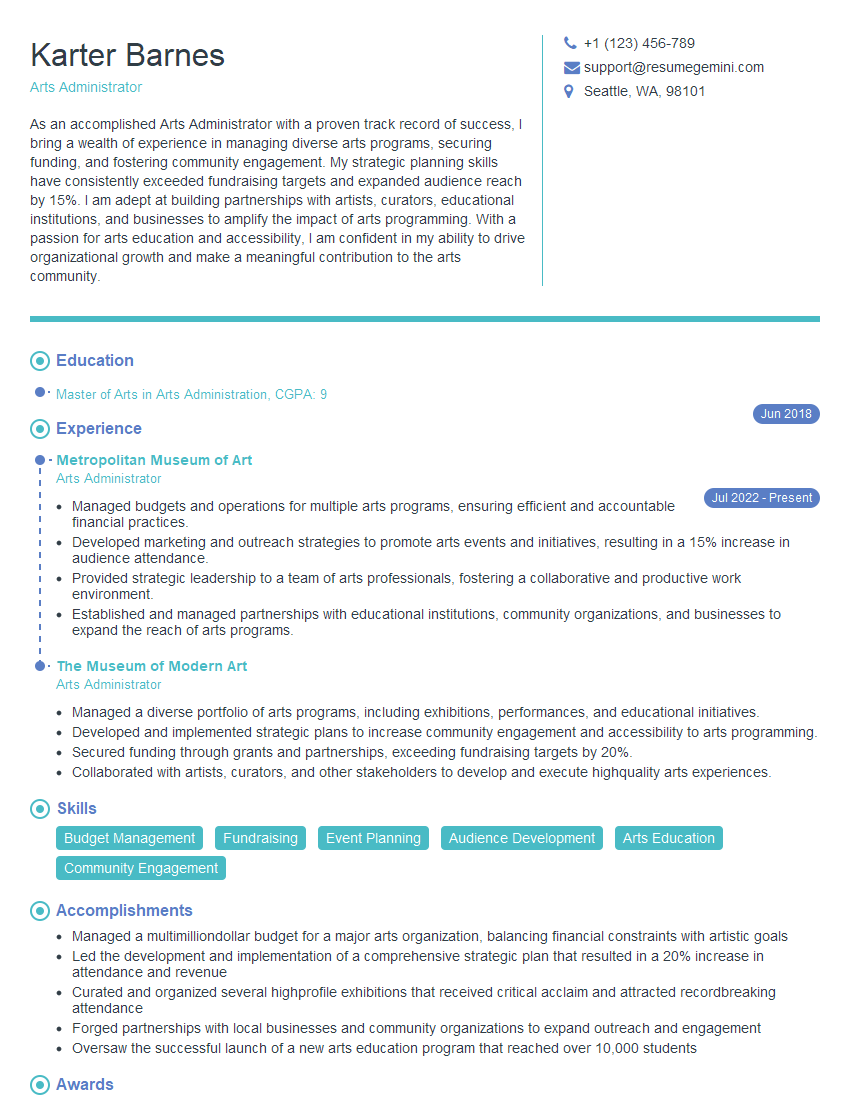
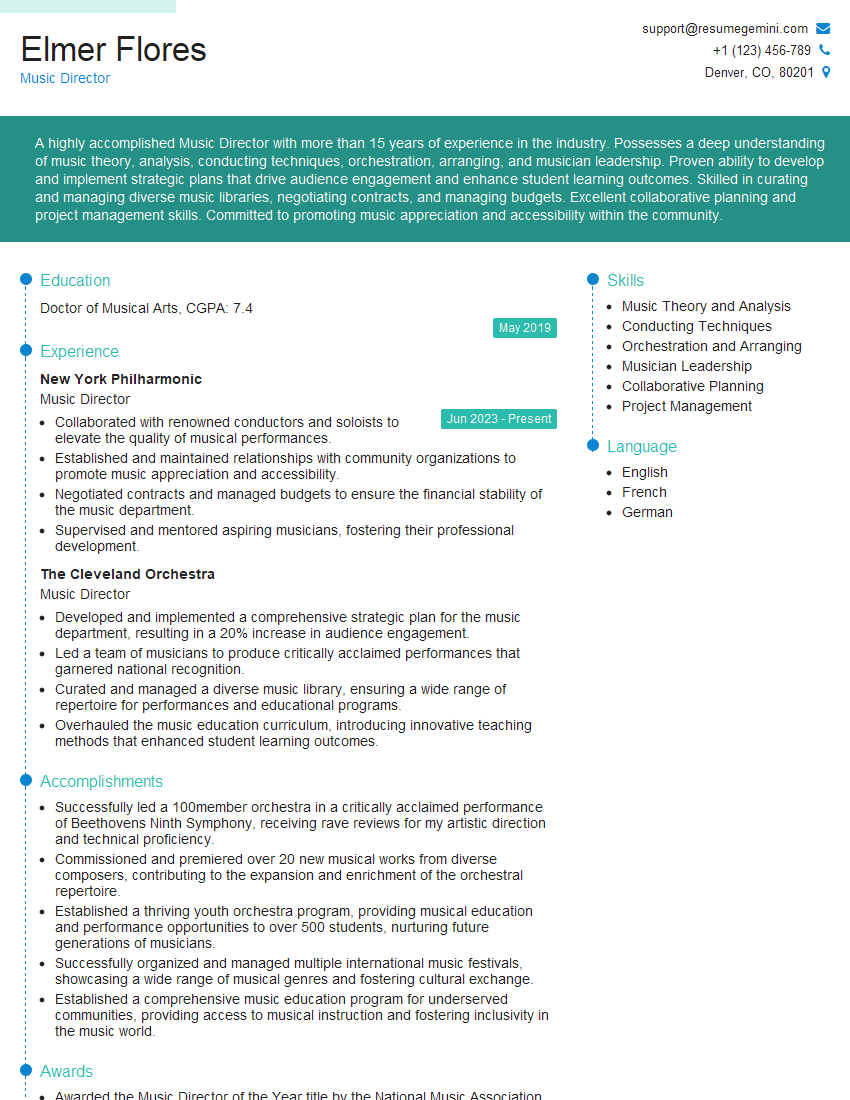
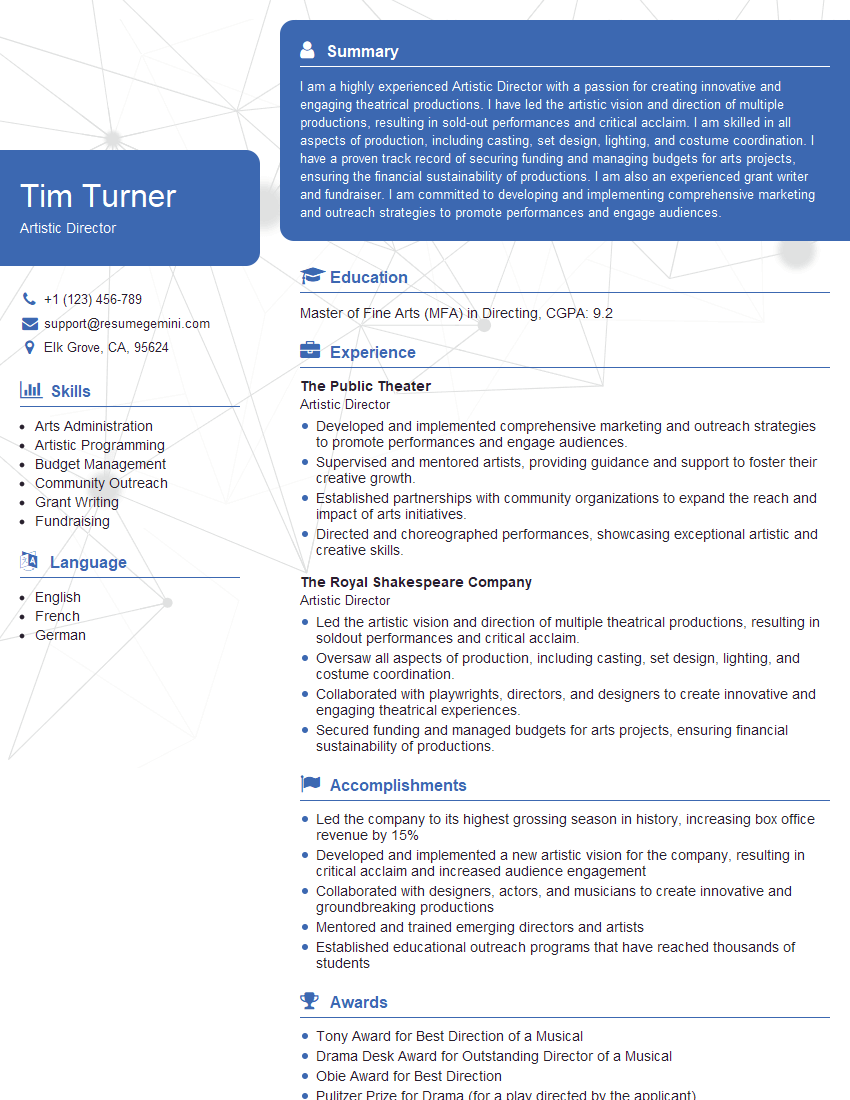
Mastering Ensemble Management and Leadership is crucial for career advancement. It demonstrates your ability to navigate complex team dynamics, drive results collaboratively, and contribute significantly to organizational success. To significantly enhance your job prospects, a well-crafted, ATS-friendly resume is essential. ResumeGemini is a trusted resource to help you build a professional and impactful resume that showcases your skills and experience effectively. Examples of resumes tailored specifically to Ensemble Management and Leadership positions are available within ResumeGemini to guide you in crafting yours.
Explore more articles
Users Rating of Our Blogs
Share Your Experience
We value your feedback! Please rate our content and share your thoughts (optional).
What Readers Say About Our Blog
Very informative content, great job.
good