Cracking a skill-specific interview, like one for Entreneurship, requires understanding the nuances of the role. In this blog, we present the questions you’re most likely to encounter, along with insights into how to answer them effectively. Let’s ensure you’re ready to make a strong impression.
Questions Asked in Entreneurship Interview
Q 1. Describe your experience in developing a business plan.
Developing a robust business plan is crucial for securing funding, guiding operations, and achieving long-term success. It’s essentially a roadmap for your venture. My approach involves a thorough understanding of the market, the competitive landscape, and a clearly defined value proposition. I begin by defining the problem my business solves, then outlining the solution and the target audience. This is followed by a comprehensive market analysis, a detailed competitive analysis, a clear description of the business model, the management team, and a realistic financial projection. For example, in my previous venture, a sustainable food delivery service, I meticulously detailed our sourcing strategies, logistics, marketing plan, and financial projections for the first three years, demonstrating profitability and return on investment for potential investors.
- Executive Summary: A concise overview of the entire plan.
- Company Description: Details about the business, mission, and vision.
- Market Analysis: Research on market size, trends, and target audience.
- Organization and Management: The structure and team behind the business.
- Service or Product Line: A detailed description of offerings.
- Marketing and Sales Strategy: How the business will reach customers.
- Funding Request: The amount of funding needed and its intended use.
- Financial Projections: Income statements, balance sheets, and cash flow projections.
- Appendix: Supporting documents such as market research data.
Q 2. Explain your approach to market research and competitive analysis.
My approach to market research and competitive analysis is data-driven and iterative. I utilize a mix of primary and secondary research methods. Secondary research involves analyzing existing data like market reports, industry publications, and competitor websites. This provides a broad overview of the market landscape. Primary research, on the other hand, involves direct interaction with the target market through surveys, interviews, and focus groups to gather firsthand insights. This helps to validate assumptions and identify unmet needs. For competitive analysis, I use Porter’s Five Forces framework to assess the competitive intensity, bargaining power of buyers and suppliers, threat of substitutes, and barriers to entry. This analysis helps in identifying competitive advantages and developing strategies to differentiate the business. For example, in a recent project, we analyzed competitor pricing strategies, marketing campaigns, and customer reviews to inform our own pricing and marketing strategies, resulting in a 15% increase in market share within six months.
Q 3. How do you identify and assess market opportunities?
Identifying and assessing market opportunities involves a systematic process. I start by scanning the market for trends, unmet needs, and technological advancements. This can involve attending industry events, following industry publications, and leveraging online resources. Then, I use a combination of qualitative and quantitative methods to analyze the potential of identified opportunities. This includes market sizing, estimating the potential customer base, analyzing the competitive landscape, and assessing the profitability of the opportunity. A crucial aspect is determining the viability of the solution. For example, I once identified a gap in the market for personalized fitness coaching for busy professionals, leading to the development of a successful online coaching platform.
I use frameworks like the SWOT analysis (Strengths, Weaknesses, Opportunities, Threats) to assess the internal capabilities and external environment, helping prioritize opportunities aligned with business strengths and mitigate potential threats.
Q 4. What strategies do you use for customer acquisition and retention?
Customer acquisition and retention are equally important for sustainable growth. My strategies encompass a multi-channel approach, combining digital marketing (SEO, social media, email marketing) with traditional methods (networking, partnerships). For acquisition, I prioritize targeting the right audience through segmented marketing campaigns, emphasizing value proposition and clear calls to action. For retention, I focus on building strong customer relationships through exceptional customer service, personalized communication, loyalty programs, and gathering customer feedback to continuously improve the product or service. Building a strong brand reputation and community also plays a vital role. For example, a loyalty program implemented for a client resulted in a 20% increase in repeat business.
Q 5. How would you manage a team during a crisis?
Managing a team during a crisis requires clear communication, decisive action, and empathy. My approach begins with open and honest communication, keeping the team informed about the situation and the steps being taken to address it. This is followed by clearly defining roles and responsibilities to ensure efficient coordination. I also prioritize the well-being of the team, offering support and resources to help them cope with the stress of the crisis. Problem-solving is approached collaboratively, encouraging the team to contribute ideas and solutions. Finally, I emphasize learning from the crisis, identifying areas for improvement in future crisis management. For instance, during a sudden supply chain disruption, I facilitated open communication, delegated tasks effectively, and implemented contingency plans, resulting in minimal impact on our customers.
Q 6. Describe your experience in securing funding for a venture.
Securing funding involves a well-structured approach, starting with a compelling business plan that clearly articulates the opportunity, the team’s capabilities, and the financial projections. This is followed by identifying appropriate funding sources, which can range from angel investors and venture capitalists to bank loans and government grants. The next step is building strong relationships with potential investors or lenders, presenting the business plan effectively, and answering their questions thoroughly. Negotiating favorable terms and managing the due diligence process is crucial. For my previous venture, we secured seed funding through a combination of angel investors and a small business loan, demonstrating a successful track record and strong financial projections, critical to securing the investment.
Q 7. Explain your understanding of financial modeling and forecasting.
Financial modeling and forecasting are essential for making informed business decisions and managing the financial health of a business. Financial modeling involves building a spreadsheet or using specialized software to project future financial performance based on various assumptions. This typically includes income statements, balance sheets, and cash flow statements. Forecasting involves estimating future sales, expenses, and profits based on market trends, historical data, and management expectations. Accurate financial modeling and forecasting help assess the financial viability of a business, plan for funding needs, and make informed strategic decisions. For example, using a detailed financial model, I projected the cash flow needs of a startup, which helped secure a loan by showcasing a strong understanding of the financial implications and a realistic path to profitability. It’s critical to incorporate sensitivity analysis into the models to account for uncertainties and variations in assumptions.
Q 8. How do you measure the success of a business venture?
Measuring the success of a business venture goes beyond simply looking at profit. It’s a multifaceted assessment involving several key performance indicators (KPIs) tailored to the specific business model and goals.
- Financial Metrics: Profitability (net income, gross margin), revenue growth, return on investment (ROI), cash flow are crucial. A startup might prioritize revenue growth initially, while a mature business focuses on profitability and ROI. For instance, a SaaS company might track customer acquisition cost (CAC) and customer lifetime value (CLTV) to assess long-term viability.
- Market Metrics: Market share, customer acquisition rate, customer churn rate, brand awareness, and customer satisfaction (CSAT) scores provide insights into market positioning and customer engagement. A successful marketing campaign might be measured by increased brand awareness and website traffic.
- Operational Metrics: Efficiency (production costs, operational expenses), employee productivity, and process improvements indicate the effectiveness of internal operations. Tracking order fulfillment time and customer service response times can reveal areas for operational enhancements.
- Social Impact Metrics: Depending on the business’s mission, social impact metrics like employee well-being, environmental sustainability, and community engagement might be considered. A socially responsible company might measure its carbon footprint reduction or its charitable contributions.
Ultimately, a holistic approach combining financial, market, operational, and potentially social impact metrics provides a comprehensive picture of success. There’s no single measure; it’s about setting clear, measurable, achievable, relevant, and time-bound (SMART) goals and tracking progress against them.
Q 9. What is your approach to risk management in a startup environment?
Risk management in a startup is about proactively identifying, assessing, and mitigating potential threats to the business’s survival and growth. It’s less about eliminating all risks (impossible!) and more about making informed decisions to minimize their impact.
- Identify Risks: Brainstorming sessions with the team, market research, competitor analysis, and SWOT analysis (Strengths, Weaknesses, Opportunities, Threats) are vital for uncovering potential problems like market shifts, funding shortages, competition, regulatory changes, technological disruptions, and internal management issues.
- Assess Risks: Prioritize risks based on their likelihood and potential impact. A risk matrix, where risks are plotted according to these two factors, is helpful. High-impact, high-likelihood risks need immediate attention.
- Mitigate Risks: Develop strategies to reduce the likelihood or impact of identified risks. This could involve developing contingency plans (e.g., securing backup funding), implementing robust security measures, diversifying revenue streams, building strong relationships with suppliers, and investing in insurance.
- Monitor and Review: Regularly monitor identified risks and adjust mitigation strategies as needed. The business landscape is constantly evolving, so regular risk assessments are crucial for staying agile and resilient.
For example, a food startup might identify a risk of food safety incidents. Mitigation strategies could include rigorous quality control measures, employee training on food safety protocols, and comprehensive insurance coverage.
Q 10. How do you handle setbacks and failures in entrepreneurship?
Setbacks and failures are inevitable in entrepreneurship. They’re not signs of weakness but valuable learning opportunities. My approach is based on a structured process of analysis, adaptation, and perseverance.
- Analyze the Situation: Objectively assess what went wrong without assigning blame. Identify the root causes of the failure. Was it a flawed business model, poor execution, unforeseen market changes, or something else? Data analysis and feedback from customers are crucial.
- Learn from Mistakes: Extract lessons from the experience. What could you have done differently? What new knowledge or skills do you need to acquire? Document your learnings to prevent repeating the same errors.
- Adapt and Pivot: Based on your analysis, adapt your business strategy. This might involve changing your product, target market, pricing, marketing approach, or even your entire business model (pivoting). Be flexible and willing to change course as needed.
- Persevere and Iterate: Don’t let setbacks discourage you. Entrepreneurship requires resilience and persistence. Use the lessons learned to improve your approach and keep iterating your business model until you find success. Consider the failure as a stepping stone to success.
For instance, if a new app fails to gain traction, the entrepreneur might analyze user feedback to identify usability issues and then iterate the design and functionality based on that feedback.
Q 11. Describe your experience with scaling a business.
Scaling a business involves strategically increasing its operations and capacity to meet growing demand. It requires a well-planned and phased approach, focusing on several key areas.
- Operational Scaling: This involves improving efficiency and streamlining processes to handle increased volume. Automation, optimized workflows, and robust technology infrastructure are crucial. For instance, a retail business might automate inventory management and order fulfillment.
- Team Scaling: Hiring and training the right people are essential. This requires establishing clear roles and responsibilities, a strong company culture, and effective training programs. Delegation and empowerment are key to scaling effectively.
- Financial Scaling: Securing adequate funding through venture capital, loans, or other means is important. Efficient financial management, including accurate forecasting and budgeting, is crucial to support growth.
- Marketing and Sales Scaling: Expanding market reach and customer acquisition requires a robust marketing and sales strategy. This might include digital marketing, strategic partnerships, and expanding sales channels.
- Technology Scaling: Scalable technology infrastructure (cloud computing, robust databases) is essential to handle increasing data volumes and user traffic.
In my experience, scaling a business is an iterative process requiring continuous monitoring, adaptation, and investment in all these areas. A phased approach, starting with a proof-of-concept and gradually scaling up as demand increases, minimizes risks and ensures sustainable growth.
Q 12. Explain your understanding of intellectual property protection.
Intellectual property (IP) protection is crucial for safeguarding a business’s innovations and creations. It involves legally protecting inventions, designs, brands, and other forms of intellectual capital. This can significantly enhance competitive advantage and increase a company’s value.
- Patents: Protect inventions (products, processes). They grant exclusive rights to use, sell, and manufacture the invention for a specific period.
- Trademarks: Protect brand names, logos, and other identifying marks. They prevent others from using confusingly similar marks.
- Copyrights: Protect original works of authorship, including software, literary works, music, and art. They prevent unauthorized copying and distribution.
- Trade Secrets: Protect confidential information that provides a competitive edge (formulas, designs, processes). They are not registered but require strict confidentiality measures.
The choice of IP protection depends on the specific asset. For example, a software company might protect its code with copyright and potentially patent unique algorithms. A fashion brand might register its logo as a trademark. It’s essential to seek professional legal advice to navigate the complexities of IP laws and ensure appropriate protection.
Q 13. How do you build and maintain strong business relationships?
Building and maintaining strong business relationships is paramount for success. It’s about creating mutually beneficial connections based on trust, respect, and open communication.
- Networking: Actively participate in industry events, conferences, and online communities to meet potential partners, clients, and investors.
- Relationship Building: Prioritize genuine connection over transactional interactions. Show sincere interest in others, listen actively, and be helpful and supportive.
- Communication: Maintain clear, consistent, and open communication. Be responsive to inquiries and provide timely updates.
- Value Delivery: Always strive to exceed expectations and deliver value to your partners and clients. This builds trust and loyalty.
- Mutual Benefit: Focus on win-win scenarios. Ensure that relationships are mutually beneficial and sustainable in the long term.
For example, a strong relationship with a key supplier can ensure a reliable supply chain, while a strong relationship with a strategic partner can lead to significant growth opportunities. Regular communication, mutual respect, and a focus on shared goals are crucial for maintaining these relationships.
Q 14. What is your approach to innovation and product development?
My approach to innovation and product development is iterative and customer-centric. It’s based on understanding market needs, generating ideas, testing and validating those ideas, and continuously improving the product or service based on feedback.
- Market Research: Thorough market research is essential to understand customer needs, pain points, and existing solutions. This involves analyzing market trends, competitor offerings, and customer feedback.
- Idea Generation: Brainstorming sessions, design thinking workshops, and customer interviews are used to generate innovative ideas. Exploring diverse perspectives and challenging assumptions are crucial for breaking through conventional thinking.
- Prototyping and Testing: Creating prototypes and conducting user testing allows for early validation of ideas. This involves gathering feedback and iterating the product design based on user input. Minimum Viable Products (MVPs) are a great way to test assumptions early and often.
- Agile Development: Agile development methodologies (Scrum, Kanban) promote iterative development, allowing for flexibility and rapid adaptation to changing market conditions and user feedback.
- Continuous Improvement: Regular monitoring of product performance and gathering customer feedback allow for continuous improvement and optimization of the product or service. Data analytics play a crucial role in this iterative process.
For example, a company developing a new software application might start by building a simple MVP to test core functionality and gather user feedback before investing in more advanced features. This iterative approach allows for faster development, reduced risk, and a greater chance of market success.
Q 15. Explain your experience with lean startup methodologies.
Lean startup methodologies are all about building and iterating quickly, focusing on validated learning and minimizing waste. It’s about testing assumptions early and often, rather than building a massive product based on guesswork. This involves a cyclical process of:
- Building a Minimum Viable Product (MVP): This is a version of your product with just enough features to attract early-adopter customers and validate a product idea early feedback.
- Measuring Key Metrics: Identifying the crucial metrics that indicate product-market fit, such as customer acquisition cost, customer lifetime value, and daily/monthly active users.
- Learning from Data: Analyzing the data gathered from the MVP to understand what’s working and what’s not. This informs future iterations.
- Pivoting or Persisting: Based on the learnings, you either pivot (change course) or persist (continue down the current path) with your product development strategy.
For example, during my time at [Company Name], we launched an MVP for a new SaaS platform. Instead of building all the features we envisioned, we initially focused on the core functionality. We then tracked user engagement, paying close attention to feature usage and drop-off points. The data revealed an unexpected user preference, leading us to pivot our feature development roadmap and ultimately build a far more successful product.
Career Expert Tips:
- Ace those interviews! Prepare effectively by reviewing the Top 50 Most Common Interview Questions on ResumeGemini.
- Navigate your job search with confidence! Explore a wide range of Career Tips on ResumeGemini. Learn about common challenges and recommendations to overcome them.
- Craft the perfect resume! Master the Art of Resume Writing with ResumeGemini’s guide. Showcase your unique qualifications and achievements effectively.
- Don’t miss out on holiday savings! Build your dream resume with ResumeGemini’s ATS optimized templates.
Q 16. How do you delegate tasks effectively?
Effective delegation isn’t just about assigning tasks; it’s about empowering your team. I believe in a three-step process:
- Clear Communication: The task’s goals, expectations (deadlines, quality standards), and required resources must be crystal clear. I use SMART goals (Specific, Measurable, Achievable, Relevant, Time-bound) to ensure everyone is on the same page.
- Matching Skills & Interests: I carefully assess team members’ strengths and interests to ensure tasks are aligned with their capabilities. This increases motivation and efficiency. For example, if someone’s passionate about marketing, I’ll prioritize assigning them marketing-related tasks.
- Trust and Support: I provide sufficient autonomy, offering guidance and support when needed, but also allowing team members the space to manage their tasks independently. This builds trust and ownership. Regular check-ins and open communication are key.
In a previous project, I delegated the development of a marketing campaign to a junior team member who had expressed a strong interest in this area. I provided them with the necessary resources and guidance, and while there were initial challenges, the campaign was ultimately very successful, exceeding expectations. This experience demonstrated the value of empowering team members and trusting their abilities.
Q 17. Describe your experience with marketing and branding.
My experience in marketing and branding spans various aspects, from strategic planning to execution. I’ve worked on developing brand identities, executing marketing campaigns (both digital and traditional), and managing marketing budgets. I understand the importance of crafting a compelling brand narrative that resonates with the target audience and differentiates the product/service from competitors.
For instance, in [Previous Company], I was instrumental in repositioning the company’s brand. We conducted extensive market research, analyzing competitor landscapes and identifying unmet customer needs. This informed our revised brand positioning and a revamped marketing strategy that focused on highlighting the unique value proposition and emphasizing the customer’s needs. The result was a significant increase in brand awareness and market share.
Q 18. How do you manage your time effectively in a fast-paced environment?
Effective time management in a fast-paced environment requires a structured approach. I use a combination of techniques:
- Prioritization: Using frameworks like the Eisenhower Matrix (urgent/important) helps to focus on high-impact tasks first.
- Time Blocking: Scheduling specific blocks of time for particular tasks improves focus and prevents multitasking.
- Delegation: As previously discussed, effectively delegating tasks frees up my time for more strategic activities.
- Tool Usage: I leverage project management software (e.g., Asana, Trello) to track progress, deadlines, and team collaborations.
In my experience, flexibility is crucial. Unexpected events are inevitable, and being able to adapt my schedule while still adhering to my priorities is key to managing my time successfully in a fast-paced environment.
Q 19. Explain your experience with negotiation and deal-making.
Negotiation and deal-making are crucial skills for entrepreneurs. My approach involves preparation, understanding the other party’s needs, and employing effective communication strategies. I always strive for win-win outcomes, recognizing that long-term relationships are often more valuable than short-term gains.
For example, in negotiating a partnership with a key supplier, I invested time in understanding their business objectives and challenges. By identifying shared interests, we were able to structure a deal that benefited both parties. This involved compromise and creative problem-solving, leading to a mutually beneficial agreement.
Q 20. How do you adapt to change and uncertainty in a dynamic market?
Adaptability is paramount in a dynamic market. My strategy involves:
- Continuous Learning: Staying updated on industry trends and market shifts through reading, networking, and attending industry events.
- Data-Driven Decision Making: Relying on data and analytics to understand market changes and inform strategic adjustments.
- Agile Methodology: Embracing flexible approaches that allow for quick adjustments and iterations in response to unexpected changes.
- Open Communication: Fostering a culture of open communication within the team to encourage proactive identification and response to challenges and opportunities.
During a period of significant market disruption, I led my team through a strategic pivot by closely monitoring market signals and adjusting our product roadmap accordingly. This proactive approach minimized the negative impact of the disruption and ultimately positioned the company for growth in the changed landscape.
Q 21. Describe your experience in building a company culture.
Building a strong company culture is about creating a positive and productive work environment. My approach centers around:
- Defining Core Values: Clearly articulating the company’s guiding principles and ensuring they are reflected in everyday operations and decision-making.
- Open Communication & Feedback: Creating avenues for open communication and regular feedback sessions to foster transparency and engagement.
- Employee Development & Growth: Investing in employee training, skill development, and career advancement opportunities.
- Recognition & Appreciation: Regularly acknowledging and appreciating employees’ contributions to foster a sense of belonging and motivation.
In one of my ventures, we cultivated a culture of innovation by implementing regular brainstorming sessions and rewarding employees for creative ideas. This led to increased employee engagement and a stream of innovative products and solutions.
Q 22. How do you measure employee performance and motivation?
Measuring employee performance and motivation requires a multifaceted approach that goes beyond simple metrics. It involves a combination of quantitative and qualitative assessments, tailored to individual roles and company goals.
Quantitative Measures: These focus on objective data. Examples include sales figures for sales representatives, customer satisfaction scores for customer service agents, project completion rates for engineers, and key performance indicators (KPIs) specific to each role. Regularly reviewing these metrics provides a clear picture of individual and team productivity.
Qualitative Measures: These delve into the subjective aspects of performance, capturing elements not readily quantifiable. Regular feedback sessions, 360-degree reviews (feedback from peers, superiors, and subordinates), and employee self-evaluations are crucial. Observing employee behavior, their problem-solving skills, and teamwork dynamics are also important considerations.
Motivation: Motivating employees isn’t just about compensation. It involves fostering a supportive work environment, recognizing achievements (both big and small), providing opportunities for professional development, and ensuring clear communication about company goals and individual contributions. Regular one-on-one meetings are essential for understanding individual needs and aspirations and addressing any concerns. Offering flexible work arrangements, promoting work-life balance, and building a strong team culture where collaboration and support thrive can significantly boost motivation.
Example: In my previous role, we implemented a system combining monthly KPI tracking with quarterly performance reviews. This allowed for proactive adjustments based on performance data and detailed feedback, improving both individual productivity and overall team cohesion.
Q 23. Explain your understanding of legal compliance and regulations.
Legal compliance and regulations are paramount for any business, regardless of size. My understanding encompasses a wide range of areas, including employment law, intellectual property rights, data privacy (like GDPR and CCPA), tax regulations, and industry-specific rules.
Employment Law: This covers aspects like fair wages, non-discrimination, worker’s compensation, and adherence to labor laws specific to the location of operation. Proper documentation and policies are vital to prevent legal issues.
Intellectual Property: Safeguarding trademarks, patents, copyrights, and trade secrets is crucial for a company’s competitive advantage. Understanding and implementing appropriate protection measures is essential.
Data Privacy: With the increasing amount of personal data collected and processed, businesses must adhere to stringent data privacy regulations. This includes obtaining consent, ensuring data security, and establishing procedures for handling data breaches.
Tax Compliance: Accurate and timely tax filings are crucial to avoid penalties and maintain a positive relationship with tax authorities. Understanding tax regulations at the local, state, and federal levels is vital.
Industry-Specific Regulations: Many industries (e.g., healthcare, finance, food processing) have specific regulations that businesses must comply with. Thorough research and adherence to these regulations are essential to avoid legal ramifications.
Proactive Approach: Instead of a reactive approach, I believe in proactively consulting with legal counsel, staying updated on relevant regulations, and implementing robust compliance programs. This minimizes risks and ensures the business operates within the boundaries of the law.
Q 24. Describe your experience with fundraising and investor relations.
My experience in fundraising and investor relations includes successfully securing funding for [mention previous company/projects, quantify amounts if possible] through a combination of approaches.
Developing a Compelling Narrative: The foundation of successful fundraising lies in crafting a clear, concise, and compelling business plan that highlights the market opportunity, business model, competitive advantage, and financial projections. It’s not just about numbers; it’s about showcasing the vision and potential for significant returns.
Identifying and Targeting Investors: Understanding the investment landscape is key. Different investors focus on various stages of company development and have different investment criteria. Targeted outreach to those whose investment thesis aligns with the company’s goals increases the likelihood of success.
Building Relationships: Fundraisng isn’t a one-time event. It’s about building long-term relationships with investors. Maintaining regular communication, providing updates on progress, and demonstrating transparency foster trust and encourage continued support.
Pitching and Negotiation: Delivering a compelling pitch that resonates with investors is vital. This involves presenting the business plan effectively, answering investor questions confidently, and negotiating terms favorable to both parties.
Post-Funding Management: Even after securing funding, the relationship with investors doesn’t end. Regular reporting, performance updates, and transparent communication are crucial for maintaining a positive investor relationship and securing future funding rounds if needed.
Example: In one instance, I successfully pitched our startup to a venture capital firm by highlighting our unique technology and strong market traction. Our detailed financial projections, along with the team’s expertise, were instrumental in securing the funding we needed.
Q 25. What metrics do you track to monitor business performance?
Monitoring business performance requires a balanced scorecard approach, incorporating financial, customer, internal process, and learning & growth perspectives.
Financial Metrics: These are the traditional measures of financial health. Examples include revenue, profit margins, cash flow, return on investment (ROI), and customer acquisition cost (CAC).
Customer Metrics: These reflect customer satisfaction and loyalty. Examples include customer churn rate, customer lifetime value (CLTV), net promoter score (NPS), and customer satisfaction (CSAT) scores.
Internal Process Metrics: These measure efficiency and effectiveness of internal operations. Examples include order fulfillment time, defect rates, employee productivity, and operational costs.
Learning & Growth Metrics: These focus on employee development and innovation. Examples include employee training hours, employee satisfaction, new product development time, and patent filings.
Key Performance Indicators (KPIs): The specific KPIs to track depend on the industry, business model, and overall goals. Regularly reviewing and analyzing these metrics enables proactive adjustments to strategies and resource allocation. A dashboard providing real-time data visualization can be very effective for monitoring business performance and identifying areas needing attention.
Q 26. How do you leverage technology to improve efficiency and growth?
Technology is not just a tool; it’s a strategic lever for improving efficiency and driving growth. My approach centers on identifying areas where technology can enhance business processes, boost productivity, and open up new market opportunities.
Automation: Automating repetitive tasks frees up human resources for more strategic activities. Examples include using CRM software for customer relationship management, project management tools for task tracking, and accounting software for financial management.
Data Analytics: Leveraging data analytics tools provides insights into customer behavior, market trends, and operational efficiency. This data-driven approach allows for more informed decision-making and proactive adjustments to strategies.
Cloud Computing: Utilizing cloud-based solutions offers scalability, cost-effectiveness, and improved collaboration. This allows the business to adapt quickly to changing needs without significant upfront investments.
Communication and Collaboration Tools: Employing tools like Slack, Microsoft Teams, or other collaborative platforms improve internal communication and teamwork, leading to higher productivity and better coordination.
E-commerce and Digital Marketing: For businesses with a product or service offering, leveraging e-commerce platforms and digital marketing channels (SEO, social media, email marketing) expands reach, increases brand awareness, and drives sales growth.
Example: In a previous venture, we implemented a CRM system that automated customer communication and sales tracking, significantly improving our sales team’s efficiency and increasing conversion rates by 20%.
Q 27. Explain your experience in strategic planning and execution.
Strategic planning and execution are integral to sustainable business success. My approach is a cyclical process involving analysis, strategy formulation, implementation, monitoring, and adaptation.
Analysis: This involves a thorough assessment of the internal and external environments. This includes analyzing the company’s strengths and weaknesses, opportunities and threats (SWOT analysis), market trends, competitive landscape, and economic factors.
Strategy Formulation: Based on the analysis, a clear vision, mission, and strategic goals are defined. A detailed action plan with specific, measurable, achievable, relevant, and time-bound (SMART) objectives is developed.
Implementation: The action plan is put into action, with clear responsibilities assigned to individuals or teams. Resources are allocated effectively to support the implementation process.
Monitoring and Evaluation: The progress towards achieving the strategic goals is monitored regularly. Key performance indicators (KPIs) are tracked, and adjustments are made as needed based on performance data and feedback.
Adaptation: The business environment is dynamic. Regularly reviewing and adapting the strategic plan is crucial to respond to changes in the market, competition, or internal factors. Flexibility and the ability to pivot when necessary are vital for long-term success.
Example: In a previous company, we developed a 5-year strategic plan that involved market expansion, product diversification, and operational improvements. We regularly monitored KPIs and adjusted our strategies based on market feedback and performance data, ultimately leading to significant growth.
Q 28. Describe your approach to problem-solving in a complex business environment.
My approach to problem-solving in a complex business environment is systematic and data-driven. I use a structured approach that blends analytical thinking with collaborative problem-solving.
1. Define the Problem: Clearly articulate the problem, gathering all relevant information and ensuring everyone understands the challenge. This might involve brainstorming sessions and data analysis to pinpoint the root cause.
2. Analyze the Problem: Break down the problem into smaller, more manageable parts. Identify contributing factors and potential causes. This often involves utilizing data analysis techniques and stakeholder interviews.
3. Generate Solutions: Brainstorm a wide range of potential solutions, considering both short-term and long-term implications. This often involves collaborative workshops and leveraging diverse perspectives.
4. Evaluate Solutions: Assess the feasibility, cost-effectiveness, and potential impact of each solution. Prioritize solutions based on their likelihood of success and alignment with strategic goals.
5. Implement the Solution: Develop a detailed action plan for implementing the chosen solution, assigning responsibilities and timelines.
6. Monitor and Evaluate: Track the effectiveness of the implemented solution, making adjustments as needed based on results and feedback. Continuous monitoring ensures the solution achieves its intended outcome.
Example: When faced with declining sales, I led a team to investigate the cause. Through data analysis, we discovered a decline in customer satisfaction due to a recent product update. We addressed this by implementing targeted improvements, resulting in improved customer satisfaction and a subsequent increase in sales.
Key Topics to Learn for Entrepreneurship Interview
- Business Model Canvas: Understand the building blocks of a successful business, including value propositions, customer segments, and revenue streams. Be prepared to discuss how you would apply this framework to a real-world scenario.
- Market Analysis & Competitive Landscape: Demonstrate your ability to research and analyze markets, identify target audiences, and understand competitive advantages and disadvantages. Practice explaining your approach to market research and competitive analysis.
- Financial Planning & Management: Showcase your knowledge of financial statements (income statement, balance sheet, cash flow statement), budgeting, and forecasting. Be ready to discuss key financial metrics and their implications.
- Funding & Investment: Familiarize yourself with different funding options (bootstrapping, angel investors, venture capital) and their implications for a startup. Practice explaining your understanding of investor expectations.
- Team Building & Leadership: Highlight your experience in building and leading teams, managing diverse personalities, and fostering a productive work environment. Be prepared to discuss your leadership style and how you motivate others.
- Risk Management & Problem Solving: Demonstrate your ability to identify and mitigate risks, solve complex problems creatively, and adapt to changing circumstances. Use examples from your experiences to illustrate your problem-solving skills.
- Marketing & Sales Strategies: Understand the principles of marketing and sales, including target audience identification, branding, customer acquisition, and retention strategies. Be ready to discuss successful marketing campaigns and sales approaches.
- Legal & Regulatory Compliance: Display your awareness of relevant legal and regulatory frameworks impacting businesses, such as intellectual property, contracts, and data privacy. Mention any relevant experience or knowledge in this area.
- Innovation & Disruption: Demonstrate your understanding of disruptive technologies and business models and your ability to identify opportunities for innovation. Share examples of innovative solutions you have developed or encountered.
- Growth Strategies & Scaling: Articulate your understanding of different growth strategies (organic growth, acquisitions, partnerships) and how to scale a business sustainably. Discuss the challenges and opportunities associated with scaling.
Next Steps
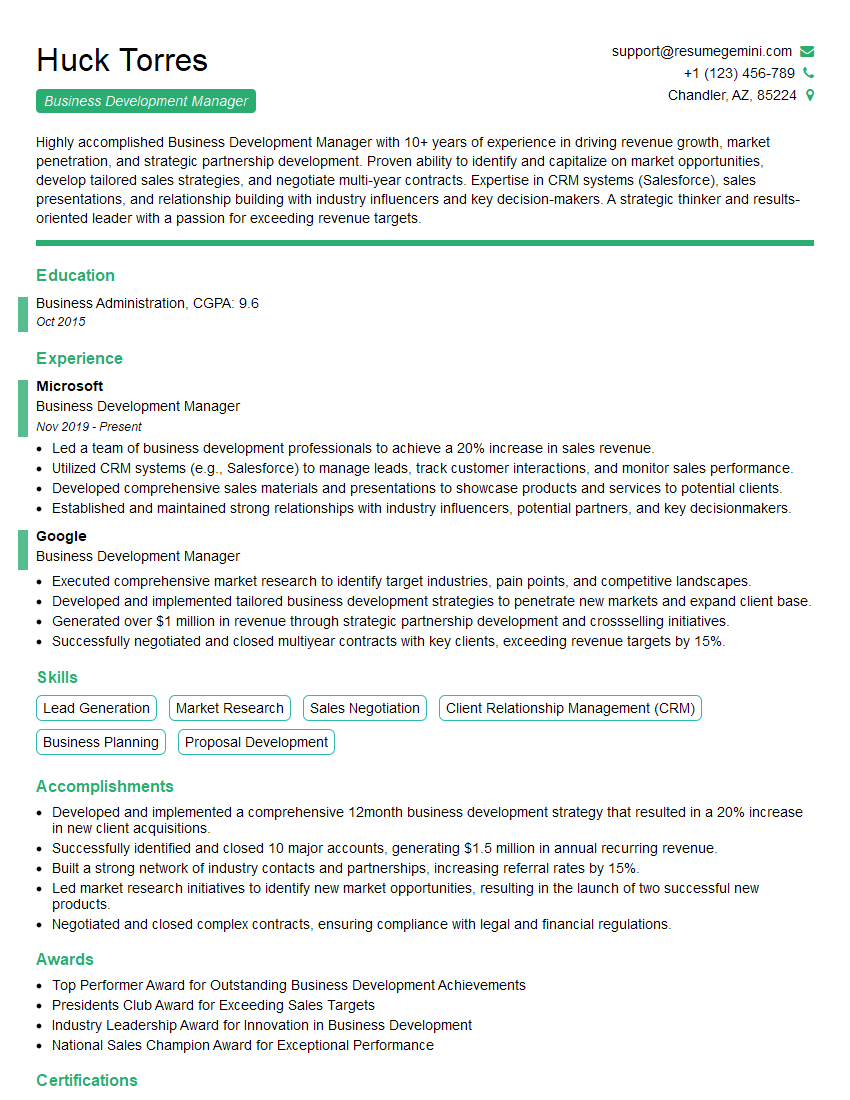
Mastering entrepreneurship principles is crucial for career advancement, opening doors to exciting opportunities and leadership roles. An ATS-friendly resume is key to maximizing your job prospects. We highly recommend using ResumeGemini to build a professional resume that showcases your skills and experience effectively. ResumeGemini offers examples of resumes tailored specifically to entrepreneurship to help you get started.

Explore more articles
Users Rating of Our Blogs
Share Your Experience
We value your feedback! Please rate our content and share your thoughts (optional).
What Readers Say About Our Blog
Very informative content, great job.
good