Cracking a skill-specific interview, like one for Environmental Education and Interpretation, requires understanding the nuances of the role. In this blog, we present the questions you’re most likely to encounter, along with insights into how to answer them effectively. Let’s ensure you’re ready to make a strong impression.
Questions Asked in Environmental Education and Interpretation Interview
Q 1. Describe your experience developing and implementing environmental education programs.
Developing and implementing effective environmental education programs requires a multifaceted approach, encompassing needs assessment, curriculum design, facilitation, and evaluation.
For instance, in a project focused on urban biodiversity, I began by assessing community knowledge and interests through surveys and focus groups. This informed the curriculum design, which integrated hands-on activities like citizen science bird counts and native plant propagation workshops, coupled with interactive presentations and engaging discussions. The program was implemented across local schools and community centers, utilizing a variety of teaching methods tailored to different age groups. I actively sought feedback during the process, adjusting the curriculum based on participant engagement and learning outcomes.
In another project addressing water conservation, I collaborated with a local water utility to develop a comprehensive program that included school visits, community events, and online resources, ultimately achieving significant reductions in water consumption among participating households.
Q 2. Explain your approach to tailoring environmental education to diverse audiences.
Tailoring environmental education to diverse audiences is crucial for maximizing impact. It involves understanding and addressing the unique needs, learning styles, and cultural backgrounds of different groups.
- Age: For younger audiences, I utilize hands-on activities, games, and storytelling. Older audiences might benefit from more in-depth discussions, debates, and case studies.
- Cultural Background: I ensure that materials and activities are culturally relevant and sensitive, incorporating traditional ecological knowledge where appropriate.
- Learning Styles: I employ a variety of teaching methods – visual aids, interactive simulations, field trips – to cater to different learning preferences (visual, auditory, kinesthetic).
- Accessibility: Programs are designed to be inclusive, incorporating accommodations for individuals with disabilities.
For example, when working with a refugee community, I ensured that all materials were translated into their native language and that the program content addressed their specific environmental concerns and experiences.
Q 3. How do you assess the effectiveness of your environmental education programs?
Assessing program effectiveness involves a combination of quantitative and qualitative methods. Quantitative methods include pre- and post-program surveys measuring changes in knowledge, attitudes, and behaviors. For example, I might use questionnaires to assess participants’ understanding of climate change before and after a workshop.
Qualitative methods, such as focus groups and interviews, provide valuable insights into participants’ experiences and perspectives. These methods help determine if the program met its goals and identify areas for improvement. For instance, I conduct post-program interviews with participants to gauge their satisfaction and identify what aspects resonated most with them. Analyzing participant feedback and observing their engagement during activities also provides crucial qualitative data.
Data analysis helps determine whether the program’s objectives were achieved and informs future program development. Program effectiveness is ultimately evaluated by measuring changes in knowledge, attitudes, and behavior related to the environmental issue.
Q 4. What are some common challenges in environmental education and how have you addressed them?
Common challenges in environmental education include reaching diverse audiences, overcoming apathy or misinformation, and securing adequate funding.
- Reaching Diverse Audiences: I use targeted outreach strategies, partnering with community organizations and leaders to ensure broad participation.
- Overcoming Apathy/Misinformation: I address misinformation with evidence-based education and encourage active participation through engaging activities and discussion. I often frame environmental issues within the context of participants’ daily lives, demonstrating their personal relevance.
- Securing Funding: I actively seek grants, sponsorships, and partnerships to secure resources for program development and implementation.
For example, when facing funding limitations, I developed creative partnerships with local businesses and organizations, bartering services or collaborating on joint fundraising activities.
Q 5. Describe your experience using various interpretive techniques (e.g., storytelling, demonstrations).
Interpretive techniques are essential for making environmental education engaging and memorable. I frequently use storytelling, demonstrations, and guided nature walks.
- Storytelling: I weave compelling narratives around environmental issues, using personal anecdotes and local examples to connect with audiences on an emotional level. For instance, I might share the story of a local species facing extinction to illustrate the impact of habitat loss.
- Demonstrations: Hands-on activities like composting demonstrations or water filtration experiments engage participants directly and promote active learning.
- Guided Nature Walks: These offer opportunities for direct observation and discovery, fostering a deeper appreciation for the natural world.
Combining these techniques creates a rich and multi-sensory learning experience that resonates with a wider audience.
Q 6. How do you incorporate technology into your environmental education programs?
Technology significantly enhances environmental education programs. I incorporate various digital tools to broaden reach, engage audiences, and provide access to information.
- Interactive Websites and Apps: These provide access to educational resources, virtual field trips, and citizen science projects.
- Social Media: Platforms like Instagram, Twitter, and Facebook can be used to share program updates, engage audiences, and disseminate environmental information.
- Geographic Information Systems (GIS): GIS technologies enable visualizing environmental data, mapping biodiversity hotspots, and tracking pollution patterns.
- Virtual Reality (VR) and Augmented Reality (AR): Immersive technologies offer engaging and interactive experiences that simulate real-world environmental scenarios.
For example, using a VR headset, participants can experience the impacts of deforestation or climate change firsthand, leaving a lasting impression.
Q 7. Explain your understanding of environmental ethics and how you integrate it into your work.
Environmental ethics involves understanding the moral relationships between humans and the environment. It’s a cornerstone of my work.
I integrate environmental ethics into my programs by emphasizing concepts such as:
- Sustainability: Promoting responsible resource management and consumption patterns.
- Interconnectedness: Highlighting the complex relationships within ecosystems and emphasizing the importance of biodiversity.
- Environmental Justice: Addressing the disproportionate impact of environmental problems on marginalized communities.
- Intrinsic Value of Nature: Acknowledging that nature has value beyond its instrumental use to humans.
I often use case studies and discussions to explore ethical dilemmas and encourage critical thinking about our responsibilities toward the environment. For example, I might discuss the ethical implications of deforestation or the use of genetically modified organisms, prompting participants to consider the broader societal and ecological consequences of their choices.
Q 8. How do you foster a sense of stewardship and responsibility towards the environment?
Fostering a sense of stewardship and responsibility towards the environment is crucial for effective environmental education. It’s about moving beyond simply imparting knowledge to cultivating a deep-seated connection and commitment to environmental protection. This involves several key strategies:
Experiential Learning: Direct engagement with nature—through activities like citizen science projects, habitat restoration, or outdoor exploration—creates powerful, personal connections. For example, participating in a river cleanup not only removes litter but also allows individuals to directly experience the impact of pollution and feel empowered to make a difference.
Storytelling and Narrative: Sharing compelling stories about the environment, both human and natural, can evoke emotional responses and inspire action. This might involve sharing personal anecdotes, local legends tied to environmental resources, or case studies of successful environmental initiatives.
Connecting Personal Actions to Global Impact: We emphasize that even seemingly small individual actions, like reducing waste or conserving water, collectively contribute to significant environmental change. This fosters a sense of personal agency and responsibility.
Promoting Responsible Consumption: Educating individuals about the environmental footprint of their choices (food, energy, transportation) can empower them to make more sustainable decisions. Interactive exercises like calculating carbon footprints can be effective here.
Empowering Action and Participation: Providing opportunities for learners to actively participate in environmental projects— from community gardening to advocacy campaigns — fosters a sense of ownership and strengthens their commitment to environmental stewardship.
Q 9. Describe your experience with environmental advocacy or community engagement.
My experience with environmental advocacy and community engagement spans several years. I’ve been actively involved in organizing and leading community cleanup events, workshops on sustainable living, and presentations to local government bodies on environmental policy. For example, I spearheaded a successful campaign to establish a community garden in an underserved neighborhood, which not only provided fresh produce but also fostered a sense of community and environmental awareness. This involved collaborating with local residents, securing funding, and navigating local regulations. I also regularly participate in local environmental advocacy groups, working on initiatives such as advocating for stricter regulations on pollution and promoting the adoption of renewable energy sources. My experience in coordinating community-based projects has honed my skills in stakeholder engagement, conflict resolution, and building consensus around shared environmental goals.
Q 10. How do you adapt your teaching style to different learning styles and abilities?
Adapting my teaching style to diverse learning styles and abilities is paramount. I employ a multi-modal approach that caters to visual, auditory, and kinesthetic learners. This means incorporating a variety of teaching methods, including:
Visual Aids: Using maps, diagrams, photographs, videos, and interactive presentations to convey information visually.
Auditory Learning: Incorporating discussions, storytelling, and audio recordings to cater to auditory learners.
Kinesthetic Learning: Designing hands-on activities, field trips, and outdoor explorations for kinesthetic learners who learn best through physical activity.
Differentiated Instruction: Providing varied assignments and assessment methods that allow learners to demonstrate their understanding in ways that suit their individual strengths.
Assistive Technologies: Utilizing assistive technologies, as needed, to support learners with specific learning needs.
For example, when teaching about biodiversity, I would use visually appealing infographics, conduct a sound walk to identify bird calls, and incorporate a hands-on activity like building a mini-ecosystem in a jar.
Q 11. What are your strategies for engaging diverse learners in environmental topics?
Engaging diverse learners in environmental topics requires creating inclusive and culturally relevant learning experiences. This involves:
Culturally Relevant Pedagogy: Incorporating stories, examples, and perspectives from diverse cultures to resonate with all learners. For instance, when discussing climate change, I’d highlight the impact on indigenous communities and traditional practices.
Inclusive Language: Using clear, accessible language that avoids jargon and technical terms. I ensure all participants feel comfortable and respected.
Collaborative Learning: Employing group work, discussions, and peer teaching to foster a sense of community and allow for diverse perspectives to be shared.
Accessibility: Providing materials and activities that are accessible to learners with disabilities, taking into account visual, auditory, and physical limitations.
Community Partnerships: Collaborating with community organizations and leaders to ensure the program reflects the needs and interests of the diverse community being served.
Q 12. How do you manage risks and safety concerns in outdoor environmental education settings?
Managing risks and safety concerns in outdoor environmental education is crucial. A robust risk management plan is essential, involving:
Pre-Trip Planning: Conducting thorough site assessments, identifying potential hazards (weather, terrain, wildlife), and developing contingency plans.
Emergency Procedures: Establishing clear communication protocols, ensuring access to first-aid supplies and emergency contact information, and conducting appropriate safety training for all participants and staff.
Weather Monitoring: Regularly checking weather forecasts and modifying activities as needed to ensure safety.
Wildlife Awareness: Educating participants about wildlife safety, including how to identify and respond to encounters with potentially dangerous animals.
Supervision and Guidance: Providing adequate supervision and guidance to ensure that participants adhere to safety guidelines and engage in appropriate behavior.
Appropriate Equipment: Ensuring participants have appropriate clothing, footwear, and gear for the activity and environmental conditions.
Q 13. Explain your understanding of Leave No Trace principles.
The Leave No Trace (LNT) principles are a set of ethical guidelines for minimizing human impact on the natural environment. They are crucial for responsible outdoor recreation and environmental education. The seven principles are:
Plan Ahead and Prepare: Know your route, regulations, and conditions. Pack out everything you pack in.
Travel and Camp on Durable Surfaces: Use established trails and campsites to prevent erosion.
Dispose of Waste Properly: Pack out all trash, including toilet paper. Bury human waste properly.
Leave What You Find: Don’t remove natural or cultural artifacts.
Minimize Campfire Impacts: Use existing fire rings or stoves; keep fires small and controlled.
Respect Wildlife: Observe from a distance and never feed animals.
Be Considerate of Other Visitors: Respect others’ privacy and experiences.
In my teaching, I emphasize the importance of LNT principles through practical demonstrations and role-playing, ensuring participants understand and internalize their importance.
Q 14. How do you handle difficult questions or challenging behaviors from participants?
Handling difficult questions or challenging behaviors requires patience, empathy, and effective communication strategies. I approach such situations by:
Active Listening: Patiently listening to the participant’s concerns and perspectives without interrupting.
Empathetic Response: Acknowledging the participant’s feelings and validating their concerns.
Clear and Concise Explanation: Providing accurate and age-appropriate answers to difficult questions, using clear and concise language.
Redirection: Redirecting challenging behaviors in a calm and positive manner, refocusing the participant on the learning objectives.
Seeking Collaboration: If necessary, collaborating with other staff members or seeking guidance from supervisors to address the situation effectively.
Establishing Ground Rules: Setting clear expectations for behavior at the beginning of the program helps to prevent challenging behavior.
For example, if a participant expresses skepticism about climate change, I would respond by acknowledging their perspective, presenting evidence-based information, and engaging them in a discussion rather than dismissing their views.
Q 15. Describe your experience in developing educational materials (e.g., brochures, presentations).
Developing effective educational materials is crucial for impactful environmental education. My experience spans creating a wide range of materials, from visually appealing brochures to interactive presentations. For instance, I developed a brochure for a local nature reserve, focusing on its biodiversity and highlighting key species. This involved meticulous research to ensure accuracy, collaboration with graphic designers to create an engaging layout, and careful selection of language to reach a diverse audience, including children and adults with varying levels of environmental knowledge. Another project involved creating a series of interactive presentations using multimedia elements – images, videos, and even sound recordings – for school children on the topic of water conservation. This required adapting the information to different age groups and incorporating interactive elements like quizzes and games to maintain engagement. I always prioritize clear, concise messaging and visually stimulating designs to ensure maximum impact.
- Brochure Development: Involves research, writing, design collaboration, and testing to ensure clear communication of key environmental concepts.
- Presentation Design: Focuses on multimedia integration, interactive elements, and tailoring the content to specific audiences and learning objectives.
Career Expert Tips:
- Ace those interviews! Prepare effectively by reviewing the Top 50 Most Common Interview Questions on ResumeGemini.
- Navigate your job search with confidence! Explore a wide range of Career Tips on ResumeGemini. Learn about common challenges and recommendations to overcome them.
- Craft the perfect resume! Master the Art of Resume Writing with ResumeGemini’s guide. Showcase your unique qualifications and achievements effectively.
- Don’t miss out on holiday savings! Build your dream resume with ResumeGemini’s ATS optimized templates.
Q 16. How do you stay current with best practices in environmental education and interpretation?
Staying current in environmental education and interpretation requires a multi-faceted approach. I regularly attend professional development workshops and conferences, such as those offered by the North American Association for Environmental Education (NAAEE) and similar organizations. This allows me to learn about the latest research, pedagogical approaches, and best practices in the field. I also actively subscribe to professional journals, such as the Journal of Environmental Education and the Interpretation magazine, and follow relevant organizations and experts on social media platforms. Furthermore, I actively seek out opportunities for collaborative projects and networking with other professionals in the field to exchange knowledge and stay informed about emerging trends. This includes participating in online forums and discussion groups. This ongoing professional development ensures that my teaching methods and educational materials reflect the most up-to-date scientific understanding and effective communication strategies.
Q 17. What are your strengths and weaknesses as an environmental educator?
My strengths lie in my ability to connect with diverse audiences and tailor my communication style to effectively engage them. I’m adept at translating complex scientific information into accessible language, using storytelling and real-world examples to make abstract concepts relatable. My experience working with diverse age groups, from preschoolers to adults, allows me to create engaging learning experiences that cater to different learning styles. One weakness I’m continually working on is delegation and time management, particularly when juggling multiple projects simultaneously. I’m actively improving my organizational skills through project management techniques to balance the demands of various environmental education programs. I believe in continuous self-improvement and actively seek feedback to identify and address my weaknesses.
Q 18. Describe your experience with grant writing or fundraising for environmental education projects.
I have significant experience in securing funding for environmental education projects. I’ve successfully written and submitted grant proposals to various foundations, government agencies, and corporate sponsors. For example, I secured a grant from the National Science Foundation to develop and implement an environmental education program focused on climate change for under-resourced schools. This involved extensive research into available funding opportunities, careful crafting of the proposal to clearly articulate the project’s goals, budget, and impact, and detailed follow-up communication with grant reviewers. My experience includes both writing individual grants and collaborating with colleagues to develop large-scale funding proposals. I’m proficient in developing compelling narratives that highlight the project’s significance and potential impact, creating realistic budgets, and meeting stringent grant reporting requirements.
Q 19. How do you evaluate the success of an environmental education program?
Evaluating the success of an environmental education program goes beyond simply measuring attendance. A robust evaluation involves a multi-pronged approach encompassing quantitative and qualitative data. Quantitative data includes pre- and post-program assessments to measure changes in knowledge, attitudes, and behaviors related to environmental issues. For example, we might use surveys to assess participants’ understanding of water conservation practices before and after a workshop. Qualitative data, gathered through observations, interviews, and focus groups, provides insights into the participants’ learning experience and the effectiveness of the program’s delivery. For example, we might conduct post-workshop interviews to understand how participants plan to apply what they learned in their daily lives. Ultimately, a successful program demonstrates a positive change in knowledge, attitudes, and – most importantly – behaviors that lead to environmental stewardship.
Q 20. How do you use data and metrics to inform your environmental education programs?
Data and metrics are essential for informing and improving environmental education programs. I use a variety of data collection methods, including pre- and post-tests, surveys, attendance records, and feedback forms to track program participation and effectiveness. This data helps us understand what aspects of the program are successful and which areas require improvement. For example, if post-test scores reveal a lack of understanding on a specific topic, I will revise the program’s content or delivery methods to enhance clarity. Analyzing attendance data can highlight scheduling issues or preferences, while feedback forms provide valuable qualitative insights into participant satisfaction and suggestions for improvement. This data-driven approach ensures that our programs remain relevant, engaging, and effective in achieving their objectives.
Q 21. Describe your experience in curriculum development for environmental education.
Curriculum development in environmental education requires a deep understanding of both environmental science and effective pedagogy. My experience includes creating curricula that align with national and state learning standards, while also incorporating best practices in environmental education. I’ve developed curricula incorporating various learning styles, utilizing hands-on activities, field trips, and technology to create immersive learning experiences. For example, I developed a year-long curriculum for middle school students focusing on local ecosystem restoration. This involved aligning learning objectives with state science standards, designing age-appropriate activities, such as stream water quality testing and habitat restoration projects, and providing teacher resources to facilitate implementation. Curriculum development also involves ongoing evaluation and refinement, based on feedback from teachers and students and the data collected throughout the program.
Q 22. How do you collaborate with other professionals to achieve environmental education goals?
Effective environmental education rarely happens in isolation. Collaboration is key. I approach it by building strong networks with professionals from diverse fields. This includes scientists, educators from other disciplines, policymakers, community leaders, and even artists. For example, when developing a program on water conservation, I’d collaborate with a hydrologist to ensure scientific accuracy, a local teacher to adapt the curriculum for different age groups, and a community organizer to connect with residents and build local support. I believe in a shared leadership model where each participant brings their expertise to the table, contributing to a more comprehensive and impactful program.
- Networking: Attending conferences, joining professional organizations (like the North American Association for Environmental Education), and participating in local environmental initiatives are essential for building these networks.
- Shared Goals and Objectives: Clearly defined goals and shared understanding of the desired outcomes are paramount. Collaborative projects require a common vision.
- Open Communication: Regular meetings, open dialogue, and clear communication channels are crucial for transparency and efficient workflow.
Q 23. Explain your understanding of environmental justice issues.
Environmental justice recognizes that environmental problems don’t affect everyone equally. Certain communities – often low-income communities and communities of color – disproportionately bear the burden of pollution, lack access to green spaces, and experience the negative impacts of climate change. This is not an accident; it’s a result of systemic inequalities. My understanding of environmental justice involves acknowledging these inequalities and working towards equitable solutions. It means centering the voices and experiences of those most impacted and advocating for policies and practices that promote environmental fairness for all.
For instance, a new highway might be economically beneficial, but if it’s built through a low-income neighborhood, it disproportionately impacts residents with increased air and noise pollution, impacting their health and quality of life. Environmental justice requires considering these impacts and finding alternative solutions.
Q 24. How do you integrate cultural perspectives into environmental education?
Integrating cultural perspectives is paramount to effective environmental education. It’s about understanding that different cultures have unique relationships with the environment, shaped by their history, beliefs, and practices. Ignoring these perspectives leads to incomplete and potentially harmful education. For example, a lesson on forest management might be far more engaging and meaningful if it incorporates the traditional ecological knowledge of Indigenous communities who have lived sustainably with the forest for generations. Their insights can offer valuable lessons on conservation and sustainable resource management. I incorporate cultural perspectives by:
- Partnering with local communities: Collaborating with Indigenous groups, cultural organizations, and community leaders to co-create educational materials and programs.
- Utilizing storytelling and oral traditions: Sharing traditional stories, songs, and practices that reflect the cultural connection to nature.
- Creating culturally relevant materials: Adapting curriculum and resources to reflect the cultural context of the learners.
Q 25. Describe your experience working with diverse stakeholders in environmental programs.
Working with diverse stakeholders requires strong communication, empathy, and a commitment to inclusivity. My experience includes collaborating with government agencies, NGOs, businesses, community groups, and individuals from various backgrounds. A recent project involved developing a community garden program. We collaborated with local residents (including many elderly residents and young families), a local farmer’s market, the city council, and a landscape architect. Successful stakeholder engagement involved:
- Active listening: Understanding the perspectives, concerns, and needs of all stakeholders.
- Transparency and accountability: Keeping stakeholders informed and addressing their concerns openly.
- Conflict resolution: Facilitating constructive dialogue to address disagreements and find common ground.
- Building consensus: Working towards shared goals and decisions that reflect the interests of all stakeholders.
Q 26. How do you use storytelling to enhance learning in environmental education?
Storytelling is a powerful tool for connecting with people on an emotional level and making environmental concepts more memorable and engaging. Instead of presenting dry facts and figures, I use narratives to illustrate environmental challenges and solutions. For example, to teach about the impact of plastic pollution, I might tell the story of a sea turtle entangled in plastic debris. This story creates an emotional connection, helping students understand the real-world consequences of plastic waste far more effectively than a statistics-based lesson. I integrate storytelling through:
- Personal anecdotes: Sharing personal experiences related to environmental issues.
- Traditional storytelling: Incorporating cultural narratives that highlight the human-nature connection.
- Case studies: Presenting real-world examples of environmental success stories and challenges.
- Interactive storytelling: Engaging learners through role-playing and participatory activities.
Q 27. How do you address misinformation or misconceptions about environmental issues?
Addressing misinformation is crucial. I use a multi-pronged approach. First, I identify the source and nature of the misconception. Then, I present accurate information using credible sources, like peer-reviewed scientific studies and reports from reputable organizations. It’s not enough just to correct the misinformation; it’s crucial to explain *why* the misinformation is wrong and to highlight the potential consequences of believing it. For example, if someone believes climate change is a hoax, I’d present evidence from multiple sources, explain the scientific consensus, and discuss the real-world impacts of climate change. Active listening and respectful dialogue are key, even when discussing controversial topics.
Furthermore, I emphasize critical thinking skills so that individuals can evaluate information themselves. Teaching them how to identify credible sources and how to spot biased information empowers them to become responsible consumers of environmental information.
Q 28. Describe your experience with program evaluation and assessment methods.
Program evaluation is vital for assessing the effectiveness of environmental education initiatives. I utilize both formative and summative evaluation methods. Formative evaluation involves ongoing assessment throughout the program’s implementation, allowing for adjustments and improvements along the way. This might involve regular feedback sessions with participants, informal observations, and pre- and post-program surveys. Summative evaluation happens at the end to measure overall impact. This could involve more formal surveys, interviews, and analysis of program data. For example, if we’re teaching a school program about waste reduction, formative evaluation might include monitoring student participation and collecting informal feedback from teachers. Summative evaluation could involve measuring changes in student behavior (e.g., waste reduction at school) several months after the program’s conclusion. The choice of methods depends on the program’s goals and the available resources. Quantitative data (e.g., survey results) and qualitative data (e.g., interview transcripts) are usually used to get a holistic view of the program’s success.
Key Topics to Learn for Environmental Education and Interpretation Interview
- Environmental Education Philosophies and Approaches: Explore different pedagogical approaches (e.g., experiential learning, place-based education, inquiry-based learning) and their application in diverse environmental settings.
- Interpretation Techniques: Understand and apply various interpretation methods (e.g., thematic interpretation, storytelling, demonstration) to effectively communicate environmental concepts to diverse audiences.
- Curriculum Development and Program Design: Learn how to design engaging and effective environmental education programs, considering learning objectives, target audiences, and assessment strategies.
- Audience Engagement and Communication: Develop skills in adapting communication styles to connect with diverse audiences, including children, adults, and diverse cultural groups. Practice active listening and responding to questions effectively.
- Environmental Issues and Sustainability: Demonstrate a thorough understanding of key environmental challenges (e.g., climate change, biodiversity loss, pollution) and potential solutions, and how to effectively communicate these issues to different audiences.
- Program Evaluation and Assessment: Understand methods for evaluating the effectiveness of environmental education programs, including pre- and post-tests, surveys, and observational techniques.
- Outdoor Leadership and Safety: Familiarize yourself with risk management principles and best practices for leading outdoor environmental education activities, ensuring participant safety and well-being.
- Accessibility and Inclusivity: Understand the principles of creating inclusive and accessible environmental education programs for people of all abilities and backgrounds.
- Technology in Environmental Education: Explore the use of technology (e.g., GIS, multimedia resources) to enhance environmental education and interpretation programs.
- Professional Ethics and Standards: Be prepared to discuss ethical considerations related to environmental education and interpretation, including responsible resource management and respectful engagement with diverse communities.
Next Steps
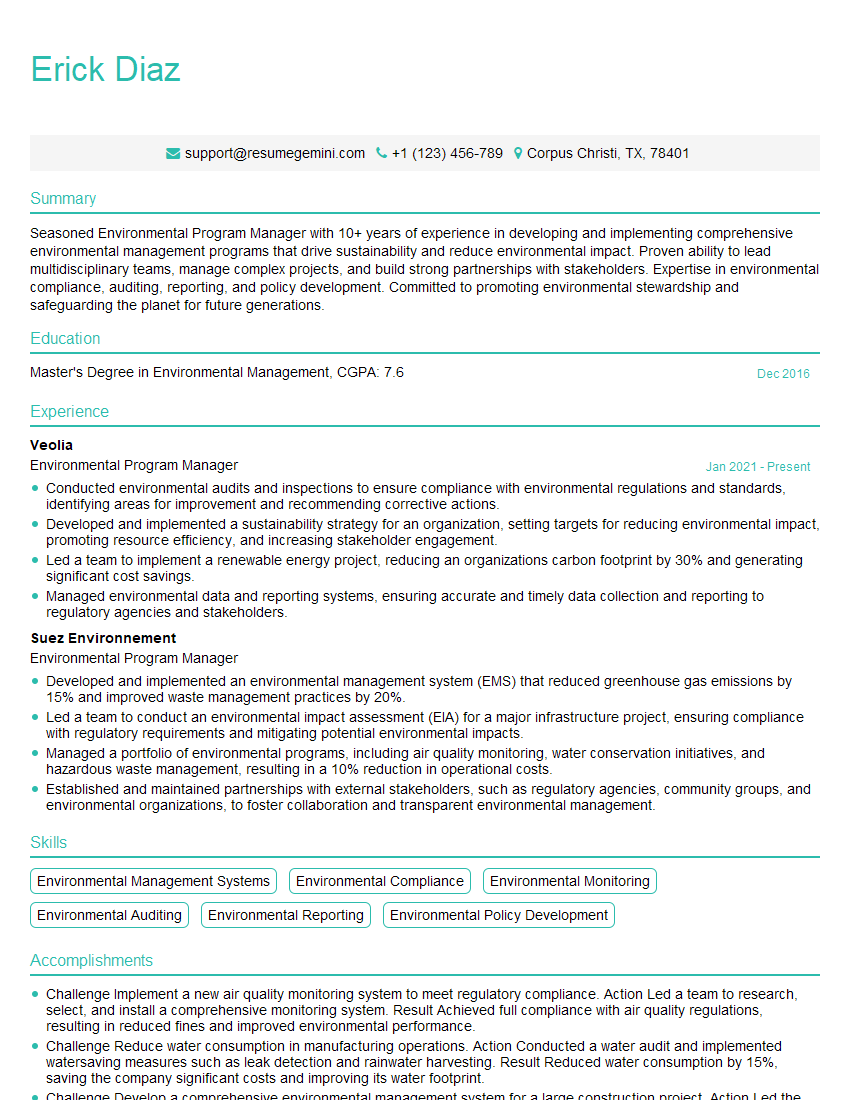
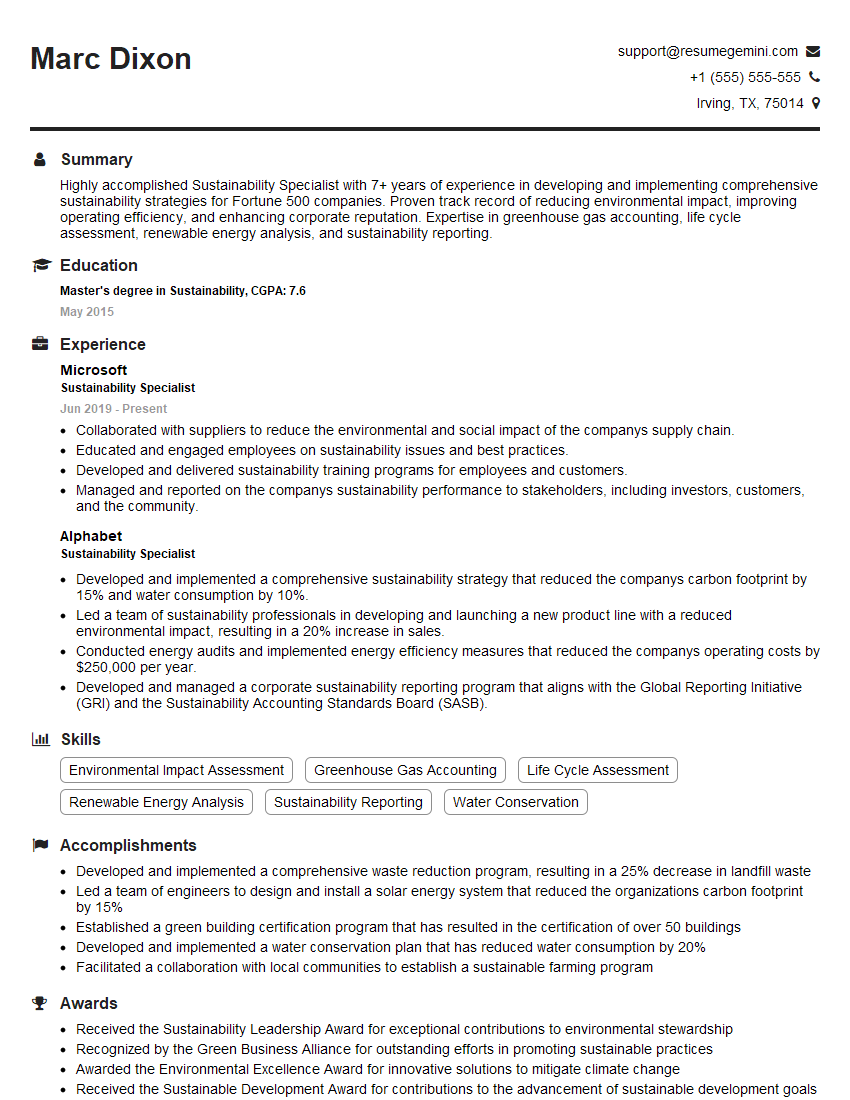
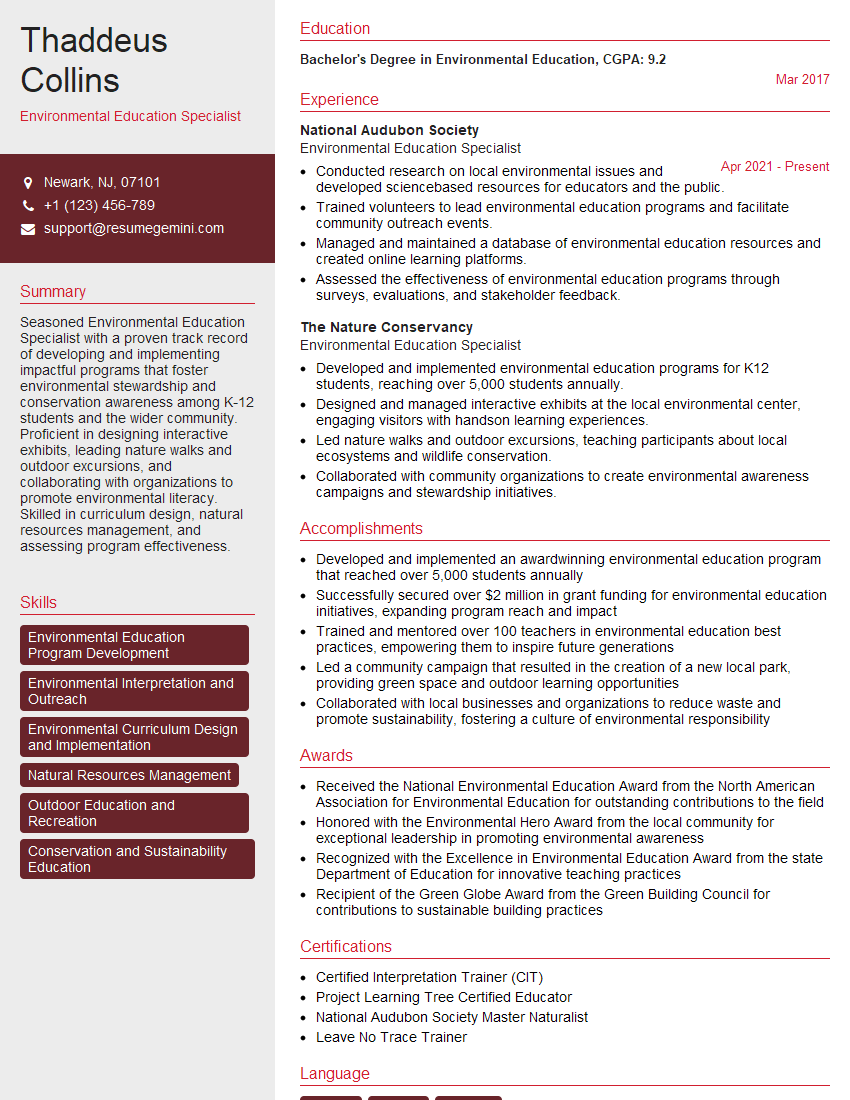
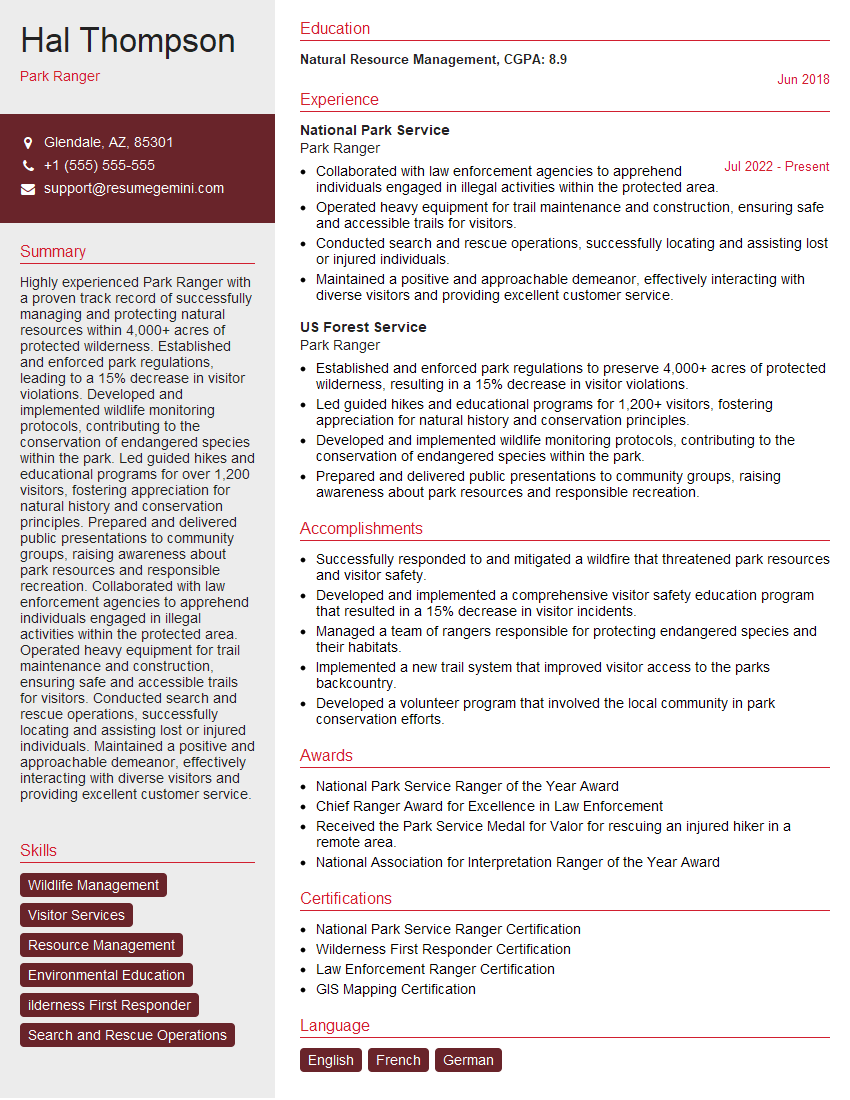
Mastering Environmental Education and Interpretation opens doors to fulfilling and impactful careers. To maximize your job prospects, creating a strong, ATS-friendly resume is crucial. ResumeGemini is a trusted resource that can help you build a professional and effective resume that showcases your skills and experience. ResumeGemini provides examples of resumes tailored to Environmental Education and Interpretation to help guide you. Invest time in crafting a compelling resume – it’s your first impression with potential employers.


Explore more articles
Users Rating of Our Blogs
Share Your Experience
We value your feedback! Please rate our content and share your thoughts (optional).
What Readers Say About Our Blog
Very informative content, great job.
good