Feeling uncertain about what to expect in your upcoming interview? We’ve got you covered! This blog highlights the most important Environmental Protection and Regulatory Compliance interview questions and provides actionable advice to help you stand out as the ideal candidate. Let’s pave the way for your success.
Questions Asked in Environmental Protection and Regulatory Compliance Interview
Q 1. Explain your understanding of the Clean Air Act.
The Clean Air Act (CAA) is a comprehensive federal law in the United States that regulates air pollution. Its primary goal is to protect public health and the environment by setting limits on emissions of harmful pollutants from various sources. Think of it as a giant rulebook for clean air.
The CAA works by establishing National Ambient Air Quality Standards (NAAQS) for criteria pollutants like ozone, particulate matter, carbon monoxide, sulfur dioxide, nitrogen dioxide, and lead. These standards define acceptable levels of these pollutants in the air. The EPA then develops regulations to help states achieve these standards.
- Stationary Sources: Large facilities like power plants and factories must obtain permits and comply with emission limits for various pollutants.
- Mobile Sources: Vehicles are regulated through emission standards for cars, trucks, and other vehicles. This includes fuel efficiency standards and emission control technologies.
- Enforcement: The EPA and state agencies are responsible for enforcing the CAA, conducting inspections, issuing penalties for violations, and providing technical assistance.
For example, a power plant exceeding its permitted sulfur dioxide emissions would be subject to penalties under the CAA. The act also provides for citizen lawsuits, allowing individuals to sue polluters for violations.
Q 2. Describe your experience with environmental impact assessments.
I have extensive experience conducting and reviewing Environmental Impact Assessments (EIAs). An EIA is a process used to identify, predict, evaluate, and mitigate the biophysical, social, and other relevant effects of development proposals prior to major decisions being taken and commitments made. It’s essentially a detailed prediction and assessment of a project’s environmental footprint.
My experience includes leading EIAs for a variety of projects, including:
- Construction of a new highway, assessing impacts on wetlands, air quality, and noise pollution.
- Development of a large-scale wind farm, evaluating impacts on avian populations and visual aesthetics.
- Expansion of a manufacturing facility, analyzing potential water pollution and waste management issues.
In each case, I followed established methodologies, incorporating public consultation, data collection (e.g., air and water quality monitoring, habitat surveys), impact prediction using modeling software, and mitigation strategy development. I’ve also prepared numerous reports summarizing findings and recommendations for clients and regulatory agencies.
Q 3. How familiar are you with ISO 14001 standards?
I am very familiar with ISO 14001, the internationally recognized standard for environmental management systems. It provides a framework for organizations to systematically manage their environmental impacts, improve their environmental performance, and achieve environmental objectives. Think of it as a best-practice guide for environmental responsibility.
My familiarity extends to its implementation. I have assisted numerous organizations in obtaining ISO 14001 certification by:
- Conducting gap analyses to identify areas where existing environmental management practices need improvement.
- Developing and implementing environmental management systems that meet the ISO 14001 requirements.
- Providing training to staff on the requirements of the standard and best practices for environmental management.
- Conducting internal audits to ensure ongoing compliance with the standard.
Understanding ISO 14001 is crucial for demonstrating a commitment to environmental stewardship and often a requirement for contracts or operational licenses.
Q 4. What are your strategies for ensuring regulatory compliance?
Ensuring regulatory compliance is a proactive, multi-faceted process. My strategies include:
- Comprehensive Regulatory Knowledge: Staying abreast of all applicable federal, state, and local environmental regulations is paramount. This includes understanding permit requirements, reporting deadlines, and enforcement actions.
- Proactive Monitoring: Regularly monitoring environmental parameters (air and water quality, waste generation, etc.) to identify potential compliance issues early on. This often involves using automated monitoring systems and regular on-site inspections.
- Robust Documentation: Maintaining meticulous records of all environmental activities, including permits, monitoring data, training records, and corrective actions. This is crucial for demonstrating compliance during audits or inspections.
- Employee Training: Educating employees on environmental regulations, their roles and responsibilities, and the importance of compliance. Regular training sessions and refresher courses are crucial.
- Internal Audits: Conducting periodic internal audits to identify gaps and areas for improvement in environmental management practices. This helps to prevent violations and enhance compliance.
- Continuous Improvement: Implementing corrective actions and preventive measures to address any identified compliance issues and to continuously improve environmental performance. This often involves using a Plan-Do-Check-Act (PDCA) cycle.
This approach helps to prevent violations, minimize environmental risks, and maintain a strong reputation for environmental responsibility.
Q 5. Describe a time you identified and resolved an environmental compliance issue.
During my work with a manufacturing facility, we discovered an exceedance in wastewater discharge limits for a specific pollutant. This was detected through routine monitoring. The initial investigation revealed a malfunction in the wastewater treatment system.
Here’s how we addressed the issue:
- Immediate Action: We immediately implemented temporary measures to reduce the discharge of the pollutant, including diverting affected wastewater streams.
- Root Cause Analysis: We conducted a thorough investigation to pinpoint the cause of the malfunction in the wastewater treatment system. This involved reviewing maintenance logs, equipment inspections, and operator interviews.
- Corrective Actions: Based on the root cause analysis, we implemented corrective actions, including repairing the malfunctioning equipment and upgrading the system to prevent future occurrences.
- Reporting and Documentation: We promptly reported the exceedance to the regulatory agency, provided detailed documentation of the root cause analysis, corrective actions, and preventative measures, and submitted a corrective action plan.
- Follow-up Monitoring: We implemented enhanced monitoring of the wastewater discharge to ensure compliance with the limits and verify the effectiveness of the corrective actions.
Through this structured approach, we resolved the compliance issue effectively, preventing further violations and maintaining a good relationship with the regulatory agency.
Q 6. Explain the differences between permitting and licensing in environmental regulations.
While both permits and licenses are authorization documents required for regulated activities, they differ in scope and duration. A permit is typically granted for a specific activity, project, or facility, often subject to specific conditions and limitations. Its duration is usually tied to the duration of the activity itself, it might be renewed.
A license, on the other hand, often grants broader authority to conduct a range of regulated activities over a longer period. Think of a driver’s license – it allows you to drive various vehicles over an extended time, subject to renewal and certain conditions. An environmental license might grant permission to operate a specific type of facility with general conditions on emissions or waste management, requiring periodic inspections.
For example, a construction project requiring wetland disturbance would need a permit specifying the allowed area of disturbance, mitigation measures, and timeframe. In contrast, a manufacturing facility might need a license to operate, allowing for various processes but requiring adherence to broader environmental standards.
Q 7. How do you stay updated on changes in environmental regulations?
Staying current with environmental regulations is essential. My strategies include:
- Subscription to Regulatory Updates: I subscribe to newsletters and updates from relevant government agencies (e.g., EPA, state environmental agencies) to receive timely information on regulatory changes.
- Professional Organizations: Active membership in professional organizations (e.g., AIHA, IEMA) provides access to industry news, publications, and conferences.
- Legal Databases: I use legal databases and online resources to research specific regulations and case laws related to environmental compliance.
- Networking: Attending conferences and workshops, and networking with other environmental professionals, allows me to learn about emerging issues and regulatory trends.
- Regulatory Agency Websites: Regularly checking the websites of relevant regulatory agencies to review proposed rules, final regulations, and guidance documents.
This multi-pronged approach ensures I’m consistently informed and able to advise clients effectively on the latest environmental regulations and best practices.
Q 8. What is your experience with environmental auditing?
Environmental auditing involves a systematic and independent examination of an organization’s environmental performance against a set of established criteria. This could be internal standards, industry best practices, or regulatory requirements. My experience encompasses conducting both internal and external audits, assessing compliance with environmental regulations, identifying environmental risks and liabilities, and developing recommendations for improvement.
For example, in a recent audit of a manufacturing facility, I assessed their wastewater discharge compliance with the Clean Water Act. This included reviewing permits, sampling data, evaluating their treatment processes, and checking for proper record-keeping. I then prepared a detailed report outlining any non-compliances, recommending corrective actions, and suggesting preventative measures to ensure future compliance. Another project involved performing an environmental due diligence audit for a property acquisition, assessing potential environmental liabilities and risks associated with the site’s past activities.
Q 9. Explain your knowledge of hazardous waste management regulations.
Hazardous waste management regulations are complex and vary depending on the jurisdiction. However, several core principles remain consistent. These regulations aim to protect human health and the environment from the dangers posed by hazardous waste through cradle-to-grave management. This involves the generation, transportation, treatment, storage, and disposal of hazardous waste. My knowledge covers various aspects, including the Resource Conservation and Recovery Act (RCRA) in the US, which defines hazardous wastes, sets standards for their management, and outlines generator responsibilities. I also understand regulations pertaining to specific hazardous waste streams such as asbestos, PCBs, and heavy metals.
For instance, I’ve assisted numerous clients in developing and implementing hazardous waste management plans compliant with RCRA. This included conducting waste characterization studies to properly classify wastes, ensuring proper labeling and packaging, arranging for transportation by licensed haulers, and selecting appropriate disposal or treatment facilities. Understanding manifest systems and record-keeping requirements is also critical for compliance.
Q 10. Describe your experience with environmental monitoring and reporting.
Environmental monitoring and reporting are crucial for tracking environmental performance, demonstrating compliance, and identifying potential problems. My experience includes designing and implementing environmental monitoring programs, collecting and analyzing data, and preparing comprehensive reports. These programs often involve air quality monitoring, water quality monitoring, soil sampling, and noise level assessments. The data collected are then used to assess compliance with permits, regulations, and internal targets.
For example, I’ve overseen air emission monitoring programs for power plants, using continuous emission monitoring systems (CEMS) to track pollutants like NOx and SO2. We analyzed the data to ensure compliance with the Clean Air Act and reported the results to regulatory agencies. Another project involved groundwater monitoring around a former industrial site, where we collected samples, analyzed them for contaminants, and reported the findings to assess the effectiveness of the remediation efforts. Data reporting often involves using specific software and following agency-specific reporting formats.
Q 11. How do you handle conflicting environmental regulations?
Conflicting environmental regulations can arise when different agencies have overlapping jurisdictions or when regulations at the federal, state, and local levels differ. The approach involves a multi-step process. First, I thoroughly research all applicable regulations, carefully documenting each requirement. This includes reviewing permit conditions, agency guidance documents, and any relevant case law. Second, I prioritize regulations based on their stringency and potential penalties. Regulations with stricter standards or significant environmental consequences generally take precedence. Third, I seek clarification from the relevant regulatory agencies if ambiguities or conflicts exist. Open communication and proactive engagement with agencies are often key to resolving conflicts. Finally, I document the analysis and decision-making process to support compliance and potentially appeal decisions if necessary.
For instance, I once encountered conflicting regulations regarding wastewater discharge limits for a client. The state had stricter limits than the federal regulations. We opted to comply with the stricter state requirements to minimize environmental risk and avoid potential penalties. We documented this approach, showing our reasoning and adherence to the most protective standard.
Q 12. What is your approach to environmental risk assessment?
Environmental risk assessment is a systematic process used to identify, analyze, and evaluate potential environmental hazards and their associated risks. My approach follows a structured methodology that typically involves identifying potential hazards (e.g., chemical spills, air emissions, habitat destruction), characterizing their potential impact on human health and the environment, estimating the likelihood of each hazard occurring, and evaluating the overall risk. This often uses quantitative methods, such as probabilistic modeling, but qualitative assessments are also valuable.
A recent project involved a risk assessment for a proposed pipeline project. We identified potential risks such as oil spills, habitat damage, and groundwater contamination. We then estimated the probability of each risk event and its potential severity, using historical data and expert judgment. The results were used to inform the project design and mitigation measures. This process helps make informed decisions to minimize potential negative impacts.
Q 13. Explain your understanding of environmental remediation techniques.
Environmental remediation techniques aim to clean up contaminated sites and restore them to a safe and usable condition. The choice of technique depends on the nature and extent of the contamination, the site characteristics, and regulatory requirements. My understanding covers various techniques, including excavation and disposal of contaminated soil, pump and treat systems for groundwater remediation, bioremediation using microorganisms to break down contaminants, and phytoremediation using plants to absorb pollutants. Selection is crucial and is based on a detailed site investigation and risk assessment.
For example, I’ve worked on projects involving the remediation of soil contaminated with petroleum hydrocarbons using bioremediation techniques. This involved introducing microorganisms to the soil to accelerate the natural breakdown of the hydrocarbons. Another project involved the remediation of groundwater contaminated with heavy metals using a pump-and-treat system. This process involves pumping the contaminated water to the surface, treating it to remove the contaminants, and then re-injecting the treated water back into the ground.
Q 14. How familiar are you with the National Environmental Policy Act (NEPA)?
The National Environmental Policy Act (NEPA) is a landmark US environmental law that established a national framework for addressing environmental concerns in federal actions. My familiarity encompasses its core requirements, particularly the need for Environmental Impact Statements (EIS) for major federal projects. NEPA requires federal agencies to assess the environmental impacts of their proposed actions before making decisions. This includes identifying potential impacts, analyzing alternatives, and evaluating mitigation measures. I understand the process of preparing and reviewing EISs, including scoping, public involvement, and agency coordination. A robust understanding of NEPA is critical for any project involving federal funding or permits.
I’ve been involved in several projects that required NEPA compliance, providing support in the preparation of Environmental Assessments (EAs) and EISs. This includes assisting in the identification of potential impacts, conducting environmental baseline studies, and developing mitigation plans to minimize adverse impacts. Understanding the NEPA process is crucial for ensuring compliance and avoiding potential delays or legal challenges.
Q 15. Describe your experience with developing and implementing environmental management systems.
Developing and implementing Environmental Management Systems (EMS) involves a structured approach to minimizing environmental impact. I’ve been extensively involved in this process, from initial assessment to ongoing improvement. This includes conducting thorough environmental audits to identify potential risks and non-compliances. For example, I led a project at a manufacturing plant where we identified significant wastewater discharge issues. We then developed an EMS based on ISO 14001 standards, incorporating best practices for waste reduction, water conservation, and pollution prevention. This involved training employees, implementing monitoring procedures, and establishing clear responsibilities. We documented the entire system in a comprehensive manual and implemented a robust internal audit program to verify effectiveness and ensure continuous improvement. The result was a significant reduction in our environmental footprint, improved regulatory compliance, and enhanced stakeholder relations.
Another example involves working with a construction company to implement an EMS to minimize their impact on surrounding ecosystems. This required careful planning around erosion control, waste management, and noise pollution. We used a phased approach, focusing on the most critical areas first and gradually expanding the system as the project progressed. Crucially, we incorporated employee input at every stage, fostering a culture of environmental responsibility.
Career Expert Tips:
- Ace those interviews! Prepare effectively by reviewing the Top 50 Most Common Interview Questions on ResumeGemini.
- Navigate your job search with confidence! Explore a wide range of Career Tips on ResumeGemini. Learn about common challenges and recommendations to overcome them.
- Craft the perfect resume! Master the Art of Resume Writing with ResumeGemini’s guide. Showcase your unique qualifications and achievements effectively.
- Don’t miss out on holiday savings! Build your dream resume with ResumeGemini’s ATS optimized templates.
Q 16. How do you ensure compliance with stormwater management regulations?
Stormwater management compliance hinges on preventing pollution from entering storm drains. My approach is multifaceted. Firstly, I ensure that all stormwater permits are obtained and meticulously maintained. These permits often dictate specific Best Management Practices (BMPs) that need implementation. Secondly, I conduct regular inspections of sites to identify potential sources of pollution, such as sediment, chemicals, or litter. Common BMPs include installing silt fences, vegetated buffers, and oil/water separators. Thirdly, I develop and implement comprehensive Stormwater Pollution Prevention Plans (SWPPPs) that detail the specific measures to control pollutants. These plans often need to be tailored to the specific site and its activities. Regular training for personnel on proper handling of materials and cleanup procedures is critical. Finally, detailed records of inspections, maintenance activities, and any incidents are meticulously kept to demonstrate ongoing compliance to regulatory bodies. For example, I successfully guided a construction site through a regulatory inspection without any violations by proactively implementing and documenting a rigorous SWPPP.
Q 17. What is your experience with environmental due diligence?
Environmental due diligence is a critical process in assessing environmental liabilities associated with a property or business transaction. My experience covers all aspects – from initial site reconnaissance and historical review to detailed environmental assessments. This includes reviewing historical environmental reports, regulatory records, and conducting Phase I and Phase II Environmental Site Assessments (ESAs) as required. A Phase I ESA involves reviewing historical records and conducting a site inspection to identify potential environmental concerns. If contamination is suspected, a Phase II ESA, which typically involves soil and groundwater sampling and analysis, is conducted. I’ve worked on numerous transactions, helping clients understand the environmental risks and liabilities involved. For instance, I identified buried drums containing hazardous waste during a Phase I ESA for a property purchase, allowing the client to renegotiate the purchase price or withdraw from the transaction entirely. This saved the client significant financial and legal problems. The analysis then informs risk mitigation strategies, including remediation plans if necessary.
Q 18. How familiar are you with the Resource Conservation and Recovery Act (RCRA)?
The Resource Conservation and Recovery Act (RCRA) is a cornerstone of environmental law in the United States, regulating the generation, transportation, treatment, storage, and disposal of hazardous waste. My familiarity extends to all aspects of RCRA compliance, including waste characterization, generator status determination, manifest tracking, and closure of hazardous waste facilities. I understand the different types of hazardous waste, the requirements for proper labeling and packaging, and the need for comprehensive record-keeping. I’ve helped numerous clients navigate the complex regulations surrounding RCRA, ensuring they meet all applicable requirements. For instance, I assisted a manufacturing company in obtaining a RCRA Part B permit, ensuring the facility’s waste management practices complied with all federal and state regulations. This involved detailed documentation of waste streams, emergency response plans, and employee training programs.
Q 19. Explain your understanding of the Clean Water Act.
The Clean Water Act (CWA) is the primary federal law governing water pollution in the US. It aims to restore and maintain the chemical, physical, and biological integrity of the nation’s waters. My understanding of the CWA covers a wide range of aspects, including the National Pollutant Discharge Elimination System (NPDES) permit program, water quality standards, and enforcement actions. I have experience in developing and implementing NPDES permits, ensuring compliance with effluent limitations and monitoring requirements. I’m familiar with various water quality parameters and their significance in assessing water health. For example, I’ve successfully assisted several clients in obtaining and maintaining their NPDES permits, ensuring their wastewater discharges meet all regulatory requirements. This involved conducting regular monitoring, submitting reports, and responding promptly to any regulatory inquiries. I also have experience working with remediation strategies for water bodies that have been contaminated. Understanding the CWA’s emphasis on pollution prevention and the importance of protecting wetlands and other water bodies is key to my work.
Q 20. Describe your experience with environmental data analysis and interpretation.
Environmental data analysis and interpretation are critical for assessing environmental conditions and informing decision-making. My expertise spans various aspects, including data collection, statistical analysis, and the use of specialized software like ArcGIS and statistical packages. I’ve worked with various datasets, including water quality monitoring data, air emissions data, and soil and sediment sampling data. I can identify trends, anomalies, and correlations within datasets, and present findings in a clear and concise manner. For example, I used statistical methods to analyze long-term water quality data to identify the source of a persistent pollutant in a river. This analysis helped prioritize remediation efforts and led to significant improvements in water quality. My experience includes preparing comprehensive reports, visualisations and presentations of this analysis for stakeholders and regulatory bodies.
Q 21. How do you communicate complex environmental information to non-technical audiences?
Communicating complex environmental information to non-technical audiences requires a clear, concise, and engaging approach. I avoid technical jargon and use analogies and visual aids to explain concepts effectively. For instance, when explaining complex water quality data, I might use simple bar graphs or maps to illustrate key findings. I also tailor my communication style to the audience, adjusting the level of detail as needed. Storytelling can be a powerful tool, using real-world examples to illustrate the importance of environmental protection. I’ve successfully presented environmental information to community groups, stakeholders and company leadership, ensuring they understand the issues and are engaged in solutions. I frequently employ interactive elements to engage the audience and encourage questions, ensuring a comprehensive understanding of the material presented. This ensures effective communication and facilitates collaboration across diverse stakeholder groups.
Q 22. Explain your experience with environmental compliance training programs.
Throughout my career, I’ve been deeply involved in developing and delivering environmental compliance training programs. My approach focuses on practical application and risk mitigation. I’ve designed and implemented training for various audiences, from frontline workers to senior management, tailoring the content to their specific roles and responsibilities. For example, I developed a comprehensive training module on hazardous waste management for a manufacturing plant, covering everything from proper labeling and storage to emergency response procedures. This involved interactive workshops, scenario-based exercises, and regular assessments to ensure knowledge retention. For senior management, I’ve facilitated sessions focusing on the strategic implications of environmental regulations and the business benefits of proactive compliance. I also incorporate real-world case studies to illustrate the potential consequences of non-compliance and highlight best practices. In addition to in-person training, I’ve created online modules utilizing various platforms, which allow for flexibility and remote learning opportunities. The effectiveness of these programs is constantly evaluated and improved based on feedback and performance data.
Q 23. Describe a challenging environmental compliance situation and how you resolved it.
One particularly challenging situation involved a suspected groundwater contamination incident at a client’s industrial site. Initial investigations revealed elevated levels of volatile organic compounds (VOCs) exceeding permitted limits. This posed a significant environmental risk and threatened the company’s reputation and operational license. To resolve this, I followed a structured approach. First, I assembled a team of environmental scientists, engineers, and legal experts. We then implemented a rigorous site investigation, collecting soil and groundwater samples for comprehensive laboratory analysis. Concurrently, I engaged in proactive communication with the relevant regulatory agencies, including the Environmental Protection Agency (EPA), to ensure transparency and cooperation. Based on the investigation findings, we developed a detailed remediation plan that included soil excavation and groundwater treatment using pump-and-treat technology. This plan was submitted to the EPA for approval, which required multiple revisions and detailed justification. The remediation effort was closely monitored, and regular reports were submitted to the regulatory agency. Throughout this process, effective communication with all stakeholders – employees, clients, and regulators – was paramount to maintain trust and facilitate a successful outcome. Ultimately, the remediation was successful, the contamination was mitigated, and the client avoided significant penalties. This experience reinforced the importance of proactive environmental management and rapid response to potential incidents.
Q 24. How familiar are you with environmental liability and insurance?
I possess a strong understanding of environmental liability and insurance. Environmental liability encompasses the potential financial and legal consequences associated with environmental damage or non-compliance. This can include cleanup costs, penalties, legal fees, and compensation for damages. Understanding the various types of environmental insurance policies is crucial for mitigating these risks. These policies can cover costs associated with environmental remediation, pollution liability, and regulatory fines. For example, a company operating a chemical plant needs Comprehensive General Liability (CGL) insurance, but also specialized pollution liability insurance to cover potential environmental incidents arising from their operations. The selection of appropriate insurance coverage requires a thorough assessment of the potential environmental risks associated with a given operation. Factors such as the nature of operations, the location of the facility, and the history of environmental incidents are carefully considered when developing a risk management and insurance strategy. I frequently advise clients on the selection and negotiation of environmental insurance policies and help them integrate this into their overall risk management strategy. This ensures they have adequate protection against potential environmental liabilities.
Q 25. What is your experience with environmental remediation projects?
My experience in environmental remediation projects spans a wide range of contamination types and remediation techniques. I’ve been involved in projects involving soil and groundwater contamination from various sources, such as industrial spills, leaking underground storage tanks (USTs), and historical land uses. My approach to remediation projects always starts with a thorough site investigation to characterize the extent and nature of the contamination. This includes using various techniques such as soil borings, groundwater monitoring wells, and geophysical surveys. The data collected informs the selection of the most appropriate remediation technology. This may involve in-situ techniques, like bioremediation or pump-and-treat, or ex-situ techniques, such as soil excavation and treatment. For example, I worked on a project where a former gas station had leaked petroleum hydrocarbons into the soil and groundwater. We used a combination of soil excavation and bioremediation to remove the contaminated soil and enhance the natural breakdown of the remaining hydrocarbons in the groundwater. Throughout the remediation process, we adhered strictly to regulatory guidelines and employed quality control measures to ensure the effectiveness and efficiency of the chosen methods. Ultimately, successful remediation requires a multi-disciplinary approach, combining scientific expertise, engineering skills, and regulatory compliance.
Q 26. Explain your approach to environmental sustainability initiatives.
My approach to environmental sustainability initiatives is holistic and proactive. It’s not just about compliance, but about integrating environmental considerations into all aspects of an organization’s operations. This involves identifying opportunities to reduce environmental impacts throughout the entire lifecycle of products and services. This can include implementing energy-efficient technologies, reducing waste generation and improving recycling programs, and promoting sustainable sourcing practices. For example, I helped a manufacturing company implement a comprehensive waste reduction plan, which resulted in significant cost savings through reduced waste disposal fees and increased recycling revenue. We also conducted a life cycle assessment of their products to identify areas where environmental impacts could be further reduced. Furthermore, I often encourage the adoption of ISO 14001 Environmental Management System (EMS), a globally recognized standard for environmental management, to provide a structured framework for achieving continuous improvement. Beyond these measures, I work to integrate environmental stewardship into corporate culture by promoting employee awareness and engagement. A truly sustainable approach involves both the technical implementation of greener practices and a genuine commitment from the entire organization to environmental responsibility.
Q 27. How do you prioritize environmental compliance issues?
Prioritizing environmental compliance issues requires a risk-based approach. I use a framework that considers several factors, including the potential environmental impact, the likelihood of non-compliance, and the potential legal and financial consequences. For example, a violation resulting in significant environmental damage or public health risks will be prioritized higher than a minor administrative infraction. I often use a matrix to visually represent and rank the relative importance of various compliance issues. The matrix typically takes into account factors such as the severity of potential harm, the probability of occurrence, and the regulatory agency’s enforcement history. This process aids in effectively allocating resources and directing efforts to the most critical areas. Effective communication with regulatory agencies is also crucial, as their priorities may influence the prioritization of compliance issues. Finally, regular audits and inspections play an integral role in monitoring compliance, detecting emerging issues, and ensuring that the prioritized issues remain addressed proactively.
Q 28. Describe your experience working with environmental regulatory agencies.
I’ve worked extensively with various environmental regulatory agencies, including the EPA, state environmental agencies, and local environmental authorities. My experience involves a wide range of interactions, from submitting permit applications and compliance reports to responding to enforcement actions and participating in stakeholder meetings. Building and maintaining positive working relationships with these agencies is essential. This requires open and transparent communication, a willingness to cooperate, and a proactive approach to addressing potential issues. For instance, during a permitting process for a new industrial facility, I worked collaboratively with the EPA to ensure the project met all applicable environmental standards. This included providing detailed technical information, responding to their requests for clarification, and negotiating conditions of the permit. In cases where enforcement actions are initiated, I advise clients on the best course of action, which might include negotiating a settlement or contesting the agency’s findings. My goal is always to find solutions that protect the environment while supporting my clients’ business objectives. Success in navigating the regulatory landscape often hinges on a strong understanding of the legal requirements, the ability to communicate effectively with the agencies, and the capacity to proactively address potential non-compliance situations.
Key Topics to Learn for Environmental Protection and Regulatory Compliance Interview
- Environmental Legislation and Regulations: Understanding key acts (e.g., Clean Air Act, Clean Water Act, CERCLA) and their implications for industries.
- Permitting and Compliance: Practical application of environmental regulations, including permit applications, monitoring, reporting, and record-keeping procedures. Understanding different permit types and their associated requirements.
- Environmental Audits and Assessments: Conducting compliance audits, identifying areas of non-compliance, and developing corrective action plans. Understanding various assessment methodologies.
- Pollution Prevention and Control: Strategies and technologies for minimizing environmental impacts across various sectors (e.g., waste management, air pollution control, water treatment).
- Environmental Risk Management: Identifying, assessing, and mitigating environmental risks associated with operations and projects. Understanding risk assessment frameworks.
- Environmental Monitoring and Data Analysis: Collecting, analyzing, and interpreting environmental data to ensure compliance and identify trends. Proficiency in relevant software and statistical analysis.
- Environmental Remediation and Restoration: Understanding techniques and technologies used to clean up contaminated sites and restore ecosystems. Case studies of successful remediation projects.
- Sustainability and Corporate Social Responsibility: Integrating environmental considerations into business strategies and operations. Understanding sustainability reporting frameworks.
- Stakeholder Engagement and Communication: Effectively communicating environmental compliance information to various stakeholders (e.g., regulatory agencies, community members).
Next Steps
Mastering Environmental Protection and Regulatory Compliance is crucial for career advancement in this vital field. A strong understanding of these principles opens doors to leadership roles, specialized consulting, and impactful contributions to environmental sustainability. To maximize your job prospects, it’s essential to create an ATS-friendly resume that effectively showcases your skills and experience. ResumeGemini is a trusted resource to help you build a professional and impactful resume that stands out to recruiters. Examples of resumes tailored to Environmental Protection and Regulatory Compliance are available, providing you with valuable templates and guidance to highlight your qualifications effectively.
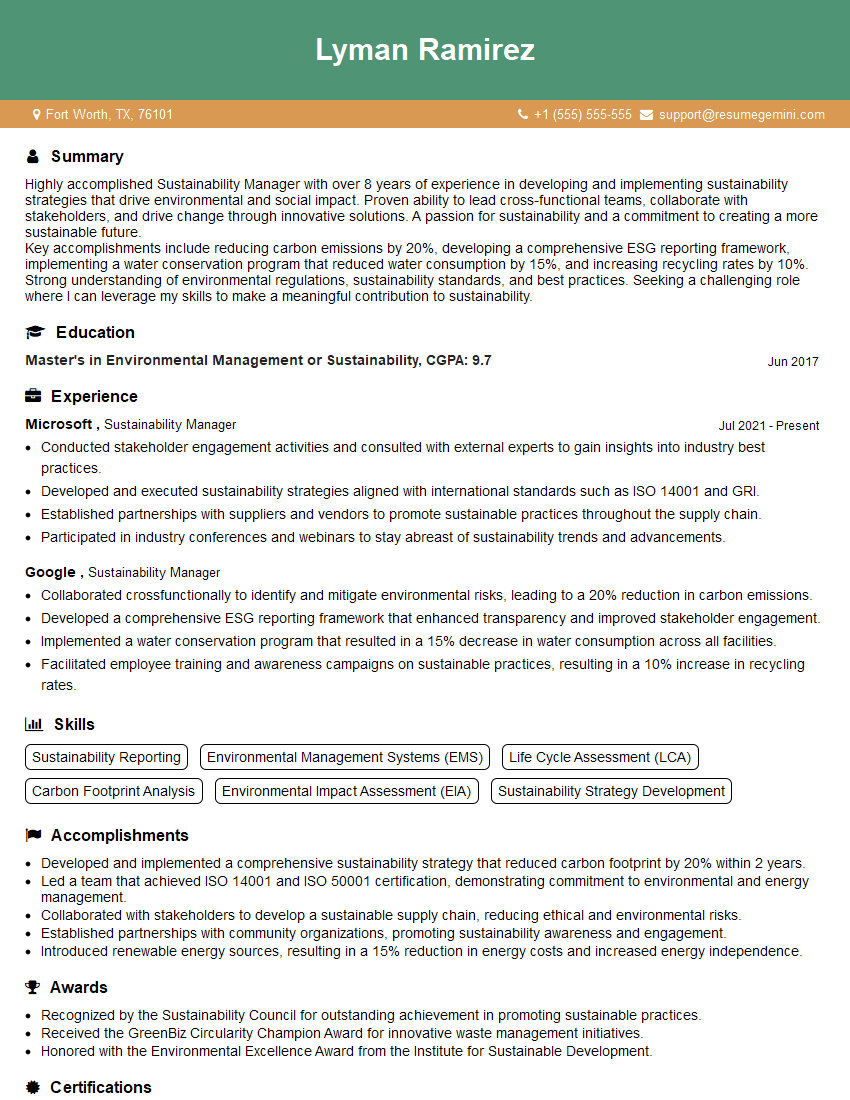
Sustainability Manager Resume Sample
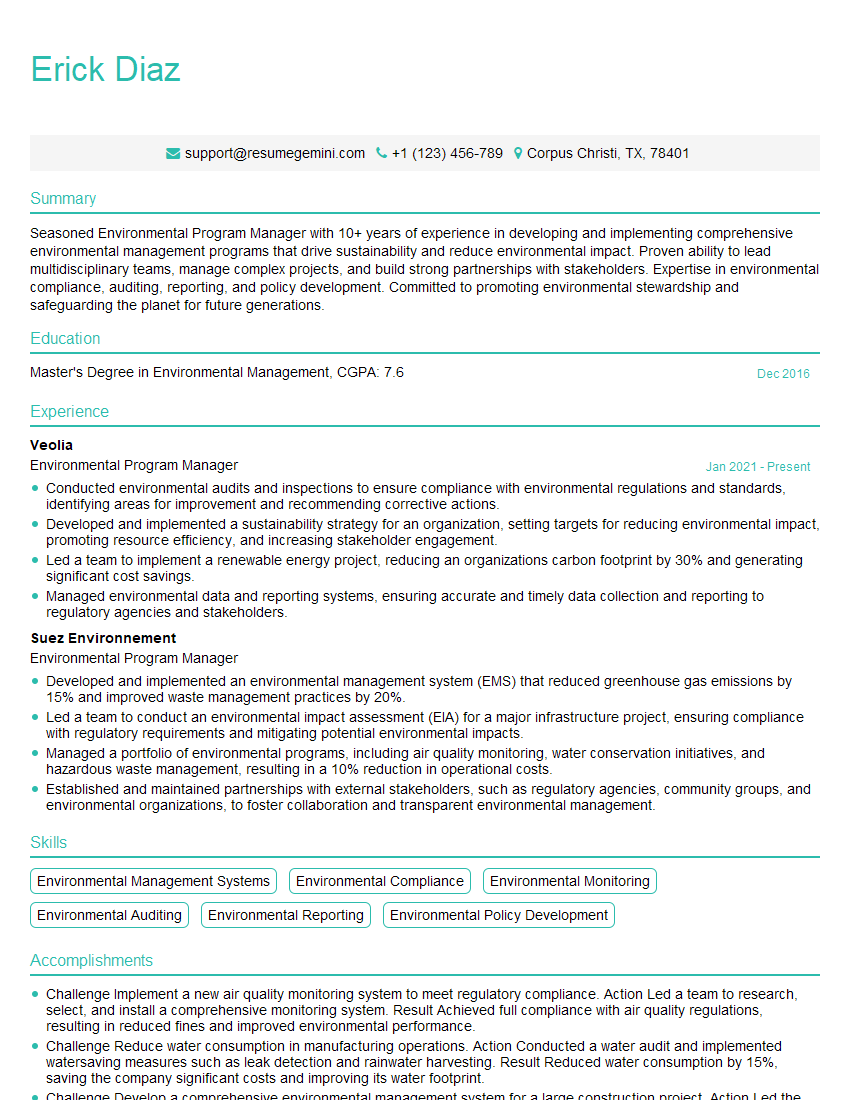
Environmental Program Manager Resume Sample
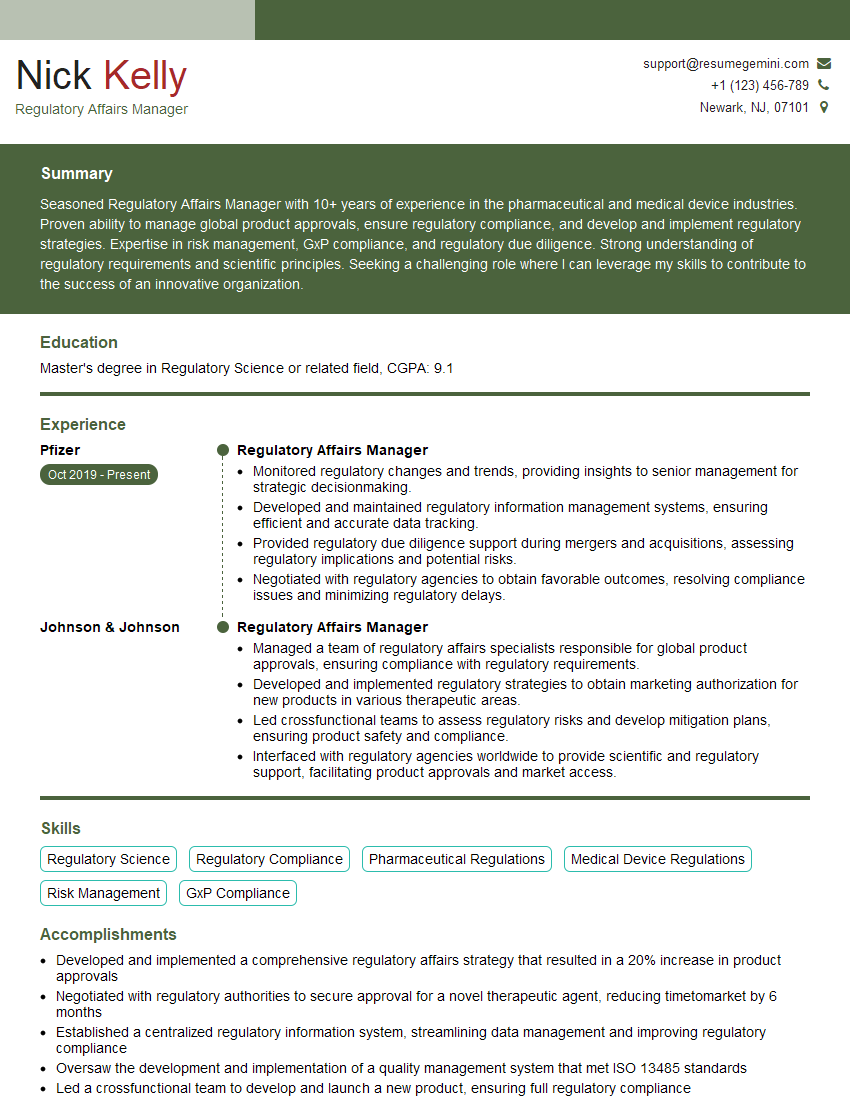
Regulatory Affairs Manager Resume Sample
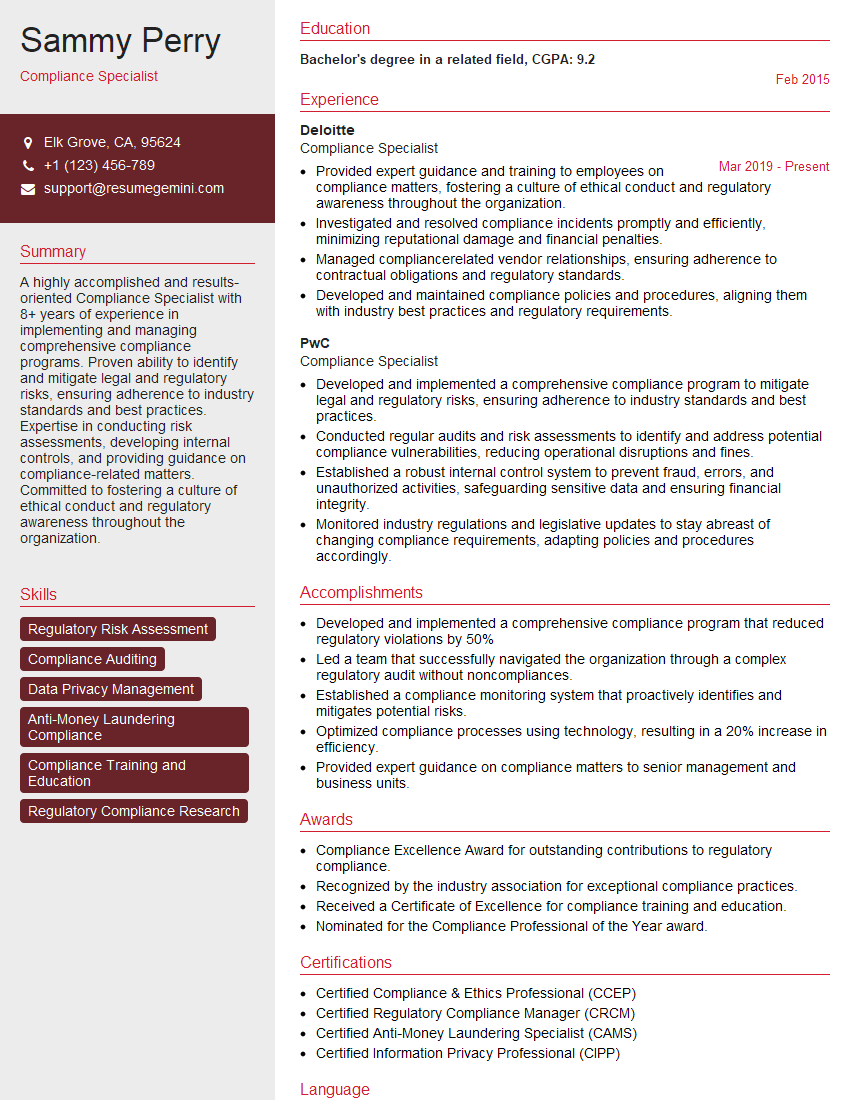
Compliance Specialist Resume Sample
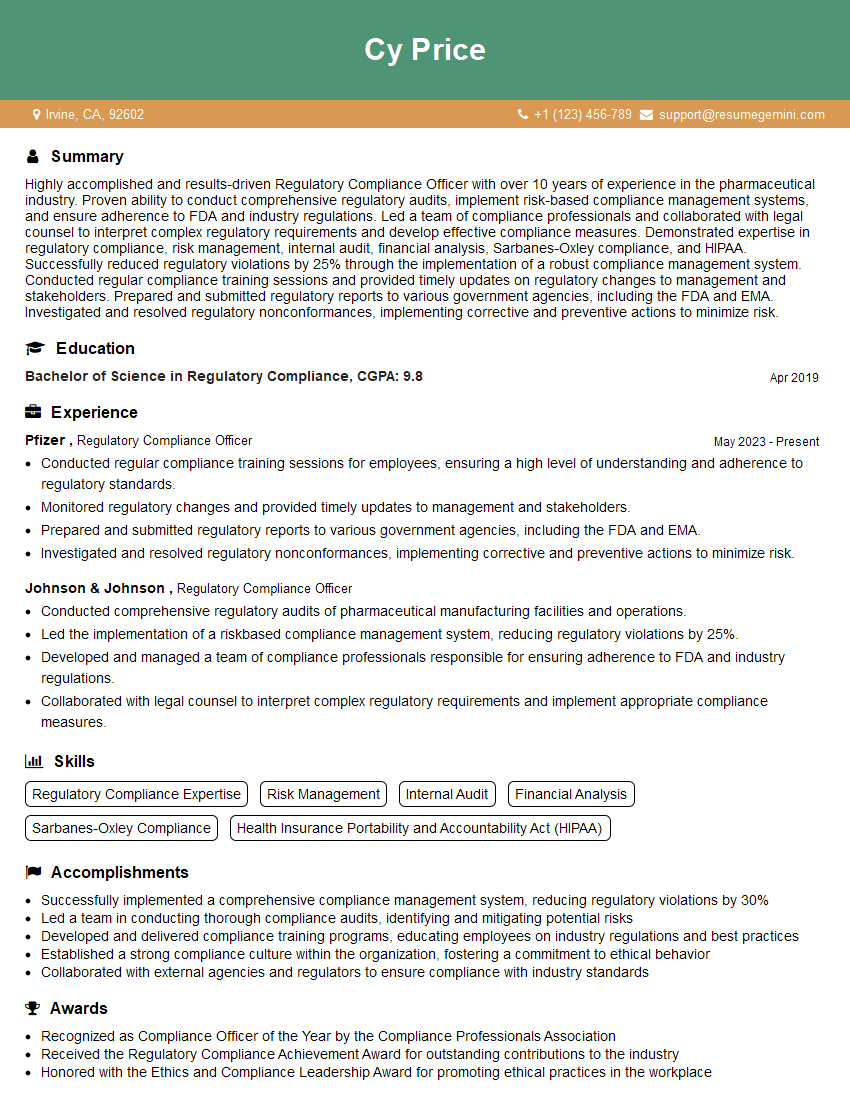
Regulatory Compliance Officer Resume Sample
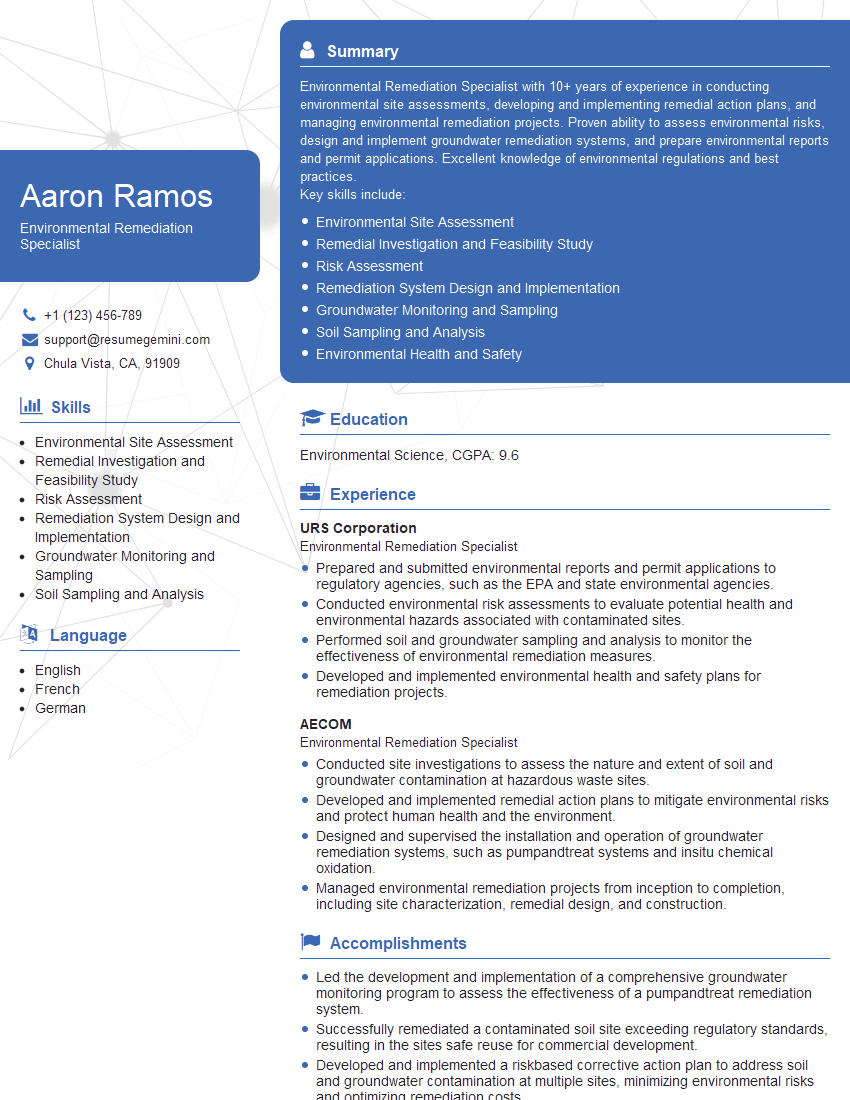
Environmental Remediation Specialist Resume Sample
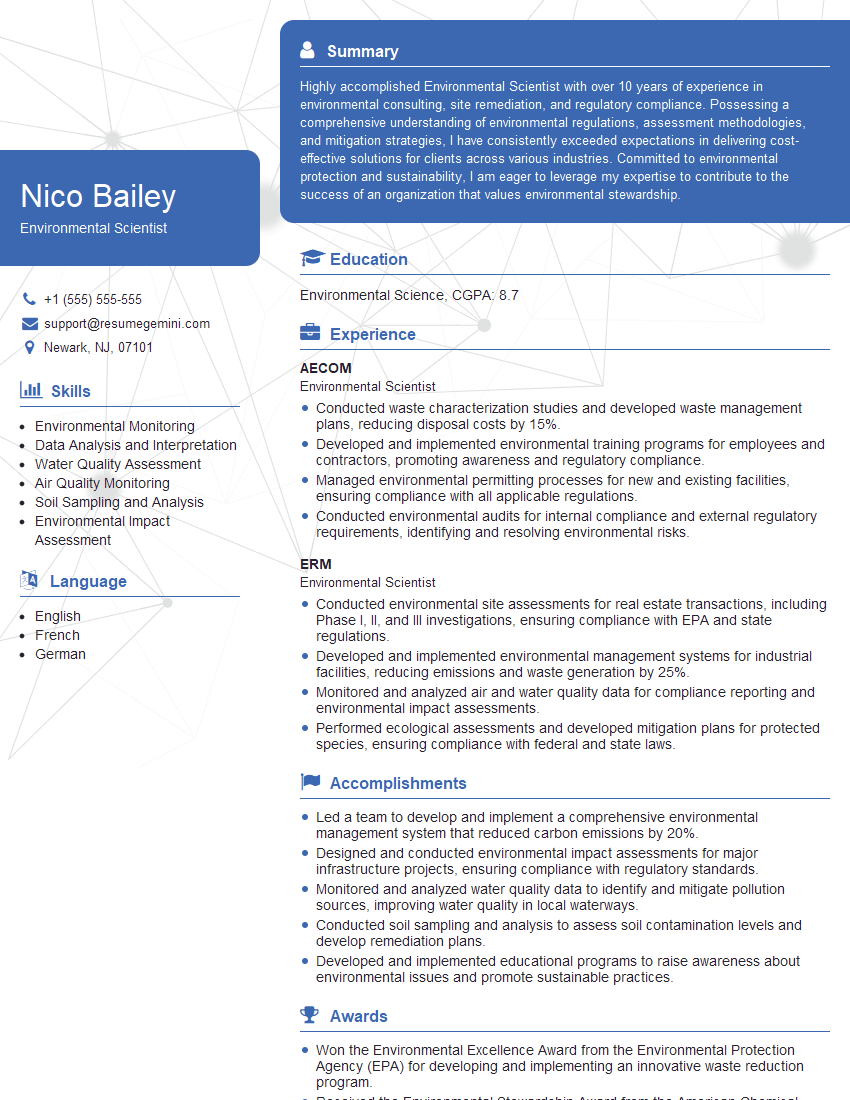
Environmental Scientist Resume Sample
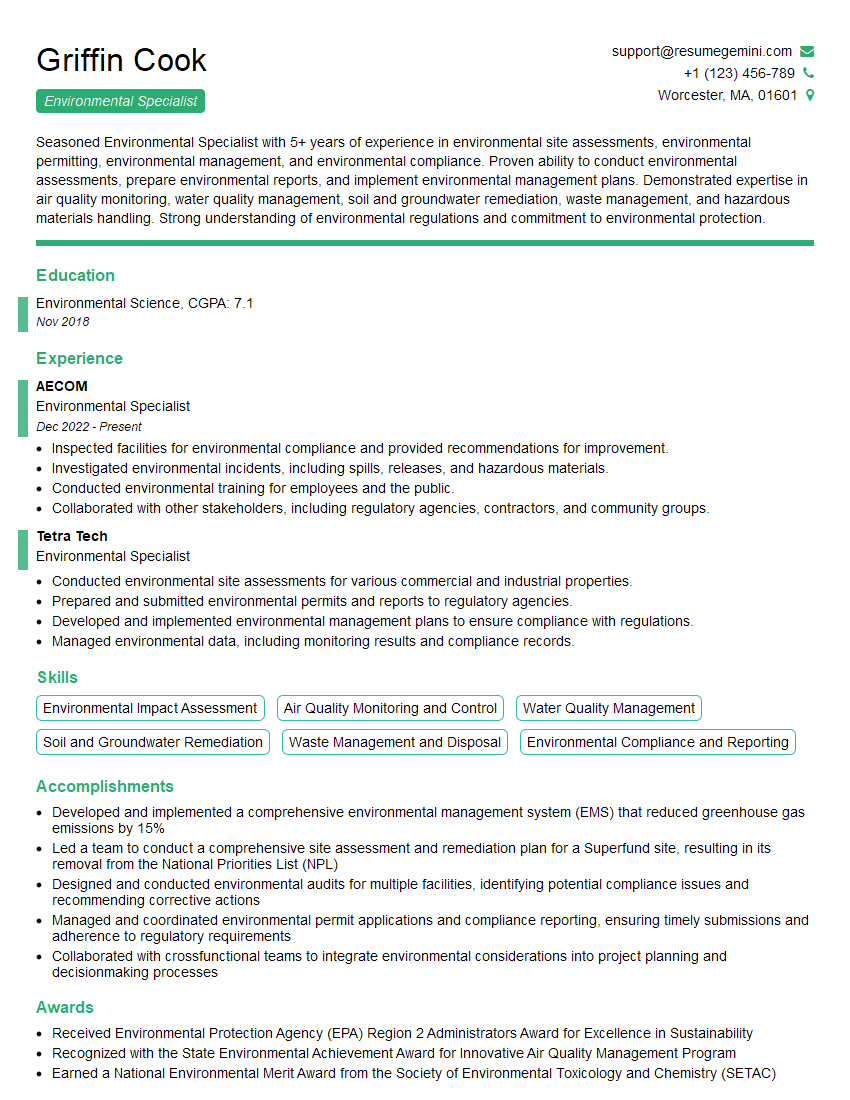
Environmental Specialist Resume Sample
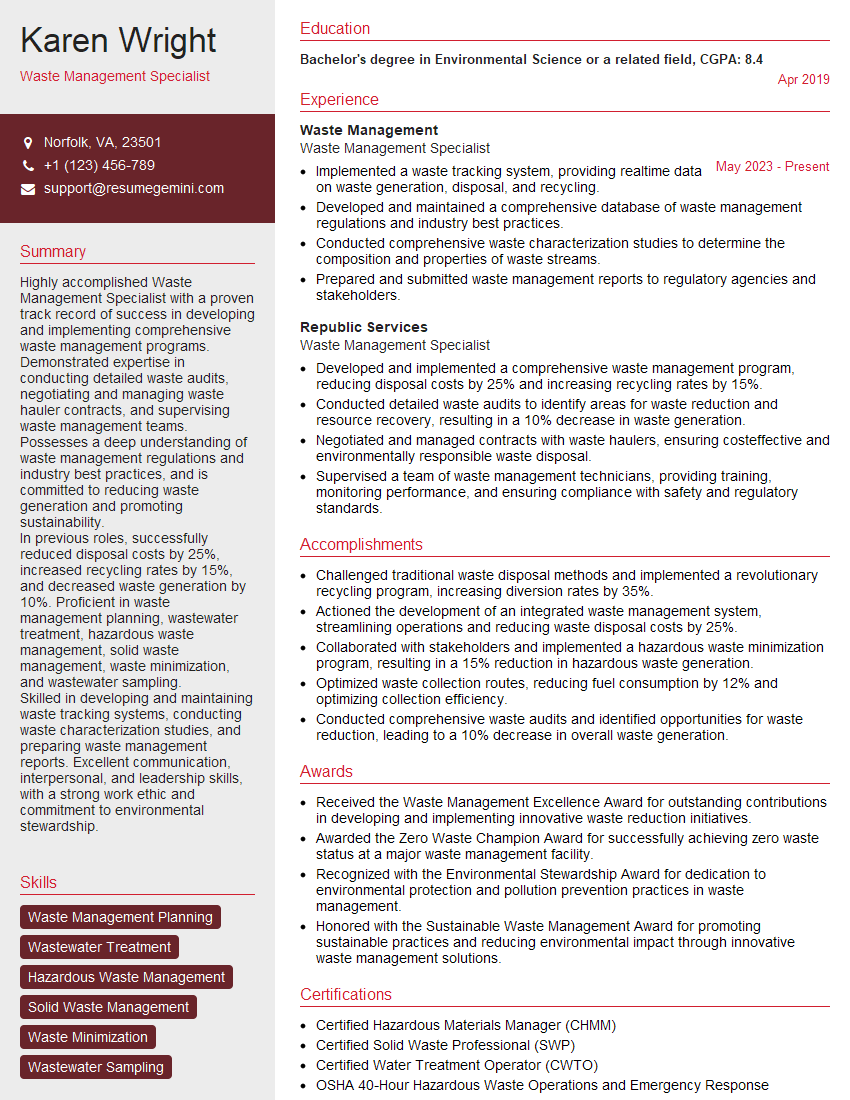
Waste Management Specialist Resume Sample

Sustainability Consultant Resume Sample
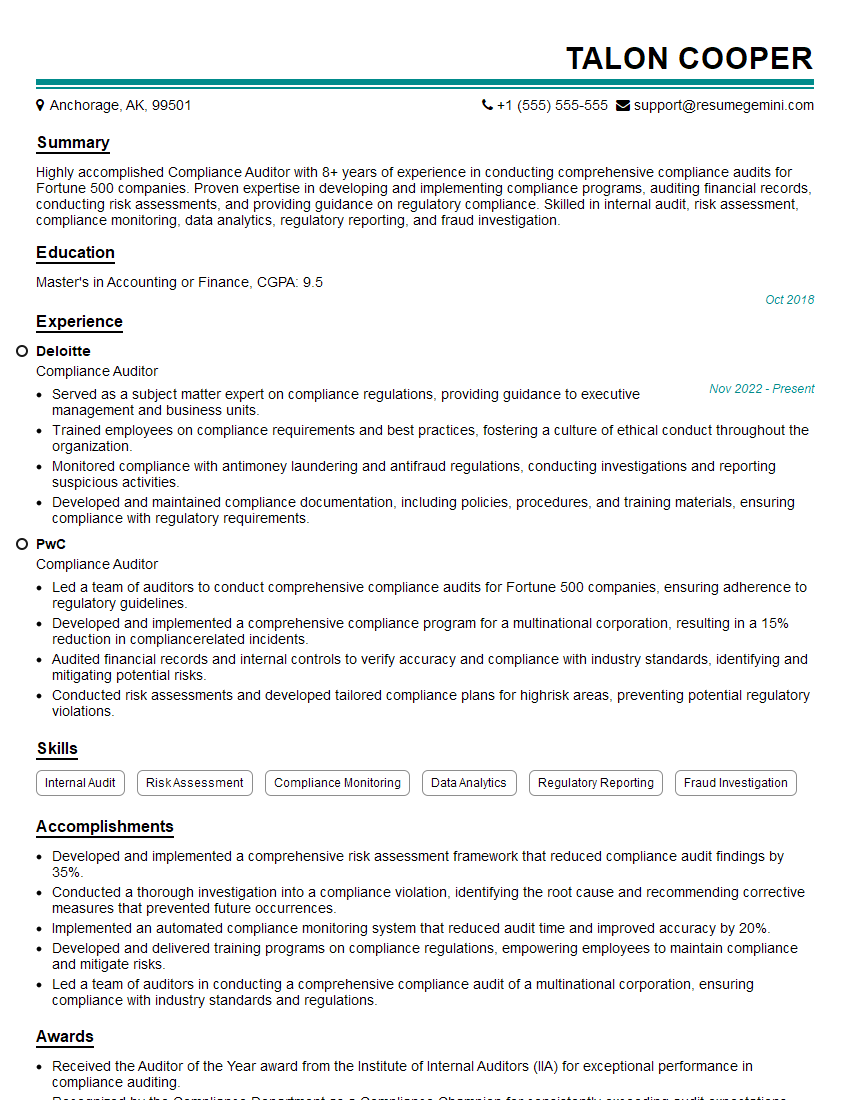
Compliance Auditor Resume Sample
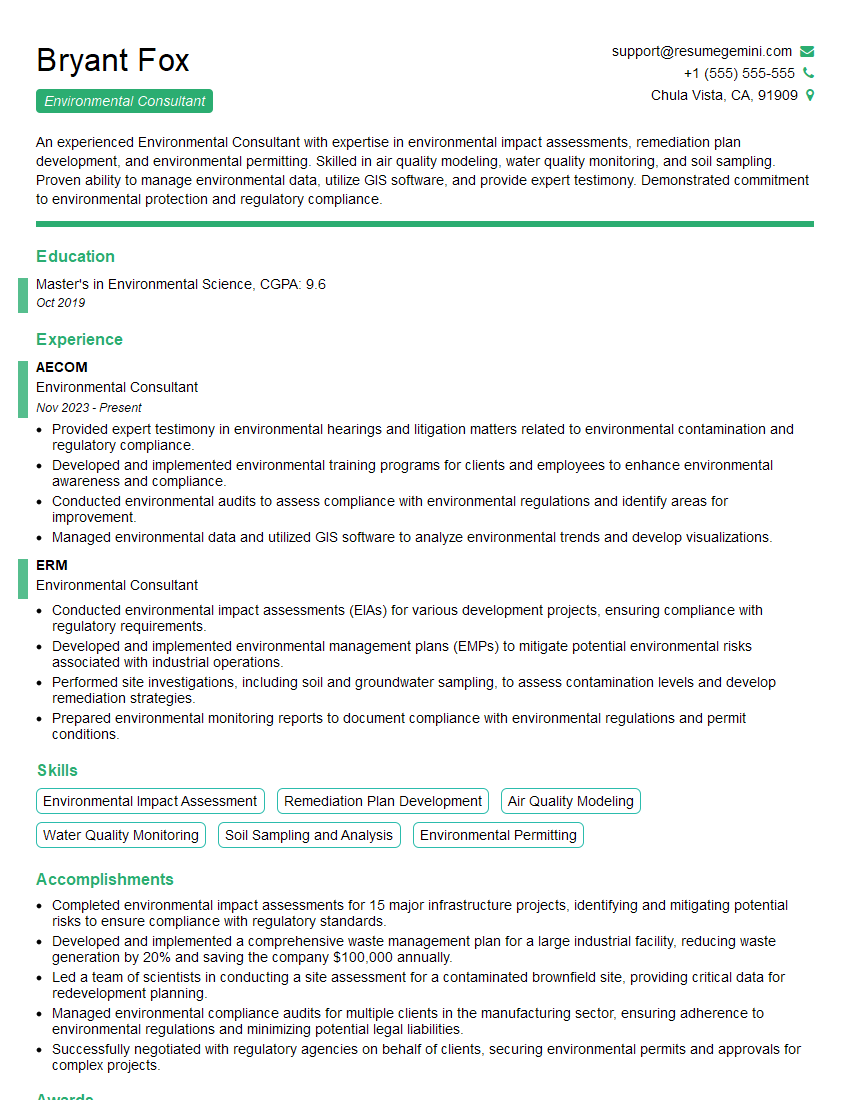
Environmental Consultant Resume Sample
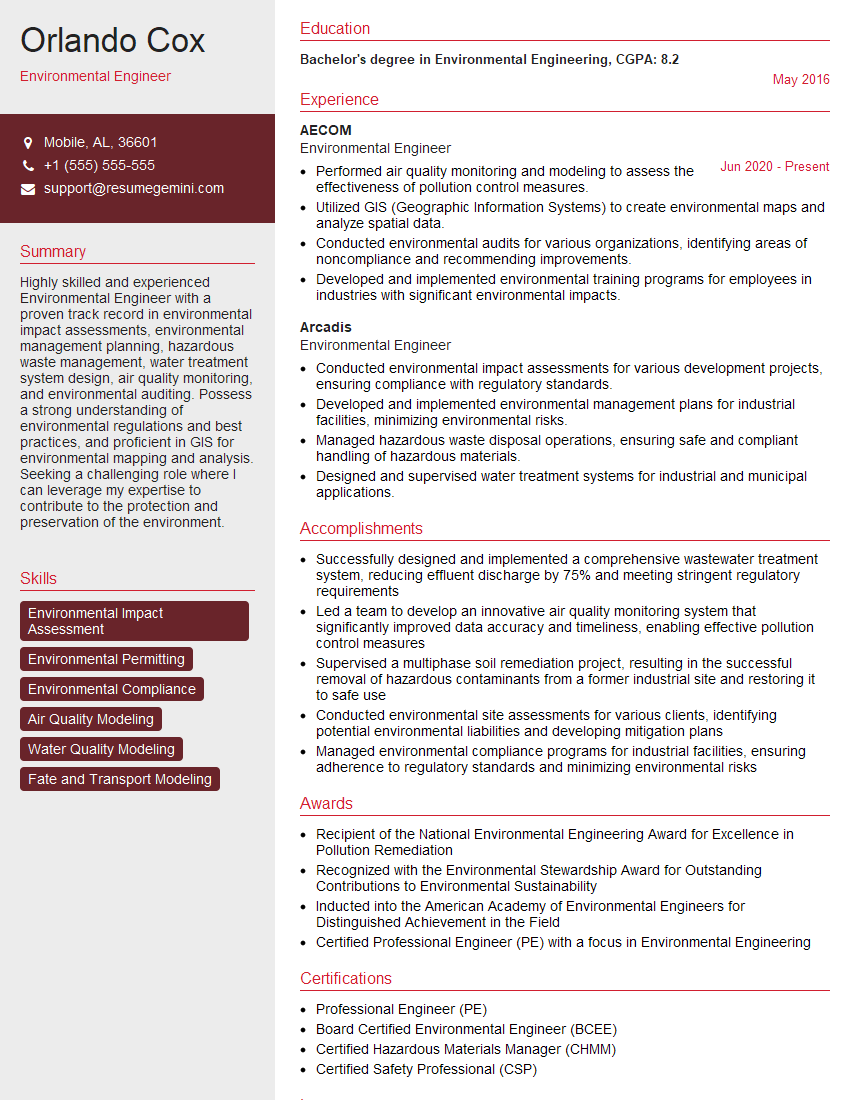
Environmental Engineer Resume Sample
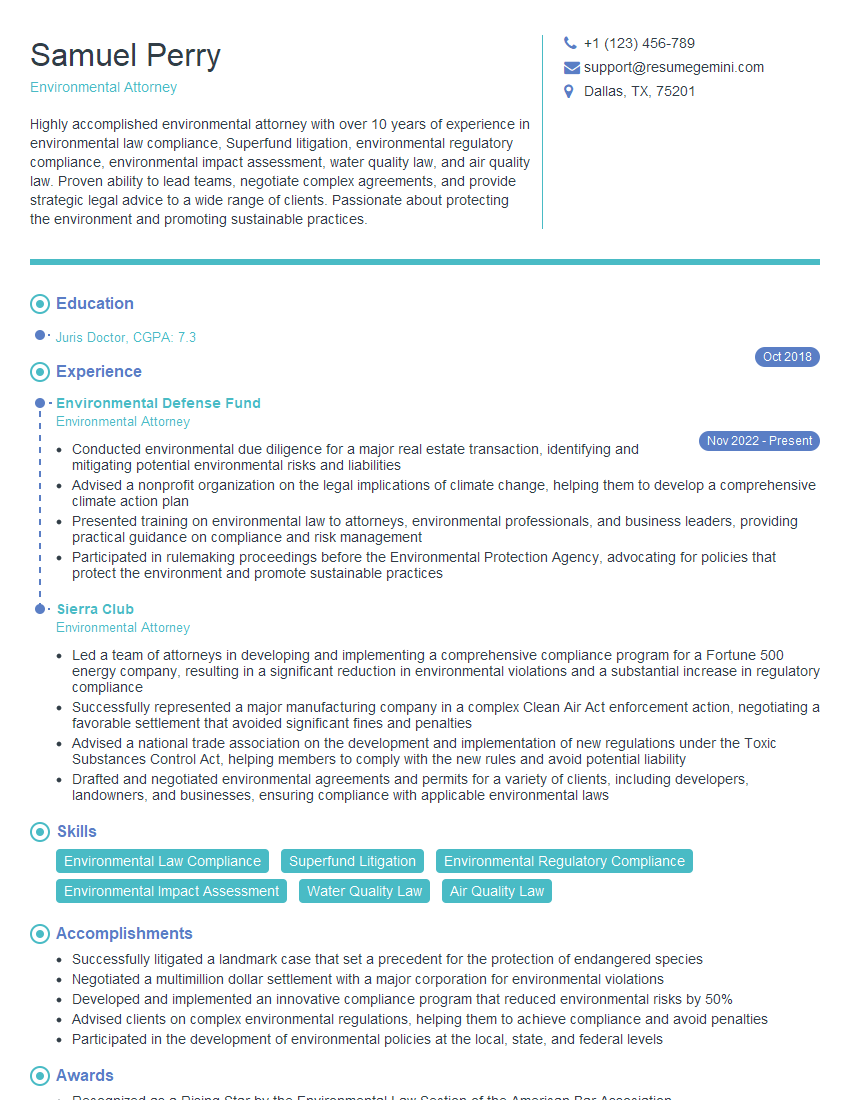
Environmental Attorney Resume Sample
- Sustainability Manager
- Environmental Program Manager
- Regulatory Affairs Manager
- Compliance Specialist
- Regulatory Compliance Officer
- Environmental Remediation Specialist
- Environmental Scientist
- Environmental Specialist
- Waste Management Specialist
- Sustainability Consultant
- Compliance Auditor
- Environmental Consultant
- Environmental Engineer
- Environmental Attorney
Explore more articles
Users Rating of Our Blogs
Share Your Experience
We value your feedback! Please rate our content and share your thoughts (optional).
What Readers Say About Our Blog
Very informative content, great job.
good