Cracking a skill-specific interview, like one for Environmental Stress Testing, requires understanding the nuances of the role. In this blog, we present the questions you’re most likely to encounter, along with insights into how to answer them effectively. Let’s ensure you’re ready to make a strong impression.
Questions Asked in Environmental Stress Testing Interview
Q 1. Explain the difference between environmental stress screening (ESS) and highly accelerated stress screening (HASS).
Both Environmental Stress Screening (ESS) and Highly Accelerated Stress Screening (HASS) aim to identify weaknesses in products early in their lifecycle, but they differ significantly in their approach and intensity. ESS is a broader term encompassing various methods to expose products to stresses mimicking real-world conditions, thereby revealing latent defects. It’s more moderate in its stress levels and aims for a balance between finding failures and damaging the product. Think of ESS as a thorough but relatively gentle workout for your product.
HASS, on the other hand, takes a much more aggressive approach. It employs significantly higher stress levels than ESS, drastically accelerating the failure rate of components. It’s designed to find weaknesses rapidly, even if it means potentially damaging some test units. Imagine HASS as pushing your product to its absolute limits in a short, intense training session.
In essence, ESS is a more general term, while HASS is a specific, highly accelerated subset of ESS, primarily used for early detection of defects. The choice between them depends on the risk tolerance, time constraints, and the cost of failure for the product.
Q 2. Describe the various environmental stress factors considered during testing (temperature, humidity, vibration, etc.).
Environmental stress factors are the conditions that a product or component might encounter during its operational life. These factors can significantly impact reliability and longevity. Common factors considered during testing include:
- Temperature: Extreme heat and cold can cause material expansion/contraction, component failure, and degradation. We often use both high-temperature and low-temperature cycles to mimic real-world variations.
- Humidity: High humidity can cause corrosion, condensation, and short circuits, especially in electronic components. Testing involves exposing products to varying levels of humidity, often combined with temperature changes.
- Vibration: Vibrations, especially repetitive or high-frequency ones, can cause fatigue failure in mechanical parts and loose connections in electronic devices. This is often simulated using vibration tables.
- Shock: Sudden impacts or drops can severely damage components. This can be simulated using shock testing machines that apply controlled impacts.
- Pressure: Altitude changes or other pressure variations can affect functionality; this is important for products designed for aviation, aerospace, or high-altitude applications.
- Solar Radiation: UV radiation can degrade materials over time, especially plastics and coatings. UV testing simulates the effects of prolonged sun exposure.
The specific stress factors and their levels are tailored to the product’s intended operating environment and application. A smartphone will have different stress testing than a deep-sea submersible.
Q 3. What are the key objectives of conducting environmental stress testing?
The key objectives of environmental stress testing are multifaceted and critical for product success:
- Early Failure Detection: Identify and eliminate weak points or design flaws early in the development process, minimizing costly repairs or recalls later on.
- Reliability Improvement: Enhance the overall reliability and durability of the product by uncovering and addressing potential failure mechanisms.
- Improved Design Robustness: Improve the design to withstand expected environmental conditions and meet the required performance standards.
- Reduced Warranty Costs: By proactively identifying and fixing issues, companies can significantly reduce warranty claims and associated costs.
- Competitive Advantage: Demonstrating higher product reliability than competitors is a significant marketing advantage.
- Safety Assurance: In critical applications (e.g., aerospace, medical devices), stress testing is crucial for ensuring product safety and preventing potential hazards.
In essence, environmental stress testing isn’t just about finding problems; it’s about proactively building more reliable, durable, and safe products.
Q 4. Explain different types of environmental chambers and their applications.
Various environmental chambers are available, each designed for specific testing needs. Here are a few examples:
- Temperature Chambers: These chambers control temperature precisely, often from -70°C to +180°C, allowing for testing over a wide range of conditions. They’re fundamental for temperature cycling tests and thermal shock tests.
- Temperature-Humidity Chambers: These combine temperature control with precise humidity control, allowing for simultaneous testing of both factors. They are essential for testing electronic products and components susceptible to moisture damage.
- Vibration Chambers: These chambers use vibration tables to generate controlled vibrations at specific frequencies and amplitudes, mimicking real-world vibration exposure during transportation or operation. They’re commonly used to test mechanical and electronic components.
- Combined Environmental Chambers: Advanced chambers allow simultaneous control of temperature, humidity, vibration, and sometimes pressure and altitude, enabling comprehensive testing to simulate complex environmental scenarios.
- Walk-in Chambers: Larger chambers that allow personnel to enter to perform testing or inspections inside, often used for larger products or systems.
The choice of chamber depends on the specific environmental factors the product needs to withstand and the complexity of the testing required.
Q 5. How do you determine the appropriate test conditions for a specific product or component?
Determining appropriate test conditions requires a thorough understanding of the product, its intended use, and its potential failure modes. This involves several steps:
- Product Specification Review: Carefully review the product’s design specifications, intended operating environment, and potential failure modes. This includes considering transportation, storage, and operational conditions.
- Environmental Profile Definition: Define a detailed environmental profile based on the product’s anticipated use. This profile outlines the expected temperature ranges, humidity levels, vibration frequencies, and other relevant stress factors. Consider worst-case scenarios.
- Industry Standards and Regulations: Refer to relevant industry standards and regulations that specify required environmental tests for the specific product category (e.g., MIL-STD-810 for military products, IEC 60068 for electronics).
- Accelerated Testing Techniques: Employ accelerated testing techniques such as HASS to significantly shorten the testing duration by applying higher-than-normal stress levels. This requires expertise in statistical modeling and the understanding of failure mechanisms.
- Test Plan Development: Based on the above, develop a detailed test plan outlining the specific test conditions, duration, and acceptance criteria. This plan should include clearly defined measurement parameters and pass/fail criteria.
For example, a ruggedized outdoor camera would require extensive testing for temperature extremes, humidity, shock, and vibration, while a desktop computer might require less rigorous environmental testing.
Q 6. What are the common failure mechanisms observed during environmental stress testing?
Common failure mechanisms observed during environmental stress testing vary widely depending on the product and the stress factors involved. Some prevalent mechanisms include:
- Thermal Fatigue: Repeated heating and cooling cycles can lead to cracks and material degradation, especially in solder joints and plastic components.
- Corrosion: Exposure to moisture and other corrosive elements can lead to degradation of metallic components and printed circuit boards (PCBs).
- Mechanical Fatigue: Repeated vibrations and shocks can cause fatigue cracks in mechanical parts, leading to failure.
- Creep: Gradual deformation of materials under sustained stress, often observed under high temperatures or prolonged loads.
- Dielectric Breakdown: Failure of insulation in electrical components due to excessive voltage or temperature.
- Component Degradation: Gradual deterioration of the performance of components due to aging, temperature, or other environmental factors.
- Bonding Failure: Failure of adhesives or other bonding materials due to environmental stress.
Careful examination of failed components is crucial to identify the root cause of failure and implement corrective actions.
Q 7. Explain the concept of ‘infant mortality’ in relation to product reliability.
Infant mortality, in the context of product reliability, refers to the high failure rate observed in newly manufactured products during their initial operational period. These early failures are often due to manufacturing defects, design flaws, or material imperfections that were not detected during quality control. Think of it as the ‘breaking-in’ period, where the weakest parts fail quickly.
Infant mortality is typically depicted in a bathtub curve, which represents the failure rate of a product over its lifetime. The curve shows a high initial failure rate (infant mortality), followed by a period of low and relatively constant failure rate, and finally, an increasing failure rate due to wear-out. ESS and HASS are specifically designed to identify and eliminate defects that contribute to infant mortality, ensuring that products are more reliable upon release.
Identifying and eliminating the causes of infant mortality is crucial for improving product reliability, reducing warranty costs, and ensuring customer satisfaction.
Q 8. How do you analyze the results of environmental stress testing to identify potential weaknesses?
Analyzing environmental stress test results involves a systematic approach to identify weaknesses. We start by comparing the performance of the product under stress conditions to its performance under normal operating conditions. This comparison highlights any deviations or failures. We then meticulously examine the data, looking for trends and patterns that indicate vulnerabilities. For example, if a device consistently fails at a specific temperature or humidity level, it suggests a weakness in its thermal or moisture management system. Further, we might use visual inspection of the device itself, looking for physical damage or degradation after the tests.
Let’s say we’re testing a smartphone’s battery life under extreme temperatures. If we observe a significant drop in battery performance at both high and low temperatures, compared to room temperature operation, this indicates a weakness in the battery’s thermal tolerance design. This needs further investigation to pinpoint the root cause – potentially material degradation or inefficient thermal management within the device.
Statistical analysis (discussed further in the next question) plays a crucial role in quantifying these deviations and determining whether they are statistically significant, allowing for confident identification of weaknesses.
Q 9. What are some common statistical methods used in analyzing environmental test data?
Several statistical methods are vital in analyzing environmental test data. These methods help us move beyond simple observation to quantify the impact of environmental stressors and identify statistically significant changes in product performance. Some commonly used methods include:
- Descriptive Statistics: Mean, median, standard deviation, and range provide a basic understanding of the data distribution and variability in product performance under different stress conditions. For example, calculating the mean failure rate at different temperatures helps in understanding the relationship between temperature and failure.
- Regression Analysis: This method helps establish a relationship between environmental factors (temperature, humidity, etc.) and product performance. We can build models that predict performance under various environmental conditions, which can be used for design improvements.
- Analysis of Variance (ANOVA): This is used to compare the means of multiple groups, for example, comparing the performance of different product versions or materials under the same environmental stress.
- Reliability Analysis: Methods like Weibull analysis help model the failure rate of a product over time and under varying environmental conditions. This can be used to predict the lifespan of a product under specific environmental stresses.
- Control Charts: These are graphical tools used to monitor the performance of a product over time and identify any significant shifts or trends in performance. This can help in early detection of potential failures or degradation.
Choosing the appropriate statistical method depends on the specific test objectives, the type of data collected, and the hypotheses being tested. A well-designed experiment accompanied by proper statistical analysis ensures the results are objective and reliable.
Q 10. Describe your experience with designing and implementing environmental stress tests.
My experience encompasses the entire environmental stress testing lifecycle, from initial planning to final reporting. In a recent project for a medical device manufacturer, we designed and implemented a comprehensive test plan encompassing thermal cycling, humidity testing, vibration testing, and shock testing. The objective was to assess the device’s robustness and longevity under various simulated real-world conditions.
The design phase involved specifying the test parameters based on the anticipated operating environments and relevant industry standards. This included determining the temperature ranges, humidity levels, vibration frequencies, and shock levels. We selected appropriate testing equipment, ensuring its calibration and accuracy. The implementation phase involved meticulous execution of the tests, ensuring strict adherence to the pre-defined protocols and rigorous documentation of the process. Data acquisition was automated to minimize human error. The process also included detailed failure mode analysis during and after the tests, using visual inspection alongside data analysis.
Another project involved developing a custom test chamber for simulating the harsh environmental conditions encountered in aerospace applications. This required a collaborative effort with engineers from the aerospace client and specialized chamber manufacturers. It highlights the importance of adaptability and cross-disciplinary communication in successfully designing and implementing effective environmental stress tests.
Q 11. How do you ensure the test results are reliable and repeatable?
Ensuring reliable and repeatable test results is paramount. This is achieved through a multi-faceted approach. First, we rely on standardized test methods and protocols, adhering to relevant industry standards (like those defined by IEC, MIL-STD, etc.). This ensures consistency and comparability of results across different tests and laboratories.
Secondly, rigorous calibration and maintenance of testing equipment are essential. Regularly calibrated instruments guarantee accuracy and precision in measurements, reducing errors. Third, detailed documentation of the entire testing process, including test setup, parameters, procedures, and observations, ensures traceability and repeatability. Clear and concise documentation is vital for verification and validation of results.
Finally, statistical analysis plays a vital role in assessing the reliability and repeatability of the tests. The use of control charts and analysis of variance can identify any systematic variations or inconsistencies in the results, indicating potential issues with the test procedures or equipment. A well-designed experiment with multiple samples and replicates significantly enhances the reliability and repeatability of the results, providing confidence in the conclusions drawn.
Q 12. What are some common challenges faced during environmental stress testing?
Environmental stress testing presents several challenges. One major challenge is defining the appropriate stress levels. Overly harsh conditions might not reflect real-world scenarios, while overly lenient conditions might fail to expose critical weaknesses. Finding that ‘Goldilocks’ zone requires a deep understanding of the product and its intended operating environment.
Another significant challenge is the cost and time involved. Comprehensive environmental testing can be expensive, requiring specialized equipment, skilled personnel, and significant time commitments. Resource limitations often necessitate careful planning and prioritization of tests. Dealing with unexpected failures during testing is also demanding, requiring quick troubleshooting, root-cause analysis, and often redesign of test procedures. Finally, ensuring the safety of the testing personnel and the protection of the test equipment from potential hazards, is crucial and must be carefully managed.
Q 13. How do you address challenges related to test time constraints or budget limitations?
Addressing challenges related to time and budget constraints necessitates a strategic approach. We begin by prioritizing tests based on risk assessment. Tests that reveal critical failures impacting safety or performance are prioritized over tests yielding less critical information. We might employ accelerated testing techniques (like highly accelerated life testing or HALT) to reduce test duration while still gaining valuable insights into product longevity. HALT utilizes aggressive stress profiles to quickly identify product weaknesses.
For budget optimization, we might explore cost-effective testing methods, such as using simulated environmental conditions instead of actual outdoor exposure. We may also explore collaborations or partnerships with other organizations to leverage shared resources and reduce individual costs. Effective project management, efficient resource allocation, and clear communication are also key in navigating time and budget restrictions.
Q 14. What are your preferred methods for reporting environmental test results?
My preferred method for reporting environmental test results emphasizes clarity, conciseness, and visual appeal. Reports typically include an executive summary highlighting key findings and conclusions. This is followed by a detailed description of the test methodology, including equipment used, test parameters, and procedures. Raw data and statistical analysis results are included in appendices, ensuring transparency and verifiability.
I utilize tables, graphs, and charts to present the data effectively. Visual representations of data, like failure rate curves, stress-strain curves, and control charts, aid understanding and enhance communication. The report concludes with recommendations for design improvements or further testing, if needed. The language used is professional but accessible to a broader audience, avoiding unnecessary technical jargon unless absolutely necessary. Clear and well-organized reports ensure the results are easily understood by stakeholders, facilitating informed decision-making.
Q 15. Describe your familiarity with relevant industry standards (e.g., MIL-STD-810, IEC 60068).
My experience encompasses a deep understanding of various industry standards for environmental stress testing. MIL-STD-810, for instance, is a cornerstone for US military applications, outlining procedures for testing the environmental endurance of materials and equipment. I’m proficient in interpreting its various methods, including those for temperature, humidity, shock, vibration, and altitude testing. Similarly, IEC 60068 is a crucial international standard specifying environmental testing procedures for electronic components and equipment. I’m adept at applying its rigorous testing methodologies, ensuring compliance and product robustness in global markets. For example, I’ve utilized MIL-STD-810H’s Method 500.7 for temperature cycling to assess the reliability of a satellite component, while using IEC 60068-2-64 for vibration testing of a consumer electronics product.
Beyond these, I’m also familiar with other relevant standards such as ISO 16750-3 (automotive), and various industry-specific guidelines depending on the product category. My knowledge isn’t limited to simply knowing the standards; I understand the rationale behind the tests and how to interpret the results to identify potential weaknesses and inform design improvements.
Career Expert Tips:
- Ace those interviews! Prepare effectively by reviewing the Top 50 Most Common Interview Questions on ResumeGemini.
- Navigate your job search with confidence! Explore a wide range of Career Tips on ResumeGemini. Learn about common challenges and recommendations to overcome them.
- Craft the perfect resume! Master the Art of Resume Writing with ResumeGemini’s guide. Showcase your unique qualifications and achievements effectively.
- Don’t miss out on holiday savings! Build your dream resume with ResumeGemini’s ATS optimized templates.
Q 16. Explain how environmental stress testing contributes to product quality and reliability.
Environmental stress testing is fundamentally about proactively identifying and mitigating potential product weaknesses before they impact end-users. By subjecting products to extreme conditions simulating real-world operational environments, we significantly improve product quality and reliability. It’s like a rigorous workout for the product – if it survives, it’s likely to withstand the daily grind much better.
- Early defect detection: Testing reveals design flaws, material weaknesses, or manufacturing defects early in the development cycle, enabling cost-effective corrective actions.
- Enhanced durability and longevity: Products that successfully withstand stress tests are expected to have a longer lifespan and improved resilience to harsh conditions.
- Improved customer satisfaction: Reliable products lead to higher customer satisfaction and a stronger brand reputation.
- Reduced warranty claims: Identifying and rectifying issues proactively helps prevent future failures and associated warranty costs.
For example, imagine a new smartphone. Environmental stress testing can simulate drops, temperature extremes, and humidity to ensure its durability and prevent premature failures. This leads to a more robust product, reducing returns and maintaining customer trust.
Q 17. How do you select appropriate test equipment for different environmental stress tests?
Selecting the right equipment is critical for accurate and reliable testing. The choice depends heavily on the specific test being conducted and the characteristics of the product under test. The process usually involves a few key steps:
- Define Test Requirements: Start by clarifying the environmental conditions the product will face in its intended use (temperature range, humidity levels, vibration frequencies, etc.). This dictates the necessary test parameters.
- Equipment Specifications: Based on the requirements, identify the equipment with appropriate specifications. For instance, a temperature chamber must reach the required temperature range with sufficient uniformity, while a vibration test system needs to generate the specified frequency and amplitude accurately.
- Calibration and Validation: Always ensure that the equipment is properly calibrated and validated according to established standards to guarantee accuracy and reliability of test results. This often involves traceable calibration certificates.
- Data Acquisition Capabilities: Consider equipment with robust data acquisition capabilities to monitor and record critical parameters during testing. Data logging is crucial for analysis and report generation.
For example, testing the thermal shock resistance of a circuit board would require a thermal shock chamber capable of rapid transitions between extreme temperatures. In contrast, evaluating the vibration resilience of an engine component may involve a large-capacity shaker system.
Q 18. What is your experience with using data acquisition systems and software for environmental testing?
I have extensive experience using various data acquisition systems (DAS) and software in environmental testing. My experience spans various systems, including those from National Instruments, Yokogawa, and other industry-leading manufacturers. I’m proficient in configuring DAS hardware, setting up measurement channels for relevant parameters (temperature, humidity, pressure, strain, vibration, etc.), and selecting appropriate sampling rates. I’m also experienced with a range of software for data logging, analysis, and report generation. This includes software like LabVIEW, TestStand, and dedicated environmental test chamber control software.
A typical workflow would involve setting up the DAS to acquire data at the appropriate intervals, synchronizing with the environmental chamber’s control system, and continuously monitoring the data during the test. After the test, I use the software to process the raw data, generate graphs, analyze trends, and create comprehensive test reports. I am also proficient in using statistical analysis tools to evaluate the significance of test results. This skillset is vital for deriving meaningful conclusions from vast quantities of test data.
Q 19. Describe your experience with failure analysis techniques used to investigate test failures.
Investigating test failures involves a systematic approach to failure analysis. I utilize various techniques, depending on the nature of the failure. These may include:
- Visual Inspection: A thorough visual examination of the failed component or system, often using magnifying tools or microscopes, to identify visible signs of damage.
- Dimensional Measurement: Precise measurement of components to identify dimensional changes caused by the stress test.
- Material Analysis: Using techniques like scanning electron microscopy (SEM), energy-dispersive X-ray spectroscopy (EDS), or chemical analysis to determine material degradation or compositional changes.
- Electrical Testing: For electronic components, various electrical tests such as continuity, insulation resistance, and capacitance measurements are essential.
- Mechanical Testing: This may include tensile strength testing, hardness testing, or fatigue testing to assess the mechanical properties of materials.
For example, if a circuit board fails during a thermal shock test, I might use visual inspection to identify cracked solder joints or damaged components, followed by material analysis to determine the cause of the material failure. The results of this analysis are then used to identify and prevent similar failures in future designs or production runs.
Q 20. How do you ensure test data integrity and traceability throughout the testing process?
Maintaining data integrity and traceability is paramount in environmental stress testing. A robust system involves several crucial steps:
- Unique Sample Identification: Each test sample must have a unique identification number, meticulously tracked throughout the testing process.
- Detailed Test Procedures: A comprehensive written test plan outlining all procedures, parameters, and acceptance criteria. Any deviations from the plan must be meticulously documented.
- Automated Data Logging: Using automated data acquisition systems minimizes human error and ensures consistent data collection. Data should be time-stamped and associated with the appropriate sample ID.
- Data Backup and Archiving: Regular backups of all test data and documentation to a secure location are critical for long-term data preservation.
- Chain of Custody: Maintain a clear chain of custody for samples, documenting their handling and storage at each stage.
- Version Control: Using version control for test procedures and associated documents to track changes over time.
This structured approach ensures the traceability and reliability of test results, enabling confident decision-making and simplifying audits. Data integrity is the foundation of reliable conclusions and design improvements.
Q 21. Explain the concept of accelerated life testing.
Accelerated life testing (ALT) is a powerful technique to predict a product’s lifespan under normal operating conditions in a significantly shorter time. It’s like fast-forwarding the aging process of your product by subjecting it to more intense stress levels. Instead of waiting years to see how a product performs, ALT uses elevated stress levels to accelerate degradation processes.
This is achieved by stressing the product in areas like temperature, humidity, voltage, or vibration beyond normal operating levels. By analyzing the failure patterns under these accelerated conditions, we can extrapolate the results to estimate the product’s expected lifespan under normal conditions. Sophisticated statistical models (like Weibull analysis) are used to analyze the data and make accurate predictions.
For example, a manufacturer might expose a new hard drive to higher-than-normal temperatures to accelerate the wear and tear on its components. By observing the failure rate at these elevated temperatures and employing statistical models, they can reasonably predict the lifespan of the hard drive under typical operating temperatures.
The success of ALT depends on accurately understanding the failure mechanisms and ensuring that the accelerated stress appropriately reflects the conditions that cause actual failures in a product’s operational lifetime.
Q 22. How do you determine the appropriate acceleration factors for accelerated life testing?
Determining appropriate acceleration factors for accelerated life testing (ALT) is crucial for accurately predicting product lifespan under normal operating conditions. It involves understanding the relationship between the stress applied during the test and the resulting life reduction. We typically use physics-of-failure models or empirical data to establish this relationship. For instance, the Arrhenius model is commonly used for temperature-accelerated life testing, where the acceleration factor is calculated based on the activation energy of the failure mechanism and the difference in temperature between the accelerated test and the use condition.
Step-by-step approach:
- Identify the dominant failure mechanism: This is paramount. Is it thermal degradation, mechanical fatigue, or something else? The choice of acceleration model depends heavily on this.
- Select an appropriate acceleration model: Models like Arrhenius (for temperature), Eyring (for temperature and pressure), or power law models (for mechanical stress) are used depending on the dominant failure mechanism.
- Determine model parameters: This often requires fitting the model to data from previous tests or using data from similar products. This step may involve statistical analysis techniques like regression analysis.
- Calculate the acceleration factor: Once the model parameters are determined, the acceleration factor can be calculated using the chosen model. This factor represents how much faster the product fails under accelerated stress.
- Validate the acceleration model: It’s crucial to validate the model by comparing the predicted life with observed life under normal operating conditions. This could involve conducting some tests at lower stress levels for comparison.
Example: Let’s say we’re testing an electronic component using the Arrhenius model. We find the activation energy to be 1 eV. If we test at 100°C and the use temperature is 25°C, we can calculate the acceleration factor, which will show how many times faster the component fails at the higher temperature.
Q 23. What are the limitations of accelerated life testing?
Accelerated life testing, while powerful, has limitations. One key limitation is the assumption that the failure mechanisms under accelerated conditions are the same as under normal conditions. This is often not entirely true; high stress levels can trigger different failure mechanisms than those seen in normal use. Another limitation is the extrapolation of data from accelerated conditions to normal conditions. The longer the extrapolation, the greater the uncertainty. We also need large sample sizes for statistical robustness, which can be costly and time-consuming.
Furthermore, the accuracy of ALT relies heavily on the selection of an appropriate acceleration model. An incorrect model leads to inaccurate predictions. Finally, there’s always the potential for unforeseen interactions between stress factors. For example, combining high temperature and high humidity might have a synergistic effect that isn’t predicted by the individual stress models.
In essence, ALT provides valuable insights, but the results should be interpreted cautiously and not taken as absolute truths. It’s best used in conjunction with other reliability analysis methods.
Q 24. Describe your experience with different types of environmental stress test profiles (e.g., temperature cycling, random vibration).
My experience encompasses a wide range of environmental stress test profiles. I’ve extensively worked with temperature cycling tests, which involve subjecting products to repeated cycles between extreme temperature limits. This helps reveal weaknesses related to thermal shock and material fatigue. For instance, I worked on a project involving lithium-ion batteries where temperature cycling identified a critical solder joint weakness causing internal short circuits after a certain number of cycles. We then redesigned the joint for improved reliability.
Random vibration testing is another area of my expertise. This involves exposing the product to a broadband random vibration profile, simulating real-world shocks and vibrations encountered during transportation and operation. This helps identify resonant frequencies and areas prone to failure from vibration-induced fatigue. I helped a client design a robust handheld device by implementing vibration damping techniques after revealing critical resonant frequencies through random vibration testing.
Beyond these, I’ve conducted tests involving constant temperature and humidity, thermal shock (rapid temperature changes), pressure cycling, and combined environmental stress testing which exposes products to multiple stressors simultaneously (e.g., vibration and temperature cycling). The choice of test profile is highly dependent on the product’s intended application and the likely failure mechanisms.
Q 25. How do you handle unexpected results or anomalies during environmental stress testing?
Unexpected results or anomalies during environmental stress testing warrant a thorough investigation. The first step is to carefully review the test setup and data acquisition process to rule out any procedural errors or equipment malfunctions. This may involve checking sensor calibration, data logging accuracy, and the overall integrity of the test chamber.
If procedural errors are ruled out, then a detailed failure analysis of the failed units is necessary. This might include visual inspection, microscopy, electrical testing, and material analysis to identify the root cause of the failure. The goal is to determine if the anomaly indicates a real design weakness or an unexpected interaction between stress factors. Sometimes, specialized techniques like finite element analysis (FEA) can be used to model stress and strain distribution within the product, thereby explaining observed failure modes.
The findings from the investigation should be thoroughly documented and used to refine the testing methodology, improve the design, or adjust the reliability predictions. It’s crucial to understand that anomalies often reveal critical information and drive improvements, so they shouldn’t be overlooked or dismissed lightly.
Q 26. How do you integrate environmental stress testing results with other reliability analysis methods?
Environmental stress testing (EST) results are not isolated; they’re integrated with other reliability analysis methods for a holistic view of product reliability. For instance, EST data can be used to inform failure rate models such as Weibull or exponential models. The failure data obtained from accelerated tests can be used to estimate the parameters of these models, thus predicting the failure rate under normal operating conditions.
EST results can also be combined with fault tree analysis (FTA) and failure mode and effects analysis (FMEA). EST results can validate assumptions made in FTA and FMEA, and reveal the failure mechanisms behind potential failure modes. For example, if FMEA identifies a potential failure mode related to vibration, EST can provide quantitative data on the product’s resilience to vibration stress.
Furthermore, EST data is frequently used in conjunction with design of experiments (DOE). DOE can help determine the optimal combination of design parameters that minimize failures under stress conditions, complementing the insight provided by EST itself. Essentially, EST data provides valuable information to refine and validate other reliability analysis methods, generating a more reliable and robust picture.
Q 27. How do you use environmental stress testing data to inform design improvements?
Environmental stress testing data is a goldmine for informing design improvements. By analyzing the failure modes observed during the tests, engineers can identify design weaknesses and take corrective actions. This might involve material selection changes, redesigning critical components, improving manufacturing processes, or implementing better protection mechanisms against environmental stressors.
For instance, if temperature cycling reveals a weakness in a specific solder joint, a higher-temperature solder or a different joint design can be implemented. If vibration testing identifies a resonant frequency causing excessive stress on a component, changes to the component’s material, design, or the addition of damping materials can be made. Furthermore, analysis of stress levels might lead to the incorporation of protective coatings or enclosures to mitigate environmental damage.
Essentially, the data from EST guides iterative design improvements. Each test provides feedback that can be used to refine the design, ultimately leading to a more reliable and robust product. It’s a crucial step in achieving high levels of product reliability and durability.
Q 28. Explain the importance of documentation in environmental stress testing.
Thorough documentation is the backbone of successful environmental stress testing. Without proper documentation, the test results are meaningless and cannot be reliably used for design improvements or reliability predictions. The documentation should include a detailed description of the test objectives, the test setup, the test procedure, the test parameters, the data collected, the analysis performed, and the conclusions drawn.
Specific elements of the documentation should include:
- Test plan: A comprehensive document outlining the testing strategy, including the type of tests, the stress levels, the duration of the tests, the sample size, and the acceptance criteria.
- Test procedure: A detailed step-by-step guide to performing the test.
- Data sheets: Detailed records of all the data collected during the testing process.
- Failure analysis reports: Reports detailing the analysis of failed units, including the root causes of failure and recommendations for design improvements.
- Test summary report: A concise summary of the test results, the conclusions, and the recommendations.
Proper documentation ensures traceability, reproducibility, and accountability. It allows others to understand the test methodology and results, contributing to collaborative efforts and knowledge transfer. It also helps in tracking improvements over time, demonstrating the impact of the testing on product reliability.
Key Topics to Learn for Environmental Stress Testing Interview
- Temperature Cycling & Thermal Shock: Understanding the effects of extreme temperatures on materials and components, including thermal expansion, fatigue, and failure mechanisms. Practical application: Analyzing test results to identify weak points in a design.
- Humidity and Moisture Resistance: Exploring the impact of humidity on material properties and electronic performance. Practical application: Designing effective sealant and coating strategies to prevent corrosion and degradation.
- Vibration and Shock Testing: Learning about different vibration profiles and their effects on product reliability. Practical application: Selecting appropriate test methods and interpreting acceleration data to ensure product robustness.
- Altitude Simulation: Understanding the impact of reduced atmospheric pressure on product performance. Practical application: Designing products for high-altitude applications like drones or aircraft components.
- Salt Spray Corrosion Testing: Analyzing the susceptibility of materials to corrosion in saltwater environments. Practical application: Choosing corrosion-resistant materials and protective coatings for outdoor applications.
- Data Acquisition and Analysis: Mastering techniques for collecting and interpreting data from environmental stress tests. Practical application: Using statistical methods to assess product reliability and identify failure modes.
- Test Standards and Methodologies: Familiarizing yourself with relevant industry standards (e.g., MIL-STD-810, IEC 60068) and testing methodologies. Practical application: Selecting the appropriate test procedures to meet specific requirements.
- Failure Analysis and Root Cause Determination: Developing skills in identifying failure mechanisms and determining root causes of product failures during environmental stress testing. Practical application: Implementing corrective actions to improve product reliability and longevity.
Next Steps
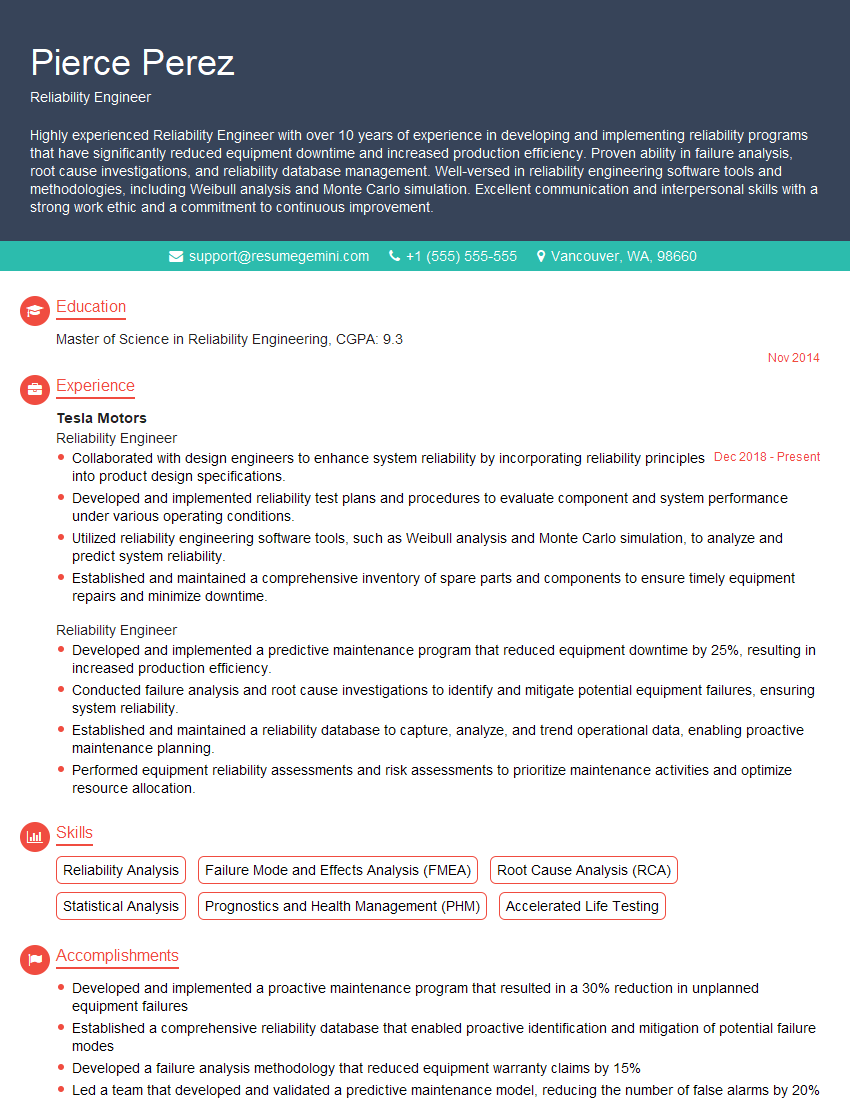
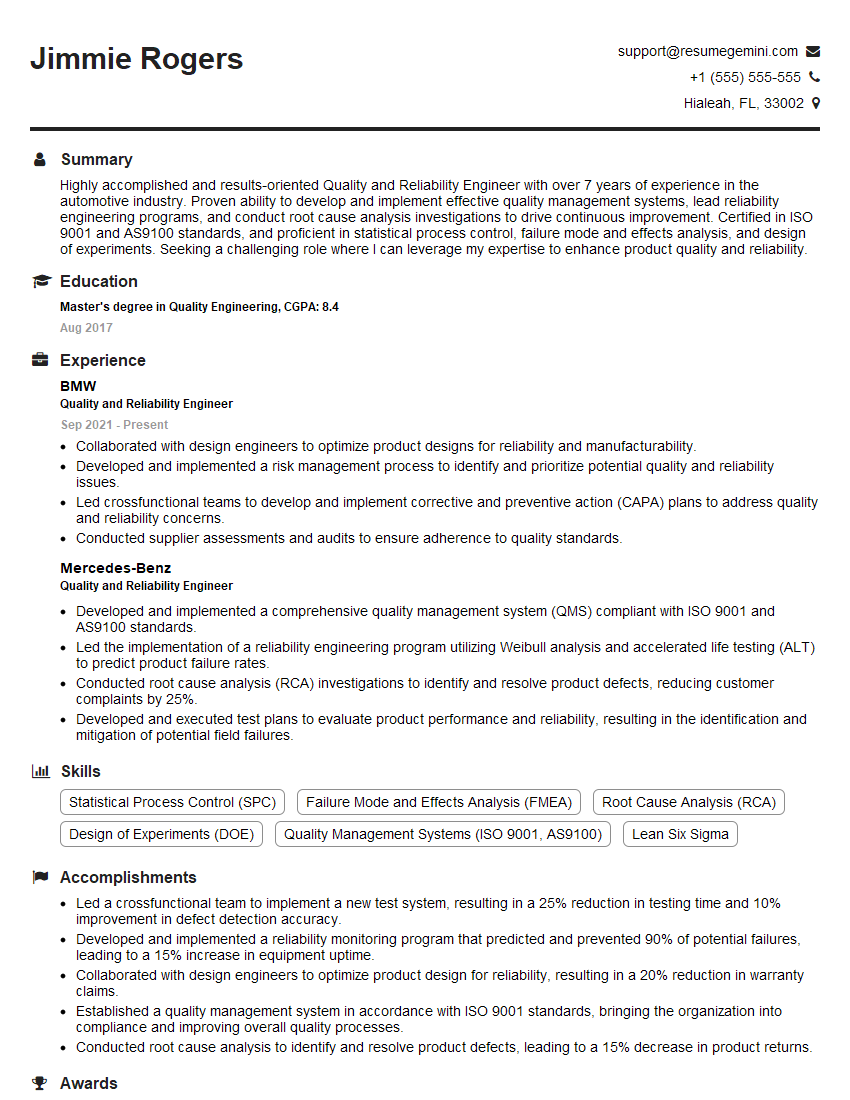
Mastering Environmental Stress Testing is crucial for career advancement in engineering, quality assurance, and related fields. A strong understanding of these principles demonstrates your commitment to product reliability and your ability to solve complex technical challenges. To maximize your job prospects, creating an ATS-friendly resume is essential. ResumeGemini can help you build a professional and impactful resume that highlights your skills and experience effectively. Examples of resumes tailored specifically to Environmental Stress Testing are available through ResumeGemini to help you showcase your qualifications.
Explore more articles
Users Rating of Our Blogs
Share Your Experience
We value your feedback! Please rate our content and share your thoughts (optional).
What Readers Say About Our Blog
Very informative content, great job.
good