The thought of an interview can be nerve-wracking, but the right preparation can make all the difference. Explore this comprehensive guide to Environmental Sustainability and Compliance interview questions and gain the confidence you need to showcase your abilities and secure the role.
Questions Asked in Environmental Sustainability and Compliance Interview
Q 1. Explain the ISO 14001 Environmental Management System standard.
ISO 14001 is an internationally recognized standard that provides a framework for establishing, implementing, maintaining, and continually improving an Environmental Management System (EMS). Think of it as a roadmap for businesses to minimize their environmental footprint and demonstrate their commitment to sustainability. It’s not about achieving a specific environmental outcome but about implementing a structured process for managing environmental aspects.
- Planning: Identifying environmental aspects (e.g., energy use, waste generation), defining environmental objectives and targets, and establishing programs to meet them.
- Implementation and Operation: Establishing roles and responsibilities, providing training, documenting processes, and ensuring compliance with legal and other requirements.
- Checking and Corrective Action: Monitoring and measuring environmental performance, conducting internal audits, and taking corrective and preventive actions to address any identified gaps.
- Management Review: Regularly reviewing the EMS’s effectiveness and making improvements based on performance data and stakeholder feedback.
For example, a manufacturing company might use ISO 14001 to track its energy consumption, reduce waste generation through improved processes, and manage hazardous materials safely. Successful implementation leads to improved efficiency, reduced costs, enhanced reputation, and greater stakeholder confidence.
Q 2. Describe your experience with conducting environmental audits.
I have extensive experience conducting environmental audits across various industries, including manufacturing, energy, and agriculture. My audits cover compliance with environmental regulations, assessment of EMS effectiveness (often ISO 14001), and identification of environmental risks and opportunities. I employ a systematic approach, combining desk-based reviews of documents with on-site inspections and interviews with staff.
For instance, during an audit of a chemical plant, I reviewed their permits, waste management plans, and emergency response procedures. I then conducted on-site inspections of their storage facilities for hazardous materials, observing their handling practices and looking for potential leaks or spills. I also interviewed operators and managers to understand their level of awareness of environmental regulations and the effectiveness of the company’s training programs. Following the audit, I provided a detailed report with findings, recommendations for improvement, and a prioritized action plan. This helps the company address identified deficiencies and improve its overall environmental performance.
Q 3. How do you ensure compliance with environmental regulations?
Ensuring compliance involves a multi-faceted approach. It begins with a thorough understanding of all applicable environmental regulations, permits, and licenses specific to the operation’s location and activities. This requires regular monitoring of regulatory changes and updates. A robust EMS, like one compliant with ISO 14001, is crucial. Regular environmental monitoring and record-keeping are essential to track performance against established limits and targets. This may include air and water quality testing, waste characterization, and energy consumption monitoring.
Proactive measures are vital. This involves implementing robust environmental training programs for employees, developing and using standard operating procedures to ensure consistent compliance, and maintaining open communication with regulatory agencies. Regular internal audits identify any compliance gaps, enabling swift corrective actions. When dealing with potential violations, a timely and transparent approach with the relevant authorities is crucial to mitigate potential penalties and ensure corrective actions are implemented promptly.
Q 4. What are the key components of a successful environmental sustainability program?
A successful environmental sustainability program is built on several key pillars:
- Leadership Commitment: Strong support from top management is essential for setting the tone and allocating resources.
- Clear Goals and Targets: Defining measurable objectives aligned with business strategy and regulatory requirements. Examples include reducing carbon emissions by a specific percentage or achieving zero waste to landfill.
- Stakeholder Engagement: Involving employees, customers, suppliers, and the community fosters buy-in and enhances program effectiveness.
- Continuous Improvement: Regularly reviewing performance data, identifying areas for improvement, and implementing corrective actions to ensure ongoing progress.
- Data-Driven Decision Making: Collecting and analyzing environmental performance data is vital for tracking progress, identifying trends, and making informed decisions.
- Innovation and Technology: Embracing new technologies and innovative solutions to enhance environmental performance and efficiency.
For example, a company might invest in energy-efficient equipment, implement a waste reduction program, and partner with local organizations to support environmental initiatives. The integration of sustainability into the core business strategy is key to long-term success.
Q 5. Explain the difference between LCA (Life Cycle Assessment) and LCI (Life Cycle Inventory).
Both LCA (Life Cycle Assessment) and LCI (Life Cycle Inventory) are tools used to evaluate the environmental impacts of a product or process, but they differ in scope and focus. LCI is the foundational step. It’s an inventory that systematically quantifies the inputs and outputs of a product’s life cycle, from raw material extraction to end-of-life disposal. Think of it as meticulously listing all the materials, energy, and emissions associated with each stage.
LCA, on the other hand, builds upon LCI. It takes the inventory data and uses it to assess the environmental impacts across various categories, such as global warming potential, resource depletion, and toxicity. Essentially, LCI provides the ‘what’ – the data – while LCA provides the ‘so what’ – the interpretation and evaluation of those impacts. A complete LCA will often incorporate several impact assessment methods to provide a comprehensive picture.
For example, an LCI for a plastic bottle would quantify the amount of petroleum used, energy consumed in manufacturing, water used in the process, and the weight of plastic waste generated. An LCA would then take this data and analyze the impacts of these factors on climate change, resource depletion, and potential pollution.
Q 6. How do you identify and mitigate environmental risks in a business setting?
Identifying and mitigating environmental risks requires a proactive and systematic approach. It begins with a thorough understanding of the business’s operations and the potential environmental impacts associated with each activity. This often involves conducting a preliminary environmental site assessment to identify potential contaminants or environmental liabilities. A risk assessment matrix is typically used, which considers the likelihood and severity of each potential environmental impact. This allows prioritization of those risks requiring immediate attention.
Mitigation strategies are developed based on the identified risks. Examples include implementing pollution prevention measures, implementing robust waste management systems, investing in environmental monitoring equipment, developing spill response plans, and establishing emergency procedures. Regular monitoring and reporting are essential to track the effectiveness of the mitigation measures and ensure that risks remain within acceptable levels. Proactive communication with regulatory agencies is crucial to ensure transparency and facilitate compliance.
For example, a construction project might identify soil erosion as a high-risk factor. Mitigation measures might include implementing erosion control measures such as silt fences and vegetative barriers. Regular inspections would be conducted to ensure the effectiveness of the measures and to address any issues promptly.
Q 7. Describe your experience with environmental impact assessments.
My experience with environmental impact assessments (EIAs) spans a range of projects, from large-scale infrastructure developments to smaller industrial facilities. EIAs are crucial in evaluating the potential environmental consequences of a project before it begins. My role involves leading and participating in multidisciplinary teams, conducting baseline environmental studies, predicting potential impacts using modeling techniques, and developing mitigation and monitoring plans.
For example, in an EIA for a proposed wind farm, I was responsible for assessing potential impacts on bird and bat populations, evaluating the visual impact on the landscape, and assessing the noise levels. This involved fieldwork such as bird surveys and noise monitoring, alongside modeling and data analysis to predict potential impacts. Based on the assessment, mitigation strategies such as using bird-deterrent technologies and strategically locating turbines were recommended. The EIA report comprehensively documented the findings, conclusions, and recommendations for the project proponents and regulatory authorities. It served as a critical decision-making tool for approving or modifying the project.
Q 8. What are some common environmental regulations you’re familiar with (e.g., Clean Air Act, Clean Water Act)?
I’m intimately familiar with a wide range of environmental regulations, crucial for ensuring responsible business practices. Some key examples include the Clean Air Act (CAA), which sets national ambient air quality standards and regulates emissions from stationary and mobile sources; the Clean Water Act (CWA), controlling water pollution through effluent limitations and water quality standards; and the Resource Conservation and Recovery Act (RCRA), managing hazardous and non-hazardous waste from generation to disposal. Other significant regulations I frequently work with include the Comprehensive Environmental Response, Compensation, and Liability Act (CERCLA), or Superfund, addressing hazardous waste sites; and the Endangered Species Act (ESA), protecting threatened and endangered species and their habitats. The specific regulations applicable will always depend on the industry, location, and the type of activity being undertaken. For instance, a manufacturing plant will face different regulatory pressures than a construction company. Understanding this nuance is key to effective compliance.
Each regulation has its specific requirements and enforcement mechanisms. For example, the CAA requires permits for certain emissions sources and sets limits on pollutants, while the CWA necessitates permits for discharging wastewater into navigable waters. Non-compliance can lead to significant penalties, including fines, legal action, and reputational damage. My expertise lies in navigating the complexities of these regulations and ensuring my clients maintain full compliance.
Q 9. How do you measure and track environmental performance indicators (KPIs)?
Measuring and tracking environmental performance indicators (KPIs) is essential for demonstrating progress towards sustainability goals and identifying areas for improvement. The specific KPIs will vary depending on the organization and its industry, but some common examples include:
- Greenhouse gas (GHG) emissions (e.g., tons of CO2e): This tracks the organization’s carbon footprint, frequently measured using methodologies like the Greenhouse Gas Protocol.
- Energy consumption (e.g., kWh): This gauges energy efficiency and identifies opportunities for reduction through renewable energy sources or energy-saving initiatives.
- Water usage (e.g., gallons or cubic meters): Measures water consumption and helps in identifying areas where water conservation can be implemented.
- Waste generation (e.g., tons): Tracks the volume of waste generated and monitors progress towards waste reduction targets. This also often includes the breakdown of waste by type (e.g., recyclable, hazardous).
- Recycling and waste diversion rates (e.g., percentage): Measures the success of recycling and waste reduction programs.
These KPIs are tracked using a variety of methods, including direct measurement, data collection from utility bills, waste management reports, and environmental management systems (EMS) software. Regular reporting and data analysis are critical to understanding trends, identifying improvement opportunities, and demonstrating progress to stakeholders. For example, if GHG emissions are consistently above targets, it might indicate a need to invest in more energy-efficient equipment or implement a carbon offset program. Data visualization, such as charts and dashboards, plays a vital role in presenting this information effectively.
Q 10. Explain the concept of circular economy and its implications for businesses.
The circular economy is a transformative model that aims to decouple economic growth from resource consumption and waste generation. Unlike the traditional linear ‘take-make-dispose’ model, the circular economy emphasizes keeping materials in use for as long as possible, extracting maximum value from them, and then recovering and regenerating products and materials at the end of their service life. Think of it as a closed loop, rather than a straight line.
Implications for businesses: Embracing the circular economy offers businesses significant opportunities, including:
- Cost savings: Reducing waste and reusing materials lowers raw material costs and disposal expenses.
- Enhanced brand reputation: Consumers increasingly favor environmentally responsible companies.
- Innovation and new revenue streams: Developing new products and services from recycled or reused materials can create new markets.
- Reduced regulatory risk: Better environmental performance minimizes regulatory compliance issues and potential penalties.
- Access to new resources: Companies can tap into previously overlooked waste streams as valuable resources.
For example, a clothing company might implement a clothing take-back program, allowing customers to return used clothing for recycling or reuse, thus reducing landfill waste and acquiring valuable materials for new products. A manufacturer could redesign its products for easy disassembly and component reuse, extending product life and minimizing waste.
Q 11. How do you develop and implement environmental sustainability strategies?
Developing and implementing environmental sustainability strategies requires a structured and comprehensive approach. I typically follow these steps:
- Set clear goals and objectives: Define specific, measurable, achievable, relevant, and time-bound (SMART) targets for environmental performance.
- Conduct a materiality assessment: Identify the environmental issues most relevant to the organization’s operations and stakeholders.
- Develop a sustainability roadmap: Outline specific actions and timelines for achieving the sustainability goals.
- Implement environmental management systems (EMS): Adopt a standardized framework, such as ISO 14001, to manage environmental performance.
- Integrate sustainability into all business functions: Ensure that environmental considerations are woven into all aspects of the business, from procurement and design to operations and marketing.
- Monitor and measure progress: Track KPIs regularly and make adjustments to the strategy as needed.
- Communicate progress and achievements: Report on sustainability performance to stakeholders, both internally and externally.
Successful strategies require strong leadership commitment, employee engagement, and collaboration with stakeholders. For example, in a manufacturing setting, I might implement measures to reduce energy consumption through improved efficiency, switching to renewable energy, and optimizing production processes.
Q 12. Describe your experience with waste management and reduction programs.
My experience with waste management and reduction programs spans various industries and scales. I’ve been involved in designing and implementing comprehensive waste management plans, from small businesses to large industrial facilities. This includes:
- Waste audits: Conducting thorough assessments to identify waste streams, quantify waste generation, and determine waste composition.
- Waste reduction strategies: Developing and implementing strategies to minimize waste generation at the source, such as process optimization, material substitution, and improved product design.
- Recycling and reuse programs: Establishing systems for separating, collecting, and processing recyclable materials and finding alternative uses for waste materials.
- Hazardous waste management: Ensuring the safe handling, storage, transportation, and disposal of hazardous waste in compliance with all applicable regulations.
- Waste-to-energy initiatives: Exploring opportunities to convert waste into energy, such as through anaerobic digestion or incineration with energy recovery.
For example, I helped a manufacturing facility reduce its waste generation by 30% in one year through implementing a lean manufacturing approach and improving packaging design. In another project, I designed and implemented a comprehensive recycling program, resulting in a significant increase in the recycling rate and a decrease in landfill waste.
Q 13. How do you handle environmental emergencies or spills?
Handling environmental emergencies, such as spills, requires a swift and well-coordinated response. My experience involves:
- Emergency preparedness planning: Developing comprehensive emergency response plans that identify potential hazards, establish procedures for responding to spills, and outline roles and responsibilities.
- Spill response: Taking immediate action to contain and clean up spills, utilizing appropriate equipment and personnel. This includes implementing containment measures, and coordinating with emergency services and regulatory agencies.
- Environmental monitoring: Conducting environmental monitoring to assess the extent of environmental damage caused by the spill and guide remediation efforts.
- Remediation: Implementing remediation actions to restore the impacted environment and achieve regulatory compliance. This may include soil remediation, water treatment, or other measures.
- Regulatory reporting: Reporting the incident to relevant regulatory agencies and providing required documentation.
It’s crucial to act quickly and decisively during an emergency. Following a pre-established emergency response plan is critical, as this ensures a coordinated response and minimizes environmental damage. For example, I have personally overseen multiple chemical spills, each requiring immediate action to mitigate harm to human health and the environment while ensuring full regulatory compliance.
Q 14. What is your experience with environmental reporting and disclosure (e.g., GRI, SASB)?
I have extensive experience with environmental reporting and disclosure frameworks, such as the Global Reporting Initiative (GRI) Standards and the Sustainability Accounting Standards Board (SASB) Standards. These frameworks provide standardized guidelines for reporting environmental performance, allowing businesses to communicate their sustainability efforts transparently to stakeholders.
GRI Standards provide a comprehensive framework for reporting on a wide range of environmental, social, and governance (ESG) issues. They are widely used by businesses globally and provide a standardized approach to measuring and reporting sustainability performance. SASB Standards focus on financially material ESG issues relevant to specific industries. This means they highlight the environmental factors most likely to impact a company’s financial performance. Both frameworks are designed to help organizations provide transparent and comparable information on their sustainability performance.
My experience includes assisting clients in preparing GRI and SASB reports, ensuring data accuracy and completeness, and ensuring compliance with the relevant standards. This involves data collection and analysis, preparing the report narrative, and providing assurance on the accuracy of the information provided. Understanding the nuances of each framework, and selecting the appropriate one based on the organization’s needs and reporting goals, is crucial for effectively communicating sustainability performance.
Q 15. How do you integrate environmental sustainability into business decision-making?
Integrating environmental sustainability into business decision-making isn’t about adding an extra layer; it’s about fundamentally reshaping how we approach business strategy. It requires a holistic approach, embedding environmental considerations into every stage, from initial planning to final disposal.
Triple Bottom Line Approach: Instead of focusing solely on profits (economic), we consider the social and environmental impacts alongside financial performance. This means evaluating the long-term environmental consequences of decisions, like the carbon footprint of a product or the potential for water pollution from a manufacturing process.
Life Cycle Assessment (LCA): Conducting LCAs allows us to analyze the environmental impacts of a product or service throughout its entire life cycle – from raw material extraction to end-of-life disposal. This data helps identify areas for improvement and informs more sustainable choices.
Materiality Assessment: This process helps prioritize environmental issues most relevant to the business and its stakeholders. We identify aspects like greenhouse gas emissions, water usage, waste generation, and biodiversity impacts that could significantly affect the business’s reputation, operations, or financial performance.
Incentivize Sustainable Practices: Integrate sustainability targets into employee performance evaluations and reward systems. This fosters a culture of responsibility and drives innovation in sustainable practices.
For example, in a manufacturing setting, integrating sustainability might involve choosing recycled materials, investing in renewable energy sources, and optimizing production processes to minimize waste. This not only reduces environmental impact but also creates cost savings and improves the company’s brand reputation.
Career Expert Tips:
- Ace those interviews! Prepare effectively by reviewing the Top 50 Most Common Interview Questions on ResumeGemini.
- Navigate your job search with confidence! Explore a wide range of Career Tips on ResumeGemini. Learn about common challenges and recommendations to overcome them.
- Craft the perfect resume! Master the Art of Resume Writing with ResumeGemini’s guide. Showcase your unique qualifications and achievements effectively.
- Don’t miss out on holiday savings! Build your dream resume with ResumeGemini’s ATS optimized templates.
Q 16. Describe your experience with environmental permitting and licensing.
My experience with environmental permitting and licensing spans over ten years, encompassing various sectors including manufacturing, construction, and energy. I’ve handled everything from initial permit applications to compliance audits and enforcement actions. This includes navigating the complexities of federal, state, and local regulations.
Permitting Process Expertise: I’m proficient in preparing comprehensive permit applications, including conducting environmental site assessments, developing mitigation plans, and ensuring compliance with all relevant regulations. This includes understanding the specific requirements of permits like Clean Water Act permits (NPDES), air quality permits, and solid waste permits.
Regulatory Compliance: I have extensive experience in ensuring ongoing compliance with permit conditions, including monitoring, record-keeping, and reporting requirements. This often involves coordinating with regulatory agencies and responding to enforcement actions.
Navigating Complex Regulations: I am adept at interpreting complex environmental regulations and applying them to diverse project scenarios. I understand the nuances of different regulatory frameworks and how they interact.
For instance, I successfully secured a Clean Water Act permit for a large-scale construction project by demonstrating robust erosion and sediment control measures and developing a comprehensive stormwater management plan. This required meticulous documentation, stakeholder engagement, and a deep understanding of the relevant regulations.
Q 17. How do you stay up-to-date on environmental regulations and best practices?
Staying current in the ever-evolving field of environmental regulations and best practices requires a multi-pronged approach.
Subscription to Regulatory Updates: I subscribe to reputable environmental law journals, newsletters, and online resources that provide timely updates on changes in regulations and case law. This allows me to remain abreast of new developments.
Professional Networks: Active participation in professional organizations such as the Environmental Law Institute (ELI) and attending industry conferences and webinars keeps me connected to the latest research, best practices, and emerging trends.
Government Agency Websites: I regularly monitor the websites of key regulatory agencies like the EPA, state environmental protection agencies, and relevant international bodies (e.g., UNEP). This allows for direct access to official guidance and updates.
Continuing Education: I dedicate time to ongoing professional development through specialized courses and workshops to maintain my expertise in specific areas of environmental compliance.
For example, I recently participated in a webinar on the updated requirements for reporting greenhouse gas emissions under the Corporate Average Fuel Economy (CAFE) standards. This proactive approach helps ensure our compliance strategies remain effective.
Q 18. What are the key principles of environmental due diligence?
Environmental due diligence is the process of identifying and assessing potential environmental liabilities associated with a property or business transaction. It’s a crucial step in mitigating risks and ensuring compliance.
Phase I Environmental Site Assessment (ESA): This involves a review of historical records, site reconnaissance, and interviews to identify potential environmental contamination. This is typically the first step in any due diligence process.
Phase II ESA: If a Phase I ESA reveals potential contamination, a Phase II ESA involves sampling and testing to confirm the presence and extent of contamination.
Regulatory Compliance Review: This involves reviewing permits, licenses, and other environmental documentation to ensure compliance with all applicable regulations.
Risk Assessment: Based on the findings of the assessments, a risk assessment is conducted to determine the potential liabilities and financial implications of any environmental contamination.
Remediation Planning: If contamination is confirmed, a remediation plan is developed to clean up the site and restore it to acceptable environmental standards.
For example, before acquiring a manufacturing plant, a thorough due diligence process would identify any past spills or improper waste disposal, potentially saving the buyer from significant cleanup costs and legal liabilities later on. The process often involves environmental consultants to ensure accuracy and compliance.
Q 19. Explain your understanding of carbon footprint accounting and reduction strategies.
Carbon footprint accounting involves measuring and quantifying the total greenhouse gas (GHG) emissions directly and indirectly caused by an organization, event, product, or service. Reducing this footprint requires a strategic approach.
Scope 1, 2, and 3 Emissions: Carbon footprint accounting is categorized into three scopes: Scope 1 (direct emissions from owned or controlled sources), Scope 2 (indirect emissions from the generation of purchased energy), and Scope 3 (all other indirect emissions in the value chain).
Data Collection and Analysis: Accurate data collection is crucial. This involves gathering information on energy consumption, waste generation, transportation, and other emission sources. Specialized software and methodologies are often used.
Reduction Strategies: Strategies focus on reducing emissions across all three scopes. Examples include transitioning to renewable energy, improving energy efficiency, reducing waste, optimizing transportation, and investing in carbon offset projects.
Carbon Offsetting: This involves investing in projects that remove or reduce GHG emissions to compensate for unavoidable emissions. Examples include reforestation or renewable energy projects. It should be viewed as a supplementary measure, not a replacement for emission reductions.
For example, a company might conduct a carbon footprint assessment to identify its major emission sources. Then, it might invest in solar panels (reducing Scope 2 emissions), switch to electric vehicles for its fleet (reducing Scope 1 emissions), and work with suppliers to reduce emissions in their supply chain (reducing Scope 3 emissions).
Q 20. How do you ensure effective communication and stakeholder engagement on environmental issues?
Effective communication and stakeholder engagement are critical for successful environmental management. It’s about building trust and ensuring transparency.
Identifying Stakeholders: This includes employees, community members, regulatory agencies, investors, suppliers, and customers.
Communication Channels: Utilizing various communication channels is important, including meetings, newsletters, websites, social media, and community forums. The choice of channel depends on the audience and the message.
Transparency and Openness: Openly communicating environmental performance, including both successes and challenges, fosters trust and credibility. This could include publishing sustainability reports or participating in public forums.
Active Listening: Actively listening to stakeholder concerns and incorporating feedback into environmental management strategies shows respect and demonstrates commitment.
Collaboration and Partnerships: Collaborating with stakeholders can lead to innovative solutions and shared responsibility for environmental stewardship.
For example, a company might hold regular community meetings to discuss its environmental initiatives and address local concerns about potential impacts. This proactive approach helps build strong relationships and ensures community support for the company’s sustainability goals.
Q 21. How would you address conflict between environmental regulations and business needs?
Conflicts between environmental regulations and business needs require a balanced and strategic approach. It’s about finding innovative solutions that meet both environmental and economic objectives.
Identify the Conflict: Clearly define the specific points of conflict between the regulations and business operations.
Explore Compliance Options: Assess the feasibility of complying with the regulations through technological upgrades, process modifications, or operational adjustments.
Seek Expert Advice: Consult with environmental lawyers and consultants to explore legal options and assess potential risks.
Engage in Dialogue: Communicate with regulatory agencies to explain the business’s situation and explore potential alternatives or waivers.
Innovation and Technology: Invest in innovative technologies or processes that can achieve both environmental compliance and business efficiency.
Long-Term Perspective: Consider the long-term costs and benefits of different approaches, including potential fines, reputational damage, and the opportunity costs of inaction.
For example, a manufacturing company facing stringent new emission standards might explore options such as installing advanced pollution control equipment, switching to cleaner energy sources, or even relocating production to a facility with better infrastructure. The decision would involve careful cost-benefit analysis and consideration of long-term sustainability goals.
Q 22. Describe your experience using environmental management software or tools.
Throughout my career, I’ve extensively utilized various environmental management software and tools. This includes Environmental Management Systems (EMS) software like ISO 14001 compliant platforms for tracking emissions, waste management, and compliance reporting. I’m proficient in using software for air quality modeling (e.g., AERMOD), water quality assessment (e.g., QUAL2K), and Geographic Information Systems (GIS) for spatial analysis of environmental data. For example, in my previous role at GreenTech Solutions, we used a customized EMS software to monitor our carbon footprint, track energy consumption across multiple facilities, and generate comprehensive sustainability reports for stakeholders. This involved inputting data on energy usage, waste generation, and greenhouse gas emissions, and the system automatically generated reports and identified areas for improvement. I also have experience with specialized software for managing hazardous waste, including tracking its lifecycle from generation to disposal.
Furthermore, I’m familiar with data management and analysis tools like Excel, R, and Python for creating visualizations and conducting statistical analyses on environmental data to identify trends and support decision-making. For instance, using R, I analyzed water quality data to identify pollution sources and their impact on aquatic ecosystems.
Q 23. What is your experience with environmental remediation projects?
My experience with environmental remediation projects spans a variety of contexts, from contaminated soil and groundwater cleanup to brownfield redevelopment. I’ve been involved in projects ranging from small-scale site assessments to large-scale remediation efforts requiring extensive regulatory compliance. For instance, at a previous company, we were responsible for remediating a site contaminated with petroleum hydrocarbons. This involved conducting a thorough site investigation, developing a remediation plan that was approved by the regulatory agency, and overseeing the implementation of the selected technologies. This project included soil excavation and treatment, groundwater extraction and treatment, and long-term monitoring to ensure the effectiveness of the remediation efforts.
My responsibilities often included coordinating with regulatory agencies, subcontractors, and other stakeholders, managing budgets and timelines, and ensuring that all work was performed in compliance with relevant environmental regulations. This requires a detailed understanding of environmental laws and regulations, as well as technical expertise in remediation technologies. I am experienced in various remediation techniques, including bioremediation, phytoremediation, pump and treat systems, and soil vapor extraction.
Q 24. How familiar are you with different types of environmental pollution and their control measures?
I possess a comprehensive understanding of various types of environmental pollution and their associated control measures. This includes air pollution (e.g., smog, acid rain, greenhouse gases), water pollution (e.g., nutrient runoff, industrial discharge, sewage), and soil contamination (e.g., heavy metals, pesticides, oil spills). For each type of pollution, there are specific control measures and technologies.
- Air Pollution: Control measures range from installing scrubbers and filters in industrial smokestacks to promoting the use of renewable energy sources and implementing stricter vehicle emission standards.
- Water Pollution: This involves wastewater treatment, implementing best management practices in agriculture, and preventing industrial discharges through stringent regulations and monitoring.
- Soil Contamination: Remediation techniques vary from bioremediation (using microorganisms to break down pollutants) to physical removal of contaminated soil.
Understanding the specific sources and pathways of pollutants is crucial for developing effective control measures. For example, a thorough investigation may be needed to determine the source of heavy metal contamination in soil, which could then inform the selection of an appropriate remediation strategy. My experience includes developing and implementing pollution control plans for industrial facilities, ensuring compliance with all relevant permits and regulations.
Q 25. Explain the importance of corporate social responsibility (CSR) in environmental sustainability.
Corporate Social Responsibility (CSR) plays a pivotal role in achieving environmental sustainability. It’s the idea that businesses should operate ethically and contribute positively to society and the environment, beyond simply maximizing profits. In the context of environmental sustainability, CSR encompasses a company’s commitment to reducing its environmental footprint, conserving resources, and minimizing its impact on ecosystems. This translates to concrete actions like investing in renewable energy, reducing waste generation, improving energy efficiency, and implementing sustainable supply chain practices.
The importance of CSR in environmental sustainability lies in its ability to drive meaningful change at scale. When large corporations embrace sustainable practices, they set a precedent for others to follow, creating a ripple effect throughout the industry. Moreover, consumers are increasingly conscious of the environmental impact of the products and services they purchase, and they are more likely to support companies that demonstrate a genuine commitment to sustainability. This builds brand loyalty and enhances the company’s reputation.
Q 26. How do you contribute to a culture of environmental responsibility within an organization?
Cultivating a culture of environmental responsibility within an organization requires a multi-pronged approach. It starts with leadership commitment, where senior management champions sustainability initiatives and integrates them into the company’s overall strategy. This is followed by clear communication of environmental goals and policies to all employees, along with providing necessary training and resources to support their implementation.
Beyond training, I believe in fostering a culture of continuous improvement and innovation through regular environmental audits and assessments. This helps to identify areas needing improvement and encourages employees to suggest new and better ways to minimize environmental impact. In addition, employee engagement and recognition are crucial; rewarding employees for their contributions to sustainability efforts increases their participation and creates a positive feedback loop.
Finally, promoting transparency and accountability by regularly reporting on the company’s environmental performance—both internally and externally—creates a sense of shared responsibility. For example, I’ve successfully implemented employee-led initiatives, such as waste reduction competitions and green teams, to foster a sense of ownership and collaborative problem-solving around environmental issues.
Q 27. What are your strengths and weaknesses in the field of environmental sustainability and compliance?
Strengths: My greatest strength lies in my ability to integrate technical expertise with practical solutions. I excel at translating complex environmental regulations and data into actionable strategies for businesses. My experience in project management, stakeholder engagement, and regulatory compliance significantly enhances my problem-solving skills in the context of environmental sustainability. I am highly organized and detail-oriented, vital for navigating the intricacies of environmental regulations and ensuring accurate reporting.
Weaknesses: While I possess broad experience, my specific expertise in certain emerging technologies like advanced bioremediation techniques could be further developed. I plan to address this through targeted professional development opportunities and seeking out opportunities to work on projects incorporating these novel technologies.
Q 28. Where do you see yourself in 5 years in the environmental sustainability field?
In five years, I envision myself in a leadership position within a reputable organization, significantly contributing to the development and implementation of comprehensive environmental sustainability strategies. This could involve managing a team of environmental professionals, leading large-scale remediation projects, or driving innovation in sustainable business practices. My goal is to leverage my skills and experience to create a significant positive impact on the environment, while also advancing my professional expertise in areas such as carbon accounting and life-cycle assessment.
Key Topics to Learn for Environmental Sustainability and Compliance Interview
- Environmental Regulations and Legislation: Understanding key national and international environmental laws (e.g., Clean Air Act, Clean Water Act, ISO 14001) and their practical implications for businesses.
- Environmental Impact Assessments (EIAs): Knowing how to conduct and interpret EIAs, including identifying potential environmental impacts and mitigation strategies. Practical application includes experience with specific EIA software or methodologies.
- Sustainability Reporting and Frameworks: Familiarity with GRI, SASB, and other sustainability reporting frameworks and their application in creating transparent and credible sustainability reports. This includes understanding key performance indicators (KPIs) and data analysis techniques.
- Corporate Social Responsibility (CSR) and ESG (Environmental, Social, and Governance) Principles: Understanding how environmental sustainability integrates with broader CSR and ESG initiatives and how to communicate the value proposition of these efforts to stakeholders.
- Life Cycle Assessment (LCA): Ability to conduct or interpret LCAs to assess the environmental impact of products or services throughout their entire lifecycle, from raw material extraction to disposal.
- Waste Management and Pollution Control: Practical knowledge of waste reduction strategies, pollution prevention techniques, and compliance with waste disposal regulations. This could include experience with specific technologies or processes.
- Climate Change Mitigation and Adaptation: Understanding greenhouse gas emissions accounting, carbon footprint reduction strategies, and climate change adaptation planning. This may involve familiarity with carbon offsetting mechanisms or renewable energy technologies.
- Environmental Auditing and Compliance Monitoring: Experience with conducting environmental audits, identifying non-compliance issues, and developing corrective action plans. This includes proficiency in relevant auditing standards and methodologies.
- Stakeholder Engagement and Communication: Ability to effectively communicate environmental sustainability initiatives and compliance efforts to internal and external stakeholders, including investors, regulators, and the public.
- Emerging Environmental Technologies and Trends: Awareness of innovative technologies and approaches in environmental sustainability, such as circular economy principles, sustainable supply chain management, and green building practices.
Next Steps
Mastering Environmental Sustainability and Compliance is crucial for a successful and impactful career. It demonstrates your commitment to a vital global issue and opens doors to diverse and rewarding opportunities across various sectors. To maximize your job prospects, crafting an ATS-friendly resume is essential. ResumeGemini is a trusted resource to help you build a compelling and effective resume that showcases your skills and experience. They provide examples of resumes specifically tailored to Environmental Sustainability and Compliance roles, ensuring your application stands out.
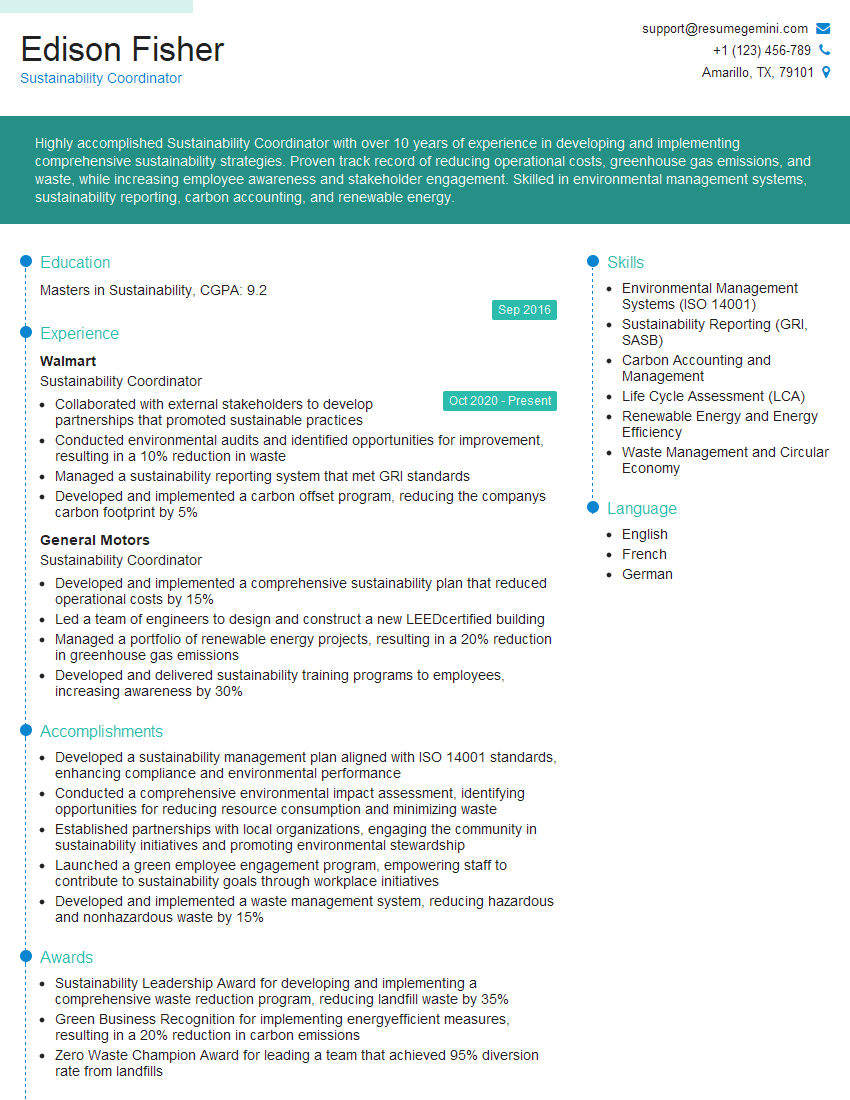
Sustainability Coordinator Resume Sample
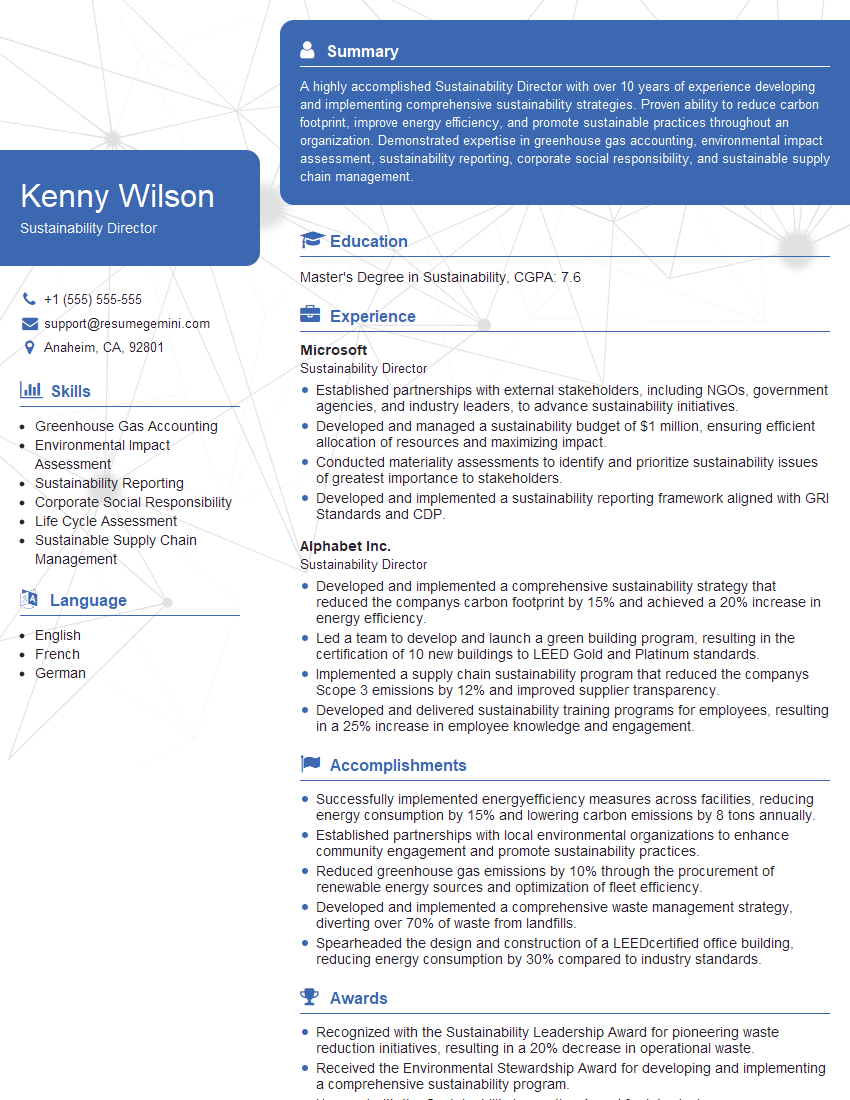
Sustainability Director Resume Sample
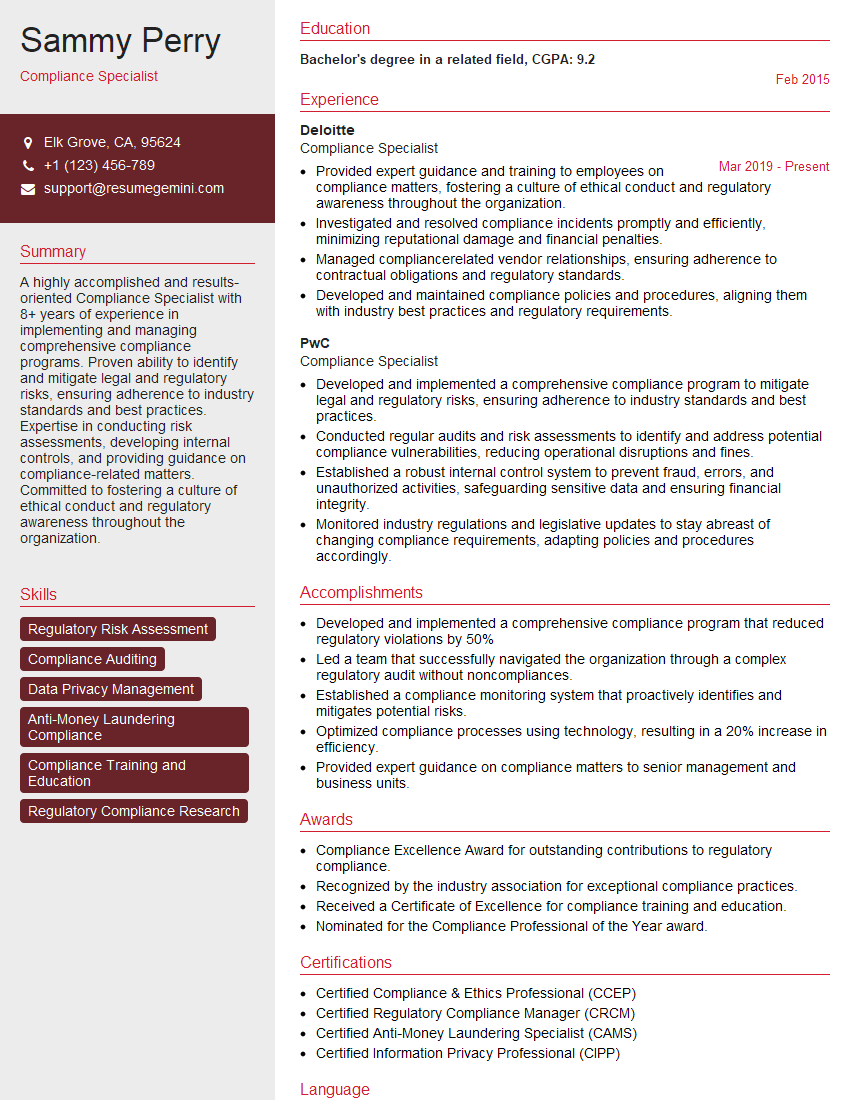
Compliance Specialist Resume Sample
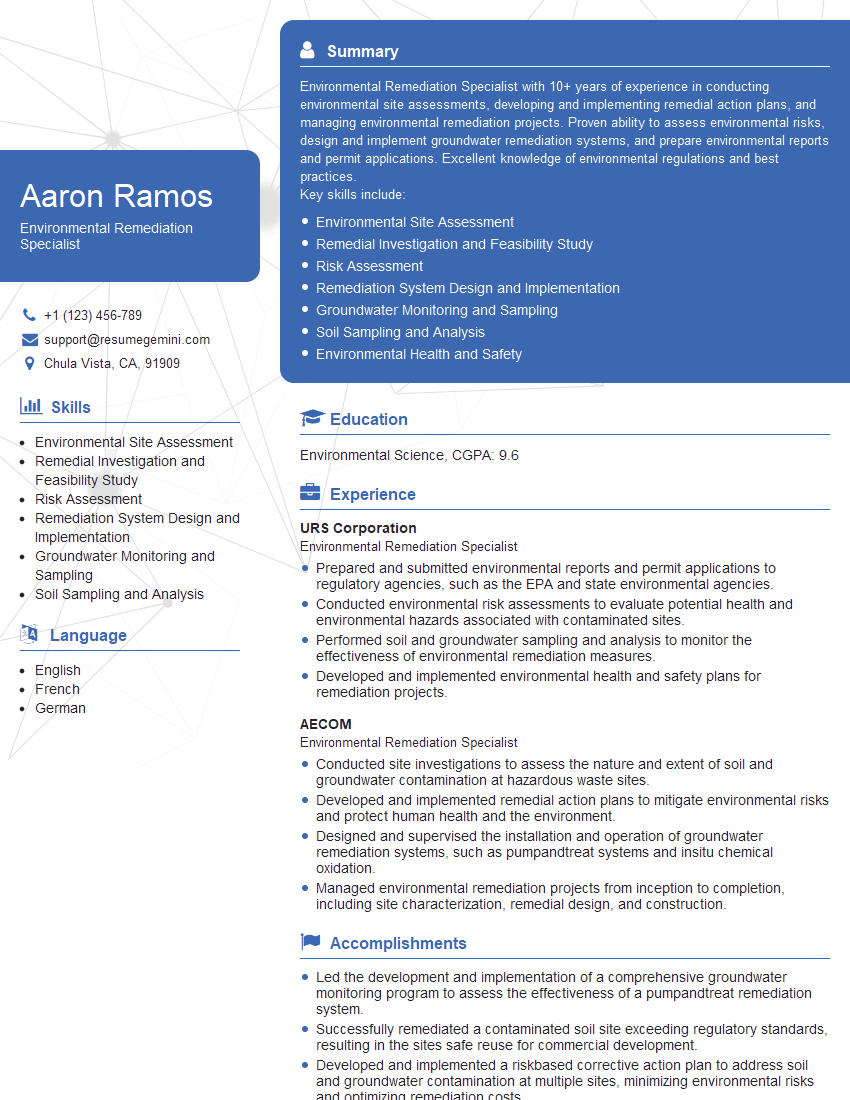
Environmental Remediation Specialist Resume Sample
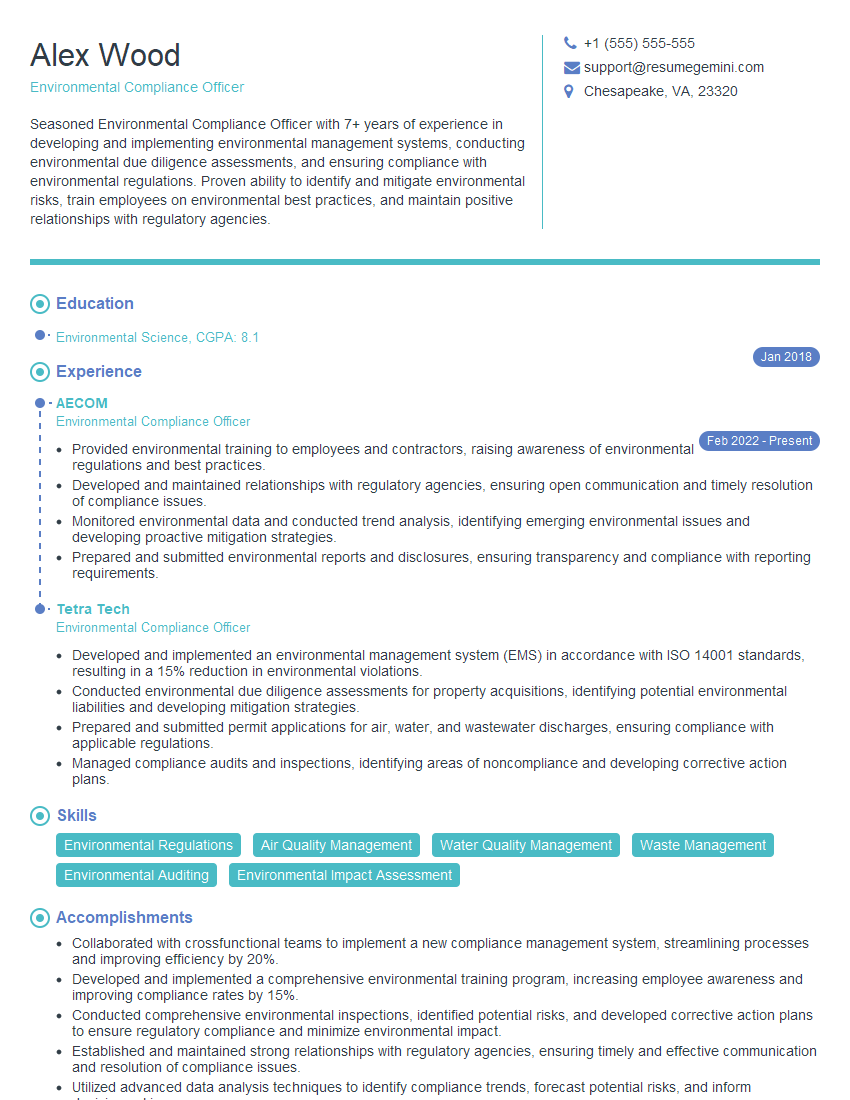
Environmental Compliance Officer Resume Sample
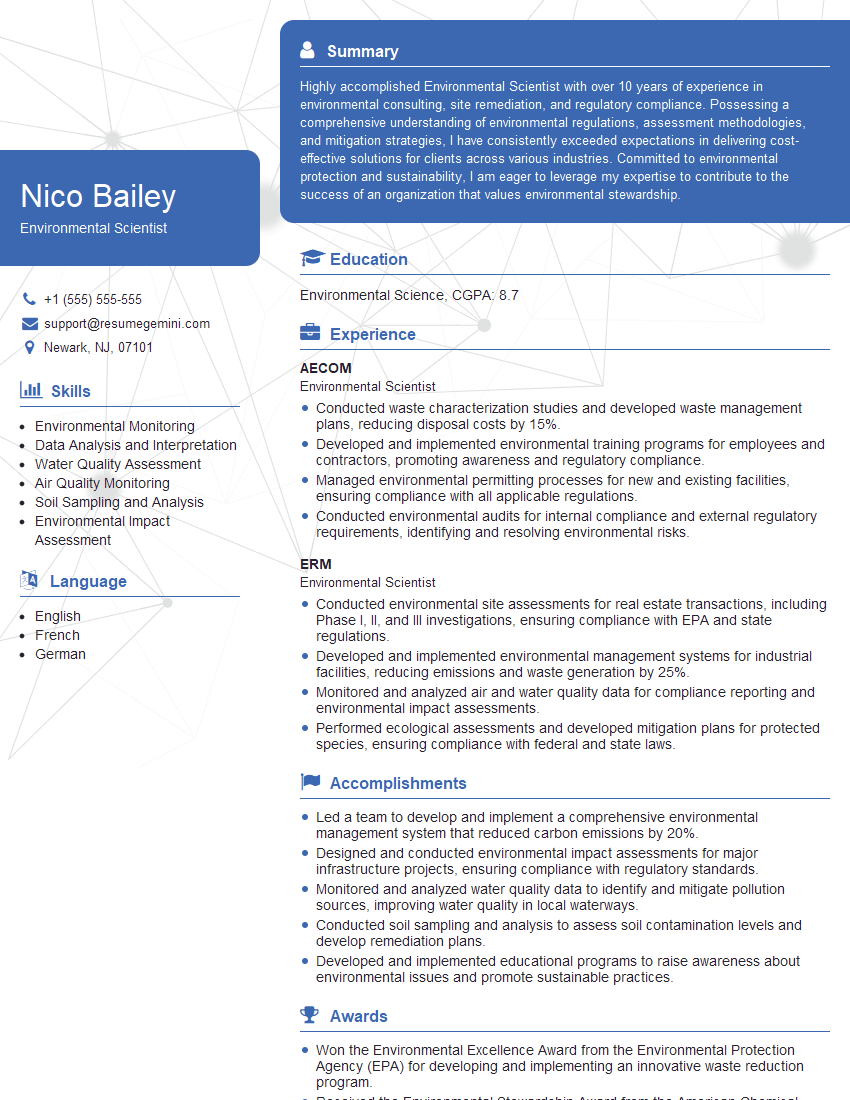
Environmental Scientist Resume Sample
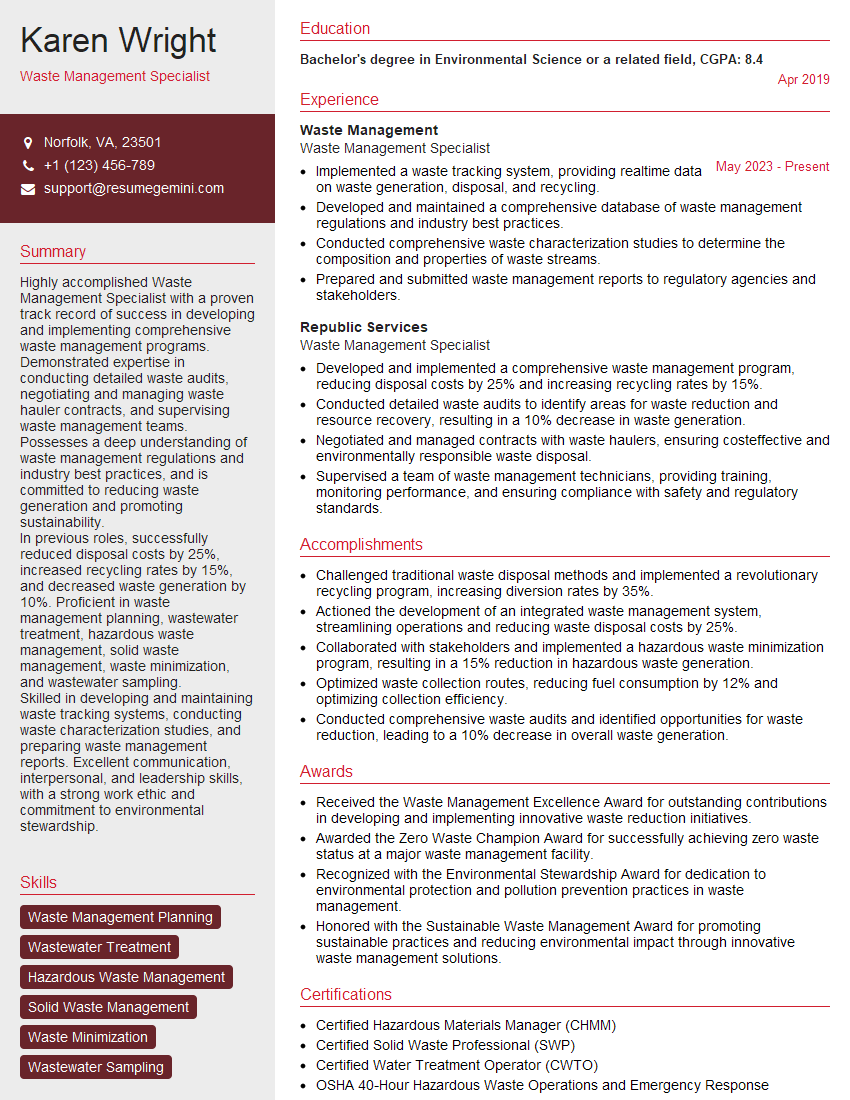
Waste Management Specialist Resume Sample
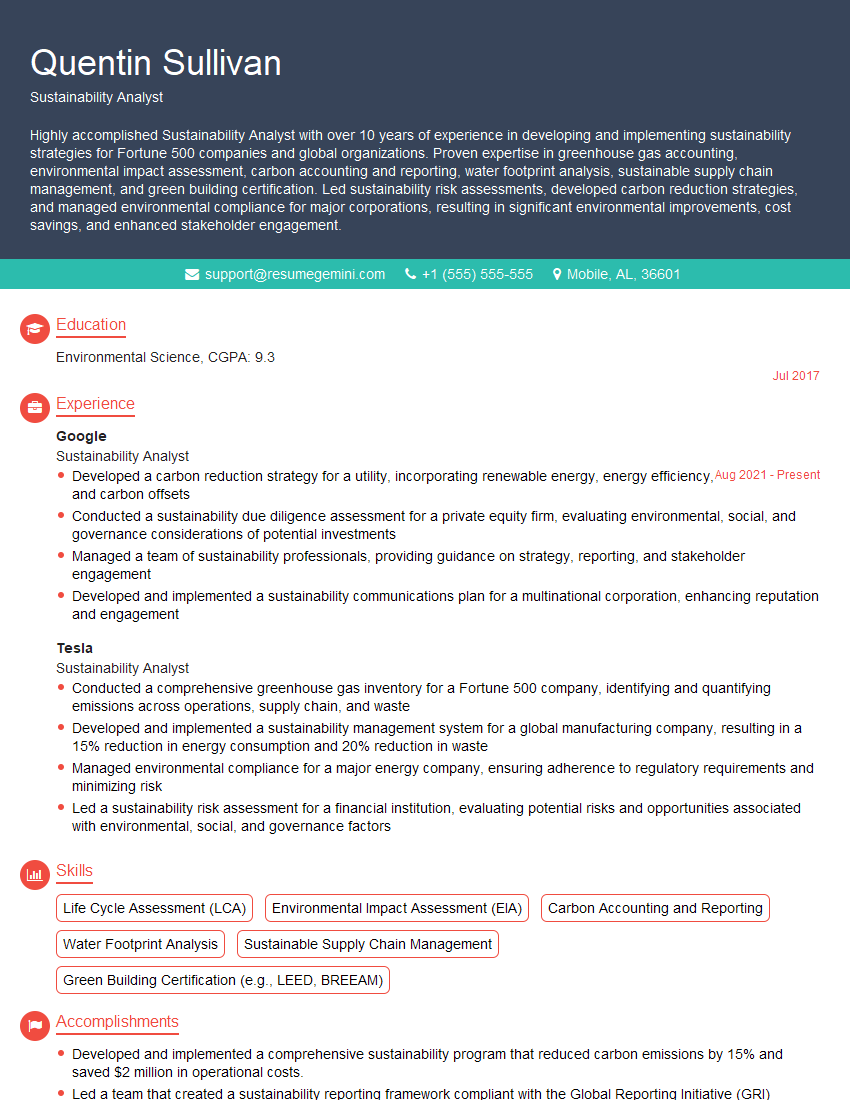
Sustainability Analyst Resume Sample

Sustainability Consultant Resume Sample
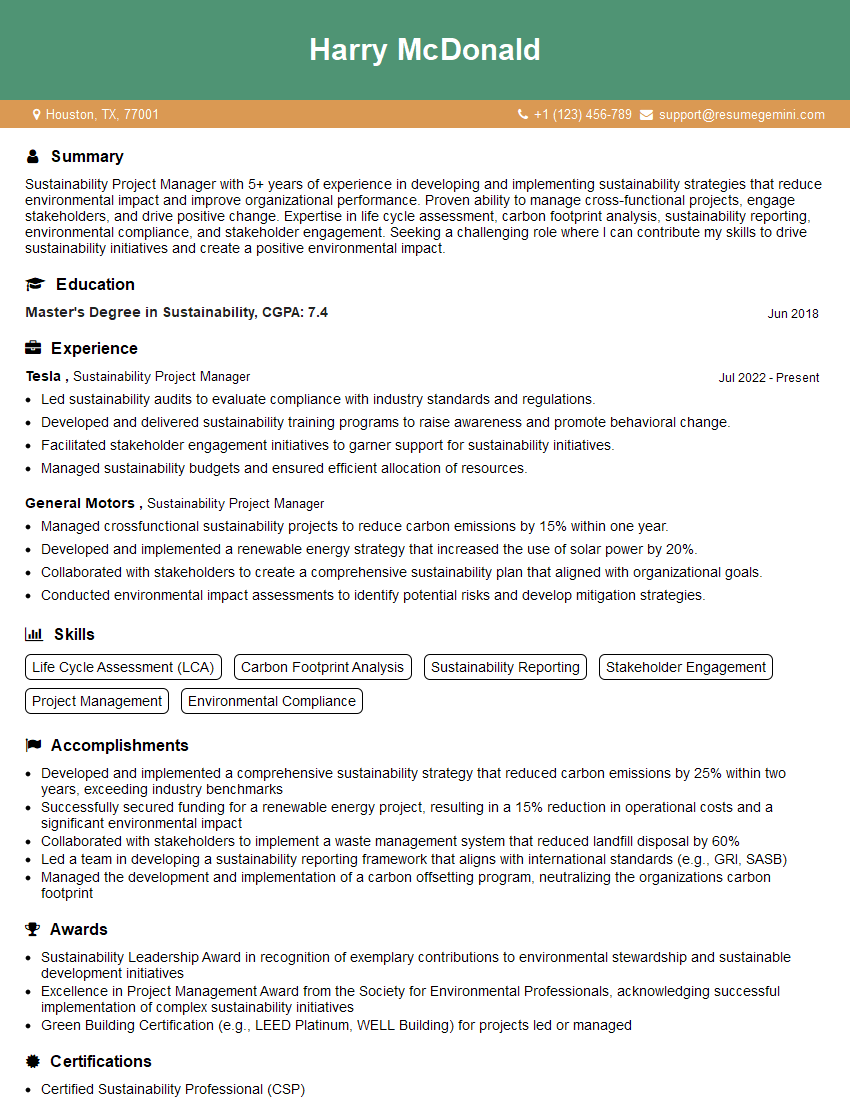
Sustainability Project Manager Resume Sample
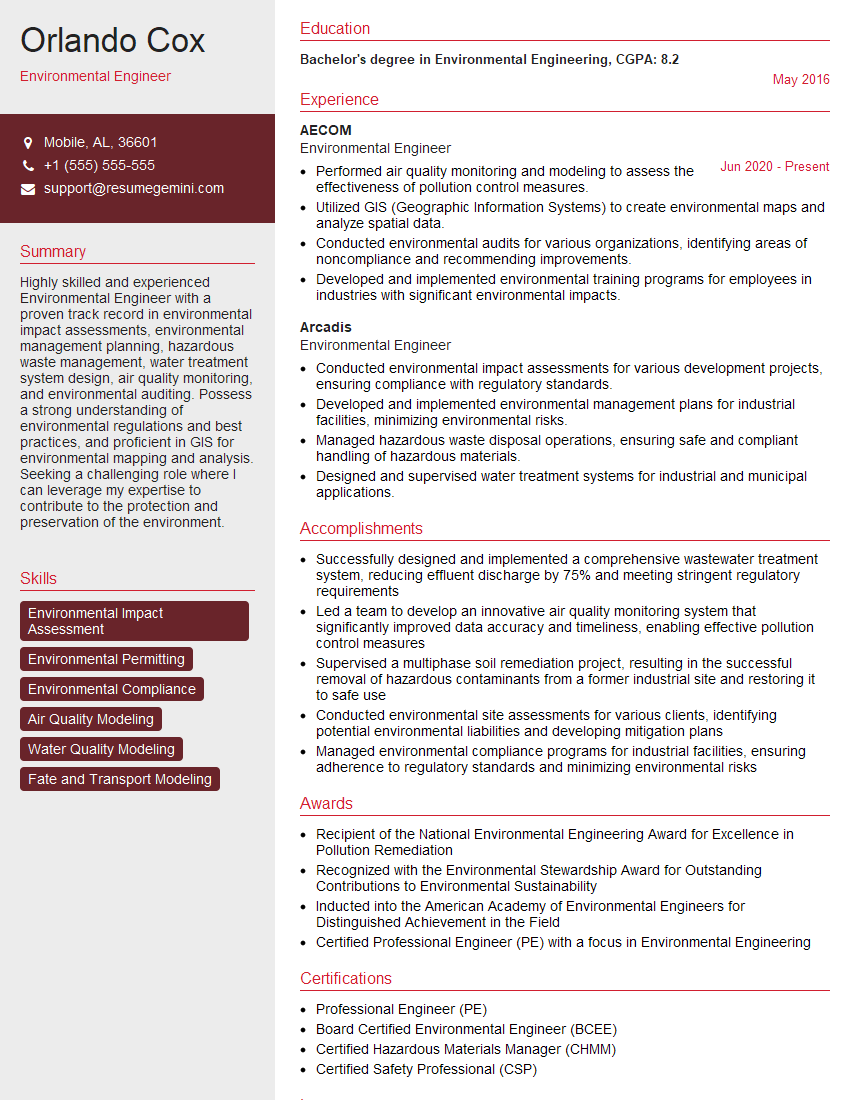
Environmental Engineer Resume Sample

Environmental Sustainability Manager Resume Sample
- Sustainability Coordinator
- Sustainability Director
- Compliance Specialist
- Environmental Remediation Specialist
- Environmental Compliance Officer
- Environmental Scientist
- Waste Management Specialist
- Sustainability Analyst
- Sustainability Consultant
- Sustainability Project Manager
- Environmental Engineer
- Environmental Sustainability Manager
Explore more articles
Users Rating of Our Blogs
Share Your Experience
We value your feedback! Please rate our content and share your thoughts (optional).
What Readers Say About Our Blog
Very informative content, great job.
good