Interviews are more than just a Q&A session—they’re a chance to prove your worth. This blog dives into essential Equine Training interview questions and expert tips to help you align your answers with what hiring managers are looking for. Start preparing to shine!
Questions Asked in Equine Training Interview
Q 1. Describe your experience with different horse breeds and their unique training needs.
My experience spans a wide range of breeds, each presenting unique training challenges and rewards. For example, Thoroughbreds, known for their athleticism and sensitivity, require a patient and consistent approach, focusing on clear communication and building trust. Their inherent energy needs to be channeled constructively, often through rigorous training regimens. Conversely, draft breeds like Clydesdales, while possessing immense strength, are often more docile and require training focused on building confidence and overcoming potential anxieties associated with their size and strength. Their training might focus more on ground work and building a strong relationship before progressing to more advanced riding. Smaller breeds like ponies require an understanding of their proportionally higher energy levels and sometimes more assertive but fair handling. Ultimately, a successful training program adapts to the individual horse, regardless of breed, recognizing their unique temperament, physical capabilities, and learning styles.
Q 2. Explain your approach to addressing behavioral problems in horses.
Addressing behavioral problems necessitates a thorough understanding of the underlying cause. I employ a systematic approach, beginning with a comprehensive assessment of the horse’s environment, management practices, and any potential physical discomfort. For instance, cribbing or weaving might stem from stress or boredom, requiring adjustments to their living conditions and increased mental stimulation. Aggression, however, could indicate pain, fear, or dominance issues, necessitating a careful evaluation and potentially veterinary consultation. My approach blends classical and natural horsemanship techniques, prioritizing positive reinforcement and clear communication. Desensitization and counter-conditioning are vital tools. For example, if a horse fears a tarp, gradually introducing it at a distance, rewarding calmness, and progressively reducing the distance will desensitize it over time. Patience and consistency are paramount; addressing behavioral issues requires time and a collaborative approach with the owner to ensure successful long-term management.
Q 3. How do you assess a horse’s fitness level and adjust training accordingly?
Assessing fitness involves a multifaceted approach. I begin by observing the horse’s physical condition: coat condition, body weight, muscle development, and overall energy levels. A veterinary check-up ensures no underlying health issues interfere with training. I then assess their cardiovascular fitness through monitoring heart rate and respiration during exercise. Simple tests, like walking, trotting, and cantering, help gauge their stamina and identify any asymmetries or stiffness. Based on this evaluation, I tailor the training program – a young, unfit horse will start with light work gradually increasing intensity and duration. A fit horse can handle more demanding exercises. Regular monitoring and adjustments ensure the horse doesn’t get overworked or under-trained, promoting optimal fitness and preventing injuries. This might involve incorporating rest days, cross-training, and adjusting workout intensity based on the horse’s response.
Q 4. What safety protocols do you implement during training sessions?
Safety is paramount in all training sessions. I always begin with a thorough inspection of the equipment, ensuring tack is correctly fitted and in good repair. The training area should be secure, free from hazards, and appropriately sized for the activity. I insist on appropriate protective wear, including helmets for both horse and rider. I maintain a safe distance from the horse during exercises, especially those involving higher levels of energy. I also teach clients the importance of clear and calm communication with their horses, which greatly reduces the chance of accidents. Consistent monitoring of the horse’s behavior for any signs of stress, anxiety, or pain is crucial. If the horse exhibits such signs, training is immediately halted. Regular safety reviews and checks reinforce this commitment to safety.
Q 5. Describe your experience with different training methods (e.g., classical, natural horsemanship).
My training philosophy integrates elements of both classical dressage and natural horsemanship. Classical dressage provides a structured approach to developing a horse’s athleticism and obedience, emphasizing precision and refinement. Natural horsemanship emphasizes building a strong horse-human partnership based on trust and mutual respect. I utilize techniques like groundwork, desensitization, and positive reinforcement from natural horsemanship alongside the structure and precision of classical methods. For example, I might use groundwork exercises to improve the horse’s responsiveness to cues before applying classical dressage exercises. This balanced approach ensures the training is effective, ethical, and respects the horse’s physical and psychological well-being. The focus is always on clear communication, understanding the horse’s needs, and building a positive relationship.
Q 6. How do you adapt your training methods to suit different rider skill levels?
Adapting training to different rider skill levels is crucial. Beginner riders require a more gradual approach, focusing on basic skills like mounting, dismounting, and controlling the horse’s gait. Exercises should be simplified and broken down into smaller, manageable steps. Advanced riders might engage in more challenging exercises that demand increased precision and control. I adjust the complexity and pace of training based on the rider’s capabilities and confidence. For instance, a beginner might begin with lunge lessons to learn basic communication before moving to ridden work, while an advanced rider could pursue more complex maneuvers. Regular feedback and encouragement are vital to building confidence and ensuring riders progress at their own pace. The overarching goal is to ensure the horse’s well-being and the rider’s safety while fostering a positive learning environment.
Q 7. What are the signs of a horse experiencing pain or discomfort during training?
Recognizing pain or discomfort in a horse during training is vital to prevent injury. Signs can be subtle or overt. Subtle signs include reluctance to perform certain movements, changes in gait (such as lameness or stiffness), reduced responsiveness to cues, or unusual sweating. More obvious signs include visible lameness, flinching, or vocalizing during specific movements. Behavioral changes such as increased anxiety or aggression may also indicate pain. Any change in the horse’s demeanor or performance requires careful observation. I am trained to recognize these indicators and immediately cease the training session, consulting with a veterinarian if necessary. Ignoring these signs can lead to serious injuries and lasting problems. Prevention is key; regular veterinary checkups and appropriate training techniques greatly minimize the risk.
Q 8. How do you manage challenging or aggressive horses?
Managing challenging or aggressive horses requires a calm, consistent, and understanding approach. It’s crucial to identify the root cause of the aggression – is it fear, pain, or learned behavior? Ignoring or punishing aggression rarely works; instead, we need to build trust and confidence.
- Understanding the horse’s body language: Learning to recognize signs of stress (pinned ears, tail swishing, tense muscles) is paramount. This helps predict potential problems and allows for preventative measures.
- Patience and desensitization: Gradually introducing the horse to triggers while maintaining a calm demeanor is key. For example, if a horse is aggressive toward grooming, we’d start with gentle touches in a safe, controlled environment, rewarding calm behavior. We’d slowly increase the intensity and duration of the interaction.
- Professional help: If aggression is severe or persistent, seeking help from an equine behaviorist is crucial. They can conduct a thorough assessment and develop a customized management plan.
- Safe handling techniques: Using proper handling techniques, including appropriate use of halters and leading, is essential to prevent accidents. Maintaining a safe distance and ensuring escape routes are available can minimize risks.
For example, I once worked with a stallion who became aggressive during mounting. Through careful observation, we determined his fear stemmed from a previous bad experience. By employing slow desensitization techniques, using positive reinforcement, and working with a trusted handler, we were able to gradually overcome this issue.
Q 9. How do you build trust and rapport with horses?
Building trust and rapport with horses is the cornerstone of successful training. It’s a process that requires patience, understanding, and consistent positive reinforcement. It’s about becoming a predictable and reliable partner in the horse’s life.
- Groundwork: Spending time with the horse on the ground is crucial. This involves gentle grooming, leading, and desensitization exercises, all done with a calm, reassuring demeanor. We build their confidence by showing them we are non-threatening.
- Positive reinforcement: Rewarding desired behaviors with praise, treats, or gentle scratches reinforces positive interactions and builds association. We focus on what we want the horse to do, not what we don’t.
- Respect their space: Horses are prey animals; respecting their personal space is vital. Avoid sudden movements or loud noises that might startle them. Gentle approach and giving them the freedom to move away if they need to reinforces their trust.
- Consistent communication: Clear and consistent communication is essential. Horses respond better to consistent cues and routines.
Think of it like building a friendship – you don’t rush it. You spend time getting to know each other, respecting each other’s boundaries, and communicating clearly. The same applies to horses.
Q 10. Describe your experience with young horses versus mature horses.
Training young horses differs significantly from working with mature horses. Young horses are still developing physically and mentally, requiring patience, understanding, and a gentler approach. Mature horses, while potentially more experienced, might have developed ingrained habits or behavioral issues.
- Young horses (foals and yearlings): Focus is on early socialization, handling, and groundwork. Introducing them to various stimuli (saddles, bridles, different environments) in a controlled and positive way is key. The goal is to establish a solid foundation for future training.
- Mature horses: With mature horses, the emphasis is on refining existing skills and addressing any behavioral or physical limitations. It might involve addressing learned behaviors, improving responsiveness, or working on specific disciplines (dressage, jumping, etc.).
For instance, I might spend months simply building trust and handling skills with a young horse before even thinking about riding. With an older horse, the process might be more focused on correcting a particular gait or fixing a learned bad habit.
Q 11. How do you handle emergencies during riding or training sessions?
Emergency preparedness is crucial in equine training. Having a plan for common emergencies like falls, injuries, and runaway horses can save lives.
- First aid knowledge: Having a comprehensive equine first aid kit and knowing how to use it is essential. This includes dealing with cuts, wounds, and other minor injuries.
- Emergency contacts: Having a list of emergency contacts (veterinarians, farriers, emergency services) readily available is critical.
- Safe handling procedures: Knowing how to safely handle a distressed or injured horse is crucial. Using proper handling techniques can minimize further risk.
- Environmental safety: Ensuring a safe training environment (secure footing, removal of obstacles) minimizes risks.
For example, if a horse falls during riding, you need to quickly assess the situation and ensure that the rider is safe before approaching the horse. We check for injuries, maintain a calm approach, and contact emergency services if necessary. This could even involve proper use of the emergency contact to get help.
Q 12. What is your experience with horse health and well-being?
Horse health and well-being are paramount in my training philosophy. A horse’s physical and mental health directly impacts its performance and ability to learn. I work closely with veterinarians and farriers to ensure the horses I work with are healthy and comfortable.
- Regular veterinary checkups: Routine vet checks, vaccinations, and dental care are crucial for maintaining a horse’s overall health.
- Proper nutrition: Ensuring horses receive a balanced diet tailored to their age, breed, and workload is essential.
- Regular hoof care: Proper hoof care is essential for a horse’s soundness and comfort.
- Recognizing signs of illness or injury: Being able to detect subtle changes in behavior, appetite, or movement can indicate underlying health problems.
I’ve had experience dealing with various health situations, from minor lameness to more serious conditions. Early detection and prompt veterinary attention are vital for a successful outcome. For example, I identified a subtle lameness in a horse early on, and this timely intervention with my veterinarian helped to prevent a more serious injury.
Q 13. Explain your understanding of equine anatomy and biomechanics.
A solid understanding of equine anatomy and biomechanics is crucial for effective training. This knowledge allows me to develop safe and effective training programs that are mindful of the horse’s physical limitations and capabilities.
- Musculoskeletal system: Understanding the structure and function of the horse’s bones, muscles, joints, and ligaments allows for proper conditioning and prevents injuries. For instance, understanding the mechanics of the horse’s gait helps prevent over-exertion or strain on joints.
- Nervous system: Understanding the equine nervous system helps to interpret the horse’s behavior and reactions. We can anticipate issues with training based on their temperament and emotional response to situations.
- Respiratory and cardiovascular systems: Understanding how these systems function allows us to create training programs that gradually increase workload and avoid overexertion.
For example, I wouldn’t ask a horse with a history of stifle problems to perform strenuous jumping exercises. Instead, I’d focus on exercises that build strength in a controlled and safe manner to support the problematic area.
Q 14. How do you develop a personalized training plan for a horse?
Developing a personalized training plan requires a thorough assessment of the horse’s individual needs, capabilities, and temperament. It’s not a ‘one-size-fits-all’ approach.
- Assessment: This involves observing the horse’s movement, conformation, temperament, and existing skills. It might include veterinary and farrier input.
- Goal setting: Clearly defining the training goals – whether it’s improving gaits, competing in a specific discipline, or simply improving overall manners – is essential.
- Program development: Based on the assessment and goals, a training program is developed. It’s crucial to start with basic groundwork and gradually increase the complexity of exercises. We should also include elements of positive reinforcement.
- Progression and evaluation: Regular evaluation of progress is necessary, allowing for adjustments to the program as needed. Flexibility is key, and plans might require adjustments as the training goes on.
For example, a young horse starting training might begin with basic groundwork, then move on to light riding, before progressing to more advanced exercises. The plan would be tailored to the horse’s developmental stage and progress. If the horse shows signs of reluctance in a specific exercise, we would go back a step and rework the prior exercises to address the reluctance before moving on.
Q 15. Describe your experience with different types of riding disciplines.
My experience spans a wide range of equestrian disciplines. I’ve worked extensively with dressage, focusing on developing the horse’s suppleness and elegance through precise movements. This includes training horses from novice levels to competitive Grand Prix. I’ve also spent considerable time in jumping, from cross-country to show jumping, emphasizing proper technique and the building of confidence in both horse and rider. Furthermore, I have experience in western riding disciplines such as reining and working cow horse, understanding the nuances of these unique styles and the specific communication required between horse and rider. Finally, I’ve incorporated elements of natural horsemanship philosophies to create a foundation of mutual respect and understanding in all my training.
- Dressage: Training horses to perform complex movements with precision and grace. For example, working on perfecting the piaffe and passage requires immense patience and finesse.
- Jumping: Developing a horse’s ability to clear obstacles smoothly and efficiently. I’ve worked with horses of all sizes and experience levels, overcoming fears and building confidence to tackle challenging courses.
- Western Riding: Focusing on responsiveness and control in disciplines emphasizing intricate maneuvers. Understanding the subtle cues involved in reining is vital for success in this discipline.
Career Expert Tips:
- Ace those interviews! Prepare effectively by reviewing the Top 50 Most Common Interview Questions on ResumeGemini.
- Navigate your job search with confidence! Explore a wide range of Career Tips on ResumeGemini. Learn about common challenges and recommendations to overcome them.
- Craft the perfect resume! Master the Art of Resume Writing with ResumeGemini’s guide. Showcase your unique qualifications and achievements effectively.
- Don’t miss out on holiday savings! Build your dream resume with ResumeGemini’s ATS optimized templates.
Q 16. How do you evaluate a horse’s suitability for a particular discipline?
Evaluating a horse’s suitability for a specific discipline involves a holistic assessment of its physical and mental attributes. I begin by observing the horse’s conformation – its bone structure, muscle development, and overall build. A horse intended for dressage might ideally possess a long, flowing stride and well-balanced conformation, while a jumper needs strength, agility, and a powerful hindquarter. Temperament is equally crucial; a calm, responsive horse is suitable for most disciplines, while a more spirited horse might be better suited for activities requiring greater athleticism. Beyond physical attributes, I assess the horse’s athleticism, including its responsiveness, coordination, and stamina. I also consider its mental resilience and its ability to learn and adapt to new challenges. A thorough veterinary examination is also essential to rule out any underlying health issues.
For example, a horse with short, powerful legs and a compact build might be better suited for western disciplines like barrel racing, while a taller, longer-legged horse might excel in dressage or eventing. Ultimately, a successful pairing depends on a careful assessment of the horse’s strengths and weaknesses against the demands of the chosen discipline.
Q 17. What are your methods for teaching riders proper riding techniques?
My approach to teaching proper riding techniques is based on a progressive system that prioritizes safety, correct posture, and effective communication with the horse. I begin by assessing the rider’s skill level and experience, tailoring my instruction to their individual needs. I use a combination of verbal instructions, visual demonstrations, and hands-on guidance to improve their seat, balance, and leg and hand aids. I emphasize the importance of correct posture, independent seat, and maintaining a soft and supple connection with the horse’s mouth. Regular practice and drills help to refine the rider’s technique and promote muscle memory. I always work towards building the rider’s confidence alongside their skill and ability to build a strong, trustworthy partnership with the horse. This might involve starting with basic exercises such as walking and trotting in a controlled environment, before gradually introducing more challenging maneuvers.
For example, I would start a new rider with exercises focusing on correct posture and maintaining a balanced seat before moving on to leg and rein aids. A visual aid, like a mirror, can help the rider monitor their posture. This layered approach helps in building a solid foundation and avoiding the development of bad habits.
Q 18. How do you provide constructive feedback to riders?
Constructive feedback is key to rider improvement. I focus on providing specific and actionable suggestions rather than general criticism. I use a positive and encouraging approach, emphasizing the rider’s strengths and highlighting areas for improvement in a clear, non-judgmental way. I make sure to explain the reasoning behind my feedback, relating it back to the rider’s posture, aids, and overall communication with their horse. I often use video recordings to help riders visually understand their mistakes and the nuances of their interaction with the horse. I also encourage self-assessment, prompting the rider to reflect on their performance and identify areas they need to focus on. It’s all about finding the delicate balance between correction and encouragement.
For instance, instead of simply saying ‘Your seat is off,’ I might say, ‘Notice how your weight shifts forward when you turn? Try consciously engaging your core and keeping your weight centered for a more balanced turn.’ This gives the rider specific steps to focus on correcting their posture.
Q 19. How do you maintain a clean and safe training environment?
Maintaining a clean and safe training environment is paramount. This involves regular cleaning of the stables, arenas, and tack rooms, removing manure and debris daily to prevent the buildup of bacteria and parasites. Equipment is inspected regularly for wear and tear, ensuring that tack, fences, and gates are in good condition to prevent accidents. The arena surface is carefully maintained to ensure proper drainage and optimal riding conditions. Safety protocols are strictly enforced, such as proper helmet use, appropriate attire, and a system for managing horses safely in and around the facilities. Proper signage and clearly defined rules minimize risks and increase overall safety for everyone involved. I also make sure that emergency contact information is readily available and that staff members are well trained in equine first aid and emergency procedures.
Q 20. Describe your experience with horse management, including feeding, grooming, and stable care.
My experience in horse management is extensive. Feeding involves understanding nutritional requirements based on the horse’s age, breed, activity level, and overall health. This includes carefully portioning and monitoring feed intake, considering appropriate supplements and ensuring that fresh water is always available. Grooming is an integral part of horse care; it involves regular brushing, hoof picking, and checking for any injuries or health concerns. Stable care includes maintaining cleanliness, ensuring proper ventilation, and monitoring environmental conditions to maximize the horse’s comfort and well-being. This also extends to understanding appropriate stall management, bedding, and parasite control. I understand the significance of responsible pasture management to maintain optimal grazing conditions.
Q 21. What is your experience with handling horses during transportation?
Safe and efficient horse transportation is crucial. My experience includes loading and unloading horses using calm, patient techniques. I always ensure that the trailer is appropriately sized and well-maintained, with adequate ventilation and secure fastenings. Horses are appropriately equipped with suitable travel boots to protect their legs and are properly secured within the trailer. During transport, I maintain regular checks to ensure their well-being and provide water as needed. I am familiar with appropriate regulations and safety measures regarding long-distance travel, ensuring that all necessary paperwork and documentation are in order.
For example, before loading a horse I’ll ensure the trailer is clean, well-ventilated, and that the ramps are properly secured. I always use calm, reassuring language and gentle handling techniques during the loading and transport process.
Q 22. How do you manage horse injuries or illnesses?
Managing horse injuries and illnesses requires a proactive and multi-faceted approach. It begins with preventative care – regular veterinary check-ups, vaccinations, and a healthy diet are crucial. However, even with the best preventative measures, injuries and illnesses can occur.
My first step is always observation. I carefully assess the horse’s behavior, gait, and any visible signs of distress. Is it limping? Is its appetite reduced? Is its temperature elevated? These observations guide my next steps.
Then, I contact my veterinarian immediately. Describing the symptoms clearly and accurately is essential. The vet will likely conduct a thorough examination, potentially including blood tests, radiographs (X-rays), or ultrasound. Based on the diagnosis, a treatment plan will be developed, which might involve medication, rest, or specialized therapy like physiotherapy.
For example, I once had a horse injure its leg. My initial observation was a noticeable limp. After contacting the vet, X-rays revealed a minor fracture. The vet prescribed rest, anti-inflammatory medication, and a specific rehabilitation program including controlled exercise to prevent stiffness and promote healing. This involved careful monitoring and adjustments to the exercise regime based on the horse’s progress. Accurate record-keeping of the injury, treatment, and the horse’s response was critical for successful recovery.
Q 23. What is your understanding of equine nutrition and dietary requirements?
Equine nutrition is a complex subject, vital for a horse’s health, performance, and overall well-being. A horse’s dietary needs vary considerably depending on factors such as age, breed, workload, and health status.
The foundation of a horse’s diet is typically high-quality forage, such as hay or pasture. Forage provides essential fiber, which aids in digestion and contributes to a healthy gut microbiome. The amount of forage should be adjusted depending on the horse’s weight, activity level and overall health. For example, a hard-working competition horse will require more forage than a retired pasture pony.
Concentrates, such as grains or commercially prepared feeds, are often added to supplement forage, particularly for horses with high energy demands. These should be carefully measured to avoid obesity or metabolic issues. Vitamins and minerals may also be necessary depending on the horse’s individual needs and the quality of its forage.
I always consider the specific requirements of each horse under my care. For instance, a pregnant mare will need a diet higher in certain nutrients to support fetal development, while a young, growing horse will have different energy requirements than a mature, working horse. A thorough understanding of equine physiology is essential to ensure each horse receives the optimal nutrition for its individual needs.
Q 24. How do you ensure the welfare of horses under your care?
Ensuring the welfare of horses under my care is paramount. It’s a fundamental principle that guides all my decisions and actions. This involves considering their physical, mental, and emotional well-being.
This includes providing a safe, clean, and comfortable environment. This means clean stalls or paddocks, access to fresh water and appropriate shelter from the elements. It also encompasses providing regular veterinary care, including preventative measures like vaccinations and dental check-ups.
Equally important is their mental and emotional well-being. Horses are social animals, and I ensure appropriate social interaction, whether that’s keeping them in a herd or providing regular human interaction. I avoid harsh or abusive training methods and focus on positive reinforcement techniques. Observing their behavior, body language, and subtle cues is key to understanding their needs and addressing potential issues promptly.
For example, I noticed one horse becoming increasingly withdrawn and less responsive to training. Careful observation and discussion with the vet ruled out any physical problems. The horse then exhibited signs of stress due to isolation in a new environment. Moving her to a paddock with other horses immediately improved her well-being and overall demeanor. Regular social interaction is therefore as important as physical care.
Q 25. What is your experience with training horses for competition?
I have extensive experience training horses for various disciplines, including dressage, show jumping, and eventing. My approach emphasizes building a strong foundation based on classical riding principles and positive reinforcement techniques.
My training philosophy centers on creating a partnership built on trust and mutual respect. I start by assessing the horse’s temperament, physical abilities, and existing training level. This allows me to tailor a program that is both challenging and safe.
I have consistently achieved success in competitions at different levels. For example, I helped train a young horse that went on to win several regional championships in dressage. The success wasn’t just about the horse’s natural ability; it was a result of consistent training, careful planning, and a genuine understanding of the horse’s needs.
My training methods always prioritize the horse’s welfare. I avoid harsh techniques, focusing instead on positive reinforcement, clear communication, and careful attention to the horse’s physical and emotional responses. Patience and a keen understanding of equine behavior are essential for success.
Q 26. Describe your experience with shoeing or hoof care.
While I don’t perform shoeing myself, I have a very close working relationship with a highly skilled farrier. I understand the importance of regular hoof care and its impact on a horse’s health, soundness, and performance.
I am actively involved in the process, observing the farrier’s work and providing input on any concerns I might have. I regularly inspect my horses’ hooves for any signs of abnormalities, such as cracks, abscesses, or imbalances. I maintain detailed records of each shoeing, including the date, type of shoe used, and any observations about the horse’s hooves.
I understand that proper hoof care goes beyond just shoeing; it includes regular trimming, maintaining appropriate moisture levels, and addressing any underlying issues promptly. A sound hoof is the foundation of a healthy horse, and I ensure that this foundation is well maintained. For example, if I notice a horse is developing uneven wear on its hooves, I immediately schedule a visit from the farrier to prevent potential lameness.
Q 27. How do you maintain accurate records of horse training and progress?
Maintaining accurate records is essential for effective horse training and monitoring progress. I utilize a combination of physical and digital methods to ensure comprehensive and accessible records.
I keep a detailed physical logbook for each horse, recording daily training sessions. This includes the date, duration of the session, specific exercises performed, and the horse’s responses (both positive and negative). I also note any changes in the horse’s behavior, diet, or health status. This physical log provides a readily available record for quick reference.
I also utilize digital tools for greater organization and analysis. Spreadsheet software helps me track longer-term progress, charting improvements in specific skills and identifying areas needing further attention. Photos and videos of training sessions provide valuable visual documentation. This digital record can be easily backed-up and shared if needed. By combining these methods, I maintain comprehensive, well-organized, easily accessible records of each horse’s training journey.
Q 28. What are your career goals within the equine industry?
My career goals center on continued professional development within the equine industry and making a significant contribution to the field. I aim to expand my expertise in equine sports medicine and rehabilitation, combining my training experience with a deeper understanding of equine biomechanics and injury prevention.
I am particularly interested in exploring innovative training techniques that emphasize positive reinforcement and holistic well-being. I also aspire to share my knowledge and experience by mentoring aspiring equine trainers and contributing to educational resources within the community. Ultimately, I hope to establish myself as a respected authority in equine training, known for my commitment to both athletic excellence and the ethical welfare of horses.
Key Topics to Learn for Your Equine Training Interview
- Classical Dressage Principles: Understanding the foundational movements and training scales. Consider how these principles translate into practical riding and horse management.
- Natural Horsemanship Techniques: Explore different approaches to building trust and communication with horses. Be prepared to discuss the practical application of these techniques in various training scenarios, including problem horses.
- Equine Behavior and Psychology: Discuss the importance of understanding equine body language, herd dynamics, and learning styles. Prepare examples of how you’ve used this knowledge to adapt your training methods.
- Safety and Risk Management: Demonstrate your understanding of safe handling procedures, risk assessment in equine environments, and emergency protocols. Be ready to discuss practical examples of implementing safety measures.
- Stable Management and Husbandry: Showcase your knowledge of equine nutrition, health, and welfare. Discuss practical experience with routine stable tasks and preventative health care.
- Specialized Training Disciplines (e.g., Jumping, Western Riding, Driving): If applicable to your experience, be prepared to discuss your expertise in specific disciplines and the unique training considerations for each.
- Training Methodology and Program Design: Articulate your understanding of developing tailored training programs to meet individual horse and rider needs. Prepare to discuss your approach to evaluating progress and adjusting training plans.
- Problem-Solving and Troubleshooting: Be ready to discuss how you’ve addressed behavioral issues, training plateaus, or unexpected challenges in equine training scenarios. Emphasize your analytical skills and ability to find effective solutions.
Next Steps
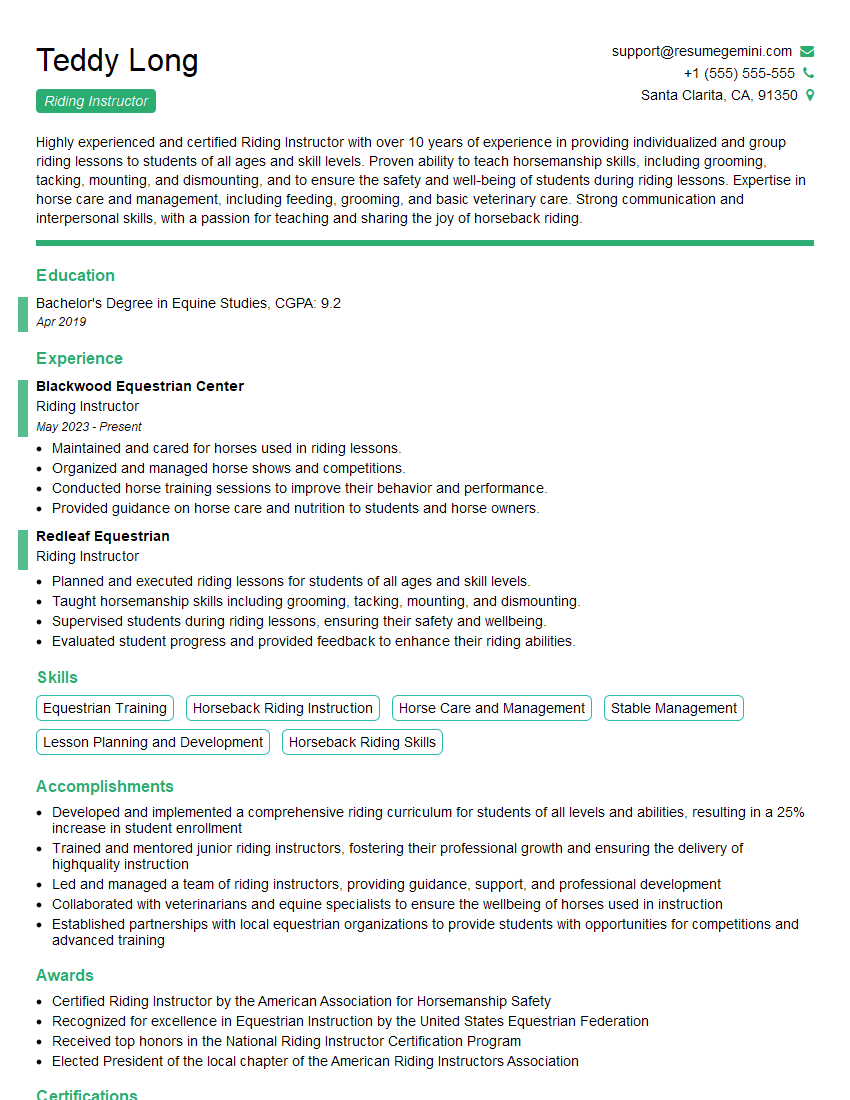
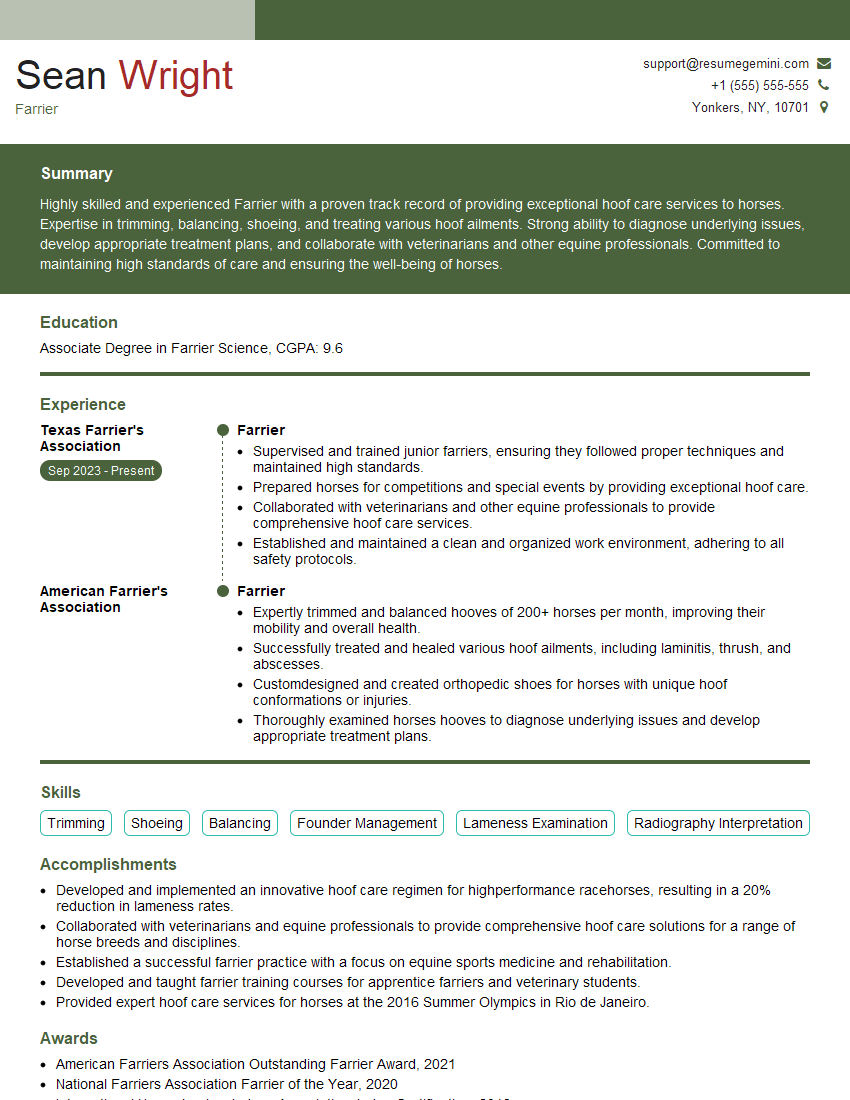
Mastering equine training opens doors to a rewarding and fulfilling career, offering diverse opportunities for professional growth and specialization. To maximize your job prospects, crafting a strong, ATS-friendly resume is crucial. ResumeGemini is a trusted resource to help you build a professional resume that highlights your skills and experience effectively. They provide examples of resumes tailored to the Equine Training field, ensuring your application stands out from the competition. Invest the time to create a compelling resume – it’s your first impression on potential employers.




Explore more articles
Users Rating of Our Blogs
Share Your Experience
We value your feedback! Please rate our content and share your thoughts (optional).
What Readers Say About Our Blog
Very informative content, great job.
good