The right preparation can turn an interview into an opportunity to showcase your expertise. This guide to Equipment and Trap Operation interview questions is your ultimate resource, providing key insights and tips to help you ace your responses and stand out as a top candidate.
Questions Asked in Equipment and Trap Operation Interview
Q 1. Describe your experience operating different types of traps.
My experience encompasses operating a variety of traps, primarily those used in oil and gas processing and pipeline transportation. This includes liquid traps, which separate liquids from gases, and vapor traps, which prevent the passage of vapors. I’ve worked extensively with gravity traps, which rely on density differences for separation, and more complex automated traps incorporating instrumentation and control systems. For instance, I’ve operated pressure-differential traps, which use pressure sensors to control the opening and closing of valves, allowing for precise liquid level management. I’m also proficient with three-phase separators which handle mixtures of oil, gas and water, a crucial component in many upstream oil and gas facilities. Each trap type necessitates a unique operational understanding, from understanding pressure drops to managing potential blockages.
- Gravity Traps: These are simpler, relying on gravity to separate heavier liquids. Regular inspection for sludge buildup is key.
- Pressure-Differential Traps: These require understanding pressure sensors and control systems for precise operation; regular calibration is crucial.
- Three-Phase Separators: These involve complex fluid dynamics and require knowledge of emulsion breaking techniques and the effects of pressure and temperature on separation efficiency.
Q 2. Explain the safety procedures you follow when operating equipment and traps.
Safety is paramount in equipment and trap operation. My safety procedures always begin with a thorough pre-operational inspection of all equipment, paying close attention to pressure gauges, valves, and any signs of leaks or damage. I always ensure I have the appropriate Personal Protective Equipment (PPE), including safety glasses, gloves, steel-toed boots, and hard hats. Lockout/Tagout procedures are strictly followed before any maintenance or repair work. I meticulously follow all established operating procedures and emergency response protocols. Regular training and refresher courses keep me updated on best practices and new safety regulations. Communication is key – I always inform my team of my activities and any potential hazards.
For example, before opening a pressure vessel, I would ensure that it is properly depressurized and isolated from the system using lockout/tagout procedures. I would then visually inspect the vessel for any obvious signs of damage before proceeding with any maintenance or inspection.
Q 3. How do you troubleshoot common malfunctions in oil and gas traps?
Troubleshooting oil and gas traps often involves systematic investigation. The first step is to identify the symptoms, such as reduced throughput, unusual pressure fluctuations, or evidence of leaks. Then, I check instrumentation – pressure and temperature gauges, flow meters, and level indicators – for accurate readings. A common issue is liquid buildup in gas traps or gas buildup in liquid traps. This might be due to a malfunctioning level sensor or a problem with the trap’s design or configuration. I’ve often addressed this by carefully inspecting the trap’s internal components to locate blockages or debris. Pressure relief valve malfunction is another potential issue – a stuck-open valve can lead to significant pressure loss, while a stuck-closed valve poses a safety hazard. In such cases, repair or replacement of the valve is usually necessary.
For instance, if a liquid trap shows reduced flow, I would first verify the pressure differential across the trap. If it’s significantly lower than normal, it suggests a blockage. I’d then systematically investigate, perhaps using a pressure gauge at various points to isolate the problem area. This might involve draining the trap, inspecting for obstructions, and possibly cleaning or replacing parts.
Q 4. What are the different types of pressure and temperature gauges used in trap operation?
A range of pressure and temperature gauges are employed in trap operation, selected based on the specific application and required accuracy. Common pressure gauges include Bourdon tube gauges, which are reliable and widely used for general pressure monitoring; diaphragm gauges, ideal for corrosive or viscous fluids; and digital pressure transducers, offering high accuracy and remote monitoring capabilities. Temperature gauges commonly include thermocouples, offering a wide temperature range and accurate measurements; resistance temperature detectors (RTDs), known for their stability and accuracy; and thermal wells, which protect the temperature sensor from the process fluid.
For example, in a high-pressure gas pipeline, a robust Bourdon tube gauge might be used alongside a digital pressure transducer for continuous monitoring and data logging. In a system handling corrosive liquids, a diaphragm gauge would be preferred to protect the gauge from damage.
Q 5. Explain your understanding of pressure relief valves and their function in traps.
Pressure relief valves (PRVs) are crucial safety devices in traps, preventing excessive pressure buildup that could lead to equipment failure or dangerous releases. They are designed to open automatically when pressure exceeds a preset limit, relieving the pressure and protecting the system. The PRV’s set pressure is carefully selected based on the operating parameters of the trap and the pressure capacity of the associated piping and equipment. Regular inspection and testing of PRVs are vital to ensure they function correctly. A malfunctioning PRV, whether stuck open or closed, presents a serious safety risk and necessitates immediate attention.
Think of a PRV as a safety valve in a pressure cooker – it prevents dangerous pressure build-up that could cause an explosion. Regular testing ensures it remains functional and ready to prevent such a scenario.
Q 6. How do you ensure the accurate measurement of flow rates in pipelines?
Accurate flow rate measurement in pipelines is essential for efficient operation and regulatory compliance. Several methods are used, each with its own advantages and limitations. These include orifice plates, which create a pressure drop proportional to the flow rate; venturi meters, which provide a more accurate measurement with less pressure drop; and ultrasonic flow meters, which use sound waves to measure flow rate without intrusive elements in the pipeline. The choice of flow meter depends on factors such as the fluid’s properties, the desired accuracy, and the pipeline’s size and pressure. Regular calibration and maintenance of flow meters are necessary to maintain accuracy and reliability.
For example, a large-diameter pipeline might use a combination of orifice plates for initial flow monitoring and ultrasonic flow meters for more precise measurements at critical points in the pipeline.
Q 7. Describe your experience with pipeline pigging operations.
Pipeline pigging involves sending a specialized cleaning device, called a pig, through a pipeline to remove accumulated deposits, such as wax, hydrates, or scale. I have experience with various types of pigs, including cleaning pigs, which remove debris; batching pigs, which separate different products in a pipeline; and intelligent pigs, which incorporate sensors to gather data on the pipeline’s condition. Pigging operations require careful planning and execution, including the selection of the appropriate pig type, preparation of the pipeline, and monitoring of the pig’s progress through the pipeline. Safety is paramount, and strict procedures are followed to ensure the safe launch and retrieval of the pig.
For example, before a pipeline pigging operation, we would ensure the pipeline is properly cleaned and inspected, and the pig’s size and type are appropriate for the pipeline’s diameter and the nature of the deposits being removed. Real-time monitoring of the pig’s progress through the pipeline, possibly using sensors and tracking technology, allows for early detection of any issues, enhancing safety and efficiency.
Q 8. What are the key components of a typical gas or oil trap system?
A typical gas or oil trap system, designed to separate liquids and gases, comprises several key components working in concert. Think of it like a sophisticated filtration system for hydrocarbons. First, you have the separator vessel itself, a pressure vessel designed to handle the fluids under pressure. This vessel is often equipped with internal baffles or other design elements to enhance the separation process. Next, we have the liquid level control system, crucial for maintaining the appropriate liquid level within the vessel. This typically involves level sensors and control valves to regulate outflow. Pressure gauges and safety valves are essential for monitoring and protecting the system from overpressure. Finally, the system includes outlets for the separated gas and liquid, often piped to different processing stages. A crucial element often overlooked is the sampling system, allowing regular analysis of the separated fluids to ensure the trap is operating efficiently and the quality of the separated products is consistent.
Q 9. How do you maintain optimal pressure and temperature within a trap system?
Maintaining optimal pressure and temperature within a trap system is critical for efficient operation and safety. Think of it like maintaining the right cooking temperature for a delicate dish – too high or too low and you ruin the outcome. Pressure is usually controlled through regulating the flow rates of incoming and outgoing fluids using pressure control valves. Temperature is more often managed indirectly, by controlling the flow rates and pressures; however, in some instances, heat exchangers or cooling systems are used to directly manage temperature. Regular monitoring is crucial, using pressure gauges and temperature sensors. Automated control systems are often employed to automatically adjust valves based on sensor readings, maintaining a setpoint. For instance, if pressure rises above a predetermined threshold, the system will automatically open a relief valve to prevent damage. Similarly, if temperature deviates too far from the optimal range, a cooling system might activate. Accurate calibration and regular maintenance of all these systems are critical to reliable and safe operation.
Q 10. What are the environmental considerations when operating traps and equipment?
Environmental considerations are paramount in trap operation. We’re dealing with potentially hazardous materials, so minimizing environmental impact is essential. This involves preventing leaks and spills through regular inspection and maintenance of all piping and equipment. Properly designed and maintained containment systems are vital to capture any accidental releases. Furthermore, emissions of gases to the atmosphere need to be minimized, often involving flare systems to burn off excess gas safely. Wastewater produced during the separation process needs to be treated appropriately before disposal, in compliance with all local regulations. Noise pollution can also be a significant issue, requiring noise reduction measures such as silencers and strategic placement of equipment. Responsible disposal of spent materials and adherence to strict environmental regulations are part of our commitment to sustainability.
Q 11. How do you perform regular inspections and maintenance on traps and associated equipment?
Regular inspections and maintenance are crucial for ensuring the safe and efficient operation of trap systems and associated equipment. Think of it as a regular checkup for a car. These inspections involve visual checks for leaks, corrosion, or damage. Pressure and temperature readings are meticulously recorded and compared to historical data to identify potential trends or anomalies. We check the integrity of safety valves by conducting periodic testing and calibration, ensuring they function properly and safely. All components, including valves, pumps, and sensors, are subject to regular maintenance schedules that often include lubrication, cleaning, and parts replacement as needed. Detailed records of inspections and maintenance activities are meticulously maintained, which allows us to proactively identify potential problems and prevent failures before they occur. A comprehensive preventative maintenance program prevents costly downtime and ensures a longer lifespan for the equipment, promoting safety and efficiency.
Q 12. Describe your experience with different types of heavy equipment.
My experience encompasses a broad range of heavy equipment used in oil and gas operations. This includes extensive experience with various types of pumps (centrifugal, positive displacement), compressors (reciprocating, centrifugal), and separation vessels of varying designs and capacities. I’m proficient in operating and maintaining excavators, bulldozers and loaders for site preparation and pipeline construction. During my career I have been responsible for overseeing the operation and maintenance of large-scale processing facilities, including substantial experience with troubleshooting equipment failures and managing repairs, which often involves coordination with specialized contractors. For example, I have successfully managed the replacement of a critical pump during an unplanned shutdown, minimizing downtime and ensuring safe operation. This involved coordinating a team, securing necessary parts and implementing a detailed plan for the replacement while prioritizing safety.
Q 13. How do you safely handle hazardous materials encountered in trap operation?
Safe handling of hazardous materials is paramount in trap operation. We’re talking about potentially flammable, toxic, or corrosive substances. This starts with proper training and adherence to stringent safety protocols. Every operation involves the use of personal protective equipment (PPE), including respirators, gloves, and specialized suits. Emergency response plans are in place for leaks or spills, covering containment, evacuation, and notification procedures. We use specialized equipment for handling and transferring hazardous materials, including properly grounded containers and transfer pumps. Regular safety training keeps everyone up-to-date on procedures, and safety audits ensure consistent compliance with best practices. Proper labeling and documentation of all hazardous materials is essential to avoid accidents and ensure environmental compliance. The safety of personnel and the environment is always our number one priority.
Q 14. Explain your familiarity with relevant safety regulations and industry standards.
I am thoroughly familiar with relevant safety regulations and industry standards. My knowledge encompasses OSHA regulations (Occupational Safety and Health Administration), API (American Petroleum Institute) standards, and all other relevant local, national, and international regulations pertaining to oil and gas processing. I am adept at interpreting and implementing these regulations to ensure compliance. Regular updates on regulatory changes keep our practices current and effective, and I actively participate in safety training and audits. Compliance is not just a checklist, it’s an integral part of our operational philosophy. We prioritize safety and environmental protection as essential elements of our daily operations.
Q 15. What is your experience with emergency shutdown procedures for traps and equipment?
Emergency shutdown procedures are paramount in trap and equipment operation to prevent accidents and mitigate damage. My experience encompasses a thorough understanding of both manual and automated shutdown systems. This includes knowing the location and function of all emergency shut-off switches, valves, and breakers for every piece of equipment I operate. I’m proficient in executing the shutdown sequence based on the specific emergency, whether it’s a pressure surge, equipment malfunction, or a safety violation. For instance, during a recent incident involving a sudden pressure spike in a hydraulic trap system, I immediately initiated the emergency shutdown, following the prescribed sequence detailed in our safety protocol, successfully preventing potential damage to the system and avoiding injury to personnel. This involved first isolating the power, then releasing the hydraulic pressure through designated relief valves, and finally, reporting the incident to the supervisor. Regular training and drills ensure proficiency in these procedures.
- Manual Shutdowns: Understanding the physical location and operation of emergency stop buttons and valves.
- Automated Shutdowns: Recognizing and responding to automated safety system triggers and alerts.
- Post-Shutdown Procedures: Securing the equipment, initiating investigations, and filing incident reports.
Career Expert Tips:
- Ace those interviews! Prepare effectively by reviewing the Top 50 Most Common Interview Questions on ResumeGemini.
- Navigate your job search with confidence! Explore a wide range of Career Tips on ResumeGemini. Learn about common challenges and recommendations to overcome them.
- Craft the perfect resume! Master the Art of Resume Writing with ResumeGemini’s guide. Showcase your unique qualifications and achievements effectively.
- Don’t miss out on holiday savings! Build your dream resume with ResumeGemini’s ATS optimized templates.
Q 16. How do you interpret data from various monitoring systems used in trap operations?
Interpreting data from monitoring systems is crucial for safe and efficient trap operations. I’m experienced in analyzing data from various sources, including pressure gauges, flow meters, temperature sensors, and vibration monitors. My interpretation involves recognizing normal operating parameters, detecting deviations from those parameters, and identifying potential problems before they escalate. For example, a gradual increase in temperature above the set threshold might indicate an impending bearing failure, prompting preventative maintenance. Similarly, inconsistent flow rates might signal a blockage or leak in the system. I use trend analysis to identify patterns and predict potential issues. I understand the limitations of different monitoring systems and know when to supplement data analysis with visual inspections. A strong background in data analysis software allows me to create insightful visualizations and reports which aid in proactive maintenance and operational efficiency.
Think of it like checking your car’s dashboard – you are not just looking at individual numbers, but also how they relate to each other and the overall performance of the vehicle. Similarly, we assess not just individual readings, but the overall picture to ensure safety and optimization.
Q 17. How do you ensure the proper functioning of safety devices and interlocks?
Ensuring the proper functioning of safety devices and interlocks is a non-negotiable aspect of safe operation. This involves regular inspection, testing, and maintenance. I follow a detailed checklist that verifies the functionality of pressure relief valves, emergency shut-off switches, interlocks, and other safety mechanisms. I document all inspections and tests to maintain a clear record. For instance, I routinely test pressure relief valves to ensure they activate at the correct pressure settings. I also check interlocks to guarantee that equipment cannot operate unless all safety conditions are met. In addition to routine checks, I actively participate in safety audits and equipment inspections conducted by our safety department. Any issues identified during these inspections are immediately reported and addressed. A proactive approach to safety is vital; addressing minor issues early prevents them from escalating into major problems.
Q 18. Describe your problem-solving skills in situations involving equipment malfunctions.
Problem-solving is a critical skill in this field. When confronted with equipment malfunctions, I follow a systematic approach. First, I assess the situation safely, focusing on identifying the immediate safety concerns and then addressing them. Then, I carefully gather information by reviewing historical data, checking sensor readings, and visually inspecting the equipment. Next, I formulate hypotheses about the cause of the malfunction, which are ranked in terms of likelihood. I then test these hypotheses systematically and eliminate incorrect ones through the use of diagnostic tools and by implementing controlled testing. Once I’ve identified the root cause, I implement the appropriate solution, which might involve repairs, part replacements, or adjustments to operating parameters. Finally, I document the entire process, including the problem, the solution, and the lessons learned.
For instance, I once dealt with a malfunctioning conveyor belt causing a backup in the system. By systematically checking each component, from the motor to the rollers and sensors, I identified a broken drive belt as the culprit. A timely replacement restored normal operations and prevented potential production delays.
Q 19. Explain your experience working in a team environment related to equipment operation.
Teamwork is fundamental in equipment operation. I’ve consistently worked effectively in team settings, contributing to a collaborative and safe work environment. I value open communication and actively participate in team discussions regarding operational challenges, maintenance schedules, and safety improvements. I share my knowledge and expertise with team members, and am always willing to learn from others. For example, during a complex equipment overhaul, our team worked collaboratively, leveraging each member’s specialized skills, and completing the project ahead of schedule and under budget. This required clear communication, coordination of tasks, and mutual respect for everyone’s contributions. A team is only as strong as its weakest member, and I believe in supporting and mentoring colleagues to enhance overall team performance and safety.
Q 20. How do you prioritize tasks during emergencies related to traps and equipment?
Prioritizing tasks during emergencies is crucial for effective response. I use a risk-based approach, focusing on immediate safety concerns first. This means addressing any immediate threats to personnel or equipment before moving on to secondary issues. I use a system of triage, prioritizing actions based on their potential impact and urgency. For example, if a malfunctioning piece of equipment poses a direct threat to personnel, this will take precedence over any other tasks, even if those other tasks impact production. This requires clear communication among the team, and a common understanding of what the critical tasks are. Clear communication, quick decision making, and a well-defined emergency response plan is pivotal to successful emergency response.
Q 21. How do you communicate effectively with colleagues and supervisors during operation?
Effective communication is vital in this role. I communicate clearly and concisely using both verbal and written methods. During operations, I use standardized terminology to avoid misunderstandings. I actively listen to colleagues and supervisors, ensuring I understand their instructions and concerns. I promptly report any unusual occurrences or equipment malfunctions, providing detailed and accurate information. I use various communication channels such as radios, direct communication, and reporting systems, to ensure effective information flow. My approach focuses on clear, unambiguous language, active listening, and regular updates to maintain a safe and productive work environment. A clear communication channel ensures that everyone is up-to-date about any issue related to safety and operation, and mitigates risks.
Q 22. What software or systems are you proficient in using for equipment monitoring?
My proficiency in equipment monitoring software spans several systems. I’m highly experienced with SCADA (Supervisory Control and Data Acquisition) systems, which provide real-time data visualization and control of various equipment parameters. I’ve worked extensively with OSI PI and similar platforms, utilizing their historian capabilities to analyze trends, identify anomalies, and predict potential equipment failures. In addition, I’m comfortable using more specialized software designed for specific types of equipment, such as those used for monitoring pressure, temperature, and flow rates in wellhead and drilling operations. My expertise extends to interpreting the data generated by these systems to make informed decisions regarding equipment maintenance and operational efficiency.
For example, in a previous role, we used OSI PI to monitor the performance of multiple gas compressors. By analyzing pressure and temperature data, we were able to identify a gradual decline in efficiency in one compressor, allowing us to schedule preventative maintenance before a catastrophic failure occurred, thus preventing significant downtime and cost.
Q 23. Describe your experience with preventative maintenance schedules for traps and equipment.
Preventative maintenance (PM) is crucial for ensuring the safe and reliable operation of traps and equipment. My approach to scheduling PM is based on a combination of manufacturer recommendations, operational experience, and risk assessment. I utilize a computerized maintenance management system (CMMS) to track scheduled tasks and generate reports. For traps, this includes regular inspections for leaks, corrosion, and proper operation; lubrication of moving parts; and testing of pressure relief valves. For equipment such as pumps, compressors, and wellhead components, PM schedules incorporate tasks such as fluid analysis, vibration monitoring, and the replacement of worn parts. The frequency of these tasks varies depending on the equipment’s criticality and operating conditions; critical equipment will have more frequent PM intervals.
For instance, I’ve implemented a PM schedule for a complex network of pressure reducing valves that significantly reduced the number of unplanned shutdowns. This involved a detailed analysis of historical failure data which allowed us to optimize the PM schedule and proactively identify and correct potential problems.
Q 24. How do you manage and report incidents and near misses related to equipment and traps?
Managing and reporting incidents and near misses is a critical part of ensuring safety and operational excellence. I utilize a structured reporting system, typically integrated with the CMMS, to document all events. This involves clearly documenting the circumstances of the event, including date, time, location, personnel involved, potential root causes, and corrective actions taken. Near misses are treated with the same seriousness as incidents; they highlight potential hazards that need to be addressed before they lead to an accident. Root cause analysis is conducted using methods such as the ‘5 Whys’ to understand the underlying reasons for the event and implement effective preventative measures. Reports are generated regularly to identify trends and areas for improvement, and these reports are shared with relevant personnel to promote continuous learning and safety improvement.
I’ve personally implemented a system that improved our incident reporting rate and the effectiveness of corrective actions. By using a standardized reporting template and encouraging open communication, we created a culture of safety that significantly reduced the frequency of incidents and near misses.
Q 25. What is your experience with different types of wellhead equipment?
My experience with wellhead equipment encompasses a wide range of designs and functionalities. I’m familiar with various types of wellhead components, including tree valves, pressure gauges, flow restrictors, and safety devices such as pressure relief valves (PRVs) and blowout preventers (BOPs). I understand the critical role these components play in controlling well pressure and preventing well blowouts. I have hands-on experience with both conventional and advanced wellhead designs, including those used in high-pressure and high-temperature (HPHT) wells and subsea applications. I understand the importance of proper wellhead maintenance and inspection for ensuring safe and efficient operations.
For instance, I was involved in the installation and commissioning of a new wellhead assembly for an HPHT well, requiring detailed knowledge of the specialized components and procedures necessary for safe operation under these extreme conditions.
Q 26. Describe your experience with different types of drilling equipment.
My experience with drilling equipment is extensive, covering various aspects of drilling operations. I’m familiar with topdrives, mud pumps, drilling motors, and downhole tools. I understand the principles of hydraulics and mechanics behind these machines and have practical experience in their operation, maintenance, and troubleshooting. I’m proficient in interpreting drilling data to optimize drilling parameters and minimize operational costs. My experience also covers various types of drilling rigs, including land rigs, jack-up rigs, and platform rigs. I understand the safety protocols associated with each type of drilling equipment and the procedures for safe operation and maintenance.
In one project, I helped troubleshoot a malfunctioning mud pump, quickly diagnosing the issue and guiding the crew in its repair, resulting in minimal downtime and avoiding a costly rig move.
Q 27. Explain your understanding of the principles of hydraulics and pneumatics as they apply to equipment and trap operation.
Hydraulics and pneumatics are fundamental to the operation of many pieces of equipment and trap systems. Hydraulics uses liquids, typically oil, to transmit power, while pneumatics uses compressed air. Understanding these principles is crucial for troubleshooting, maintenance, and safety. In drilling operations, hydraulics power the top drive, mud pumps, and other critical equipment. Pneumatics are often used for smaller actuators and control systems. Knowledge of hydraulic and pneumatic systems involves understanding pressure, flow rate, and power transmission, including Pascal’s law (pressure applied to a confined fluid is transmitted equally in all directions) and Bernoulli’s principle (pressure decreases as fluid velocity increases). This includes understanding the role of valves, cylinders, and pumps in controlling fluid flow and pressure. Proper maintenance includes checking for leaks, ensuring correct fluid levels, and regularly inspecting components for wear and tear. Safety considerations include understanding the potential for high-pressure failures and the implementation of appropriate safety measures.
For example, a lack of understanding of hydraulic pressure could lead to a catastrophic failure of a hydraulic system, resulting in damage to equipment or injury to personnel. Regularly monitoring system pressures and performing preventative maintenance can prevent such incidents.
Q 28. How would you handle a situation where a critical component of a trap system fails?
Handling a critical component failure in a trap system requires a systematic approach. First, I would immediately secure the affected system to prevent further damage or injury, ensuring the safety of personnel and the environment. Next, I would initiate the emergency shutdown procedures as defined in the safety protocols. A thorough assessment of the situation would then follow, identifying the failed component and the extent of the damage. Depending on the severity of the failure, this may involve detailed inspection of the system. Once the assessment is complete, I would determine the best course of action, which could range from a simple repair using readily available spare parts to a complete system replacement. Communication is critical during this process; I would keep all relevant personnel informed of the situation and the planned actions. After the repair or replacement, a thorough system test would be conducted to verify proper functionality before resuming normal operations. A post-incident review would be conducted to identify the root cause of the failure and implement preventative measures to reduce the likelihood of similar events in the future. Documentation of the entire process is crucial for future reference and improvement.
Imagine a scenario where a crucial pressure relief valve fails on a high-pressure gas trap. Following this structured approach would ensure a safe and efficient response, minimizing downtime and avoiding potential environmental damage or injury.
Key Topics to Learn for Equipment and Trap Operation Interview
- Equipment Maintenance and Inspection: Understanding preventative maintenance schedules, recognizing signs of malfunction, and performing basic repairs. Practical application: Describing your experience with routine checks and troubleshooting on specific equipment types.
- Safety Procedures and Regulations: Knowledge of relevant safety standards, emergency protocols, and risk mitigation strategies. Practical application: Explaining how you ensure a safe working environment and adhere to company policies.
- Operational Techniques and Procedures: Mastering the proper operation of different equipment and traps, understanding their limitations, and optimizing their use for efficiency and safety. Practical application: Detailing your experience with specific equipment and your approach to maximizing output while minimizing risk.
- Troubleshooting and Problem-Solving: Identifying and resolving equipment malfunctions, analyzing operational issues, and implementing effective solutions. Practical application: Describing a situation where you successfully diagnosed and repaired faulty equipment.
- Data Recording and Reporting: Accurately recording operational data, maintaining logs, and preparing concise reports. Practical application: Explaining your experience with data management systems and report generation.
- Environmental Considerations: Understanding the environmental impact of equipment operation and adhering to relevant regulations. Practical application: Discussing your experience with minimizing environmental impact during operations.
Next Steps
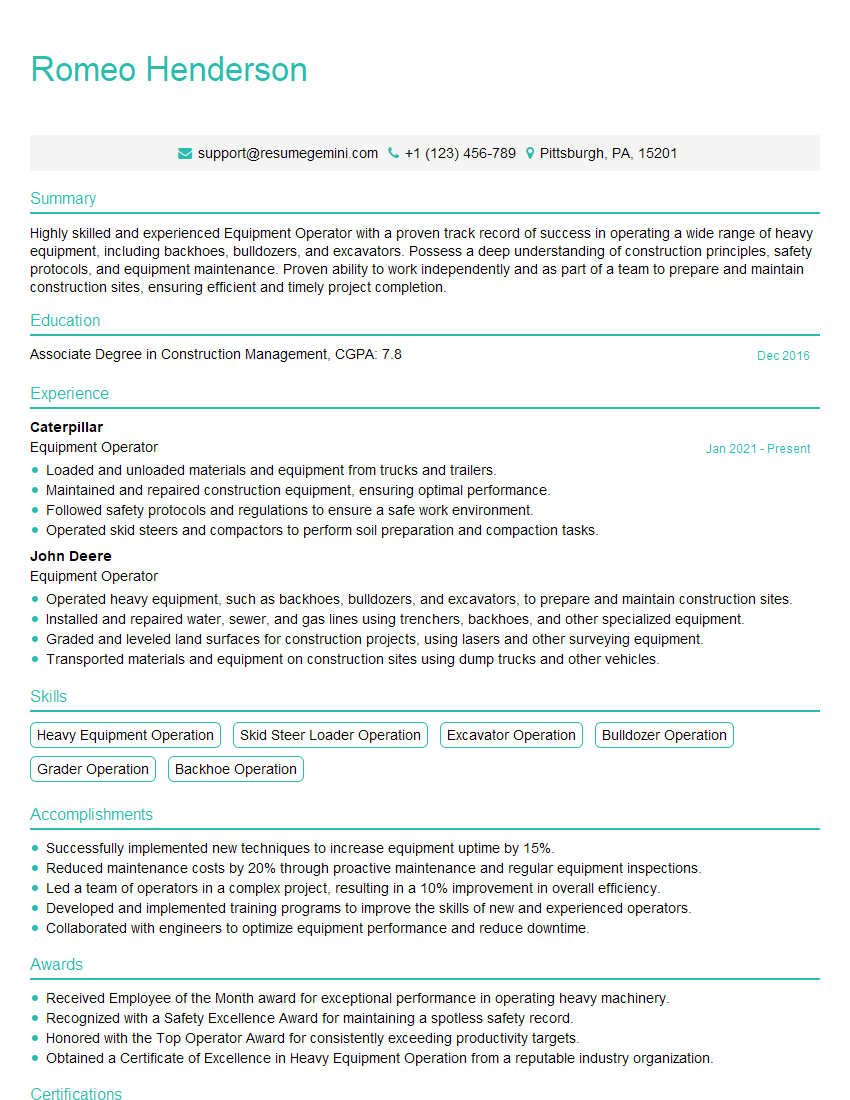
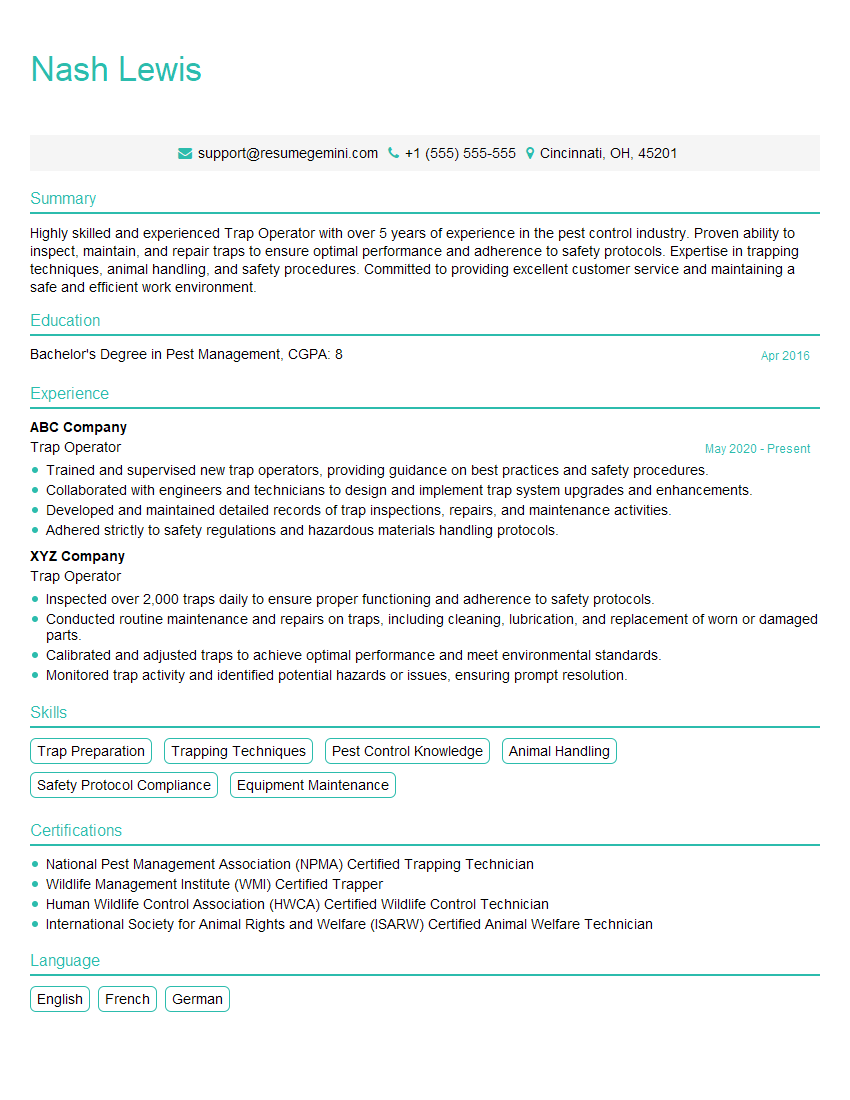
Mastering Equipment and Trap Operation opens doors to exciting career advancements, offering opportunities for increased responsibility, higher earning potential, and specialized roles within the industry. To significantly boost your job prospects, creating a strong, ATS-friendly resume is crucial. ResumeGemini can help you build a professional and impactful resume that highlights your skills and experience effectively. We provide examples of resumes tailored to Equipment and Trap Operation to guide you. Take the next step towards your dream career – build your best resume with ResumeGemini.


Explore more articles
Users Rating of Our Blogs
Share Your Experience
We value your feedback! Please rate our content and share your thoughts (optional).
What Readers Say About Our Blog
Very informative content, great job.
good