Every successful interview starts with knowing what to expect. In this blog, we’ll take you through the top Equipment: Laser Engraver, Rotary Engraver, Milling Machine interview questions, breaking them down with expert tips to help you deliver impactful answers. Step into your next interview fully prepared and ready to succeed.
Questions Asked in Equipment: Laser Engraver, Rotary Engraver, Milling Machine Interview
Q 1. Explain the difference between a CO2 and fiber laser engraver.
The main difference between CO2 and fiber laser engravers lies in the type of laser they use and the materials they’re best suited for. CO2 lasers use carbon dioxide gas to produce a laser beam, which excels at engraving non-metals like wood, acrylic, and leather. Their wavelength is longer, leading to better absorption by these materials. Fiber lasers, on the other hand, use a fiber optic cable to generate a laser beam, making them ideal for engraving metals and other materials that reflect CO2 laser beams. Their shorter wavelength leads to higher precision and better results on reflective surfaces. Think of it like this: CO2 lasers are better at interacting with organic materials, while fiber lasers are masters of working with metals and other dense materials.
For instance, you’d use a CO2 laser to create intricate designs on a wooden plaque, while a fiber laser would be perfect for marking serial numbers on stainless steel components.
Q 2. Describe the safety precautions necessary when operating a laser engraver.
Safety is paramount when operating a laser engraver. Always wear appropriate laser safety eyewear rated for the specific wavelength of your laser. This is the most critical step, as laser beams can permanently damage your eyesight. Ensure the engraver is in a well-ventilated area to prevent the buildup of fumes, especially when engraving materials like plastics or wood. Never leave the laser engraver unattended while it’s operating. Make sure the machine’s enclosure is properly closed and functioning to prevent accidental exposure. Also, keep flammable materials away from the work area. Finally, always follow the manufacturer’s safety guidelines meticulously, as these vary depending on the model and laser type.
One time I was working with a client who neglected to wear the appropriate eyewear, resulting in a minor eye injury. It served as a stark reminder of how easily accidents can happen if safety protocols aren’t followed.
Q 3. How do you calibrate a laser engraver for optimal performance?
Calibrating a laser engraver ensures accurate engraving and cutting. The process typically involves adjusting the focus and power settings. Begin by using the manufacturer’s recommended settings as a starting point. Then, perform test engravings on a sample piece of your target material. Adjust the focus lens to achieve the sharpest, cleanest engraving. If the engraving is too shallow, increase the power; if it’s too deep or burned, reduce the power. For optimal results, you’ll likely need to experiment with different power and speed settings until you find the sweet spot for your material and desired effect. Remember to always use test pieces to avoid ruining your final project.
Think of it like fine-tuning a musical instrument—you need to adjust various parameters until you achieve the perfect sound, and it’s similar with a laser engraver, finding the best settings for the desired results.
Q 4. What are the common issues encountered with laser engraving different materials?
Different materials react differently to laser engraving. With wood, you might encounter burning or uneven engraving if the power is too high or the speed too slow. Acrylic can melt or produce fumes if the settings aren’t optimized. Metals often require higher power and different wavelengths (like a fiber laser) for effective engraving. Some materials might even be unsuitable for laser engraving altogether due to their composition or flammability. Understanding the properties of your materials is crucial to choosing the right laser type and optimizing the parameters for successful engraving.
For example, I once had a client ask for a detailed engraving on a very thin piece of bamboo. It required significant experimentation with power and speed before we found the sweet spot which avoided burning or breakage.
Q 5. How do you troubleshoot a laser engraver that is not cutting properly?
Troubleshooting a laser engraver that’s not cutting properly involves a systematic approach. First, check the obvious—make sure the laser is turned on and the power settings are adequate. Next, examine the focus point: is it properly aligned with the material’s surface? A misaligned focus can result in inconsistent cuts. Check the material itself: is it compatible with the laser type and power settings being used? Also, inspect the laser head and ensure there’s no debris or obstructions hindering its operation. If the problem persists, you might need to check the air assist (if applicable), as insufficient air can lead to burning or incomplete cuts. Finally, consider the possibility of a malfunctioning component within the engraver and consult the manufacturer’s troubleshooting guide or contact support.
One time a client called with a cutting problem; it turned out to be a simple issue of dust accumulating on the lens, easily resolved with a cleaning.
Q 6. Explain the principle of rotary engraving.
Rotary engraving utilizes a rotating attachment that holds the object to be engraved. As the object spins, a stationary engraving tool (often a diamond-tipped bit or a similar tool) carves the design onto its surface. The principle relies on the controlled movement of the engraving tool relative to the rotating object. The depth and speed of the engraving are controlled by parameters set on the rotary engraver. Essentially, it’s like using a tiny lathe to carve designs into cylindrical or other rotationally symmetric objects.
Imagine a customized pen with your name engraved around it – this is precisely what rotary engraving allows.
Q 7. What types of materials are suitable for rotary engraving?
Rotary engraving works best on cylindrical or relatively round objects. Common materials include pens, pencils, jewelry, trophies, and even certain types of glassware. The material’s hardness determines the type of engraving bit needed; softer materials require less aggressive bits, while harder materials require more robust ones. The material’s ability to withstand the rotational forces during engraving is also a key factor. Materials that are brittle or easily fractured might not be suitable for rotary engraving.
For example, you can engrave personalized messages on metal pens using a rotary engraver with a diamond-tipped bit.
Q 8. How do you select the appropriate rotary engraving bit for a specific material?
Selecting the right rotary engraving bit depends heavily on the material’s hardness and desired engraving depth. Think of it like choosing the right tool for a specific job – you wouldn’t use a screwdriver to hammer a nail!
- Hard Materials (e.g., steel, ceramics): Require carbide bits with a very fine point and a strong, durable shank to withstand the pressure. The smaller the diameter of the bit, the finer the detail you can achieve, but it’ll also be more prone to breakage.
- Soft Materials (e.g., wood, plastics): Can be engraved with high-speed steel (HSS) bits or even diamond-tipped bits for intricate designs. The choice here depends more on the desired finish. A sharper bit gives a cleaner, crisper engraving.
- Precious Metals (e.g., gold, silver): Demand diamond-coated bits to prevent scratching or damaging the soft surface. The cutting edge needs to be extremely sharp and precise.
Always consider the bit’s shank diameter to ensure it’s compatible with your rotary engraving machine’s collet. Improper sizing can lead to slippage and potentially damage the bit or the machine.
Q 9. Describe the process of setting up a rotary engraving machine.
Setting up a rotary engraving machine involves several crucial steps to ensure safe and accurate operation. Imagine it like preparing your workspace for a delicate painting – precision is key!
- Secure the workpiece: The item being engraved must be firmly clamped or secured to the machine’s rotary table to prevent movement during the engraving process. Use appropriate clamps and ensure the workpiece is stable and level.
- Adjust the spindle speed: The speed depends heavily on the material and the bit. Too fast and the bit might overheat and break; too slow and the engraving may be ragged. Consult your bit manufacturer’s specifications for recommended speeds.
- Select and install the engraving bit: Carefully insert the chosen bit into the collet, ensuring a tight and secure fit. A loose bit will cause vibration and inaccurate engravings.
- Zero the machine: Accurately position the workpiece so the engraving starts precisely where intended. Most machines have a system for setting the zero point, crucial for consistent results.
- Test Run: Begin with a test engraving on a scrap piece of similar material to confirm settings and avoid ruining the actual workpiece.
Q 10. How do you ensure precise alignment during rotary engraving?
Precise alignment in rotary engraving is critical for achieving professional results. Think of it like aiming a laser – even the slightest misalignment can ruin the whole project.
- Use alignment tools: Many machines provide tools for precisely aligning the workpiece, such as adjustable clamps or laser pointers. Utilize these features to ensure your engraving is centered and positioned correctly.
- Test engravings: Before making the final cut, always run a small test engraving to check for alignment and adjust accordingly. This is especially important with complex designs or intricate details.
- Use templates or jigs: For large or intricate projects, using templates or jigs is extremely beneficial to ensure repeatability and accuracy. These are particularly useful for mass production.
- Software support: Your engraving software likely offers features for precise alignment and placement. Take the time to learn and utilize these features.
Regularly checking the alignment during the engraving process is essential, especially during long runs. Even slight drifts can compromise the quality of your work.
Q 11. What are the common causes of errors in rotary engraving?
Errors in rotary engraving stem from several sources, many of which are easily avoidable with proper setup and technique. Let’s explore some common culprits:
- Incorrect bit selection: Using the wrong bit for the material can lead to broken bits, poor engraving quality, or damage to the workpiece.
- Improper spindle speed: Too high or too low speed can result in uneven engravings, chatter marks, or burned material.
- Poor workpiece clamping: Movement of the workpiece during engraving will produce uneven results or even damage the bit.
- Dull or damaged bits: Dull bits will produce ragged and inconsistent engravings. Regular bit maintenance is crucial for quality results.
- Software errors: Incorrect file setup or machine control issues within the software can lead to mistakes.
- Machine calibration issues: An improperly calibrated machine may lead to inconsistencies in the engraving depth or positioning.
Regular maintenance of your rotary engraving machine, including checking the belts, bearings, and calibration, is crucial for avoiding common errors.
Q 12. Explain the different types of milling machines (e.g., vertical, horizontal).
Milling machines are categorized primarily by the orientation of the spindle relative to the workpiece. Think of it like choosing between a horizontal and vertical drill press.
- Vertical Milling Machines: The spindle is oriented vertically. These are common for general-purpose milling operations, providing excellent access for various tooling setups and workpiece manipulation. They’re versatile and widely used in workshops and factories.
- Horizontal Milling Machines: The spindle is oriented horizontally. These are more specialized, often used for larger or heavier workpieces where a horizontal approach is more efficient. They excel in tasks like keyway milling or facing large surfaces.
- Bed Mills: A type of horizontal or vertical milling machine that features a fixed bed for the workpiece and movement of the milling head. They offer superior rigidity and precision, suitable for high-precision applications.
- Knee and Column Mills: A more flexible style, often vertical, that allows the table to be raised or lowered using a knee mechanism, providing more versatility in workpiece positioning and setup.
The choice depends on the specific application – the size and shape of the workpiece, the type of milling operation, and the desired precision.
Q 13. Describe the various cutting tools used in milling.
Milling cutters come in a wide variety of shapes and sizes, each designed for a specific milling operation. It’s like having a toolbox full of specialized screwdrivers – each designed for a particular screw head.
- End Mills: These are versatile cutters with cutting edges on the ends and sides, used for various operations such as slotting, pocketing, and profiling.
- Face Mills: These have multiple cutting edges and are used for efficiently machining large flat surfaces.
- Forming Cutters: These produce specific shapes and profiles such as gears or curves, ideal for creating intricate parts.
- Drill Mills: Used to create holes, often used in conjunction with other cutters for complex parts.
- Routers: High-speed cutters used for precise shaping and detail work, particularly in woodworking and specialized manufacturing.
Material of the cutter also matters. High-speed steel (HSS) is common, while carbide is preferred for harder materials. The choice depends on the material being machined and the operation being performed.
Q 14. How do you select the appropriate milling cutter for a specific operation?
Selecting the correct milling cutter involves careful consideration of several factors, each influencing the overall efficiency and quality of the cut. Think of it like choosing the right paintbrush for your painting style – the wrong choice can ruin the masterpiece!
- Material of the workpiece: Harder materials require tougher cutters like carbide, while softer materials can be machined with HSS cutters.
- Type of operation: Different milling operations (e.g., facing, slotting, profiling) necessitate different cutter designs.
- Cutting depth: Deeper cuts require cutters with sufficient strength and chip-clearance capabilities.
- Feed rate and spindle speed: These must be optimized based on the cutter, material, and desired surface finish. Incorrect settings will lead to poor results, including tool breakage.
- Cutter diameter and length: The size and shape of the cutter should be appropriate for the size and complexity of the workpiece and the desired cut features.
Always consult the manufacturer’s recommendations for the specific cutter and the material being machined. Overlooking these factors can lead to tool failure, poor surface finish, and inaccuracies in the milled part.
Q 15. Explain the concept of workholding in milling operations.
Workholding in milling is crucial; it’s all about securely clamping the workpiece to the machine’s table, ensuring it remains perfectly still during the cutting process. Think of it like holding a piece of wood steady while sawing – without a firm grip, you risk inaccuracy and even injury. In milling, inaccurate workholding leads to uneven cuts, damaged parts, or even catastrophic machine failure. There are various workholding methods depending on the workpiece’s shape and material.
- Clamps: These are the most basic and widely used, providing a simple, secure grip. You’d use these for relatively simple, flat workpieces.
- Vices: Offer more secure holding, especially for smaller, irregularly shaped pieces. They’re excellent for repeated operations on similar parts.
- Fixtures: These are custom-designed tools for specific workpieces, maximizing precision and repeatability. They’re used for complex parts and high-volume production.
- Vacuum Chucks: Use suction to hold the workpiece, ideal for flat, smooth surfaces. They’re particularly useful for delicate materials.
Choosing the right workholding method is key to achieving accurate and efficient milling operations. For instance, a simple clamp might suffice for roughing out a block of wood, but a custom fixture would be necessary for precision milling of a complex aerospace component. The choice always depends on the specific job requirements.
Career Expert Tips:
- Ace those interviews! Prepare effectively by reviewing the Top 50 Most Common Interview Questions on ResumeGemini.
- Navigate your job search with confidence! Explore a wide range of Career Tips on ResumeGemini. Learn about common challenges and recommendations to overcome them.
- Craft the perfect resume! Master the Art of Resume Writing with ResumeGemini’s guide. Showcase your unique qualifications and achievements effectively.
- Don’t miss out on holiday savings! Build your dream resume with ResumeGemini’s ATS optimized templates.
Q 16. How do you program a CNC milling machine?
Programming a CNC milling machine involves creating a set of instructions, typically using G-code, that tell the machine exactly what to do. It’s like giving the machine a detailed recipe, specifying the path of the cutting tool, the speed, and the depth of each cut. This is usually done using Computer-Aided Manufacturing (CAM) software. You begin by importing a 3D model of your desired part into the CAM software. The software then allows you to define the cutting tools, speeds, feeds, and the overall machining strategy (e.g., roughing and finishing passes).
The CAM software automatically generates the G-code, which can then be uploaded to the CNC machine’s controller. There are different programming approaches, such as manual programming (writing G-code directly), using CAM software (as described), or utilizing post-processors, which convert CAM software output into machine-specific G-code. It’s a detailed process that requires a good understanding of machining principles and the specific machine’s capabilities. Simulations within the CAM software are crucial for verifying the toolpaths before actually cutting the workpiece, preventing costly mistakes.
Q 17. What are the common G-codes used in CNC milling?
G-codes are the language of CNC machines. They’re alphanumeric commands that control various aspects of the machine’s operation. Here are some common G-codes used in CNC milling:
G00: Rapid Positioning (Rapid Traverse). Moves the tool quickly to a specified location without cutting.G01: Linear Interpolation. Moves the tool along a straight line while cutting.G02: Circular Interpolation (Clockwise).G03: Circular Interpolation (Counter-clockwise).G90: Absolute Programming. Coordinates are relative to the machine’s origin.G91: Incremental Programming. Coordinates are relative to the tool’s current position.G90: Absolute ProgrammingM03: Spindle On, Clockwise Rotation.M05: Spindle Off.SXXX: Sets spindle speed (XXX is the speed in RPM).FXXX: Sets feed rate (XXX is the feed rate in units per minute).
Understanding these fundamental G-codes is essential for interpreting and modifying CNC programs. Each code is a specific instruction, and their combination builds complex milling operations. For instance, G01 X10 Y10 F50 moves the tool linearly to coordinates X=10, Y=10 at a feed rate of 50 units per minute.
Q 18. How do you troubleshoot a milling machine that is producing inaccurate cuts?
Troubleshooting inaccurate cuts on a milling machine requires a systematic approach. It’s like detective work – you need to identify the culprit amongst several potential suspects.
- Workholding Issues: Check if the workpiece is securely clamped and free from vibrations. Loose clamps, inadequate support, or workpiece deflection can lead to inaccurate cuts.
- Tooling Problems: Examine the cutting tool for wear, damage (chips, cracks), or improper sharpness. A dull or damaged tool will produce inaccurate cuts. Inspect the tool’s mounting and ensure it’s securely fastened.
- Machine Alignment: Verify the machine’s alignment. Any misalignment in the spindle, table, or ways can introduce errors into the cutting process. A qualified technician should perform precise alignment checks.
- Program Errors: Review the CNC program for any mistakes in G-code. Incorrect coordinates, feed rates, or spindle speeds will result in inaccurate cuts. Simulate the program in CAM software to identify potential issues before running it on the machine.
- Machine Calibration: Verify the machine’s calibration, including axis travel and coordinate system. Regular calibration is essential for maintaining accuracy.
- Lubrication: Insufficient lubrication can lead to increased friction, causing inaccuracies and premature wear. Ensure proper lubrication of all moving parts according to the machine’s manual.
Addressing each point systematically will eventually pinpoint the root cause. Often, it’s a combination of factors, so a careful investigation is needed.
Q 19. Describe the process of setting up a milling machine for a specific job.
Setting up a milling machine for a specific job is a multi-step process, requiring precision and attention to detail. It’s like preparing a complex recipe – each ingredient and step is crucial for the final outcome.
- Workpiece Preparation: Ensure the workpiece is properly cleaned, secured, and prepared according to the machining process. This might involve marking reference points or pre-drilling holes.
- Tool Selection: Choose the correct cutting tool for the material and the desired surface finish. Consider factors such as tool diameter, geometry, and material compatibility.
- Workholding: Securely mount the workpiece using the appropriate workholding method (clamps, vices, fixtures). Ensure the workpiece is rigidly clamped to prevent vibrations and movement during machining.
- Tool Setup: Securely mount the selected cutting tool into the machine’s spindle, ensuring it is properly aligned and tightened.
- Zeroing (Work Coordinate System): Accurately set the machine’s zero point (origin) relative to the workpiece. This is critical for accurate cutting. Different methods are available, like using touch probes or manually setting coordinates.
- Program Verification: Review the CNC program to ensure the coordinates, speeds, and feeds are correct. Simulate the program in the CAM software to identify potential errors before running it on the machine.
- Test Cut: Perform a test cut on a scrap piece of material to verify the setup and program. This helps identify any potential issues before machining the actual workpiece.
- Final Machining: Once everything is verified, proceed with the actual machining of the workpiece. Monitor the process closely to ensure everything proceeds smoothly.
This structured approach minimizes the risk of errors and ensures that the final product meets the required specifications.
Q 20. Explain the importance of proper lubrication and maintenance of milling machines.
Proper lubrication and maintenance are paramount for the longevity and accurate performance of a milling machine. It’s like regular servicing of a car – it prevents major problems and ensures peak performance. Neglecting lubrication leads to increased friction, wear, and tear, resulting in inaccurate cuts, premature failure of components, and costly repairs.
Regular lubrication of moving parts, such as ways, slides, and bearings, reduces friction and wear, thus improving accuracy and lifespan. Specific lubrication types should be used as per manufacturer recommendations. Additionally, regular maintenance includes cleaning chips and debris, inspecting for wear and damage, and tightening loose components. A preventative maintenance schedule should be in place, including regular inspections and lubrication, ensuring early detection and repair of potential problems.
This preventative care not only extends the machine’s lifespan but also significantly improves its accuracy, reliability, and safety. Ignoring this leads to higher operational costs and increased downtime.
Q 21. What are the safety procedures for operating a milling machine?
Safety is paramount when operating a milling machine. It’s not just about the machine; it’s about protecting yourself and those around you. Here are some crucial safety procedures:
- Lockout/Tagout: Always follow lockout/tagout procedures before performing any maintenance or repair work on the machine. This prevents accidental start-up.
- Personal Protective Equipment (PPE): Wear appropriate PPE, including safety glasses, hearing protection, and machine-specific protective gear (such as a face shield).
- Machine Guarding: Ensure all machine guards are in place and functioning correctly before operation. Guards prevent accidental contact with moving parts.
- Proper Clothing: Wear appropriate clothing, avoiding loose clothing or jewelry that could get caught in moving parts.
- Emergency Stops: Understand the location and operation of the emergency stop buttons on the machine. Be familiar with the machine’s emergency procedures.
- Training: Only operate the machine after receiving proper training and certification. Never attempt to operate a milling machine without adequate training.
- Safe Work Practices: Always follow established safety procedures and guidelines. Work systematically and avoid rushing.
- Clear Work Area: Ensure the work area around the machine is clear of obstructions. This will help prevent accidents and ensure safe movement around the machine.
By following these safety guidelines, you can significantly reduce the risk of injuries and accidents associated with milling machine operation.
Q 22. How do you interpret engineering drawings for milling operations?
Interpreting engineering drawings for milling is crucial for accurate part production. It involves understanding the various views (top, front, side), dimensions, tolerances, and material specifications. Think of it like reading a detailed recipe – each instruction is critical for the final product.
First, I identify the overall dimensions and shape of the part. Then, I carefully examine each feature – holes, pockets, slots, etc. – noting their precise locations, sizes, and tolerances. Dimension lines and symbols guide me on where to make cuts and the required depths. I pay close attention to surface finish requirements, indicated by symbols or notes, to ensure the final product meets the specified quality. Finally, I check for any special instructions or notes regarding clamping, fixturing, or machining sequences.
For instance, a drawing might specify a 10mm diameter hole located 25mm from the edge of a workpiece. Understanding this means I need to program the milling machine to drill a hole with that precise diameter at that exact location. Ignoring even a small detail could lead to a significant error.
Q 23. What are the different types of feeds and speeds used in milling?
Feeds and speeds in milling refer to the rate at which the cutting tool moves across the workpiece (feed rate) and the rotational speed of the cutter (spindle speed). Choosing the right feeds and speeds is paramount for efficient material removal, surface finish, and tool life. Think of it like cooking – the right temperature (speed) and stirring rate (feed) will determine the quality of the dish.
There are several types of feed rates, including:
- Conventional Milling: The cutter moves against the direction of rotation, resulting in a smoother finish but potentially higher stress on the cutting edges.
- Climb Milling: The cutter moves in the direction of rotation, leading to higher material removal rates but possibly a rougher finish.
- Peripheral Milling: The cutter utilizes the entire circumference for cutting.
- Face Milling: The cutter’s flat face is used for removing material.
Spindle speed is typically measured in revolutions per minute (RPM) and is selected based on the cutter diameter and material being machined. Higher speeds are generally preferred for softer materials, while lower speeds are needed for harder materials to prevent tool breakage.
Q 24. Describe the process of calculating feeds and speeds for a milling operation.
Calculating feeds and speeds is a critical aspect of milling. It involves considering several factors to optimize the machining process and avoid tool damage. This is a bit like a scientific experiment, where a careful balance of variables ensures the desired outcome.
The process typically involves these steps:
- Select the cutting tool: Choose a tool appropriate for the material and operation.
- Determine the material properties: Refer to the material’s machinability data (hardness, tensile strength, etc.).
- Consult cutting data charts: These provide recommended ranges for feed and speed based on the tool material, cutter diameter, and workpiece material.
- Calculate spindle speed (RPM): Use the formula:
RPM = (Cutting speed (SFM) × 12) / (π × Cutter diameter (inches)). The cutting speed (SFM or surface feet per minute) is found in cutting data charts. - Calculate feed rate (IPM or Inches Per Minute): This is dependent on the tool geometry, depth of cut, and material. Start within the recommended range from the cutting data chart and adjust based on observation.
- Monitor and adjust: During the milling process, observe the tool’s performance. Adjust feeds and speeds as necessary to optimize surface finish and tool life.
Incorrect calculation can lead to broken tools, poor surface finish, or even machine damage.
Q 25. How do you measure and inspect parts produced by milling?
Measuring and inspecting milled parts is essential for quality control. Think of it as the final check in a recipe – it ensures the dish meets expectations. This involves using various measuring instruments to verify the accuracy of dimensions and surface finish.
Common methods include:
- Vernier Calipers: For precise measurements of linear dimensions.
- Micrometers: Provide even higher accuracy for smaller dimensions.
- Dial Indicators: Used to check surface flatness and parallelism.
- Coordinate Measuring Machines (CMMs): For complex shapes and high precision.
- Surface Roughness Tester: To measure the surface texture.
The choice of measuring instrument depends on the required accuracy and the complexity of the part. A detailed inspection report documents the measurements, comparing them against the drawing specifications to identify any deviations.
Q 26. Explain the concept of tolerance in machining.
Tolerance in machining refers to the permissible variation in dimensions or other characteristics of a part. It’s a range within which a measurement is considered acceptable, analogous to a window of acceptability.
For example, if a drawing specifies a dimension of 10mm ± 0.1mm, it means the actual measurement can be anywhere between 9.9mm and 10.1mm without being considered defective. Tolerances are critical for ensuring that parts fit together correctly and function as intended. Too loose tolerances can lead to poor fit, while too tight tolerances can make production challenging and expensive.
Tolerances are often expressed using symbols and notations on engineering drawings, indicating the allowed variations for length, diameter, angles, surface finish, etc. Understanding and adhering to these tolerances is critical for producing parts that meet the required standards.
Q 27. What are the different types of material removal rates in milling?
Material removal rate (MRR) in milling refers to the volume of material removed per unit time. It’s a measure of efficiency, similar to how quickly you can finish a task. Several factors influence MRR, including feed rate, spindle speed, depth of cut, and the number of cutting edges.
Different types of MRR strategies exist depending on the machining goals:
- High MRR: Prioritizes speed and efficiency, often at the expense of surface finish. Suitable for roughing operations.
- Moderate MRR: Balances speed and surface quality, often used for semi-finishing operations.
- Low MRR: Focuses on achieving high-quality surface finish and precise dimensions, used for finishing operations.
The specific MRR is chosen based on the machining requirements of the part. High MRR is useful for removing large amounts of material quickly, while low MRR might be preferred for intricate parts requiring high precision and surface quality.
Q 28. How do you deal with a milling machine malfunction?
Dealing with milling machine malfunctions requires a systematic approach. Safety is paramount. Never attempt repairs unless you’re qualified and the machine is properly isolated from power.
My approach would involve these steps:
- Safety First: Immediately power down the machine and isolate it from any power sources. Ensure the area is safe before proceeding.
- Assess the situation: Carefully examine the machine to identify the source of the malfunction. Look for unusual noises, vibrations, smells, or visible damage.
- Consult manuals and documentation: Refer to the machine’s operating manual and troubleshooting guides for possible causes and solutions.
- Check simple issues: Rule out simple problems like loose connections, worn belts, or depleted coolant levels.
- Call for professional help: If the problem is beyond my expertise or if I am unsure of how to fix it, I will immediately call for qualified technicians or service personnel. Safety is of utmost importance and attempting to fix something beyond your skillset can lead to severe damage or injury.
- Document the issue and the solution: Record all actions taken to resolve the malfunction, including the symptoms, diagnostic process, and the corrective actions. This will assist future troubleshooting and maintenance efforts.
Remember, safety is the top priority when dealing with machinery malfunctions.
Key Topics to Learn for Equipment: Laser Engraver, Rotary Engraver, Milling Machine Interview
- Laser Engraver:
- Understanding laser types (CO2, fiber) and their applications.
- Material compatibility and processing parameters (power, speed, pass count).
- Safety procedures and regulations related to laser operation.
- Troubleshooting common laser engraving issues (burning, inconsistent depth).
- Software proficiency in design and laser control programs.
- Rotary Engraver:
- Different types of rotary engraving bits and their uses.
- Setting up and operating a rotary engraver for various materials (metal, wood, plastic).
- Techniques for achieving precise and detailed engravings.
- Understanding speed, depth, and pressure settings for optimal results.
- Maintenance and care of rotary engraving tools.
- Milling Machine:
- Types of milling machines (vertical, horizontal, CNC).
- Understanding cutting tools, feeds, and speeds.
- Safe operation and setup procedures, including workholding techniques.
- Programming and operation of CNC milling machines (G-code familiarity is a plus).
- Troubleshooting milling processes and identifying potential errors.
- Common to all equipment:
- Understanding of dimensional tolerances and precision.
- Knowledge of material properties and their impact on processing.
- Problem-solving and troubleshooting skills.
- Importance of maintaining clean and organized workspaces.
Next Steps
Mastering these skills significantly enhances your career prospects in manufacturing, design, and engineering fields. A strong understanding of laser engraving, rotary engraving, and milling machines positions you for higher-paying roles and more challenging projects. To maximize your job search success, create an ATS-friendly resume that highlights your relevant skills and experience. ResumeGemini is a trusted resource to help you build a professional resume that will impress potential employers. Examples of resumes tailored to these specific equipment types are available to further guide you.

Production Supervisor Resume Sample

Automation Engineer Resume Sample

Technical Support Specialist Resume Sample
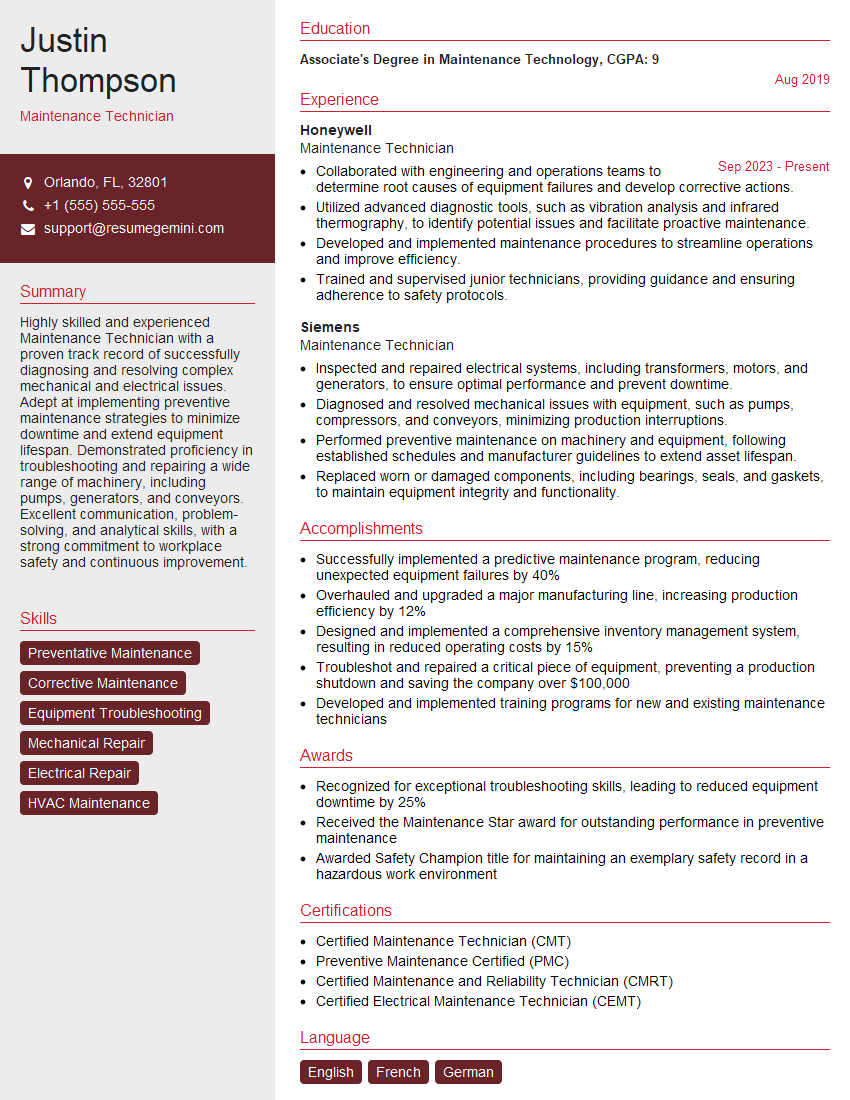
Maintenance Technician Resume Sample

Manufacturing Engineer Resume Sample

Quality Assurance Engineer Resume Sample

Manufacturing Process Engineer Resume Sample

Laser Systems Engineer Resume Sample

Robotics Technician Resume Sample

Manufacturing Technician Resume Sample

Milling Machine Operator Resume Sample

Precision Machinist Resume Sample

Tool and Die Maker Resume Sample

Quality Control Inspector Resume Sample
- Production Supervisor
- Automation Engineer
- Technical Support Specialist
- Maintenance Technician
- Manufacturing Engineer
- Quality Assurance Engineer
- Manufacturing Process Engineer
- Laser Systems Engineer
- Robotics Technician
- Manufacturing Technician
- Milling Machine Operator
- Precision Machinist
- Tool and Die Maker
- Quality Control Inspector
Explore more articles
Users Rating of Our Blogs
Share Your Experience
We value your feedback! Please rate our content and share your thoughts (optional).
What Readers Say About Our Blog
Very informative content, great job.
good