Unlock your full potential by mastering the most common Equipment Operation (e.g., ladders, platforms) interview questions. This blog offers a deep dive into the critical topics, ensuring you’re not only prepared to answer but to excel. With these insights, you’ll approach your interview with clarity and confidence.
Questions Asked in Equipment Operation (e.g., ladders, platforms) Interview
Q 1. What are the different types of ladders and their appropriate uses?
Ladders come in various types, each suited for specific tasks. Choosing the right ladder is crucial for safety and efficiency.
- Step Ladders: Self-supporting, with two sections connected by a hinge. Ideal for short-term work at moderate heights, like reaching high shelves or painting walls in a small room. Remember to always open them fully and ensure the spreaders are locked.
- Extension Ladders: Two sections that slide past each other, extending to greater heights. Excellent for exterior work like gutter cleaning or window washing, but require careful placement and securing.
- Straight Ladders: Single, straight length, typically used against walls or other vertical structures. Often used for reaching higher points but need secure footing and proper leaning angles.
- Folding Ladders: Compact and easy to store, these are great for small spaces and quick access. They usually have a limited height compared to other ladders.
For example, a step ladder would be appropriate for changing a lightbulb, while an extension ladder might be needed to clean the roof gutters. Always consider the task’s height and stability requirements before choosing a ladder type.
Q 2. Explain the 3-point contact rule for ladder safety.
The 3-point contact rule is a fundamental safety principle for ladder use. It ensures that you always maintain a stable grip and minimizes the risk of falling. This means that at all times, you should have two hands and one foot, or two feet and one hand, in contact with the ladder.
Think of it like a tripod – you need three points of contact for stability. Never climb a ladder with both hands occupied, or only one foot on the ladder. This rule applies whether climbing, descending, or working from a ladder.
For example, when climbing, you would use one hand to hold onto the ladder, the other hand to carefully move up, and your feet would be on the rungs. While working, ensure you maintain this 3-point contact at all times.
Q 3. How do you inspect a ladder before use?
Before using any ladder, a thorough inspection is vital. Neglecting this can lead to serious accidents. Here’s a checklist:
- Check for damage: Inspect all rungs, rails, and feet for cracks, breaks, splinters, or loose connections. Look for any signs of wear and tear.
- Test stability: Gently rock the ladder to check for stability and ensure all moving parts function smoothly.
- Assess the feet: Make sure the feet are clean, undamaged, and provide adequate grip on the surface. Rubber feet are best, especially on slippery surfaces.
- Check the ladder’s weight capacity: Confirm the ladder can support your weight and the weight of any materials you’ll be carrying. This information is typically found on a label.
- Inspect the ropes and pulleys (if applicable): If using an extension or rope ladder, check for fraying or damage to the ropes and pulleys.
If any damage is found, immediately remove the ladder from service and report it to your supervisor.
Q 4. What are the safety precautions when working at heights?
Working at heights inherently involves significant risk. Implementing strict safety measures is non-negotiable.
- Use appropriate fall protection: Harnesses, lanyards, and safety nets should be used whenever possible, especially when working at significant heights.
- Proper ladder selection and setup: Ensure you use the correct type of ladder for the job and set it up according to manufacturer instructions, maintaining the correct angle (typically a 4:1 ratio – for every four feet of height, the base should be one foot away from the wall).
- Avoid overhead hazards: Be aware of and avoid potential hazards like power lines, falling objects, and unstable surfaces.
- Use proper equipment: Ensure all tools and equipment are in good working order and are appropriate for the task at hand. Tools should have secure grips.
- Keep the work area clear: Remove any obstacles that could cause tripping or falling.
- Wear appropriate PPE: Personal Protective Equipment (PPE) is crucial and should include hard hats, safety glasses, gloves, and appropriate footwear.
- Plan the work: Properly planning the work ahead of time mitigates risk.
Remember, complacency is the enemy of safety when working at heights.
Q 5. Describe the proper procedures for setting up and using a scaffold.
Scaffolding setup and use demands meticulous attention to detail. Improper setup can be catastrophic.
- Choose the right scaffold: Select a scaffold that is appropriate for the height and load requirements of the job.
- Level the base: Ensure the base is level and stable on firm ground.
- Secure the scaffold: Use appropriate bracing and tie-offs to secure the scaffold to the structure it’s against. Never overload it beyond its safe working load.
- Use proper planking: Use planking that is appropriate for the weight and span, ensuring it’s properly laid and secured.
- Erect the scaffold correctly: Follow the manufacturer’s instructions precisely for assembly. Use the correct number of vertical and horizontal members to make it stable.
- Inspect regularly: Regularly inspect the scaffold for damage or instability before, during, and after use.
- Use fall protection: Always use a safety harness and lanyard when working at height on a scaffold.
Before starting any work on a scaffold, conduct a thorough risk assessment. Improper scaffolding leads to numerous accidents each year.
Q 6. What are the limitations and safe working loads for different types of platforms?
Platforms, like scaffolds, have specific limitations and safe working loads (SWLs). These must be clearly understood and adhered to.
- Mezzanine platforms: These are fixed, elevated platforms within buildings. Their SWLs vary greatly depending on design and construction. Check manufacturer’s specifications and any relevant engineering reports.
- Mobile platforms (e.g., scissor lifts): These have clearly marked SWLs, usually indicated on a label. Never exceed the manufacturer’s specified load.
- Suspended platforms: These are suspended from above, requiring specific inspections and certifications. The SWL is again specified by the manufacturer and should never be exceeded.
Exceeding the SWL can lead to structural failure and severe injury. Always refer to the manufacturer’s data plate for weight limits and capacity information.
Q 7. How do you identify potential hazards when operating aerial lifts?
Operating aerial lifts demands keen awareness of surrounding hazards. A pre-operation checklist is essential:
- Overhead obstructions: Check for power lines, branches, and other overhead obstructions that could interfere with the lift.
- Ground conditions: Assess the stability of the ground where the lift will be positioned. Avoid soft or uneven ground.
- Nearby hazards: Identify any hazards nearby, such as other equipment, traffic, or people. Ensure adequate clearance.
- Weather conditions: Avoid operation in high winds or inclement weather unless specifically designed for such use.
- Equipment condition: Conduct a pre-operational inspection of the lift itself, checking brakes, controls, and safety features.
- Load capacity: Verify that the load being lifted does not exceed the machine’s weight capacity.
Remember, aerial lifts can be dangerous if operated without proper caution and hazard awareness. Always follow the manufacturer’s instructions and relevant safety regulations.
Q 8. What are the emergency procedures if a platform malfunctions?
If a platform malfunctions, immediate action is crucial. The first step is to cease operation immediately and evacuate the platform using the designated emergency procedures, such as stairs or secondary escape routes. Never attempt repairs while on a malfunctioning platform.
Next, alert emergency services and your supervisor. Detailed reporting is vital – include the type of malfunction, the location, and any injuries sustained. This information facilitates a swift and effective response. After reporting, ensure the area is secured to prevent unauthorized access, and wait for qualified personnel to assess the situation and implement repairs.
For example, if a scissor lift suddenly stops working mid-operation, you should immediately disengage the controls, use the emergency stop button (if available), and safely exit the platform via the steps or emergency ladder. Then, notify your supervisor and report the incident immediately, detailing any unusual noises or vibrations preceding the malfunction.
Q 9. Explain the importance of pre-operational checks for all equipment.
Pre-operational checks are paramount to ensuring equipment safety and preventing accidents. Think of it like a pre-flight checklist for an airplane – essential for a safe and successful operation. These checks identify potential hazards before they cause incidents.
A comprehensive inspection includes: verifying the structural integrity of the equipment (checking for cracks, loose bolts, or damage), inspecting safety mechanisms (like guardrails, locks, and emergency stops), testing the operational functionality (ensuring smooth movement and proper response to controls), and confirming the availability of essential safety equipment (such as harnesses and lanyards). Documentation of these checks, using checklists, is vital for accountability and regulatory compliance.
For example, before operating a ladder, always check for broken rungs, loose joints, and ensure the feet are clean and dry for secure placement. Similarly, before using a scaffold, inspect the base plates, braces, and planking for any signs of damage or weakness.
Q 10. How do you ensure stability when using a ladder on uneven ground?
Maintaining stability on uneven ground when using a ladder is achieved through several key steps. First, you need to find the most stable base possible. If the ground is significantly uneven, consider using planks or boards to create a stable and level base for the ladder.
Secondly, always ensure the ladder is placed at the correct angle – typically a 4:1 ratio (for every four feet of height, the base should be one foot away from the wall or structure). This angle helps prevent the ladder from slipping or tipping over. Never place a ladder on soft ground, loose gravel, or ice.
Finally, to enhance stability, have a colleague hold the base of the ladder while you ascend, especially when working at significant heights. If working alone, consider using ladder stabilizers or outriggers. These simple measures can significantly reduce the risk of slips, trips, and falls. Imagine attempting to climb a ladder on a sloping hillside – creating a level base with planks is essential for safety.
Q 11. What are the regulations regarding working at heights in your region?
Regulations regarding working at heights vary by region but generally emphasize minimizing risk through proper planning, training, and the use of appropriate safety equipment. These regulations often mandate risk assessments to identify and mitigate potential hazards before work commences. They also specify the types of fall protection systems required, depending on the work being performed and the height involved.
Common requirements include detailed procedures for selecting and using fall protection equipment, rigorous training programs for workers, and regular inspections of equipment to ensure its functionality and safety. Penalties for non-compliance can range from fines to suspension of operations. It’s crucial to consult your region’s specific occupational safety and health administration (OSHA) or equivalent regulatory body for the most up-to-date and precise details.
Specific examples might include mandatory training certificates for working at heights, requirements for fall arrest systems above a certain height, or regulations on the frequency of equipment inspections. These regulations are constantly evolving to address new risks and technological advancements.
Q 12. What are the different types of fall protection equipment and their uses?
Several types of fall protection equipment are used to mitigate the risk of falls from heights. These are primarily categorized into fall arrest, fall restraint, and fall prevention systems.
- Fall Arrest Systems: These systems allow a worker to fall a short distance before being stopped. They include harnesses, lanyards, and shock-absorbing lanyards which help reduce the impact forces on the worker. Self-retracting lifelines (SRLs) are also common.
- Fall Restraint Systems: These systems prevent a worker from reaching a fall hazard by limiting their movement. They include horizontal lifelines, vertical lifelines, and positioning lanyards. These systems keep workers within a safe area.
- Fall Prevention Systems: These systems are designed to eliminate the risk of falls completely. Examples include guardrails, safety nets, and scaffolding with toe boards.
The choice of equipment depends on the specific work environment and the associated hazards. For example, a worker on a rooftop might use a fall arrest system, while a worker on a scaffold might use a fall restraint system or work within the confines of a guardrail system.
Q 13. How do you select the appropriate personal protective equipment (PPE) for working at heights?
Selecting appropriate PPE for working at heights is crucial for worker safety. The selection process should always begin with a thorough risk assessment to determine the specific hazards involved.
This assessment guides the choice of PPE. For example, a harness should fit correctly and comfortably, allowing for a wide range of motion without restricting movement. It’s vital to select a harness that meets relevant safety standards and has been properly inspected. Similarly, lanyards and other fall arrest equipment must be checked for damage or wear before each use, and their weight capacity must exceed the user’s weight.
In addition to fall protection equipment, other PPE might be required, such as helmets, safety glasses, and gloves, depending on the specific task. Regular inspections and training on the proper use of the equipment are essential. Remember that improperly fitted or maintained PPE can be more dangerous than no PPE at all.
Q 14. Describe the lockout/tagout procedure for equipment maintenance.
Lockout/Tagout (LOTO) procedures are critical for equipment maintenance to prevent accidental start-ups that can lead to serious injuries or fatalities. LOTO involves isolating energy sources to equipment and applying a lock and tag to the energy source to prevent accidental activation.
The procedure usually involves a series of steps: 1. Preparation: Identify all energy sources (electrical, hydraulic, pneumatic, etc.). 2. Isolation: Safely disconnect the energy sources using appropriate lockout devices. 3. Lockout: Attach a lock to the isolation device, and 4. Tagout: Attach a tag to the lock, clearly indicating the equipment is locked out, who performed the lockout, and the reason. After maintenance, the procedure is reversed, with careful verification of energy source deactivation before the equipment is restarted.
The importance of LOTO cannot be overstated. Imagine a mechanic working on a machine without properly isolating its power supply – even a momentary start-up could have fatal consequences. LOTO procedures are crucial to ensure the safety of maintenance personnel.
Q 15. What are the signs of a damaged ladder or platform?
Identifying damage on ladders and platforms is crucial for safety. A damaged piece of equipment can lead to serious injury or even fatality. Regular inspections are key.
- Ladders: Look for cracked or broken rails, rungs, or feet. Check for loose or missing hardware like bolts and rivets. Bent or twisted rails are a major concern, as are damaged safety feet. If the wood is splintering or showing significant wear, the ladder is compromised. Any signs of significant wear on the rope (if it’s a rope ladder) warrant immediate replacement.
- Platforms: Examine the platform’s surface for cracks, holes, or significant wear. Check the supporting structure for any signs of bending, twisting, or damage. Pay close attention to welds and any signs of fatigue. Ensure all guardrails, toeboards, and other safety features are intact and securely fastened. Check the wheels (if applicable) for damage or looseness. Look for any signs of overloading, such as bending or distortion of the structure.
Example: Imagine a ladder with a cracked rung. Even a small crack can weaken the rung significantly, potentially causing it to break under load, leading to a fall. Always err on the side of caution; if you see any damage, the equipment should be taken out of service immediately.
Career Expert Tips:
- Ace those interviews! Prepare effectively by reviewing the Top 50 Most Common Interview Questions on ResumeGemini.
- Navigate your job search with confidence! Explore a wide range of Career Tips on ResumeGemini. Learn about common challenges and recommendations to overcome them.
- Craft the perfect resume! Master the Art of Resume Writing with ResumeGemini’s guide. Showcase your unique qualifications and achievements effectively.
- Don’t miss out on holiday savings! Build your dream resume with ResumeGemini’s ATS optimized templates.
Q 16. How do you handle equipment malfunctions or unexpected incidents?
Equipment malfunctions and unexpected incidents require a calm and methodical approach. Safety is always the paramount concern.
- Immediate Action: If a malfunction occurs, immediately cease operation. Clear the area to prevent any further incidents and ensure the safety of others.
- Assessment: Carefully assess the situation. Identify the nature of the malfunction. Is it a mechanical failure, a power issue, or something else?
- Reporting: Report the incident to your supervisor immediately. Provide a clear and concise description of what happened, the potential causes, and any injuries or damage.
- Secure the Equipment: If possible, secure the equipment to prevent further damage or accidental activation.
- Investigation: Once the immediate danger has passed, participate in any investigations into the cause of the malfunction. This will help prevent future occurrences.
- Repair or Replacement: Follow your company’s protocols for repairing or replacing damaged equipment. Only qualified personnel should perform repairs.
Example: Let’s say a scissor lift suddenly stops working mid-operation. First, you’d lower the platform safely, then evacuate the area. You would then report the incident, ensuring the lift is securely locked, and follow up with maintenance to determine the problem.
Q 17. What are the communication protocols when working with a team at heights?
Clear communication is essential when working at heights. Miscommunication can have catastrophic consequences.
- Designated Spotter: One person should be designated as the spotter, responsible for communicating with the person on the platform or ladder. This spotter observes the worker’s actions and warns them of any hazards.
- Pre-Job Briefing: Before starting any work, hold a brief team meeting to discuss the tasks, potential hazards, and emergency procedures. Everyone needs to be on the same page.
- Hand Signals: Pre-agreed hand signals should be used to convey instructions, especially in noisy environments where verbal communication is difficult. This ensures clear and unambiguous communication.
- Regular Check-ins: Maintain regular verbal communication throughout the job. This helps the team members stay aware of each other’s progress and any potential problems.
- Emergency Procedures: Everyone on the team needs to know the emergency procedures and how to respond in case of an accident or equipment failure. This should include how to use emergency communication equipment, such as radios.
Example: If the person on the platform needs tools, they would use a pre-agreed hand signal. The spotter would then carefully pass the tools, communicating verbally to ensure clear understanding.
Q 18. How do you calculate safe working loads for different equipment?
Calculating safe working loads (SWLs) is paramount for safe equipment operation. It ensures that equipment isn’t overloaded, which could lead to equipment failure and injury.
The SWL is usually found on a data plate attached to the equipment itself. This plate provides the manufacturer’s specified maximum load. Never exceed this limit. If the plate is missing or illegible, the equipment should not be used.
For some equipment, calculations may be needed. This often involves understanding the equipment’s design, material specifications, and relevant safety standards. Consulting engineering documents and manufacturer specifications is essential.
Example: A scissor lift’s data plate may state a SWL of 500 kg. This means that the total weight of the platform, the operator, and the materials should never exceed 500kg.
Q 19. Explain the concept of load bearing capacity.
Load-bearing capacity refers to the maximum weight or load that a structure or piece of equipment can safely support without collapsing or sustaining damage. It’s a critical factor in ensuring safety and preventing accidents.
Think of it like a bridge. A bridge has a specific load-bearing capacity; exceeding this will lead to structural failure. Similarly, aerial work platforms, ladders, and scaffolding all have a load-bearing capacity that must never be exceeded. Factors influencing load-bearing capacity include the material’s strength, design, and environmental conditions.
Example: A scaffold might have a load-bearing capacity of 2000 kg. This means the total weight of the scaffold itself, the workers, tools, and materials should not exceed this limit. Otherwise, the scaffold risks collapse.
Q 20. What are the different types of aerial work platforms (AWPs)?
Aerial Work Platforms (AWPs) come in many varieties, each suited to different tasks and working environments.
- Scissor Lifts: These are characterized by their scissor-like mechanism, providing a stable, vertical lift. They’re ideal for indoor and outdoor use where a relatively low working height is needed.
- Boom Lifts: Boom lifts offer greater reach and flexibility, extending horizontally as well as vertically. They come in articulated (multiple sections that bend) and telescopic (single section that extends) configurations.
- Vertical Mast Lifts: These are designed for straight vertical lifting, ideal for reaching high points in warehousing or similar applications.
- Truck Mounts: These are AWPs mounted on a truck chassis, offering increased mobility and reach for larger working areas.
Choosing the right type of AWP depends heavily on the specific job requirements, such as working height, reach, and the terrain.
Q 21. Describe the differences between scissor lifts and boom lifts.
Scissor lifts and boom lifts are both AWPs but have distinct differences in their design, functionality, and applications.
- Scissor Lifts: These provide a stable, vertical lift with a limited horizontal reach. They are generally simpler to operate and offer a more stable platform. Ideal for working on relatively flat surfaces at heights of up to 40ft.
- Boom Lifts: These offer greater versatility and reach with the ability to lift to heights of up to 150ft. The boom can extend both horizontally and vertically, making them suitable for working in tight spaces or reaching over obstacles. Articulated boom lifts offer greater maneuverability than telescopic boom lifts, but telescopic boom lifts offer greater lifting capacity.
In essence, scissor lifts are best for straightforward vertical lifting tasks in open areas, while boom lifts provide greater versatility for jobs requiring horizontal reach and working around obstacles.
Q 22. How do you perform a pre-use inspection of an aerial lift?
A pre-use inspection of an aerial lift is crucial for ensuring safe operation and preventing accidents. Think of it as a vital health check before taking your car on a long journey. It involves a systematic check of all critical components to identify any potential hazards before starting work.
- Visual Inspection: Start by visually inspecting the entire lift, checking for any obvious damage like dents, cracks, or leaks in hydraulic lines. Look at the tires for wear and tear and the condition of the boom and its components.
- Controls and Safety Devices: Thoroughly test all controls – elevation, rotation, and extension – making sure they respond smoothly and accurately. Verify that the emergency stop button functions correctly. Check the operation of the load limit indicator, overload protection system, and safety interlocks.
- Hydraulic System: Inspect the hydraulic fluid level, looking for any leaks or discoloration. Listen for unusual noises like squealing or hissing that could indicate a problem.
- Electrical System: Check the condition of the power cord or battery (depending on the lift type), ensuring no damage or fraying is present. Make sure warning lights and indicators operate correctly.
- Documentation: After your inspection, record any findings, including any issues, repairs needed, or maintenance conducted. This documentation forms an important part of the lift’s maintenance history.
For instance, if I noticed a hydraulic leak during my inspection, I would immediately report it and not operate the lift until it’s repaired. Safety always comes first.
Q 23. What are the safety measures to take when operating a forklift?
Operating a forklift safely requires a combination of training, awareness, and adherence to strict procedures. Think of it like driving a car – you wouldn’t drive without a license or understanding traffic rules.
- Pre-Operational Check: Before starting, always inspect the forklift, checking tires, lights, brakes, forks, and mast for any damage. Ensure all safety devices – horns, seatbelts, and warning lights – are in good working order.
- Load Capacity: Never exceed the forklift’s rated load capacity. Overloading can lead to instability and tip-overs. Consult the capacity plate for the correct weight limit.
- Safe Operation: Drive slowly and carefully, especially around corners or in crowded areas. Maintain a clear visual path and avoid sudden braking or acceleration. Always use the horn to warn pedestrians and other workers of your movements.
- Load Stability: Distribute the weight of the load evenly across the forks and ensure the load is securely attached and balanced. Never lift an unstable or unevenly distributed load.
- Pedestrian Safety: Always be aware of the presence of pedestrians and use extreme caution when maneuvering near them. Consider using spotters in blind areas or tight spaces.
- Parking: When parking, ensure the forklift is placed on a level surface with the forks lowered to the ground and the parking brake engaged.
I once witnessed a forklift accident caused by exceeding the load capacity. It resulted in significant damage and a workplace injury, reinforcing the importance of adhering to safety protocols.
Q 24. How do you handle potential conflicts with other workers in a shared work space?
Conflicts with coworkers in a shared workspace are inevitable, but they can be effectively addressed through clear communication and respectful collaboration. Think of it as managing a team project – everyone needs to work together towards a common goal.
- Proactive Communication: Before starting a task, discuss potential conflicts and plan how to avoid them. For example, establish clear boundaries, designated work areas, and agreed-upon signal systems.
- Respectful Dialogue: If a conflict arises, address it directly and calmly. Listen to the other person’s perspective and try to find a mutually agreeable solution. Avoid accusatory language or personal attacks.
- Follow Established Procedures: Adhere to all established safety protocols and work procedures to minimize the potential for conflict. If a coworker isn’t following procedure, address it respectfully but firmly.
- Escalation: If you are unable to resolve the conflict on your own, escalate the issue to a supervisor or designated point person.
In one instance, I was able to prevent a potential collision between a forklift and a work crew by establishing clear hand signals and a designated pathway. Open communication and mutual understanding played a vital role.
Q 25. Describe your experience with different types of rigging and lifting equipment.
My experience with rigging and lifting equipment encompasses a wide range of tools and techniques, from basic slings to complex crane systems. This expertise allows me to select the appropriate equipment for each task, ensuring both efficiency and safety.
- Slings: I am proficient in using various types of slings, including chain slings, wire rope slings, and synthetic web slings, understanding their load limits and appropriate applications.
- Hooks and Shackles: I’m familiar with different hook types and their inspection requirements. I know how to select and use shackles correctly, ensuring proper load distribution and preventing damage.
- Lifting Beams: I have experience using lifting beams to handle larger or oddly shaped objects, ensuring stable and secure lifting operations.
- Cranes: I’m familiar with operating various types of cranes (tower, mobile, overhead) and understand the importance of load charts, rigging plans, and communication with crane operators.
- Specialized Equipment: I have experience working with vacuum lifters, magnets, and other specialized lifting equipment when appropriate.
For example, when lifting a heavy piece of machinery, I would carefully select the appropriate sling type and size based on the load’s weight and shape, ensuring its secure attachment and safe handling.
Q 26. What are the best practices for maintaining equipment logs and records?
Maintaining accurate and up-to-date equipment logs and records is crucial for safety, compliance, and preventative maintenance. This documentation serves as a vital record of equipment history and performance.
- Detailed Records: Every entry should include the date, time, equipment ID, work performed, and any relevant observations like defects or repairs.
- Inspection Reports: Detailed pre-use and post-use inspection reports should be completed, noting any defects or abnormalities found.
- Maintenance Schedules: Log all scheduled and unscheduled maintenance performed on the equipment. This includes service intervals, parts replaced, and any issues encountered.
- Digital Systems: Utilize digital logbooks or maintenance management systems to improve record-keeping efficiency and data access.
- Regular Audits: Regularly audit equipment logs to verify accuracy and completeness and ensure all necessary documentation is in place.
Properly maintained logs help identify potential equipment failures early on, enabling proactive maintenance and preventing costly downtime and potential safety incidents. For example, a regular review of equipment logs could reveal a pattern of failure in a specific component, prompting a prompt replacement before a more serious incident occurs.
Q 27. Explain your understanding of confined space entry procedures when using equipment.
Confined space entry procedures using equipment require strict adherence to safety protocols to prevent accidents. This involves a methodical approach with clear roles and responsibilities for all personnel involved.
- Permit-Required Confined Space Entry: Always obtain the necessary permits before entering a confined space. This involves completing risk assessments, identifying potential hazards, and establishing control measures.
- Atmospheric Monitoring: Before entry, the atmosphere of the confined space must be tested for hazardous gases, oxygen levels, and flammability. Equipment used for monitoring must be properly calibrated and maintained.
- Ventilation: Adequate ventilation must be established before entry to ensure a safe atmosphere. This might involve using specialized ventilation equipment like blowers or fans.
- Entry Procedures: Follow established entry and rescue procedures, ensuring appropriate personal protective equipment (PPE) is used and that trained personnel are available for rescue if needed. This may involve using equipment like winches or lifting devices for rescue purposes.
- Equipment Selection: The equipment used within the confined space must be suitable for the environment and task and appropriately inspected before entry.
If working in a confined space with a welding machine, for instance, the equipment should be adequately grounded, and the area should be checked for proper ventilation to prevent accumulation of harmful gases.
Q 28. How do you adapt your work practices to various weather conditions?
Adapting to various weather conditions is paramount for safe and efficient equipment operation. This involves understanding the impact of weather on equipment and personnel safety and taking appropriate precautions.
- Extreme Temperatures: In extreme heat, provide adequate hydration and rest breaks for personnel. Check equipment for overheating, particularly hydraulic systems and engines. In extreme cold, ensure equipment is properly winterized and that personnel have appropriate cold-weather gear.
- Rain and Snow: When operating equipment in rain or snow, be extra cautious. Reduce speeds, increase following distances, and ensure adequate visibility. Address potential slipping hazards from mud and ice.
- Wind: Strong winds can affect the stability of equipment, especially aerial lifts and cranes. Avoid operating equipment in high winds unless absolutely necessary and follow manufacturer’s guidelines for wind speed restrictions.
- Lightning: If there’s a lightning storm, immediately cease all outdoor equipment operations and seek appropriate shelter.
- Visibility: In poor visibility conditions, use appropriate lighting and warning devices to enhance safety.
During a snowstorm, I once had to halt operations on an aerial lift due to high winds and limited visibility, prioritizing safety over productivity. This demonstrated the importance of adaptability and prioritizing safe work practices in challenging weather conditions.
Key Topics to Learn for Equipment Operation (e.g., ladders, platforms) Interview
- Safety Regulations and Procedures: Understanding and applying relevant safety standards (OSHA, etc.) for ladder and platform use, including pre-use inspection checklists and fall protection measures.
- Equipment Selection and Setup: Choosing the appropriate ladder or platform type for the task, ensuring stable and level setup, and understanding weight limitations.
- Proper Climbing and Working Techniques: Safe climbing and descending practices, maintaining three points of contact, and appropriate body positioning while working at height.
- Understanding Load Capacity and Center of Gravity: Calculating and managing load distribution to prevent instability and tipping, and recognizing the impact of center of gravity on equipment stability.
- Emergency Procedures and Response: Knowing how to react to potential hazards, such as equipment failure or falls, and understanding emergency evacuation procedures.
- Maintenance and Inspection: Performing routine inspections of ladders and platforms to identify potential hazards, recognizing signs of wear and tear, and understanding basic maintenance requirements.
- Working at Heights Best Practices: Applying industry best practices for minimizing risks associated with working at heights, including using appropriate personal protective equipment (PPE).
- Problem-Solving Scenarios: Thinking critically about potential challenges during equipment operation and developing effective solutions to ensure safety and efficiency.
Next Steps
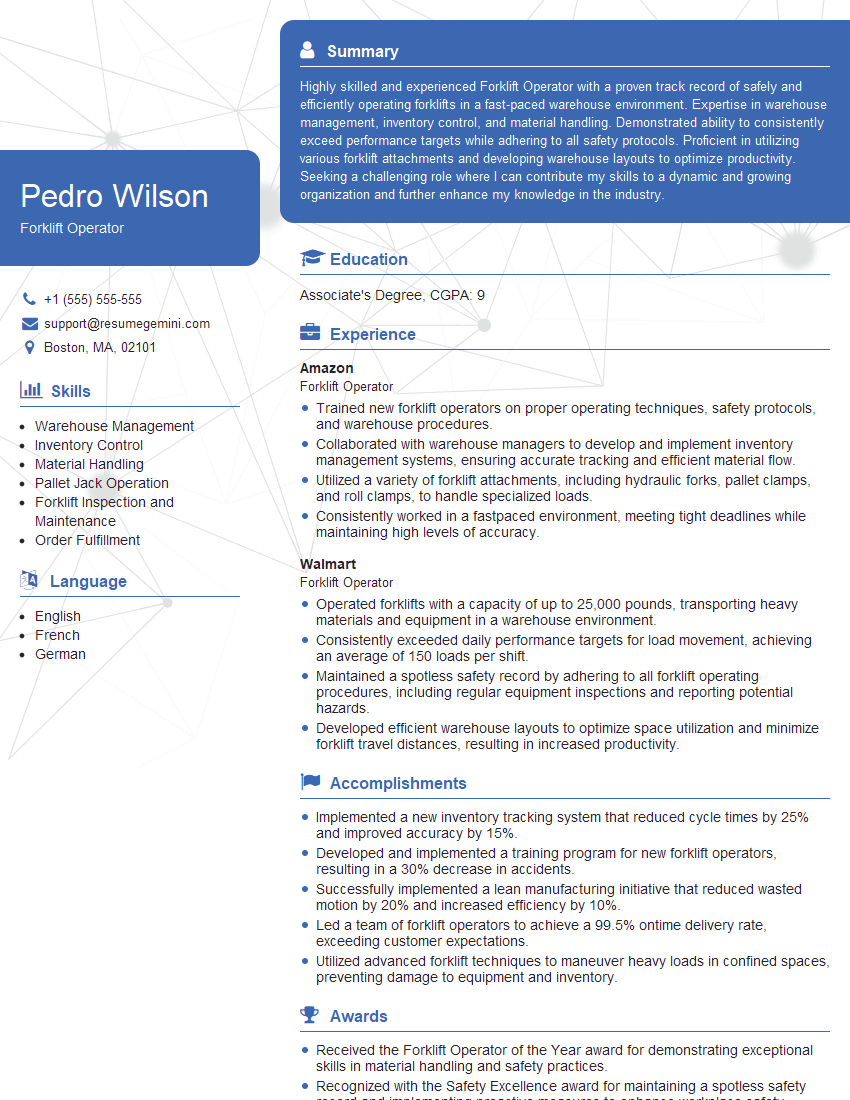
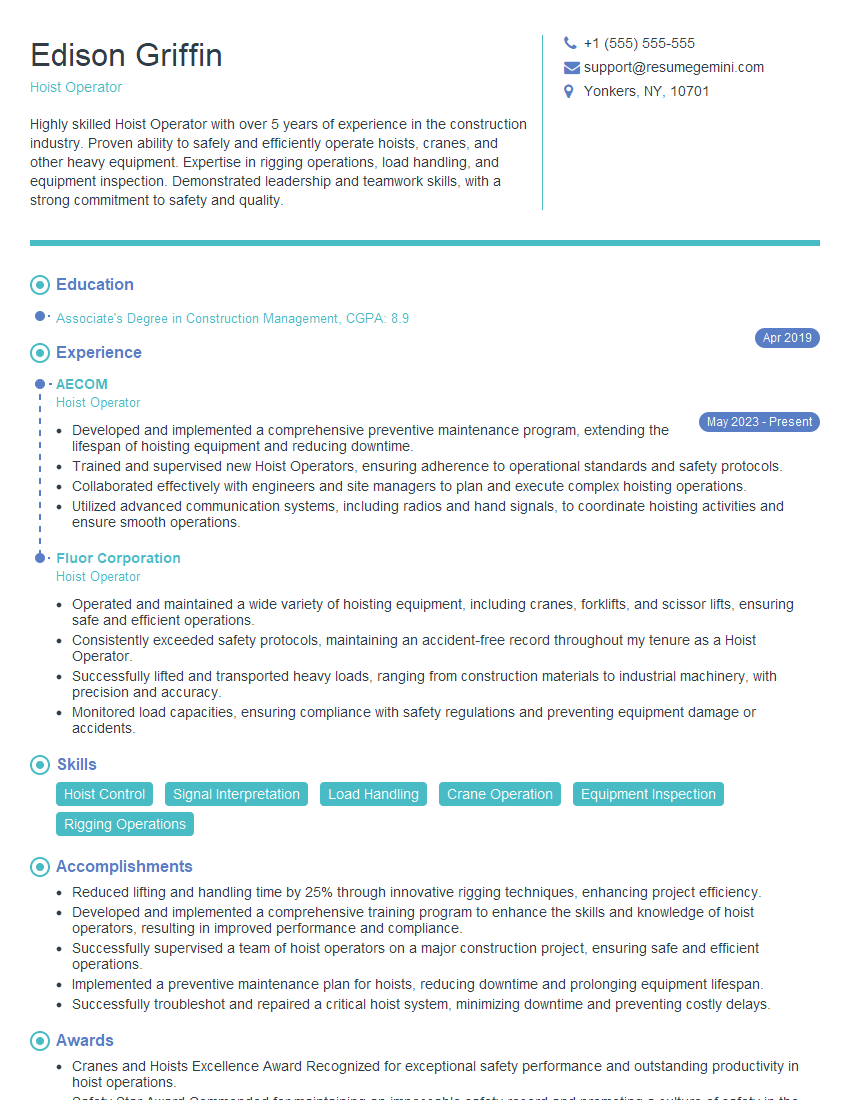
Mastering safe and efficient equipment operation, particularly with ladders and platforms, is crucial for career advancement in many industries. It demonstrates your commitment to safety and your ability to handle challenging tasks effectively. To boost your job prospects, focus on creating an ATS-friendly resume that highlights your skills and experience. ResumeGemini is a trusted resource to help you build a professional and impactful resume that gets noticed. We provide examples of resumes tailored to Equipment Operation roles (e.g., ladders, platforms) to guide you. Take the next step towards your dream job today!


Explore more articles
Users Rating of Our Blogs
Share Your Experience
We value your feedback! Please rate our content and share your thoughts (optional).
What Readers Say About Our Blog
Very informative content, great job.
good