Interviews are more than just a Q&A session—they’re a chance to prove your worth. This blog dives into essential Erosion Control and Soil Conservation interview questions and expert tips to help you align your answers with what hiring managers are looking for. Start preparing to shine!
Questions Asked in Erosion Control and Soil Conservation Interview
Q 1. Explain the difference between sheet, rill, and gully erosion.
Erosion is the process of soil detachment and transport by natural agents like wind and water. Sheet, rill, and gully erosion represent different stages of this process, increasing in severity.
Sheet erosion: This is the most widespread type, involving the uniform removal of a thin layer of soil across a large area. Imagine a sheet of paper being gently peeled away – that’s sheet erosion. It’s often subtle and hard to notice initially, but it gradually reduces soil fertility and productivity.
Rill erosion: As sheet erosion progresses, small, concentrated channels called rills begin to form on the land surface. These are shallow, usually less than a few inches deep, and can easily be smoothed over with tillage. Think of small, temporary streams carving tiny paths in the soil.
Gully erosion: This represents an advanced stage of erosion. Gullies are deep channels, often several feet deep and wide, that are difficult to repair and permanently alter the landscape. They’re essentially larger, more established versions of rills, and indicate significant soil loss. Imagine a small river carving a deep gorge into the land.
Understanding the progression from sheet to rill to gully erosion is crucial for implementing effective control measures. Early intervention at the sheet erosion stage is far more effective and cost-efficient than dealing with established gullies.
Q 2. Describe various erosion control methods for construction sites.
Erosion control on construction sites is vital to prevent sediment pollution of nearby waterways and protect the site itself. Methods are often a combination of structural and vegetative techniques:
Sediment basins/silt fences: These structures trap sediment-laden runoff before it leaves the site. Sediment basins are larger, holding water for a while to allow sediment to settle, while silt fences are temporary barriers that intercept sediment.
Straw bales/wattles: These are used to stabilize slopes and filter runoff. Straw bales are placed in rows along slopes, and wattles are rolls of natural fiber (often coconut or straw) that are staked into the ground.
Mulching: Applying mulch (wood chips, straw) to exposed soil surfaces reduces surface runoff and helps retain moisture, reducing the risk of erosion.
Temporary seeding/hydroseeding: Planting vegetation quickly covers exposed soil and helps bind the soil together, protecting it from erosion. Hydroseeding uses a slurry of seed, mulch, and fertilizer to establish vegetation rapidly.
Slope stabilization techniques: This includes techniques like terracing, bench cuts, and retaining walls to reduce the steepness of slopes and minimize erosion.
Check dams/diversion ditches: These structures slow down the velocity of runoff, reducing its erosive power. Check dams are small barriers built across channels, while diversion ditches redirect runoff away from sensitive areas.
The specific methods chosen depend on the site characteristics, the climate, and the regulatory requirements. A comprehensive erosion control plan should incorporate a variety of techniques for optimal protection.
Q 3. What are the key factors influencing soil erosion?
Many factors influence soil erosion, and understanding their interplay is crucial for effective control. These can be broadly categorized as:
Climate: Rainfall intensity and frequency, wind speed, and temperature all affect erosion rates. High-intensity rainfall causes more runoff and thus greater erosion.
Soil properties: Soil texture (sand, silt, clay content), structure, and organic matter content influence its susceptibility to erosion. Sandy soils are more erodible than clay soils.
Topography: Slope steepness and length significantly affect runoff velocity and thus erosion rates. Steeper slopes lead to higher erosion rates.
Vegetation: Plant cover protects soil from raindrop impact and reduces runoff. Dense vegetation offers greater protection than sparse vegetation.
Land use: Intensive agricultural practices, deforestation, and construction activities all increase erosion rates by exposing soil to the elements.
For example, a steep slope in an area with high-intensity rainfall and bare soil will be significantly more susceptible to erosion than a gentle slope with a dense vegetation cover in an area with low rainfall.
Q 4. How do you assess the effectiveness of an erosion control plan?
Assessing the effectiveness of an erosion control plan involves both qualitative and quantitative methods.
Visual inspections: Regular site visits to observe the condition of erosion control measures (e.g., checking for damage to silt fences, assessing vegetation growth) are essential.
Sediment monitoring: Measuring the amount of sediment in runoff leaving the site provides a quantitative measure of erosion control effectiveness. This often involves collecting samples from designated points and analyzing them in a laboratory.
Water quality monitoring: Measuring water quality parameters (e.g., turbidity, total suspended solids) in receiving waters can help assess whether erosion control measures are preventing sediment pollution.
Soil loss measurements: Using techniques like erosion pins or sediment traps allows for the quantification of soil loss from specific areas.
Vegetation monitoring: Tracking the establishment and growth of planted vegetation is important for evaluating the success of vegetative erosion control measures.
The results of these assessments should be used to adjust and improve the erosion control plan as needed. Regular monitoring and adaptive management are crucial for ensuring long-term effectiveness.
Q 5. What are the common types of soil conservation practices?
Soil conservation practices aim to protect soil resources and prevent degradation. Common practices include:
Contour farming: Planting crops along the contours of the land to reduce runoff velocity.
Terracing: Creating level platforms on steep slopes to reduce runoff and soil erosion.
Strip cropping: Alternating rows of crops with different erosion resistance to trap sediment.
No-till farming: Minimizing soil disturbance during planting to protect soil structure and organic matter.
Cover cropping: Planting vegetation during fallow periods to protect soil from erosion and improve soil health.
Crop rotation: Rotating different crops to improve soil fertility and reduce pest and disease pressure.
Windbreaks: Planting trees or shrubs to reduce wind erosion.
The selection of appropriate practices depends on the specific soil type, climate, and farming system. A holistic approach that combines several practices is often the most effective.
Q 6. Explain the concept of contour farming and its benefits.
Contour farming involves plowing and planting crops along the contours of a slope rather than up and down. Imagine drawing level lines across a hillside – that’s the principle of contour farming.
Benefits include:
Reduced runoff: By slowing down the flow of water, contour farming minimizes the erosive power of runoff.
Increased infiltration: Water is more likely to infiltrate the soil, reducing surface runoff and increasing soil moisture.
Improved soil structure: Reduced compaction from plowing up and down the slope helps maintain soil structure.
Reduced soil erosion: The combined effects of reduced runoff and increased infiltration lead to significantly less soil erosion.
Contour farming is a simple, yet highly effective, conservation practice that is widely applicable in hilly or sloping terrains. Its success is further enhanced when combined with other practices like cover cropping or terracing.
Q 7. Describe different types of vegetation used for erosion control.
Various types of vegetation are used for erosion control, chosen based on their characteristics and the specific site conditions.
Grasses: Fast-growing grasses like ryegrass, fescue, and Bermuda grass are excellent for stabilizing slopes and reducing surface runoff. Their extensive root systems bind the soil together.
Legumes: Legumes like clover and alfalfa improve soil fertility while providing erosion control. Their nitrogen-fixing capabilities enhance soil health.
Shrubs: Native shrubs are often used for long-term erosion control, especially on steeper slopes. Their deep root systems provide excellent stability.
Trees: Trees provide excellent windbreaks and shade, reducing erosion from both wind and water. They are particularly beneficial in riparian zones (areas along waterways).
Native plants: Using native species is often preferred because they are adapted to the local climate and soil conditions, requiring less maintenance and promoting biodiversity.
The choice of vegetation depends on factors such as climate, soil type, slope steepness, and the desired lifespan of the erosion control measure. A diverse mix of species is often more effective than using a single species.
Q 8. How do you determine the appropriate erosion control measures for a specific site?
Determining the right erosion control measures is like choosing the right tools for a specific job. It’s not a one-size-fits-all approach. We need to carefully assess the site’s unique characteristics. This involves a thorough site investigation, considering factors like:
- Soil type: Sandy soils erode more easily than clay soils. Knowing the soil’s erodibility is crucial.
- Slope steepness: Steeper slopes experience more erosion. We need to understand the angle and length of slopes.
- Rainfall intensity: Areas with high-intensity rainfall require more robust control measures.
- Vegetation cover: Existing vegetation plays a vital role in protecting the soil. We assess its type, density, and health.
- Land use: Construction sites, agricultural fields, and undeveloped land all present different erosion risks. We tailor measures to each use.
- Environmental sensitivities: We consider nearby water bodies and protected areas, ensuring our methods don’t cause further environmental damage.
After the assessment, we select appropriate measures from a wide range of options, which might include contour plowing, terracing, vegetative barriers, check dams, sediment basins, or a combination of techniques. For example, a steep, eroding slope on a construction site might require a combination of temporary measures like silt fences and sediment basins, along with permanent measures like terraces once construction is completed. In contrast, a gently sloping pasture might only need improved grazing management and contour farming.
Q 9. What are the regulations and permits related to erosion control in your area?
Erosion control regulations and permits vary significantly by location. Generally, you’ll need to check with your local, state, and potentially federal environmental agencies. These agencies typically have specific guidelines and permit requirements for construction sites, agricultural activities, and other land disturbances. For instance, the Clean Water Act in the United States requires permits for activities that might discharge pollutants (including sediment) into waterways. These permits often outline specific erosion and sediment control practices that must be implemented. Failure to comply can result in significant penalties. It’s crucial to consult with the relevant agencies early in the project planning stage to avoid delays and potential legal issues. Many agencies offer online resources and guidance documents to help with permit applications and regulatory compliance.
Q 10. Explain the Universal Soil Loss Equation (USLE) and its application.
The Universal Soil Loss Equation (USLE) is a widely used model for predicting soil erosion. It’s a tool to estimate the average annual soil loss from sheet and rill erosion (the most common types) on a specific field. The equation is:
A = R * K * LS * C * PWhere:
A= Estimated average annual soil loss (tons/acre)R= Rainfall erosivity factor (reflects rainfall intensity and frequency)K= Soil erodibility factor (represents the soil’s resistance to erosion)LS= Slope length and steepness factor (higher slopes and longer lengths lead to more erosion)C= Cover management factor (reflects the protective effect of vegetation or other ground cover)P= Support practice factor (considers the impact of conservation practices like contouring or terracing).
The USLE is applied by plugging in site-specific data for each factor. The result provides an estimate of potential soil loss. This helps land managers design appropriate conservation practices to reduce erosion to acceptable levels. For example, a higher R value in an area with frequent intense rainfall suggests the need for more aggressive conservation practices than an area with a low R value. Similarly, a high K value (easily eroded soil) necessitates practices to improve soil structure and increase surface cover.
Q 11. How do you monitor and maintain erosion control measures?
Monitoring and maintenance are crucial for erosion control success. It’s not a ‘set it and forget it’ process. Regular inspections are key to identify issues early on and prevent failures. The frequency of inspections depends on factors like site conditions, weather events, and the types of control measures used. A newly constructed site might need daily inspections, while an established agricultural field may require less frequent checks.
During inspections, we look for things like:
- Sediment buildup: Sediment basins and other structures need to be cleaned regularly to maintain their effectiveness. A build-up indicates a possible failure upstream.
- Erosion around structures: We check for signs of erosion around check dams, terraces, or other structural measures.
- Damage to vegetation: We assess the health and density of vegetative barriers and identify areas needing reseeding or repair.
- Silt fence damage: We check for tears or gaps in silt fences and ensure proper placement.
Maintenance actions may involve cleaning sediment basins, repairing damaged structures, reseeding eroded areas, or replacing damaged components. Documentation of inspections and maintenance activities is essential for tracking progress, demonstrating compliance with regulations, and improving future erosion control efforts.
Q 12. What are the environmental impacts of soil erosion?
Soil erosion has wide-ranging environmental impacts. It’s not just about losing topsoil; it affects many aspects of our ecosystems. The immediate consequences are:
- Water quality degradation: Sediment runoff carries pollutants like fertilizers, pesticides, and heavy metals into streams, rivers, and lakes, harming aquatic life and contaminating drinking water sources.
- Loss of biodiversity: Erosion destroys habitats, impacting plant and animal communities. It can lead to reduced agricultural productivity and loss of fertile land.
- Increased flooding: Eroded soil can clog waterways, reducing their capacity to handle rainfall and increasing the risk of flooding.
- Greenhouse gas emissions: Erosion releases carbon stored in the soil, contributing to climate change.
- Desertification: Severe and prolonged erosion can lead to land degradation and desertification in arid and semi-arid regions.
These environmental impacts have economic consequences as well, including reduced agricultural yields, increased costs for water treatment, and damage to infrastructure from flooding. Addressing soil erosion is therefore crucial for environmental protection and sustainable land management.
Q 13. Explain the role of riparian buffers in erosion control.
Riparian buffers are vegetated areas alongside streams, rivers, and other waterways. They’re incredibly valuable for erosion control. Imagine them as a natural filter and buffer zone. The vegetation in a riparian buffer helps stabilize the soil banks, preventing erosion and slowing down water flow. This reduces the amount of sediment entering the water body. The roots of the plants bind the soil together, making it more resistant to erosion. The vegetation also intercepts rainfall and reduces its erosive force before it reaches the water’s edge. In addition, riparian buffers provide habitat for wildlife, improve water quality, and enhance the overall aesthetic value of the landscape.
The effectiveness of a riparian buffer depends on factors like its width, vegetation type, and the overall health of the ecosystem. Wider buffers generally provide better protection than narrower ones. Native vegetation is preferred because it’s better adapted to the local climate and soil conditions.
Q 14. Describe different types of sediment basins and their functions.
Sediment basins are designed to trap sediment-laden runoff from construction sites and other areas where erosion is a concern. They’re essentially temporary or permanent ponds that allow sediment to settle out of the water. There are several types:
- Temporary sediment basins: These are constructed for the duration of a construction project and are removed or decommissioned once the project is complete. They’re usually simpler in design than permanent basins.
- Permanent sediment basins: These remain in place after construction or other land-disturbing activities are finished. They are often incorporated into the landscape design.
- Detention basins: These basins primarily control the rate of stormwater runoff, reducing peak flow rates and minimizing the risk of downstream flooding. While they also trap sediment, that’s a secondary function.
- Retention basins: These basins store a portion of the stormwater runoff permanently. They have a significant sediment trapping capacity and are often used in areas with high sediment loads.
The function of all these basins is the same: to remove sediment from runoff before it reaches sensitive areas like streams or lakes. They accomplish this by slowing down water flow, allowing sediment to settle out by gravity. The size and design of a sediment basin are carefully determined based on factors like the size of the drainage area, rainfall intensity, and the expected sediment yield.
Q 15. How do you address erosion issues on steep slopes?
Erosion control on steep slopes requires a multi-pronged approach focusing on minimizing water velocity and maximizing soil stability. Think of it like building a strong defense against an attacking army – you need multiple layers of protection.
- Terracing: Creating level platforms on the slope dramatically reduces the length of the slope, thus decreasing the speed of water runoff. Imagine a staircase instead of a steep hill – water flows more slowly and has less power to erode.
- Contour Farming: Planting crops along the contours of the slope creates natural barriers to water flow, slowing it down and reducing erosion. It’s like building small dams across the hill.
- Vegetative Barriers: Planting rows of vegetation, such as shrubs or trees, further intercepts runoff and stabilizes the soil. This acts like a natural filter and sponge.
- Erosion Control Blankets: These are synthetic or natural materials that cover the soil, reducing water velocity and promoting vegetation growth (we’ll discuss these in more detail later).
- Bioengineering Techniques: This involves using live plants, such as willow cuttings or other fast-growing species, to stabilize the soil and create living barriers. This is a more natural and sustainable solution.
- Rock or Gabion Structures: In particularly challenging areas, using rocks or wire baskets filled with rocks can create permanent barriers to prevent erosion. They act as strong, durable defenses.
The best approach depends on the specific slope characteristics, climate, and budget. A combination of techniques is often most effective.
Career Expert Tips:
- Ace those interviews! Prepare effectively by reviewing the Top 50 Most Common Interview Questions on ResumeGemini.
- Navigate your job search with confidence! Explore a wide range of Career Tips on ResumeGemini. Learn about common challenges and recommendations to overcome them.
- Craft the perfect resume! Master the Art of Resume Writing with ResumeGemini’s guide. Showcase your unique qualifications and achievements effectively.
- Don’t miss out on holiday savings! Build your dream resume with ResumeGemini’s ATS optimized templates.
Q 16. What are the best practices for managing erosion during and after a storm?
Managing erosion during and after a storm requires a proactive and reactive strategy. Prevention is key, but swift action is crucial once the storm hits.
- Pre-storm Preparations: Inspect drainage systems, clear debris from ditches and culverts, and ensure all erosion control measures are in place and functioning correctly. This is like preparing your house for a hurricane – securing windows and doors.
- During the Storm: Monitor water flow and erosion levels closely. If necessary, implement emergency measures like diverting runoff or deploying temporary barriers. This is reacting to immediate threats.
- Post-storm Assessment and Repair: Once the storm passes, carefully assess the damage. Repair or replace damaged erosion control structures. Remove debris and sediment that may clog drainage systems. This is like repairing damage after a storm and ensuring your house is habitable again.
- Replanting and Reseeding: Areas with significant soil loss may require replanting or reseeding to help stabilize the soil and prevent further erosion. This helps restore the natural protection.
Quick and effective response is essential to minimize the long-term impacts of a storm on soil health and overall land stability.
Q 17. How do you integrate erosion control into a larger land management plan?
Erosion control is not an isolated activity; it’s an integral component of a comprehensive land management plan. It’s like a brick in a well-built wall.
- Site Assessment: Begin with a thorough assessment of the land, considering soil type, slope, vegetation, climate, and planned land uses. This forms the blueprint for your plan.
- Prioritize Areas at Risk: Identify areas most susceptible to erosion and focus your efforts there. This is where you concentrate your resources.
- Integrated Approach: Incorporate erosion control practices into all aspects of land management, including farming practices, forestry, construction, and urban development. This ensures comprehensive protection.
- Monitoring and Evaluation: Regularly monitor the effectiveness of your erosion control measures and make adjustments as needed. Regular checks are crucial for maintenance and improvements.
- Sustainable Practices: Prioritize sustainable practices that minimize environmental impact and improve long-term soil health. Long-term planning creates lasting value.
A well-integrated approach ensures that erosion control contributes to the overall success of the land management plan and promotes long-term environmental sustainability.
Q 18. Describe different types of erosion control blankets and their applications.
Erosion control blankets are temporary or permanent coverings used to protect exposed soil from erosion. They’re like a protective shield for the land.
- Straw Blankets: These are made of straw held together with biodegradable netting. They’re cost-effective and easy to install, promoting seed germination and reducing runoff. Ideal for smaller areas and gentle slopes.
- Jute Blankets: Made of natural jute fibers, these are biodegradable and offer good soil stabilization. They are more durable than straw blankets but can be more expensive.
- Coir Blankets: Made from coconut fibers, they are highly durable and resistant to decomposition. They’re excellent for steep slopes and areas with high rainfall.
- Synthetic Blankets: Made from polypropylene or other synthetic materials, they are highly durable and resistant to degradation, suitable for long-term protection in challenging environments. They are typically more expensive than natural blankets.
- Erosion Control Mats: These are thicker blankets, often including a geotextile layer, offering better protection against heavy rainfall and high-velocity water. Best for extreme conditions.
The choice of blanket depends on the site conditions, budget, and desired longevity of protection. Each type offers unique advantages and drawbacks.
Q 19. Explain the role of cover crops in soil conservation.
Cover crops play a vital role in soil conservation by improving soil health and reducing erosion. They act as a living mulch and soil protector.
- Soil Protection: Cover crops protect soil from wind and water erosion by creating a physical barrier. It’s like a blanket shielding the soil from the elements.
- Improved Soil Structure: Their roots help improve soil structure, increasing infiltration and reducing runoff. This makes the soil more absorbent.
- Nutrient Cycling: Cover crops add organic matter to the soil, enhancing its fertility and reducing the need for synthetic fertilizers. They enrich the soil like natural compost.
- Weed Suppression: They suppress weed growth, reducing competition for resources and minimizing the need for herbicides. This reduces the need for harmful chemicals.
- Pest and Disease Control: Certain cover crops can help control pests and diseases, contributing to a healthier soil ecosystem. This promotes biodiversity.
Examples of cover crops include legumes (like clover and alfalfa) and grasses (like rye and oats). Strategic cover cropping is crucial for long-term soil health and sustainable land management.
Q 20. What are the economic benefits of soil conservation?
Soil conservation offers significant economic benefits both directly and indirectly.
- Increased Crop Yields: Healthy soil leads to higher crop yields, resulting in increased farm income. It’s like investing in better farming equipment for increased returns.
- Reduced Input Costs: Improved soil health reduces the need for fertilizers, pesticides, and irrigation, saving farmers money. This minimizes operational expenses.
- Enhanced Land Value: Land with healthy, productive soil is more valuable, benefiting landowners. This is a long-term investment with a positive return.
- Reduced Erosion Costs: Preventing erosion saves money on repair and remediation efforts. Preventing damage is always more cost-effective than fixing it.
- Improved Water Quality: Soil conservation improves water quality, benefiting downstream communities and industries. This adds value to the community.
These economic benefits not only improve individual profitability but also contribute to regional and national economic stability and environmental well-being.
Q 21. How do you assess the soil health and its susceptibility to erosion?
Assessing soil health and erosion susceptibility involves a combination of field observations, laboratory tests, and data analysis. It’s like performing a thorough medical checkup for your land.
- Visual Inspection: Observe the land for signs of erosion such as gullies, rills, or exposed soil. This is like observing the initial signs of a health problem.
- Soil Texture and Structure Analysis: Determine the soil type and its structural stability. Sandy soils are more prone to erosion than clay soils. This analysis gives you a better understanding of the soil’s composition.
- Soil Organic Matter Content: Measure the amount of organic matter in the soil, which is an indicator of soil health and erosion resistance. High organic matter content indicates good health.
- Infiltration Rate: Determine how quickly water infiltrates into the soil. Lower infiltration rates suggest a greater risk of runoff and erosion. This indicates soil’s ability to absorb water.
- Slope and Aspect: Steeper slopes and aspects (direction the slope faces) increase the risk of erosion. This is a geographical assessment.
- Rainfall and Wind Data: Consider local climate data to evaluate the erosive forces of wind and rain. Climate data is a critical factor.
- Laboratory Tests: Conduct laboratory tests to determine the soil’s properties, such as particle size distribution, organic matter content, and nutrient levels. Laboratory tests provide a more detailed analysis.
Combining these methods provides a comprehensive assessment of soil health and its vulnerability to erosion, allowing for targeted and effective soil conservation strategies.
Q 22. Describe the principles of sustainable land management.
Sustainable land management is all about using land responsibly to meet present needs without compromising the ability of future generations to meet their own needs. It’s a holistic approach that considers environmental, economic, and social factors. Think of it like carefully managing a bank account – you want to make withdrawals (using resources) but ensure there are enough deposits (restoration and conservation) to maintain a healthy balance for the long term.
- Maintaining Soil Health: This involves practices like no-till farming, cover cropping, and crop rotation to improve soil structure, fertility, and water retention. Healthy soil is less prone to erosion.
- Water Management: Efficient irrigation techniques, rainwater harvesting, and the protection of water resources are crucial to prevent water scarcity and soil degradation. Imagine a sponge – well-managed land acts like a sponge, absorbing and retaining water effectively.
- Biodiversity Conservation: Maintaining a diverse range of plants and animals protects ecosystems and enhances the resilience of the land to environmental stresses. Think of it like a diversified investment portfolio – a variety of species provides stability against shocks.
- Integrated Pest Management: This minimizes reliance on harmful pesticides, protecting beneficial insects and reducing pollution. It’s a more balanced and environmentally friendly approach.
- Climate Change Mitigation and Adaptation: Sustainable land management practices can help sequester carbon in the soil and improve resilience to climate change impacts, such as droughts and floods. This is crucial for long-term land health.
Q 23. Explain the use of GIS and remote sensing in erosion control projects.
GIS (Geographic Information Systems) and remote sensing are powerful tools in erosion control projects. Remote sensing uses satellite imagery and aerial photography to gather data on land cover, topography, and soil conditions. GIS then organizes, analyzes, and visualizes this data, creating maps and models to understand erosion patterns and predict risks.
For example, we can use satellite imagery to identify areas with high soil erosion rates based on changes in vegetation cover or land surface features. This data, processed in GIS, allows us to prioritize areas needing immediate intervention. We can also model the impact of different erosion control measures, comparing their effectiveness and cost-benefit before implementation. GIS helps us choose the best strategy based on data-driven insights.
Imagine trying to plan a city’s infrastructure without a map. GIS and remote sensing provide that essential map, revealing the vulnerability of the landscape and guiding us to the most effective solutions.
Q 24. What are the challenges associated with erosion control in urban areas?
Erosion control in urban areas presents unique challenges. The high density of impermeable surfaces (roads, buildings) reduces infiltration, increasing runoff velocity and erosion. Construction activities disturb soil, leaving it vulnerable. Limited space makes implementing large-scale conservation measures difficult. Plus, urban environments often have complex land ownership and regulatory frameworks.
- Increased Runoff: Impermeable surfaces lead to concentrated flow, causing gully erosion and soil loss.
- Construction Disturbances: Construction sites are major sources of sediment pollution, impacting water quality and downstream ecosystems.
- Limited Space: Implementing large-scale conservation measures can be challenging due to limited space available in urban areas.
- Complex Land Ownership: Coordinating erosion control efforts across multiple landowners can be difficult and time-consuming.
- High Cost: Urban erosion control solutions often require higher initial investment due to factors such as constrained space and specialized equipment needed.
Q 25. How do you communicate technical information to non-technical audiences?
Communicating technical information to non-technical audiences requires simplifying complex concepts and using relatable analogies. Instead of using jargon like ‘hydraulic conductivity,’ I might say, ‘how easily water moves through the soil.’ Visual aids like charts and diagrams are invaluable. I also focus on the ‘so what?’ – explaining the significance of the findings in terms relevant to their lives and interests. For instance, when discussing erosion control, I might highlight the positive impacts on property values, reduced flooding risk, or improved water quality.
Storytelling is also a powerful tool. Sharing real-world examples of successful erosion control projects or the negative consequences of soil degradation makes the information more engaging and memorable. I always encourage questions and feedback, ensuring everyone understands the information and its implications.
Q 26. Describe your experience with different types of erosion control materials.
My experience encompasses a wide range of erosion control materials, each with its strengths and limitations.
- Vegetative Methods: These include using grasses, shrubs, and trees to stabilize slopes and filter runoff. They’re environmentally friendly and cost-effective in the long term. For example, I’ve used native grasses on steep slopes to effectively control erosion and enhance biodiversity.
- Biotechnical Measures: This combines live plants with structural elements like logs or rocks. This approach is effective in stabilizing streambanks and restoring degraded areas, providing both ecological and structural support.
- Structural Measures: These include retaining walls, check dams, and gabions (wire cages filled with rocks). They provide immediate protection but can be more expensive and visually intrusive. I’ve utilized check dams to slow down runoff in a gully, preventing further erosion.
- Geotextiles: These synthetic fabrics are used to reinforce soil and filter sediment from runoff. They’re durable and relatively easy to install. We often use them to protect newly established vegetation until it’s well-established.
Material selection depends on several factors: site conditions (slope, soil type, climate), budget, environmental sensitivity, and the desired level of protection. It’s often a combination of approaches that creates the most effective and sustainable solution.
Q 27. How do you manage conflicts or disagreements within a project team?
Managing conflicts within a project team requires open communication, active listening, and a collaborative approach. I encourage team members to express their views openly and respectfully. I facilitate discussions, helping to identify the root causes of disagreements and find mutually acceptable solutions. Compromise and finding common ground are key. If necessary, I may mediate discussions or involve higher management to resolve persistent conflicts. I believe in focusing on shared project goals to keep everyone moving toward the same objective, rather than letting conflicts hinder progress.
Sometimes, a structured problem-solving approach, such as brainstorming or SWOT analysis, can be helpful in navigating disagreements. The key is to foster a positive and respectful team environment where open dialogue is encouraged and all perspectives are valued.
Q 28. What are your career goals in the field of erosion control and soil conservation?
My career goals are to contribute to the development and implementation of innovative and sustainable erosion control and soil conservation practices. I aim to advance my expertise in areas like climate-resilient land management and precision agriculture technologies, which can further optimize erosion control measures. I also aspire to mentor younger professionals and share my knowledge to build a strong network of passionate practitioners committed to protecting our natural resources. Ultimately, I want to make a significant contribution to ensuring the long-term health and productivity of our lands, leaving a positive legacy for future generations.
Key Topics to Learn for Erosion Control and Soil Conservation Interview
- Soil Erosion Processes: Understanding the mechanisms of water and wind erosion, including factors influencing erosion rates (e.g., rainfall intensity, soil type, vegetation cover).
- Erosion Control Techniques: Practical knowledge of various methods such as contour farming, terracing, cover cropping, vegetative buffers, and the use of engineered structures (e.g., check dams, sediment basins).
- Soil Conservation Practices: Familiarization with techniques for improving soil health, including no-till farming, crop rotation, and the application of organic matter to enhance soil structure and water retention.
- Water Management: Understanding principles of water harvesting, irrigation efficiency, and the role of drainage systems in erosion control.
- Environmental Impact Assessments: Ability to assess the environmental impact of land use practices and propose mitigation strategies for minimizing erosion and protecting water quality.
- Regulations and Best Management Practices (BMPs): Familiarity with relevant environmental regulations and industry best practices for erosion and sediment control.
- Site Assessment and Planning: Practical experience in conducting site assessments to identify erosion risks and develop effective control plans.
- Problem-solving and decision-making in real-world scenarios: Ability to analyze complex situations, identify potential problems, and propose solutions related to erosion and soil degradation.
- Sustainable Land Management: Understanding the principles of sustainable land use and its role in long-term soil conservation.
Next Steps
Mastering Erosion Control and Soil Conservation opens doors to rewarding careers in environmental science, agriculture, and engineering. A strong understanding of these principles is highly valued by employers. To maximize your job prospects, crafting a compelling and ATS-friendly resume is crucial. ResumeGemini is a trusted resource to help you build a professional and effective resume that highlights your skills and experience. Examples of resumes tailored to Erosion Control and Soil Conservation are available through ResumeGemini, enabling you to showcase your qualifications effectively and increase your chances of landing your dream job.

Sustainability Manager Resume Sample

Natural Resources Manager Resume Sample

Watershed Manager Resume Sample

Environmental Planner Resume Sample

Water Resources Engineer Resume Sample

Soil Scientist Resume Sample
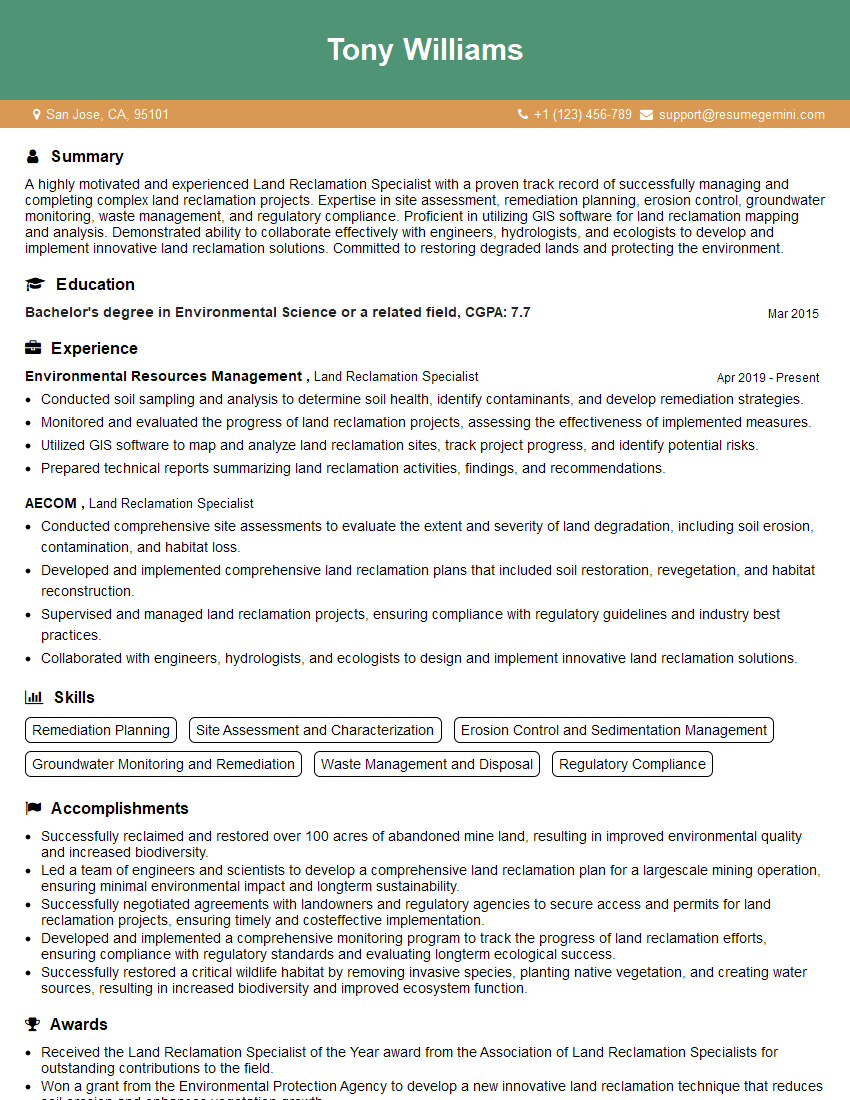
Land Reclamation Specialist Resume Sample

Soil Conservationist Resume Sample

Erosion Control Specialist Resume Sample

Restoration Ecologist Resume Sample
Explore more articles
Users Rating of Our Blogs
Share Your Experience
We value your feedback! Please rate our content and share your thoughts (optional).
What Readers Say About Our Blog
Very informative content, great job.
good