Every successful interview starts with knowing what to expect. In this blog, we’ll take you through the top ESCO Performance Contracting interview questions, breaking them down with expert tips to help you deliver impactful answers. Step into your next interview fully prepared and ready to succeed.
Questions Asked in ESCO Performance Contracting Interview
Q 1. Explain the core principles of ESCO Performance Contracting.
ESCO Performance Contracting is a unique financing model where an Energy Service Company (ESCO) invests in and implements energy efficiency upgrades in a building or facility. The core principle is that the ESCO guarantees a minimum level of energy savings, and its payment is tied directly to those achieved savings. Instead of upfront capital expenditure, the client pays for the improvements over time from the energy cost savings generated. Think of it like a performance-based contract – the ESCO only gets paid if it delivers results.
This approach reduces financial risk for building owners and incentivizes the ESCO to deliver high-quality, effective energy efficiency solutions. It shifts the focus from capital investment to operational cost savings, making it a highly attractive option for many organizations.
Q 2. Describe the different types of ESCO financing models.
Several financing models are employed in ESCO performance contracting. These include:
- Guaranteed Savings Performance Contract (GSPC): The most common model where the ESCO guarantees a minimum level of energy savings. Payment is directly linked to the achieved savings, often with a performance guarantee period.
- Shared Savings Performance Contract: Both the client and the ESCO share in the realized energy savings. The share ratio is pre-determined in the contract. This model mitigates risk for both parties.
- Utility Incentive-Based Contracts: These contracts incorporate incentives and rebates from utility companies to further enhance the financial benefits and reduce the upfront investment required.
- Lease Financing: The ESCO leases the energy-efficient equipment to the client. The client pays a monthly lease fee, which is structured to be less than the avoided energy costs.
- Loan Financing: While less common in pure ESCO models, some ESCOs offer financing solutions through loan arrangements. These usually involve a bank or other financial institution partnering with the ESCO.
The choice of financing model depends on factors like project size, client risk tolerance, available utility incentives, and the ESCO’s capabilities.
Q 3. How do you identify and quantify energy savings opportunities in a building?
Identifying and quantifying energy savings opportunities involves a multi-step process:
- Energy Audit: A thorough energy audit is the foundation. This includes analyzing building systems (HVAC, lighting, etc.), energy consumption data, and occupancy patterns to identify areas for improvement.
- Data Collection: Gather comprehensive data on energy usage, including utility bills, equipment specifications, and operational schedules. This data forms the baseline for measuring future savings.
- Energy Modeling: Use specialized software to simulate the impact of potential upgrades. This allows for accurate prediction of energy savings and return on investment.
- Prioritization: Based on the energy model and cost-benefit analysis, prioritize energy-saving opportunities. Focus on measures with the highest potential for quick payback and significant savings.
- Verification: Post-implementation, verify the actual energy savings achieved using the same methods as the pre-implementation baseline.
For example, a building with outdated lighting can significantly reduce energy consumption by switching to LEDs. Quantifying this involves calculating the energy used by the old lights, the energy used by the new LEDs, and the operating hours, to determine the kilowatt-hour (kWh) savings.
Q 4. What are the key performance indicators (KPIs) used to measure ESCO project success?
Key Performance Indicators (KPIs) for ESCO projects typically include:
- Guaranteed Energy Savings: The actual energy savings achieved compared to the guaranteed savings level.
- Return on Investment (ROI): The financial return for the building owner, considering both upfront investment and long-term energy savings.
- Payback Period: The time it takes for the energy savings to cover the initial investment.
- Energy Consumption Reduction: Measured in kWh or therms, demonstrating the impact of the project on energy usage.
- Greenhouse Gas (GHG) Emission Reductions: Tracking reductions in carbon footprint, a key sustainability indicator.
- Client Satisfaction: Feedback from the client regarding project implementation, communication, and overall experience.
Monitoring these KPIs throughout the project lifecycle is essential for ensuring success and making necessary adjustments along the way.
Q 5. Explain the process of developing an ESCO performance contract.
Developing an ESCO performance contract is a complex process, typically involving these steps:
- Feasibility Study: Assess the potential energy savings, project costs, and financial viability.
- Energy Audit and Analysis: Conduct a comprehensive energy audit to identify and quantify energy-saving opportunities.
- Proposal Development: Prepare a detailed proposal outlining the proposed energy-efficiency measures, guaranteed savings, financing model, and project timeline.
- Contract Negotiation: Negotiate the contract terms, including performance guarantees, payment schedules, and risk allocation.
- Project Implementation: The ESCO implements the agreed-upon energy efficiency upgrades.
- Monitoring and Verification: Regularly monitor energy consumption and verify that the guaranteed savings are being achieved.
- Payment: The ESCO is paid based on the achieved energy savings.
The process requires careful planning, collaboration between the ESCO and the client, and robust contract language to define responsibilities and expectations clearly.
Q 6. How do you manage risks associated with ESCO projects?
Managing risks in ESCO projects is critical. Common risks include:
- Performance Risk: The risk that the guaranteed energy savings will not be achieved. This is mitigated through thorough energy modeling, robust implementation, and ongoing performance monitoring.
- Financial Risk: The risk of unforeseen costs or delays. This is addressed through detailed project budgeting, contingency planning, and strong contract terms.
- Technical Risk: The risk of equipment failure or unexpected technical challenges. This is managed through proper equipment selection, quality control, and warranty provisions.
- Operational Risk: The risk that changes in building operations or occupancy will impact energy savings. This is addressed through clear operational guidelines and training for building occupants.
Effective risk management involves identifying potential risks early on, developing mitigation strategies, and establishing clear communication channels between the ESCO and the client.
Q 7. What are the common challenges encountered in ESCO projects and how do you address them?
Common challenges in ESCO projects include:
- Accurate Energy Modeling: Predicting energy savings accurately is crucial. Challenges can arise from incomplete data, unpredictable occupancy patterns, or unforeseen changes in building operations.
- Securing Financing: For large-scale projects, securing sufficient financing can be challenging, especially for smaller ESCOs.
- Client Buy-in: Gaining client buy-in and trust is essential for project success. This often requires strong communication and demonstrating the financial benefits clearly.
- Unforeseen Circumstances: Factors like equipment failures, delays due to permitting issues, or unexpected changes in energy prices can impact project timelines and costs.
Addressing these challenges requires a proactive approach, involving robust planning, thorough risk assessment, strong communication with the client, and flexibility to adapt to unforeseen circumstances. A well-defined contract and strong project management are key to mitigating these challenges.
Q 8. Describe your experience with energy audits and building commissioning.
Energy audits and building commissioning are crucial steps in any successful ESCO project. An energy audit systematically assesses a building’s energy consumption to identify areas for improvement. This involves detailed data collection, on-site inspections, and analysis of energy bills to pinpoint energy waste. Building commissioning, on the other hand, is a process of verifying and documenting that systems are operating as intended and meet design specifications. This ensures optimal performance from the start and is essential for maximizing the return on investment from energy efficiency upgrades.
In my experience, I’ve led numerous energy audits, utilizing advanced tools and techniques such as infrared thermography, blower door testing, and energy modeling software (discussed further in Question 3). This allowed me to pinpoint inefficiencies in HVAC systems, lighting, and building envelopes. For example, one audit revealed significant heat loss through poorly insulated walls, leading to a recommendation for exterior insulation retrofit. Following the energy audit, I participated in commissioning several projects, ensuring the newly installed energy-efficient equipment worked as designed, often discovering and rectifying minor issues that could impact long-term savings.
Q 9. How do you ensure compliance with relevant building codes and regulations in ESCO projects?
Compliance with building codes and regulations is paramount in ESCO projects. Non-compliance can lead to significant delays, penalties, and legal repercussions. My approach involves a multi-stage process. First, a thorough review of all applicable codes and regulations – such as the International Energy Conservation Code (IECC), local building ordinances, and any relevant safety standards – is conducted at the project’s outset. This review informs the design and implementation of energy efficiency measures. Next, I work closely with architects, engineers, and contractors to ensure all upgrades meet or exceed these standards. Regular site inspections and documentation are carried out throughout the project lifecycle to verify ongoing compliance. Finally, we ensure all necessary permits are obtained and all documentation required by regulatory bodies is prepared and submitted. For instance, in a recent project involving a school renovation, we carefully adhered to ADA regulations concerning accessibility while implementing energy-efficient lighting upgrades.
Q 10. What software or tools do you use for energy modeling and analysis?
For energy modeling and analysis, I utilize a range of sophisticated software tools. These include EnergyPlus, a widely recognized whole-building energy simulation program, allowing for detailed modeling of building performance under various conditions. I also use eQUEST, a simpler tool ideal for quick assessments and preliminary design options. For data analysis and visualization, I rely on programs such as Excel and specialized energy management software to create insightful reports and dashboards that help clients understand their energy consumption patterns and potential savings. Think of these tools as a doctor’s diagnostic equipment: they provide the data needed to pinpoint the issues and determine the best course of action.
Q 11. Explain your understanding of Guaranteed Energy Savings contracts.
A Guaranteed Energy Savings (GES) contract is a performance-based agreement where the ESCO guarantees a specified level of energy savings to the client. The ESCO finances the energy efficiency upgrades, and the savings achieved are used to pay back the ESCO’s investment. If the guaranteed savings are not met, the ESCO is responsible for making up the shortfall. This type of contract significantly reduces the financial risk for the client as they don’t need upfront capital investment. For example, an ESCO might guarantee a 20% reduction in energy consumption within three years. The client’s payments to the ESCO are then directly tied to the actual energy savings achieved. This strong incentive aligns the interests of both parties, fostering a collaborative and results-oriented approach to energy efficiency improvements.
Q 12. How do you handle disputes or disagreements with clients regarding performance metrics?
Disputes regarding performance metrics are addressed through a proactive and transparent approach. GES contracts typically include detailed performance measurement and verification (M&V) plans that define how energy savings will be calculated and verified. These plans clearly specify the baseline data collection methods, measurement periods, and acceptable tolerances for deviation. Open communication is crucial; any concerns are discussed promptly with the client. If disagreements arise, the M&V plan serves as the basis for resolution. We might involve independent third-party verification to ensure accuracy and impartiality. In one instance, a minor discrepancy in meter readings led to a temporary disagreement. However, by reviewing the M&V plan and conducting a joint site visit, we were able to reconcile the data and reach a mutually agreeable solution, maintaining a positive client relationship.
Q 13. Describe your experience with different types of energy-efficient technologies.
My experience encompasses a wide range of energy-efficient technologies. I’ve worked with various HVAC system upgrades, including high-efficiency boilers, variable-frequency drives (VFDs), and advanced control systems. I’m also proficient in implementing high-performance building envelopes involving improved insulation, air sealing, and high-performance windows. Experience with lighting retrofits, incorporating LED lighting and occupancy sensors, is extensive. I have also worked with renewable energy technologies such as solar photovoltaic (PV) systems and geothermal heat pumps. Each technology presents its own set of challenges and opportunities, requiring a deep understanding of their performance characteristics and integration into the building systems.
For example, I once led a project that involved replacing outdated lighting with LED fixtures and implementing a smart lighting control system. This resulted in a significant reduction in energy consumption and improved lighting quality. The client was pleased with the tangible improvements and substantial cost savings.
Q 14. How do you prioritize and manage multiple ESCO projects simultaneously?
Managing multiple ESCO projects simultaneously requires meticulous organization and efficient project management techniques. I use project management software to track deadlines, budgets, and progress on each project. Regular meetings with project teams are crucial for coordinating activities and addressing potential issues proactively. Prioritization is key – I focus on critical path activities and ensure that resources are allocated effectively across projects based on their urgency and impact. Clear communication channels are maintained with all stakeholders. For example, I might use a Kanban board to visualize the workflow of multiple projects and identify any bottlenecks or potential delays. This allows me to anticipate challenges and reallocate resources efficiently, ensuring all projects are completed successfully within the stipulated timeframes and budgets.
Q 15. What is your experience with developing and presenting proposals to potential clients?
Developing and presenting proposals for ESCO Performance Contracting requires a strategic approach combining technical expertise with compelling communication. I begin by thoroughly understanding the client’s needs through detailed energy audits and discussions, identifying their pain points and potential areas for improvement. This forms the foundation of a tailored proposal, highlighting the specific energy efficiency measures and projected cost savings tailored to their unique situation.
The proposal itself is structured logically, starting with an executive summary outlining key benefits and ROI. It then progresses to detail the proposed measures, including technical specifications, implementation timelines, and guaranteed performance metrics. Visual aids like charts and graphs illustrating projected savings are crucial for effective communication. Finally, a comprehensive financial analysis, including payback periods and potential financing options, is presented to showcase the financial viability of the project. I always conclude by addressing any potential client concerns and offering a clear path forward.
For example, for a school district, we might highlight the potential for improved indoor air quality alongside energy savings, aligning with their educational mission. For a manufacturing facility, we’d focus on reduced operational costs and increased productivity.
Career Expert Tips:
- Ace those interviews! Prepare effectively by reviewing the Top 50 Most Common Interview Questions on ResumeGemini.
- Navigate your job search with confidence! Explore a wide range of Career Tips on ResumeGemini. Learn about common challenges and recommendations to overcome them.
- Craft the perfect resume! Master the Art of Resume Writing with ResumeGemini’s guide. Showcase your unique qualifications and achievements effectively.
- Don’t miss out on holiday savings! Build your dream resume with ResumeGemini’s ATS optimized templates.
Q 16. How do you build and maintain relationships with clients and stakeholders?
Building and maintaining strong client relationships is paramount in ESCO Performance Contracting. It’s a long-term partnership, not just a transaction. I prioritize open and transparent communication throughout the project lifecycle. This includes regular updates, proactive problem-solving, and actively seeking client feedback.
I foster trust by consistently delivering on my promises, exceeding expectations when possible, and providing exceptional customer service. Active listening is key—understanding the client’s concerns and addressing them promptly demonstrates my commitment to their success. Beyond the immediate project, I strive to maintain ongoing communication, offering support and exploring future opportunities for collaboration. This proactive approach builds loyalty and lays the groundwork for future projects.
For instance, after completing a project for a hospital, I initiated a follow-up meeting to discuss ongoing energy monitoring and potential further optimizations, showcasing a continued commitment beyond contract completion.
Q 17. Describe your approach to project budgeting and cost control in ESCO projects.
Project budgeting and cost control in ESCO projects necessitate a meticulous approach. I start by conducting a detailed cost-benefit analysis, factoring in all relevant expenses: equipment costs, installation labor, engineering fees, permits, and contingency funds. We utilize sophisticated energy modeling software to accurately predict energy savings and associated cost reductions. This allows for a comprehensive budget that accurately reflects the project’s scope.
Throughout the project, we implement rigorous cost tracking mechanisms. Regular progress reports compare actual expenses against the budget, highlighting any variances and their causes. This allows for proactive adjustments, preventing cost overruns. We use value engineering techniques to identify areas where cost savings can be achieved without compromising project quality or performance. This might involve exploring alternative equipment or construction methods.
For example, in one project, we identified a less expensive, equally effective HVAC system through value engineering, resulting in significant cost savings while maintaining the guaranteed performance levels.
Q 18. How do you monitor and track project progress against the agreed-upon timeline and budget?
Monitoring and tracking project progress is critical to ensuring timely and cost-effective completion. We employ a robust project management system with clearly defined milestones and timelines. Regular progress meetings with the client and internal teams ensure everyone is aligned.
We use project management software to track key performance indicators (KPIs), including task completion, budget expenditures, and adherence to the schedule. Any deviations are immediately identified and addressed, preventing minor issues from escalating into major problems. Detailed reports are generated periodically, providing transparency and accountability. These reports visually track progress against the agreed-upon timeline and budget, allowing for proactive adjustments as needed.
For instance, using a Gantt chart, we can visually represent project phases, task dependencies, and potential delays, allowing for immediate corrective actions.
Q 19. Explain your experience with performance guarantees and risk mitigation strategies in ESCO contracts.
Performance guarantees and risk mitigation are fundamental to ESCO contracts. We typically guarantee a specific level of energy savings over a defined period. To mitigate risk, we conduct thorough due diligence, including comprehensive energy audits, site assessments, and detailed feasibility studies. This allows for accurate predictions and minimizes uncertainties.
We incorporate contingency plans into the contract, addressing potential unforeseen challenges such as equipment malfunctions or delays due to external factors. We might use insurance or surety bonds to protect against financial risks. Furthermore, we employ robust monitoring and verification systems to ensure the guaranteed energy savings are achieved. This often involves continuous energy monitoring and regular performance assessments.
A crucial risk mitigation strategy is transparent communication with clients about potential challenges and proactive solutions. For example, if unexpected issues arise during construction, we immediately notify the client, propose solutions, and revise the project plan accordingly.
Q 20. How do you ensure the long-term sustainability of energy savings achieved through ESCO projects?
Ensuring the long-term sustainability of energy savings is crucial for the success of an ESCO project. This involves not just achieving the initial savings but also maintaining them over the long term. We address this by incorporating robust operational and maintenance plans into the contract.
This includes providing training to facility staff on the proper operation and maintenance of new energy-efficient equipment. We also establish ongoing monitoring systems to track energy consumption and identify any potential issues early. We might offer long-term service agreements to ensure equipment is properly maintained and optimized. Finally, we encourage the client to adopt energy-conscious practices and engage in ongoing energy management.
For instance, we might develop a customized energy management plan that includes regular inspections, preventative maintenance schedules, and staff training programs to ensure continued energy efficiency.
Q 21. What is your experience with different types of energy audits (e.g., Level 1, Level 2, Level 3)?
My experience encompasses all levels of energy audits. A Level 1 audit is a preliminary assessment, often a walk-through, providing a high-level overview of potential energy savings opportunities. It’s quick and cost-effective, identifying low-hanging fruit for immediate improvement.
A Level 2 audit is more detailed, involving site instrumentation and data collection to quantify energy consumption and identify specific areas of energy waste. This is crucial for developing accurate cost-benefit analyses and selecting the most effective energy efficiency measures.
A Level 3 audit is the most comprehensive, involving detailed engineering analysis and modeling to predict the impact of various energy efficiency upgrades. This level is often necessary for large or complex projects with significant financial investments. It provides a higher degree of accuracy and confidence in the projected energy savings.
I’ve successfully conducted all three levels of audits across diverse sectors, tailoring the approach and level of detail to the specific needs and budget of the client.
Q 22. How do you measure the return on investment (ROI) of an ESCO project?
Measuring the Return on Investment (ROI) of an ESCO project is crucial for demonstrating its financial viability. It’s not simply about the initial cost savings; it’s about comparing the total investment against the total savings over the project’s lifespan. We use a discounted cash flow (DCF) analysis, which considers the time value of money. This means that money saved today is worth more than the same amount saved in the future.
Here’s a step-by-step breakdown:
- Calculate total project costs: This includes the ESCO’s upfront investment, financing costs, and any ongoing maintenance expenses.
- Project future energy savings: We meticulously model energy consumption reduction based on the implemented measures. This involves analyzing historical utility data, projected usage, and the efficiency improvements achieved by the ESCO’s upgrades.
- Determine the discount rate: This reflects the opportunity cost of capital—what return could be earned by investing the money elsewhere? It’s often based on the client’s borrowing rate or hurdle rate for investment projects.
- Calculate the net present value (NPV): This discounts future savings back to their present-day value using the discount rate. A positive NPV indicates a profitable project.
- Calculate the ROI: A simple calculation of (Total Savings – Total Costs) / Total Costs, expressed as a percentage. However, for more accuracy, we often use the internal rate of return (IRR), which determines the discount rate that sets the NPV to zero.
Example: Let’s say a project costs $100,000 upfront and saves $15,000 annually for 10 years. Using a 5% discount rate, the NPV of savings might be $110,000, leading to a positive ROI and demonstrating the financial benefits beyond simple payback.
Q 23. Describe your experience with various types of building systems (HVAC, lighting, etc.)
My experience encompasses a wide range of building systems, focusing on how they contribute to overall energy consumption and efficiency improvements. I’ve worked extensively with:
- HVAC Systems: From designing efficient air-handling units and optimizing chiller plant operations to installing variable-frequency drives (VFDs) on pumps and fans to reduce energy waste, I have hands-on expertise in improving HVAC system performance.
- Lighting Systems: I’ve overseen the implementation of energy-efficient lighting technologies, including LED upgrades, daylight harvesting systems, and smart lighting controls, which dramatically reduce energy use and improve lighting quality. I can assess lighting needs and recommend appropriate solutions based on occupancy sensors and daylight optimization.
- Building Envelopes: My experience extends to improving building envelopes through insulation upgrades, window replacements, and air sealing, which are fundamental to reducing heat loss and gain. This often involves thermal imaging assessments to pinpoint areas for improvement.
- Building Automation Systems (BAS): I’m proficient in working with BAS, monitoring energy consumption, and optimizing building operation schedules for better efficiency. Data analysis from BAS is key to identifying improvement opportunities.
In each instance, my focus is on identifying the most energy-intensive systems, proposing targeted solutions, and validating the impact of the upgrades through careful monitoring and measurement and verification (M&V).
Q 24. Explain your understanding of the different types of ESCO contracts (e.g., shared savings, performance-based)?
ESCO contracts vary in their structure, defining how the ESCO and the building owner share the risks and rewards of energy efficiency projects. Two common types are:
- Shared Savings Contracts: The ESCO finances and implements energy efficiency upgrades. The building owner shares a portion of the realized energy savings with the ESCO over an agreed-upon period, typically 7-15 years. The ESCO’s payment is directly tied to the verified savings. This mitigates risk for the owner because they don’t pay upfront for the upgrades.
- Performance-Based Contracts: Similar to shared savings, but with a more explicit performance guarantee. The ESCO guarantees a certain level of energy savings. If the guaranteed savings are not met, the ESCO is responsible for making up the difference. This requires a robust M&V plan.
Other contract types exist, including Guaranteed Savings Contracts (where the ESCO guarantees a specific percentage of savings), and Design-Build contracts (where the ESCO handles both design and construction). The contract type is chosen based on the project’s complexity, the owner’s risk tolerance, and the ESCO’s capabilities.
Q 25. How do you communicate technical information effectively to non-technical audiences?
Communicating complex technical information effectively to non-technical audiences requires clear and concise language, visual aids, and relatable analogies. I avoid jargon whenever possible, opting instead for simple, straightforward explanations.
My strategies include:
- Using simple language and avoiding technical terms: If I must use a technical term, I immediately define it.
- Visualizations: Charts, graphs, and infographics help illustrate key data and trends. For example, a bar graph comparing energy consumption before and after upgrades is far more impactful than a table of numbers.
- Analogies and real-world examples: Relating complex concepts to everyday experiences makes them easier to grasp. For example, explaining energy efficiency improvements using the analogy of a leaky faucet makes the concept relatable.
- Storytelling: Framing information within a narrative makes it engaging and memorable. For example, showcasing the environmental benefits of energy savings through a relatable story about reducing carbon emissions.
- Active listening and feedback: I encourage questions and address concerns to ensure understanding.
The goal is to translate technical data into a compelling story that demonstrates the value and impact of the project in a way that resonates with the audience.
Q 26. Describe your experience with data analysis and reporting in the context of ESCO projects.
Data analysis and reporting are fundamental to ESCO project success. My experience includes:
- Data collection: Gathering energy consumption data from utility bills, building automation systems (BAS), and other sources.
- Data cleaning and validation: Ensuring data accuracy and reliability through error checks and reconciliation.
- Statistical analysis: Identifying trends and patterns in energy consumption data, using techniques such as regression analysis to determine the impact of energy efficiency measures.
- Data visualization: Creating charts and graphs to effectively communicate key findings to clients and stakeholders.
- Reporting: Preparing comprehensive reports summarizing project performance, including energy savings, ROI, and other key metrics.
I utilize various software tools, including spreadsheet software, statistical packages, and energy modeling software, to analyze data and generate insightful reports. For example, I’ve used regression analysis to show the correlation between implemented improvements and the decrease in energy consumption, providing quantifiable evidence of the project’s success.
Q 27. How do you stay up-to-date with the latest trends and technologies in the energy efficiency field?
Staying current in the energy efficiency field requires continuous learning and engagement. I employ several strategies:
- Professional organizations: Active membership in organizations like ASHRAE (American Society of Heating, Refrigerating and Air-Conditioning Engineers) provides access to publications, conferences, and networking opportunities.
- Industry publications and journals: I regularly read journals like Energy and Buildings and Building and Environment to stay abreast of the latest research and technologies.
- Conferences and workshops: Attending industry conferences and workshops allows for direct engagement with leading experts and exposure to cutting-edge developments.
- Online resources: I utilize online resources such as industry websites and databases to access the latest information and research papers.
- Networking: I maintain relationships with other professionals in the field, exchanging knowledge and insights.
By combining these approaches, I ensure my expertise remains current and relevant, allowing me to deliver innovative and effective solutions for my clients.
Q 28. Explain your understanding of lifecycle cost analysis in relation to ESCO projects.
Lifecycle cost analysis (LCCA) is a critical component of ESCO projects. It evaluates the total cost of ownership of a building system over its entire lifespan, considering initial investment, operating costs, maintenance costs, and replacement costs. This contrasts with simply focusing on initial capital costs. By considering the long-term perspective, LCCA helps make informed decisions that maximize value.
In the context of ESCO projects, LCCA is used to:
- Compare different energy efficiency options: It allows for a comprehensive cost comparison of various technologies and approaches, considering their varying upfront costs, energy savings, and maintenance requirements.
- Justify energy efficiency investments: By demonstrating that energy efficiency measures lead to lower total costs over the long term, LCCA helps secure financing and gain buy-in from decision-makers.
- Optimize project design: By considering the long-term impacts of design decisions, LCCA contributes to optimal project design choices that minimize total life-cycle costs.
- Demonstrate the financial benefits of ESCO projects: LCCA provides a robust financial framework for demonstrating the value and return on investment of ESCO projects, showcasing long-term benefits to stakeholders.
Software tools are often utilized to perform complex LCCA calculations, taking into account factors such as inflation, interest rates, and the expected lifespan of equipment. The results are presented in clear and concise reports to support decision-making.
Key Topics to Learn for ESCO Performance Contracting Interview
- Energy Audits & Assessment: Understanding various audit methodologies, data analysis techniques, and reporting on energy consumption patterns in buildings.
- Project Financing & Investment Analysis: Evaluating the financial viability of ESCO projects, including ROI calculations, payback periods, and different financing models (e.g., performance contracts, shared savings).
- Energy Efficiency Technologies: Familiarity with a range of energy-saving technologies (HVAC, lighting, building envelope improvements) and their application in different building types.
- Contract Negotiation & Management: Understanding the key clauses in ESCO performance contracts, risk mitigation strategies, and effective project management techniques.
- Performance Measurement & Verification (M&V): Knowing different M&V methodologies (e.g., IPMVP) to track and verify energy savings achieved through implemented measures.
- Regulatory Compliance & Incentives: Awareness of relevant building codes, energy standards, and government incentives that influence ESCO projects.
- Communication & Stakeholder Management: Skills in effectively communicating technical information to clients, contractors, and other stakeholders; building consensus and managing expectations.
- Problem-Solving & Troubleshooting: Demonstrating the ability to identify and resolve challenges that may arise during project implementation and operation.
- Sustainability & Green Building Practices: Understanding the broader context of ESCO work within sustainable development goals and green building certifications (e.g., LEED).
Next Steps
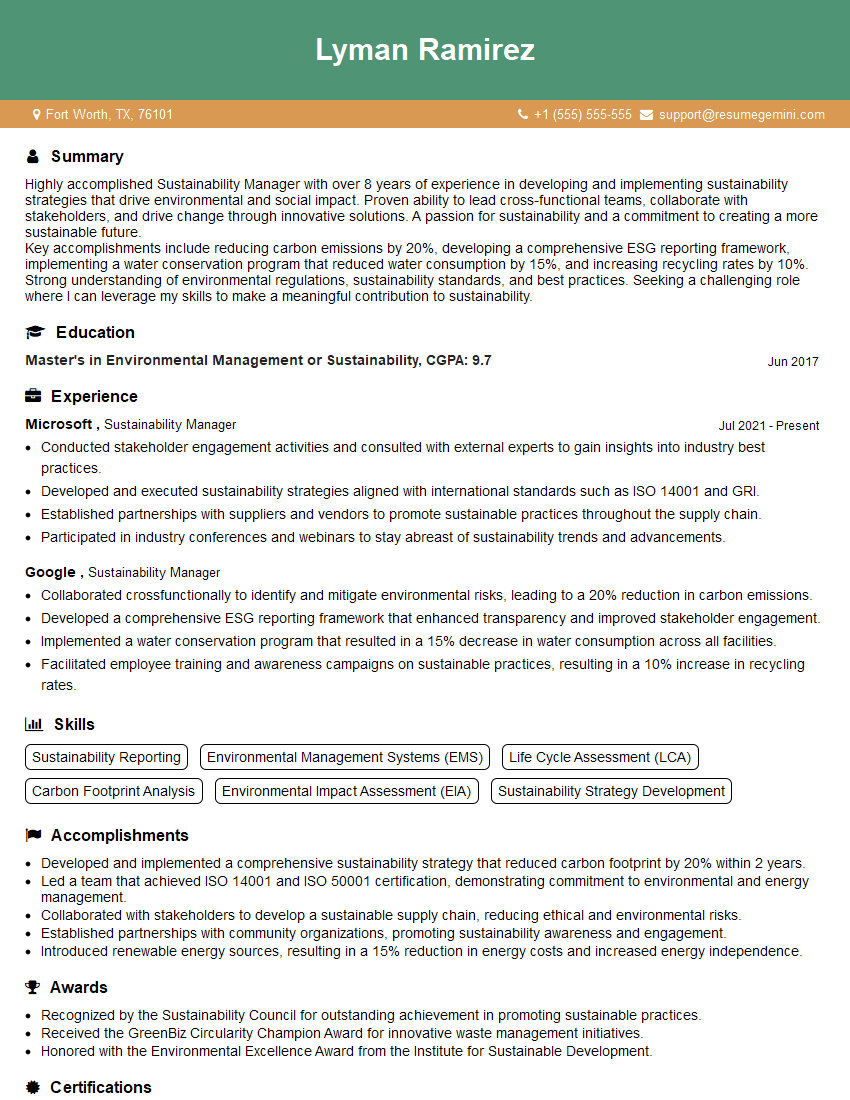
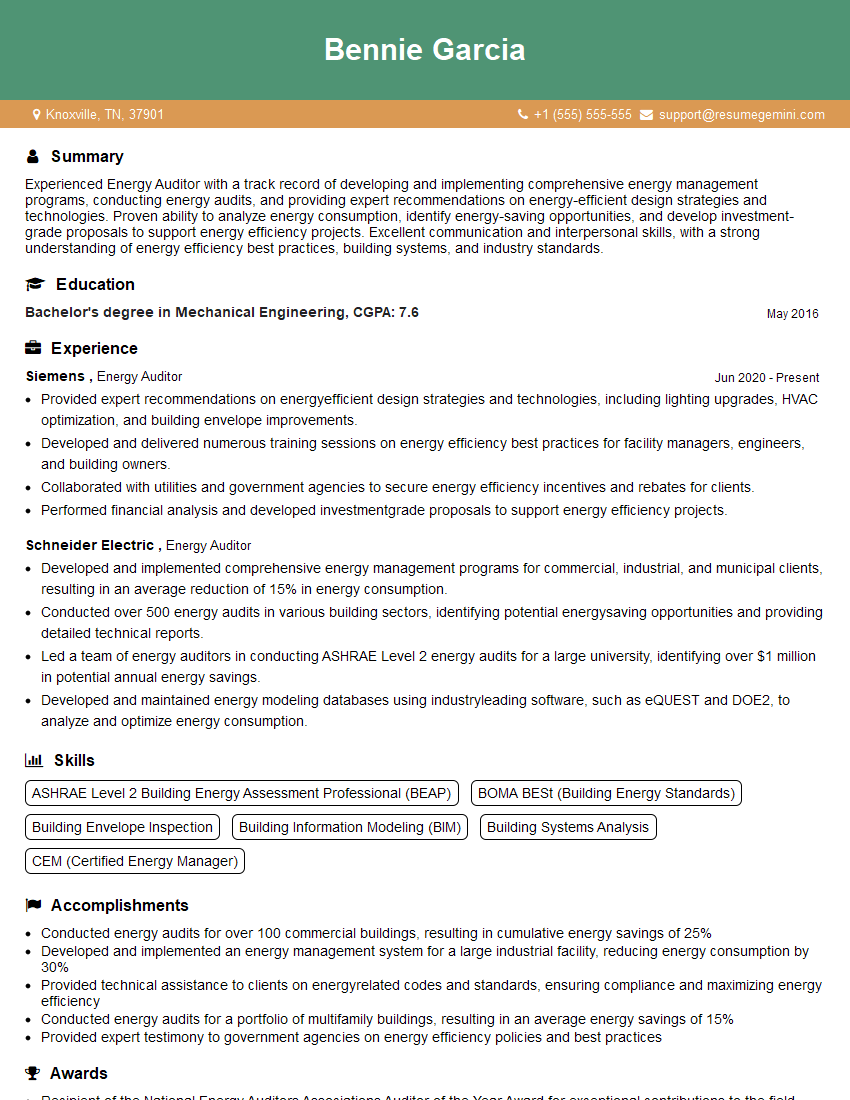
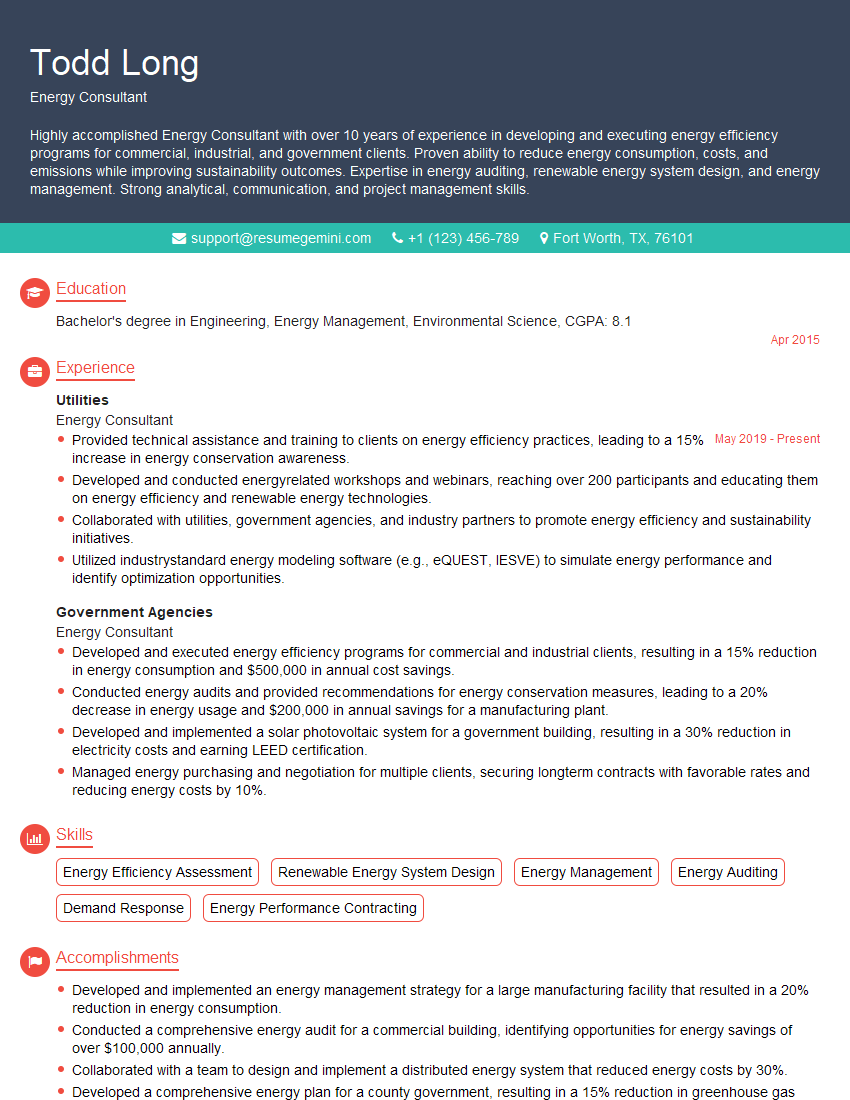
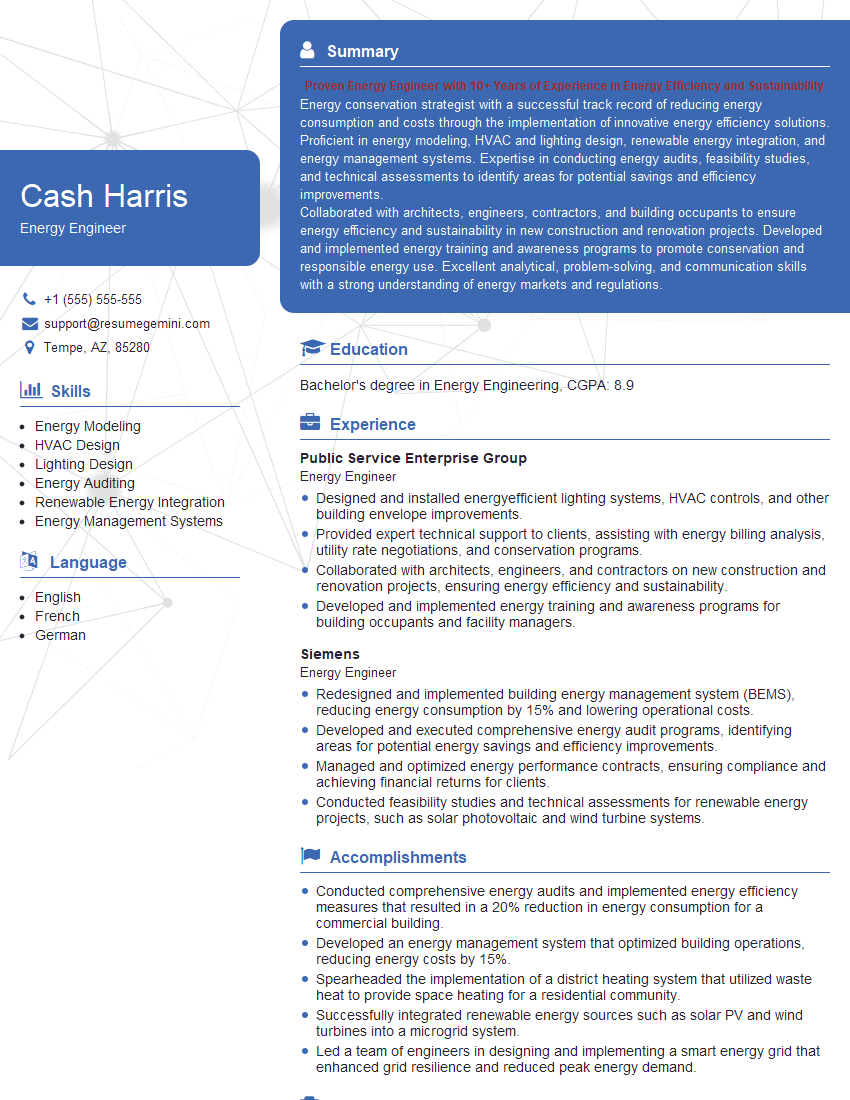
Mastering ESCO Performance Contracting opens doors to a rewarding career in a rapidly growing field, offering opportunities for professional growth and significant impact on environmental sustainability. To maximize your job prospects, crafting an ATS-friendly resume is crucial. ResumeGemini is a trusted resource that can help you build a professional and impactful resume designed to get noticed. Examples of resumes tailored to ESCO Performance Contracting are available to guide you through this process. Take this opportunity to present your skills and experience effectively and confidently.
Explore more articles
Users Rating of Our Blogs
Share Your Experience
We value your feedback! Please rate our content and share your thoughts (optional).
What Readers Say About Our Blog
Very informative content, great job.
good