Interviews are opportunities to demonstrate your expertise, and this guide is here to help you shine. Explore the essential Ethics and Compliance Skills interview questions that employers frequently ask, paired with strategies for crafting responses that set you apart from the competition.
Questions Asked in Ethics and Compliance Skills Interview
Q 1. Explain the importance of a robust ethics and compliance program.
A robust ethics and compliance program is the bedrock of a successful and trustworthy organization. It’s not just about avoiding legal trouble; it’s about cultivating a culture of integrity, transparency, and responsible conduct. Think of it as the organizational immune system, protecting against internal and external threats that could compromise its reputation, financial stability, and even its existence.
- Risk Mitigation: A strong program proactively identifies and mitigates potential risks, preventing costly legal battles, regulatory penalties, and reputational damage. For example, a well-defined anti-bribery policy can prevent violations of the FCPA.
- Enhanced Reputation: Demonstrating a commitment to ethical behavior builds trust with stakeholders – employees, customers, investors, and the public. This can translate to increased loyalty, stronger partnerships, and a competitive advantage.
- Improved Operational Efficiency: Clear guidelines and processes streamline operations, reducing ambiguity and the likelihood of errors. This improves productivity and reduces operational costs.
- Employee Engagement: When employees feel their organization values ethics, they’re more likely to be engaged, motivated, and committed. This leads to higher retention and improved morale.
- Sustainable Growth: Long-term success depends on a foundation of ethical conduct and sustainable practices. A robust program ensures the organization can weather challenges and achieve its goals responsibly.
Q 2. Describe your experience conducting internal investigations.
Throughout my career, I’ve conducted numerous internal investigations, ranging from allegations of financial misconduct to violations of company policy. My approach is always thorough, impartial, and focused on gathering facts. I follow a structured process that typically involves:
- Securing the Scene: Preserving evidence, such as emails, documents, and electronic data, is crucial. This often involves securing access to relevant systems and accounts.
- Witness Interviews: Conducting interviews with relevant parties using a consistent methodology to ensure fairness and accuracy. I use open-ended questions to gather information and document responses carefully.
- Document Review: Examining relevant documents, emails, and other records to corroborate witness statements and uncover additional evidence.
- Data Analysis: Using data analytics tools when necessary to identify patterns, anomalies, or other indicators of wrongdoing.
- Report Writing: Preparing a detailed and objective report summarizing the investigation’s findings and conclusions. This report includes all evidence gathered and any relevant recommendations for corrective action.
For example, I once investigated an allegation of data theft. By systematically interviewing employees, reviewing system logs, and analyzing network traffic, I was able to identify the perpetrator and recover the stolen data. My report led to disciplinary action and improvements in the company’s cybersecurity protocols.
Q 3. How do you identify and assess compliance risks within an organization?
Identifying and assessing compliance risks requires a systematic approach. I typically use a risk assessment framework that incorporates:
- Regulatory Landscape: Understanding applicable laws, regulations, and industry standards is critical. This includes analyzing changes in legislation and industry best practices. For example, staying abreast of changes to GDPR regulations is crucial for organizations handling EU citizen data.
- Internal Controls: Reviewing existing internal controls to identify weaknesses or gaps. This involves assessing the effectiveness of policies, procedures, and processes in preventing and detecting violations.
- Third-Party Risk: Evaluating the compliance risks associated with third-party vendors, suppliers, and partners. This includes conducting due diligence on potential partners and monitoring their compliance performance.
- Employee Behavior: Assessing the risk of employee misconduct through analyzing incident reports, surveys, and employee feedback. This includes understanding the company culture and identifying any potential areas for improvement.
- Technology Assessment: Evaluating the security and compliance posture of information systems and technologies. This can include vulnerability scans, penetration testing, and security audits.
Once risks are identified, I prioritize them based on likelihood and potential impact. This informs the development of mitigation strategies, including changes to policies, training programs, and improved monitoring procedures.
Q 4. What is your understanding of the Sarbanes-Oxley Act (SOX)?
The Sarbanes-Oxley Act of 2002 (SOX) is a landmark piece of legislation designed to protect investors by improving the accuracy and reliability of corporate disclosures. It primarily focuses on publicly traded companies and their financial reporting processes. Key aspects of SOX include:
- Enhanced Financial Disclosures: SOX mandates more detailed and transparent financial reporting, aiming to reduce the likelihood of fraudulent accounting practices.
- Internal Controls: It requires companies to establish and maintain robust internal controls over financial reporting, subject to regular audits.
- Corporate Responsibility: SOX holds corporate executives accountable for the accuracy of financial statements, with significant penalties for non-compliance.
- Auditor Independence: SOX strengthens the independence of external auditors to ensure objectivity and prevent conflicts of interest.
Understanding SOX is crucial for companies subject to its regulations. Non-compliance can lead to severe penalties, including fines, delisting from stock exchanges, and criminal charges for executives.
Q 5. Explain your knowledge of the Foreign Corrupt Practices Act (FCPA).
The Foreign Corrupt Practices Act (FCPA) is a US law that prohibits bribery of foreign government officials to obtain or retain business. It applies to US companies and individuals, as well as foreign companies listed on US stock exchanges. Key elements of the FCPA include:
- Anti-Bribery Provisions: These prohibit the offering, promising, or giving anything of value to a foreign official to influence a business decision.
- Accounting Provisions: Companies must maintain accurate books and records, and have internal accounting controls to prevent and detect potential violations.
- Jurisdiction: The FCPA has extraterritorial reach, meaning it applies to actions taken outside the US if they involve US persons or entities.
Understanding the FCPA is essential for companies engaging in international business. Violations can result in hefty fines, criminal charges, and severe reputational damage. A robust ethics and compliance program, including comprehensive anti-bribery training and due diligence procedures, is crucial for compliance.
Q 6. How would you handle a situation where an employee violates company policy?
Handling employee policy violations requires a fair, consistent, and documented process. My approach would be:
- Gather Information: Thoroughly investigate the situation to gather all relevant facts, including witness statements, documentation, and any other evidence.
- Employee Interview: Interview the employee to understand their perspective and allow them to explain their actions.
- Policy Review: Carefully review the relevant company policy to determine the severity of the violation.
- Disciplinary Action: Based on the investigation findings and company policy, determine the appropriate disciplinary action. This could range from a verbal warning to termination, depending on the severity of the offense and the employee’s history.
- Documentation: Meticulously document each step of the process, including dates, times, individuals involved, and actions taken. This documentation protects the company and ensures fairness.
- Corrective Actions: Implement corrective actions to prevent similar violations in the future. This may involve revised policies, additional training, or improved oversight.
It’s vital to ensure consistent application of policies and procedures to maintain fairness and avoid accusations of bias. Transparency and due process are paramount.
Q 7. Describe your experience developing and delivering compliance training.
I have extensive experience developing and delivering compliance training, focusing on engaging and effective methods. My approach involves:
- Needs Assessment: Identifying specific compliance risks and the training needs of different employee groups.
- Content Development: Creating engaging training materials that are relevant, concise, and easy to understand. I use various methods, including online modules, interactive workshops, and role-playing exercises.
- Delivery Methods: Utilizing a variety of methods to suit different learning styles and preferences. This can include online modules, live sessions, and on-the-job training.
- Testing and Evaluation: Assessing employee understanding and retention through quizzes, tests, and performance evaluations.
- Tracking and Reporting: Monitoring training completion rates and assessing the effectiveness of the training in reducing compliance risks.
For example, I once developed a training program on the FCPA for a multinational company’s sales team. The program included interactive scenarios, case studies, and quizzes, making it engaging and effective. Post-training assessments showed a significant improvement in employee knowledge and understanding of the FCPA’s requirements.
Q 8. How do you ensure that compliance programs are effective and efficient?
Ensuring a compliance program is both effective and efficient requires a multi-faceted approach. It’s not simply about checking boxes; it’s about fostering a culture of compliance within the organization. This involves a blend of proactive measures and reactive responses.
- Risk Assessment: Regularly identifying and assessing potential compliance risks is crucial. This involves understanding your industry, relevant laws and regulations, and your company’s specific operations. A thorough risk assessment allows you to prioritize efforts and allocate resources effectively. For example, a financial institution might prioritize anti-money laundering (AML) compliance over other areas due to higher regulatory scrutiny and potential penalties.
- Policy and Procedure Development: Clear, concise, and easily accessible policies and procedures are the backbone of any effective compliance program. They need to be regularly reviewed and updated to reflect changes in legislation and best practices. Simply having policies isn’t enough; they must be well-communicated and understood by all employees.
- Training and Education: Investing in regular and engaging compliance training is paramount. This isn’t just a one-time event; it should be ongoing and tailored to the specific roles and responsibilities of employees. Interactive training modules, simulations, and case studies can significantly improve comprehension and retention.
- Monitoring and Auditing: Regular monitoring and internal audits are essential to identify weaknesses and ensure adherence to policies and regulations. This might involve reviewing transactions, conducting employee interviews, and analyzing data for anomalies. This allows for early detection of potential compliance breaches, allowing for proactive remediation.
- Reporting and Remediation: Establishing a clear reporting mechanism for compliance issues is critical. This allows for timely identification and resolution of problems. It is vital to have processes in place for investigating and rectifying any identified breaches, ensuring accountability and preventing recurrence.
By implementing these strategies, organizations can move beyond simple compliance to a culture of ethics and integrity, where compliance is viewed not as a burden but as a competitive advantage.
Q 9. What are the key elements of a strong code of conduct?
A strong code of conduct serves as a moral compass, guiding employee behavior and fostering ethical decision-making. It’s more than just a document; it’s a living, breathing reflection of an organization’s values.
- Clear Statement of Values: The code should clearly articulate the organization’s core values, such as integrity, honesty, fairness, and respect. These values should underpin all aspects of the company’s operations and guide employee conduct.
- Specific Examples and Scenarios: Vague statements are unhelpful. The code should provide concrete examples of ethical dilemmas and outline appropriate responses. For example, it might address issues such as conflicts of interest, bribery, and data privacy.
- Reporting Mechanisms: It should outline clear processes for reporting ethical violations, including how to report anonymously if necessary. This ensures that employees feel safe and empowered to raise concerns without fear of reprisal.
- Consequences of Non-Compliance: The code must clearly specify the consequences of violating its principles. This might range from warnings to termination, depending on the severity of the infraction. This demonstrates the organization’s commitment to enforcing ethical standards.
- Regular Review and Updates: A code of conduct is not a static document. It should be regularly reviewed and updated to reflect changes in laws, regulations, and best practices. This ensures that it remains relevant and effective.
A well-crafted code of conduct is not just a legal requirement; it’s a powerful tool for building trust, enhancing reputation, and improving overall organizational performance. It should be readily accessible and regularly reinforced through training and communication.
Q 10. How do you stay up-to-date on changes in relevant laws and regulations?
Staying current with changes in relevant laws and regulations is an ongoing process that demands diligence and a proactive approach. It’s not enough to simply react to changes; you must anticipate them.
- Subscription to Regulatory Updates: Subscribe to newsletters, alerts, and updates from relevant regulatory bodies. Many government agencies provide regular updates on changes to laws and regulations. This ensures you receive timely notifications of any significant changes.
- Professional Development: Attend industry conferences, webinars, and training sessions to stay abreast of the latest developments. Networking with other compliance professionals can also provide valuable insights and updates.
- Monitoring Legal and Regulatory Websites: Regularly check the websites of relevant regulatory bodies for updates, announcements, and proposed rule changes. This proactive monitoring allows for early identification of potential changes that might impact your organization.
- Utilize Legal Counsel: Engage legal counsel specializing in compliance to stay informed on relevant legal developments. They can provide expert guidance and interpretations of complex regulations.
- Internal Communication: Establish a system for communicating regulatory updates within the organization. This ensures that all relevant personnel are aware of any changes and their implications.
Staying informed is not just a matter of compliance; it’s about mitigating risk and ensuring the long-term sustainability and success of the organization.
Q 11. Describe your experience with regulatory audits and inspections.
My experience with regulatory audits and inspections spans several years and various industries. I’ve been involved in both internal audits to prepare for external audits and the actual interactions with regulatory bodies. This experience has highlighted the importance of thorough preparation and clear communication.
- Preparation: Thorough preparation is critical. This involves a comprehensive review of all relevant policies, procedures, and records. We conduct mock audits internally to identify any potential issues before the actual inspection. This process helps minimize surprises during the audit and allows for effective remediation of any identified deficiencies.
- Documentation: Maintaining meticulous documentation is crucial. This ensures that auditors can readily access the information they need to evaluate compliance. Clear and organized documentation significantly simplifies the audit process and demonstrates the organization’s commitment to compliance.
- Collaboration: Effective collaboration between the compliance team and the auditors is essential. Open communication and proactive responses to questions ensure a smooth and efficient audit process. This collaborative approach fosters a positive working relationship and can help resolve issues quickly.
- Post-Audit Action Plan: Following the audit, a thorough review of the auditor’s findings is necessary. This involves creating a detailed action plan to address any identified deficiencies. This ensures that necessary corrective actions are taken to prevent future non-compliance.
Through these experiences, I’ve developed a strong understanding of regulatory expectations and best practices for managing audits effectively, minimizing disruption, and ensuring that the organization maintains a strong compliance posture.
Q 12. How do you measure the effectiveness of a compliance program?
Measuring the effectiveness of a compliance program is not a simple task; it requires a holistic approach that goes beyond simple metrics. It’s about assessing the program’s impact on ethical behavior, risk mitigation, and organizational culture.
- Key Risk Indicators (KRIs): Monitoring key risk indicators allows for early detection of potential compliance issues. For example, an increase in near misses or a rise in the number of reported compliance violations could indicate weaknesses in the program. These indicators help provide early warnings of potential problems.
- Employee Surveys and Feedback: Gathering employee feedback through surveys and focus groups can provide valuable insights into the effectiveness of the program. This allows for identification of areas where improvements are needed in terms of training, communication, or policy clarity.
- Internal Audit Findings: The results of internal audits provide a direct measure of the program’s effectiveness. Identifying trends in non-compliance and the effectiveness of corrective actions helps evaluate the overall effectiveness.
- Number and Severity of Compliance Violations: Tracking the number and severity of compliance violations over time can help assess the impact of the program. A reduction in the number and severity of violations demonstrates the program’s effectiveness in mitigating risk.
- Regulatory Inspections: The results of regulatory inspections provide a critical external validation of the program’s effectiveness. A clean audit report demonstrates the success of the compliance program.
By combining quantitative data with qualitative feedback, you get a more complete picture of the program’s success and areas that need improvement. The goal is not just compliance, but a culture of ethical behavior that minimizes risk and fosters long-term organizational success.
Q 13. How would you handle a whistleblower report?
Handling a whistleblower report requires a sensitive and thorough approach. It’s critical to protect the confidentiality of the whistleblower while ensuring a fair and impartial investigation.
- Confidentiality and Protection: Immediately ensure the confidentiality and safety of the whistleblower. This might involve implementing measures to protect their identity and prevent retaliation.
- Initial Assessment: Carefully assess the allegations. Determine the nature of the alleged violation, the individuals involved, and the potential impact on the organization.
- Investigation: Launch a thorough and impartial investigation. This might involve gathering evidence, interviewing witnesses, and reviewing relevant documents. The investigation should be conducted by an unbiased party, ideally someone independent from the individuals involved.
- Documentation: Maintain meticulous documentation throughout the investigation. This includes the initial report, all evidence collected, and the findings of the investigation. This documentation is critical if the matter escalates or requires legal action.
- Remediation: If the investigation confirms the allegations, implement appropriate remedial action. This could involve disciplinary measures, corrective actions, or reporting to relevant authorities. The whistleblower should be informed of the outcome, provided they wish to be.
- Communication: Maintain regular communication with the whistleblower throughout the process (unless they request not to be contacted), keeping them informed of the progress and the outcome of the investigation.
The process should be conducted fairly, transparently, and in accordance with all applicable laws and regulations. Remember, protecting whistleblowers is essential for maintaining a culture of ethics and integrity.
Q 14. Explain your experience with implementing a compliance monitoring system.
Implementing a compliance monitoring system involves a systematic approach to ensure adherence to policies, procedures, and regulations. It’s not a one-size-fits-all solution; it must be tailored to the specific needs and risks of the organization.
- Needs Assessment: Begin by identifying the key compliance risks and areas requiring monitoring. This will inform the design and scope of your monitoring system. A thorough risk assessment is the foundation of an effective system.
- System Selection: Choose a monitoring system that aligns with the organization’s needs. This could involve implementing a software solution, leveraging existing systems, or developing a custom solution. Consider factors such as scalability, usability, and integration with existing systems.
- Data Collection: Establish clear data collection processes. This might involve automated data extraction from various systems, manual data entry, or a combination of both. The key is to ensure that data is collected consistently and accurately.
- Data Analysis: Develop methods for analyzing the collected data to identify potential compliance issues. This could involve using statistical analysis, data visualization, or other techniques to identify trends and anomalies.
- Reporting and Alerting: Establish a system for generating reports and alerts based on the analyzed data. This ensures that potential compliance issues are identified promptly and addressed effectively. The system should provide timely notifications to relevant personnel.
- Regular Review and Updates: The system should be regularly reviewed and updated to reflect changes in laws, regulations, and organizational needs. Continuous improvement is essential to ensure the system remains effective.
A well-designed compliance monitoring system provides continuous oversight, enabling proactive identification and mitigation of compliance risks, fostering a culture of continuous improvement, and ultimately ensuring organizational success.
Q 15. How do you prioritize compliance risks?
Prioritizing compliance risks involves a structured approach to identify, assess, and manage potential violations. Think of it like a triage system in a hospital – you address the most critical threats first. I typically use a risk assessment framework that considers likelihood and impact.
- Likelihood: How probable is it that a specific risk will materialize? This considers factors like the effectiveness of existing controls, external pressures (e.g., regulatory changes), and internal vulnerabilities (e.g., weak policies).
- Impact: What are the potential consequences if the risk event occurs? This assesses the financial, reputational, legal, and operational impacts. For instance, a data breach has a high impact due to potential fines, customer loss, and damage to brand reputation.
I then use a matrix to plot these factors. High likelihood and high impact risks get immediate attention, resources, and mitigation strategies. For example, if a new regulation significantly impacts our core operations, it receives immediate attention, requiring policy updates, employee training, and possibly system modifications. Low likelihood, low impact risks might be monitored but may not require immediate action. This allows for a proactive, data-driven approach to risk management, rather than a reactive one.
Career Expert Tips:
- Ace those interviews! Prepare effectively by reviewing the Top 50 Most Common Interview Questions on ResumeGemini.
- Navigate your job search with confidence! Explore a wide range of Career Tips on ResumeGemini. Learn about common challenges and recommendations to overcome them.
- Craft the perfect resume! Master the Art of Resume Writing with ResumeGemini’s guide. Showcase your unique qualifications and achievements effectively.
- Don’t miss out on holiday savings! Build your dream resume with ResumeGemini’s ATS optimized templates.
Q 16. What is your experience with data privacy regulations (e.g., GDPR, CCPA)?
I have extensive experience with data privacy regulations, including GDPR and CCPA. My experience includes developing and implementing data privacy policies, conducting data protection impact assessments (DPIAs), and managing data breach response plans. I understand the nuances of each regulation – GDPR’s focus on consent and data subject rights, for example, differs from CCPA’s emphasis on consumer rights in California.
In a previous role, I led the effort to bring our company into GDPR compliance. This involved a multi-phased project: mapping all personal data flows, updating privacy policies, implementing data subject access request (DSAR) procedures, and training employees on data handling best practices. We even developed a detailed data breach response plan, regularly tested and updated. We successfully navigated the initial compliance effort and have continued to adapt to evolving regulatory requirements.
Q 17. How do you build a strong ethical culture within an organization?
Building a strong ethical culture is a continuous journey, not a destination. It requires a holistic approach, focusing on leadership commitment, clear communication, and accountability. It’s about embedding ethical principles into the DNA of the organization.
- Leadership Commitment: Leaders must actively champion ethical conduct, making ethical decisions visible and rewarding ethical behavior. This includes setting the tone at the top and holding themselves accountable to the same standards expected of everyone else.
- Clear Communication: Ethical standards, expectations, and policies should be clearly defined and communicated to all employees, in accessible language, through various channels (e.g., training, intranet, newsletters). Transparency is key.
- Accountability: Establish mechanisms for reporting and investigating ethical violations. Ensure that all reports are taken seriously, investigated thoroughly, and appropriately addressed. Consequences for unethical conduct must be clear and consistently applied.
- Ethical Training and Development: Regularly providing ethical training programs strengthens employees’ understanding and ability to apply ethical principles in their daily work. Scenario-based training and real-life examples are particularly effective.
Think of it like building a house: A strong ethical culture is the foundation. Without it, the whole organization is vulnerable.
Q 18. Describe your experience with conflict of interest management.
Conflict of interest management is crucial for maintaining trust and integrity. My experience involves developing and implementing policies and procedures to identify, assess, and mitigate potential conflicts. This involves creating a system for employees to disclose potential conflicts, reviewing those disclosures, and developing appropriate mitigation strategies.
In my previous role, we implemented a robust conflict of interest policy. This included a mandatory annual disclosure form for all employees, a formal review process for potential conflicts, and clear guidelines for recusal and management of conflicts. We established an independent ethics hotline for reporting concerns and ensured that employees understood their obligation to disclose potential conflicts. We also created a training program to educate employees on identifying and managing potential conflicts of interest.
Q 19. Explain your understanding of anti-bribery and anti-corruption laws.
Anti-bribery and anti-corruption laws, such as the Foreign Corrupt Practices Act (FCPA) in the US and the UK Bribery Act, prohibit the bribery of foreign officials and other corrupt practices. They aim to prevent companies from engaging in unethical business practices that undermine fair competition and good governance. Understanding these laws requires a deep knowledge of their scope and application, including due diligence on business partners, robust internal controls, and effective compliance training.
My experience includes conducting anti-bribery and anti-corruption risk assessments, developing and implementing compliance programs, and providing training to employees on these critical issues. This includes understanding the nuances of ‘facilitation payments’ versus outright bribery, establishing clear gift and hospitality policies, and utilizing robust third-party due diligence processes to mitigate bribery risks.
Q 20. How do you communicate compliance expectations to employees at all levels?
Communicating compliance expectations effectively requires a multi-faceted approach tailored to different employee groups. It’s not a one-size-fits-all solution.
- Targeted Communication: The message should be adjusted for the audience. Senior management may require detailed briefings on complex compliance issues, while frontline employees need clear, concise guidance on their daily responsibilities.
- Multiple Channels: Utilize various communication channels – emails, intranet, workshops, one-on-one meetings, videos, posters – to reach all employees, regardless of their roles or access to technology.
- Interactive Training: Compliance training should be interactive and engaging, rather than passive. Use scenario-based training, role-playing, and quizzes to reinforce learning and ensure understanding.
- Regular Reinforcement: Compliance is not a one-time event. Regularly remind employees of key compliance requirements through newsletters, updates, and refresher training. Regular communication keeps compliance top-of-mind.
- Feedback Mechanisms: Establish mechanisms for employees to ask questions, provide feedback, and report concerns without fear of retaliation.
Effective communication is crucial to ensure everyone understands their obligations and feels empowered to raise compliance issues.
Q 21. What is your experience with developing and implementing compliance policies?
Developing and implementing compliance policies requires a systematic approach, combining legal expertise with practical considerations. I typically follow these steps:
- Needs Assessment: Identify the organization’s specific compliance needs and risks based on its industry, size, and operations. This might involve analyzing relevant laws and regulations, assessing internal controls, and identifying potential vulnerabilities.
- Policy Development: Draft clear, concise, and easy-to-understand policies that address identified risks. Policies should be aligned with best practices and legal requirements. They should also be regularly reviewed and updated to reflect changes in the legal landscape or organizational structure.
- Implementation: Communicate and train employees on the new policies and procedures. Ensure that the policies are easily accessible, and provide support to employees to assist them in following the policies.
- Monitoring and Evaluation: Monitor compliance with policies through regular audits, self-assessments, and other mechanisms. Evaluate the effectiveness of the policies and make adjustments as needed. This includes tracking key metrics, analyzing trends, and identifying areas for improvement.
For example, I once developed a comprehensive anti-discrimination and harassment policy. This involved researching relevant legislation, consulting with legal counsel, drafting the policy, designing training materials, and establishing clear reporting procedures. The policy’s effectiveness was continuously monitored through anonymous surveys, regular audits, and employee feedback.
Q 22. Describe your experience with conducting risk assessments.
Risk assessment is a systematic process to identify, analyze, and evaluate potential hazards. My approach involves a combination of qualitative and quantitative methods. I start by defining the scope, identifying potential risks (e.g., financial fraud, data breaches, operational failures, regulatory non-compliance), and then analyzing the likelihood and impact of each risk. This often involves reviewing existing policies, procedures, and controls, conducting interviews with relevant personnel, and utilizing relevant data.
For instance, in a previous role at a financial institution, we conducted a risk assessment for a new loan product launch. We identified risks such as credit risk, market risk, and operational risk. We then used a risk matrix to evaluate the likelihood and potential impact of each risk, prioritizing our mitigation efforts accordingly. We developed a comprehensive risk mitigation plan that included stricter credit scoring criteria, diversified investment strategies, and enhanced fraud detection systems.
This process isn’t a one-time event; it’s iterative. I regularly review and update risk assessments to reflect changes in the business environment, emerging threats, and lessons learned from previous incidents. This ensures the organization remains proactive and adaptable.
Q 23. How do you ensure compliance with environmental regulations?
Ensuring compliance with environmental regulations requires a multi-faceted approach. It starts with a thorough understanding of all applicable laws and regulations, which vary significantly by location and industry. This includes things like air and water quality standards, waste disposal regulations, and permitting requirements. I utilize environmental management systems (EMS) such as ISO 14001 to provide a structured framework for compliance. This involves developing clear policies and procedures, providing employee training, conducting regular environmental audits, and maintaining accurate records.
For example, in a previous role involving manufacturing, we implemented a comprehensive EMS, which included regular environmental impact assessments, waste reduction initiatives (e.g., implementing recycling programs and reducing energy consumption), and robust reporting mechanisms to track our progress. We also established a system for ensuring that all permits and licenses were up-to-date and compliant. Maintaining open communication with regulatory bodies is crucial for demonstrating good faith and proactively addressing any concerns.
Furthermore, I believe that environmental compliance goes beyond mere legal adherence; it’s about promoting sustainable practices and minimizing environmental impact. This involves integrating environmental considerations into decision-making at all levels of the organization.
Q 24. What is your experience with internal control systems?
Internal control systems are the processes and procedures an organization uses to ensure the reliability of financial reporting, the effectiveness and efficiency of operations, and compliance with laws and regulations. My experience encompasses designing, implementing, and monitoring these systems. I’m familiar with various frameworks, including COSO (Committee of Sponsoring Organizations of the Treadway Commission) and COBIT (Control Objectives for Information and related Technologies).
In a past role, I helped a company implement a new internal control system to address weaknesses identified in an audit. This involved defining clear roles and responsibilities, documenting processes, establishing segregation of duties, and implementing automated controls. For instance, we implemented a two-factor authentication system to enhance security and introduced regular reconciliation procedures to detect discrepancies in financial records. We also established a robust reporting and monitoring system to identify and address any emerging control weaknesses.
The effectiveness of internal controls relies heavily on ongoing monitoring and improvement. This means regularly reviewing processes, conducting audits, and adapting the system to reflect changes in the business environment and emerging risks. It’s a continuous cycle of assessment, implementation, monitoring, and refinement.
Q 25. How do you handle ethical dilemmas in the workplace?
Ethical dilemmas are inevitable in the workplace. My approach involves a structured decision-making process. I start by clearly identifying the ethical issue and the stakeholders involved. Then, I gather all relevant information and consider different perspectives. This might involve consulting with colleagues, legal counsel, or ethical resources. I apply relevant ethical frameworks, such as utilitarianism (maximizing overall good), deontology (adhering to moral duties), and virtue ethics (acting in accordance with moral character), to evaluate the potential consequences of different actions.
For example, if I were faced with a situation where a colleague was engaging in questionable accounting practices, I would first document the evidence and then approach my supervisor or a designated ethics officer. I would clearly explain the situation and the potential risks involved. The goal isn’t to accuse, but to raise awareness and ensure compliance with ethical standards and company policies.
Open communication, transparency, and a commitment to ethical conduct are vital in navigating these challenging situations. It’s about making informed decisions that align with the organization’s values and legal requirements.
Q 26. Describe your experience with vendor and third-party risk management.
Vendor and third-party risk management involves assessing and mitigating the risks associated with engaging external entities. This includes evaluating their financial stability, operational capabilities, security practices, and compliance posture. I utilize a risk-based approach, prioritizing vendors based on their criticality to the organization and the potential impact of a failure. The process often involves due diligence, contract review, ongoing monitoring, and performance evaluations.
In my experience, we implemented a vendor risk management program that included a comprehensive due diligence questionnaire, security assessments, and regular performance reviews. For high-risk vendors, we implemented stricter controls, such as ongoing monitoring of their security practices and regular audits. This ensures that our organization is not unduly exposed to the risks associated with third-party relationships.
A key aspect of this process is establishing clear expectations and requirements in contracts, ensuring accountability and the ability to quickly address any issues or breaches of contract. Proactive management is essential to maintaining a robust and secure ecosystem.
Q 27. What are some common compliance challenges faced by organizations?
Organizations face numerous compliance challenges. Some common ones include:
- Keeping up with evolving regulations: Laws and regulations are constantly changing, requiring organizations to stay informed and adapt their practices accordingly.
- Data privacy and security: Protecting sensitive data is a growing concern, with regulations like GDPR and CCPA requiring robust security measures and data handling procedures.
- Supply chain compliance: Ensuring that suppliers and other partners adhere to ethical and legal standards is becoming increasingly important.
- Cybersecurity threats: Organizations are constantly facing the risk of cyberattacks, requiring robust security measures and incident response plans.
- Global compliance: Operating in multiple countries presents significant compliance challenges due to varying regulations and legal frameworks.
- Lack of resources: Smaller organizations often lack the resources to effectively manage compliance, leading to increased risk.
Addressing these challenges requires a proactive and comprehensive approach, including investing in training, technology, and effective compliance programs.
Q 28. How do you build and maintain strong relationships with regulatory bodies?
Building and maintaining strong relationships with regulatory bodies is essential for effective compliance. This involves open communication, transparency, and proactive engagement. I approach this by regularly attending industry events, participating in regulatory consultations, and actively seeking clarification on any ambiguities or concerns. Maintaining detailed records of all interactions and compliance efforts is crucial.
For example, I’ve actively participated in industry working groups to provide input on proposed regulations and share best practices. This provides opportunities to build rapport with regulators and foster a collaborative relationship. When issues arise, I approach them proactively, providing timely and accurate information to address any concerns and demonstrate a commitment to compliance. Regular communication ensures a clear understanding of expectations and allows for early resolution of potential problems. This approach helps build trust and strengthens the relationship with the regulatory bodies.
Ultimately, a strong relationship with regulatory bodies is based on mutual respect, transparency, and a shared goal of ensuring compliance and protecting the public interest.
Key Topics to Learn for Ethics and Compliance Skills Interview
- Ethical Frameworks: Understanding various ethical theories (e.g., deontology, utilitarianism, virtue ethics) and their application in real-world scenarios.
- Compliance Regulations: Familiarity with relevant laws and regulations (e.g., Sarbanes-Oxley Act, GDPR, HIPAA) and their practical implications for organizations.
- Conflict of Interest Management: Identifying, analyzing, and mitigating potential conflicts of interest within an organization and in personal conduct.
- Whistleblowing and Reporting Mechanisms: Understanding the importance of reporting ethical violations and the processes involved in protecting whistleblowers.
- Risk Assessment and Mitigation: Evaluating ethical and compliance risks, developing strategies for mitigation, and implementing effective controls.
- Data Privacy and Security: Understanding data protection principles and best practices for handling sensitive information.
- Corporate Social Responsibility (CSR): Integrating ethical considerations into business strategies and demonstrating commitment to social and environmental responsibility.
- Ethical Decision-Making Models: Applying structured approaches to analyze ethical dilemmas and make informed decisions.
- Conducting Internal Investigations: Understanding the process of investigating ethical breaches, gathering evidence, and reporting findings.
- Developing and Implementing Compliance Programs: Designing, implementing, and monitoring effective compliance programs to ensure adherence to ethical standards and regulations.
Next Steps
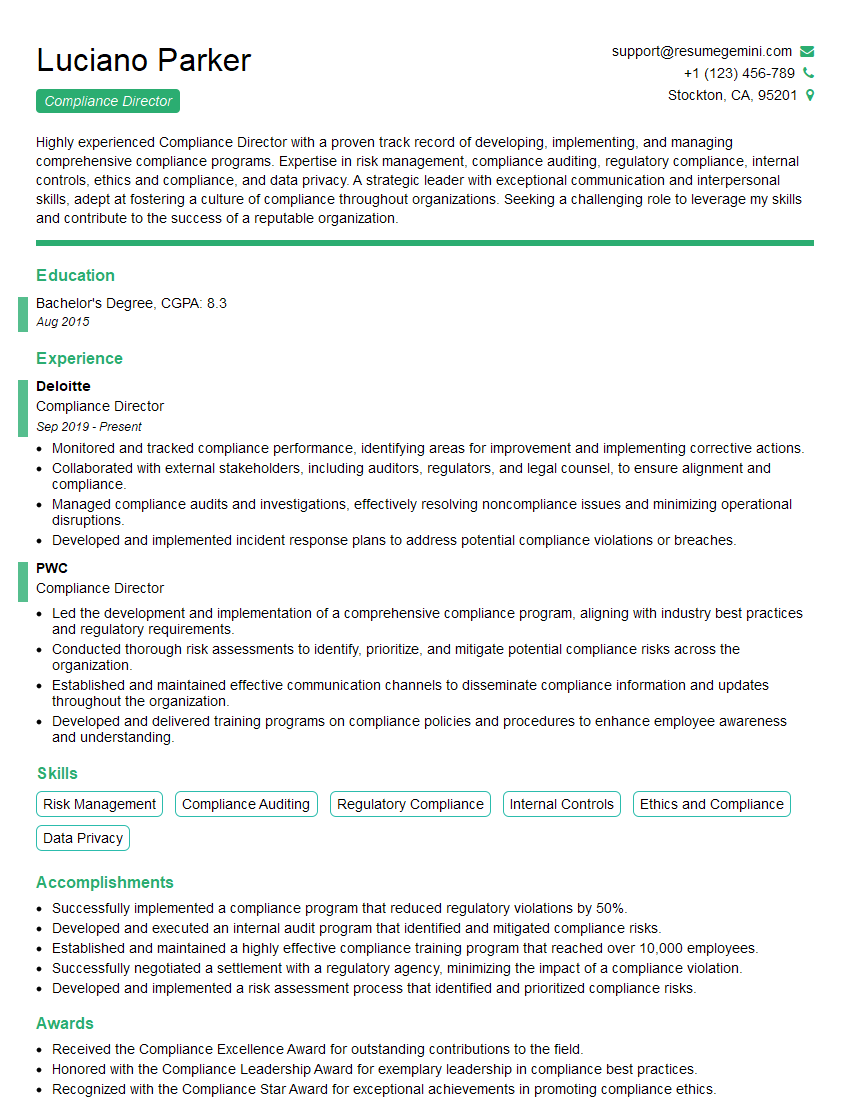
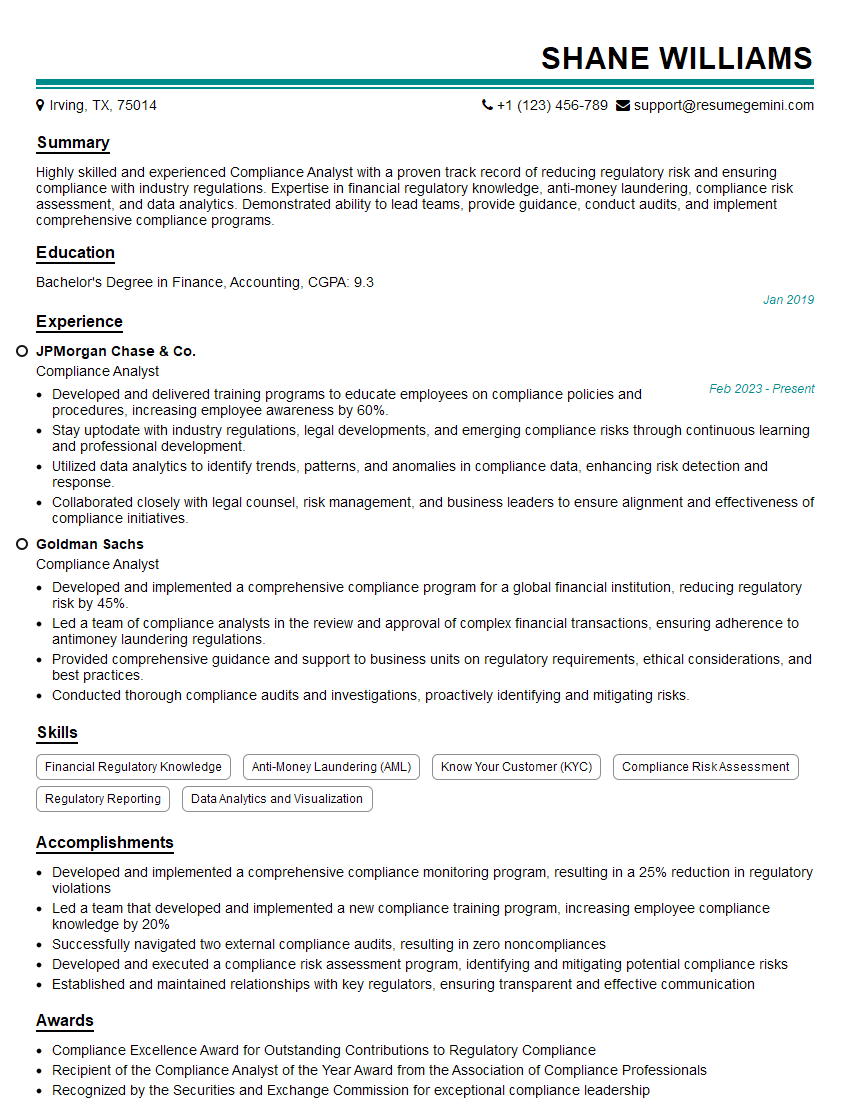
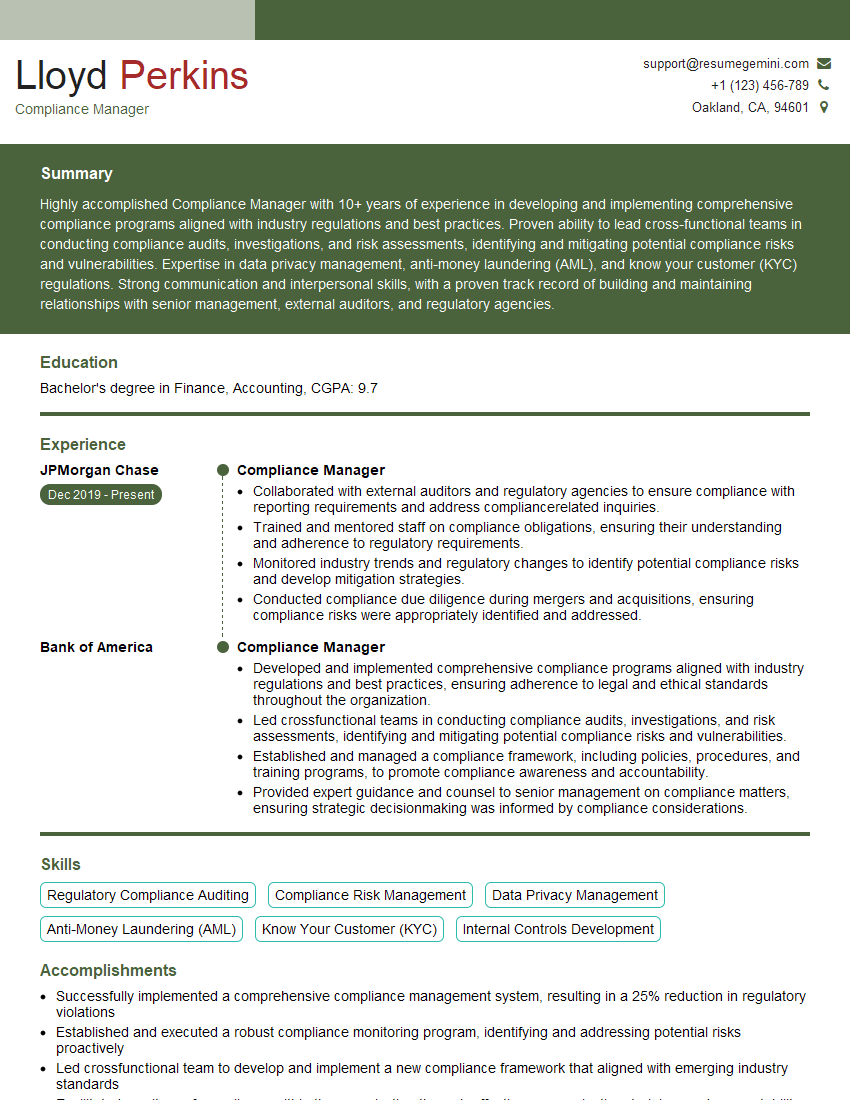
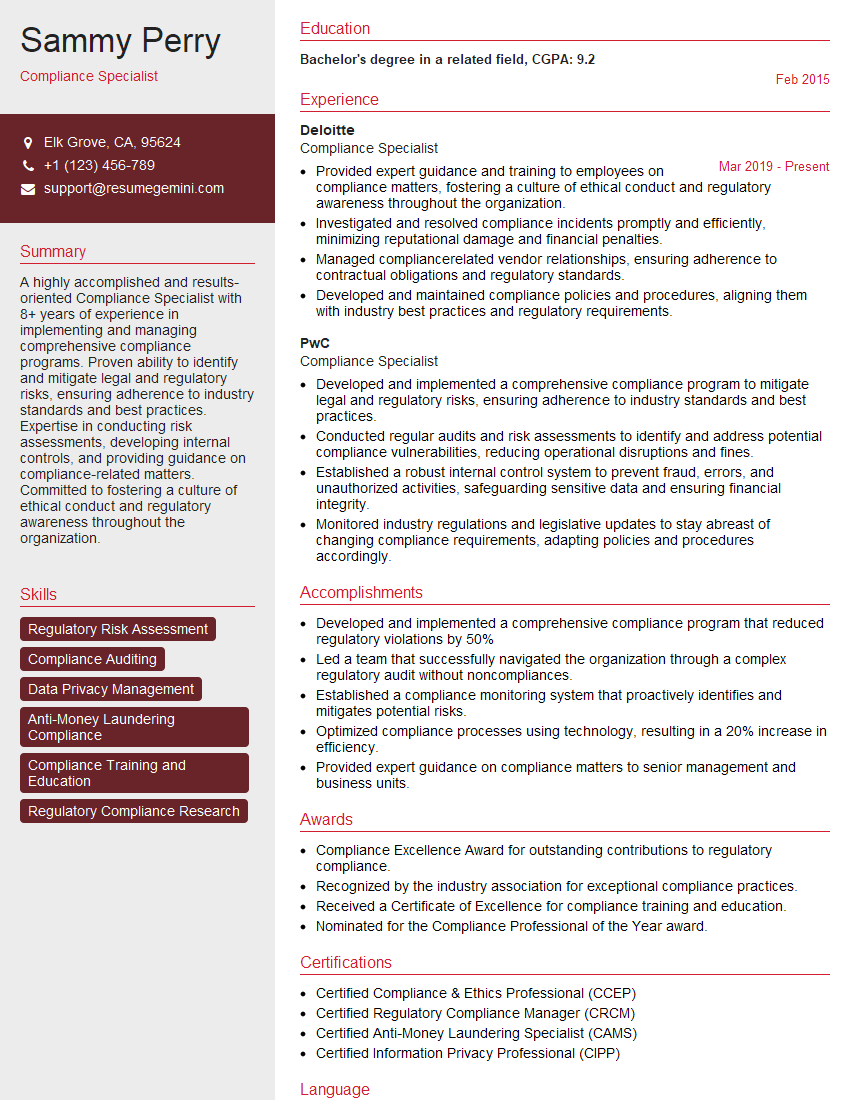
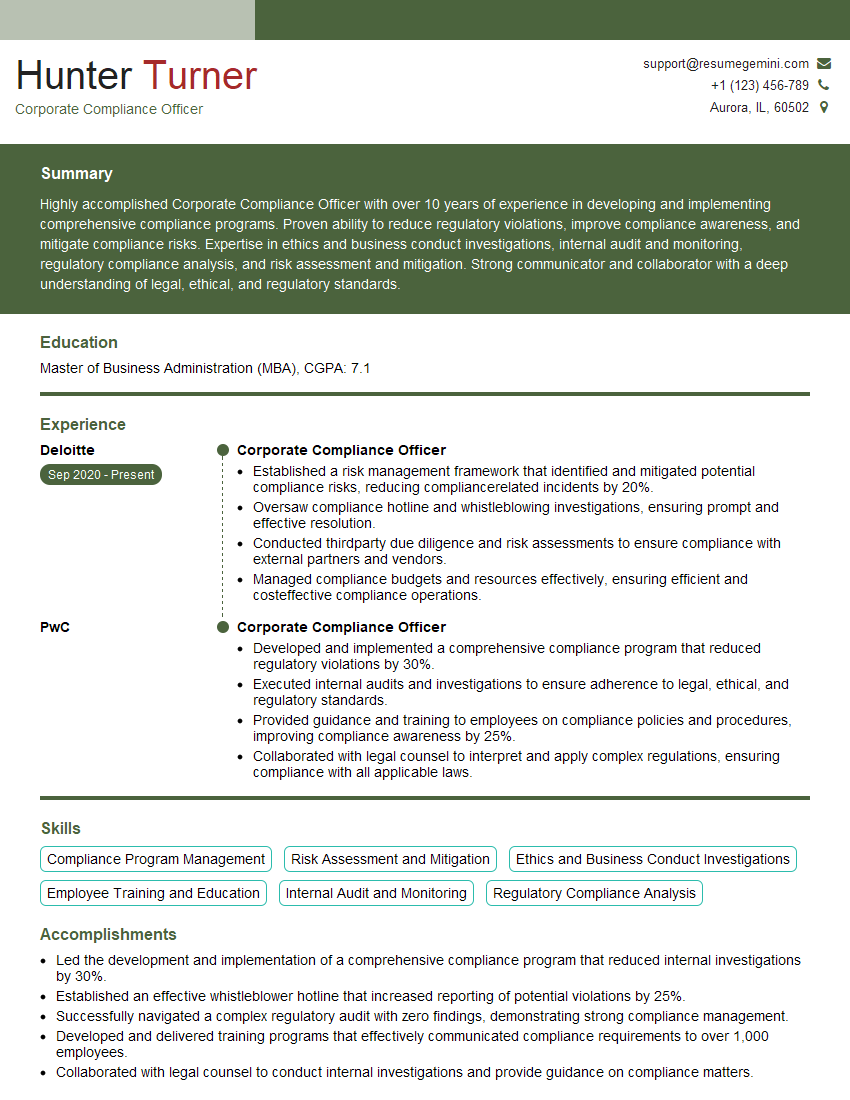
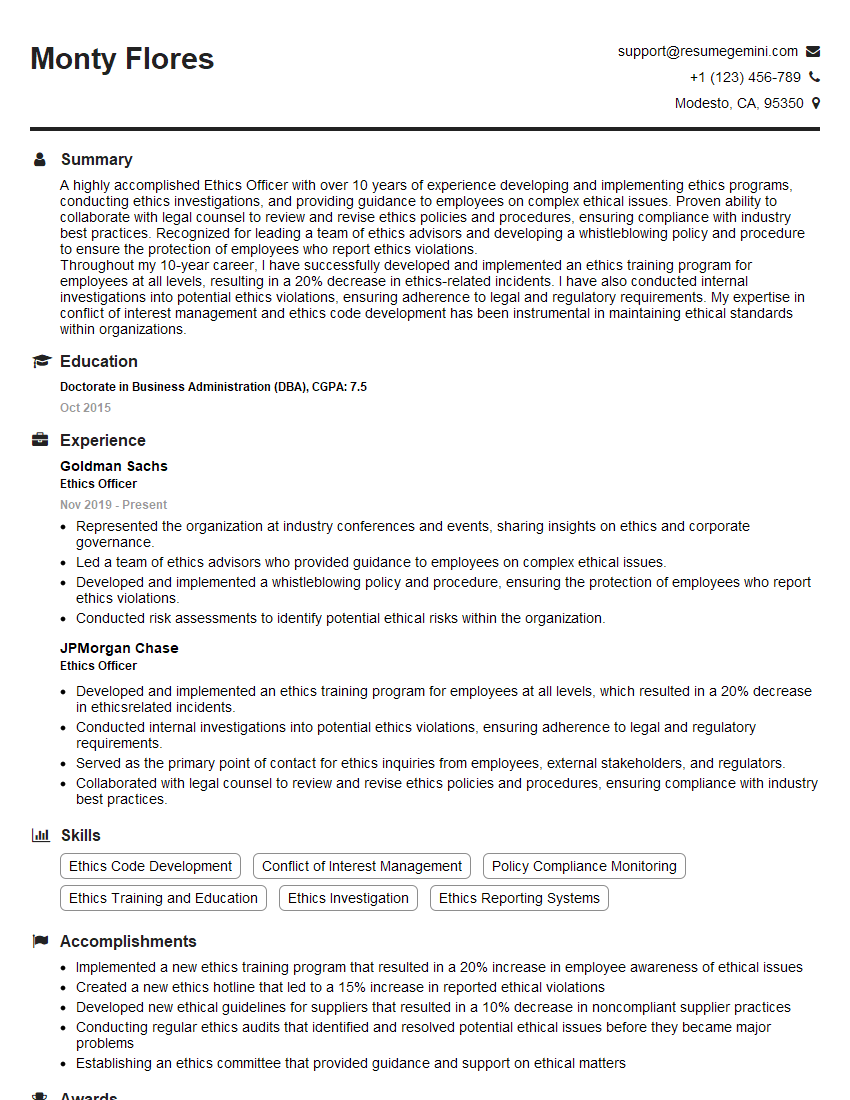
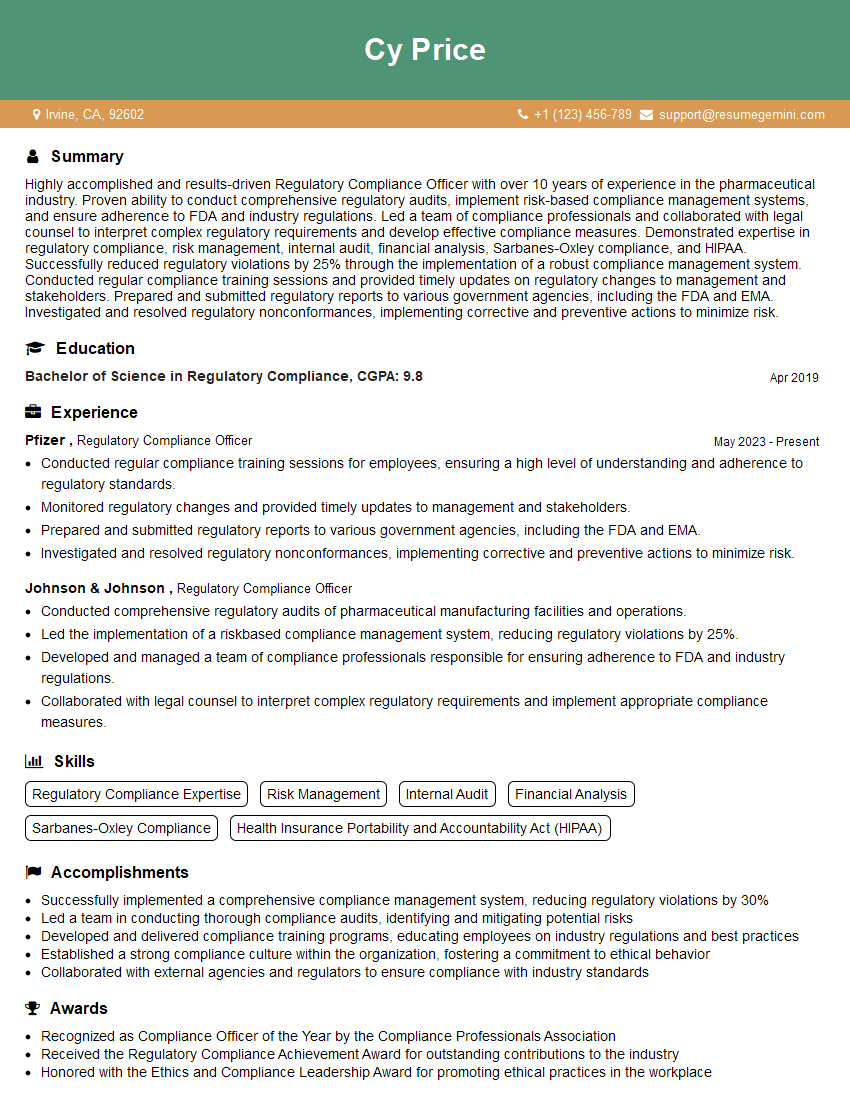
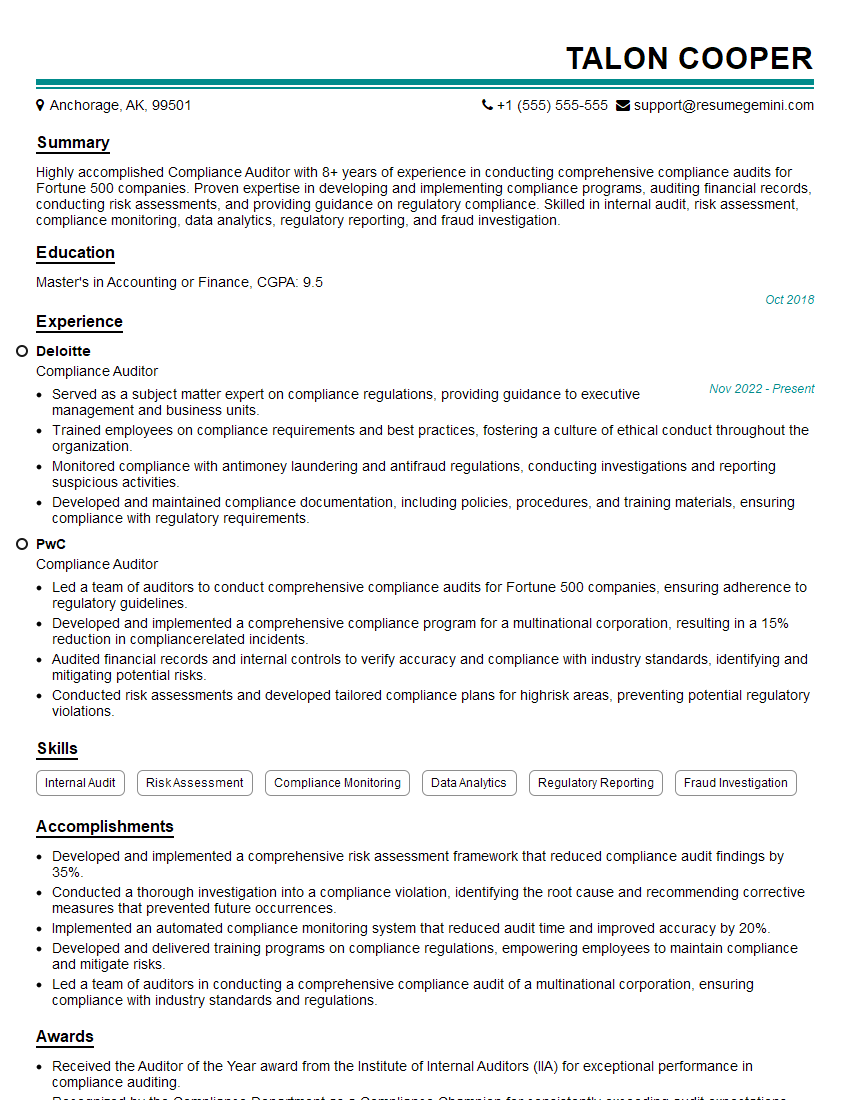
Mastering Ethics and Compliance skills is crucial for career advancement in today’s increasingly regulated business environment. Demonstrating a strong understanding of ethical principles and compliance regulations will significantly enhance your job prospects. To make a strong impression on potential employers, focus on creating an ATS-friendly resume that effectively highlights your skills and experience. ResumeGemini is a trusted resource that can help you build a professional and impactful resume. Examples of resumes tailored to Ethics and Compliance Skills are available to guide you. Take advantage of these resources to showcase your expertise and land your dream job!
Explore more articles
Users Rating of Our Blogs
Share Your Experience
We value your feedback! Please rate our content and share your thoughts (optional).
What Readers Say About Our Blog
Very informative content, great job.
good