Preparation is the key to success in any interview. In this post, we’ll explore crucial Event and Tournament Management interview questions and equip you with strategies to craft impactful answers. Whether you’re a beginner or a pro, these tips will elevate your preparation.
Questions Asked in Event and Tournament Management Interview
Q 1. Describe your experience in budgeting for large-scale events.
Budgeting for large-scale events is a meticulous process requiring a deep understanding of both anticipated costs and potential revenue streams. It’s not just about adding up expenses; it’s about strategic allocation of resources to maximize impact while staying within financial constraints.
My approach starts with a comprehensive needs assessment. This involves identifying all event elements – venue rental, catering, marketing, technology, staffing, entertainment, and contingency funds – and assigning preliminary cost estimates to each. I then collaborate with various stakeholders to refine these estimates, utilizing historical data from similar events and industry benchmarks for pricing. This allows for a realistic budget projection.
For example, when budgeting for a recent technology conference, we meticulously tracked historical sponsorship revenue, ticket sales data, and vendor quotes. We built in a 15% contingency for unexpected expenses, which proved crucial when a last-minute change to the venue required additional logistical support. Regular budget reviews and variance analysis throughout the event planning process ensure we stay on track and address any potential overspending proactively.
Creating multiple budget scenarios (e.g., best-case, worst-case, and most likely) allows for adaptable planning and informed decision-making in the face of uncertainty. This proactive approach helped us manage risks effectively and deliver the event successfully within budget.
Q 2. How do you handle unexpected challenges or crises during an event?
Handling unexpected challenges is an inevitable part of event management. A proactive, adaptable approach is key. My strategy involves a three-pronged approach: preparedness, swift response, and post-event analysis.
- Preparedness: This includes having a detailed crisis management plan in place before the event. This plan outlines communication protocols, contingency strategies for various scenarios (e.g., power outages, medical emergencies, security threats), and designated roles and responsibilities for the team.
- Swift Response: When a crisis occurs, the priority is to assess the situation rapidly, activate the crisis management plan, and communicate clearly and effectively with all stakeholders – attendees, staff, vendors, and emergency services, as needed. Transparency and consistent communication are paramount during such times.
- Post-Event Analysis: After the event, a thorough review of the incident is essential. This analysis helps identify shortcomings in the crisis management plan and highlights areas for improvement. For instance, a delayed vendor arrival forced us to revise the schedule and re-allocate resources in a past event. We subsequently revised our vendor selection process to emphasize reliability and communication.
Think of it like a fire drill – you practice beforehand so everyone knows their role and how to react efficiently in case of an emergency. Similarly, a well-rehearsed crisis management plan ensures a smoother response to unexpected issues.
Q 3. Explain your process for selecting and managing event vendors.
Selecting and managing event vendors is a crucial aspect of event success. It requires a systematic process ensuring both quality and cost-effectiveness.
My process starts with defining clear requirements for each vendor category. This involves specifying deliverables, timelines, and key performance indicators (KPIs). I then conduct thorough research and solicit proposals from multiple vendors, comparing their offerings based on quality, pricing, experience, and reputation.
For example, when selecting caterers, I consider not only the menu and pricing but also their experience with large-scale events, their ability to manage dietary restrictions, and their responsiveness to requests. Once a vendor is selected, a detailed contract is established outlining all terms and conditions. Regular communication and performance monitoring throughout the event planning process help ensure the vendor is meeting expectations. I utilize project management software to track vendor progress, deadlines, and payments.
Regular communication is crucial, using tools like project management software and regular check-in calls. This proactive management builds strong vendor relationships and results in smoother event execution. This layered approach minimizes risks and ensures all aspects of the event run smoothly.
Q 4. What metrics do you use to measure the success of an event?
Measuring event success goes beyond simply counting attendees. A comprehensive approach involves using a combination of quantitative and qualitative metrics.
- Quantitative Metrics: These include:
- Attendance: Total number of attendees and registration rates.
- Revenue: Total revenue generated from ticket sales, sponsorships, and other sources.
- Return on Investment (ROI): Measuring the financial return relative to the investment.
- Social Media Engagement: Tracking likes, shares, comments, and mentions across various platforms.
- Qualitative Metrics: These focus on attendee feedback and overall experience.
- Attendee Satisfaction Surveys: Gathering feedback on various aspects of the event, such as content, logistics, and overall experience.
- Net Promoter Score (NPS): Measuring attendee likelihood to recommend the event to others.
- Social Media Sentiment Analysis: Analyzing the tone and sentiment expressed on social media regarding the event.
By combining these metrics, we gain a holistic understanding of the event’s success, providing valuable insights for future improvements. For instance, low attendee satisfaction scores in a post-event survey helped us identify areas needing improvement for subsequent events.
Q 5. How do you ensure the safety and security of attendees at an event?
Ensuring attendee safety and security is paramount. My approach is multi-layered, incorporating proactive measures and contingency plans.
- Pre-Event Planning: This includes conducting a thorough risk assessment, identifying potential hazards (e.g., crowd control, emergency exits), and developing mitigation strategies. Collaborating with local law enforcement and security personnel is crucial for this stage.
- On-site Security: Deploying trained security personnel throughout the event venue is essential. This includes controlling access points, monitoring crowds, and responding to incidents promptly. Clear signage indicating emergency exits, first aid stations, and assembly points is equally important.
- Emergency Preparedness: Having a comprehensive emergency response plan, including procedures for medical emergencies, evacuations, and security breaches is crucial. This plan needs to be communicated to all staff members.
- Communication: Clear and effective communication with attendees before, during, and after the event about safety procedures and emergency contacts is vital.
For instance, we once implemented a detailed security plan involving bag checks and metal detectors, significantly enhancing security at a large-scale outdoor concert. This proactive approach ensured a safe environment for all attendees.
Q 6. Describe your experience with event registration and ticketing systems.
Experience with event registration and ticketing systems is crucial for efficient event management. I’ve worked extensively with various platforms, from simple spreadsheet-based systems to sophisticated event management software. My selection criteria heavily depend on the event’s scale and specific requirements.
For smaller events, a user-friendly platform with basic registration features might suffice. For larger events, I often prefer integrated systems offering features like online payment processing, automated email communication, attendee check-in, and reporting capabilities. I’ve worked with platforms such as Eventbrite, Cvent, and Ticketmaster, each offering a range of features and functionalities suitable for different event types and sizes.
The choice is usually dictated by the event’s complexity. For a smaller, community event, a simpler platform might suffice. However, for a large conference with multiple sessions and tiered ticketing options, a more robust platform with integration capabilities becomes necessary. Careful planning and testing of the chosen system before the event is vital to avoid technical glitches and ensure a smooth registration process for attendees.
Q 7. How do you manage volunteer teams effectively?
Effectively managing volunteer teams is crucial for successful event execution. My approach focuses on clear communication, proper training, and appreciation.
- Recruitment and Onboarding: Clearly defined roles and responsibilities, along with a transparent recruitment process and comprehensive onboarding are essential.
- Training and Communication: Providing adequate training and clear communication channels keeps volunteers informed and prepared for their tasks. Regular updates and check-ins are important to ensure alignment and address any concerns.
- Appreciation and Recognition: Recognizing and appreciating the volunteers’ contributions through verbal acknowledgment, small gifts, or post-event gatherings fosters a sense of community and encourages future involvement. This is invaluable for maintaining motivation and fostering a positive team spirit.
- Team Leadership: Appointing dedicated team leaders to manage and coordinate volunteer groups enhances efficiency and provides a point of contact for volunteers. A well-defined leadership structure ensures smooth operations.
For example, in a recent marathon, we organized pre-event training sessions for our volunteer team, covering their roles, communication protocols, and emergency procedures. This proactive approach ensured a smooth and efficient event, with our volunteer team operating effectively and seamlessly.
Q 8. What strategies do you use to attract sponsors for an event?
Attracting sponsors requires a strategic approach focusing on mutual benefit. It’s not just about asking for money; it’s about building a partnership. I begin by identifying potential sponsors whose brands align with the event’s target audience and values. This ensures a natural fit and increases the likelihood of a successful collaboration.
- Detailed Sponsorship Packages: I create tiered sponsorship packages offering various benefits, such as logo placement, speaking opportunities, exclusive access to VIP events, social media mentions, and advertising space in event materials. The value proposition must clearly demonstrate the return on investment (ROI) for each package.
- Compelling Proposals: Each proposal is tailored to the specific sponsor, highlighting how the sponsorship aligns with their marketing goals. I provide detailed data on expected audience reach, demographics, and engagement metrics to showcase the potential impact.
- Relationship Building: Building strong relationships with potential sponsors is crucial. This involves regular communication, personalized outreach, and attending industry networking events. A personal touch goes a long way.
- Post-Event Reporting: Delivering thorough post-event reports demonstrating the value of the sponsorship is essential for securing future partnerships. This includes metrics such as website traffic, social media engagement, and media coverage generated as a result of the sponsorship.
For example, for a cycling event, I might partner with a bicycle manufacturer, showcasing their latest models and offering test rides to attendees. This provides exposure for the sponsor while enriching the event experience for participants.
Q 9. How do you handle post-event analysis and reporting?
Post-event analysis is crucial for learning, improvement, and justifying future funding. I use a systematic approach, combining quantitative and qualitative data to gain a comprehensive understanding of the event’s success.
- Data Collection: This involves gathering data from various sources, including registration numbers, ticket sales, feedback surveys, social media analytics, and sponsor reports.
- Key Performance Indicators (KPIs): I identify key performance indicators (KPIs) relevant to the event’s objectives, such as attendance, revenue, sponsor satisfaction, and participant engagement.
- Analysis & Reporting: I analyze the collected data to identify areas of success and areas for improvement. This analysis is presented in a clear and concise report, incorporating visualizations (charts and graphs) to easily communicate key findings and insights.
- Actionable Recommendations: The report includes actionable recommendations for future events, based on the analysis of the data. For instance, if participant satisfaction scores were low in a specific area, the report would recommend strategies to address that issue in the next event.
For instance, analyzing social media engagement reveals what aspects of the event resonated most with attendees, which can inform future marketing and programming decisions. A low satisfaction score on food and beverage services might indicate a need for a different vendor or improved catering options in subsequent years.
Q 10. Explain your experience in developing and implementing event marketing plans.
Developing and implementing event marketing plans requires a multifaceted approach that considers the target audience, event objectives, and available resources. My approach typically follows these steps:
- Market Research & Audience Analysis: Understanding the target audience is paramount. This includes demographic analysis, psychographic profiling, and identifying their preferences and needs. For example, a youth-oriented event will have a different marketing strategy compared to a corporate conference.
- Defining Marketing Objectives: Establishing clear and measurable marketing objectives is crucial. For example, increase ticket sales by 20% or generate 10,000 social media impressions. These objectives should directly support the overall event goals.
- Developing a Marketing Strategy: Based on research and objectives, a comprehensive marketing strategy is developed utilizing various channels, including social media marketing, email marketing, public relations, paid advertising (PPC, social media ads), and content marketing.
- Budget Allocation: A realistic budget allocation is essential to determine which marketing channels and activities are feasible within financial constraints.
- Campaign Execution & Monitoring: Closely monitoring the effectiveness of the marketing campaign throughout its duration enables timely adjustments and optimizations to ensure maximum reach and impact.
- Post-Campaign Analysis: Evaluating the effectiveness of the marketing campaign is crucial for future improvement and optimization. Data analysis helps identify the most effective channels and strategies.
For a recent music festival I managed, the marketing plan included targeted Facebook and Instagram ads, influencer outreach, radio advertising, and collaborations with local media outlets. The success of the campaign was carefully monitored through various analytics dashboards.
Q 11. How do you manage the logistics of transporting equipment and personnel?
Managing the logistics of transporting equipment and personnel requires meticulous planning and coordination. I utilize a structured approach to ensure everything arrives on time and in good condition.
- Detailed Inventory: A comprehensive inventory list of all equipment and materials is created, specifying dimensions, weight, and any special handling requirements.
- Vendor Selection: Reliable and reputable transportation vendors are selected based on their experience, capacity, and insurance coverage. This includes securing necessary permits for oversized or heavy loads.
- Route Planning: Optimal routes are planned considering factors such as traffic congestion, parking availability, and access restrictions at the venue.
- Scheduling & Communication: Clear communication channels are established with vendors, personnel, and venue staff to coordinate loading, transportation, and unloading schedules.
- Insurance & Risk Mitigation: Appropriate insurance coverage is obtained to protect against potential losses or damages during transportation.
- On-site Coordination: On-site personnel manage the unloading and placement of equipment and ensure the safety of personnel and equipment during the entire process.
For example, I might use a combination of trucks, specialized trailers, and smaller vans to transport lighting, sound, stage equipment, and other necessities to a concert venue. Pre-determined loading and unloading zones are marked at both the warehouse and the venue to facilitate smooth operation.
Q 12. What software or tools do you use for event management?
Effective event management requires leveraging appropriate software and tools. My toolset typically includes:
- CRM (Customer Relationship Management): For managing registrations, communication with attendees, and tracking sponsor interactions. Examples include Salesforce, HubSpot, and Zoho CRM.
- Event Management Software: For scheduling, venue booking, resource allocation, and managing various aspects of the event. Popular options include Cvent, Eventbrite, and Whova.
- Project Management Software: For task management, team collaboration, and tracking progress against deadlines. Asana, Trello, and Monday.com are frequently used.
- Spreadsheet Software (Excel, Google Sheets): For budgeting, data analysis, and reporting. Spreadsheets are crucial for maintaining detailed records of finances and performance metrics.
- Communication Tools (Slack, Microsoft Teams): For facilitating seamless communication within the event team and with vendors.
The choice of specific tools depends on the scale and complexity of the event. For smaller events, simpler tools may suffice, while larger, more complex events often require a more comprehensive suite of software.
Q 13. How do you manage risk and contingency planning for events?
Risk management is crucial for a successful event. I use a proactive approach encompassing identification, assessment, mitigation, and contingency planning.
- Risk Identification: A thorough risk assessment identifies potential risks related to various aspects of the event, such as weather, security, health and safety, logistical issues, and financial uncertainties.
- Risk Assessment: Each identified risk is assessed based on its likelihood and potential impact. This helps prioritize mitigation efforts.
- Risk Mitigation: Strategies are developed to mitigate the identified risks. These strategies may involve purchasing insurance, implementing safety protocols, developing alternative plans (contingency plans), or securing backup resources.
- Contingency Planning: Detailed contingency plans are developed for various scenarios, such as inclement weather, equipment malfunction, or security threats. These plans outline steps to take to minimize the impact of unforeseen circumstances.
- Communication & Training: The event team is trained on risk mitigation strategies and contingency plans to ensure a coordinated response in case of an incident.
For example, if there’s a risk of inclement weather, a contingency plan might include securing an indoor venue or providing attendees with rain ponchos. For security concerns, a robust security plan with trained personnel would be implemented.
Q 14. How do you ensure compliance with all relevant regulations and permits?
Ensuring compliance with regulations and permits is non-negotiable. This involves proactive planning and meticulous attention to detail.
- Identify Applicable Regulations: I begin by identifying all relevant local, state, and federal regulations and permits required for the event. This often involves consulting with legal counsel or relevant government agencies.
- Secure Necessary Permits: All necessary permits and licenses are applied for and obtained well in advance of the event. This includes permits related to venue usage, alcohol sales, food services, entertainment, and public safety.
- Vendor Compliance: Vendors are required to comply with all relevant health, safety, and other regulatory requirements. This includes verifying their licenses and insurance.
- Safety Protocols: Robust safety protocols are implemented to ensure compliance with health and safety regulations. This may involve first aid stations, emergency evacuation plans, and crowd control measures.
- Accessibility Compliance: The event venue and activities must comply with accessibility regulations for individuals with disabilities.
- Ongoing Monitoring: Throughout the event, ongoing monitoring is performed to ensure continuous compliance with all applicable regulations.
For instance, securing the necessary permits for a street festival requires navigating local regulations related to road closures, noise levels, and waste management. Compliance with food safety regulations is crucial for events involving food and beverage vendors.
Q 15. Describe your experience in managing event schedules and timelines.
Managing event schedules and timelines requires meticulous planning and execution. It’s like orchestrating a complex symphony, where each element – from speaker presentations to catering – needs to be perfectly timed. My approach involves several key steps:
- Detailed Scheduling Software: I utilize project management software like Asana or Monday.com to create a visual timeline, breaking down the entire event into manageable tasks with assigned deadlines and responsibilities.
- Gantt Charts: These charts provide a clear overview of task dependencies, highlighting critical paths and potential bottlenecks. For example, I’d ensure the venue setup is completed before the speakers arrive.
- Buffer Time: I always build in buffer time between activities. Unexpected delays are inevitable, and this prevents a domino effect of schedule disruptions. A 30-minute buffer between sessions, for instance, can absorb minor glitches.
- Regular Check-ins: Frequent communication with the team is crucial. Daily or weekly meetings ensure everyone is on track and any emerging issues are addressed proactively.
- Contingency Planning: A backup plan is essential for unforeseen circumstances. What if a speaker cancels? What if there’s a power outage? Having alternative solutions prevents chaos.
For example, during a large tech conference I managed, we used a Gantt chart to visualize the complex interplay between keynote speeches, breakout sessions, and networking events. By proactively identifying potential conflicts, we were able to adjust the schedule efficiently and ensure a smooth flow throughout the event.
Career Expert Tips:
- Ace those interviews! Prepare effectively by reviewing the Top 50 Most Common Interview Questions on ResumeGemini.
- Navigate your job search with confidence! Explore a wide range of Career Tips on ResumeGemini. Learn about common challenges and recommendations to overcome them.
- Craft the perfect resume! Master the Art of Resume Writing with ResumeGemini’s guide. Showcase your unique qualifications and achievements effectively.
- Don’t miss out on holiday savings! Build your dream resume with ResumeGemini’s ATS optimized templates.
Q 16. How do you handle conflict resolution among event staff or attendees?
Conflict resolution is a vital skill in event management. It’s about fostering a positive environment and finding mutually acceptable solutions. My approach is based on empathy, clear communication, and a structured process:
- Active Listening: I start by carefully listening to all parties involved, understanding their perspectives and concerns without interruption.
- Neutral Facilitation: I act as a neutral facilitator, guiding the conversation towards a constructive resolution. I avoid taking sides and focus on finding common ground.
- Collaborative Problem-Solving: I encourage brainstorming solutions collaboratively. This empowers everyone involved and fosters a sense of ownership in the outcome.
- Mediation: If necessary, I mediate the discussion, helping the parties involved to reach a mutually acceptable compromise.
- Documentation: I document the agreement reached to ensure clarity and prevent future misunderstandings. This could be a simple email outlining the agreed upon solutions.
In one instance, a disagreement arose between two vendors regarding stage setup. By actively listening to their concerns and facilitating a collaborative discussion, we found a solution that satisfied both parties – a minor adjustment to the schedule to accommodate their needs.
Q 17. Describe your experience with event technology and its integration.
Event technology is integral to modern event management. It enhances efficiency, engagement, and the overall attendee experience. My experience includes using a variety of technologies, including:
- Registration and Ticketing Platforms: Eventbrite, Ticketmaster, or custom-built systems for seamless attendee registration and management.
- CRM Systems: Salesforce or HubSpot for managing attendee data, communication, and follow-up.
- Virtual Event Platforms: Zoom, Hopin, or similar platforms for hosting virtual or hybrid events, incorporating features like live streaming, Q&A, and networking tools.
- Event Apps: Custom-developed apps or platforms to enhance attendee engagement through features like schedules, maps, speaker information, and interactive polls.
- Data Analytics Tools: Google Analytics or similar tools to track event performance, attendee engagement, and ROI.
For a recent hybrid conference, we integrated a custom-built event app with our virtual platform. This allowed attendees to seamlessly navigate between in-person and online sessions, access speaker information, and participate in interactive polls. The data collected helped us understand attendee preferences and improve future events.
Q 18. How do you balance the needs of sponsors with the event’s overall objectives?
Balancing sponsor needs with event objectives requires a strategic approach. It’s about creating a win-win scenario where sponsors receive valuable exposure, and the event achieves its goals. My strategy involves:
- Clear Value Proposition: I define clear benefits for sponsors – increased brand visibility, lead generation opportunities, and networking possibilities.
- Tailored Sponsorship Packages: I offer different sponsorship packages to cater to varying budgets and objectives, ensuring each sponsor receives a suitable return on investment.
- Transparent Communication: Open and consistent communication with sponsors is key. I provide regular updates on event progress and deliverables.
- Mutual Goals: I ensure the sponsor’s goals align with the overall event objectives. This synergy prevents conflicts and strengthens the partnership.
- Performance Measurement: I track and measure the effectiveness of sponsorships, providing sponsors with data-driven insights on their ROI.
For instance, in a fundraising gala, I negotiated sponsorship packages that provided different levels of visibility for sponsors, from logo placement on event materials to dedicated speaking slots. This approach ensured all sponsors felt valued, while securing the necessary funding for the event.
Q 19. What is your experience in developing an event from concept to completion?
Developing an event from concept to completion is a journey that requires a structured approach. It’s akin to building a house – you need a solid foundation and a detailed blueprint. My process includes:
- Concept Development: Define the event’s purpose, target audience, and key objectives.
- Budgeting and Financial Planning: Develop a detailed budget, outlining all anticipated costs and revenue streams.
- Venue Selection: Choose a suitable venue that aligns with the event’s size, style, and budget.
- Marketing and Promotion: Develop a marketing plan to attract the target audience.
- Logistics Management: Handle all logistical aspects such as catering, transportation, and technical support.
- On-site Management: Oversee the event’s execution on the day of the event.
- Post-event Analysis: Evaluate the event’s success, identify areas for improvement, and gather feedback for future events.
Recently, I spearheaded a new annual tech summit. Starting with a core concept focusing on emerging technologies, we developed a detailed budget, secured sponsors, and managed all aspects, from marketing to on-site logistics. The event was a huge success, exceeding attendance expectations and generating positive feedback.
Q 20. How do you adapt to changing circumstances and unforeseen challenges?
Adaptability is paramount in event management. Unexpected challenges are inevitable. My approach to handling unforeseen circumstances involves:
- Proactive Risk Assessment: Identifying potential problems beforehand and developing contingency plans.
- Flexible Planning: Creating a flexible schedule that allows for adjustments.
- Problem-Solving Skills: Quickly and effectively identifying solutions to unexpected problems.
- Communication: Keeping all stakeholders informed and updated on any changes.
- Decision-Making: Making timely and informed decisions under pressure.
For example, during a large outdoor festival, a sudden rainstorm threatened to disrupt the event. By quickly mobilizing the team to relocate some activities indoors and adapting the schedule, we minimized disruptions and maintained a positive experience for attendees.
Q 21. Describe your understanding of different event formats (virtual, hybrid, in-person).
Understanding different event formats – virtual, hybrid, and in-person – is crucial for effective event planning. Each format has unique strengths and challenges:
- In-Person Events: These offer a strong sense of community and networking opportunities but require extensive logistical planning and can be costly.
- Virtual Events: These offer scalability and cost-effectiveness, reaching a wider audience. However, they require robust technology and can struggle with engagement.
- Hybrid Events: These combine the best of both worlds, offering in-person and virtual components. This approach can maximize reach but demands meticulous planning and technology integration.
I have experience managing all three formats. For instance, I successfully transitioned an in-person conference to a hybrid format during the pandemic, leveraging a virtual platform to reach a wider audience while still retaining the benefits of in-person networking for those who could attend.
Q 22. How do you manage the flow of information and communication during an event?
Effective information flow is the backbone of any successful event. My approach is multifaceted, relying on a combination of proactive communication strategies and robust technological tools.
- Pre-Event Communication: I establish clear communication channels early on, using a project management system (like Asana or Trello) to track tasks, deadlines, and assign responsibilities to team members and vendors. Regular meetings, both in-person and virtual, ensure everyone is aligned. Email remains a primary tool for formal communication and documentation.
- During-Event Communication: A dedicated communication team is essential. This team manages all incoming inquiries via phone, email, and potentially social media. We use a centralized communication platform (like Slack) for internal team updates, problem-solving, and rapid response to unforeseen issues. For attendees, we might employ an event app or utilize SMS messaging for important announcements or changes in schedule.
- Post-Event Communication: Post-event surveys gather feedback, which informs future events. Thank-you notes and follow-up communications with sponsors and attendees reinforce positive relationships. A comprehensive event report documents successes, challenges, and key learnings.
For example, during a large music festival I managed, we used a combination of Slack for internal communication, a dedicated event app for attendee updates (including stage schedules and important announcements), and a social media team to respond to public inquiries on various platforms. This ensured timely and consistent information dissemination to all stakeholders.
Q 23. What is your approach to creating a positive and memorable experience for attendees?
Creating a memorable attendee experience goes beyond flawless logistics; it’s about crafting an emotional connection. My approach focuses on exceeding expectations at every touchpoint.
- Pre-Event Engagement: I focus on personalized communication. This could include targeted emails based on attendee interests, interactive pre-event content, or early access to exclusive features.
- On-Site Experience: A well-designed venue, clear signage, friendly and helpful staff, and engaging activities all contribute. Think interactive installations, photo opportunities, and opportunities for networking. We also focus on seamless registration and smooth transitions between different event activities.
- Post-Event Connection: We follow up with personalized thank you notes, share photos and videos from the event, and solicit feedback to further enhance future events. This helps build loyalty and anticipation for future events.
For a corporate retreat I organized, we incorporated team-building activities designed to foster collaboration and strengthen relationships amongst colleagues. We also personalized welcome bags with items relevant to attendees’ interests. The result was incredibly positive feedback, with many attendees describing it as the ‘best team-building event they’d ever attended’.
Q 24. Explain your experience with negotiating contracts with vendors and suppliers.
Negotiating contracts with vendors and suppliers requires a strategic approach that balances cost-effectiveness with quality and reliability.
- Thorough Research: I begin by identifying potential vendors based on reputation, experience, and alignment with the event’s objectives. I request multiple proposals, comparing costs, services, and contractual terms.
- Clear Specifications: Detailed contracts clearly outline deliverables, payment schedules, cancellation policies, and liability clauses. This ensures all parties understand their obligations.
- Relationship Building: Building strong relationships with vendors is crucial. Open communication and mutual respect often lead to more favorable terms and collaborative problem-solving.
- Risk Management: Contracts should include contingency plans for unforeseen circumstances, such as cancellations or supply chain issues.
In one instance, I negotiated a significantly lower catering cost for a large conference by securing a contract during a slower season for the caterer and guaranteeing a larger volume. Clear communication, demonstrating the potential for a long-term relationship, was key to this successful negotiation.
Q 25. How do you ensure sustainability considerations are incorporated into events?
Sustainability is no longer optional; it’s a crucial aspect of responsible event planning. My approach integrates sustainability across all stages.
- Venue Selection: Choosing venues with green certifications or strong sustainability initiatives is a priority.
- Waste Reduction: Implementing strategies to minimize waste, such as using reusable materials, promoting recycling, and sourcing locally-produced food, is essential.
- Energy Efficiency: We prioritize energy-efficient lighting, decorations, and transportation options. This includes encouraging attendees to utilize public transportation or carpooling.
- Carbon Offsetting: For events with a larger carbon footprint, I explore options for carbon offsetting initiatives to compensate for unavoidable emissions.
For a recent trade show, we partnered with a local composting company to manage food waste and sourced promotional materials from recycled paper. We also offered incentives for attendees who used public transportation, reducing the event’s overall carbon footprint. This commitment to sustainability was well-received by attendees and highlighted in our post-event reporting.
Q 26. Describe your proficiency in using event management software (e.g., Cvent, Eventbrite).
I’m proficient in several event management software platforms, including Cvent and Eventbrite, and have used them extensively throughout my career. My expertise goes beyond basic functionality; I understand how to leverage these tools for comprehensive event management.
- Cvent: I’ve utilized Cvent for tasks ranging from registration and ticketing to venue sourcing, budget management, and marketing automation. I am skilled in using its reporting tools to analyze event performance and identify areas for improvement.
- Eventbrite: My experience with Eventbrite focuses primarily on ticketing, marketing, and attendee management. I’m comfortable setting up event pages, managing ticket sales, and using Eventbrite’s reporting features to track ticket sales and attendee demographics.
- Beyond Specific Software: My proficiency extends to integrating different software platforms to streamline event management processes and create a seamless experience for attendees and internal teams. For example, I’ve successfully integrated Eventbrite with email marketing platforms for automated communication.
In a past role, I leveraged Cvent’s robust reporting features to identify a bottleneck in the registration process, leading to significant improvements in attendee check-in times and overall satisfaction. This exemplifies my ability to use data-driven insights to optimize event operations.
Q 27. What experience do you have managing multiple events concurrently?
Managing multiple concurrent events requires meticulous planning, strong organizational skills, and the ability to delegate effectively. My experience involves coordinating events with overlapping timelines and potentially competing resource demands.
- Prioritization: I establish clear priorities for each event, allocating resources based on urgency and impact. Critical path analysis helps identify key milestones and potential bottlenecks.
- Teamwork and Delegation: A well-trained and empowered team is essential. I assign specific roles and responsibilities, ensuring clear communication and collaboration across different event teams.
- Resource Allocation: Careful resource allocation is critical. This involves scheduling venues, securing vendors, and managing budgets across all events to ensure optimal utilization and prevent conflicts.
- Technology and Systems: Utilizing project management software and other collaborative tools is essential for managing multiple concurrent events effectively.
I once managed three large-scale conferences simultaneously, each with unique requirements and timelines. By leveraging project management software, creating detailed timelines, and effectively delegating tasks, I ensured each event was successfully executed while maintaining high levels of quality and efficiency.
Q 28. How would you handle a major technical failure during a tournament?
A major technical failure during a tournament demands a swift and organized response to minimize disruption and maintain attendee satisfaction.
- Immediate Assessment: The first step is to rapidly assess the nature and extent of the failure. Identify the affected systems and potential impact on the tournament’s progress.
- Emergency Plan Activation: A pre-defined emergency plan should be in place and immediately activated. This plan should outline communication protocols, backup systems, and contingency procedures.
- Communication is Key: Clearly communicate the situation to all stakeholders—attendees, officials, staff, and vendors. Keep everyone informed about the situation and the steps being taken to resolve it.
- Problem Solving & Resource Allocation: Assemble a dedicated team to troubleshoot the issue. If internal resources are insufficient, seek external assistance from IT specialists or vendors.
- Contingency Measures: Implement contingency plans to minimize disruption. This might involve using backup systems, adjusting the schedule, or offering alternative solutions to maintain the flow of the tournament.
- Post-Incident Review: Following the resolution of the incident, a thorough review is essential to identify the root cause, implement corrective measures, and update the emergency plan for future events.
During a university esports tournament, we experienced a power outage affecting the live stream and online gaming platforms. Our pre-planned emergency protocol involved immediately activating our backup generators, notifying attendees and teams via our tournament app and social media, and deploying a smaller, localized streaming setup to ensure the event continued, albeit with some delays. A post-event review led to upgrades to our power backup system and improvements in our communication protocols.
Key Topics to Learn for Event and Tournament Management Interview
- Event Planning & Logistics: Understanding the entire event lifecycle, from initial concept to post-event analysis. This includes budgeting, scheduling, vendor management, and risk assessment.
- Tournament Rules & Regulations: Deep knowledge of the specific rules and regulations governing the type of tournament you’re managing, ensuring fair play and adherence to guidelines.
- Registration & Participant Management: Efficiently managing participant registration, communication, and any related support services. This includes using registration software and managing waitlists.
- Marketing & Promotion: Developing and implementing effective marketing strategies to attract participants and sponsors. Understanding different promotional channels and their effectiveness.
- Volunteer Management: Recruiting, training, and coordinating volunteers effectively to ensure smooth event operations. This involves clear communication and task delegation.
- Budget Management & Financial Reporting: Creating and managing a detailed event budget, tracking expenses, and producing accurate financial reports for stakeholders.
- Risk Management & Contingency Planning: Identifying potential risks and developing comprehensive contingency plans to address unforeseen circumstances. This includes crisis management protocols.
- Technology & Software Proficiency: Familiarity with event management software, registration platforms, and communication tools. Demonstrating proficiency in utilizing technology to enhance efficiency.
- Post-Event Analysis & Reporting: Gathering data, analyzing results, and creating comprehensive reports to evaluate event success and identify areas for improvement.
- Teamwork & Communication: Highlighting experience in collaborating with diverse teams, communicating effectively with stakeholders, and managing expectations.
Next Steps
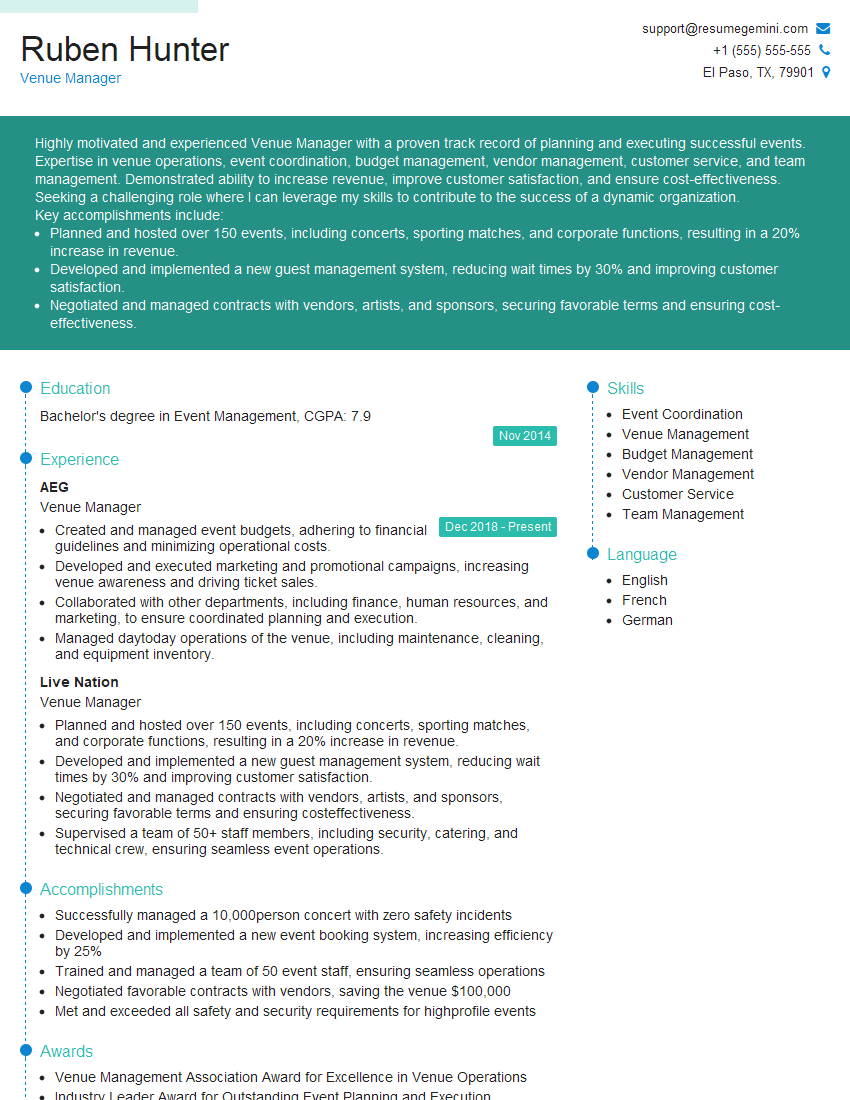
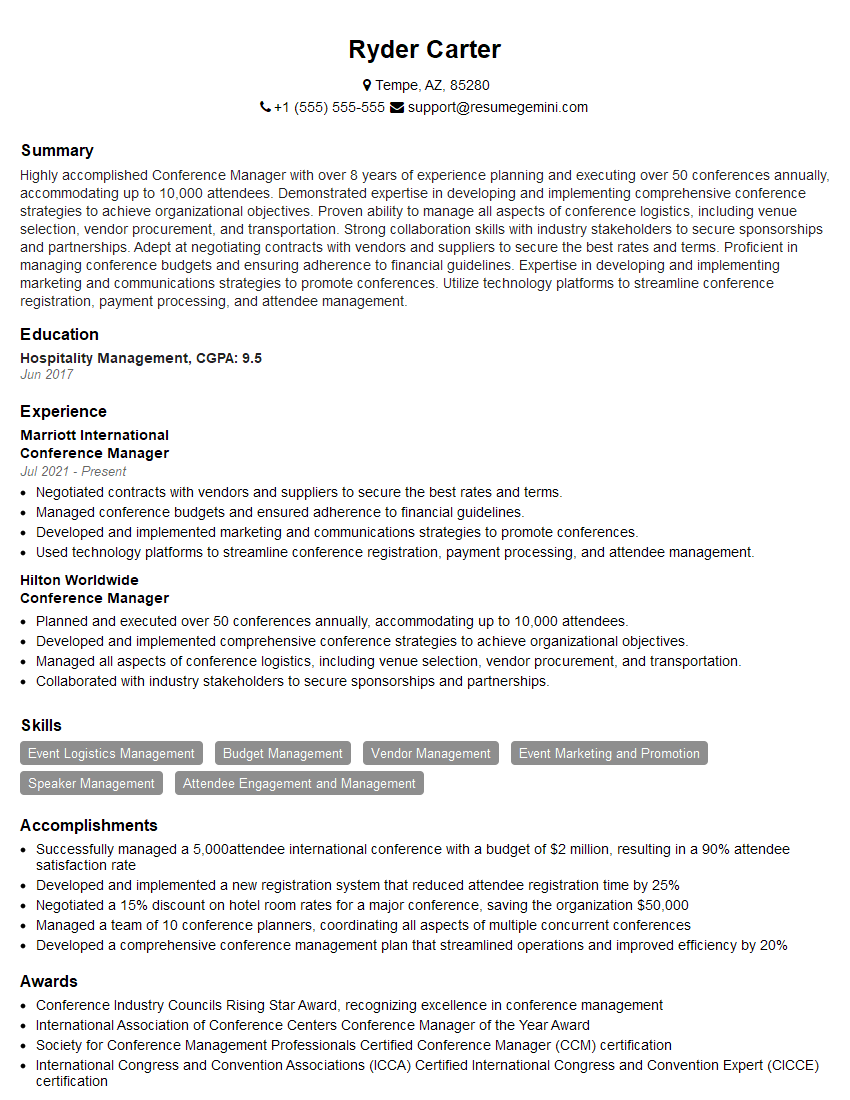
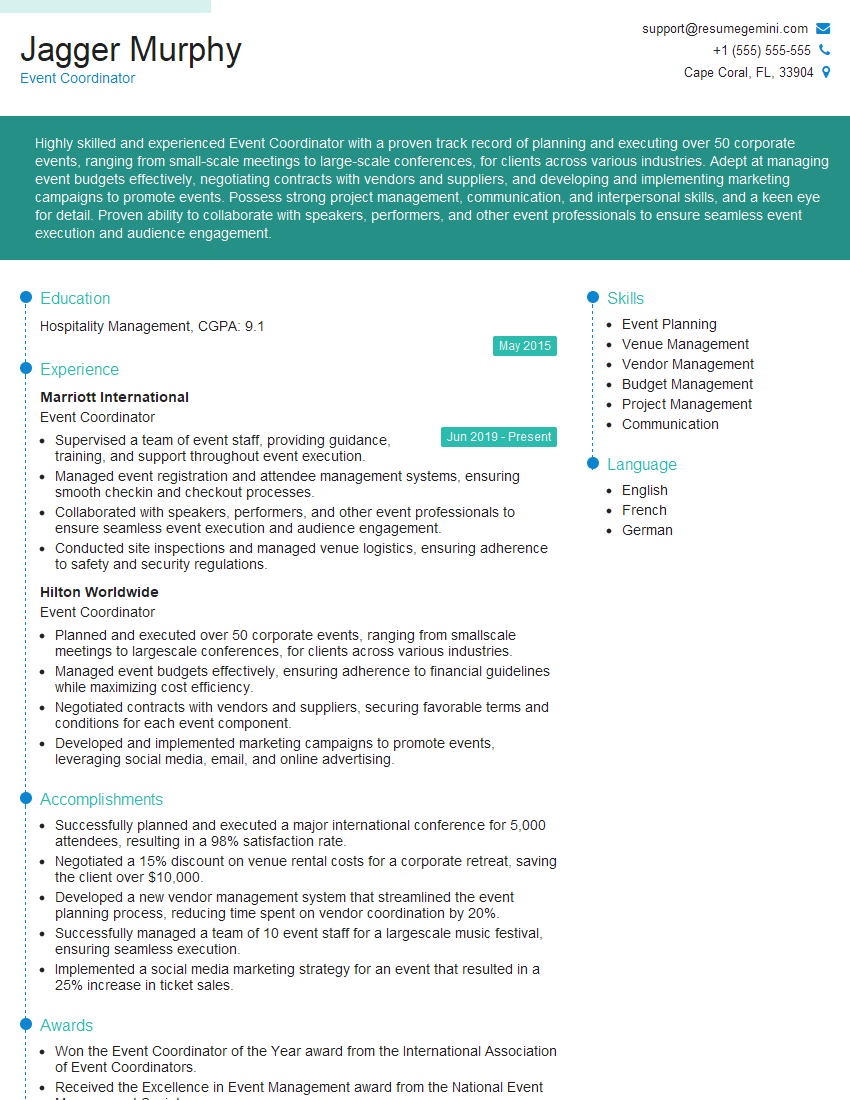
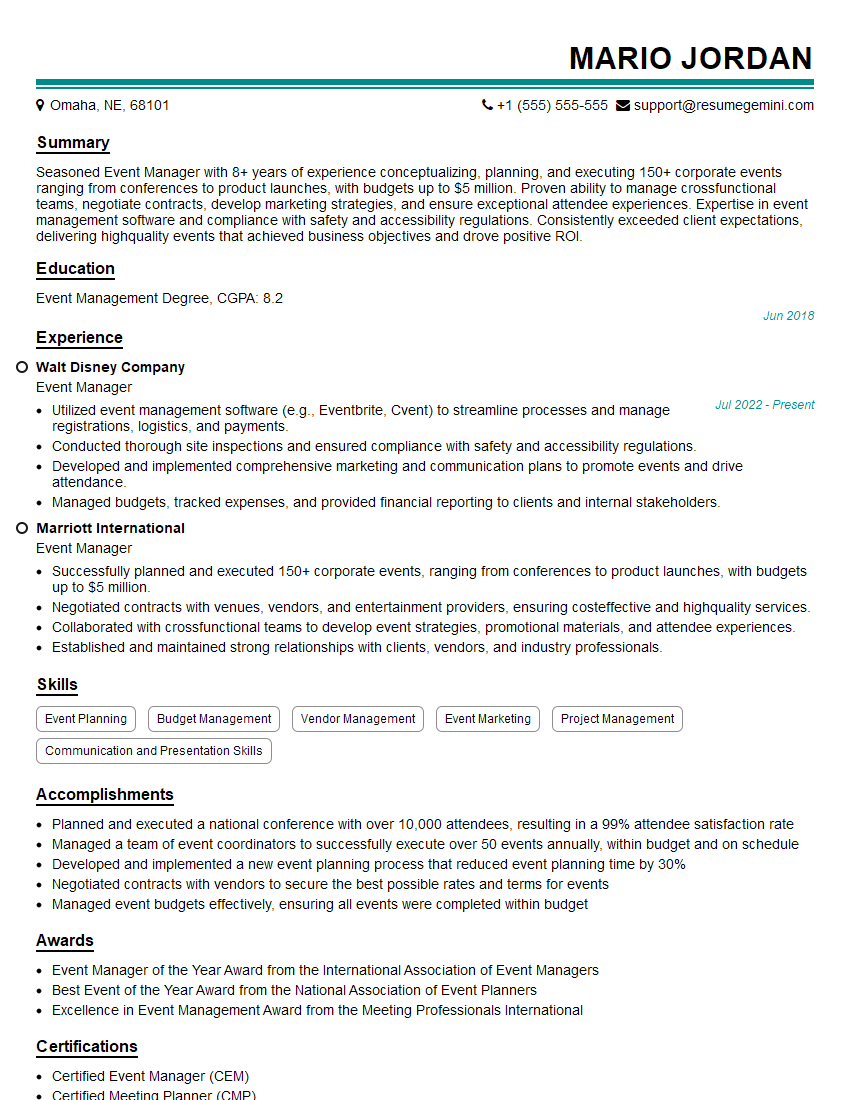
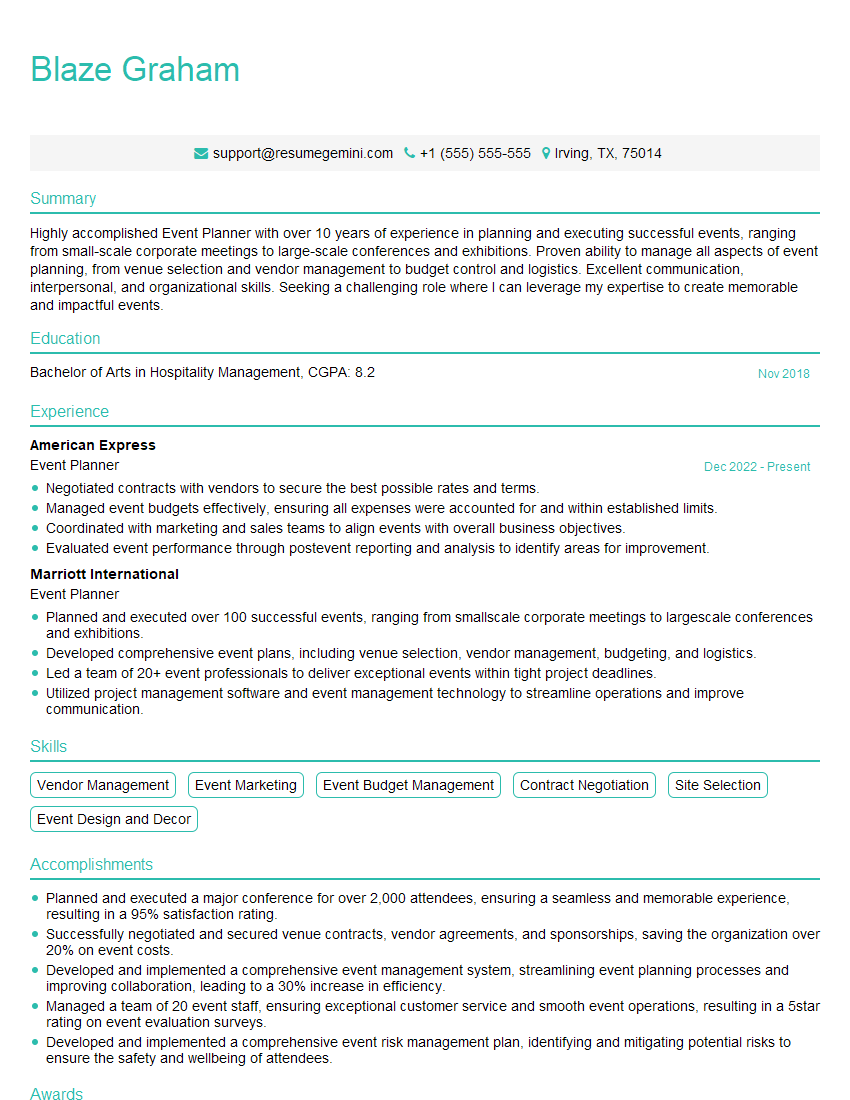
Mastering Event and Tournament Management opens doors to exciting and rewarding career opportunities in a dynamic field. To maximize your job prospects, invest time in crafting an ATS-friendly resume that showcases your skills and experience effectively. ResumeGemini is a trusted resource to help you build a professional and impactful resume that catches the eye of recruiters. We offer examples of resumes tailored to Event and Tournament Management to help guide you through the process. Take the next step in your career journey and create a resume that reflects your capabilities and potential.
Explore more articles
Users Rating of Our Blogs
Share Your Experience
We value your feedback! Please rate our content and share your thoughts (optional).
What Readers Say About Our Blog
Very informative content, great job.
good