The right preparation can turn an interview into an opportunity to showcase your expertise. This guide to Evidentiary Document Preparation interview questions is your ultimate resource, providing key insights and tips to help you ace your responses and stand out as a top candidate.
Questions Asked in Evidentiary Document Preparation Interview
Q 1. Explain the process of authenticating evidentiary documents.
Authenticating evidentiary documents is crucial to ensure their reliability and admissibility in legal proceedings. It’s essentially proving that a document is what it claims to be and hasn’t been tampered with. This process involves several steps, often depending on the type of document and the legal context.
Witness Testimony: A witness who can attest to the document’s creation, origin, and handling can provide crucial authentication. For instance, the author of a contract can testify to its authenticity.
Chain of Custody: Maintaining a detailed record of who has possessed the document and when is essential. Any breaks in the chain can weaken its authenticity. Think of it like a game of telephone – each handoff needs to be documented to ensure the message (the document) hasn’t been altered.
Physical Characteristics: Examining the document’s physical attributes – like the paper type, ink, handwriting, and any unique markings – can help verify its authenticity. This is often done by comparing it to known samples or using forensic techniques.
Digital Signatures and Watermarks: For digital documents, digital signatures and watermarks provide verifiable proof of authorship and integrity. These act like digital seals of approval, confirming the document hasn’t been altered since it was signed.
Comparison with Known Originals: Comparing a questioned document to a known, authentic version can reveal discrepancies or confirm its genuineness. This might involve comparing signatures or letterheads.
For example, imagine a crucial email in a fraud case. Authenticating this email would involve presenting the email header information, showing the chain of custody (e.g., from the server logs to the hard drive to the forensic examiner’s computer), and potentially having the sender testify to sending the email.
Q 2. Describe your experience with e-Discovery software and platforms.
I have extensive experience with various e-discovery software platforms, including Relativity, Everlaw, and Disco. My proficiency extends beyond basic data collection and processing; I’m adept at using advanced features for tasks like predictive coding, technology-assisted review (TAR), and near-duplicate detection. I’ve used these tools in complex litigation involving massive datasets (millions of documents), where efficient and accurate processing is paramount.
In one case, I used Relativity’s advanced search capabilities to identify and cull relevant documents from a dataset of over 5 million emails, significantly reducing review time and costs for my clients. I also implemented TAR to further refine the review set, ensuring that only the most relevant documents were reviewed by legal teams, saving them considerable time and expense.
My experience also includes working with various data formats (native file formats, PDFs, images, etc.) and managing the entire e-discovery lifecycle, from initial data preservation and collection to production and presentation in court.
Q 3. How do you ensure the chain of custody for evidentiary documents?
Maintaining the chain of custody for evidentiary documents is crucial for ensuring their admissibility. Any perceived break in the chain can compromise the document’s authenticity and credibility. Think of it like a highly secure package – every step of its journey must be meticulously recorded.
My process involves creating a detailed log that documents every step, including:
Acquisition: When and how the document was obtained. For example, if it was seized by law enforcement, the specifics of the seizure are recorded.
Storage: Where the document is stored and under what conditions. This includes location, security measures, and access controls.
Handling: Who handled the document, when, and for what purpose. Each person involved needs to sign and date the log.
Processing: Details of any processing performed on the document, such as copying, scanning, or redaction.
Transportation: How the document was moved between locations, ensuring its security during transit.
Using a chain-of-custody log acts as a detailed audit trail, enabling us to trace the document’s journey and ensure its integrity. Any discrepancies or gaps in the log could seriously undermine the document’s credibility in court.
Q 4. What are the key differences between hearsay and admissible evidence?
Hearsay and admissible evidence are fundamentally different in terms of their legal weight and how they are treated in court. Admissible evidence is that which the court will allow to be presented, while hearsay evidence usually isn’t.
Admissible Evidence: This type of evidence is relevant, reliable, and directly supports a fact in question. It comes from a firsthand source – someone with direct knowledge of the event – and is generally considered trustworthy. Examples include eyewitness testimony, forensic reports, and original documents.
Hearsay Evidence: This is an out-of-court statement offered to prove the truth of the matter asserted within the statement. In essence, it’s someone reporting what someone else said or wrote. This is generally inadmissible because the court cannot assess the reliability of the original speaker/writer. For example, if a witness testifies, “John told me he saw the defendant at the scene,” that’s hearsay. However, there are exceptions to the hearsay rule, such as statements made during the heat of the moment or statements made for medical diagnosis.
The key difference lies in the source of the information. Admissible evidence comes directly from a reliable source, while hearsay relies on secondhand reporting, making its reliability questionable. Courts carefully scrutinize evidence to ensure it meets the standards of admissibility before it can be considered.
Q 5. Explain your understanding of metadata and its relevance in evidentiary documents.
Metadata, often called “data about data,” is extremely relevant in evidentiary documents. It’s the information about a file that isn’t part of the file’s content itself – things like creation date, author, last modified date, file size, and even GPS coordinates (in images). Metadata can provide critical context and authenticity information.
In the context of legal proceedings, metadata can be used to:
Verify Authenticity: The creation date and author embedded in metadata can corroborate or contradict a document’s claimed origin. For instance, if a document claims to be from 2020 but its metadata shows it was created in 2023, it raises serious questions about its authenticity.
Establish a Chain of Custody: Metadata like modification history can trace the document’s handling and potentially identify alterations.
Discover Hidden Information: Metadata might reveal hidden or deleted content, providing crucial insights into the document’s history and intent.
Identify Relevant Documents: Searching metadata can quickly identify documents created within specific time frames or by particular individuals, speeding up the discovery process.
For example, an image file’s metadata might reveal the location where it was taken, potentially placing a suspect at the scene of a crime. Neglecting metadata analysis can result in a missed opportunity to strengthen a case or expose inconsistencies.
Q 6. How do you handle privileged or confidential documents during the review process?
Handling privileged or confidential documents requires strict adherence to ethical and legal guidelines. The attorney-client privilege and other forms of confidentiality must be rigorously protected.
My approach involves:
Identification and Segregation: First, I identify documents potentially containing privileged information through keywords, custodian designation, or other clues. These are then segregated from other documents to prevent accidental disclosure.
Log and Track: Detailed logs are maintained to track the handling of privileged documents, ensuring a clear audit trail.
Redaction or Protection: Privileged information is either redacted (removed) or protected through encryption or other means, ensuring confidentiality is maintained.
Privilege Logs: Detailed privilege logs are created, listing the documents withheld and the basis for the claim of privilege. This document is typically provided to opposing counsel.
Secure Storage: Privileged information is stored in secure locations with access controls to prevent unauthorized access.
Compliance with Rules: Strict adherence to all applicable rules of evidence and legal ethics is paramount.
Ignoring these procedures can have serious consequences, including sanctions from the court or even compromising the case entirely. A breach of confidentiality could lead to dismissal or significant penalties.
Q 7. Describe your experience with document redaction techniques.
Document redaction is the process of removing sensitive information from a document while preserving the integrity of the remaining content. This is crucial for protecting confidential or privileged information during discovery or before public release.
My experience encompasses various redaction techniques, both manual and automated:
Manual Redaction: This involves using tools like Adobe Acrobat or similar software to manually black out or redact specific portions of a document. This approach is precise but time-consuming for large volumes of data.
Automated Redaction: Software solutions with advanced redaction capabilities can automate the process, significantly reducing time and effort. These tools can identify and redact information based on keywords, regular expressions, or other criteria.
Technology Assisted Redaction: I use various tools to ensure that all redactions are applied consistently and accurately. Technology can help to detect potential problems, such as accidental omission or over-redaction.
Verification and Review: After redaction, thorough verification and quality control are necessary to ensure that all sensitive information has been effectively removed and that no unintended information has been redacted.
For example, in a case involving sensitive financial data, I might use automated redaction tools to remove account numbers, social security numbers, and other sensitive information from documents before producing them to opposing counsel. A careful review and quality control process would then be carried out to assure that the redactions are both thorough and appropriate.
Q 8. How do you organize and manage large volumes of electronic documents for legal review?
Managing large volumes of electronic documents for legal review requires a systematic approach. Think of it like organizing a massive library – you can’t just throw everything on the shelves and hope to find what you need. We use a combination of strategies, starting with robust data ingestion. This involves securely collecting data from various sources – emails, databases, cloud storage – using tools like Relativity, Disco, or similar eDiscovery platforms.
Next, we employ advanced search and filtering techniques, using keywords, date ranges, and metadata to quickly narrow down the relevant documents. This process, often called culling, significantly reduces the review set. Finally, we leverage technology assisted review (TAR) where appropriate, using machine learning to further refine the document selection. This involves training algorithms on a sample set of documents to identify patterns and classify documents as relevant or irrelevant with high accuracy. The entire process is meticulously documented to ensure transparency and auditability.
For example, in a recent case involving a large merger, we managed over 5 terabytes of data using Relativity. By employing sophisticated keyword searches and TAR, we reduced the review set by over 80%, significantly reducing review time and cost.
Q 9. What methods do you use to ensure the accuracy and completeness of document production?
Accuracy and completeness are paramount in document production. Think of it as building a house – you can’t have a stable structure with faulty materials or missing pieces. We employ several methods to ensure this. First, we use robust quality control checks at each stage of the process, from data collection to production. This includes checksum verification to ensure data integrity, and duplicate detection to eliminate redundant documents.
Second, we implement a rigorous review process. This usually involves multiple layers of review, with trained reviewers carefully examining the documents for accuracy, completeness, and privilege. We also utilize technology-assisted review to identify potential issues. Finally, we generate comprehensive reports that document our processes and results, providing clear evidence of our efforts to ensure accuracy and completeness. This detailed documentation acts as a safeguard, allowing us to trace our steps and easily rectify any potential errors.
Q 10. Explain your understanding of legal holds and preservation of electronic evidence.
Legal holds and preservation of electronic evidence are critical to prevent spoliation – the destruction or alteration of evidence. A legal hold is a formal instruction to preserve all relevant electronically stored information (ESI) that might be relevant to a pending or anticipated litigation. Think of it as putting a document under lock and key to protect it from tampering.
Preservation goes beyond simply identifying the ESI; it involves securing the data, preventing its deletion or alteration, and tracking access. This often includes suspending routine data deletion policies, creating forensic images of relevant systems, and using specialized software to track and manage the preserved data. Failure to properly implement a legal hold can have severe legal consequences, leading to sanctions or even dismissal of a case. In my experience, we use a combination of legal hold software and physical measures to ensure data preservation, always documenting every step taken.
Q 11. How do you handle objections to evidence during the discovery process?
Handling objections to evidence during the discovery process requires careful consideration of the rules of evidence and the specific objection raised. Common objections include relevance, privilege, hearsay, and work product. We address objections by carefully reviewing the documents in question, determining if the objection is valid, and responding accordingly.
For example, if a privilege objection is raised, we would carefully review the document to determine if attorney-client privilege applies. If so, we would either redact privileged information or assert the privilege and withhold the document. We will always carefully document our responses to objections with supporting rationale. Properly managing objections is vital because invalid objections can delay proceedings, and failing to address valid objections can lead to adverse consequences.
Q 12. What is your experience with different document formats (PDF, TIFF, etc.)?
I have extensive experience with various document formats, including PDF, TIFF, and native formats (like Word, Excel, and PowerPoint). Each format presents unique challenges and benefits. PDFs are widely used because of their portability and reliability. TIFFs are favored for their image quality and archival purposes. Native formats offer greater editing flexibility but can be more challenging to manage from an eDiscovery standpoint.
Understanding the nuances of each format allows us to choose the most appropriate format for specific tasks, like creating searchable PDFs from scanned documents or converting native files to TIFFs for production to ensure they are rendered properly on the other party’s system. We also consider factors such as metadata preservation and accessibility when choosing document formats.
Q 13. Describe your experience with data mapping and analysis in the context of litigation.
Data mapping and analysis play a critical role in litigation. Data mapping involves identifying, classifying, and organizing data sources and their relationships. Think of it like creating a blueprint of the data landscape. This detailed understanding is crucial for planning the eDiscovery process, and identifying which custodians and data sources will require review.
Data analysis involves using various techniques to extract meaningful insights from the data. This may include identifying key players, communication patterns, or dates that show trends or patterns of relevance. We use advanced analytics tools within eDiscovery platforms to conduct this analysis and visualize results. For example, we might use network analysis to visualize communication patterns among key individuals, highlighting crucial relationships and interactions in a case.
Q 14. How do you ensure the integrity of evidentiary documents throughout the lifecycle?
Ensuring the integrity of evidentiary documents throughout their lifecycle requires a multi-faceted approach, from the moment the data is collected until the conclusion of the case. We implement strict chain-of-custody protocols to track and document every step in the handling and processing of data. This includes documenting who accessed, modified, or copied the data and when. Think of it as meticulously maintaining a trail of breadcrumbs that allow us to follow the data’s journey.
Furthermore, we use cryptographic hashing techniques to verify the authenticity and integrity of data. Hashing creates a unique fingerprint for each document, and any changes to the document will result in a different hash value, indicating tampering. We also employ secure storage and access controls to protect the data from unauthorized access or modification. This rigorous approach to data integrity helps ensure that the evidence is reliable and admissible in court. In essence, it’s about demonstrating to the court the evidence has not been altered in any way.
Q 15. How familiar are you with different legal discovery rules (e.g., Federal Rules of Civil Procedure)?
My familiarity with legal discovery rules, particularly the Federal Rules of Civil Procedure (FRCP), is extensive. I understand the intricacies of Rule 26 (regarding disclosures and discovery), Rule 34 (production of documents and electronically stored information), and Rule 45 (subpoenas). I’m well-versed in the concepts of proportionality, relevance, and privilege, and how these principles guide the scope of discovery. For instance, I understand that proportionality requires balancing the needs of the case with the burden and expense of discovery, ensuring that requests are not overly broad or burdensome. I’ve worked extensively with ESI (Electronically Stored Information) discovery, understanding the unique challenges presented by its volume and format. My experience extends to working with various court jurisdictions and adapting discovery strategies accordingly, accounting for any local rules that may differ from the FRCP.
In a recent case involving a breach of contract, I successfully navigated a complex discovery process, ensuring our client’s compliance with the FRCP while effectively protecting privileged information. This involved strategically crafting interrogatories, identifying relevant documents, and negotiating with opposing counsel to limit the scope of overly broad requests. Understanding the rules ensured we efficiently collected the necessary information while avoiding unnecessary delays and costs.
Career Expert Tips:
- Ace those interviews! Prepare effectively by reviewing the Top 50 Most Common Interview Questions on ResumeGemini.
- Navigate your job search with confidence! Explore a wide range of Career Tips on ResumeGemini. Learn about common challenges and recommendations to overcome them.
- Craft the perfect resume! Master the Art of Resume Writing with ResumeGemini’s guide. Showcase your unique qualifications and achievements effectively.
- Don’t miss out on holiday savings! Build your dream resume with ResumeGemini’s ATS optimized templates.
Q 16. Describe your experience with using technology-assisted review (TAR).
I have significant experience using Technology-Assisted Review (TAR), also known as computer-assisted review, for document review in complex litigation. TAR utilizes sophisticated software to analyze large datasets of documents, identifying relevant information much faster and more efficiently than manual review. I’m proficient in various TAR methodologies, including keyword searching, conceptual searching (using topic modeling or clustering), and predictive coding. My experience encompasses working with platforms like Relativity and Disco.
For example, in a case involving thousands of emails, using predictive coding through TAR drastically reduced the review time and costs. The software learned from my initial sample review, and its accuracy improved with each iteration, allowing us to focus on the most relevant documents with minimal human intervention. I understand the importance of careful sample selection and quality control in ensuring the accuracy and reliability of TAR results.
Q 17. How do you identify and handle potentially spoliated evidence?
Identifying and handling potentially spoliated evidence is crucial to maintaining the integrity of a case. Spoliation refers to the destruction or alteration of evidence relevant to a legal proceeding. My approach involves a proactive and thorough investigation. This begins with understanding the client’s data retention policies and practices. I then implement procedures to preserve potentially relevant electronic and physical evidence, often using litigation hold notices. If spoliation is suspected, I conduct a detailed analysis to determine the extent of the loss, when it occurred, and who was responsible. The evidence of spoliation itself becomes important, as it can lead to adverse inferences or sanctions from the court.
In a past case, we suspected the opposing party had deleted relevant emails. By carefully analyzing server logs and metadata, we were able to reconstruct the deleted content, providing strong evidence of spoliation. This ultimately influenced the outcome of the case. Documenting all steps taken to preserve and analyze data is critical to demonstrate a diligent effort to protect evidence and mitigate the impact of any potential spoliation.
Q 18. What is your experience with Bates stamping and numbering of documents?
Bates stamping and numbering is a fundamental step in organizing and tracking documents for litigation. It involves assigning a unique alphanumeric identifier—the Bates number—to each page of a document. I have extensive experience using various software applications to perform Bates stamping, including Relativity and other e-discovery platforms. I understand the importance of creating a consistent and accurate numbering system, ensuring that every page is uniquely identified and easily retrievable. This is critical for efficient document production and presentation in court.
Beyond simply applying Bates numbers, I ensure the correct metadata is attached to each document, including information like case name, document type, and date. This meticulous approach helps streamline the review process and avoids confusion during discovery.
Q 19. Explain your process for creating a privilege log.
Creating a privilege log is a critical aspect of managing attorney-client privilege and other protected communications during discovery. A privilege log is a detailed inventory of documents withheld from production based on a claim of privilege. My process starts with a thorough review of all potentially privileged documents. For each withheld document, I create a log entry including the Bates number, date, author, recipient, a brief description of the document’s content, and the specific privilege claimed (e.g., attorney-client privilege, work product doctrine). I ensure the log is comprehensive, accurate, and adheres to all applicable rules and guidelines.
The log’s accuracy is paramount to avoid waiving the privilege. I maintain strict confidentiality in handling privileged materials and only authorized individuals are allowed access. I regularly review and update the log as the case progresses, adding or modifying entries as needed. I’ve found a well-organized spreadsheet template particularly useful for managing the process efficiently and accurately.
Q 20. How do you handle document production requests from opposing counsel?
Handling document production requests from opposing counsel requires a careful and strategic approach. My process begins with a thorough review of the request to ensure we understand its scope and the specific documents requested. I then coordinate with the client to identify and collect the responsive documents. This involves a comprehensive search of all relevant repositories, including email servers, file shares, and physical archives. Next, I review the documents for privilege and relevance, ensuring compliance with all applicable rules and legal requirements.
Before producing documents, I often engage in discussions with opposing counsel to clarify ambiguous requests or negotiate the scope of production, aiming to reach a mutually agreeable solution that minimizes burden while ensuring transparency. I maintain meticulous records of all communications and actions taken in response to discovery requests.
Q 21. Describe your experience with different types of evidentiary documents (contracts, emails, etc.)
My experience encompasses a wide range of evidentiary documents, including contracts, emails, financial records, internal memoranda, and presentations. I understand the unique characteristics and evidentiary value of each type. For instance, I’m familiar with interpreting the language of contracts, identifying key clauses and potential breaches. With emails, I focus on metadata—dates, times, and sender/recipient information—which can be crucial in establishing timelines and demonstrating intent. Financial records require special care in verifying their accuracy and authenticity. Internal memoranda and presentations can provide insights into the decision-making processes of an organization.
I approach each document type with a nuanced understanding of its legal implications and utilize appropriate tools and techniques to analyze its content and context effectively. This expertise ensures that I can effectively identify, organize, and present evidence that is persuasive and legally sound.
Q 22. How do you ensure the timely production of documents during discovery?
Timely document production during discovery is crucial for avoiding sanctions and ensuring a strong case. My approach involves a multi-pronged strategy. First, I establish a clear understanding of the scope of discovery requests with the legal team, identifying key dates and priorities. This includes understanding the specific types of documents requested, the relevant timeframes, and any custodians of information.
Second, I employ a robust project management system. This usually includes a detailed project plan with milestones, task assignments, and regular progress checks. We use specialized software to track the location and status of every document. Third, we engage in proactive communication with all involved parties – legal team, clients, and IT – to anticipate and address potential roadblocks. For instance, if a particular custodian has difficulty accessing documents, we proactively address that issue rather than waiting until it becomes a bottleneck. Finally, we implement efficient document processing methods, like automated workflows and technology-assisted review (TAR) where appropriate, to expedite the process.
For example, in a recent case involving a large corporation, we employed predictive coding to prioritize documents based on relevance, significantly reducing review time and meeting the tight deadline imposed by the court.
Q 23. What is your experience with document imaging and scanning?
I have extensive experience with document imaging and scanning, leveraging both in-house resources and outsourcing services as needed. My expertise encompasses various aspects, from initial digitization using high-speed scanners to quality control measures, including image optimization (resolution, color correction, etc.), and metadata tagging for efficient searchability and retrieval.
I’m familiar with various file formats, such as TIFF, JPEG, and PDF/A, and understand the importance of using appropriate formats for long-term preservation and legal admissibility. Furthermore, I’m adept at managing large-scale scanning projects, employing techniques like batch processing and optical character recognition (OCR) to enhance efficiency and accuracy. Data security is paramount, and I ensure compliance with relevant regulations regarding the handling and storage of sensitive documents throughout the process.
One project involved digitizing thousands of physical documents for a large-scale litigation. We employed multiple scanners working in parallel and used a robust quality control process to ensure the integrity and accuracy of the digital copies, which were then securely stored and indexed using a sophisticated database.
Q 24. Explain your understanding of the concept of relevance in evidentiary documents.
Relevance in evidentiary documents refers to the relationship between a piece of evidence and the specific legal claims or defenses in a case. A document is considered relevant if it tends to make the existence of any fact that is of consequence to the determination of the action more or less probable. This is a crucial concept because only relevant documents are discoverable and admissible in court. Irrelevant documents can clog the system and distract from the core issues.
Determining relevance often involves a careful evaluation of the document’s content in relation to the facts of the case and the applicable rules of evidence. Factors such as the document’s authorship, date, and recipient can significantly influence its relevance. For instance, an email exchange between key parties discussing a crucial event is clearly relevant. However, a personal memo unrelated to the case’s factual circumstances is not. The assessment of relevance is often iterative, meaning it can be reassessed as the case progresses and new information comes to light. We use advanced software to help filter and prioritize relevant information, applying keywords and other metadata as filters to make the process much more efficient.
Q 25. How do you prioritize tasks when faced with multiple deadlines in document review?
Prioritizing tasks with multiple deadlines requires a structured and organized approach. I typically employ a prioritization matrix that considers factors such as urgency, importance, and potential impact on the case outcome. Urgency refers to the proximity of the deadline; importance refers to the significance of the task to the overall case strategy, and potential impact assesses the consequences of delay. This matrix helps me visualize and rank tasks, allowing me to focus my efforts on the most critical items first.
I also rely on project management software to track deadlines, assign tasks, and monitor progress. Regular check-ins with the legal team ensure we’re aligned on priorities and address any unforeseen delays. Timeboxing is another useful technique—allocating specific time blocks to specific tasks to enhance productivity and manage time effectively. For instance, a particularly urgent request for a specific document may take priority over a less time-sensitive task, even if the latter is larger in scale.
Q 26. How do you handle conflicts or discrepancies in document information?
Handling conflicts or discrepancies in document information requires a thorough and methodical approach. First, I meticulously document all discrepancies, noting their nature and location within the documents. This involves creating a detailed log that can be easily reviewed and referenced. Next, I investigate the root cause of the conflict. This may involve comparing the conflicting information with other relevant documents or consulting with subject matter experts. The goal is to determine whether the discrepancy is a simple error, a deliberate alteration, or the result of different perspectives or interpretations.
Depending on the nature of the conflict, I may employ various methods to resolve it. This could include contacting the document custodians for clarification, conducting further research, or consulting with the legal team to determine the appropriate course of action. In some cases, the discrepancy may require further investigation and potentially expert testimony to clarify its significance. The process is carefully documented to maintain a transparent and auditable record of how conflicts were identified and addressed.
Q 27. Describe your experience with quality control processes in evidentiary document preparation.
Quality control is fundamental to evidentiary document preparation. My quality control processes include multiple layers of review. These include initial quality checks during the scanning and digitization process (ensuring image clarity, completeness, and proper indexing), followed by more substantial reviews at different stages of the process, such as during data entry, document review and analysis, and finally, before production. These reviews may include verifying metadata accuracy, checking for inconsistencies, and ensuring that all documents are properly organized and labelled in accordance with established standards.
We utilize both automated quality control tools and manual checks, using checklists and standardized procedures to maintain consistency. These checklists also help to ensure compliance with applicable legal and ethical standards and best practices. For instance, we use software to identify potential issues with document integrity and verify metadata tags for consistency. Furthermore, a final review is always conducted before any document is produced to the opposing counsel or submitted to the court to catch any last-minute errors.
Q 28. What are some common challenges you face in evidentiary document preparation, and how do you overcome them?
Common challenges in evidentiary document preparation include dealing with incomplete or unstructured data, managing large volumes of documents, preserving the chain of custody, and meeting tight deadlines, as previously discussed. Other challenges include dealing with sensitive or privileged information, ensuring data security and compliance with legal and ethical requirements, and managing conflicting priorities from different stakeholders.
To overcome these challenges, I utilize a variety of strategies. This includes implementing robust data management systems, employing advanced technology such as TAR and AI-powered tools for document review, and leveraging project management techniques for efficient workflow management. Proactive communication and collaboration with the legal team, clients, and IT are crucial for addressing issues promptly and effectively. Finally, maintaining a strong emphasis on quality control and adherence to legal standards helps minimize risks and ensure the admissibility and reliability of the evidence presented in court.
Key Topics to Learn for Evidentiary Document Preparation Interview
- Understanding Legal Admissibility: Learn the criteria for determining whether a document is admissible as evidence in a legal proceeding. This includes exploring rules of evidence and authentication processes.
- Document Organization and Presentation: Practice organizing and presenting evidentiary documents in a clear, logical, and easily accessible manner. Consider different formats and their impact on comprehension.
- Chain of Custody: Master the concept of chain of custody and its critical role in maintaining the integrity and admissibility of evidence. Understand how to document and maintain this chain effectively.
- Redaction and Privilege: Develop skills in redacting sensitive information from documents while preserving the integrity and context of the remaining content. Understand the concept of attorney-client privilege and other relevant privileges.
- Data Analysis and Interpretation: Practice analyzing data extracted from various document types to identify key information and present it effectively. This includes working with different file formats and data sources.
- Technology and Tools: Familiarize yourself with relevant software and technology used in evidentiary document preparation, including e-discovery platforms and document review tools.
- Ethical Considerations: Understand the ethical implications of evidentiary document preparation and the importance of maintaining objectivity and integrity throughout the process.
- Problem-Solving and Critical Thinking: Develop your ability to analyze complex situations, identify potential challenges, and develop effective solutions related to document preparation and evidence management.
Next Steps
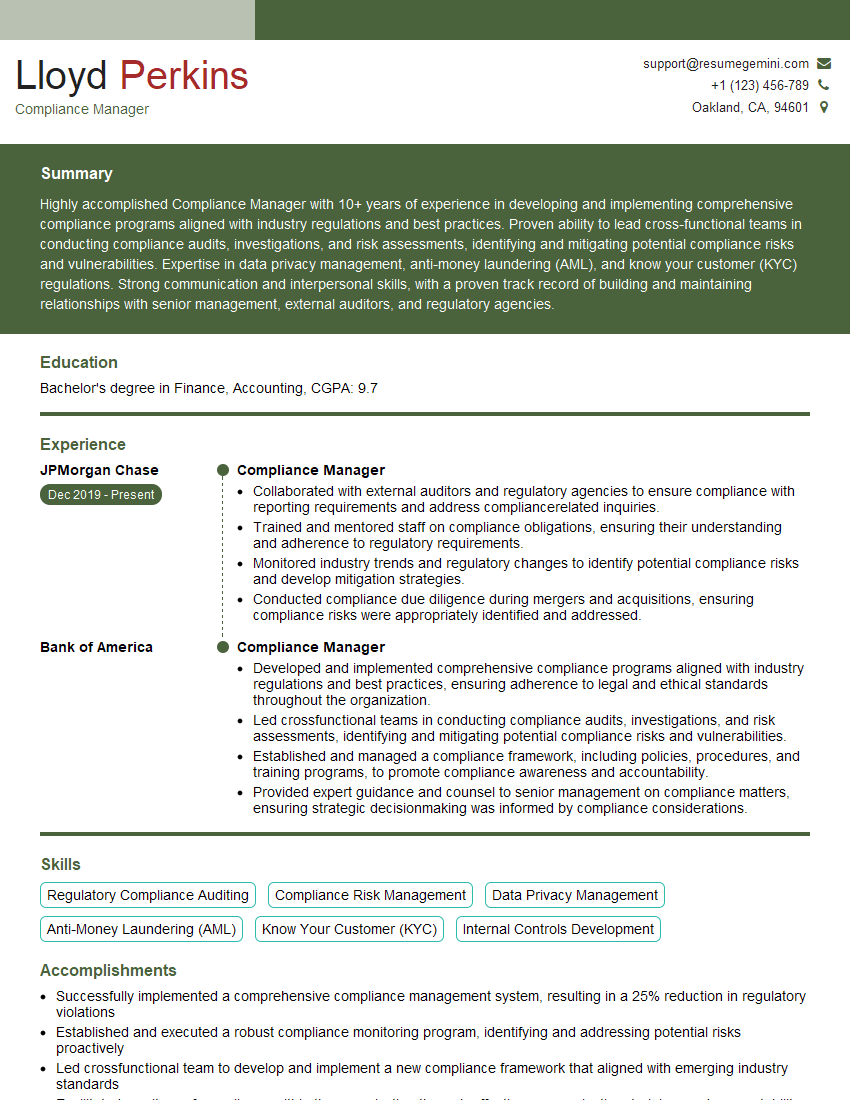
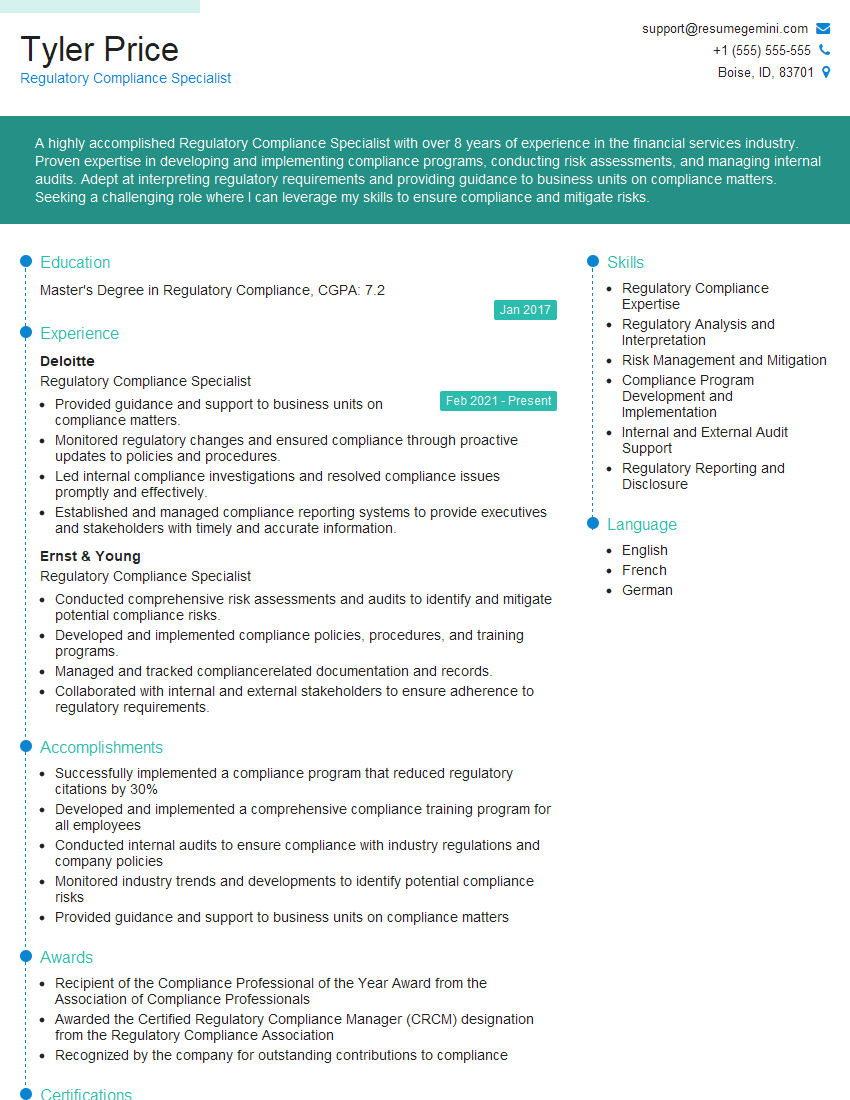
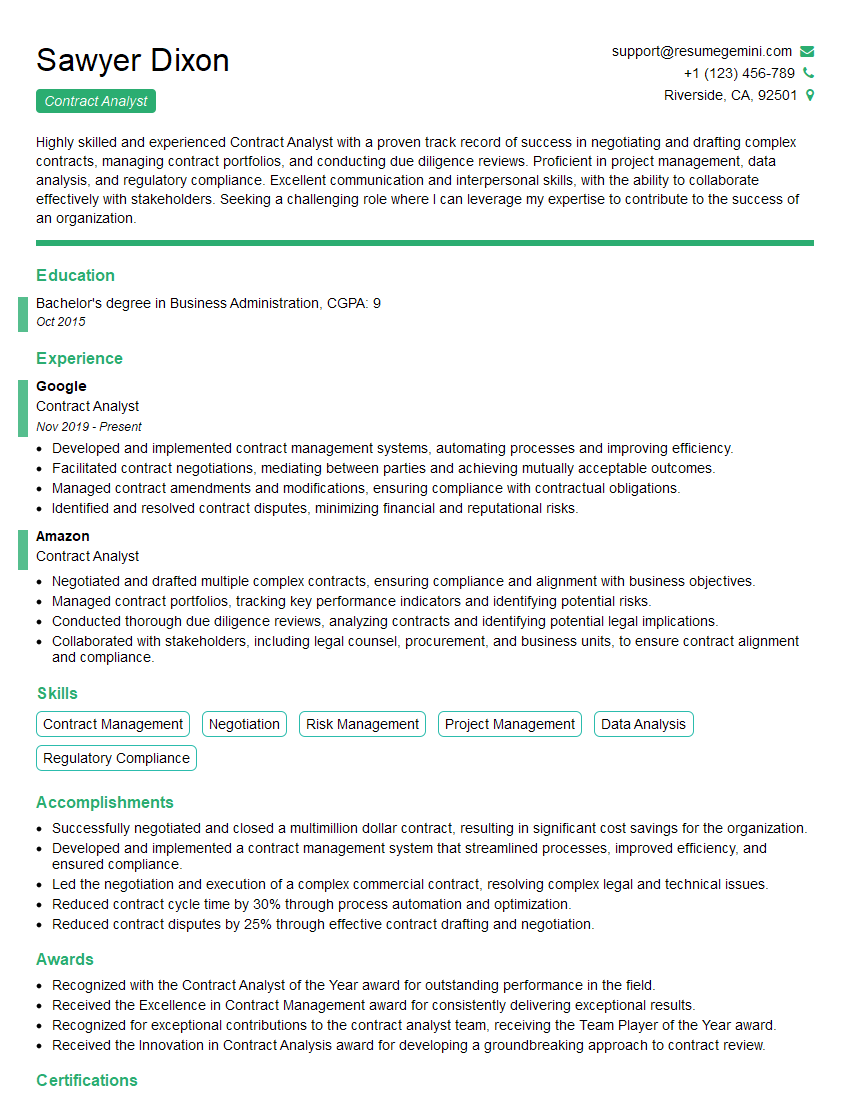
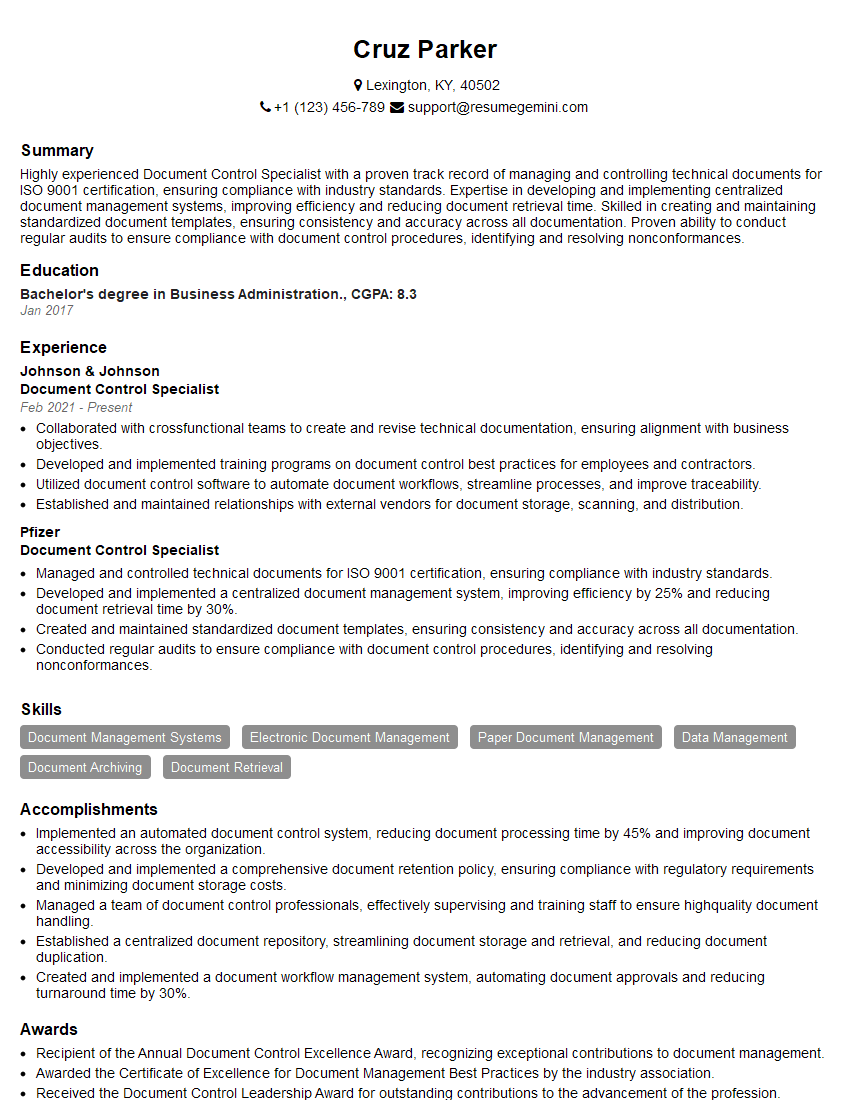
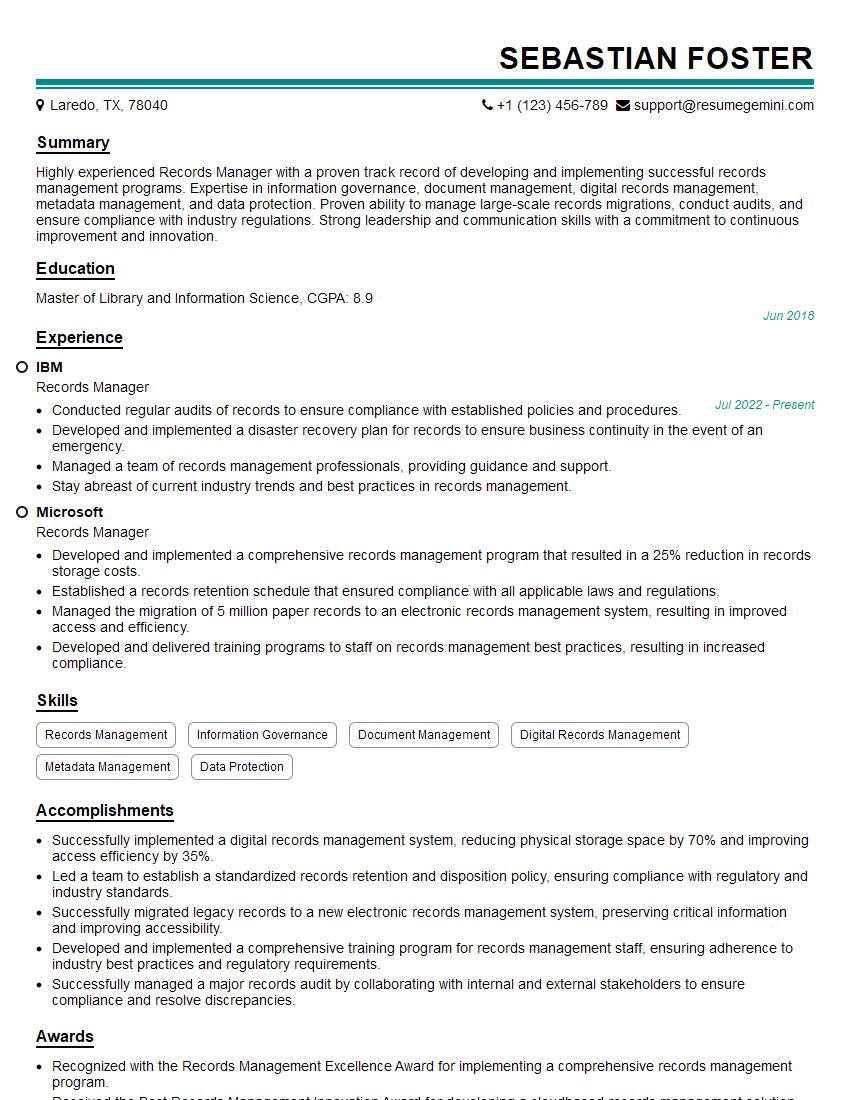
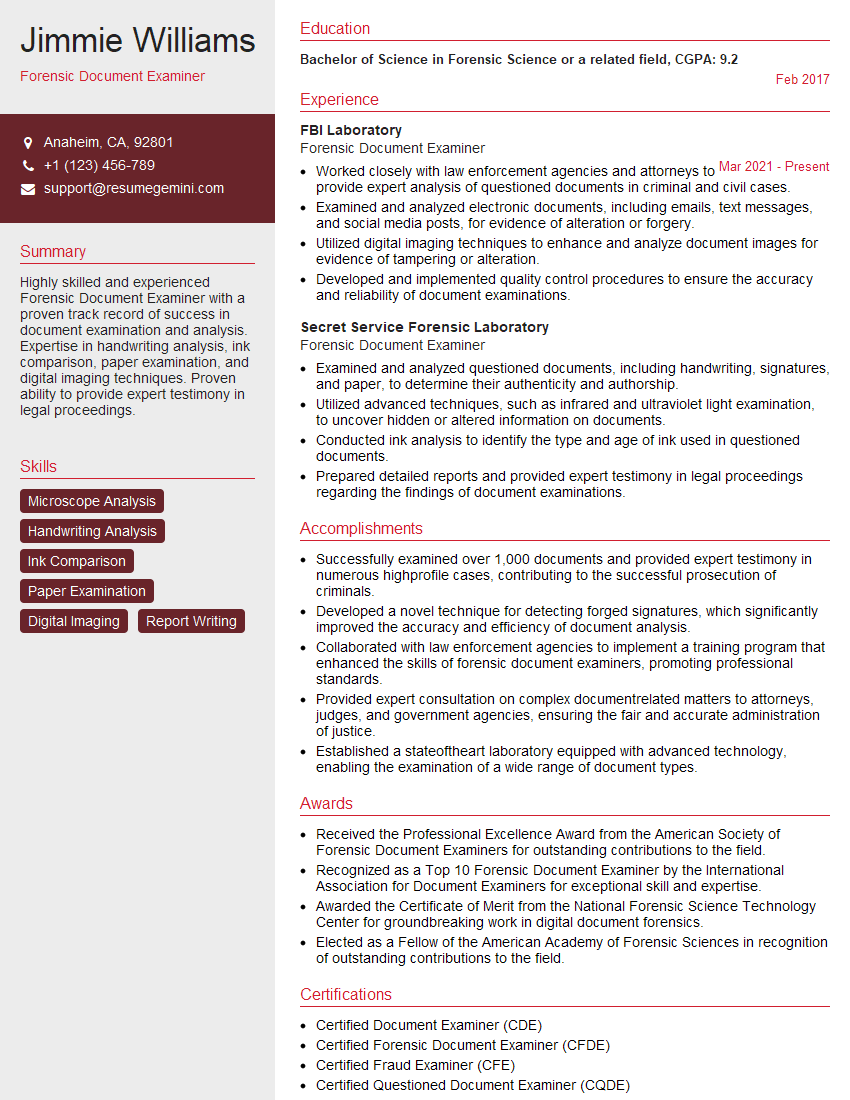
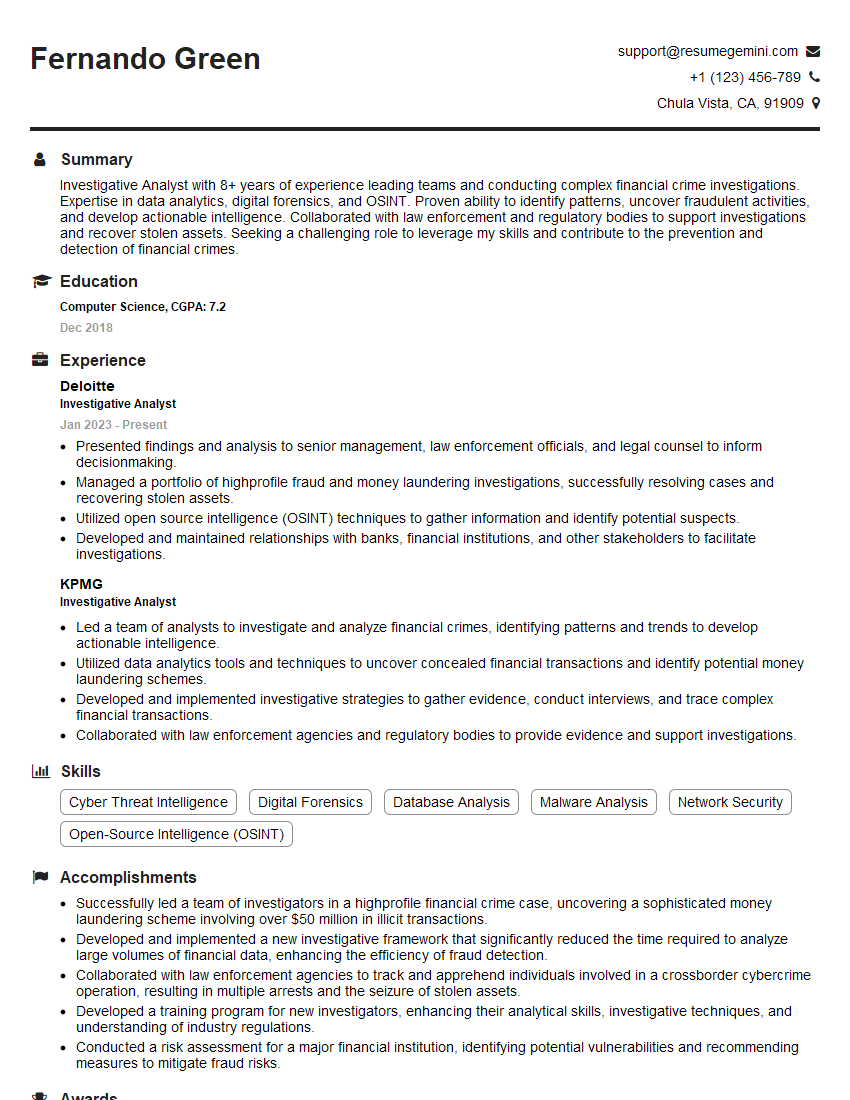
Mastering evidentiary document preparation is crucial for career advancement in legal and compliance fields. A strong foundation in this area opens doors to rewarding and impactful roles. To maximize your job prospects, create a compelling and ATS-friendly resume that highlights your skills and experience. Use ResumeGemini, a trusted resource, to build a professional resume that truly showcases your capabilities. Examples of resumes tailored to Evidentiary Document Preparation are available to guide you.
Explore more articles
Users Rating of Our Blogs
Share Your Experience
We value your feedback! Please rate our content and share your thoughts (optional).
What Readers Say About Our Blog
Very informative content, great job.
good