Preparation is the key to success in any interview. In this post, we’ll explore crucial Excavating and Backfilling interview questions and equip you with strategies to craft impactful answers. Whether you’re a beginner or a pro, these tips will elevate your preparation.
Questions Asked in Excavating and Backfilling Interview
Q 1. Explain the different types of excavators and their applications.
Excavators come in various types, each suited for specific tasks. The choice depends on factors like the project’s scale, soil conditions, and access limitations.
- Hydraulic Excavators (Tracked or Wheeled): These are the most common type, using hydraulic power to operate a digging arm and bucket. Tracked excavators excel in rough terrain, while wheeled excavators are better suited for paved surfaces and easier maneuverability. Think of them as the workhorses of the industry, capable of everything from digging foundations to demolition work.
- Mini Excavators: Smaller and more compact, these are ideal for tight spaces like urban construction sites or residential projects. They’re perfect for smaller scale digs and where maneuverability is paramount.
- Long-Reach Excavators: Designed with extended booms, they’re used to reach over obstacles or dig in areas difficult to access with standard excavators. Imagine demolishing a building next to a busy highway – a long-reach excavator is crucial.
- Backhoe Loaders: Combining a front-end loader and a backhoe, these versatile machines are efficient for tasks requiring both digging and loading materials. They are a cost-effective option for smaller projects that need both functions.
- Dragline Excavators: These use a long boom and a bucket suspended from a cable to excavate material. Often used in large-scale projects like dredging or mining, where vast amounts of material need to be moved.
For example, a large-scale infrastructure project might use a combination of tracked excavators for heavy digging, mini-excavators for detailed work in confined areas, and possibly even a dragline excavator for large-scale earthmoving.
Q 2. Describe the process of proper trenching and shoring.
Proper trenching and shoring are paramount for worker safety and structural integrity. Trenching involves digging a narrow, deep channel, while shoring provides temporary support to prevent collapse. The process involves several key steps:
- Planning & Site Assessment: Identify the type of soil, potential underground utilities, and nearby structures. This is crucial to determine the appropriate trenching methods and shoring systems.
- Excavation: Dig the trench to the required depth and width, carefully removing loose soil and ensuring stable sidewalls. Always slope the sides of the trench when possible to provide natural support.
- Inspection: Regularly inspect the trench walls for signs of instability or potential collapse. Look for cracks, bulging, or any other signs of distress.
- Shoring Installation: If the trench walls are unstable or exceed the safe allowable slope, install appropriate shoring. Common shoring methods include:
- Sheet Piling: Interlocking metal sheets driven into the ground.
- Soldier Piles and Lagging: Vertical timber or steel beams (soldier piles) with horizontal timber planks (lagging) between them.
- Hydraulic Shoring: Adjustable shoring systems that can be easily installed and adjusted as needed.
- Safety Measures: Maintain a safe working environment throughout the process. This includes proper access and egress from the trench, adequate lighting, and the use of personal protective equipment (PPE).
For example, a trench in sandy soil might require shoring, whereas a trench in stable, cohesive clay may only need sloping.
Q 3. How do you ensure the stability of a backfilled area?
Backfill stability depends on proper compaction and material selection. The goal is to create a solid base that doesn’t settle unevenly over time, leading to structural problems.
- Compaction: This is crucial. Using the appropriate equipment and techniques to compact the backfill material ensures its density, reducing the risk of settlement.
- Material Selection: Choose suitable backfill materials with good compaction characteristics. Avoid using highly organic materials that might decompose over time and reduce stability.
- Layering: Backfill in layers and compact each layer thoroughly before adding the next. This helps distribute the weight evenly and prevents settling.
- Moisture Content: Ensure the backfill material has the optimum moisture content for compaction. Too dry or too wet will reduce compaction efficiency.
- Structural Considerations: If the backfill is supporting a structure, ensure that the foundation is properly designed and constructed to handle the anticipated loads.
For instance, in a project involving a new building foundation, carefully compacted layers of gravel and then soil would ensure that the foundation remains stable over time. Ignoring this would lead to cracking or settling problems.
Q 4. What safety measures are crucial during excavation and backfilling?
Safety is paramount in excavation and backfilling. Accidents can have devastating consequences. Key measures include:
- Trench Safety: Always protect workers from cave-ins through shoring, sloping, or other appropriate measures. This is the single most important aspect.
- Proper PPE: Hard hats, safety glasses, high-visibility clothing, and appropriate footwear are mandatory.
- Atmospheric Monitoring: Test for hazardous gases (methane, carbon monoxide) in confined spaces.
- Traffic Control: Establish safe zones and traffic control around excavation sites to prevent accidents involving vehicles or pedestrians.
- Emergency Response Plan: Develop and implement a clear emergency response plan in case of accidents.
- Excavation Protection: Install warning signs and barriers around the excavation site.
- Competent Supervision: Ensure that all work is supervised by experienced and qualified personnel.
A simple example is using a spotter when operating heavy equipment near workers to avoid accidents.
Q 5. How do you handle unexpected underground utilities during excavation?
Unexpected underground utilities are a major hazard. The best approach is proactive prevention:
- One-Call Centers: Before starting excavation, contact local one-call centers (like 811 in the US) to locate and mark underground utilities.
- Hand Excavation: When approaching marked utilities, hand excavate carefully to avoid damage.
- Verification: Verify utility locations before any digging. Take additional precautions if utility markings are unclear or unavailable.
- Professional Assistance: If you encounter unforeseen utilities, stop work immediately and contact the utility company for guidance. Never attempt to move or repair utilities yourself.
- Proper Documentation: Keep thorough records of the utility locations.
Failing to properly locate and protect utilities can lead to injury, service disruption, and significant costs.
Q 6. Explain the importance of soil compaction in backfilling.
Soil compaction is critical for backfill stability. Improper compaction leads to settlement, which can damage structures and create uneven surfaces. Compaction increases the density of the soil, reducing void spaces and increasing its strength and load-bearing capacity. Think of it like packing sand into a bucket – the more tightly packed, the stronger and more stable it is.
For instance, if you’re backfilling around a foundation, inadequate compaction would lead to future settlement, cracking the foundation, and causing structural issues down the line.
Q 7. What are the different methods of soil compaction?
Several methods exist for soil compaction, each with its own application and effectiveness. The choice depends on soil type, project requirements, and access:
- Plate Compactor: This is a popular choice for compacting relatively shallow layers. It’s useful for areas with limited access.
- Vibratory Roller: Ideal for large areas and deeper layers, these rollers use vibrations to compact the soil efficiently.
- Sheep’s Foot Roller: Uses tines or feet to compact soil and is effective in cohesive soils and fill material.
- Pneumatic Roller: Uses smooth pneumatic tires to provide even compaction. This is good for granular soils and base courses.
- Hand Tamper: Used for small areas, trench backfilling, and locations inaccessible to machinery.
For example, building a road might start with a sheep’s foot roller for the base layer, then use a vibratory roller for the top layers.
Q 8. How do you determine the appropriate type of backfill material?
Selecting the right backfill material is crucial for the long-term stability and integrity of an excavation site. The choice depends on several factors, including the surrounding soil type, the intended use of the area, and local regulations. For example, using unsuitable backfill can lead to settlement, erosion, or even structural damage to nearby buildings.
- Compacted Granular Material: This is often the preferred choice for its excellent drainage and load-bearing capacity. Think of gravel, crushed stone, or sand. It’s ideal for areas requiring good load distribution, such as foundations or roads.
- Select Fill: This involves carefully removing unsuitable materials and replacing them with approved, compacted fill. This is crucial in situations where the existing soil is contaminated or has poor structural properties.
- Structural Fill: This is a more engineered approach, often involving layers of compacted granular materials with specific compaction requirements to achieve desired strength and settlement characteristics. It’s commonly used for large-scale projects or when significant loads are anticipated.
- Clayey Soils (with caution): While sometimes used, clayey soils can be problematic due to their tendency to shrink and swell with changes in moisture content. This can lead to uneven settlement and damage. If used, thorough compaction is essential.
In my experience, a thorough site investigation, including soil testing, is paramount to determining the best backfill material. I’ve personally encountered situations where using the wrong material led to significant delays and additional costs. One project involved a poorly drained area where using unsuitable clay resulted in significant settlement. Switching to a well-graded granular material resolved the issue.
Q 9. Describe your experience with GPS-guided excavation.
GPS-guided excavation has revolutionized the accuracy and efficiency of earthmoving operations. My experience with this technology spans several large-scale projects, where its precision was invaluable. Instead of relying solely on traditional surveying techniques, which can be time-consuming and prone to error, GPS allows for real-time monitoring of the excavator’s position relative to a digital design model.
This means we can excavate to precise depths and dimensions, minimizing over-excavation (and the associated waste) and reducing the need for manual adjustments. For example, on a recent pipeline project, GPS guidance enabled us to excavate the trench to the exact specified dimensions, ensuring the optimal fit of the pipeline and minimizing potential disruptions. It also enhanced safety by reducing the need for workers to physically check measurements.
I’m proficient in using various GPS systems and software, including understanding the importance of accurate base station setup and signal reception. Troubleshooting issues related to signal interference and data processing is part of my daily practice.
Q 10. How do you calculate the volume of earth to be excavated?
Calculating excavation volumes involves understanding geometry and applying appropriate formulas. The accuracy of the calculation directly impacts project cost and scheduling. Simple shapes can be easily calculated; complex shapes usually require more advanced methods.
- Simple Shapes (Rectangular Prisms): Volume = Length x Width x Depth. This is straightforward for rectangular excavations.
- Irregular Shapes: For irregular shapes, we often break down the excavation into smaller, manageable sections (prisms, pyramids, etc.), calculate the volume of each section, and sum them up. This is where software and 3D modeling become extremely helpful.
- Cut and Fill Calculations: These account for both the removal (cut) and placement (fill) of earth. Accurate cut and fill calculations minimize the need for extra material and efficiently manage site logistics.
- Software and Technology: Today, specialized software packages and CAD programs are used to create 3D models of the site and automatically calculate volumes. This significantly increases the precision and efficiency of volume estimation.
For instance, I once worked on a project with a complex, irregularly shaped excavation. Using 3D modeling software, we were able to accurately calculate the volume, ensuring that we ordered the correct amount of fill material, avoiding over-ordering and associated costs. We even accounted for expected compaction factors to refine our estimates.
Q 11. What are the common causes of excavation accidents?
Excavation accidents are unfortunately common and can have severe consequences. They often stem from a combination of factors, including inadequate planning, a lack of safety protocols, and environmental conditions.
- Ground Collapse: This is a major hazard, particularly in unstable soils or when excavations are deep. Inadequate shoring or improper support systems significantly increase this risk.
- Equipment Failure: Malfunctioning equipment, including excavators or cranes, can cause serious accidents. Regular maintenance and safety inspections are essential.
- Struck-by Hazards: Workers can be struck by falling objects, equipment, or collapsing soil. This is mitigated by proper fall protection, hazard identification, and appropriate safety procedures.
- Cave-ins: Sudden collapse of soil into an excavation. This is typically due to inadequate shoring or insufficient understanding of soil conditions.
- Unsafe Excavation Practices: Improper sloping, lack of trench boxes, and inadequate communication between workers all contribute to increased risks.
In one project, a lack of proper shoring resulted in a near-miss where a trench wall collapsed. This highlighted the need for thorough risk assessments and strict adherence to safety protocols, leading to improved procedures for future projects.
Q 12. How do you mitigate the risk of ground collapse during excavation?
Mitigating the risk of ground collapse during excavation is paramount to worker safety. It’s not just about following regulations; it’s about proactively understanding the soil conditions and implementing appropriate protective measures.
- Soil Testing: A thorough geotechnical investigation is the foundation of any safe excavation plan. This determines the soil type, stability, and potential for collapse.
- Shoring and Sloping: Based on the soil conditions, appropriate shoring (e.g., trench boxes, sheet piling, soldier piles and lagging) or sloping of the excavation sides is implemented to prevent collapse. Sloping is simpler for shallow excavations, while shoring is necessary for deeper ones.
- Soil Nailing: For very unstable soils, soil nailing is a technique where steel bars are driven into the soil to reinforce it.
- Monitoring: Continuous monitoring of the excavation during the operation, especially in high-risk situations, is essential. Any signs of instability should trigger immediate corrective actions.
- Emergency Procedures: Having clear emergency plans in place and adequately training the team on these procedures is vital in the event of a collapse.
On a project involving a deep excavation in clay soil, we used a combination of soldier piles and lagging, coupled with regular inspections by a geotechnical engineer, to ensure worker safety. This proactive approach prevented any incidents.
Q 13. Explain your experience with different types of excavation equipment.
My experience with excavation equipment is extensive. I’m familiar with the operation and maintenance of a wide range of machines, each suited to different tasks and soil conditions.
- Hydraulic Excavators (Backhoes): These are versatile machines used for digging, loading, and transporting materials. I’m proficient in operating various sizes, from small compact excavators to large crawler excavators.
- Wheel Loaders: Primarily used for loading and moving materials, especially in areas with hard surfaces or limited maneuverability.
- Bulldozers: Powerful machines used for earthmoving and site preparation on a large scale. I have experience with various blade types, optimized for different tasks.
- Track Loaders: Combining the benefits of loaders and excavators, track loaders are adept at both digging and material handling.
- Mini-Excavators: Used for smaller, confined spaces or where maneuverability is crucial.
I understand the operational limitations and safety protocols associated with each piece of equipment. Moreover, I’m well-versed in performing routine maintenance checks and troubleshooting minor mechanical problems, minimizing downtime on site.
Q 14. How do you read and interpret site plans and blueprints related to excavation?
Reading and interpreting site plans and blueprints is fundamental to successful excavation. These documents provide crucial information regarding the location, dimensions, and depth of the excavation, along with details about utilities, existing structures, and other relevant features.
I start by understanding the overall site layout and identifying the key elements related to the excavation area. This includes:
- Location and Dimensions: Determining the precise location and dimensions of the excavation, including depth, width, and length.
- Utility Locations: Identifying the locations of underground utilities (pipes, cables, etc.) is critical to prevent damage. This often involves coordinating with utility companies.
- Existing Structures: Understanding the locations and foundations of any existing structures to ensure that the excavation doesn’t compromise their integrity.
- Excavation Method: The plans often specify the required excavation method, including whether shoring or sloping is needed.
- Benchmarks and Elevations: Understanding the benchmark system and elevations ensures accurate excavation to the specified depths.
For instance, I’ve worked on projects where discrepancies between the plans and the actual site conditions were discovered during excavation. My experience allows me to quickly recognize these discrepancies and take corrective measures, minimizing disruptions and potential problems. Proficient interpretation of blueprints is a crucial skill that allows for the efficient and safe execution of any project.
Q 15. Describe your experience with working in confined spaces.
Confined space work in excavation is inherently risky, demanding meticulous planning and adherence to safety protocols. My experience includes working in trenches, shafts, and tunnels, always prioritizing safety. Before entering any confined space, we conduct thorough atmospheric testing for hazardous gases like methane or hydrogen sulfide. We utilize appropriate personal protective equipment (PPE), including harnesses, respirators, and communication systems. A standby person is always present outside the confined space, monitoring conditions and ready to provide assistance. For example, during a recent project involving the repair of an underground utility line, we used a ventilation system to ensure sufficient oxygen and remove any potential contaminants before workers entered the trench. We also implemented a permit-to-work system, documenting all safety checks and procedures before commencing work. Regular breaks and rotation of personnel are also critical to minimize fatigue and enhance safety.
Career Expert Tips:
- Ace those interviews! Prepare effectively by reviewing the Top 50 Most Common Interview Questions on ResumeGemini.
- Navigate your job search with confidence! Explore a wide range of Career Tips on ResumeGemini. Learn about common challenges and recommendations to overcome them.
- Craft the perfect resume! Master the Art of Resume Writing with ResumeGemini’s guide. Showcase your unique qualifications and achievements effectively.
- Don’t miss out on holiday savings! Build your dream resume with ResumeGemini’s ATS optimized templates.
Q 16. How do you ensure proper drainage during and after backfilling?
Proper drainage is paramount to prevent water accumulation, which can compromise the stability of the backfill and create unsafe conditions. We achieve this through a multi-pronged approach. First, we assess the site’s drainage characteristics before excavation, considering factors such as groundwater level and soil permeability. During excavation, we implement measures such as installing drainage pipes or sumps to divert water away from the excavation area. For backfilling, we use well-graded granular materials like gravel or crushed stone in the lower layers to create a drainage layer. This allows water to percolate through the backfill rather than accumulating. We ensure proper compaction of each layer to prevent settlement and maintain the integrity of the drainage system. After backfilling, we often grade the area to ensure proper surface drainage away from the site. A recent project involved backfilling a large excavation next to a river. We installed a French drain along the perimeter and used geotextile fabric to separate the drainage layer from the rest of the backfill, preventing clogging and ensuring efficient water removal.
Q 17. What are the environmental considerations during excavation and backfilling?
Environmental considerations are critical throughout the excavation and backfilling process. We adhere to all relevant environmental regulations and permits. Soil erosion control is a key concern. We employ measures like silt fences, sediment basins, and erosion control blankets to prevent soil from washing into waterways. We carefully manage excavated materials, minimizing soil disturbance and ensuring proper disposal or reuse of non-contaminated soil. We take precautions to avoid contaminating groundwater, especially during excavation near sensitive water sources. For example, we may use a dewatering system or implement groundwater monitoring wells. Furthermore, we minimize noise pollution through the use of appropriate equipment and scheduling practices, considering the impact on surrounding communities and ecosystems. Proper waste management is essential, with segregated disposal of hazardous materials and recycling of suitable materials where possible. Protecting local flora and fauna is a priority, and we plan the work carefully to minimize disruption to wildlife habitats.
Q 18. Explain your experience with different types of backfilling techniques.
My experience encompasses various backfilling techniques, chosen based on site conditions and project requirements. For example,
- Compacted granular backfill is ideal for providing good drainage and stability, particularly in areas where load-bearing capacity is important. We use this frequently for foundations and utility trenches.
- Vibratory compaction ensures high density, reducing settlement over time. This method is essential when backfilling around structures to prevent differential settlement.
- Hydraulic backfilling is efficient for large-scale projects, particularly where access is limited. It involves pumping the fill material into the excavation. This can reduce compaction issues but must be carefully monitored.
- Selective backfilling involves using different materials in layers to optimize drainage, compaction, and load-bearing properties. We often use this in situations with varying soil conditions.
Q 19. How do you maintain and troubleshoot excavation equipment?
Regular maintenance is key to ensuring the efficient and safe operation of excavation equipment. This includes daily pre-operational checks, encompassing visual inspections for any damage or leaks, lubrication of moving parts, and checking fluid levels (oil, coolant, hydraulic fluid). We also perform regular scheduled maintenance as per manufacturer’s recommendations, including oil changes, filter replacements, and component inspections. Troubleshooting involves systematically identifying the source of a malfunction. For example, if an excavator’s hydraulic system fails, we start with checks of the hydraulic fluid level and condition, then move to inspecting hoses, cylinders, and the pump itself, eventually possibly requiring specialized diagnostics or repair work. We maintain detailed records of all maintenance and repairs, which is essential for tracking equipment performance and predicting potential future issues. Our team receives regular training on equipment operation and maintenance, emphasizing safety procedures.
Q 20. Describe your experience working with various soil types.
Working with various soil types is a routine part of excavation and backfilling. My experience includes working with clays, sands, gravels, silts, and combinations thereof. Each type presents unique challenges. Clay soils, for instance, can be highly cohesive and difficult to excavate, requiring specialized equipment and techniques. Sandy soils can be prone to collapse, demanding careful shoring and support. Understanding the soil’s shear strength, permeability, and compaction characteristics is crucial for planning excavation and backfilling operations. We conduct soil testing prior to any excavation to determine the appropriate methods, such as using specialized excavators for difficult clays or employing specific compaction techniques for sandy soils. For example, on a recent project with expansive clay soil, we used a controlled blasting method to break up the soil for excavation, followed by careful compaction during backfilling to minimize shrinkage and settlement.
Q 21. How do you manage a team during excavation and backfilling operations?
Effective team management in excavation and backfilling is crucial for safety and productivity. I foster a collaborative and communicative environment, ensuring everyone understands their roles and responsibilities. Clear communication channels are established, using daily briefings to discuss tasks, safety procedures, and any potential hazards. I emphasize proactive risk assessment and hazard identification. The team actively participates in identifying and mitigating risks, promoting a safety-first culture. I delegate tasks appropriately based on team members’ skills and experience, providing training and support where necessary. Performance feedback is provided regularly, both positive and constructive, to improve individual and team performance. A recent project involved a tight deadline; through careful planning, clear communication, and a strong team effort, we successfully completed the project on time and without any safety incidents. Open dialogue and mutual respect are essential for maintaining a high-performing and safe team.
Q 22. Explain your experience with quality control during excavation and backfilling.
Quality control in excavation and backfilling is paramount for ensuring project success and safety. It’s a multi-faceted process starting even before the first shovel hits the ground. We begin with meticulous review of the project plans and specifications, verifying the accuracy of the design and identifying potential challenges early on. During excavation, regular checks are made to ensure adherence to the specified dimensions and depths. This often involves using surveying equipment, like total stations or GPS receivers, to continuously monitor progress and make necessary adjustments. We also carefully inspect the soil type and conditions, adapting our techniques as needed to prevent instability or damage. For instance, if we encounter unexpected bedrock or unstable soil, we’ll implement appropriate mitigation strategies, such as shoring or soil stabilization. During backfilling, we ensure proper compaction of the material in layers, using appropriate equipment like compactors and checking density regularly using a Proctor Density test. This guarantees stability and prevents future settling. Throughout the entire process, we maintain detailed records and documentation of all quality control measures, including photographs and test results, ensuring traceability and accountability.
For example, on a recent project involving the installation of underground utilities, we discovered a previously unmapped gas line during excavation. Immediate action was taken to halt work, contact the utility company, and implement safety precautions. We adjusted our excavation plan, incorporating the new information and ensuring the gas line remained undisturbed. The project was slightly delayed, but the safety of the workers and the integrity of the project were prioritized.
Q 23. How do you handle conflicts or disagreements within the team?
Conflict resolution is an essential skill in construction. My approach is based on open communication and collaborative problem-solving. I believe in fostering a respectful and inclusive work environment where everyone feels comfortable expressing their opinions and concerns. When disagreements arise, I encourage team members to clearly articulate their perspectives, actively listen to each other, and focus on finding mutually acceptable solutions. This often involves brainstorming different options and carefully evaluating their pros and cons. I strive to facilitate these discussions, guiding the team towards a resolution that considers everyone’s input and adheres to project goals. If necessary, I mediate the discussion, ensuring fair representation of all viewpoints and promoting a compromise that benefits the project as a whole.
In one instance, a disagreement arose between the excavator operator and the surveyor regarding the precise location of a foundation. Instead of letting the tension escalate, I facilitated a meeting where both individuals presented their data and concerns. By carefully examining the surveying data and comparing it with the site layout, we identified a minor discrepancy in the initial survey which led to the resolution. The miscommunication was resolved, and work proceeded smoothly with everyone’s cooperation.
Q 24. How do you ensure compliance with safety regulations and permits?
Safety and compliance are non-negotiable aspects of every excavation and backfilling project. Before commencing any work, we meticulously obtain all necessary permits and approvals from relevant authorities. This includes contacting utility companies to locate underground services and working closely with local governing bodies to ensure compliance with environmental regulations. Our team undergoes comprehensive safety training, covering aspects like trench shoring, fall protection, and hazard identification. We emphasize a proactive safety culture on-site, constantly monitoring work practices and implementing corrective measures as needed. Daily safety briefings, equipment inspections, and the use of Personal Protective Equipment (PPE) are compulsory. Detailed risk assessments are conducted before each task, identifying potential hazards and outlining appropriate control measures. We maintain accurate records of all permits, safety training, and incident reports for easy access and audit purposes. This robust approach ensures we not only meet but often exceed regulatory requirements, fostering a safe and responsible working environment.
For example, before starting a project near a busy road, we obtained traffic control permits, established a safe working zone, and installed proper signage and barricades. We also implemented a comprehensive traffic management plan to minimize disruption and ensure worker safety.
Q 25. Describe your experience with project planning and scheduling for excavation projects.
Project planning and scheduling is crucial for successful excavation and backfilling projects. It begins with a thorough review of the project documents and site conditions to gain a clear understanding of the scope of work, soil characteristics, and potential challenges. We then break down the project into smaller, manageable tasks, assigning appropriate durations and resources to each. This often involves using project management software to create a detailed schedule, outlining critical paths and dependencies between tasks. We account for potential delays and unforeseen circumstances by incorporating buffer time into the schedule, allowing for flexibility and adjustments as needed. Regular progress monitoring and adjustments to the schedule are conducted to keep the project on track and minimize disruptions. The planning process also involves close coordination with subcontractors, suppliers, and other stakeholders to ensure seamless execution.
A recent project involved the excavation for a large building foundation. Our planning process included detailed sequencing of tasks, such as clearing the site, site surveying, excavation, shoring, and backfilling. We used a Gantt chart to visualize the schedule, identifying critical tasks and potential bottlenecks. This enabled proactive planning to maintain schedule adherence.
Q 26. How do you deal with delays or unexpected challenges on a project?
Dealing with delays and unexpected challenges is an inevitable aspect of construction. Our approach involves a proactive and systematic response. First, we identify the root cause of the delay or challenge through careful investigation. Then, we assess its impact on the project schedule and budget. Based on this assessment, we develop a contingency plan to mitigate the impact. This may involve adjusting the schedule, reallocating resources, or exploring alternative solutions. Open communication with the client and stakeholders is essential to keep them informed and manage their expectations. We document all changes and updates to the project plan, ensuring transparency and accountability. Sometimes, it may require additional resources or a revised budget, which we thoroughly document and justify to the client.
In one instance, heavy rainfall caused significant delays in an excavation project. We implemented a revised schedule, incorporating additional time for dewatering and soil stabilization. We also coordinated with the client to adjust the project timeline accordingly.
Q 27. Explain your experience using different types of surveying equipment.
I have extensive experience using various surveying equipment, crucial for precise measurements and accurate site representation. This includes total stations, which provide highly accurate measurements of distances, angles, and elevations. I’m proficient in using GPS receivers for precise positioning, which is particularly useful in large-scale projects. Leveling instruments ensure accurate elevation measurements, critical for grading and ensuring proper drainage. Data from these instruments are used to create detailed site plans, elevation models, and as-built drawings. I am also experienced in using construction layout equipment, such as laser levels and string lines, to mark out building foundations and other structures. Data analysis and interpretation are key; software like AutoCAD and Civil 3D are used to process and analyze the collected data, providing critical information for project execution and quality control.
For example, on a recent project involving a large-scale land development, I used a total station to survey the site, creating a detailed topographical survey that was vital for planning the excavation work and ensuring compliance with local regulations.
Q 28. How do you estimate the cost of an excavation and backfilling project?
Estimating the cost of an excavation and backfilling project involves a detailed breakdown of all anticipated costs. This includes material costs (soil, backfill, aggregate), equipment rental or ownership expenses, labor costs, permits and licenses, transportation, and contingency for unexpected issues. Accurate quantity take-offs, based on site surveys and design plans, are essential for calculating material requirements. Labor costs are estimated based on the type of work, required skills, and prevailing labor rates. Equipment costs are determined by the type and duration of equipment use. Contingency allowances are included to cover unexpected events, such as unforeseen ground conditions or weather delays. Software like estimating programs or spreadsheets are used to track and manage the various cost components. Detailed unit rates, derived from past project data and industry standards, are applied to each component to arrive at a comprehensive project cost estimate.
For a typical residential excavation, we might estimate costs based on cubic yards of excavation, considering factors like soil type, depth, and access. Larger projects would entail more detailed cost analysis, factoring in site-specific conditions and potential complexities.
Key Topics to Learn for Excavating and Backfilling Interview
- Site Preparation and Surveying: Understanding site surveys, identifying potential hazards (utilities, underground structures), and planning excavation strategies.
- Excavation Techniques: Mastering various excavation methods (e.g., trenching, mass excavation), selecting appropriate equipment based on soil conditions and project requirements, and ensuring worker safety.
- Soil Mechanics and Properties: Knowing how different soil types behave under stress, identifying potential instability issues, and implementing appropriate shoring and support systems.
- Equipment Operation and Maintenance: Demonstrating proficiency in operating excavators, backhoes, and other related heavy machinery, along with understanding basic maintenance procedures.
- Safety Regulations and Procedures: Familiarity with OSHA regulations and best practices for excavation safety, including trench safety, personal protective equipment (PPE), and emergency procedures.
- Backfilling Techniques: Understanding different backfilling methods (e.g., compacted backfill, select backfill), ensuring proper compaction for structural integrity, and avoiding settling issues.
- Blueprint Reading and Interpretation: Ability to read and understand excavation plans, grading plans, and other relevant construction documents.
- Problem-Solving and Decision-Making: Describing experiences in handling unexpected challenges on site, such as encountering unforeseen obstacles or dealing with equipment malfunctions.
- Environmental Considerations: Understanding the environmental impact of excavation and backfilling, including erosion control and waste management.
Next Steps
Mastering excavating and backfilling techniques is crucial for a successful and rewarding career in construction. These skills are highly sought after, offering excellent opportunities for growth and advancement within the industry. To significantly enhance your job prospects, it’s vital to create a resume that catches the eye of Applicant Tracking Systems (ATS). This is where ResumeGemini can help. ResumeGemini is a trusted resource for building professional, ATS-friendly resumes. We provide examples of resumes tailored specifically to the Excavating and Backfilling field, guiding you in showcasing your skills and experience effectively. Invest in your future and build a resume that highlights your expertise – let ResumeGemini help you land your dream job.

Site Manager Resume Sample

Construction Superintendent Resume Sample
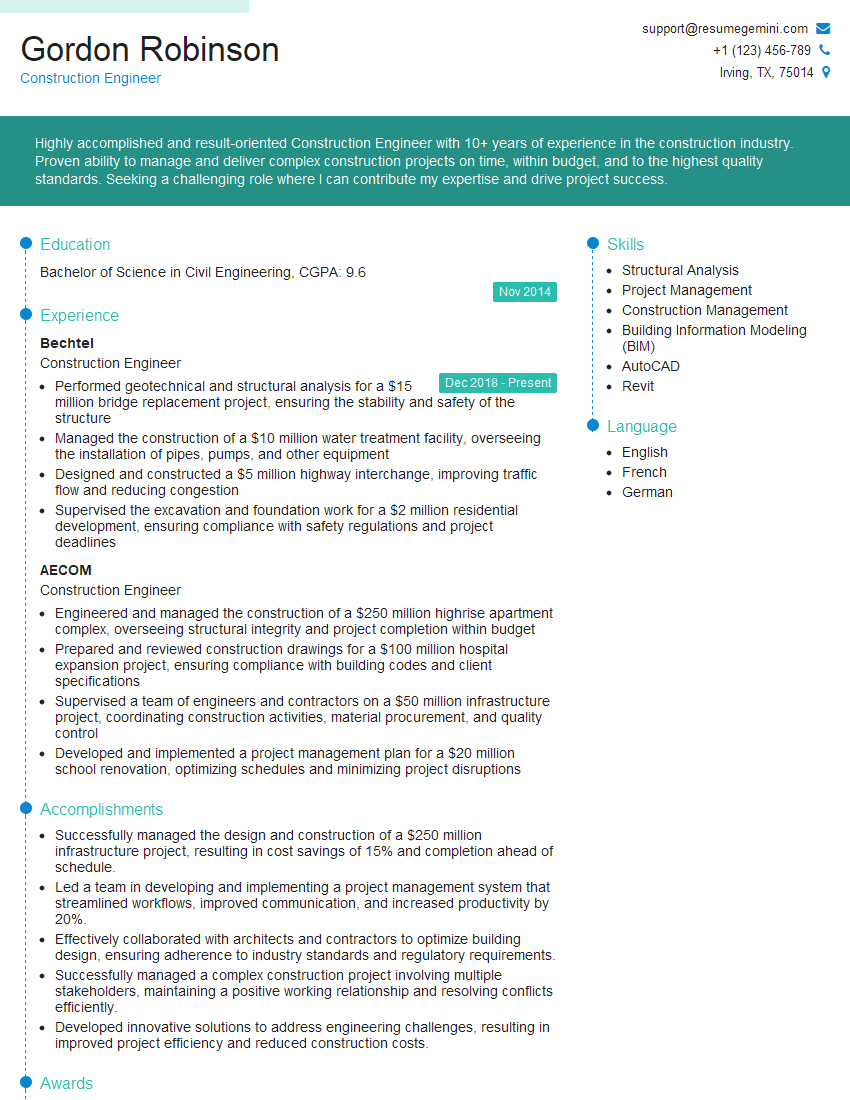
Construction Engineer Resume Sample
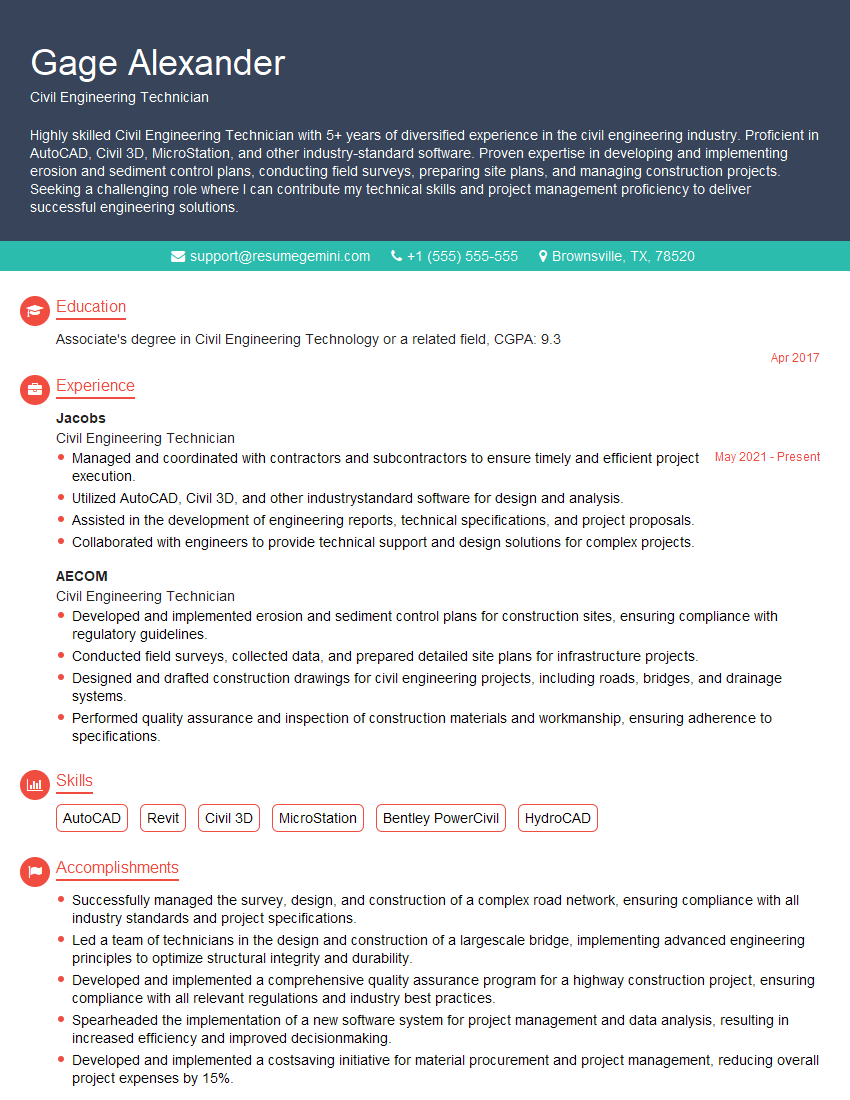
Civil Engineering Technician Resume Sample

Site Supervisor Resume Sample
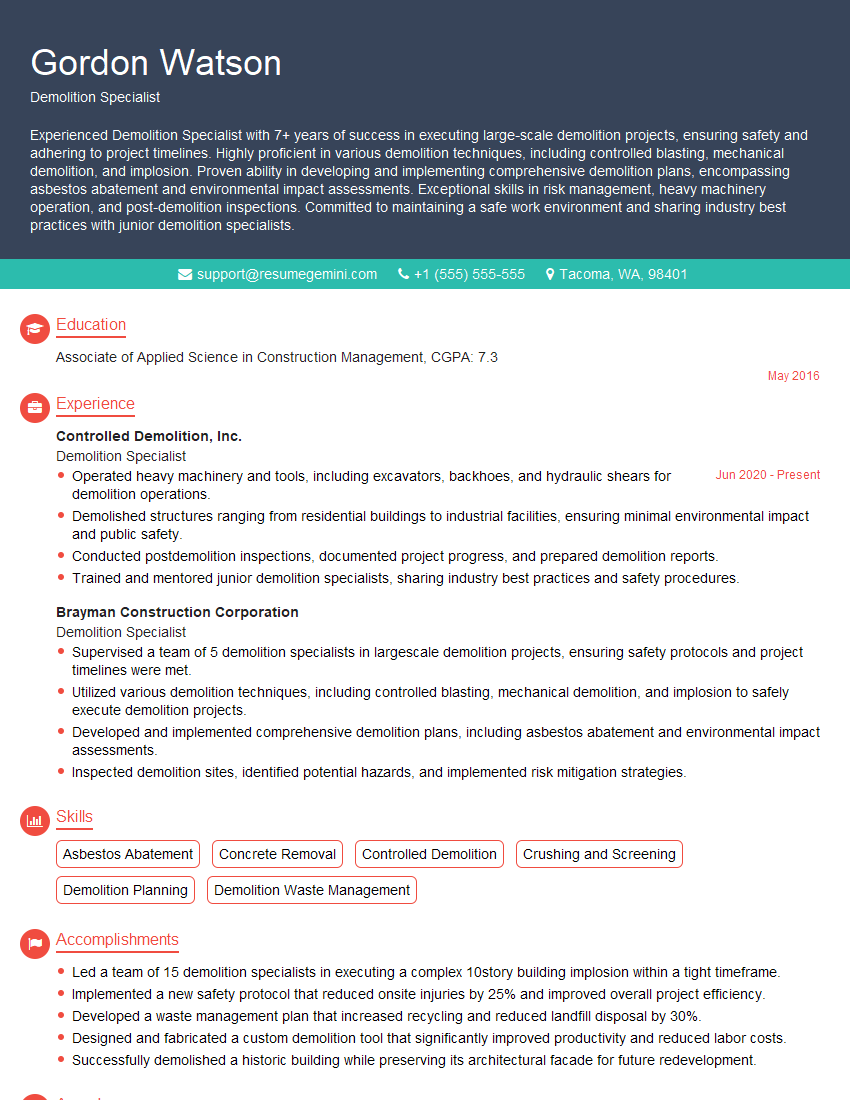
Demolition Specialist Resume Sample

Heavy Equipment Operator Resume Sample

Backhoe Operator Resume Sample
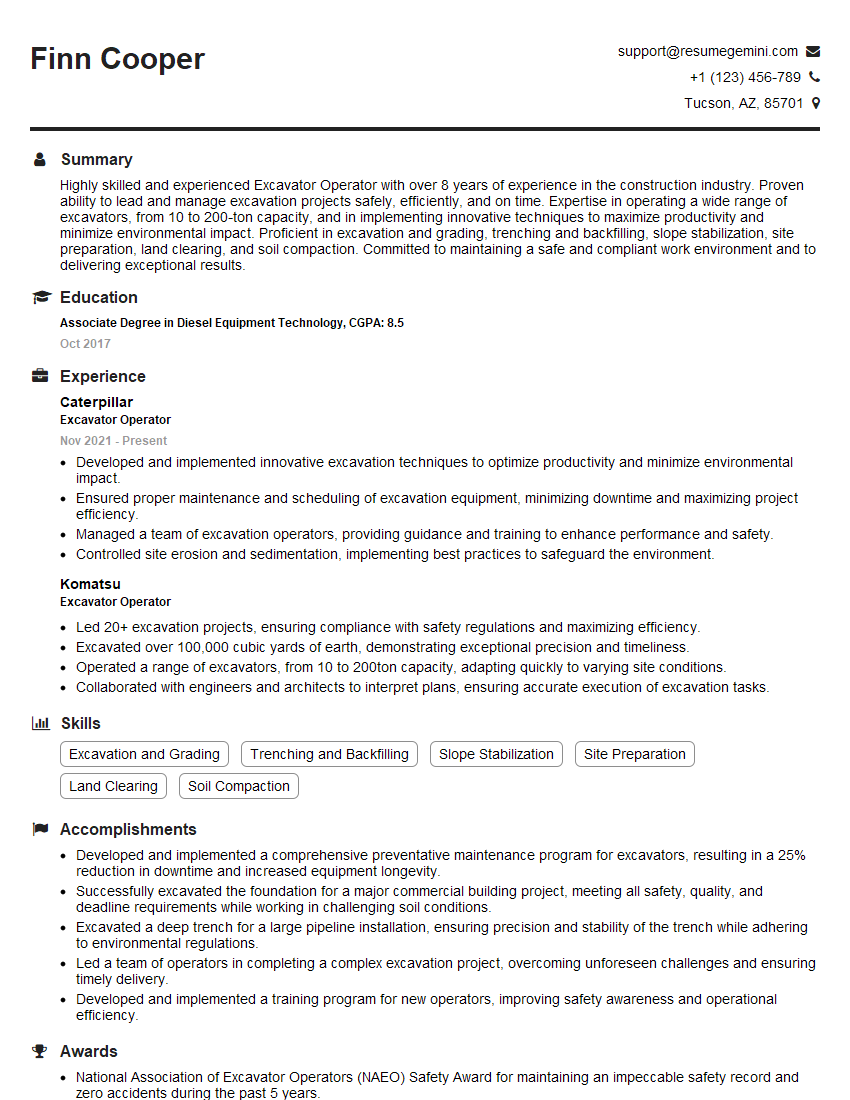
Excavator Operator Resume Sample
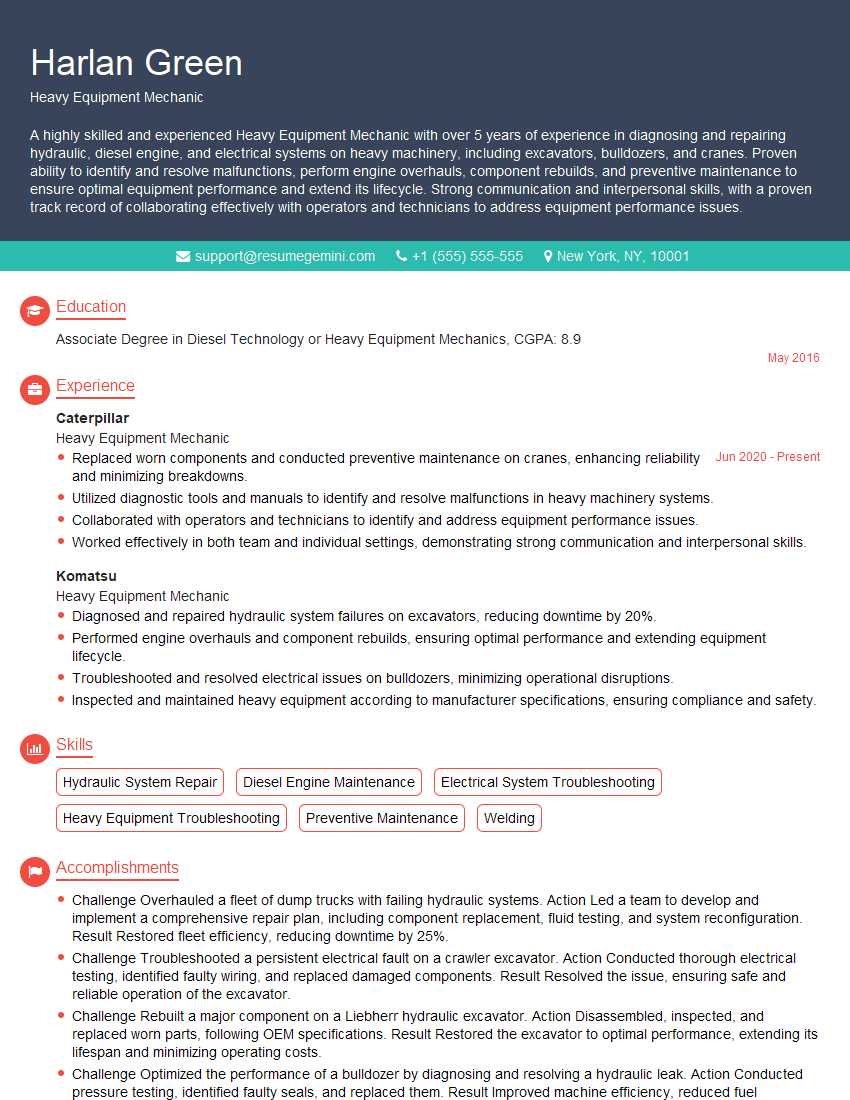
Heavy Equipment Mechanic Resume Sample
Explore more articles
Users Rating of Our Blogs
Share Your Experience
We value your feedback! Please rate our content and share your thoughts (optional).
What Readers Say About Our Blog
Very informative content, great job.
good