Feeling uncertain about what to expect in your upcoming interview? We’ve got you covered! This blog highlights the most important Excellent Ear for Harmony and Melody interview questions and provides actionable advice to help you stand out as the ideal candidate. Let’s pave the way for your success.
Questions Asked in Excellent Ear for Harmony and Melody Interview
Q 1. Identify the key of the following chord progression.
Identifying the key of a chord progression involves analyzing the chords’ constituent notes and their relationships. We look for the tonic chord, which is the most important chord in the key and usually acts as the home base. Let’s say the chord progression is I-IV-V-I in C major (C-F-G-C). The presence of C major (I) as the tonic chord strongly suggests the key is C major. However, to be certain, we should also examine the other chords and their function within the key. For example, if we had a progression with significant use of chords that wouldn’t belong in C major, we’d need to rethink our assessment. Analyzing the overall context of the musical piece is important as well, since a chord progression can sometimes temporarily modulate to a different key.
Example: A progression of Am-Dm-E7-Am strongly suggests the key of A minor due to the use of Am (i) as the tonic chord and the appropriate subdominant (iv) and dominant (V7) chords. The presence of dominant 7th chords (like E7) offers further clarity to harmonic movements in a key.
Q 2. Name the intervals between these two notes.
Naming intervals requires understanding the distance between two notes. We use the diatonic scale of the key to measure this. For example, if we have C and E, we count the notes between them (C-D-E) including the starting note, resulting in a major third. The interval’s quality (major, minor, perfect, augmented, diminished) depends on the specific notes and their relationship within the scale. A perfect interval can only be found between perfect fifths and fourths. A major or minor interval is typically found between seconds, thirds, sixths, and sevenths.
Example: The interval between C and G is a perfect fifth. The interval between C and Eb is a minor third. Knowing your intervallic relationships is absolutely fundamental to understanding harmony, counterpoint, and melody.
Q 3. Transcribe this short melodic phrase.
Transcribing a melodic phrase involves writing down the notes and their rhythm. This requires listening carefully and noting the pitch (e.g., using musical notation or a letter name system like C, D, E) and the duration (e.g., whole note, half note, quarter note) of each note. Accurate transcription is critical for music analysis, arrangement, and composition.
Example (assuming a simple melody): Let’s say the melody is C-D-E-F-G played as quarter notes, the transcription would be written as a series of quarter notes with the pitches noted using standard musical notation or letter name system. A professional transcriber will not only note pitch and rhythm, but also articulation, dynamics and expression markers.
Q 4. Describe the harmonic function of this chord within the progression.
The harmonic function of a chord within a progression describes its role in creating harmonic movement and tension. Chords typically function as tonic (I), subdominant (IV), dominant (V), or leading-tone (VII) within a diatonic key. The tonic provides stability, the subdominant creates a sense of anticipation, and the dominant creates tension that resolves to the tonic. Other chords may function as secondary dominants, passing chords, or neighbor chords to create further harmonic movement. Understanding a chord’s function is critical for composing and arranging music effectively.
Example: In a I-IV-V-I progression in C major, the V chord (G major) acts as the dominant, creating tension that resolves satisfyingly to the tonic (C major). The harmonic function of the chords provides structural stability and coherence to music.
Q 5. What is the difference between major and minor tonalities?
The difference between major and minor tonalities lies primarily in the interval between the tonic and the third degree of the scale. In a major scale, this interval is a major third, creating a bright and happy sound. In a minor scale, this interval is a minor third, resulting in a darker, more melancholic sound. This difference cascades through the entire scale, affecting the character of each note and the overall feel of the music. There are different types of minor scales (natural, harmonic, melodic) which further influence the character of the music. This results in different harmonic possibilities.
Example: Compare C major (C-D-E-F-G-A-B-C) with C minor (C-D-Eb-F-G-Ab-Bb-C). The use of E versus Eb radically alters the tonality.
Q 6. Identify the cadence type used at the end of this musical excerpt.
Cadences mark the end of musical phrases or sections. There are several types, including authentic (V-I), half (V-I with no leading tone resolution), plagal (IV-I), and deceptive (V-vi). Identifying the cadence type helps understand the musical structure and the composer’s intent. The cadence type dictates the level of finality or continuation felt at the end of a musical passage.
Example: An authentic cadence (V-I) provides a strong sense of closure, while a deceptive cadence (V-vi) creates a surprising and unexpected resolution, often leading to a continuation of the musical thought.
Q 7. Explain the concept of consonance and dissonance.
Consonance and dissonance refer to the stability or instability of intervals and chords. Consonant intervals and chords sound stable and pleasing to the ear; dissonant intervals and chords sound unstable and tend to create tension that needs resolution. The perception of consonance and dissonance can be culturally influenced, but some intervals, like perfect fifths and octaves, are generally considered consonant, while others, like major sevenths and tritones, are typically dissonant. Mastering the interplay of consonance and dissonance is key to creating musical interest and emotional impact.
Example: A perfect fifth (C-G) is consonant; a tritone (C-F#) is dissonant. Composers use dissonance to create tension and then resolve it to consonance to create a satisfying musical experience.
Q 8. Identify the rhythmic notation for this example.
To identify the rhythmic notation, we need the example itself. Rhythmic notation uses symbols to represent the duration of notes and rests. For instance, a whole note (♩) gets four beats, a half note (♩) gets two, a quarter note (♩) gets one, and an eighth note (♩) gets half a beat. Rests have corresponding symbols representing silence of equivalent durations. Providing the example would allow me to give a precise notation.
Example: If the example shows two quarter notes followed by a half note, the rhythmic notation would be: ♩♩♩
Identifying rhythmic notation is fundamental to reading and playing music accurately. Misinterpreting it leads to timing errors and ultimately affects the overall musical expression.
Q 9. Describe the difference between diatonic and chromatic scales.
Diatonic and chromatic scales are two fundamental building blocks of Western music, differing primarily in the intervals they use.
- Diatonic Scale: A diatonic scale comprises seven notes within an octave, arranged with specific intervals. The most common is the major scale (e.g., C major: C-D-E-F-G-A-B-C), featuring whole and half steps in a specific pattern (W-W-H-W-W-W-H). This creates a sense of tonal stability and resolution. Think of it as the ‘natural’ sound of a key.
- Chromatic Scale: A chromatic scale consists of twelve notes within an octave, including all half steps. It essentially uses every note available on a piano keyboard. This scale lacks the tonal center and resolution inherent in diatonic scales, creating a more ambiguous or unsettling feel. It’s often used for special effects or to create tension.
In short: Diatonic scales are built on whole and half steps in a specific pattern creating a tonal center. Chromatic scales use all twelve notes, creating a more ambiguous and unstable sound.
Q 10. Analyze the melodic contour of this phrase.
To analyze the melodic contour, I need the musical phrase. Melodic contour refers to the overall shape or direction of a melody. It describes whether the melody generally moves upward (ascending), downward (descending), or exhibits a combination of both (arpeggiated, stepwise, leaps, etc.).
Analyzing melodic contour involves:
- Identifying the highest and lowest notes: This gives you the overall range.
- Observing the direction of movement: Does it ascend predominantly, descend, or fluctuate?
- Recognizing the intervals between notes: Are the intervals mostly small (stepwise) or large (leaps)?
- Identifying patterns: Are there repeated melodic figures or motifs?
Example: A melody that rises gradually to a high point, then descends, has an arch-like contour. A melody that jumps between widely spaced notes creates a more disjunct contour.
Understanding melodic contour enhances our interpretation and appreciation of the music’s emotional impact. A rising contour often conveys excitement or hope, while a falling contour may suggest sadness or resignation.
Q 11. Identify the inversion of this chord.
To identify the inversion of a chord, I need the original chord. Chord inversion involves changing the bass note of the chord, which alters the voicing and harmonic character. The root remains the same; however, the function and feel of the chord change.
Example: A C Major chord (C-E-G) has three possible inversions:
- Root position: C-E-G (C in the bass)
- First inversion: E-G-C (E in the bass)
- Second inversion: G-C-E (G in the bass)
Identifying inversions is crucial for analyzing chord progressions and understanding the harmonic context of music. Each inversion brings unique color and character to a chord, impacting the overall sonic landscape of the piece.
Q 12. What is the difference between a perfect fifth and an augmented fifth?
Both perfect fifths and augmented fifths are intervals, meaning the distance between two notes. The difference lies in the number of half steps between the notes:
- Perfect Fifth: A perfect fifth consists of seven half steps (e.g., C to G). It’s a consonant interval, meaning it sounds stable and harmonious.
- Augmented Fifth: An augmented fifth consists of eight half steps (e.g., C to G#). It’s a dissonant interval, meaning it sounds tense and unstable and often requires resolution.
The difference of just one half step creates a dramatic shift in the harmonic function. The perfect fifth is a cornerstone of harmony, while the augmented fifth often creates a sense of tension or a ‘leading tone’ effect leading to resolution.
Q 13. Explain how you would assess a student’s aural skills.
Assessing a student’s aural skills requires a multifaceted approach involving both formal assessments and informal observation.
- Dictation: I would play short melodic or harmonic fragments, and ask the students to write down the musical notation. This assesses their ability to recognize intervals, rhythms, and melodic contours.
- Interval Recognition: Students would be asked to identify intervals played, both melodically and harmonically.
- Melody Recognition and Reproduction: I’d play a short melody, asking the students to sing or play it back. This tests their memory and understanding of melodic structure.
- Chord Recognition and Analysis: Playing chords, students would need to identify their quality (major, minor, augmented, diminished) and possibly their function within a key.
- Informal Observation: Throughout lessons, I’d observe their participation in singing, sight-reading, improvisation, and listening activities. Their natural musicality and responsiveness are important indicators.
The combination of structured assessments and ongoing observation provides a comprehensive understanding of a student’s aural skills, allowing for tailored instruction and targeted practice.
Q 14. How do you use your ear for harmony and melody in your work?
My excellent ear for harmony and melody is integral to all aspects of my work. I use it in several ways:
- Composition and Arrangement: My ear guides the creative process, allowing me to intuitively craft melodies and harmonies that resonate emotionally. I constantly experiment with different voicings and textures, shaping the sound based on what sounds pleasing and expressive.
- Music Editing and Production: I use my ear to precisely adjust instrument balances and refine arrangements. Identifying subtle harmonic inconsistencies or rhythmic imperfections is easier when using a trained ear.
- Teaching: My aural skills allow me to provide targeted feedback to students. Quickly identifying issues with intonation, rhythm, or harmony enables efficient instruction and faster progress. I can also demonstrate musical concepts more effectively using my ear.
- Performance: As a performer (if applicable), having a strong ear ensures accurate intonation, precise rhythmic execution, and the ability to adapt to changing harmonic contexts in ensemble settings.
Essentially, my ear isn’t just a skill; it’s my primary tool, allowing me to create, critique, and teach music with accuracy and artistic sensitivity.
Q 15. Describe a time you had to troubleshoot a harmonic issue in a piece of music.
Troubleshooting harmonic issues often involves a detective-like approach. I recall working on a student’s composition where the final cadence felt unresolved and unsettling. The piece ended on a V-I cadence (dominant-tonic), which is typically conclusive, but in this case, it lacked the satisfying sense of arrival.
My first step was to carefully analyze the preceding chords. I noticed that the composer had used a series of chromatic chords leading up to the final V chord, creating a sense of unease that wasn’t fully resolved by the simple V-I progression. To troubleshoot this, I suggested several alternatives. We experimented with adding a leading-tone to the final tonic chord, making it a more powerful and satisfying resolution. We also considered altering the preceding chords to create a smoother transition, using a secondary dominant chord to better connect the V chord with the tonic. Ultimately, a slight alteration in the harmonic progression just before the cadence, creating a more natural movement toward the tonic, solved the problem, providing a much more satisfying conclusion.
Career Expert Tips:
- Ace those interviews! Prepare effectively by reviewing the Top 50 Most Common Interview Questions on ResumeGemini.
- Navigate your job search with confidence! Explore a wide range of Career Tips on ResumeGemini. Learn about common challenges and recommendations to overcome them.
- Craft the perfect resume! Master the Art of Resume Writing with ResumeGemini’s guide. Showcase your unique qualifications and achievements effectively.
- Don’t miss out on holiday savings! Build your dream resume with ResumeGemini’s ATS optimized templates.
Q 16. Describe your proficiency in music notation software.
I’m highly proficient in several music notation software packages, including Sibelius, Finale, and Dorico. My expertise extends beyond basic notation input; I’m comfortable with advanced techniques such as creating custom articulations, using advanced scoring features, and preparing scores for professional printing. I understand the nuances of different notation styles and can easily adapt my workflow to meet specific requirements. For example, I can efficiently create detailed scores for large ensembles, including complex layered textures, and accurately notate microtonal music, which requires specific and precise software handling.
Q 17. How do you approach transcribing complex musical passages?
Transcribing complex musical passages requires a combination of aural acuity, musical knowledge, and methodical techniques. My approach is multi-faceted. I begin by listening repeatedly to the passage, breaking it down into smaller, manageable sections. I focus on identifying the melodic contour, rhythmic patterns, and harmonic structure of each section, often using a combination of humming or playing along on an instrument to internalize the music. For particularly challenging passages, I use a recording software that allows slowing down playback without altering the pitch, which significantly aids in hearing intricate details. As I identify melodic and harmonic elements, I record them using my chosen notation software, meticulously checking for accuracy and consistency. Finally, I listen to the transcribed passage alongside the original recording to verify accuracy and identify areas needing further refinement.
Q 18. What are some common challenges faced when assessing aural skills?
Assessing aural skills presents unique challenges. One common difficulty is the variance in individual learning styles and prior musical experience. Some individuals may struggle with identifying intervals due to a lack of exposure or insufficient ear training. Others may have difficulty with rhythmic accuracy or recognizing complex harmonic progressions. Furthermore, environmental factors like background noise or the quality of the audio recording can significantly impact performance. Finally, assessing abstract concepts like musical phrasing or expression requires more subjective evaluation, making it challenging to maintain consistent criteria across different assessments. These challenges highlight the importance of designing varied and nuanced assessments to ensure a fair and thorough evaluation of an individual’s aural skills.
Q 19. Explain the concept of voice leading.
Voice leading is the art of smoothly connecting notes across chords in a way that sounds natural and logical. It’s not just about making the notes sound good individually but creating a smooth flow between them. Think of it as the choreography of musical notes. Effective voice leading avoids awkward leaps and parallel fifths or octaves (unless purposefully used for effect), ensuring that the individual melodic lines move smoothly and support the overall harmonic progression. For example, in a simple progression from a C major chord to a G major chord, ideally, the bass voice would move from C to G, the soprano might move from C to D, and the inner voices would also move by step or small intervals for a fluid progression.
Q 20. How would you teach a student to identify intervals?
Teaching interval recognition involves a combination of theoretical understanding and practical ear training. I’d start by introducing intervals using simple melodic examples on an instrument, initially focusing on smaller intervals like seconds, thirds, and fourths. I would explain the physical relationship between notes, linking it to visual representation on the staff. Then, I’d introduce aural exercises where the student listens to intervals played and tries to identify them. This process involves active listening, careful comparison, and repeated practice. I would provide visual aids like interval charts and encourage the student to play intervals on an instrument, strengthening the connection between the aural and kinesthetic experience. As the student progresses, I would introduce more complex intervals, including augmented and diminished intervals, using progressively more challenging exercises that incorporate these intervals within melodic and harmonic contexts.
Q 21. Identify the secondary dominant in this chord progression.
To answer this question, I need the chord progression. Please provide the chord progression so I can identify the secondary dominant.
Q 22. Describe the relationship between melody and harmony.
Melody and harmony are intrinsically linked, like two sides of the same coin. Melody is the horizontal aspect of music – a succession of single notes forming a tune. Harmony, on the other hand, is the vertical aspect – the simultaneous sounding of multiple notes, creating chords and creating a sense of richness and depth. Think of a melody as a story being told, and the harmony as the emotional landscape in which that story unfolds.
A simple example: A single note played on a piano (melody) is somewhat uninspired. However, playing that same note simultaneously with others (creating a chord – harmony) immediately adds richness and color. The melody’s shape and direction are enhanced and often defined by the harmonic context. The harmony supports, contrasts, or even challenges the melody, creating tension and release which drives the musical narrative forward. Changes in harmony often signal shifts in mood or emotional intensity within the melody. They are inseparable partners, each enhancing and defining the other.
Q 23. What software or tools do you use for music analysis?
For music analysis, I utilize a variety of software and tools, tailored to the specific task. For detailed score analysis, I often use Sibelius or Finale, employing their built-in analytical features to examine melodic contours, harmonic progressions, and voice leading. For audio analysis, I rely on programs like Audacity or specialized software like Melodyne for pitch detection and manipulation. These tools are invaluable in isolating and examining specific musical elements.
Furthermore, I often use specialized plugins within Digital Audio Workstations (DAWs) like Ableton Live or Logic Pro X for more in-depth harmonic analysis. These can often visualize harmonic progressions as chord charts or graphs, simplifying complex musical structures and revealing subtle relationships between chords and keys.
Q 24. What techniques do you use to improve your own aural skills?
Improving aural skills is a lifelong pursuit, much like mastering any instrument. My techniques involve a multi-pronged approach. First, I regularly engage in dictation exercises, transcribing melodies and harmonies from recordings, starting with simpler pieces and gradually increasing complexity. This helps train my ear to recognize intervals, chords, and rhythmic patterns.
Secondly, I actively listen to a wide range of music, paying close attention to its structural elements. I analyze how melodies unfold, how harmonies function, and how these combine to create a cohesive musical experience. This active listening is crucial for developing both pattern recognition and an intuitive understanding of musical structure.
Finally, I use ear-training software and apps, which provide structured exercises focusing on specific skills like interval recognition, chord identification, and melodic dictation. Regular practice using these tools keeps my skills sharp and strengthens my ability to hear and analyze music precisely.
Q 25. How would you describe your experience with different musical genres?
My experience spans a wide spectrum of musical genres. I have a strong foundation in classical music, which provides a solid grounding in music theory and compositional techniques. However, I’ve also immersed myself deeply in jazz, understanding its improvisational nature and complex harmonic language. I’m equally comfortable analyzing the blues’ unique modal characteristics as I am deciphering the intricate rhythmic structures of Afro-Cuban music or the minimalist aesthetics of contemporary classical compositions.
This broad exposure allows me to approach any piece of music with an open mind, recognizing the unique stylistic elements and conventions that define each genre, rather than applying a one-size-fits-all approach to musical analysis.
Q 26. Explain how you would use your skills to improve a student’s performance.
Improving a student’s performance involves a customized approach. I begin by carefully listening to their playing, identifying both strengths and areas needing improvement. This could involve aspects of intonation, rhythm, phrasing, or understanding of the musical context. I then create exercises tailored to address specific weaknesses.
For example, if a student struggles with intonation, we’d focus on ear training exercises targeting interval recognition and pitch matching. If rhythmic accuracy is an issue, I might employ rhythmic dictation exercises or introduce rhythmic subdivisions. Beyond technical aspects, I help students understand the overall musical narrative, encouraging them to articulate the emotional intent of the piece through expressive phrasing and dynamics. This involves demonstrating and analyzing various interpretive approaches.
Ultimately, it’s a collaborative process, creating a supportive environment where the student feels comfortable exploring different musical ideas and progressively refine their skills.
Q 27. Identify the modal mixture in the following passage.
To identify modal mixture, I would need the musical passage provided. Modal mixture occurs when chords or melodic elements from one key or mode are used within a piece primarily in another. A common example is the use of borrowed chords from the parallel minor (or major) in a major (or minor) key. For instance, a piece in C major might include chords from A minor (its parallel minor), particularly the vi chord (Am).
Analyzing a passage involves identifying the primary key or mode, then noting any chords or melodic fragments that appear to deviate from that established tonality. This might involve determining the function of each chord in the context of the passage as well as its relationship to the home key. Identifying the borrowed chord(s) can pinpoint the modal mixture being employed.
Q 28. How familiar are you with different tuning systems (e.g. equal temperament, just intonation)?
I am very familiar with different tuning systems. Equal temperament, the most prevalent system today, divides the octave into twelve equally spaced semitones, simplifying modulation between keys. However, it has a slightly ‘out-of-tune’ character compared to just intonation.
Just intonation, on the other hand, prioritizes pure intervals based on simple mathematical ratios. This results in a richer, more consonant sound within a specific key but makes modulation considerably more complex. Different historical periods and musical styles have utilized different tuning systems, sometimes even combining elements from different systems.
My understanding extends to other systems such as meantone temperament (a compromise between equal temperament and just intonation) and various microtonal systems, which explore intervals smaller than a semitone. This breadth of knowledge helps me appreciate the historical context and the various sonic possibilities offered by each system.
Key Topics to Learn for Excellent Ear for Harmony and Melody Interview
- Interval Recognition: Mastering the ability to identify intervals (seconds, thirds, fourths, etc.) both melodically and harmonically. Practice recognizing them in different contexts and inversions.
- Chord Recognition and Analysis: Develop proficiency in identifying major, minor, augmented, diminished, and seventh chords. Understand chord progressions and their functions within a musical context. Practice analyzing chord voicings and inversions.
- Melody Writing and Analysis: Explore melodic contour, phrasing, and rhythmic patterns. Understand how melodies interact with harmonic structures. Practice analyzing existing melodies for their underlying structure and expressive qualities.
- Harmony Writing and Analysis: Learn to construct functional harmony, including cadences and different harmonic styles. Analyze existing harmonies to understand their function and effect. Practice writing four-part harmony.
- Ear Training Techniques: Explore various ear training exercises, including dictation, sight-singing, and aural analysis. Develop strategies for improving your ability to hear and reproduce musical intervals, chords, and melodies accurately.
- Musical Context and Style: Understand how harmony and melody function differently across various musical styles (e.g., classical, jazz, pop). Be prepared to discuss the stylistic nuances of different genres.
- Music Theory Fundamentals: Ensure a solid understanding of key signatures, scales, modes, and basic music notation. This forms the foundation for analyzing harmony and melody.
Next Steps
Mastering Excellent Ear for Harmony and Melody is crucial for advancement in many music-related careers, opening doors to diverse opportunities in composition, performance, music education, and audio engineering. To maximize your job prospects, it’s essential to present your skills effectively. Crafting an ATS-friendly resume is key to getting your application noticed. We highly recommend using ResumeGemini, a trusted resource, to build a professional and impactful resume. ResumeGemini provides examples of resumes tailored to roles requiring Excellent Ear for Harmony and Melody, helping you showcase your expertise and land your dream job.
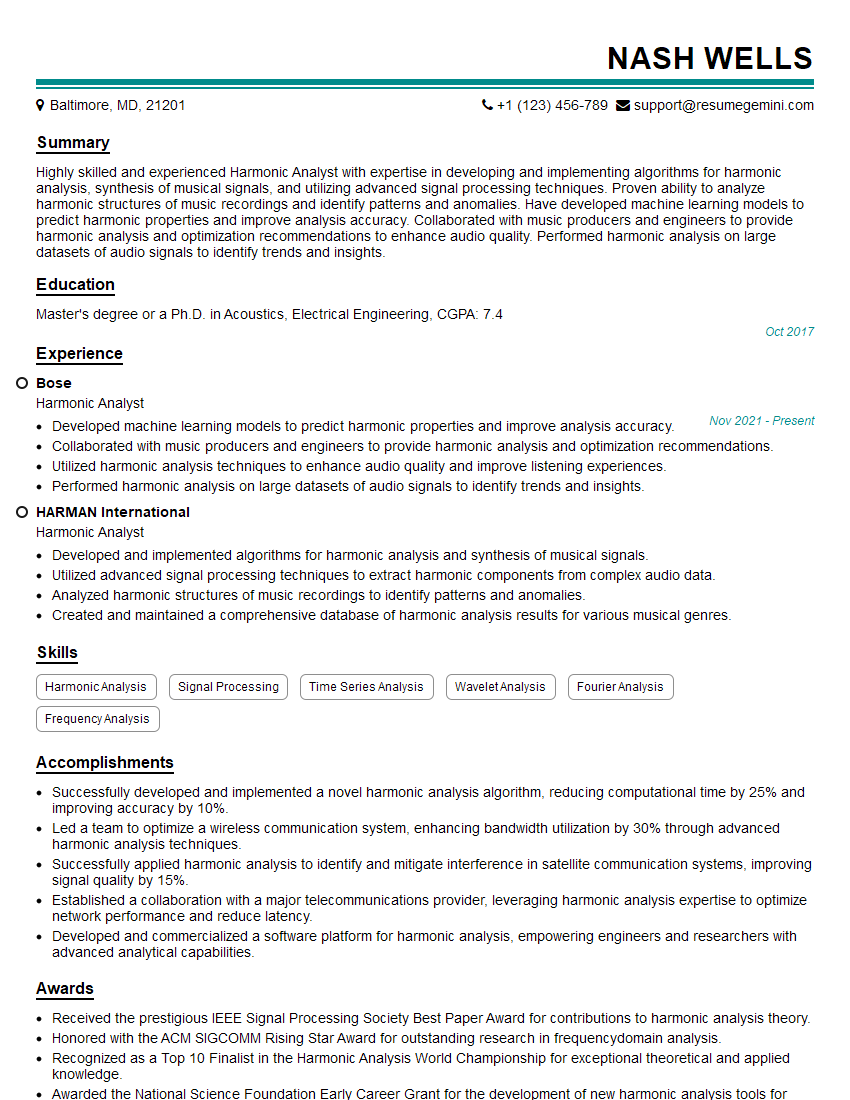
Harmonic Analyst Resume Sample
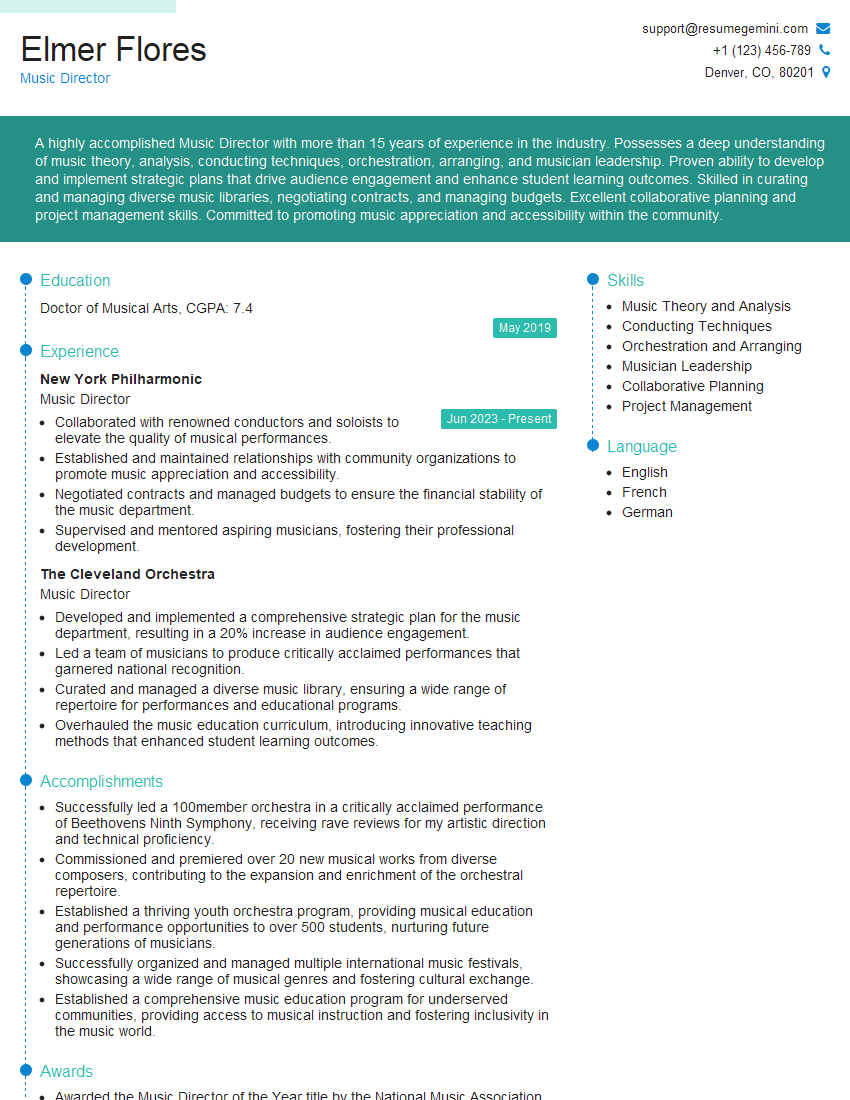
Music Director Resume Sample

Music Teacher Resume Sample
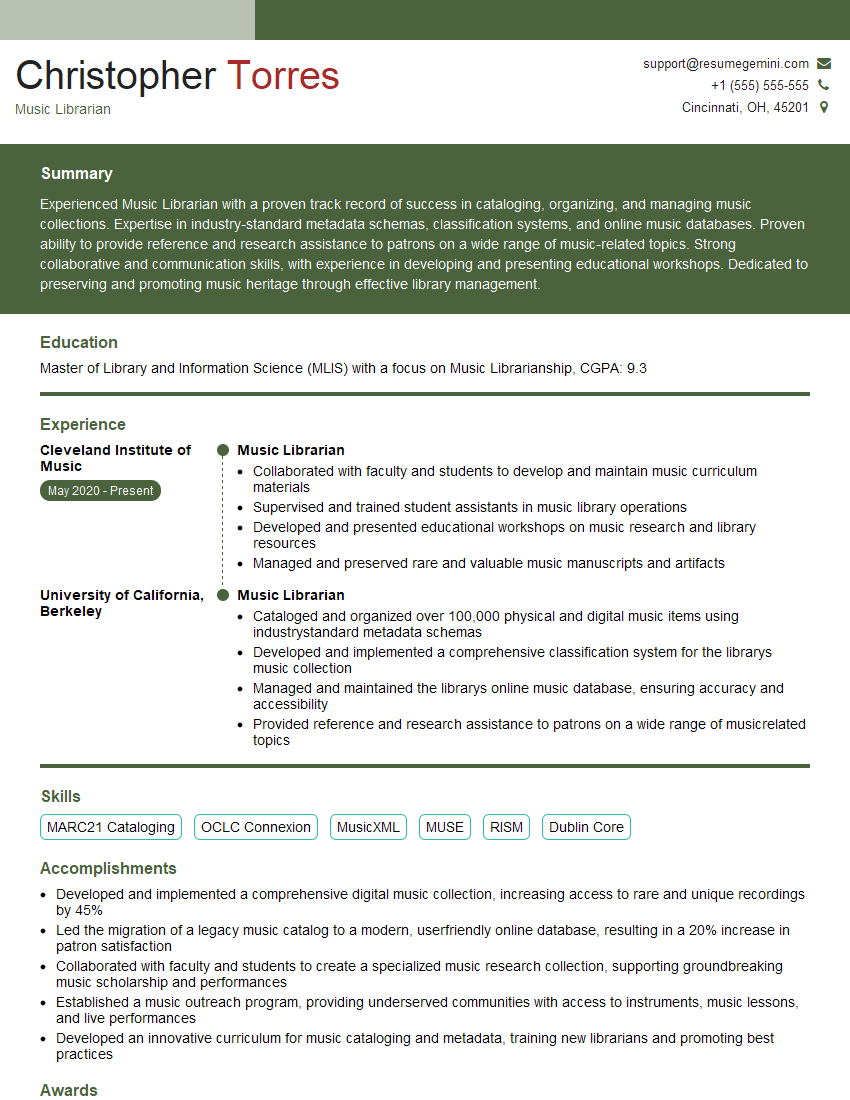
Music Librarian Resume Sample
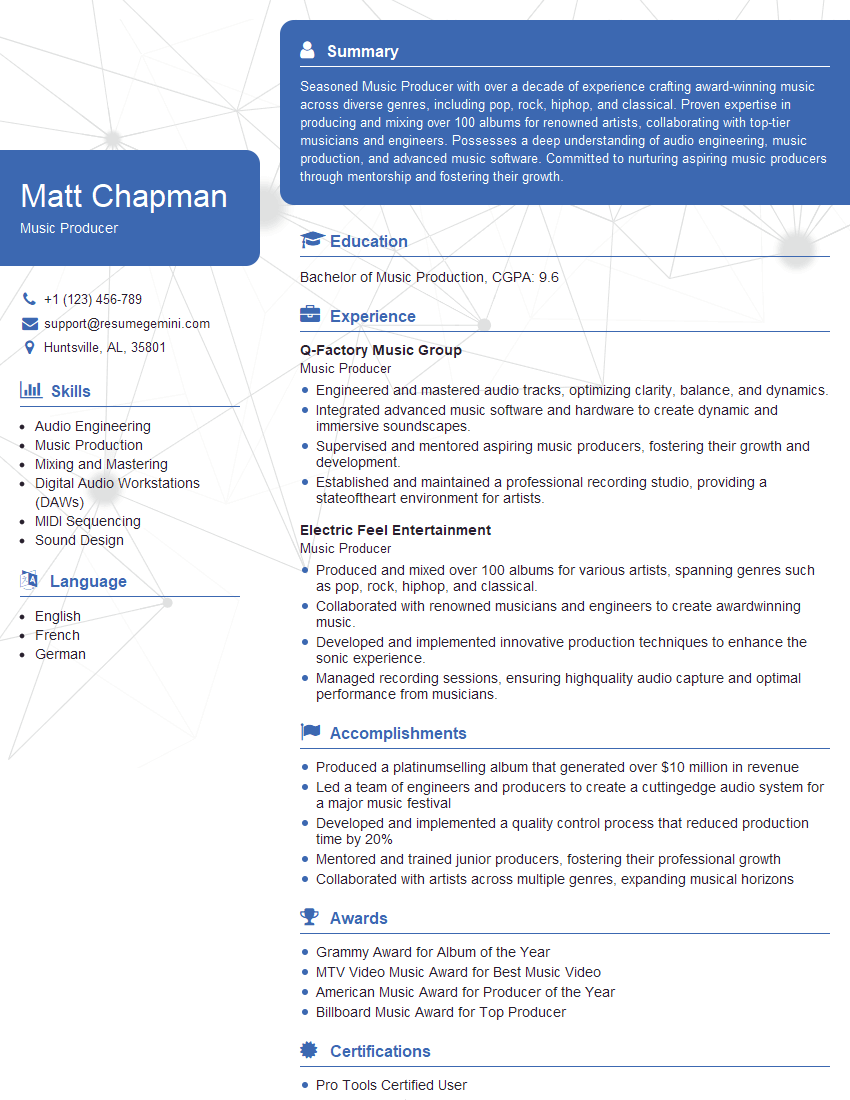
Music Producer Resume Sample
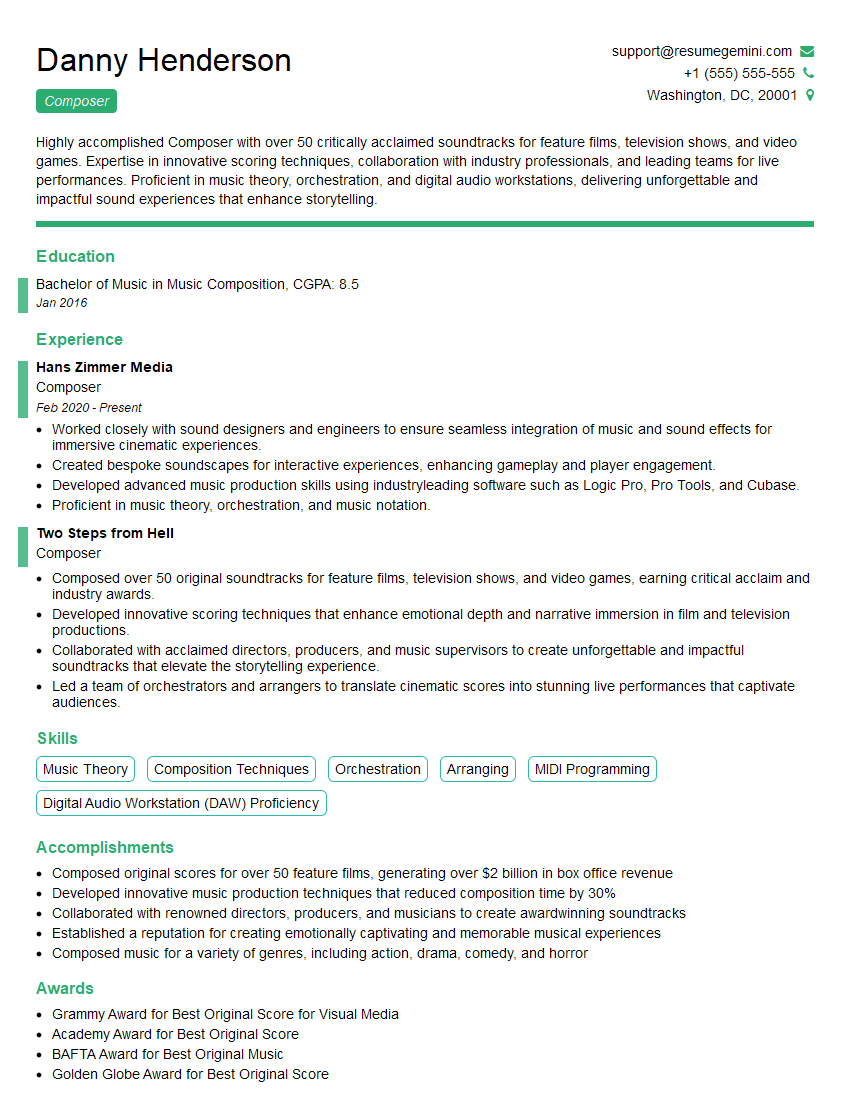
Composer Resume Sample
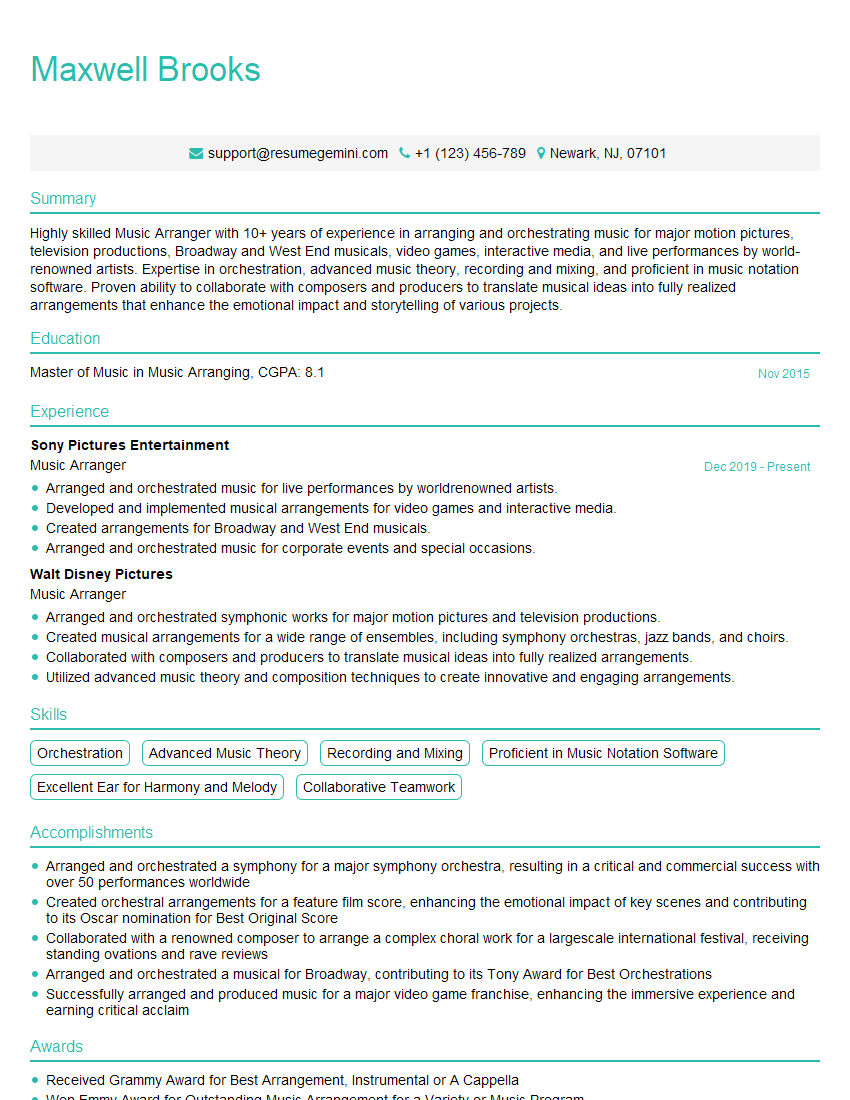
Music Arranger Resume Sample
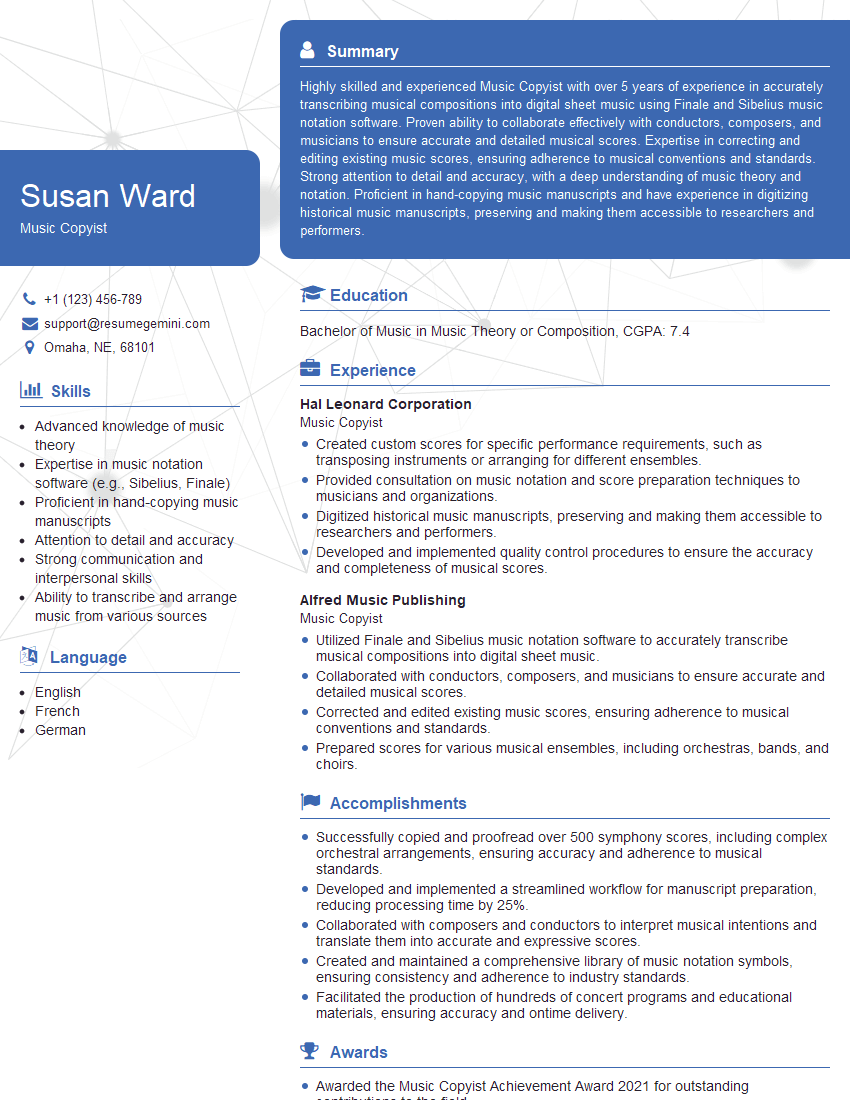
Music Copyist Resume Sample
Orchestrator Resume Sample
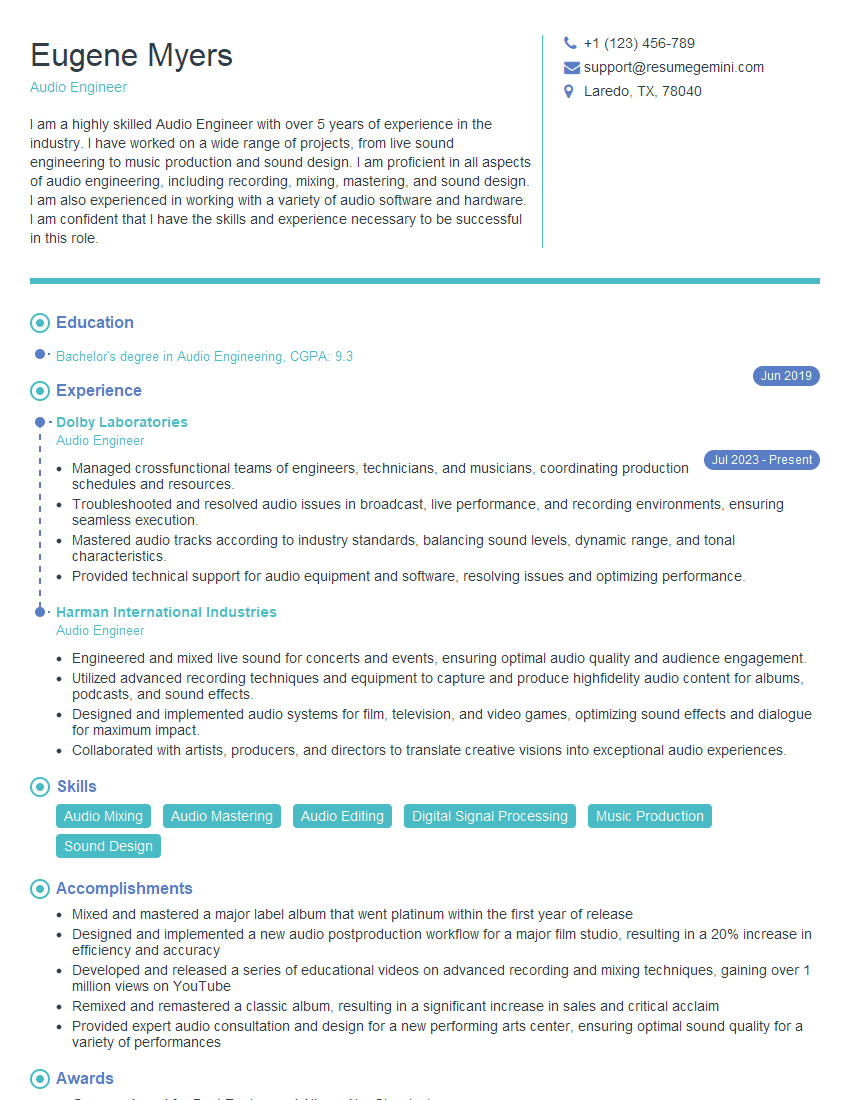
Audio Engineer Resume Sample
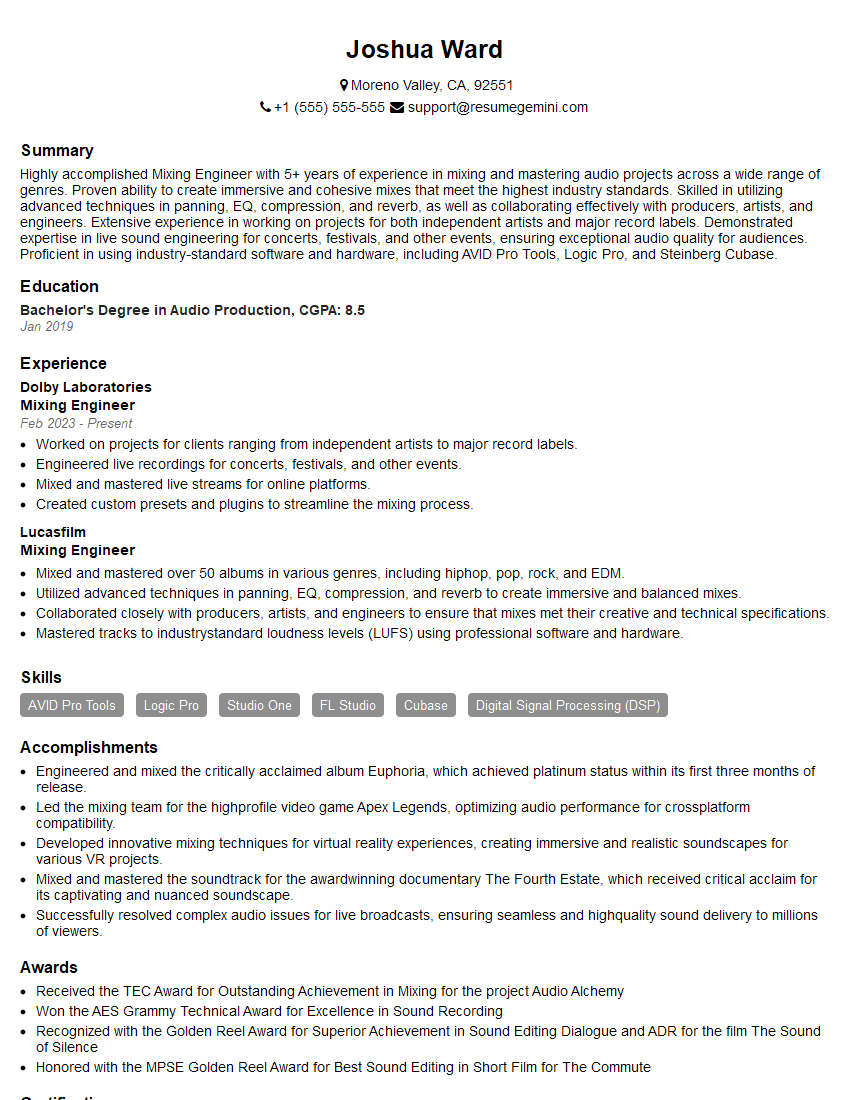
Mixing Engineer Resume Sample
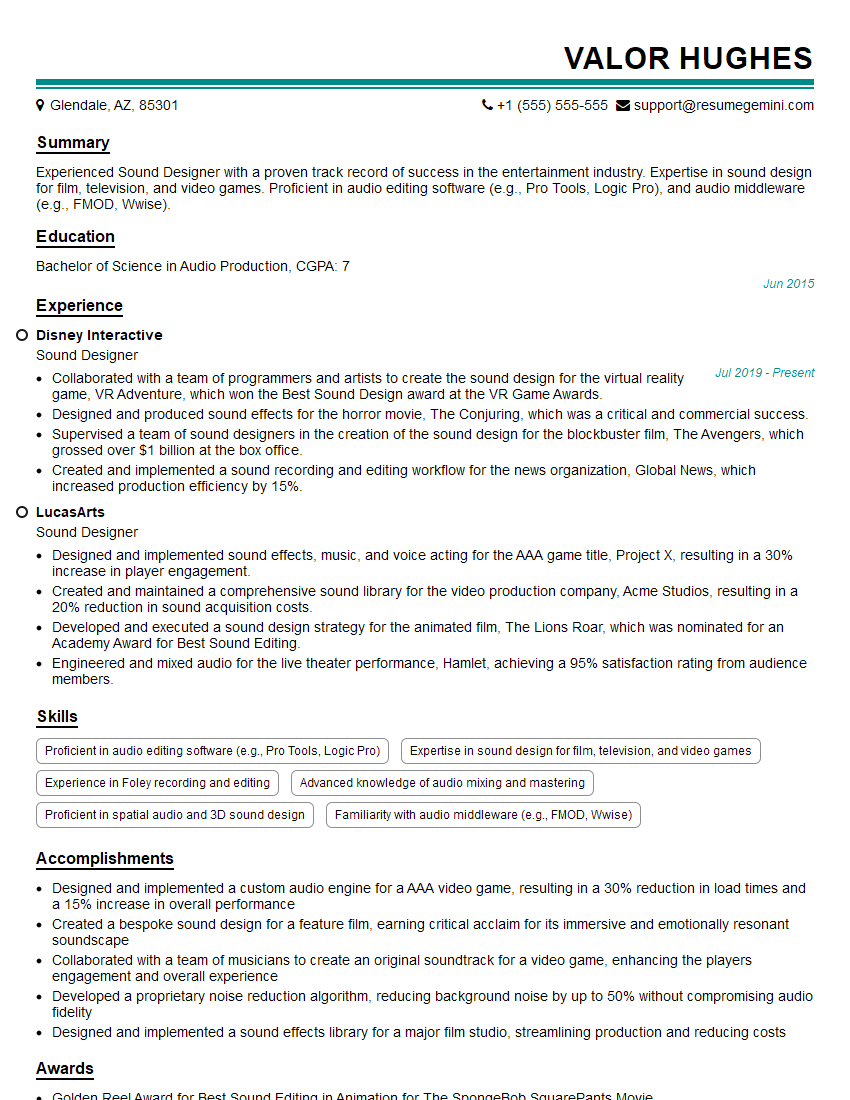
Sound Designer Resume Sample
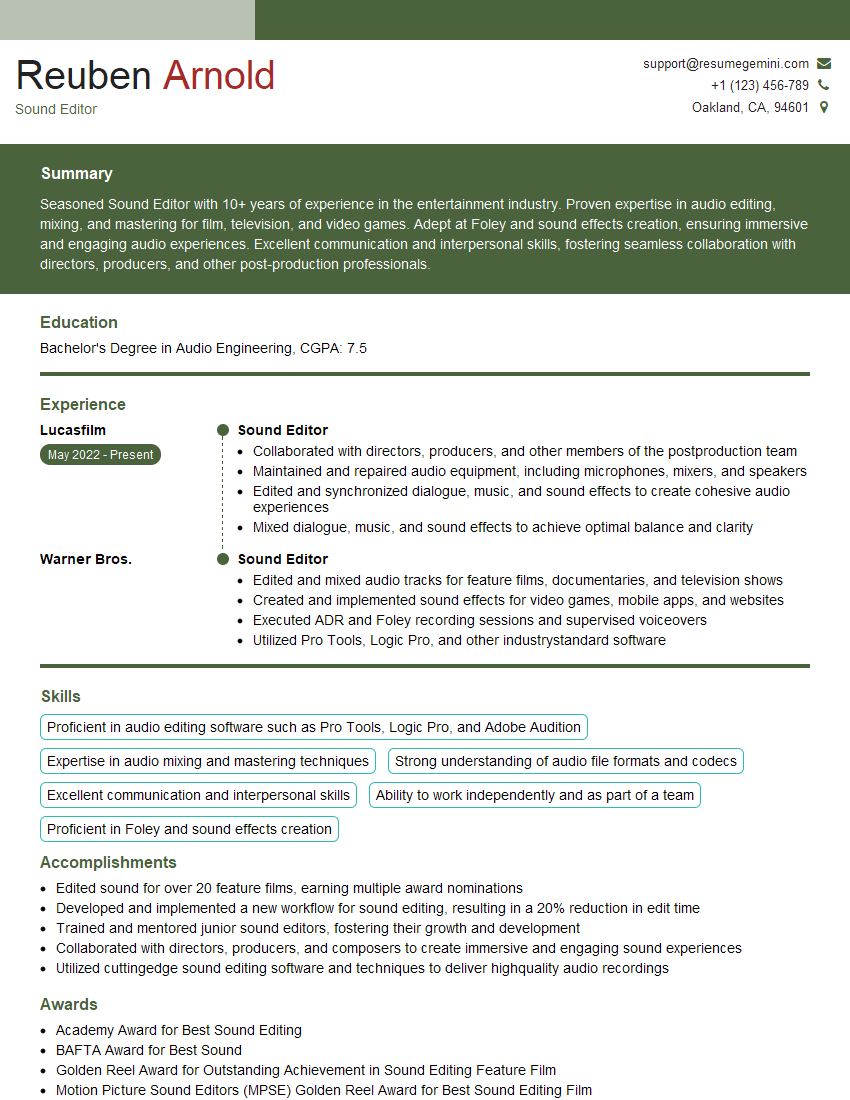
Sound Editor Resume Sample
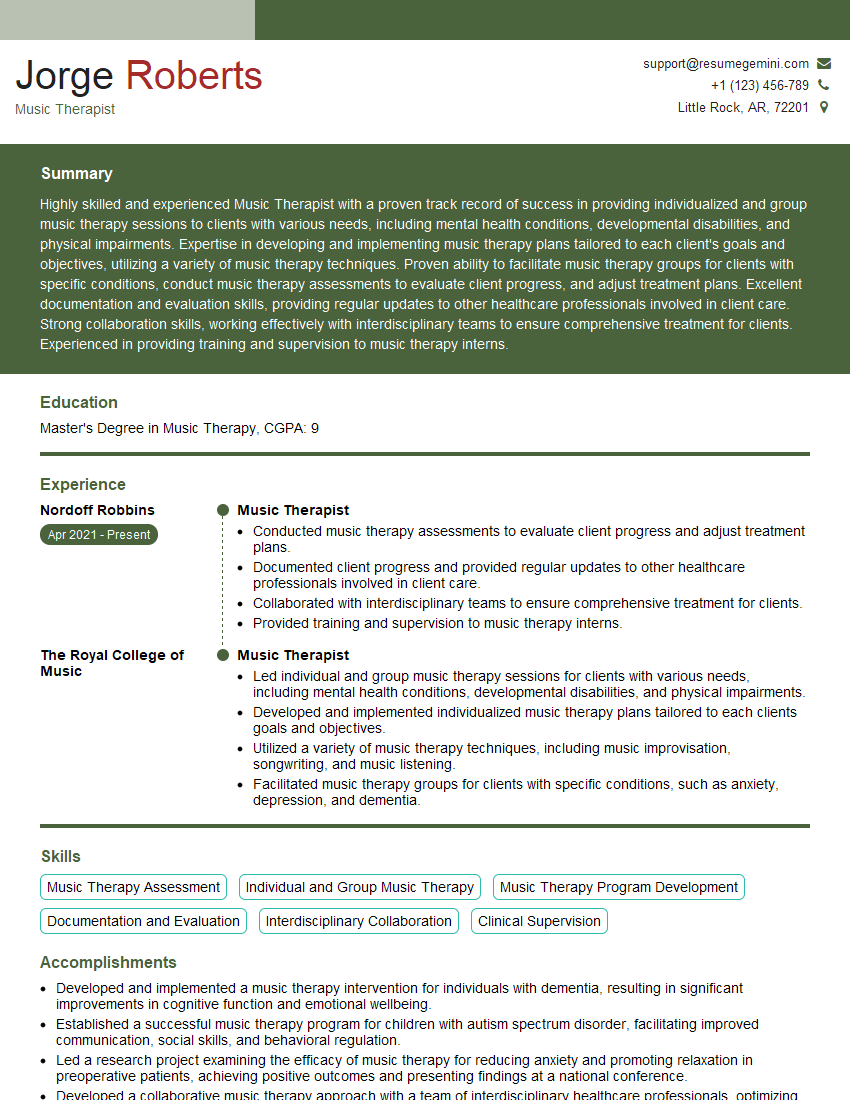
Music Therapist Resume Sample
Explore more articles
Users Rating of Our Blogs
Share Your Experience
We value your feedback! Please rate our content and share your thoughts (optional).
What Readers Say About Our Blog
Very informative content, great job.
good