Interviews are opportunities to demonstrate your expertise, and this guide is here to help you shine. Explore the essential Excellent proofreading and editing skills interview questions that employers frequently ask, paired with strategies for crafting responses that set you apart from the competition.
Questions Asked in Excellent proofreading and editing skills Interview
Q 1. What is the difference between proofreading and copyediting?
Proofreading and copyediting are both crucial stages in the editing process, but they focus on different aspects. Think of it like this: copyediting is the deep clean, while proofreading is the final polish.
Copyediting is a more comprehensive process that involves checking for style, consistency, grammar, clarity, accuracy of facts, and overall readability. A copyeditor might rewrite sentences, suggest better word choices, and ensure consistency in tone and style throughout the document. They’re concerned with the *content* and its effectiveness.
Proofreading, on the other hand, is the final check for errors that escaped the copyediting stage. This includes typos, misspellings, punctuation errors, and inconsistencies in formatting. Proofreaders are focused on the *surface-level* accuracy of the text. They are the last line of defense before publication.
Example: A copyeditor might change “The dog ran quick” to “The dog ran quickly.” A proofreader would correct a typo like “quikly” in the already grammatically correct sentence.
Q 2. Explain the Chicago Manual of Style.
The Chicago Manual of Style (CMS) is a widely respected style guide used primarily in the United States. It’s an extensive resource offering comprehensive guidance on various aspects of writing and publishing, ranging from grammar and punctuation to documentation and citation. It’s particularly known for its detailed instructions on bibliographic citations and note usage.
Key aspects of the CMS include:
- Punctuation and Grammar: Provides clear rules on punctuation, sentence structure, and grammar usage.
- Style and Usage: Offers guidance on consistent style choices, including capitalization, hyphenation, and abbreviation.
- Bibliographic Citations: Presents detailed instructions for various citation styles, such as notes and bibliography, author-date, etc. This is one of its most heavily used sections.
- Manuscript Preparation: Covers aspects like formatting, creating indexes, and preparing manuscripts for publication.
Choosing between CMS and other style guides like APA or MLA often depends on the publication or field. Academic papers frequently use APA or MLA, while books and journals may use CMS.
Q 3. What are the most common grammatical errors you encounter?
The grammatical errors I encounter most frequently include:
- Subject-verb agreement: Incorrect verb tense or number to match the subject (e.g., “The dogs runs fast” instead of “The dogs run fast”).
- Pronoun agreement: Pronouns not agreeing in number and gender with their antecedents (e.g., “Each student needs to bring their own book” – better to use “his or her own book” or rephrase to avoid the issue altogether).
- Comma splices: Joining two independent clauses with only a comma (e.g., “The sun was shining, it was a beautiful day.”).
- Misplaced or dangling modifiers: Modifiers not clearly connected to the words they modify (e.g., “Walking down the street, the car was speeding.”).
- Incorrect tense usage: Switching inconsistently between past, present, and future tenses.
- Sentence fragments and run-on sentences: Incomplete sentences and excessively long, complicated sentences.
These errors, while seemingly small, can significantly impact clarity and readability. My approach is to identify the root cause and suggest the most appropriate correction, always prioritizing the writer’s intended meaning.
Q 4. How do you handle conflicting style guides?
Handling conflicting style guides requires a systematic approach. First, I identify the client’s preference and the primary style guide to follow. Then, I meticulously review both guides to identify points of conflict and create a clear decision matrix. I carefully weigh factors such as the context of the document, the target audience, and the client’s specific needs.
If the conflict is minor, like a preference in hyphenation, I will choose the style from the primary guide. For major discrepancies, I document the decision made, explaining the rationale to the client for transparency. For instance, if one guide prefers Oxford commas and the other doesn’t, I’d explain both choices and ensure the selected style is consistently applied throughout the entire document. Ultimately, my goal is consistency and clarity, while communicating clearly with the client about any necessary compromises.
Q 5. Describe your process for editing a technical document.
My process for editing a technical document involves several stages:
- Understanding the context: I begin by carefully reviewing the document’s purpose, target audience, and any existing style guides. I might need to research specific technical terms or concepts.
- Comprehensive review: I meticulously check for clarity, accuracy, consistency, and completeness. I examine the flow, logic, and organization of information. This includes verifying technical accuracy through research or consultation with subject matter experts, if needed.
- Structural editing: I work on improving the document’s overall structure, ensuring that information is presented logically and efficiently. This can involve reorganizing sections, adding headings, and clarifying transitions.
- Copyediting: I focus on grammar, punctuation, style, and word choice. I aim for precision and accuracy in language, ensuring that the document is easy to understand for the intended audience.
- Proofreading: This final stage is a close read to identify any remaining typos, inconsistencies, or errors that may have been overlooked during the earlier stages.
- Feedback and revision: I provide detailed feedback to the author, explaining my edits and offering suggestions for improvement. I’m open to discussion and willing to adjust my edits based on the author’s feedback.
This structured approach ensures a thorough and accurate editing process, resulting in a clear, concise, and error-free technical document.
Q 6. How do you ensure accuracy in your work?
Accuracy is paramount in my work. I utilize several strategies to ensure this:
- Multiple readings: I read the document multiple times, each time focusing on different aspects—first for overall flow, then for grammar, then for factual accuracy, and finally for typos.
- Reference materials: I consult style guides, dictionaries, thesauruses, and other relevant resources to verify facts, spellings, and usage.
- Fact-checking: For documents containing specific data, I verify the accuracy of numbers, dates, and other factual information using multiple reliable sources.
- Technical expertise: For technical documents, I leverage my existing technical knowledge or consult with experts when necessary.
- Checklists and tools: I utilize checklists to ensure consistency and thoroughness in my editing process, and I employ software tools for grammar and spell checking, although I always prioritize human review.
My commitment to accuracy involves careful attention to detail, a rigorous approach, and a willingness to invest the necessary time to ensure error-free work.
Q 7. How do you prioritize tasks when dealing with multiple deadlines?
When faced with multiple deadlines, I employ a prioritization strategy that combines urgency and importance. I use a project management system to list all tasks, assign deadlines, and track progress. I then categorize tasks based on their urgency and impact:
- Urgent and Important: These tasks are tackled first; they have tight deadlines and significant consequences if missed.
- Important but Not Urgent: These are scheduled for completion in a timely manner, ensuring they don’t become urgent.
- Urgent but Not Important: These tasks might be delegated if possible or streamlined to minimize time commitment.
- Neither Urgent nor Important: These are postponed or possibly eliminated to free up time for higher priority tasks.
I regularly review my schedule, adapting my priorities as needed. Open communication with clients is also key, allowing me to manage expectations and ensure everyone is informed about potential delays or adjustments.
Q 8. Explain your experience with style guides such as AP or MLA.
Style guides like AP (Associated Press) and MLA (Modern Language Association) are crucial for ensuring consistency and clarity in writing. They provide standardized rules for everything from punctuation and capitalization to citation and formatting. My experience spans several years working with both styles, adapting my approach to the specific requirements of each project.
For instance, with AP style, I’m meticulous about using numerals for numbers above nine, while MLA requires a different approach to in-text citations and the formatting of the bibliography. I’ve worked on numerous projects requiring adherence to either AP or MLA, from academic papers and journalistic articles to marketing materials and technical documentation. Understanding the nuances of these guides is critical for producing polished, professional work that meets client expectations and avoids common stylistic errors.
- AP Style: Focuses on brevity and clarity, common in journalism and news writing.
- MLA Style: Emphasizes academic rigor and detailed citation, typical in academic papers and research.
Q 9. How do you identify plagiarism?
Identifying plagiarism involves a multi-pronged approach. It’s not just about looking for exact matches; it’s about detecting instances of paraphrasing without proper attribution or the unoriginal use of ideas. My process begins with a careful reading of the text, paying attention to unusual phrasing or argumentation that doesn’t quite fit the author’s established style.
I then utilize plagiarism detection software, such as Turnitin or Grammarly, to compare the text against a vast database of published works and online content. This helps identify potential matches and highlight sections requiring further investigation. Finally, I manually review the flagged sections, examining both the source and the suspect text to determine the extent of originality. If plagiarism is suspected, I carefully document the findings and advise the author or client accordingly.
Thinking of it like detective work, I’m looking for inconsistencies and clues that suggest something’s not quite right. I always strive for fairness and objectivity, verifying any suspicion through multiple channels before drawing conclusions.
Q 10. How do you deal with ambiguity in text?
Ambiguity in text arises when a sentence or phrase has more than one possible interpretation. Addressing ambiguity requires careful analysis and a keen understanding of context. My approach is to first identify the unclear section and then determine the most likely intended meaning based on the surrounding text, the overall tone, and the intended audience.
Sometimes, I might need to contact the author or client to clarify their intent. If the ambiguity is minor, I’ll adjust the wording subtly to eliminate the multiple interpretations, always preserving the original meaning. For example, a sentence like “The dog chased the ball into the street” is ambiguous: which street? I might reword it to “The dog chased the ball into Elm Street.” If a more significant clarification is needed, I’ll flag it for the author’s review and suggest potential revisions. The goal is to make the text clear, concise, and easily understood without changing the original intent.
Q 11. What is your preferred method for tracking edits?
My preferred method for tracking edits involves using the track changes feature in Microsoft Word. This allows me to make revisions while preserving a clear record of the alterations. It facilitates collaboration and makes it easy for authors or clients to review and approve the changes.
I find this method superior to other alternatives due to its ease of use, widespread accessibility, and its capacity to handle complex edits. Furthermore, it allows for clear communication – I can add comments alongside changes explaining the reasoning behind each edit and encouraging a dialogue around the suggested modifications. This makes the revision process transparent and fosters collaboration between editor and author.
Q 12. How do you handle feedback from authors or clients?
Handling feedback is a crucial aspect of the editing process. I approach feedback with an open mind, viewing it as an opportunity to refine the work and meet client expectations. I carefully review each comment, considering its merit and relevance to the overall quality and clarity of the text.
If the feedback aligns with my professional judgment and improves the text, I’ll implement the changes promptly. If I disagree with a particular suggestion, I’ll explain my reasoning politely and professionally, offering alternative solutions that achieve the same objective while maintaining the integrity and consistency of the writing. Open communication is key; I always aim to engage in a collaborative dialogue with authors and clients to reach a mutual understanding and ensure everyone is satisfied with the final product. This process builds trust and strengthens working relationships.
Q 13. Describe a time you had to make a difficult editing decision.
One challenging editing decision involved a historical biography where the author presented a controversial interpretation of a well-documented event. While the author’s perspective was well-argued, it deviated significantly from the established historical consensus. My dilemma was whether to maintain the author’s unique viewpoint or suggest revisions that aligned more closely with generally accepted historical accounts.
After carefully weighing the arguments and discussing the matter extensively with the author, we agreed on a compromise: We retained the author’s interpretation but added a footnote acknowledging the dissenting view and providing links to supporting scholarly articles. This approach preserved the author’s voice and intellectual honesty while ensuring the reader was fully informed of the broader historical context. It highlighted the importance of critical thinking and recognizing diverse perspectives, even in established historical narratives.
Q 14. What software are you proficient in (e.g., MS Word, Adobe Acrobat)?
I am proficient in several software applications essential for editing and proofreading. My expertise includes Microsoft Word, Adobe Acrobat Pro, and various grammar and plagiarism-checking tools such as Grammarly and Turnitin.
Microsoft Word is my primary tool for tracking changes and collaborating with authors. Adobe Acrobat Pro is invaluable for handling PDFs, ensuring consistent formatting and accessibility in various document types. Finally, the grammar and plagiarism-checking tools supplement my own skills, aiding in thorough review and ensuring accuracy and originality. I’m also comfortable working with other software if needed, and I’m always eager to learn and adapt to new technologies to enhance my efficiency and expertise.
Q 15. How do you maintain consistency in style and tone across a document?
Maintaining consistent style and tone is crucial for professional documents. Think of it like a conversation – you wouldn’t abruptly switch from formal to informal language mid-sentence. Consistency builds trust and credibility.
My approach involves:
- Developing a style guide: Before starting, I create or review an existing style guide outlining preferred formatting (e.g., date formats, number styles, capitalization rules), tone (formal, informal, humorous), and voice (first person, third person).
- Using a style checker: Tools like Grammarly or ProWritingAid can help flag inconsistencies in style. However, I always manually review their suggestions, as they aren’t foolproof.
- Creating templates: For repetitive tasks, I develop templates to ensure consistent formatting across different sections of a document. This is particularly helpful for reports or marketing materials.
- Careful review and proofreading: A final, meticulous read-through is essential to catch any remaining inconsistencies. I often do this more than once, ideally with fresh eyes.
For example, if a document uses the American spelling of ‘color’ consistently, I’ll flag any instances of ‘colour’ as inconsistencies, regardless of whether the style guide is explicitly stated.
Career Expert Tips:
- Ace those interviews! Prepare effectively by reviewing the Top 50 Most Common Interview Questions on ResumeGemini.
- Navigate your job search with confidence! Explore a wide range of Career Tips on ResumeGemini. Learn about common challenges and recommendations to overcome them.
- Craft the perfect resume! Master the Art of Resume Writing with ResumeGemini’s guide. Showcase your unique qualifications and achievements effectively.
- Don’t miss out on holiday savings! Build your dream resume with ResumeGemini’s ATS optimized templates.
Q 16. Describe your experience working with different content types (e.g., marketing materials, academic papers).
I’ve worked extensively with diverse content types, adapting my approach to each. For instance:
- Marketing materials (brochures, website copy, social media posts): These require a clear, concise, and engaging style, often focusing on persuasive language and a strong call to action. I focus on optimizing readability and ensuring the message resonates with the target audience.
- Academic papers (research papers, theses, dissertations): These need precision, formality, and adherence to specific citation styles (MLA, APA, Chicago). Accuracy and clarity of argument are paramount, along with meticulous fact-checking and verification of sources.
- Technical documents (manuals, specifications): These prioritize clarity, accuracy, and precision. The language needs to be unambiguous and easily understood by the intended audience, even if it is technical. Diagrams and illustrations often supplement the text.
My adaptability lets me seamlessly transition between these different styles, ensuring each document achieves its specific purpose.
Q 17. How do you ensure readability in complex texts?
Readability in complex texts is about making information digestible, not dumbing it down. It’s a balancing act.
My strategies include:
- Breaking down complex information: I use shorter sentences, paragraphs, and bullet points to avoid overwhelming the reader. Think of it as breaking a long hike into smaller, manageable segments.
- Using clear and concise language: I avoid jargon unless absolutely necessary and define any specialized terms used. Simple language doesn’t mean simplistic; it means precise and easy to understand.
- Improving sentence structure: Varied sentence length and structure prevents monotony. Active voice is usually preferred for clarity.
- Using visuals effectively: Charts, graphs, and images can improve comprehension of complex data or ideas.
- Adding headings and subheadings: These act as signposts, guiding the reader through the text.
For example, instead of writing: ‘The empirical data demonstrably supports the hypothesis, thereby validating the proposed theoretical framework’, I’d opt for something like: ‘The results confirm our hypothesis and support the theory’.
Q 18. How familiar are you with using style checkers and grammar tools?
I’m proficient with various style checkers and grammar tools, including Grammarly, ProWritingAid, and the built-in grammar checkers in Microsoft Word and Google Docs. I view these tools as powerful assistants, not replacements for human judgment.
I understand their limitations, such as occasionally misinterpreting context or flagging correct grammar as errors. Therefore, I treat their suggestions as helpful hints that require careful consideration and human oversight before acceptance. I’m also familiar with specialized tools relevant to academic citation styles (e.g., Zotero).
Q 19. How do you improve the clarity and conciseness of writing?
Clarity and conciseness are achieved through careful editing and revision. My process often involves:
- Eliminating unnecessary words and phrases: Cutting out redundant words and phrases streamlines the writing. For instance, ‘due to the fact that’ can simply be ‘because’.
- Replacing weak verbs with stronger ones: Strong verbs make writing more active and engaging.
- Removing jargon and overly complex sentence structures: Simplify language and break down long sentences into shorter, more manageable units.
- Using active voice whenever possible: Active voice is generally more direct and easier to understand than passive voice.
- Rewriting entire sentences or paragraphs: Sometimes, a complete rewrite is necessary to achieve clarity and conciseness.
Conciseness is not just about brevity; it’s about saying what needs to be said as efficiently as possible, without sacrificing clarity or nuance.
Q 20. What is your experience with fact-checking and verification?
Fact-checking and verification are integral to my work. My experience includes:
- Verifying information using reputable sources: I cross-reference information from multiple reliable sources to ensure accuracy. Peer-reviewed journals, government websites, and established news organizations are preferred.
- Evaluating source credibility: I assess the authority, accuracy, and objectivity of sources before using them.
- Identifying and addressing inaccuracies: If I find inaccuracies, I’ll research the correct information and update the document accordingly. For major discrepancies, I consult with the author or client.
- Maintaining a detailed record of sources: This is crucial for transparency and accountability.
In academic papers, this often involves verifying citations and ensuring that all claims are properly supported by evidence. In marketing materials, it might involve checking facts about products or services.
Q 21. How do you handle conflicting deadlines?
Conflicting deadlines are a reality in any fast-paced environment. My approach is proactive and organized:
- Prioritization: I assess the urgency and importance of each task to determine the optimal order of completion. Critical tasks with tighter deadlines receive priority.
- Time management: I break down large tasks into smaller, more manageable steps, allocating specific time slots for each. This allows for better tracking of progress and more efficient time utilization.
- Communication: Open communication with clients or colleagues is key. If deadlines conflict, I discuss potential solutions and proactively inform relevant parties of any potential delays.
- Flexibility and adaptability: I’m prepared to adjust my schedule and approach as needed to accommodate unexpected changes. Remaining calm under pressure and solving issues efficiently are crucial.
By proactively managing my time and communicating clearly, I aim to meet all deadlines to the best of my ability, even with competing priorities.
Q 22. Describe a time you had to meet a tight deadline under pressure.
Meeting tight deadlines under pressure is a crucial skill for any proofreader or editor. One instance involved a 50-page marketing brochure that needed to be finalized within 24 hours. The client had experienced significant delays, and the launch date was non-negotiable. My approach was methodical: I first prioritized the most critical sections—the executive summary and key product descriptions—ensuring they were flawlessly polished. Then, I worked through the remaining content in a strategic order, tackling complex sections first to allow ample time for review. I also leveraged technology effectively, using grammar and style checkers as a first pass, which allowed me to focus my attention on the nuances of meaning and tone. Regular breaks, staying hydrated, and focusing on one task at a time were crucial to managing stress and maintaining accuracy. Ultimately, I delivered a high-quality document on time, showcasing my ability to perform under pressure without compromising on quality.
Q 23. How do you approach a document with multiple inconsistencies?
Inconsistencies in a document can range from minor stylistic choices to major factual errors. My approach is systematic and multi-phased. First, I create a comprehensive style guide based on the document’s existing patterns, noting any inconsistencies immediately. This serves as my reference point. Next, I categorize the inconsistencies. Are they grammatical, stylistic, factual, or tonal? Then, I tackle them systematically, starting with the most critical errors—factual inaccuracies or inconsistencies that could misrepresent the information. I then address inconsistencies in style and grammar, choosing the most appropriate style and ensuring consistency throughout. Finally, I conduct a final review to ensure that all inconsistencies have been resolved and the document maintains a consistent tone and style. Think of it like cleaning a house—you deal with major messes first before polishing surfaces.
Q 24. Explain your understanding of semantics and syntax.
Syntax and semantics are fundamental to effective writing and editing. Syntax refers to the grammatical structure of sentences—the arrangement of words and phrases. It’s the how of communication. For example, ‘The dog chased the cat’ has correct syntax. ‘Cat the dog chased’ does not. Semantics, on the other hand, focuses on meaning and interpretation. It’s the what of communication. While a sentence might be grammatically correct (good syntax), it could still be semantically flawed if the meaning is unclear or nonsensical. For instance, ‘Colorless green ideas sleep furiously’ is syntactically correct but semantically nonsensical. As an editor, I ensure both are accurate. Correct syntax ensures readability, while correct semantics ensures clarity and effective communication.
Q 25. How familiar are you with different types of punctuation and their uses?
My familiarity with punctuation is extensive, extending beyond basic knowledge. I understand the nuances of commas, semicolons, colons, dashes, parentheses, quotation marks, and ellipses, and their various applications. For example, the difference between an em dash (—) used for emphasis or a break in thought and an en dash (–) used for ranges or connections is crucial. Similarly, knowing when to use single vs. double quotation marks depending on style guide and context is important. Furthermore, I understand the appropriate use of punctuation within dialogue, lists, and citations. Proficiency in punctuation is not simply about knowing the rules; it’s about knowing how to apply them to create clear, concise, and effective communication. Think of punctuation as the musical notation for written language—it dictates rhythm and flow.
Q 26. How do you stay up-to-date with changes in style guides and grammar rules?
Staying current with evolving style guides and grammar rules is critical for maintaining high professional standards. I subscribe to reputable style guides such as the Chicago Manual of Style and the Associated Press Stylebook, regularly reviewing updates and changes. I also actively participate in professional development opportunities, attending workshops and webinars on editing and proofreading best practices. Moreover, I regularly read books and articles on writing and editing to keep abreast of new trends and terminology. I also actively follow respected writing and editing professionals and organizations on social media for updates and insights. Continuous learning is essential in this ever-evolving field.
Q 27. How would you edit this sample text? (Provide a short text sample)
Let’s consider this sample text: 'Their going to the store, their really excited about the sale!'
My edits would focus on correcting grammatical errors and improving clarity and style. The corrected version would be: 'They're going to the store; they're really excited about the sale!' The changes include:
- Corrected the contractions ‘Their’ to ‘They’re’.
- Replaced the comma with a semicolon for a more sophisticated and grammatically correct sentence structure.
- Improved the overall flow and readability of the sentence.
This simple example demonstrates the attention to detail and application of grammatical rules and stylistic choices that are essential in professional editing.
Key Topics to Learn for Excellent Proofreading and Editing Skills Interview
- Grammar and Mechanics: Mastering grammar rules (subject-verb agreement, punctuation, tense consistency), understanding common grammatical errors, and applying correct mechanics (capitalization, spelling, abbreviation).
- Style and Tone: Adapting writing style to different audiences and purposes (formal vs. informal, technical vs. general), maintaining consistent tone throughout a document, and understanding the nuances of effective communication.
- Clarity and Conciseness: Identifying and eliminating wordiness, ensuring clear and concise sentence structure, and improving the overall readability and flow of text.
- Fact-Checking and Verification: Developing techniques for verifying information accuracy, identifying potential inconsistencies, and ensuring the credibility of sources.
- Proofreading Techniques: Learning effective proofreading strategies, such as reading aloud, using checklists, and employing different reading approaches (backward, line-by-line) to catch errors.
- Editing for Content and Structure: Evaluating the overall logic and flow of content, identifying gaps in information, suggesting improvements to organization and structure, ensuring consistency of style and tone throughout a document.
- Understanding Different Document Types: Familiarizing yourself with the specific requirements and conventions of various document types (e.g., reports, articles, emails, marketing materials).
- Use of Style Guides and Dictionaries: Demonstrating proficiency in utilizing style guides (e.g., AP, Chicago) and dictionaries for resolving grammar, style, and usage questions.
- Technology and Tools: Understanding the use of grammar and spell-check software, and demonstrating familiarity with relevant editing tools and technologies.
- Problem-Solving and Critical Thinking: Applying critical thinking skills to identify and resolve complex editing challenges, demonstrating the ability to analyze and improve text effectively.
Next Steps
Mastering excellent proofreading and editing skills is crucial for career advancement across various industries. These skills demonstrate attention to detail, accuracy, and a commitment to quality communication – all highly valued attributes in the workplace. To significantly enhance your job prospects, building an ATS-friendly resume that highlights these skills is essential. ResumeGemini can be a trusted resource in this process, offering tools and guidance to create a professional and impactful resume that grabs recruiters’ attention. Examples of resumes tailored to highlight excellent proofreading and editing skills are available to help you get started.
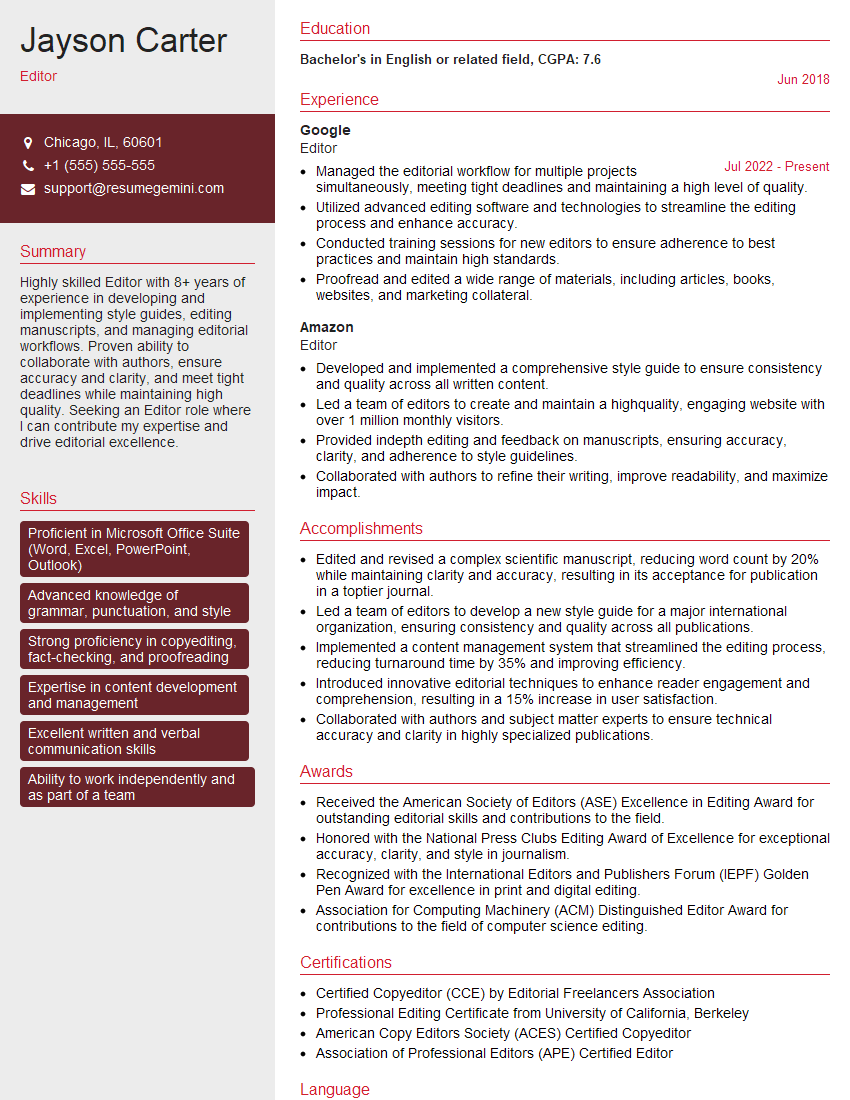
Editor Resume Sample
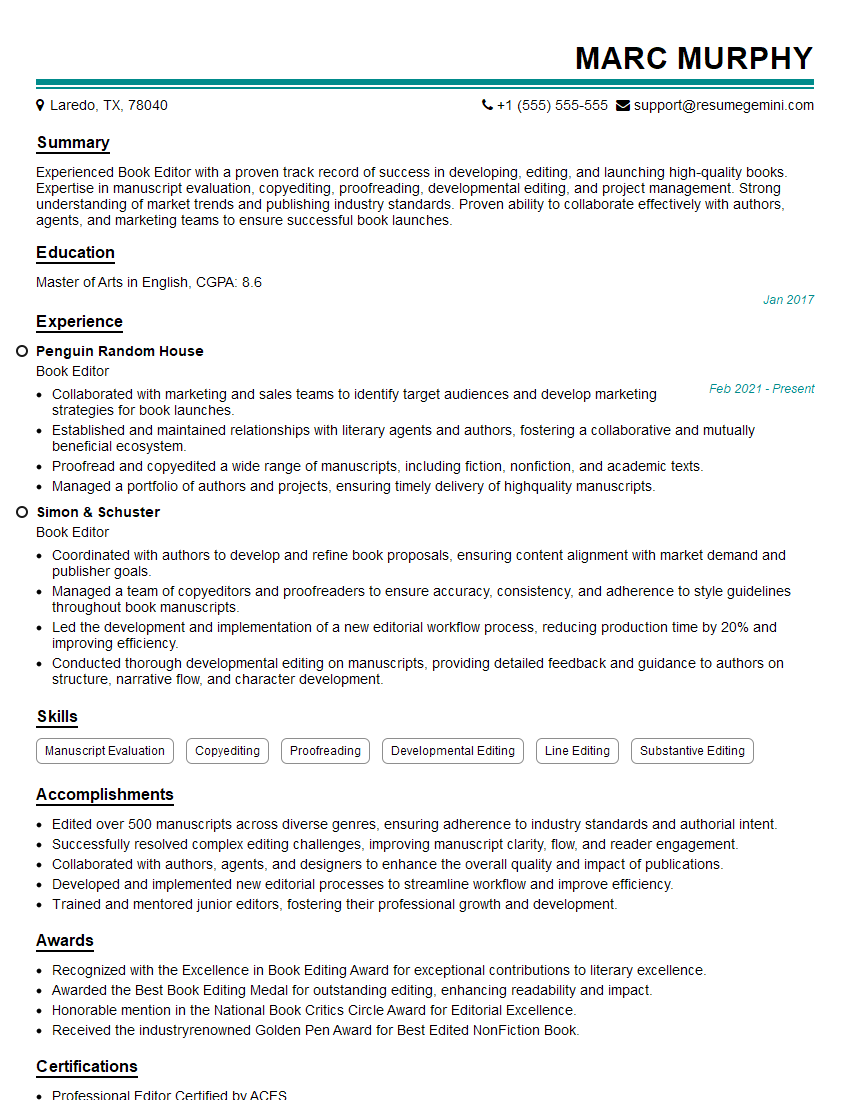
Book Editor Resume Sample
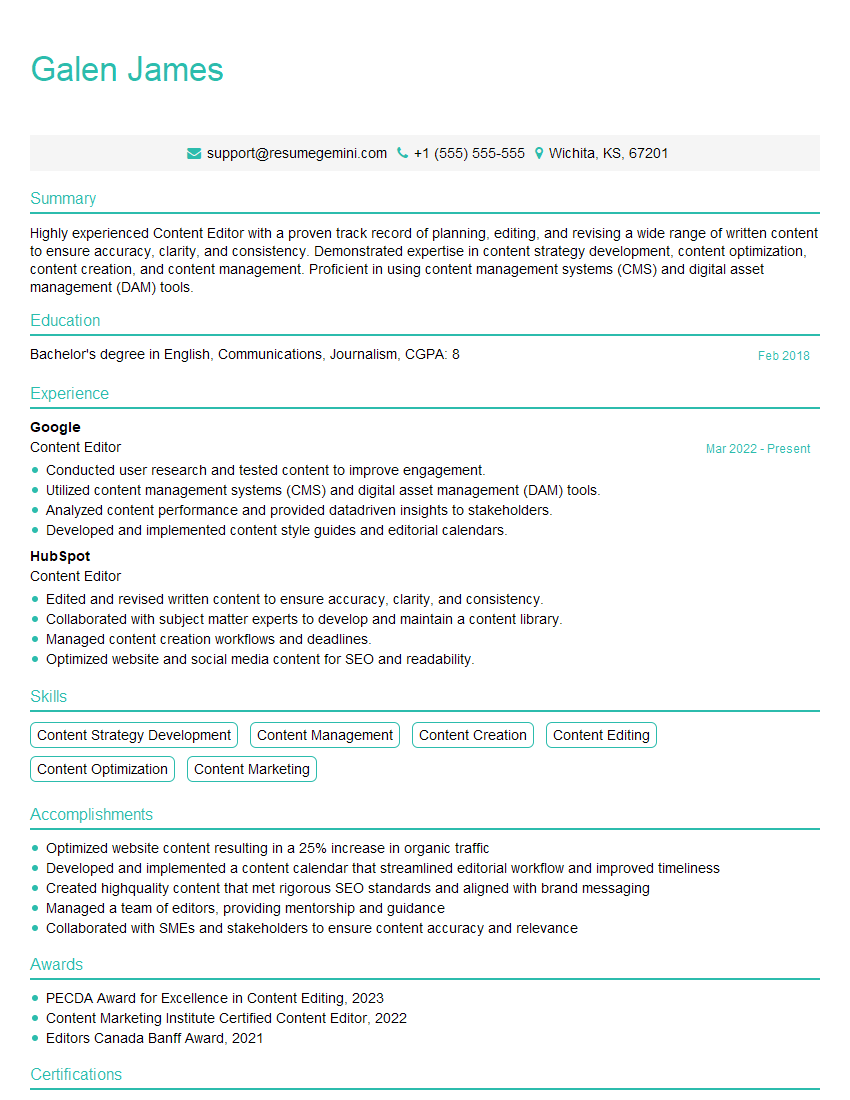
Content Editor Resume Sample
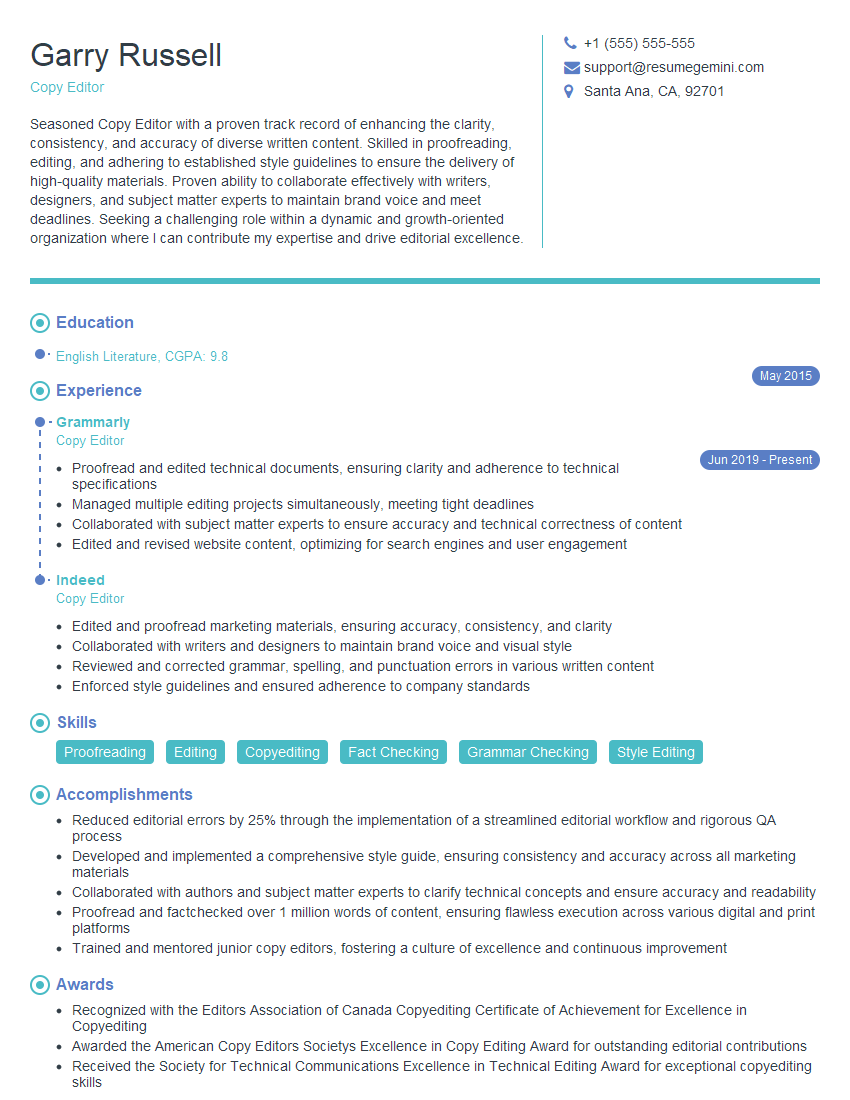
Copy Editor Resume Sample
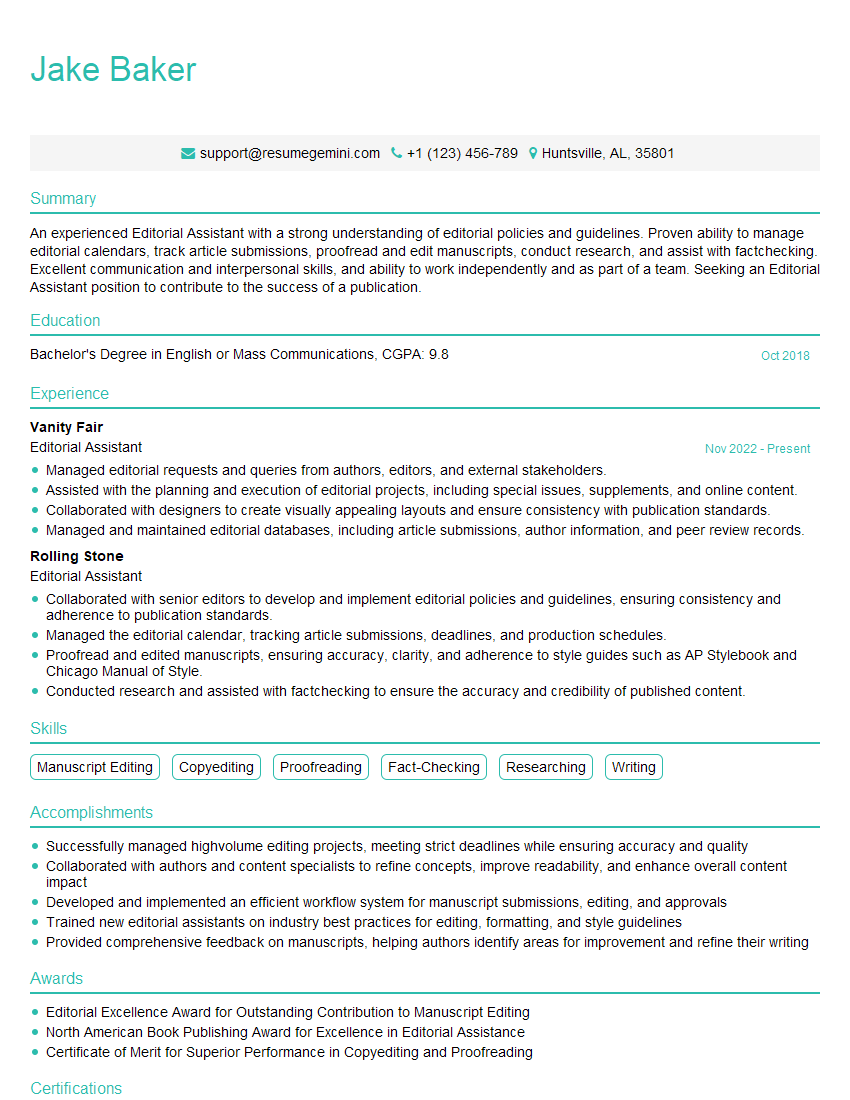
Editorial Assistant Resume Sample
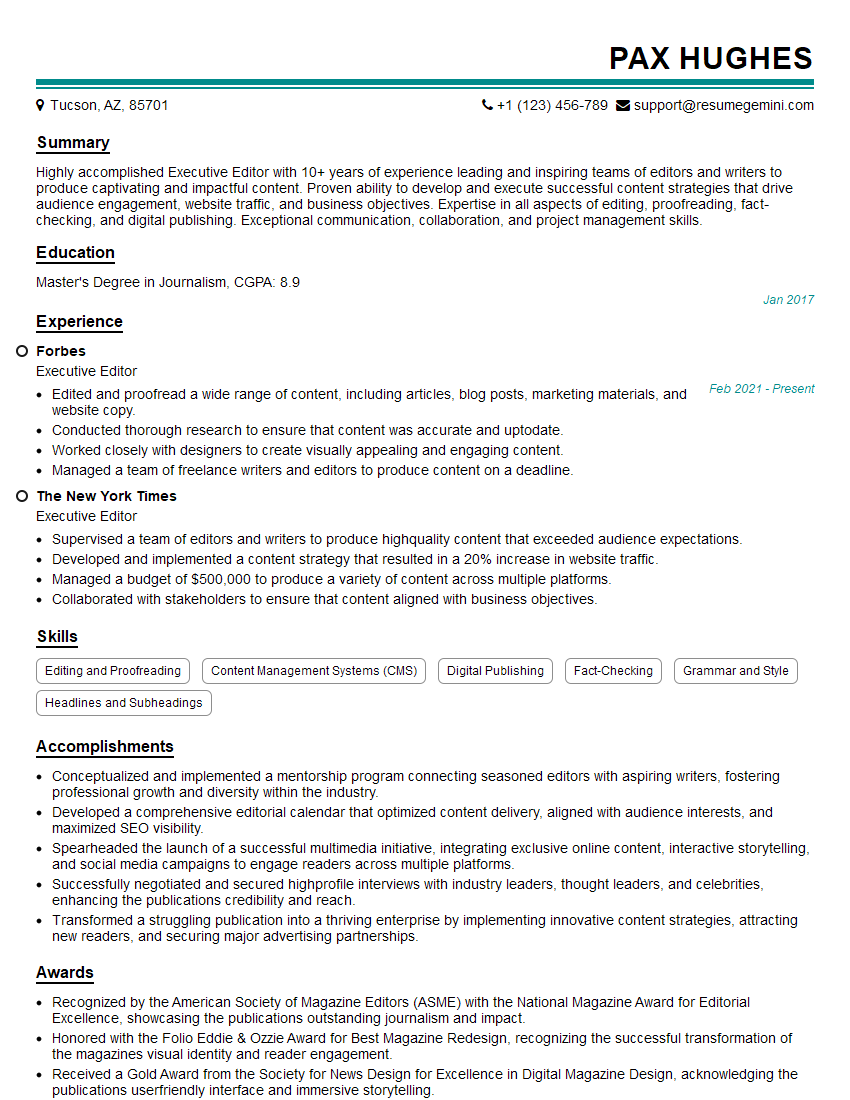
Executive Editor Resume Sample
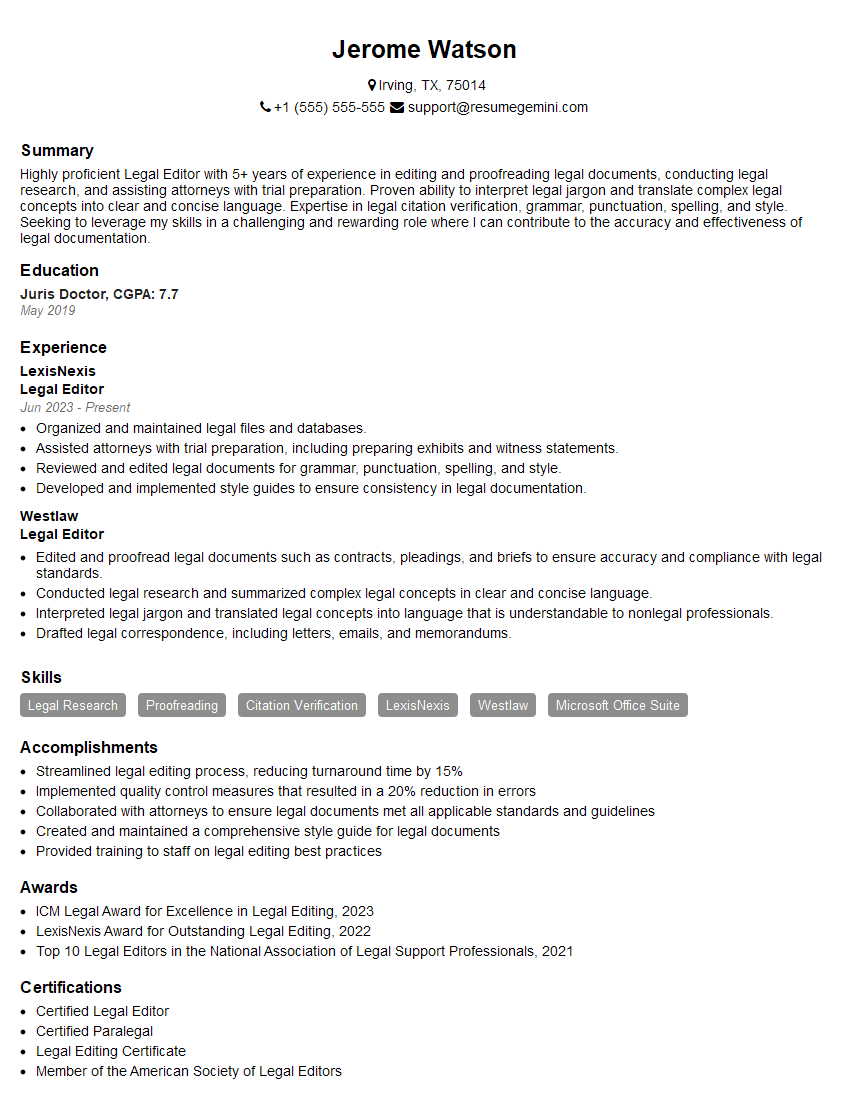
Legal Editor Resume Sample
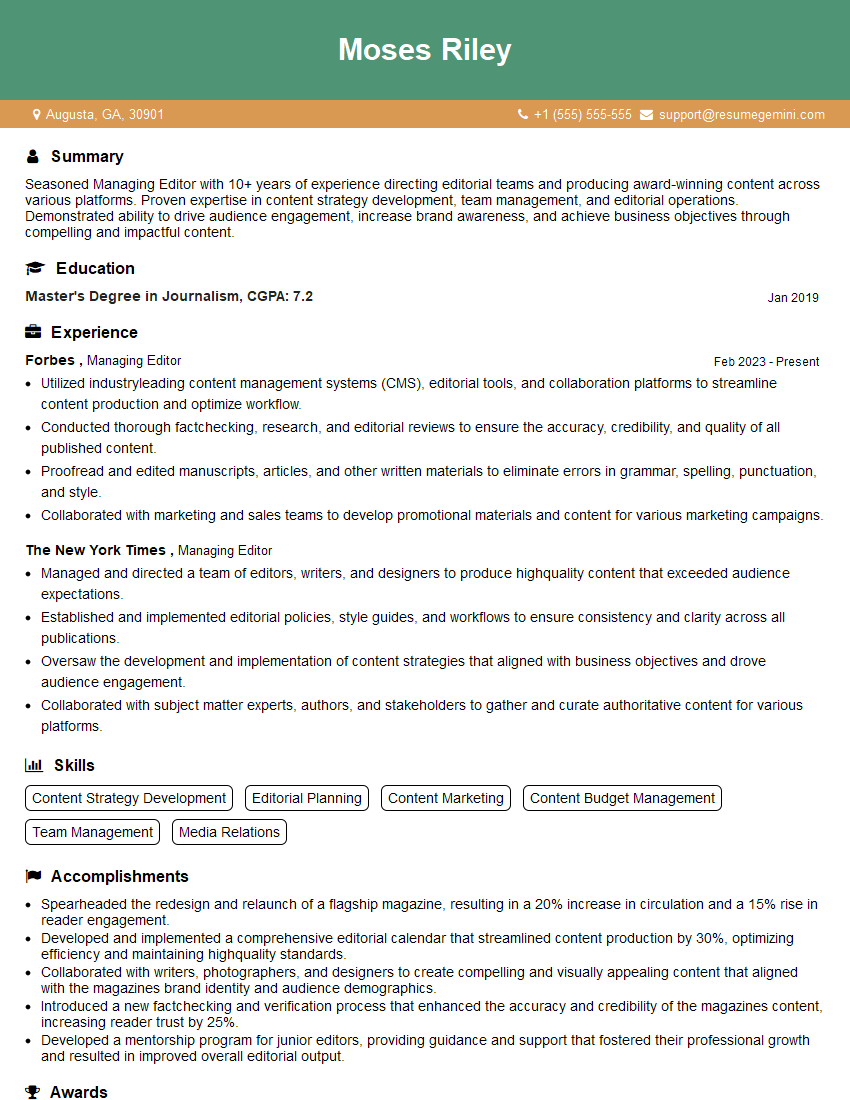
Managing Editor Resume Sample
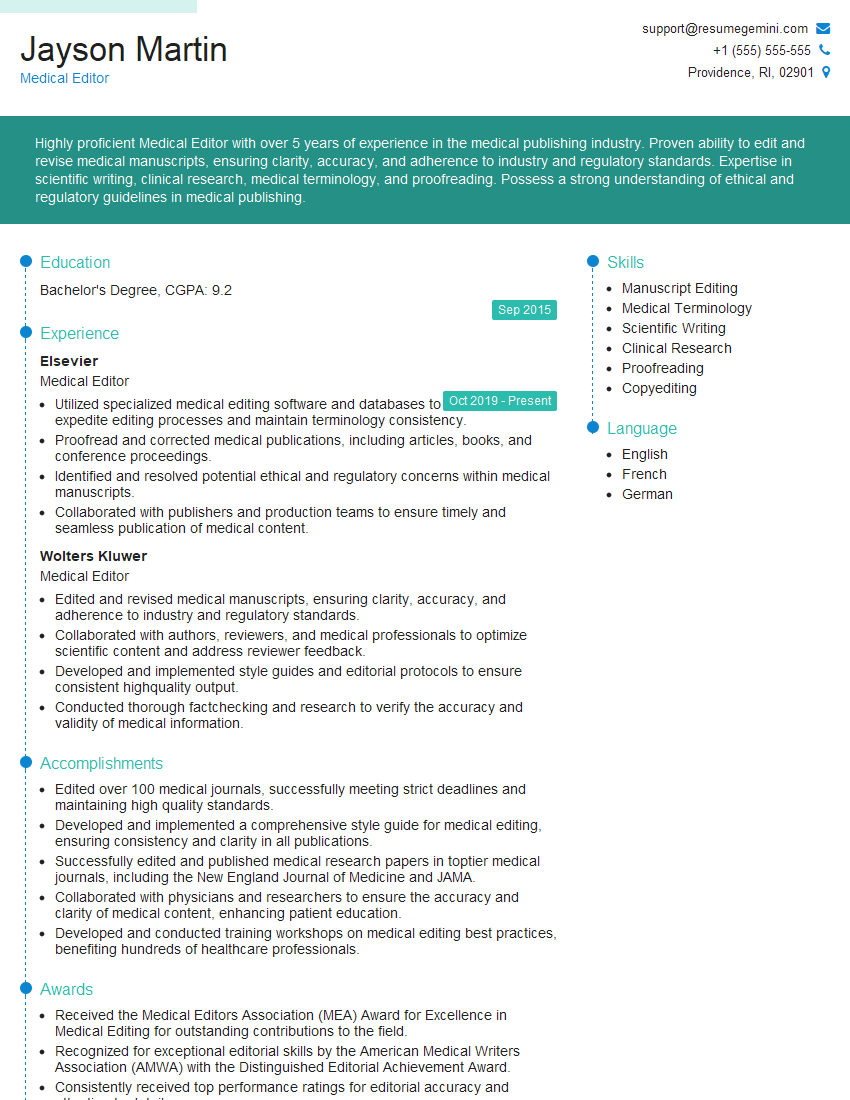
Medical Editor Resume Sample
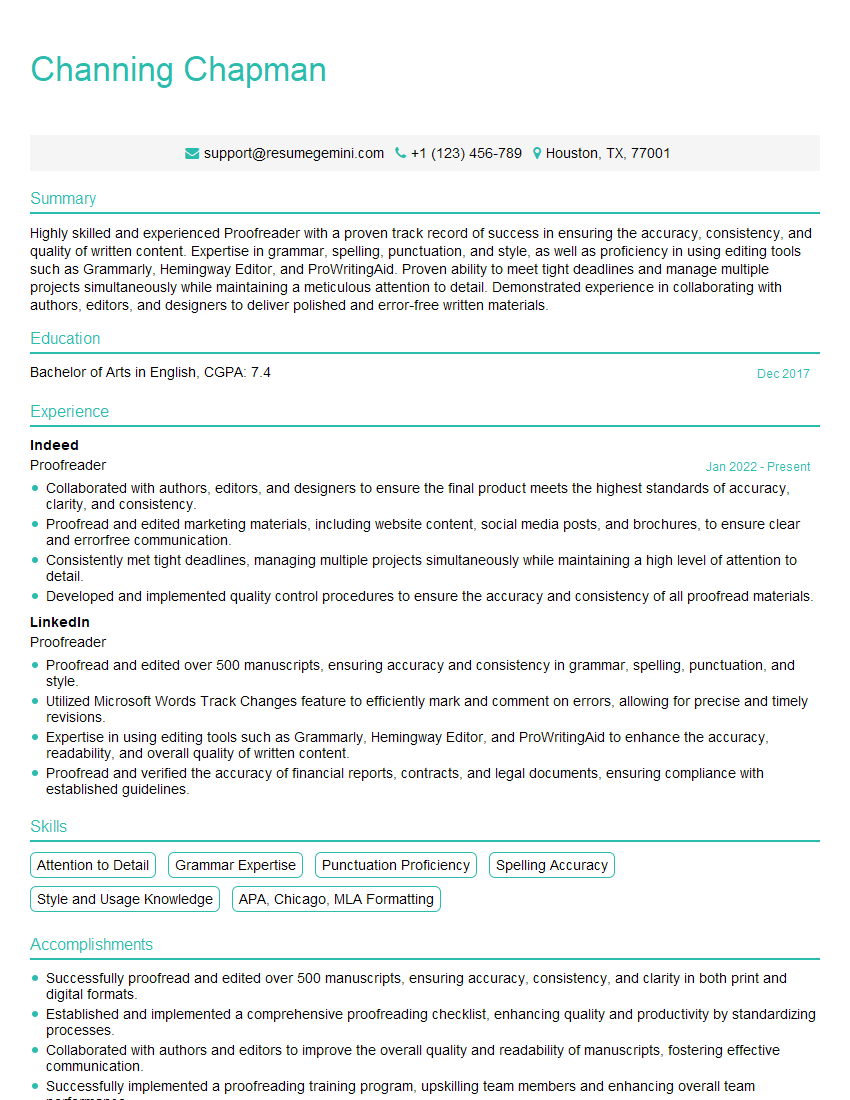
Proofreader Resume Sample
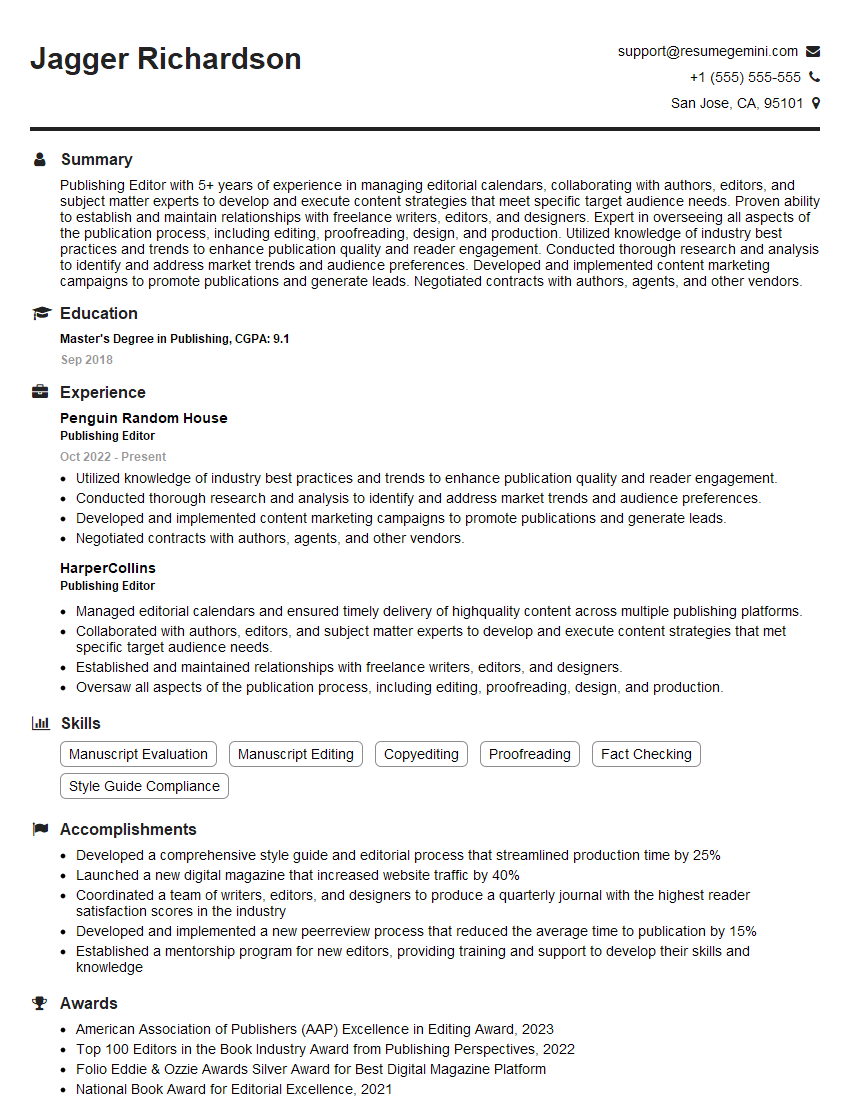
Publishing Editor Resume Sample
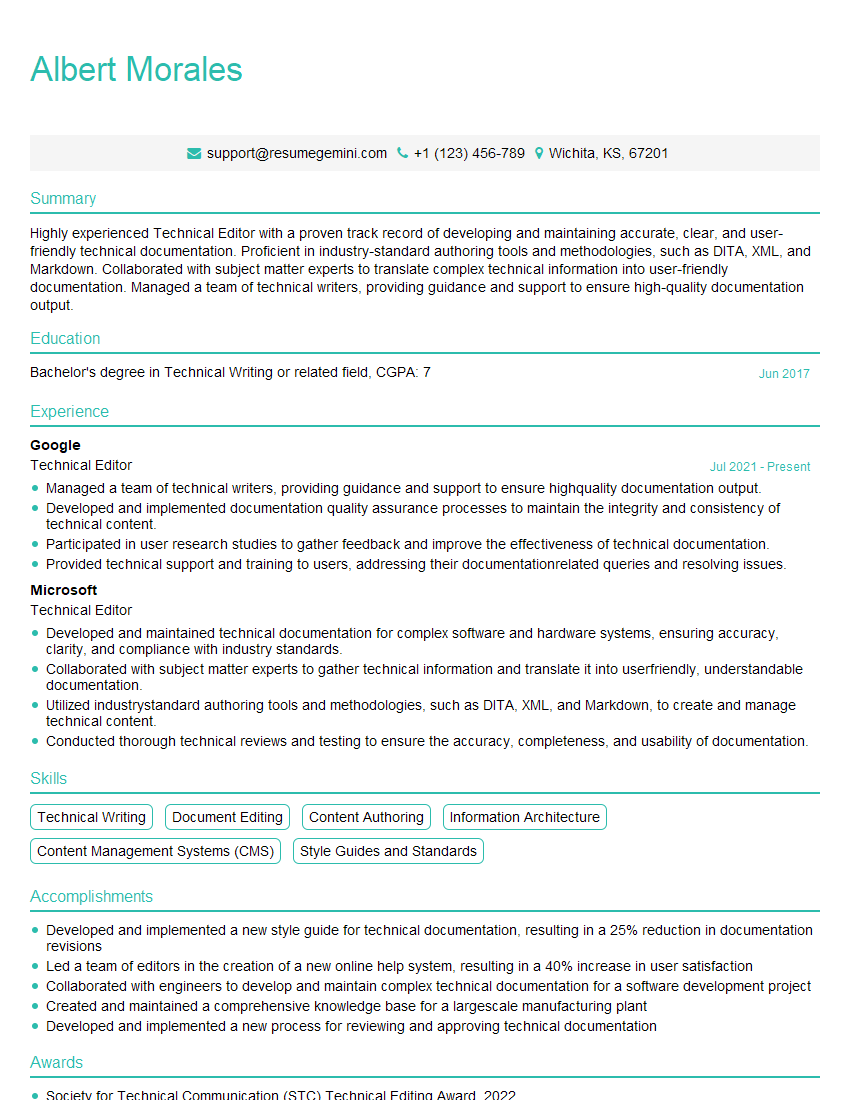
Technical Editor Resume Sample
Explore more articles
Users Rating of Our Blogs
Share Your Experience
We value your feedback! Please rate our content and share your thoughts (optional).
What Readers Say About Our Blog
Very informative content, great job.
good