The thought of an interview can be nerve-wracking, but the right preparation can make all the difference. Explore this comprehensive guide to Experience in air freight forwarding interview questions and gain the confidence you need to showcase your abilities and secure the role.
Questions Asked in Experience in air freight forwarding Interview
Q 1. Explain the Incoterms used in air freight.
Incoterms, or International Commercial Terms, are standardized trade terms published by the International Chamber of Commerce (ICC). They define the responsibilities of buyers and sellers in international transactions, specifying who is responsible for costs and risks associated with transporting goods. In air freight, several Incoterms are commonly used, each dictating a different point of transfer of responsibility.
- EXW (Ex Works): The seller makes the goods available at their premises. The buyer bears all costs and risks from that point onward. Think of it like picking up a package directly from the factory.
- FCA (Free Carrier): The seller delivers the goods to the named carrier at the specified location. The buyer assumes responsibility from that point. This is frequently used in air freight, with the carrier often being the airline.
- CPT (Carriage Paid To): The seller pays for carriage to the named place of destination. However, risk transfers to the buyer once the goods are handed over to the carrier. This is a common choice for international shipments.
- CIP (Carriage and Insurance Paid To): Similar to CPT, but the seller also arranges and pays for insurance coverage. The risk still transfers at the point of handover to the carrier.
- DAP (Delivered at Place): The seller delivers the goods, cleared for import, to the named place. The buyer is responsible for unloading.
- DPU (Delivered at Place Unloaded): Similar to DAP, but the seller is also responsible for unloading the goods.
- DDP (Delivered Duty Paid): The seller bears all costs and risks involved in delivering the goods to the named place, including import duties and taxes. This offers the buyer maximum convenience but highest cost for the seller.
Selecting the correct Incoterm is crucial for clear contractual obligations and risk management. For instance, using FCA clearly defines the point at which the responsibility shifts from the seller to the buyer, preventing misunderstandings about who bears the costs of potential damage during transit.
Q 2. Describe the process of handling hazardous materials in air freight.
Handling hazardous materials in air freight is a highly regulated and complex process, demanding strict adherence to international and national regulations like the IATA Dangerous Goods Regulations (DGR). The process involves several key steps:
- Proper Identification and Classification: The shipper must accurately identify and classify the hazardous material according to the DGR. This includes determining the correct UN number, hazard class, and packing group.
- Packaging and Labeling: The goods must be packaged in accordance with DGR specifications using appropriate packaging materials and markings. This ensures containment and prevents leakage or damage during transit.
- Documentation: Comprehensive documentation is essential. This includes the Shipper’s Declaration for Dangerous Goods (DG), which details the nature of the hazardous material, its quantity, and packaging details. This declaration must accompany the shipment.
- Special Handling Procedures: Hazardous materials require specific handling procedures throughout the entire journey, from pick-up to delivery. This might include temperature control, segregation from other cargo, and use of specialized equipment.
- Airline Approval: Prior to shipment, the airline must be notified and approve the shipment of dangerous goods, ensuring compliance with their specific requirements.
Failure to comply with these regulations can lead to serious consequences, including fines, delays, and even accidents. For example, improperly packaged lithium batteries could ignite during flight, resulting in a catastrophic event. Therefore, meticulous attention to detail is absolutely crucial.
Q 3. What are the key differences between general and special cargo handling in air freight?
The key difference between general and special cargo handling in air freight lies in the nature of the goods being shipped and the handling requirements they demand.
- General Cargo: This refers to standard, non-perishable goods that require minimal special handling. Examples include clothing, electronics, and books. These goods are typically palletized, loaded onto aircraft using standard equipment, and follow standard handling procedures.
- Special Cargo: This encompasses goods requiring specialized handling due to their size, weight, fragility, or hazardous nature. Examples include oversized equipment, live animals, perishable goods, and hazardous materials. These shipments often necessitate customized handling procedures, specialized equipment, and stringent temperature control.
The distinction impacts costs, handling time, and regulatory compliance. Special cargo often involves higher costs due to the specialized equipment and procedures involved. For example, transporting a delicate piece of art requires careful handling, special packaging, and potentially climate control, increasing the overall cost compared to shipping a pallet of standard goods.
Q 4. How do you determine the appropriate aircraft for a specific air freight shipment?
Determining the appropriate aircraft for a specific air freight shipment involves considering several factors:
- Weight and Dimensions of the Cargo: This dictates the aircraft’s payload capacity and the type of containerization needed. A large, heavy shipment will require a larger aircraft with greater capacity.
- Type of Cargo: Special cargo, such as oversized or hazardous materials, may necessitate specialized aircraft capable of handling these goods. Temperature-sensitive goods require aircraft with temperature-controlled compartments.
- Destination and Route: The distance to the destination and the available flight routes influence aircraft selection. Longer distances may require aircraft with greater fuel efficiency and range.
- Cost and Availability: The overall cost of using a particular aircraft, including the cost of chartering it, as well as its availability for the required timeframe, also play critical roles in the decision.
- Airline Network: The reach of the airline’s network is another factor affecting choice. A wider network reduces the chances of connecting flights, thus reducing transit time.
For example, shipping a small package to a nearby city might utilize a small freighter plane, while shipping a massive generator to a distant country might require a large wide-body aircraft. The selection process involves a careful assessment of these factors to optimize efficiency and cost-effectiveness.
Q 5. What are the common challenges encountered in international air freight shipping?
International air freight shipping presents several common challenges:
- Delays: These can arise from various factors, including unforeseen weather conditions, airline scheduling issues, customs delays, and security checks. These delays can impact delivery times and cause disruption to supply chains.
- High Costs: Air freight is generally more expensive than other modes of transport. Fuel costs, airport charges, and handling fees contribute to high overall costs.
- Customs and Regulatory Compliance: Navigating different customs regulations and complying with varying import and export requirements in different countries can be complex and time-consuming. Incorrect documentation can lead to delays and fines.
- Security Concerns: Stricter security measures and heightened scrutiny of shipments can cause delays and necessitate additional documentation and processing time.
- Damage and Loss: Goods can be damaged or lost during transit. This necessitates comprehensive insurance coverage and robust tracking mechanisms.
- Capacity Constraints: Limited aircraft availability, particularly during peak seasons, can lead to capacity constraints and affect shipment timing.
Effective risk management strategies, such as proactive communication with stakeholders, robust tracking systems, and comprehensive insurance, are crucial for mitigating these challenges. I have often used contingency plans for delays by having backup flight options and alternative transport solutions on standby.
Q 6. How do you manage customs clearance processes for air freight shipments?
Managing customs clearance for air freight shipments requires meticulous preparation and attention to detail. The process typically involves:
- Accurate Documentation: Preparing all necessary documentation, including commercial invoices, packing lists, certificates of origin, and any required permits or licenses, is essential. Inaccurate or incomplete documentation can lead to significant delays.
- Classification and Valuation: Correctly classifying the goods according to the Harmonized System (HS) codes and accurately valuing them is crucial for determining the appropriate duties and taxes.
- Electronic Filing: Many countries now require electronic filing of customs declarations through systems such as Automated Commercial Environment (ACE) in the US or similar systems worldwide. This simplifies the process and accelerates clearance.
- Brokerage Services: Using a customs broker with expertise in the destination country’s regulations can streamline the process and mitigate potential issues. They can handle complex documentation, interactions with customs officials, and any required inspections.
- Inspections and Audits: Be prepared for potential customs inspections or audits. This may involve physical examination of the goods or review of documentation.
A well-organized approach, including proactively addressing potential issues and having backup documentation ready, can substantially reduce delays. I’ve often found that proactive communication with customs authorities and the use of a reliable customs broker are critical for smooth clearance.
Q 7. Explain your experience with air waybills (AWB) and their importance.
The Air Waybill (AWB) is a crucial document in air freight, serving as the contract of carriage between the shipper and the airline. It’s essentially the equivalent of a receipt for your goods.
- Proof of Carriage: The AWB acts as proof that the goods have been accepted for transportation by the airline. It’s a legally binding document, detailing the terms of the shipment.
- Tracking and Tracing: The AWB number enables tracking and tracing the shipment throughout its journey. This allows monitoring the shipment’s location and status, enhancing transparency and accountability.
- Essential Information: The AWB contains vital information about the shipment, including the shipper and consignee details, origin and destination, weight and dimensions of the goods, and the nature of the cargo. This information is crucial for efficient handling and customs clearance.
- Liability and Insurance: The AWB outlines the airline’s liability for loss or damage to the goods during transit. It also usually provides details related to insurance coverage for the shipment.
Throughout my career, managing AWBs efficiently has been paramount. In one instance, a missing AWB number delayed customs clearance, underscoring its importance for smooth logistics. Careful attention to detail and utilizing electronic AWB systems for easier tracking have been critical for minimizing such issues.
Q 8. Describe your experience with different types of air freight consolidation.
Air freight consolidation is a crucial strategy for optimizing shipment costs and efficiency. It involves combining multiple smaller shipments from various shippers into a single, larger shipment. This reduces overall transportation costs per unit, as the price per kilogram decreases with volume. I have extensive experience with different types of consolidation, including:
- Less than Container Load (LCL) Consolidation: This involves combining multiple shipments from different shippers that don’t fill an entire container. I’ve managed this effectively by utilizing shared space efficiently and optimizing weight distribution for maximum cost savings.
- Full Container Load (FCL) Consolidation: While seemingly counterintuitive for consolidation, FCL can be optimized by consolidating shipments destined for the same region or using a larger container to improve the utilization of space and reducing costs per unit.
- Groupage: This involves consolidating smaller shipments from multiple shippers into one large shipment for better cost efficiency. I’ve expertly handled the coordination involved, ensuring timely delivery and accurate documentation.
For example, in one project, we consolidated over 50 smaller shipments from various fashion brands into three FCL containers, reducing overall shipping costs by 15% compared to individual shipments. This required detailed planning, meticulous tracking, and strong communication with all parties involved.
Q 9. How do you track shipments throughout the air freight process?
Shipment tracking is paramount in air freight. I leverage a multi-faceted approach, integrating various technologies and strategies to maintain complete visibility. This typically involves:
- Air Waybill (AWB) Tracking: Every shipment has a unique AWB number, which I utilize to track its progress through various carrier systems and online portals. I’m proficient in using the tracking portals of major airlines like FedEx, DHL, and UPS.
- Carrier Communication: Direct contact with the chosen air freight carrier is essential for real-time updates, especially during potential delays or unexpected events. I maintain strong relationships with key carrier personnel to ensure prompt information.
- Freight Management Systems (FMS): I use advanced FMS software to consolidate tracking information from multiple sources, providing a centralized view of all shipments. These systems generate real-time reports and alerts, making proactive issue resolution easier.
- Electronic Data Interchange (EDI): EDI facilitates automated data exchange with carriers and other stakeholders, improving the accuracy and speed of tracking updates.
Imagine a situation where a shipment is delayed. Using our FMS, I’d immediately be alerted, allowing me to proactively contact the carrier, identify the cause of delay, and inform the client with an accurate ETA. This proactive approach ensures smooth operations and satisfied clients.
Q 10. What are your strategies for resolving shipment delays or discrepancies?
Delays and discrepancies are inevitable in air freight. My strategies for resolving these issues involve a systematic approach:
- Identify the Root Cause: The first step is to thoroughly investigate the reason for the delay or discrepancy. This often involves reviewing all relevant documentation, contacting the carrier, and examining the shipment’s history.
- Develop a Solution: Once the root cause is identified, I develop a tailored solution. This may involve negotiating with the carrier for expedited shipping, rerouting the shipment, or filing a claim for damages.
- Communicate Proactively: Keeping the client informed throughout the process is crucial. Transparency builds trust and reduces anxiety. I provide regular updates and clearly explain the steps being taken to resolve the issue.
- Documentation: Maintaining comprehensive documentation throughout the entire process is vital. This serves as evidence in case of disputes or claims.
For instance, if a shipment is delayed due to customs clearance, I would immediately contact the customs broker, gather the necessary documents, and work to expedite the process. I would also keep the client updated on the progress and offer alternative solutions if necessary, minimizing any disruptions to their business.
Q 11. Explain the role of insurance in air freight.
Insurance plays a vital role in mitigating financial risks associated with air freight. It protects shippers from potential losses due to damage, loss, or delay of goods during transit. There are various types of air freight insurance, each offering different levels of coverage:
- All-Risks Coverage: This provides comprehensive protection against a wide range of risks, including loss, damage, theft, and delay. It’s the most comprehensive option but also generally the most expensive.
- Named Perils Coverage: This covers specific risks outlined in the policy, such as fire, accident, or theft. It offers less comprehensive protection but is typically more affordable.
- Institute Cargo Clauses (ICC): These are standardized clauses developed by the Institute of London Underwriters, widely used in marine and air cargo insurance policies. ICC A, B, and C offer varying levels of coverage.
Choosing the right insurance policy depends on the value and nature of the goods being shipped and the level of risk the shipper is willing to accept. I always advise clients to secure adequate insurance coverage to protect their investments.
Q 12. How do you handle claims and disputes related to air freight?
Handling claims and disputes requires a meticulous and professional approach. My process generally involves:
- Gather Evidence: Collecting all relevant documentation, such as the AWB, insurance policy, commercial invoice, packing list, and any photos or videos documenting the damage or loss.
- File a Claim: Submitting a formal claim to the appropriate party, whether it’s the carrier or the insurer. This typically involves completing specific claim forms and providing all necessary documentation.
- Negotiate a Settlement: Working with the carrier or insurer to negotiate a fair settlement that compensates for the losses incurred. This may involve multiple communications and potentially legal action if necessary.
- Maintain Documentation: Keeping thorough records of all communications, negotiations, and agreements reached throughout the claims process.
I once successfully negotiated a claim for a client whose shipment was damaged during transit. By meticulously documenting the damage and following the claim process diligently, we secured full compensation for the damaged goods. This demonstrates my commitment to protecting my clients’ interests.
Q 13. What are your methods for negotiating freight rates?
Negotiating freight rates effectively requires a strategic approach combining market knowledge, relationship building, and skillful negotiation tactics:
- Market Research: I thoroughly research current market rates, considering factors such as fuel surcharges, currency fluctuations, and seasonal demand. This ensures I have a realistic understanding of market value.
- Volume and Frequency: Negotiating with carriers for higher volumes and more frequent shipments typically results in lower rates. Demonstrating consistent business is crucial for securing better deals.
- Relationship Building: Maintaining strong, long-term relationships with carriers is essential. Building trust and rapport opens doors to preferential treatment and better negotiated rates.
- Strategic Timing: Negotiating during off-peak seasons or periods of lower demand can often yield favorable results.
For instance, by demonstrating a commitment to consistent monthly shipments of 100 tons of goods, I secured a 10% discount on our freight rates with a major airline, leading to significant cost savings for my client. The key is having a thorough understanding of the market dynamics and leveraging your relationship with the carriers strategically.
Q 14. What is your experience with different air freight carriers and their services?
My experience encompasses a wide range of air freight carriers, each offering unique strengths and services. I’ve worked extensively with major international players such as:
- FedEx: Known for their extensive global network, reliable service, and advanced tracking capabilities. I’ve utilized their express services for time-sensitive shipments.
- DHL: Another global giant providing a comprehensive suite of air freight solutions. Their expertise in customs brokerage has been invaluable on numerous occasions.
- UPS: Highly reputable for their global reach and technology-driven solutions. I frequently leverage their integrated supply chain solutions for optimizing complex shipments.
- Various Regional Carriers: Beyond major players, I have experience with several regional carriers, which provides flexibility and cost-effectiveness for specific routes or cargo types. This allows me to tailor solutions to best fit each client’s unique needs.
Selecting the right carrier involves careful consideration of factors such as transit time, cost, reliability, and the carrier’s expertise in handling specific types of cargo. My expertise allows me to match the optimal carrier to each client’s specific requirements.
Q 15. Explain your knowledge of IATA regulations and procedures.
IATA regulations are the cornerstone of international air freight. My understanding encompasses a wide range of rules, from the standardized documentation required for shipping (like the Air Waybill or AWB) to the dangerous goods regulations (DGR) which dictate the safe transport of hazardous materials. I’m proficient in interpreting and applying these regulations to ensure compliant and efficient shipments. For example, I know the specific requirements for proper AWB completion, including accurate shipper and consignee information, commodity descriptions compliant with the Harmonized System (HS) codes, and precise weight and dimensions. I also possess a deep understanding of the various classes of dangerous goods and the associated documentation and packaging requirements, ensuring compliance with IATA’s strict standards to avoid delays and penalties.
Beyond the AWB and DGR, my knowledge extends to understanding dimensional weight calculations, which impact the freight costs significantly; incoterms, which define the responsibilities of the buyer and seller in international trade; and the various security regulations, which I’ll discuss in more detail later. Fundamentally, my understanding of IATA regulations ensures smooth and legal transportation of goods globally.
Career Expert Tips:
- Ace those interviews! Prepare effectively by reviewing the Top 50 Most Common Interview Questions on ResumeGemini.
- Navigate your job search with confidence! Explore a wide range of Career Tips on ResumeGemini. Learn about common challenges and recommendations to overcome them.
- Craft the perfect resume! Master the Art of Resume Writing with ResumeGemini’s guide. Showcase your unique qualifications and achievements effectively.
- Don’t miss out on holiday savings! Build your dream resume with ResumeGemini’s ATS optimized templates.
Q 16. How do you prioritize shipments based on urgency and deadlines?
Prioritizing shipments is crucial in air freight, where time is often of the essence. I employ a multi-faceted approach. First, I categorize shipments based on urgency, using a simple system: High (e.g., time-sensitive medical supplies), Medium (e.g., standard manufactured goods), and Low (e.g., non-urgent materials). Each category is further evaluated by considering the deadline, using a deadline-driven prioritization matrix. This matrix considers both the criticality of the deadline (absolute deadline vs. preferred delivery date) and the potential impact of delay (financial penalties, operational disruptions).
Second, I factor in the shipment’s characteristics—size, weight, and destination—to predict potential delays. For instance, oversized or heavy cargo may require special handling, which might impact transit time. Understanding the airline’s schedule and historical performance for the specific route is vital. Finally, I utilize sophisticated air freight management software (discussed later) that allows real-time tracking and automated alerts for potential delays, enabling proactive management and swift adjustments to the priority rankings as needed. This proactive approach ensures timely delivery even when dealing with multiple urgent shipments concurrently.
Q 17. Describe your experience with different types of air freight packaging.
My experience with air freight packaging is extensive, covering various types suited to different goods. I’m familiar with standard packaging like cartons and wooden crates, but I also have expertise in specialized packaging for fragile or sensitive goods. This includes using custom-designed crates with shock absorption materials, palletization for efficient handling, and vacuum-sealed packaging for moisture-sensitive items. I understand the importance of packaging that not only protects the goods during transit but also meets airline requirements for weight, dimension, and handling.
For example, I’ve worked with companies shipping delicate electronics, where we utilized anti-static packaging and foam inserts to prevent damage. For hazardous materials, we employed UN-certified packaging that meets IATA DGR standards. My knowledge extends to selecting appropriate packaging materials based on factors such as climate conditions, destination, and product fragility, ensuring safe and damage-free delivery.
Q 18. How do you maintain accurate records and documentation for air freight operations?
Maintaining accurate records and documentation is paramount in air freight. This ensures efficient operations, reduces risks, and facilitates smooth customs clearance. We use a combination of digital and physical records. The core documentation includes the Air Waybill (AWB), packing lists, commercial invoices, certificates of origin, and any other required documents specific to the cargo (e.g., permits, licenses). Digital systems like our air freight management software automate data entry and storage, ensuring accuracy and accessibility.
Physical records are maintained for auditing purposes and to create a backup. A meticulously maintained filing system is essential. We utilize a standardized naming convention for our files and keep both digital and physical archives, ensuring data integrity and ready retrieval. Regular audits and data checks are performed to ensure data accuracy and compliance with regulations. This precise record-keeping is not merely a matter of compliance; it allows for quick resolution of queries, efficient tracking of shipments, and strengthens our ability to respond to client inquiries promptly.
Q 19. What are your strategies for managing risk in air freight?
Risk management in air freight is proactive and multi-layered. We identify potential risks at every stage, from booking to delivery. Common risks include delays due to weather, customs issues, damage during handling, and loss or theft. We mitigate these risks through various strategies. For instance, we diversify our airline partnerships to reduce reliance on a single carrier, reducing our exposure to potential disruptions from any one airline’s issues.
Insurance is crucial; we always advise clients on appropriate cargo insurance coverage. We utilize robust tracking systems to monitor shipments in real-time, enabling us to intervene swiftly in case of delays or deviations from the planned route. Furthermore, we carefully select our ground handlers, verifying their safety and security measures. Regular training for our staff keeps them updated on best practices and risk mitigation techniques. Proactive communication with clients keeps them informed, ensuring transparency and facilitating prompt responses to emerging challenges.
Q 20. How do you ensure compliance with security regulations in air freight?
Ensuring compliance with air freight security regulations is non-negotiable. We adhere strictly to regulations set by bodies such as the Transportation Security Administration (TSA) in the US and equivalent agencies in other countries. This involves implementing stringent security measures throughout the entire process. This includes thorough screening of cargo, utilizing security seals to prevent unauthorized access, and adhering to strict documentation requirements. We maintain a strong awareness of evolving security threats and implement updated security protocols accordingly.
Regular training for our staff on security protocols is essential. We perform regular audits to ensure compliance with all applicable regulations. Cooperation with security agencies and sharing information on suspicious activities are critical. By staying up-to-date with the latest security regulations and actively participating in security awareness programs, we proactively minimize the risks of security breaches and ensure the safety of air freight operations.
Q 21. Describe your experience with using air freight management software or systems.
My experience with air freight management software is extensive. I’ve used several systems, each with its own strengths. Generally, these systems provide real-time tracking of shipments, automated documentation generation, and integration with various airline and customs systems. Features like automated alerts for delays or exceptions, and data analytics capabilities to identify trends and improve efficiency, are invaluable.
For example, one system I used offered a comprehensive dashboard showing the status of all our shipments, allowing me to quickly identify any potential problems. Another system streamlined the documentation process significantly, reducing paperwork and the risk of errors. The software also facilitates accurate cost calculation and reporting, which is vital for financial management and client communication. The software has been invaluable in optimizing our operations, ensuring efficient and accurate handling of a large volume of shipments. It also provides valuable data for improving efficiency and optimizing our processes.
Q 22. How do you collaborate with other departments or stakeholders in air freight operations?
Collaboration in air freight is crucial for smooth operations. I work closely with various stakeholders, including:
- Sales & Marketing: To understand client requirements and ensure accurate communication of pricing and timelines.
- Operations Team: To coordinate booking, documentation, handling, and tracking of shipments. This often involves daily stand-up meetings and detailed shipment tracking systems.
- Customs Brokers: For seamless customs clearance, ensuring compliance with regulations and minimizing delays. Regular communication is key to address any potential issues proactively.
- Airlines & Ground Handlers: To negotiate rates, manage space allocation, and address any unforeseen issues during transit. I use strong relationship management skills to resolve discrepancies and optimize delivery schedules.
- Finance Department: For timely invoice processing and payment management. This includes providing all necessary documentation and ensuring accurate cost allocation.
For example, during a recent shipment of perishable goods, I collaborated closely with the operations team to secure priority handling, and with the airlines to guarantee the shipment’s temperature-controlled environment throughout transit. Effective communication and proactive problem-solving across departments ensured the delivery arrived on time and in perfect condition.
Q 23. Explain your experience with handling oversized or heavy cargo.
Handling oversized or heavy cargo requires meticulous planning and specialized expertise. My experience includes managing shipments of industrial equipment, wind turbine components, and construction materials. This involves:
- Assessing dimensions and weight: Accurately determining weight and dimensions to select appropriate aircraft and handling equipment.
- Choosing specialized carriers: Selecting airlines equipped to handle oversized cargo and securing necessary permits and licenses.
- Planning for special handling: Coordinating with ground handlers, including the use of cranes, forklifts, and specialized vehicles.
- Packaging and securing cargo: Ensuring proper packaging to prevent damage during transit. This may involve custom-built crates and specialized bracing.
- Managing risk and insurance: Securing appropriate insurance coverage to mitigate potential losses in case of damage or delay.
For instance, I once oversaw the shipment of a massive transformer weighing over 100 tons. This required extensive planning, including securing a chartered Antonov aircraft, coordinating specialized handling equipment at both origin and destination, and arranging comprehensive insurance coverage to safeguard against potential damage. The successful delivery required a multidisciplinary team, each playing a crucial role.
Q 24. How do you calculate the total cost of an air freight shipment?
Calculating the total cost of an air freight shipment involves several factors:
- Freight Charges: Based on weight (dimensional weight often applies), volume, and distance.
- Fuel Surcharges: Fluctuating based on fuel prices, significantly affecting overall cost.
- Airport Taxes and Fees: Varying by origin and destination airports.
- Handling Charges: Costs associated with pickup, delivery, and handling at airports.
- Customs Duties and Taxes: Dependent on the type of goods and destination country.
- Insurance Costs: Cost of insuring the goods against loss or damage.
- Other Charges: This may include document preparation fees, security charges, and other miscellaneous expenses.
The formula is not simply additive but often involves complex calculations. A software system or specialized calculator usually performs these calculations using the established rates for each component. I often provide clients with a detailed breakdown to ensure transparency. For example: Total Cost = Freight Charges + Fuel Surcharges + Airport Taxes + Handling Charges + Customs Duties + Insurance + Other Charges
Q 25. Describe your experience with different types of air freight payment methods.
Air freight payment methods vary. My experience encompasses:
- Letters of Credit (LC): A secure payment method where the bank guarantees payment to the seller upon fulfillment of specific conditions.
- Documentary Collections (D/C): The bank acts as an intermediary to collect payment from the buyer.
- Open Account: Simpler method where the seller extends credit to the buyer. This requires a strong relationship with the client and robust credit assessment procedures.
- Prepayment: The buyer pays in advance, commonly used for smaller or less established clients.
The choice depends on the client’s creditworthiness, the nature of the relationship, and the overall risk assessment. I always ensure that the payment terms are clearly defined and agreed upon in the contract. We use a strong internal approval system to mitigate risk and ensure payment processes are followed to the letter.
Q 26. What are your strategies for improving efficiency in air freight operations?
Improving efficiency in air freight is a continuous process. My strategies include:
- Streamlining Processes: Automating tasks like documentation and tracking using advanced software systems.
- Optimizing Routing: Analyzing transit times and routes to minimize delays. I use data analysis to refine our logistical networks.
- Negotiating with Carriers: Maintaining strong relationships to negotiate better rates and prioritize our shipments.
- Inventory Management: Using forecasting tools to predict demand and optimize storage and transportation of goods.
- Utilizing Technology: Implementing real-time tracking, data analytics, and AI-powered tools to enhance visibility and reduce errors.
For example, by implementing a new shipment tracking system, we reduced the time spent on tracking shipments by 20%, allowing our team to focus on more complex tasks and resolving potential issues. Continuous improvement is key to achieving operational excellence.
Q 27. How do you stay updated on changes in the air freight industry?
Staying current in the dynamic air freight industry is paramount. My approach involves:
- Industry Publications & Journals: Regularly reading publications such as Air Cargo World, The Loadstar, and others to stay informed on trends and regulatory changes.
- Industry Conferences & Webinars: Attending industry events to network with peers and learn about best practices.
- Professional Organizations: Participating in organizations such as FIATA (International Federation of Freight Forwarders Associations) to access knowledge and resources.
- Governmental Agencies & Regulatory Websites: Monitoring updates from regulatory bodies like IATA and TSA.
- Data Analytics & Market Research: Using data analytics platforms and industry research reports to identify trends and anticipate disruptions.
This holistic approach ensures that I’m not only abreast of current changes but can also anticipate future trends. I am consistently updating my knowledge base to optimize strategies and adapt to the industry’s ever-changing landscape. For instance, during the recent pandemic, consistent monitoring of governmental restrictions and guidelines for air freight enabled our company to rapidly adjust our operations to mitigate supply chain disruptions.
Key Topics to Learn for Air Freight Forwarding Interviews
- Incoterms: Understand the implications of different Incoterms (e.g., EXW, FOB, CIF, DDP) on responsibilities and costs throughout the shipping process. Be prepared to discuss practical scenarios where choosing the right Incoterm is crucial.
- Air Waybills (AWB): Master the structure and importance of an AWB. Discuss how to interpret AWB information, identify potential issues, and troubleshoot discrepancies. Understand the legal implications of the AWB as a contract of carriage.
- Freight Rates and Calculations: Demonstrate your ability to calculate freight costs, including base rates, fuel surcharges, security fees, and other applicable charges. Be prepared to discuss strategies for negotiating favorable rates with carriers.
- Customs Regulations and Documentation: Showcase your understanding of import and export regulations, including documentation requirements (e.g., commercial invoices, packing lists, certificates of origin). Discuss strategies for ensuring compliance and minimizing delays.
- Cargo Handling and Security: Explain your knowledge of proper cargo handling procedures to prevent damage and loss. Discuss security measures and your experience with managing high-value or sensitive shipments.
- Logistics Software and Systems: Highlight your experience with various logistics software and systems used in air freight forwarding. Be ready to discuss your proficiency in data entry, tracking, and reporting.
- Problem-Solving and Crisis Management: Describe your approach to resolving logistical challenges, such as delays, damaged goods, or missed deadlines. Provide examples of how you’ve successfully navigated difficult situations.
- Supply Chain Management Concepts: Demonstrate a broader understanding of supply chain principles and how air freight fits into the overall flow of goods. Discuss your experience optimizing processes and improving efficiency.
Next Steps
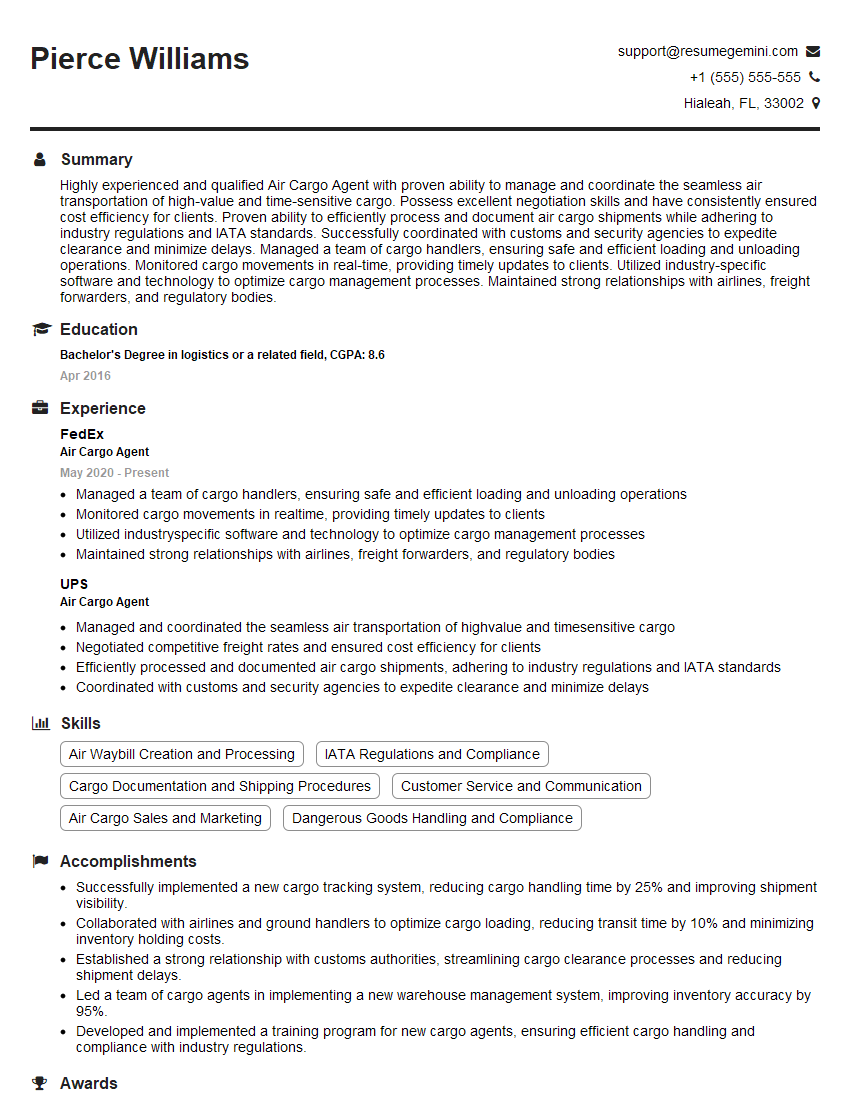
Mastering the intricacies of air freight forwarding opens doors to exciting career opportunities and higher earning potential within the dynamic logistics industry. To significantly boost your job prospects, it’s crucial to present your skills and experience effectively through a well-crafted, ATS-friendly resume. ResumeGemini is a trusted resource that can help you build a professional and impactful resume tailored to the specific requirements of air freight forwarding roles. Examples of resumes specifically designed for air freight forwarding professionals are available to guide you. Take the next step towards your dream career today!
Explore more articles
Users Rating of Our Blogs
Share Your Experience
We value your feedback! Please rate our content and share your thoughts (optional).
What Readers Say About Our Blog
Very informative content, great job.
good