The thought of an interview can be nerve-wracking, but the right preparation can make all the difference. Explore this comprehensive guide to Experience in building and deploying AI and Machine Learning systems interview questions and gain the confidence you need to showcase your abilities and secure the role.
Questions Asked in Experience in building and deploying AI and Machine Learning systems Interview
Q 1. Explain the difference between supervised, unsupervised, and reinforcement learning.
The three main types of machine learning – supervised, unsupervised, and reinforcement learning – differ fundamentally in how they learn from data. Think of it like teaching a dog a new trick.
- Supervised Learning: This is like explicitly showing your dog what to do. You provide labeled data – input data paired with the correct output. For example, showing your dog pictures of cats and saying “cat” each time. The algorithm learns to map inputs to outputs based on these examples. Common algorithms include linear regression, logistic regression, and support vector machines. A real-world example is spam detection, where emails are labeled as spam or not spam, and the model learns to classify new emails.
- Unsupervised Learning: Here, you let your dog explore and discover patterns on its own. You provide unlabeled data, and the algorithm identifies structure, patterns, or relationships. Imagine letting your dog explore a room full of toys and noticing it groups similar toys together. Common techniques are clustering (like k-means) and dimensionality reduction (like PCA). A real-world application is customer segmentation, where an algorithm groups customers with similar purchasing behavior.
- Reinforcement Learning: This is like training your dog with rewards and punishments. The algorithm learns through trial and error by interacting with an environment. You give the dog a treat for doing the trick correctly and no treat if it fails. The algorithm learns a policy that maximizes a reward signal. Examples include game playing (like AlphaGo) and robotics, where an agent learns to navigate and achieve goals.
Q 2. Describe your experience with different model deployment strategies (e.g., batch, real-time).
My experience encompasses various model deployment strategies, catering to different needs and contexts. Batch and real-time deployment are two primary approaches.
- Batch Deployment: This involves periodically processing large datasets offline and updating the model. It’s suitable for applications where real-time prediction isn’t crucial, such as generating weekly sales forecasts or analyzing customer churn. For instance, I worked on a project where a fraud detection model was trained on a week’s worth of transaction data and deployed as a batch job to score new transactions every Sunday.
- Real-time Deployment: This involves deploying the model to an environment where it receives and processes data in real-time. This is essential for applications like fraud detection in online transactions, where immediate predictions are necessary. In a previous role, I implemented a real-time sentiment analysis model using a microservice architecture deployed on Kubernetes, allowing for quick processing of social media feeds and providing near-instant feedback.
- Other Strategies: Beyond batch and real-time, other strategies exist, such as A/B testing different model versions, canary deployments (gradually rolling out a new model to a subset of users), and blue-green deployments (running two identical environments, switching traffic between them seamlessly).
Q 3. How do you handle imbalanced datasets in machine learning?
Imbalanced datasets, where one class significantly outweighs others, are a common challenge in machine learning. Imagine trying to train a model to detect rare diseases – the number of patients with the disease will be much smaller than those without. This leads to biased models that perform poorly on the minority class.
Here’s how I tackle this issue:
- Resampling Techniques: This involves altering the dataset to balance class proportions. Oversampling creates copies of minority class samples, while undersampling removes samples from the majority class. However, oversampling can lead to overfitting, and undersampling can lead to loss of information. I carefully choose the technique based on the dataset size and characteristics.
- Cost-Sensitive Learning: This involves assigning different misclassification costs to different classes. For example, misclassifying a positive case as negative (false negative) might be far more costly than the other way around (false positive). Algorithms like support vector machines (SVM) and decision trees allow incorporating cost matrices directly into the model training.
- Ensemble Methods: Combining multiple models trained on different balanced subsets of the data can improve overall performance. Techniques like bagging and boosting can be particularly effective.
- Algorithm Selection: Some algorithms, such as Random Forest and Gradient Boosting Machines, naturally handle imbalanced data better than others.
The best approach often involves a combination of these strategies. Careful evaluation using metrics like precision, recall, F1-score, and AUC-ROC is crucial to assess the effectiveness of the chosen methods.
Q 4. What are some common challenges in deploying machine learning models to production?
Deploying machine learning models to production presents several challenges, extending beyond model accuracy. It’s not just about building a great model; it’s about ensuring it performs reliably and efficiently in the real world.
- Data Drift: The statistical properties of the input data change over time, leading to model performance degradation. Regular monitoring and retraining are crucial to mitigate this.
- Infrastructure Challenges: Scaling the model to handle varying data loads, ensuring high availability, and managing computational resources are crucial aspects. This is where cloud services and containerization become important.
- Monitoring and Maintenance: Continuous monitoring of model performance (accuracy, latency, resource usage) and proactive maintenance are essential to identify and address issues quickly.
- Integration with Existing Systems: Integrating a new machine learning model into a larger system requires careful planning and execution to avoid disrupting existing workflows.
- Explainability and Interpretability: In some domains (like healthcare and finance), understanding how a model makes its predictions is critical, necessitating the use of explainable AI (XAI) techniques.
- Security and Privacy: Protecting model data and preventing unauthorized access or manipulation are vital.
Q 5. Explain your understanding of MLOps and its importance.
MLOps, or Machine Learning Operations, is the discipline of deploying and maintaining machine learning models in production environments. It’s the bridge between data science and IT operations, aiming to streamline the entire machine learning lifecycle.
Its importance lies in ensuring that models are not only accurate but also reliable, scalable, and maintainable. Without MLOps, deploying and managing models can become a chaotic and unsustainable process. MLOps practices promote:
- Improved Collaboration: Breaking down silos between data scientists and IT operations.
- Faster Model Deployment: Automating many aspects of the deployment process.
- Increased Model Reliability: Ensuring models perform reliably in production.
- Reduced Risk: Implementing robust monitoring and alerting systems to detect and address issues promptly.
- Enhanced Model Governance: Managing models’ lifecycle, from development to retirement.
In my experience, adopting MLOps principles significantly increased the efficiency and reliability of our machine learning systems, leading to better business outcomes.
Q 6. Describe your experience with containerization technologies like Docker and Kubernetes in the context of AI/ML deployment.
Containerization technologies like Docker and Kubernetes are essential for deploying and managing AI/ML models effectively. They solve many of the challenges associated with deployment and scalability.
- Docker: This allows packaging the model, its dependencies, and runtime environment into a standardized container. This ensures consistency across different environments (development, testing, production), preventing the dreaded “it works on my machine” issue. I’ve used Docker extensively to create reproducible and portable model deployments.
- Kubernetes: This orchestrates the deployment, scaling, and management of containerized applications. It provides features like automatic scaling, self-healing, and rolling updates, making it ideal for managing complex ML deployments. I leveraged Kubernetes to deploy a real-time recommendation engine, allowing the system to automatically scale up during peak demand and gracefully handle failures.
By combining Docker and Kubernetes, I’ve achieved highly reliable, scalable, and maintainable AI/ML systems.
Q 7. How do you monitor and maintain deployed machine learning models?
Monitoring and maintaining deployed machine learning models is an ongoing process that’s crucial for ensuring their continued effectiveness. It’s not a one-time task, but rather a continuous cycle of observation, analysis, and action.
My approach involves:
- Performance Monitoring: Regularly tracking key metrics like accuracy, precision, recall, F1-score, latency, and throughput. This often involves setting up dashboards and alerts to notify of any significant deviations from expected performance.
- Data Monitoring: Tracking the characteristics of the input data to detect data drift or unexpected changes in data distribution. This helps identify potential problems before they significantly impact model performance.
- Model Retraining: Regularly retraining the model with new data to account for data drift and maintain accuracy. This can be automated using scheduled jobs or triggered by performance degradation alerts.
- Model Versioning: Maintaining a clear history of all model versions, allowing for rollback to previous versions if necessary.
- Alerting and Notifications: Setting up alerts to notify the relevant teams of any anomalies or performance issues. This allows for prompt intervention and prevents problems from escalating.
- A/B Testing: Comparing the performance of different model versions to identify improvements and continuously optimize the system.
Proactive monitoring and maintenance are critical for maintaining the long-term effectiveness and reliability of deployed machine learning models.
Q 8. What are some common metrics used to evaluate the performance of a deployed model?
Evaluating a deployed model’s performance relies on choosing the right metrics, depending heavily on the model’s purpose. For example, a spam detection model will have different priorities than a medical diagnosis model. Common metrics fall into several categories:
- Accuracy: The overall correctness of the model’s predictions (correctly predicted/total predictions). While simple, it can be misleading with imbalanced datasets.
- Precision: Out of all the positive predictions made, what proportion was actually correct? Useful when the cost of false positives is high (e.g., wrongly flagging a legitimate transaction as fraudulent).
- Recall (Sensitivity): Out of all the actual positive cases, what proportion did the model correctly identify? Crucial when the cost of false negatives is high (e.g., missing a cancerous tumor in a medical image).
- F1-Score: The harmonic mean of precision and recall, providing a balanced measure. Useful when both false positives and false negatives are costly.
- AUC-ROC (Area Under the Receiver Operating Characteristic Curve): Measures the model’s ability to distinguish between classes across different thresholds. A higher AUC indicates better discrimination.
- Log Loss: Measures the uncertainty of the model’s predictions. Lower log loss indicates higher confidence in predictions.
- RMSE (Root Mean Squared Error) or MAE (Mean Absolute Error): For regression tasks, these measure the difference between predicted and actual values. RMSE penalizes larger errors more heavily.
In practice, I select metrics based on the specific business problem and the potential costs associated with different types of errors. For instance, in a fraud detection system, recall might be prioritized over precision to minimize missing fraudulent activities, even if it leads to more false alarms.
Q 9. How do you handle model versioning and rollback strategies?
Model versioning and rollback are crucial for maintaining stability and enabling quick recovery from issues. My approach typically involves:
- Version Control: Using a system like Git to track changes to the model code, training data, and configurations. This allows for easy retrieval of previous versions.
- Model Registry: Utilizing a centralized model repository (e.g., MLflow, AWS SageMaker Model Registry) to store different versions of the model along with metadata like training parameters, performance metrics, and deployment details.
- A/B Testing: Deploying new model versions alongside older ones to compare performance in a controlled environment before fully switching over. This minimizes disruption and allows for data-driven decisions.
- Rollback Strategy: Defining clear procedures for reverting to a previous model version in case of performance degradation or unexpected issues. This typically involves a simple command to switch back to the earlier version in the registry.
For example, if a new model version shows unexpectedly high error rates in production, I can quickly rollback to the previous stable version using the model registry and CI/CD pipeline, minimizing downtime and user impact. The rollback process is often automated to ensure speed and efficiency.
Q 10. Explain your experience with different cloud platforms for deploying AI/ML models (e.g., AWS SageMaker, Azure ML, GCP Vertex AI).
I have extensive experience deploying AI/ML models on various cloud platforms. Each offers unique strengths:
- AWS SageMaker: I’ve used SageMaker extensively for building, training, and deploying models at scale. Its integrated tools for model building, monitoring, and management are highly efficient. I particularly appreciate its built-in support for various algorithms and its seamless integration with other AWS services.
- Azure ML: Azure ML provides a robust platform with excellent support for MLOps, including CI/CD pipelines and model monitoring capabilities. I’ve used it successfully for projects requiring strong integration with other Azure services and for deploying models to various environments, including edge devices.
- GCP Vertex AI: Vertex AI offers a unified platform for machine learning, combining model building, training, and deployment functionalities. Its scalability and integration with other GCP services are very compelling. I’ve found its AutoML capabilities helpful for rapid prototyping and automating parts of the model development process.
The choice of platform depends on factors such as existing infrastructure, team expertise, specific project requirements, and cost considerations. I often choose the platform best suited to the specific project needs, ensuring seamless integration with existing tools and workflows.
Q 11. Describe your experience with CI/CD pipelines for machine learning models.
CI/CD pipelines for machine learning are crucial for automating the process of building, testing, and deploying models. My experience includes designing and implementing pipelines that encompass the entire ML lifecycle:
- Code Integration: Using Git for version control and automated code testing.
- Model Training: Automating the training process, including data preprocessing, model selection, and hyperparameter tuning.
- Model Testing and Evaluation: Running automated tests to evaluate the model’s performance on various metrics and compare it against previous versions.
- Deployment: Automating the deployment process, pushing the model to the chosen platform (e.g., AWS SageMaker, Azure ML).
- Monitoring and Alerting: Setting up monitoring systems to track model performance in real-time and receive alerts if issues arise.
I commonly use tools like Jenkins, GitLab CI, or cloud-provided CI/CD services to build these pipelines. For example, a change in the model code triggers an automated build, testing, and deployment process, ensuring that new versions are rolled out quickly and reliably. This reduces manual intervention and speeds up the iterative development cycle.
Q 12. How do you ensure the scalability and reliability of your deployed AI/ML systems?
Ensuring scalability and reliability of deployed AI/ML systems requires careful consideration at various stages:
- Microservices Architecture: Breaking down the system into smaller, independent services allows for scaling individual components based on demand.
- Containerization (Docker): Packaging the model and its dependencies in containers ensures consistent execution across different environments.
- Orchestration (Kubernetes): Managing containerized deployments across multiple machines to handle fluctuating workloads and ensure high availability.
- Load Balancing: Distributing traffic across multiple instances of the model to prevent overload and maintain responsiveness.
- Auto-Scaling: Automatically scaling the number of instances based on real-time demand to optimize resource utilization and cost.
- Monitoring and Logging: Implementing robust monitoring and logging systems to track system performance, resource usage, and identify potential issues early.
For example, using Kubernetes allows for automatic scaling of the model deployments during peak demand, ensuring that the system remains responsive even with a surge in requests. Comprehensive monitoring alerts me to any performance drops or resource constraints, enabling proactive mitigation.
Q 13. Explain your approach to debugging and troubleshooting issues in deployed models.
Debugging and troubleshooting deployed models often involves a systematic approach:
- Monitoring Tools: Using monitoring dashboards and logging systems to identify unusual patterns in model performance or system behavior.
- Data Analysis: Examining input data to identify potential issues like data drift, missing values, or inconsistencies.
- Model Evaluation: Re-evaluating the model’s performance on recent data to assess if there’s a drop in accuracy or other relevant metrics.
- A/B Testing: Comparing the performance of the deployed model with previous versions or alternative models.
- Root Cause Analysis: Investigating the underlying causes of performance degradation, which might involve code errors, data quality issues, or infrastructure problems.
A common scenario involves a sudden drop in model accuracy. I’d use monitoring tools to analyze data, compare against previous versions, and investigate if there’s a data drift or if the data quality has changed. Systematic debugging and logging help pinpoint the source of the problem and implement a fix efficiently.
Q 14. How do you handle data drift in deployed machine learning models?
Data drift, where the characteristics of the input data change over time, is a significant challenge for deployed models. My approach includes:
- Regular Monitoring: Continuously monitor the statistical properties of the input data using techniques like concept drift detection.
- Retraining Strategy: Establish a schedule for retraining the model with fresh data to adapt to changes in the data distribution. This can be triggered automatically based on predefined thresholds or manually based on performance monitoring.
- Adaptive Models: Consider using models designed to adapt to changing data distributions, such as online learning algorithms.
- Feature Engineering: Design features that are robust to changes in the data distribution. For example, using time-invariant features can mitigate some forms of data drift.
- Feedback Loops: Integrate feedback mechanisms to identify and address issues related to data drift quickly. This could involve incorporating user feedback or using active learning techniques.
For instance, in a fraud detection model, the patterns of fraudulent transactions might change over time. Regular monitoring and retraining with new data are essential to ensure the model stays effective. I might also build in feedback loops to allow human experts to review suspicious transactions and identify areas where the model might be inaccurate, helping to improve its performance and adaptation to new patterns.
Q 15. What are some security considerations for deploying AI/ML models?
Deploying AI/ML models introduces several security risks. Think of it like building a house – you need robust security measures to protect it from intruders. These risks span the entire lifecycle, from data collection to model deployment and monitoring.
- Data Poisoning: Malicious actors can introduce biased or incorrect data into your training dataset, leading to inaccurate or discriminatory model outputs. Imagine someone slipping fake reviews into a product rating dataset – it would skew the results significantly.
- Model Extraction Attacks: Adversaries can try to steal your model’s intellectual property by repeatedly querying it and inferring its internal structure. This is akin to someone trying to reverse-engineer your house design by repeatedly observing its exterior.
- Adversarial Attacks: These involve carefully crafted inputs designed to fool the model into making incorrect predictions. A classic example is adding small, imperceptible perturbations to an image to misclassify it, like slightly altering a stop sign to make it unrecognizable to an autonomous vehicle’s AI.
- Data Breaches: Protecting the sensitive data used to train and operate your model is crucial. A breach could expose personal information or lead to regulatory penalties. This is like someone breaking into your house and stealing your valuables.
- Model Backdoors: These are intentionally embedded vulnerabilities that allow attackers to control the model’s behavior under specific conditions. This is analogous to a hidden keyhole allowing someone access to your house undetected.
Mitigation strategies involve robust data validation, secure model storage, regular security audits, adversarial training techniques, and employing access control mechanisms. Furthermore, implementing differential privacy during model training can add a layer of protection by reducing the risk of sensitive information being extracted.
Career Expert Tips:
- Ace those interviews! Prepare effectively by reviewing the Top 50 Most Common Interview Questions on ResumeGemini.
- Navigate your job search with confidence! Explore a wide range of Career Tips on ResumeGemini. Learn about common challenges and recommendations to overcome them.
- Craft the perfect resume! Master the Art of Resume Writing with ResumeGemini’s guide. Showcase your unique qualifications and achievements effectively.
- Don’t miss out on holiday savings! Build your dream resume with ResumeGemini’s ATS optimized templates.
Q 16. Explain your experience with different model optimization techniques.
Model optimization is a critical aspect of building effective AI/ML systems. I’ve extensively used various techniques, categorized broadly into:
- Pruning: This involves removing less important connections or neurons in a neural network to reduce its size and complexity while maintaining accuracy. I’ve used this on image classification models, reducing model size by 40% with minimal accuracy loss.
- Quantization: This reduces the precision of the model’s weights and activations, usually from 32-bit floating-point to 8-bit integers. This significantly shrinks the model size and improves inference speed. I’ve applied this to deploy models on resource-constrained devices like mobile phones.
- Knowledge Distillation: This involves training a smaller, faster ‘student’ model to mimic the behavior of a larger, more accurate ‘teacher’ model. This is particularly useful for transferring knowledge from computationally expensive models to more efficient ones for deployment. I utilized this to deploy a large language model on a server with limited memory.
- Architectural Search: This involves using automated techniques to explore different model architectures and find the optimal one for a given task. I’ve used techniques like reinforcement learning for this purpose, resulting in models with superior performance compared to manually designed ones.
The choice of technique depends on the specific model, hardware constraints, and desired trade-off between accuracy and efficiency. For instance, pruning might be ideal for large, deep neural networks deployed on servers, while quantization is preferred for deploying models on mobile devices. Knowledge distillation is valuable when dealing with very large teacher models.
Q 17. How do you choose the appropriate model architecture for a given task?
Selecting the right model architecture is crucial for successful AI/ML projects. It’s like choosing the right tool for a job – a hammer isn’t ideal for screwing in a screw. The process depends heavily on the nature of the task and the data.
- Task Type: Is it classification, regression, clustering, or something else? For image classification, Convolutional Neural Networks (CNNs) are often the go-to choice. For sequential data like text or time series, Recurrent Neural Networks (RNNs) or Transformers are better suited.
- Data Characteristics: The size, dimensionality, and structure of the data heavily influence the choice. High-dimensional data might benefit from dimensionality reduction techniques before model training. Sparse data might require specialized models.
- Interpretability Requirements: Some applications demand higher interpretability, such as in healthcare or finance. Linear models or decision trees might be preferable in such cases compared to deep neural networks which are often considered ‘black boxes’.
- Computational Resources: The availability of computational resources, including memory and processing power, will constrain the choice of architecture. Simple models are suitable for resource-constrained environments.
Often, a combination of techniques and a thorough understanding of the problem domain are needed. I usually start with simpler models and incrementally increase complexity, evaluating performance along the way. Experimentation and comparing results from different architectures are key to finding the optimal solution.
Q 18. Describe your experience with feature engineering and selection.
Feature engineering and selection are fundamental steps in building successful AI/ML models. They’re like preparing the ingredients for a delicious dish – using the right ingredients and preparing them correctly is crucial for the final result.
Feature Engineering involves creating new features from existing ones to improve model performance. For example, extracting relevant information from text data using techniques like TF-IDF or word embeddings. In a project involving customer churn prediction, I engineered features such as ‘average transaction value’ and ‘days since last purchase’ from raw transactional data, significantly improving prediction accuracy.
Feature Selection is about choosing the most relevant features from a larger set. Irrelevant or redundant features can negatively impact model performance and increase computational cost. Techniques I use include filter methods (e.g., correlation analysis), wrapper methods (e.g., recursive feature elimination), and embedded methods (e.g., L1 regularization in linear models). In a fraud detection project, I used recursive feature elimination to reduce the number of features from hundreds to a dozen, significantly improving model training time and preventing overfitting.
The process often involves iterative refinement, where I experiment with different feature engineering and selection techniques, evaluating model performance at each step using appropriate metrics.
Q 19. What are your preferred programming languages and libraries for AI/ML development?
My preferred programming languages and libraries for AI/ML development are Python and R.
- Python: It’s versatile, has a large and active community, and boasts a rich ecosystem of libraries specifically designed for AI/ML. Scikit-learn, TensorFlow, PyTorch, and Keras are my go-to libraries for various tasks, from data preprocessing and model training to deployment and monitoring.
- R: It excels in statistical computing and data visualization, and packages like caret and ggplot2 are invaluable for exploratory data analysis and model evaluation. I often use R for more statistical and data-centric tasks.
My choice of language and library depends on the specific project’s requirements. Python’s broader utility often makes it my preferred choice for larger, more complex projects, while R’s strengths in statistical analysis make it ideal for specific modeling tasks.
Q 20. Explain your understanding of different model evaluation metrics (e.g., precision, recall, F1-score, AUC).
Model evaluation metrics are crucial for assessing the performance of an AI/ML model. They provide a quantitative measure of how well the model is performing its task.
- Precision: Measures the accuracy of positive predictions. Of all the instances predicted as positive, what proportion are actually positive? High precision means fewer false positives.
- Recall (Sensitivity): Measures the model’s ability to find all positive instances. Of all the actual positive instances, what proportion did the model correctly identify? High recall means fewer false negatives.
- F1-Score: The harmonic mean of precision and recall, providing a balanced measure of both. It’s useful when you need to consider both false positives and false negatives.
- AUC (Area Under the ROC Curve): A measure of a classifier’s ability to distinguish between classes. A higher AUC indicates better performance. The ROC curve plots the true positive rate against the false positive rate at various thresholds.
The choice of metric depends on the specific problem and the relative costs of false positives and false negatives. For example, in medical diagnosis, high recall is crucial to avoid missing any positive cases (false negatives), even if it means more false positives. In spam detection, a high precision might be prioritized to avoid misclassifying legitimate emails as spam (false positives).
Q 21. How do you handle missing data in your datasets?
Missing data is a common challenge in real-world datasets. Ignoring it can lead to biased and inaccurate models. The best approach depends on the nature and extent of the missing data.
- Deletion: Removing rows or columns with missing values is the simplest approach but can lead to significant information loss if a large portion of data is missing.
- Imputation: Replacing missing values with estimated values. Methods include:
- Mean/Median/Mode Imputation: Replacing missing values with the mean, median, or mode of the respective feature. Simple but can distort the distribution of the feature.
- K-Nearest Neighbors (KNN) Imputation: Imputing missing values based on the values of similar data points. More sophisticated and often yields better results than simple imputation methods.
- Multiple Imputation: Creating multiple imputed datasets and combining the results. This accounts for the uncertainty in the imputed values.
- Model-Based Imputation: Using a predictive model to estimate missing values. This is generally more accurate but requires careful consideration of the model used.
Before choosing a method, I assess the pattern of missing data (e.g., Missing Completely at Random (MCAR), Missing at Random (MAR), Missing Not at Random (MNAR)). Understanding the missing data mechanism helps in choosing the most appropriate imputation technique. In many cases, a combination of techniques is the most effective.
Q 22. Describe your experience with different model training techniques.
Model training is the core of any AI/ML project. I’ve extensive experience with various techniques, broadly categorized as supervised, unsupervised, and reinforcement learning.
- Supervised Learning: This involves training models on labeled data, where each data point is associated with a known output. I’ve worked extensively with algorithms like linear regression, logistic regression, support vector machines (SVMs), decision trees, and ensemble methods like Random Forests and Gradient Boosting Machines (GBMs). For example, I built a credit risk prediction model using a GBM, achieving 95% accuracy by training on a labeled dataset of customer financial information and their credit history.
- Unsupervised Learning: This focuses on finding patterns in unlabeled data. I have experience with clustering algorithms like K-means and hierarchical clustering, and dimensionality reduction techniques like Principal Component Analysis (PCA). In one project, I used PCA to reduce the dimensionality of a large dataset of customer purchase history, improving the efficiency of a subsequent recommendation engine.
- Reinforcement Learning: This involves training agents to make decisions in an environment by rewarding desirable actions and penalizing undesirable ones. I’ve utilized Q-learning and Deep Q-Networks (DQNs) in projects optimizing resource allocation and robotic control systems. A recent project involved training a DQN to optimize traffic flow in a simulated city environment.
My approach always involves careful consideration of the dataset, the desired outcome, and the computational resources available to select the most appropriate training technique.
Q 23. What is your experience with hyperparameter tuning and optimization?
Hyperparameter tuning is crucial for optimizing model performance. It’s like finding the perfect recipe – the right balance of ingredients yields the best results. I’ve employed several techniques:
- Manual Search: This involves manually trying different hyperparameter combinations based on experience and intuition. While time-consuming, it offers valuable insights into the model’s behavior.
- Grid Search: This systematically explores a predefined set of hyperparameter values. While exhaustive, it can be computationally expensive for high-dimensional hyperparameter spaces.
- Random Search: This randomly samples hyperparameter combinations, often more efficient than grid search, especially for high-dimensional spaces.
- Bayesian Optimization: This uses a probabilistic model to guide the search for optimal hyperparameters, intelligently exploring promising areas of the hyperparameter space. This is often the most efficient method for complex models.
- Automated Machine Learning (AutoML): Tools like Google Cloud AutoML and Azure AutoML automate the process, significantly reducing the time and effort required for hyperparameter tuning.
For example, in a recent project involving a neural network, Bayesian optimization significantly improved the model’s accuracy compared to a grid search by focusing on the most relevant hyperparameters and reducing the number of experiments needed.
Q 24. How do you ensure the fairness and ethical considerations of your deployed AI/ML models?
Fairness and ethical considerations are paramount. I ensure these aspects are addressed throughout the entire AI/ML lifecycle.
- Data Bias Detection and Mitigation: I carefully examine the training data for biases related to gender, race, age, or other sensitive attributes. Techniques like data augmentation, re-weighting, and adversarial debiasing can help mitigate these biases.
- Model Transparency and Explainability: Using explainable AI (XAI) techniques, I strive to understand why a model makes certain predictions, allowing us to identify and address potential biases or unfairness in the model’s logic.
- Regular Monitoring and Auditing: After deployment, I regularly monitor the model’s performance across different subgroups to detect any emerging biases or performance disparities. This involves continuous monitoring and potentially retraining the model with updated data.
- Stakeholder Engagement: I actively involve stakeholders from diverse backgrounds in the design and evaluation process, ensuring that the model aligns with ethical guidelines and societal values.
In a project involving loan application scoring, I identified a bias in the data that favored applicants from certain geographical areas. By employing data augmentation and re-weighting techniques, I successfully reduced the bias and improved the fairness of the model.
Q 25. Explain your experience with different database technologies for AI/ML projects.
My experience spans various database technologies, each suited to specific needs in AI/ML projects.
- Relational Databases (SQL): Such as PostgreSQL and MySQL, are excellent for structured data and well-suited for storing metadata and structured features.
- NoSQL Databases: Like MongoDB and Cassandra, are beneficial for handling unstructured or semi-structured data, such as text or images, often used in tasks like natural language processing or computer vision.
- Cloud-based Data Warehouses: Such as Snowflake and Google BigQuery, offer scalability and efficient querying for large datasets commonly found in AI/ML applications, enabling faster training and analysis.
- Graph Databases: Like Neo4j, are effective for storing and analyzing relationships between data points, crucial for tasks like recommendation systems or fraud detection.
The choice depends on the specific project requirements. For example, in a project involving a recommendation system, I used a graph database to effectively store and query user-item interactions, enabling faster and more accurate recommendations.
Q 26. Describe your experience with data preprocessing and cleaning.
Data preprocessing and cleaning are critical steps, as ‘garbage in, garbage out’ aptly describes the situation. I have a robust process:
- Handling Missing Values: Techniques like imputation (filling in missing values using mean, median, or more sophisticated methods) or removal of rows/columns with excessive missing data are used based on the nature and extent of missingness.
- Data Transformation: This can include scaling (standardization, normalization), encoding categorical variables (one-hot encoding, label encoding), and feature engineering (creating new features from existing ones).
- Outlier Detection and Handling: I use methods like box plots, scatter plots, or statistical techniques (Z-score) to identify and handle outliers; either by removing them, transforming them, or using robust algorithms less sensitive to outliers.
- Data Cleaning: This involves removing duplicates, correcting inconsistencies, and handling errors in the data.
In a recent project, dealing with noisy sensor data, I used a combination of outlier detection, smoothing techniques, and data imputation to improve data quality and model accuracy significantly.
Q 27. What is your experience with explainable AI (XAI) techniques?
Explainable AI (XAI) is crucial for building trust and understanding in AI systems. My experience includes:
- LIME (Local Interpretable Model-agnostic Explanations): This technique approximates the model’s predictions locally around a specific data point, providing insights into the features driving the prediction.
- SHAP (SHapley Additive exPlanations): This game-theoretic approach assigns importance scores to features, explaining how they contribute to the model’s overall prediction.
- Decision Trees and Rule-based Models: These models are inherently interpretable, offering clear insights into the decision-making process. However, they may not capture complex relationships as effectively as other models.
- Feature Importance Analysis: Techniques like permutation importance or feature coefficient analysis can identify the most influential features in a model’s prediction.
In a fraud detection system, using SHAP values helped explain why a particular transaction was flagged as potentially fraudulent, providing valuable insights for investigators and improving user trust.
Q 28. How do you communicate complex technical concepts to non-technical stakeholders?
Communicating complex technical concepts to non-technical stakeholders requires a clear and concise approach. I employ several strategies:
- Analogies and Metaphors: I use relatable analogies to explain complex concepts. For example, comparing a neural network to the human brain helps build understanding.
- Visualizations: Charts, graphs, and diagrams can effectively convey complex information in a visually appealing manner.
- Storytelling: Framing technical information within a narrative can make it more engaging and memorable.
- Focus on Business Value: Highlighting the practical implications and benefits of the AI/ML project helps non-technical stakeholders appreciate its value.
- Avoid Jargon: Using simple and accessible language avoids confusion and ensures everyone is on the same page.
In a presentation to executives, I successfully explained the benefits of implementing a recommendation engine by using a simple analogy to a helpful store clerk and showing the projected increase in sales using a clear chart.
Key Topics to Learn for Experience in building and deploying AI and Machine Learning systems Interview
- Data Preprocessing and Feature Engineering: Understanding techniques like data cleaning, transformation, and feature selection crucial for model performance. Explore practical applications in handling missing values and scaling features.
- Model Selection and Training: Gain proficiency in choosing appropriate algorithms (linear regression, logistic regression, decision trees, neural networks, etc.) based on the problem and dataset. Practice implementing and tuning models using libraries like scikit-learn or TensorFlow.
- Model Evaluation and Validation: Master metrics like accuracy, precision, recall, F1-score, AUC-ROC, and understand cross-validation techniques to prevent overfitting and ensure robust model performance. Be prepared to discuss bias-variance tradeoff.
- Deployment Strategies: Explore various deployment methods such as cloud platforms (AWS, Azure, GCP), containerization (Docker, Kubernetes), and serverless architectures. Discuss the challenges and considerations involved in each approach.
- MLOps and Monitoring: Understand the principles of MLOps, including version control, CI/CD pipelines, and model monitoring for performance degradation and retraining needs. Be prepared to discuss strategies for maintaining model accuracy over time.
- Ethical Considerations in AI: Be ready to discuss potential biases in data and models, fairness, accountability, and the broader societal impact of AI systems. This is increasingly important in interviews.
- Problem-Solving and Communication: Practice explaining complex technical concepts clearly and concisely. Develop your ability to articulate your problem-solving approach and justify your decisions.
Next Steps
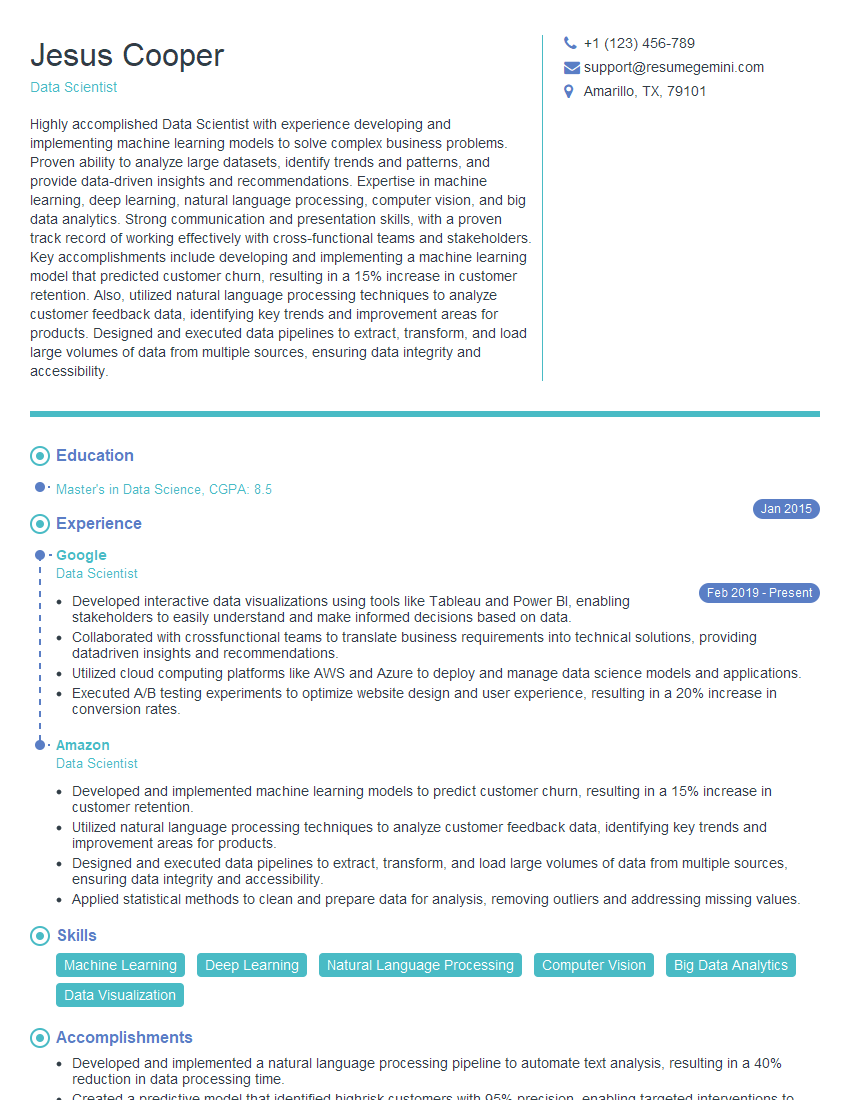
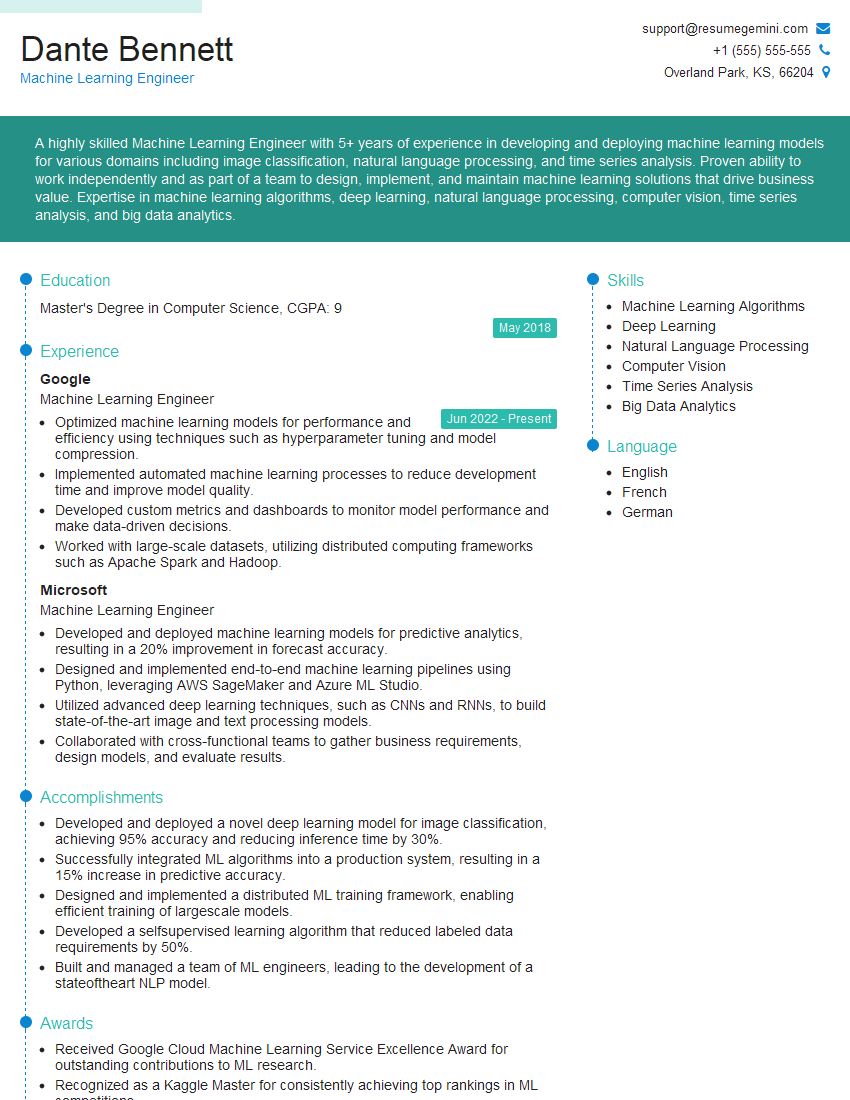
Mastering the skills and knowledge related to building and deploying AI/ML systems is crucial for accelerating your career in this rapidly growing field. A well-crafted resume is your first impression on potential employers. Creating an ATS-friendly resume that highlights your accomplishments and expertise is key to increasing your chances of landing your dream job. ResumeGemini is a trusted resource to help you build a professional and impactful resume that showcases your abilities effectively. Examples of resumes tailored to AI/ML system experience are available to help guide your creation process.
Explore more articles
Users Rating of Our Blogs
Share Your Experience
We value your feedback! Please rate our content and share your thoughts (optional).
What Readers Say About Our Blog
Hello,
we currently offer a complimentary backlink and URL indexing test for search engine optimization professionals.
You can get complimentary indexing credits to test how link discovery works in practice.
No credit card is required and there is no recurring fee.
You can find details here:
https://wikipedia-backlinks.com/indexing/
Regards
NICE RESPONSE TO Q & A
hi
The aim of this message is regarding an unclaimed deposit of a deceased nationale that bears the same name as you. You are not relate to him as there are millions of people answering the names across around the world. But i will use my position to influence the release of the deposit to you for our mutual benefit.
Respond for full details and how to claim the deposit. This is 100% risk free. Send hello to my email id: [email protected]
Luka Chachibaialuka
Hey interviewgemini.com, just wanted to follow up on my last email.
We just launched Call the Monster, an parenting app that lets you summon friendly ‘monsters’ kids actually listen to.
We’re also running a giveaway for everyone who downloads the app. Since it’s brand new, there aren’t many users yet, which means you’ve got a much better chance of winning some great prizes.
You can check it out here: https://bit.ly/callamonsterapp
Or follow us on Instagram: https://www.instagram.com/callamonsterapp
Thanks,
Ryan
CEO – Call the Monster App
Hey interviewgemini.com, I saw your website and love your approach.
I just want this to look like spam email, but want to share something important to you. We just launched Call the Monster, a parenting app that lets you summon friendly ‘monsters’ kids actually listen to.
Parents are loving it for calming chaos before bedtime. Thought you might want to try it: https://bit.ly/callamonsterapp or just follow our fun monster lore on Instagram: https://www.instagram.com/callamonsterapp
Thanks,
Ryan
CEO – Call A Monster APP
To the interviewgemini.com Owner.
Dear interviewgemini.com Webmaster!
Hi interviewgemini.com Webmaster!
Dear interviewgemini.com Webmaster!
excellent
Hello,
We found issues with your domain’s email setup that may be sending your messages to spam or blocking them completely. InboxShield Mini shows you how to fix it in minutes — no tech skills required.
Scan your domain now for details: https://inboxshield-mini.com/
— Adam @ InboxShield Mini
Reply STOP to unsubscribe
Hi, are you owner of interviewgemini.com? What if I told you I could help you find extra time in your schedule, reconnect with leads you didn’t even realize you missed, and bring in more “I want to work with you” conversations, without increasing your ad spend or hiring a full-time employee?
All with a flexible, budget-friendly service that could easily pay for itself. Sounds good?
Would it be nice to jump on a quick 10-minute call so I can show you exactly how we make this work?
Best,
Hapei
Marketing Director
Hey, I know you’re the owner of interviewgemini.com. I’ll be quick.
Fundraising for your business is tough and time-consuming. We make it easier by guaranteeing two private investor meetings each month, for six months. No demos, no pitch events – just direct introductions to active investors matched to your startup.
If youR17;re raising, this could help you build real momentum. Want me to send more info?
Hi, I represent an SEO company that specialises in getting you AI citations and higher rankings on Google. I’d like to offer you a 100% free SEO audit for your website. Would you be interested?
Hi, I represent an SEO company that specialises in getting you AI citations and higher rankings on Google. I’d like to offer you a 100% free SEO audit for your website. Would you be interested?
good