Every successful interview starts with knowing what to expect. In this blog, we’ll take you through the top Experience in continuous improvement programs interview questions, breaking them down with expert tips to help you deliver impactful answers. Step into your next interview fully prepared and ready to succeed.
Questions Asked in Experience in continuous improvement programs Interview
Q 1. Explain your experience with Lean methodologies.
Lean methodologies focus on eliminating waste and maximizing value from the customer’s perspective. Think of it like cleaning out your closet – you keep only what you need and use, discarding anything unnecessary. In my experience, I’ve applied Lean principles across various projects, focusing on reducing lead times, improving workflow efficiency, and enhancing overall productivity. For example, in a previous role, we implemented a Kanban system to visualize workflow and identify bottlenecks in our order fulfillment process. This resulted in a 20% reduction in order processing time. I’m proficient in techniques such as Value Stream Mapping, which helps to visually identify and eliminate non-value-added activities; 5S, for workplace organization; and Poka-Yoke, for error-proofing processes. My approach always involves active collaboration with teams to identify waste and implement improvements.
Q 2. Describe your experience implementing Six Sigma projects.
Six Sigma is a data-driven methodology aimed at minimizing defects and improving process consistency. It’s like aiming for a bullseye – the closer you get, the better the result. I have led and participated in numerous Six Sigma projects, utilizing both DMAIC (Define, Measure, Analyze, Improve, Control) and DMADV (Define, Measure, Analyze, Design, Verify) methodologies. For instance, in one project, we used Six Sigma to reduce customer complaints related to product defects. We meticulously measured the defect rate, analyzed the root causes using statistical tools, and implemented process improvements resulting in an 85% reduction in complaints. My experience includes training teams in Six Sigma tools and techniques, such as statistical process control (SPC) charts, process capability analysis, and Design of Experiments (DOE).
Q 3. What is DMAIC, and how have you applied it?
DMAIC is a structured, five-phase process used in Six Sigma projects for improving existing processes. Think of it as a systematic approach to problem-solving. Define the problem and project goals; Measure key process metrics; Analyze the data to identify root causes; Improve the process by implementing solutions; and Control the improvements to sustain the gains. I’ve applied DMAIC in numerous projects, such as improving the efficiency of a customer service call center. We defined the target to reduce average handling time, measured existing call times, analyzed call recordings to identify bottlenecks, implemented changes such as improved call routing and agent training, and finally established monitoring systems to maintain the improved performance. The result was a 15% reduction in average handling time.
Q 4. Explain your understanding of Kaizen events.
Kaizen events are short, focused workshops where teams collaborate to identify and implement process improvements. Imagine a brainstorming session combined with immediate action. These events typically last a few days and involve a cross-functional team working together to solve a specific problem. I’ve facilitated numerous Kaizen events, focusing on creating a collaborative and engaging environment where team members feel empowered to contribute ideas. In one Kaizen event, we tackled the issue of excessive paperwork in a manufacturing process. Through collaborative brainstorming and a structured problem-solving approach, the team identified and eliminated unnecessary paperwork, reducing processing time by 30% and improving overall efficiency.
Q 5. How do you identify areas for process improvement?
Identifying areas for process improvement requires a multifaceted approach. I use a combination of methods, including:
- Data Analysis: Examining key performance indicators (KPIs) to pinpoint areas with significant variation or underperformance.
- Process Mapping: Visually representing the process flow to identify bottlenecks and inefficiencies.
- Customer Feedback: Gathering feedback from customers to understand their pain points and expectations.
- Employee Input: Engaging employees in identifying challenges and opportunities for improvement – they’re often closest to the process and see areas for improvement that may not be obvious to management.
- Benchmarking: Comparing performance against industry best practices or competitors to identify areas for improvement.
Q 6. What are the key metrics you use to measure process improvement success?
The key metrics used to measure process improvement success depend on the specific project goals but generally include:
- Cycle Time/Lead Time: The time it takes to complete a process.
- Defect Rate: The number of defects or errors per unit of output.
- Throughput: The rate at which a process produces output.
- Customer Satisfaction: Measured through surveys or feedback mechanisms.
- Cost Reduction: Savings achieved through process improvements.
- Efficiency: Output relative to input (resources used).
Q 7. Describe your experience with root cause analysis techniques.
Root cause analysis is crucial for identifying the underlying reasons behind a problem, rather than just treating the symptoms. I’m proficient in several root cause analysis techniques, including the 5 Whys, Fishbone diagrams (Ishikawa diagrams), and Fault Tree Analysis. For example, in a situation where customer returns were increasing, I used the 5 Whys technique to drill down into the reasons. By repeatedly asking ‘Why?’ we uncovered that the root cause was inadequate product testing leading to undetected defects. This enabled us to implement targeted improvements in the testing process, significantly reducing returns. The choice of technique depends on the complexity of the problem and the available data. I always strive to ensure a thorough investigation to prevent recurrence.
Q 8. How do you manage stakeholder expectations in continuous improvement projects?
Managing stakeholder expectations in continuous improvement is crucial for success. It’s about proactively communicating, actively listening, and collaboratively setting realistic goals and timelines. I start by identifying all stakeholders – from frontline employees to senior management – and understanding their individual concerns and objectives. Then, I create a communication plan that outlines key milestones, potential challenges, and how their input will shape the project. This often involves regular progress updates, both formal (e.g., presentations, reports) and informal (e.g., team meetings, one-on-one discussions). Transparency is key – I ensure that everyone is informed about progress, roadblocks, and any necessary adjustments to the plan. Crucially, I build in mechanisms for feedback loops, allowing stakeholders to voice concerns and contribute to solutions. Think of it like building a bridge; each stakeholder is a crucial support beam, and their contributions need to be understood and integrated into the overall structure for stability.
For example, in a project aimed at streamlining a customer service process, I involved frontline agents early on by conducting surveys and focus groups to understand their pain points and challenges. This led to a more relevant and impactful solution, and they were significantly more invested in the implementation because they felt heard and valued.
Q 9. Explain your experience with data analysis in continuous improvement.
Data analysis forms the backbone of effective continuous improvement. My experience involves leveraging data to identify areas for improvement, track progress, and demonstrate the impact of implemented changes. I’m proficient in using various statistical methods and tools, including spreadsheet software (Excel, Google Sheets), statistical packages (R, SPSS), and data visualization software (Tableau, Power BI). I typically begin by defining key performance indicators (KPIs) relevant to the process being improved. Then, I collect and clean the data, using appropriate techniques to handle missing values and outliers. After that, I perform descriptive and inferential statistical analyses to uncover trends, patterns, and root causes of problems. Finally, I visualize the data using charts and graphs to effectively communicate my findings to stakeholders. For example, in a project aimed at reducing production defects, I analyzed historical production data to identify specific machines and processes with the highest defect rates. This targeted approach allowed us to concentrate our improvement efforts on the areas with the greatest potential for impact.
Q 10. How do you prioritize improvement projects?
Prioritizing improvement projects requires a structured approach. I often use a prioritization matrix that considers factors like impact, feasibility, and urgency. Impact refers to the potential benefits of the project (e.g., cost savings, improved quality, increased efficiency). Feasibility assesses the resources and effort required to implement the project. Urgency considers the time sensitivity of the issue and the potential consequences of delay. I typically use a scoring system for each factor, allowing for a quantitative comparison of different projects. Projects with high impact, high feasibility, and high urgency receive top priority. However, I also consider strategic alignment, aligning projects with overall organizational goals. Sometimes, a project with lower impact might be prioritized if it addresses a critical bottleneck or enables other higher-impact initiatives. Think of it like managing a to-do list; you tackle the most important and achievable tasks first while keeping long-term goals in mind.
For instance, if we have multiple improvement ideas – one might be improving a minor process, while another focuses on a major bottleneck impacting overall production – I would prioritize the bottleneck, as it would yield much larger and faster returns.
Q 11. Describe a time you failed to improve a process. What did you learn?
In one project focused on reducing order fulfillment time, we implemented a new software system without adequately training the staff. While the software itself was efficient, the lack of training led to increased errors and frustration among employees, ultimately negating any potential time savings. The order fulfillment time actually increased initially. This failure taught me the crucial importance of considering the human element in process improvement initiatives. Successful change management necessitates adequate training, support, and communication to ensure buy-in and effective adoption. We corrected the issue by investing in comprehensive training programs and providing ongoing support, which led to a significant improvement in order fulfillment time.
Q 12. How do you handle resistance to change during improvement initiatives?
Resistance to change is a common challenge in continuous improvement. My approach involves understanding the root causes of the resistance. This often involves active listening, empathy, and open communication. I engage in discussions with resistant individuals to understand their concerns and address them directly. This might involve demonstrating the benefits of the change, addressing any fears or anxieties, and involving them in the design and implementation process. Providing training and support, making the transition smooth, and celebrating early successes can also foster buy-in. If necessary, I use change management methodologies such as Kotter’s 8-step process to guide the implementation and address potential resistance systematically. It’s not about forcing change; it’s about creating a collaborative environment where individuals feel empowered to embrace the changes.
Q 13. What are your preferred tools for process mapping and documentation?
My preferred tools for process mapping and documentation include Microsoft Visio, Lucidchart, and draw.io. These tools allow me to create clear and concise visual representations of processes, making them easy to understand and analyze. Visio is particularly useful for detailed process flow diagrams, while Lucidchart and draw.io offer collaborative features that are beneficial for team-based projects. I also use various software for documentation, including Microsoft Word, Google Docs, and Confluence, depending on the context and the need for version control and collaborative editing.
Q 14. Explain your understanding of Value Stream Mapping (VSM).
Value Stream Mapping (VSM) is a lean manufacturing technique used to visually represent the flow of materials and information in a process. It helps to identify waste (muda) and bottlenecks that hinder efficiency. A VSM typically includes elements such as process steps, inventory levels, lead times, and transportation times. By visually mapping the entire value stream, it becomes easy to identify areas for improvement and prioritize projects that deliver the most significant impact. I use VSM to analyze existing processes and simulate the impact of potential improvements, allowing stakeholders to see how changes will affect the overall flow. It’s like creating a map of a journey; VSM helps you visualize all the steps, identifying unnecessary detours and inefficiencies.
For example, in a recent project, we used VSM to identify a significant bottleneck in the production line. By analyzing the flow of materials and information, we identified unnecessary steps, improved inventory management, and implemented a just-in-time inventory system, reducing lead times by 40%.
Q 15. How do you measure the ROI of a continuous improvement project?
Measuring the ROI of a continuous improvement project requires a structured approach that goes beyond simply tracking cost savings. We need to consider both tangible and intangible benefits. Tangible benefits are easily quantifiable, such as reduced defect rates, decreased production time, or lower material costs. Intangible benefits, such as improved employee morale and enhanced customer satisfaction, require more creative measurement methods.
Here’s a step-by-step approach:
- Define Key Performance Indicators (KPIs): Identify the critical metrics that will demonstrate the project’s success. For example, if the project aims to reduce production time, the KPI could be ‘units produced per hour’.
- Establish Baseline Metrics: Before the project begins, collect data on the chosen KPIs to establish a baseline. This provides a benchmark against which to measure improvement.
- Track Progress and Collect Data: Throughout the project, consistently monitor and record data related to the defined KPIs. Utilize data visualization tools to track progress and identify potential roadblocks.
- Calculate Cost Savings and Revenue Gains: Quantify the financial impact of the improvements. This might involve calculating reduced material waste, decreased labor costs, or increased sales due to improved product quality.
- Assess Intangible Benefits: While difficult to quantify, intangible benefits should be considered. For example, improved employee morale might be measured through employee satisfaction surveys, while enhanced customer satisfaction could be tracked via customer feedback scores.
- Calculate Total ROI: Finally, calculate the total ROI by subtracting the total project costs from the total benefits (both tangible and intangible, where possible, using estimates based on qualitative data). This should be expressed as a percentage or a ratio.
Example: In a previous project focused on streamlining the order fulfillment process, we reduced order processing time by 15%, resulting in a direct cost saving of $50,000 annually. Additionally, customer satisfaction scores increased by 10%, which we indirectly linked to a projected increase in repeat business valued at $20,000. The total project cost was $10,000, resulting in a strong positive ROI.
Career Expert Tips:
- Ace those interviews! Prepare effectively by reviewing the Top 50 Most Common Interview Questions on ResumeGemini.
- Navigate your job search with confidence! Explore a wide range of Career Tips on ResumeGemini. Learn about common challenges and recommendations to overcome them.
- Craft the perfect resume! Master the Art of Resume Writing with ResumeGemini’s guide. Showcase your unique qualifications and achievements effectively.
- Don’t miss out on holiday savings! Build your dream resume with ResumeGemini’s ATS optimized templates.
Q 16. Describe your experience with change management principles.
Change management is crucial for the success of any continuous improvement initiative. My experience encompasses the full spectrum of change management principles, from initial assessment to sustained implementation and beyond. I’ve utilized various frameworks, including Kotter’s 8-step model and ADKAR (Awareness, Desire, Knowledge, Ability, Reinforcement), adapting them to specific project contexts.
I prioritize stakeholder engagement from the outset, ensuring buy-in and understanding across all levels. This involves clearly communicating the ‘why’ behind the change, addressing concerns proactively, and providing adequate training and support. Building a strong change team, composed of individuals with diverse perspectives and influence, is vital for driving momentum and addressing resistance effectively.
In a recent project involving a major ERP system upgrade, we faced significant resistance from employees accustomed to the old system. We addressed this by conducting extensive training sessions, establishing a dedicated support team, and creating open forums for feedback and problem-solving. This proactive approach minimized disruption and ensured a smooth transition.
Q 17. What is your experience with different types of process control charts?
Process control charts are indispensable tools for monitoring process performance and identifying areas for improvement. My experience includes extensive use of various types, including:
- Control Charts for Variables: These charts, such as X-bar and R charts, are used to monitor continuous data, like weight, temperature, or dimensions. I’ve used these to track manufacturing processes and ensure product consistency.
- Control Charts for Attributes: These charts, such as p-charts (proportion of defects) and c-charts (number of defects), are used for discrete data, such as the number of defects in a sample or the percentage of non-conforming units. These have been invaluable in identifying defects and root causes in quality control.
- CUSUM Charts (Cumulative Sum Charts): These are especially useful in detecting small, gradual shifts in process performance that might be missed by standard control charts. I’ve applied these in situations where subtle changes could have significant long-term effects.
I’m proficient in interpreting control charts to identify trends, patterns, and outliers, which are vital for pinpointing areas needing attention and prioritizing improvement efforts. Furthermore, I can select the appropriate chart type based on the nature of the data and the process being monitored.
Q 18. How do you ensure sustainability of process improvements after a project concludes?
Ensuring the sustainability of process improvements is critical. Simply implementing a change isn’t enough; we need to embed it into the organization’s culture and processes. My approach focuses on several key strategies:
- Embedding Improvements into Standard Operating Procedures (SOPs): Documenting the improvements clearly and concisely within the SOPs ensures consistency and prevents the loss of knowledge.
- Developing a Robust Monitoring System: Establishing a system for tracking KPIs and regularly monitoring process performance after the project concludes helps identify any deviations and allows for prompt corrective action.
- Providing Ongoing Training and Support: Continuing education and support for employees are essential to maintain competence and confidence in the new processes.
- Building Ownership and Accountability: Empowering employees to own and maintain the improvements through clear roles and responsibilities ensures long-term success.
- Creating a Culture of Continuous Improvement: Fostering a culture where continuous improvement is valued and encouraged ensures that improvements are not just one-off events but an ongoing commitment.
For instance, in a past project, we created a detailed training manual and established a monthly review process with team leaders to monitor performance and address any issues promptly. This proactive approach ensured that the improvements were maintained long after the project formally concluded.
Q 19. Describe your experience with different types of waste (Muda).
My experience encompasses a wide range of waste (Muda) as defined in Lean methodologies. I’ve worked to identify and eliminate various types of waste including:
- Transportation: Unnecessary movement of materials or information. I’ve optimized material flow in manufacturing processes by implementing Kanban systems and improving warehouse layouts.
- Inventory: Excess stock tying up capital and space. I’ve implemented Just-in-Time (JIT) inventory management systems and improved forecasting techniques to reduce excess inventory.
- Motion: Unnecessary movements by workers. I’ve redesigned workstations and implemented 5S methodologies to optimize workflows and reduce unnecessary movements.
- Waiting: Idle time due to delays or bottlenecks. I’ve utilized value stream mapping to identify and eliminate bottlenecks and improve workflow efficiency.
- Overproduction: Producing more than needed. I’ve implemented pull systems and improved demand forecasting to reduce overproduction and optimize production schedules.
- Over-processing: Performing more work than necessary. I’ve simplified processes and eliminated unnecessary steps to improve efficiency.
- Defects: Imperfect products or services requiring rework or scrap. I’ve implemented quality control measures, root cause analysis (RCA), and process improvements to reduce defects.
- Underutilized Talent: Not fully leveraging the skills and abilities of employees. I’ve ensured employee involvement in process improvement projects to fully utilize their talent and encourage innovation.
Identifying and eliminating these wastes is essential to improving efficiency, productivity, and overall profitability.
Q 20. How do you use data to drive decision-making in continuous improvement?
Data is the cornerstone of effective continuous improvement. My approach to using data is centered around a structured, iterative process:
- Data Collection: I begin by identifying the relevant data sources and implementing systems for accurate and consistent data collection. This often involves utilizing various data analytics tools and integrating data from different systems.
- Data Analysis: I use statistical methods and data visualization techniques to analyze the collected data, identifying trends, patterns, and outliers. This helps pinpoint areas for improvement and prioritize efforts effectively.
- Data Interpretation: Interpreting the data requires understanding the context and drawing meaningful conclusions. This involves considering factors beyond the data itself, such as external market conditions or internal organizational constraints.
- Data-Driven Decision Making: Based on the analysis and interpretation, I make data-driven decisions, selecting the most effective strategies for improvement. This approach minimizes subjective biases and maximizes the chances of success.
- Data Monitoring & Evaluation: After implementing improvements, I continually monitor and evaluate the impact of changes using the collected data. This ensures that the implemented solutions are effective and enables making adjustments as needed.
For example, in a recent project focused on reducing customer complaints, we analyzed customer feedback data to identify recurring issues. This data-driven approach allowed us to target specific areas for improvement, resulting in a significant reduction in complaints.
Q 21. What is your experience with implementing 5S methodologies?
5S is a foundational methodology in continuous improvement, focusing on workplace organization and efficiency. My experience involves implementing 5S across various settings, from manufacturing floors to office environments. The process typically involves these five steps:
- Seiri (Sort): Identifying and removing unnecessary items from the workspace. This involves decluttering and organizing to reduce waste and improve efficiency.
- Seiton (Set in Order): Arranging necessary items in a logical and easily accessible manner. This includes labeling, color-coding, and implementing visual management systems to improve workflow.
- Seiso (Shine): Cleaning the workspace regularly to maintain cleanliness and identify potential problems. This proactive approach prevents larger issues from developing.
- Seiketsu (Standardize): Establishing standardized procedures for maintaining the 5S principles. This ensures consistency and prevents the workspace from reverting to disorganization.
- Shitsuke (Sustain): Developing habits and a culture of continuous improvement to maintain the 5S system long-term. This involves regular audits and reinforcement of the established procedures.
In one project, we implemented 5S in a warehouse, significantly improving material handling efficiency and reducing the time spent searching for items. We achieved this through clear labeling, improved storage organization, and the implementation of a regular cleaning schedule. The result was a 20% reduction in picking time and a noticeable improvement in overall warehouse organization.
Q 22. How do you ensure the alignment of continuous improvement initiatives with overall business strategy?
Aligning continuous improvement (CI) initiatives with overall business strategy is crucial for success. It ensures that improvement efforts directly contribute to achieving organizational goals and avoid wasted resources on initiatives that don’t add value. This alignment is achieved through a strategic approach:
- Strategic Planning Integration: CI initiatives should be explicitly included in the organization’s strategic planning process. This involves identifying key performance indicators (KPIs) aligned with strategic objectives and then selecting CI projects that directly impact those KPIs.
- Top-Down Communication: Clear communication from leadership is vital to ensure buy-in and understanding of the CI strategy. This involves explaining the link between CI projects and broader organizational goals.
- Resource Allocation: Appropriate resources (time, budget, personnel) must be allocated to CI projects. This requires careful prioritization based on the potential impact on strategic goals.
- Regular Monitoring and Review: Progress toward strategic goals should be regularly monitored and reviewed. This helps identify any misalignment between CI projects and overall strategy and allows for course correction as needed.
For example, if a company’s strategic goal is to increase customer satisfaction, CI projects might focus on streamlining customer service processes, improving product quality, or enhancing communication channels. By clearly connecting the CI initiatives to this overarching goal, the company can ensure that improvement efforts directly contribute to its success.
Q 23. Describe your experience with problem-solving methodologies like PDCA.
The Plan-Do-Check-Act (PDCA) cycle is a cornerstone of many continuous improvement methodologies. It’s a cyclical, iterative approach to problem-solving and improvement. My experience with PDCA involves applying it across various projects, from streamlining manufacturing processes to improving customer onboarding experiences.
- Plan: This stage involves identifying a problem, defining goals, developing a solution, and planning how to implement it. This includes resource allocation, timeline creation, and risk assessment.
- Do: The planned solution is implemented on a small scale (pilot project) to test its effectiveness.
- Check: Data is collected and analyzed to determine the effectiveness of the implemented solution. This step often involves measuring key performance indicators (KPIs) to track progress and identify areas for improvement.
- Act: Based on the results of the check phase, the solution is either standardized, modified, or abandoned. The PDCA cycle then repeats, focusing on further improvement or addressing new issues.
For instance, in a previous role, we used PDCA to reduce production errors on an assembly line. We planned a new training program, implemented it (Do), tracked error rates (Check), and adjusted the training based on the data (Act). Through iterative cycles of PDCA, we significantly reduced errors and increased productivity.
Q 24. How do you communicate improvement results to different stakeholders?
Communicating improvement results effectively to different stakeholders requires tailoring the message to their specific needs and understanding. I typically use a multi-faceted approach:
- Data Visualization: Using charts, graphs, and dashboards to present key performance indicators (KPIs) and improvement metrics in a clear, concise manner.
- Storytelling: Framing the results within a narrative that highlights the challenges, the implemented solutions, and the achieved outcomes. This makes the data more relatable and engaging.
- Targeted Communication Channels: Choosing the appropriate communication channel (e.g., email, presentation, report) depending on the audience and the nature of the information.
- Regular Reporting: Providing regular updates on progress, highlighting successes and addressing any challenges.
- Feedback Mechanisms: Encouraging feedback and questions from stakeholders to ensure transparency and address any concerns.
For executive stakeholders, I focus on high-level summaries and the impact on overall business goals. For operational teams, I provide more detailed data and insights relevant to their specific roles. This ensures that everyone understands the significance of the improvements and how they contribute to the organization’s success.
Q 25. What is your experience with using technology to support continuous improvement?
Technology plays a vital role in supporting continuous improvement efforts. My experience includes using various software tools and platforms to streamline processes, track progress, and analyze data. These technologies include:
- Business Intelligence (BI) Tools: These tools allow for the collection, analysis, and visualization of large datasets, providing insights into process performance and areas for improvement. Examples include Tableau and Power BI.
- Process Mapping Software: Software like Lucidchart or draw.io is used to create visual representations of processes, which helps to identify bottlenecks and areas for improvement.
- Project Management Software: Tools like Jira or Asana are employed for managing CI projects, tracking progress, and collaborating with team members.
- Data Analytics Platforms: Tools like Python with libraries like Pandas and Scikit-learn enable advanced data analysis for discovering hidden trends and patterns that inform improvement initiatives.
By leveraging these technologies, we can move beyond manual data collection and analysis, enabling more data-driven decision-making and faster identification of improvement opportunities. For example, using BI tools to analyze customer feedback data allowed us to pinpoint recurring issues and develop targeted solutions to enhance customer satisfaction.
Q 26. Describe a time you successfully implemented a new process or technology to improve efficiency.
In a previous role, we implemented a new inventory management system to improve efficiency in our warehouse. The existing system was manual, prone to errors, and lacked real-time visibility into inventory levels. This led to stockouts, overstocking, and increased operational costs.
We implemented a new system using RFID technology, which automatically tracks inventory movements. This involved a phased rollout, starting with a pilot project in a small section of the warehouse. The new system provided real-time data on inventory levels, allowing for more accurate demand forecasting and reduced waste. We monitored key performance indicators such as order fulfillment time, inventory accuracy, and warehouse operational costs. Post-implementation, we saw a significant reduction in stockouts (by 40%), improved inventory accuracy (by 20%), and a reduction in operational costs (by 15%). The success of the pilot led to a full-scale implementation across the warehouse.
Q 27. How do you measure the effectiveness of training provided on continuous improvement methodologies?
Measuring the effectiveness of training on continuous improvement methodologies requires a multi-pronged approach. We cannot simply assume that attendance equals understanding and application.
- Pre- and Post-Training Assessments: Assessing participants’ knowledge and skills before and after the training provides a quantitative measure of learning gains.
- On-the-Job Application and Observation: Observing participants applying the learned methodologies in their day-to-day work is crucial. This can be done through direct observation, peer feedback, or performance evaluations.
- Project-Based Assignments: Assigning participants to small improvement projects allows for practical application of the learned skills and provides a measure of their effectiveness.
- Feedback Surveys and Interviews: Gathering feedback from participants through surveys and interviews provides valuable qualitative data on the training’s effectiveness and areas for improvement.
- Impact Measurement: Measuring the impact of improvements implemented by trained individuals on key performance indicators (KPIs) helps assess the overall effectiveness of the training.
By combining quantitative and qualitative data, we can gain a comprehensive understanding of the training’s success and identify areas needing improvement. For example, a significant improvement in the number of successfully completed improvement projects post-training, coupled with positive participant feedback, would indicate effective training.
Q 28. Describe your approach to selecting the right continuous improvement methodology for a given situation.
Selecting the right continuous improvement methodology depends on the specific context, including the nature of the problem, the organizational culture, and the available resources. There’s no one-size-fits-all solution.
My approach involves a thorough assessment of the situation:
- Problem Definition: Clearly define the problem or opportunity for improvement. What are the key issues? What are the desired outcomes?
- Contextual Factors: Consider the organizational culture, available resources (time, budget, personnel), and the level of employee engagement.
- Methodology Selection: Based on the assessment, choose a suitable methodology. For example:
- Lean: Focuses on eliminating waste and maximizing value for the customer. Suitable for process optimization and efficiency improvement.
- Six Sigma: Focuses on reducing variation and improving quality. Suitable for addressing defects and inconsistencies.
- Kaizen: Emphasizes continuous small improvements through employee involvement. Suitable for fostering a culture of continuous improvement.
- PDCA (Plan-Do-Check-Act): A general problem-solving framework applicable to various improvement initiatives.
- Pilot Implementation: Begin with a pilot project to test the chosen methodology and make adjustments as needed before full-scale implementation.
- Monitoring and Evaluation: Monitor the implementation and measure the results to ensure effectiveness. Adapt as necessary.
For example, a complex manufacturing problem with a high rate of defects would likely benefit from a Six Sigma approach. A simpler process improvement in a less structured environment might be better suited to Kaizen. The key is to select the methodology that best fits the specific needs of the situation.
Key Topics to Learn for Continuous Improvement Programs Interview
- Lean Principles: Understanding core Lean methodologies like Value Stream Mapping, Kaizen, 5S, and their practical application in streamlining processes and eliminating waste.
- Six Sigma Methodology: Familiarize yourself with DMAIC (Define, Measure, Analyze, Improve, Control) and DMADV (Define, Measure, Analyze, Design, Verify) methodologies, including statistical tools for process improvement.
- Data Analysis & Interpretation: Mastering data collection, analysis techniques (e.g., control charts, Pareto analysis), and effectively communicating insights to drive improvement initiatives.
- Root Cause Analysis: Develop proficiency in identifying the root causes of problems using tools like the 5 Whys, Fishbone diagrams, and fault tree analysis.
- Change Management: Understand the principles of effective change management, including communication strategies, stakeholder engagement, and overcoming resistance to change.
- Project Management within Continuous Improvement: Demonstrate understanding of project planning, execution, monitoring, and closure within the context of continuous improvement projects.
- Metrics and KPIs: Learn how to define, track, and interpret key performance indicators (KPIs) relevant to continuous improvement efforts and demonstrate their impact.
- Process Improvement Tools & Techniques: Gain familiarity with various tools such as value stream mapping, process mapping, flowcharting, and other visual aids for effective communication.
- Examples of Successful Implementations: Prepare to discuss past experiences (even personal projects) where you applied continuous improvement principles, highlighting the results achieved.
Next Steps
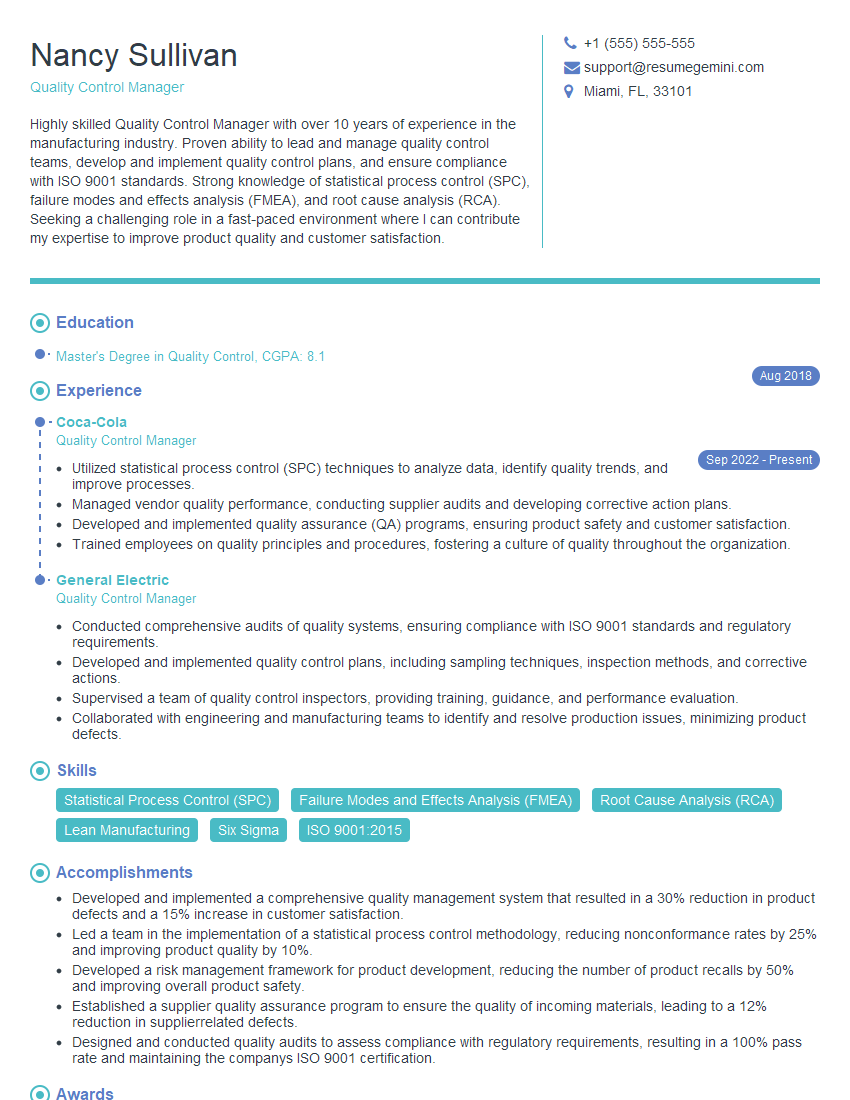
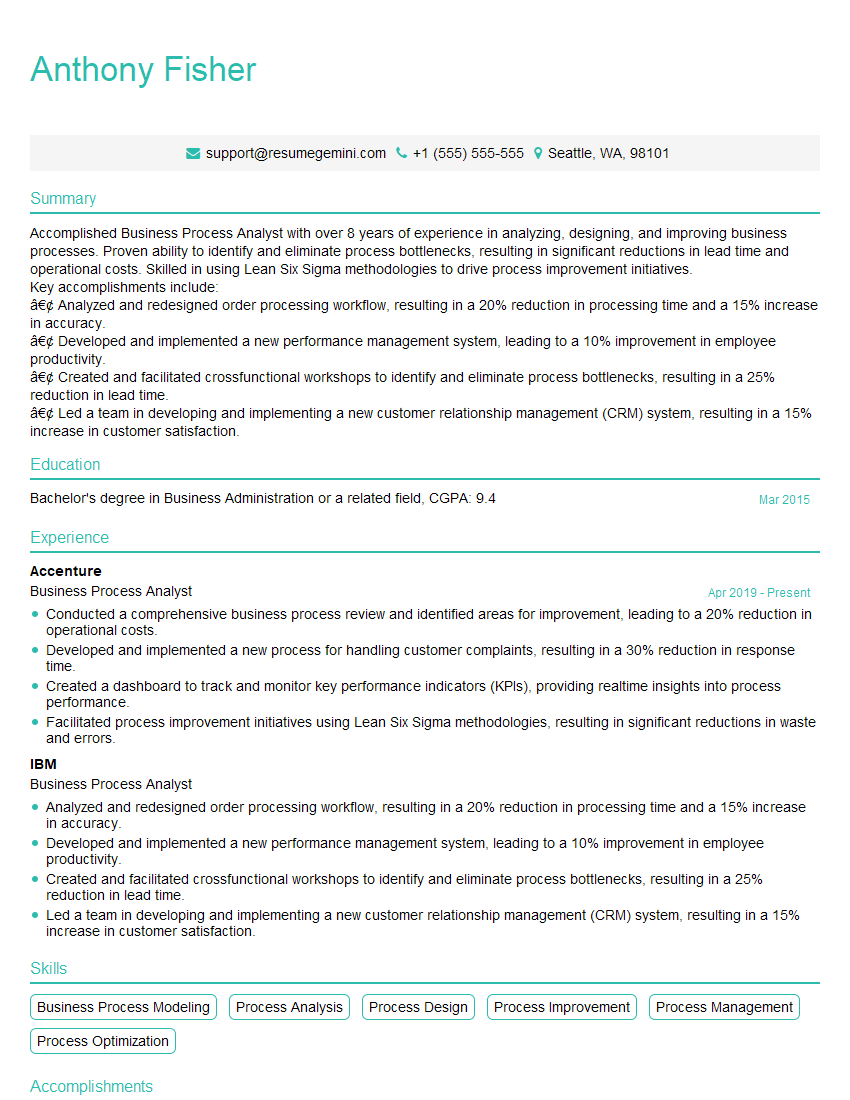
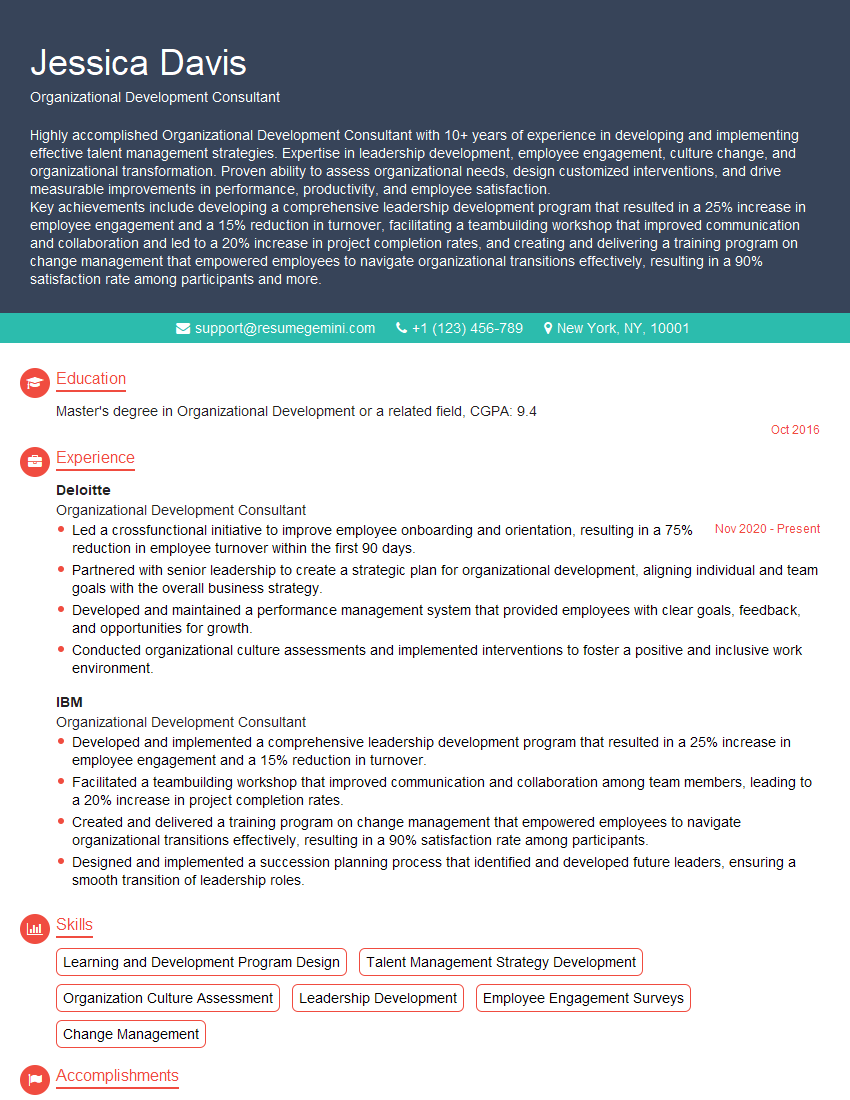
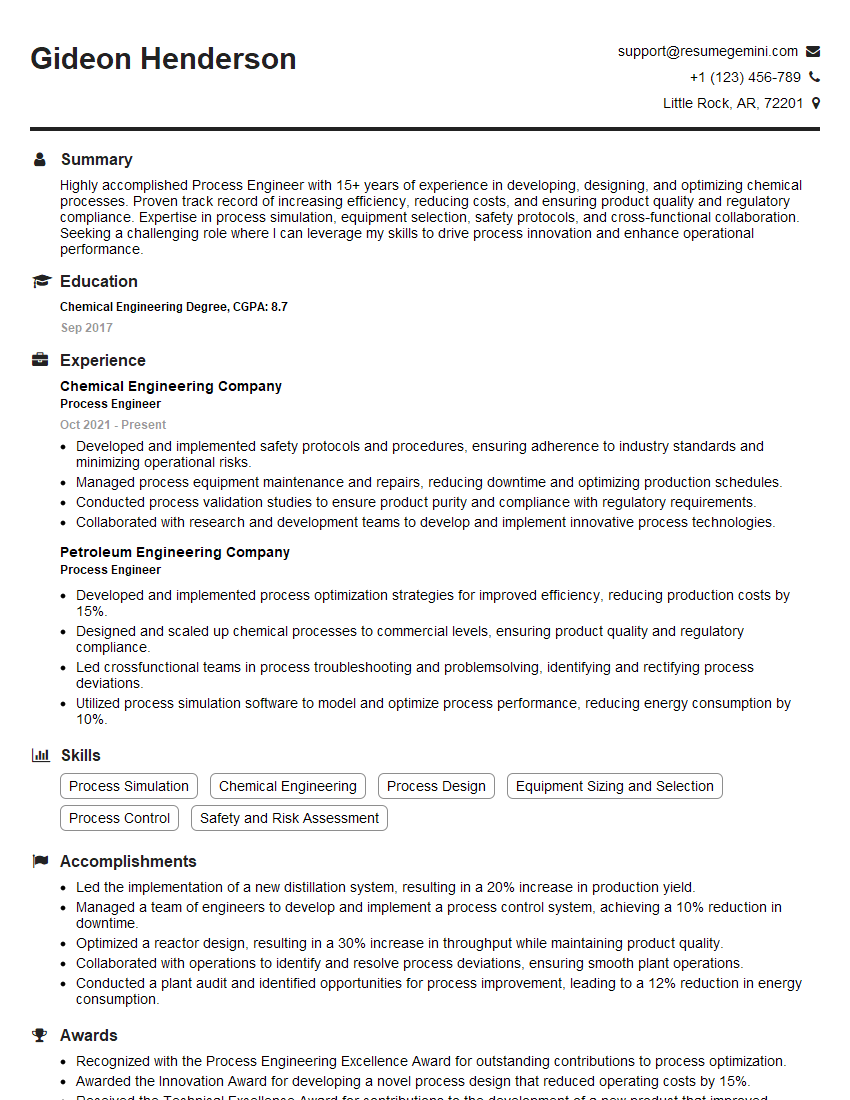
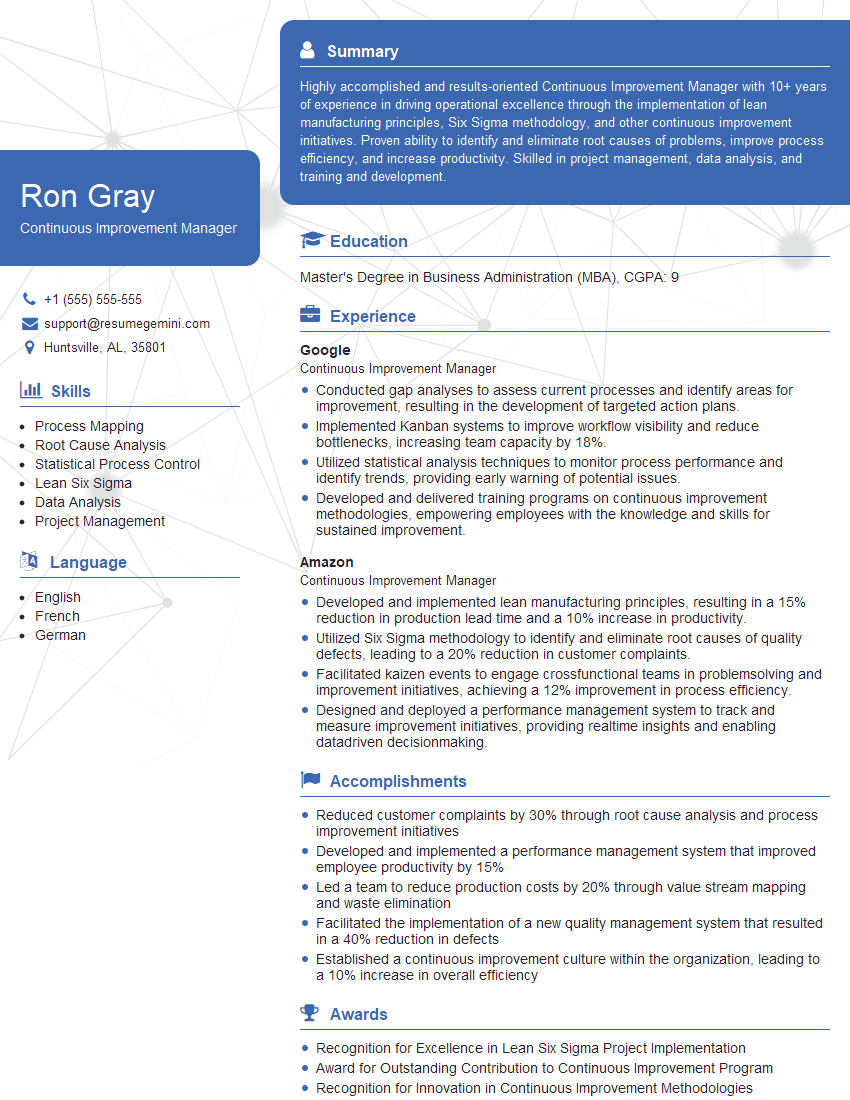
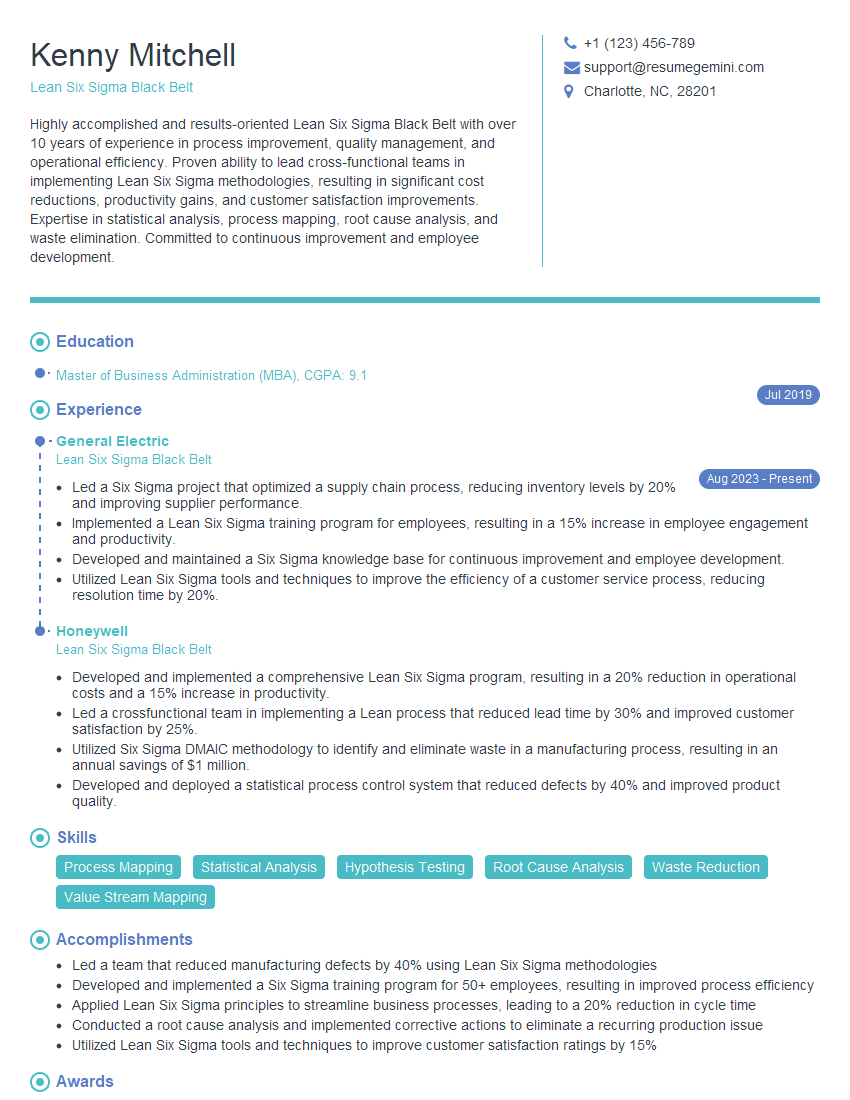
Mastering continuous improvement methodologies significantly enhances your value to any organization, opening doors to higher-level roles and increased earning potential. To boost your job prospects, crafting a strong, ATS-friendly resume is crucial. ResumeGemini is a trusted resource to help you build a professional and impactful resume that showcases your skills and experience effectively. Examples of resumes tailored to highlight experience in continuous improvement programs are available within ResumeGemini, giving you a head start in crafting a winning application.
Explore more articles
Users Rating of Our Blogs
Share Your Experience
We value your feedback! Please rate our content and share your thoughts (optional).
What Readers Say About Our Blog
Very informative content, great job.
good