Interviews are opportunities to demonstrate your expertise, and this guide is here to help you shine. Explore the essential Experience in Event Planning and Execution interview questions that employers frequently ask, paired with strategies for crafting responses that set you apart from the competition.
Questions Asked in Experience in Event Planning and Execution Interview
Q 1. Describe your experience in developing and managing event budgets.
Developing and managing event budgets requires a meticulous approach, starting with a thorough understanding of the event’s objectives and scope. I begin by identifying all potential costs, categorizing them (venue, catering, marketing, entertainment, staffing, etc.), and creating a detailed budget spreadsheet. This isn’t just a list of expenses; it’s a dynamic tool. I build in contingency funds (typically 10-15% of the total budget) to account for unforeseen circumstances. For instance, if a crucial vendor increases their price, or if we need to unexpectedly source additional equipment, these funds provide a buffer. I then track expenses rigorously throughout the planning process, comparing actual costs against the budgeted amounts. Regular budget reviews ensure we stay on track and make informed decisions about potential adjustments. I’ve successfully managed budgets ranging from $5,000 for smaller corporate events to over $100,000 for large-scale conferences, consistently delivering events within budget.
For example, during a recent corporate retreat, I initially projected a catering budget of $15,000. By negotiating with vendors and exploring alternative options, I managed to reduce this cost by 10% without sacrificing quality. This kind of proactive cost management is essential for successful event planning.
Q 2. Explain your process for selecting vendors for an event.
Selecting vendors is a critical step that significantly impacts an event’s success. My process begins with clearly defining the event’s needs and creating a detailed Request for Proposal (RFP). The RFP outlines specifics like date, location, expected attendance, and required services. I then research and identify potential vendors, focusing on those with relevant experience, positive reviews, and a proven track record. I thoroughly review their proposals, comparing pricing, services offered, and their references. I conduct thorough interviews with shortlisted candidates, assessing their professionalism, responsiveness, and ability to meet our event requirements. Finally, I check their insurance and licensing, ensuring they meet all necessary legal and safety standards. Vendor selection isn’t simply about price; it’s about finding reliable partners who understand our vision and can execute flawlessly. This careful evaluation prevents costly mistakes and ensures a smooth event flow.
For instance, when selecting a caterer for a recent wedding, I compared proposals from five different vendors. While one was significantly cheaper, I ultimately chose a vendor with superior reviews and a demonstrable commitment to high-quality service. Their experience and attention to detail proved invaluable in ensuring our clients’ satisfaction.
Q 3. How do you handle unexpected issues or crises during an event?
Unexpected issues are inevitable in event planning. My approach is based on proactive risk assessment and having a well-defined contingency plan. Before the event, I identify potential issues (e.g., technical malfunctions, weather disruptions, speaker cancellations) and develop solutions. During the event, I have a dedicated team monitoring potential problems. If an issue arises, my response follows a structured process: (1) Assess the situation, (2) Communicate clearly with the affected parties, (3) Implement the pre-determined solution from the contingency plan, and (4) Document the issue and solution for future reference. Maintaining calm and clear communication is crucial. I empower my team to handle minor issues independently, while escalating major problems to me immediately. My experience has taught me that quick, decisive action and effective communication are key to minimizing the impact of unforeseen challenges. This includes having a backup plan for everything from power outages to speaker illness.
For example, during a large outdoor concert, we faced a sudden downpour. We had already prepared a backup indoor venue and transport, allowing us to relocate the event with minimal disruption to attendees.
Q 4. What software or tools do you use for event planning and management?
I utilize a suite of software and tools to streamline event planning and management. My primary tools include project management software like Asana or Trello for task assignments and progress tracking, and event planning software such as Cvent or Eventbrite for registration and ticketing. Spreadsheet software like Google Sheets or Microsoft Excel are essential for budget management and vendor communication. Communication platforms such as Slack or Microsoft Teams facilitate efficient collaboration among team members and vendors. For marketing and promotion, I leverage social media platforms and email marketing tools like Mailchimp. Data analytics tools are used to measure event success and identify areas for improvement. The choice of software is tailored to the specific event needs and budget.
Q 5. How do you track event registration and attendance?
Event registration and attendance tracking are critical for accurate reporting and efficient resource allocation. I typically use event management software (like Cvent or Eventbrite) that provides integrated registration and attendance tracking features. These platforms allow attendees to register online, manage their bookings, and receive automated communication. The software provides real-time data on registrations, attendance, and no-shows. For smaller events, a simple spreadsheet can suffice, but robust software is essential for larger events. Upon completion, the data collected is analyzed to provide insights into event success and inform future planning. This includes metrics such as registration numbers, attendance rates, and no-show percentages, helping to optimize future events.
Q 6. Describe your experience with event marketing and promotion.
Event marketing and promotion are crucial for driving attendance and achieving event objectives. My approach begins with defining the target audience and developing a comprehensive marketing strategy. This strategy typically involves a mix of online and offline channels. Online channels include social media marketing, email marketing, paid advertising (Google Ads, social media ads), and website promotion. Offline channels can include print advertising, public relations, partnerships, and direct outreach. I track campaign performance using analytics tools and adjust the strategy based on performance data. A crucial aspect is creating compelling content (e.g., event website, promotional videos, social media posts) to generate excitement and attract the target audience. The selection of marketing channels depends on budget and the target audience’s preferences.
For example, for a recent conference, we targeted a specific demographic through LinkedIn advertising, resulting in a significant increase in registrations from the desired professional group.
Q 7. How do you ensure event compliance with safety regulations?
Ensuring event compliance with safety regulations is paramount. My approach involves a thorough understanding of all applicable local, state, and federal regulations. This includes fire safety, building codes, health regulations (food safety, sanitation), and emergency preparedness. Before the event, I work with venue management and relevant authorities to confirm compliance. This involves obtaining necessary permits and licenses, ensuring adequate safety measures are in place (e.g., first aid stations, emergency exits, security personnel), and developing a detailed emergency response plan. During the event, my team actively monitors safety procedures and promptly addresses any violations. Regular inspections and adherence to established protocols are key to minimizing risks and ensuring a safe environment for all attendees. This proactive approach minimizes liabilities and ensures a smooth, safe event for everyone involved.
Q 8. How do you measure the success of an event?
Measuring event success goes beyond simply counting attendees. It’s about achieving pre-defined objectives, which should be clearly outlined before the event even begins. We use a multifaceted approach, tracking key performance indicators (KPIs) across several areas.
- Attendance and Engagement: We track actual attendance against projected attendance to assess the effectiveness of our marketing and outreach. Engagement is measured through surveys, social media interaction, and active participation in event activities. For example, for a conference, we’d analyze the number of attendees, the session attendance rates, and the number of questions asked during Q&A sessions.
- Return on Investment (ROI): This is crucial, particularly for corporate events. We calculate the ROI by comparing the event’s cost against the revenue generated or the value of achieved objectives. For a product launch event, this could involve tracking leads generated, sales made, and brand awareness increase.
- Feedback and Satisfaction: Post-event surveys and feedback forms are invaluable. We analyze the sentiment expressed and identify areas for improvement in future events. A simple Net Promoter Score (NPS) survey can give us a quick understanding of overall attendee satisfaction.
- Achievement of Goals: Did the event meet its primary goals? This could include raising awareness for a cause, launching a new product successfully, or fostering collaboration among participants. For a charity gala, this would involve measuring the funds raised and the media coverage achieved.
By combining these metrics, we get a holistic view of the event’s success and identify areas of strength and weakness for future planning.
Q 9. What is your experience with post-event reporting and analysis?
Post-event reporting and analysis is critical for continuous improvement. It’s not just about compiling numbers; it’s about extracting actionable insights.
My process typically involves:
- Data Collection: Gathering data from various sources, including registration data, attendance records, survey responses, financial reports, and social media analytics.
- Data Analysis: Using this data to calculate KPIs (as mentioned above) and identifying trends and patterns. This often involves using spreadsheets or dedicated event management software to visualize the data.
- Report Generation: Creating a comprehensive report that summarizes the key findings, highlighting successes and areas needing improvement. This report includes both quantitative and qualitative data.
- Actionable Recommendations: The report should conclude with clear recommendations for future events, based on the data analysis. For example, if post-event surveys showed dissatisfaction with the catering, the report would recommend exploring alternative vendors.
For example, I once analyzed data from a large conference to show a clear correlation between early-bird registration discounts and higher attendee engagement. This insight allowed us to adjust pricing strategies in future years.
Q 10. Explain your experience with managing event volunteers or staff.
Managing volunteers and staff effectively is crucial for a smooth event. My approach focuses on clear communication, training, and appreciation.
- Recruitment and Selection: I carefully select individuals based on their skills, experience, and enthusiasm. Detailed job descriptions ensure everyone understands their roles and responsibilities.
- Training and Briefing: Thorough training sessions equip volunteers and staff with the necessary knowledge and skills. This includes role-specific training as well as general event information. For example, volunteers handling registration will receive training on the registration system, while those working at the help desk will be trained in common problem-solving techniques.
- Clear Communication: I utilize various communication channels – email, group chats, and regular meetings – to keep everyone informed and updated. This is crucial for coordinating activities and addressing any issues promptly.
- Supervision and Support: On-site supervision ensures that everything runs smoothly. I regularly check-in with team members and provide support where needed.
- Appreciation and Recognition: Showing appreciation for volunteers’ and staff’s hard work boosts morale and ensures future commitment. This might involve post-event thank-you notes, certificates, or small gifts.
In one event, I successfully managed a team of 50 volunteers by implementing a comprehensive volunteer management system and regular check-ins. The system ensured all roles were filled, and volunteers felt valued and informed.
Q 11. How do you handle stakeholder expectations and communication?
Managing stakeholder expectations and communication is paramount. It involves understanding their needs, setting realistic expectations, and maintaining transparent communication throughout the process.
- Needs Assessment: I begin by clearly identifying the needs and expectations of each stakeholder – sponsors, attendees, speakers, vendors, and internal teams. This involves direct communication and potentially surveys or questionnaires.
- Regular Communication: I maintain regular contact with stakeholders via emails, phone calls, and meetings. This includes sharing progress reports, addressing concerns, and seeking feedback. I provide updates at key milestones, such as after the venue is booked, after the marketing campaign is launched, and during the event itself.
- Expectation Management: Realistic expectations are vital. I clearly communicate timelines, budgets, and potential challenges, ensuring that everyone is on the same page. If changes are needed, I proactively communicate them, explaining the reasons and the impact.
- Conflict Resolution: I address concerns and conflicts promptly and fairly. I foster an open dialogue where stakeholders feel comfortable expressing their opinions and concerns.
- Documentation: I maintain detailed records of communication and agreements to avoid misunderstandings and ensure accountability.
In a recent project, I successfully managed the expectations of multiple sponsors with conflicting needs by creating a detailed communication plan and holding regular meetings. This open and proactive communication prevented conflicts and ensured every sponsor felt valued.
Q 12. Describe your experience with risk assessment and mitigation in event planning.
Risk assessment and mitigation are integral to successful event planning. It’s about proactively identifying potential problems and developing strategies to minimize their impact.
- Risk Identification: I brainstorm potential risks across all aspects of the event, such as venue issues, weather conditions, speaker cancellations, technical failures, or security concerns. A structured risk assessment matrix can be helpful to organize these.
- Risk Analysis: I evaluate the likelihood and potential impact of each identified risk. This helps prioritize which risks require the most attention.
- Mitigation Strategies: For each significant risk, I develop a mitigation strategy, including contingency plans and backup options. For example, for a potential speaker cancellation, I would have a backup speaker lined up.
- Contingency Planning: Contingency plans address ‘what-if’ scenarios, outlining steps to take in case of unexpected events. These might involve having backup venues, extra equipment, or alternative transportation plans.
- Communication and Reporting: I communicate identified risks and mitigation plans to relevant stakeholders and maintain records of risk management activities.
For example, during an outdoor event, I anticipated the risk of inclement weather. We created a detailed contingency plan, including an indoor backup location and appropriate equipment for moving the event quickly. This prevented a major disruption when a sudden thunderstorm hit.
Q 13. How do you prioritize tasks and manage your time effectively during event planning?
Effective task prioritization and time management are essential in event planning, which often involves juggling multiple tasks with competing deadlines.
- Project Management Tools: I use project management software or tools (like Trello, Asana, or Microsoft Project) to create a detailed schedule and track progress. This allows me to visualize the entire event timeline and identify potential bottlenecks.
- Prioritization Frameworks: I use frameworks like the Eisenhower Matrix (urgent/important) to prioritize tasks effectively. This helps me focus on the most critical tasks first.
- Time Blocking: I allocate specific time blocks for different tasks, ensuring that I dedicate enough time to each. This prevents multitasking and improves focus.
- Delegation: I delegate tasks whenever possible, empowering team members to take ownership and freeing up my time for higher-level tasks.
- Regular Review and Adjustment: I regularly review the schedule and make adjustments as needed. This ensures that the plan remains realistic and accounts for unforeseen circumstances.
For instance, during the planning of a large-scale festival, I utilized a Gantt chart to visualize the timeline and dependencies between various tasks. This allowed us to efficiently manage the numerous moving parts and meet all deadlines.
Q 14. How do you manage event logistics, including transportation and venue setup?
Managing event logistics, including transportation and venue setup, requires meticulous planning and coordination.
- Venue Selection and Booking: I carefully select the venue based on the event’s needs and budget, ensuring it has adequate space, facilities, and accessibility. I then negotiate terms and secure the booking well in advance.
- Transportation: I arrange transportation for speakers, guests, and equipment. This may involve securing buses, arranging airport transfers, or coordinating with ride-sharing services. Detailed travel itineraries for key personnel are prepared in advance.
- Equipment and Supplies: I manage the procurement and delivery of all necessary equipment and supplies, such as audio-visual equipment, furniture, catering supplies, and signage. A detailed inventory list is kept.
- Setup and Breakdown: I coordinate the setup and breakdown of the venue, ensuring that everything is in place on time and that the space is left clean and organized after the event. I often work with vendors for this process, creating detailed setup instructions and timelines.
- On-site Management: I oversee logistics on the day of the event, ensuring that everything runs smoothly and addressing any issues that may arise.
During a recent product launch event, I meticulously planned the transportation of sensitive equipment and coordinated the precise setup of the exhibition space, resulting in a flawless event execution.
Q 15. What is your experience with negotiating contracts with vendors?
Negotiating vendor contracts is a crucial aspect of event planning, requiring a balance of securing favorable terms and building strong working relationships. My approach involves thorough preparation, clear communication, and a collaborative mindset. I begin by defining clear requirements and budget parameters for each vendor service. This allows me to create a comprehensive Request for Proposal (RFP) outlining specific needs and expectations. During negotiations, I focus on understanding the vendor’s capabilities and pricing structures. I look for opportunities to leverage volume discounts or negotiate payment terms to optimize the budget. I always ensure the contract clearly outlines deliverables, timelines, payment schedules, cancellation policies, and liability clauses. For example, when negotiating catering for a large corporate event, I successfully negotiated a 15% discount by securing a commitment for a minimum number of attendees well in advance and agreeing to a staggered payment schedule.
Conflict resolution is also key. If disagreements arise, I focus on finding mutually beneficial solutions, leveraging my strong communication skills to address concerns and maintain a professional relationship. I always prioritize documentation, keeping a detailed record of all communication and agreements. This meticulous approach ensures a smooth and successful collaboration with vendors.
Career Expert Tips:
- Ace those interviews! Prepare effectively by reviewing the Top 50 Most Common Interview Questions on ResumeGemini.
- Navigate your job search with confidence! Explore a wide range of Career Tips on ResumeGemini. Learn about common challenges and recommendations to overcome them.
- Craft the perfect resume! Master the Art of Resume Writing with ResumeGemini’s guide. Showcase your unique qualifications and achievements effectively.
- Don’t miss out on holiday savings! Build your dream resume with ResumeGemini’s ATS optimized templates.
Q 16. Describe your experience with event technology, such as registration systems or event apps.
I have extensive experience leveraging event technology to streamline planning, enhance attendee engagement, and gather valuable data. I am proficient in using various registration systems like Eventbrite and Cvent, which allow for efficient attendee management, including registration, ticketing, and communication. I have also utilized event apps such as Whova and Eventmobi to enhance attendee experience by providing real-time information, networking opportunities, and interactive features. For instance, during a recent conference, using a custom-built event app with integrated scheduling, facilitated seamless networking and minimized confusion regarding session locations and times. The app’s integrated feedback feature also proved invaluable in gathering real-time insights for future improvements.
Beyond the familiar platforms, I’m comfortable exploring and implementing new technologies as needed. My experience includes integrating social media platforms for live updates and audience interaction, leveraging CRM systems for targeted marketing, and utilizing analytics tools to measure campaign effectiveness. I understand that selecting the right technology is dependent on the specific event requirements and budget, and I prioritize user-friendliness and seamless integration with existing systems.
Q 17. How do you adapt your planning approach to different types of events?
Adaptability is the cornerstone of successful event planning. My approach is highly flexible and tailored to the specific needs of each event type. For example, planning a small intimate wedding requires a drastically different approach than planning a large-scale corporate conference. A wedding demands a focus on personalization, intricate details, and emotional impact, while a conference prioritizes logistical efficiency, clear communication, and professional branding.
My planning framework, however, remains consistent. It involves a thorough understanding of the event’s objectives, target audience, budget, and timeline. This understanding informs the creation of a detailed project plan outlining key tasks, timelines, responsibilities, and resource allocation. Regardless of the event type, I consistently prioritize effective communication with all stakeholders, meticulous risk management, and proactive problem-solving to ensure a seamless execution. For instance, while planning a music festival, my approach emphasized efficient logistics and crowd management, whereas for a product launch, the focus was on creating a high-impact visual experience that successfully showcased the product’s unique features.
Q 18. Describe your experience with event sustainability and environmentally conscious practices.
Sustainability is a core value that I integrate into every aspect of my event planning. My approach focuses on minimizing the environmental impact of events through conscious choices and practices. This starts with the selection of venues, prioritizing those with sustainable certifications and practices. I actively encourage the use of eco-friendly materials such as recycled paper, reusable tableware, and locally sourced catering options. I minimize waste generation through efficient resource management, and actively promote recycling and composting opportunities for attendees. For a recent trade show, we implemented a comprehensive waste management plan, reducing landfill waste by over 60% compared to previous years. This involved using compostable food packaging, providing clearly marked recycling bins, and partnering with a local composting facility.
Furthermore, I incorporate sustainable transportation options by encouraging the use of public transport, cycling, or carpooling. Digital communication and registration platforms further reduce paper consumption and environmental footprint. I believe incorporating sustainability not only benefits the environment but also enhances the event’s reputation and appeals to an increasingly environmentally conscious audience.
Q 19. How do you handle difficult personalities or conflict among team members?
Handling difficult personalities and team conflicts requires diplomacy, empathy, and effective communication. I approach these situations by focusing on open dialogue and active listening. I encourage team members to express their concerns and perspectives in a safe and respectful environment. My strategy includes clearly defining roles, responsibilities, and expectations from the outset to prevent misunderstandings and conflicts.
If conflicts arise, I facilitate mediation, focusing on understanding the root cause of the issue and collaboratively finding solutions that satisfy all parties. For instance, when a disagreement emerged regarding a marketing campaign’s strategy, I facilitated a meeting where each team member presented their arguments, listened to feedback, and collaboratively developed a revised strategy that incorporated the best elements of each proposal. In situations involving difficult personalities, I maintain a professional yet firm stance, setting clear boundaries while ensuring everyone feels heard and respected. Documentation of all interactions and agreements is crucial to prevent misunderstandings and provide clear records if needed.
Q 20. Explain your experience with developing and implementing event marketing strategies.
Developing and implementing effective event marketing strategies is vital for attracting the desired audience. My approach begins with a thorough understanding of the target audience, their interests, and preferred communication channels. This informs the selection of appropriate marketing channels and messaging. My strategies typically involve a multi-channel approach, utilizing a combination of digital marketing (social media, email marketing, paid advertising) and traditional methods (print media, public relations). For example, in promoting a product launch event, we utilized targeted social media ads, influencer collaborations, and email marketing campaigns, resulting in a significant increase in registrations and media coverage.
I also leverage data analytics to track campaign performance, measure ROI, and optimize strategies for better results. This iterative approach allows for continuous improvement and ensures that marketing efforts are aligned with event goals. Furthermore, I emphasize creating engaging and shareable content that resonates with the target audience. A compelling narrative, visually appealing graphics, and interactive elements are key to capturing attention and driving participation. This includes creating landing pages, promotional videos, and engaging social media content.
Q 21. How do you ensure the accessibility of your events for all attendees?
Ensuring accessibility for all attendees is paramount. My approach is proactive and involves considering accessibility from the initial planning stages. This includes selecting accessible venues with features like ramps, elevators, and accessible restrooms. We provide clear and concise information regarding accessibility features on event websites and promotional materials. For instance, I ensure clear signage, including braille and large print options. When designing event layouts, I prioritize accessibility by ensuring ample space for wheelchairs and mobility devices, offering designated seating areas, and clearly marked accessible entrances and exits.
Furthermore, I engage with assistive technology providers to ensure compatibility with event technology, such as providing captions or transcripts for presentations and audio descriptions for visual content. We strive for inclusive language and communication in all materials. Pre-event communication will confirm any specific accessibility needs attendees may have and cater to these appropriately. By proactively addressing accessibility needs, I create a welcoming and inclusive environment for all attendees, fostering a positive and memorable experience for everyone.
Q 22. What is your experience with creating and managing event timelines?
Creating and managing event timelines is the backbone of successful event planning. It’s about meticulously outlining every task, assigning responsibilities, and setting realistic deadlines to ensure a smooth execution. I approach this by using a combination of Gantt charts and project management software.
For example, for a recent corporate conference, I used a Gantt chart to visualize the dependencies between tasks. This allowed me to clearly identify critical path activities – those tasks that, if delayed, would delay the entire project. I then assigned tasks to team members, setting deadlines and incorporating buffer time for unexpected issues. The software allowed for real-time tracking of progress, enabling proactive issue resolution. We used color-coding to highlight tasks based on their stage of completion, creating a visually clear and easily understandable timeline.
Furthermore, I always incorporate regular check-in meetings with the team and client to review progress, address any roadblocks and adjust the timeline as needed. This iterative approach is crucial, as unforeseen circumstances often require flexibility in the timeline. Think of a timeline as a living document, constantly evolving to best suit the project needs.
Q 23. Describe your experience with event sponsorship acquisition and management.
Securing and managing event sponsorships is a crucial aspect of event planning, especially for larger events. My approach involves identifying potential sponsors whose brand aligns with the event’s goals and target audience. This requires thorough market research and understanding the sponsor’s objectives.
For instance, when organizing a sustainability conference, I targeted organizations with strong environmental commitments. I developed tailored sponsorship packages offering various levels of visibility and engagement, ranging from logo placement on marketing materials to speaking opportunities. Crucially, I presented clear ROI projections to potential sponsors, demonstrating the value they’d receive from their investment.
Once sponsors are secured, ongoing communication and relationship management are key. Regular updates on progress, deliverables, and event metrics keep sponsors informed and engaged. I maintain a detailed sponsor management document that outlines agreements, deliverables, and communication timelines, ensuring transparency and accountability throughout the process.
Q 24. How do you utilize data analytics to inform your event planning decisions?
Data analytics plays a vital role in evidence-based decision-making throughout the event planning process. I leverage data from various sources to inform strategy and optimize event outcomes.
For instance, pre-event registration data helps predict attendance and inform logistical arrangements like venue capacity and catering needs. Post-event data, such as attendee surveys and social media analytics, provides valuable feedback for future events. I use this data to refine our marketing strategies, identify areas for improvement, and demonstrate ROI to clients and sponsors.
Specifically, tools such as Google Analytics for website traffic, social media listening tools for sentiment analysis, and event registration platforms with built-in analytics are used to collect and analyze data. This analysis informs decisions about everything from budget allocation to marketing channel optimization. The goal is to create data-driven decisions that continuously improve the event experience and achieve better results.
Q 25. How do you handle event cancellations or postponements?
Event cancellations or postponements are unfortunately sometimes unavoidable. My approach prioritizes transparency, communication, and mitigation of losses. The first step is to immediately assess the situation, identifying the reason for the cancellation or postponement.
A clear communication plan is critical. I notify all stakeholders—attendees, speakers, sponsors, vendors—immediately and professionally, explaining the situation and outlining the next steps. This might involve issuing refunds, rescheduling, or offering alternative participation methods.
For example, during the early stages of the pandemic, I had to manage the postponement of several in-person conferences. We immediately shifted to a virtual format, minimizing disruption and maintaining engagement with our audience. We contacted all stakeholders, negotiated revised contracts with vendors and communicated with attendees about the transition. While unforeseen, transparent and proactive communication minimized negative impact.
Q 26. Explain your experience with different event formats (virtual, hybrid, in-person).
I have extensive experience in planning and executing various event formats – in-person, virtual, and hybrid. Each format presents unique challenges and opportunities.
In-person events require meticulous logistical planning, including venue selection, catering, and on-site support. Virtual events necessitate a strong technical infrastructure and engaging online content to maintain audience attention. Hybrid events combine the best of both worlds, requiring a seamless integration of online and offline components.
For a recent product launch, we employed a hybrid format. The in-person component involved a smaller, high-profile audience attending a live event with interactive demonstrations. Simultaneously, we live-streamed the event to a global virtual audience, fostering participation through Q&A sessions and live chat. This hybrid approach maximized reach while maintaining a sense of community for both audiences. Careful planning and tech rehearsals were critical for a smooth transition between online and offline segments.
Q 27. Describe your experience with event security planning and implementation.
Event security is paramount, particularly for large gatherings. My approach involves a multi-layered security plan encompassing physical security, cybersecurity, and emergency preparedness.
Physical security might involve working with security personnel, implementing access control measures (e.g., security checks, badges), and ensuring proper lighting and surveillance. Cybersecurity focuses on protecting event data from breaches – this includes secure registration systems and online platforms. Emergency preparedness requires having a detailed plan in place to handle various scenarios, from medical emergencies to evacuations. This includes collaboration with local authorities and emergency services.
For example, while planning a large-scale music festival, I collaborated with local law enforcement to develop a comprehensive security plan. This involved establishing designated security zones, implementing crowd control measures, and developing a detailed emergency response protocol. Regular communication and drills with security personnel were essential to ensure everyone was prepared to respond effectively to potential threats.
Q 28. How do you build and maintain relationships with key stakeholders and clients?
Building and maintaining strong relationships with stakeholders and clients is fundamental to successful event planning. Open communication, trust, and mutual respect are essential.
I begin by actively listening to clients’ needs and expectations, understanding their vision and goals. Regular updates and transparent communication, using various channels (email, phone calls, project management software), ensure everyone is informed and aligned. I proactively address concerns, offering solutions and seeking input throughout the planning process.
For a long-term client partnership, we developed a strong relationship based on mutual trust. We held regular check-in meetings, utilizing project management software to provide complete visibility into progress. By actively seeking feedback and addressing challenges head-on, we built a relationship based on transparency, collaboration, and shared success. This level of partnership ensures client satisfaction and establishes the groundwork for future collaborations.
Key Topics to Learn for Experience in Event Planning and Execution Interview
- Budget Management & Allocation: Understanding budgeting principles, developing realistic event budgets, tracking expenses, and managing potential cost overruns. Practical application: Explain how you’ve successfully managed a budget within constraints, highlighting resourcefulness and problem-solving.
- Vendor Management: Negotiating contracts, building relationships with vendors, managing expectations, and ensuring timely delivery of services. Practical application: Describe your experience selecting and collaborating with vendors, including strategies for conflict resolution.
- Logistics & Operations: Venue selection, event setup and breakdown, managing logistics (catering, transportation, equipment), and ensuring smooth event flow. Practical application: Detail your experience overseeing the logistical aspects of an event, including overcoming unexpected challenges.
- Risk Management & Contingency Planning: Identifying potential risks, developing contingency plans, and proactively addressing challenges to ensure a successful event. Practical application: Provide examples of how you’ve anticipated and mitigated potential problems during event planning and execution.
- Marketing & Promotion: Developing marketing strategies, promoting the event to target audiences, and managing attendee registration. Practical application: Explain your role in marketing and promoting a past event, highlighting successful strategies and their impact.
- Event Evaluation & Post-Event Analysis: Gathering feedback, analyzing event performance, identifying areas for improvement, and creating post-event reports. Practical application: Describe your method for evaluating event success, incorporating quantitative and qualitative data.
- Teamwork & Collaboration: Working effectively with diverse teams, including volunteers, contractors, and internal stakeholders. Practical application: Showcase your ability to collaborate and lead teams to achieve shared goals in a fast-paced environment.
Next Steps
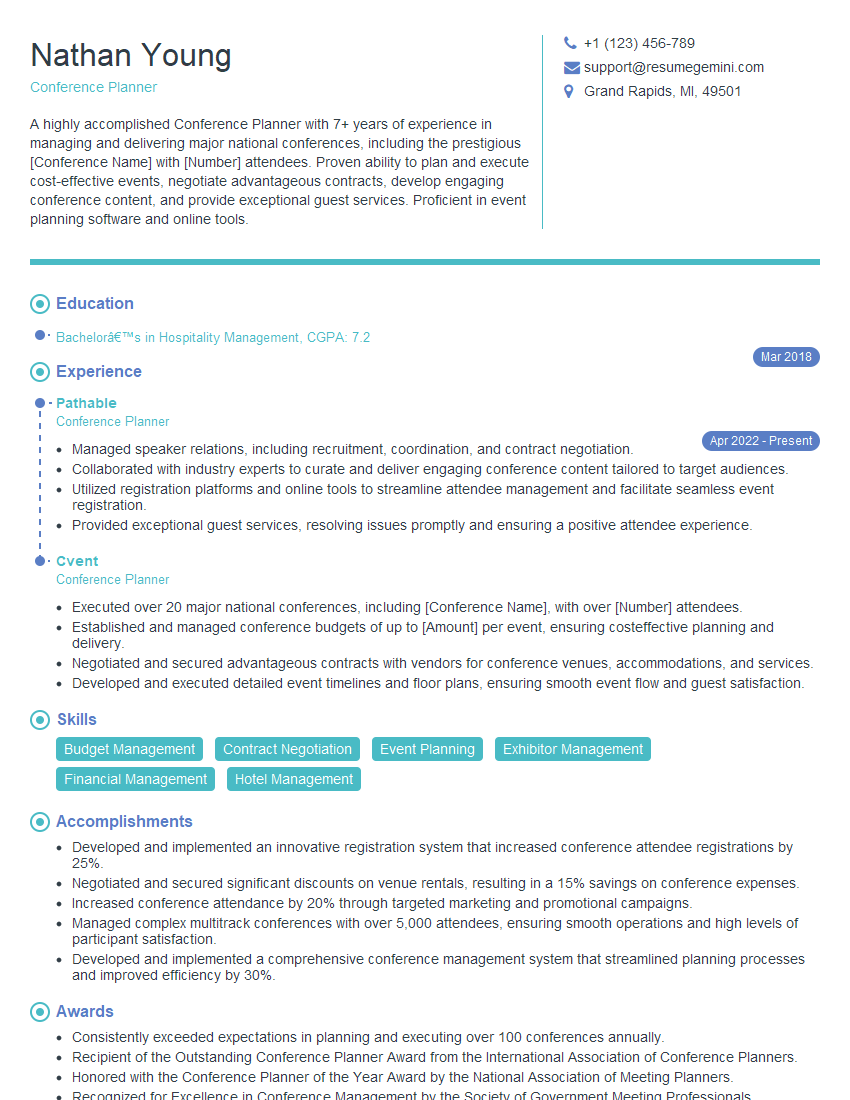
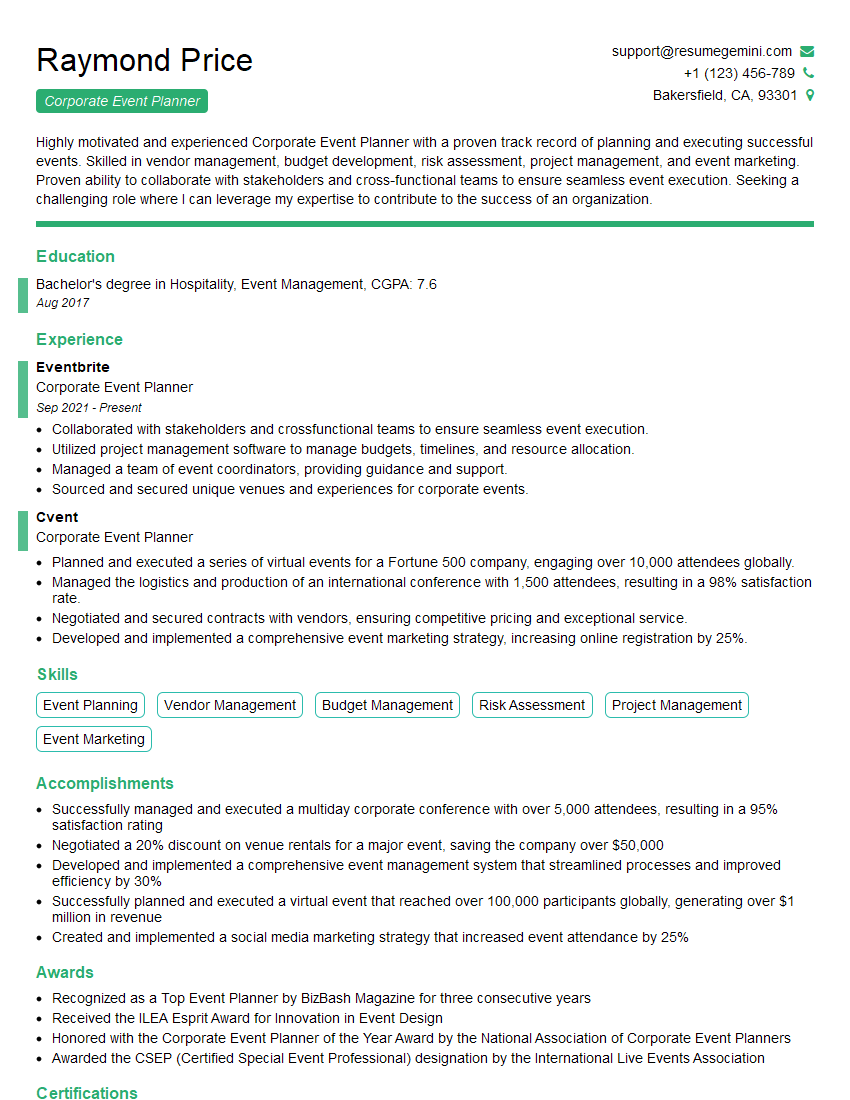
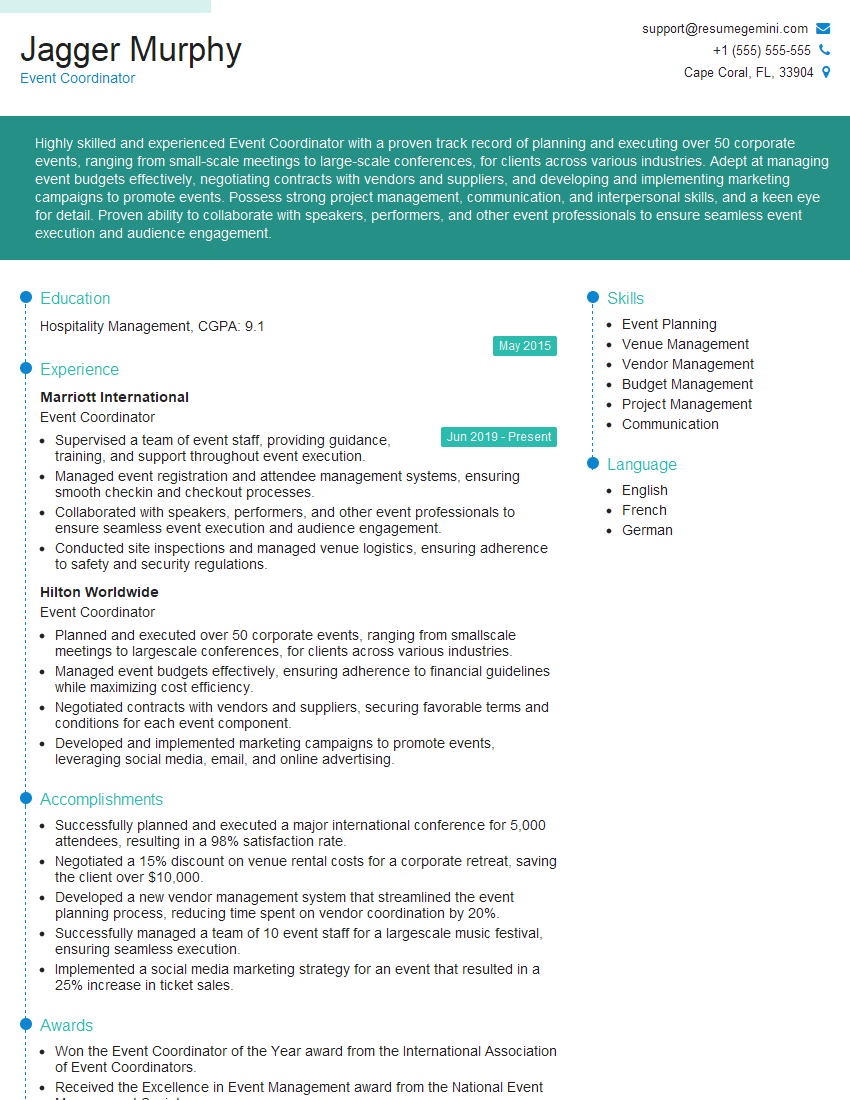
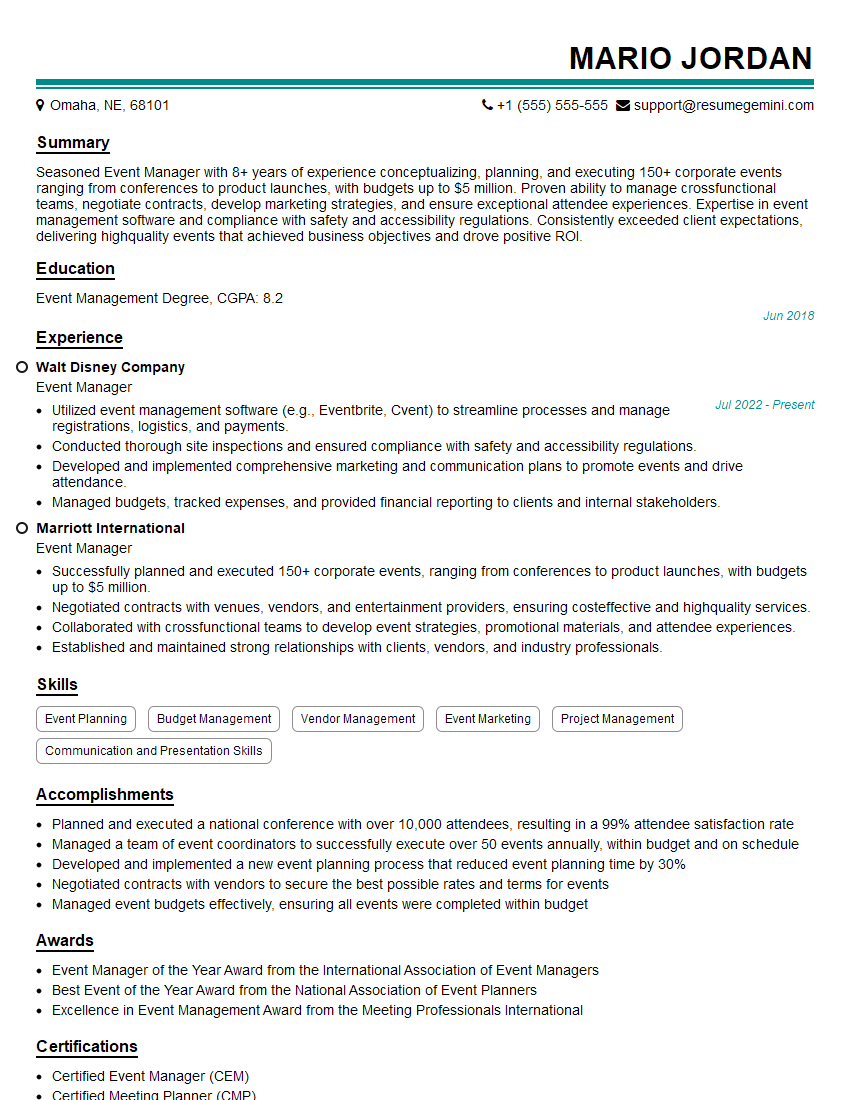
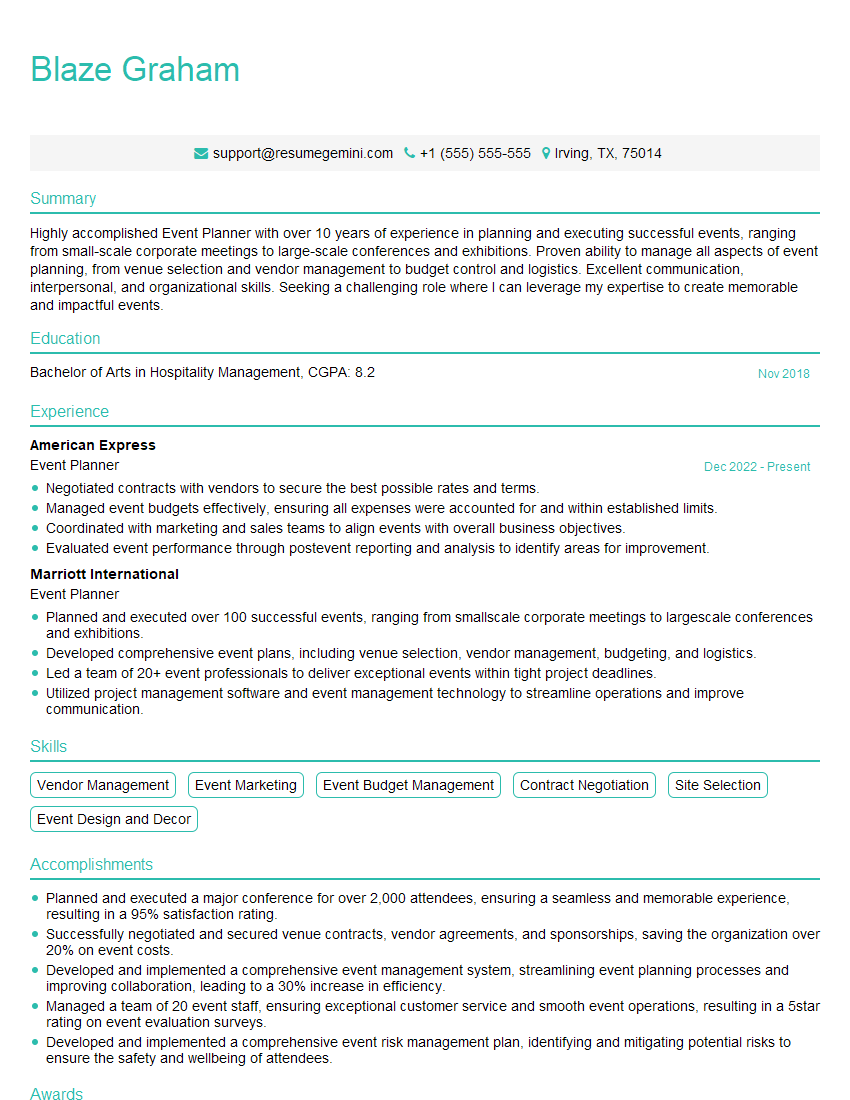
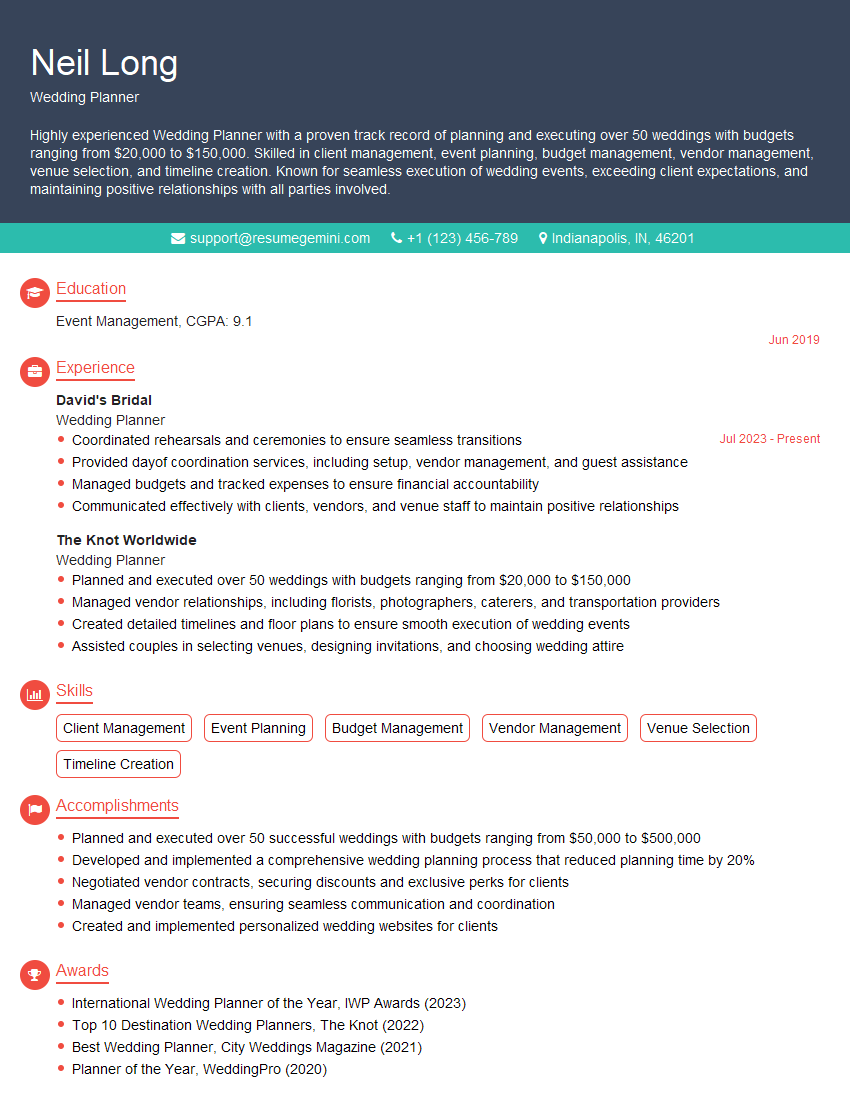
Mastering event planning and execution is crucial for career advancement in this dynamic field. A strong understanding of these key areas demonstrates valuable skills highly sought after by employers. To maximize your job prospects, crafting an ATS-friendly resume is essential. ResumeGemini is a trusted resource that can help you build a professional, impactful resume tailored to highlight your unique skills and experience. Examples of resumes specifically tailored for candidates with experience in Event Planning and Execution are available to help you get started.
Explore more articles
Users Rating of Our Blogs
Share Your Experience
We value your feedback! Please rate our content and share your thoughts (optional).
What Readers Say About Our Blog
Very informative content, great job.
good