The thought of an interview can be nerve-wracking, but the right preparation can make all the difference. Explore this comprehensive guide to Experience in international freight forwarding interview questions and gain the confidence you need to showcase your abilities and secure the role.
Questions Asked in Experience in international freight forwarding Interview
Q 1. Explain the Incoterms rules and their impact on freight forwarding.
Incoterms rules, or International Commercial Terms, are a standardized set of three-letter codes published by the International Chamber of Commerce (ICC). They define the responsibilities of buyers and sellers in international trade transactions, specifically regarding delivery, costs, and risk. These rules are crucial in freight forwarding because they clarify who is responsible for what at each stage of the shipment, from the seller’s facility to the buyer’s destination. This directly impacts the freight forwarder’s role in arranging transportation, insurance, and documentation.
Impact on Freight Forwarders: Incoterms dictate which party (buyer or seller) pays for freight, insurance, and other charges. For example, under
CIF (Cost, Insurance, and Freight), the seller is responsible for arranging shipment and insurance up to the port of destination. The freight forwarder acts on behalf of the seller in this case. Conversely, underEXW (Ex Works), the buyer is responsible for everything from the seller’s premises, requiring the freight forwarder to coordinate the entire logistics process for the buyer.Example: If a shipment is under
DAP (Delivered at Place), the seller is responsible for delivering the goods to the named place of destination, ready for unloading. The freight forwarder will be responsible for all transport arrangements, customs clearance at the destination (if required by Incoterm), and ensuring the goods are delivered as specified.Practical Application: Freight forwarders must meticulously understand the specific Incoterm applied to each shipment to ensure accurate cost estimation, correct documentation, and avoid disputes between buyers and sellers. Misinterpretation can lead to significant financial repercussions for both the forwarder and their clients.
Q 2. Describe your experience with different modes of transport (sea, air, land).
My experience spans all major modes of transport – sea, air, and land. I’ve managed shipments via various routes, leveraging each mode’s strengths based on client needs and cargo characteristics.
Sea Freight: Extensive experience handling full container loads (FCL) and less than container loads (LCL) shipments. I’m adept at negotiating ocean freight rates, booking space with carriers, managing documentation (Bill of Lading, etc.), and tracking shipments through various port terminals. I’ve also managed complex projects involving multimodal transport using sea freight as the primary mode.
Air Freight: My experience includes handling high-value, time-sensitive goods. I’m skilled in selecting suitable airlines, organizing customs clearances (often more stringent than sea freight), and ensuring timely delivery. I’ve handled temperature-controlled air freight for pharmaceutical products and perishable goods, requiring specialized handling and documentation.
Land Freight: I have considerable experience in coordinating trucking and rail transport, often as part of multimodal solutions. This involves selecting suitable trucking companies, managing documentation like CMR notes (for road transport), coordinating intermodal transfers, and tracking the shipment’s progress. I have also managed complex land freight operations involving cross-border shipments, requiring close collaboration with customs brokers.
Q 3. How do you handle customs documentation and compliance?
Customs documentation and compliance are paramount in international freight forwarding. I’m proficient in preparing and managing all necessary documentation, ensuring accurate information and complete compliance with regulations.
Process: My process starts with thorough understanding of the cargo, origin, and destination countries’ regulations. This includes identifying the required documents, including commercial invoices, packing lists, certificates of origin, and any specific permits or licenses. I then work closely with customs brokers to ensure smooth and compliant clearance. This also involves managing any potential issues or delays that may arise during the customs process.
Example: For a shipment of electronics to the EU, ensuring compliance with RoHS (Restriction of Hazardous Substances) directives is crucial. I would coordinate obtaining the necessary certifications to ensure compliance and avoid delays or penalties.
Software & Technology: I’m familiar with various software systems to facilitate efficient customs documentation. This includes automated systems for generating and submitting customs declarations electronically.
Q 4. What is your experience with freight consolidation and deconsolidation?
Freight consolidation and deconsolidation are essential aspects of cost-effective and efficient freight management, particularly for LCL shipments.
Consolidation: This involves combining smaller shipments from multiple shippers into a single container for transport. My experience includes coordinating with various shippers, collecting their cargo, preparing proper documentation for each shipment, and ensuring safe and secure loading within the container.
Deconsolidation: This is the reverse process – breaking down the consolidated shipment at the destination and delivering individual shipments to their respective consignees. This requires meticulous organization and accurate tracking to ensure timely and correct delivery of each shipment.
Benefits: Consolidation offers cost savings by optimizing container utilization and reducing individual shipping costs. It’s particularly beneficial for smaller businesses that don’t have enough cargo for a full container load.
Q 5. Explain your process for selecting the optimal transportation route.
Selecting the optimal transportation route is a strategic decision involving careful consideration of several factors.
Factors: These include transit time, cost, safety, and reliability. I analyze various routes, considering factors like port congestion, political stability in transit countries, and the availability of suitable carriers and infrastructure.
Process: I usually begin by identifying all feasible routes, obtaining quotes from various carriers, and assessing each option against the aforementioned factors. This often involves comparing different combinations of sea, air, and land transport.
Example: For a time-sensitive shipment from China to Europe, air freight might be the optimal choice despite its higher cost. For a less time-sensitive and high-volume shipment, sea freight might be more cost-effective.
Technology: Route optimization software and tools are utilized to ensure the selection of the most efficient route.
Q 6. How do you manage risk and mitigate potential delays in freight forwarding?
Risk management is integral to freight forwarding. I employ a proactive approach to minimize potential delays and disruptions.
Strategies: This involves thorough risk assessment, including evaluating potential geopolitical issues, weather conditions, carrier reliability, and customs procedures. Contingency planning is crucial – having alternative routes or carriers lined up to handle unexpected delays.
Proactive Measures: Regular communication with carriers, customs brokers, and clients ensures transparency and allows for prompt identification and resolution of potential issues. Real-time tracking systems are used to monitor shipments and identify potential delays early on.
Mitigation: For instance, if there’s a predicted port strike, we may reroute the shipment via an alternative port or mode of transport. For weather-related delays, we may use weather forecasting tools to plan accordingly and provide timely updates to clients.
Q 7. Describe your experience with cargo insurance and claims processing.
Cargo insurance is essential to protect against loss or damage during transit. I’m experienced in selecting appropriate insurance coverage and processing claims.
Insurance Selection: The type of insurance policy depends on the cargo’s value, nature, and the Incoterms applied. I work with reputable insurers to secure adequate coverage for my clients. I explain coverage options to clients, ensuring they understand the implications and limitations of each policy.
Claims Processing: In the event of a loss or damage, I work closely with the insurer and relevant parties to gather evidence, prepare and submit the claim, and follow up on its progress. I handle all the necessary documentation and communication to ensure a smooth claims process.
Example: If a shipment is damaged during transit, I’ll document the damage with photos and reports, obtain a survey report from a marine surveyor (if required), and prepare a claim with all supporting documents to the insurer.
Q 8. How do you track and trace shipments throughout the entire process?
Tracking and tracing shipments is the backbone of efficient freight forwarding. It involves monitoring a shipment’s journey from origin to destination, providing real-time updates to clients and ensuring timely delivery. We utilize a multi-layered approach.
- Carrier Tracking Systems: Each carrier (shipping line, airline, trucking company) has its own tracking system. We access these systems using unique tracking numbers (provided on the Bill of Lading) to get updates on location, estimated time of arrival (ETA), and any potential delays.
- Freight Management Systems (FMS): Our FMS aggregates data from various carrier systems into a single, centralized dashboard. This allows us to monitor all shipments across different modes of transport, regardless of the carrier.
- Proactive Monitoring: We don’t just passively wait for updates; we proactively monitor shipments for potential issues. This involves checking for delays, customs clearance holdups, or other unforeseen events that might impact delivery.
- Communication with Clients: Regular updates are crucial. We provide clients with timely information through email, phone calls, or our client portal, depending on their preference.
For example, if a shipment is delayed due to port congestion, we immediately identify the issue through our FMS, contact the carrier to investigate, and then promptly inform the client about the delay and any potential mitigation strategies.
Q 9. What software or systems are you familiar with for freight management?
I’m proficient in several freight management systems (FMS) and software. My experience encompasses:
- Magaya: A comprehensive FMS that handles everything from quoting and booking to tracking and reporting. It’s excellent for managing complex shipments across multiple modes of transport.
- WiseTech Global (CargoWise): Another powerful FMS known for its scalability and integration capabilities. It facilitates streamlined communication with carriers and offers advanced reporting functionalities.
- Blue Cherry: A cloud-based system particularly strong in its user-friendly interface and real-time visibility features. It’s helpful for smaller to medium-sized businesses.
- Various Carrier Portals: I’m adept at navigating the online portals of major carriers like Maersk, CMA CGM, and FedEx, allowing for direct access to shipment information and communication.
My familiarity with these systems enables me to efficiently manage all aspects of freight forwarding, from documentation to communication to cost analysis.
Q 10. How do you handle customer inquiries and complaints effectively?
Handling customer inquiries and complaints requires a proactive and empathetic approach. My strategy involves:
- Prompt Response: I aim to respond to all inquiries within a set timeframe, typically within 24 hours. This ensures clients feel valued and their concerns are taken seriously.
- Active Listening: I carefully listen to the client’s concerns, understanding their perspective before offering solutions. This fosters trust and allows for a more effective resolution.
- Clear and Concise Communication: I communicate updates and solutions clearly, using straightforward language avoiding technical jargon. This ensures the client fully understands the situation.
- Problem-Solving Approach: I actively work towards finding solutions, leveraging my knowledge and network to address the issue. This may involve contacting carriers, customs brokers, or other relevant parties.
- Follow-up: After resolving an issue, I follow up with the client to ensure their satisfaction and address any remaining concerns.
For example, if a client receives a damaged shipment, I immediately launch an investigation, coordinate with the carrier to file a claim, and keep the client updated on the progress until the claim is resolved and they receive compensation or a replacement.
Q 11. Describe a situation where you had to resolve a complex logistics issue.
During a peak shipping season, a client’s shipment of perishable goods faced a significant delay due to unexpected port congestion in Shanghai. The initial ETA was missed by several days, putting the goods at risk of spoilage and jeopardizing the client’s business deal.
To resolve this, I immediately engaged with the carrier to understand the reason for the delay and explore alternative solutions. I contacted other carriers to find available capacity on alternative routes, even if it meant higher costs. I also expedited customs clearance through our network of customs brokers, and worked with the client to arrange for refrigerated storage at the destination port, minimizing the risk of spoilage. Through proactive communication and strategic problem-solving, we managed to reroute the shipment, incurring minimal losses, and ensuring timely delivery, albeit at a higher cost. The client was extremely appreciative of the swift and efficient response.
Q 12. What are your strategies for cost optimization in international freight forwarding?
Cost optimization is paramount in international freight forwarding. My strategies include:
- Negotiating Freight Rates: Building strong relationships with carriers allows for better negotiation of freight rates, especially with high volume shipments.
- Consolidation of Shipments: Combining multiple smaller shipments into larger, consolidated loads can significantly reduce per-unit costs.
- Route Optimization: Analyzing different shipping routes and modes of transport to identify the most cost-effective option for each shipment.
- Inland Transportation Efficiency: Optimizing trucking and rail transport to the ports or airports can reduce overall transportation costs.
- Choosing the Right Incoterms: Selecting the appropriate Incoterms (International Commercial Terms) ensures clear responsibilities for costs and minimizes potential disputes.
- Inventory Management: Helping clients optimize their inventory management to reduce unnecessary shipments and storage costs.
For example, by consolidating several smaller shipments from various clients bound for the same destination, we were able to secure a discounted rate from the carrier, saving our clients significant money compared to shipping individually.
Q 13. Explain your understanding of different types of shipping documents (BL, AW, etc.).
Shipping documents are crucial for international freight forwarding. They provide proof of ownership, transport details, and facilitate customs clearance. Here are some key examples:
- Bill of Lading (BL): A document issued by a carrier acknowledging receipt of goods and acting as a contract of carriage. It is also a document of title, meaning the holder can claim the goods.
- Air Waybill (AWB): Similar to a BL, but used for air freight. It does not represent a document of title in the same way as a BL.
- Commercial Invoice: A document detailing the goods being shipped, their value, and the buyer and seller information. Essential for customs valuation.
- Packing List: A detailed description of the contents of each package within the shipment. Useful for customs inspection and inventory control.
- Certificate of Origin (COO): A document verifying the country of origin of the goods. Important for customs duties and trade agreements.
Understanding these documents is essential for ensuring smooth customs clearance and efficient handling of the shipment. Mistakes in these documents can lead to delays, fines, and even the seizure of goods.
Q 14. How do you negotiate freight rates and contracts with carriers?
Negotiating freight rates and contracts with carriers requires a strategic approach. I focus on:
- Building Strong Relationships: Developing long-term relationships with reliable carriers allows for preferential rates and better service.
- Market Research: Thorough market research ensures we understand prevailing freight rates and identify potential savings.
- Volume Agreements: Negotiating volume-based contracts secures lower rates for consistent, high-volume shipments.
- Competitive Bidding: Requesting quotes from multiple carriers allows for comparison and selection of the best option.
- Clear Communication: Clearly communicating our requirements and expectations helps carriers develop tailored proposals.
- Contractual Terms: Carefully reviewing and negotiating the terms and conditions of contracts to protect our clients’ interests.
For example, by negotiating a yearly contract with a major carrier based on our consistent high volume of shipments, we secured a 15% discount on the base freight rate, leading to significant cost savings for our clients.
Q 15. What is your experience with dangerous goods handling and regulations?
Dangerous goods handling requires meticulous attention to detail and strict adherence to international regulations like the International Maritime Dangerous Goods (IMDG) Code, the International Air Transport Association (IATA) Dangerous Goods Regulations, and local regulations. My experience encompasses the entire process, from proper identification and classification of dangerous goods using the UN Number system, to packaging according to specific requirements, documentation completion (including the preparation of Declarations of Dangerous Goods), and ensuring safe transportation and handling throughout the entire supply chain. I’ve personally handled a wide range of dangerous goods, including chemicals, batteries, and flammable materials, across various modes of transport – sea, air, and road. For instance, I once successfully navigated the complex regulations surrounding the shipment of lithium-ion batteries to a client in Japan, requiring specialized packaging and meticulous documentation to ensure compliance and safe arrival.
I understand the importance of emergency response planning and have participated in training programs focused on incident prevention and mitigation. This includes understanding the Safety Data Sheets (SDS) and knowing the appropriate emergency procedures in case of spills or accidents. My experience ensures all shipments are compliant and handled with the utmost safety, minimizing risk to personnel and the environment.
Career Expert Tips:
- Ace those interviews! Prepare effectively by reviewing the Top 50 Most Common Interview Questions on ResumeGemini.
- Navigate your job search with confidence! Explore a wide range of Career Tips on ResumeGemini. Learn about common challenges and recommendations to overcome them.
- Craft the perfect resume! Master the Art of Resume Writing with ResumeGemini’s guide. Showcase your unique qualifications and achievements effectively.
- Don’t miss out on holiday savings! Build your dream resume with ResumeGemini’s ATS optimized templates.
Q 16. How familiar are you with various international trade regulations and compliance?
My familiarity with international trade regulations is extensive, covering areas such as Incoterms (International Commercial Terms), customs procedures, import/export licensing, and sanctions compliance. I’m proficient in navigating the complexities of various trade agreements, including the World Trade Organization (WTO) agreements and regional trade pacts like NAFTA/USMCA or the EU’s GSP schemes. I understand the importance of harmonized system (HS) codes for accurate tariff classification and have successfully resolved numerous customs-related issues, including delays and disputes, by proactively ensuring accurate documentation and compliance. For example, I recently helped a client avoid significant penalties by correctly identifying the appropriate HS code for their product, resulting in significant cost savings. Staying abreast of ever-changing regulations requires continuous learning and utilizing resources such as the World Customs Organization (WCO) website and relevant governmental agency publications.
Q 17. Describe your process for managing import and export documentation.
Managing import and export documentation is a critical aspect of freight forwarding, requiring a systematic and organized approach. My process starts with a thorough understanding of the shipment requirements and destination country regulations. I then meticulously compile all necessary documents, including commercial invoices, packing lists, bills of lading (for sea freight), air waybills (for air freight), certificates of origin, and any required permits or licenses. Each document is checked for accuracy and completeness before submission. I utilize a digital document management system for efficient storage, retrieval, and sharing of documentation with clients and relevant parties. This system allows for easy tracking and reduces the risk of loss or damage to crucial documents. I’m proficient in various electronic data interchange (EDI) formats for seamless communication with customs authorities and other stakeholders. For instance, I routinely use the Automated Broker Interface (ABI) system for streamlining customs clearance processes in the United States. My systematic approach ensures timely processing and minimal delays.
Q 18. How do you ensure the timely delivery of goods within budgetary constraints?
Ensuring timely delivery within budget requires proactive planning and efficient execution. My strategy starts with precise route planning, considering factors such as transit time, cost-effectiveness of different modes of transport, and potential delays. I leverage my network of reliable carriers and agents to secure competitive rates and ensure timely handling. I meticulously track shipments throughout their journey, utilizing tracking systems and regular communication with carriers to identify and address potential issues proactively. Cost control is achieved through negotiation of favorable freight rates, efficient consolidation of shipments, and optimization of routing. Should unforeseen circumstances arise, such as port congestion or weather delays, I have contingency plans in place to mitigate the impact on delivery times and costs. Transparent communication with clients throughout the process keeps them informed and enables collaborative problem-solving.
Q 19. What are your strategies for improving efficiency and productivity in freight forwarding?
Improving efficiency and productivity in freight forwarding requires a multi-pronged approach. Firstly, embracing technology is crucial. I utilize Transportation Management Systems (TMS) to automate processes like booking, tracking, and documentation. This reduces manual effort and enhances accuracy. Secondly, optimizing logistics networks through route optimization and efficient warehousing strategies are key. I constantly evaluate carrier performance and explore alternative solutions to improve transit times and reduce costs. Thirdly, strong relationships with reliable carriers and agents are essential for efficient service and streamlined communication. Finally, continuous improvement through data analysis helps identify bottlenecks and areas for optimization. By analyzing shipment data, we can pinpoint inefficiencies and implement targeted improvements to our processes. For example, by analyzing delivery times, we identified a pattern of delays in a specific region and successfully negotiated faster transit times with a new carrier, improving our overall efficiency.
Q 20. How do you stay updated on industry changes and best practices?
Staying updated in this dynamic industry is paramount. I regularly attend industry conferences and webinars to learn about the latest regulations, technologies, and best practices. I subscribe to industry publications and actively follow regulatory updates from relevant governmental agencies. Networking with peers and professionals within the industry provides valuable insights and allows for the exchange of knowledge and best practices. I also engage in continuous professional development, participating in training courses to enhance my skills and knowledge in areas such as customs regulations, dangerous goods handling, and supply chain management. This commitment to lifelong learning ensures I remain proficient and adaptable to the evolving landscape of international freight forwarding.
Q 21. Explain your experience with different types of cargo and their handling requirements.
My experience spans a broad range of cargo types, including dry bulk (e.g., grains, minerals), breakbulk (e.g., steel, timber), liquid bulk (e.g., chemicals, oil), general cargo (e.g., manufactured goods, consumer products), and oversized/heavylift cargo (e.g., machinery, construction equipment). Each cargo type presents unique handling requirements. For example, dry bulk cargo necessitates specialized handling techniques and vessels to prevent damage and ensure efficient loading and unloading. Liquid bulk cargo requires specialized tankers and strict safety protocols to avoid spills and contamination. Oversized/heavylift cargo needs meticulous planning to ensure safe transportation, often requiring specialized equipment and permits. I have successfully managed the transportation of various cargo types, understanding the specific handling needs of each, including appropriate packaging, securing, and stowage methods. My experience encompasses diverse shipping methods, adapting my approach to the cargo type and ensuring safe and efficient delivery to meet client expectations.
Q 22. How do you manage relationships with clients, carriers, and customs brokers?
Managing relationships in international freight forwarding is crucial for success. It’s all about building trust and fostering collaboration. With clients, I prioritize clear communication, proactive updates, and personalized service. This includes understanding their specific needs and providing tailored solutions, such as negotiating favorable rates with carriers or offering specialized insurance options. I regularly check in with clients, not just when there are issues, but also to strengthen the relationship and anticipate future needs.
With carriers, maintaining strong relationships ensures reliable service and competitive pricing. This involves consistently meeting deadlines, providing accurate shipment information, and resolving any disputes fairly and promptly. I build rapport by being a reliable and professional partner, consistently fulfilling my obligations. For example, if a carrier faces unforeseen challenges, I work collaboratively with them to find solutions, rather than placing blame.
Regarding customs brokers, open communication is key. This means providing them with all necessary documentation accurately and in a timely manner, to ensure smooth customs clearance. I build relationships based on mutual respect and a shared understanding of regulatory requirements. For example, I always proactively inform my broker about potential regulatory changes that might affect our shipments.
Q 23. What is your experience with using TMS (Transportation Management Systems)?
I have extensive experience using Transportation Management Systems (TMS). I’m proficient in several leading TMS platforms, including [mention specific platforms you are familiar with, e.g., Blue Yonder, Oracle Transportation Management]. My expertise encompasses all aspects of TMS functionality, from shipment planning and execution to tracking and reporting. I leverage TMS to optimize routes, manage carrier selection, track shipments in real-time, and analyze cost and performance data. For example, using TMS allows me to identify potential delays and proactively alert clients and relevant parties, often preventing major disruptions.
Furthermore, I utilize TMS to generate comprehensive reports on key performance indicators (KPIs) such as on-time delivery rates, cost per shipment, and carrier performance. This data-driven approach allows for continuous improvement and informed decision-making. This means I can identify areas for optimization, such as renegotiating carrier contracts or streamlining internal processes, based on real-world data.
Q 24. How would you handle a shipment delay due to unforeseen circumstances?
Shipment delays are unfortunately inevitable in international freight forwarding. My approach is systematic and focuses on transparency and proactive communication. First, I would immediately investigate the cause of the delay, communicating openly with all stakeholders – the client, the carrier, and relevant authorities (if necessary). Next, I develop a contingency plan, exploring alternative solutions such as rerouting the shipment, using expedited shipping if feasible, or finding a replacement carrier.
Throughout this process, I keep the client informed, providing regular updates on the situation and the progress of the contingency plan. Transparency is critical in maintaining client trust. I would also document all communication and actions taken to manage the delay, creating a detailed record for future reference and potential claim processing if applicable. For example, if a port strike causes a delay, I might explore alternative ports or modes of transportation to expedite the shipment’s arrival.
Q 25. Describe your understanding of Letter of Credit and its importance in international trade.
A Letter of Credit (LC) is a financial instrument issued by a buyer’s bank, guaranteeing payment to the seller once specific conditions are met. It acts as a secure payment mechanism in international trade, mitigating risks for both parties. For the seller, the LC provides assurance of payment, as long as the terms of the LC are fulfilled. For the buyer, the LC ensures payment is only released upon successful receipt and inspection of goods.
The LC process involves several parties: the buyer, the seller, the buyer’s bank (issuing bank), the seller’s bank (advising or negotiating bank), and sometimes a confirming bank. The LC specifies details such as the amount of payment, shipping documents required, and deadlines. Understanding the intricacies of LCs, including different types like irrevocable, confirmed, and transferable LCs, is crucial for efficient international trade. A well-structured LC provides a safety net, promoting trust and facilitating transactions between parties in different countries with potentially varying levels of risk.
Q 26. Explain the importance of proper packaging and its role in preventing damage during transit.
Proper packaging is paramount in preventing damage during transit. It acts as the first line of defense against the rigors of international shipping, including shocks, vibrations, and environmental factors. Inappropriate packaging can lead to significant losses, including damaged goods, delays, and increased costs. My approach involves selecting the right packaging materials based on the type of goods, their fragility, and the mode of transport.
This includes using appropriate cushioning materials like bubble wrap or foam, sturdy containers that are adequately sized and reinforced, and clear labeling to avoid mishaps. Furthermore, I emphasize secure palletization and proper handling instructions to prevent damage during loading, unloading, and transit. For fragile items, I often recommend custom-designed crating to provide maximum protection. Following industry best practices and complying with relevant regulations ensures the shipment arrives in optimal condition.
Q 27. How familiar are you with different types of containers and their specifications?
I’m very familiar with different container types and specifications. The most common types include:
- Dry containers: Standard containers for general cargo.
- Refrigerated containers (reefers): Maintain temperature-controlled environments for perishable goods.
- Open-top containers: Allow for loading from the top for oversized cargo.
- Flatrack containers: Provide a flat surface for heavy or bulky items.
- Tank containers: Transport liquids and gases in bulk.
I understand the dimensions (length, width, height) and weight capacities of each container type. This knowledge is essential in choosing the appropriate container for a specific shipment, considering factors like cargo size, weight, and handling requirements. I also understand the different container certifications, like those for hazardous materials (IMO) and temperature-sensitive products. This ensures compliance with safety regulations and minimizes risk.
Q 28. What are your strategies for managing capacity constraints and peak season demands?
Managing capacity constraints and peak season demands requires a proactive and strategic approach. During peak seasons, like the holiday shopping period, capacity limitations across various modes of transportation are common. My strategies begin with early planning and forecasting, anticipating potential challenges well in advance. This might involve securing contracts with carriers early and negotiating preferential rates to secure capacity when it’s most needed.
I also actively explore alternative transportation options, such as rail or trucking, if sea freight capacity is constrained. Moreover, effective communication with clients is crucial to manage expectations, potentially offering solutions like staggered delivery schedules or alternative shipping arrangements. This might involve negotiating flexible delivery timelines with clients to ease pressure on peak season capacity. Lastly, I continuously monitor capacity availability and market conditions, dynamically adjusting our strategies based on real-time data and trends.
Key Topics to Learn for Your International Freight Forwarding Interview
- Incoterms: Understand the implications of different Incoterms (e.g., FOB, CIF, DDP) on responsibility, cost, and risk allocation throughout the shipping process. Be prepared to discuss practical scenarios where choosing the right Incoterm is crucial.
- Documentation & Compliance: Master the creation and management of essential shipping documents like Bills of Lading, Commercial Invoices, Packing Lists, and Certificates of Origin. Discuss your experience ensuring regulatory compliance across various international jurisdictions.
- Freight Calculation & Cost Optimization: Explain your understanding of freight rates, surcharges, and other cost components. Be ready to discuss strategies for optimizing shipping costs while maintaining efficiency and meeting deadlines.
- Logistics & Supply Chain Management: Demonstrate your knowledge of different modes of transport (sea, air, land), their respective advantages and disadvantages, and how to effectively manage the entire supply chain from origin to destination.
- Risk Management & Problem-solving: Discuss your approach to identifying and mitigating potential risks in international shipping, such as delays, damage, loss, and customs issues. Share examples of how you have successfully resolved complex logistical challenges.
- Customs Procedures & Regulations: Explain your understanding of import/export regulations, customs clearance processes, and the importance of accurate documentation to avoid delays and penalties. Highlight your experience navigating diverse customs procedures across different countries.
- Technology & Software: Discuss your familiarity with relevant logistics software and technologies used in freight forwarding, such as TMS (Transportation Management Systems) or ERP systems. Highlight any experience with data analysis and reporting in a logistics context.
Next Steps
Mastering international freight forwarding opens doors to exciting career opportunities and substantial growth within the logistics industry. A strong resume is your key to unlocking these opportunities. Creating an ATS-friendly resume that highlights your skills and experience is essential for getting noticed by recruiters and landing your dream job. To build a professional and impactful resume, we highly recommend using ResumeGemini. ResumeGemini provides a user-friendly platform to create a compelling document, and examples of resumes tailored to international freight forwarding experience are available to guide you. Take the next step in your career journey – build your best resume with ResumeGemini today!
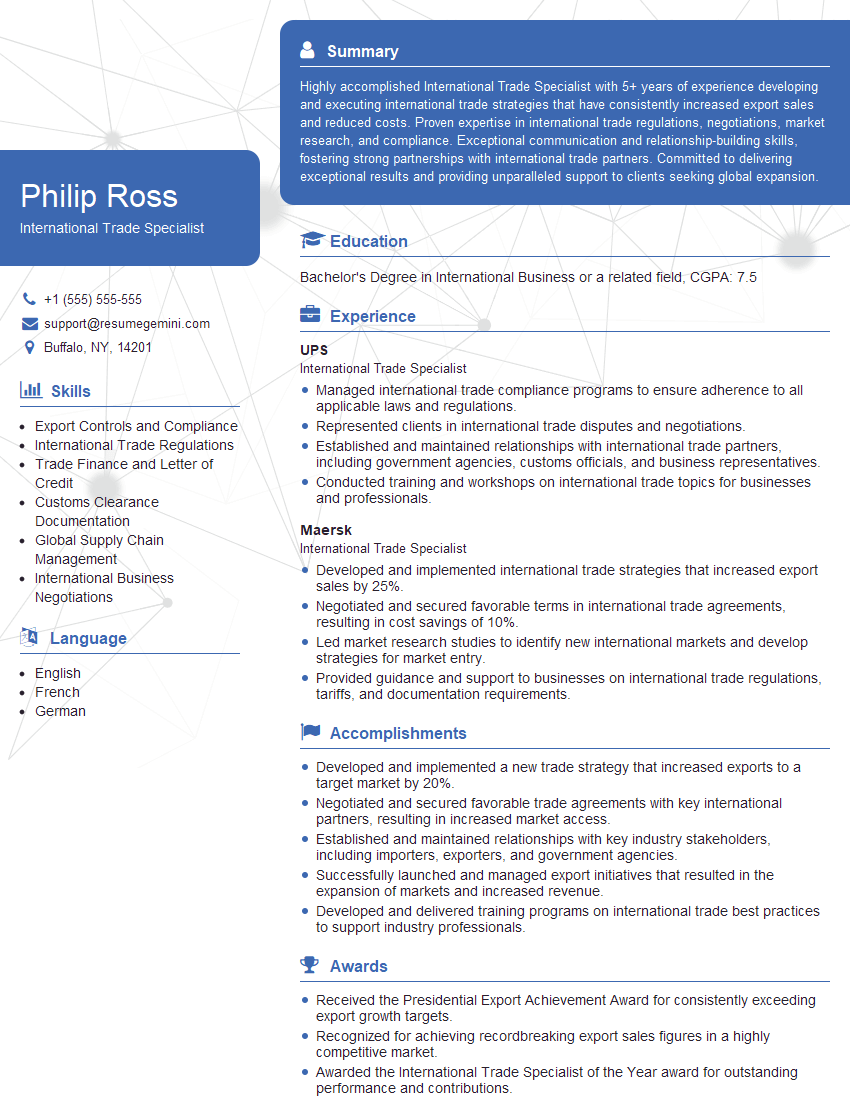
International Trade Specialist Resume Sample

Supply Chain Manager Resume Sample
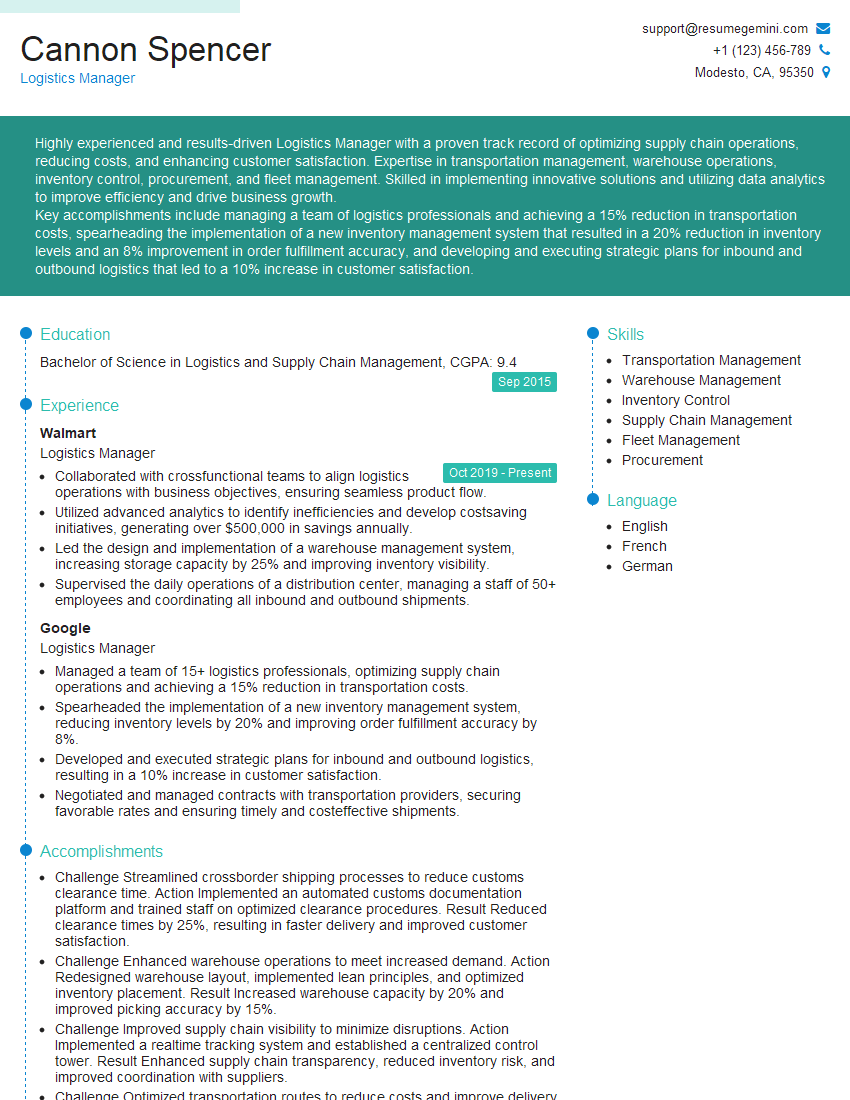
Logistics Manager Resume Sample
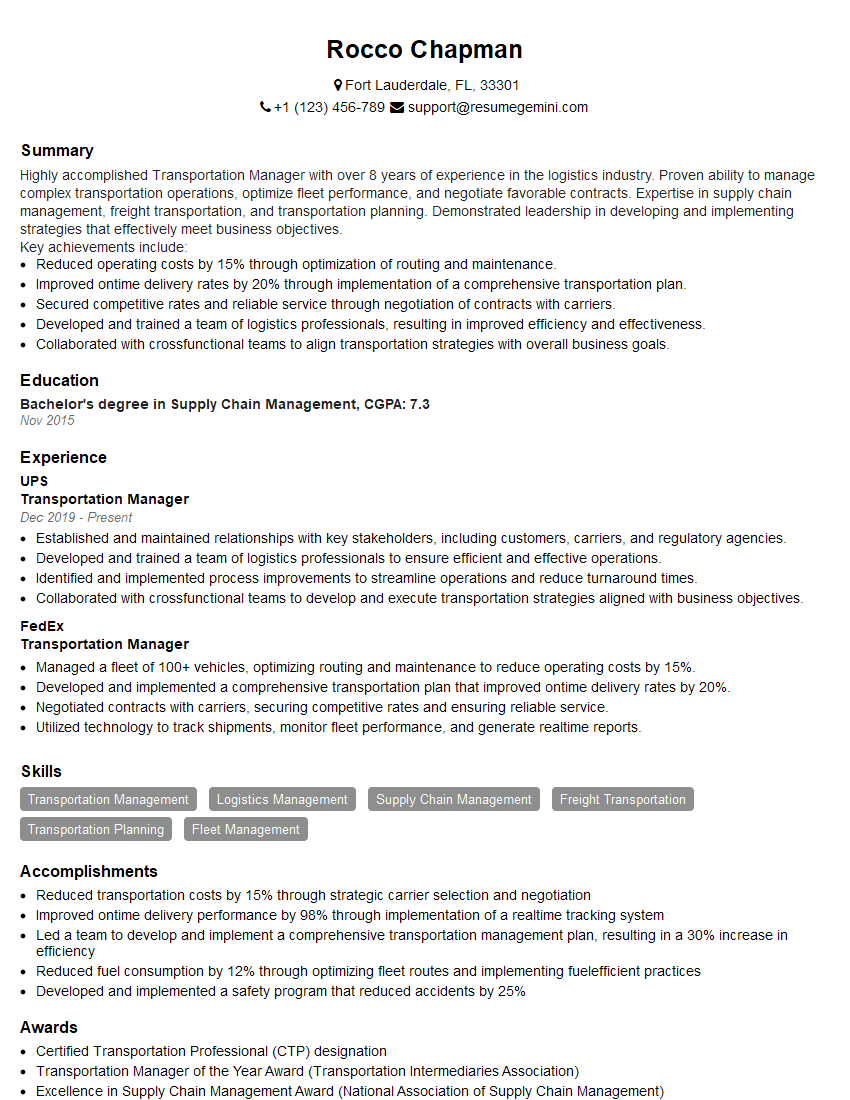
Transportation Manager Resume Sample
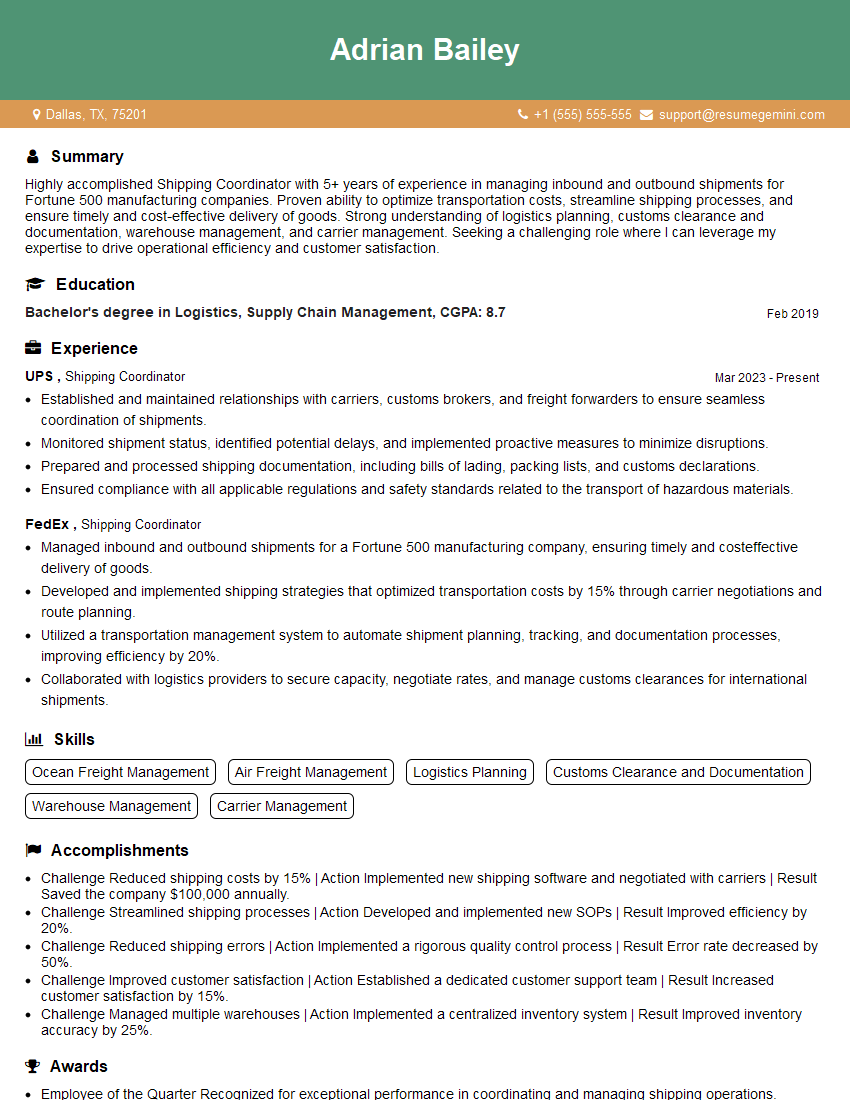
Shipping Coordinator Resume Sample
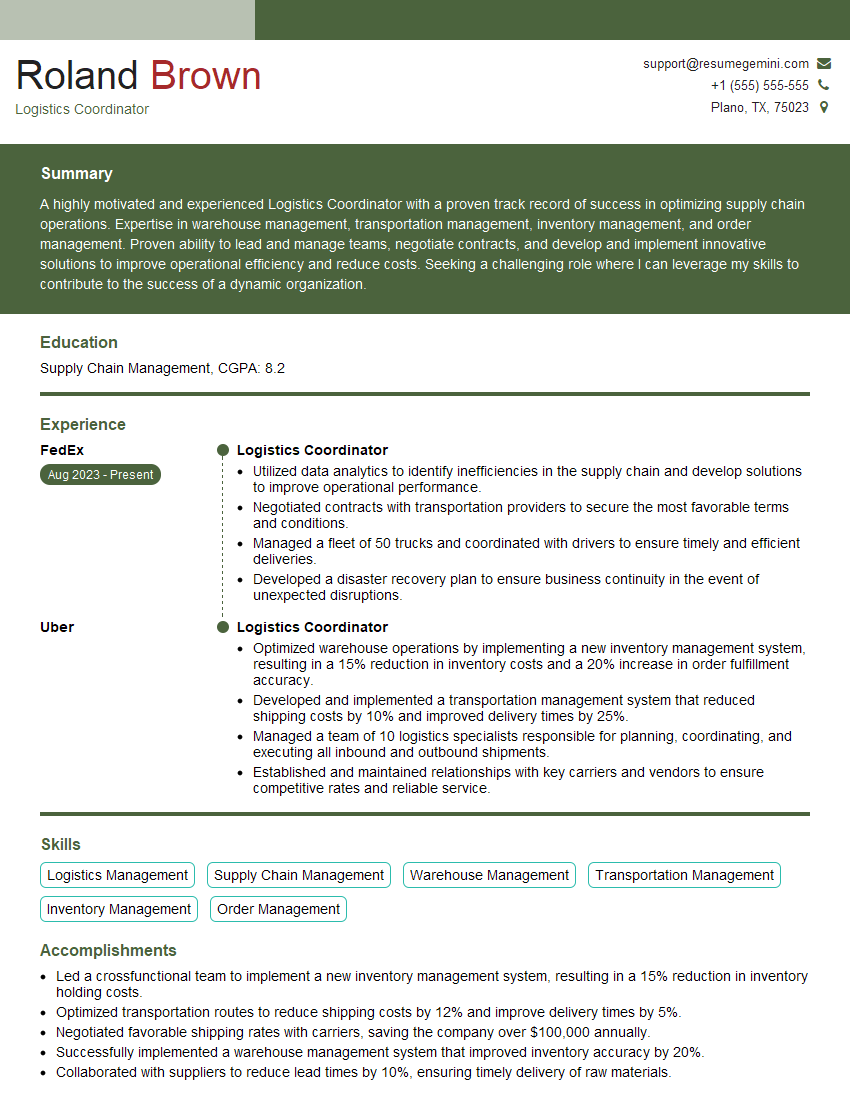
Logistics Coordinator Resume Sample
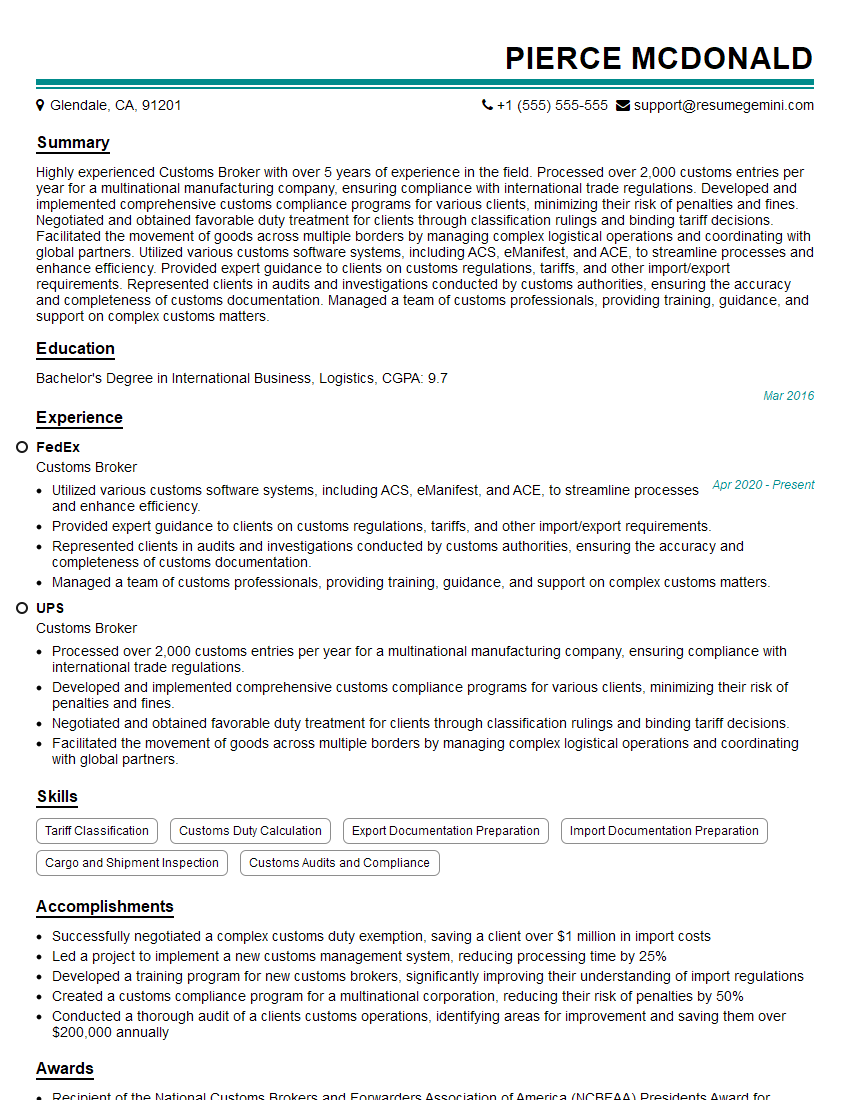
Customs Broker Resume Sample
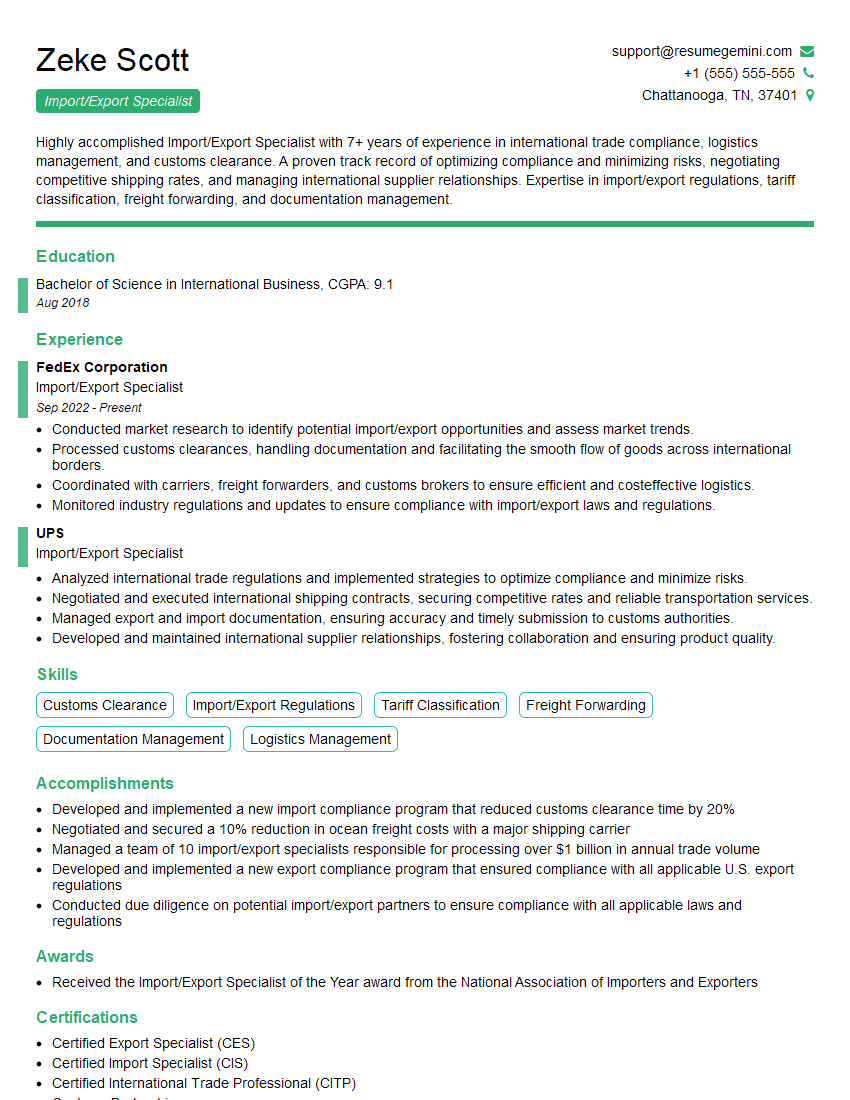
Import/Export Specialist Resume Sample
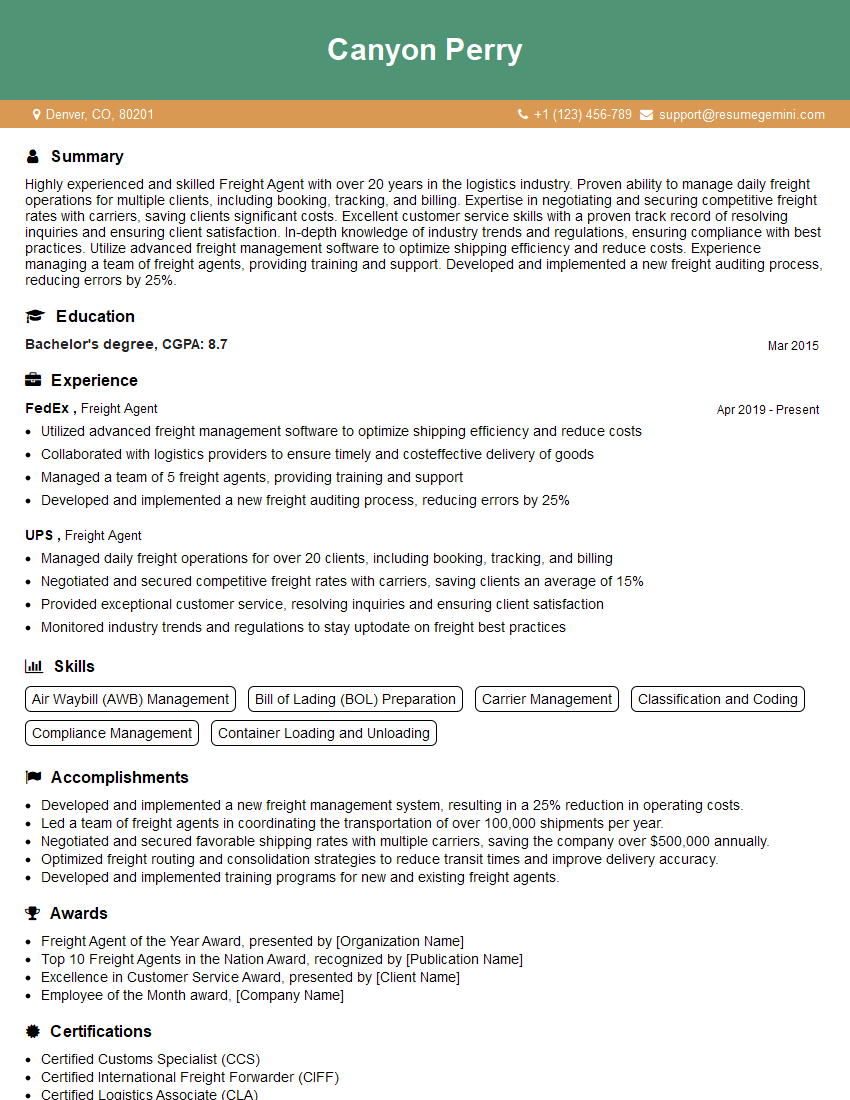
Freight Agent Resume Sample
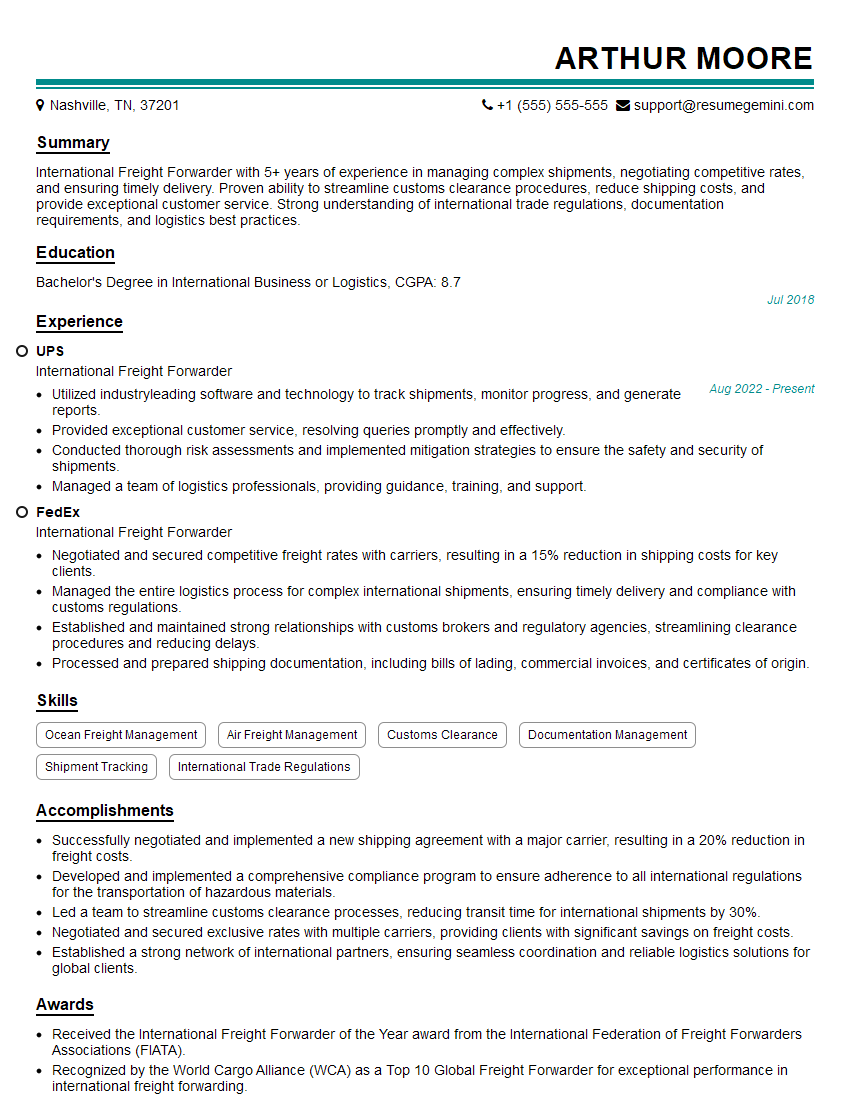
International Freight Forwarder Resume Sample
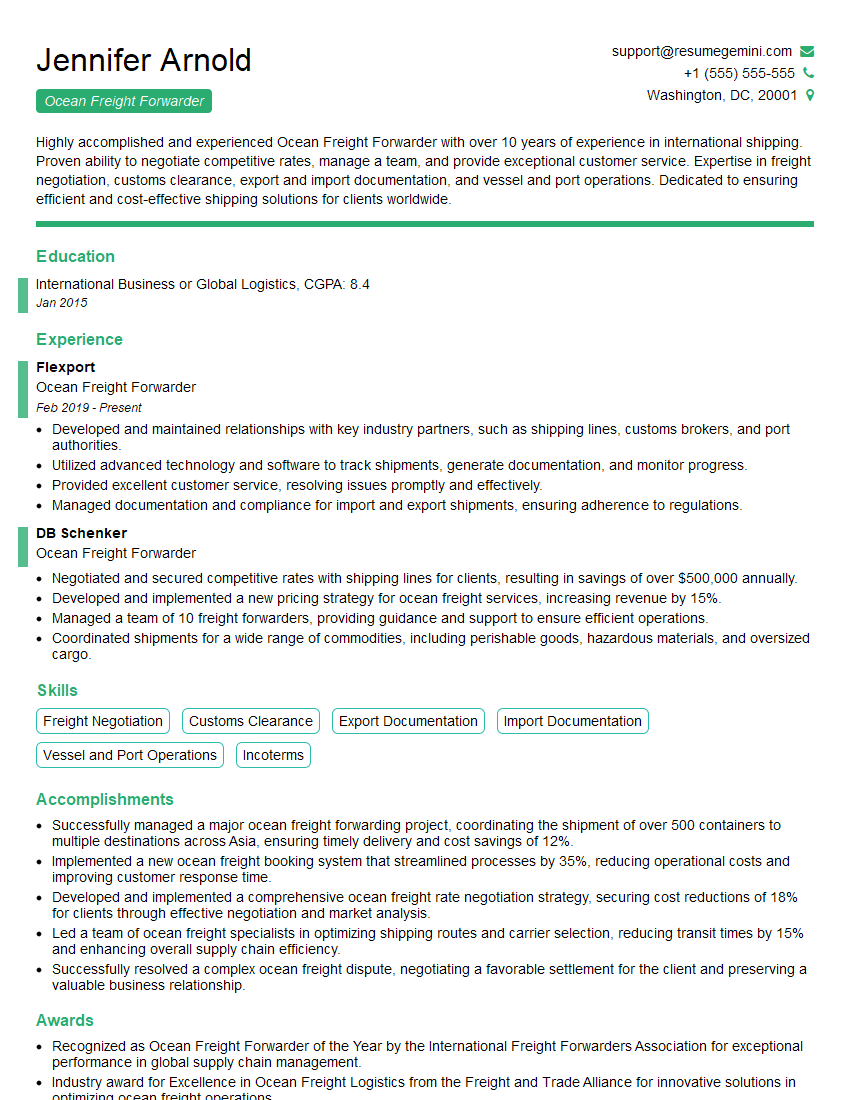
Ocean Freight Forwarder Resume Sample
Explore more articles
Users Rating of Our Blogs
Share Your Experience
We value your feedback! Please rate our content and share your thoughts (optional).
What Readers Say About Our Blog
good