Preparation is the key to success in any interview. In this post, we’ll explore crucial Experience in Maritime Operations interview questions and equip you with strategies to craft impactful answers. Whether you’re a beginner or a pro, these tips will elevate your preparation.
Questions Asked in Experience in Maritime Operations Interview
Q 1. Explain the International Maritime Organization (IMO) and its significance.
The International Maritime Organization (IMO) is a specialized agency of the United Nations responsible for regulating shipping globally. Its significance lies in its role in improving maritime safety and security, preventing pollution from ships, and facilitating efficient and effective international shipping.
Think of the IMO as the global traffic controller for the world’s oceans. It sets international standards, develops regulations, and provides guidance on everything from ship design and construction to crew training and environmental protection. This ensures a level playing field for all maritime nations and promotes a safe and sustainable maritime environment.
- Safety: IMO regulations cover aspects like hull strength, stability, fire prevention, and life-saving appliances.
- Security: Post-9/11, the IMO has played a crucial role in developing and implementing measures to enhance maritime security, including the International Ship and Port Facility Security (ISPS) Code.
- Environmental Protection: The IMO is a key player in tackling marine pollution, particularly from oil spills and air emissions from ships. They’ve introduced regulations on ballast water management, sulfur oxide emissions, and other pollutants.
Q 2. Describe your experience with SOLAS regulations.
The Safety of Life at Sea (SOLAS) Convention is arguably the most important international maritime treaty. My experience with SOLAS regulations spans several years, including ensuring compliance during vessel inspections, participating in safety drills, and maintaining all required documentation. I have direct experience in ensuring our vessels adhere to SOLAS chapter II-1 (Structure, Subdivision, and Stability), ensuring the structural integrity and stability of the vessel, as well as chapter V (Safety of Navigation), which incorporates aspects like bridge equipment and navigation procedures.
For example, during my time on the Ocean Voyager, we conducted regular drills for emergency situations like fire, abandoning ship, and man overboard. Maintaining detailed records of these drills and ensuring the readiness of all safety equipment were critical aspects of my role, directly related to SOLAS compliance. Any deviation from SOLAS standards can result in serious consequences, including port state control detentions, fines, and reputational damage. Therefore, a thorough understanding and proactive implementation of SOLAS is paramount.
Q 3. What are the different types of marine insurance and their coverage?
Marine insurance is crucial to mitigate the financial risks associated with maritime operations. Several types of marine insurance exist, each tailored to specific needs:
- Hull and Machinery (H&M): This covers physical damage to the vessel itself, including its machinery and equipment. Think of it as car insurance for a ship.
- Protection and Indemnity (P&I): This covers third-party liability claims, such as damage to other vessels, cargo, or injuries to crew or passengers. It’s like having liability insurance for a ship.
- Cargo Insurance: This protects the cargo being transported against loss or damage during transit. This protects the cargo owner’s financial interest.
- Freight Insurance: This covers the loss of freight revenue if the cargo is lost or damaged.
- War Risks Insurance: This covers losses caused by war, piracy, or other acts of hostility.
The coverage of each type of insurance varies based on the policy terms and conditions, including the specific risks covered, the insured value, and any exclusions.
Q 4. How do you handle a cargo damage claim?
Handling a cargo damage claim involves a systematic and documented approach. It begins with a thorough investigation to determine the cause of the damage and the extent of the loss.
- Investigation: This involves gathering evidence such as photographs, surveyor reports, and witness statements.
- Documentation: All findings must be meticulously documented, including the bill of lading, the cargo manifest, and any relevant communication with the involved parties (shippers, consignees, insurers).
- Notification: The insurance company (either the P&I club or cargo insurers) must be notified immediately.
- Negotiation: Once the cause and extent of damage are determined, we negotiate with the claimant to reach a fair settlement. This often involves expert surveyors to assess the value of the damage.
- Settlement: The claim is settled according to the terms of the insurance policy and applicable legal frameworks. This might involve paying compensation, or, if we are not at fault, defending the claim.
Effective communication and thorough documentation are vital throughout this process to minimize disputes and ensure a fair and timely resolution.
Q 5. Explain the process of vessel bunkering.
Bunkering is the process of refueling a vessel with fuel oil. It’s a critical operation requiring meticulous planning and execution to ensure safety and efficiency.
The process generally involves:
- Planning: Determining the type and quantity of fuel needed, considering the vessel’s capacity and the voyage requirements.
- Selecting a Bunkering Port: Choosing a suitable port with available bunkering services and infrastructure.
- Arranging Bunkering: Contacting a bunker supplier and negotiating the price and terms.
- Bunkering Operation: The actual transfer of fuel from the bunker barge or terminal to the vessel’s tanks. This requires strict safety precautions and supervision, including appropriate personal protective equipment (PPE) and adherence to environmental regulations.
- Verification: Measuring and verifying the quantity and quality of fuel received, often with independent surveyors involved to ensure accurate records.
- Documentation: Maintaining complete records of the bunkering operation, including the quantity, quality, price, and payment details.
Safety is paramount during bunkering. Spillage prevention, fire prevention, and proper handling of hazardous materials are critical aspects of the process.
Q 6. Describe your experience with voyage planning and route optimization.
Voyage planning and route optimization are crucial for efficient and safe maritime operations. My experience involves using specialized software and considering various factors to determine the most optimal route.
Factors considered during voyage planning include:
- Weather conditions: Checking weather forecasts to avoid storms or adverse weather.
- Sea currents and winds: Optimizing the route to take advantage of favorable currents and winds to reduce fuel consumption.
- Traffic density: Avoiding congested shipping lanes to reduce the risk of collisions.
- Port limitations: Considering the vessel’s draft and other limitations when approaching ports.
- Canal transits: Scheduling canal transits in advance to ensure timely passage.
- Safety zones: Navigating around areas with restricted access.
Route optimization software helps analyze these factors and provides the most efficient route, minimizing fuel consumption, voyage time, and operational costs. I use such software regularly and stay updated on the latest algorithms and navigation aids.
Q 7. How do you manage crew scheduling and rotations?
Crew scheduling and rotations are critical to maintain crew well-being and operational efficiency. This involves planning and managing the crew’s time on board and ashore, adhering to the Maritime Labour Convention (MLC) and other regulations.
The process typically involves:
- Planning: Creating a schedule that adheres to the MLC’s stipulations regarding hours of work and rest, ensuring adequate crew rest periods.
- Rotation patterns: Determining suitable rotation patterns to allow for timely crew changes, considering the operational requirements and crew preferences.
- Visa and travel arrangements: Managing the logistics of crew changes, including visa applications, travel bookings, and transportation.
- Crew documentation: Maintaining accurate crew records, including certificates, medical fitness, and other essential documents.
- Communication: Regular communication with the crew to address their needs and concerns and to maintain good crew morale.
Effective crew management is vital to prevent fatigue and maintain safety onboard. Using crew management software can streamline the process, allowing for better forecasting and planning.
Q 8. What are your methods for ensuring maritime security onboard?
Maritime security is paramount. My approach is multi-layered, focusing on prevention, detection, and response. It begins with robust training for all crew members on security awareness, including recognizing and reporting suspicious activities. We regularly conduct security drills, simulating various threats like piracy or terrorism, to ensure preparedness. Access control is strictly enforced, with a clear system of identification and authorization for entry to restricted areas. We utilize CCTV systems for continuous monitoring of the vessel and its surroundings. Finally, we maintain constant communication with shore-based security teams and relevant authorities, reporting any incidents or potential threats promptly. For example, during a recent voyage through a high-risk area, we implemented heightened security measures, including increased watchkeeping and stricter access control, successfully navigating the region without incident.
Q 9. Explain the procedures for handling a medical emergency onboard.
Handling medical emergencies at sea demands swift, efficient action. Our procedures begin with immediate assessment of the casualty’s condition by the onboard medical officer, or a trained crew member if necessary. A clear chain of command ensures effective communication and coordination. We utilize a comprehensive medical kit stocked with essential medications and supplies. Depending on the severity of the case, we may utilize satellite communication to consult with onshore medical experts for guidance. In serious cases, we initiate a medical evacuation, contacting maritime rescue coordination centers (MRCCs) to arrange for the fastest and safest transfer to a medical facility ashore. For instance, during a past voyage, a crew member suffered a severe appendicitis. Our established protocols ensured rapid diagnosis, communication with an onshore physician, and a timely helicopter evacuation, resulting in successful treatment.
Q 10. Describe your experience with vessel maintenance and repair.
My experience encompasses preventative and corrective maintenance across various vessel systems. Preventative maintenance follows a strict schedule, ensuring regular inspections and servicing of engines, generators, pumps, and other critical equipment. We maintain detailed logs documenting all maintenance activities, ensuring compliance with regulations and minimizing downtime. When repairs are needed, I prioritize identifying the root cause of the problem, rather than just addressing the immediate symptom. This approach helps avoid repeat failures. We utilize a combination of onboard resources and external expertise, depending on the complexity of the issue. For example, I once oversaw the repair of a faulty cooling system during a transatlantic voyage. Through methodical troubleshooting, we pinpointed a leaking valve, replaced it using our onboard spares, and averted a potential major engine failure.
Q 11. How do you manage a conflict between crew members?
Conflict resolution onboard requires a calm, fair, and decisive approach. My initial step is to understand the root cause of the conflict, listening to each party’s perspective without judgment. I encourage open communication and seek to find common ground. I then facilitate a discussion, guiding them toward a mutually agreeable solution. If the conflict persists, I implement formal disciplinary measures as outlined in the company’s code of conduct, including counseling, warnings, and, in severe cases, dismissal. Maintaining a professional and respectful environment is key. An example: A disagreement between two crew members about work assignments escalated. By actively listening to both, clarifying misunderstandings, and establishing clear roles and responsibilities, I successfully resolved the issue, preventing further conflict and maintaining crew cohesion.
Q 12. Explain the principles of load line management.
Load line management is crucial for ensuring vessel stability and safety. It involves understanding and adhering to the International Load Line Convention, which defines the maximum permissible draft (the depth of the hull below the waterline) depending on factors like vessel type, season, and voyage conditions. The load line markings on the hull indicate these limits. Careful cargo planning is essential, ensuring the vessel’s center of gravity remains within safe parameters. Excessive loading can lead to instability and capsizing, while underloading can impact efficiency. Accurate calculations using relevant data and software are crucial. We use load calculations software to help manage and verify the vessel’s load line limits and ensure compliance. Failure to manage the load line correctly can result in serious consequences, including potential loss of life and vessel damage.
Q 13. What are your methods for complying with environmental regulations?
Compliance with environmental regulations is a top priority. This involves strict adherence to MARPOL (International Convention for the Prevention of Pollution from Ships) regulations, covering aspects like oil and garbage disposal, sewage management, and the prevention of air pollution. We maintain comprehensive records of all discharges, ensuring they meet the required standards. Regular training is conducted to educate the crew on procedures for handling waste and preventing pollution. We also utilize technologies that minimize environmental impact, such as oil water separators and ballast water management systems. For example, all oil discharges are logged into an oil record book which is later submitted to Port State Control during inspections. Ignoring environmental regulations results in severe penalties and can cause irreparable damage to the marine ecosystem.
Q 14. Describe your experience with navigational charts and GPS systems.
Navigational charts and GPS systems are fundamental tools for safe navigation. I’m proficient in using both paper charts and Electronic Chart Display and Information Systems (ECDIS). ECDIS provides real-time positioning, route planning, and collision avoidance features. Understanding chart symbols, tidal information, and nautical publications is crucial for accurate navigation. We routinely cross-check GPS data with other navigational aids, like compass bearings and radar, to ensure accuracy and redundancy. My experience encompasses planning routes considering weather conditions, currents, and traffic density. I also understand the limitations of both GPS and other navigational tools, which are essential for maintaining safety at sea. For example, we use a combination of paper charts, ECDIS, and radar to safely navigate through narrow channels, ensuring no collision courses are set.
Q 15. How do you respond to a fire onboard a vessel?
Responding to a fire onboard requires immediate, decisive action following a structured approach. The first priority is always the safety of the crew and passengers. This involves initiating the ship’s emergency plan, which includes activating the fire alarm, initiating a muster, and deploying firefighting equipment.
The next step is to contain and extinguish the fire. This involves identifying the fire’s location and type (Class A, B, or C), selecting the appropriate extinguishing agent (water, foam, CO2, dry chemical), and deploying it effectively. Simultaneously, we would initiate damage control procedures to prevent the fire from spreading – closing fire doors, sealing off affected areas, and possibly initiating the use of fixed fire-fighting systems. Communication is critical. This would involve relaying information to the bridge, other crew members, and potentially external authorities (e.g., Coast Guard) via radio.
After the fire is extinguished, a damage assessment must be conducted to evaluate the extent of the damage and any potential hazards. This process might involve structural assessments and gas detection. Finally, a post-incident investigation is crucial to determine the cause of the fire and identify measures to prevent similar incidents in the future. This usually involves documenting the events, interviewing witnesses, and analyzing the ship’s logs.
For example, during my time on the MV Ocean Voyager, a small fire broke out in the engine room due to an oil leak. Following the established protocol, we quickly isolated the area, deployed CO2 extinguishers, and simultaneously alerted the bridge and initiated the ship’s emergency response plan. The fire was extinguished within minutes, minimizing damage and preventing injuries.
Career Expert Tips:
- Ace those interviews! Prepare effectively by reviewing the Top 50 Most Common Interview Questions on ResumeGemini.
- Navigate your job search with confidence! Explore a wide range of Career Tips on ResumeGemini. Learn about common challenges and recommendations to overcome them.
- Craft the perfect resume! Master the Art of Resume Writing with ResumeGemini’s guide. Showcase your unique qualifications and achievements effectively.
- Don’t miss out on holiday savings! Build your dream resume with ResumeGemini’s ATS optimized templates.
Q 16. Explain your understanding of ballast water management.
Ballast water management (BWM) is crucial for preventing the spread of invasive aquatic species. Ships use ballast water to maintain stability, taking in water at one port and releasing it at another. Unfortunately, this process can transfer harmful organisms and pathogens between different ecosystems.
International regulations, such as the IMO’s Ballast Water Management Convention, aim to mitigate this risk. These regulations mandate the use of BWM systems that treat ballast water before discharge to eliminate or significantly reduce the number of living organisms. These systems use various technologies, including filtration, UV disinfection, and chemical treatment, each with its own advantages and limitations.
My experience involves regular inspections and maintenance of BWM systems, ensuring compliance with regulations. This includes verifying the performance of the system through regular testing and keeping detailed records of treatment processes. We also meticulously maintain ballast water management logs and ensure that the system is properly operated during ballast water exchange procedures. Furthermore, we need to understand and comply with specific regional regulations, as these can vary significantly.
For example, I’ve overseen the installation and operational check of a UV-based ballast water treatment system on a container vessel. This involved regular monitoring of the system’s performance using flow meters and biological assessments to guarantee that the discharged ballast water met the required standards.
Q 17. How do you manage a collision situation?
Managing a collision situation requires immediate, coordinated action. The first step is to assess the damage, prioritize the safety of the crew and passengers, and evaluate any potential hazards (e.g., fire, flooding, list).
Communication is critical. We must immediately contact the other vessel and exchange information about the incident. This includes details such as vessel names, locations, damages, and any injuries. We must also notify the relevant authorities, such as the Coast Guard, and inform them of the situation and the actions being taken.
Damage control measures must be implemented immediately to address any immediate threats, such as flooding or fire. Depending on the severity of the damage, this may involve sealing leaks, initiating pumping operations, or deploying firefighting equipment. A thorough assessment of the vessel’s structural integrity is also necessary.
Post-collision procedures include documenting the incident thoroughly through logs, photographs, and witness statements. This documentation is crucial for investigations and insurance purposes. Cooperation with the investigation conducted by maritime authorities is essential.
During my career, I’ve been involved in a minor collision, where our vessel sustained minor damage to the bow. We immediately assessed the situation, contacted the other vessel, initiated damage control, and reported the incident to the Coast Guard. Luckily, there was no significant damage or injuries, and the situation was resolved promptly.
Q 18. Explain your experience with cargo handling operations.
My experience encompasses a wide range of cargo handling operations, including loading, securing, and unloading various types of cargo—from containers and breakbulk to bulk carriers and liquid cargoes.
Safe and efficient cargo handling requires adherence to strict procedures and regulations. This includes verifying the cargo’s condition, ensuring proper documentation, and using appropriate handling equipment. Careful planning is essential, considering factors such as weather conditions, cargo weight distribution, and vessel stability.
Securing cargo is paramount. The methods used vary depending on the cargo type, using lashing, dunnage, and other securing devices. Regular inspections are necessary to ensure that the cargo remains secure throughout the voyage. We also need to be familiar with the International Maritime Dangerous Goods (IMDG) Code when handling hazardous materials, adhering to strict safety procedures.
For instance, on a bulk carrier, I supervised the loading and discharge of grain, ensuring proper trimming to maintain the vessel’s stability. We used specialized equipment like ship-to-shore cranes and conveyor belts and monitored the loading process closely to prevent damage to the hull and cargo. On container vessels, my experience involves ensuring the correct stowage of containers, considering their weight and type and adhering to international standards for container securing.
Q 19. Describe the different types of marine propulsion systems.
Marine propulsion systems have evolved significantly, and several types are commonly used. The primary distinction is between mechanical and electrical systems, but there are many subtypes.
- Reciprocating Engines: These are internal combustion engines similar to those in automobiles, but designed for marine applications. They are relatively simple but can be less efficient than other options.
- Gas Turbines: Highly efficient but often used in combination with other systems for optimal performance. They are particularly suited for high-speed applications.
- Diesel Engines: The most common type of propulsion system. These offer good fuel efficiency and reliability but can be expensive to maintain.
- Electric Propulsion: Involves electric motors driven by generators powered by diesel engines or gas turbines. Offers improved fuel efficiency and maneuverability, with reduced noise and vibration.
- Hybrid Propulsion Systems: Combining different propulsion technologies to optimize efficiency and reduce emissions. These can use a combination of diesel engines, gas turbines, and electric motors.
- Nuclear Propulsion: Used primarily in specialized vessels like icebreakers and submarines. Offers virtually unlimited range but presents significant safety and regulatory challenges.
The choice of propulsion system depends on factors like vessel type, speed, fuel efficiency requirements, and environmental regulations. My experience includes working with various diesel engines and electric propulsion systems, highlighting the importance of regular maintenance and optimal operational strategies for energy efficiency.
Q 20. What are your methods for ensuring safety during mooring operations?
Ensuring safety during mooring operations requires meticulous planning and execution, focusing on teamwork, communication, and adherence to safety protocols. Before beginning any mooring operation, a thorough risk assessment must be conducted. This includes evaluating factors such as weather conditions, tidal currents, the condition of the mooring lines, and the availability of adequate manpower.
Proper communication between the bridge, deck crew, and shore personnel is essential. Clear instructions and signals must be used to ensure that everyone understands their roles and responsibilities. Use of hand signals and proper radio communication is critical, especially in noisy environments.
Careful handling of mooring lines is vital to prevent damage and injuries. The lines should be carefully checked for wear and tear before use, and proper techniques should be employed to avoid chafing or snagging. The use of fendering systems is crucial to protect both the vessel and the dock from damage during berthing.
Post-mooring checks are equally important. This involves verifying that the mooring lines are properly secured, the vessel is stable and properly positioned, and the fenders are appropriately deployed. Regular maintenance of mooring equipment is crucial to ensure their ongoing reliability and safety.
For example, I’ve been involved in numerous mooring operations in challenging conditions, successfully managing to berth the vessel safely by working closely with the deck crew and shore personnel and making sure we adhered strictly to the safety protocol.
Q 21. Explain your experience with vessel stability calculations.
Vessel stability calculations are crucial for safe ship operation, determining a vessel’s ability to remain upright and stable under various conditions.
These calculations involve determining the vessel’s center of gravity (CG) and metacenter (M). The distance between the CG and M, known as the metacentric height (GM), is a key indicator of stability. A positive GM indicates that the vessel is stable, while a negative GM can lead to capsizing.
Several factors influence vessel stability, including cargo loading, ballasting, and weather conditions. Specialized software and calculation methods are often used to determine the vessel’s stability in various loading conditions. Experienced seafarers must also consider additional factors, such as free surface effects (the movement of liquids within the vessel), and the effect of wind and waves.
My experience in this area includes using stability software to prepare loading plans and ensuring that the vessel remains within safe operating limits. This involves regularly updating stability calculations based on actual cargo weight distribution and environmental conditions. It is crucial to correctly interpret the stability data and adjust cargo placement or ballasting accordingly to maintain stability and safety throughout the voyage.
I once had to adjust the loading plan of a bulk carrier due to unexpectedly high waves. By using stability software to model the vessel’s response to the changing conditions, we were able to redistribute the cargo and maintain a safe and stable GM, preventing any potential issues.
Q 22. How do you conduct a pre-departure check?
A pre-departure check is a crucial safety procedure ensuring the vessel is seaworthy and ready for voyage. It’s a systematic process, not a rushed checklist. Think of it like a pilot performing pre-flight checks before takeoff – absolutely critical.
Engine Room Checks: We verify engine performance, oil levels, fuel levels, cooling systems, and the functionality of all auxiliary machinery. For example, I once discovered a minor oil leak during a pre-departure check, preventing a potential major breakdown at sea.
Navigation Systems Check: This involves verifying the functionality of GPS, radar, autopilot, ECDIS (Electronic Chart Display and Information System), and all communication equipment – ensuring they’re calibrated and providing accurate readings. A faulty GPS could easily lead to navigational errors.
Deck Checks: We inspect mooring lines, winches, life-saving appliances (life rafts, life jackets), fire-fighting equipment, and safety gear. We’d also check the stability of cargo, especially if it’s been recently loaded. During one voyage, we found a loose container that could have shifted during heavy weather, potentially causing a major accident.
Documentation Checks: We ensure all necessary documents are in order, including the ship’s papers, cargo manifests, crew lists, and certificates. These are crucial for legal compliance and port state control inspections.
Safety Briefing: A final safety briefing is given to all crew members, reminding them of emergency procedures and safety protocols. This is paramount for a coordinated response in unforeseen situations.
Q 23. Explain your experience with cargo securing techniques.
Cargo securing is paramount for safety and efficient voyages. Improper securing can lead to cargo shifting, damage, or even vessel instability. My experience encompasses various securing techniques, depending on the cargo type and voyage conditions.
Container Ships: We utilize twistlocks and lashing systems to secure containers, ensuring they remain stable throughout the voyage. Proper placement of containers, considering their weight and center of gravity, is essential. I’ve been involved in the training of junior crew members on best practices in container securing, adhering to the CSS Code.
Bulk Carriers: Securing bulk cargoes like grain or ore requires different techniques, often involving trimming and shifting the cargo to maintain stability. We use methods like shifting boards and securing bulkheads. I’ve personally overseen the effective trimming of several bulk cargoes to prevent any shifting in rough seas.
General Cargo Ships: Securing general cargo involves a more tailored approach based on the specific items. We use various methods such as dunnage, lashing straps, and blocking to keep cargo secure. I remember a voyage where we had to develop a custom securing plan for a particularly delicate piece of machinery.
In all cases, documentation is critical, detailing the securing methods used and any potential risks. This documentation is essential for both liability and insurance purposes.
Q 24. Describe your understanding of port state control.
Port State Control (PSC) is the inspection of foreign vessels in a port by the coastal state to ensure compliance with international maritime regulations and standards. Think of it as a quality control check for ships. It aims to improve maritime safety and prevent pollution.
Inspections: PSC officers will board a vessel and conduct a thorough inspection of its documentation, safety equipment, and operational practices. They’ll verify the compliance with conventions like SOLAS and MARPOL.
Detention: If serious deficiencies are found, the vessel may be detained until the issues are rectified. This can be costly and disrupt schedules. I’ve witnessed instances where vessels were detained for minor documentation issues, highlighting the importance of meticulous record-keeping.
Consequences: Failure to comply with PSC regulations can result in fines, delays, and reputational damage for the shipping company. This underscores the necessity of proactive maintenance and adherence to international standards.
Paris MoU: I am familiar with the Paris MoU (Memorandum of Understanding) and other regional PSC schemes, which harmonize inspection procedures and criteria. Understanding these schemes is crucial to ensuring compliance.
PSC inspections are vital for maintaining high safety and environmental standards throughout the maritime industry.
Q 25. How do you handle a man overboard situation?
A man overboard (MOB) situation is a critical emergency requiring immediate and coordinated action. Speed and efficiency are paramount to save a life.
Immediate Actions: The first priority is to immediately alert the bridge and initiate the MOB procedures. This usually involves throwing a lifebuoy with a light and activating the emergency broadcast system.
Locate the Person: Use radar and visual search techniques to locate the person in the water. Note the last known position.
Deploy Rescue Equipment: Launch lifeboats or rescue boats to recover the person. I have experience with launching and recovering both rigid and inflatable lifeboats.
Maintain Communication: Constant communication is vital amongst crew members during the rescue operation. Accurate relaying of information is key. We utilize VHF radio communication to coordinate with rescue services if necessary.
Post-Rescue Procedures: Once the person is rescued, provide medical attention as needed and complete the post-incident report detailing the events.
Regular MOB drills are essential to ensure the crew is well-trained and prepared for such an emergency.
Q 26. Explain your understanding of the STCW Convention.
The STCW Convention (Standards of Training, Certification and Watchkeeping for Seafarers) is an international treaty that sets minimum standards for training, certification, and watchkeeping for seafarers. It’s the cornerstone of maritime safety, ensuring competent and well-trained personnel are operating ships.
Training Requirements: The convention mandates specific training requirements for different roles on a vessel, from deck officers to engine room personnel. This training covers safety procedures, navigation, communication, and other vital skills. I’ve personally completed all the required STCW courses relevant to my role.
Certification: Seafarers must obtain certificates demonstrating that they have met the required training standards. These certificates are internationally recognized and are essential for employment on board vessels.
Watchkeeping Standards: The convention sets standards for watchkeeping duties to ensure safe navigation and operation of vessels. This includes proper rest periods for crew members to prevent fatigue and ensure alertness.
Regular Updates: The convention is regularly updated to reflect advancements in technology and best practices in maritime safety. Staying abreast of these changes is critical for maintaining compliance.
The STCW Convention plays a vital role in ensuring the safety of life at sea and the protection of the marine environment.
Q 27. What are your experience with various types of marine communications?
Maritime communications are crucial for safe and efficient operations. My experience encompasses a range of communication systems.
VHF Radio: This is the primary method for short-range communication, used for communication with other vessels, coast stations, and port authorities. I’m proficient in using VHF radio for distress calls, routine communications, and coordinating with other vessels.
GMDSS (Global Maritime Distress and Safety System): I’m thoroughly familiar with the GMDSS, including its various components like EPIRBs (Emergency Position Indicating Radio Beacons), Inmarsat satellite communication systems, and NAVTEX (Navigational Telex) broadcasts. I’ve participated in GMDSS drills and know the procedures for sending and receiving distress alerts.
Inmarsat: This satellite communication system provides worldwide communication capabilities for vessels. I’ve used Inmarsat for email, fax transmission, and emergency communication.
AIS (Automatic Identification System): AIS provides automatic tracking of vessels, enhancing safety by broadcasting vessel identity, position, and course. This is vital for collision avoidance.
Understanding and effectively using these systems ensures safety and efficient communication at sea.
Q 28. Describe your experience with electronic chart display and information systems (ECDIS).
ECDIS (Electronic Chart Display and Information System) is a crucial navigational tool that has largely replaced paper charts. It integrates various navigational data to provide a comprehensive picture of the vessel’s position and surroundings.
Chart Management: ECDIS allows for easy management of electronic charts, updating them automatically with navigational warnings and corrections. This ensures that we are always using the most up-to-date information.
Route Planning: ECDIS facilitates route planning, allowing us to calculate optimal routes, taking into account factors such as depth, currents, and other navigational hazards. I’ve used ECDIS for planning various routes, minimizing risks and maximizing efficiency.
Integration with Other Systems: ECDIS integrates with other navigational systems, like GPS and radar, providing a more complete navigational picture. This integration helps enhance situational awareness.
Safety Features: ECDIS offers various safety features, including alarms and warnings to alert us to potential hazards. This helps prevent collisions and groundings.
Proficiency in ECDIS is essential for modern navigation, ensuring safer and more efficient voyages. I am completely competent and well-versed in its functions and applications.
Key Topics to Learn for Your Maritime Operations Interview
- Vessel Operations & Management: Understanding vessel types, their operational capabilities, and efficient management strategies. Consider discussing experience with cargo handling, maintenance schedules, and crew management.
- Safety & Compliance: Demonstrate knowledge of international maritime regulations (SOLAS, MARPOL, STCW), safety procedures, and risk assessment methodologies. Be prepared to discuss practical examples of how you ensured safety onboard.
- Navigation & Communication: Discuss your experience with electronic charting systems (ECDIS), GPS navigation, and various communication technologies (GMDSS). Highlight your ability to effectively communicate with other vessels and shore-based personnel.
- Cargo Handling & Security: Detail your experience with different cargo types, loading/unloading procedures, and securing cargo for safe transit. Showcase your understanding of cargo security protocols and best practices.
- Emergency Response & Crisis Management: Discuss your experience with emergency procedures, drills, and actual emergency situations. Highlight your problem-solving skills and ability to remain calm and effective under pressure.
- Port Operations & Logistics: Explain your understanding of port procedures, including berthing, mooring, and communication with port authorities. Discuss your experience with optimizing port calls for efficiency.
- Crew Management & Teamwork: Describe your experience working in a team environment, fostering positive relationships, and addressing conflicts effectively. Discuss your leadership qualities and experience in supervising or mentoring junior crew members.
Next Steps: Chart Your Course to Success
Mastering these key areas of maritime operations significantly enhances your career prospects, opening doors to leadership roles and increased earning potential. To make a strong first impression, a well-crafted, ATS-friendly resume is crucial. ResumeGemini can help you build a compelling resume that highlights your skills and experience effectively. ResumeGemini provides examples of resumes tailored to maritime operations, giving you a head start in presenting your qualifications persuasively. Take the next step towards your dream maritime career – build a resume that shines!
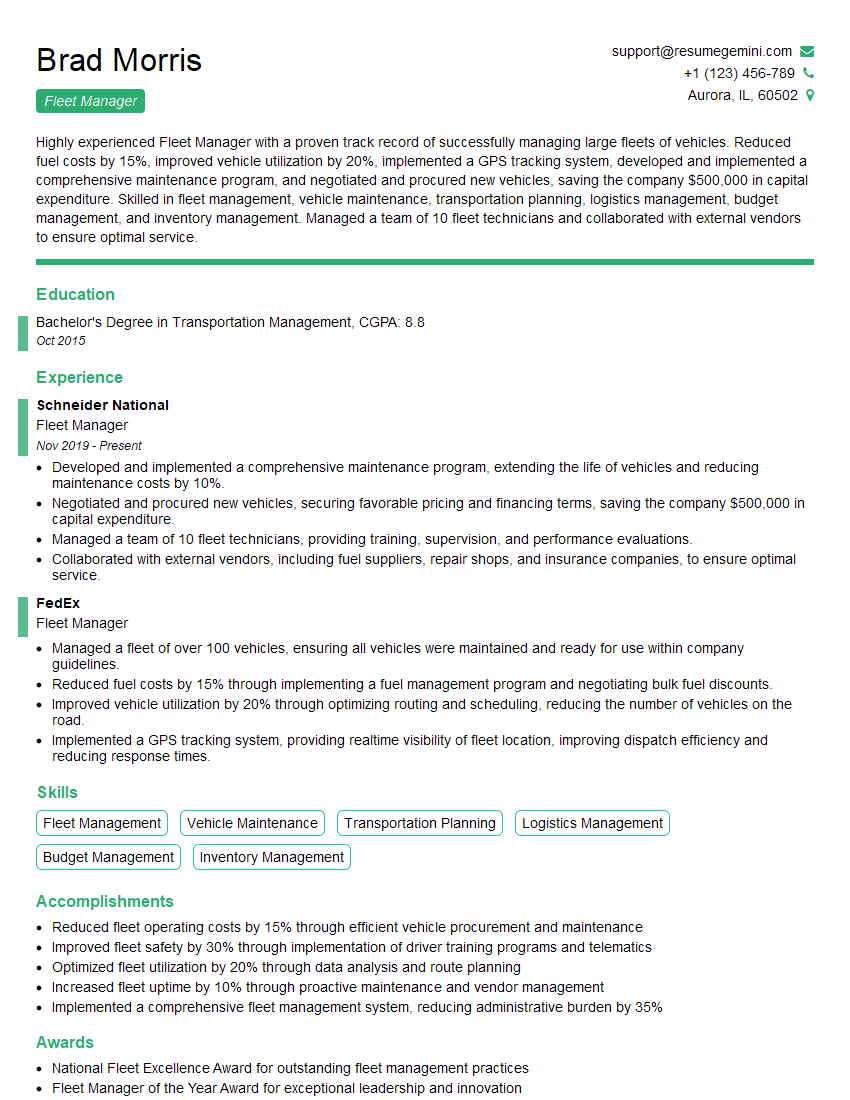
Fleet Manager Resume Sample
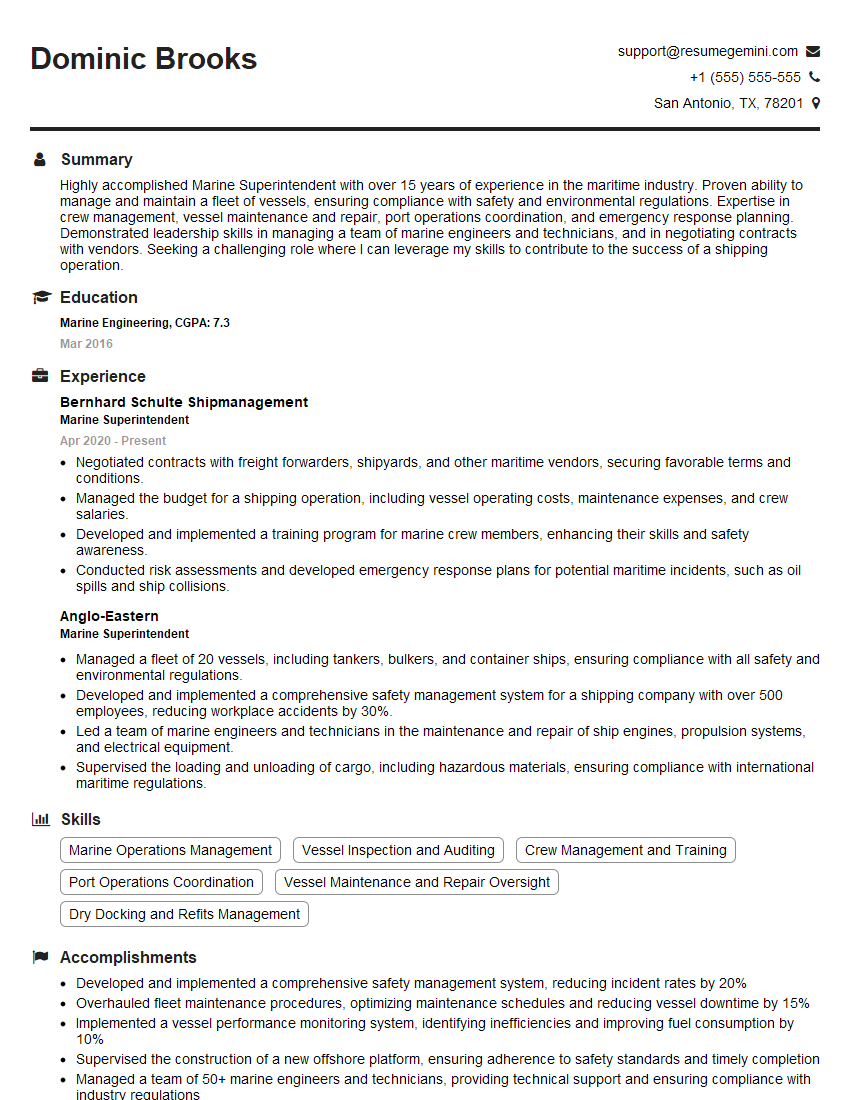
Marine Superintendent Resume Sample
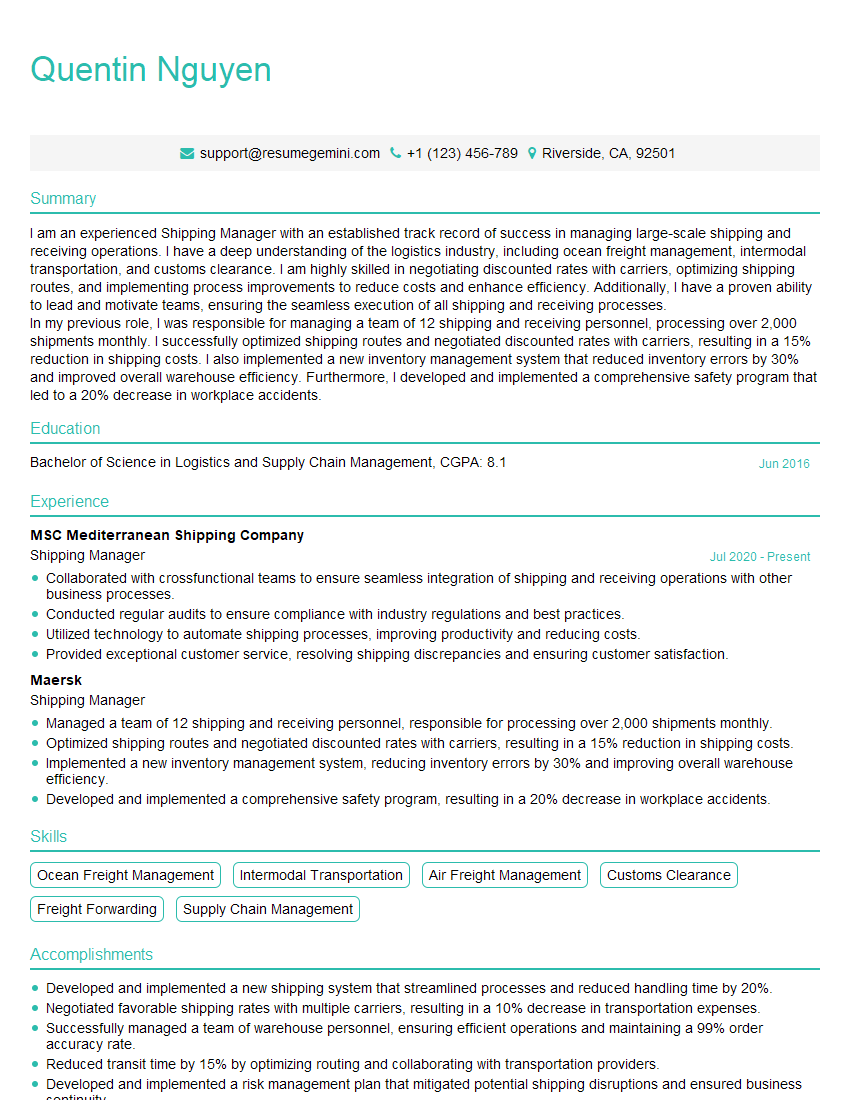
Shipping Manager Resume Sample
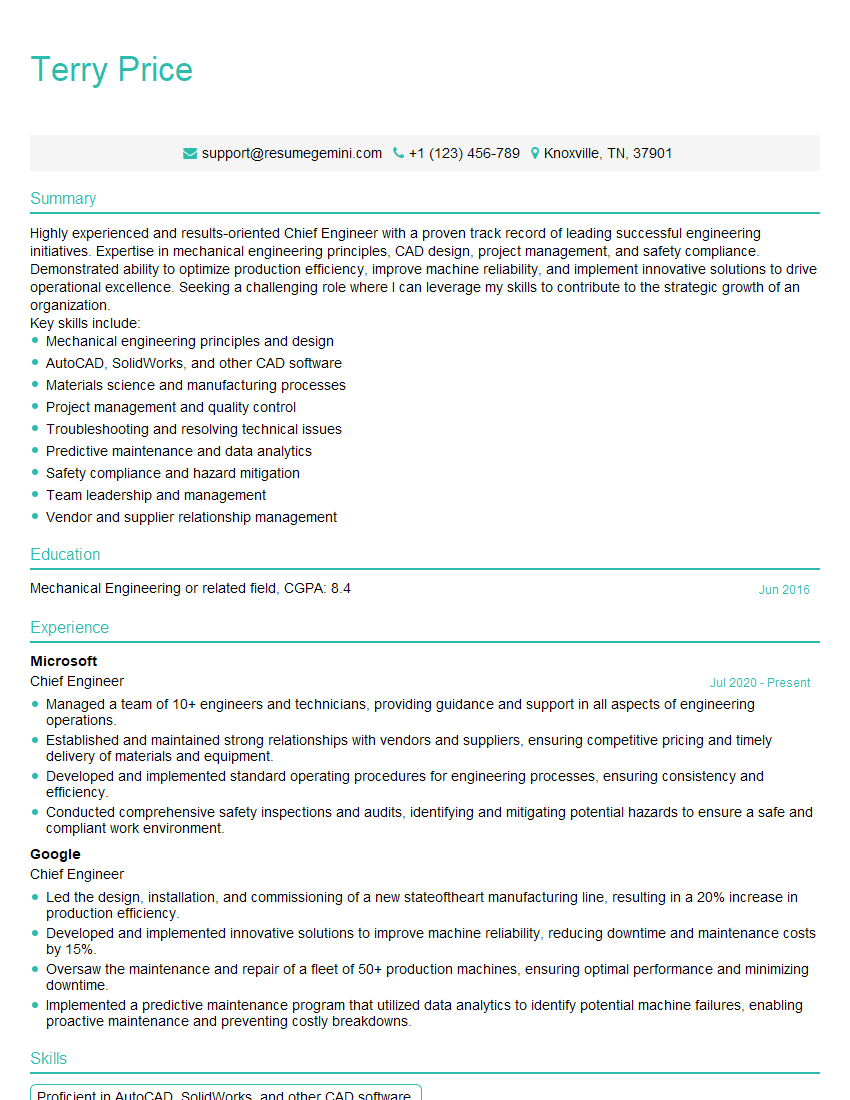
Chief Engineer Resume Sample
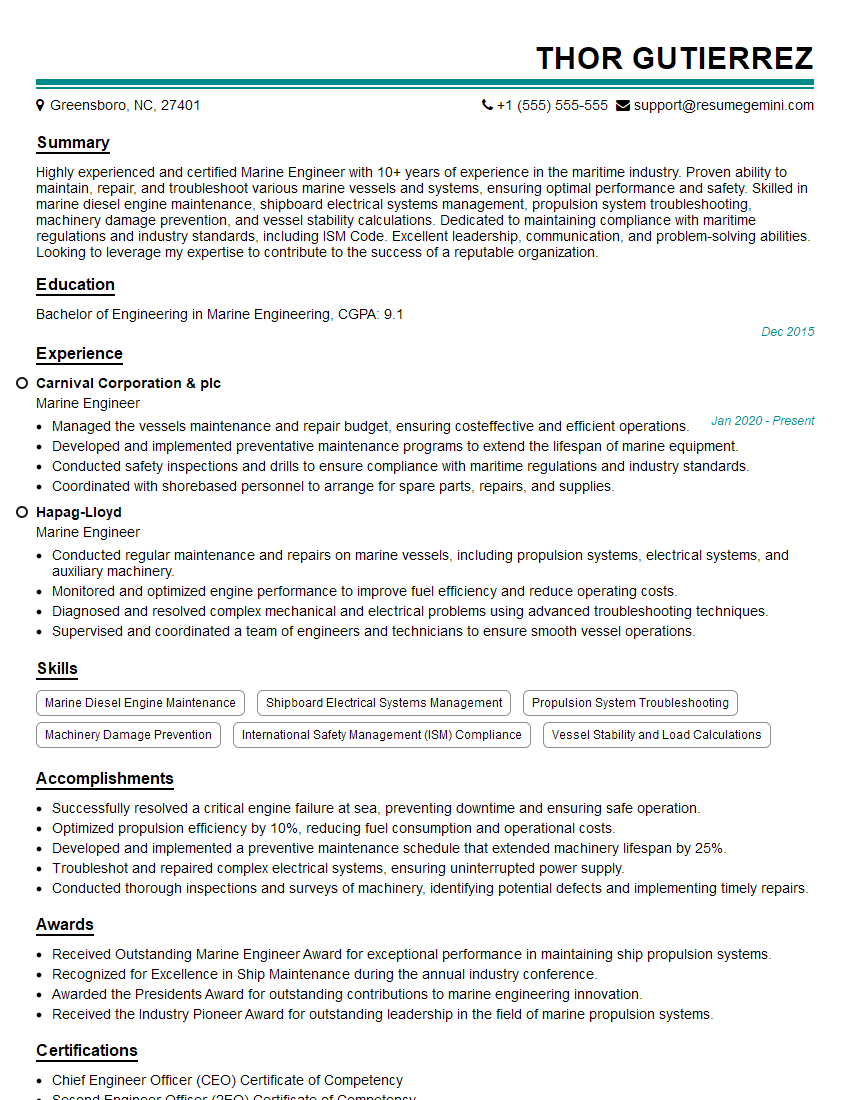
Marine Engineer Resume Sample
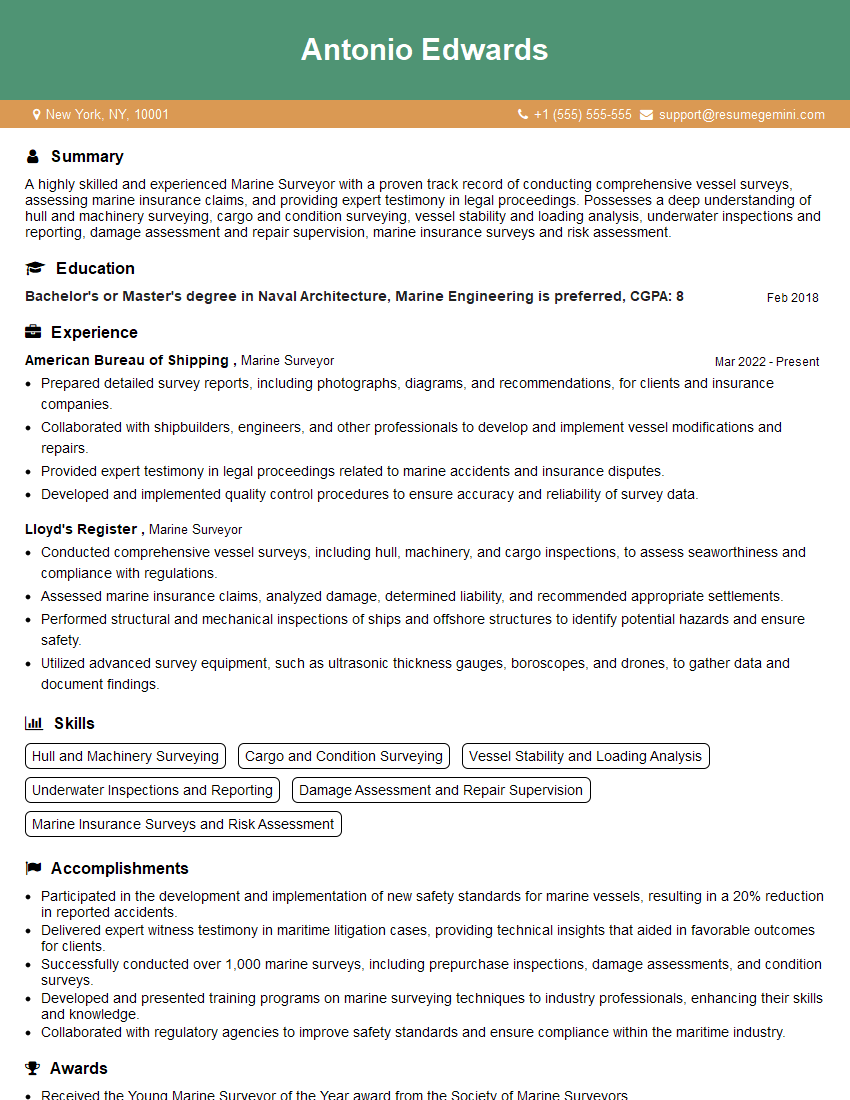
Marine Surveyor Resume Sample
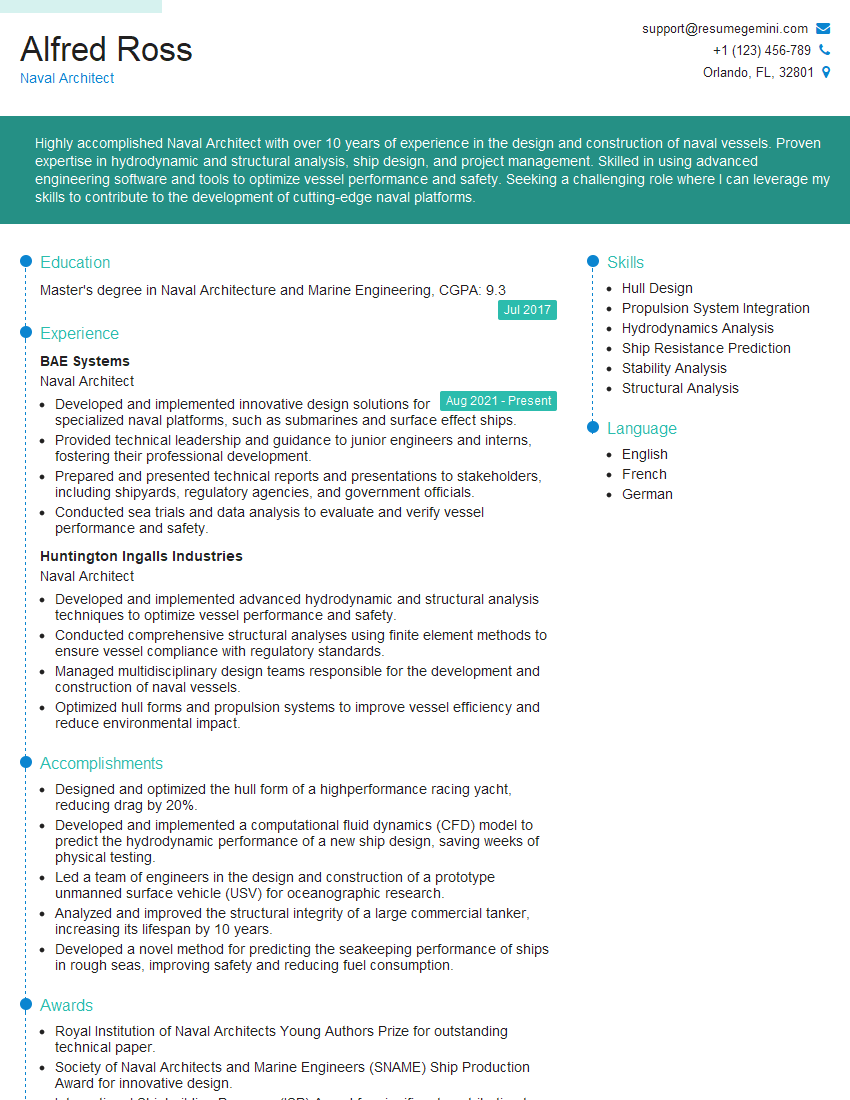
Naval Architect Resume Sample
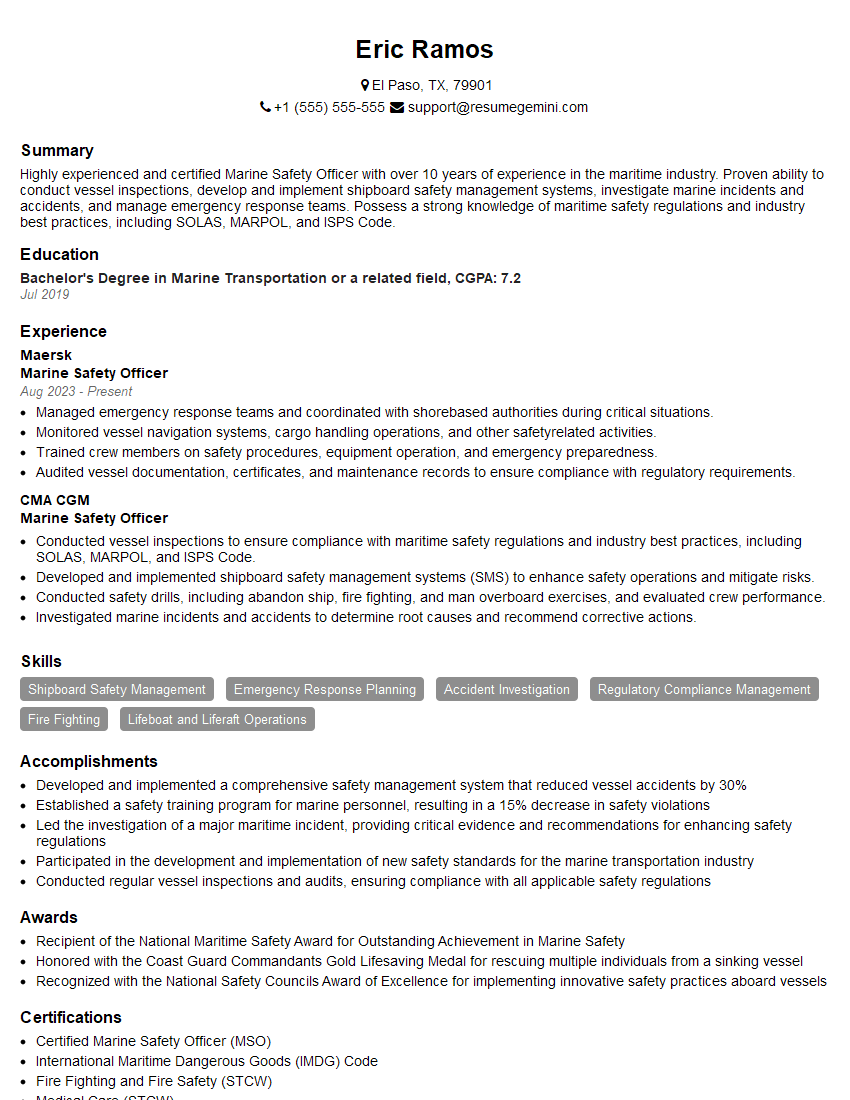
Marine Safety Officer Resume Sample
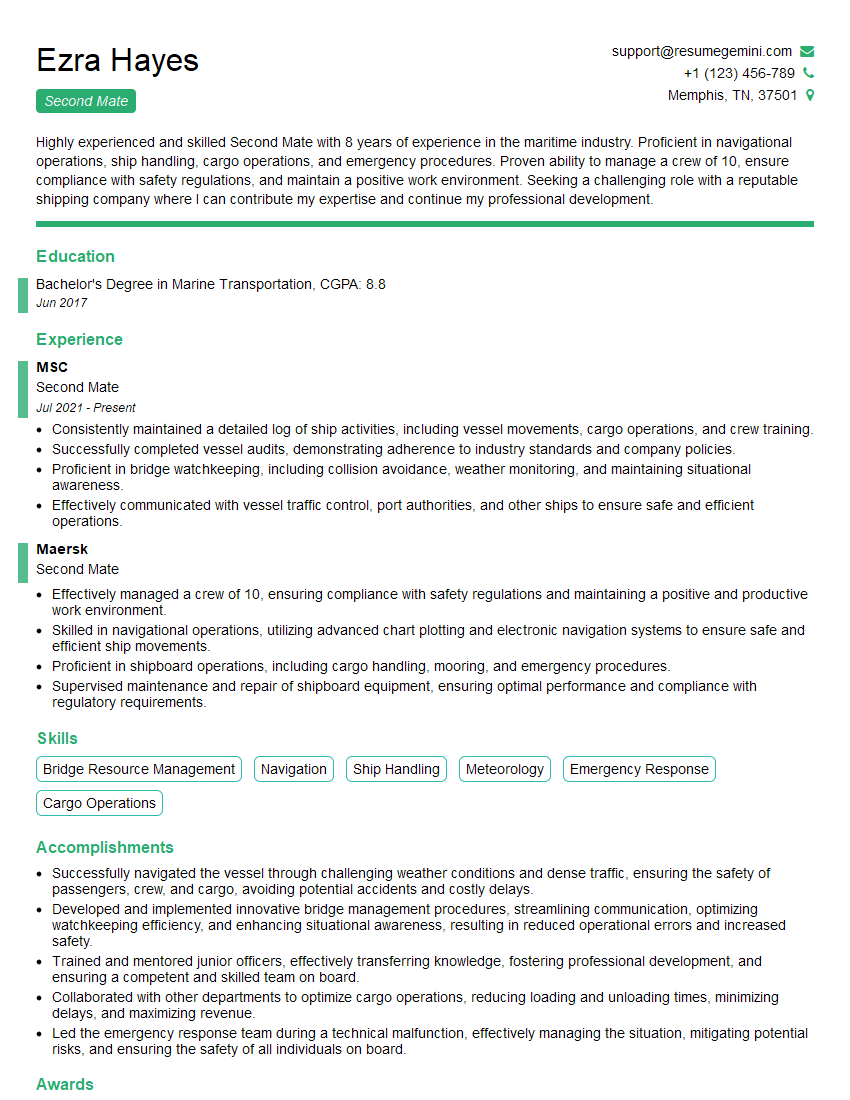
Second Mate Resume Sample
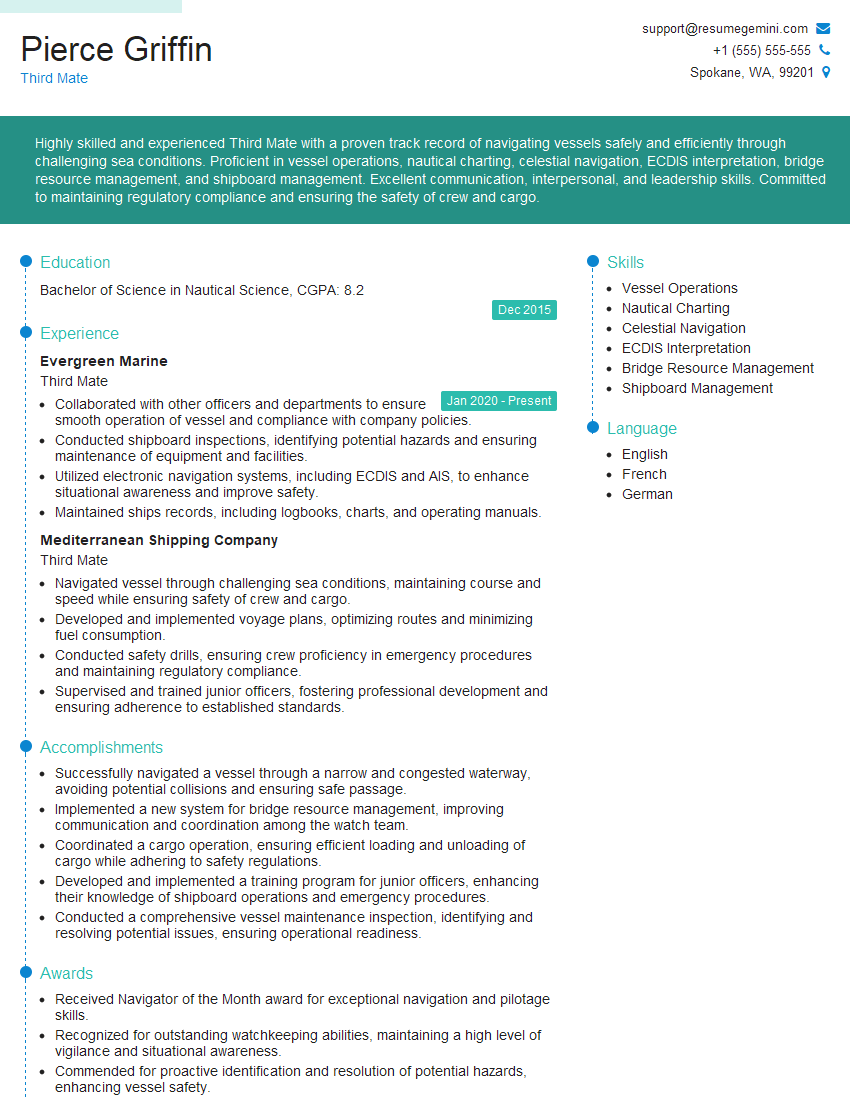
Third Mate Resume Sample
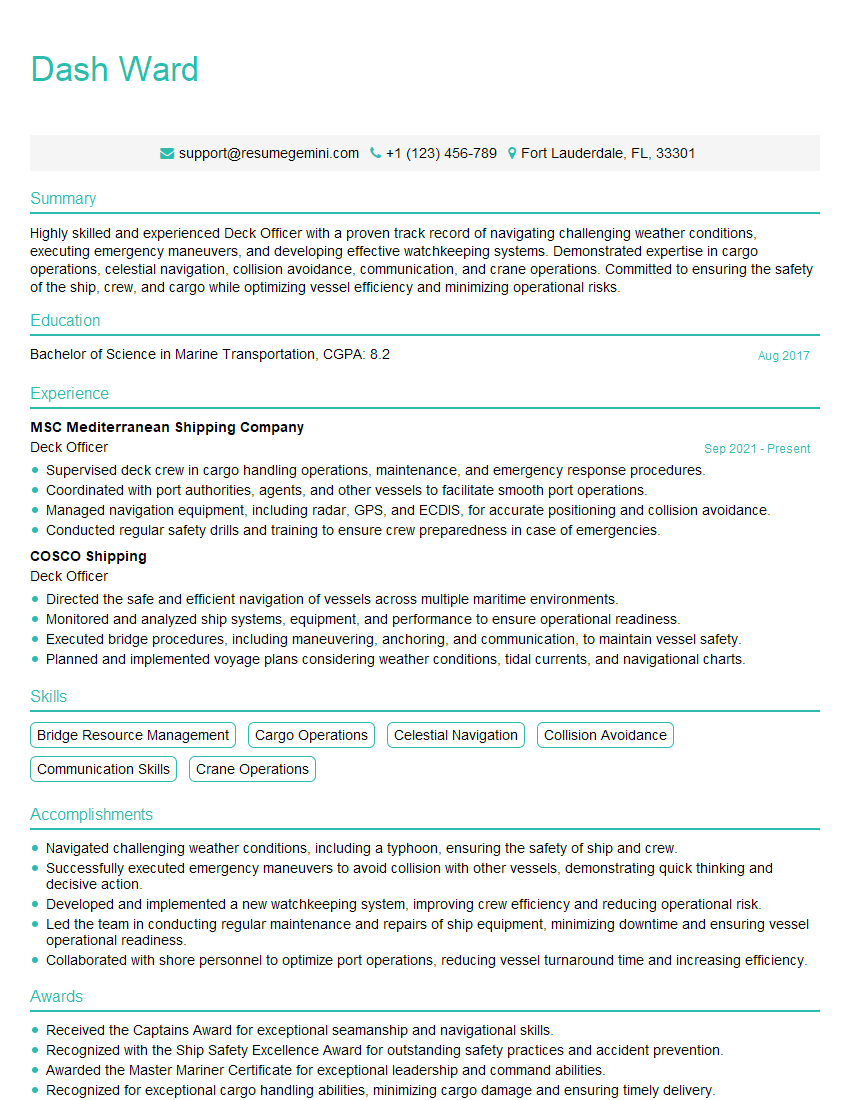
Deck Officer Resume Sample
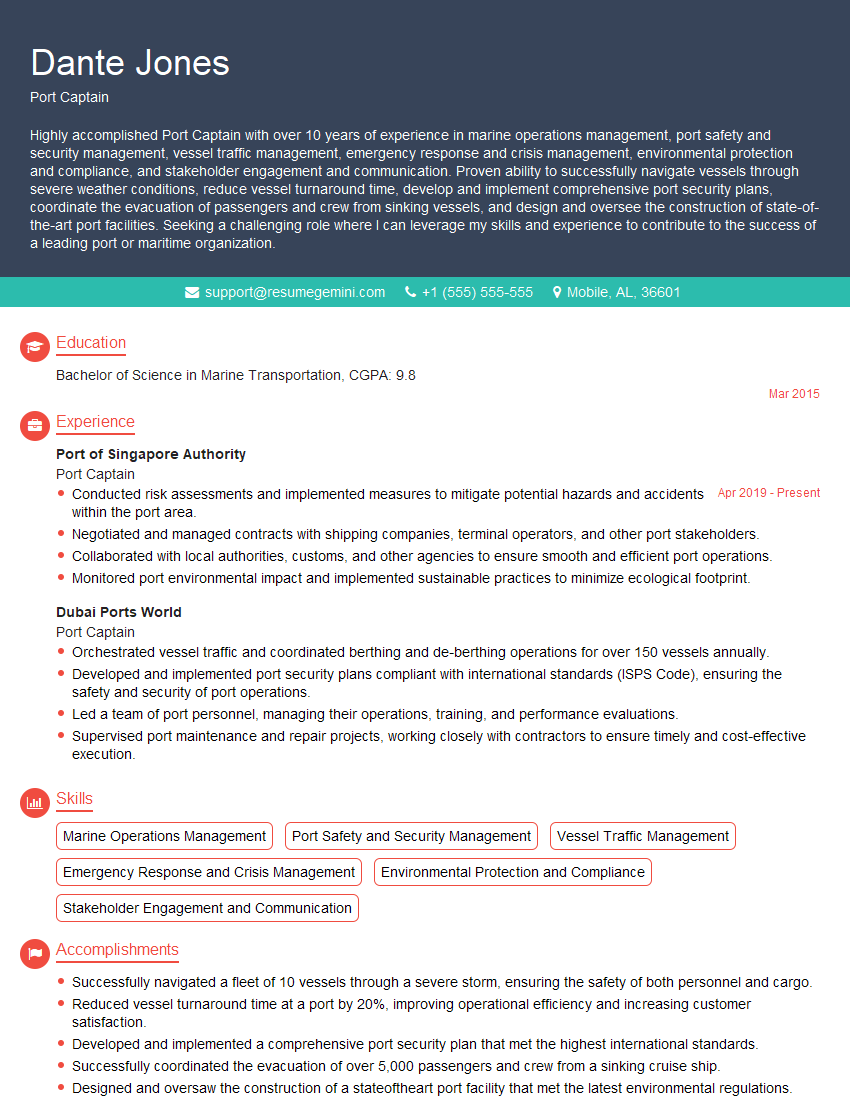
Port Captain Resume Sample
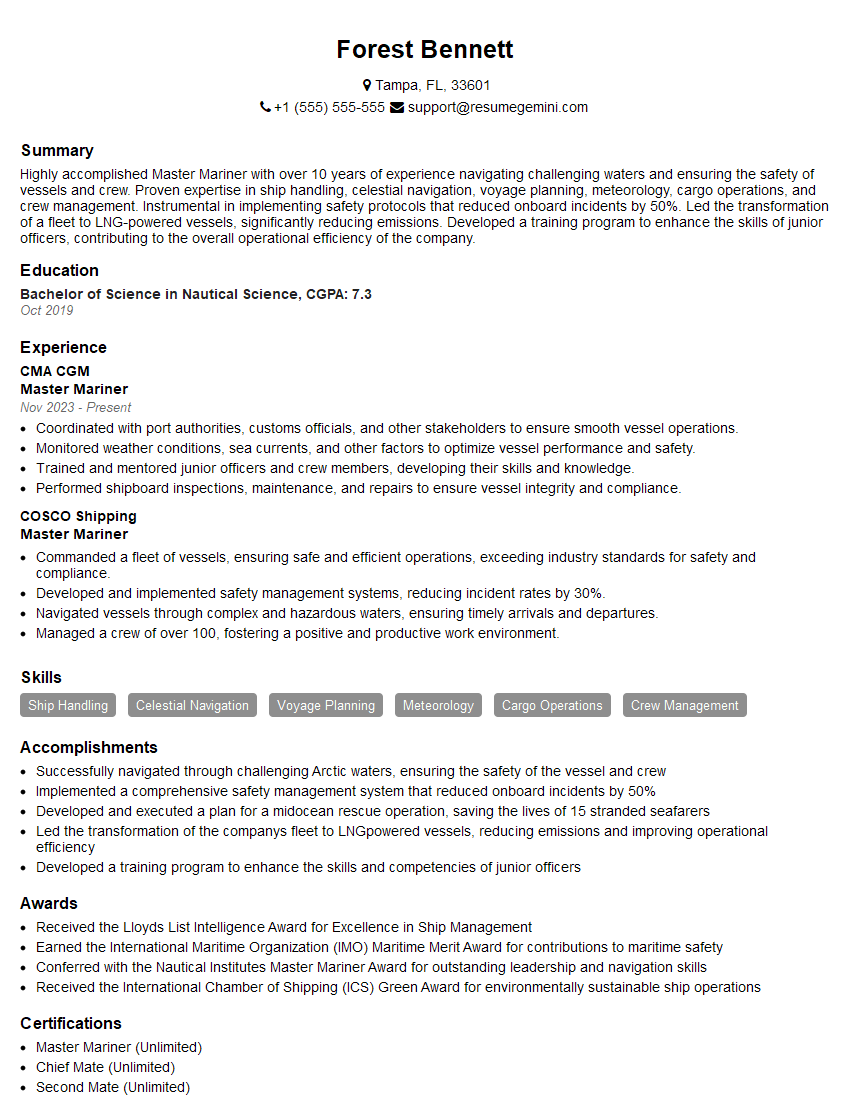
Master Mariner Resume Sample
Explore more articles
Users Rating of Our Blogs
Share Your Experience
We value your feedback! Please rate our content and share your thoughts (optional).
What Readers Say About Our Blog
Very informative content, great job.
good