Are you ready to stand out in your next interview? Understanding and preparing for Experience in Open Source Intelligence (OSINT) interview questions is a game-changer. In this blog, we’ve compiled key questions and expert advice to help you showcase your skills with confidence and precision. Let’s get started on your journey to acing the interview.
Questions Asked in Experience in Open Source Intelligence (OSINT) Interview
Q 1. Explain the difference between OSINT and HUMINT.
OSINT (Open-Source Intelligence) and HUMINT (Human Intelligence) are both crucial intelligence gathering methods, but they differ significantly in their sources and techniques. OSINT leverages publicly available information from various sources like the internet, social media, news articles, government documents, and academic publications. Think of it like a massive public library – all the information is out there, waiting to be discovered and analyzed. HUMINT, on the other hand, relies on direct human interaction and relationships to gather intelligence. This involves recruiting informants, conducting interviews, and building trust with individuals possessing valuable information. It’s like being a detective, using your network and interpersonal skills to obtain confidential knowledge.
In essence, OSINT is passive, focusing on publicly accessible data, while HUMINT is active, relying on personal connections and confidential sources. One is about finding needles in a haystack (OSINT), and the other is about getting someone to give you the needle directly (HUMINT).
Q 2. What are the ethical considerations involved in using OSINT?
Ethical OSINT practices are paramount. The key is to only access information that is publicly available and to respect the privacy and rights of individuals. Misusing OSINT can have serious legal and ethical ramifications. Some key considerations include:
- Consent: Always consider whether you have implicit or explicit consent to gather information about a person or entity. Scraping personal data without consent is unethical and potentially illegal.
- Privacy: Avoid accessing or disseminating sensitive personal information like medical records, financial data, or private communications unless legally authorized.
- Legality: Adhere to all applicable laws and regulations regarding data collection and usage. This includes respecting copyright and intellectual property rights.
- Transparency: If using OSINT in a professional context, ensure transparency with clients and stakeholders about the methods and sources used.
- Malicious Use: Never use OSINT to engage in illegal activities such as doxing, harassment, or stalking.
Ethical OSINT is about responsible information gathering. It’s about using available resources effectively while acting with integrity and respect for individuals and the law.
Q 3. Describe your experience using various OSINT tools (e.g., Maltego, Shodan, SpiderFoot).
I have extensive experience with various OSINT tools, including Maltego, Shodan, and SpiderFoot. Each tool serves a unique purpose in the investigation process.
- Maltego: I use Maltego for its powerful entity linking and visualization capabilities. It helps me build visual representations of relationships between people, organizations, and other entities. For example, I can start with a person’s name and Maltego can reveal connections to their social media profiles, associated companies, and even potential criminal activities by linking different data points together. This visual approach helps identify patterns and hidden connections much easier than manual methods.
- Shodan: Shodan is invaluable for discovering and analyzing internet-connected devices. I’ve used it to identify vulnerable systems, map network infrastructure, and gain insights into an organization’s technological footprint. For example, finding open ports on a company server or identifying specific types of equipment in use.
- SpiderFoot: SpiderFoot is a robust reconnaissance tool providing automated data collection from various sources. I employ it to systematically gather information on individuals, organizations, or specific topics. It helps automate the tedious parts of information gathering, such as collecting social media profiles, news articles, and website information, allowing me to focus on analyzing the results.
My experience with these tools extends to using them in conjunction with other open-source platforms and databases to build a comprehensive picture. It’s not just about the individual tools but also knowing how to combine them for maximum effectiveness.
Q 4. How do you verify the accuracy of information gathered from open sources?
Verifying the accuracy of OSINT data is critical. Simply because information is publicly available doesn’t make it accurate. My verification process involves several steps:
- Source Triangulation: I cross-reference information from multiple independent sources. If the same information appears consistently across reputable sources, it strengthens its credibility.
- Source Evaluation: I assess the reliability and bias of the source. Government websites are typically more reliable than anonymous blogs, and news organizations with strong reputations are generally considered to be more accurate than smaller, less established outlets.
- Date and Contextual Analysis: I consider the timeliness and context of information. Outdated information may be inaccurate or misleading.
- Fact-Checking: I use tools and websites specifically designed for fact-checking, especially for claims made in online articles or social media posts.
- Reverse Image Search: I use reverse image searches to verify the authenticity of images and confirm that they are not doctored or misrepresented.
Verification is an ongoing process. I approach OSINT with a healthy dose of skepticism, constantly evaluating the evidence and its sources to build a sound and accurate picture.
Q 5. What are some common challenges faced when conducting OSINT investigations?
Conducting OSINT investigations presents several challenges:
- Information Overload: The sheer volume of publicly available information can be overwhelming. Efficient search strategies and data filtering techniques are essential.
- Data Silos: Information is often fragmented across multiple sources, requiring considerable effort to piece together a comprehensive picture. This necessitates a strategic and systematic approach.
- Information Accuracy and Bias: Not all open-source information is accurate or unbiased, so careful source evaluation and verification are critical. This demands strong critical thinking skills.
- Evolving Technologies and Platforms: The online landscape is constantly evolving, requiring continuous learning and adaptation to new tools, techniques, and sources. Adaptability and proactive learning are key.
- Legal and Ethical Considerations: Navigating the legal and ethical boundaries of OSINT requires a strong understanding of data privacy and relevant laws and regulations.
Overcoming these challenges requires a combination of technical skills, critical thinking, meticulous planning, and adaptability.
Q 6. Describe your process for planning and executing an OSINT investigation.
My OSINT investigation process is structured and iterative:
- Define Objectives and Scope: Clearly articulate the investigation’s goals and parameters. What information are you seeking? What are the boundaries of the investigation?
- Develop a Search Strategy: Identify relevant keywords, sources, and tools based on the investigation’s objectives. This often involves brainstorming potential sources and information pathways.
- Data Collection: Systematically collect information from identified sources. This stage often involves using automated tools to enhance efficiency.
- Data Analysis: Analyze the collected data, identifying patterns, connections, and discrepancies. Visual tools and data mapping techniques are often utilized here.
- Information Verification: Verify the accuracy of the findings using multiple independent sources and techniques. Fact-checking and source evaluation are critical here.
- Report Preparation: Document the findings, methodology, and conclusions in a clear and concise report, highlighting key evidence and analysis.
The process is iterative, meaning that findings from one stage might lead to adjustments in other stages. For example, initial findings may reveal new sources or necessitate a refinement of the search strategy.
Q 7. How do you prioritize information gathered during an OSINT investigation?
Prioritizing information during an OSINT investigation is crucial due to the often overwhelming amount of data. My approach considers several factors:
- Relevance to Objectives: Information directly supporting the investigation’s primary goals receives higher priority. This ensures focus on crucial data.
- Source Reliability: Information from trustworthy and reputable sources is prioritized over information from less reliable sources. This minimizes bias and inaccuracies.
- Timeliness: Recent information generally holds more weight than outdated information. This prioritizes current insights and trends.
- Verifiability: Easily verifiable information is prioritized over information that is difficult to corroborate. This enhances the reliability of conclusions.
- Completeness of the Picture: Information filling gaps in the existing understanding of the situation gets higher priority. This provides context and fills in the bigger picture.
Prioritization is a dynamic process, adjusted based on ongoing analysis and new findings. It’s not a rigid system but a flexible approach aimed at maximizing efficiency and delivering accurate, relevant insights.
Q 8. How do you handle conflicting or contradictory information found during an OSINT investigation?
Conflicting information is the bread and butter of OSINT. It’s rarely a case of finding one definitive source; instead, it’s a process of triangulation and verification. When encountering conflicting data, I employ a multi-step approach:
Source Verification: I meticulously examine the credibility of each source. This involves assessing the source’s reputation, bias, potential motives, and historical accuracy. For example, a blog post from an anonymous user carries less weight than a report from a reputable news agency.
Triangulation: I seek corroborating evidence from multiple independent sources. If three unrelated sources point to the same conclusion, the likelihood of accuracy increases significantly. Conversely, if information is only supported by a single, questionable source, I treat it with extreme skepticism.
Contextual Analysis: I consider the context surrounding the information. Is the conflicting data from a different time period, geographic location, or perspective? Understanding the context can help reconcile seemingly contradictory details.
Data Quality Assessment: I analyze the quality of the data itself. Is it primary (original) or secondary (derived)? Are there any obvious errors, inconsistencies, or omissions? High-quality data is more reliable.
Documentation: Crucially, I meticulously document all sources and my reasoning, clearly outlining why I accept or reject specific pieces of information. This transparency is crucial for auditability and maintaining the integrity of the investigation.
For instance, during an investigation involving a potential cyberattack, I might find conflicting reports on the timing and scale of the incident. By meticulously checking the sources, their reputations, and the evidence they provide, I can form a more accurate picture of the event.
Q 9. Explain your experience with social media intelligence gathering.
Social media is a goldmine of OSINT data. My experience spans various platforms, including Twitter, Facebook, LinkedIn, Instagram, and even niche forums. I utilize a variety of techniques:
Keyword Searches: I employ advanced search operators (e.g.,
#hashtag,@username,-keyword) to refine my searches and filter irrelevant results. This allows me to pinpoint specific information related to my investigation.Network Analysis: I analyze relationships between individuals and groups on social media to identify connections, influencers, and potential collaborators. Tools like Gephi can visualize these relationships, revealing hidden patterns.
Content Analysis: I analyze the content of posts, images, and videos for clues. This includes examining metadata, timestamps, and geolocation data to verify authenticity and context.
Profile Analysis: I study user profiles for biographical information, affiliations, interests, and online behavior. Inconsistencies or discrepancies in profiles can be valuable indicators.
Sentiment Analysis: I assess the emotional tone and opinions expressed in social media posts to understand public perception and identify potential risks or opportunities.
For example, during a brand reputation management investigation, I might analyze social media to identify negative sentiment towards a product or service, and subsequently assess the impact and scale of that sentiment.
Q 10. How do you use OSINT to identify potential threats?
OSINT is invaluable for proactive threat identification. I use it to:
Identify Potential Attack Vectors: By researching a target’s online presence, I can identify potential vulnerabilities, such as outdated software, exposed systems, or weak security practices that could be exploited by attackers.
Assess Threat Actors: I monitor online forums and dark web channels to identify individuals or groups involved in malicious activities. This can involve analyzing their communication patterns, technical skills, and past actions to predict future threats.
Monitor for Indicators of Compromise (IOCs): I actively search for IOCs, such as malicious URLs, IP addresses, or file hashes, associated with known threats. This proactive monitoring enables early detection of attacks.
Conduct Competitive Intelligence: Analyzing competitors’ online presence can reveal their strengths and weaknesses, helping to anticipate potential threats and vulnerabilities.
For example, monitoring a competitor’s social media for employee announcements of new hires can sometimes reveal information about their security practices or new technologies which can point to areas that may be vulnerable.
Q 11. How do you use OSINT to support incident response efforts?
During incident response, OSINT plays a critical role in accelerating investigations and mitigating damage. I utilize it to:
Gather Preliminary Information: OSINT can provide initial context about the incident, including the timing, nature, and potential impact.
Identify Attackers: OSINT can help pinpoint the individuals or groups responsible for the incident, providing valuable information for law enforcement or legal action.
Track Attacker Activities: OSINT can help monitor an attacker’s ongoing activities and predict future actions.
Assess Damage: OSINT can help assess the extent of the damage caused by the incident, including the number of affected systems, users, or data.
Communicate with Stakeholders: OSINT findings can be used to communicate with stakeholders, providing updates and information during the incident response.
For example, during a ransomware attack, OSINT can quickly identify the ransomware variant, the attackers’ demands, and even possibly provide information about past attacks from the same group, allowing for a faster response.
Q 12. Describe your experience with data analysis techniques used in OSINT.
Data analysis is fundamental to OSINT. I regularly use techniques like:
Data Mining: Extracting relevant information from large datasets, such as social media feeds or news archives.
Statistical Analysis: Identifying patterns and trends in the data, such as spikes in activity or unusual connections between individuals or events.
Network Graph Analysis: Visualizing relationships between entities to identify key players and influence networks.
Natural Language Processing (NLP): Analyzing text data to extract keywords, themes, and sentiment.
Machine Learning (ML): Utilizing ML algorithms to automate tasks such as identifying IOCs, detecting anomalies, or predicting future events.
For instance, I might use NLP to analyze thousands of social media posts to identify public sentiment towards a particular issue and then use network analysis to identify key influencers driving that narrative.
Q 13. What are some effective strategies for identifying and accessing relevant open-source data?
Accessing relevant open-source data requires a systematic approach:
Identify Relevant Keywords and Search Terms: Start by brainstorming relevant keywords and search terms related to your investigation. This forms the foundation of your search strategy.
Utilize Search Engines and Databases: Leverage advanced search operators within search engines like Google, Bing, and specialized OSINT search engines. Utilize databases like Shodan, Censys, and public record websites.
Explore Social Media Platforms: Utilize social media’s search functions, focusing on relevant hashtags, accounts, and groups.
Monitor News and Blogs: Stay updated with relevant news outlets and blogs covering your area of interest.
Leverage Specialized OSINT Tools: Use tools like Maltego, SpiderFoot, and others to automate data collection and analysis.
Remember, always respect terms of service and legal restrictions when accessing data. The ethical implications of OSINT are paramount.
Q 14. How do you stay updated with the latest developments in OSINT tools and techniques?
Staying updated in the rapidly evolving field of OSINT is crucial. I utilize several methods:
Attend Conferences and Webinars: Participating in industry conferences and webinars allows me to network with other professionals and learn about the latest tools and techniques.
Follow Industry Blogs and Publications: I regularly read blogs, articles, and newsletters from reputable sources in the OSINT community.
Engage in Online Communities: Participating in online forums and communities dedicated to OSINT provides access to discussions and insights from experienced practitioners.
Experiment with New Tools: I actively explore and experiment with new OSINT tools and techniques to stay abreast of the latest developments.
Continuous Learning: I dedicate time to personal learning and development through online courses, tutorials, and certifications.
Staying updated is an ongoing process; it’s essential to adapt to the constantly changing landscape of online information.
Q 15. Explain your understanding of different data types commonly used in OSINT (e.g., images, videos, text).
OSINT data comes in various forms, each requiring different handling and analysis techniques. Let’s explore some key types:
- Text Data: This is the most common type, encompassing everything from social media posts and news articles to forum discussions and leaked documents. Analysis often involves keyword searches, sentiment analysis, and network mapping to identify connections and trends. For example, analyzing tweets mentioning a specific company can reveal public sentiment and potential PR crises.
- Image Data: Images can provide visual evidence, geolocation data (EXIF data), and other metadata. Tools like reverse image search engines (like Google Images) can help identify the origin and context of an image. For instance, an image found on a suspect’s social media could be reverse-searched to find its original source and potentially corroborate other information.
- Video Data: Similar to images, videos can offer rich contextual information. Frame-by-frame analysis might reveal subtle details, while facial recognition technology can identify individuals. Analyzing a security camera video, for example, might reveal the identity of a perpetrator through facial recognition and clothing analysis.
- Audio Data: This includes recordings, podcasts, and even voice notes. Transcription services can convert audio to text for analysis. Audio analysis might also reveal underlying background noise that could provide clues about location.
- Metadata Data: This often overlooked data type includes information embedded within files, such as file creation dates, author details, GPS coordinates (in images and videos – EXIF data), and other attributes. Metadata can provide crucial timestamps and geographical context.
Understanding the nuances of each data type is crucial for effective OSINT investigations. The ability to extract meaningful insights from various formats is a key skill for any OSINT professional.
Career Expert Tips:
- Ace those interviews! Prepare effectively by reviewing the Top 50 Most Common Interview Questions on ResumeGemini.
- Navigate your job search with confidence! Explore a wide range of Career Tips on ResumeGemini. Learn about common challenges and recommendations to overcome them.
- Craft the perfect resume! Master the Art of Resume Writing with ResumeGemini’s guide. Showcase your unique qualifications and achievements effectively.
- Don’t miss out on holiday savings! Build your dream resume with ResumeGemini’s ATS optimized templates.
Q 16. How do you protect sensitive data during OSINT investigations?
Protecting sensitive data during OSINT investigations is paramount. This involves a multi-layered approach:
- Data Minimization: Only collect the data absolutely necessary for the investigation. Avoid unnecessary data collection to reduce the risk of exposure.
- Secure Storage: Use encrypted storage solutions (hard drives, cloud services) with strong passwords or multi-factor authentication to safeguard collected data. Avoid storing sensitive information on easily accessible devices.
- Anonymization/Pseudonymization: When possible, anonymize or pseudonymize data to remove personally identifiable information (PII) before analysis or storage. This is especially important if dealing with human subjects.
- Access Control: Implement strict access controls to limit access to sensitive data based on the need-to-know principle. Only authorized personnel should have access to sensitive findings.
- Regular Backups: Regularly back up data to secure offsite locations to prevent data loss and ensure business continuity.
- Compliance with Regulations: Ensure all data handling practices comply with relevant privacy laws and regulations such as GDPR, CCPA, etc.
It is vital to remember that even seemingly innocuous data can be a security risk if not properly handled. A robust security strategy is non-negotiable in OSINT.
Q 17. How do you document your OSINT findings?
Thorough documentation is essential for credibility, reproducibility, and legal defensibility. My approach includes:
- Detailed Notes: Maintain a comprehensive log of all sources, search terms, and findings. This includes timestamps, URLs, screenshots, and any relevant metadata.
- Structured Reporting: Use a consistent reporting format to organize findings logically, clearly separating facts from inferences. This allows for easy review and collaboration.
- Version Control: Use version control software to track changes and maintain the integrity of the investigative process. This provides an audit trail.
- Data Visualization: Visualize data through charts, graphs, and maps to facilitate understanding of complex relationships. This can make complex information more digestible for non-technical audiences.
- Secure Storage of Documentation: Store reports and related data securely, using appropriate access controls and encryption as mentioned previously.
Well-documented OSINT findings significantly enhance credibility and allow for easy review, replication, or use in legal proceedings.
Q 18. What are some common pitfalls to avoid when conducting OSINT investigations?
Several pitfalls can compromise the integrity of OSINT investigations:
- Confirmation Bias: Seek to confirm pre-existing beliefs instead of objectively evaluating evidence. Actively challenge assumptions.
- Misinterpretation of Data: Incorrectly interpret data due to lack of context or understanding of sources. Cross-reference information from multiple sources to validate.
- Overreliance on Single Sources: Base conclusions on a limited number of sources. Diversify your sources for a more comprehensive understanding.
- Ignoring Context: Fail to consider the surrounding context of data. Context is key to accurately interpret information.
- Neglecting Metadata: Overlook crucial details embedded in metadata. This can often reveal valuable insights.
- Privacy Violations: Collect or use data without considering privacy implications. Adhere to ethical and legal guidelines.
Avoiding these pitfalls requires critical thinking, rigorous methodology, and a strong ethical compass. Always strive for accuracy and avoid jumping to conclusions based on incomplete or unverified information.
Q 19. Describe your experience with using Boolean search operators.
Boolean search operators are fundamental to effective OSINT. They allow for precise and efficient querying of databases. My experience involves using operators like:
AND: Narrows searches to results containing all specified keywords. For example, searching for"John Doe" AND "New York"would only return results mentioning both terms.OR: Broadens searches to results containing at least one of the specified keywords. Searching for"malware" OR "virus"would return results containing either term.NOT: Excludes results containing a specific keyword. Searching for"cybersecurity" NOT "penetration testing"would exclude results related to penetration testing.*(wildcard): Matches any sequence of characters."hack*"would match “hacker,” “hacking,” etc."(quotation marks): Searches for an exact phrase."advanced persistent threat"finds only that specific phrase.
I routinely employ these operators in various search engines (Google, Bing, specialized databases) and social media platforms to refine search queries and locate specific pieces of information efficiently. They are crucial for effectively navigating vast datasets and isolating relevant findings.
Q 20. How do you use OSINT to support competitive intelligence gathering?
OSINT is invaluable for competitive intelligence (CI). I use it to:
- Monitor Competitors’ Activities: Track competitors’ social media presence, news mentions, press releases, and website updates to identify new products, services, marketing campaigns, or strategic partnerships.
- Identify Emerging Trends: Analyze public data to understand emerging trends in the industry and identify potential opportunities or threats.
- Assess Competitor Strengths and Weaknesses: Gather information about competitors’ products, technologies, market share, and customer reviews to assess their competitive landscape.
- Track Competitors’ Employees: (ethically and legally) Analyze publicly available information about competitors’ employees (LinkedIn profiles, publications) to understand their expertise, experience, and potential talent acquisition strategies.
- Identify Potential Acquisition Targets: Use OSINT to identify companies that might be suitable for acquisition by analyzing their financial performance, technology, and market position.
By combining OSINT with other CI methods, a comprehensive understanding of the competitive landscape can be achieved, informing strategic decisions and providing a competitive edge.
Q 21. Explain your understanding of legal and regulatory frameworks related to OSINT.
Understanding legal and regulatory frameworks is crucial for ethical and legal OSINT. Key considerations include:
- Data Privacy Laws: GDPR (EU), CCPA (California), and other similar regulations govern the collection, use, and storage of personal data. Adherence is mandatory.
- Copyright Laws: Respect copyright restrictions when using copyrighted material. Obtaining permission or using only publicly available, non-copyrighted information is essential.
- Terms of Service: Always abide by the terms of service of websites and platforms used during investigations. Violating these terms can lead to account suspension or legal action.
- Computer Fraud and Abuse Act (CFAA): In the US, the CFAA prohibits unauthorized access to computer systems. OSINT activities must remain within legal bounds.
- Local Laws and Regulations: Recognize that local laws may vary. Research applicable laws in the relevant jurisdiction before conducting any OSINT investigation.
Ethical conduct and legal compliance are paramount. Ignoring legal frameworks can lead to severe consequences, including legal penalties and reputational damage. It’s vital to consult with legal counsel when necessary to ensure compliance.
Q 22. How do you handle situations where access to information is restricted?
Restricted access to information is a common challenge in OSINT. My approach is multifaceted and prioritizes ethical and legal considerations. First, I explore alternative sources. If a particular database or website requires payment or authorization, I investigate whether publicly available information can provide similar insights. This might involve searching for news articles, social media posts, or publicly accessible government records that might indirectly reveal the needed data.
Secondly, I leverage advanced search techniques. This includes using specialized search operators (like site:, intitle:, or filetype: in Google) to refine my searches and uncover hidden information. I also utilize advanced search engines and specialized databases that might offer alternative access points.
Finally, I consider the ‘human element’. Sometimes, networking and connecting with relevant individuals within a community or industry can provide valuable information that is not readily available online. Always, I ensure that my methods remain within legal and ethical bounds, respecting privacy and intellectual property rights.
Q 23. Describe your experience with advanced OSINT techniques (e.g., network analysis, data visualization).
My experience with advanced OSINT techniques includes extensive use of network analysis and data visualization. For network analysis, I’m proficient in using tools like Maltego and Gephi to map relationships between individuals, organizations, and entities. For example, during an investigation into a potential disinformation campaign, I used Maltego to visualize the network of accounts spreading misinformation, identifying key influencers and the spread patterns of false narratives. This visual representation made it easy to understand the campaign’s structure and identify the origin point.
Data visualization plays a critical role in presenting findings effectively. I use tools like Tableau and Power BI to create interactive dashboards that illustrate relationships, trends, and key insights. For instance, when analyzing social media data, I would create visualizations that depict the sentiment towards a particular event or the volume of activity over time, providing a clear picture of the situation.
Q 24. How would you approach an investigation involving a specific type of threat (e.g., phishing, malware)?
Investigating threats like phishing or malware requires a systematic approach. For phishing, I would begin by analyzing the phishing email or website itself, examining the sender’s email address, links, and any embedded content for anomalies. I would cross-reference the email addresses and domain names against known threat intelligence databases to determine if they have been previously flagged. Next, I’d look into the social engineering techniques used in the phishing attempt to understand the target audience and potential vulnerabilities.
With malware, I’d use sandboxing techniques to analyze the behavior of the malware in a controlled environment. I would leverage VirusTotal and other malware analysis platforms to identify the malware’s type, capabilities, and known indicators of compromise (IOCs). The next step would involve tracing the malware’s origin and distribution channels through network analysis techniques and by examining related logs and events.
In both cases, meticulously documenting every step is crucial to maintain the integrity of the investigation and ensure reproducibility.
Q 25. How do you measure the effectiveness of your OSINT investigations?
Measuring the effectiveness of OSINT investigations is critical. I use a multi-faceted approach. First, I assess the accuracy and completeness of the gathered intelligence against pre-defined objectives. This often involves comparing my findings against corroborated information from other sources. Second, I evaluate the timeliness of the intelligence. Was the information gathered promptly enough to be relevant and actionable?
Third, I consider the impact of the intelligence gathered. Did it contribute to a successful outcome, such as disrupting a malicious campaign, identifying a threat actor, or informing a critical decision? This impact can be both qualitative and quantitative. Finally, a post-investigation review identifying areas for improvement in methodology or tools used is essential for continued professional development.
Q 26. What are some key performance indicators (KPIs) you would use to evaluate OSINT success?
Key Performance Indicators (KPIs) for OSINT success include:
- Accuracy of intelligence: Percentage of information verified as accurate.
- Timeliness of intelligence: Time taken to gather critical information.
- Completeness of intelligence: Extent to which the investigation achieved its objectives.
- Actionability of intelligence: How effectively the gathered information can be used to support decision-making or action.
- Cost-effectiveness: The return on investment in terms of resources used versus the value of the intelligence gained.
These KPIs are tracked and analyzed to evaluate the overall efficiency and effectiveness of OSINT operations and identify areas needing improvement.
Q 27. Describe a time you faced a significant challenge during an OSINT investigation and how you overcame it.
During an investigation into a complex cybercrime operation, I encountered a significant hurdle when a key piece of information – a specific IP address – was obfuscated through several layers of proxy servers. Traditional techniques were failing to uncover the true origin. To overcome this, I employed a combination of techniques. I analyzed network traffic logs from various sources, including publicly available threat intelligence feeds. I leveraged passive DNS analysis to trace the evolution of the IP address across different time periods.
Further, I used advanced geolocation techniques, including analyzing BGP routing tables and leveraging publicly available WHOIS information, to map the likely location of the servers. Through this layered approach and careful correlation of data, I was able to successfully identify the true origin of the IP address and unveil the perpetrator’s location, leading to a successful conclusion of the investigation.
Q 28. What are your future aspirations and career goals within the field of OSINT?
My future aspirations in OSINT involve specializing in advanced threat intelligence analysis and developing innovative techniques for uncovering hidden information. I aim to contribute to the field by conducting research on emerging OSINT methodologies and techniques, particularly those involving artificial intelligence and machine learning. I am also keen to explore the ethical implications of OSINT and advocate for responsible data collection and usage within the field. Ultimately, I aspire to be a leader in the field, guiding and mentoring the next generation of OSINT professionals.
Key Topics to Learn for Your Open Source Intelligence (OSINT) Interview
Ace your next interview by mastering these key areas of OSINT. Remember, practical application is key!
- Data Collection & Sources: Understanding the diverse landscape of publicly available information – from social media and online forums to government websites and news archives. Think critically about the reliability and biases inherent in different sources.
- Data Analysis & Interpretation: Learn to effectively analyze gathered information, identify patterns, and draw meaningful conclusions. Practice techniques for verifying information and identifying misinformation.
- OSINT Tools & Technologies: Familiarize yourself with various OSINT tools and techniques, including search engines, social media analysis platforms, and data visualization tools. Be prepared to discuss your experience with specific tools and their practical applications.
- Legal & Ethical Considerations: Demonstrate a strong understanding of the legal and ethical implications of OSINT investigations. Be ready to discuss responsible data handling and privacy concerns.
- Investigative Methodologies: Showcase your ability to structure an OSINT investigation, from defining objectives and developing a research plan to documenting findings and presenting conclusions clearly and concisely.
- Problem-Solving & Case Studies: Practice applying OSINT techniques to solve hypothetical scenarios or real-world case studies. This will allow you to showcase your analytical and problem-solving skills.
- Visualization & Reporting: Learn to effectively communicate your findings through clear and concise reports, using visualizations where appropriate to enhance understanding.
Next Steps: Level Up Your OSINT Career
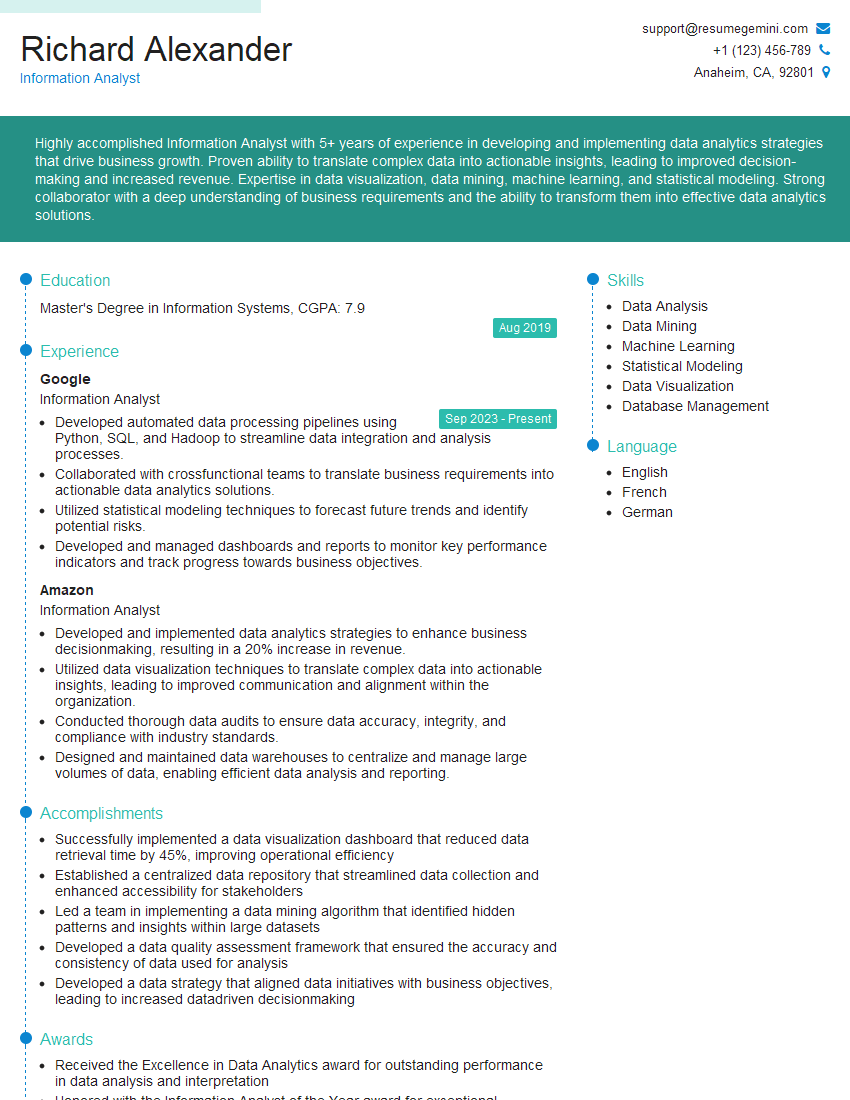
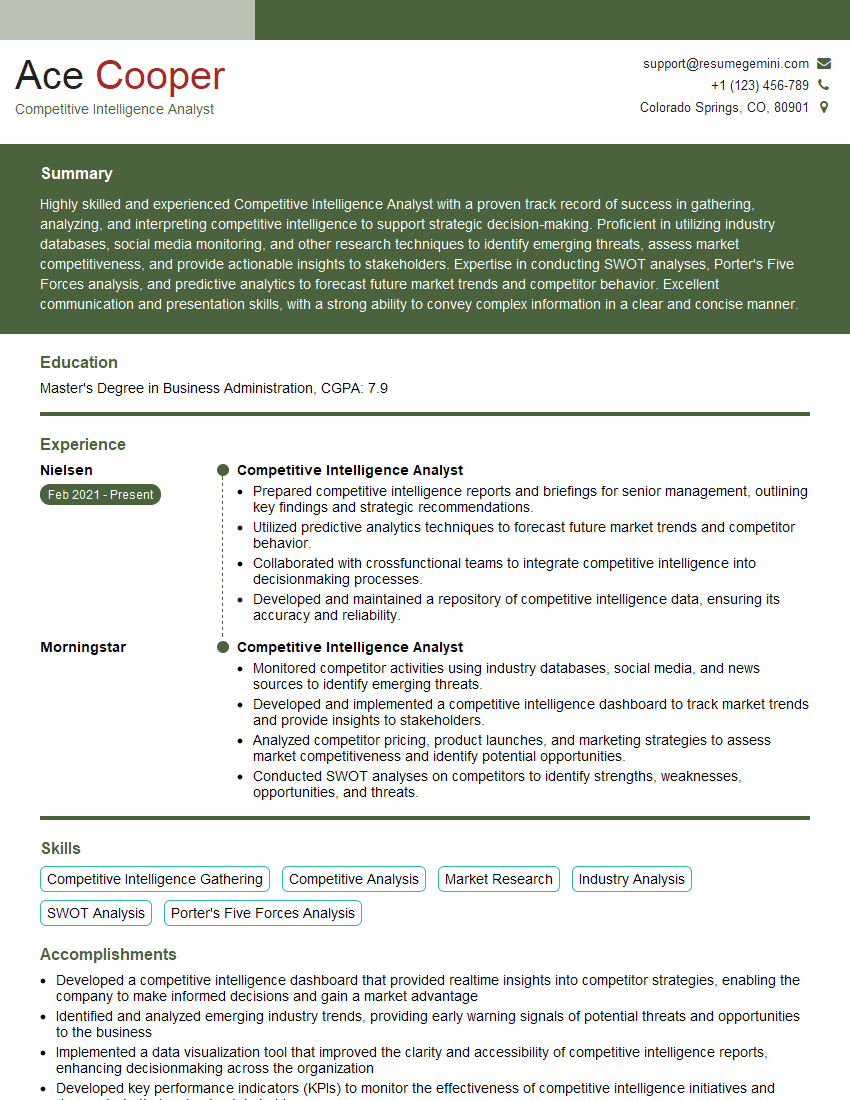
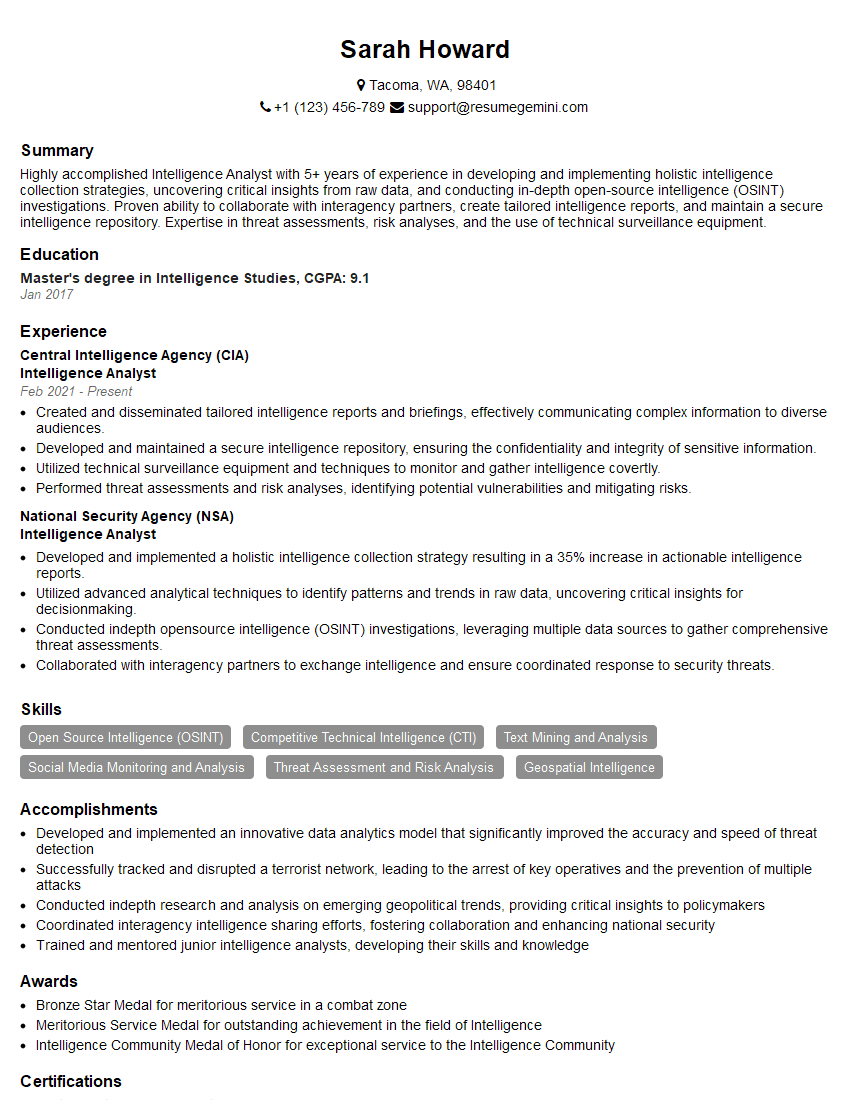
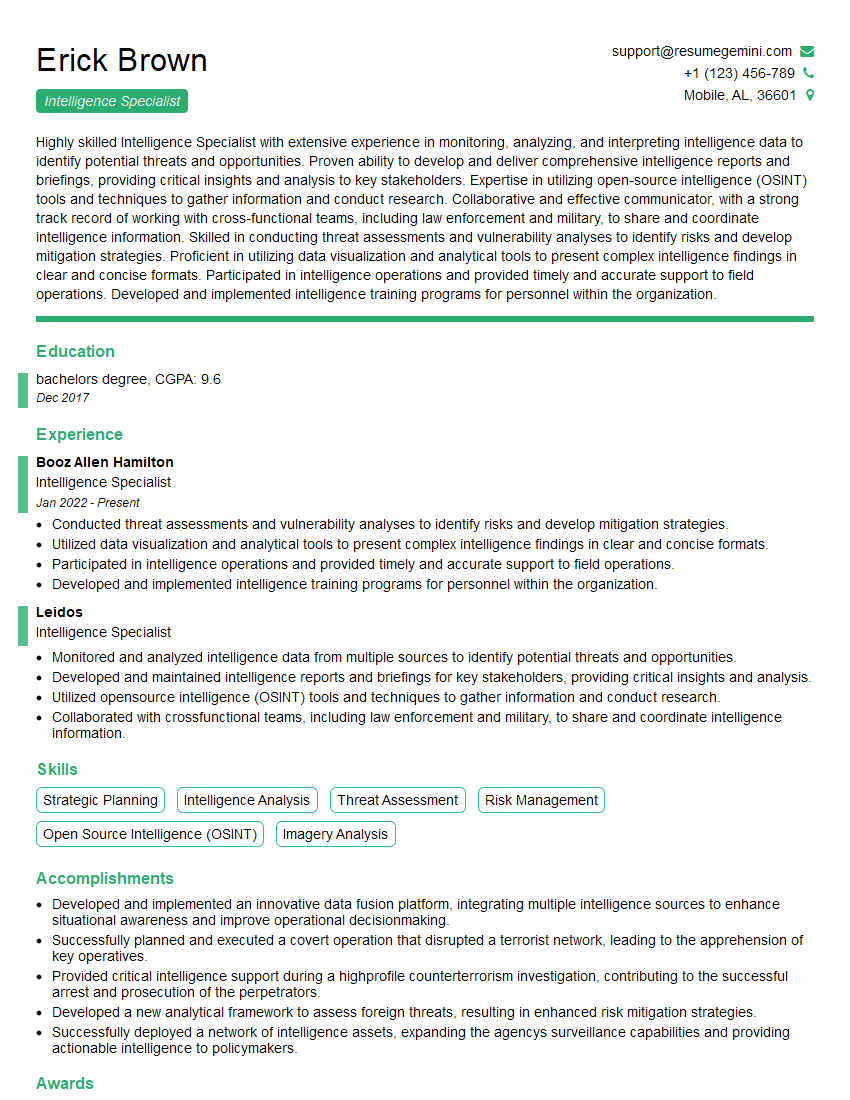
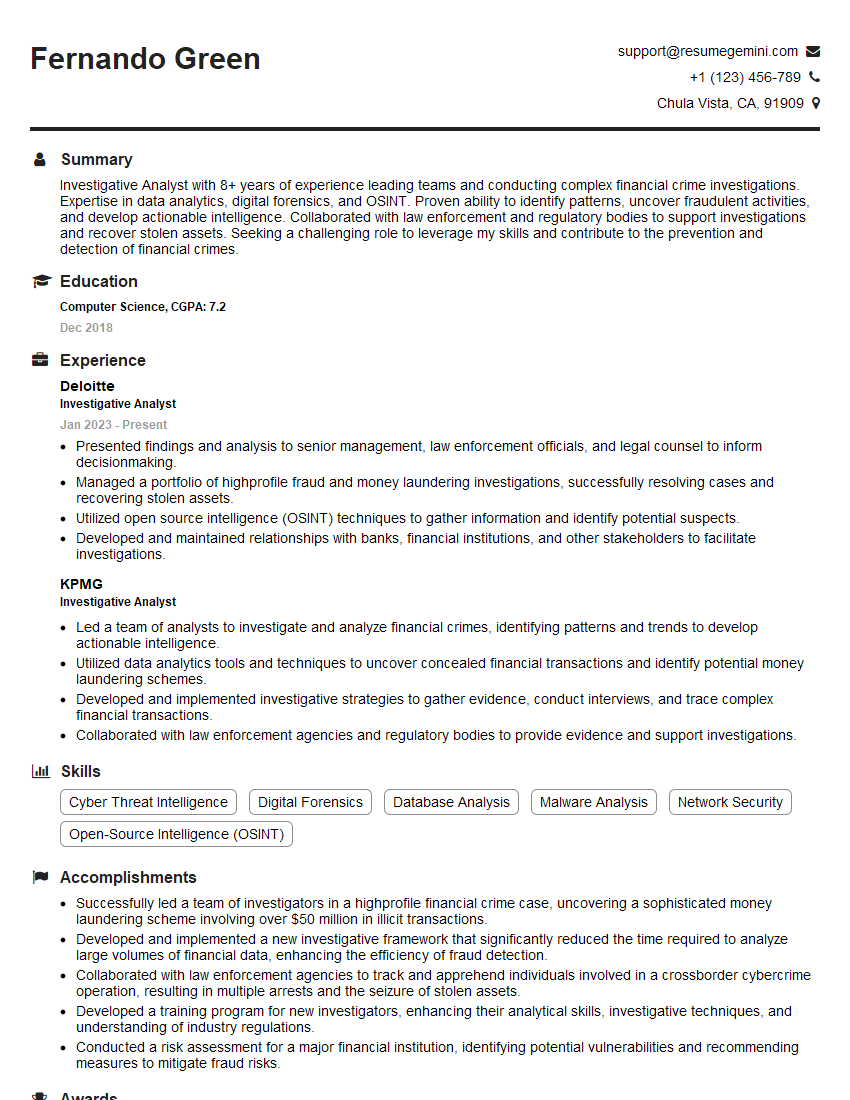
Mastering OSINT opens doors to exciting and impactful career opportunities. To maximize your chances, a strong, ATS-friendly resume is crucial. ResumeGemini is a trusted resource that can help you craft a compelling resume that highlights your skills and experience effectively. We provide examples of resumes tailored to OSINT professionals, helping you present your qualifications in the best possible light. Take the next step towards your dream OSINT career today!
Explore more articles
Users Rating of Our Blogs
Share Your Experience
We value your feedback! Please rate our content and share your thoughts (optional).
What Readers Say About Our Blog
Very informative content, great job.
good