Preparation is the key to success in any interview. In this post, we’ll explore crucial Experience in rail freight forwarding interview questions and equip you with strategies to craft impactful answers. Whether you’re a beginner or a pro, these tips will elevate your preparation.
Questions Asked in Experience in rail freight forwarding Interview
Q 1. Explain the difference between rail freight forwarding and other modes of freight transport.
Rail freight forwarding differs from other modes like road or air transport primarily in its scale, infrastructure reliance, and cost structure. It involves consolidating smaller shipments from multiple shippers onto single railcars or trains, optimizing efficiency for long distances and bulk commodities. Unlike trucking, which offers door-to-door service, rail typically requires intermodal transfers, involving other transport modes at the origin and destination points. Compared to air freight, rail is significantly slower but offers far lower costs per unit weight for large quantities, making it ideal for heavy, less time-sensitive goods.
- Scale: Rail handles significantly larger volumes than road transport in a single shipment.
- Infrastructure: Relies heavily on a fixed rail network, unlike road transport which offers greater flexibility in routing.
- Cost: Generally more cost-effective for long distances and large quantities than road transport, but slower than air freight.
For example, imagine transporting steel from a mill to a manufacturing plant 1000 miles away. Rail would be the most efficient and cost-effective option because of the volume and distance involved, while trucking would be prohibitively expensive, and air freight impractical due to the weight.
Q 2. Describe your experience with railcar scheduling and allocation.
My experience in railcar scheduling and allocation includes optimizing transportation plans, considering factors like railcar availability, transit times, and customer delivery deadlines. This involves working closely with rail operators to secure the necessary rolling stock, coordinating loading and unloading schedules, and managing potential conflicts. I have successfully implemented advanced scheduling software that optimized routing and significantly reduced idle railcar time and transportation costs. In one particular instance, using predictive analytics and considering historical traffic patterns allowed me to prevent significant delays during peak shipping season. We achieved this by pre-allocating railcars and optimizing the loading sequence, saving the company a substantial amount in demurrage fees and potential contract penalties.
The process often involves:
- Demand Forecasting: Predicting future railcar needs based on historical data and anticipated customer orders.
- Railcar Type Selection: Choosing appropriate railcars based on the type and quantity of goods being shipped.
- Route Optimization: Selecting the most efficient routes to minimize transit times and costs.
- Real-time Monitoring: Tracking railcar locations and schedules to address any potential issues proactively.
Q 3. How do you handle unexpected delays or disruptions in rail freight transportation?
Unexpected delays in rail freight can stem from various issues such as inclement weather, track maintenance, equipment failures, or even labor disputes. My approach is proactive and multi-faceted, focusing on early detection, communication, and contingency planning.
The steps I take include:
- Immediate Assessment: Determine the nature and extent of the delay, identifying its impact on the shipment schedule.
- Communication: Notify all stakeholders (shippers, consignees, rail operators) immediately and transparently, providing regular updates.
- Contingency Planning: Explore alternative solutions, such as rerouting the shipment (if feasible), utilizing alternative transportation modes (trucking) for part of the journey, or negotiating flexible delivery dates with customers.
- Documentation: Meticulously document all communication and actions taken to manage the delay, including any associated costs.
- Root Cause Analysis: Following the resolution of the delay, perform a thorough analysis to identify root causes and implement preventive measures for future occurrences.
For example, during a severe winter storm that caused significant delays, I successfully rerouted a crucial shipment via a less affected route, working closely with the trucking company to ensure minimal disruption to the delivery timeline. This required close collaboration and quick decision making but ultimately prevented significant losses for our client.
Q 4. What are the key challenges in managing rail freight costs?
Managing rail freight costs is a complex endeavor, involving numerous factors that require careful consideration and optimization.
- Fuel Costs: Fluctuations in fuel prices directly impact transportation expenses.
- Railcar Rental Rates: The cost of leasing or owning railcars can be substantial.
- Demurrage Charges: Penalties for exceeding the allowed time for loading or unloading railcars can significantly increase costs.
- Switching and Handling Fees: Costs associated with moving railcars between yards and terminals.
- Administrative and Operational Costs: Includes staff salaries, software licenses, and other overhead.
Strategies for managing these costs include negotiating favorable contracts with rail operators, optimizing railcar utilization, leveraging technology for efficient scheduling, and employing robust inventory management to reduce demurrage charges. Negotiating volume discounts with rail carriers and securing long-term contracts also offers significant cost savings. Effective load planning to maximize railcar capacity is another key element in cost control.
Q 5. Explain your understanding of Incoterms and their application to rail freight.
Incoterms (International Commercial Terms) define the responsibilities of buyers and sellers in international trade, including the allocation of costs and risks associated with transportation. They are crucial in rail freight, clearly outlining who is responsible for which aspects of the shipment from origin to destination.
In rail freight, Incoterms like FCA (Free Carrier), CPT (Carriage Paid To), and CIP (Carriage and Insurance Paid To) are commonly used. FCA designates the seller’s responsibility until the goods are handed over to the carrier at a specified point (often a rail terminal). CPT and CIP shift more responsibility to the seller, who arranges and pays for carriage to a named destination. Understanding the specific Incoterms chosen is vital in determining insurance coverage, customs clearance, and responsibility for delays or damages. For example, if the Incoterms specify FCA, the buyer is responsible for arranging and paying for insurance from the rail terminal onwards, while if CIP is chosen, the seller takes responsibility for both carriage and insurance.
Q 6. How do you ensure compliance with relevant rail regulations and safety standards?
Compliance with rail regulations and safety standards is paramount in rail freight forwarding. This involves a deep understanding of local, national, and international regulations concerning hazardous materials, weight restrictions, track access, and safety procedures.
My approach includes:
- Thorough Documentation: Maintaining accurate records of all shipments, including proper classification of goods, ensuring compliance with hazardous materials regulations.
- Regular Audits: Conducting regular internal audits to ensure adherence to safety protocols and regulatory requirements.
- Training: Providing thorough safety training to all staff involved in rail freight operations.
- Collaboration with Regulatory Bodies: Maintaining open communication and proactive collaboration with relevant regulatory authorities.
- Staying Updated: Keeping abreast of any changes or updates in rail regulations and safety standards.
Failure to comply with these regulations can lead to significant fines, delays, and damage to reputation. Therefore, consistent and diligent adherence is crucial for maintaining a successful and responsible rail freight operation.
Q 7. Describe your experience with tracking and tracing rail shipments.
Tracking and tracing rail shipments involves leveraging technology and collaborating with rail operators to monitor the movement of goods in real-time. This typically utilizes electronic data interchange (EDI) systems, GPS tracking devices on railcars, and advanced shipment management software.
My experience encompasses:
- EDI Integration: Seamless integration with rail operator systems for real-time shipment visibility.
- GPS Tracking: Monitoring railcar location and speed to anticipate potential delays.
- Shipment Management Software: Utilizing software to generate reports, provide updates, and manage exceptions.
- Proactive Issue Management: Using tracking data to identify and proactively address potential issues.
- Customer Communication: Providing regular shipment updates to clients through email, portals or other reporting systems.
Providing accurate and timely tracking information is critical for customer satisfaction and efficient logistics management. A robust tracking system enables proactive problem-solving, minimizing delays and disruptions.
Q 8. How do you manage documentation for international rail freight shipments?
Managing documentation for international rail freight shipments is crucial for smooth operations and compliance. It’s like assembling a detailed instruction manual for the journey of your goods. This involves meticulously collecting, organizing, and tracking various documents throughout the entire shipping process.
- Commercial Invoice: Details the goods, their value, and the buyer and seller.
- Packing List: Specifies the contents of each package, aiding in accurate customs clearance.
- Bill of Lading (B/L): Acts as a contract of carriage, specifying the terms of shipment and ownership transfer. For rail, this might be a rail bill of lading.
- Certificate of Origin (COO): Verifies the country of origin of the goods, crucial for tariffs and trade agreements.
- Import/Export Licenses and Permits: Required for certain goods depending on regulations in the origin and destination countries.
- Insurance Documents: Protecting against loss or damage during transit.
- Customs Declarations: Forms submitted to customs authorities detailing the shipment contents for clearance.
We utilize a dedicated document management system, often integrated with our TMS, to track all documents electronically, ensuring accessibility and version control. This digital approach minimizes errors, improves efficiency, and facilitates swift customs processing. For example, in one shipment of machinery from Germany to China, a missing COO almost caused a significant delay. Our meticulous system ensured we identified and rectified this before it impacted the delivery timeline.
Q 9. Explain your experience with negotiating rates with rail carriers.
Negotiating rates with rail carriers involves a strategic blend of research, relationship building, and skillful communication. It’s similar to negotiating a contract, requiring a deep understanding of market dynamics and the carriers’ pricing models.
I begin by researching market rates for the specific route and commodity, considering factors like volume, distance, transit time, and fuel surcharges. Then, I build relationships with key contacts at multiple carriers to understand their pricing strategies. This allows for leveraging volume discounts and negotiating favorable terms. I always present a clear and concise proposal, justified by market analysis and our business needs. The goal isn’t just the lowest price, but a cost-effective solution that ensures reliable service.
For instance, I recently negotiated a long-term contract with a major carrier for our consistent high-volume shipments of agricultural products, securing a 15% reduction compared to the initial offer. This was achieved by demonstrating the long-term value of our business and proposing a guaranteed minimum volume, which incentivized the carrier to offer a more competitive rate.
Q 10. How do you resolve conflicts with rail carriers or customers?
Conflict resolution is a key skill in rail freight forwarding. Think of it as mediation – facilitating a mutually agreeable solution. My approach is proactive and collaborative.
I begin by clearly understanding the root cause of the conflict. Is it a billing discrepancy, a schedule delay, or damage to goods? I then gather all relevant documentation, including contracts, tracking information, and communication records. I initiate open communication with all parties involved – the carrier and the customer – fostering a dialogue to find common ground. This often involves patiently explaining the situation, identifying responsible parties, and proposing practical solutions, such as revised delivery schedules or partial reimbursements. If necessary, we involve our legal team for formal dispute resolution, but our primary focus is always on a mutually satisfactory outcome.
For example, a shipment of perishables was delayed due to unforeseen track maintenance. I worked closely with the carrier and the customer to reroute the shipment and provide compensation for the spoilage, minimizing financial losses and preserving the customer relationship.
Q 11. What is your experience with different types of railcars and their suitability for different goods?
Understanding railcar types and their suitability is fundamental. Each type is designed for specific cargo characteristics, just like different tools for different jobs. My experience encompasses a wide range:
- Gondola Cars: Open-top cars ideal for bulk commodities like coal, gravel, and scrap metal. These are unsuitable for sensitive or perishable goods.
- Hopper Cars: Similar to gondolas but with bottom discharge gates, excellent for bulk materials that need to be unloaded quickly.
- Covered Hopper Cars: Enclosed hopper cars suitable for grains, fertilizers, and other bulk materials requiring protection from the elements.
- Boxcars: Enclosed cars suitable for palletized and packaged goods offering better protection than open cars.
- Refrigerated Cars (Reefer Cars): Essential for temperature-sensitive goods like produce and pharmaceuticals, maintaining precise temperature control.
- Tank Cars: Specialized cars for transporting liquids and gases, requiring strict safety regulations.
Choosing the right railcar directly impacts efficiency and cost. For example, shipping sensitive electronics in a gondola car would be disastrous. I always assess the goods’ nature, volume, fragility, and required environmental conditions before selecting the most appropriate railcar type.
Q 12. How do you optimize rail freight routes for efficiency and cost-effectiveness?
Optimizing rail freight routes is a complex task requiring in-depth knowledge of rail networks, logistical constraints, and cost factors. Think of it as mapping the most efficient path through a vast and intricate system.
My approach utilizes a combination of route planning software and manual expertise. I start by identifying all possible routes connecting the origin and destination points, considering factors like distance, track capacity, transit times, and potential bottlenecks. Then, I analyze the cost implications of each route, factoring in terminal fees, switching charges, and potential delays. I also consider the specific requirements of the goods, such as any sensitivity to temperature variations or the need for specialized handling. We use advanced route optimization tools to simulate various scenarios and identify the most cost-effective and timely option.
For example, in one instance, by slightly altering the route and leveraging a less congested rail line, we reduced the transit time by 24 hours, saving on storage costs and ensuring timely delivery of critical goods.
Q 13. Describe your experience with using Transportation Management Systems (TMS).
Transportation Management Systems (TMS) are indispensable in modern rail freight forwarding. They are the central nervous system, providing visibility and control over every aspect of the shipment. My experience spans several TMS platforms, providing expertise in their functionalities.
I proficiently utilize TMS for tasks like:
- Shipment planning and execution: Optimizing routes, scheduling pickups and deliveries, and tracking shipments in real-time.
- Document management: Managing and tracking all necessary documents electronically.
- Carrier management: Selecting carriers, negotiating rates, and monitoring performance.
- Reporting and analytics: Generating reports on key performance indicators (KPIs), such as on-time delivery rates and cost efficiency.
- Communication and collaboration: Facilitating communication among various stakeholders, including carriers, customers, and internal teams.
For example, our TMS allows for proactive alerts about potential delays, enabling us to take corrective actions and minimize disruptions to our customers. This system dramatically improves efficiency and enhances our ability to manage numerous simultaneous shipments effectively.
Q 14. How familiar are you with various rail intermodal terminals and their operations?
Familiarity with rail intermodal terminals is crucial. They are the central hubs where rail and other modes of transport (truck, ship) connect. Understanding their operations is like understanding the crossroads of a transportation network.
My experience includes working with various terminals, understanding their layouts, handling procedures, and operational capabilities. I am well-versed in the various services they offer, such as:
- Container handling: Transferring containers between rail and truck.
- Storage: Temporary storage of goods.
- Customs clearance: Processing of customs documentation.
- Switching: Movement of railcars between different tracks.
I understand the importance of efficient terminal operations for on-time delivery. For example, selecting a terminal with streamlined processes can significantly reduce delays and improve overall efficiency. Knowledge of each terminal’s capacity and potential congestion is vital in route planning to avoid bottlenecks and delays.
Q 15. How do you manage risk in rail freight operations?
Managing risk in rail freight is crucial for on-time delivery and minimizing financial losses. It’s a multifaceted process involving proactive measures and reactive strategies. Think of it like a well-oiled machine; each part plays a crucial role in the overall efficiency and safety.
- Route Risk Assessment: We analyze potential disruptions along the chosen rail route, considering factors like weather patterns, track maintenance schedules, and potential security threats. For example, during winter, we might proactively reroute shipments to avoid areas prone to heavy snowfall.
- Carrier Selection: Choosing reliable rail carriers is paramount. We thoroughly vet potential partners, examining their safety records, punctuality, and insurance coverage. We might favor carriers with a proven track record of on-time performance and robust safety protocols.
- Cargo Insurance: Comprehensive cargo insurance protects against loss or damage during transit. We tailor insurance coverage to the specific value and nature of the goods. Imagine a shipment of delicate electronics needing higher coverage than a shipment of less fragile materials.
- Real-time Tracking and Monitoring: Utilizing GPS tracking and communication systems allows us to monitor shipments constantly. This enables us to react quickly to unforeseen delays or emergencies, possibly rerouting or finding alternative solutions.
- Contingency Planning: Developing backup plans for potential disruptions is essential. This might include alternative transport modes or storage facilities in case of delays or unforeseen circumstances. Having a plan B, or even a plan C, can significantly mitigate the impact of problems.
Career Expert Tips:
- Ace those interviews! Prepare effectively by reviewing the Top 50 Most Common Interview Questions on ResumeGemini.
- Navigate your job search with confidence! Explore a wide range of Career Tips on ResumeGemini. Learn about common challenges and recommendations to overcome them.
- Craft the perfect resume! Master the Art of Resume Writing with ResumeGemini’s guide. Showcase your unique qualifications and achievements effectively.
- Don’t miss out on holiday savings! Build your dream resume with ResumeGemini’s ATS optimized templates.
Q 16. What is your experience with using different rail freight software and databases?
My experience with rail freight software and databases is extensive. I’ve worked with various systems, from smaller, specialized applications to large-scale enterprise resource planning (ERP) solutions. Proficiency in these tools is key to efficient operations.
- Transportation Management Systems (TMS): I’m adept at using TMS software for tasks such as route optimization, shipment tracking, and document management. These systems often integrate with other software for seamless data flow.
- Freight Databases: I have experience working with databases containing shipment history, carrier information, and customer data. This data is invaluable for performance analysis and improving future operations. I’m comfortable with querying and analyzing this data to identify trends and potential issues.
- Specific Software Examples: I have hands-on experience with
SAP TM,Oracle Transportation Management, and several proprietary TMS systems commonly used in the rail freight industry. My skills extend to data extraction, reporting, and integration with other enterprise systems.
Q 17. Explain your understanding of demurrage and detention charges.
Demurrage and detention charges are penalties imposed for exceeding agreed-upon timeframes for using railcars or storage facilities. They are crucial components of rail freight operations, often overlooked until they become a costly problem.
- Demurrage: This refers to charges levied by the railroad for holding railcars beyond the agreed-upon free time. Think of it as a rental fee for exceeding the allocated time for using their equipment.
- Detention: This applies to charges for holding freight at a terminal or warehouse beyond the allocated free time. This could involve delays in unloading or picking up shipments.
- Practical Example: A shipper has three days of free time for unloading a railcar. If they exceed the three-day limit, demurrage charges will accrue. Similarly, if a consignee doesn’t pick up the freight from the terminal within the allotted free time, detention charges will apply.
- Mitigation: Effective planning, communication, and efficient loading/unloading processes are key to minimizing these costs. Proactive communication with all parties involved is vital in avoiding unnecessary charges.
Q 18. How do you handle customs clearance for rail freight shipments?
Customs clearance for rail freight shipments involves meticulously preparing and submitting the necessary documentation to customs authorities to ensure legal and timely passage of goods across borders. It’s like navigating a carefully designed maze, requiring precise steps.
- Documentation: We prepare all necessary customs documentation, including commercial invoices, packing lists, certificates of origin, and any other required permits or licenses. Accuracy is crucial; errors can cause significant delays.
- Classification: Correctly classifying the goods according to the Harmonized System (HS) codes is critical for determining the appropriate duties and taxes.
- Brokerage: We often utilize customs brokers, who are experts in navigating customs regulations and procedures. They streamline the process, ensuring compliance and minimizing delays.
- Electronic Filing: Many countries now support electronic customs filing, accelerating the clearance process and improving transparency.
- Compliance: Staying up-to-date with constantly evolving customs regulations is essential. We regularly review and update our processes to ensure compliance.
Q 19. Describe your experience with freight claims and insurance.
Experience with freight claims and insurance is a critical aspect of rail freight forwarding. It involves managing the process from initial claim filing to resolution, which can be time-consuming and complex. Think of it as a detailed puzzle that needs solving.
- Claim Filing: We meticulously document all aspects of a claim, including proof of loss, damage, or delay. Supporting documentation like photographs, invoices, and carrier manifests is essential.
- Insurance Coordination: We work closely with insurers to facilitate the claim process. This includes providing all necessary documentation and supporting their investigation.
- Negotiation: In some cases, negotiation with carriers or insurers is required to reach a fair settlement.
- Prevention: Proactive measures, such as proper packaging and handling, minimize the risk of damage and thus reduce the likelihood of claims.
- Example: If a shipment is damaged in transit, we would file a claim with the carrier’s insurance, providing evidence of the damage and the resulting financial loss. The process often involves detailed documentation and potential negotiation.
Q 20. What is your experience with different types of rail freight contracts?
Rail freight contracts vary depending on the specific needs and requirements of the shipment. Understanding these different contract types is key to selecting the most appropriate agreement for each situation.
- Standard Contracts: These are commonly used contracts with pre-defined terms and conditions. They offer a streamlined approach for routine shipments.
- Customized Contracts: These contracts are tailored to meet the specific needs of a particular shipment or client, offering more flexibility.
- Multimodal Contracts: These cover shipments that involve multiple modes of transport, such as rail and truck. Coordination and liability are carefully defined.
- Intermodal Contracts: Similar to multimodal, but focus specifically on using standardized containers that move seamlessly between different transportation modes.
- Contract Considerations: Key aspects to consider include liability, insurance, payment terms, and dispute resolution mechanisms. Selecting the right contract protects both the shipper and the freight forwarder.
Q 21. How do you ensure on-time delivery of rail freight shipments?
Ensuring on-time delivery in rail freight requires meticulous planning, proactive communication, and real-time monitoring. It’s like orchestrating a complex symphony, where each instrument (participant) needs to play its part perfectly.
- Detailed Scheduling: We carefully plan the shipment schedule, considering all potential delays and incorporating buffer time. This includes coordination with carriers, terminals, and customers.
- Real-time Tracking: Using GPS tracking and communication systems, we monitor the shipment’s progress continuously. This allows for quick identification and resolution of any potential issues.
- Proactive Communication: Maintaining constant communication with all stakeholders—shippers, carriers, and consignees—is essential for managing expectations and addressing potential problems promptly.
- Contingency Planning: Having backup plans in place for potential disruptions, such as weather delays or track maintenance, is crucial for mitigating the risk of delays.
- Performance Monitoring: Regularly analyzing performance data helps identify areas for improvement and enhance on-time delivery rates. This data-driven approach is essential for continuous improvement.
Q 22. How do you handle communication with customers and stakeholders?
Effective communication is the cornerstone of successful rail freight forwarding. I utilize a multi-pronged approach, tailoring my communication style to the audience. For instance, with clients, I prioritize clear, concise updates on shipment status, proactively addressing any potential delays or issues. I leverage various channels – email for formal updates, phone calls for urgent matters, and video conferencing for complex discussions or presentations. With internal stakeholders, I maintain open communication lines through daily stand-up meetings, project management software (like Asana or Trello), and regular reporting on key performance indicators (KPIs). I also believe in active listening and fostering a collaborative environment where everyone feels comfortable raising concerns or suggestions. For example, during a recent project involving a challenging delivery to a remote location, I maintained daily contact with the client, providing updates and alternative solutions, ultimately resulting in a successful and satisfied client.
Transparency and responsiveness are key. I always aim to provide timely and accurate information, and if I don’t have an answer immediately, I let the stakeholder know when I expect to have one.
Q 23. Explain your understanding of the various rail freight tariffs.
Rail freight tariffs are complex, reflecting various factors impacting the cost of transporting goods by rail. They are typically structured around several key components: distance, weight, type of goods (which influences handling and potential damage), and the type of rolling stock required. We also consider accessorial charges, like demurrage (charges for delays in loading or unloading), and fuel surcharges, which fluctuate based on market prices. For example, transporting a heavy container of machinery over a long distance will incur higher charges compared to a lighter shipment over a shorter route. Furthermore, different carriers may have different rate structures, and negotiating favorable rates is a crucial aspect of my role. Understanding these intricacies enables me to optimize shipment costs while ensuring timely delivery.
I’m experienced in navigating various tariff structures, including those based on mileage, weight breaks, and commodity classifications. I can also interpret and apply regulations related to specific goods and hazardous materials. To further refine cost optimization, I meticulously analyze different freight options, leveraging my knowledge of various rail networks and their respective tariffs to identify the most cost-effective solutions for clients.
Q 24. Describe your experience with rail network planning and optimization.
Rail network planning and optimization are crucial for efficient freight operations. My experience involves using specialized software and analytical tools to model different transportation routes, considering factors like track capacity, transit times, switching yards, and potential bottlenecks. This involves identifying the optimal route and schedule, minimizing transit times and costs. For instance, using optimization software, I once identified a more efficient route that reduced transit time by 12% and cut fuel consumption by 8%, leading to significant cost savings for a major client. I also consider factors such as the availability of rolling stock and the need for potentially multiple train connections. Additionally, I factor in regulatory compliance, safety requirements, and environmental considerations during network planning.
My approach focuses on a holistic view of the entire rail network. This goes beyond simply mapping out the shortest path and delves into understanding the intricacies of various rail segments and their potential limitations.
Q 25. How do you monitor and improve the performance of rail freight operations?
Monitoring and improving rail freight operations require a systematic approach using Key Performance Indicators (KPIs). I regularly track metrics such as on-time performance (OTP), transit times, cost per ton-mile, and customer satisfaction. Data analysis plays a key role, identifying trends and potential areas for improvement. For instance, if we consistently see delays at a particular switching yard, I’ll investigate the root cause (whether it’s congestion, inadequate staffing, or equipment malfunction) and implement corrective measures. This could involve negotiating improved yard access with the railway company, or implementing process improvements within our operations.
Continuous improvement is central to my approach, and this means regularly reviewing the data, identifying bottlenecks and implementing solutions. Tools such as data analytics platforms and route optimization software are invaluable assets in this process. Regular reviews and analysis of performance data allow for proactive adjustments, ultimately enhancing efficiency and customer satisfaction.
Q 26. What is your experience with capacity planning for rail freight?
Capacity planning for rail freight is essential to ensure efficient operations and meet customer demand. It requires forecasting future demand based on historical data, market trends, and anticipated growth. This involves analyzing shipment volumes, types of cargo, and seasonal variations. For instance, agricultural products have peak seasons, necessitating increased capacity during those periods. I utilize forecasting models to project future capacity needs and identify potential constraints. This could involve securing additional rolling stock, negotiating track access with railway operators, or optimizing existing schedules to better utilize available capacity. Close collaboration with rail operators is crucial to secure necessary resources and ensure smooth operations.
Furthermore, proactive capacity planning minimizes the risk of disruptions, delays, and associated costs. It also allows for better resource allocation and enhances operational efficiency.
Q 27. How familiar are you with different types of rolling stock and their maintenance?
I have extensive experience with various types of rolling stock, including hopper cars for bulk commodities, intermodal containers for mixed freight, and tank cars for liquids. Understanding their specific capabilities, limitations, and maintenance requirements is vital. For example, hopper cars need regular inspections to prevent leaks, while tank cars require specialized cleaning and maintenance to meet safety regulations. I’m also familiar with the different types of locomotives and their maintenance schedules. My knowledge extends to preventative maintenance strategies, aimed at minimizing downtime and ensuring the operational efficiency of the rolling stock. This includes scheduling regular inspections, repairs, and upgrades to extend the lifespan of the equipment and avoid costly breakdowns.
I regularly collaborate with maintenance crews and railway operators to ensure optimal fleet management and address any operational issues promptly.
Q 28. How do you stay current on changes and updates within the rail freight industry?
Staying current in the rail freight industry is crucial. I actively participate in industry conferences and workshops, read trade publications like Railway Age and Railway Gazette International, and network with professionals through industry associations. I also follow regulatory updates from agencies like the Federal Railroad Administration (FRA) in the US or equivalent bodies in other countries. Moreover, I utilize online resources and databases to access the latest industry news and technological advancements. This continuous learning ensures I’m aware of changes in regulations, new technologies (like autonomous rail systems), and evolving market trends, allowing me to adapt my strategies and provide clients with the most efficient and effective services.
Staying up-to-date allows me to anticipate changes, adapt to evolving industry standards, and remain competitive in this dynamic environment.
Key Topics to Learn for Rail Freight Forwarding Interviews
- Understanding Rail Networks: Familiarize yourself with major rail lines, intermodal connections, and geographical limitations impacting freight transport. Consider the practical implications of different gauge sizes and infrastructure limitations.
- Freight Documentation & Compliance: Master the intricacies of Bills of Lading, waybills, and other crucial documentation. Understand relevant regulations, safety procedures, and customs clearance processes. Explore real-world scenarios involving documentation discrepancies and how to resolve them.
- Logistics & Operations: Grasp the operational aspects, including scheduling, route optimization, and tracking shipments. Analyze different transportation modes and their suitability for various cargo types. Practice problem-solving scenarios related to delays, disruptions, and unexpected events.
- Rate Negotiation & Pricing: Develop a strong understanding of cost calculation, including freight charges, fuel surcharges, and handling fees. Practice negotiating rates with rail carriers and understanding the factors influencing pricing decisions. Consider the impact of fluctuating fuel costs and market demands.
- Risk Management & Insurance: Learn about potential risks in rail freight forwarding (e.g., damage, theft, delays) and how to mitigate them. Understand insurance options and the importance of proper documentation for claims processing. Explore case studies of risk management in rail freight.
- Technology & Systems: Familiarize yourself with Transportation Management Systems (TMS) and other relevant software used in rail freight forwarding. Understand data analysis and reporting within these systems. Explore the use of technology for route optimization and real-time tracking.
Next Steps
Mastering rail freight forwarding opens doors to exciting career opportunities with significant growth potential in a dynamic industry. A strong, ATS-friendly resume is crucial for showcasing your skills and experience to potential employers. To significantly improve your job prospects, we highly recommend using ResumeGemini to craft a professional and impactful resume tailored to your expertise. ResumeGemini provides examples of resumes specifically designed for candidates with experience in rail freight forwarding, ensuring your application stands out.

Supply Chain Manager Resume Sample
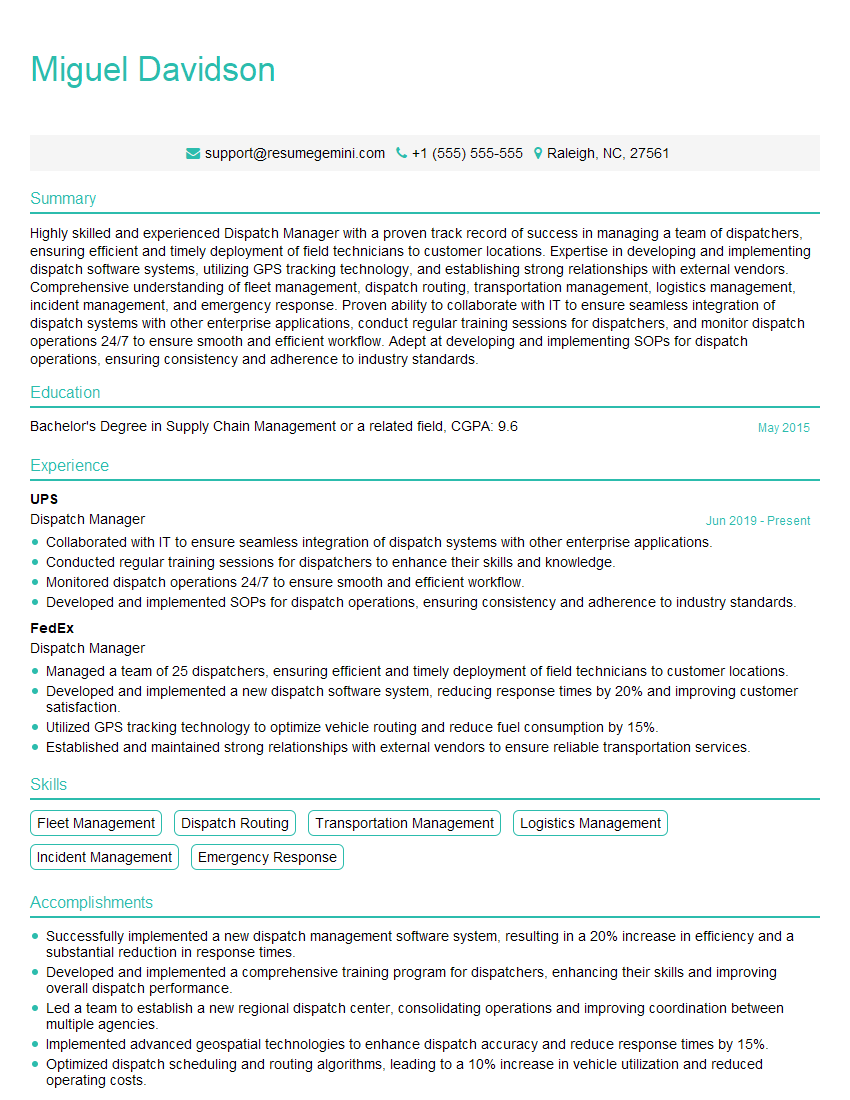
Dispatch Manager Resume Sample
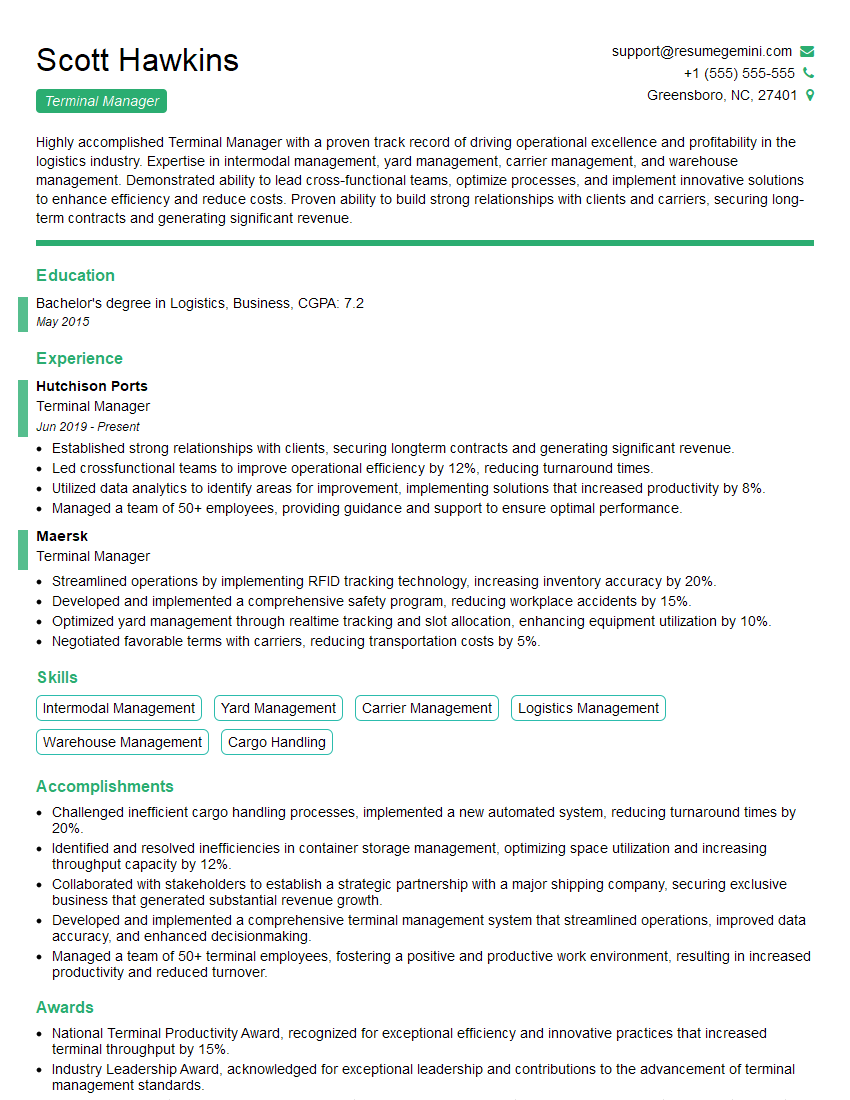
Terminal Manager Resume Sample
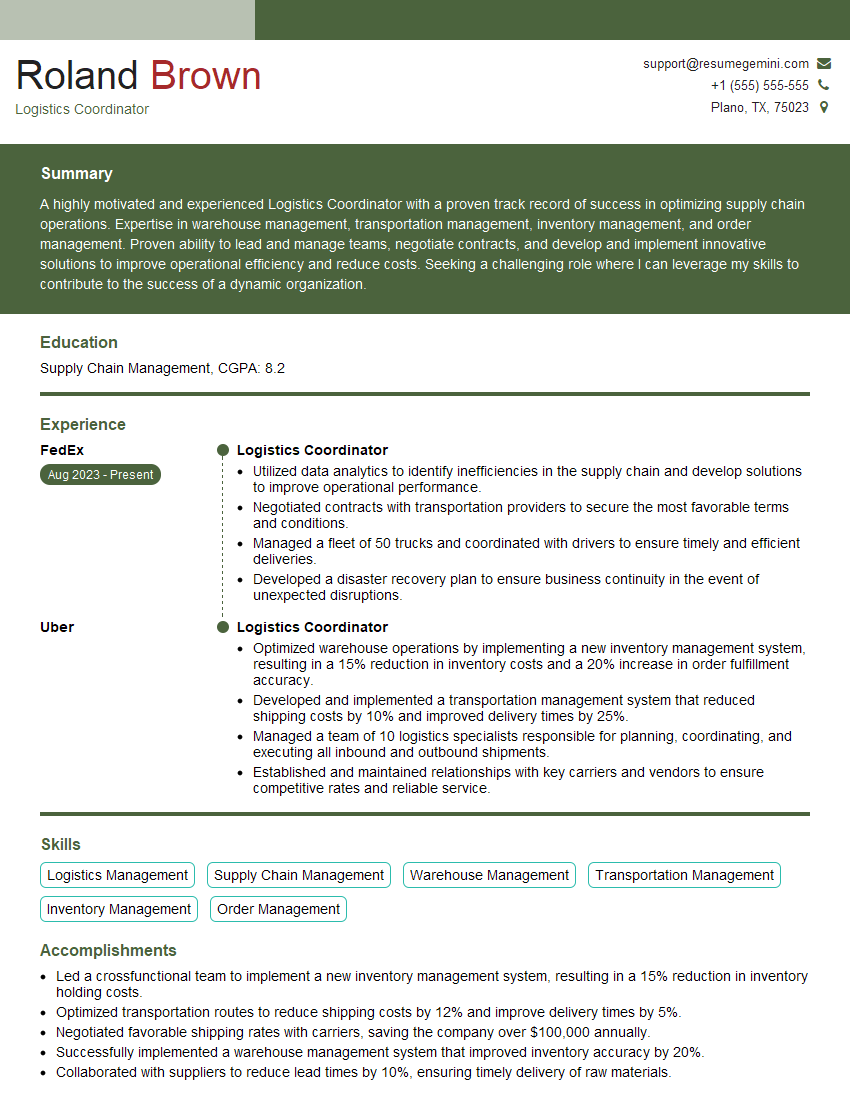
Logistics Coordinator Resume Sample

Compliance Officer Resume Sample
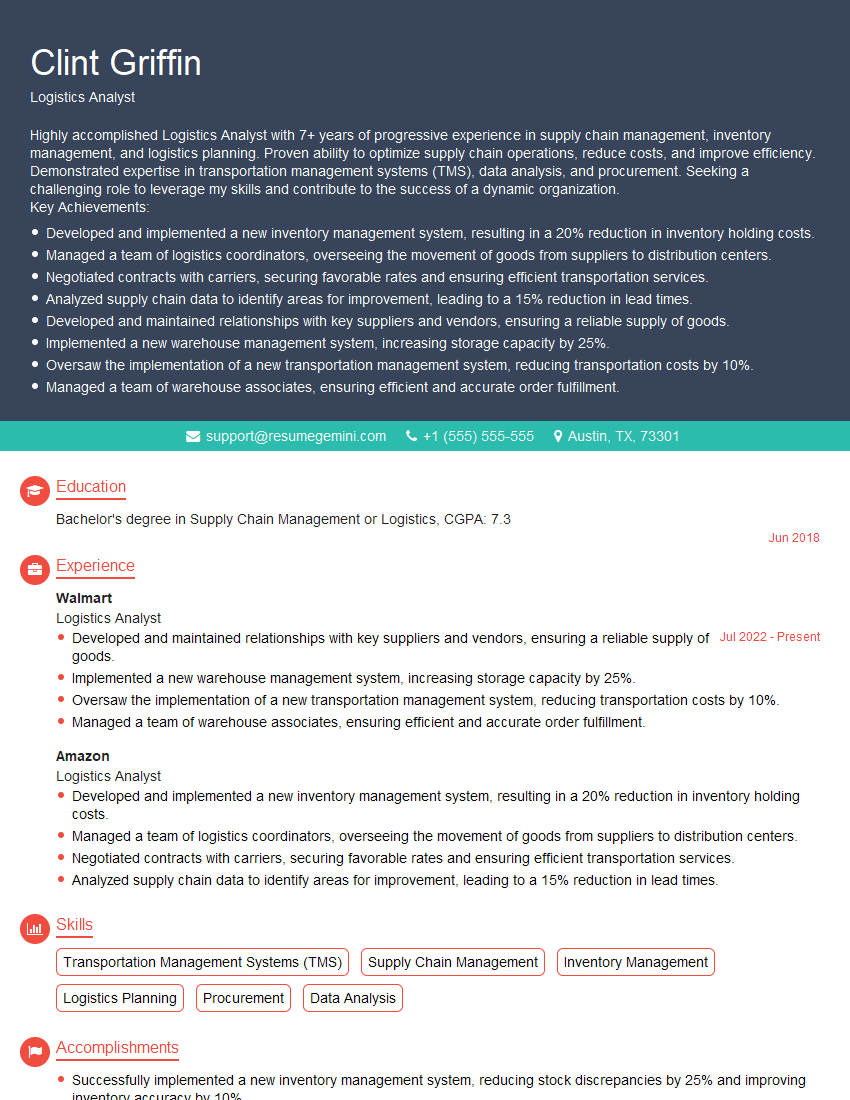
Logistics Analyst Resume Sample
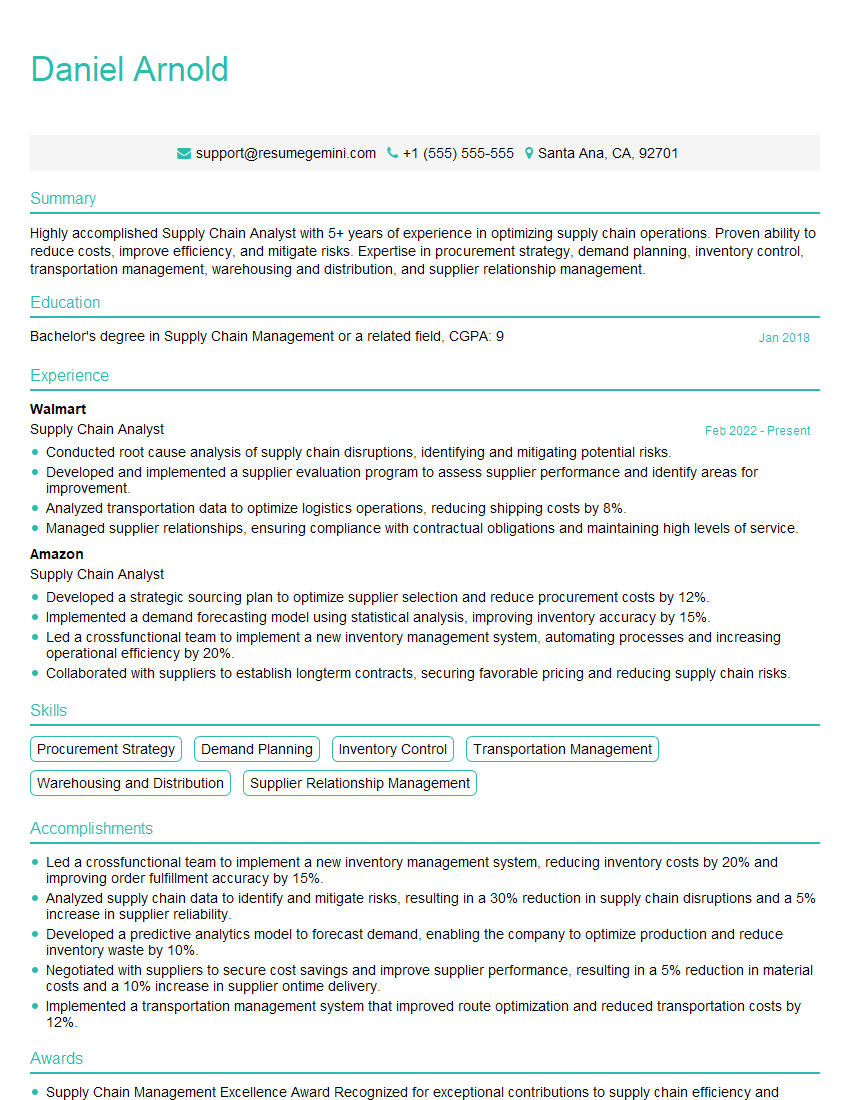
Supply Chain Analyst Resume Sample

Scheduling Coordinator Resume Sample
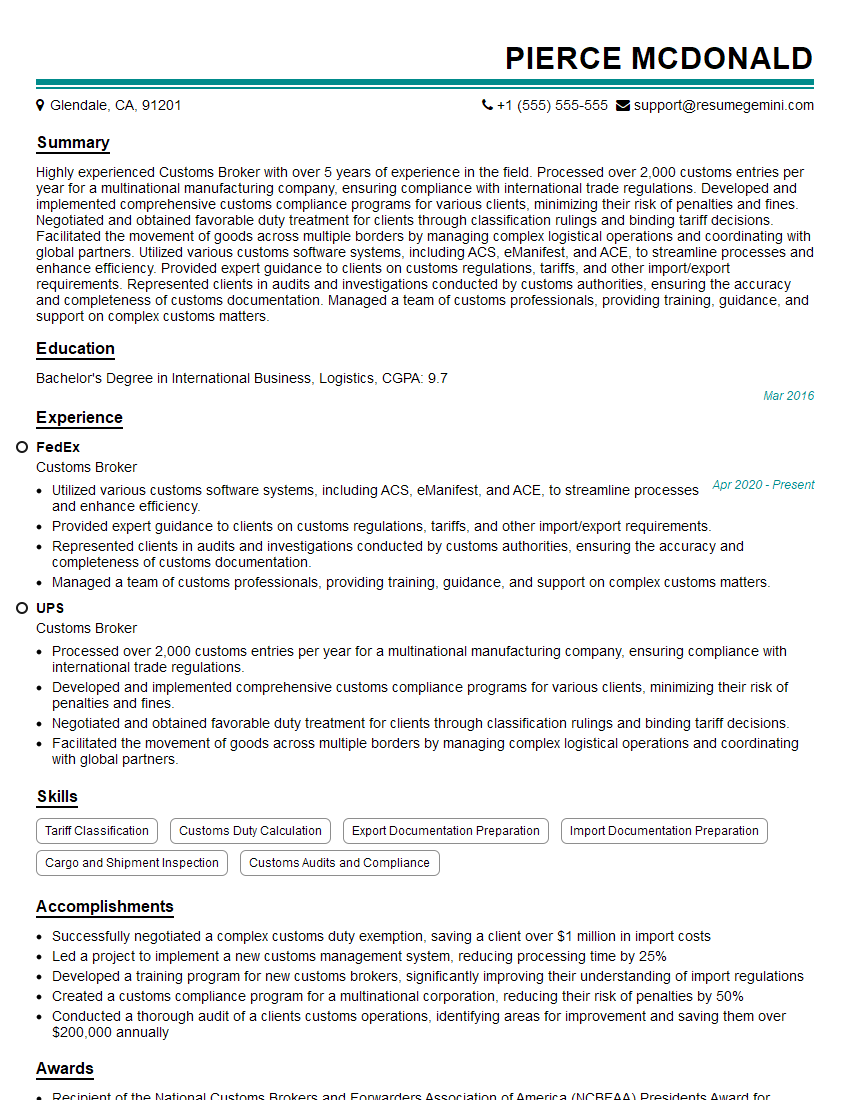
Customs Broker Resume Sample
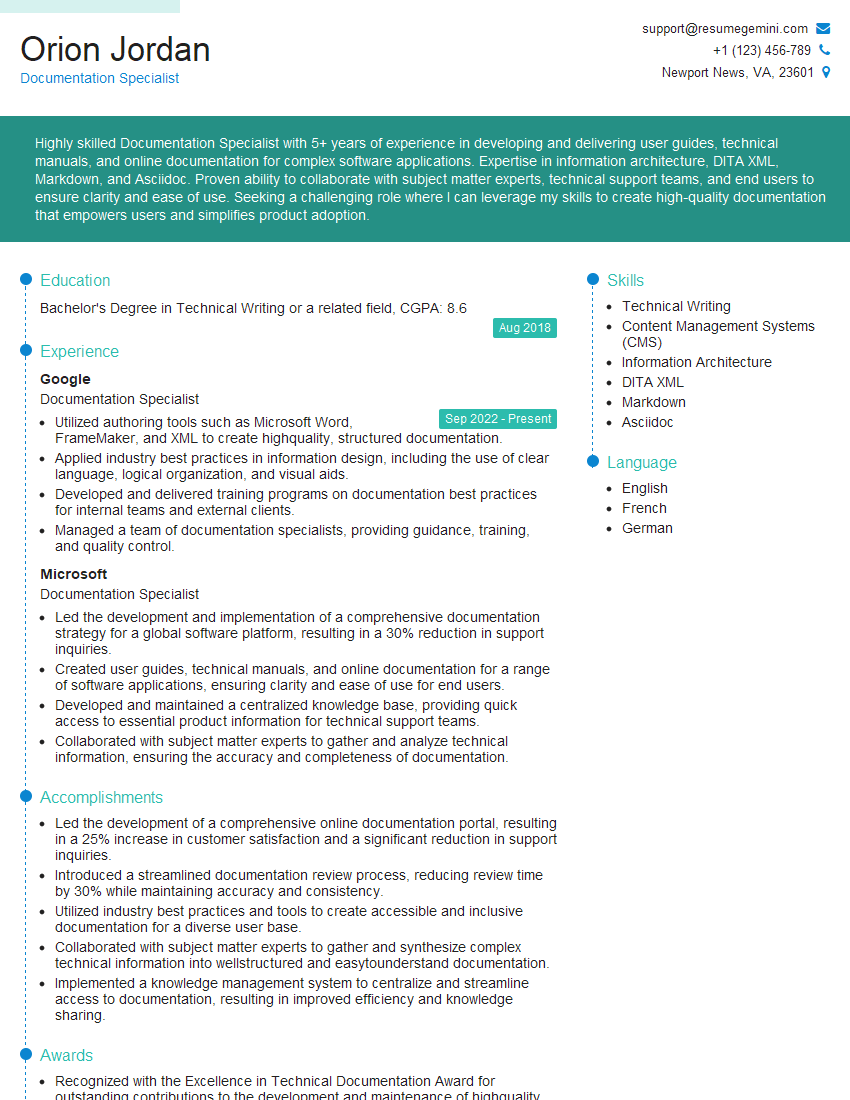
Documentation Specialist Resume Sample
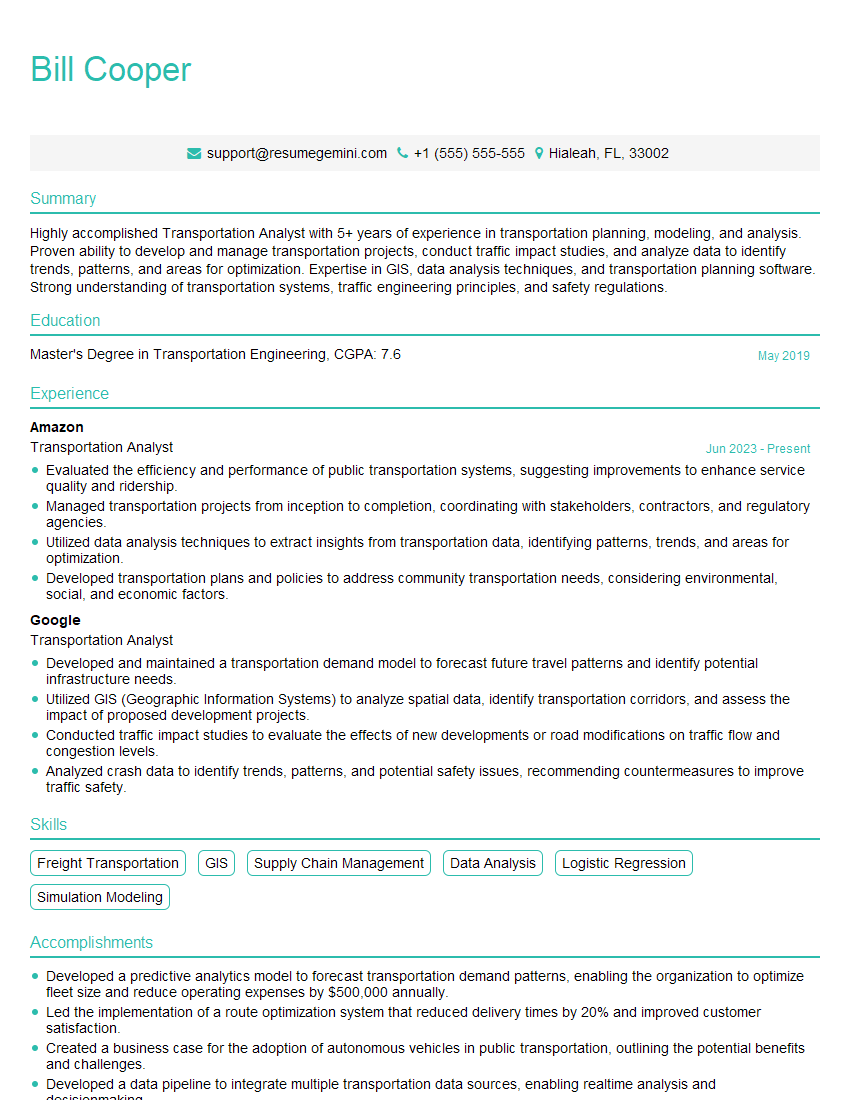
Transportation Analyst Resume Sample
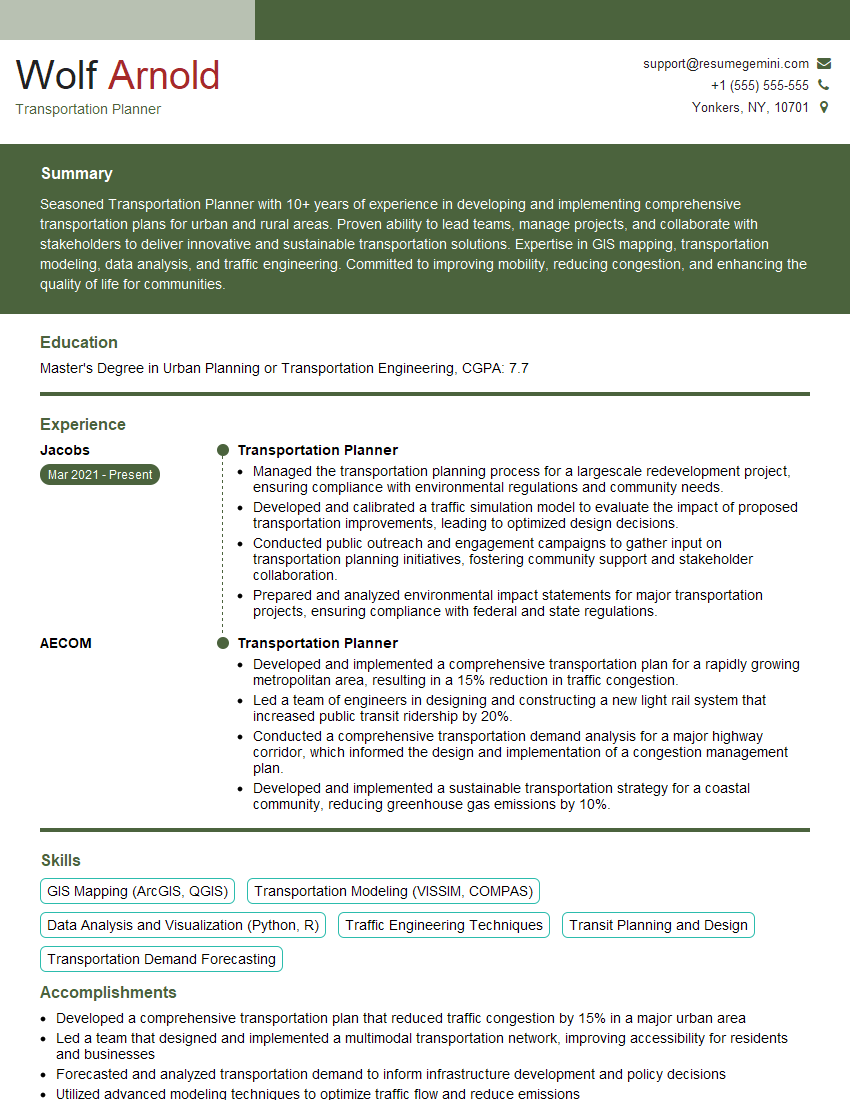
Transportation Planner Resume Sample
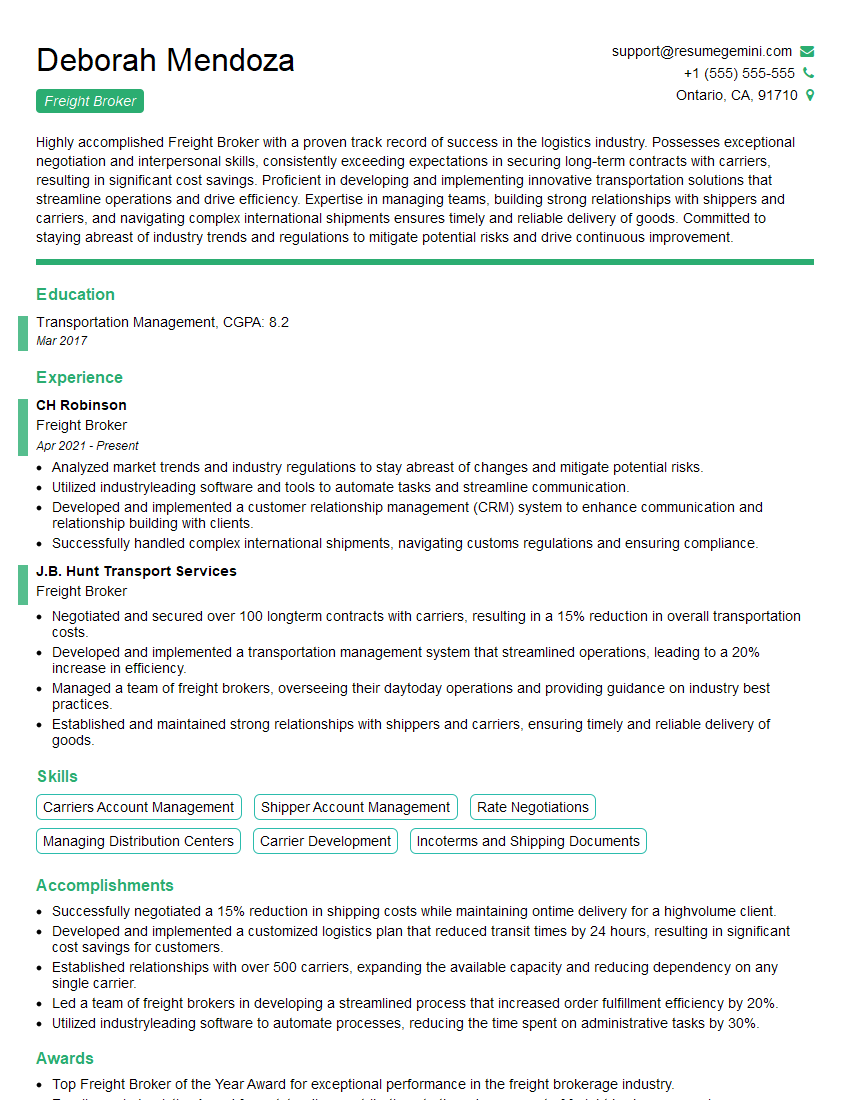
Freight Broker Resume Sample
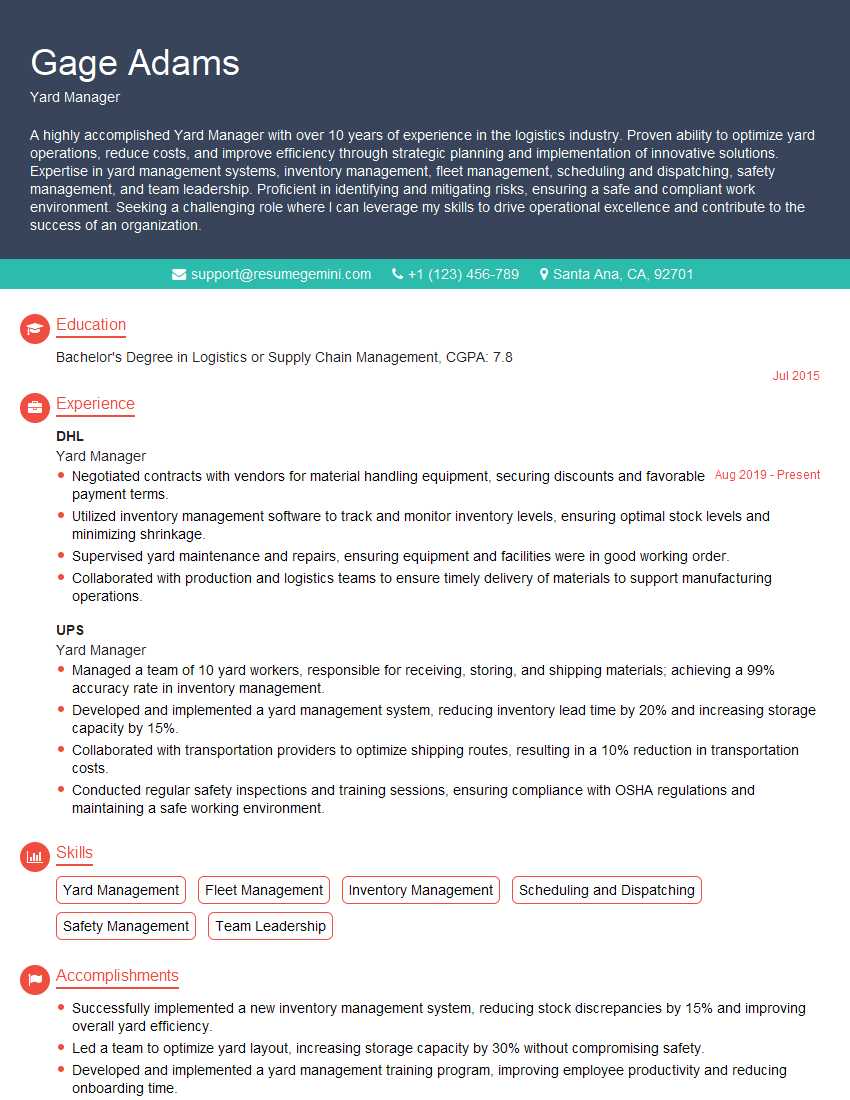
Yard Manager Resume Sample
Explore more articles
Users Rating of Our Blogs
Share Your Experience
We value your feedback! Please rate our content and share your thoughts (optional).
What Readers Say About Our Blog
Very informative content, great job.
good