Preparation is the key to success in any interview. In this post, we’ll explore crucial Experience in sustainable construction practices interview questions and equip you with strategies to craft impactful answers. Whether you’re a beginner or a pro, these tips will elevate your preparation.
Questions Asked in Experience in sustainable construction practices Interview
Q 1. What are the key principles of sustainable construction?
Sustainable construction, at its core, aims to minimize the environmental impact of the built environment throughout its entire lifecycle. This involves a holistic approach encompassing several key principles:
- Minimizing Embodied Carbon: Reducing the carbon emissions associated with the manufacturing, transportation, and installation of building materials.
- Optimizing Resource Use: Employing sustainable and locally sourced materials, reducing waste, and reusing or recycling construction debris.
- Improving Energy Efficiency: Designing buildings that require minimal energy for heating, cooling, and lighting, often achieved through passive design strategies and the use of renewable energy sources.
- Protecting and Enhancing Ecosystems: Minimizing the impact on surrounding ecosystems by preserving natural habitats, using environmentally friendly construction methods, and integrating green spaces into building design.
- Promoting Human Health and Well-being: Creating healthy and comfortable indoor environments that promote occupant health and productivity through good air quality, natural light, and thermal comfort.
- Lifecycle Thinking: Considering the environmental impact of a building from its inception to its demolition and beyond, incorporating strategies for deconstruction and material reuse.
Think of it like this: instead of focusing solely on the immediate construction process, we’re thinking about the entire journey of the building, from cradle to grave, and aiming to minimize its footprint at every stage.
Q 2. Explain the concept of embodied carbon and its impact on building design.
Embodied carbon refers to the greenhouse gas emissions generated during the extraction, manufacturing, transportation, and construction of building materials. It’s a significant contributor to a building’s overall carbon footprint, often accounting for a larger percentage than operational carbon (the energy used during the building’s lifespan). For example, the production of cement, a key ingredient in concrete, is incredibly carbon-intensive.
In building design, understanding embodied carbon leads to choices that prioritize low-carbon materials like recycled steel, timber from sustainably managed forests, or locally sourced materials to reduce transportation emissions. We might opt for alternative construction methods that require less material overall, or design for efficient use of materials to minimize waste. Lifecycle assessments are crucial in evaluating the embodied carbon of different materials and construction options, allowing for informed design decisions.
For instance, a project might compare using locally sourced wood versus steel from a distant supplier. While steel has higher strength, the embodied carbon of transportation might outweigh this advantage, pushing the wood option as more sustainable in that specific context.
Q 3. Describe your experience with LEED certification or similar green building rating systems.
I have extensive experience with LEED (Leadership in Energy and Environmental Design) certification, having led several projects through the entire certification process, from initial documentation to final certification. My experience encompasses all aspects of LEED, including the selection and specification of sustainable materials, energy modeling, water conservation strategies, and waste management plans. I’ve successfully achieved LEED Gold and Platinum certifications on multiple projects.
One particularly memorable project involved a complex office renovation where we had to navigate existing building constraints while meeting stringent LEED requirements. We employed innovative strategies such as integrating high-performance glazing and incorporating green roof elements to improve energy efficiency and reduce stormwater runoff. This required close collaboration with engineers, architects, and contractors to ensure we met all the necessary criteria.
My familiarity extends beyond LEED; I also have experience working with other green building rating systems, such as BREEAM (Building Research Establishment Environmental Assessment Method), providing me with a comprehensive understanding of best practices in sustainable building design and construction.
Q 4. How do you incorporate sustainable materials into construction projects?
Incorporating sustainable materials is a crucial aspect of sustainable construction. My approach begins with specifying materials with low embodied carbon, prioritizing recycled content and locally sourced products. For example, we might use reclaimed wood for interior finishes, recycled steel for structural components, or rapidly renewable bamboo for flooring.
The selection process also considers material durability and longevity. Choosing long-lasting materials reduces the need for future replacements, minimizing the overall environmental impact. We also thoroughly investigate the material’s end-of-life options, prioritizing materials that can be easily deconstructed, reused, or recycled at the end of the building’s life. For instance, we might specify modular construction techniques to allow for easier deconstruction and reuse of components in the future.
Furthermore, I always look for material transparency – knowing the origin and manufacturing process of each material allows for a better understanding of its environmental impact. This might involve engaging with manufacturers to obtain Environmental Product Declarations (EPDs).
Q 5. What strategies do you employ to reduce energy consumption in buildings?
Reducing energy consumption involves a multifaceted approach. Passive design strategies are paramount – these are design features that minimize energy needs without relying on mechanical systems. This includes features such as:
- Optimal Building Orientation: Maximizing natural sunlight for heating and minimizing solar heat gain in summer.
- High-Performance Insulation: Reducing heat loss in winter and heat gain in summer.
- Natural Ventilation: Utilizing natural airflow to reduce the reliance on mechanical ventilation systems.
- High-Performance Glazing: Reducing heat transfer through windows.
Beyond passive strategies, we integrate energy-efficient technologies such as high-efficiency HVAC systems, LED lighting, and smart building controls. We also incorporate renewable energy sources like solar panels or geothermal systems wherever feasible. Throughout the process, energy modeling is used to simulate building performance and identify areas for optimization.
Q 6. Explain your understanding of life cycle assessment (LCA) in construction.
Life Cycle Assessment (LCA) is a crucial tool for evaluating the environmental impacts of a building from cradle to grave. It examines the environmental burdens associated with every stage of the building’s lifecycle, including material extraction, manufacturing, transportation, construction, operation, maintenance, demolition, and disposal. This comprehensive analysis provides a holistic view of the building’s environmental footprint.
In practice, an LCA can help make informed decisions regarding material selection, energy efficiency, and waste management. For instance, by comparing the LCAs of different materials, we can choose the one with the lowest overall environmental impact. Similarly, LCA helps evaluate the impact of different design strategies on the building’s overall lifecycle environmental performance. The results are crucial for identifying areas for improvement and for making design choices that are both environmentally and economically sound.
Q 7. How do you manage waste generation and disposal on a construction site?
Waste management on a construction site is critical for environmental sustainability. Our strategy involves a multi-pronged approach, beginning with careful planning and design to minimize waste generation. This starts by optimizing material quantities during the design phase, ensuring accurate ordering and minimizing material cuts and waste. We incorporate prefabrication techniques whenever possible to reduce on-site waste.
On-site, we implement a robust waste segregation system, separating materials into recyclable categories like wood, metal, plastic, and concrete. We work with certified recycling facilities to ensure proper disposal and recycling of construction waste. Regular site inspections and contractor training are essential in maintaining this process. We also actively monitor the amount of waste generated and strive to continuously reduce this quantity throughout the project. Comprehensive record-keeping of waste generation and disposal is maintained for transparency and reporting.
Finally, we aim to utilize construction waste in beneficial ways whenever feasible. This could include using crushed concrete as aggregate in new concrete mixes or repurposing wood waste for landscaping.
Q 8. Describe your experience with passive design strategies.
Passive design strategies focus on minimizing energy consumption by optimizing the building’s relationship with its environment. Think of it like dressing for the weather – you wouldn’t wear a parka in the summer! Instead of relying heavily on mechanical systems like heating and cooling, passive design leverages natural elements.
- Orientation: Positioning the building to maximize solar gain in winter and minimize it in summer. For example, in the northern hemisphere, south-facing windows are ideal for passive solar heating.
- Shading: Using overhangs, trees, or other shading devices to prevent overheating during summer. I’ve designed several projects using strategically placed deciduous trees that provide shade in summer but allow sunlight in winter when their leaves have fallen.
- Thermal Mass: Incorporating materials like concrete or stone that absorb and release heat slowly, moderating temperature fluctuations. In one project, we used exposed concrete walls that acted as a giant heat sink, reducing the need for air conditioning.
- Natural Ventilation: Designing for cross-ventilation to naturally cool the building. This often involves strategically placed windows and vents, potentially assisted by wind catchers. I designed a school where the positioning of windows created a stack effect, encouraging cool air to rise and circulate throughout the building.
By skillfully applying these strategies, we can significantly reduce a building’s reliance on active mechanical systems, leading to lower energy bills and a smaller environmental footprint.
Q 9. How do you incorporate renewable energy sources into building designs?
Integrating renewable energy sources is crucial for sustainable building design. My approach involves a thorough assessment of the site’s potential and the building’s energy needs. This includes evaluating the feasibility and effectiveness of different renewable technologies.
- Photovoltaic (PV) Panels: Roof-mounted or integrated into building facades, PV panels convert sunlight directly into electricity. I’ve worked on projects where we’ve seamlessly integrated PV panels into the building’s aesthetic, making them almost invisible.
- Solar Thermal Collectors: These systems use sunlight to heat water for domestic use or space heating. We often incorporate these into the building envelope, minimizing visual impact.
- Wind Turbines: Suitable for sites with consistent wind resources, wind turbines can provide a significant portion of a building’s energy needs. The feasibility of wind turbines is highly site-specific and requires careful consideration of noise and visual impact.
- Geothermal Energy: Utilizing the earth’s stable temperature for heating and cooling. Geothermal heat pumps can provide highly efficient and sustainable climate control. I’ve successfully designed systems that use geothermal energy for large office complexes, significantly lowering their carbon footprint.
The choice of renewable energy source depends on several factors including location, climate, building size, energy demand, and budget constraints. It’s essential to perform a comprehensive energy analysis to optimize the selection and integration of renewables.
Q 10. What are the benefits of using recycled or reclaimed materials in construction?
Using recycled or reclaimed materials offers significant environmental and economic benefits. By diverting waste from landfills and reducing the demand for virgin materials, we lessen the environmental impact of construction.
- Reduced Embodied Carbon: Manufacturing new materials is energy-intensive and contributes to greenhouse gas emissions. Recycled materials have a much lower embodied carbon footprint.
- Resource Conservation: Using reclaimed materials conserves natural resources like timber, stone, and metals.
- Cost Savings: Recycled and reclaimed materials are often cheaper than virgin materials, reducing project costs. I’ve found that using reclaimed wood, for example, can substantially cut down material expenses.
- Unique Aesthetics: Reclaimed materials often possess unique character and patina, adding a distinct aesthetic to the building. Using reclaimed bricks in a recent project gave the building a wonderful historical charm.
However, it is vital to carefully assess the quality and suitability of recycled materials before using them. Proper testing and inspections are essential to ensure structural integrity and safety.
Q 11. Explain your approach to water conservation in building design and construction.
Water conservation is a critical aspect of sustainable building design. My approach involves minimizing water consumption through efficient fixtures and systems, and promoting water reuse whenever possible.
- Low-Flow Fixtures: Implementing low-flow toilets, showerheads, and faucets significantly reduces water usage without compromising functionality. I insist on using WaterSense labeled fixtures in all my projects.
- Water-Efficient Appliances: Specifying water-efficient appliances like washing machines and dishwashers minimizes water consumption in domestic settings.
- Rainwater Harvesting: Collecting rainwater for non-potable uses such as irrigation or toilet flushing reduces reliance on municipal water supplies. In one project, we implemented a rainwater harvesting system that supplied water to the building’s landscaping, saving thousands of gallons of water annually.
- Greywater Recycling: Reusing wastewater from showers and sinks for toilet flushing or irrigation after appropriate treatment. Greywater recycling requires careful design and implementation to avoid health risks.
- Landscape Design: Using drought-tolerant landscaping reduces the need for irrigation. I often work with landscape architects to select native plants that require minimal watering.
A holistic approach encompassing all these strategies is essential for achieving meaningful water savings in building projects.
Q 12. How do you assess the environmental impact of different construction materials?
Assessing the environmental impact of construction materials requires a Life Cycle Assessment (LCA). This comprehensive methodology evaluates the environmental burdens associated with a material throughout its entire life cycle, from raw material extraction to disposal.
Key factors considered in an LCA include:
- Embodied Energy: The energy consumed in extracting, processing, manufacturing, transporting, and installing the material.
- Greenhouse Gas Emissions: The amount of greenhouse gases released during the material’s life cycle.
- Water Consumption: The volume of water used in the material’s production and transportation.
- Waste Generation: The amount of waste produced during manufacturing and construction.
- Toxicity: The potential health and environmental risks associated with the material’s components.
Several tools and databases are available to aid in LCA calculations, allowing for a comparative assessment of different materials. By carefully analyzing the LCA data, we can make informed decisions about material selection, optimizing environmental performance.
Q 13. Describe your experience with building commissioning and its role in sustainability.
Building commissioning is a quality assurance process that verifies that building systems are designed, installed, tested, and operated to meet the owner’s project requirements. It plays a vital role in ensuring that a building performs as intended and achieves its sustainability goals.
During commissioning, we systematically check the building’s systems to ensure that they:
- Meet energy efficiency targets: Commissioning helps to identify and rectify any design or installation flaws that could compromise energy performance.
- Function optimally: The process verifies that mechanical, electrical, and plumbing (MEP) systems operate as designed, maximizing efficiency and minimizing waste.
- Comply with sustainability standards: Commissioning helps to ensure that the building meets the requirements of green building certifications, such as LEED.
In my experience, commissioning has consistently proven to improve building performance, reduce operating costs, and enhance occupant comfort. It’s an essential element of successful sustainable building projects, bridging the gap between design intent and real-world operation.
Q 14. How do you ensure compliance with green building codes and regulations?
Ensuring compliance with green building codes and regulations is paramount for sustainable construction. My approach is proactive and involves a deep understanding of relevant codes and standards from the outset of the project.
- Early Code Review: We review applicable codes and regulations at the design phase to integrate compliance into the project’s foundation.
- Material Selection: We carefully select materials that meet or exceed code requirements for sustainability and performance. We frequently use Declare labels and other transparency tools to verify material characteristics.
- Documentation: We maintain meticulous records throughout the construction process to demonstrate compliance with relevant codes. This documentation is crucial for obtaining certifications and permits.
- Third-Party Verification: Depending on the project requirements and certification goals, we engage third-party inspectors to independently verify compliance. This provides an objective assessment and instills confidence in the building’s sustainability performance.
- Continuous Improvement: Staying updated on the latest green building codes and regulations is critical. Continuous learning and professional development ensures we employ the most effective and current sustainable practices.
Compliance is not just about avoiding penalties; it’s about building responsibly and contributing to a more sustainable future.
Q 15. What are some common challenges in sustainable construction, and how do you address them?
Sustainable construction faces numerous challenges, often intertwined and demanding holistic solutions. One major hurdle is the higher upfront cost of sustainable materials and technologies compared to conventional methods. This is often perceived as a barrier by clients prioritizing short-term budgets over long-term value. Another significant challenge is the lack of standardized green building certifications and assessment methods, leading to inconsistencies in project evaluation and potential greenwashing. Furthermore, the skilled workforce necessary for sustainable construction practices remains limited, requiring ongoing training and education initiatives. Finally, the supply chain for sustainable materials can be less established than traditional options, leading to potential delays and increased complexity in procurement.
Addressing these challenges requires a multi-pronged approach. We need to develop robust life-cycle cost analyses to demonstrate the long-term economic benefits of sustainable construction, clearly showcasing reduced operational costs (e.g., lower energy bills) and increased asset value. Collaboration with government agencies and industry bodies is essential to standardize evaluation methods and promote transparency. Investing in workforce training programs to upskill the construction industry is critical. Finally, strengthening supply chains for sustainable materials through strategic partnerships and promoting local sourcing can help overcome procurement challenges. For example, on a recent project, we successfully mitigated upfront cost concerns by securing green financing options and demonstrating a 20% reduction in energy consumption over the building’s lifespan, thus making a strong business case for the investment.
Career Expert Tips:
- Ace those interviews! Prepare effectively by reviewing the Top 50 Most Common Interview Questions on ResumeGemini.
- Navigate your job search with confidence! Explore a wide range of Career Tips on ResumeGemini. Learn about common challenges and recommendations to overcome them.
- Craft the perfect resume! Master the Art of Resume Writing with ResumeGemini’s guide. Showcase your unique qualifications and achievements effectively.
- Don’t miss out on holiday savings! Build your dream resume with ResumeGemini’s ATS optimized templates.
Q 16. How do you evaluate the cost-effectiveness of sustainable construction practices?
Evaluating the cost-effectiveness of sustainable construction involves a comprehensive life-cycle cost analysis (LCCA), going beyond simply comparing upfront costs. This methodology considers all costs associated with a building over its entire lifespan – from design and construction to operation, maintenance, and eventual demolition. An LCCA incorporates factors such as material costs, labor costs, energy consumption, water usage, maintenance expenses, and potential revenue from reduced operational costs. For instance, a building utilizing energy-efficient materials and systems may have higher initial costs but significantly lower energy bills over its operational life, resulting in long-term cost savings.
To perform an effective LCCA, we utilize specialized software and consider various scenarios, including different material choices, energy systems, and maintenance strategies. We also incorporate potential future cost increases for energy and other resources. By comparing the LCCA of a sustainable design against a conventional design, we can quantify the overall financial advantages, often leading to a more attractive return on investment despite higher initial outlay. We then present these findings clearly and transparently to stakeholders, helping them make informed decisions based on a holistic understanding of costs.
Q 17. Explain your experience with sustainable site development and planning.
Sustainable site development and planning are crucial for minimizing the environmental impact of a construction project. My experience encompasses various aspects of this process, including site selection based on environmental considerations (e.g., minimizing disturbance of sensitive ecosystems), efficient land use planning to reduce sprawl, and incorporating measures to protect water resources. I’ve been involved in projects that utilized brownfield redevelopment, transforming previously contaminated sites into sustainable developments, thereby reducing the need for new land development and promoting urban revitalization.
A recent project involved optimizing stormwater management through the implementation of green infrastructure solutions such as bioswales and rainwater harvesting systems. This minimized runoff and reduced the strain on the municipal drainage system while simultaneously creating aesthetically pleasing and ecologically beneficial features. Furthermore, I’ve worked on projects incorporating habitat restoration plans to offset environmental impacts, including planting native vegetation and creating wildlife corridors. The success of sustainable site planning relies on close collaboration with environmental consultants, landscape architects, and local authorities to ensure compliance with regulations and best practices.
Q 18. What are your preferred sustainable construction methodologies?
My preferred sustainable construction methodologies emphasize a holistic approach encompassing design, materials, construction processes, and operational considerations. I strongly advocate for designing buildings that are highly energy-efficient, using passive design strategies like natural ventilation and daylighting to minimize reliance on mechanical systems. The selection of sustainable materials is a cornerstone of my approach – we prioritize locally sourced, recycled, and rapidly renewable materials, reducing embodied carbon and transportation impacts. Prefabrication and modular construction are also techniques I utilize to minimize waste, reduce construction time, and improve quality control.
Specifically, I am a proponent of methods such as:
- Passive House design
- Cross-laminated timber (CLT) construction
- Lifecycle Assessment (LCA) of materials
- Green roof installation
Q 19. How do you communicate the benefits of sustainable construction to stakeholders?
Communicating the benefits of sustainable construction to stakeholders requires a tailored approach depending on their individual perspectives. For clients, I focus on the long-term financial benefits – lower operational costs, increased property value, and positive brand image. I use clear and concise financial models, including life-cycle cost analyses, to demonstrate the return on investment. For construction teams, I emphasize improved worker safety, reduced waste, and the opportunity to develop new skills and expertise in sustainable construction methods.
For the wider community, I highlight the positive environmental and social benefits, such as reduced carbon emissions, improved air and water quality, and the creation of healthier and more resilient buildings. Visual aids, such as infographics and site tours showcasing completed sustainable projects, are effective tools for engagement. We’ve also successfully leveraged third-party certifications (e.g., LEED) to build trust and demonstrate the project’s commitment to sustainability. Ultimately, effective communication requires clear, compelling narratives that translate complex technical details into readily understandable and persuasive messages.
Q 20. Describe your experience working with BIM (Building Information Modeling) for sustainable design.
Building Information Modeling (BIM) is an invaluable tool for sustainable design. BIM allows for the creation of a digital 3D model of the building, enabling detailed analysis of energy performance, material quantities, and waste generation. My experience with BIM in sustainable design encompasses using the model to simulate building performance under various climate conditions, optimizing building orientation for passive solar gain, and accurately quantifying embodied carbon in materials.
We utilize BIM to coordinate the efforts of different design disciplines (architectural, structural, MEP), avoiding conflicts and ensuring the seamless integration of sustainable design features. For instance, we can use BIM to optimize the placement of solar panels, ensuring maximum energy generation while minimizing shading effects on other building elements. Furthermore, BIM facilitates the tracking and management of sustainable materials, from procurement to installation, ensuring that the specified materials are actually used throughout the project and reducing material waste. The integration of LCA data into BIM platforms further enhances our ability to optimize building performance from an environmental perspective.
Q 21. How do you promote sustainable practices within a construction team?
Promoting sustainable practices within a construction team requires a combination of leadership, education, and incentivization. I start by clearly articulating the project’s sustainability goals and the benefits for the team, emphasizing improved working conditions, reduced risk of accidents through better planning, and professional development opportunities. We organize regular training sessions on sustainable construction practices, focusing on both theoretical knowledge and practical skills. I also lead by example, actively demonstrating commitment to sustainable construction methods and ensuring that all team members understand their roles in meeting the sustainability targets.
We utilize performance-based incentives to reward teams for meeting sustainability goals, such as reducing waste, minimizing material defects, and improving energy efficiency. Regular progress reports and transparent communication of achievements help maintain momentum and boost morale. It’s crucial to foster a collaborative environment where team members feel empowered to contribute to the project’s sustainability efforts, and where suggestions and concerns are actively welcomed and addressed. This approach ensures buy-in from the entire team, leading to better outcomes and a more positive project experience.
Q 22. What are the different types of green roofs and their benefits?
Green roofs, also known as living roofs, are roof systems partially or completely covered with vegetation and a growing medium. They come in various types, each with unique characteristics and benefits.
- Extensive Green Roofs: These are shallow, lightweight systems (typically less than 15cm deep) requiring minimal maintenance. They are ideal for large flat roofs and primarily focus on environmental benefits like stormwater management and insulation. Think of a simple, low-maintenance wildflower meadow on a roof.
- Intensive Green Roofs: These are deeper (15cm or more), heavier systems capable of supporting a wider variety of plants, including shrubs and even small trees. They require more maintenance but offer greater biodiversity and recreational opportunities, potentially including walkways and seating areas. Imagine a rooftop garden with diverse plantings and even pathways.
- Semi-intensive Green Roofs: These fall between extensive and intensive, offering a balance between environmental benefits, aesthetic appeal, and maintenance requirements. They’re more versatile and can accommodate a range of plant choices.
Benefits of green roofs include:
- Improved stormwater management: Vegetation absorbs rainwater, reducing runoff and strain on drainage systems.
- Reduced urban heat island effect: Green roofs help cool urban environments by absorbing solar radiation and releasing water vapor through evapotranspiration.
- Enhanced insulation: The vegetation and growing medium provide thermal insulation, reducing energy consumption for heating and cooling.
- Increased biodiversity: Green roofs provide habitat for birds, insects, and other wildlife, promoting biodiversity in urban areas.
- Improved air quality: Plants filter pollutants from the air, contributing to better air quality.
- Extended roof lifespan: The protective layer of vegetation can extend the lifespan of the roof membrane.
Q 23. What is your understanding of circular economy principles in construction?
Circular economy principles in construction emphasize designing out waste and pollution, keeping products and materials in use, and regenerating natural systems. This contrasts with the traditional linear ‘take-make-dispose’ model. In construction, this means prioritizing:
- Design for deconstruction: Designing buildings that can be easily disassembled and their components reused or recycled at the end of their life. This involves using standardized components and avoiding the use of hazardous materials.
- Material reuse and recycling: Maximizing the reuse of existing materials and diverting construction waste from landfills through recycling and repurposing. For instance, reclaimed wood or recycled steel can replace virgin materials.
- Sustainable sourcing of materials: Choosing materials with low embodied carbon and minimal environmental impact, prioritizing locally sourced and sustainably harvested materials. This could involve using timber from certified sustainable forests or recycled concrete aggregates.
- Waste reduction strategies: Implementing efficient construction practices to minimize waste generation, optimizing material procurement and cutting down on unnecessary material use.
- Product stewardship: Taking responsibility for the entire lifecycle of building materials, from extraction to disposal, and promoting their responsible management.
A practical example would be designing a building using prefabricated modular components made from recycled materials. These components can be easily disassembled and reused or recycled at the end of the building’s life, minimizing waste and environmental impact.
Q 24. How do you address potential conflicts between sustainability goals and project budget?
Balancing sustainability goals with project budgets often requires a strategic approach. It’s not about choosing one over the other, but finding synergies and making informed trade-offs. Here’s a step-by-step approach:
- Prioritize sustainable features: Identify the most impactful sustainability measures that offer the greatest return on investment (ROI). For example, investing in high-performance insulation can significantly reduce energy bills over the life of the building, offsetting the initial cost.
- Lifecycle cost analysis (LCCA): Conduct a thorough LCCA to evaluate the long-term costs and benefits of various design options. This helps to demonstrate that initial upfront costs of sustainable solutions are often outweighed by long-term savings on energy, maintenance, and operational costs.
- Explore innovative financing options: Investigate green financing options such as green bonds or tax credits that can incentivize sustainable construction practices and reduce upfront financial burdens.
- Value engineering: Engage in value engineering exercises to optimize the design and construction processes, identifying areas where cost savings can be achieved without compromising sustainability targets. This could involve using alternative, equally sustainable materials that are more cost-effective.
- Phased implementation: Consider implementing sustainable measures in phases, prioritizing those with the highest impact and feasibility within the given budget constraints.
- Transparency and communication: Maintain open communication with stakeholders, transparently explaining the trade-offs and demonstrating the long-term value of sustainable investments.
For instance, we might initially choose a less expensive but still sustainable material for wall cladding rather than a premium, more environmentally friendly option, then invest the savings in a high-efficiency HVAC system that provides greater long-term energy savings.
Q 25. Explain your experience with using sustainable procurement practices.
Sustainable procurement involves selecting materials, products, and services that minimize environmental impact and promote social responsibility throughout their lifecycle. My experience includes:
- Developing sustainable procurement specifications: Creating detailed specifications that clearly define the environmental and social criteria for materials and products, ensuring compliance with relevant certifications and standards (e.g., LEED, BREEAM).
- Supplier engagement and evaluation: Engaging with suppliers to assess their environmental and social performance, using criteria such as carbon footprint, waste management practices, and fair labor practices.
- Life cycle assessment (LCA): Using LCA tools to evaluate the environmental impact of different materials and products throughout their entire lifecycle, from extraction to disposal. This helps inform material selection decisions.
- Promoting the use of recycled and reclaimed materials: Actively seeking out and specifying recycled and reclaimed materials whenever possible, reducing demand for virgin materials and diverting waste from landfills.
- Tracking and reporting on procurement metrics: Monitoring and reporting on key sustainability indicators related to procurement, such as the percentage of recycled content in materials or the amount of waste diverted from landfills.
In a recent project, we were able to reduce embodied carbon in the structure by 25% by using cross-laminated timber (CLT) sourced from sustainably managed forests, and by specifying recycled steel for the reinforcement.
Q 26. What are some innovative sustainable construction technologies you are familiar with?
Several innovative sustainable construction technologies are transforming the industry. I’m familiar with:
- Cross-laminated timber (CLT): A highly sustainable structural material with excellent strength-to-weight ratio and low embodied carbon compared to concrete or steel. CLT allows for faster construction and reduced on-site waste.
- 3D-printed concrete: Allows for complex and customized designs with reduced material waste and improved precision. It can also contribute to faster construction times.
- Prefabrication and modular construction: Building components off-site in a controlled factory environment reduces construction time, waste, and site disruption. This also enhances quality control and enables more sustainable material choices.
- Self-healing concrete: Concrete incorporating bacteria that produce calcium carbonate to repair cracks, extending the lifespan of structures and reducing maintenance needs.
- Building-integrated photovoltaics (BIPV): Integrating solar panels into building facades or roofing systems, generating renewable energy on-site while contributing to the building’s aesthetic appeal.
For example, in a recent project, we employed CLT panels for the structural framework, significantly reducing the carbon footprint of the building compared to a conventional steel or concrete structure. We also incorporated BIPV into the building’s south-facing facade to generate renewable energy.
Q 27. How do you ensure the long-term sustainability of a building?
Ensuring the long-term sustainability of a building requires a holistic approach considering its entire lifecycle. Key aspects include:
- Durable and resilient design: Designing buildings to withstand the effects of climate change and other environmental stressors, including extreme weather events and rising sea levels. This includes considerations such as material selection, structural design, and drainage systems.
- Operational efficiency: Designing energy-efficient systems for heating, cooling, lighting, and ventilation to minimize operating costs and reduce the building’s environmental impact. This involves using high-performance building envelopes and smart building technologies.
- Flexible and adaptable design: Creating buildings that can adapt to changing needs and uses over time, extending their useful life and reducing the need for demolition and reconstruction.
- Material recyclability and reuse: Specifying materials that are easily recyclable or reusable at the end of the building’s life, minimizing waste and environmental impact.
- Ongoing monitoring and maintenance: Establishing a robust maintenance program to identify and address potential problems early on, extending the building’s lifespan and preventing costly repairs.
- Community engagement: Involving building users in the design and operation of the building to encourage responsible use and reduce waste generation.
For instance, a building designed with easily replaceable modular components and sustainable, durable materials would be inherently more adaptable and resilient over time, reducing its environmental footprint and increasing its lifespan.
Q 28. Describe your experience with assessing the resilience of a building to climate change impacts.
Assessing the resilience of a building to climate change impacts requires a multi-faceted approach. My experience involves:
- Climate risk assessment: Conducting a detailed climate risk assessment to identify the potential impacts of climate change on the building, including extreme weather events, sea-level rise, and increased temperatures. This often includes reviewing historical weather data and projections for future climate scenarios.
- Vulnerability analysis: Analyzing the building’s vulnerability to these identified climate risks, considering its structural integrity, building materials, and location. This will often involve using specialized software or modelling techniques.
- Adaptation strategies: Developing and implementing adaptation strategies to mitigate these risks, such as strengthening structural elements, improving drainage systems, and upgrading building envelopes to improve insulation and weather resistance.
- Material selection considerations: Considering the resilience of building materials to extreme weather conditions, such as wind, rain, and extreme temperatures. Choosing materials that are durable and resistant to damage will be critical.
- Emergency preparedness planning: Developing emergency preparedness plans to ensure the building’s occupants can safely evacuate and the building can withstand and recover from extreme weather events. This may involve emergency power generation, structural reinforcements, and backup communication systems.
For example, in a coastal project, we incorporated elevated foundations to protect against sea-level rise, used durable materials resistant to saltwater corrosion, and implemented reinforced structural elements to withstand potential storm surges.
Key Topics to Learn for Sustainable Construction Practices Interview
- Lifecycle Assessment (LCA): Understand the principles of LCA and how it’s applied to assess the environmental impact of building materials and construction processes throughout a building’s lifespan. Consider discussing different LCA methodologies and their limitations.
- Sustainable Building Materials: Explore the properties and applications of various eco-friendly materials like recycled content materials, timber, bamboo, and bio-based composites. Be prepared to discuss their advantages, disadvantages, and cost implications compared to conventional materials. Practical application: Discuss a project where you specified or sourced sustainable materials and the challenges encountered.
- Energy Efficiency in Buildings: Demonstrate knowledge of building envelope design, passive and active solar strategies, HVAC systems, and energy modeling techniques. Be ready to discuss how these contribute to reducing operational energy consumption.
- Water Management: Discuss strategies for reducing water consumption in construction and building operations, such as rainwater harvesting, greywater recycling, and efficient plumbing fixtures. Practical application: Describe a project where you implemented water-saving measures.
- Waste Reduction and Management: Understand different waste management strategies in construction, including pre-construction planning, material selection to minimize waste generation, and on-site recycling and waste diversion programs. Be prepared to discuss the role of a construction professional in minimizing waste.
- Green Building Certifications (LEED, BREEAM, etc.): Familiarize yourself with the key principles and requirements of at least one major green building rating system. Be prepared to discuss your experience with these systems, if any, and the benefits they offer.
- Embodied Carbon: Understand the concept of embodied carbon in construction materials and strategies for reducing it throughout the building’s lifecycle. This includes material selection, transportation, and construction methods.
- Sustainable Site Development: Discuss principles of sustainable land use, minimizing site disturbance, preserving natural features, and incorporating green infrastructure (e.g., green roofs, permeable pavements).
- Problem-Solving in Sustainable Construction: Be ready to discuss challenges encountered in sustainable construction projects and how you overcame them. This could include cost constraints, material availability, or regulatory hurdles.
Next Steps
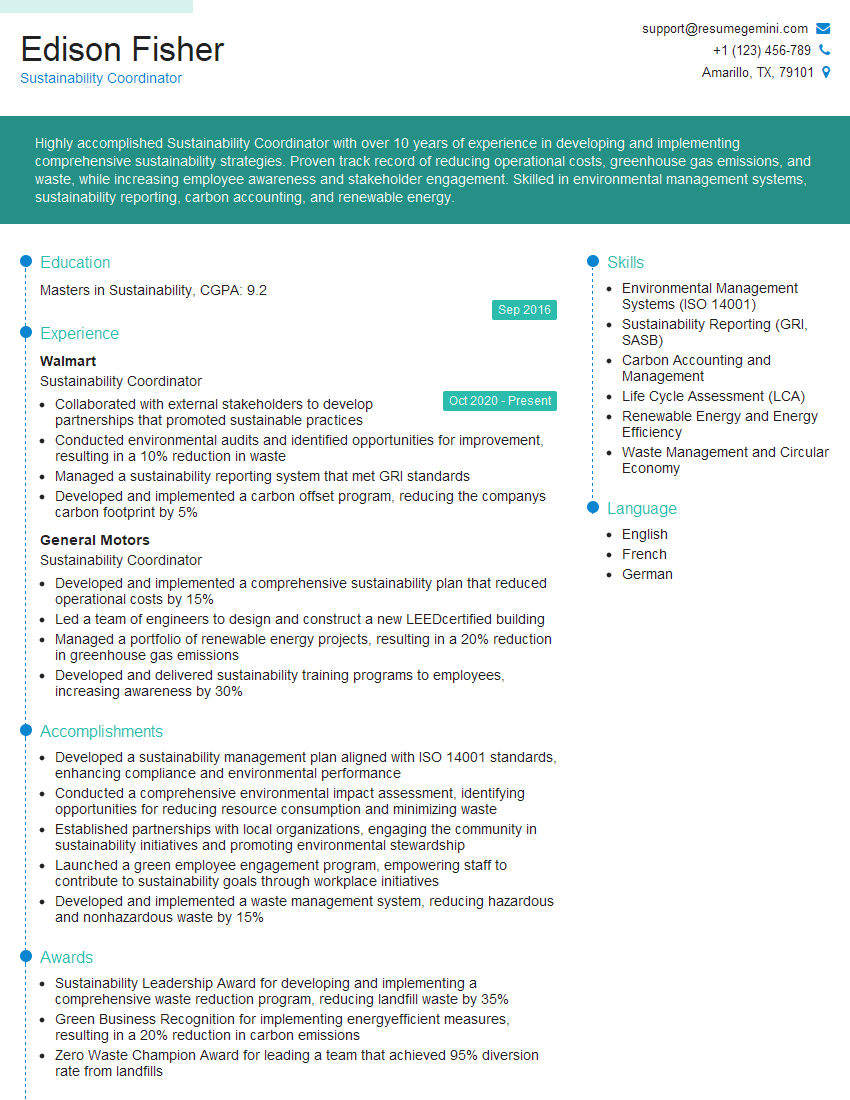
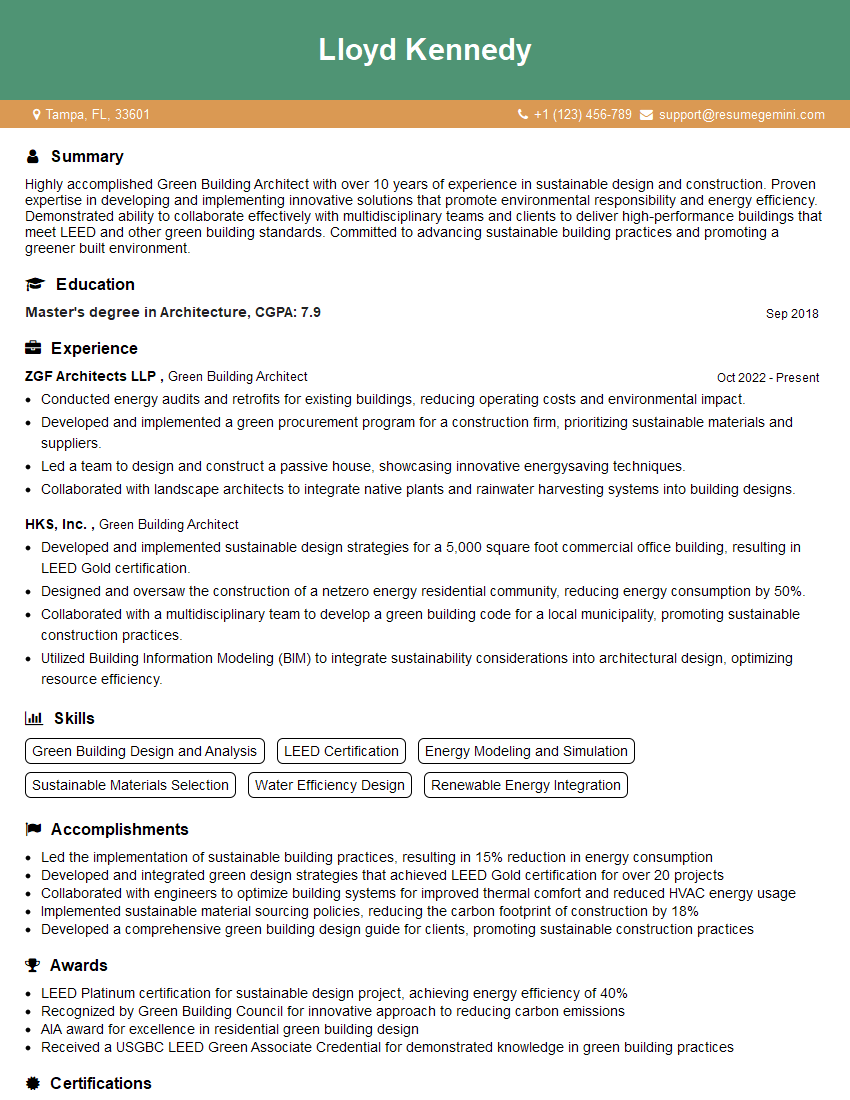
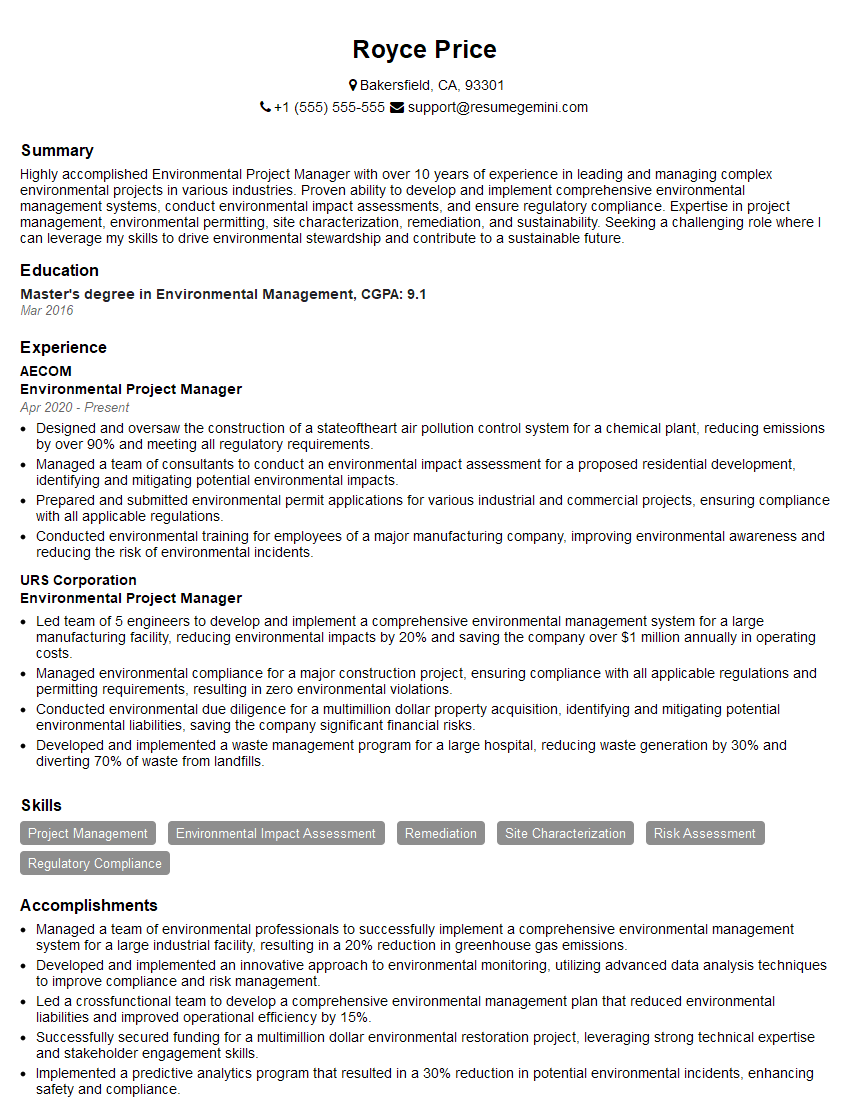
Mastering sustainable construction practices is crucial for career advancement in a rapidly evolving industry. Demonstrating your expertise through a strong resume is key to securing your ideal role. Creating an ATS-friendly resume will significantly increase your chances of getting noticed by recruiters. ResumeGemini is a trusted resource to help you build a professional and impactful resume that highlights your skills and experience. Examples of resumes tailored to sustainable construction practices are available to guide you.
Explore more articles
Users Rating of Our Blogs
Share Your Experience
We value your feedback! Please rate our content and share your thoughts (optional).
What Readers Say About Our Blog
Very informative content, great job.
good