Every successful interview starts with knowing what to expect. In this blog, we’ll take you through the top Experience in Talent Management interview questions, breaking them down with expert tips to help you deliver impactful answers. Step into your next interview fully prepared and ready to succeed.
Questions Asked in Experience in Talent Management Interview
Q 1. Describe your experience with different recruitment strategies.
My experience encompasses a wide range of recruitment strategies, tailored to the specific needs of the role and the talent pool. I’ve successfully utilized various approaches, including:
- Traditional Recruiting: This involves posting job descriptions on job boards (Indeed, LinkedIn, etc.), networking with professional organizations, and leveraging employee referrals. For example, I once filled a critical engineering role through a targeted campaign on LinkedIn, focusing on specific keywords and professional groups. This resulted in a high-quality applicant pool and a successful hire.
- Social Media Recruiting: Leveraging platforms like LinkedIn, Twitter, and even Instagram to build employer branding and attract passive candidates. I’ve used targeted advertising campaigns on LinkedIn to reach specific demographics and skillsets, resulting in increased application volume and a more diverse candidate pool.
- Campus Recruiting: Partnering with universities and colleges to identify and recruit top talent. This includes attending career fairs, conducting presentations, and establishing strong relationships with university career services departments. I helped implement a successful campus recruiting program that significantly increased our pipeline of entry-level engineers.
- Executive Search/Headhunting: Using specialized firms or conducting direct outreach to identify and attract top-tier candidates for leadership positions. This often involves a more personalized and targeted approach, focusing on building relationships and showcasing the unique value proposition of the organization.
- Recruitment Process Outsourcing (RPO): Collaborating with external vendors to manage all or part of the recruitment process. This is particularly useful for large-scale hiring initiatives or when internal resources are limited. I have experience managing RPO contracts, ensuring efficient and effective candidate sourcing and selection.
My approach is always data-driven, continuously analyzing the effectiveness of different strategies to optimize our talent acquisition efforts.
Q 2. How do you measure the effectiveness of a talent acquisition program?
Measuring the effectiveness of a talent acquisition program requires a multifaceted approach, focusing on both quantitative and qualitative metrics. Key performance indicators (KPIs) I typically use include:
- Time-to-Hire: Measures the time elapsed between job posting and offer acceptance. A shorter time-to-hire indicates efficiency.
- Cost-per-Hire: Calculates the total cost of recruitment divided by the number of hires. A lower cost-per-hire reflects cost-effectiveness.
- Source of Hire: Tracks where successful candidates were found (e.g., LinkedIn, employee referrals, job boards). This helps optimize recruitment channels.
- Applicant Quality: Assesses the quality of applicants through screening and interviews. This can be measured through factors like skills, experience, and cultural fit.
- New Hire Retention Rate: Measures the percentage of new hires who remain with the company after a specific period (e.g., 6 months, 1 year). High retention indicates effective selection and onboarding.
- Employee Satisfaction: Regularly assessing employee satisfaction to gauge how effectively the program is contributing to a positive work environment. This can be assessed through surveys, interviews, and employee feedback sessions.
- Diversity and Inclusion Metrics: Tracking the diversity of our applicant pool and new hires to ensure inclusivity throughout the process. This is crucial for building a diverse and representative workforce.
Analyzing these KPIs provides a comprehensive picture of the talent acquisition program’s success and allows for data-driven improvements.
Q 3. Explain your approach to onboarding new employees.
My approach to onboarding is designed to seamlessly integrate new employees into the company culture and equip them with the tools and knowledge they need to succeed. It’s a structured process focusing on three key phases:
- Pre-boarding: Before the first day, I ensure new hires receive all necessary paperwork, access credentials, and information about their team and department. This minimizes confusion and sets a positive tone.
- Orientation and Initial Training: The first week involves a formal orientation, introducing the company culture, values, and policies. This includes meeting key personnel and receiving initial training on essential job functions. I make sure this phase is engaging and informative, helping new hires build relationships and feel welcome.
- Ongoing Development and Mentorship: Post-orientation, we focus on ongoing training and mentorship. New hires receive regular check-ins with their managers and are provided opportunities for skill development and career progression. This ensures they are continually growing and contributing to the organization.
I believe a strong onboarding program significantly impacts employee retention and productivity. It sets the stage for a long and successful career with the company.
Q 4. What metrics do you use to track employee performance?
The metrics I use to track employee performance are varied and depend on the role and responsibilities. However, some common metrics include:
- Key Performance Indicators (KPIs): These are specific, measurable, achievable, relevant, and time-bound goals directly related to job responsibilities. Examples include sales targets for salespeople, customer satisfaction scores for customer service representatives, or project completion rates for project managers.
- Qualitative Feedback: Regular performance reviews and 360-degree feedback provide valuable qualitative insights into an employee’s performance, work ethic, teamwork, and communication skills. These aren’t always quantifiable, but are crucial for holistic assessment.
- Goal Achievement: Tracking progress toward pre-defined goals provides a clear measure of performance. This involves regular check-ins and performance discussions to monitor progress and provide support.
- Productivity Metrics: Measuring output, efficiency, and quality of work. For example, this could include lines of code written, number of units produced, or customer support resolution times.
- Attendance and Punctuality: While not directly related to performance quality, consistent attendance and punctuality reflect professionalism and commitment.
I believe a balanced approach, combining quantitative and qualitative metrics, offers a comprehensive understanding of employee performance.
Q 5. How do you develop and implement a performance management system?
Developing and implementing a performance management system is a crucial aspect of talent management. My approach involves several key steps:
- Define Goals and Expectations: Clearly define performance expectations and goals for each role. These should be SMART (Specific, Measurable, Achievable, Relevant, and Time-bound).
- Choose a Performance Review Method: Select a suitable method for performance evaluation, such as goal-setting, 360-degree feedback, or a combination of approaches. The chosen method should align with the company culture and organizational objectives.
- Regular Check-ins and Feedback: Implement regular check-ins between managers and employees to provide constructive feedback, monitor progress, and address any issues promptly. This fosters open communication and proactive performance improvement.
- Performance Reviews: Conduct formal performance reviews at predetermined intervals (e.g., annually or semi-annually). These reviews should be a two-way conversation, allowing for open discussion of achievements, areas for improvement, and future goals.
- Performance Improvement Plans (PIPs): For employees who consistently underperform, create a structured PIP to outline specific areas for improvement, provide support and resources, and monitor progress. A PIP should be a collaborative process focused on helping the employee succeed.
- Training and Development: Integrate training and development opportunities to address skill gaps and support employee growth. This links performance management directly to professional development, creating a continuous improvement cycle.
- Regular Calibration: Ensure consistency in performance evaluations across the organization through regular calibration sessions among managers.
The system should be fair, transparent, and focused on development, creating a positive and productive work environment.
Q 6. Describe your experience with employee training and development programs.
My experience with employee training and development programs spans various formats and approaches. I’ve designed and implemented programs that utilize:
- On-the-Job Training: Providing hands-on training and mentorship to equip employees with practical skills. I once mentored a junior designer who, through practical experience and regular feedback, quickly mastered key software and design principles.
- Formal Classroom Training: Offering structured courses and workshops to deliver knowledge and skills in a formal setting. This could include compliance training, technical skills training, or leadership development programs.
- E-learning and Online Courses: Utilizing online platforms and resources for flexible and accessible learning. This is cost-effective and allows employees to learn at their own pace.
- Mentorship Programs: Pairing experienced employees with newer colleagues to provide guidance, support, and knowledge transfer. This fosters a supportive learning environment and builds strong relationships.
- Conferences and Workshops: Sending employees to external conferences and workshops to expand their knowledge and network with industry professionals. This provides valuable exposure to new ideas and best practices.
- Leadership Development Programs: Developing customized leadership training for managers and potential leaders to improve their skills in areas such as strategic thinking, communication, and team building.
I always tailor the training approach to the specific needs of the employees and the organization, ensuring that the programs are effective, engaging, and aligned with business goals.
Q 7. How do you identify and address employee skill gaps?
Identifying and addressing employee skill gaps is an ongoing process requiring a proactive and strategic approach. My methods include:
- Performance Reviews and Feedback: Regular performance reviews and feedback sessions often highlight skill gaps. Discussions with employees allow for identification of areas needing improvement.
- Skill Gap Analysis: Conducting a formal skill gap analysis, potentially using surveys, assessments, or interviews, to identify specific skills lacking within the workforce.
- 360-Degree Feedback: Gathering feedback from peers, supervisors, and subordinates provides a comprehensive view of an employee’s skills and areas needing improvement.
- Performance Data Analysis: Analyzing performance data can reveal areas where employees are struggling, indicating potential skill gaps. For example, consistently low sales figures might point to a need for sales training.
- Succession Planning: As part of succession planning, identifying skill gaps in key roles helps prepare for future leadership transitions.
- Training and Development Programs: Once skill gaps are identified, develop and implement tailored training and development programs to address them. This could include online courses, workshops, or mentorship opportunities.
- Job Rotation and Cross-Training: Allowing employees to work in different roles or departments can help them gain new skills and expand their capabilities.
Addressing skill gaps proactively helps improve employee performance, enhance productivity, and supports the organization’s overall success.
Q 8. What strategies do you use to improve employee engagement?
Improving employee engagement is crucial for a thriving workplace. It’s not just about happy employees; it’s about fostering a culture where individuals feel valued, motivated, and invested in the company’s success. My strategy is multifaceted and focuses on several key areas:
Regular Feedback and Recognition: I implement systems for both formal (performance reviews) and informal (regular check-ins, peer-to-peer recognition programs) feedback, ensuring employees know their contributions are valued. For example, I’ve introduced a peer-to-peer recognition platform where employees can publicly acknowledge colleagues’ achievements, boosting morale and fostering a sense of community.
Opportunities for Growth and Development: Providing avenues for professional development, whether through mentorship programs, training courses, or job shadowing, demonstrates a commitment to employees’ career aspirations. In a previous role, I launched a mentorship program that paired junior employees with senior leaders, resulting in a significant increase in employee retention and skill development.
Creating a Positive Work Environment: This involves fostering open communication, promoting teamwork, and addressing workplace issues promptly and fairly. I believe in leading by example, actively participating in team-building activities and fostering a culture of trust and respect.
Work-Life Balance Initiatives: Offering flexible work arrangements, generous leave policies, and promoting a healthy work-life balance are essential for employee well-being and engagement. In one organization, we implemented a compressed workweek option, significantly improving employee satisfaction and productivity.
Meaningful Work: Connecting employees’ work to the company’s overall mission and vision is critical. When employees see the impact of their work, their engagement naturally increases. I regularly communicate the company’s strategic goals and ensure employees understand how their roles contribute to the bigger picture.
Q 9. How do you manage employee relations issues?
Managing employee relations issues requires a proactive and empathetic approach. It’s about preventing issues before they escalate and addressing them fairly and consistently when they arise. My approach involves:
Establishing Clear Policies and Procedures: Having well-defined policies on everything from performance management to disciplinary actions ensures consistent and fair treatment of all employees. This reduces ambiguity and prevents misunderstandings.
Open Communication Channels: Creating a safe space for employees to voice their concerns is paramount. This could involve regular employee surveys, suggestion boxes, or open-door policies. I believe in actively listening to employee feedback and acting on it.
Prompt and Fair Investigation: When issues arise, I conduct thorough and impartial investigations, gathering all relevant information before taking action. This ensures fairness and builds trust.
Mediation and Conflict Resolution: Where possible, I try to mediate conflicts between employees, helping them find mutually agreeable solutions. This avoids escalation and maintains positive working relationships.
Consistent Application of Policies: Fairness is key. Policies must be applied consistently across the board, regardless of an employee’s position or seniority. Inconsistency breeds resentment and undermines trust.
For example, in a past role, I successfully mediated a conflict between two team members, identifying the root cause and helping them develop a respectful working relationship.
Q 10. Describe your experience with succession planning.
Succession planning is about identifying and developing high-potential employees to fill future leadership roles. It’s a strategic process that ensures organizational continuity and reduces the risk of talent loss. My experience includes:
Identifying High-Potential Employees: This involves using a combination of performance reviews, 360-degree feedback, and talent assessments to identify individuals with the potential for advancement. I also look for individuals who demonstrate leadership qualities, a strong work ethic, and a commitment to the organization’s success.
Developing Talent Pipelines: Once high-potential employees are identified, I create individualized development plans, providing them with opportunities for training, mentoring, and challenging assignments to develop their skills and experience.
Mentorship and Coaching: I believe in pairing high-potential employees with experienced mentors or coaches who can provide guidance, support, and valuable insights. This accelerates their development and prepares them for future leadership roles.
Regular Review and Updates: Succession plans are not static documents; they require regular review and updates to reflect changes in the organization’s needs and the development of individual employees.
In a previous company, I implemented a robust succession planning program, resulting in a seamless transition when key leadership positions became vacant. This minimized disruption and maintained organizational stability.
Q 11. How do you ensure compliance with employment laws and regulations?
Compliance with employment laws and regulations is paramount. It’s not just about avoiding legal trouble; it’s about creating a fair and equitable workplace. My approach focuses on:
Staying Informed: I stay up-to-date on all relevant employment laws and regulations, including changes in legislation and court rulings. This includes regularly reviewing legal updates and attending relevant training sessions.
Developing and Implementing Policies: We develop and implement comprehensive policies and procedures that reflect current legal requirements. These policies cover areas such as equal employment opportunities, workplace safety, and data privacy.
Training and Education: All employees receive training on relevant employment laws and regulations. This ensures they understand their rights and responsibilities and helps prevent unintentional violations.
Regular Audits and Reviews: We conduct regular audits and reviews to ensure compliance with all relevant laws and regulations. This helps identify potential issues early on and prevents costly mistakes.
Consulting Legal Counsel: When needed, we consult with legal counsel to ensure our policies and practices are compliant and to address complex legal issues.
For example, following recent changes in data privacy legislation, we updated our employee handbook and conducted company-wide training on the new requirements.
Q 12. What is your experience with talent analytics and data-driven decision making?
Talent analytics and data-driven decision-making are critical for effective talent management. It’s about moving beyond gut feeling and using data to inform strategic decisions. My experience includes:
Data Collection and Analysis: I’m proficient in collecting and analyzing data from various sources, including HR information systems, performance reviews, employee surveys, and recruitment data. I leverage tools and techniques to identify trends, patterns, and insights.
Developing Key Performance Indicators (KPIs): I work to define and track key metrics that measure the effectiveness of talent management initiatives. These KPIs might include employee turnover rates, employee satisfaction scores, time-to-hire, or cost-per-hire.
Data Visualization and Reporting: I use data visualization tools to present findings in a clear and concise manner, making it easier for stakeholders to understand and act on the insights. I create reports and dashboards that track progress against KPIs.
Data-Driven Decision Making: I use data insights to inform strategic decisions about talent acquisition, development, and retention. For example, by analyzing turnover data, we identified specific factors contributing to employee departures and implemented targeted retention strategies.
In a previous role, I used talent analytics to demonstrate the ROI of our leadership development program, securing additional funding for future initiatives.
Q 13. Explain your approach to diversity and inclusion in talent management.
Diversity and inclusion are not just buzzwords; they are essential for creating a dynamic and innovative workplace. My approach to fostering diversity and inclusion in talent management involves:
Diverse Recruitment Strategies: I implement recruitment strategies that actively seek out candidates from diverse backgrounds. This includes utilizing diverse recruitment platforms, partnering with diversity-focused organizations, and implementing blind resume screening techniques.
Inclusive Hiring Practices: I ensure that the hiring process is fair and equitable for all candidates, regardless of their background. This involves using structured interviews, standardized assessment tools, and diverse interview panels.
Employee Resource Groups (ERGs): I support the development of ERGs, which provide a platform for employees from different backgrounds to connect, network, and support each other.
Diversity and Inclusion Training: I provide training for all employees on topics such as unconscious bias, cultural sensitivity, and inclusive leadership.
Data Tracking and Measurement: I track diversity metrics throughout the talent lifecycle to monitor progress and identify areas for improvement. This helps ensure accountability and drives continuous improvement.
For example, I helped implement a blind resume screening process that significantly increased the diversity of our applicant pool.
Q 14. How do you build strong relationships with hiring managers?
Building strong relationships with hiring managers is crucial for effective talent acquisition. It’s about understanding their needs, providing them with valuable support, and building trust. My approach focuses on:
Understanding Their Needs: I start by thoroughly understanding the hiring managers’ requirements for each role, including the necessary skills, experience, and cultural fit. This ensures I’m recruiting candidates who are a good match for the team and the organization.
Proactive Communication: I maintain regular communication with hiring managers throughout the recruitment process, providing updates on the progress of searches and keeping them informed of any challenges or changes.
Collaboration and Partnership: I view myself as a partner to hiring managers, working collaboratively with them to develop effective recruitment strategies and make informed hiring decisions.
Providing Value-Added Services: I go beyond simply filling vacancies. I offer services like candidate sourcing, screening, interviewing, and reference checking. This frees up the hiring managers’ time and allows them to focus on other priorities.
Feedback and Improvement: I actively solicit feedback from hiring managers to continually improve my services and processes.
In a past role, I developed a strong working relationship with a hiring manager who consistently praised my responsiveness, proactiveness, and ability to find high-quality candidates.
Q 15. What is your experience with different compensation and benefits programs?
My experience encompasses a wide range of compensation and benefits programs, from designing base pay structures aligned with market competitiveness to developing comprehensive benefits packages that attract and retain top talent. I’ve worked with both traditional and innovative approaches. For example, I’ve designed compensation plans based on performance-based incentives, such as bonuses tied to key performance indicators (KPIs), stock options for senior management, and profit-sharing schemes to foster a shared sense of success. On the benefits side, I’ve implemented programs including health insurance plans with various coverage options, retirement plans (401k, pension), paid time off (PTO), employee assistance programs (EAPs), tuition reimbursement, and wellness initiatives. A key aspect of my work is ensuring that the compensation and benefits package is legally compliant, equitable, and competitive within the relevant market and industry.
In one particular project, I helped a client transition from a purely salary-based compensation model to one that incorporated individual, team, and company-wide performance bonuses. This involved careful analysis of the current compensation structure, market benchmarking, and development of clear, measurable KPIs. The result was a significant increase in employee engagement and overall productivity.
Career Expert Tips:
- Ace those interviews! Prepare effectively by reviewing the Top 50 Most Common Interview Questions on ResumeGemini.
- Navigate your job search with confidence! Explore a wide range of Career Tips on ResumeGemini. Learn about common challenges and recommendations to overcome them.
- Craft the perfect resume! Master the Art of Resume Writing with ResumeGemini’s guide. Showcase your unique qualifications and achievements effectively.
- Don’t miss out on holiday savings! Build your dream resume with ResumeGemini’s ATS optimized templates.
Q 16. Describe your experience with employee surveys and feedback mechanisms.
Employee feedback is crucial for a thriving organization. My experience with employee surveys and feedback mechanisms involves utilizing both quantitative and qualitative methods to gather comprehensive data. I’ve used tools ranging from anonymous online surveys that gather demographic and attitudinal data to focus groups and one-on-one interviews to delve deeper into specific issues or concerns. Beyond formal surveys, I’ve implemented regular pulse surveys, suggestion boxes, and open-door policies to create avenues for ongoing feedback.
For instance, in a previous role, we introduced a bi-annual employee engagement survey. This survey, coupled with regular team meetings and departmental feedback sessions, gave us insights that helped us address critical issues such as work-life balance and opportunities for professional development. This resulted in a measurable improvement in employee morale and retention rates. Analyzing the data is crucial; I utilize statistical analysis tools to identify trends and patterns, ensuring that feedback informs concrete actions and not just reports.
Q 17. How do you handle situations where employee performance is consistently below expectations?
Addressing consistent underperformance requires a structured and empathetic approach. It starts with a thorough performance review, documenting specific instances of underperformance with supporting evidence. This isn’t about blame; it’s about identifying the root cause of the issue. Is it lack of training, unclear expectations, lack of resources, or personal issues affecting performance?
Next, I create a performance improvement plan (PIP) with clear, measurable goals, timelines, and support mechanisms. This collaborative process involves the employee and their manager, outlining specific actions needed to improve performance. Regular check-ins and coaching sessions are crucial to monitor progress and provide support. If the employee fails to meet the agreed-upon goals despite the support, it may be necessary to consider more serious consequences, which could involve further training, demotion, or termination, always ensuring compliance with company policy and employment laws.
For example, I once worked with an employee whose performance was consistently below expectations. Through a thorough review and discussions, we discovered they lacked the necessary technical skills for their role. We created a PIP that included targeted training sessions and mentorship. With consistent support and progress monitoring, the employee eventually met expectations and significantly improved their performance. This highlights the importance of a supportive yet firm approach.
Q 18. How do you create a positive and productive work environment?
Creating a positive and productive work environment involves fostering a culture of collaboration, trust, and respect. This starts with clear communication and well-defined roles and responsibilities. It’s also about promoting work-life balance, recognizing and rewarding achievements, and providing opportunities for professional development. Open communication channels, regular team-building activities, and a focus on employee well-being are essential.
I’ve seen firsthand the benefits of implementing initiatives like flexible work arrangements, employee recognition programs, and team-building exercises. For instance, introducing regular team lunches and offsite activities improved team cohesion and morale, leading to increased collaboration and efficiency. Another key strategy is creating a culture of feedback where employees feel comfortable expressing their opinions and ideas without fear of reprisal.
Q 19. What is your experience with different performance review methods?
My experience spans various performance review methods, including 360-degree feedback, self-assessments, goal-setting frameworks (OKRs, SMART goals), and traditional manager-employee reviews. The choice of method depends on the organizational culture, the specific goals, and the nature of the roles. 360-degree feedback provides a holistic view by gathering feedback from peers, subordinates, and managers, while self-assessments empower employees to reflect on their own performance. Goal-setting frameworks provide a structured approach to tracking progress towards specific objectives. Traditional manager-employee reviews are still relevant, especially for providing constructive feedback and guidance.
I believe that the most effective approach often combines multiple methods to create a comprehensive and balanced picture of an employee’s performance. For example, in one organization, we transitioned from solely relying on manager reviews to a hybrid system that incorporated 360-degree feedback and self-assessments. This change resulted in more objective and well-rounded performance evaluations and fostered a greater sense of fairness and transparency.
Q 20. How do you measure the ROI of talent management initiatives?
Measuring the ROI of talent management initiatives requires a multifaceted approach. It’s not just about direct financial returns; it also includes less tangible benefits like increased employee retention, improved productivity, and enhanced employer branding. To quantify ROI, I use various metrics like employee turnover rate, employee satisfaction scores, cost per hire, training effectiveness, and return on training investment (ROTI). These metrics are tracked both before and after the implementation of talent management initiatives to measure the impact.
For example, to measure the ROI of a leadership development program, I would track the promotion rate of participants, their performance ratings after the program, and their contribution to company goals. A reduction in employee turnover rate following the implementation of an employee engagement program would also be a strong indicator of positive ROI. Careful data collection and analysis are critical for demonstrably linking talent management initiatives to improved business outcomes.
Q 21. Describe your experience with talent mobility and internal promotion programs.
I have extensive experience with talent mobility and internal promotion programs, designing and implementing strategies to identify high-potential employees and creating pathways for their career growth within the organization. This involves creating internal job postings, developing talent pipelines, utilizing internal talent marketplaces, and providing career coaching and mentoring programs.
For example, I helped a client create a robust internal talent marketplace that allowed employees to explore and apply for open positions across different departments. This platform increased employee engagement, boosted morale, and reduced recruitment costs. Furthermore, I’ve implemented structured mentorship programs that pair high-potential employees with senior leaders, providing invaluable guidance and support for their career progression. Creating a culture that fosters internal mobility not only improves employee retention but also builds a stronger, more skilled workforce.
Q 22. How do you manage a high-volume recruitment process?
Managing high-volume recruitment requires a strategic, process-oriented approach. It’s not just about filling roles quickly; it’s about filling them with the right people. Think of it like a well-oiled machine, each part contributing to efficiency.
- Streamlined Application Process: Utilize Applicant Tracking Systems (ATS) to automate tasks like screening resumes, scheduling interviews, and managing communication. This minimizes manual effort and allows for faster processing of applications.
- Targeted Sourcing: Instead of casting a wide net, focus on specific platforms and channels where your ideal candidates are likely to be found. This could include niche job boards, professional networking sites, or even university partnerships.
- Pre-screening Techniques: Implement automated screening tools or utilize short questionnaires to quickly filter out unqualified applicants. This helps reduce the number of candidates requiring individual attention.
- Efficient Interview Process: Structure interviews to maximize time efficiency. Use standardized questions and incorporate panel interviews to evaluate multiple perspectives simultaneously. Consider phone screenings or video interviews to save travel time.
- Data-Driven Decision Making: Track key metrics such as time-to-hire, cost-per-hire, and source of hire to identify areas for improvement and optimize the recruitment process. This provides a continuous improvement cycle.
For example, in my previous role, we reduced our time-to-hire by 30% by implementing an improved ATS and a more streamlined interview process. We also saw a significant improvement in the quality of hires by focusing our sourcing efforts on specific professional networks.
Q 23. How do you deal with difficult candidates or employees?
Dealing with difficult candidates or employees requires empathy, clear communication, and a consistent application of company policies. It’s about finding solutions, not escalating conflicts.
- Active Listening: Begin by actively listening to understand their perspective. Even if you disagree, acknowledging their feelings can de-escalate tension.
- Clear Communication: Clearly state your expectations and company policies. Be direct, but respectful. Avoid accusatory language.
- Problem-Solving Approach: Work collaboratively to find solutions that address both parties’ concerns. Involve HR or management if necessary to provide support and ensure fair treatment.
- Documentation: Maintain thorough documentation of all interactions, decisions, and agreements. This protects both the company and the individual.
- Consistency: Apply company policies consistently to all employees, regardless of their role or personality.
For instance, I once had to manage a situation with a high-performing employee who was consistently late to meetings. Instead of immediately issuing a disciplinary action, I engaged in a conversation, listened to their concerns, and collaboratively developed a plan to improve their time management. This approach addressed the issue without damaging the employee’s morale or productivity.
Q 24. Explain your understanding of different talent acquisition technologies.
Talent acquisition technologies are essential for efficient and effective recruitment. They range from basic Applicant Tracking Systems (ATS) to sophisticated AI-powered tools.
- Applicant Tracking Systems (ATS): These systems manage the entire recruitment process, from job postings to offer letters. Examples include Taleo, Workday, and Greenhouse.
- Recruitment CRM (Customer Relationship Management): These systems help manage relationships with candidates and track interactions throughout the recruitment cycle. They are especially useful in managing large candidate pools.
- AI-Powered Tools: These tools leverage artificial intelligence for tasks like resume screening, candidate matching, and chatbot-based candidate interactions. Examples include some features within larger ATS systems.
- Video Interviewing Platforms: Platforms like HireVue allow for asynchronous or live video interviews, enabling quicker screening and saving time for both recruiters and candidates.
- Social Media Recruitment Tools: LinkedIn Recruiter and other social media tools allow for targeted outreach to potential candidates on various platforms.
My experience includes working with various ATS such as Workday and Taleo, utilizing LinkedIn Recruiter for targeted sourcing, and implementing AI-powered chatbots for initial candidate engagement. Understanding the capabilities of each technology is crucial to optimize the talent acquisition process.
Q 25. How do you ensure the accuracy and security of employee data?
Ensuring the accuracy and security of employee data is paramount. It’s crucial for legal compliance, maintaining employee trust, and protecting the company from potential risks.
- Data Governance Policies: Implementing clear policies on data collection, storage, access, and usage is fundamental. These policies must comply with all relevant regulations (GDPR, CCPA, etc.).
- Data Encryption: Protecting sensitive employee data through encryption both in transit and at rest is essential. This prevents unauthorized access even if a breach occurs.
- Access Control: Restrict access to employee data to authorized personnel only, based on the principle of least privilege. Regularly review access permissions.
- Data Validation: Implement procedures to ensure data accuracy, including regular data audits and validation checks. This prevents inaccuracies from propagating.
- Regular Security Audits: Conduct regular security audits and penetration testing to identify vulnerabilities and ensure the effectiveness of security measures. This proactive approach mitigates risks.
In my past roles, I’ve been actively involved in developing and implementing data governance policies, ensuring compliance with relevant regulations, and overseeing regular security audits to maintain data integrity and confidentiality.
Q 26. What is your experience with building and managing a talent pipeline?
Building and managing a talent pipeline is a proactive strategy for future workforce needs. It’s about identifying and nurturing potential candidates before you actually need to fill a role. Think of it as cultivating a garden – you plant seeds (candidates), nurture them (engage and develop), and then harvest (hire) when needed.
- Identifying Future Needs: Closely analyze business strategies and anticipated growth to identify future skill gaps and talent requirements.
- Sourcing and Networking: Proactively engage with potential candidates through various channels, including attending industry events, participating in online communities, and leveraging professional networks.
- Candidate Relationship Management (CRM): Utilize a CRM system to track interactions with potential candidates, nurturing relationships and keeping them updated on relevant opportunities.
- Skills Assessments and Development Programs: Implement skills assessments to identify potential candidates’ strengths and weaknesses and offer development programs to enhance their skills.
- Regular Engagement: Maintain regular communication with potential candidates through newsletters, webinars, or other engagement activities.
In a previous role, I successfully built a talent pipeline for software engineers by partnering with universities, sponsoring coding boot camps, and actively participating in industry conferences. This proactive approach ensured a readily available pool of qualified candidates when we experienced rapid growth.
Q 27. How do you adapt your talent management strategies to different business needs?
Talent management strategies must be adaptable to the ever-changing business needs. A one-size-fits-all approach simply won’t work. Think of it like adapting your clothing to the weather – you wouldn’t wear a winter coat in the summer.
- Understanding Business Objectives: Start by clearly understanding the organization’s strategic goals and how talent acquisition and development can contribute to achieving them.
- Skills Gap Analysis: Conduct regular skills gap analyses to identify areas where talent needs to be upskilled or reskilled to meet evolving business requirements.
- Flexible Talent Acquisition Strategies: Employ flexible talent acquisition strategies that can adapt to changing market conditions and evolving business needs, utilizing a mix of internal promotions, external hiring, and potentially contract workers.
- Data-Driven Decision Making: Utilize data and analytics to track the effectiveness of talent management strategies and make necessary adjustments based on performance and business outcomes.
- Continuous Improvement: Embrace a culture of continuous improvement, regularly reviewing and updating talent management strategies to align with evolving business needs.
For example, when our company shifted its focus from a product-based model to a service-based model, we adapted our talent management strategy to prioritize candidates with strong customer service skills and project management expertise. This involved adjusting our recruitment process, training programs, and performance management systems.
Q 28. Describe a time you had to resolve a conflict related to talent management.
I once faced a conflict involving two high-performing employees competing for the same promotion. Both were exceptionally qualified, but their working styles clashed, creating tension within the team.
My approach involved the following steps:
- Individual Meetings: I conducted separate meetings with each employee to understand their perspectives, aspirations, and concerns.
- Mediation: I facilitated a meeting where both employees could express their concerns in a safe and controlled environment. I focused on active listening and helping them understand each other’s viewpoints.
- Objective Evaluation: I clearly outlined the criteria for the promotion and evaluated both candidates objectively based on these criteria. Transparency was key.
- Transparent Decision: I communicated the decision transparently, explaining the rationale behind the choice and acknowledging the strengths of both candidates. I emphasized that the decision wasn’t a reflection of either employee’s value to the company.
- Development Plan: For the employee who wasn’t promoted, I created a tailored development plan outlining steps to enhance their skills and increase their chances in future promotions.
The situation highlighted the importance of fair and transparent processes, clear communication, and proactive development planning in conflict resolution related to talent management. Ultimately, both employees understood the process, and the team’s overall morale was maintained.
Key Topics to Learn for Your Experience in Talent Management Interview
- Talent Acquisition Strategies: Understanding various recruitment methods (e.g., sourcing, employer branding, candidate relationship management), their effectiveness, and how to choose the right strategy for different roles and company needs. Consider practical applications like optimizing a recruitment process or designing a compelling employer value proposition.
- Onboarding and Integration: Mastering the process of welcoming new hires, ensuring they’re properly integrated into the company culture, and have the resources they need to succeed. Think about practical examples like designing an effective onboarding program or measuring its impact on employee retention.
- Performance Management: Developing and implementing performance management systems, including goal setting, regular feedback, performance reviews, and performance improvement plans. Consider the practical application of handling difficult performance conversations or designing a performance management system that aligns with company values.
- Talent Development and Training: Identifying employee skill gaps, designing and delivering training programs, and fostering employee growth. Explore practical examples such as creating a learning and development strategy or evaluating the effectiveness of training initiatives.
- Succession Planning and Leadership Development: Identifying high-potential employees, creating development plans for future leaders, and ensuring a smooth transition of leadership roles. Consider the application of strategies to build a strong leadership pipeline.
- Compensation and Benefits: Understanding compensation structures, benefits packages, and their impact on employee satisfaction and retention. Think about how to design a competitive compensation and benefits package or how to conduct salary benchmarking.
- HR Technology and Data Analytics: Utilizing HR technologies (e.g., Applicant Tracking Systems, HRIS) to streamline processes and make data-driven decisions. Explore the practical application of using data to analyze recruitment effectiveness or employee turnover.
- Legal Compliance and Best Practices: Understanding relevant employment laws and regulations and ensuring compliance in all talent management activities. Think about how to ensure fair and equitable practices throughout the employee lifecycle.
Next Steps
Mastering Experience in Talent Management is crucial for career advancement in HR and related fields. It demonstrates your ability to build high-performing teams, improve organizational effectiveness, and contribute significantly to company success. To maximize your job prospects, create an ATS-friendly resume that showcases your skills and experience effectively. ResumeGemini is a trusted resource to help you build a professional resume that gets noticed. We provide examples of resumes tailored to Experience in Talent Management to guide you. Invest the time to build a strong resume; it’s your key to unlocking exciting opportunities.
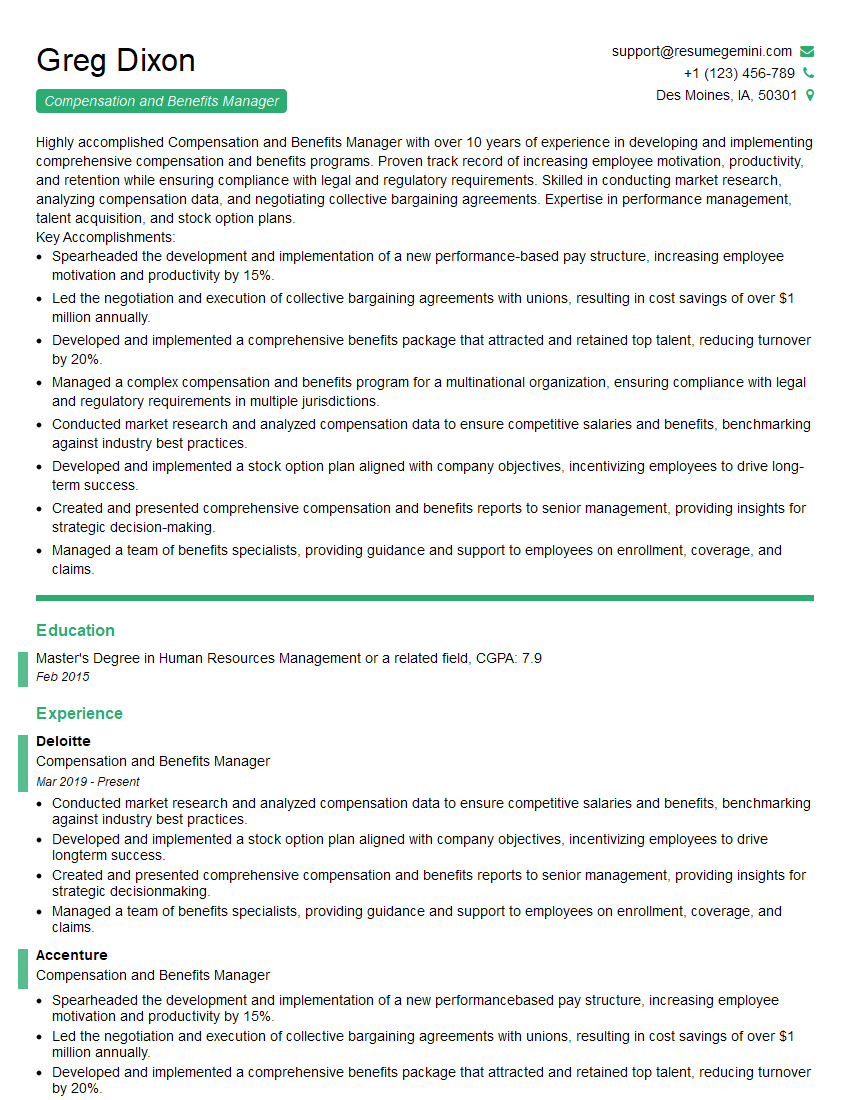
Compensation and Benefits Manager Resume Sample
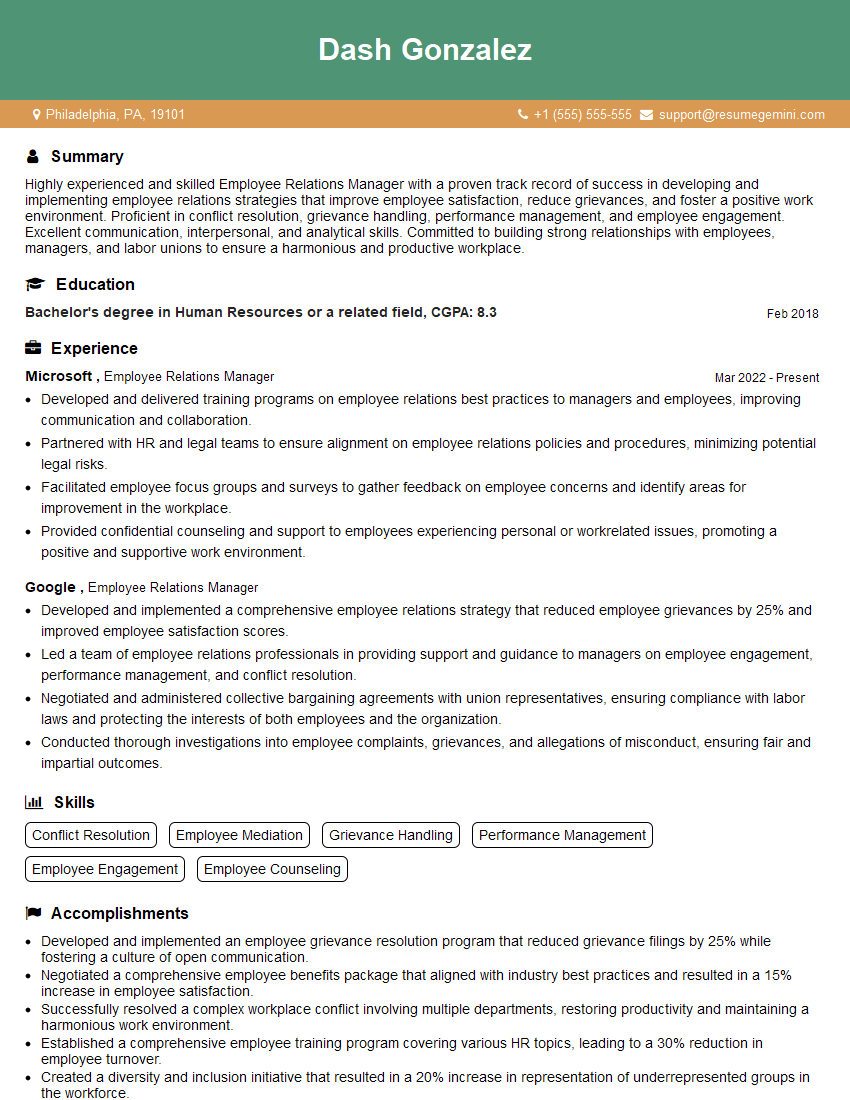
Employee Relations Manager Resume Sample
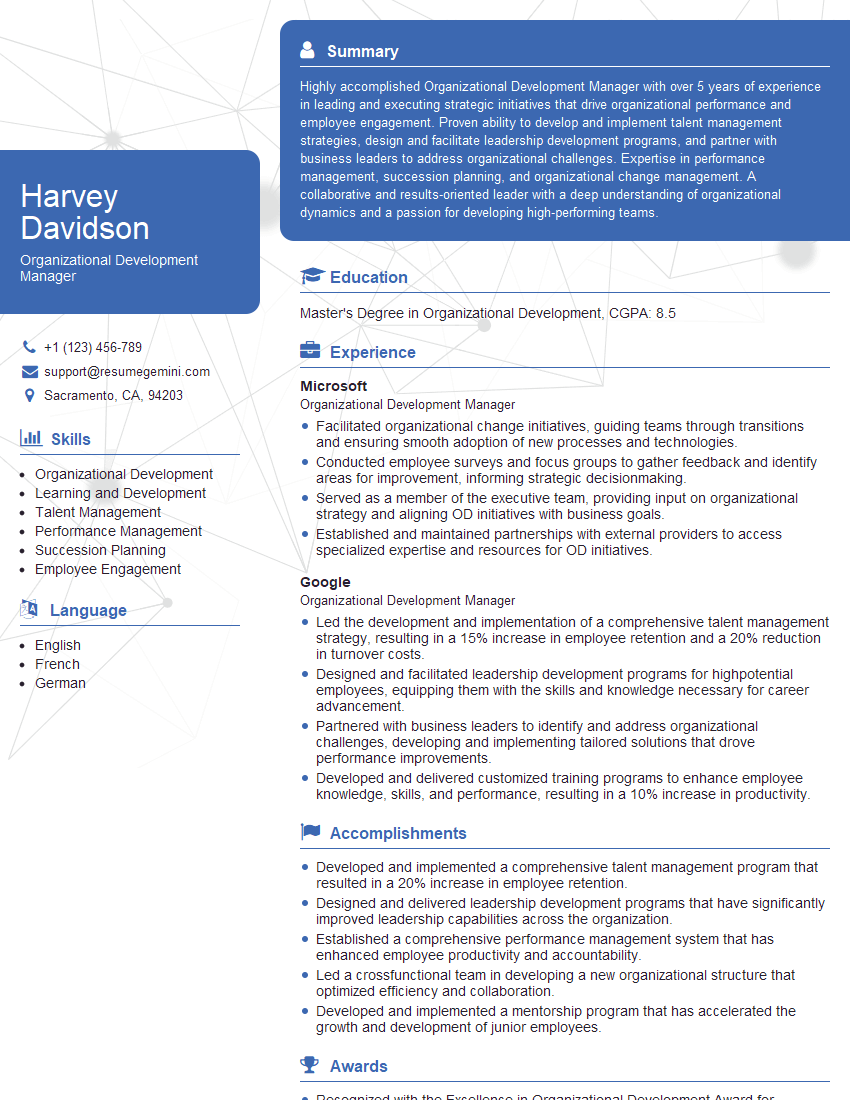
Organizational Development Manager Resume Sample
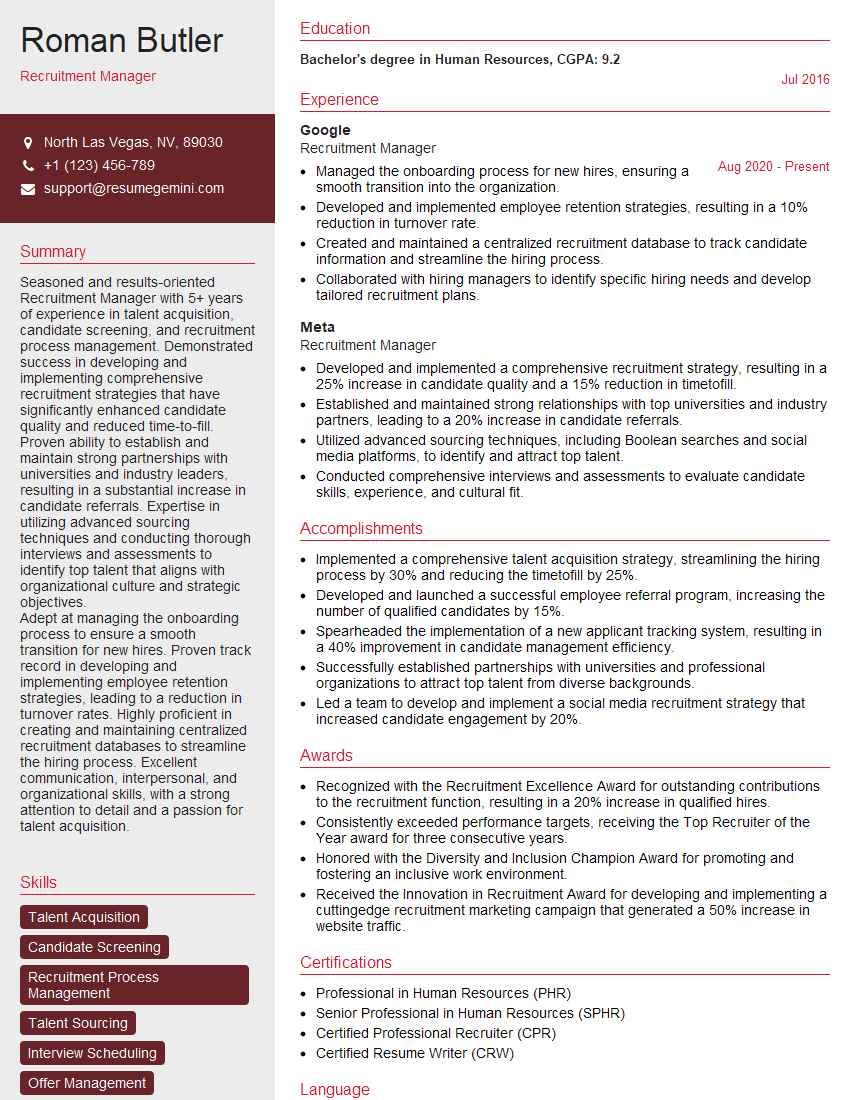
Recruitment Manager Resume Sample
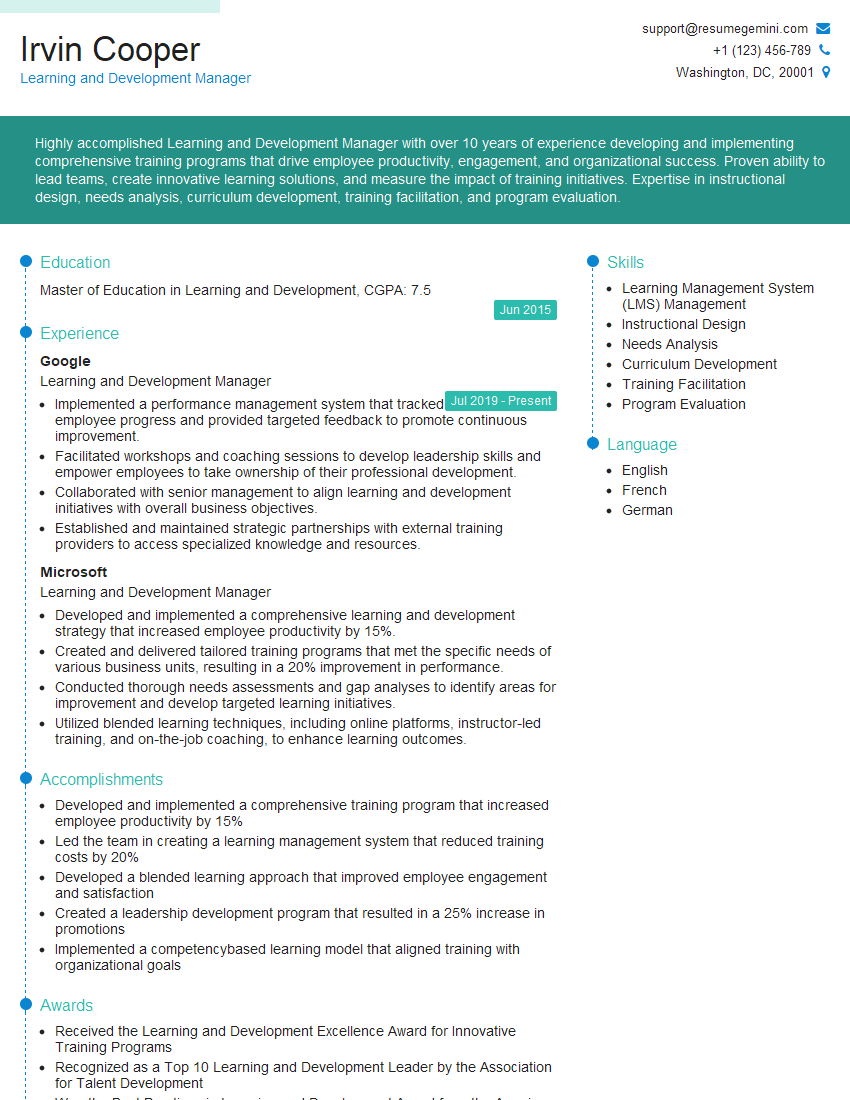
Learning and Development Manager Resume Sample
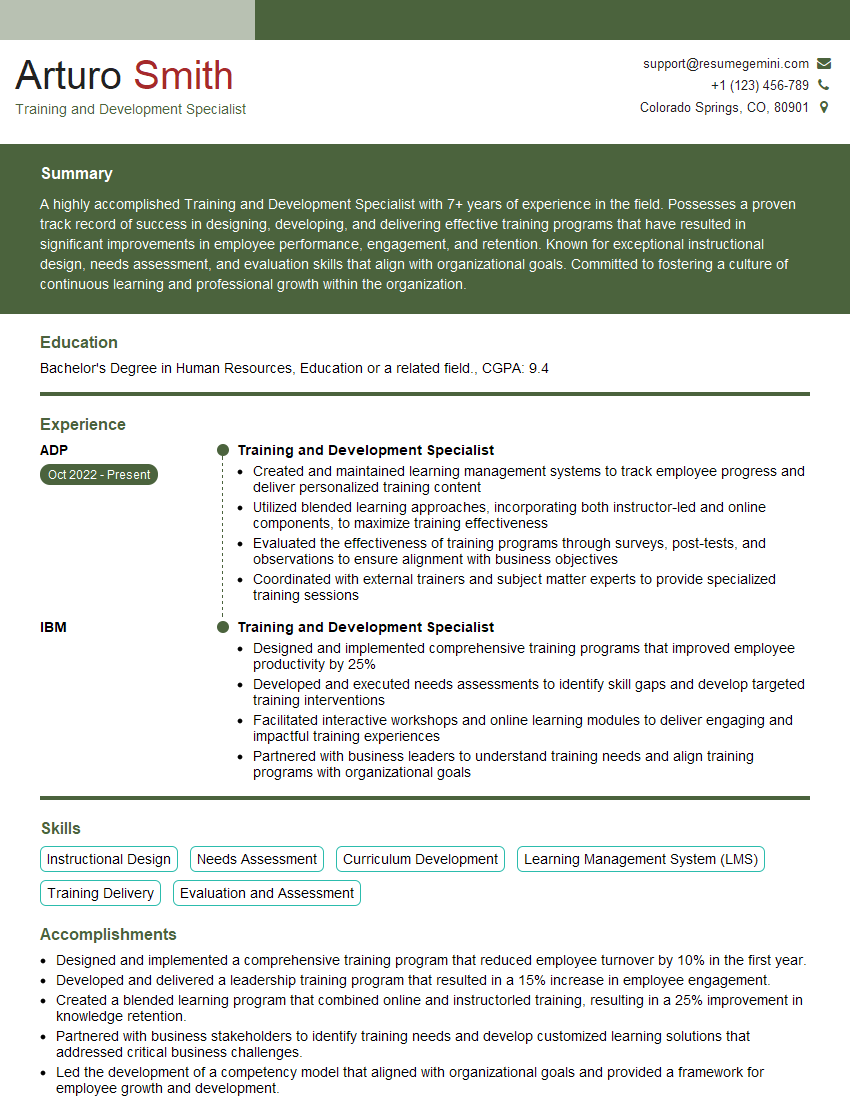
Training and Development Specialist Resume Sample
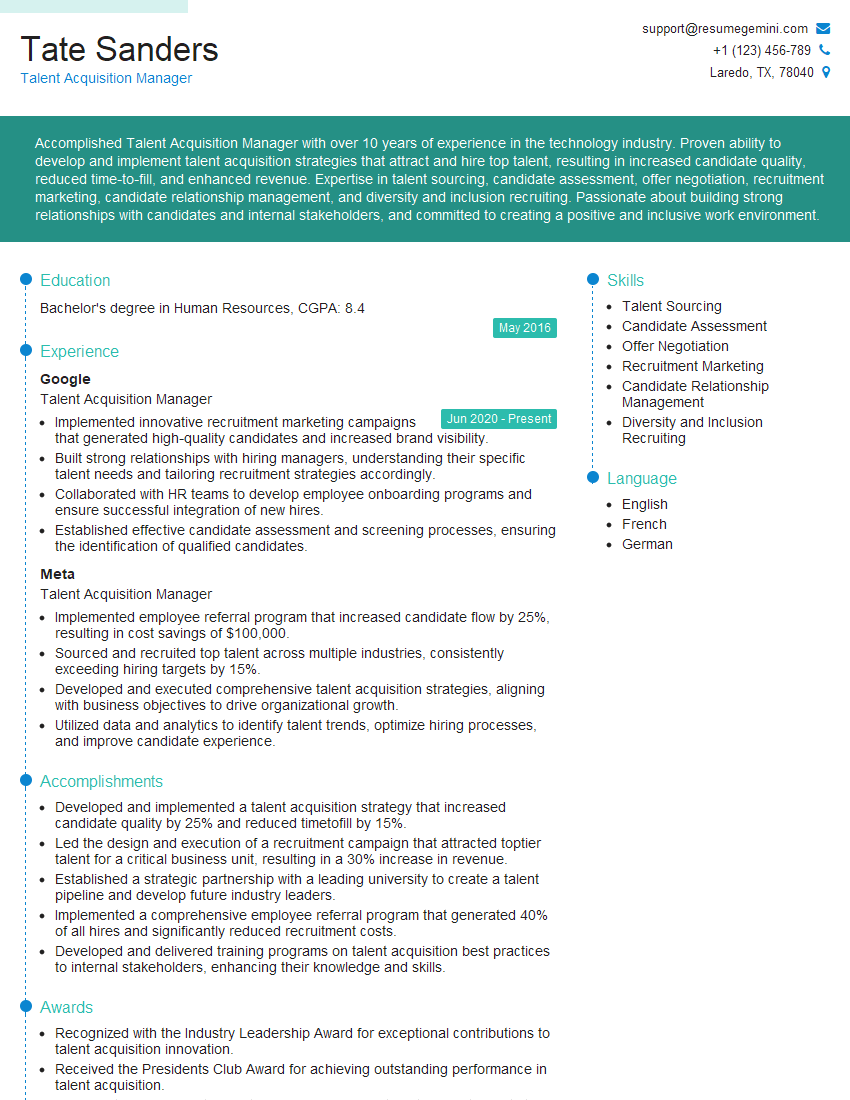
Talent Acquisition Manager Resume Sample
Explore more articles
Users Rating of Our Blogs
Share Your Experience
We value your feedback! Please rate our content and share your thoughts (optional).
What Readers Say About Our Blog
Very informative content, great job.
good