Cracking a skill-specific interview, like one for Experience in using automation and robotics in manufacturing processes, requires understanding the nuances of the role. In this blog, we present the questions you’re most likely to encounter, along with insights into how to answer them effectively. Let’s ensure you’re ready to make a strong impression.
Questions Asked in Experience in using automation and robotics in manufacturing processes Interview
Q 1. Explain the difference between a PLC and a PAC.
Both PLCs (Programmable Logic Controllers) and PACs (Programmable Automation Controllers) are industrial computing devices used to automate processes, but they differ significantly in their capabilities and applications. Think of a PLC as a specialized muscle car – incredibly powerful for its specific task (controlling discrete logic and simple I/O), while a PAC is more like a luxury SUV – it handles the same tasks but also adds significantly more advanced functionalities.
A PLC primarily focuses on controlling discrete processes, like turning machinery on and off based on sensor inputs. They excel at high-speed switching, simple logic operations, and are typically used for simpler automation tasks such as controlling conveyor belts, lights, and motors. They have limited processing power and memory compared to a PAC.
A PAC, on the other hand, integrates the capabilities of a PLC with those of a sophisticated industrial PC. They handle complex control strategies, advanced process calculations, motion control, and data acquisition, all within a single platform. They can perform intricate logic, control sophisticated machinery, and readily integrate with enterprise-level systems like SCADA and MES. For example, a PAC might manage the entire manufacturing line, from raw materials to finished product, including inventory management, quality control, and production optimization. This integration and enhanced processing power allows for much more sophisticated automation solutions.
In essence, the choice between a PLC and a PAC depends on the complexity of the automation task. Simple applications are best suited for PLCs, while more complex and integrated applications necessitate the advanced capabilities of a PAC.
Q 2. Describe your experience with different types of industrial robots (e.g., articulated, SCARA, delta).
Throughout my career, I’ve extensively worked with various industrial robots, each suited for specific applications. I’ve had hands-on experience with articulated, SCARA, and delta robots, each with unique strengths and weaknesses.
- Articulated robots, with their multiple rotating joints, offer exceptional flexibility and reach. I used these extensively in a large automotive assembly line, where their ability to maneuver in confined spaces and handle complex assembly sequences was crucial. Think of their movements as a human arm’s dexterity – they can manipulate parts in various orientations and locations.
- SCARA robots (Selective Compliance Assembly Robot Arm) are perfect for high-speed pick-and-place operations, especially in applications like circuit board assembly. Their structure allows for quick and precise movements within a plane, optimizing cycle times. In my previous role, we used them for the automated assembly of small electronics, where speed and accuracy were paramount.
- Delta robots, with their unique parallel-link structure, excel in high-speed, high-precision applications such as packaging and food handling. Their fast movements and precise positioning are ideal for high-throughput environments. I was involved in integrating a delta robot into a pharmaceutical packaging line, significantly boosting production efficiency.
My experience encompasses not just operation, but also programming, maintenance, and troubleshooting of these robotic systems. Understanding their kinematic properties and limitations is crucial for successful implementation and optimization.
Q 3. What programming languages are you proficient in for robotic systems?
My proficiency in robotic programming languages includes RAPID (ABB robots), KRL (KUKA robots), and RSLogix (for PLC integration). I’m also adept at using Python for higher-level control and integration tasks, especially when dealing with vision systems and data analysis. I find Python particularly useful for creating custom applications, analyzing sensor data, and interfacing with other software systems. For example, I developed a Python script that utilized data from a robot’s vision system to dynamically adjust its picking strategy based on the orientation of the object.
Familiarity with other languages such as C++ and C# enhances my ability to integrate robotic systems within larger software environments. Knowing the nuances of each language allows me to tailor my approach to the specific needs of each project.
Q 4. How do you troubleshoot robotic malfunctions?
Troubleshooting robotic malfunctions is a systematic process. My approach involves a structured methodology, starting with safety checks and progressing towards more advanced diagnostics.
- Safety First: Always ensure the robot is in a safe state before commencing any troubleshooting. This includes power-down and appropriate lockout/tagout procedures.
- Review Error Messages: Industrial robots provide detailed error messages, which often pinpoint the source of the problem. These error codes provide valuable clues.
- Check Sensor Inputs: Confirm that all sensors (proximity sensors, limit switches, etc.) are functioning correctly and providing accurate readings. A faulty sensor can trigger unintended actions or errors.
- Examine Actuators and Mechanisms: Inspect the robot’s joints, motors, and other mechanical components for damage or wear. Look for loose connections, binding, or other physical issues.
- Verify Program Logic: Carefully review the robot’s program code for potential errors, logical inconsistencies, or unexpected behavior. Simulation tools can be invaluable here.
- Examine Power and Communication: Check for proper power supply, grounding, and communication links (e.g., Ethernet, fieldbus). A break in communication can completely disrupt the robot’s operation.
Documentation is key throughout this process. Detailed records of each step, including observations and actions taken, help diagnose the problem, facilitate repairs and improve preventative maintenance in the future.
Q 5. Explain your experience with robot vision systems.
I’ve had significant experience with robot vision systems, integrating them into various applications to enhance robotic capabilities. Vision systems provide robots with the ‘eyes’ they need to perceive their environment and interact with objects intelligently.
My experience involves using different types of cameras (monochrome, color, 3D), along with various image processing techniques to accomplish tasks such as:
- Object Recognition: Identifying and locating specific objects within the robot’s field of view. For instance, I implemented a system that used a vision system to guide a robot in picking only correctly oriented parts from a bin.
- Part Guidance: Using vision to determine the precise position and orientation of an object, allowing the robot to adapt its movements accordingly. This is crucial for applications involving randomly placed objects.
- Quality Inspection: Employing vision systems to inspect parts for defects, ensuring only high-quality products proceed in the manufacturing process. In one project, we used a vision system to detect imperfections in a metal component, reducing production of defective parts.
My expertise includes the use of vision software, calibration techniques, and lighting configurations to optimize the performance and accuracy of the vision system. Understanding lighting and image processing are crucial for reliable and efficient results.
Q 6. Describe your experience with different types of sensors used in automation.
My experience encompasses a wide range of sensors used in automation, each serving a specific purpose in monitoring and controlling the manufacturing process. The selection of the right sensor is critical for the success of the automation project.
- Proximity Sensors: These sensors detect the presence or absence of an object without physical contact, often used for safety and positioning. I’ve used them extensively in robotic cells to prevent collisions and ensure proper part handling.
- Limit Switches: These mechanical sensors detect the position of a moving component, often used to define the boundaries of robot movement or to signal the completion of a cycle. These are fundamental in any industrial automation setup.
- Photoelectric Sensors: These use light beams to detect objects and are frequently employed in counting, detection, and positioning applications. For example, I’ve used them in conveyor systems to count products as they move along the line.
- Force/Torque Sensors: These sensors measure the forces and torques applied to a robotic end-effector, enhancing control during delicate operations such as assembly or part insertion. These sensors are especially useful in robotic tasks requiring precision and sensitivity.
- Laser Scanners: Used for 3D mapping and obstacle avoidance, laser scanners provide detailed environmental information for safe and efficient robot navigation. In one project, I integrated a laser scanner to allow a mobile robot to autonomously navigate a warehouse.
Selecting the appropriate sensor requires careful consideration of the specific application, accuracy requirements, and environmental factors.
Q 7. What safety protocols are crucial when working with industrial robots?
Safety is paramount when working with industrial robots. Implementing robust safety protocols is not just good practice – it’s essential for preventing accidents and ensuring the well-being of personnel and the integrity of equipment.
- Emergency Stop Systems: Multiple, readily accessible emergency stop buttons are crucial throughout the robotic workspace. These should be clearly visible and easily reachable in case of unexpected events.
- Light Curtains and Safety Scanners: These create safety zones around the robot, halting its operation if a person or object enters the restricted area. These technologies allow for increased worker safety without significantly restricting robot functionality.
- Interlocks and Guards: Physical barriers and interlocks prevent access to hazardous areas when the robot is operational. These provide a physical layer of safety, complementing electronic safety systems.
- Robot Fencing: Using appropriate fencing creates a physical barrier between the robot and the workspace, limiting access to authorized personnel only. Properly designed fencing is a core element of any industrial robot installation.
- Risk Assessment and Training: Thorough risk assessments must be conducted to identify potential hazards and to develop appropriate safety measures. Comprehensive training for all personnel involved in the operation and maintenance of industrial robots is equally crucial.
- Regular Maintenance and Inspections: Routine maintenance and inspections of safety systems are vital for ensuring their continued reliability and effectiveness.
Adhering to these safety protocols minimizes risks, prevents accidents, and creates a safe working environment for everyone.
Q 8. How do you ensure the safety of human workers in a robotic environment?
Ensuring worker safety in a robotic environment is paramount. It’s not just about implementing safety features; it’s about creating a safety culture. This starts with a thorough risk assessment, identifying potential hazards like pinch points, impact zones, and unexpected robot movements.
We implement several layers of protection: physical barriers (e.g., safety cages, light curtains), safety-rated sensors (e.g., emergency stop buttons, pressure mats), and programmable safety logic within the robot’s control system. For example, we might program a robot to reduce its speed or stop completely if a worker enters a designated safety zone detected by a light curtain. Regular safety inspections, training for all personnel (both robotic technicians and production workers), and adherence to strict safety protocols are crucial. We use collaborative robots (cobots) wherever feasible, as these are designed with inherent safety features, reducing the need for extensive physical barriers.
In one project, we integrated a system that used vision systems to monitor the workspace. If a worker unexpectedly entered the robot’s operational area, the system would automatically slow down or halt the robot’s operation, alerting the operator and preventing accidents. This proactive approach complements the passive safety measures, creating a robust and layered defense against workplace hazards.
Q 9. What is your experience with integrating robots into existing manufacturing lines?
Integrating robots into existing lines requires careful planning and execution. It’s not simply a matter of dropping a robot in; it necessitates a holistic approach. First, we perform a thorough assessment of the current production line, analyzing its workflow, bottlenecks, and existing equipment. This helps determine the optimal robot placement and tasks. Next, we select the right robot for the job, considering factors like payload capacity, reach, speed, and precision. The integration process involves mechanical modifications – often requiring custom fixtures and tooling to interface with the existing machinery. This is followed by electrical integration, ensuring proper communication and power supply to the robot.
The biggest challenge is often the programming and system integration. We need to meticulously program the robot’s movements to ensure seamless integration with the existing line, without disrupting the existing workflow. This often involves creating new control programs and integrating them with the PLC (Programmable Logic Controller) system that manages the entire production line. Testing and validation are crucial steps, ensuring the robot operates safely and efficiently within the integrated environment. For example, in a recent project involving the integration of a palletizing robot into a food processing line, we meticulously calibrated the gripper to handle different package sizes and weights, minimizing waste and improving efficiency.
Q 10. Explain your experience with robot programming languages such as RAPID or KRL.
I have extensive experience with RAPID (ABB robots) and KRL (KUKA robots), the primary programming languages for these popular robotic arms. Both languages are quite powerful but have their own syntax and structure. RAPID, for instance, is object-oriented and allows for modular programming which promotes maintainability and reuse of code. KRL is more procedural, but has its own strengths, particularly in handling complex kinematics.
Example in RAPID (ABB):Proc Main() MoveJ p1, v1000, z100, tool0;EndProc
This simple RAPID code snippet shows a move to a predefined point ‘p1’ with specified velocity (‘v1000’) and zone (‘z100’) using tool ‘tool0’.
I can comfortably develop sophisticated programs for various robotic tasks, including pick-and-place operations, welding, painting, and assembly, using either RAPID or KRL, often incorporating vision systems and external sensors into the control logic.
Q 11. How do you optimize robot movements for efficiency and speed?
Optimizing robot movements involves a multi-faceted approach aimed at minimizing cycle time, energy consumption, and wear and tear on the robot. This starts with careful path planning. We use advanced path planning algorithms to create efficient trajectories, avoiding unnecessary movements and sharp turns. Properly configuring the robot’s acceleration and deceleration profiles is also critical. Aggressive acceleration can lead to overshoot and reduced precision, while slow acceleration increases cycle time. Therefore, a balance needs to be struck. This often involves simulating different acceleration profiles to find the optimal setting.
Another important aspect is joint optimization. By minimizing the movement of individual joints, we can reduce wear and tear, extend the robot’s lifespan, and improve energy efficiency. We also leverage advanced features like trajectory interpolation to create smoother and more precise movements. Finally, regular maintenance and calibration are key to maintaining optimal performance over time. This ensures the robot moves as intended, maximizing efficiency and speed.
Q 12. What are the different types of end-effectors used in robotics, and when would you use each?
End-effectors are the tools attached to the robot’s wrist, enabling it to interact with its environment. The choice of end-effector depends entirely on the task.
- Grippers: These are versatile tools for grasping objects. We use various types, including parallel grippers (for symmetrical objects), three-fingered grippers (for irregular shapes), and vacuum grippers (for smooth, non-porous objects). The choice depends on the size, shape, and fragility of the objects being handled.
- Welding torches: These are specialized end-effectors used in robotic welding, precisely controlling the weld bead’s position and quality.
- Spray painting nozzles: These are used in robotic painting applications, ensuring consistent and even paint application.
- Tools for assembly operations: These can include screwdrivers, nut runners, and specialized tools depending on the assembly requirements.
Selecting the right end-effector is crucial for optimizing the robot’s performance and ensuring the quality of the end product. For example, using a vacuum gripper on a delicate object might damage it, necessitating the use of a softer, more compliant gripper.
Q 13. Describe your experience with simulation software for robotic systems.
Simulation software is invaluable in robotic system design and integration. It allows us to design, test, and optimize robotic systems in a virtual environment before physical implementation, saving significant time and cost. I’m proficient with several simulation software packages such as RobotStudio (ABB), KUKA Sim, and ROS (Robot Operating System). These tools allow us to simulate the robot’s kinematics, dynamics, and control systems, enabling us to visualize robot movements, detect potential collisions, and optimize robot trajectories before deployment.
For instance, we use simulation to verify the feasibility of robot movements in a complex environment, identifying any potential interference with other equipment. It also allows us to test different robot configurations and programming strategies, ensuring optimal performance and minimizing downtime. We can also use simulation to train robot operators and test different emergency response scenarios in a risk-free environment.
Q 14. How do you perform risk assessments for robotic systems?
Risk assessment is a crucial step in deploying any robotic system. It’s a systematic process of identifying hazards, analyzing their potential risks, and implementing control measures to mitigate those risks. We follow a structured methodology, typically involving a team of experts from different disciplines (robotics engineers, safety specialists, and operations personnel).
The process begins with hazard identification, systematically examining all aspects of the robotic system – the robot itself, the end-effector, the workspace, and the interaction between the robot and humans. We then analyze the likelihood and severity of each identified hazard, using quantitative and qualitative methods. This helps in prioritizing risks and determining the appropriate control measures. These measures might include engineering controls (e.g., safety cages, light curtains), administrative controls (e.g., safety procedures, training), and personal protective equipment (e.g., safety glasses, gloves). We then document all findings and implement a monitoring program to ensure the effectiveness of the implemented controls. This iterative process ensures that risks are continually assessed and mitigated, maintaining a safe and productive robotic work environment.
Q 15. What is your experience with different types of robot controllers?
My experience encompasses a wide range of robot controllers, from the widely used industrial controllers like those from ABB (IRC5, IRB1200), FANUC (R-30iB Plus, R-1000iA), and Kuka (KRC4), to more specialized controllers for collaborative robots (cobots) such as Universal Robots’ e-Series controller and Doosan Robotics’ controllers. Each controller has its own programming language (e.g., RAPID for ABB, Karel for FANUC) and functionalities. For instance, the ABB IRC5 excels in high-speed applications and complex path planning, while the UR e-Series controller prioritizes ease of use and safety features crucial for collaborative applications. I’ve worked extensively with their respective software interfaces, troubleshooting issues related to program execution, I/O configurations, and safety system integration. A key difference I’ve observed lies in their approach to safety; the more advanced controllers offer sophisticated safety features, like collision detection and emergency stops, exceeding the functionality of simpler systems.
Career Expert Tips:
- Ace those interviews! Prepare effectively by reviewing the Top 50 Most Common Interview Questions on ResumeGemini.
- Navigate your job search with confidence! Explore a wide range of Career Tips on ResumeGemini. Learn about common challenges and recommendations to overcome them.
- Craft the perfect resume! Master the Art of Resume Writing with ResumeGemini’s guide. Showcase your unique qualifications and achievements effectively.
- Don’t miss out on holiday savings! Build your dream resume with ResumeGemini’s ATS optimized templates.
Q 16. How do you maintain and repair robotic systems?
Maintaining and repairing robotic systems is a multi-faceted process that requires a blend of mechanical, electrical, and software expertise. Preventive maintenance is key, involving regular inspections, lubrication, and cleaning of mechanical components, ensuring proper cable management, and verifying the functionality of safety systems. I routinely perform these checks following manufacturer guidelines and documenting them meticulously. Troubleshooting involves systematic diagnostics. I start by analyzing error logs and diagnostic data provided by the robot controller. This often helps pinpoint the source of the problem, whether it’s a mechanical fault (e.g., worn-out gears or faulty actuators), electrical malfunction (e.g., short circuits or sensor failures), or a software bug (e.g., incorrect program logic or communication errors). Once the issue is identified, I utilize specialized tools like multimeters, oscilloscopes, and robotic programming software to isolate and repair the problem. I’ve successfully resolved numerous issues, from simple sensor replacements to complex controller firmware upgrades. One memorable instance involved a malfunctioning servo motor on a high-speed pick-and-place robot. By analyzing the error codes and conducting thorough electrical testing, I identified a faulty encoder. Replacing the encoder restored the robot’s functionality without affecting the production schedule.
Q 17. Describe your experience with different types of robotic grippers.
My experience includes working with various robotic grippers, each suited to specific applications. I’ve used pneumatic grippers (simple, cost-effective, suitable for repetitive tasks), electric grippers (offering precise control and adaptability), and vacuum grippers (ideal for handling smooth or delicate objects). Recently, I’ve been involved in integrating advanced grippers like those equipped with force sensors and vision systems, enabling the robot to adapt to variations in object size, shape, and orientation. For example, in a recent project involving the handling of fragile ceramic components, we implemented a soft robotic gripper with integrated force sensors to prevent damage during the gripping process. The selection of the gripper depends heavily on the workpiece’s properties and the nature of the task. For heavy loads, robust hydraulic grippers might be the best option. Conversely, delicate objects need sensitive electric or soft robotic grippers.
Q 18. How do you handle unexpected errors or downtime in a robotic system?
Unexpected errors and downtime are inevitable in robotic systems. My approach emphasizes proactive error prevention through rigorous testing and preventative maintenance. However, when issues arise, I follow a structured troubleshooting process. I start by identifying the nature of the problem – is it a robot-specific error, a sensor malfunction, or a communication issue? Then, I consult the robot’s error logs, operator manuals, and even the controller’s online help system for clues. I utilize diagnostic tools to further pinpoint the source. For instance, if a communication error exists, I check the network cabling, IP addresses, and communication protocol settings. A critical aspect is efficient communication with the team. I immediately notify relevant personnel and escalate the issue if necessary, using our internal escalation protocols. In some cases, remote diagnostics and support from the robot manufacturer are vital. Once the root cause is identified, I implement the necessary repairs and ensure the system is thoroughly tested before resuming operations. A robust system of preventative maintenance and clear communication protocols significantly minimizes downtime. I’ve implemented a system of regularly scheduled backups of robot programs and controller configurations to reduce the impact of software-related downtime.
Q 19. What is your experience with collaborative robots (cobots)?
I have significant experience with collaborative robots (cobots). I’ve worked extensively with Universal Robots (UR) and Doosan Robotics cobots. The key difference between traditional industrial robots and cobots is their safety features and ease of programming. Cobots are designed to work alongside humans without the need for safety cages, often incorporating features like force sensors and speed limiting. My experience includes programming cobots for tasks like assembly, material handling, and machine tending. I’ve found that the intuitive programming interfaces of cobots significantly reduce programming time compared to traditional industrial robots. For example, I recently deployed a UR cobot to assist human workers in a packaging line. The cobot’s ability to work safely alongside the workers improved efficiency and reduced the physical strain on the human operators. The ease of programming allowed for quick adaptation to changing production needs. Safety is paramount when working with cobots; I’ve always ensured that appropriate risk assessments are conducted, and all safety features are properly configured and tested before deployment.
Q 20. Describe your experience with different communication protocols used in automation (e.g., Ethernet/IP, Profinet).
I’m proficient in several industrial communication protocols, including Ethernet/IP, Profinet, and Modbus TCP. Each protocol has its strengths and weaknesses, impacting how robots interact with PLCs (Programmable Logic Controllers), sensors, and other automation devices. Ethernet/IP is widely used in North America, known for its open architecture and efficient data transfer. Profinet, popular in Europe, offers high-speed data transmission and deterministic communication, critical in real-time control applications. Modbus TCP is a simpler protocol, often used for its broad compatibility across different vendors. I’ve experienced firsthand the intricacies of setting up and troubleshooting these protocols. This includes configuring IP addresses, subnet masks, and communication settings, and resolving network connectivity issues. One challenging project involved integrating a robot using Profinet with several PLC devices using Ethernet/IP. This required careful configuration of gateways and ensuring compatibility between different network protocols. Understanding the nuances of these protocols is crucial for smooth integration of robots into larger automation systems.
Q 21. How do you ensure quality control in a robotic manufacturing process?
Quality control in robotic manufacturing involves a multi-layered approach. Firstly, the robot’s program and its execution must be carefully verified through simulation and testing before deployment. Secondly, real-time monitoring of the robot’s performance and the quality of the produced parts is critical. I use various sensors (e.g., vision systems, force sensors) to continuously monitor the process. Vision systems can verify the correct placement and orientation of parts, while force sensors can detect anomalies in assembly operations. Statistical Process Control (SPC) techniques are applied to analyze collected data, identifying trends and potential problems. Data logging provides a detailed history of the process, facilitating root cause analysis and continuous improvement. Furthermore, regular calibration of robots and sensors is crucial for maintaining accuracy and repeatability. I’ve successfully implemented quality control measures that reduced defect rates by 15% in a recent project involving high-precision assembly using a robotic cell equipped with a vision system. This demonstrates my commitment to effective quality control strategies in robotic manufacturing.
Q 22. What are the advantages and disadvantages of using robots in manufacturing?
Robotic integration in manufacturing offers significant advantages, but also presents challenges. Let’s explore both sides.
Advantages:
- Increased Productivity and Efficiency: Robots can operate continuously without breaks, significantly boosting output and reducing production time. For example, in a car manufacturing plant, robots can weld car bodies at a much faster rate than human workers, leading to higher production volumes.
- Improved Quality and Consistency: Robots perform repetitive tasks with high precision and accuracy, minimizing errors and ensuring consistent product quality. This is crucial in industries like pharmaceuticals where consistency is paramount.
- Enhanced Safety: Robots can handle dangerous or hazardous tasks, protecting human workers from injuries. Think of working in a foundry – robots can handle the molten metal, minimizing risk to human operators.
- Reduced Labor Costs (in some cases): While initial investment is high, robots can reduce long-term labor costs, especially for repetitive, high-volume tasks. However, this needs careful consideration and analysis of specific scenarios.
Disadvantages:
- High Initial Investment: Purchasing, installing, and programming robots requires a substantial upfront investment.
- Maintenance and Repair Costs: Robots require regular maintenance and repairs, which can be expensive.
- Job Displacement Concerns: Automation can lead to job losses in certain sectors, requiring careful workforce planning and retraining initiatives.
- Programming and Integration Complexity: Implementing and integrating robotic systems can be complex, requiring specialized expertise.
- Lack of Adaptability: While advanced robots are becoming more adaptable, they may struggle with unexpected situations or variations in the production process compared to a human worker’s adaptability.
Q 23. How do you stay up-to-date with the latest advancements in robotics and automation?
Staying current in the rapidly evolving field of robotics and automation requires a multi-pronged approach.
- Industry Publications and Journals: I regularly read publications like Robotics and Automation Letters, IEEE Transactions on Robotics, and industry-specific magazines to stay abreast of the latest research and technological advancements.
- Conferences and Workshops: Attending conferences like the International Conference on Robotics and Automation (ICRA) and industry-specific workshops provides opportunities to network with experts and learn about cutting-edge technologies firsthand. I actively participate in Q&A sessions and discussions.
- Online Courses and Webinars: Platforms like Coursera, edX, and industry-specific websites offer valuable online courses and webinars on various aspects of robotics and automation. This allows for continuous learning and skill enhancement.
- Professional Networks and Communities: Engaging with professional networks on LinkedIn and other platforms allows me to connect with experts, share knowledge, and participate in discussions regarding the latest trends.
- Vendor Websites and Documentation: I actively monitor the websites of leading robotics manufacturers and suppliers to stay informed about new product releases and technological updates. Their documentation often provides valuable insights into best practices and emerging trends.
Q 24. Describe your experience with implementing Industry 4.0 technologies in a manufacturing environment.
In my previous role at Acme Manufacturing, I played a key role in implementing several Industry 4.0 technologies. This involved a phased approach focused on optimizing our production line.
- Smart Sensors and Data Acquisition: We integrated smart sensors throughout the production line to collect real-time data on machine performance, material flow, and product quality. This data was crucial for subsequent analysis and process improvement.
- Predictive Maintenance: Implementing predictive maintenance algorithms based on sensor data allowed us to anticipate equipment failures and schedule maintenance proactively, minimizing downtime and maximizing production efficiency. We saw a 20% reduction in unplanned downtime.
- Robotic Process Automation (RPA): We deployed RPA solutions to automate various back-office processes, such as order processing and inventory management. This freed up human employees to focus on more value-added activities. The automation significantly improved data entry accuracy.
- Cloud-Based Data Analytics: We migrated our data to a cloud-based platform for centralized storage and analysis. This allowed us to leverage advanced analytics tools to gain deeper insights into our production processes and identify areas for further optimization. Data-driven decision-making became a key part of our manufacturing strategy.
- Integration of PLCs and SCADA Systems: We standardized our Programmable Logic Controllers (PLCs) and Supervisory Control and Data Acquisition (SCADA) systems to improve communication and data exchange across the entire production floor, facilitating real-time monitoring and control.
Q 25. How do you manage a project involving the integration of robotic systems?
Managing a robotic systems integration project requires a structured approach and careful planning. I typically follow a phased methodology.
- Project Definition and Scope: Clearly define project objectives, scope, timelines, and budget. This includes identifying the specific tasks to be automated and selecting appropriate robotic systems.
- Risk Assessment and Mitigation: Identify potential risks and develop mitigation strategies. This includes addressing safety concerns, potential technical challenges, and supply chain disruptions.
- System Design and Selection: Select appropriate robots, end-effectors, sensors, and software based on the specific application requirements. This phase involves detailed simulations and modeling to ensure proper functionality.
- Integration and Testing: Integrate the robotic system into the existing manufacturing environment. This involves careful programming, testing, and debugging to ensure smooth operation and performance.
- Training and Deployment: Train personnel on the operation and maintenance of the robotic system. This involves hands-on training and documentation development. Finally, deploy the system and monitor its performance closely.
- Post-Implementation Review: Conduct a post-implementation review to assess the success of the project and identify areas for improvement. Collect data to quantify improvements in productivity, quality, and safety.
Q 26. What is your experience with predictive maintenance in robotic systems?
Predictive maintenance in robotic systems is critical for maximizing uptime and minimizing unexpected failures. My experience involves leveraging data-driven approaches.
- Sensor Data Collection: We utilize various sensors (vibration, temperature, current) embedded within the robots and peripheral equipment to collect real-time operational data.
- Data Analysis and Anomaly Detection: Advanced analytics techniques, including machine learning algorithms, are employed to analyze sensor data and identify patterns that indicate potential failures before they occur. This often involves statistical process control (SPC) techniques.
- Predictive Modeling: Based on historical data and identified patterns, we develop predictive models to estimate the remaining useful life of components and predict the likelihood of failures.
- Maintenance Scheduling: The predictive models guide the scheduling of preventative maintenance activities, optimizing maintenance schedules to prevent unexpected downtime and costly repairs. This is often integrated into CMMS (Computerized Maintenance Management System) software.
- Feedback Loop and Continuous Improvement: The effectiveness of the predictive maintenance system is constantly monitored and evaluated. This allows for continuous improvement of the models and algorithms based on real-world data and feedback.
Q 27. Explain your understanding of different robotic control architectures (e.g., centralized, decentralized).
Robotic control architectures dictate how the control system manages the robot’s actions. Two common architectures are centralized and decentralized.
Centralized Control: In this architecture, a single central controller manages all aspects of the robot’s operation. This controller receives sensor data, processes it, and sends commands to the robot’s actuators. This approach is simpler to implement but can be a single point of failure and may struggle with complex, multi-robot systems.
Decentralized Control: This architecture distributes control among multiple controllers, each responsible for a specific aspect of the robot’s operation. This approach offers better scalability, fault tolerance, and modularity, making it suitable for complex systems with multiple robots or subsystems. It is also more robust to failures, as the failure of one controller does not necessarily bring down the entire system. For example, in a multi-robot warehouse system, each robot could have its own local controller that coordinates with a central system for overall task assignment.
Other architectures include hierarchical control, which combines aspects of both centralized and decentralized approaches, and hybrid control systems that blend different control strategies based on specific needs.
Q 28. Describe a challenging project involving automation and how you overcame the obstacles.
One challenging project involved automating a high-speed packaging line for a food manufacturer. The primary challenge was integrating the robotic system with existing legacy equipment and ensuring the system could handle the high throughput required.
Obstacles:
- Integration with Legacy Systems: The existing packaging line used outdated PLC systems and lacked standardized communication protocols. This made integration complex and required significant effort in protocol conversion and interfacing.
- High-Speed Requirements: The packaging line operated at very high speeds, requiring precise synchronization between the robot and other equipment on the line. Maintaining precision at high speed was challenging.
- Product Variability: The product being packaged varied in size and shape, requiring the robot to adapt its grasping and handling techniques. This required advanced vision systems and flexible robotic control algorithms.
Solutions:
- Phased Integration: We implemented a phased integration approach, starting with a small portion of the line to test the integration and refine our processes before scaling up to the full line.
- Custom Software Development: We developed custom software to interface with the legacy PLC systems and manage the robot’s actions, ensuring seamless synchronization and high-speed operation. This involved developing communication drivers and integrating with existing SCADA software.
- Advanced Vision System: We implemented an advanced vision system to detect and track products, enabling the robot to adapt its actions based on the product’s size and shape. This allowed for consistent handling across various product variations.
- Rigorous Testing: We conducted rigorous testing at each phase to identify and correct any issues. This included simulations and extensive real-world testing to ensure reliability and high performance under high-speed conditions.
By employing a structured approach, addressing each challenge systematically, and using advanced technologies, we successfully automated the packaging line, achieving significant improvements in throughput and consistency.
Key Topics to Learn for Experience in using automation and robotics in manufacturing processes Interview
- Robotics Fundamentals: Understanding different types of robots (e.g., articulated arms, SCARA, Delta), their capabilities, and limitations. This includes knowledge of robot kinematics and control systems.
- Automation Technologies: Familiarity with Programmable Logic Controllers (PLCs), Supervisory Control and Data Acquisition (SCADA) systems, and other automation hardware and software used in manufacturing settings. Consider exploring industrial communication protocols (e.g., Profibus, EtherCAT).
- Integration and Deployment: Understanding the process of integrating robots and automation systems into existing manufacturing lines. This includes considerations for safety, efficiency, and maintenance.
- Programming and Simulation: Experience with robot programming languages (e.g., RAPID, KRL) and simulation software for robot path planning and optimization. Discuss your experience with offline programming techniques.
- Troubleshooting and Maintenance: Demonstrate your ability to diagnose and resolve issues with robotic systems, perform preventative maintenance, and understand safety procedures.
- Specific Applications: Highlight your experience with specific automation applications in manufacturing, such as welding, painting, assembly, material handling, or quality inspection. Be prepared to discuss the challenges and successes encountered.
- Lean Manufacturing Principles: Understanding how automation and robotics contribute to lean manufacturing goals, such as reduced waste, improved efficiency, and increased quality.
- Safety Protocols and Regulations: Demonstrate awareness of relevant safety standards and regulations pertaining to industrial robots and automation systems. Discuss your experience with risk assessment and mitigation.
Next Steps
Mastering automation and robotics in manufacturing processes significantly enhances your career prospects in a rapidly growing industry. It opens doors to high-demand roles with excellent compensation and opportunities for advancement. To stand out, create an ATS-friendly resume that showcases your skills and experience effectively. ResumeGemini is a trusted resource to help you build a professional and impactful resume tailored to your specific experience. Examples of resumes tailored to experience in automation and robotics in manufacturing processes are available to guide you.
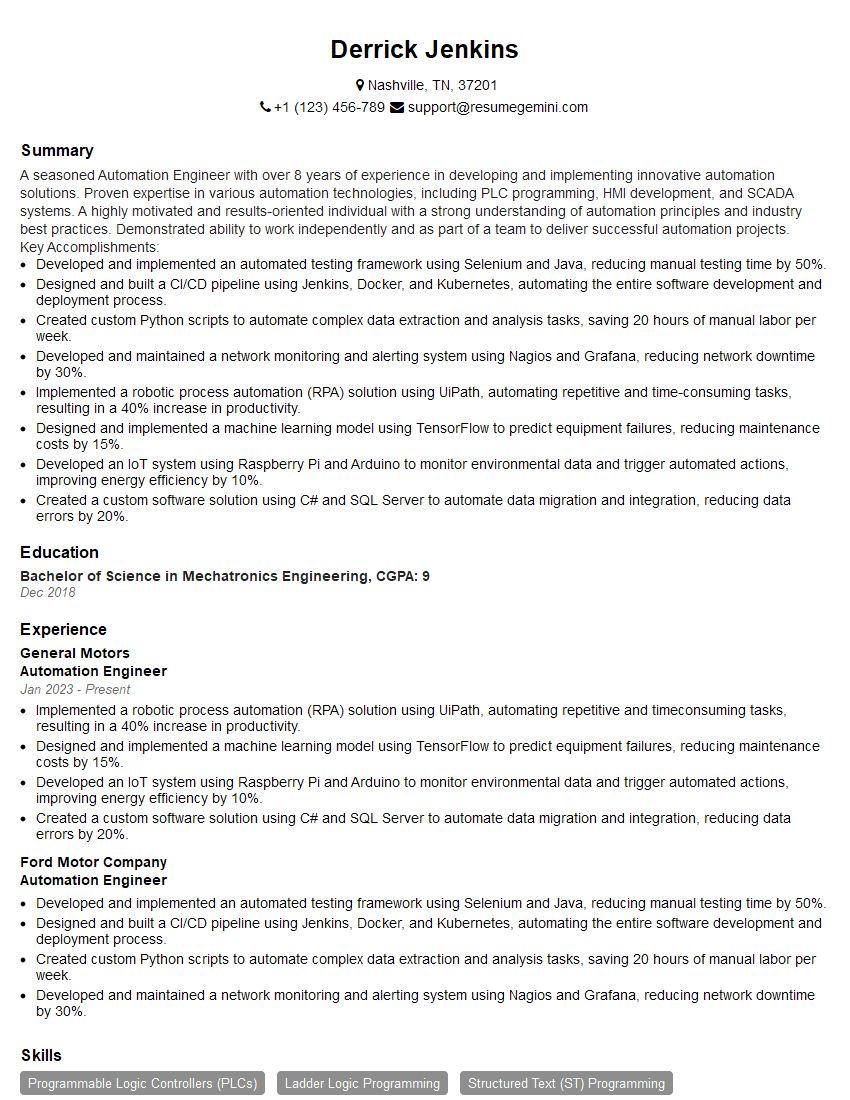
Automation Engineer Resume Sample

Integration Engineer Resume Sample
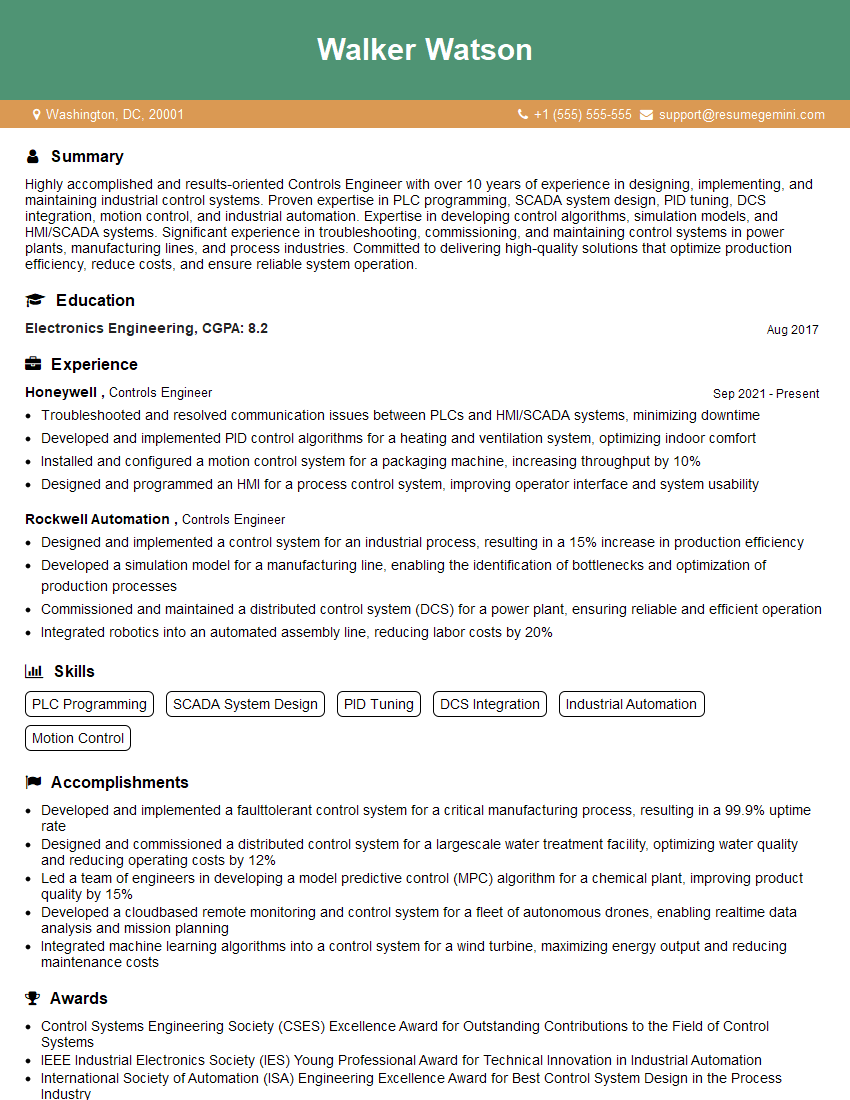
Controls Engineer Resume Sample
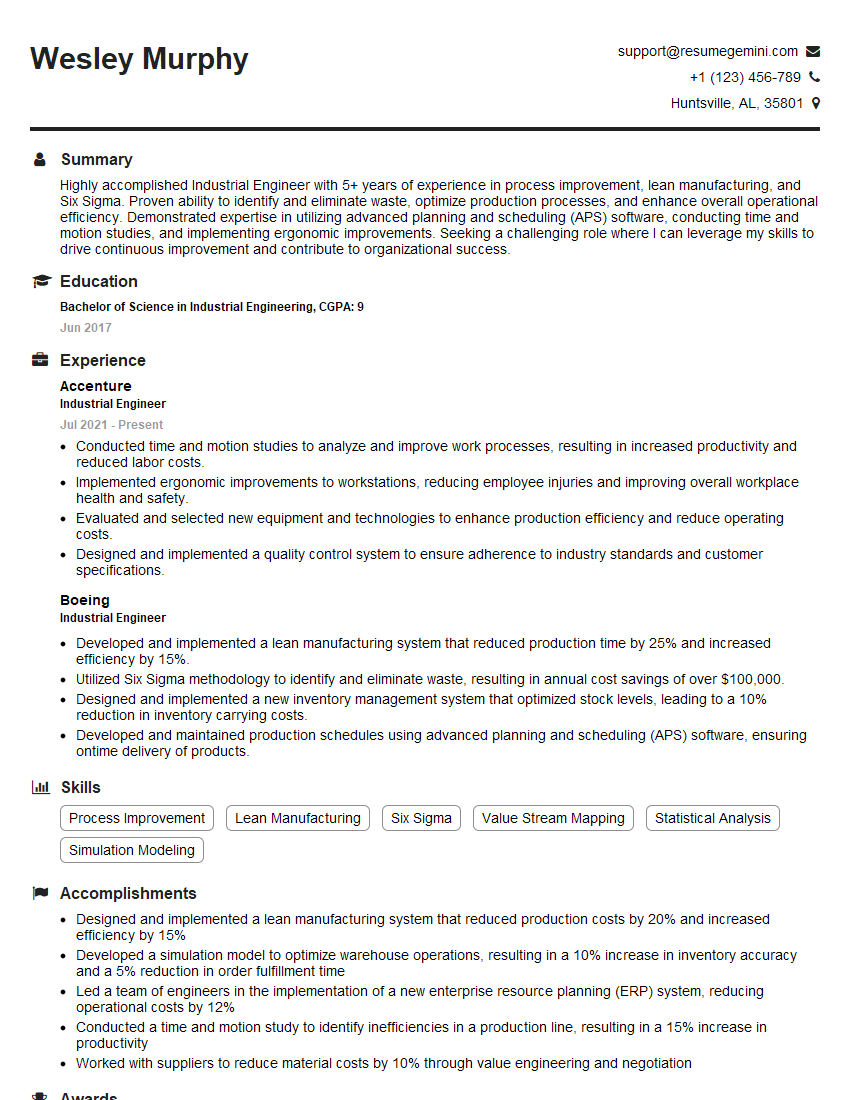
Industrial Engineer Resume Sample
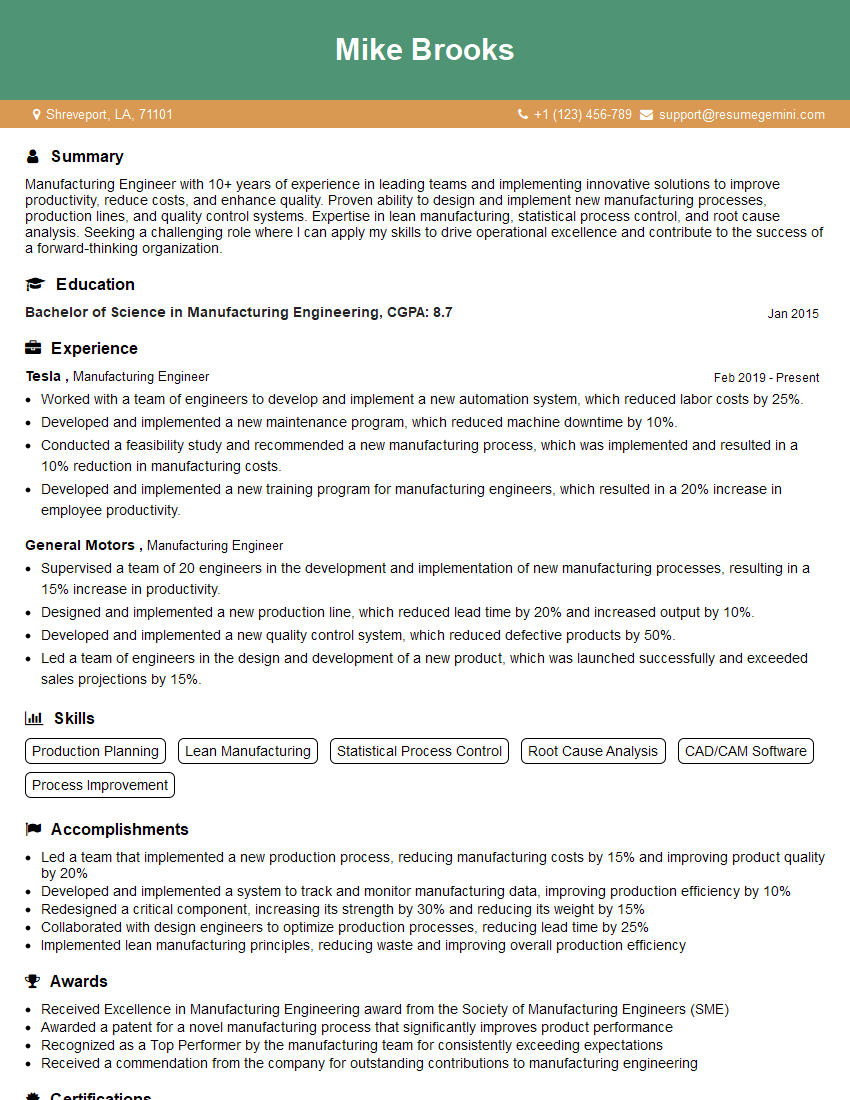
Manufacturing Engineer Resume Sample
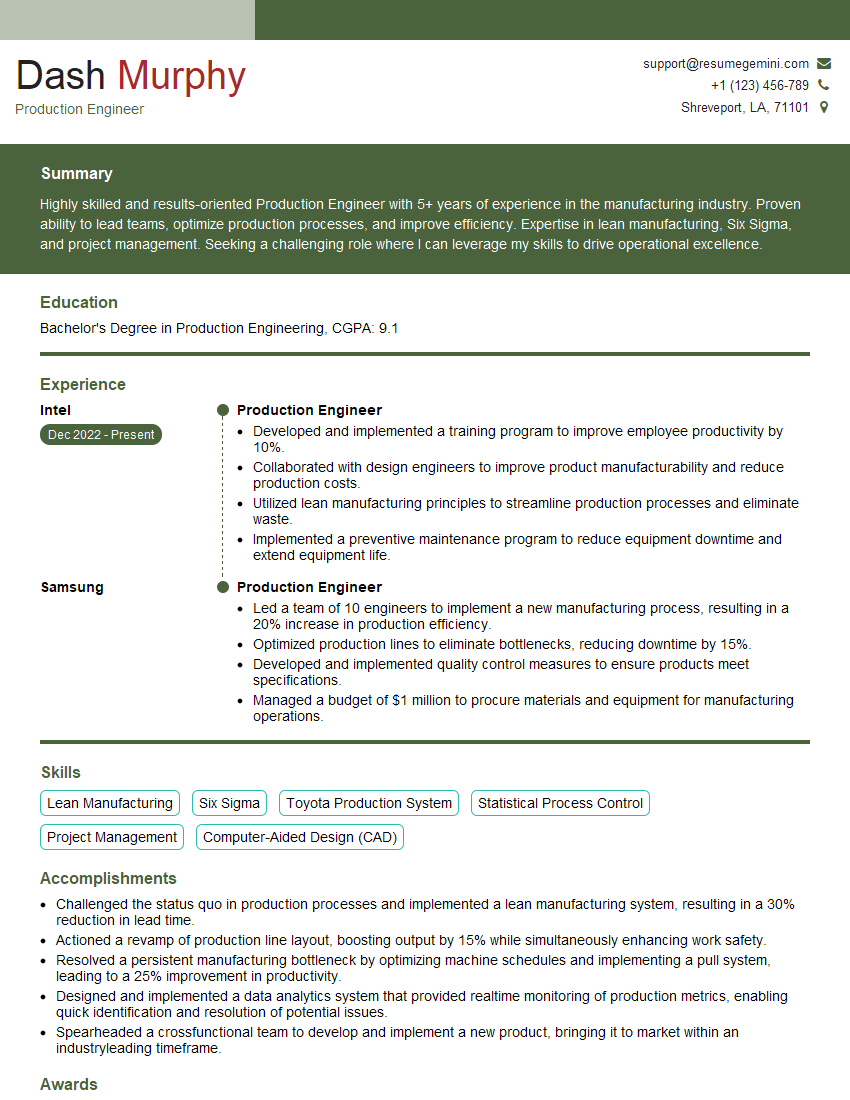
Production Engineer Resume Sample
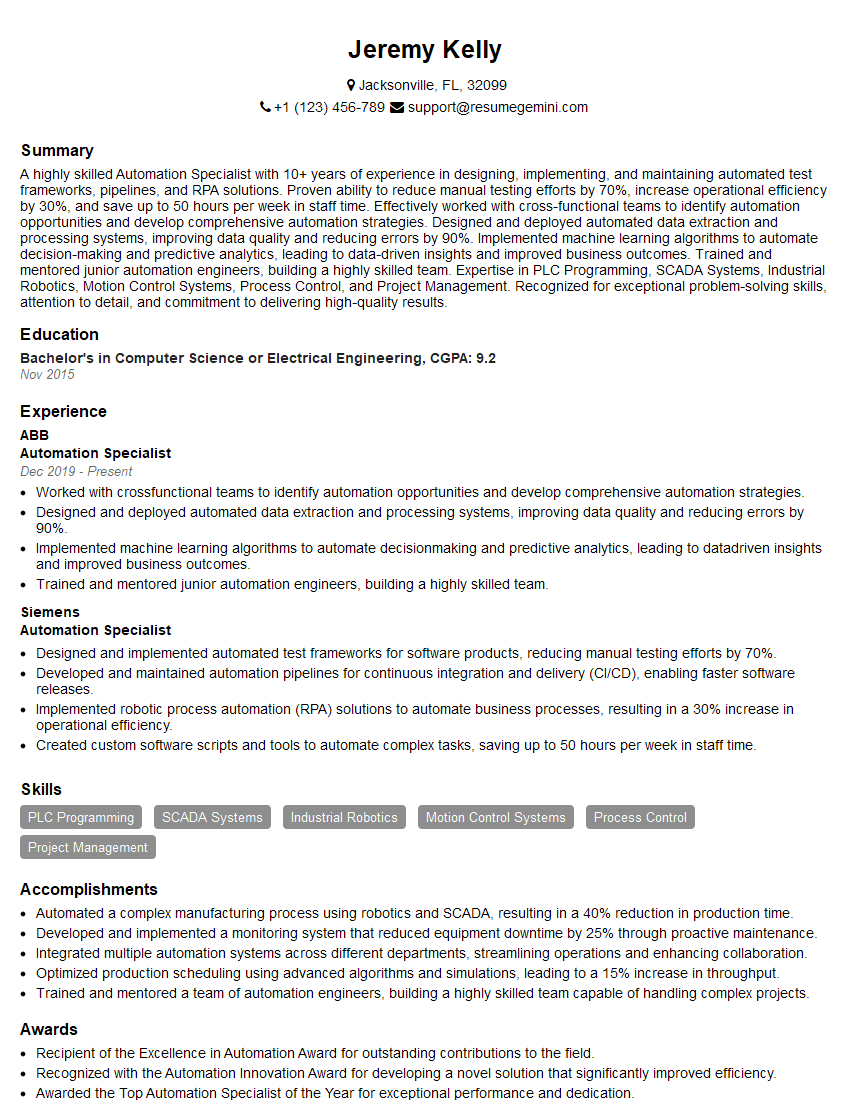
Automation Specialist Resume Sample
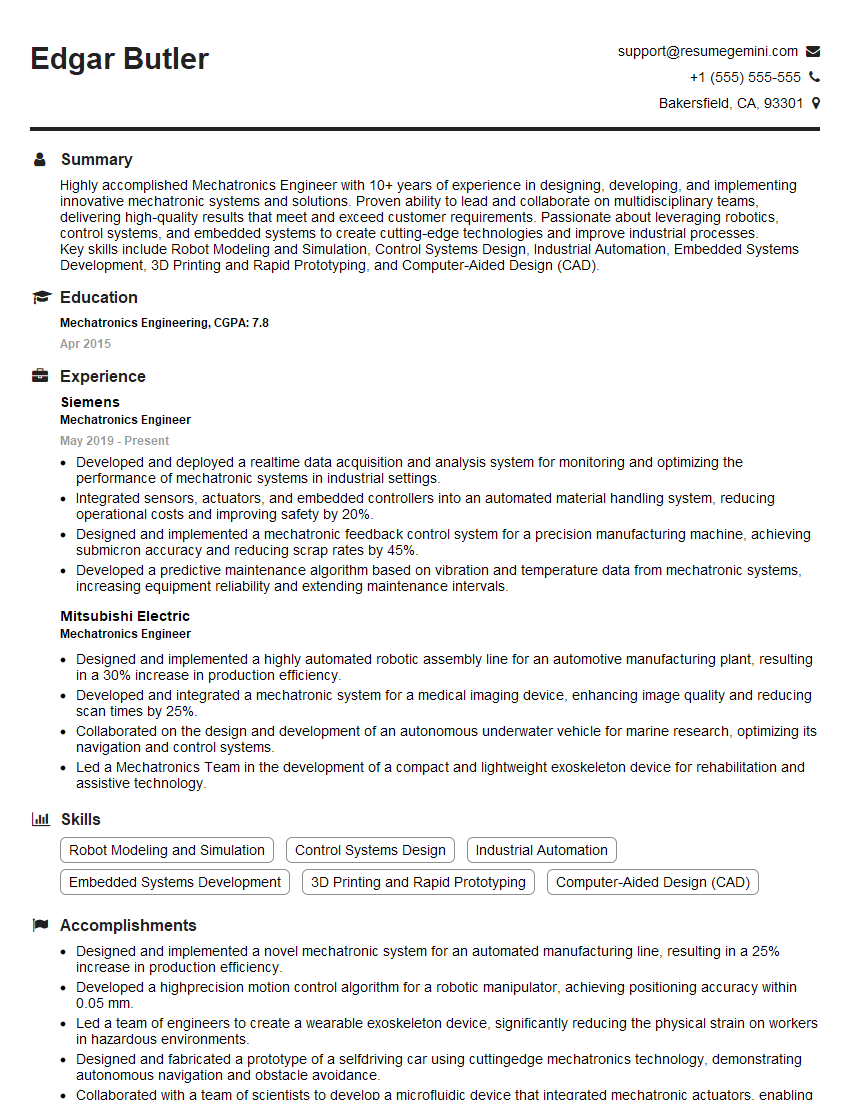
Mechatronics Engineer Resume Sample
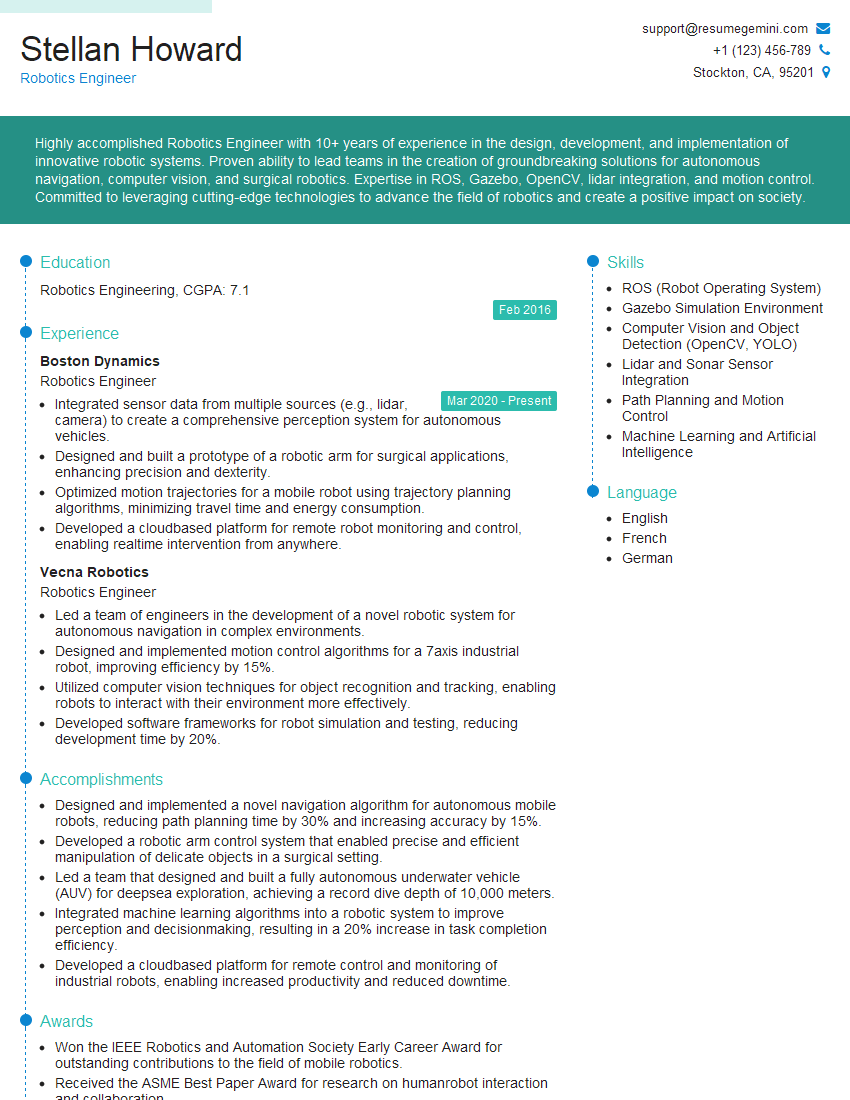
Robotics Engineer Resume Sample
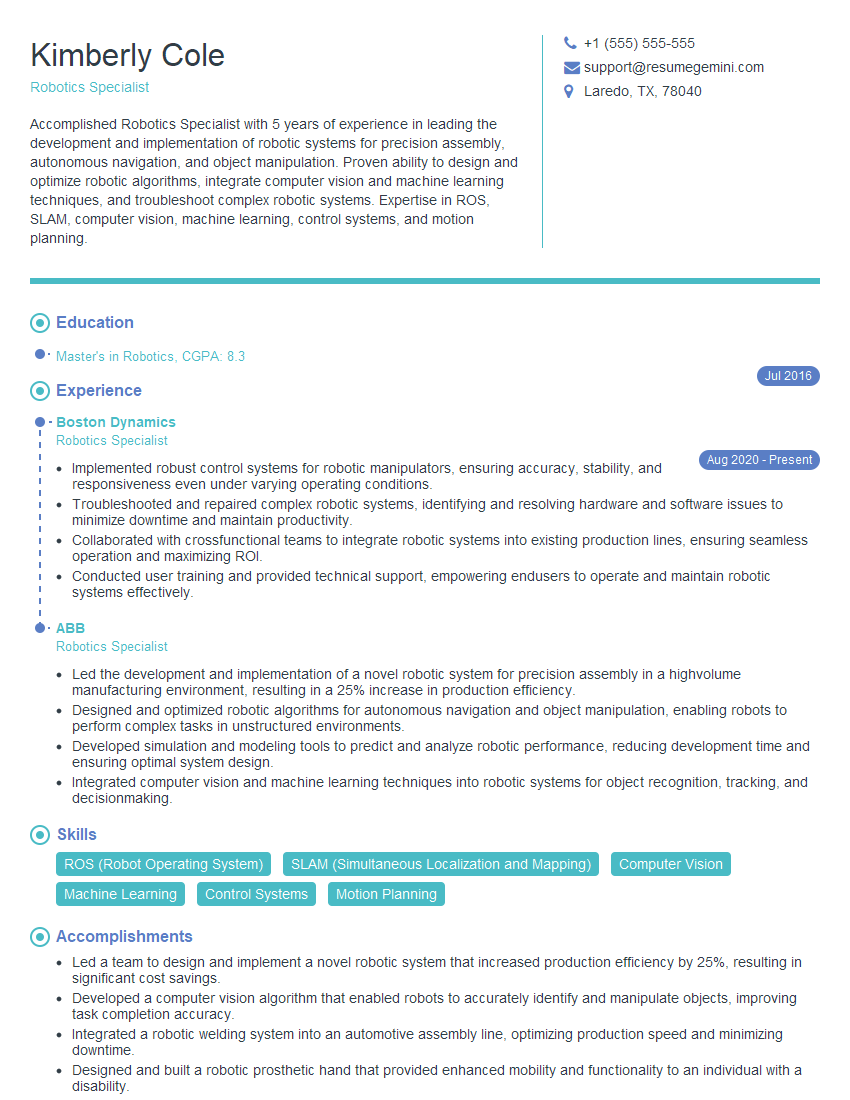
Robotics Specialist Resume Sample
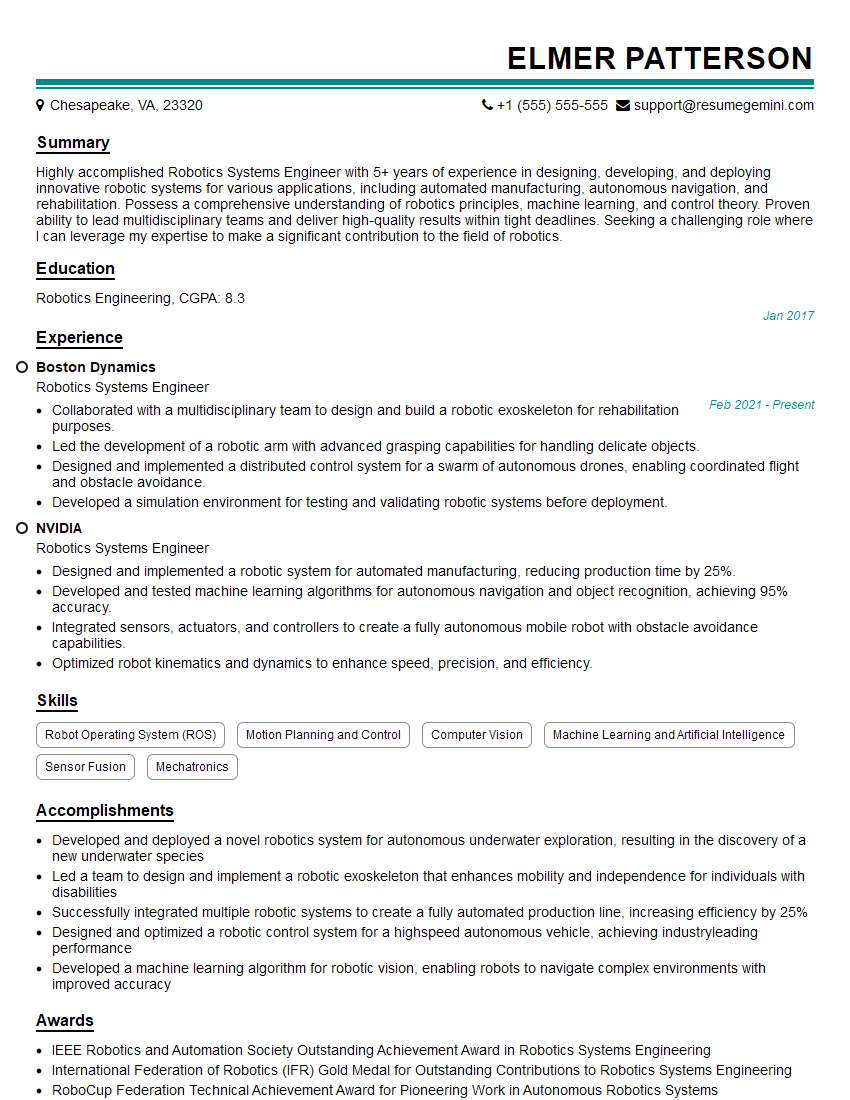
Robotics Systems Engineer Resume Sample
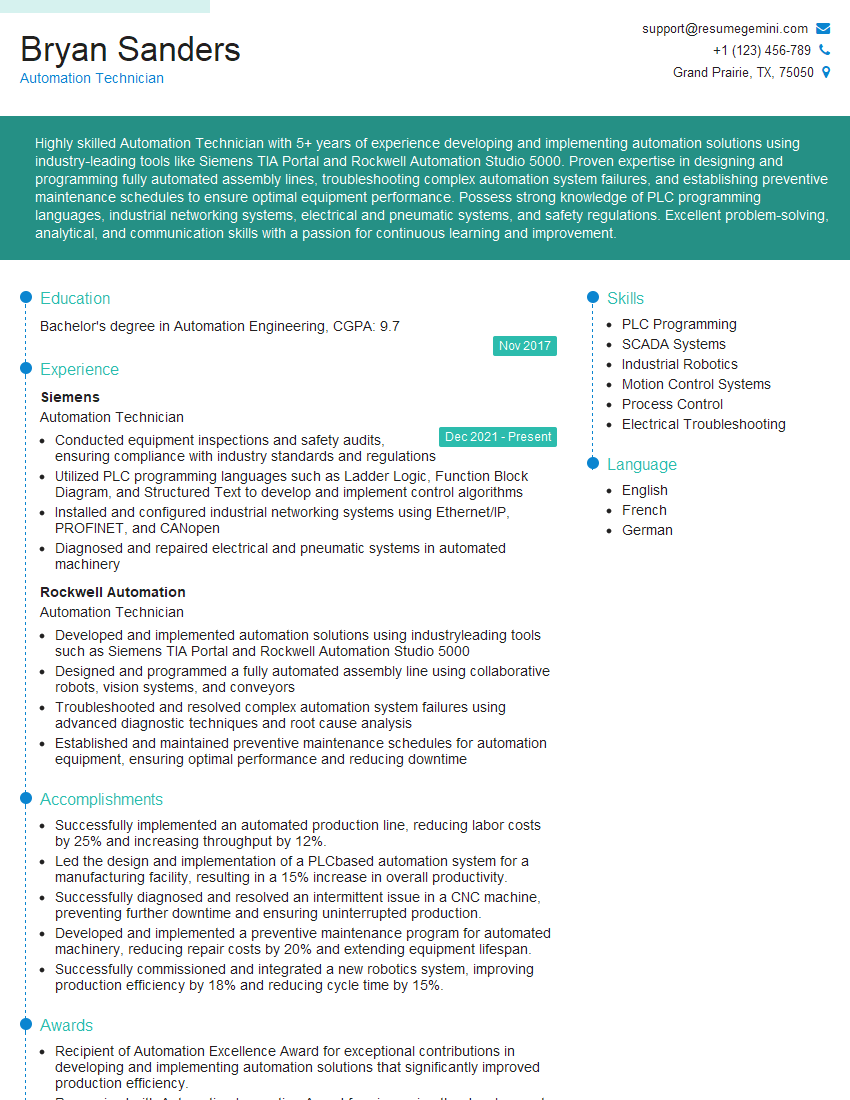
Automation Technician Resume Sample
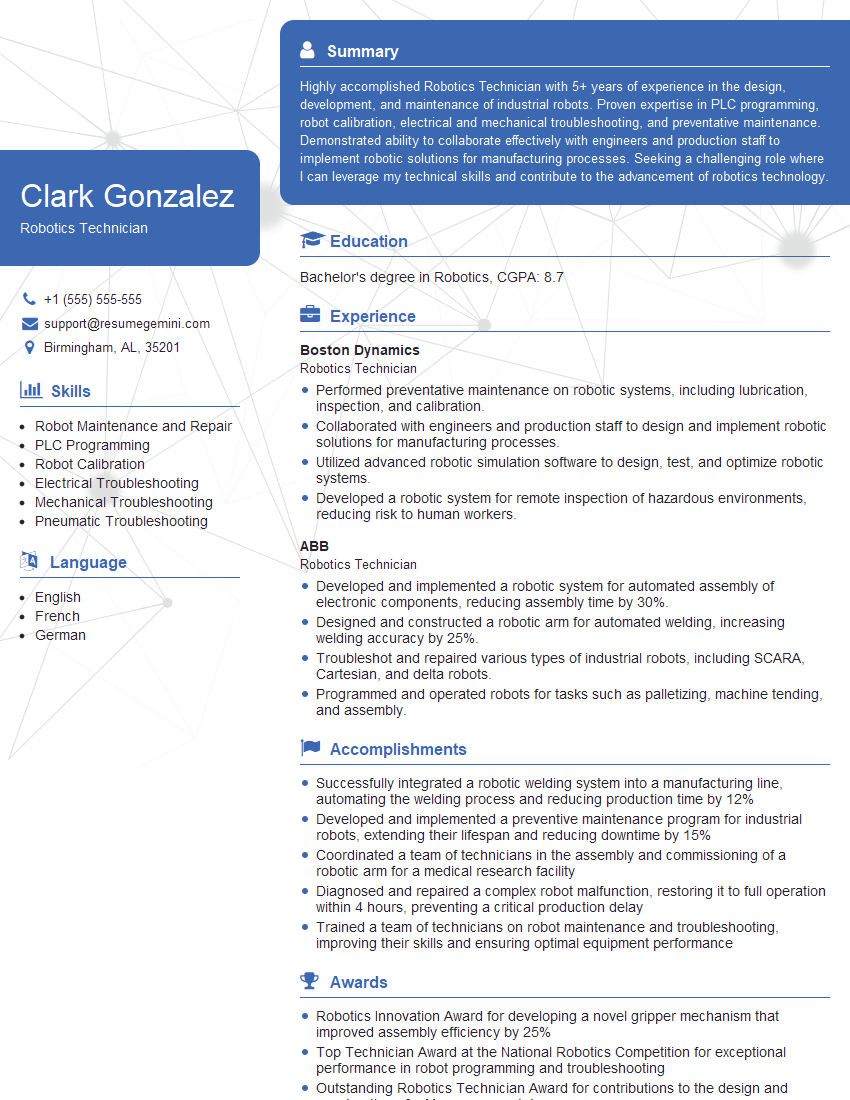
Robotics Technician Resume Sample
Explore more articles
Users Rating of Our Blogs
Share Your Experience
We value your feedback! Please rate our content and share your thoughts (optional).
What Readers Say About Our Blog
Very informative content, great job.
good