Feeling uncertain about what to expect in your upcoming interview? We’ve got you covered! This blog highlights the most important Experience in using statistical process control (SPC) tools interview questions and provides actionable advice to help you stand out as the ideal candidate. Let’s pave the way for your success.
Questions Asked in Experience in using statistical process control (SPC) tools Interview
Q 1. Explain the principles of Statistical Process Control (SPC).
Statistical Process Control (SPC) is a powerful methodology used to monitor and control processes by analyzing data collected over time. Its core principle is to distinguish between natural (common cause) variation inherent in any process and unnatural (assignable cause) variation resulting from specific, identifiable factors. By using statistical tools, primarily control charts, we can detect shifts in the process that indicate the presence of assignable cause variation, enabling timely corrective actions. Essentially, SPC allows us to move from reacting to problems to proactively preventing them.
Imagine baking cookies: some variation in size and color is expected due to slight differences in ingredients, oven temperature, etc. (common cause). However, if suddenly all cookies are burnt, it’s an assignable cause – maybe the oven’s malfunctioning. SPC helps pinpoint this ‘burnt cookie’ problem before a whole batch is ruined.
Q 2. What are control charts and how are they used in SPC?
Control charts are graphical tools at the heart of SPC. They display data points collected from a process over time, along with statistically determined control limits. These limits represent the expected range of variation if only common cause variation is present. Points falling outside these limits signal potential assignable cause variation, prompting an investigation into the process.
Control charts are used to:
- Monitor process stability: Determine if a process is in a state of statistical control (only common cause variation).
- Detect shifts in the process: Identify when assignable cause variation enters the process.
- Reduce variation: By identifying and eliminating assignable causes, the overall process variation can be reduced.
- Improve process capability: Assess how well a process meets specifications.
For instance, a control chart tracking the weight of cereal boxes would show if the filling process is consistently producing boxes within the desired weight range or if there’s a problem causing some boxes to be significantly under or overweight.
Q 3. Describe the different types of control charts (e.g., X-bar and R, X-bar and s, p-chart, c-chart).
Various control charts cater to different types of data:
- X-bar and R chart: Used for continuous data (measurements) where we’re interested in the average (X-bar) and the range (R) of subgroups of data. This is excellent for monitoring dimensions, weights, or temperatures.
- X-bar and s chart: Similar to X-bar and R, but uses the standard deviation (s) instead of the range. The standard deviation provides more precise information about the spread of data and is generally preferred for larger subgroup sizes (n>10).
- p-chart: Used for attribute data (pass/fail, defect/non-defect) representing the proportion of defective items in a sample. For example, monitoring the percentage of defective products in a production line.
- c-chart: Used for attribute data that counts the number of defects per unit. For instance, tracking the number of scratches on a painted car body.
- u-chart: Similar to c-chart, but instead of counting defects per unit, u-chart tracks the number of defects per unit of opportunity. This is useful when the size of the unit varies.
The choice of control chart depends on the type of data being collected and the objective of the analysis. Incorrect chart selection can lead to misleading interpretations and ineffective process improvements.
Q 4. How do you interpret control chart patterns (e.g., trends, shifts, runs)?
Interpreting control chart patterns requires careful observation and understanding of statistical principles. Several patterns indicate assignable causes:
- Trends: A consistent upward or downward movement of points over time suggests a gradual shift in the process, possibly due to tool wear, material degradation, or environmental changes.
- Shifts: A sudden jump or drop in the average level of the process indicates a sudden change, potentially a machine malfunction, a change in operator, or a raw material issue.
- Runs: A series of consecutive points above or below the central line indicates a possible systematic problem. For example, seven consecutive points above the central line strongly suggests a process shift.
- Points outside control limits: Any point falling outside the upper or lower control limits indicates a statistically significant deviation from the expected variation, a clear signal for immediate action.
It is crucial to note that a single point outside control limits doesn’t automatically mean a problem; however, it warrants investigation. The combination of these patterns is often more informative than a single occurrence.
Q 5. What are the assumptions underlying the use of control charts?
The effective use of control charts relies on several key assumptions:
- Data Independence: Data points should be independent of each other. Autocorrelation (dependence between consecutive data points) violates this assumption and can lead to inaccurate interpretations.
- Constant Process Parameters: The process mean and variability should remain relatively constant over time, except for the introduction of assignable cause variation. Significant changes violate this assumption.
- Normally Distributed Data: While many control charts are robust to deviations from normality, particularly for larger subgroup sizes, assuming normal data increases their statistical power and accuracy. Transformations can often address non-normality.
- Random Sampling: Data should be obtained through representative random sampling from the process to ensure unbiased representation.
- Subgroup Size: Subgroup sizes should be large enough for reliable estimation of the process parameters (mean and standard deviation) but small enough to reflect short-term variations.
Failing to meet these assumptions can compromise the reliability of the control chart and lead to incorrect conclusions. Always assess the validity of these assumptions before implementing SPC.
Q 6. Explain the difference between common cause and assignable cause variation.
The distinction between common cause and assignable cause variation is fundamental to SPC.
- Common cause variation represents the inherent, natural variability within a process. It’s the background noise, always present, and stems from numerous small, unpredictable factors (e.g., slight fluctuations in temperature, minor variations in raw materials). Common cause variation is inherent to the process and can only be reduced through fundamental process improvement.
- Assignable cause variation represents unusual, unpredictable variation caused by specific, identifiable factors. These are ‘special’ causes that significantly impact the process output (e.g., machine malfunction, incorrect settings, operator error). Assignable cause variation can and should be investigated and eliminated.
Think of a dartboard: common cause variation is the inherent scatter of darts around the bullseye even with perfect technique. Assignable cause variation is hitting the dartboard completely off-center because of an external force affecting the throw.
Q 7. How do you identify assignable cause variation?
Identifying assignable cause variation involves a systematic approach. Once a control chart signals a potential problem (points outside control limits, trends, runs), the following steps should be taken:
- Verify the signal: Double-check the data and the control chart calculations for any errors. Ensure data was accurately collected and recorded.
- Investigate the process: Examine all aspects of the process that could be contributing to the variation. This might involve reviewing production logs, interviewing operators, inspecting equipment, and analyzing raw materials.
- Identify potential causes: Brainstorm possible assignable causes based on the investigation. Use techniques such as brainstorming, fishbone diagrams (Ishikawa diagrams), and Pareto charts to systematize this process.
- Verify the cause: Perform experiments or collect additional data to confirm the identified cause is indeed responsible for the observed variation.
- Implement corrective action: Take appropriate steps to eliminate the assignable cause. This may involve repairing equipment, adjusting process parameters, retraining operators, or changing raw materials.
- Monitor the results: After corrective action, continue monitoring the process using the control chart to ensure the problem is resolved and the process is back in control.
A thorough and systematic approach is crucial to avoid wasting time on irrelevant factors. Proper root-cause analysis is vital for sustainable process improvement.
Q 8. What actions should be taken when a control chart indicates out-of-control conditions?
When a control chart signals out-of-control conditions, it means the process is exhibiting unusual variation, potentially indicating a problem that needs immediate attention. Ignoring these signals can lead to producing defective products or services.
The actions to take depend on the nature of the out-of-control signal. Common signals include points outside the control limits, runs of points above or below the central line, or unusual patterns. Here’s a structured approach:
- Investigate the cause: This is the most critical step. Don’t jump to conclusions. Carefully examine the process during the time period when the out-of-control points occurred. Look for changes in raw materials, equipment malfunctions, operator errors, or environmental factors. Sometimes, simply reviewing production records can pinpoint the root cause.
- Verify the signal: Ensure the out-of-control signal is genuine and not a result of a measurement error or a faulty instrument. Recheck the data and the control chart calculations.
- Implement corrective actions: Once the root cause is identified, implement appropriate corrective actions to address the problem. This could involve equipment repair, operator retraining, process adjustments, or changes in raw materials.
- Monitor the process: After implementing corrective actions, closely monitor the process using the control chart to verify that the problem has been resolved. Continue monitoring to ensure the process remains stable and in control.
- Document everything: Maintain a detailed record of the out-of-control signals, the investigation process, corrective actions taken, and the results. This documentation is essential for continuous improvement and for demonstrating compliance with quality standards.
Example: Imagine a control chart for the diameter of a manufactured part shows a point significantly above the upper control limit. Investigation might reveal that a particular machine tool became worn, leading to an increase in the part’s diameter. The corrective action would be to replace or repair the tool, and subsequent monitoring would confirm that the process is back in control.
Q 9. Describe the process capability indices Cp and Cpk. What do they measure?
Process capability indices, Cp and Cpk, are statistical measures that assess how well a process is able to meet its specifications. They essentially quantify the capability of a process to produce outputs that consistently fall within predefined tolerance limits.
Cp (Process Capability) measures the inherent potential of the process to meet specifications, regardless of its centering. It compares the spread of the process data to the specification width. A higher Cp indicates greater potential capability.
Cpk (Process Capability Index) measures the actual performance of the process, considering both the spread and the centering of the process data relative to the specification limits. It considers if the process is centered or shifted away from the target. A higher Cpk signifies better actual capability and less variability.
Q 10. How do you calculate Cp and Cpk?
The calculation of Cp and Cpk involves the process mean (x̄), the process standard deviation (σ), the upper specification limit (USL), and the lower specification limit (LSL).
Cp = (USL - LSL) / 6σ
Cpk = min[(USL - x̄) / 3σ, (x̄ - LSL) / 3σ]
Note: σ is often estimated using the sample standard deviation (s) when the true population standard deviation is unknown. This introduces some uncertainty into the calculation.
Example: Let’s say the USL for a product’s weight is 100 grams, the LSL is 90 grams, the sample mean weight is 95 grams, and the sample standard deviation is 1.67 grams. Then:
Cp = (100 - 90) / (6 * 1.67) ≈ 1.67
Cpk = min[(100 - 95) / (3 * 1.67), (95 - 90) / (3 * 1.67)] ≈ min[0.997, 0.997] ≈ 0.997
Q 11. What is the difference between Cp and Cpk?
The key difference between Cp and Cpk lies in what they measure: potential versus actual capability.
Cpindicates the process’s inherent potential to meet specifications if perfectly centered. It only considers the variability (spread) of the data.Cpkreflects the process’s actual performance, taking into account both variability and the process mean’s position relative to the target value. A process can have a highCpbut a lowCpkif it’s not centered.
Analogy: Think of a basketball player. Cp represents their potential shooting accuracy based on their skill. Cpk represents their actual shooting accuracy in a game, considering things like pressure and fatigue, which might affect their aim and consistency.
Q 12. Explain the concept of process capability and its importance.
Process capability refers to the ability of a process to consistently produce outputs that meet predefined specifications. It’s a critical concept in quality management because it directly impacts customer satisfaction and product quality.
Importance:
- Predictability: Understanding process capability allows for better prediction of output quality. This helps in making informed decisions regarding production planning, resource allocation, and risk mitigation.
- Cost reduction: A capable process minimizes waste, rework, and scrap, leading to significant cost savings.
- Improved customer satisfaction: Consistently meeting customer requirements through a capable process enhances customer satisfaction and loyalty.
- Competitive advantage: Demonstrating process capability can provide a competitive advantage in the market.
- Continuous improvement: Process capability analysis helps identify areas for improvement in the process and guides continuous improvement efforts.
Example: A pharmaceutical company needs to ensure its drug manufacturing process consistently produces tablets within strict weight specifications. Process capability analysis helps determine if the process can reliably meet these specifications and identify potential issues before they impact product quality or safety.
Q 13. How do you determine the appropriate sample size for control charts?
Determining the appropriate sample size for control charts is crucial for effective monitoring. Too small a sample may not detect shifts in the process, while too large a sample may be costly and time-consuming.
The optimal sample size depends on several factors:
- Process variability: Higher variability typically requires larger sample sizes to accurately estimate the process parameters.
- Frequency of sampling: More frequent sampling allows for smaller sample sizes as variations are detected more quickly.
- Cost of sampling: The cost of collecting and analyzing samples needs to be balanced against the benefits of improved process monitoring.
- Desired sensitivity: The level of sensitivity required to detect small shifts in the process will influence sample size.
There’s no single formula for determining the ideal sample size. However, many practitioners use guidelines or rules of thumb. For example, some recommend a sample size of 4 to 5 samples per subgroup for subgroups collected at regular intervals. Others suggest aiming for sample sizes that allow for an accurate estimation of the process standard deviation, typically requiring at least 25 data points.
It’s often beneficial to start with a smaller sample size and progressively increase it if necessary, based on initial observations and analysis.
Q 14. What are some common mistakes in implementing SPC?
Implementing SPC effectively requires careful planning and execution. Several common mistakes can undermine its effectiveness:
- Insufficient training: Using SPC tools without proper training can lead to misinterpretations and ineffective application. All personnel involved must understand the underlying statistical concepts and the correct procedures for data collection, analysis, and interpretation.
- Ignoring non-random variation: SPC assumes that the data is collected randomly. Failure to identify and account for non-random variation (e.g., systematic variations) can result in false alarms or failure to detect actual shifts in the process.
- Inappropriate chart selection: Using the wrong type of control chart for the specific data can lead to inaccurate conclusions.
- Lack of action on out-of-control signals: Detecting out-of-control conditions is only half the battle; it is critical to investigate and rectify the underlying issues. Without action, SPC becomes a waste of time and resources.
- Focusing solely on SPC: SPC is a tool for monitoring and improving processes, but it shouldn’t be the only approach. It needs to be integrated with other quality management systems and methodologies.
- Using SPC without a clear understanding of the process: SPC cannot magically identify problems if the user doesn’t already have a solid understanding of how the process works and what factors can influence the output.
Example: Using a p-chart for continuous data instead of an x-bar and R chart. Or, reacting to every small fluctuation shown in a chart without evaluating the significance of the deviation within the context of the process.
Q 15. How do you ensure that SPC data is accurate and reliable?
Ensuring accurate and reliable SPC data is paramount for effective process control. It begins with meticulous planning and extends throughout the data collection and analysis phases. We must first define the critical quality characteristics (CQCs) we’re monitoring – what aspects of the process are most important to control? Then, we need to establish a robust measurement system. This involves verifying the accuracy and precision of the measuring instruments used, as well as training personnel on proper measurement techniques. Regular calibration and maintenance of equipment are critical. Think of it like using a perfectly calibrated scale to weigh ingredients in a bakery – inconsistent measurements lead to inconsistent results.
Next, we need a well-defined sampling plan, determining the frequency, sample size, and method of data collection. Random sampling is ideal to avoid bias. Data entry should be double-checked for accuracy, possibly using automated data entry systems where feasible to reduce human error. Outliers should be investigated – a sudden spike in data might indicate a problem needing immediate attention, rather than simply discarding the data point. Finally, continuous monitoring of the measurement system through control charts themselves helps detect shifts in measurement accuracy over time.
Career Expert Tips:
- Ace those interviews! Prepare effectively by reviewing the Top 50 Most Common Interview Questions on ResumeGemini.
- Navigate your job search with confidence! Explore a wide range of Career Tips on ResumeGemini. Learn about common challenges and recommendations to overcome them.
- Craft the perfect resume! Master the Art of Resume Writing with ResumeGemini’s guide. Showcase your unique qualifications and achievements effectively.
- Don’t miss out on holiday savings! Build your dream resume with ResumeGemini’s ATS optimized templates.
Q 16. Explain the relationship between SPC and Six Sigma.
Six Sigma and SPC are closely intertwined; SPC is a crucial tool within the Six Sigma methodology. Six Sigma aims to reduce process variation and achieve near-perfection (3.4 defects per million opportunities). SPC provides the mechanism to monitor and control this variation. Think of Six Sigma as the overall strategy and SPC as the tactical execution. Six Sigma defines the goals (reducing defects), while SPC provides the data-driven approach to achieving those goals. Control charts, a core component of SPC, allow us to see if our processes are stable and predictable, identifying when variation exceeds acceptable limits and indicating when corrective actions are necessary. DMAIC (Define, Measure, Analyze, Improve, Control), a common Six Sigma framework, heavily relies on SPC tools during the ‘Measure’ and ‘Control’ phases. In my experience, applying SPC during the ‘Measure’ phase helps determine the baseline process capability, while during the ‘Control’ phase, it helps sustain improvements made during the ‘Improve’ phase.
Q 17. Describe your experience with specific SPC software (e.g., Minitab, JMP).
I have extensive experience using Minitab and JMP for SPC analysis. Minitab is my go-to for its user-friendly interface and comprehensive suite of control charts, capability analysis tools, and statistical tests. I’ve used it extensively in projects involving automotive part manufacturing, where I monitored critical dimensions and ensured consistency. For example, I used Minitab’s capability analysis to determine if a process was capable of meeting customer specifications. JMP, while more statistically advanced, is also powerful and excels in visualizing data and exploring relationships. I’ve leveraged JMP’s interactive capabilities for root cause analysis in projects focusing on semiconductor manufacturing, where identifying small variations in chip performance is crucial.
Both platforms allow for the creation of various control charts (X-bar and R charts, I-MR charts, p-charts, c-charts, etc.), making them indispensable tools for process monitoring and improvement. Specific examples from my experience include using Minitab’s capability analysis to assess whether the process of filling bottles could consistently meet the required weight specification and using JMP’s DOE (Design of Experiments) functionality to optimize a chemical process to reduce variability and improve yield.
Q 18. How do you handle missing data in SPC?
Missing data in SPC is a challenge, and how you handle it depends on the reason for the missingness. If the missing data is Missing Completely at Random (MCAR), meaning the missingness doesn’t depend on the value of the variable, then simple methods like removing the entire subgroup or replacing missing values with the average of the available data within that subgroup might suffice. However, these methods should be used cautiously and only when the percentage of missing data is minimal. If the missing data is not MCAR, more sophisticated imputation techniques are needed. These could include methods such as multiple imputation, where we create multiple plausible imputed datasets and analyze them separately, combining results afterwards to obtain more robust estimates.
In my experience, I’ve used linear interpolation, mean imputation, and multiple imputation depending on the nature of the data and the cause of the missing values. Thorough documentation of how missing data was handled is crucial for transparency and reproducibility of results. For example, in a manufacturing process tracking defect rates, I may have used linear interpolation to estimate missing values for days when data collection was interrupted, after carefully assessing the potential bias introduced.
Q 19. How do you deal with non-normal data in SPC?
Many SPC techniques assume normality of the data. However, real-world data often deviates from this assumption. There are several ways to address this. One approach is to use non-parametric methods, which do not rely on assumptions of normality. These include non-parametric control charts, such as the median chart or the sign chart. Alternatively, if the data is only slightly non-normal, a transformation can be applied. Common transformations include logarithmic transformations, square root transformations, or Box-Cox transformations to normalize the data.
The choice of transformation depends on the specific distribution of the data. After transformation, we can then apply standard SPC methods. However, it’s crucial to remember that conclusions drawn are based on the transformed data, so careful interpretation is needed. If the data is highly non-normal and transformations are not effective, a different approach entirely might be needed, perhaps reconsidering the process definition or the metrics used.
Q 20. Explain the concept of a control chart’s centerline.
The centerline of a control chart represents the average or central tendency of the process being monitored. It’s calculated using historical data from a stable process, ideally data collected before any significant changes or interventions were implemented. This centerline serves as a benchmark for assessing whether the process is performing consistently. Think of it as the ‘ideal’ performance of your process – a stable and consistent state. Deviations from this centerline provide insights into process variability.
For example, in an X-bar and R chart, the centerline for the X-bar chart (representing the average of subgroups) is the average of the subgroup averages. The centerline for the R chart (representing the range within subgroups) is the average range of the subgroups. The centerline provides a reference point against which we evaluate whether new data points suggest the process has gone out of control.
Q 21. What are the control limits on a control chart, and how are they calculated?
Control limits on a control chart define the acceptable range of variation for a process. They are boundaries set above and below the centerline, representing the upper control limit (UCL) and the lower control limit (LCL). Points falling outside these limits indicate a potential problem or assignable cause within the process. The calculation of control limits typically involves using standard deviation (sigma) or other measures of variation.
For example, in an X-bar and R chart, the control limits for the X-bar chart are often calculated as: UCL = X-double bar + A2 * R-bar and LCL = X-double bar – A2 * R-bar. Where X-double bar is the average of the subgroup averages, R-bar is the average range of the subgroups, and A2 is a constant from a table depending on the subgroup size. The calculation of control limits for other types of control charts (p-charts, c-charts etc) will differ, using appropriate formulas to reflect the specific type of data.
Q 22. Describe your experience in presenting SPC data to different stakeholders.
Presenting SPC data effectively requires tailoring the communication to the audience. For executive stakeholders, I focus on high-level summaries, key performance indicators (KPIs), and the bottom-line impact of process improvements identified through SPC. This might involve visually appealing dashboards showing trends and control limits, highlighting significant deviations and their financial consequences. For technical stakeholders like engineers or quality control personnel, I delve deeper into the control charts themselves, explaining the statistical calculations, specific control limits used (e.g., 3-sigma), and the underlying statistical distributions. I might discuss specific data points, potential assignable causes, and the results of capability analysis (Cp, Cpk). In both cases, I use clear, concise language, avoiding jargon unless absolutely necessary, and I always ensure the data is presented in a visually engaging and easily understandable format. I also anticipate questions and prepare supporting documentation to allow for a thorough Q&A session.
For example, when presenting to executives about a reduction in defect rates achieved through SPC implementation, I’d highlight the percentage improvement, the associated cost savings, and the overall positive impact on customer satisfaction. When presenting to engineers, I’d showcase the specific control chart indicating the process improvement and discuss the root cause analysis leading to the successful resolution of the issue.
Q 23. How do you use SPC to improve a process?
SPC is a powerful tool for process improvement, acting as a continuous monitoring system that detects variation and highlights areas needing attention. It doesn’t directly *improve* the process, but it helps identify the *need* for improvement. My approach involves a cycle of Plan-Do-Check-Act (PDCA). First, I select key process variables (KPIs) and establish control charts (e.g., X-bar and R charts for continuous data, p-charts for proportions). I then monitor these charts for signals of instability, such as points outside the control limits or non-random patterns. Any signals trigger an investigation to identify the root cause of the variation – was it due to common cause variation (inherent to the process) or special cause variation (external factors)? If special cause variation is identified (a machine malfunction, a change in raw materials, etc.), I collaborate with the relevant team to implement corrective actions. We then monitor the process again to verify the effectiveness of the changes. This iterative approach ensures continuous improvement.
Q 24. Have you ever used SPC to troubleshoot a manufacturing problem? Describe the situation and your solution.
In a previous role, we experienced a significant increase in the defect rate of a particular component in our manufacturing process. We implemented X-bar and R charts to monitor the key dimension of this component. The charts clearly showed a pattern of points consistently exceeding the upper control limit. This indicated a special cause variation. Further investigation, involving data analysis of the related process parameters (temperature, pressure, operator training records) revealed a correlation between the defect rate and the temperature fluctuations. We discovered a malfunctioning thermostat in the process oven. Once the thermostat was replaced and the process recalibrated, the control charts returned to stability, and the defect rate dropped significantly, confirming the efficacy of our solution. This case highlighted the importance of prompt attention to deviations from expected performance in order to avoid more extensive problems and losses later down the production line.
Q 25. What are some limitations of SPC?
While SPC is immensely valuable, it has limitations. First, it assumes that the data follows a normal distribution. If this assumption is violated, the results can be misleading. Secondly, it’s most effective for stable processes. If a process is inherently unstable or undergoing significant changes, SPC may not be able to accurately reflect its performance. Thirdly, SPC focuses on detecting variation but doesn’t necessarily identify the root cause; further investigation is often required. Finally, the effectiveness of SPC relies on proper data collection and accurate charting. Incorrect data or misinterpretation of the charts can lead to flawed conclusions and ineffective actions.
Q 26. How would you explain SPC to someone without a technical background?
Imagine you’re baking cookies. You want them all to be the same size and taste. SPC is like a recipe and a set of scales that help you make sure each cookie is consistent. It uses charts to track how your cookies are turning out. If all the cookies are consistently within a certain size range and taste good, that’s great. But if suddenly some cookies are too big, too small, or don’t taste quite right, the charts show you that something is wrong with your baking process and you might need to adjust your recipe or your oven temperature or even replace your baking equipment. SPC helps you identify those problems early and fix them before they become a big issue.
Q 27. Describe a time you used data analysis to solve a problem at work. Relate this to your SPC experience.
We faced a significant increase in customer complaints regarding late deliveries. I used data analysis techniques, including Pareto charts, to understand the root causes of the delays. This revealed that a specific stage in the order fulfillment process – packaging and shipping – was the main bottleneck. The Pareto chart clearly highlighted that a certain type of order (those with high numbers of customized items) was the primary contributor to late shipments. This analysis led us to implement process improvements specifically targeted at this type of order, such as optimizing the packaging process and adjusting the scheduling system for these orders. The result was a marked reduction in late deliveries, showcasing the power of data analysis and its synergy with SPC in identifying and resolving process inefficiencies. In essence, the data analysis guided us to implement targeted process improvements that were then monitored via SPC charts to ensure long-term stability and control.
Key Topics to Learn for Experience in using statistical process control (SPC) tools Interview
- Control Charts: Understanding various types (e.g., X-bar and R, p-chart, c-chart), their construction, and interpretation. Be prepared to discuss when each type is appropriate.
- Process Capability Analysis: Familiarize yourself with Cp, Cpk, and Pp, Ppk indices. Practice calculating and interpreting these values to demonstrate your understanding of process performance relative to specifications.
- Statistical Process Control Software: Discuss your experience with specific software packages used for SPC (e.g., Minitab, JMP). Highlight your proficiency in data analysis and report generation within these platforms.
- Root Cause Analysis: Showcase your ability to identify and analyze the root causes of process variation using tools like Fishbone diagrams (Ishikawa diagrams) and Pareto charts. Describe your problem-solving methodology.
- Process Improvement Methodologies: Demonstrate familiarity with Lean principles and Six Sigma methodologies (DMAIC, DMADV) and how they relate to SPC implementation and continuous improvement.
- Data Interpretation and Presentation: Practice clearly communicating complex statistical information through concise reports and visualizations. Be prepared to explain your findings and recommendations effectively.
- Understanding of Variation: Differentiate between common cause and special cause variation and explain the implications for process control and improvement.
Next Steps
Mastering Statistical Process Control (SPC) tools significantly enhances your marketability in various industries, opening doors to exciting career opportunities with increased earning potential. An ATS-friendly resume is crucial for getting your application noticed. To make your resume stand out and effectively highlight your SPC expertise, we recommend using ResumeGemini. ResumeGemini provides tools and templates to create a professional and impactful resume. Examples of resumes tailored to showcasing experience in using statistical process control (SPC) tools are available to help you get started. Invest time in crafting a compelling resume—it’s your first impression!

Operations Manager Resume Sample

Quality Assurance Manager Resume Sample
Production Supervisor Resume Sample
Supply Chain Manager Resume Sample
Reliability Engineer Resume Sample
Process Engineer Resume Sample
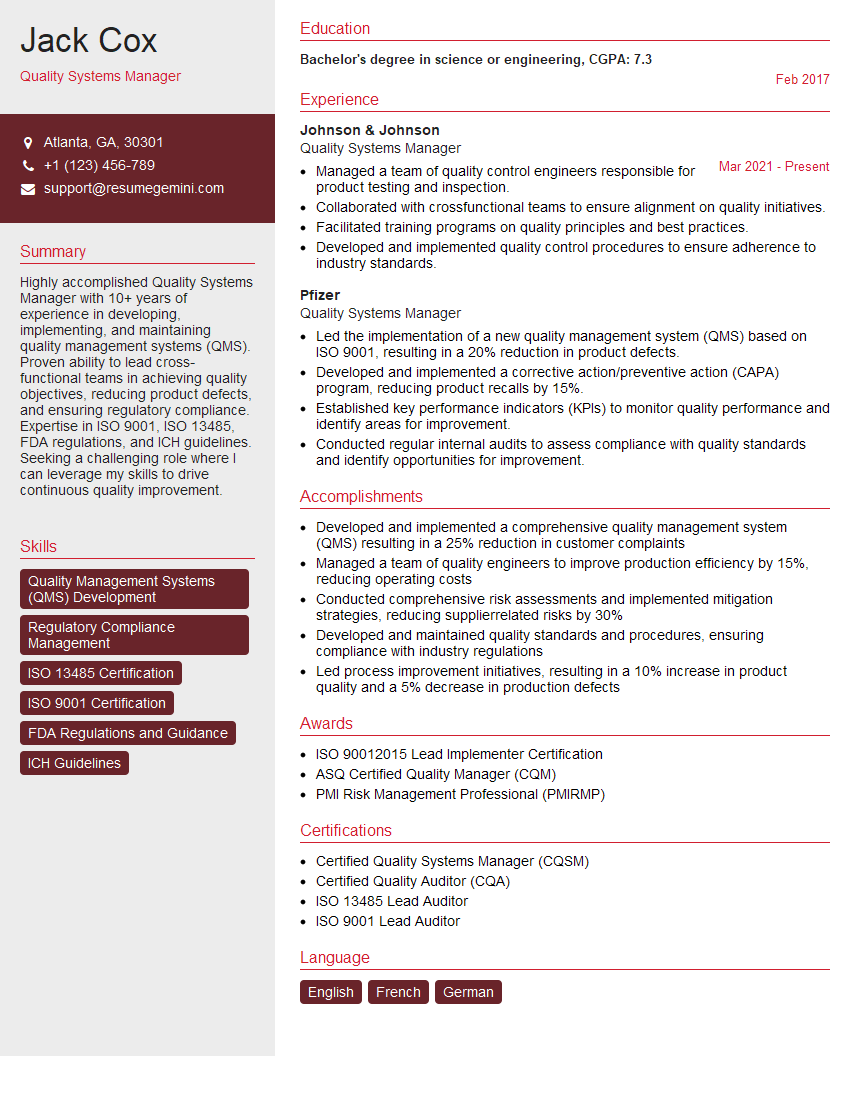
Quality Systems Manager Resume Sample
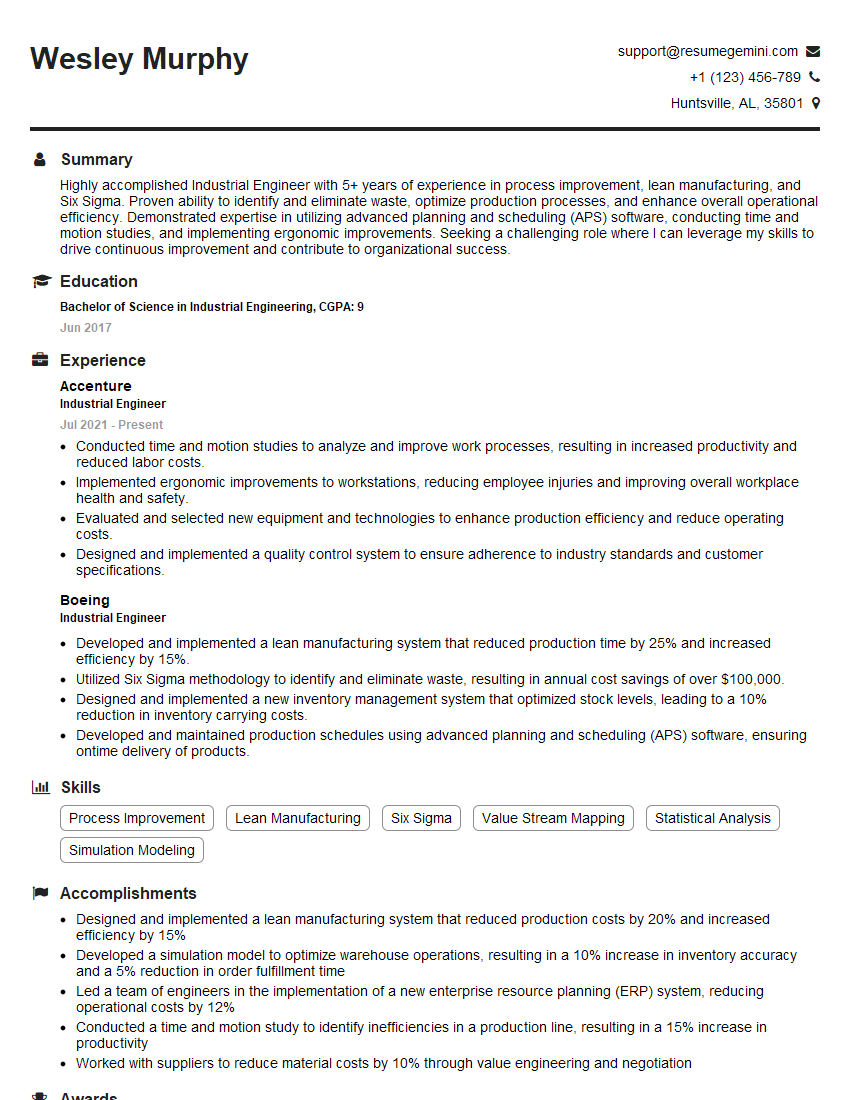
Industrial Engineer Resume Sample
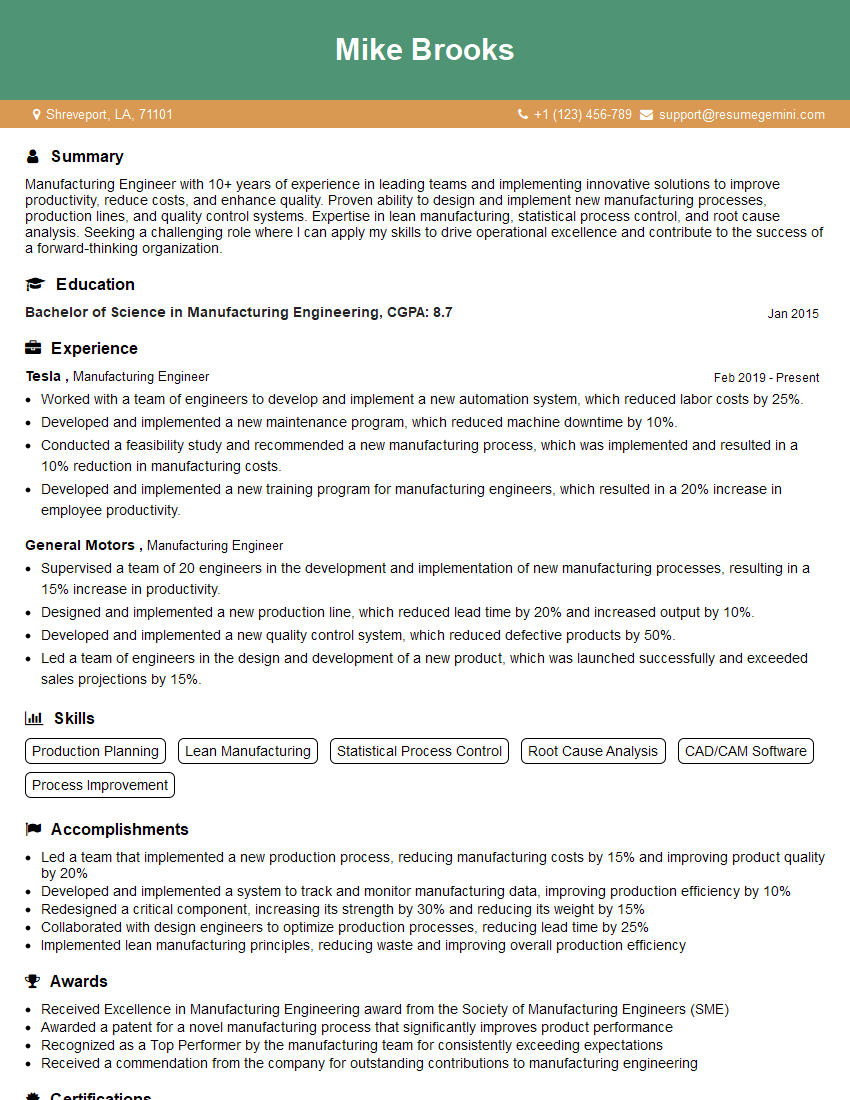
Manufacturing Engineer Resume Sample
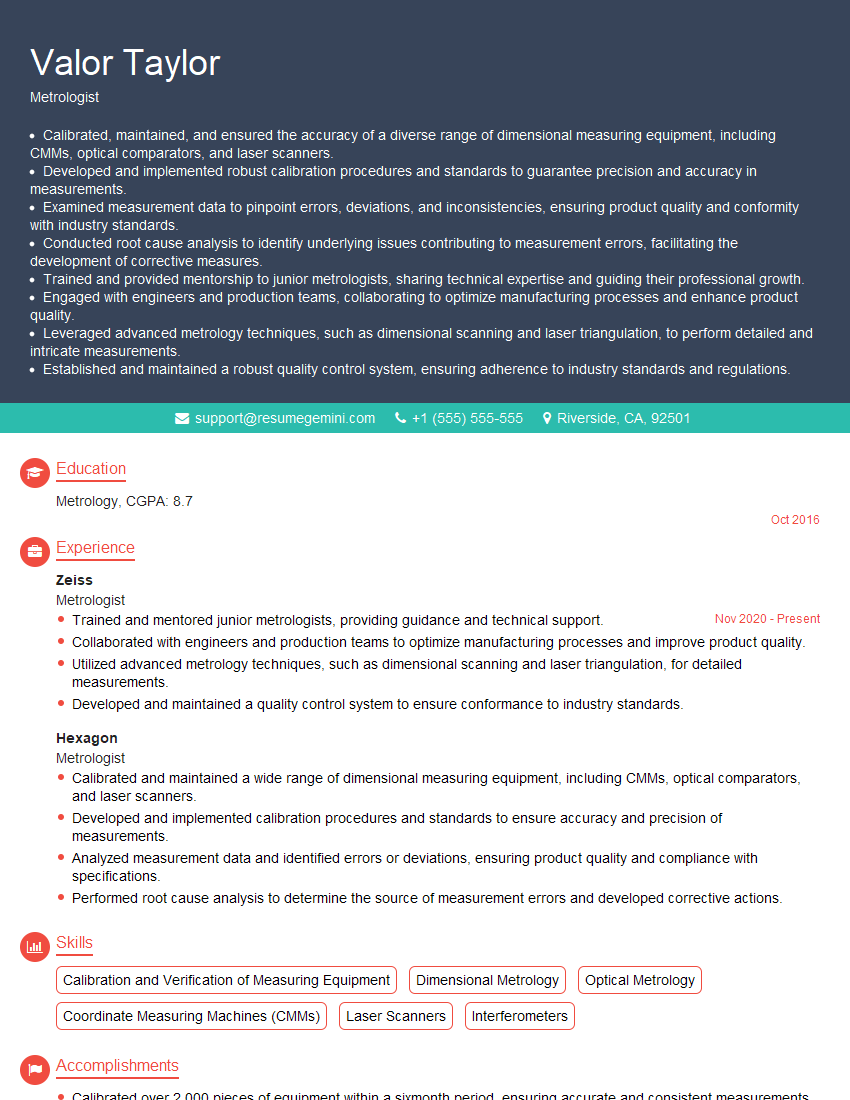
Metrologist Resume Sample
Quality Control Engineer Resume Sample
Continuous Improvement Manager Resume Sample
Lean Manufacturing Engineer Resume Sample
Manufacturing Process Engineer Resume Sample
Quality Control Technician Resume Sample
Senior Quality Engineer Resume Sample
Quality Auditor Resume Sample
Quality Control Inspector Resume Sample
- Operations Manager
- Quality Assurance Manager
- Production Supervisor
- Supply Chain Manager
- Reliability Engineer
- Process Engineer
- Quality Systems Manager
- Industrial Engineer
- Manufacturing Engineer
- Metrologist
- Quality Control Engineer
- Continuous Improvement Manager
- Lean Manufacturing Engineer
- Manufacturing Process Engineer
- Quality Control Technician
- Senior Quality Engineer
- Quality Auditor
- Quality Control Inspector
Explore more articles
Users Rating of Our Blogs
Share Your Experience
We value your feedback! Please rate our content and share your thoughts (optional).
What Readers Say About Our Blog
Hello,
we currently offer a complimentary backlink and URL indexing test for search engine optimization professionals.
You can get complimentary indexing credits to test how link discovery works in practice.
No credit card is required and there is no recurring fee.
You can find details here:
https://wikipedia-backlinks.com/indexing/
Regards
NICE RESPONSE TO Q & A
hi
The aim of this message is regarding an unclaimed deposit of a deceased nationale that bears the same name as you. You are not relate to him as there are millions of people answering the names across around the world. But i will use my position to influence the release of the deposit to you for our mutual benefit.
Respond for full details and how to claim the deposit. This is 100% risk free. Send hello to my email id: [email protected]
Luka Chachibaialuka
Hey interviewgemini.com, just wanted to follow up on my last email.
We just launched Call the Monster, an parenting app that lets you summon friendly ‘monsters’ kids actually listen to.
We’re also running a giveaway for everyone who downloads the app. Since it’s brand new, there aren’t many users yet, which means you’ve got a much better chance of winning some great prizes.
You can check it out here: https://bit.ly/callamonsterapp
Or follow us on Instagram: https://www.instagram.com/callamonsterapp
Thanks,
Ryan
CEO – Call the Monster App
Hey interviewgemini.com, I saw your website and love your approach.
I just want this to look like spam email, but want to share something important to you. We just launched Call the Monster, a parenting app that lets you summon friendly ‘monsters’ kids actually listen to.
Parents are loving it for calming chaos before bedtime. Thought you might want to try it: https://bit.ly/callamonsterapp or just follow our fun monster lore on Instagram: https://www.instagram.com/callamonsterapp
Thanks,
Ryan
CEO – Call A Monster APP
To the interviewgemini.com Owner.
Dear interviewgemini.com Webmaster!
Hi interviewgemini.com Webmaster!
Dear interviewgemini.com Webmaster!
excellent
Hello,
We found issues with your domain’s email setup that may be sending your messages to spam or blocking them completely. InboxShield Mini shows you how to fix it in minutes — no tech skills required.
Scan your domain now for details: https://inboxshield-mini.com/
— Adam @ InboxShield Mini
Reply STOP to unsubscribe
Hi, are you owner of interviewgemini.com? What if I told you I could help you find extra time in your schedule, reconnect with leads you didn’t even realize you missed, and bring in more “I want to work with you” conversations, without increasing your ad spend or hiring a full-time employee?
All with a flexible, budget-friendly service that could easily pay for itself. Sounds good?
Would it be nice to jump on a quick 10-minute call so I can show you exactly how we make this work?
Best,
Hapei
Marketing Director
Hey, I know you’re the owner of interviewgemini.com. I’ll be quick.
Fundraising for your business is tough and time-consuming. We make it easier by guaranteeing two private investor meetings each month, for six months. No demos, no pitch events – just direct introductions to active investors matched to your startup.
If youR17;re raising, this could help you build real momentum. Want me to send more info?
Hi, I represent an SEO company that specialises in getting you AI citations and higher rankings on Google. I’d like to offer you a 100% free SEO audit for your website. Would you be interested?
Hi, I represent an SEO company that specialises in getting you AI citations and higher rankings on Google. I’d like to offer you a 100% free SEO audit for your website. Would you be interested?
good