The right preparation can turn an interview into an opportunity to showcase your expertise. This guide to Experience in Various Casting Genres interview questions is your ultimate resource, providing key insights and tips to help you ace your responses and stand out as a top candidate.
Questions Asked in Experience in Various Casting Genres Interview
Q 1. Describe your experience casting for different genres (e.g., film, television, theater).
My casting experience spans across film, television, and theater, each demanding a unique approach. Film often requires a highly polished, cinematic look, prioritizing actors who embody specific archetypes or possess a certain screen presence. Television casting can be more varied, depending on the show’s genre and tone – a sitcom might need comedic timing, while a drama demands emotional depth. Theater, on the other hand, emphasizes stage presence, vocal projection, and the ability to connect with a live audience. For instance, in a recent film project, we focused intensely on finding actors with strong emotional range for intensely dramatic roles, while a previous television series involved extensive auditions for comedic actors with impeccable timing and improvisational skills. The theatrical production I worked on last year involved a rigorous audition process to ensure the actors could project their voices and effectively utilize the stage space.
Q 2. Explain your process for sourcing and selecting talent for a specific role.
My talent sourcing and selection process is meticulous and multi-layered. It begins with a thorough understanding of the character’s needs as defined by the script and the director’s vision. I then develop a comprehensive casting breakdown, specifying age range, physical attributes, personality traits, and acting skills required. Sourcing involves utilizing various avenues: casting databases (like Actors Access), agent submissions, open calls, and social media. For a specific role, I’ll narrow the field using the breakdown, reviewing headshots, resumes, and showreels. Then comes the audition stage, where I assess their portrayal of the character, their chemistry with other actors, and their overall professional demeanor. Think of it like assembling a puzzle: each piece (actor) needs to fit perfectly into the overall picture (the production). For example, in casting a lead role for a historical drama, I meticulously researched actors with experience in period pieces and conducted detailed interviews assessing their comprehension of the historical context.
Q 3. How do you handle casting calls with tight deadlines and limited budgets?
Tight deadlines and limited budgets necessitate a highly strategic approach. I prioritize efficiency by using targeted casting calls, focusing on actors with relevant experience to minimize unnecessary auditions. I leverage my existing network of agents and actors, streamlining the process. Instead of large-scale open calls, I might opt for a smaller, more focused audition pool, relying on referrals and direct outreach. I also explore cost-effective methods, such as utilizing self-taped auditions, thereby reducing travel and venue expenses. This requires careful planning and clear communication with the production team to ensure we meet the deadlines without compromising quality. For instance, when casting a low-budget independent film with a tight deadline, I successfully utilized self-taped auditions and collaborated closely with agents to expedite the selection process.
Q 4. What strategies do you use to find diverse and inclusive talent pools?
Building a diverse and inclusive talent pool is crucial. I actively seek out talent from underrepresented groups by partnering with organizations dedicated to promoting diversity in the arts. I utilize casting databases with robust search filters to target specific demographics, and I ensure my casting calls are inclusive and accessible to all. Moreover, I consistently review my own biases and actively seek feedback to ensure fairness and equity in my selection process. This is not merely a matter of checking boxes; it’s about fostering a truly representative cast that reflects the richness and complexity of our world. For a recent project, I made a conscious effort to cast actors of different ethnicities, abilities, and sexual orientations, ensuring that the representation was both authentic and impactful.
Q 5. How do you assess an actor’s suitability for a role beyond their headshots and resume?
Headshots and resumes are only the first step. Auditions are crucial for assessing an actor’s suitability. I look beyond their technical skills to observe their interpretation of the character, their emotional range, and their ability to take direction. Improv exercises can reveal spontaneity and adaptability. I also pay close attention to their personality and professionalism – are they prepared, punctual, and easy to work with? Ultimately, it’s about finding the right fit, not just the most technically proficient actor. Remember, chemistry between actors is vital, and this can only be assessed through interaction. For example, I once cast an actor who wasn’t the most technically polished but whose natural charisma and incredible chemistry with the other actors made them perfect for the role.
Q 6. Describe your experience using casting software and databases.
I am proficient in several casting software and databases, including Actors Access, Casting Networks, and Breakdown Services. These platforms streamline the process, allowing me to manage auditions, track submissions, and communicate with actors and agents efficiently. The ability to use these tools effectively is essential for managing large volumes of applications and maintaining organized records. The ability to filter candidates based on specific criteria (age, ethnicity, skills etc.) within these databases is invaluable when working on multiple projects simultaneously.
Q 7. How do you build and maintain relationships with agents and talent representatives?
Building strong relationships with agents and talent representatives is essential for successful casting. This involves clear and consistent communication, regular updates on projects, and respectful professional interactions. I maintain a database of contacts and regularly reach out to agents with relevant casting opportunities. I treat each agent with respect and professionalism, appreciating that they are a vital part of the casting ecosystem. It’s a symbiotic relationship: good relationships lead to a steady stream of qualified talent and facilitate a smoother casting process. I believe in building trust and mutual respect – this fosters long-term collaborations and ultimately benefits the productions I work on.
Q 8. How do you handle difficult or challenging actors during the casting process?
Handling difficult actors requires a combination of empathy, professionalism, and clear communication. It’s crucial to remember that even challenging behavior often stems from insecurity or pressure. My approach begins with understanding the root cause. Is the actor struggling with the material? Are they feeling unheard or unsupported? I start by having a private conversation, creating a safe space where they feel comfortable expressing concerns. I actively listen to their perspectives, validating their feelings while firmly setting professional boundaries. If the behavior persists or is disruptive to the process, I involve the director or producer to collaboratively devise a strategy, which may include offering additional coaching or, in extreme cases, replacing the actor.
For example, I once worked with an actor who became intensely frustrated during rehearsals. Through conversation, we discovered they were struggling with a specific scene due to past trauma related to the theme. By acknowledging their experience and providing space for them to process, we were able to find creative solutions for performance. The end result was a powerful, sensitive scene and a strengthened working relationship.
Q 9. Explain your understanding of legal compliance in casting practices.
Legal compliance in casting is paramount. This encompasses several key areas, starting with anti-discrimination laws. We must ensure equal opportunity for all actors, regardless of race, religion, gender, age, or any other protected characteristic. This means avoiding biased casting calls and actively seeking diverse talent pools. Furthermore, all contracts and agreements with actors must comply with relevant labor laws regarding payment, working conditions, and intellectual property rights. We must also be mindful of data privacy regulations concerning personal information collected during the casting process. Finally, we need to maintain transparent record-keeping of all casting decisions to demonstrate compliance and avoid potential disputes.
For instance, we must meticulously track the number of applicants, demographics of those applicants, and who gets called in for each project. Maintaining this meticulous record keeps us compliant and helps us to demonstrate equitable processes in the event of an audit or inquiry.
Q 10. How do you manage conflicts or disagreements among team members during casting?
Conflict resolution within the casting team is essential for a smooth and effective process. I prioritize open communication and collaborative problem-solving. Disagreements often arise from differing interpretations of a character, preferences for actors, or scheduling conflicts. My approach involves facilitating calm discussions where everyone feels heard. I encourage team members to articulate their perspectives clearly, focusing on the project’s objectives rather than personal opinions. We brainstorm together to identify solutions that accommodate various viewpoints. If a consensus can’t be reached, I make a decision based on the project’s best interest, ensuring all team members understand the rationale behind the final choice. Post-decision, I create opportunities for feedback and reflection to refine future collaborative processes.
For instance, a disagreement might arise around which actor best fits a role. To resolve this, I present objective criteria like their portfolio, auditions, or director’s notes to allow the team to reach a consensus based on concrete evidence rather than purely subjective feelings.
Q 11. How familiar are you with different casting techniques (e.g., self-tapes, auditions)?
I’m highly familiar with various casting techniques, each offering unique advantages. Self-tapes are a cost-effective and efficient method for initial screening, allowing us to review many actors remotely. Auditions, either in-person or virtual, provide a more interactive assessment, allowing us to observe an actor’s reactions, spontaneity, and chemistry with other actors. Casting directors also employ callbacks and workshops for further evaluation, helping to refine the selection. The choice of technique depends on the project’s scale, budget, and specific needs. For larger projects, I may incorporate multiple methods to optimize the selection process. For example, a small independent film might rely heavily on self-tapes to reduce costs and time constraints, whereas a major studio production would likely incorporate several rounds of auditions and callbacks for increased scrutiny.
Q 12. Describe your process for providing constructive feedback to actors.
Providing constructive feedback is crucial for actor development and a positive casting experience. My approach focuses on specificity and encouragement. Instead of vague statements, I offer concrete observations about their performance, focusing on both strengths and areas for improvement. I use the ‘sandwich method’ – starting with positive feedback, then addressing areas needing refinement, and concluding with more encouragement. I always frame my feedback in terms of the role’s requirements and director’s vision, highlighting how specific adjustments could enhance their performance. I ensure the feedback is delivered in a supportive and respectful manner, creating a safe space for actors to learn and grow. I always maintain a focus on the actor’s unique talents, emphasizing what they do well while gently suggesting avenues for improvement.
Q 13. How do you ensure the casting process is fair and equitable?
Ensuring fairness and equity in casting is a core principle. This involves establishing objective criteria for evaluation, avoiding subjective biases, and actively seeking diverse talent. I create standardized evaluation forms to ensure consistent assessment of actors, focusing on their skillset, experience, and suitability for the role. Blind auditions, where names and identifying information are removed, can minimize unconscious biases. I actively engage with casting agencies and networks that represent diverse talent to expand our reach beyond traditional channels. Regularly reviewing our casting practices and implementing diversity initiatives are ongoing efforts to ensure a truly inclusive and fair process.
Q 14. How do you adapt your casting approach for different project scales and budgets?
Adapting to different project scales and budgets is a key skill. Large-budget productions often allow for extensive searches, multiple rounds of auditions, and specialized casting workshops. Conversely, smaller projects necessitate a more streamlined approach. For low-budget projects, we may rely more heavily on self-tapes and online resources. Regardless of budget, the core principles of fairness, professionalism, and finding the best talent remain consistent. My approach involves creating a tailored casting strategy for each project, carefully considering resources, timelines, and the director’s specific needs. We may adjust the number of callbacks, employ different audition formats, and optimize our use of resources based on the project’s limitations or opportunities. For example, if a project has limited funding for travel, I would heavily emphasize virtual audition methods.
Q 15. Describe your experience working with directors and producers in the casting process.
Collaboration with directors and producers is the cornerstone of successful casting. It’s a continuous dialogue, starting with understanding their vision for the project – its tone, style, and the specific qualities they seek in each character. I work closely with them to define the casting brief, clarifying the character’s personality, background, and desired physical attributes. This often involves reviewing scripts, storyboards, and discussing character arcs. For example, on a recent period drama, the director was particularly keen on finding actors who could authentically portray the nuances of the era’s social dynamics. We spent considerable time discussing historical accuracy and subtle performance choices to reflect that. Throughout the process, I provide regular updates, sharing audition tapes and offering feedback on potential candidates, ultimately working towards a shared decision on the final cast.
The level of involvement varies depending on the project. Sometimes, I act as a consultant, offering expert advice and guiding the decision-making process. Other times, I’m more hands-on, taking the lead in managing the entire casting process, from initial searches to final callbacks.
Career Expert Tips:
- Ace those interviews! Prepare effectively by reviewing the Top 50 Most Common Interview Questions on ResumeGemini.
- Navigate your job search with confidence! Explore a wide range of Career Tips on ResumeGemini. Learn about common challenges and recommendations to overcome them.
- Craft the perfect resume! Master the Art of Resume Writing with ResumeGemini’s guide. Showcase your unique qualifications and achievements effectively.
- Don’t miss out on holiday savings! Build your dream resume with ResumeGemini’s ATS optimized templates.
Q 16. How do you evaluate the success of a casting project?
Evaluating the success of a casting project isn’t just about filling roles; it’s about how effectively the cast contributes to the overall narrative and artistic vision. Several factors determine success:
- Audience Reception: Positive audience reviews and box office success (for films) or high ratings (for television) often indicate that the casting choices resonated with viewers.
- Critical Acclaim: Awards and nominations for actors’ performances signal strong casting decisions.
- Director/Producer Satisfaction: The director’s and producer’s contentment with the cast and their performances is crucial. Did the actors embody the characters as envisioned?
- On-Set Chemistry: A harmonious cast dynamic can lead to smoother production and better performances. This is sometimes intangible but crucial.
- Meeting Project Goals: Did the casting choices successfully achieve the project’s artistic or commercial objectives (e.g., appealing to a specific demographic)?
Ultimately, a successful casting project is one where the actors’ performances contribute meaningfully to the story’s impact and leave a lasting impression on the audience.
Q 17. What are some common challenges in casting and how have you overcome them?
Casting presents many challenges. Finding the ‘perfect’ actor who ticks all the boxes is rarely easy. Some common hurdles include:
- Tight Deadlines: Production schedules are often incredibly tight, requiring swift casting decisions.
- Limited Budgets: Budget constraints can restrict the pool of available talent.
- Finding Actors Matching Specific Criteria: Locating actors with the exact right look, skills, and experience can be difficult, especially for niche roles.
- Unforeseen Circumstances: Actor availability can change unexpectedly, requiring quick adjustments to the casting plan.
Overcoming these challenges requires adaptability, resourcefulness, and excellent communication. For tight deadlines, I prioritize efficient casting methods like targeted online searches and pre-vetted actor databases. For budget constraints, I negotiate effectively with actors’ agents and explore creative ways to build talent relationships that potentially lead to lower fees for future projects. When specific criteria are difficult to meet, I broaden my search parameters while still focusing on the crucial elements of the role, and I sometimes explore the possibility of casting a less experienced actor who demonstrates exceptional potential.
Q 18. Describe your experience with background casting and extra casting.
Background casting and extra casting are essential but often overlooked aspects of filmmaking. My experience encompasses both, from managing large-scale crowd scenes to selecting specific background performers who add texture and authenticity to scenes. For instance, during a historical drama, we meticulously selected extras with historically accurate clothing and mannerisms to ensure scene realism. I handle everything from casting calls and auditions to scheduling and ensuring compliance with all labor laws.
Background casting is more than just filling space. The extras must fit the scene’s mood and visual aesthetic. They may even need specific skills, like dancing or playing an instrument. I work closely with the production design team to ensure extras’ attire, behavior, and appearance match the scene’s setting and atmosphere. Managing a large number of extras requires effective organization and clear communication to maintain consistency and a productive working environment. It’s about understanding the director’s vision and creating the right atmosphere.
Q 19. How do you handle sensitive information related to talent during casting?
Handling sensitive information, such as personal details, medical conditions, or financial information, is paramount. I adhere strictly to privacy laws and maintain a confidential record-keeping system. All talent information is stored securely and accessed only by authorized personnel. For example, I utilize secure online databases and maintain a paperless system whenever possible. I always obtain explicit consent before sharing any personal information with third parties, including production companies or directors. This respect for privacy builds trust with actors and ensures a professional and ethical casting process.
Q 20. How do you maintain confidentiality within the casting process?
Confidentiality is crucial throughout the entire casting process. I use Non-Disclosure Agreements (NDAs) with all involved parties—actors, agents, and production personnel—to protect sensitive information like scripts, casting lists, and actors’ availability. I avoid discussing details of the project in public spaces and limit access to sensitive information to only those who absolutely require it. I frequently remind my team of the importance of confidentiality. This not only protects the project but also maintains the trust of actors, encouraging them to share their full potential without fear of their information being compromised.
Q 21. Explain your experience with different types of casting calls (e.g., open calls, closed calls).
My experience includes a broad range of casting calls. Open calls are wide-ranging and involve advertising to a broad pool of actors. These are efficient for finding larger numbers of actors for roles such as background extras or for projects with lower budgets. Closed calls are more selective, targeted to specific actors identified through agents or previous casting experiences. This approach is common for prominent roles requiring specific skills or screen presence.
The choice between open and closed calls depends on the project’s needs and budget. Open calls offer broader reach but require more time for sifting through submissions. Closed calls are more focused and time-efficient but may limit the pool of talent. Sometimes, I even use a hybrid approach, combining both open and closed calls to optimize reach and efficiency. I always tailor my strategy to the specific demands of each project.
Q 22. How do you prioritize and manage multiple casting projects simultaneously?
Managing multiple casting projects simultaneously requires a robust organizational system. Think of it like conducting an orchestra – each project is a different instrument, requiring its own attention, but all working towards a harmonious whole. My approach involves a three-pronged strategy: meticulous planning, effective delegation, and constant communication.
- Meticulous Planning: I utilize project management software to create detailed timelines for each project, outlining key milestones like audition calls, callbacks, and final casting decisions. This allows me to visualize the workload and allocate resources effectively.
- Effective Delegation: I delegate tasks to my team based on their strengths and expertise. This could involve assigning specific roles like coordinating with agents, reviewing headshots, or managing communication with actors. Clear roles and responsibilities are crucial for efficiency.
- Constant Communication: Regular team meetings and individual check-ins ensure everyone is aligned on deadlines and priorities. This open communication streamlines the process and minimizes potential conflicts.
For example, I recently managed casting for a feature film and a television series concurrently. By using a shared project management tool, assigning specific team members to each project, and holding daily stand-up meetings, I ensured both projects remained on track without compromising quality.
Q 23. How do you utilize social media and online platforms for casting?
Social media and online platforms are indispensable tools in modern casting. They significantly broaden the reach and allow for more targeted recruitment. I leverage platforms like Casting Networks, Actors Access, and social media sites like Instagram and Facebook to connect with a diverse pool of talent.
- Targeted Advertising: On platforms like Facebook and Instagram, I create targeted ads to reach actors matching specific demographics and skill sets. This ensures efficiency and reduces time spent sifting through irrelevant profiles.
- Engaging Content: I create engaging content—photos, videos, and behind-the-scenes glimpses—to attract talent and showcase the project’s unique appeal. This helps generate excitement and draws in high-quality submissions.
- Community Engagement: I actively participate in relevant online communities, interacting with actors and industry professionals. Building relationships fosters trust and ensures a steady stream of potential candidates.
For instance, using a targeted Facebook campaign for a period drama, I successfully reached a niche audience of actors skilled in period acting, resulting in a higher-quality applicant pool compared to traditional methods.
Q 24. How familiar are you with union rules and regulations related to casting?
I have a comprehensive understanding of union rules and regulations, including SAG-AFTRA, Equity, and other relevant organizations. Navigating union guidelines is crucial for ethical and legal casting practices. My familiarity extends to:
- Minimum Rates and Contracts: I ensure all actors receive fair compensation and are engaged under the appropriate union contracts, adhering strictly to minimum rates and working conditions.
- Casting Calls and Notices: I understand the proper procedures for issuing casting calls, ensuring compliance with union regulations regarding notification, eligibility, and submission requirements.
- Grievances and Disputes: I am familiar with the process for handling grievances and disputes, ensuring a fair and equitable resolution process.
My experience includes successfully navigating union negotiations on several high-profile projects, ensuring that all casting practices adhere to the strictest industry standards and legal requirements. A recent example involves negotiating a complex SAG-AFTRA agreement for a major television series, ensuring all cast members were fairly compensated and protected.
Q 25. How do you determine the appropriate casting budget for a project?
Determining the appropriate casting budget requires a careful assessment of various factors. It’s a balancing act between securing top talent and respecting the project’s financial constraints.
- Project Scope and Scale: Larger-scale productions, with more roles and prominent actors, naturally require higher budgets. A small independent film will have vastly different casting needs and costs than a blockbuster movie.
- Talent Fees: This is the most significant component. The budget needs to account for the fees of principal cast members as well as supporting actors and extras. This includes considering the actors’ experience and market value.
- Casting Team Costs: The cost of the casting director and their team should also be included. This might include assistants, coordinators, and other support staff.
- Travel and Accommodation: If auditions involve travel for actors or the casting team, those costs need to be factored in.
For example, when budgeting for a low-budget independent film, I prioritized securing experienced actors willing to work for a lower rate in exchange for creative involvement. This helped stay within our budget while still ensuring a high-quality cast.
Q 26. Describe your experience in creating and managing casting breakdowns.
Creating and managing casting breakdowns is a fundamental aspect of my role. A well-written breakdown acts as a roadmap for the entire casting process, providing crucial information to agents and actors.
- Clear and Concise Description: I write clear and concise descriptions of each role, including age range, ethnicity, physical attributes, personality traits, and any specific skills required. Ambiguity is the enemy of an effective breakdown.
- Targeted Language: I use precise language tailored to the specific project and target audience, avoiding jargon and ensuring the description is easily understood.
- Detailed Project Information: I include pertinent project information such as the title, director, genre, production dates, and location. This gives actors a clearer understanding of the opportunity.
- Distribution Strategy: I develop a robust distribution strategy to ensure the breakdown reaches the appropriate casting platforms and networks. This might involve submitting to various online casting databases and directly contacting talent agents.
I recently created a breakdown for a complex role involving both acting and stunt work. By clearly specifying the required skills and providing detailed project information, I received a high volume of submissions from qualified actors, minimizing the time spent sorting through inappropriate applications.
Q 27. How do you utilize analytics to improve the casting process?
Data analytics play an increasingly important role in optimizing the casting process. By tracking key metrics, I can identify areas for improvement and refine my strategies. This involves using data to understand:
- Submission Rates: Tracking the number of submissions received per role and comparing it to the original target helps refine future recruitment strategies.
- Callback Rates: Analyzing the percentage of actors called back after initial submissions identifies effective targeting strategies and clarifies whether certain aspects of the breakdown are unclear.
- Time to Hire: Monitoring the time it takes to fill each role reveals potential bottlenecks and areas where the process can be streamlined. This helps improve the overall efficiency.
- Actor Diversity: Tracking the diversity of the applicant pool and the final cast allows for measuring the effectiveness of inclusive casting practices.
For example, I noticed that the callback rate for a particular role was unusually low. Analyzing the data, I discovered that the initial breakdown lacked sufficient clarity on the required skills. By revising the breakdown and adding more details, the callback rate improved significantly in subsequent rounds.
Q 28. What are your salary expectations for this role?
My salary expectations are commensurate with my experience and the demands of this role. I’m confident that my expertise in casting across various genres, coupled with my proven ability to manage multiple projects efficiently, justifies a competitive compensation package. I am open to discussing this further and am happy to provide detailed information on my salary history and relevant market data to support my expectations.
Key Topics to Learn for Experience in Various Casting Genres Interview
- Understanding Different Casting Genres: Explore the nuances of various casting genres (e.g., theatrical, film, television, commercial, voice-over). Understand the unique demands and expectations of each.
- Adapting Your Approach: Discuss how your approach to auditions and performances changes depending on the genre. Highlight examples where you successfully adapted your skills and techniques.
- Genre-Specific Skillsets: Identify and articulate the specific skills required for success in each genre. This might include physicality, vocal technique, improvisation, script analysis, or character development.
- Portfolio Building: Explain your strategic approach to building a portfolio that showcases your versatility across different casting genres. Discuss how you select projects that demonstrate your range.
- Networking and Industry Knowledge: Discuss your strategies for networking within the industry and your understanding of current trends and casting practices in different genres.
- Problem-Solving in Diverse Contexts: Describe situations where you had to overcome challenges or adapt to unexpected circumstances during auditions or performances across different genres. Highlight your problem-solving skills and resilience.
- Self-Marketing and Branding: Discuss how you present yourself and your skills to casting directors in a way that reflects your expertise in various genres.
Next Steps
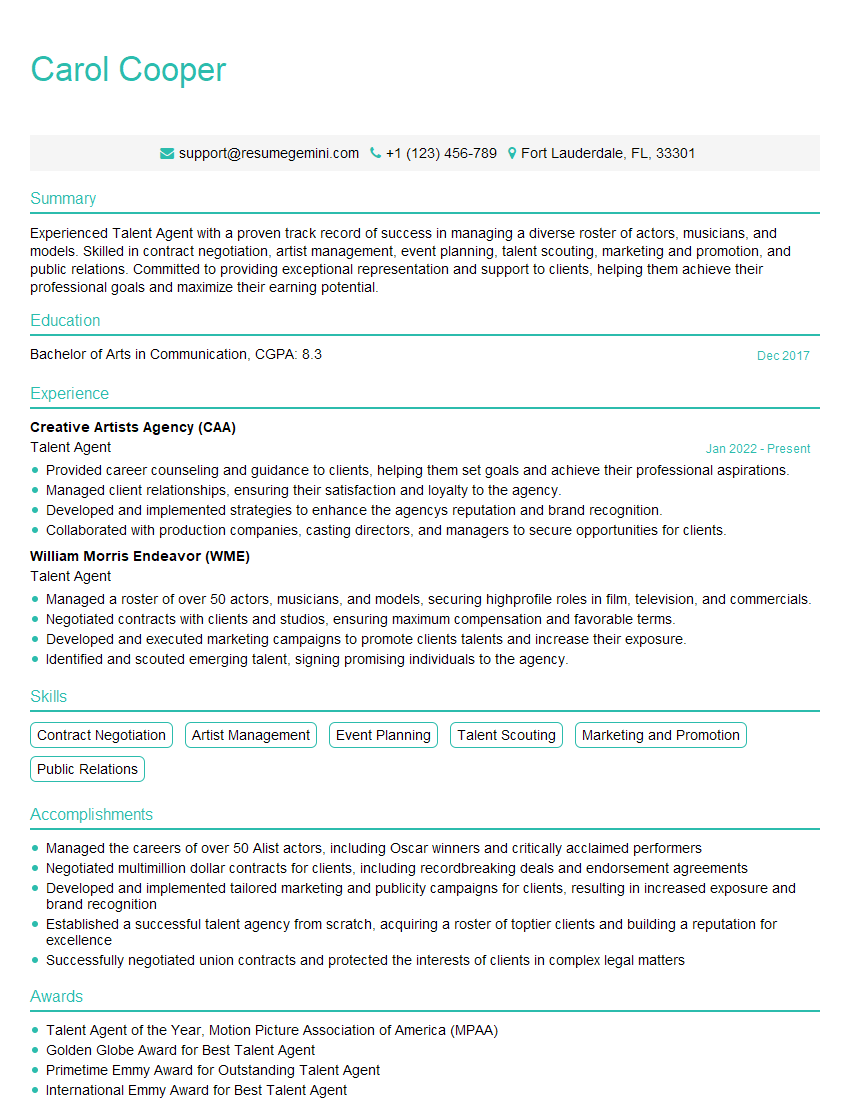
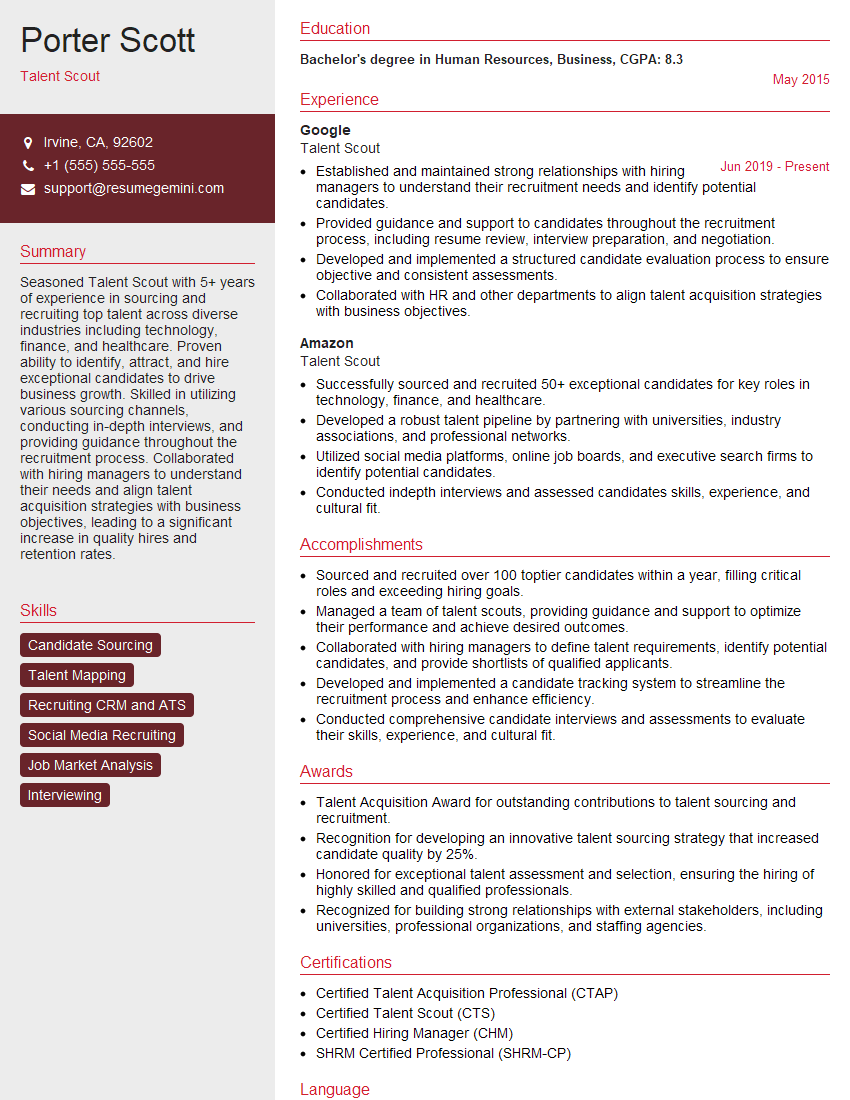
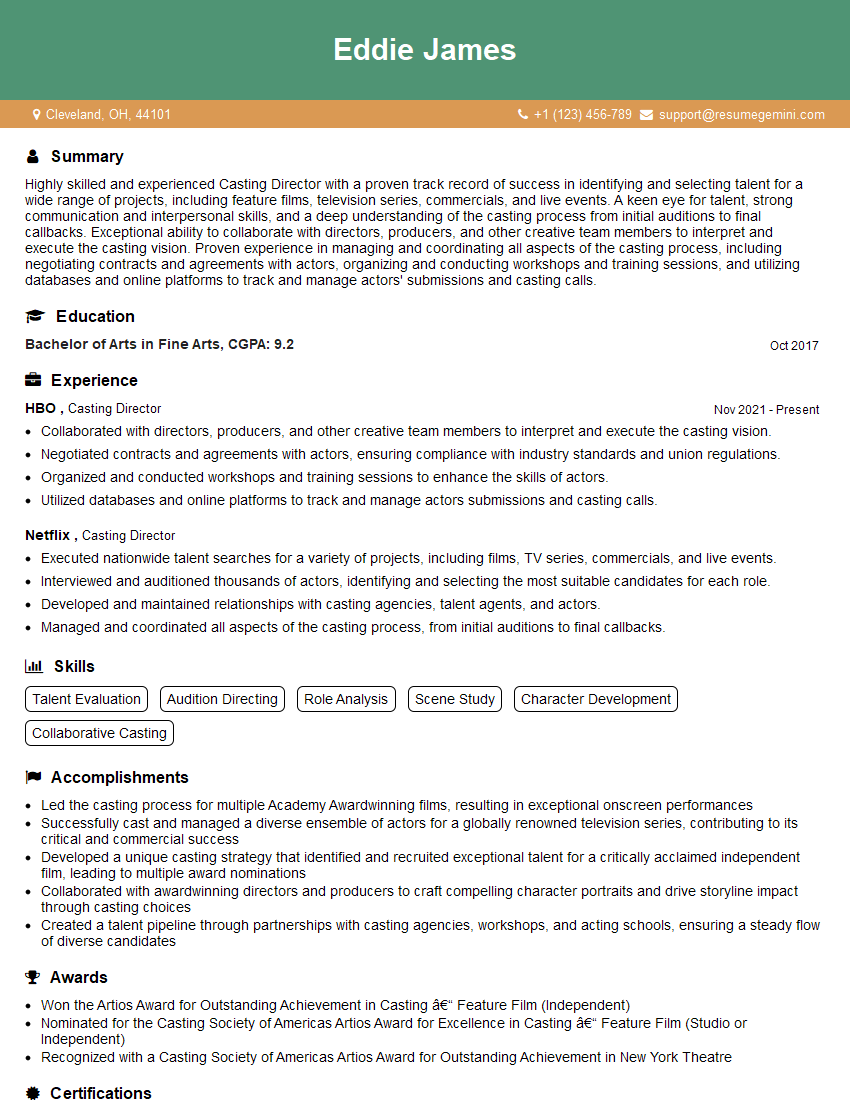
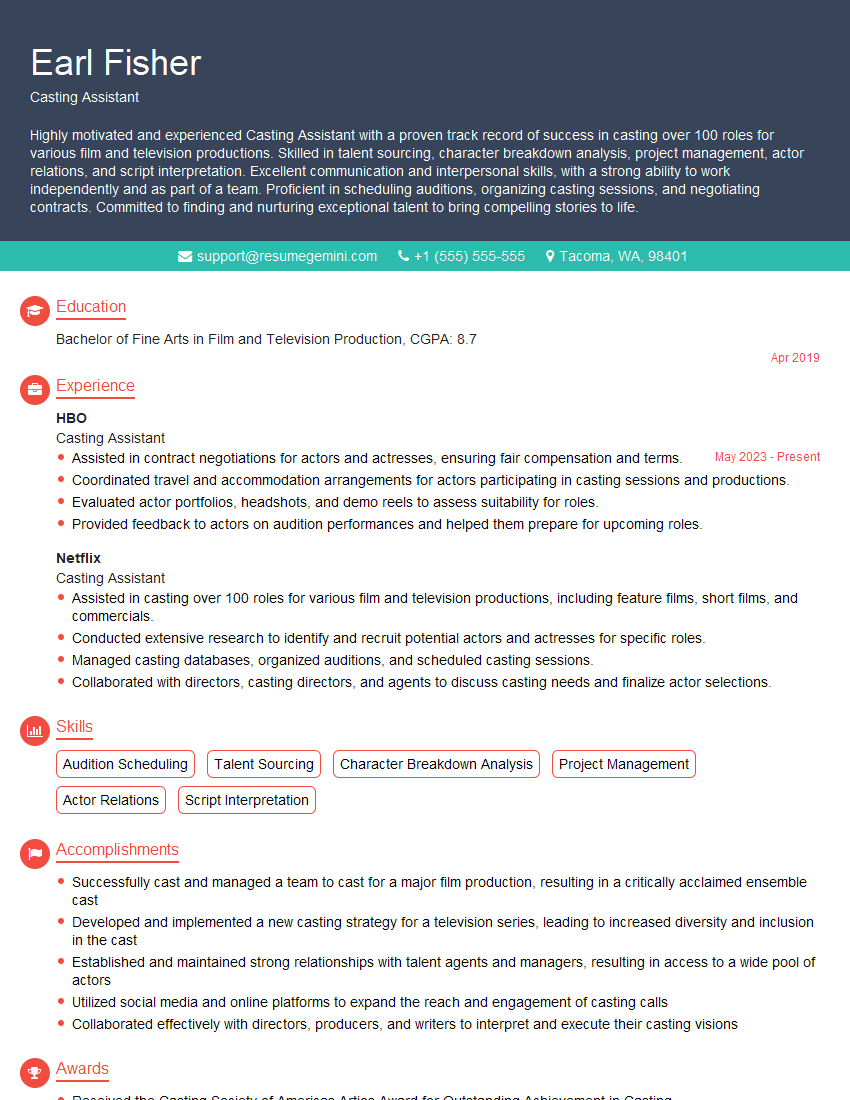
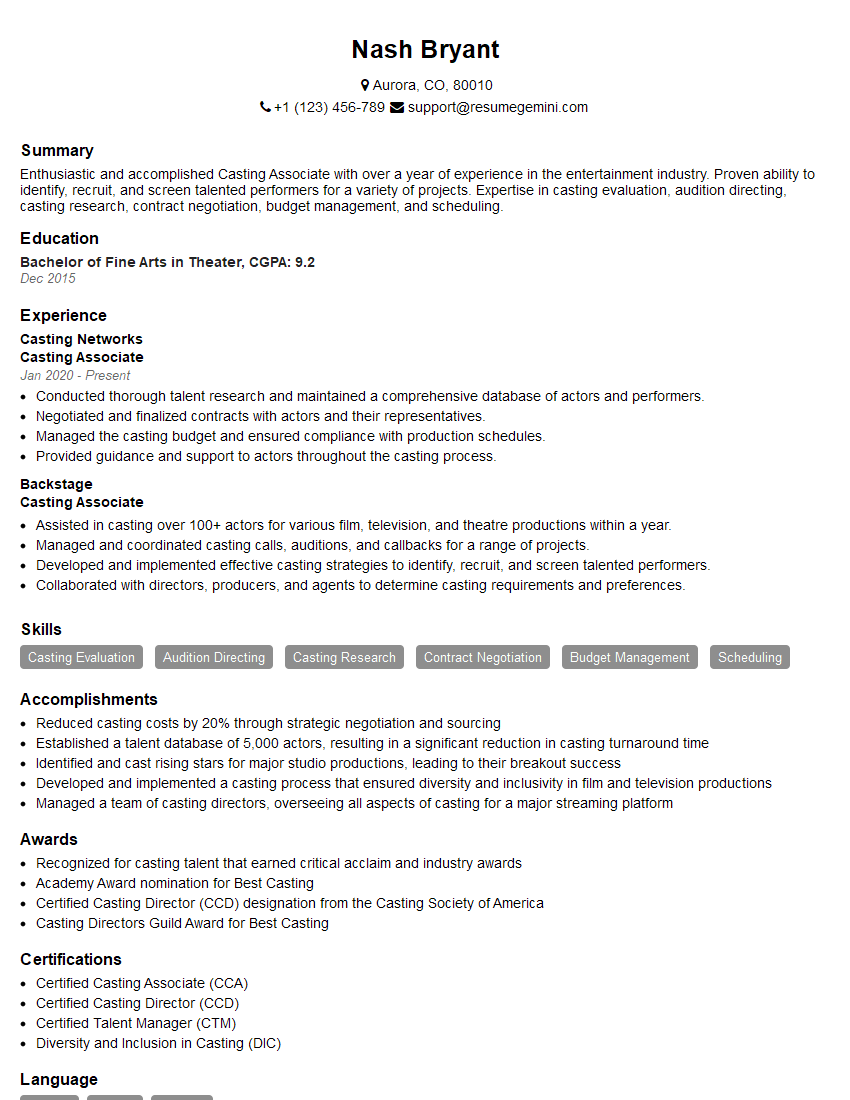
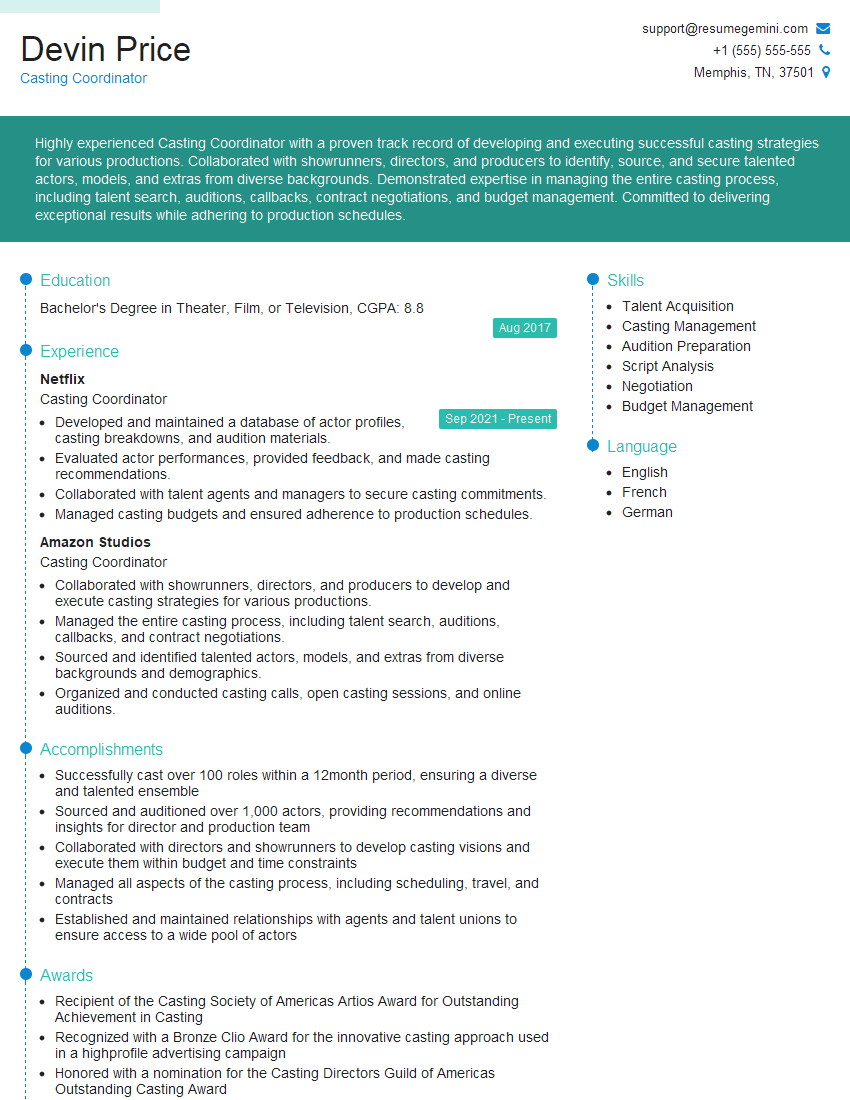
Mastering experience in various casting genres is crucial for career advancement in the performing arts. It demonstrates versatility, adaptability, and a deep understanding of the craft, significantly increasing your marketability and opening doors to a wider range of opportunities. Creating an ATS-friendly resume is essential for getting your application noticed. ResumeGemini is a trusted resource to help you build a professional resume that highlights your unique skills and experience across different casting genres. Examples of resumes tailored to showcase experience in various casting genres are available to help guide you.
Explore more articles
Users Rating of Our Blogs
Share Your Experience
We value your feedback! Please rate our content and share your thoughts (optional).
What Readers Say About Our Blog
Very informative content, great job.
good