Are you ready to stand out in your next interview? Understanding and preparing for Experience in working with musicians and producers interview questions is a game-changer. In this blog, we’ve compiled key questions and expert advice to help you showcase your skills with confidence and precision. Let’s get started on your journey to acing the interview.
Questions Asked in Experience in working with musicians and producers Interview
Q 1. Describe your experience with different Digital Audio Workstations (DAWs).
My experience with Digital Audio Workstations (DAWs) spans over a decade, encompassing a wide range of software. I’m highly proficient in Pro Tools, Logic Pro X, and Ableton Live. Each DAW has its strengths; Pro Tools excels in its robust features for large-scale projects and its industry standard status. Logic Pro X offers a powerful and intuitive workflow, perfect for composing and arranging. Ableton Live shines in its live performance capabilities and loop-based workflow. My proficiency extends beyond basic operation; I’m skilled in advanced techniques like MIDI editing, automation, advanced routing, and plugin management within each of these platforms. For example, I’ve used Pro Tools’ extensive session management capabilities to navigate complex projects with hundreds of tracks for film scoring, while leveraging Ableton’s session view for creating dynamic, improvisational electronic music pieces. I understand that the best DAW is often project-dependent, and I adapt my choice to the specific needs of the project and the artist’s preferences.
Q 2. What microphone techniques are you familiar with?
My microphone techniques are diverse and tailored to the specific instrument or vocal being recorded. I’m familiar with various polar patterns – cardioid, omni-directional, figure-8 – and understand their impact on sound capture. For vocals, I utilize techniques like the close-miking technique for a clear and intimate sound, or the off-axis miking technique for a warmer, more ambient tone, often employing multiple microphones to capture different aspects of the performance. For acoustic instruments, I frequently employ spaced-pair stereo recording, using two microphones several feet apart to capture a natural stereo image. With drums, I’ll employ a combination of close-miking individual drums and overhead mics for a balanced and full sound, adjusting placement to minimize bleed and maximize clarity. I also utilize techniques like room miking to capture ambience and the natural resonance of the recording space. For example, I recently recorded a vocalist in a large cathedral, employing a combination of close and distant mics to capture both the intimacy of her voice and the grandeur of the space. This required careful consideration of phase alignment and gain staging to avoid issues during mix.
Q 3. Explain your process for mixing a song.
My mixing process is iterative and often begins with gain staging and organization. I start by ensuring all tracks are properly leveled and organized within the DAW. Next, I focus on editing individual tracks – removing unwanted noise, correcting timing issues, and applying basic EQ to shape the tone of each instrument or vocal. After this, I’ll address panning and create a stereo image. Then, I move into more sophisticated EQ and compression to control dynamics and frequency balance, ensuring every instrument has its space in the mix and doesn’t clash. Reverb and delay are added carefully to create depth and ambience, and automation is used to refine dynamics over time. Throughout the process, I use reference tracks – songs with similar styles – to guide my decisions and ensure the mix sounds professional and competitive. The final stage involves critical listening over various playback systems to guarantee consistency across different listening environments. This whole process is fluid and collaborative; I regularly consult with the artist to ensure their vision is realised.
Q 4. How do you handle conflicts between musicians in a recording session?
Handling conflicts between musicians requires diplomacy, strong communication, and a clear understanding of the project’s goals. I usually begin by creating a safe and supportive environment for everyone. I encourage open communication, facilitating a discussion to understand each musician’s perspective and concerns. Often, the conflict stems from artistic differences or miscommunication. I try to mediate, finding common ground and encouraging compromise. Sometimes, it requires making objective decisions based on musical criteria. In rare cases, where compromise is impossible, I might need to make difficult choices about track selection or individual contributions. For example, in one session, two guitarists had contrasting visions of the song’s tone. I helped them articulate their ideas, listened to demos of each approach, and ultimately helped them blend both approaches into a unique sonic texture that satisfied both musicians.
Q 5. What are your preferred mastering techniques?
My preferred mastering techniques prioritize transparency and sonic integrity. I aim to optimize the overall balance and loudness of a mix without compromising its dynamic range or musicality. I typically start with careful gain staging, ensuring the tracks are properly levelled before any processing. Then, I use subtle EQ to address any remaining frequency imbalances, focusing on low-end clarity and high-end air. Gentle compression is applied to enhance dynamics and cohesiveness. I rarely use excessive limiting, preferring to maintain the nuances of the original performance. I carefully evaluate the mix’s stereo image, using subtle widening techniques only where needed. The final stages usually involve a detailed check of the stereo field for any unwanted artifacts or phase issues, ensuring a clean, polished final master. I use high-end mastering plugins, but the focus is always on careful and precise adjustments rather than relying solely on automated processes.
Q 6. Describe your experience with music editing software.
My experience with music editing software is extensive, primarily within DAWs, but also includes standalone audio editors like Audacity and specialized tools for specific tasks. I’m proficient in various editing techniques, including cutting, splicing, time-stretching, pitch correction, and noise reduction. I frequently use these tools for cleaning up audio, correcting timing issues, and creating seamless transitions. For example, I have used sophisticated time-stretching algorithms to adjust the tempo of sections within a song without artifacts, keeping the musical integrity intact. I understand the importance of choosing the right tool for the job – using a dedicated noise reduction plugin for removing background hum, rather than relying solely on the basic tools within a DAW. I’m familiar with the nuances of various audio formats and codecs, and I ensure that the editing processes maintain the highest audio quality.
Q 7. How do you ensure the quality of audio recordings?
Ensuring high-quality audio recordings involves a multi-faceted approach that begins even before recording. This includes careful pre-production planning, selecting appropriate microphones and recording equipment, and optimizing the recording environment to minimize unwanted noise. During recording, meticulous attention is paid to gain staging, ensuring that the signal is strong enough to avoid excessive noise without clipping. Regular monitoring of levels and audio quality helps to identify and address problems early on. Post-recording, I use a variety of tools for editing and processing to correct issues, such as noise reduction, de-essing, and equalization. Quality control is an ongoing process, involving meticulous listening and comparing the final product against high-quality reference tracks. I understand the limitations of each piece of equipment, and I prioritize using the highest-quality tools appropriate for the project.
Q 8. How do you troubleshoot technical issues during a recording session?
Troubleshooting technical issues during a recording session requires a systematic approach. It’s like being a detective, carefully examining clues to solve the mystery of the malfunction. My process typically involves:
- Identify the problem: Is it a microphone issue? A faulty cable? A problem with the audio interface? A software glitch? I start by pinpointing the source of the problem. For example, if the vocals are too quiet, I’ll check the microphone gain, the input level on the interface, and the track’s volume in the DAW (Digital Audio Workstation).
- Isolate the variables: Once I’ve identified the potential source, I start eliminating possibilities. If it’s a microphone issue, I’ll try a different mic. If it’s a cable problem, I’ll swap it out. This process of elimination helps me quickly find the culprit.
- Consult resources: Sometimes, the problem requires more specialized knowledge. I’ll refer to the manufacturer’s documentation for the specific piece of equipment or search online forums and support sites. Many times a quick Google search can reveal a common solution to a specific problem.
- Seek external help: If the issue is complex and I can’t resolve it quickly, I’ll reach out to a technical support expert or another experienced engineer. Time is money in a recording session, and sometimes it’s best to bring in an expert to avoid further delays.
- Preventive measures: Regular maintenance and backups are crucial. This includes regularly checking cables, updating drivers, and creating backups of sessions to prevent data loss. I also keep a well-stocked toolkit of spare cables, microphones, and other essentials.
For instance, during a recent session, we experienced a sudden drop in audio levels. After systematically checking each component, we discovered a loose connection in the audio interface. A simple tightening of the connector solved the problem, showcasing the importance of a methodical approach.
Q 9. What is your experience with music publishing and licensing?
My experience with music publishing and licensing is extensive. I understand the complexities of copyright, mechanical licenses, performance licenses, and synchronization licenses. I’ve worked with artists to register their copyrights with organizations like the Performing Rights Organizations (PROs), such as ASCAP, BMI, and SESAC. This involves ensuring proper documentation and understanding the different types of rights associated with a musical work.
I also have experience negotiating licensing agreements for the use of music in film, television, advertising, and video games. This includes understanding the nuances of different license types, negotiating fees, and ensuring the artist’s rights are protected. It’s crucial to understand the legal implications and to properly document all agreements.
For example, I recently helped an artist secure a synchronization license for their song to be used in a major television commercial. This involved negotiating the license fee, clarifying usage rights, and ensuring the artist received appropriate credit. This required a deep understanding of licensing agreements and contract law.
Q 10. Describe your experience working with different musical genres.
My experience spans a wide range of musical genres, from classical and jazz to pop, rock, hip-hop, and electronic music. I’ve worked with artists from diverse backgrounds and musical styles, tailoring my approach to meet their specific needs and creative visions. This adaptability is a key strength.
Working with different genres requires understanding the specific instrumentation, production techniques, and sonic characteristics associated with each. For example, recording a classical string quartet requires a different approach than recording a hip-hop track, from microphone selection and placement to mixing and mastering techniques. I adapt my workflow and knowledge to best suit the project’s requirements.
One project particularly stands out – I worked with a classical composer on a large-scale orchestral piece, then transitioned to working with a hip-hop artist on their latest album in the same week. This demonstrated my versatility and ability to seamlessly switch between vastly different production styles.
Q 11. How do you manage a studio’s budget and resources?
Managing a studio’s budget and resources requires meticulous planning and organization. It’s like running a small business. My approach involves:
- Detailed budgeting: Creating a comprehensive budget that outlines all expected expenses, including equipment maintenance, software licenses, utilities, and personnel costs. This needs to account for both fixed and variable costs.
- Resource allocation: Efficiently allocating resources, such as studio time, equipment, and personnel, to maximize productivity and minimize waste. This includes scheduling sessions efficiently and prioritizing projects.
- Cost control: Implementing strategies to control expenses, such as negotiating favorable deals with vendors and finding cost-effective solutions for equipment and software needs.
- Tracking expenses: Maintaining accurate records of all income and expenses to track profitability and identify areas for improvement. Using accounting software is very helpful here.
- Regular review: Regularly reviewing the budget and making adjustments as needed based on actual expenses and project requirements.
For example, I recently implemented a new system for tracking studio time usage, which significantly improved efficiency and reduced downtime. It also helped me better understand project profitability.
Q 12. How do you approach collaboration with artists?
Collaboration with artists is central to my work. I believe in a collaborative, supportive environment where artists feel comfortable expressing their creativity. My approach involves:
- Open communication: Establishing clear lines of communication to understand the artist’s vision and goals. Active listening is critical. I facilitate a creative dialogue between myself and the artist.
- Creative input: Offering technical and creative input to help artists realize their vision, while respecting their artistic autonomy. It’s a balance between offering guidance and allowing the artist space to explore their ideas.
- Trust and respect: Building a trusting relationship based on mutual respect and understanding. This includes valuing the artist’s time and perspective.
- Problem-solving: Working collaboratively to resolve any creative or technical challenges that may arise during the recording process. I encourage artists to think outside the box.
- Adaptability: Adapting my approach to the individual needs and preferences of each artist. Every artist is different, and a flexible approach is vital.
I recall a session where an artist was struggling to achieve a specific sound. Through collaborative experimentation and a few minor technical adjustments, we found a solution that perfectly complemented their musical vision. It was a satisfying moment of creative problem-solving.
Q 13. How familiar are you with music theory and notation?
My understanding of music theory and notation is solid. I can read and write standard musical notation, understand key signatures, time signatures, and rhythmic complexities. This knowledge is fundamental to my work, enabling me to assist artists with arranging, composing, and understanding the underlying structures of their music.
I utilize this knowledge in numerous ways, including:
- Arranging and composition: I can help artists arrange their songs, add instrumentation, and even assist with composing elements of their music. This includes writing parts for individual instruments.
- Understanding musical intention: I can interpret a score to better understand an artist’s musical intent and provide the necessary technical support to translate their vision into a recording.
- Troubleshooting: My understanding of music theory allows me to quickly identify and resolve harmonic or rhythmic inconsistencies in a recording.
- Communication: I can easily communicate technical aspects of music to artists, even if they don’t have a formal music theory background.
For example, I recently helped an artist fix a chord progression that was creating unwanted dissonance. My understanding of music theory allowed me to suggest a subtle alteration that significantly improved the overall sound.
Q 14. What is your understanding of copyright and intellectual property in music?
My understanding of copyright and intellectual property in music is comprehensive. I’m aware of the legal framework surrounding copyright protection, including the rights of composers, lyricists, and performers. I know the importance of registering copyrights, securing necessary licenses, and understanding the different types of intellectual property rights associated with music. This includes mechanical licenses, performance licenses, and synchronization licenses.
I help artists navigate these legal complexities by:
- Copyright registration: Advising artists on registering their copyrights with the appropriate organizations.
- License agreements: Assisting with negotiating and reviewing license agreements to ensure that artists’ rights are protected and that they receive appropriate compensation.
- Clear ownership: Helping establish clear ownership and attribution for all musical works.
- Avoiding infringement: Educating artists on the importance of avoiding copyright infringement and the potential legal ramifications.
I stress to artists the critical importance of understanding and protecting their intellectual property rights from the outset, because resolving copyright issues later can be very costly and time-consuming.
Q 15. How do you maintain a professional working relationship with musicians?
Maintaining professional relationships with musicians hinges on clear communication, mutual respect, and a collaborative spirit. It’s about understanding that they’re artists with unique visions and approaches. I prioritize open dialogue from the outset, ensuring we’re on the same page regarding project goals, timelines, and budgets. This includes actively listening to their creative input, acknowledging their expertise, and offering constructive feedback. Think of it like a partnership; we’re building something together, and trust is the foundation.
For instance, with one artist, I learned they were highly sensitive to specific frequencies in their vocals. By actively listening to their concerns and adjusting the EQ accordingly, not only did we achieve a better sound, but we also strengthened our working relationship. Regular check-ins throughout the project also help manage expectations and address any potential conflicts early on.
Career Expert Tips:
- Ace those interviews! Prepare effectively by reviewing the Top 50 Most Common Interview Questions on ResumeGemini.
- Navigate your job search with confidence! Explore a wide range of Career Tips on ResumeGemini. Learn about common challenges and recommendations to overcome them.
- Craft the perfect resume! Master the Art of Resume Writing with ResumeGemini’s guide. Showcase your unique qualifications and achievements effectively.
- Don’t miss out on holiday savings! Build your dream resume with ResumeGemini’s ATS optimized templates.
Q 16. How do you handle feedback from clients or artists?
Handling feedback requires a delicate balance of professionalism and empathy. I always approach feedback as an opportunity for improvement, even if it’s critical. I listen carefully, asking clarifying questions to ensure I fully understand the artist’s perspective. I avoid defensiveness and instead focus on understanding the root of their concerns. This involves paraphrasing their feedback to confirm my understanding, and then discussing potential solutions together.
For example, if an artist feels a mix lacks energy, I might ask them to specify what elements feel lacking. Is it the drums? The bassline? Once we identify the problem areas, I can propose technical solutions, like adding compression or adjusting the EQ. Ultimately, the goal is to collaboratively refine the work to meet their artistic vision, even if it means deviating from my initial approach.
Q 17. Describe your experience with project management in a music production setting.
Project management in music production is crucial for staying on schedule and within budget. My approach involves breaking down projects into manageable tasks, establishing clear deadlines for each stage (pre-production, recording, mixing, mastering), and using project management software to track progress. This involves creating detailed schedules, assigning responsibilities, and regularly monitoring progress. I also prioritize proactive communication with all stakeholders – artists, engineers, and other collaborators – to ensure everyone is aligned and informed.
For a recent album project, I used a Gantt chart to visualize the entire timeline. This allowed the artist and I to clearly see potential bottlenecks and make adjustments proactively. For instance, we realized that scheduling the string section recording earlier would prevent a scheduling conflict later in the process. This proactive approach saved time and ensured a smooth workflow.
Q 18. How do you stay current with the latest music production technology and techniques?
Staying current in music production is an ongoing process. I regularly attend industry conferences, webinars, and workshops to learn about new technologies and techniques. I subscribe to industry publications and follow influential producers and engineers online. Experimentation is key; I dedicate time to exploring new plugins, software, and hardware, trying them out on personal projects to evaluate their effectiveness.
For example, I recently spent time learning about the advancements in AI-powered mixing and mastering tools. While I don’t rely solely on AI, understanding its capabilities allows me to integrate it effectively into my workflow where appropriate, potentially streamlining certain processes.
Q 19. What is your experience with live sound reinforcement?
My experience with live sound reinforcement spans various venues, from small clubs to larger concert halls. I’m proficient in setting up and operating sound systems, including PA systems, monitors, microphones, and mixing consoles. I understand the importance of sound equalization, gain staging, and feedback control to ensure clear, balanced audio for the audience. This includes troubleshooting technical issues quickly and efficiently, often under pressure.
In one instance, during a live performance, a sudden feedback loop occurred. By swiftly identifying the problem (a microphone too close to a monitor), I adjusted the microphone placement and EQ to eliminate the feedback, minimizing disruption to the performance. This experience highlighted the importance of quick thinking and problem-solving skills in live sound situations.
Q 20. Explain your understanding of signal flow in a recording studio.
Understanding signal flow in a recording studio is fundamental. It’s the path an audio signal takes from its source (e.g., microphone, instrument) to the final recording. Typically, the signal starts with the source, then passes through a preamp, which boosts the signal level, then to an equalizer (EQ) to shape the frequency response, perhaps a compressor to control dynamics, then to effects processors like reverb or delay, before finally reaching the audio interface and being recorded. This understanding allows for troubleshooting, optimizing signal quality and preventing unwanted noise or distortion.
Source -> Preamp -> EQ -> Compressor -> Effects -> Audio Interface -> Recording
Visualizing this flow is crucial for diagnosing issues. If the recording is too quiet, for example, the problem might lie in the preamp gain or the audio interface level. A clear understanding of signal flow allows for systematic troubleshooting.
Q 21. Describe your experience with various audio processing techniques (compression, EQ, reverb).
Audio processing techniques like compression, EQ, and reverb are essential tools for shaping the sound. EQ adjusts the balance of frequencies, highlighting certain aspects of the sound while attenuating others. Compression reduces the dynamic range, making quieter parts louder and louder parts quieter, resulting in a more even and punchier sound. Reverb adds a sense of space and ambience, simulating the acoustic characteristics of a room or environment. The application of these techniques depends entirely on the context and the desired outcome.
For example, I might use compression on vocals to control dynamics, ensuring a consistent volume throughout the performance. A gentle EQ adjustment might be used to boost the clarity of a guitar part, while reverb could add depth to a vocal performance.
Mastering these techniques comes with experience and a keen ear. The key is understanding how each technique affects the overall sound and using them judiciously to achieve the artist’s vision.
Q 22. What is your approach to creating a cohesive sound for a project?
Creating a cohesive sound is like painting a picture; you need a clear vision and the right tools to bring it to life. My approach starts with a deep understanding of the artist’s vision. We’ll discuss their influences, target audience, and desired mood. Then, I’ll define a sonic palette – a range of instruments, sounds, and effects that will consistently represent the project’s identity. This palette is the foundation for everything that follows. For example, if we’re aiming for a vintage, soulful sound, we might focus on warm analog synthesizers, tape saturation effects, and a strong rhythm section. I also utilize reference tracks – songs with a similar aesthetic – to further refine our direction. The consistent application of this defined sonic palette, from the initial demo to the final mix, ensures cohesion. Regular communication and adjustments throughout the process allow the project to organically evolve while retaining its central sonic identity.
Q 23. How do you handle the time constraints and pressure involved in music production?
Time constraints are a reality in music production. My strategy involves a combination of meticulous planning and agile execution. I start by creating detailed timelines with realistic deadlines for each stage: pre-production, recording, editing, mixing, and mastering. I utilize project management tools to track progress and identify potential bottlenecks. Prioritization is key. We focus on the most crucial elements first, ensuring the core of the project is solid before tackling finer details. Effective communication with the artist and team prevents misunderstandings and wasted time. If unexpected delays occur, I’m proactive in finding solutions, like re-allocating resources or adjusting the scope of work. Furthermore, I teach artists to prioritize and make quick, decisive choices to save time in the studio. A well-structured workflow and clear communication are crucial for navigating these pressures.
Q 24. Explain your process for quality control and review of a finished project.
Quality control is a continuous process, not just a final step. I integrate quality checks throughout the production workflow. After each stage, we’ll have a listening session where we critically evaluate the work. This might involve A/B comparisons of different mixes, analyzing the frequency balance, examining the stereo width, and checking for any anomalies. We use high-quality monitoring equipment calibrated to industry standards to ensure accuracy. For the final review, we’ll employ a multi-step approach. First, a technical check, looking at technical elements like levels, phasing issues and artifacts. Second, a critical listening session to examine the overall sound, ensuring it meets the artistic goals and technical standards. Finally, we’ll do a comparative listening session on various playback systems to check for consistency across platforms. External feedback from trusted professionals also proves invaluable. The whole process is documented, ensuring transparency and traceability.
Q 25. How do you communicate effectively with both technical and non-technical team members?
Effective communication is essential in a collaborative environment. With technical team members, I use precise technical language, referring to specific plugins, settings, and audio concepts. For non-technical team members, I utilize clear and concise explanations, avoiding jargon and using analogies to illustrate technical concepts. For example, instead of saying ‘increase the headroom,’ I might say ‘let’s give the sound more breathing room, so it doesn’t get distorted.’ I also maintain open channels for feedback, encouraging questions and suggestions. Regular project updates and meetings keep everyone informed and engaged. I utilize a collaborative project management system allowing everyone to access information, track progress, and share comments.
Q 26. Describe a time you had to problem-solve a complex technical issue in a music production environment.
During a recent project, we experienced a critical issue with a complex sample library. The samples were exhibiting significant latency issues, making the recording process impossible. After multiple troubleshooting attempts, the problem was identified as a conflict between the sample library and the DAW’s (Digital Audio Workstation’s) internal clock. My solution involved carefully examining the DAW’s settings. I tested different buffer sizes and sample rates, ensuring the system clock was synchronized across all devices. I also confirmed that the sample library was compatible with the DAW version and drivers. By systematically addressing each potential cause, starting from the most likely, we finally resolved the latency issue, enabling the recording session to proceed without interruption. This experience highlighted the importance of thorough technical knowledge and a methodical approach to problem-solving.
Q 27. How do you ensure the legal and ethical compliance of a music project?
Ensuring legal and ethical compliance involves several crucial steps. Before commencing a project, we clarify the ownership of all involved samples, music, and lyrics. We obtain necessary licenses and permissions, using reputable sources like sample libraries and music publishing companies. We ensure that all clearances are properly documented. Furthermore, we address the contract for each team member, including the artist, producers, engineers, and other contributors, clearly outlining their rights and responsibilities. Transparency and written consent are paramount. We understand copyright laws and ensure all parties involved have a clear grasp of their legal standing. This includes understanding the differences between copyright, mechanical rights, and performance rights. This proactive approach minimizes legal risks and fosters a collaborative, trustworthy relationship with all parties.
Q 28. What strategies do you use for effective time management in a fast-paced studio environment?
In a fast-paced studio environment, effective time management is crucial. I use a combination of techniques. First, I prioritize tasks. The most important tasks are tackled first. This often involves tackling the most time-sensitive aspects at the beginning of the process to ensure those elements are ready before deadlines loom. I break down large tasks into smaller, manageable steps. This increases efficiency and makes the workflow less overwhelming. I also utilize time-tracking software and create detailed schedules with specific time blocks allocated to different tasks. Regular check-ins with the team help us stay on track and address any potential delays. Prioritizing rest and breaks is just as important; they prevent burnout and enhance focus. A well-organized and efficiently managed workflow leads to a less stressful and much more productive environment.
Key Topics to Learn for Experience in working with musicians and producers Interview
- Understanding Creative Processes: Learn about the diverse workflows of musicians and producers, from songwriting and arrangement to recording and mixing. Consider the differences between various genres and production styles.
- Collaboration and Communication: Explore effective communication strategies for working in collaborative environments. Practice active listening, providing constructive feedback, and managing expectations with creative individuals.
- Technical Proficiency: Depending on the role, demonstrate understanding of relevant software (DAWs, audio editors, etc.), hardware (microphones, interfaces, etc.), and industry-standard file formats.
- Project Management in Music Production: Discuss your experience managing timelines, budgets, and resources within music projects. Highlight your ability to troubleshoot technical issues and meet deadlines.
- Legal and Business Aspects: Familiarize yourself with the basics of music publishing, copyright, and contracts. Understanding these aspects shows a professional approach.
- Problem-Solving in Creative Settings: Be prepared to discuss instances where you successfully navigated creative differences, technical difficulties, or unexpected challenges within a musical project.
- Adaptability and Flexibility: The music industry is dynamic. Showcase your ability to adapt to changing priorities, learn new technologies, and work effectively in unpredictable situations.
Next Steps
Mastering the art of working with musicians and producers is crucial for career advancement in the music industry and related fields. A strong understanding of these key areas will significantly enhance your interview performance and overall professional credibility. To maximize your job prospects, focus on creating an ATS-friendly resume that clearly highlights your relevant skills and experience. ResumeGemini is a trusted resource to help you build a professional and impactful resume. Examples of resumes tailored to showcasing experience in working with musicians and producers are available through ResumeGemini, helping you present your qualifications effectively.
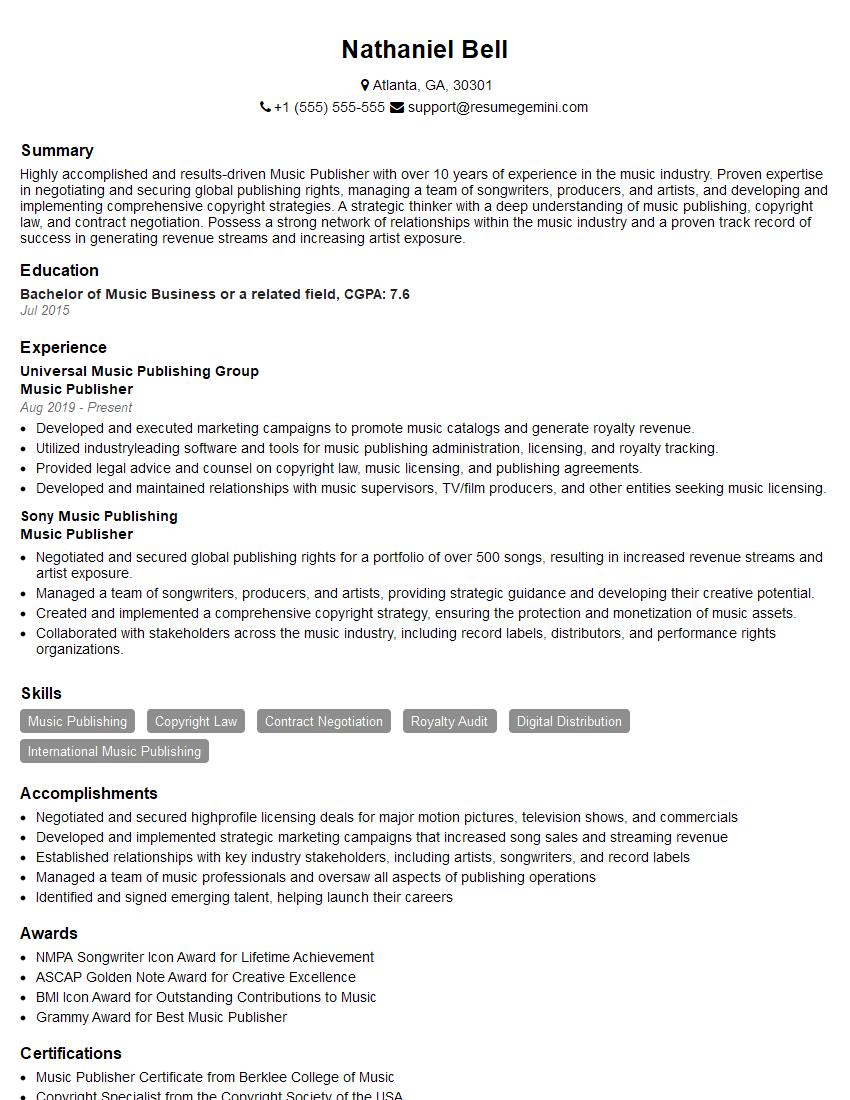
Music Publisher Resume Sample
Talent Manager Resume Sample
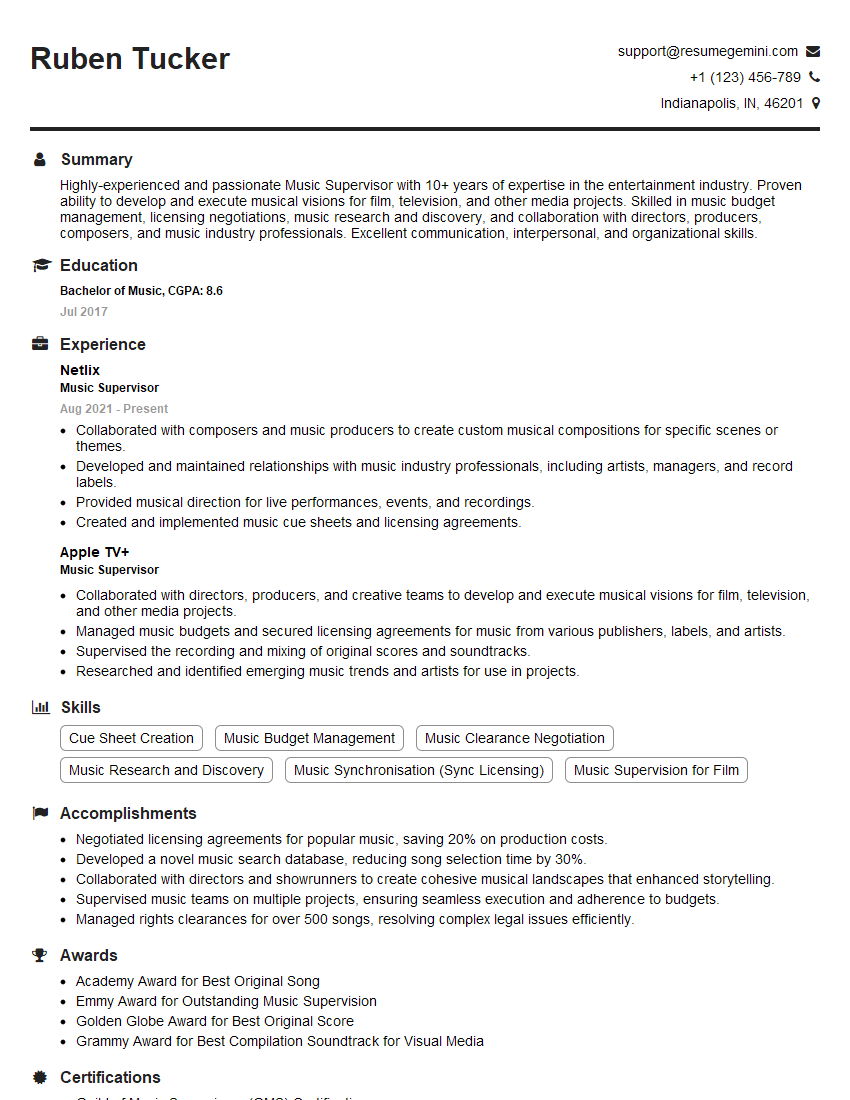
Music Supervisor Resume Sample
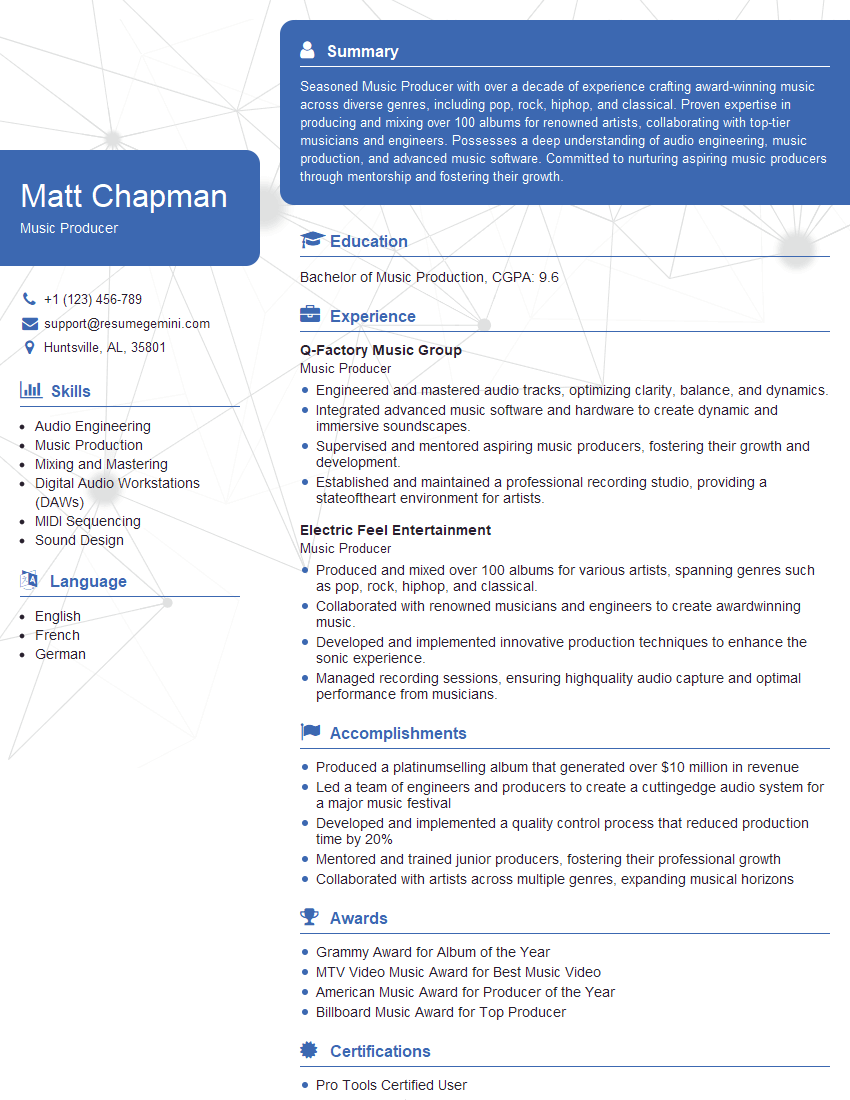
Music Producer Resume Sample
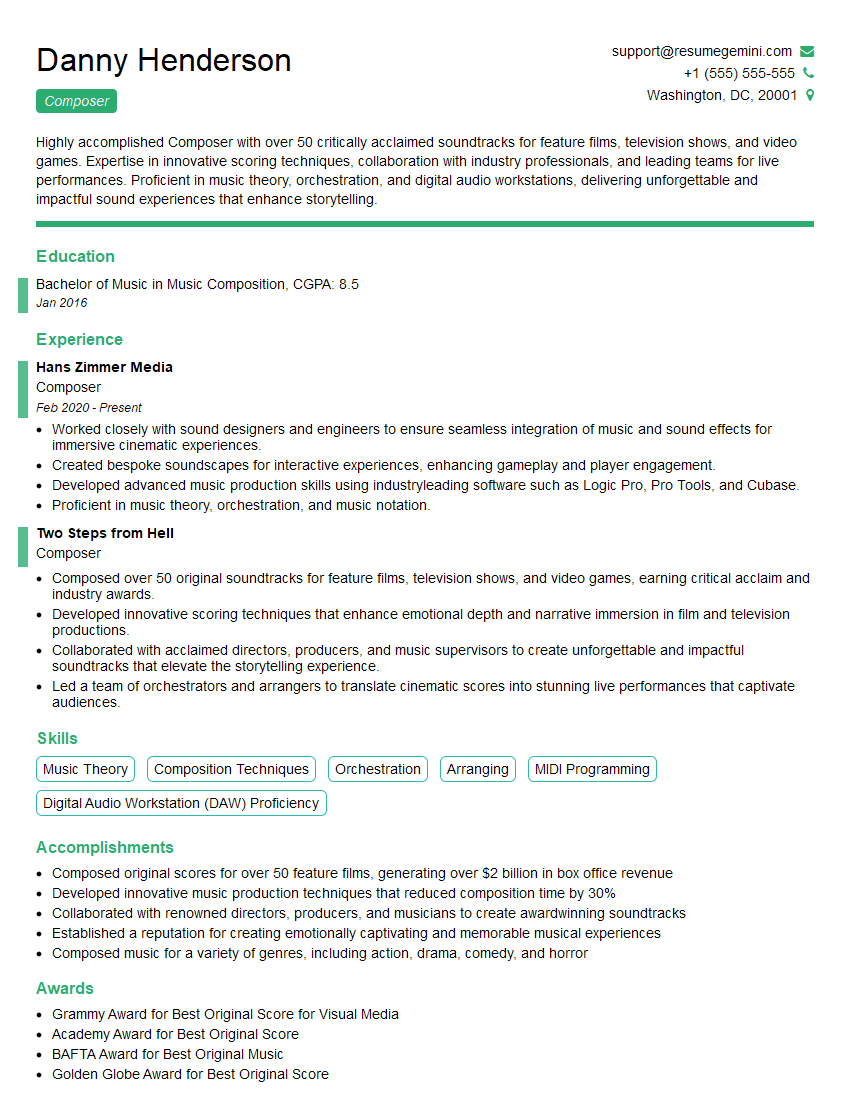
Composer Resume Sample
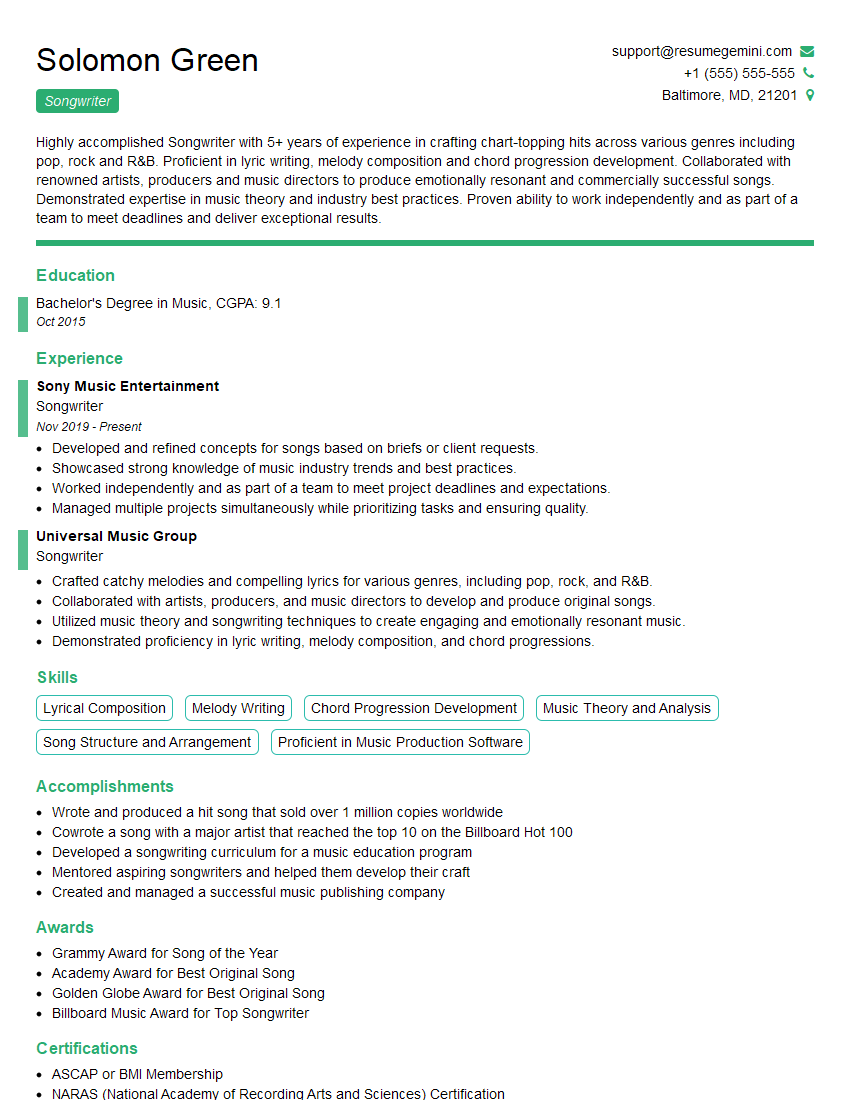
Songwriter Resume Sample
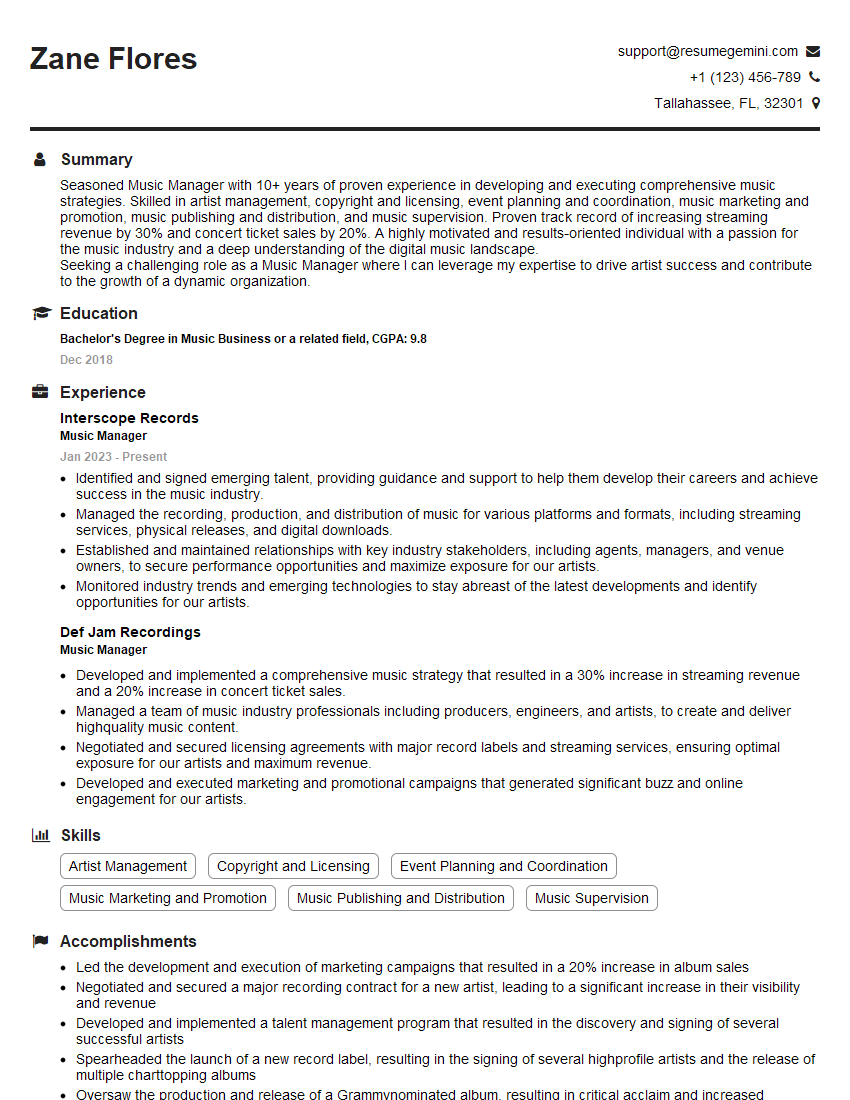
Music Manager Resume Sample
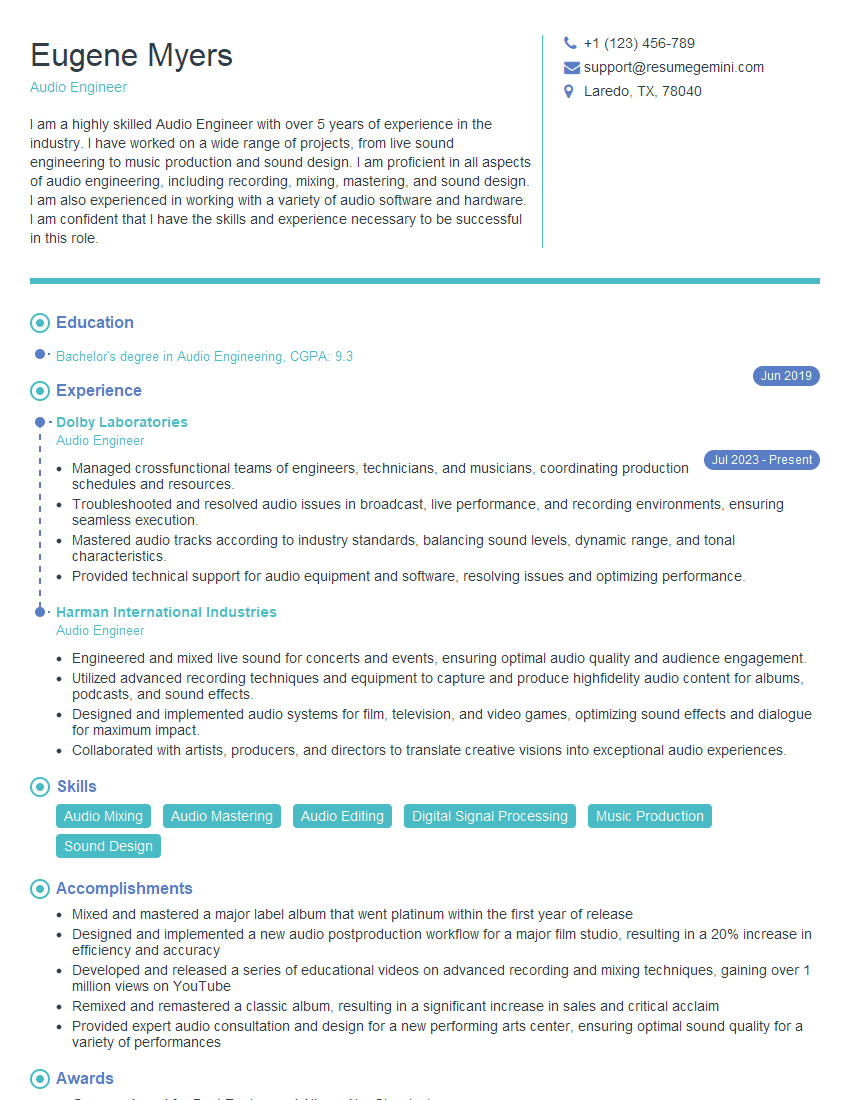
Audio Engineer Resume Sample
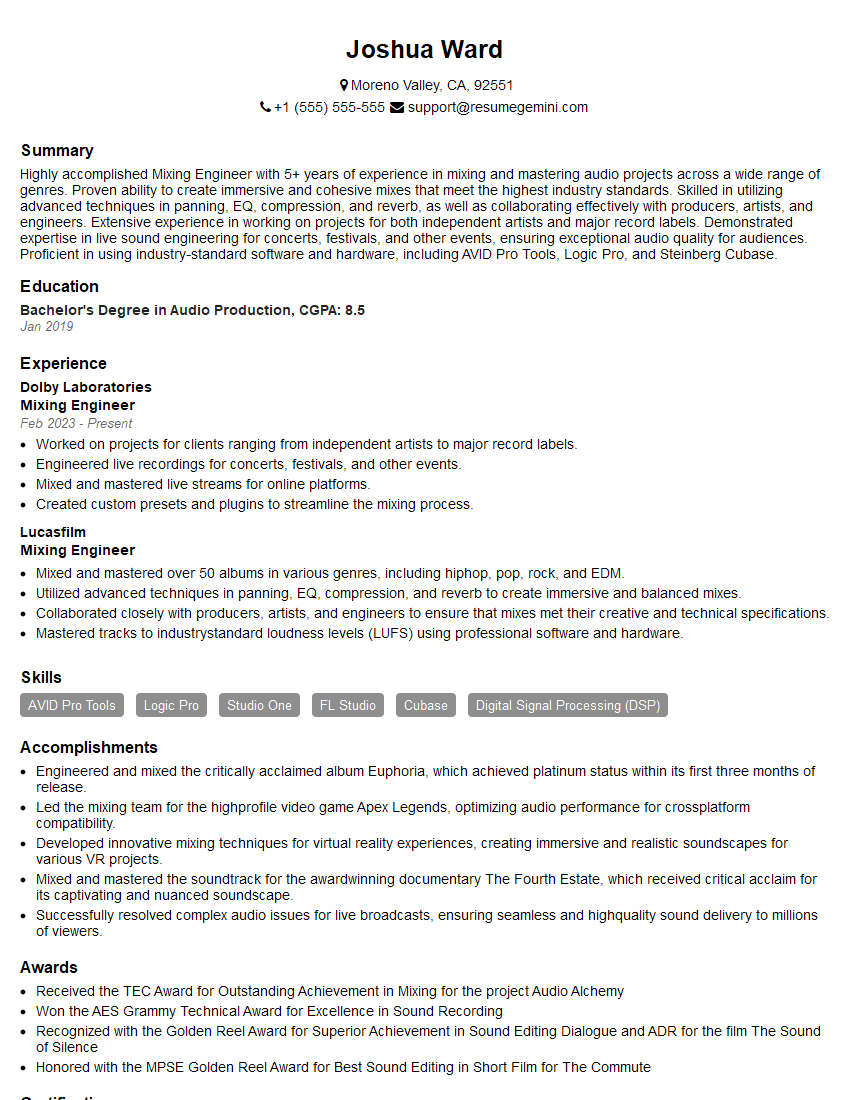
Mixing Engineer Resume Sample
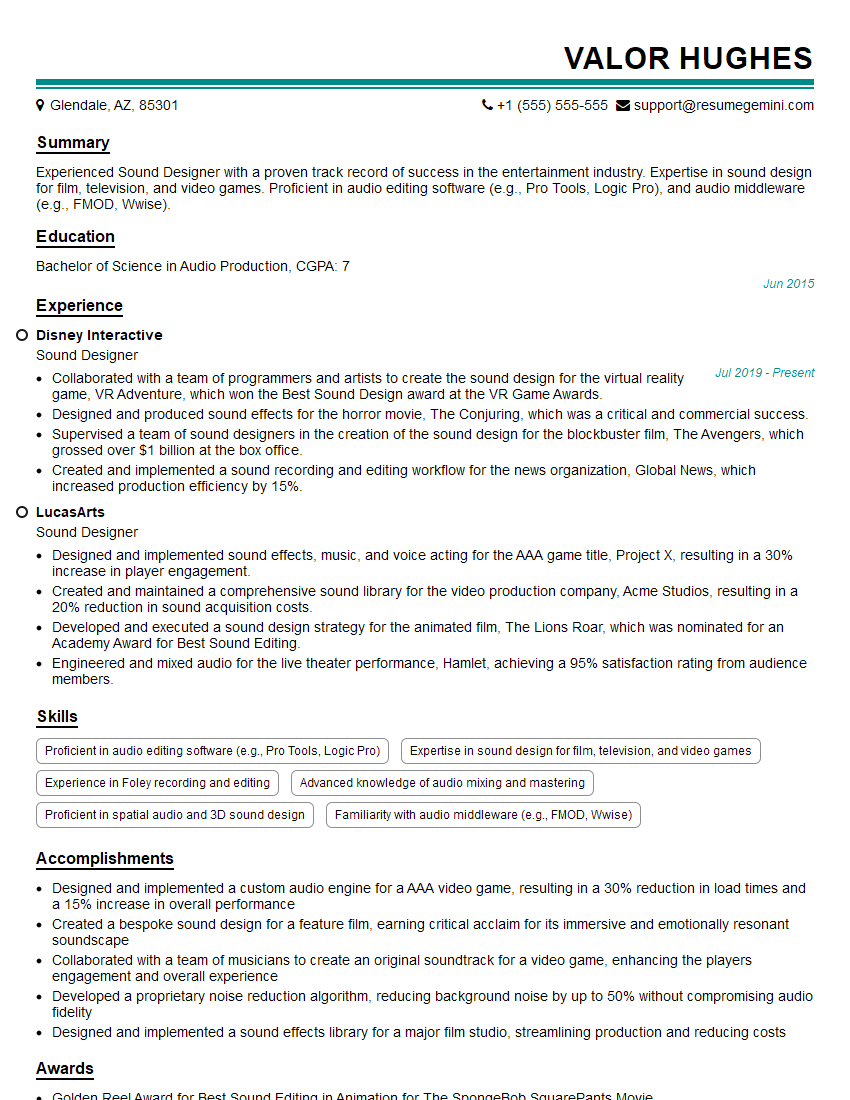
Sound Designer Resume Sample
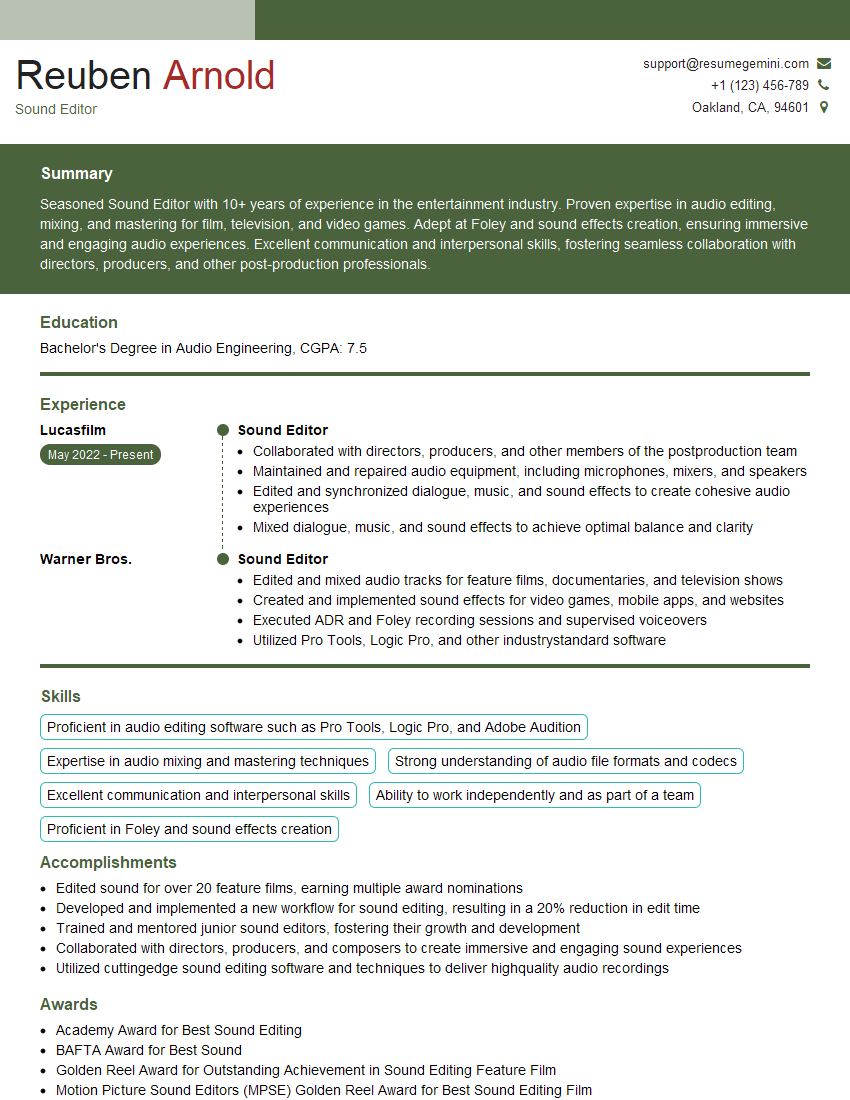
Sound Editor Resume Sample
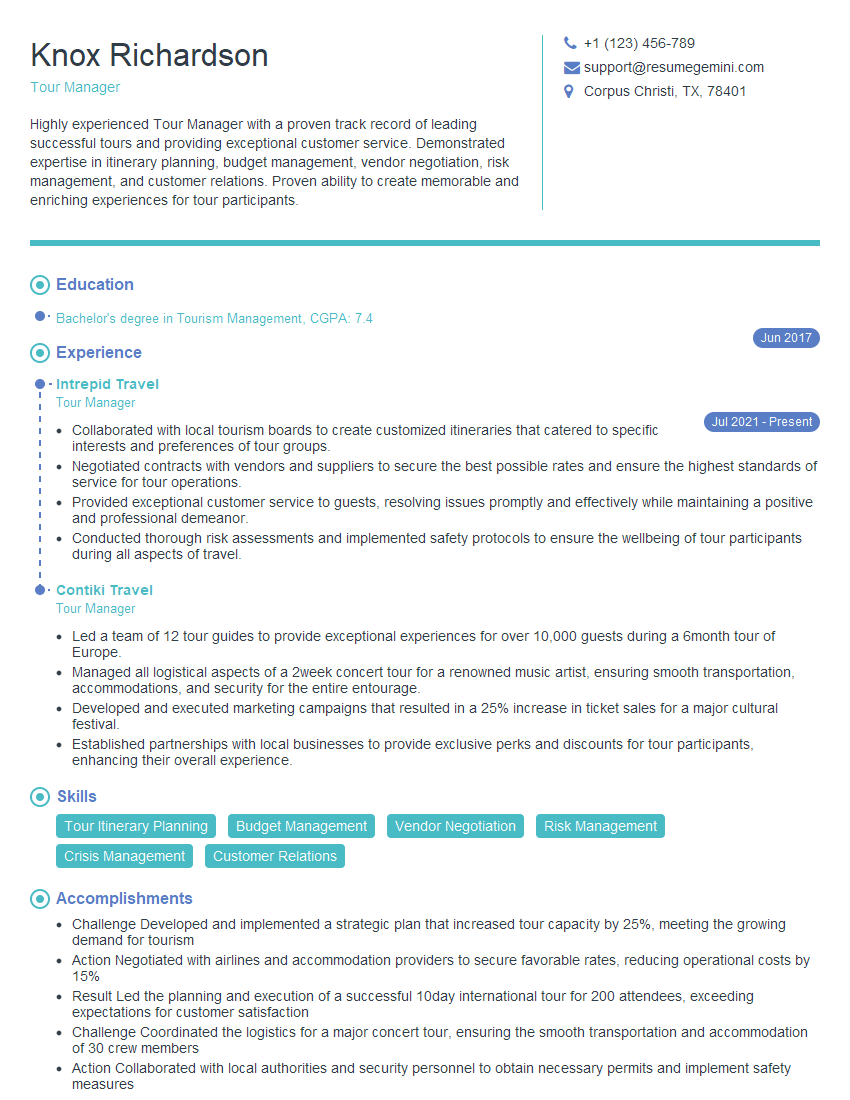
Tour Manager Resume Sample
Explore more articles
Users Rating of Our Blogs
Share Your Experience
We value your feedback! Please rate our content and share your thoughts (optional).
What Readers Say About Our Blog
Very informative content, great job.
good