The thought of an interview can be nerve-wracking, but the right preparation can make all the difference. Explore this comprehensive guide to Experience in working with unions and industry professionals interview questions and gain the confidence you need to showcase your abilities and secure the role.
Questions Asked in Experience in working with unions and industry professionals Interview
Q 1. Describe your experience negotiating collective bargaining agreements.
Negotiating collective bargaining agreements (CBAs) is a complex process requiring strong communication, negotiation, and strategic thinking. It involves representing the interests of either management or a union, aiming to reach a mutually acceptable agreement that covers wages, benefits, working conditions, and grievance procedures for a specific period. My approach is collaborative, focusing on building trust and understanding between parties.
For example, in a recent negotiation with the United Steelworkers, we faced a significant impasse over healthcare costs. Instead of focusing solely on cost-cutting, we explored innovative solutions like a tiered healthcare plan with employee wellness incentives. This approach, while requiring meticulous data analysis and creative problem-solving, ultimately led to a CBA that addressed both the union’s concerns about member benefits and the company’s fiscal responsibilities. The key was proactive communication and a willingness to consider alternative solutions.
- Preparation: Thorough research into industry standards, the company’s financial position, and the union’s priorities is crucial.
- Collaboration: Active listening, understanding different perspectives, and building rapport are essential.
- Strategy: Identifying priorities and potential trade-offs is vital for a successful outcome.
- Documentation: Meticulous record-keeping ensures clarity and avoids misunderstandings.
Q 2. Explain your process for handling employee grievances.
Handling employee grievances requires a fair, consistent, and timely process. The goal is to resolve issues quickly and fairly, preserving positive labor relations. My process typically involves the following steps:
- Formal Grievance Filing: Employees submit a written grievance detailing the issue, date, and relevant individuals.
- Initial Investigation: A preliminary investigation is conducted to gather facts and understand all perspectives.
- Mediation/Negotiation: I work with both the employee and management to reach a mutually acceptable resolution. This often involves informal discussions and exploring options.
- Formal Hearing (if necessary): If mediation fails, a formal hearing may be held with representatives from both sides. This step often involves documented evidence and clear processes.
- Decision and Appeal: A decision is issued, and, if necessary, an appeals process is available to ensure fairness.
For instance, a grievance involving alleged workplace harassment requires a thorough investigation with interviews of involved parties and impartial witnesses. Following established company policy and possibly utilizing external consultants for independent review are crucial to ensure a fair outcome. Transparency and clear communication are key throughout the process.
Q 3. How have you successfully resolved labor disputes?
Successfully resolving labor disputes often requires a blend of negotiation, mediation, and sometimes arbitration. One notable instance involved a threatened strike over pension changes. To prevent a costly work stoppage, I initiated a series of facilitated discussions with union leadership. We employed a collaborative problem-solving approach, exploring alternative pension designs that addressed both the union’s concerns about member security and the company’s budgetary constraints. This resulted in a mutually acceptable agreement that avoided a strike and preserved positive labor relations.
Another successful resolution involved a dispute over overtime pay calculations. By carefully reviewing the collective bargaining agreement’s language and applicable labor laws, we identified a misinterpretation of the rules. A clear explanation, supported by documented evidence, resolved the issue amicably, preventing the need for further escalation. This highlights the importance of strong understanding of labor law and CBA interpretation.
Q 4. What strategies do you employ to maintain positive labor relations?
Maintaining positive labor relations is an ongoing process. My strategies include:
- Open Communication: Regular meetings with union representatives and employees to discuss concerns and share information.
- Joint Problem Solving: Collaborating with the union on issues impacting the workplace, such as safety and productivity.
- Fair and Consistent Application of Policies: Ensuring rules are applied equally to all employees, regardless of union membership.
- Employee Engagement: Implementing initiatives to enhance employee morale and job satisfaction, fostering a sense of ownership and belonging.
- Training: Providing both management and union representatives with training on labor relations best practices, conflict resolution, and relevant laws.
For example, implementing a suggestion box system and regularly reviewing suggestions to address employee concerns demonstrates commitment to improving workplace conditions. Similarly, hosting regular social events to promote team building fosters a positive work environment.
Q 5. Describe your understanding of relevant labor laws (e.g., NLRA).
My understanding of relevant labor laws, particularly the National Labor Relations Act (NLRA), is comprehensive. I am familiar with its provisions concerning protected concerted activity, unfair labor practices, representation elections, and collective bargaining. The NLRA’s goal is to protect employees’ rights to organize and bargain collectively, preventing employers from engaging in unfair labor practices that interfere with these rights. I am also well-versed in other relevant federal and state labor laws, such as those concerning wages, hours, working conditions, and safety. Staying current on legal changes is crucial for effective labor relations.
For example, understanding the distinction between protected and unprotected concerted activity is vital. Employees engaging in protected concerted activity, such as discussing wages or working conditions with colleagues, are protected from retaliation. However, engaging in unlawful activities, like threats or violence, is not protected.
Q 6. How do you interpret and apply collective bargaining agreements?
Interpreting and applying collective bargaining agreements (CBAs) requires meticulous attention to detail and a thorough understanding of contract law. CBAs are legally binding contracts that outline the terms and conditions of employment for a specific period. My approach involves:
- Careful Review of Contract Language: Analyzing the precise wording of each clause to understand its intended meaning.
- Contextual Understanding: Considering the negotiation history and the intent of the parties when crafting the agreement.
- Precedence and Past Practices: Taking into account past interpretations and applications of the CBA.
- Consultation with Legal Counsel: Seeking legal advice when necessary to ensure accurate interpretation and application.
For instance, if a dispute arises over vacation time accrual, I would refer to the specific clause in the CBA dealing with vacation, consider past practices, and consult with legal counsel if ambiguities exist. This methodical approach ensures consistent application of the agreement.
Q 7. What is your experience with arbitration procedures?
I have significant experience with arbitration procedures, having participated in several cases as a representative for both management and unions. Arbitration is a formal process in which a neutral third party (the arbitrator) hears evidence and arguments from both sides and renders a binding decision. It’s a common method for resolving disputes when negotiation and mediation fail.
My experience includes preparing and presenting cases, examining witnesses, and working with the arbitrator to ensure a fair and efficient process. In one particular case, a dispute over subcontracting led to arbitration. Careful preparation, including gathering and presenting evidence of both past practices and relevant industry standards, proved crucial in obtaining a favorable ruling. A well-structured presentation and clear articulation of the facts are essential to successful arbitration.
Q 8. How do you manage conflict between union representatives and management?
Managing conflict between union representatives and management requires a proactive and collaborative approach. It’s not about winning or losing, but finding mutually acceptable solutions. My strategy centers around open communication, active listening, and a commitment to finding common ground.
- Establish clear communication channels: Regular meetings, formal grievance procedures, and readily available contact information are crucial. This ensures that issues are addressed promptly before they escalate.
- Focus on shared interests: While disagreements are inevitable, highlighting shared goals – such as a safe and productive workplace – can build a foundation for compromise. For example, during a disagreement over overtime pay, we might focus on the common goal of maintaining high employee morale and productivity.
- Mediation and negotiation: If direct discussions fail to resolve the conflict, engaging a neutral third-party mediator can facilitate constructive dialogue and help find solutions that satisfy both parties. I’ve successfully used this approach in several instances, resulting in mutually agreeable compromises on issues like work scheduling and safety protocols.
- Document everything: Maintaining thorough records of meetings, agreements, and grievances protects both parties and provides a clear history of the situation. This can be especially helpful in preventing future misunderstandings.
Essentially, conflict resolution involves building trust, respecting differing viewpoints, and working collaboratively towards a positive outcome. It’s about fostering a relationship built on mutual respect and understanding, even amidst disagreements.
Q 9. Describe your experience with union organizing campaigns.
I’ve been involved in several union organizing campaigns, both from the management and employee perspectives. This has provided me with valuable insights into the strategies, tactics, and legal considerations involved. My experience includes:
- Understanding employee concerns: Successfully navigating a union organizing campaign requires understanding the root causes of employee dissatisfaction. In one instance, I worked with management to address concerns about pay disparity and lack of career development opportunities, ultimately reducing the union’s support base.
- Ensuring a fair and neutral environment: Management’s role during a campaign is to ensure a fair and neutral environment, allowing employees to freely express their views without coercion or intimidation. This involves understanding and complying with the National Labor Relations Act (NLRA) guidelines.
- Communicating openly and honestly: Direct, honest communication with employees is crucial. This involves addressing concerns directly, providing accurate information, and actively listening to employees’ feedback. In one situation, I organized town hall meetings to answer employee questions about the union campaign, which helped to alleviate misinformation and concerns.
- Working with legal counsel: Navigating the complexities of labor law requires expert guidance. I always worked closely with legal counsel throughout the campaign to ensure compliance with all applicable laws and regulations.
My experience highlights the importance of proactive communication, a deep understanding of labor laws, and a commitment to fairness. These factors contribute to a more positive and productive environment, regardless of the campaign outcome.
Q 10. How do you ensure compliance with labor regulations?
Ensuring compliance with labor regulations is paramount. This requires a multi-faceted approach involving continuous learning, proactive measures, and regular audits.
- Staying up-to-date on changes: Labor laws are constantly evolving, so continuous education is critical. This includes attending industry conferences, workshops, and regularly reviewing relevant legal updates.
- Implementing robust HR policies and procedures: Our company maintains comprehensive HR policies and procedures that meticulously align with all applicable labor laws, including those related to wages, hours, overtime, discrimination, and workplace safety. These policies are regularly reviewed and updated to reflect changes in regulations and best practices.
- Conducting regular audits: We conduct regular audits of our HR practices to identify and address any potential compliance issues proactively. This includes reviewing employee files, payroll records, and other relevant documentation to ensure complete adherence to labor laws.
- Training for all personnel: All personnel, from management to front-line employees, receive training on labor laws and relevant company policies. This ensures that everyone understands their rights and responsibilities.
- Maintaining accurate records: Maintaining complete and accurate records is crucial for demonstrating compliance. We use a dedicated HR information system (HRIS) to maintain all employee records securely and efficiently.
Compliance is not merely a matter of avoiding penalties; it’s a commitment to creating a fair and equitable workplace for all employees. It fosters trust and promotes a positive work environment.
Q 11. How do you balance the needs of employees with the needs of the organization?
Balancing the needs of employees with the needs of the organization is a constant challenge, requiring careful consideration and a strategic approach. It’s about finding solutions that are mutually beneficial, not about making sacrifices on either side.
- Open communication: Regular and open communication is key. This includes actively soliciting employee feedback, holding town hall meetings, and ensuring that employee voices are heard.
- Data-driven decision making: Making decisions based on data, rather than assumptions, ensures that choices are informed and objective. This includes analyzing employee satisfaction surveys, productivity metrics, and other relevant data to understand the needs of both employees and the organization.
- Prioritization and compromise: Prioritizing competing needs is inevitable. Sometimes it’s necessary to compromise. For example, while employees might desire a significant pay increase, the organization may need to balance this with maintaining profitability. The key is to find solutions that are mutually acceptable and ensure long-term sustainability.
- Employee engagement initiatives: Investing in employee engagement programs can create a more positive and productive work environment, satisfying both employee needs and organizational objectives. This could include flexible work arrangements, professional development opportunities, and employee recognition programs.
Balancing employee and organizational needs is an ongoing process that requires skillful negotiation, effective communication, and a commitment to finding creative solutions that benefit all parties involved. It’s about building a workplace where both employees and the organization thrive.
Q 12. Describe a situation where you had to compromise during negotiations.
During negotiations for a new collective bargaining agreement, the union strongly advocated for a significant increase in healthcare benefits, while management was concerned about the associated cost. Both sides held firm on their initial positions. To break the impasse, I proposed a phased approach. Instead of the immediate, substantial increase demanded by the union, we agreed on a smaller increase in the first year, followed by incremental increases in subsequent years. This allowed us to address the union’s concerns without placing an undue burden on the organization’s finances.
This compromise demonstrated a willingness to listen and collaborate, resulting in a mutually satisfactory outcome that avoided a protracted and potentially damaging strike. It exemplified the importance of finding creative solutions that accommodate differing interests and build lasting trust.
Q 13. How do you build trust and rapport with union representatives?
Building trust and rapport with union representatives is essential for effective labor relations. It requires consistent effort, transparency, and a genuine commitment to mutual respect.
- Active listening and empathy: Actively listening to the union’s concerns and perspectives without interruption or judgment is vital. Show empathy and understand their position.
- Honest and transparent communication: Communicating openly and honestly, even when delivering difficult news, builds trust. Hiding information or being evasive erodes trust quickly.
- Respectful dialogue: Treating union representatives with respect, regardless of disagreements, is crucial. Addressing each other with professionalism and courtesy fosters a productive working relationship.
- Building personal relationships: Building informal relationships outside of formal negotiations can significantly enhance trust and understanding. Casual interactions in a non-negotiating environment can build rapport.
- Following through on commitments: If promises are made, ensuring they are kept is crucial. This builds credibility and demonstrates your commitment to the relationship.
Trust is earned, not given. Consistent effort in building positive relationships and fostering open communication are key to creating a productive working partnership with union representatives.
Q 14. What is your experience with managing union elections?
My experience with managing union elections involves ensuring a fair and transparent process that adheres strictly to legal requirements. This includes:
- Ensuring a neutral environment: Management’s role is to create a neutral environment where employees can vote freely without coercion or influence. This might involve distributing election notices impartially and providing a suitable location for voting.
- Compliance with NLRB regulations: Strict adherence to NLRB regulations regarding election procedures, timelines, and eligible voters is critical. We have always utilized outside counsel experienced in labor law to ensure this compliance.
- Maintaining accurate records: Maintaining meticulous records of the election process is essential for resolving any potential disputes. This includes documenting voter eligibility, ballots cast, and any challenges to the process.
- Managing potential disputes: Dispute resolution mechanisms are in place to address any challenges that arise during or after the election. This might involve working with the NLRB or a designated arbitrator.
The primary goal is to ensure a fair and legally sound election that reflects the genuine desires of the employees. This approach enhances employee trust and acceptance of the outcome, even when the results may not be favorable to one side or the other.
Q 15. How familiar are you with different types of union structures?
Union structures vary significantly, impacting how I approach labor relations. I’m familiar with several key types:
- Craft Unions: These represent skilled workers in a specific trade (e.g., electricians, plumbers). Their strength lies in specialized knowledge and often results in strong bargaining power due to limited worker availability.
- Industrial Unions: These organize workers across various skill levels within a specific industry (e.g., auto manufacturing, steel). They advocate for broader worker rights and benefits across all job functions.
- Public Sector Unions: These represent government employees at various levels (federal, state, local). Their negotiations often involve public policy and budgetary constraints, leading to unique challenges.
- General Unions: These encompass workers from diverse industries and skill sets. They are often more broadly focused on worker rights and protection but can have a less specialized approach to negotiations.
Understanding the specific union structure is critical; a strategy successful with a craft union might not work as effectively with an industrial union. For instance, a craft union’s negotiations will likely focus on highly specialized skills and pay scales, while industrial union negotiations may prioritize workplace safety and comprehensive benefits packages.
Career Expert Tips:
- Ace those interviews! Prepare effectively by reviewing the Top 50 Most Common Interview Questions on ResumeGemini.
- Navigate your job search with confidence! Explore a wide range of Career Tips on ResumeGemini. Learn about common challenges and recommendations to overcome them.
- Craft the perfect resume! Master the Art of Resume Writing with ResumeGemini’s guide. Showcase your unique qualifications and achievements effectively.
- Don’t miss out on holiday savings! Build your dream resume with ResumeGemini’s ATS optimized templates.
Q 16. Describe your experience with performance management in a unionized environment.
Performance management in a unionized environment requires careful adherence to the collective bargaining agreement (CBA). This contract outlines processes for evaluating employees, addressing performance issues, and potential disciplinary actions. My experience involves:
- Clearly Defined Metrics: Ensuring performance expectations are objectively measurable and aligned with the CBA, avoiding subjective evaluations that can lead to disputes.
- Progressive Discipline: Following a documented process that starts with verbal warnings, written reprimands, and then potentially more serious consequences, always documented meticulously.
- Due Process: Giving employees the opportunity to respond to performance concerns and potentially appeal decisions, as outlined in the CBA. This often involves meetings with union representatives.
- Transparency and Consistency: Applying performance standards equally to all employees, documenting all actions fairly and transparently. Inconsistency can lead to grievances.
For example, in a previous role, I implemented a new performance review system that clearly outlined expectations and a step-by-step disciplinary process. This increased employee clarity, minimized grievances, and improved overall performance.
Q 17. How do you handle situations involving unfair labor practices?
Handling unfair labor practices (ULPs) requires immediate and decisive action. My approach involves:
- Thorough Investigation: Gathering all relevant facts, including witness statements and documentation.
- Consultation with Legal Counsel: Ensuring compliance with all legal requirements and avoiding further violations.
- Negotiation with the Union: Attempting to resolve the issue through direct communication and compromise, while adhering to the CBA and labor laws.
- Formal Complaint (if necessary): Filing a complaint with the appropriate labor relations board if negotiations fail to resolve the issue. This involves providing detailed evidence supporting the claim.
In one case, I successfully mediated a ULP complaint involving alleged discriminatory disciplinary action. By engaging in open communication with the union representative and presenting documented evidence of a consistent disciplinary policy, we reached a mutually acceptable resolution, averting a potentially costly and time-consuming formal complaint process.
Q 18. Describe your experience with implementing changes in a unionized setting.
Implementing changes in a unionized setting necessitates careful planning and collaboration with union representatives. My approach involves:
- Early Consultation: Involving union representatives from the beginning of the change process to gain their input and address potential concerns.
- Transparent Communication: Clearly explaining the reasons for the change, the anticipated benefits, and the potential impact on employees.
- Impact Assessment: Analyzing the potential effects of the change on jobs, working conditions, and employee compensation. This allows for proactive mitigation strategies.
- Negotiation and Compromise: Working with the union to address concerns and negotiate mutually acceptable solutions. This may involve concessions or adjustments to the proposed changes.
- Phased Implementation: Rolling out changes gradually to allow for adjustments and feedback, minimizing disruption and employee anxiety.
For instance, when introducing new technology, I worked closely with the union to create a training program that addressed employee anxieties about job security and ensured that all workers were adequately trained on the new systems, resulting in a smooth transition.
Q 19. How do you effectively communicate with union representatives and employees?
Effective communication with union representatives and employees is fundamental to successful labor relations. I utilize:
- Open and Respectful Dialogue: Creating a safe space for open communication, listening actively to concerns, and responding thoughtfully.
- Regular Meetings: Holding regular meetings with union representatives to discuss issues, provide updates, and build trust.
- Transparent Communication Channels: Utilizing various communication channels, such as newsletters, emails, and meetings, to keep employees informed.
- Active Listening and Feedback Mechanisms: Implementing mechanisms for feedback, such as surveys or suggestion boxes, to understand employee perspectives.
- Clear and Concise Messaging: Avoiding jargon and using clear, straightforward language that everyone can understand.
I always ensure that communication is two-way. For example, I instituted regular town hall-style meetings where employees could directly ask questions and voice concerns to senior management, fostering a sense of partnership and collaboration.
Q 20. How do you stay updated on changes in labor laws and regulations?
Staying abreast of changes in labor laws and regulations is crucial. My strategies include:
- Subscription to Legal Updates: Subscribing to legal newsletters and publications specializing in labor law.
- Attendance at Professional Development Seminars: Regularly attending seminars and conferences to learn about new developments and best practices.
- Networking with Legal Professionals: Maintaining a network of labor lawyers and HR professionals to stay updated on current legislation.
- Review of Government Websites: Regularly reviewing relevant government websites for updates on legislation, regulations, and rulings.
- Membership in Professional Organizations: Participating in professional organizations focused on labor relations to gain access to resources and knowledge.
Proactive monitoring ensures I can immediately adapt my strategies and practices to ensure compliance and avoid potential legal issues.
Q 21. What metrics do you use to measure the success of labor relations efforts?
Measuring the success of labor relations efforts involves both quantitative and qualitative metrics. These include:
- Grievance Rates: Tracking the number of grievances filed, providing an indicator of employee satisfaction and the effectiveness of dispute resolution processes.
- Arbitration Cases: Monitoring the number of cases that proceed to arbitration, indicating the success of negotiation and mediation efforts.
- Employee Satisfaction Surveys: Regularly conducting employee surveys to assess job satisfaction, morale, and perceptions of management fairness.
- Productivity Levels: Measuring employee productivity to assess the impact of labor relations on overall operational efficiency (while acknowledging that correlation doesn’t equal causation).
- Absenteeism and Turnover Rates: Monitoring rates of absenteeism and employee turnover, which can reflect job satisfaction and working conditions.
- Number of Strikes/Lockouts: Tracking the frequency and duration of industrial actions, reflecting the effectiveness of conflict resolution strategies.
By tracking these metrics, I can identify areas for improvement and demonstrate the value of strong labor relations to the organization.
Q 22. Describe your experience with managing union dues and benefits.
Managing union dues and benefits requires meticulous accuracy and a deep understanding of the collective bargaining agreement (CBA). This involves several key steps: First, I ensure accurate deduction of dues from employee paychecks according to the CBA stipulations, often using payroll software integrated with union membership databases. Second, I oversee the timely and accurate remittance of dues to the union, maintaining detailed records for auditing purposes. This includes reconciling payments, addressing discrepancies, and generating regular reports. Third, I manage the administration of union-negotiated benefits, such as health insurance, retirement plans, and paid time off. This requires close collaboration with benefits providers, addressing employee inquiries, and ensuring compliance with all relevant regulations. For example, in a previous role, I implemented a new automated system for dues processing, reducing errors by 20% and freeing up valuable administrative time. I also proactively addressed discrepancies in benefit enrollment, preventing potential financial liabilities for the company.
Q 23. How do you handle situations involving employee misconduct in a unionized setting?
Handling employee misconduct in a unionized environment necessitates a careful, step-by-step approach that respects both the company’s policies and the CBA’s provisions. The first step always involves a thorough investigation, gathering all relevant facts and witness statements. It’s crucial to follow established disciplinary procedures outlined in the CBA, which may include progressive discipline steps (verbal warning, written warning, suspension, etc.) before termination. Communication with the union is vital at every stage, ensuring transparency and allowing them to participate in the process as per the CBA’s grievance procedures. For example, in one instance, an employee was accused of workplace harassment. Before acting, I meticulously documented the allegations, conducted interviews, and provided the union with all the gathered evidence. We collaboratively agreed on a suspension pending a further investigation, ultimately resulting in a fair resolution for all parties.
Q 24. Describe your experience with safety and health issues in a unionized workplace.
Safety and health are paramount in a unionized workplace. My experience involves actively participating in Joint Health and Safety Committees (JHSCs) – mandated by legislation in many jurisdictions – where management and union representatives collaborate to identify, assess, and mitigate workplace hazards. This involves regular safety inspections, implementing corrective actions, and providing safety training. I have experience developing and implementing safety programs, promoting a culture of safety awareness, and ensuring compliance with all relevant occupational health and safety regulations. For instance, in a previous role, we implemented a new safety training program that significantly reduced workplace accidents, leading to a measurable decrease in workers’ compensation claims. A key aspect of this was fostering open communication, allowing union members to freely report safety concerns without fear of reprisal.
Q 25. How do you ensure that communication is transparent and consistent between management and the union?
Maintaining transparent and consistent communication between management and the union is critical for a productive labor-management relationship. This involves establishing regular formal meetings (e.g., monthly meetings of the JHSC or other labor-management committees), utilizing various communication channels (e.g., newsletters, emails, intranet postings), and actively soliciting feedback from union representatives and employees. Transparency means openly sharing relevant information, even if it’s challenging news. Consistency means maintaining a regular schedule of communication and sticking to agreed-upon processes. For instance, in my previous experience, we instituted a weekly email update summarizing key issues and upcoming deadlines, facilitating timely responses and preventing misunderstandings. We also held regular town hall meetings to encourage direct dialogue between management and the workforce, addressing concerns and facilitating open discussion.
Q 26. Describe a challenging situation you faced working with a union and how you resolved it.
One challenging situation involved a dispute over a newly implemented work schedule. The union argued it violated the CBA’s provisions on working hours and overtime pay. The initial response from management was defensive, which only escalated the conflict. To resolve this, I initiated a series of collaborative meetings with the union leadership, presenting a detailed breakdown of the new schedule and referencing specific clauses within the CBA that supported the change. We agreed to a neutral third-party expert to review the situation. Their findings, while partially favoring management’s position, also highlighted areas for improvement in our communication regarding the schedule’s implementation. This led to a compromise where the schedule was slightly modified to address the union’s concerns, ensuring better communication and preventing future disputes. The key was prioritizing collaborative problem-solving rather than an adversarial approach.
Q 27. What is your experience with working with different union leadership styles?
I’ve worked with various union leadership styles, from highly collaborative to more adversarial. Some union leaders prioritize a cooperative approach, focusing on building consensus and achieving mutually beneficial outcomes. Others may adopt a more confrontational stance, advocating strongly for their members’ rights and interests. My approach is to adapt to the specific style of each union leader while maintaining a consistent focus on respectful dialogue, open communication, and a good faith effort to find solutions that benefit all parties. Building trust and rapport with union leadership, regardless of their style, is essential to achieving effective labor relations. Understanding their motivations and priorities allows for a more tailored and effective approach in negotiations and dispute resolutions.
Q 28. How do you leverage your knowledge of collective bargaining to achieve organizational goals?
My knowledge of collective bargaining is a critical tool in achieving organizational goals. This involves understanding the nuances of the CBA, anticipating potential union concerns, and strategically negotiating terms that balance business needs with employee expectations. For example, when negotiating a new CBA, I leverage my understanding of industry benchmarks, financial constraints, and productivity goals to propose a package that meets the union’s demands while remaining fiscally responsible. This involves thorough preparation, skilled negotiation, and a willingness to compromise where appropriate. Ultimately, effective collective bargaining leads to a productive work environment with a motivated and engaged workforce, enhancing the overall success of the organization. This approach creates a win-win scenario where employees feel valued and the organization achieves its business objectives.
Key Topics to Learn for Experience in working with unions and industry professionals Interview
- Understanding Collective Bargaining Agreements (CBAs): Learn the key components of CBAs, including wages, benefits, working conditions, and grievance procedures. Practice interpreting complex contract language.
- Negotiation and Conflict Resolution: Explore strategies for effective negotiation with union representatives and industry professionals. Develop skills in mediating disputes and finding mutually agreeable solutions.
- Labor Relations Laws and Regulations: Familiarize yourself with relevant labor laws and regulations at the federal, state, and local levels. Understand their impact on workplace practices and negotiations.
- Building and Maintaining Positive Relationships: Develop strategies for fostering trust and collaboration with union representatives and industry professionals. Practice active listening and respectful communication.
- Grievance Handling and Dispute Resolution Processes: Understand the steps involved in handling employee grievances and resolving disputes according to CBA provisions. Practice applying fair and consistent procedures.
- Safety and Health Regulations in Unionized Environments: Learn about the specific safety and health regulations and protocols that apply in unionized workplaces. Understand your responsibilities in maintaining a safe working environment.
- Understanding Union Structures and Leadership: Familiarize yourself with the different types of union structures and the roles of union leadership. Understand how to effectively communicate and collaborate with union officials at various levels.
- Effective Communication and Documentation: Master clear and concise communication, both written and verbal. Practice documenting all interactions and agreements thoroughly.
Next Steps
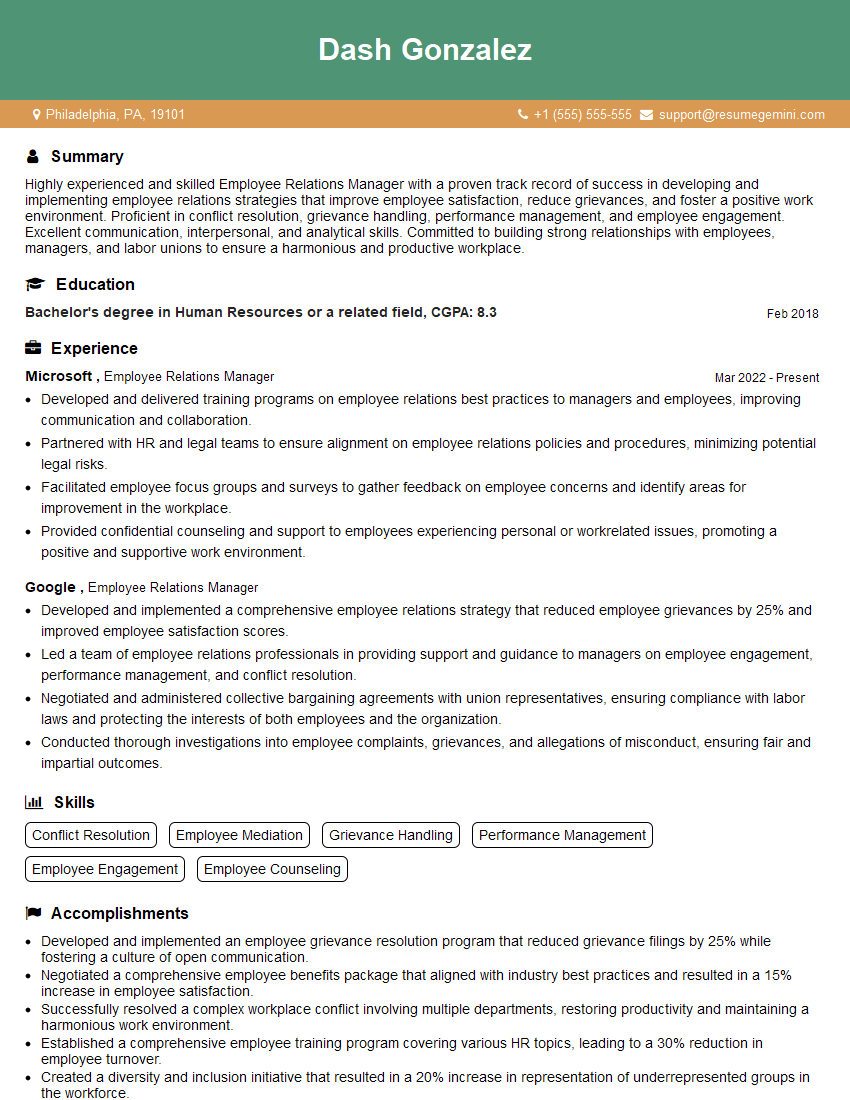
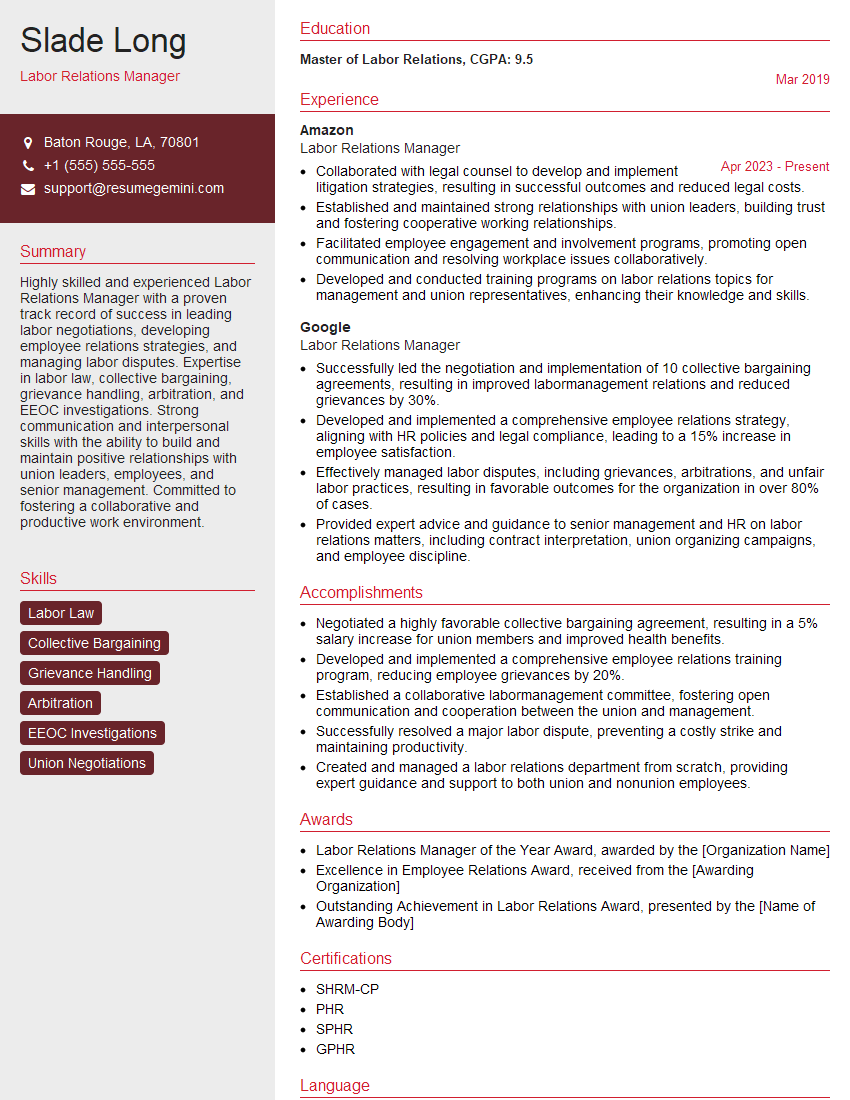
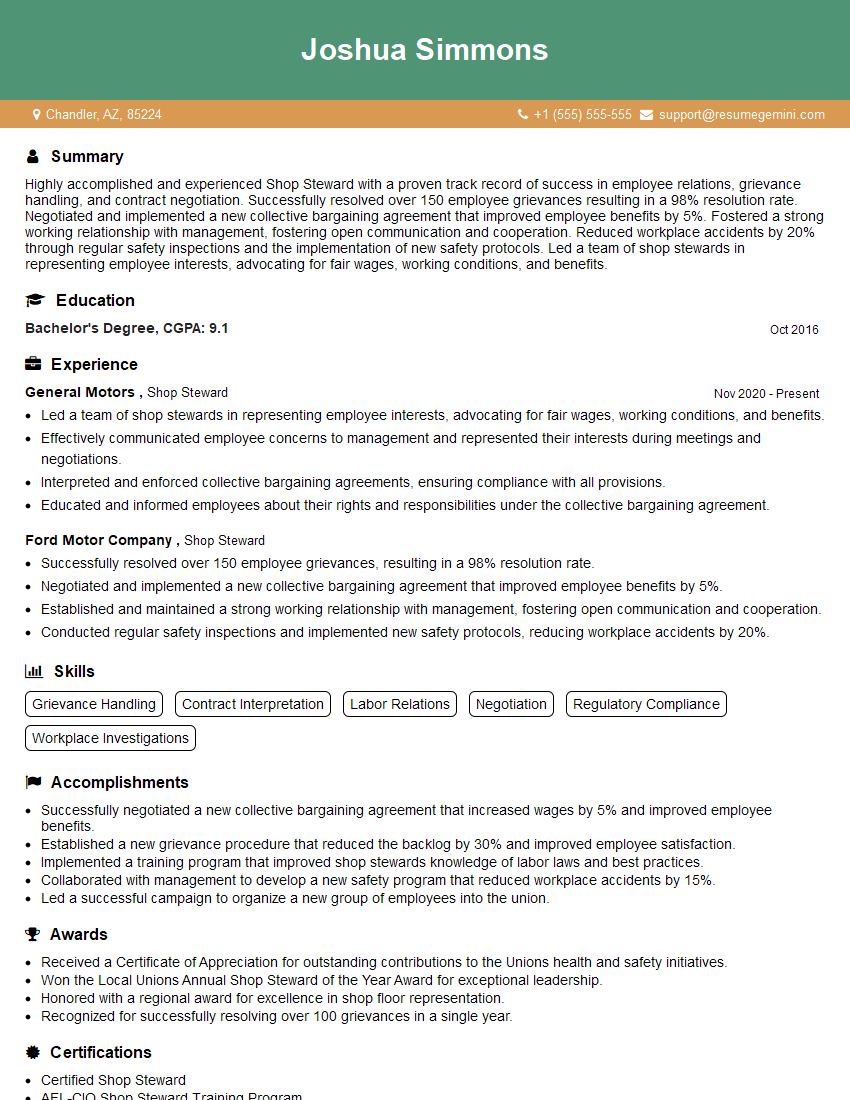
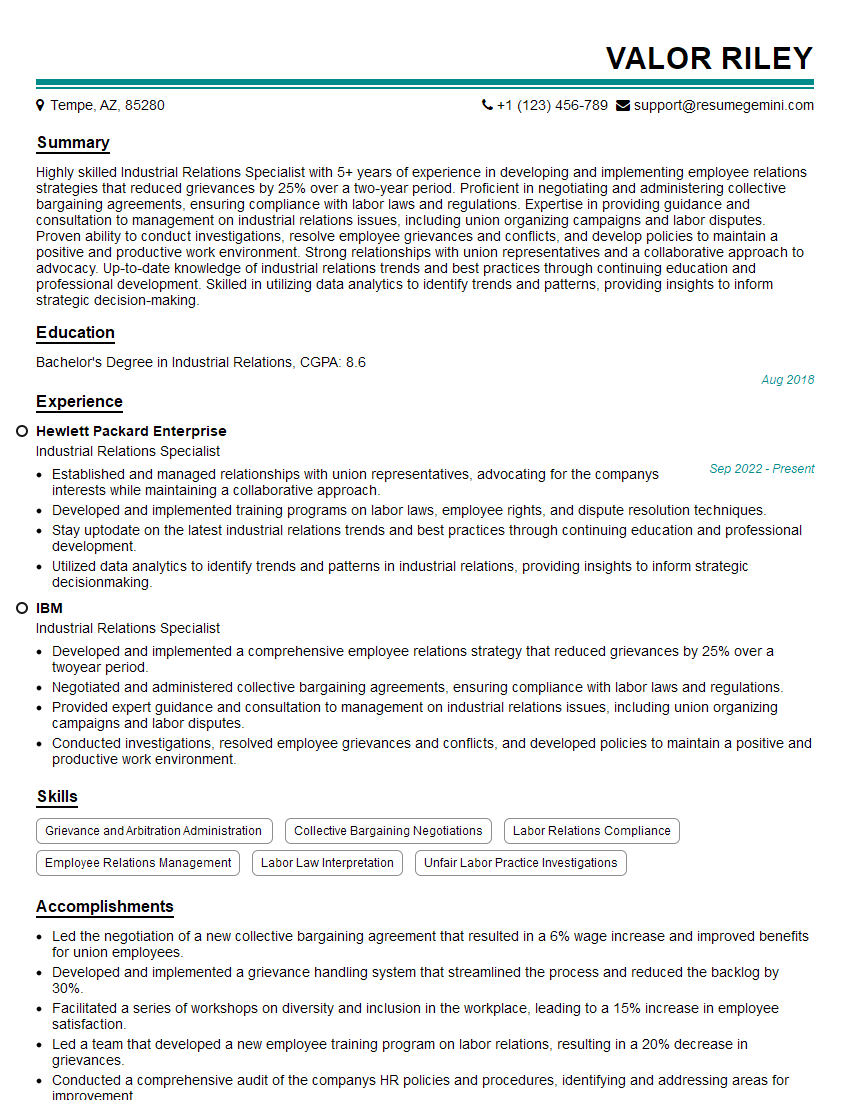
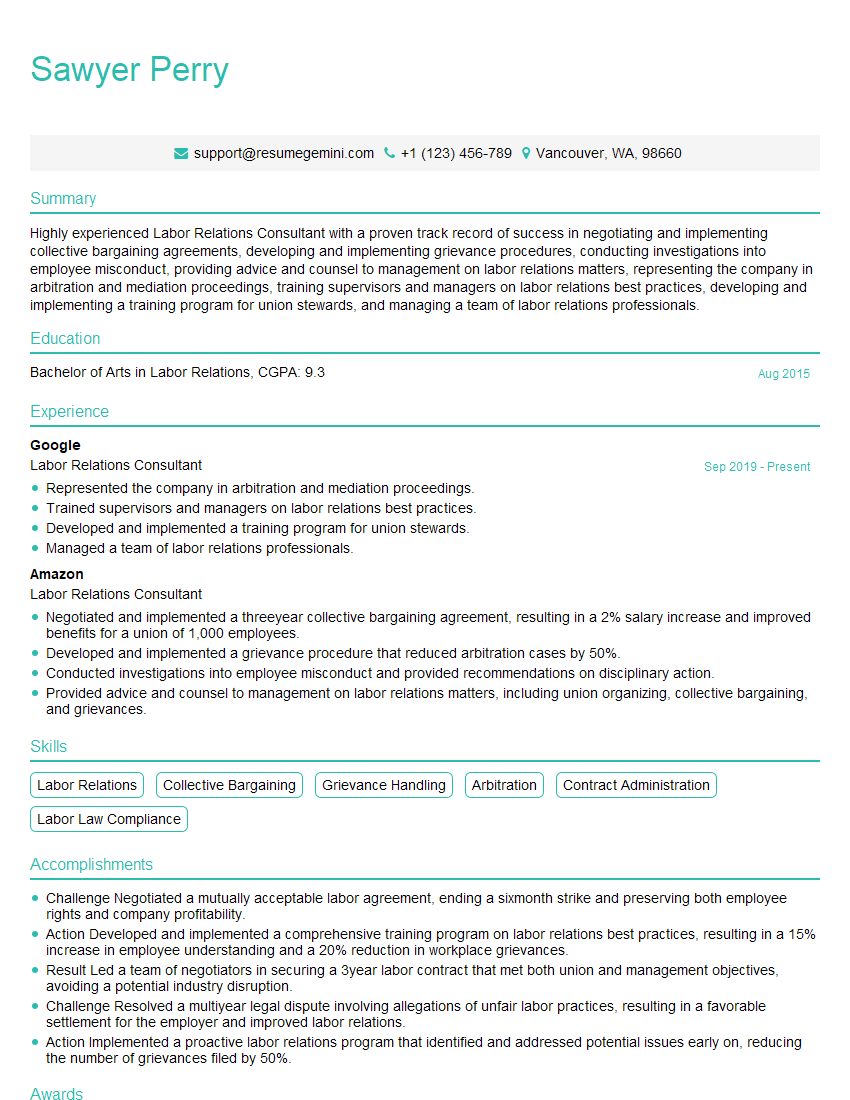
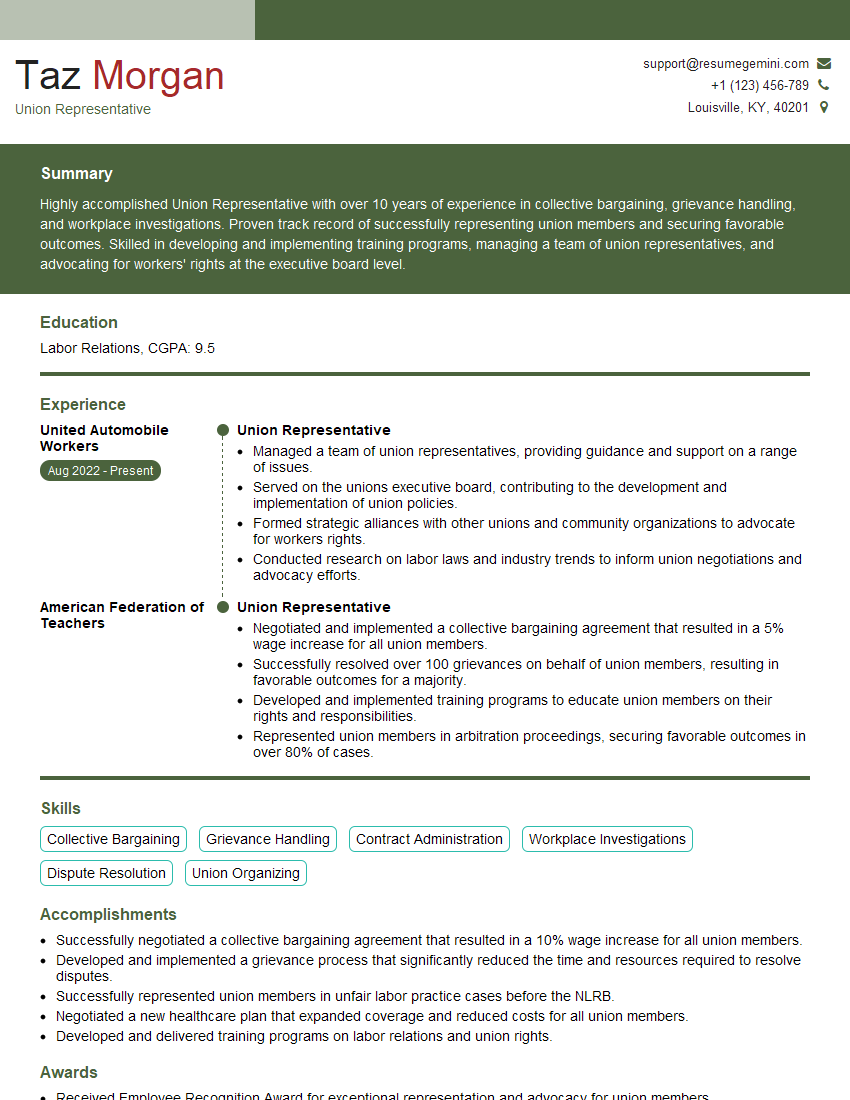
Mastering experience in working with unions and industry professionals significantly enhances your career prospects, opening doors to leadership roles and demonstrating your ability to navigate complex workplace dynamics. A well-crafted, ATS-friendly resume is crucial for showcasing these skills effectively to potential employers. ResumeGemini is a trusted resource to help you build a professional and impactful resume that highlights your relevant experience and qualifications. Examples of resumes tailored to experience in working with unions and industry professionals are available to guide you in this process.
Explore more articles
Users Rating of Our Blogs
Share Your Experience
We value your feedback! Please rate our content and share your thoughts (optional).
What Readers Say About Our Blog
Very informative content, great job.
good