The right preparation can turn an interview into an opportunity to showcase your expertise. This guide to Experience in writing songs for different projects, including albums, singles, and commercials interview questions is your ultimate resource, providing key insights and tips to help you ace your responses and stand out as a top candidate.
Questions Asked in Experience in writing songs for different projects, including albums, singles, and commercials Interview
Q 1. Describe your songwriting process from concept to completion.
My songwriting process is iterative and deeply personal, but it generally follows a few key stages. It often begins with an initial spark – a melody fragment, a lyrical phrase, or even a strong emotional experience that I want to capture. I then develop this seed into a core concept, defining the song’s theme, mood, and intended message. This might involve free-writing, brainstorming, or simply letting the initial idea simmer until it reveals its potential.
Next comes structural development. I’ll experiment with different chord progressions, rhythmic patterns, and lyrical structures to find what best supports the emotional arc of the song. This is a highly experimental phase, involving lots of trial and error. I’ll often record rough demos, capturing vocal melodies and instrumental ideas, to get a feel for the song’s shape. Once the structure feels right, I move into detailed arrangement and refinement. This involves fleshing out the instrumental parts, refining the lyrics, and ensuring the song has a cohesive and satisfying flow. Finally, the song goes through final production and mixing, where I work with collaborators to polish the sound, ensuring it meets the highest possible quality standards.
For example, one of my songs started with a simple piano riff. I felt a strong sense of melancholy associated with it, and that became the emotional core. Through several iterations, the song grew into a ballad about lost love, complete with a powerful chorus and nuanced instrumental arrangements.
Q 2. Explain your experience with different musical genres.
My experience spans a wide range of genres, although I tend to gravitate towards emotionally resonant styles. I’ve written and produced songs in pop, rock, folk, and even some experimental electronic genres. My work on a recent commercial required a bright and upbeat pop sound, while a recent album project involved a more introspective folk-inspired approach. The ability to adapt is key. For example, working within the pop genre demanded a strong emphasis on catchy melodies and concise lyrical structures, while the folk album allowed for greater lyrical depth and instrumental experimentation. I always strive to understand the inherent characteristics of each genre and to use them effectively in my work.
Q 3. How do you adapt your songwriting style for various media (albums, singles, commercials)?
Adapting my style for different media is crucial. A single needs to be instantly engaging and memorable, often focusing on a hooky chorus and radio-friendly production. An album allows for more narrative depth and stylistic variation; you can tell a story across multiple tracks, exploring diverse moods and sounds. Commercials demand brevity and clarity; the song needs to reinforce a brand message effectively within a short timeframe, so I’ll frequently focus on simple, impactful melodies and memorable lyrics. Think of a catchy jingle versus a complex, sprawling album track – each serves a completely different purpose.
Q 4. How do you collaborate effectively with other musicians and producers?
Effective collaboration hinges on open communication and mutual respect. Before starting, I always discuss the project goals and expectations with other musicians and producers, ensuring we’re all on the same page regarding the song’s desired sound and feel. I encourage input and feedback throughout the creative process, valuing different perspectives and approaches. Active listening, clear articulation of my ideas, and a willingness to compromise are essential elements in my collaboration style. I find that a shared vision and trust are the most vital ingredients for a successful collaboration.
For example, during the production of my last album, I worked closely with a producer who had a very different approach to arranging than I did. Through open communication and mutual respect, we were able to synthesize our different ideas into a final product that was stronger and more nuanced than anything either of us could have achieved individually.
Q 5. Describe your experience with music production software (e.g., Pro Tools, Logic Pro).
I’m proficient in both Pro Tools and Logic Pro, using them interchangeably depending on the project’s specific needs and my collaborators’ preferences. My expertise extends beyond basic recording and editing; I’m comfortable with advanced mixing and mastering techniques, including utilizing various plugins and effects to shape the overall sound of a track. Both DAWs (Digital Audio Workstations) offer powerful tools for composing, arranging, and producing music, allowing me to experiment with soundscapes and create complex arrangements easily. For instance, I frequently use Pro Tools’ Elastic Time function to adjust the tempo of vocal recordings and Logic Pro’s extensive virtual instrument library for exploring different sonic palettes. Software proficiency is just as important as musical skill in today’s landscape.
Q 6. How do you handle creative differences during a collaborative project?
Creative differences are inevitable in collaborative projects. My approach centers on respectful dialogue and finding common ground. I encourage everyone to clearly articulate their ideas and explain their rationale behind creative choices. I try to understand the underlying reasons for disagreements rather than focusing solely on the surface-level differences. Sometimes, a compromise is the best solution – blending elements from different approaches to create something new and unique. Other times, one idea simply proves to be more effective than another, and I’m willing to adapt when necessary. The key is to maintain open communication and to always keep the project’s overall goals in mind.
Q 7. How do you manage deadlines and project budgets?
Effective deadline and budget management is crucial. I begin each project by establishing a clear timeline and budget, breaking down the project into manageable tasks with assigned deadlines. I utilize project management tools (often simple spreadsheets) to track progress and ensure we stay on schedule. Transparency with clients or collaborators is paramount. I regularly communicate any potential delays or budget overruns, providing clear explanations and potential solutions. Proactive planning and consistent communication are key to managing both deadlines and budgets effectively. For example, in a recent commercial project, I meticulously planned each stage of the process – from initial concept to final mix – resulting in the project’s completion on time and within budget.
Q 8. Explain your approach to copyright and music licensing.
Copyright and music licensing are crucial aspects of my work. My approach begins with proactively registering all my compositions with a performing rights organization (PRO) like ASCAP, BMI, or SESAC. This secures my ownership and allows me to collect royalties when my music is performed publicly. For commercial projects, I carefully negotiate licenses with clients, ensuring the agreement clearly defines the scope of usage – including territories, duration, media, and any potential modifications. This includes specifying whether they’re purchasing a ‘one-time use’ license or an ‘exclusive’ license granting them sole rights to use the song.
For example, a commercial using my music might require a license that covers broadcast on television and online platforms in specific geographical regions. The license would also specify the length of time they can use the song, and any limitations regarding modifications. I always work with detailed contracts to protect my rights and ensure fair compensation. If a client wants to alter my composition, we discuss those alterations in the contract and agree on any additional fees or royalties associated with the modifications.
Q 9. How do you ensure your music aligns with the brand identity for commercials?
Aligning music with a brand’s identity is a collaborative process. I begin by thoroughly understanding the brand’s values, target audience, and the message they want to convey through their commercial. This often involves reviewing the commercial script, storyboard, and existing brand guidelines. I consider factors like the overall tone – is it upbeat and energetic or more mellow and sophisticated? What emotions are they trying to evoke? The visual style of the commercial will also heavily influence my musical choices. For instance, a sleek, modern product might call for minimalist electronic music, while a heartwarming family-oriented campaign could benefit from acoustic instrumentation and a more sentimental melody.
I’ll often present the client with several different musical options, allowing them to hear how different styles and tempos can affect the impact of their message. This iterative process, with plenty of feedback from the client, helps ensure the final product perfectly complements the visual narrative and effectively enhances the commercial’s impact.
Q 10. How do you evaluate the effectiveness of your music in different contexts?
Evaluating the effectiveness of music across different contexts is multifaceted. For album releases, I rely on streaming data (Spotify, Apple Music, etc.) to gauge song popularity and listener engagement. This data provides insight into factors like play counts, skips, and overall listening time. Feedback from listeners through online reviews and social media is invaluable too.
For commercials, effectiveness is often measured by brand recall and sales data. Did the music successfully increase awareness of the product? Did it enhance the viewer’s emotional response to the advertising message? Did it contribute to increased sales? Market research conducted by the client (for example, post-campaign surveys) can provide data to help assess this.
In some cases, I may use A/B testing during the development phase of a commercial, comparing different music tracks side-by-side to evaluate their impact on viewers. This helps in choosing the most effective piece of music.
Q 11. What are some of your favorite songwriting tools and techniques?
My songwriting process involves a combination of tried-and-true techniques and modern technology. I often begin with a simple melody or chord progression, sometimes on a piano or guitar. I find that recording initial ideas on my phone or a portable digital audio workstation (DAW) – like GarageBand or Ableton Live – allows me to capture spontaneous inspiration.
Lyric writing is a more deliberate process. I experiment with different rhythmic structures and rhyming schemes to find the right balance between poetic expression and the overall musicality of the song. I often use collaborative tools like Google Docs to share lyrics with co-writers for feedback and refinement. I also find that changing my environment, working in different settings or even taking a walk can help me break through creative blocks. Inspiration can come from anywhere – a conversation, a news story, or even a dream.
Q 12. Describe your experience with different recording techniques.
My recording experience spans various techniques, from analog to digital. I’ve worked in both professional studios and home studios, adapting my approach based on the project’s needs and budget. I’m proficient with both traditional recording methods involving microphones, preamps, and mixing consoles, as well as digital techniques using DAWs like Pro Tools and Logic Pro X.
I’ve experimented with different microphone types to capture the nuances of various instruments and voices; for example, condenser microphones for detailed vocals and dynamic microphones for capturing the power of drums. I am comfortable with both multi-track recording and live-room recording. I also incorporate virtual instruments and plugins to enhance and expand the sonic palette. Mastering is an important aspect of the process and I will sometimes work closely with a dedicated mastering engineer to ensure optimal sound quality across different platforms.
Q 13. How do you handle feedback and criticism on your work?
Feedback is essential to my growth as a songwriter. I view criticism as an opportunity for improvement, not a personal attack. I actively seek constructive feedback from both clients and collaborators. When I receive feedback, I listen attentively, asking clarifying questions to understand the perspective of the person giving the feedback. I analyze the criticism objectively, separating personal preferences from valid constructive critiques. Sometimes, I might find that the feedback points to areas where the song is truly lacking; other times it’s a matter of taste, and I must decide whether to incorporate the feedback or remain true to my artistic vision.
It’s crucial to differentiate between constructive criticism and unhelpful negativity. I don’t hesitate to politely push back if the feedback is vague, subjective, or unhelpful. The goal is to improve the song, not to diminish the creative process. I always strive to maintain open communication so that the feedback process is collaborative and productive.
Q 14. How do you market and promote your music?
Marketing and promoting my music involves a multi-pronged strategy. Building an online presence is crucial; I maintain a professional website and social media accounts (such as Instagram, TikTok, and Spotify) where I share my work, interact with fans, and announce new releases. I actively participate in online music communities and forums to connect with potential collaborators and listeners. I also leverage digital music distribution platforms (like DistroKid or TuneCore) to get my music on major streaming services.
Networking is key. I attend industry events, conferences, and workshops to meet potential clients and collaborators. Direct outreach to music supervisors for film, television, and advertising is an important part of my marketing strategy. I regularly send them demos that showcase my work and the styles of music I’m comfortable creating. Building relationships takes time, but it’s a valuable investment. It’s about building a reputation for consistent quality and reliability.
Q 15. What are your strengths and weaknesses as a songwriter?
My greatest strength as a songwriter lies in my versatility and ability to adapt my style to suit the project’s needs. I can comfortably write across genres, from catchy pop hooks to emotionally resonant ballads, and even incorporate elements of jazz or folk depending on the brief. I’m also quite adept at crafting compelling narratives within my lyrics. However, a weakness I’m actively working on is the fine balance between personal artistic expression and fulfilling a client’s specific vision. Sometimes, the creative process can involve navigating the line between my artistic instincts and the commercial requirements of the project. I believe in constant self-improvement, and this is an area where I’m continually refining my approach.
Career Expert Tips:
- Ace those interviews! Prepare effectively by reviewing the Top 50 Most Common Interview Questions on ResumeGemini.
- Navigate your job search with confidence! Explore a wide range of Career Tips on ResumeGemini. Learn about common challenges and recommendations to overcome them.
- Craft the perfect resume! Master the Art of Resume Writing with ResumeGemini’s guide. Showcase your unique qualifications and achievements effectively.
- Don’t miss out on holiday savings! Build your dream resume with ResumeGemini’s ATS optimized templates.
Q 16. Describe your experience working within specific musical styles (e.g., pop, rock, jazz).
My experience spans various musical styles. For example, I’ve written upbeat pop songs for commercials, focusing on memorable melodies and concise lyrics that communicate a brand’s message effectively. One recent commercial project involved creating a jingle that cleverly incorporated the brand’s slogan into a catchy chorus. For albums, I’ve explored more introspective rock styles, using layered guitars and evocative lyrics to create a more complex soundscape. I’ve also worked on a jazz-influenced album, focusing on intricate harmonies and improvisational elements in the songwriting process. The key is to deeply understand the nuances of each genre, from its typical instrumentation to the emotional palette it typically evokes. This allows for a more authentic and resonant end product.
Q 17. How do you develop strong melodies and harmonies?
Developing strong melodies and harmonies is a process of experimentation and intuition. I often start with a simple chord progression, then experiment with different melodic lines over the top, focusing on creating a sense of flow and emotional impact. I might use tools like a piano or guitar to play around with different phrasing and rhythmic variations. For harmonies, I try to create a balance between consonance and dissonance, using contrasting voices to create interest. I often listen to existing music in the target genre to identify common melodic and harmonic patterns, but I always strive for originality. Think of it like sculpting with sound – you start with a basic form, then refine and polish until you have something compelling and unique.
Q 18. How do you create compelling lyrics that resonate with audiences?
Compelling lyrics come from a deep understanding of storytelling and emotional resonance. I begin by defining the song’s core message or theme and consider the overall tone and intended audience. Then, I brainstorm imagery and metaphors to convey the message powerfully and engagingly. It’s crucial that the lyrics are specific and evocative, not generic or clichéd. I often try to create a narrative arc, even within shorter songs, to draw the listener in. For example, in a recent song about heartbreak, I used the metaphor of a wilting flower to convey the protagonist’s emotional state. I test my lyrics by reading them aloud, paying attention to rhythm and flow. It’s about painting a picture with words, making the listener feel something profound.
Q 19. Explain your approach to music arrangement and orchestration.
My approach to arrangement and orchestration depends on the project’s requirements. For simpler songs, a basic arrangement with minimal instrumentation might suffice. However, for more complex pieces, I might build layered instrumental parts, using different textures and timbres to create depth and interest. I usually start with the basic melody and rhythm section (drums, bass, guitar/piano), then add other instruments as needed. I consider the song’s emotional arc when arranging, building intensity through dynamics and instrumentation. For example, a quiet, introspective verse might lead to a powerful, full-orchestrated chorus. I’m proficient in various music notation software and DAWs (Digital Audio Workstations), enabling me to precisely arrange and orchestrate music for different ensembles.
Q 20. Describe your experience with working on projects with limited budgets.
Working with limited budgets requires creativity and resourcefulness. I’ve worked on projects where recording studio time was limited, so meticulous pre-production was crucial to ensure efficient sessions. This involved creating detailed arrangements and demo tracks beforehand, minimizing time spent experimenting during recording. I’m adept at using virtual instruments and sample libraries to create rich sonic textures without needing a full orchestra. I collaborate closely with the artists to find solutions that compromise neither quality nor the budget. Thinking outside the box and utilizing readily available resources can lead to surprisingly great results.
Q 21. How do you ensure your music is high quality and professional?
Maintaining high quality is paramount. It starts with meticulous songwriting, refining melodies and lyrics until they are as strong as they can be. During the recording process, I pay close attention to detail, ensuring every instrument and vocal track is clear, balanced, and well-mixed. I collaborate with skilled engineers and producers to ensure the recording and mixing process meets professional standards. Finally, I always get feedback from trusted colleagues or beta listeners before releasing any material. This helps identify potential issues and refine the overall quality. It’s a multi-stage process that requires dedication to the craft and attention to every aspect of the creative journey.
Q 22. How do you handle unexpected technical challenges during a recording session?
Unexpected technical glitches are a songwriter’s worst nightmare, but experience teaches you to handle them calmly and efficiently. My approach is threefold: proactive prevention, quick problem-solving, and creative adaptation.
Proactive Prevention: Before any session, I meticulously check all equipment – microphones, interfaces, cables – ensuring everything is functioning correctly. I also have backup equipment on hand, like a spare microphone or audio interface, to mitigate risks. Think of it like having a spare tire in your car – you hope you don’t need it, but it’s crucial to have.
Quick Problem-Solving: If a problem arises during recording (e.g., a microphone cutting out), I immediately assess the situation. Is it a cable issue? A faulty preamp? I collaborate with the engineer to troubleshoot systematically, often starting with the simplest solutions first. For instance, we’d check cable connections before investigating more complex issues.
Creative Adaptation: Sometimes, a problem is simply insurmountable within the timeframe. In these instances, I adapt. This could mean rerecording a section, altering the arrangement to minimize the affected part, or even embracing the unexpected sound as a unique effect – turning a technical challenge into a creative opportunity. For instance, a slightly distorted vocal take might unexpectedly add character to a song.
Q 23. How do you manage your time and prioritize tasks effectively?
Time management is critical in the music industry, where deadlines are tight and projects often overlap. I use a combination of techniques:
- Detailed Planning: I begin with a comprehensive project schedule, outlining tasks, deadlines, and milestones. For an album, this might involve breaking down the process into pre-production, recording, mixing, and mastering phases, each with its own sub-tasks.
- Prioritization: I use a system like the Eisenhower Matrix (urgent/important) to prioritize tasks. Recording lead vocals is more urgent than perfecting a subtle guitar riff in the background.
- Time Blocking: I allocate specific time slots for each activity. For example, two hours dedicated to songwriting, followed by three hours of recording. This promotes focused work and minimizes distractions.
- Regular Review and Adjustment: I regularly review my progress and make necessary adjustments to the schedule, anticipating potential delays or unforeseen challenges. Flexibility is key.
This structured approach ensures that I meet deadlines, maintain a healthy work-life balance, and avoid the stress of last-minute rushes.
Q 24. Describe your experience using music notation software.
I’m proficient in several music notation software packages, including Sibelius and Finale. I use these tools extensively for:
- Composition: Creating and arranging music, especially for complex orchestral arrangements or pieces requiring precise notation.
- Collaboration: Sharing scores with other musicians and composers, facilitating collaborative projects more efficiently.
- Arranging: Adapting existing songs for various instrumentation or ensembles, ensuring all parts are properly notated.
- Transcription: Notating existing audio recordings, which is particularly useful for capturing live performances or traditional music.
While I appreciate the precision of music notation software, I also recognize its limitations. I always strive to balance the technical aspects of notation with the creative flow of songwriting; it’s a tool, not a dictator.
Q 25. How do you stay current with industry trends and technological advancements?
Keeping up with industry trends is essential for remaining competitive. My approach is multifaceted:
- Industry Publications: I regularly read publications like Billboard, Rolling Stone, and music industry blogs to stay informed about current releases, production techniques, and market trends.
- Conferences and Workshops: Attending industry events, workshops, and masterclasses provides invaluable insights and networking opportunities, facilitating interaction with leading producers and songwriters.
- Online Communities and Forums: Engaging with online communities and forums allows me to discuss techniques, exchange ideas, and learn about new technologies directly from other professionals.
- Experimentation: I constantly experiment with new software, plugins, and production techniques. This hands-on approach helps me better understand emerging technologies and incorporate them into my workflow.
Essentially, it’s a commitment to lifelong learning in a constantly evolving field.
Q 26. Describe your proficiency with different musical instruments.
My instrumental proficiency is broad, focusing on those most relevant to songwriting and production. I’m highly proficient on guitar (both acoustic and electric), piano/keyboard, and bass. I also have a working knowledge of drums, ukulele, and various percussion instruments. This multi-instrumental approach allows me to arrange and produce songs more efficiently, exploring a wider range of sonic textures.
For example, my guitar skills enable me to create compelling melodic hooks and rhythmic patterns, while my piano skills allow for more complex harmonic arrangements and quick prototyping.
Q 27. What is your understanding of music theory and its application to songwriting?
A strong understanding of music theory is the foundation of my songwriting process. It’s not about rigid rules but rather a framework for creativity. I use music theory to:
- Craft Compelling Melodies: Understanding scales, modes, and melodic intervals allows me to create memorable and emotionally resonant melodies.
- Build Strong Harmonies: Knowledge of chord progressions, voice leading, and harmony principles ensures strong harmonic structures that support the song’s emotional arc.
- Develop Rhythmic Complexity: Music theory informs my rhythmic choices, enabling me to create interesting and engaging rhythmic patterns.
- Structure Songs Effectively: Applying theoretical knowledge of song forms (verse-chorus, bridge, etc.) aids in creating a cohesive and satisfying musical experience for the listener.
Essentially, music theory enhances my creative freedom by providing a deep understanding of how music works. It’s the language I use to translate emotions and ideas into sound.
Q 28. How do you approach writing music for a specific target audience?
Writing for a specific audience requires thorough research and a nuanced understanding of their preferences. I approach this in several steps:
- Audience Research: I meticulously research the target demographic, analyzing their musical tastes, cultural influences, and preferred listening platforms (Spotify, Apple Music, etc.). This could involve studying charts, conducting surveys, or analyzing existing successful music within the genre.
- Genre Alignment: I carefully select the appropriate musical genre and style that resonate with the target audience. Pop songs, for example, often prioritize catchy melodies and relatable lyrics, whereas folk songs might focus on storytelling and acoustic instrumentation.
- Lyrical Content: Lyrics are tailored to address the audience’s interests and concerns, using language and imagery they will connect with. A song for teenagers would employ a different lyrical style than one aimed at a mature audience.
- Production Style: The production style also reflects the audience’s preferences. A modern EDM track would have a different production aesthetic compared to a classic blues song.
Ultimately, it’s about creating music that resonates with the specific audience on an emotional and cultural level. It’s like tailoring a suit – you wouldn’t design a tuxedo for a beach wedding.
Key Topics to Learn for Experience in writing songs for different projects, including albums, singles, and commercials Interview
- The Songwriting Process: Understanding the stages of songwriting, from initial idea generation to final production, and how this process varies across different project types (albums, singles, commercials).
- Genre and Style Adaptation: Demonstrating your ability to adapt your songwriting style to suit different genres and target audiences. Discuss examples where you’ve successfully transitioned between styles.
- Collaboration and Teamwork: Highlighting experience working with producers, artists, and other collaborators. Explain your role in creative discussions and conflict resolution.
- Commercial Songwriting Considerations: Discuss the unique challenges and opportunities of writing for commercials, such as incorporating brand messaging and adhering to strict time constraints.
- Copyright and Licensing: Demonstrating knowledge of copyright laws and licensing agreements relevant to music composition and commercial use.
- Technical Skills and Software Proficiency: Showcase your expertise with Digital Audio Workstations (DAWs) and other music production software. Mention specific software you’re proficient in.
- Portfolio Presentation: Preparing a strong portfolio showcasing your diverse songwriting work and highlighting your unique selling points. Discuss strategies for effectively presenting your work.
- Problem-Solving in Songwriting: Describe situations where you overcame creative blocks, met deadlines under pressure, or adapted to unexpected changes in project requirements.
- Marketing and Promotion (if applicable): Explain your understanding of the music industry landscape and how your songs have been or could be marketed and promoted effectively.
Next Steps
Mastering the art of songwriting for diverse projects is crucial for career advancement in the music industry. A strong understanding of the creative process, collaborative skills, and adaptability are key to success. To significantly improve your job prospects, create an ATS-friendly resume that highlights your unique skills and experience. ResumeGemini is a trusted resource that can help you build a professional and impactful resume. Examples of resumes tailored to showcasing experience in writing songs for different projects, including albums, singles, and commercials, are available to help you get started.
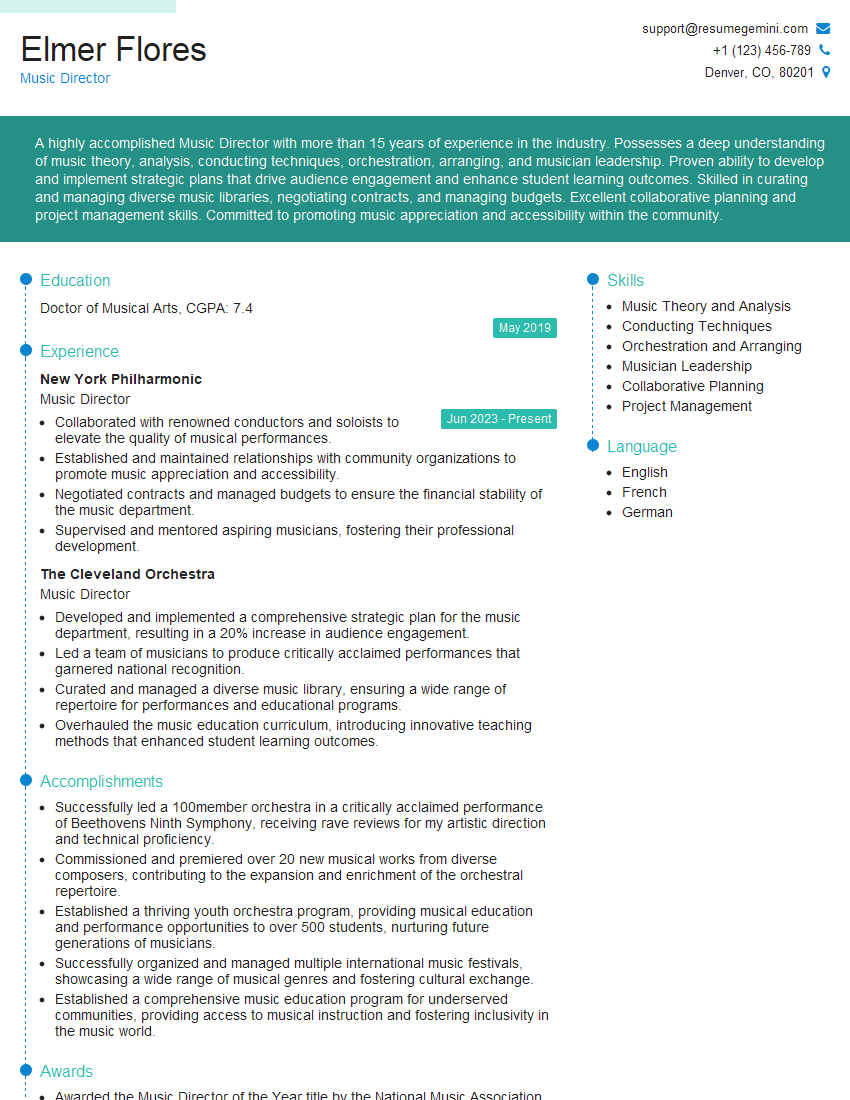
Music Director Resume Sample
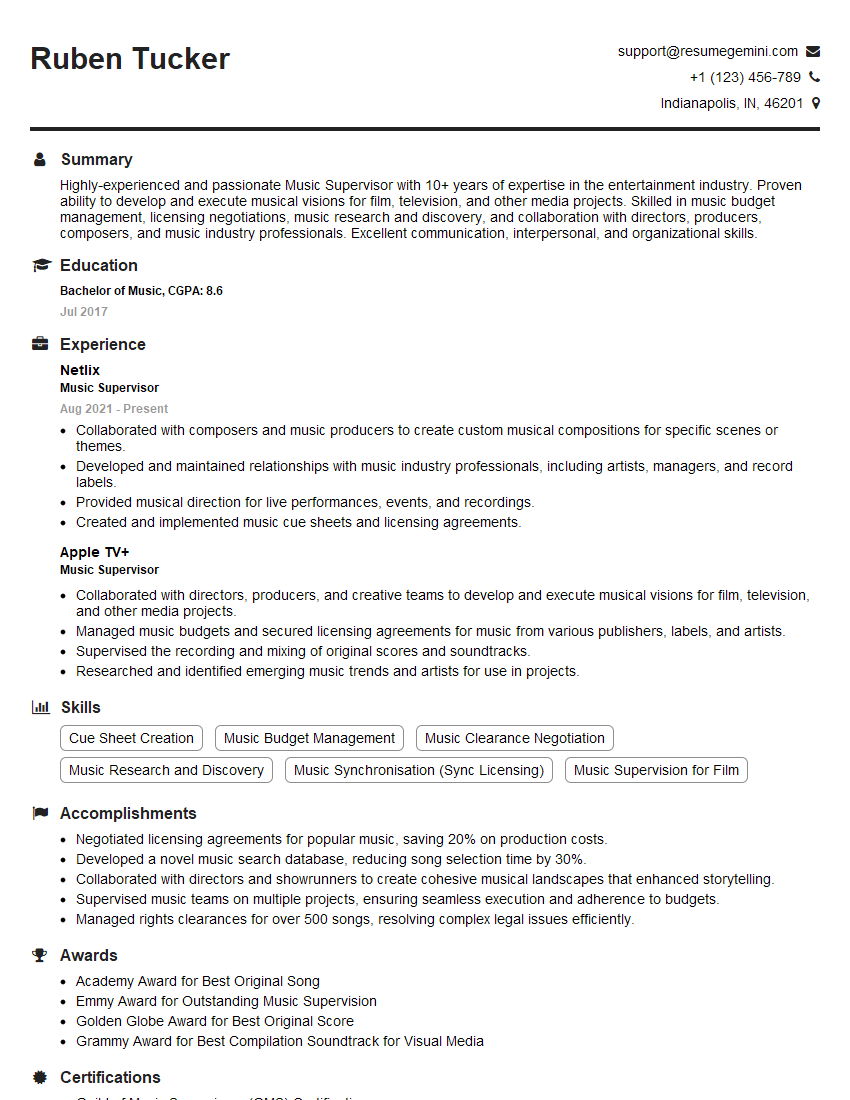
Music Supervisor Resume Sample
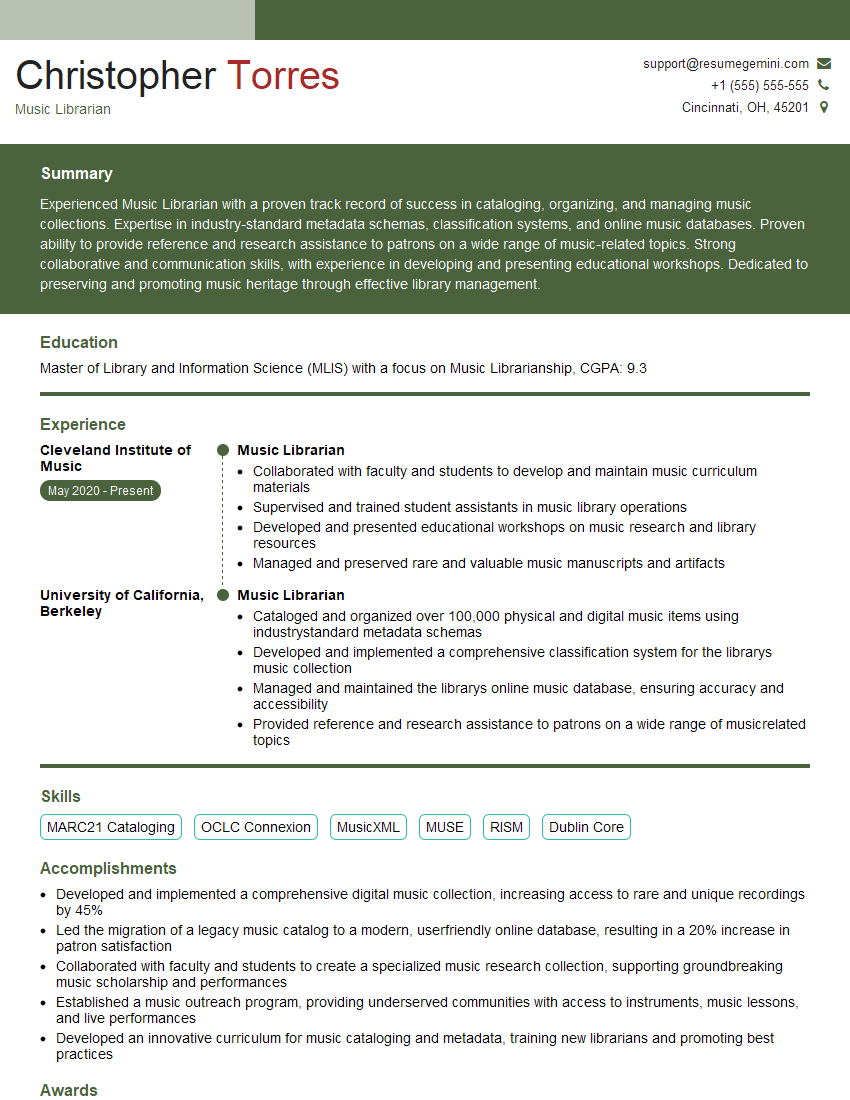
Music Librarian Resume Sample
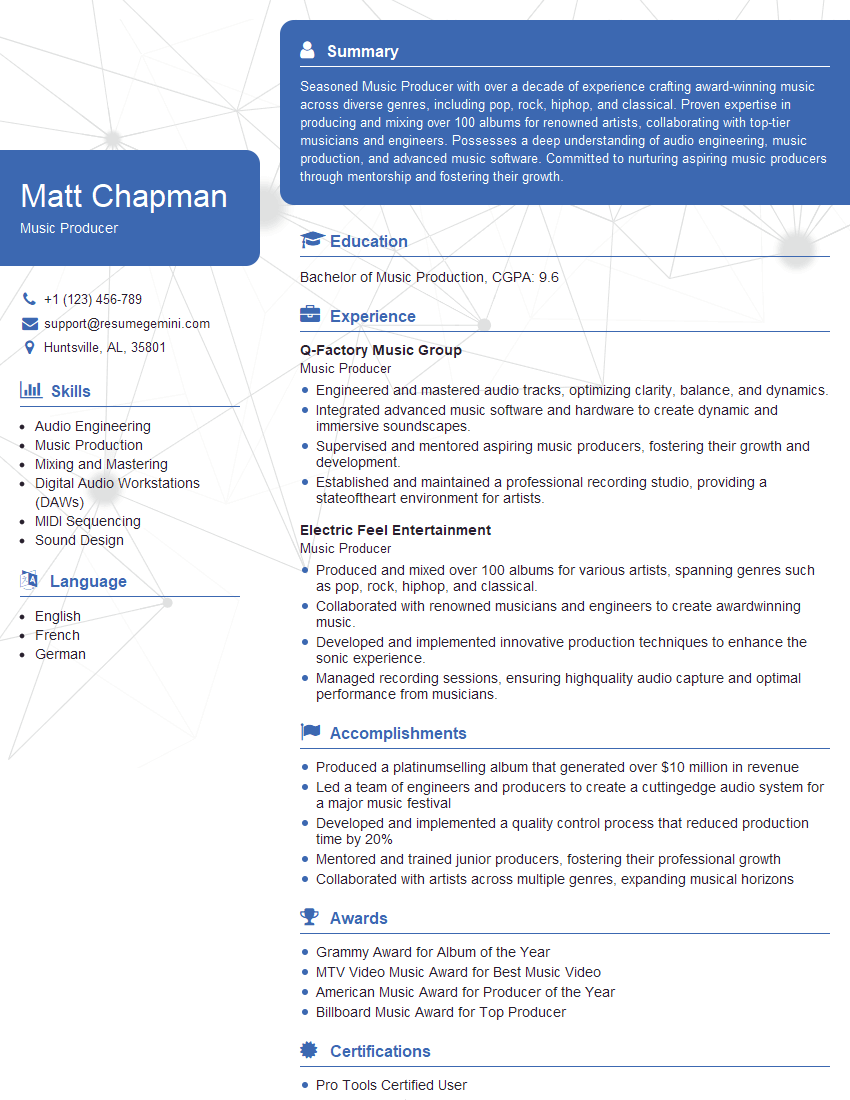
Music Producer Resume Sample
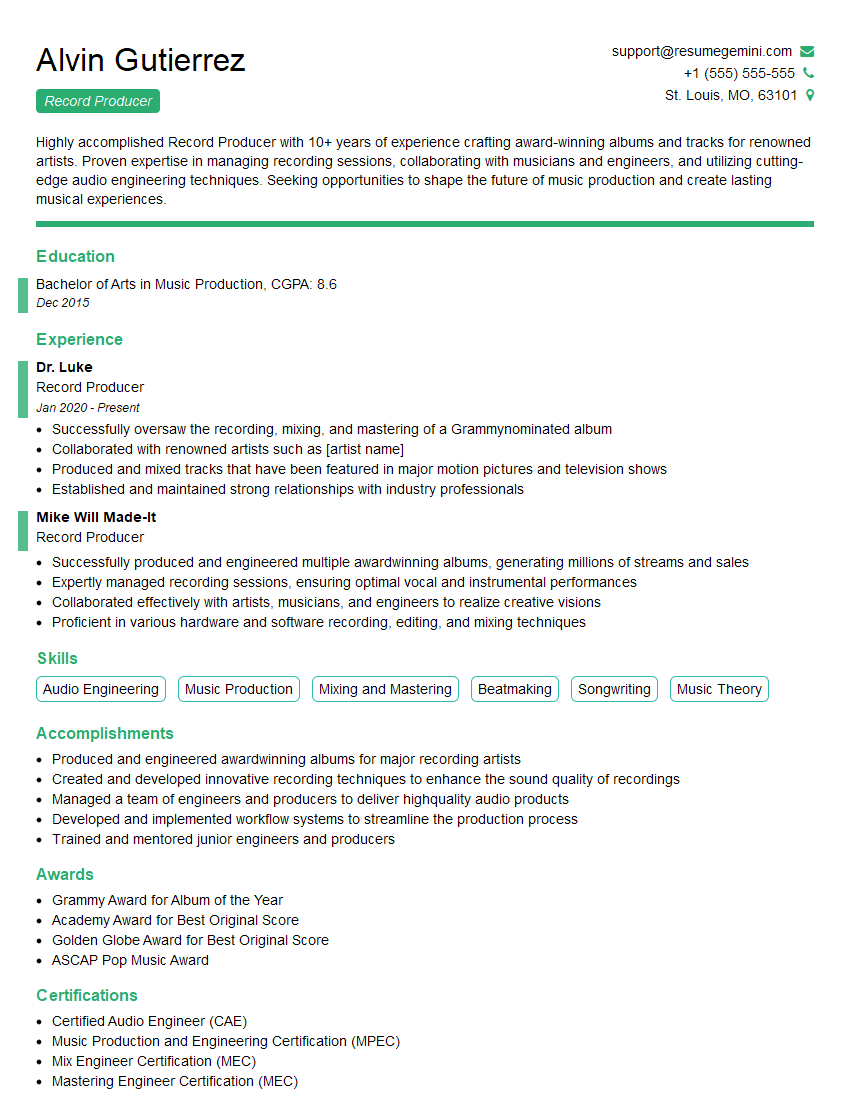
Record Producer Resume Sample
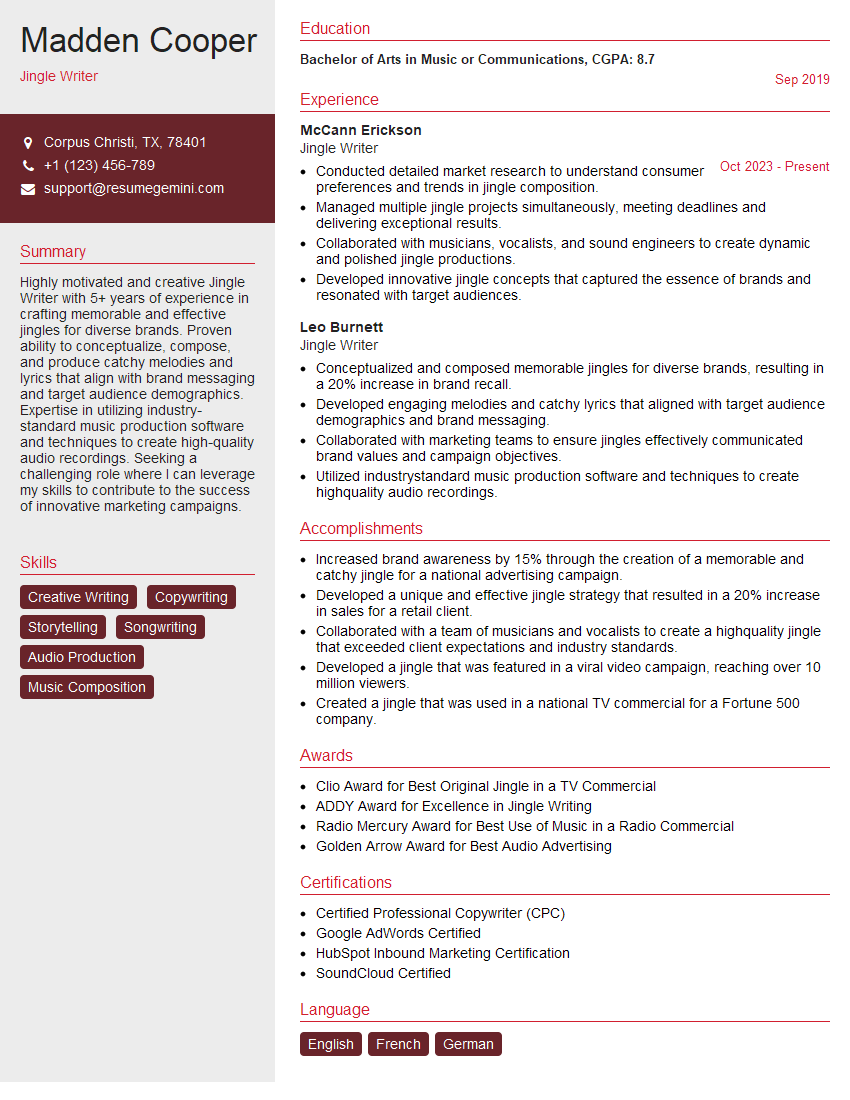
Jingle Writer Resume Sample
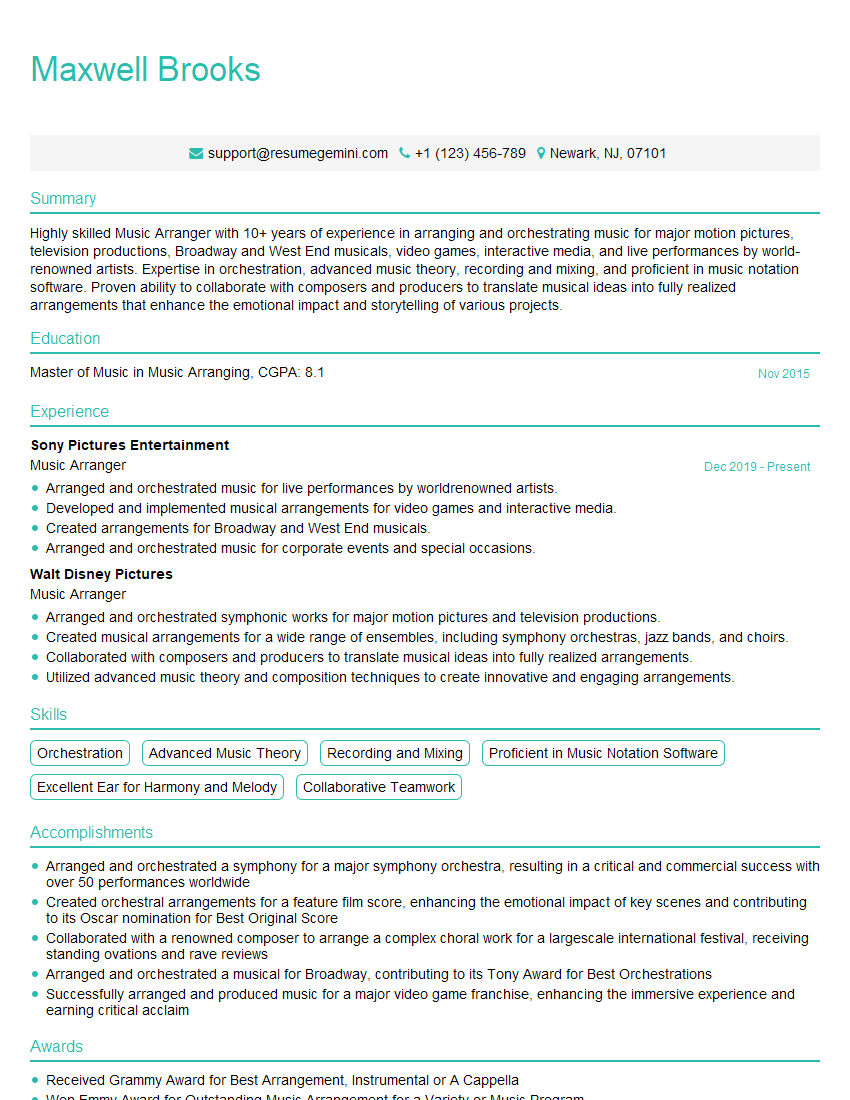
Music Arranger Resume Sample
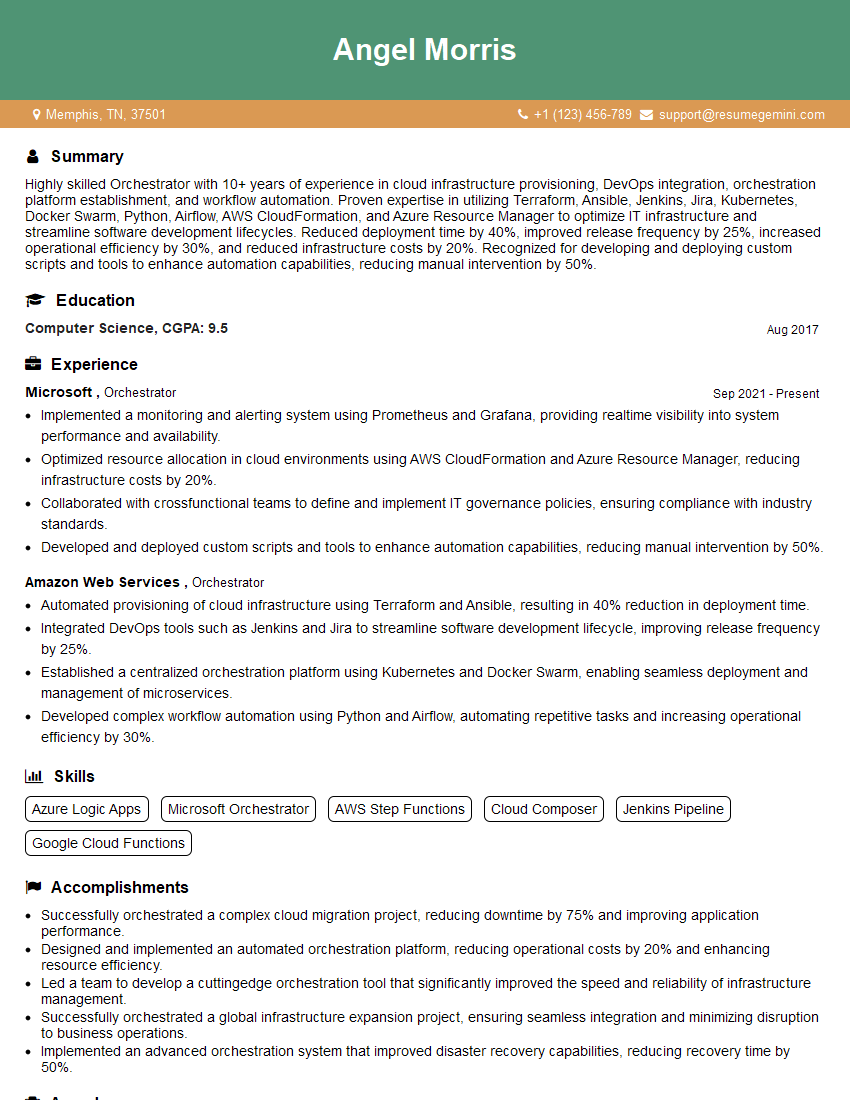
Orchestrator Resume Sample
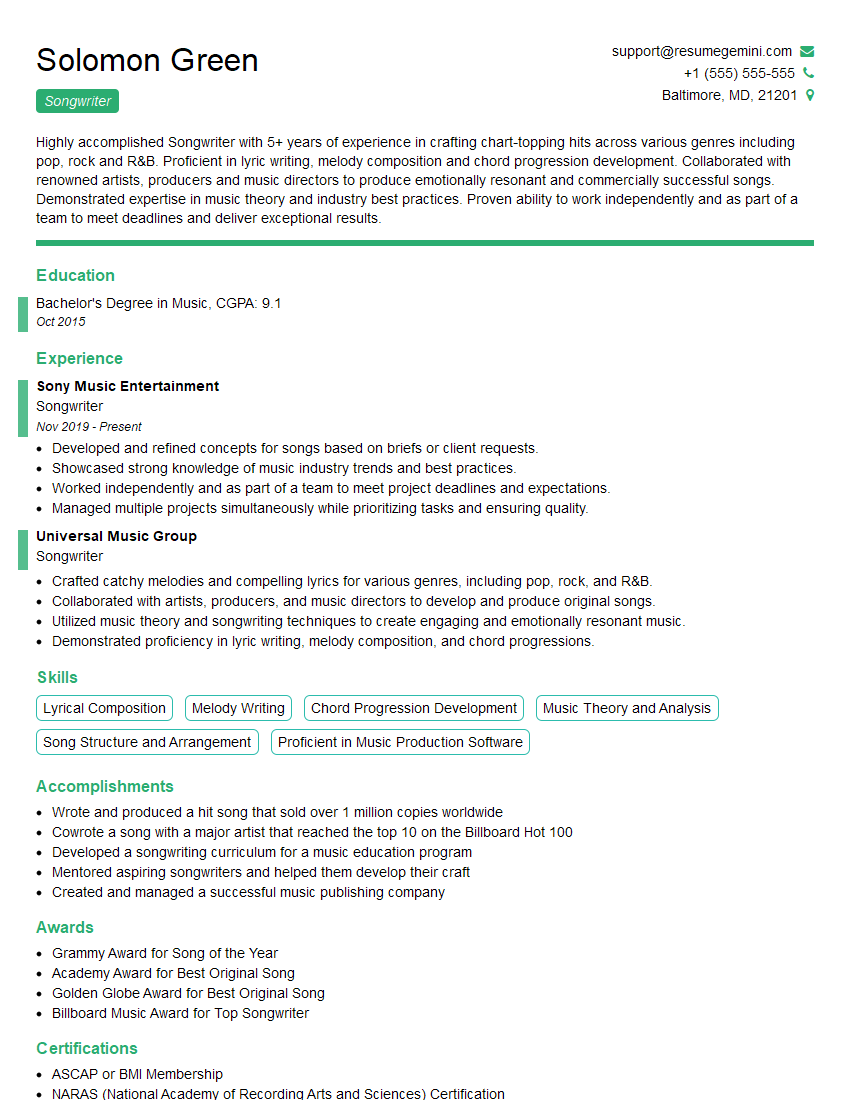
Songwriter Resume Sample
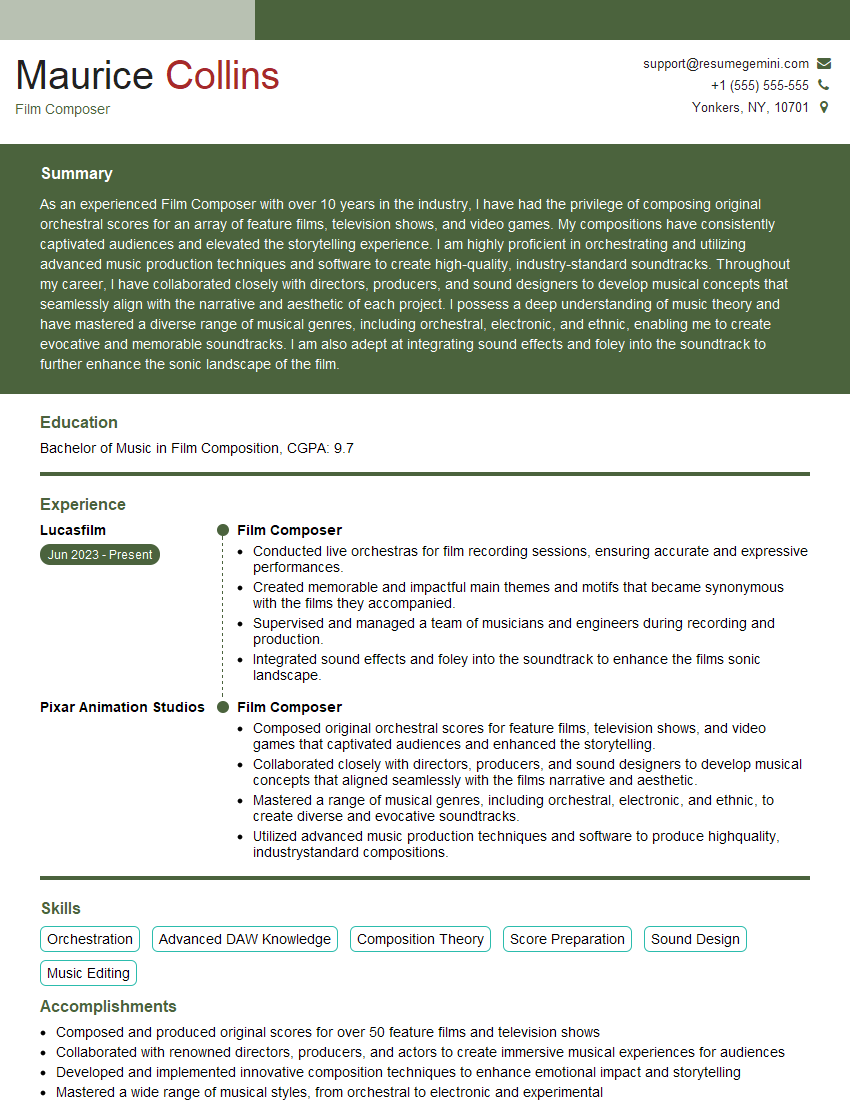
Film Composer Resume Sample
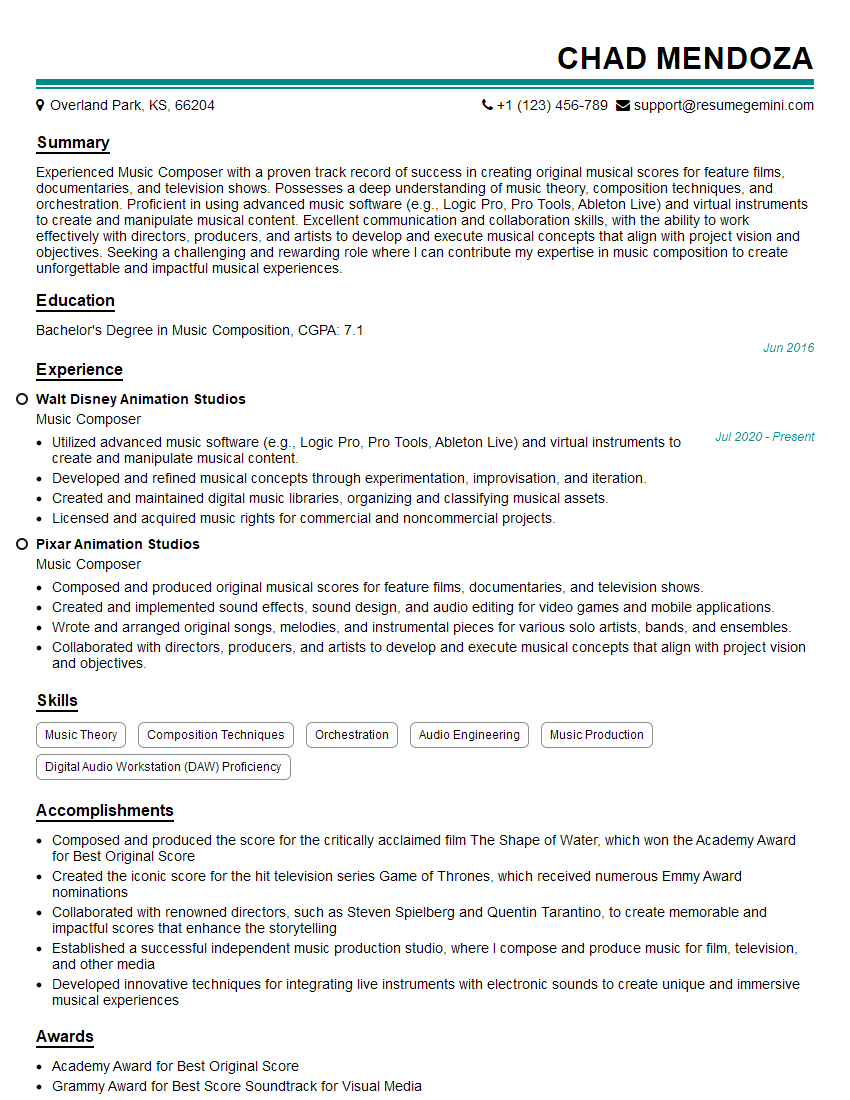
Music Composer Resume Sample
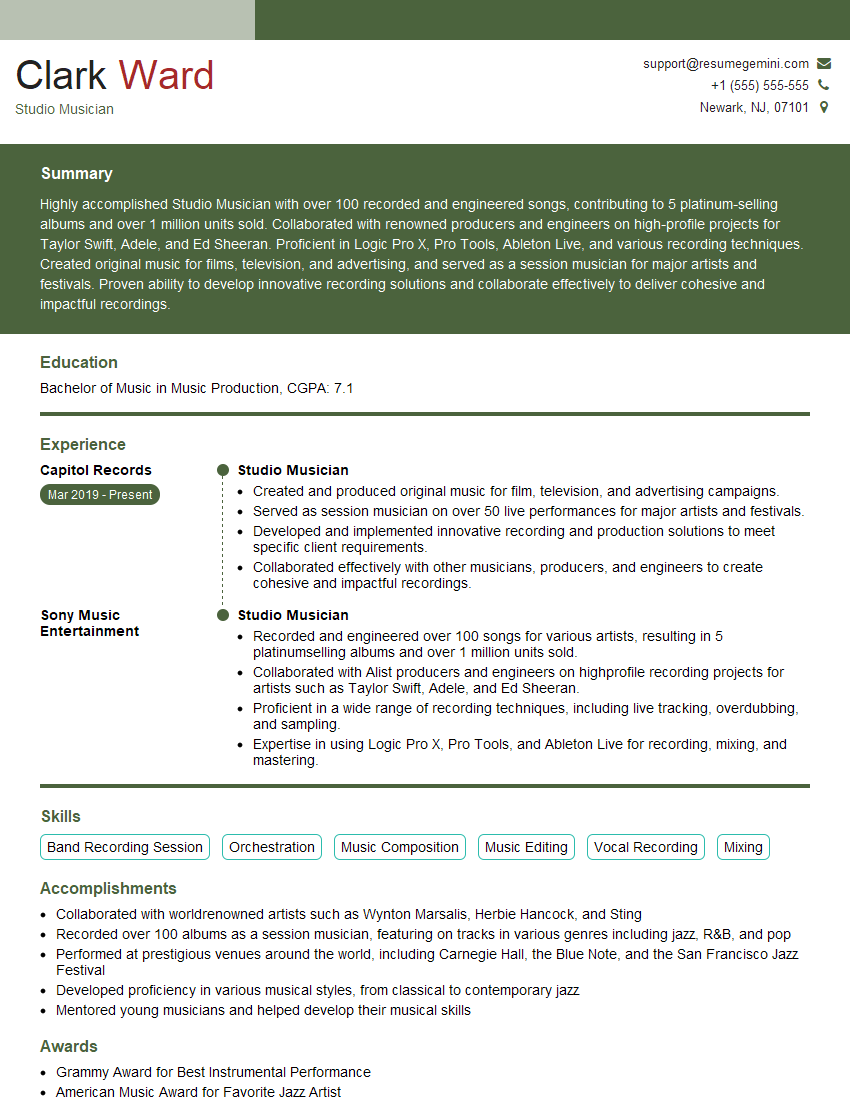
Studio Musician Resume Sample
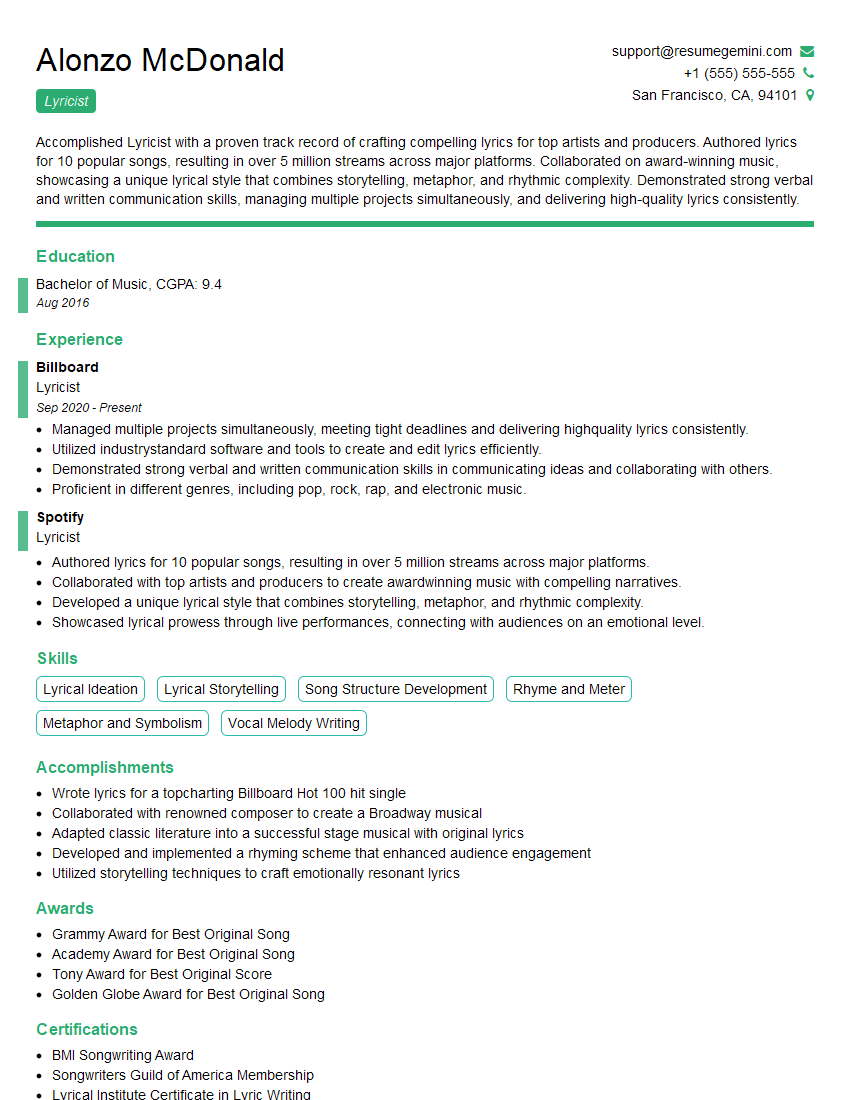
Lyricist Resume Sample
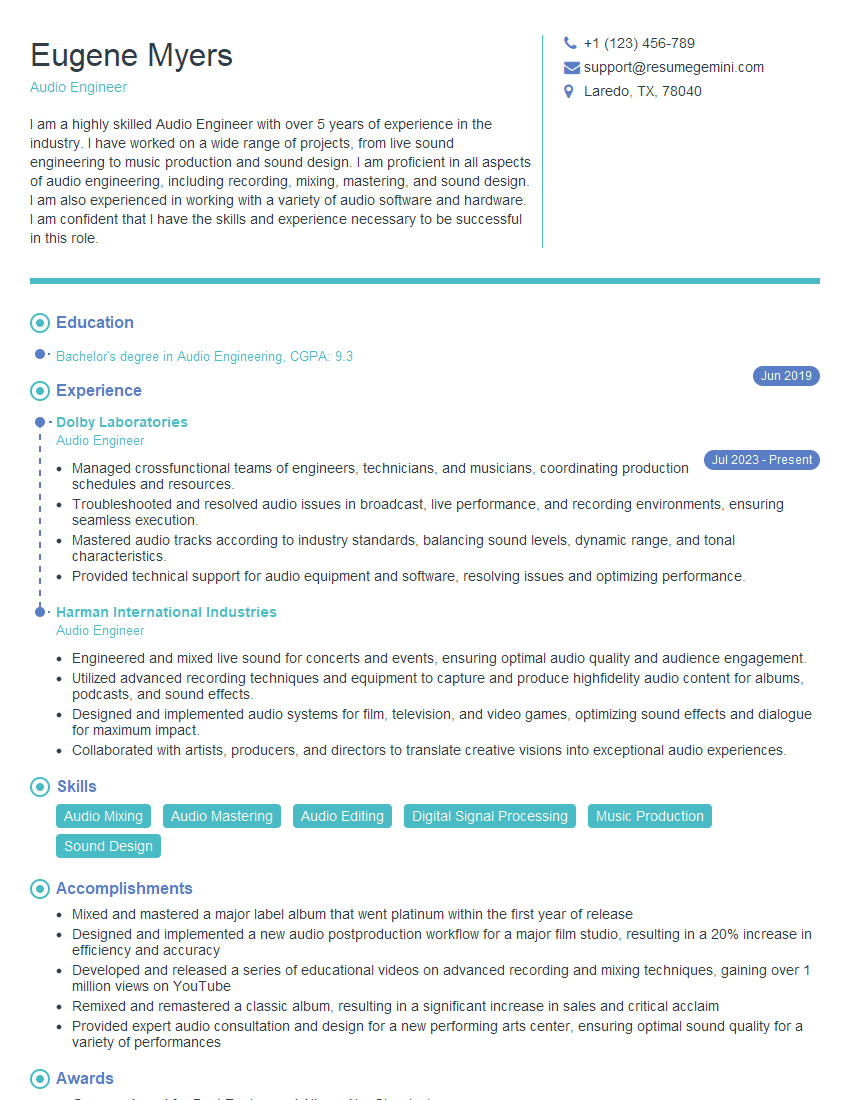
Audio Engineer Resume Sample
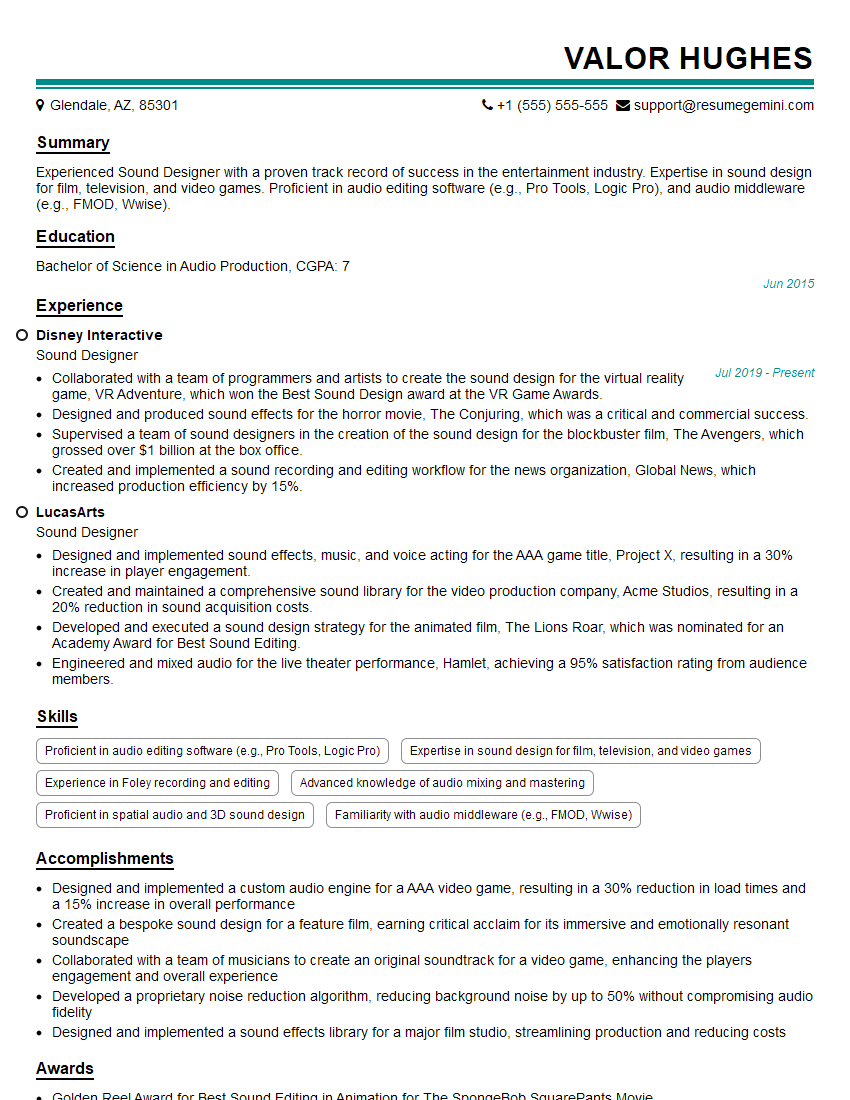
Sound Designer Resume Sample
Explore more articles
Users Rating of Our Blogs
Share Your Experience
We value your feedback! Please rate our content and share your thoughts (optional).
What Readers Say About Our Blog
Very informative content, great job.
good