Feeling uncertain about what to expect in your upcoming interview? We’ve got you covered! This blog highlights the most important Experience using tree risk assessment techniques interview questions and provides actionable advice to help you stand out as the ideal candidate. Let’s pave the way for your success.
Questions Asked in Experience using tree risk assessment techniques Interview
Q 1. Explain the difference between visual tree assessment (VTA) and more advanced techniques.
Visual Tree Assessment (VTA) is a fundamental, often initial, step in tree risk assessment. It relies primarily on visual observation of the tree and its surroundings to identify potential hazards. Think of it as a quick health check-up. This involves examining the crown, trunk, and root system for obvious signs of decay, damage, or structural weakness. More advanced techniques, however, go beyond simple visual inspection. They incorporate sophisticated tools and methodologies to quantify risk more precisely. Examples include Resistograph testing (measuring wood density to detect decay), sonic tomography (using sound waves to image internal wood structure), and detailed analysis using specialized software that integrates various data points to provide a comprehensive risk profile.
For example, VTA might identify a large crack in a tree trunk, suggesting a potential problem. A more advanced technique like sonic tomography could then reveal the extent of the internal damage, helping determine the likelihood of failure and informing appropriate management decisions – pruning, cabling, or removal.
Q 2. Describe the key components of a thorough tree risk assessment report.
A thorough tree risk assessment report should include several key components. Firstly, a detailed description of the tree itself – species, size, age, location, etc. Secondly, a comprehensive assessment of the tree’s condition, detailing any visible defects like cracks, cavities, leaning, or root damage. This section should incorporate findings from both visual and instrumental methods, if used. Thirdly, an evaluation of the potential failure modes and the likelihood of each mode occurring (e.g., branch failure, trunk failure, root failure). Fourthly, a consideration of the potential consequences if failure were to occur. This involves evaluating the proximity of the tree to structures, people, or traffic. Finally, the report should conclude with recommendations for management actions – pruning, cabling, removal, or ongoing monitoring. It should also state the overall risk level assigned to the tree, typically categorized using a standardized risk matrix.
Q 3. What are the common tree defects that pose significant risk?
Several common tree defects pose significant risks. Decay, caused by fungi, weakens the wood structure and reduces its strength. Cavities, often associated with decay, can significantly reduce the tree’s structural integrity. Leaning trees are more susceptible to windthrow. Large cracks in the trunk or branches indicate structural weakness. Root damage, caused by construction, compaction, or other factors, compromises the tree’s anchorage and stability. Insect infestations and diseases can also weaken the tree, increasing the likelihood of failure. Finally, codominant stems, where two or more stems compete for dominance, are prone to structural failure at the point where they meet. Imagine a tree with a large cavity – a VTA might spot it, but advanced methods could show its extent, influencing removal recommendations.
Q 4. How do you assess the likelihood of failure for a given tree?
Assessing the likelihood of failure involves a combination of factors and often uses a risk matrix. First, identify the potential failure modes (e.g., branch failure, uprooting). Then, assess the probability of each mode occurring based on the observed defects, tree species, environmental factors (wind, snow load), and tree’s overall condition. This probability is often expressed qualitatively (e.g., low, medium, high) or quantitatively (e.g., percentage chance of failure within a certain timeframe). This qualitative assessment is often supported by more quantitative analysis if tools like Resistograph or sonic tomography have been used. Finally, consider the tree’s age, vigour and growth rate, and site characteristics to determine an overall risk score. For example, an older oak with decay and a leaning trunk in an exposed location will have a much higher likelihood of failure than a young, healthy tree in a sheltered position.
Q 5. Explain the concept of the ‘failure mode’ in tree risk assessment.
The ‘failure mode’ refers to the specific way a tree might fail. It’s not just about the tree falling down; it’s about *how* it falls. Common failure modes include: branch failure (a single branch or a large section of the crown breaks off), trunk failure (the main stem breaks), root failure (the roots are unable to support the tree, leading to uprooting or tilting), and crown failure (a large portion of the crown collapses). Understanding the failure mode is critical because it determines the potential impact zone and the types of hazards associated with the failure. For instance, a branch failure might only affect a small area, while a trunk failure could cause significant damage and injury. Knowing the failure mode allows targeted mitigation strategies.
Q 6. What factors influence the risk posed by a tree in an urban environment?
Several factors influence the risk posed by a tree in an urban environment. The proximity to buildings, roads, power lines, or pedestrian walkways significantly increases the consequences of failure. The presence of hard surfaces (pavement, concrete) increases the damage potential if the tree falls. Environmental stressors like pollution, compaction, and limited root space can weaken trees, increasing the likelihood of failure. Furthermore, the tree species plays a crucial role, as some species are inherently more susceptible to certain defects or environmental conditions. Finally, human activities such as construction or vandalism can exacerbate pre-existing weaknesses or create new ones. A seemingly healthy tree near a busy road poses a higher risk than the same tree in a park.
Q 7. How do you determine the acceptable level of risk for a particular tree?
Determining the acceptable level of risk is a complex decision that often involves balancing the risk against the cost and feasibility of mitigation measures. It depends on the context and the risk tolerance of the stakeholders involved (e.g., property owner, municipality). Risk matrices are often used to categorize risk levels based on the likelihood and consequences of failure. A common approach is to set acceptable risk thresholds for different scenarios, such as those near schools, hospitals or residential areas, which would likely have stricter risk tolerance than an isolated tree in a less populated location. This threshold often involves a combination of qualitative and quantitative assessments, and may be subject to legal and regulatory considerations. The decision is typically documented in the report as part of the management recommendation.
Q 8. Describe your experience using different tree risk assessment models.
My experience encompasses a range of tree risk assessment models, from qualitative visual assessments to quantitative methods using sophisticated software. I’m proficient in using the following:
- Visual Tree Assessment (VTA): This is a fundamental method involving a thorough visual inspection of the tree, considering factors like decay, structural defects, and crown condition. I use established VTA protocols and checklists to ensure consistency and accuracy.
- Quantitative Risk Assessment Models: I utilize software and mathematical models such as those based on the Council Tree Risk Assessment (CTRA) or similar methodologies. These models allow for a more objective quantification of risk by incorporating various factors and assigning numerical values to likelihood and consequences of failure.
- Risk Matrix Approaches: I regularly employ risk matrices to visually represent the likelihood and severity of potential tree failures, facilitating easy communication and prioritization of actions. This involves classifying trees based on their risk level (e.g., low, medium, high) and assigning appropriate management strategies.
For example, I recently used a quantitative model to assess a large oak tree near a school. The model, incorporating measurements of the tree’s dimensions, decay extent, and proximity to the building, assigned a high-risk rating, prompting immediate mitigation measures.
Q 9. How do you incorporate site-specific factors into your risk assessment?
Incorporating site-specific factors is crucial for accurate risk assessment. Neglecting these factors can lead to inaccurate risk estimations and inappropriate management decisions. I consider several key site factors, including:
- Proximity to structures and infrastructure: Trees near buildings, power lines, or roads pose a higher risk due to potential damage and injury.
- Soil conditions: Poor drainage, compaction, or unsuitable soil type can affect tree health and stability, increasing the risk of failure.
- Environmental stress factors: I consider factors like drought, pollution, disease, pest infestation, and wind exposure, which significantly influence a tree’s health and stability. For example, a tree experiencing significant drought stress will be more prone to failure.
- Microclimate: Local conditions such as sun exposure, wind patterns, and moisture levels influence the tree’s growth and susceptibility to damage.
- Human activity: Factors like construction, mowing practices, or vandalism can also negatively impact tree health and stability.
For instance, I once assessed a tree near a heavily trafficked road with poor soil drainage. The combined effect of these factors increased the risk significantly, leading to a recommendation for removal.
Q 10. Explain your understanding of tree biology and its relevance to risk assessment.
A strong understanding of tree biology is fundamental to accurate risk assessment. I consider factors like:
- Tree species and growth habits: Different tree species have varying structural characteristics and susceptibility to diseases or pests. Knowing the species allows for a more informed assessment.
- Tree physiology: Understanding the tree’s growth processes, nutrient uptake, and response to stress factors allows me to interpret visual signs of decline or damage more effectively.
- Wood decay mechanisms: Identifying different types of decay and understanding their impact on tree stability is critical in assessing risk. I regularly use tools like increment borers to assess internal decay.
- Structural anatomy: I can assess the structural integrity of the tree through visual inspection and often through advanced techniques (as described in question 6). This involves understanding how different parts of the tree (trunk, branches, roots) interact and contribute to overall stability.
For example, a seemingly healthy tree might have internal decay hidden beneath the bark. A knowledgeable assessment would consider this potential weakness, even if not readily visible. This is why a thorough understanding of decay processes is crucial.
Q 11. How do you communicate your findings effectively to non-technical audiences?
Communicating complex technical information to non-technical audiences requires clear, concise, and visual communication. I utilize several strategies:
- Plain language: I avoid jargon and technical terms. Instead, I use simple, everyday language to explain complex concepts.
- Visual aids: I use photographs, diagrams, and maps to illustrate my findings and make the information more accessible. I might show images of decay or structural defects to clearly demonstrate the problem.
- Analogies and metaphors: I use relatable analogies to explain complex ideas. For example, I might compare the tree’s root system to the foundation of a house to explain the importance of root health.
- Summary reports: I provide concise summary reports highlighting key findings and recommendations in a clear and easily understandable format.
For example, when presenting to a homeowner, I would use straightforward language and visual aids to explain why a particular tree needs to be pruned or removed, emphasizing the safety implications.
Q 12. What are the legal and regulatory considerations related to tree risk management?
Legal and regulatory considerations are paramount in tree risk management. These vary depending on location but generally include:
- Liability: Property owners are often liable for damages caused by falling trees on their property. Accurate risk assessment and appropriate management mitigate this liability.
- Occupational health and safety: Regulations govern the safe conduct of tree work, including risk assessments and the use of appropriate safety equipment.
- Environmental regulations: Permitting requirements may exist for tree removal or significant pruning, particularly for protected species or trees in designated areas.
- Local ordinances: Municipalities often have specific regulations regarding tree maintenance and removal within their jurisdictions. Understanding these local laws is essential.
For instance, removing a protected tree species often requires obtaining specific permits, which necessitates proper documentation and justification. This underscores the critical role of accurate assessments in compliance with environmental regulations.
Q 13. Describe your experience with various tree assessment tools and technologies.
My experience with tree assessment tools and technologies includes:
- Measuring tapes and diameter tapes: Basic tools for measuring tree dimensions.
- Increment borers: Used to extract small wood cores to assess internal decay and growth patterns.
- Resistographs: Electronic devices that measure the resistance of wood to a probe, revealing the extent of decay within the tree.
- Tomography: More advanced techniques like Ground Penetrating Radar (GPR) and sonic tomography provide detailed images of the tree’s internal structure, identifying cavities and decay more accurately than visual assessments alone. This allows for precise determination of remaining sound wood and informs remediation strategies.
- Specialized software: Software packages exist to aid in risk assessment, calculations, and report generation.
For example, using resistography or tomography allows for a non-destructive assessment of internal decay, enabling better decision-making regarding necessary pruning or removal.
Q 14. How do you prioritize tree risk assessments based on urgency and potential impact?
Prioritizing tree risk assessments involves a systematic approach that combines urgency and potential impact. I use a multi-step process:
- Initial screening: I conduct a preliminary assessment of all trees to identify those with potentially significant risks.
- Detailed assessment: High-risk trees undergo a detailed assessment, utilizing appropriate techniques and technologies.
- Risk ranking: I assign a risk level to each tree based on the likelihood and potential impact of failure (using a risk matrix as mentioned earlier).
- Prioritization: Trees are prioritized based on their risk ranking, focusing on those with high likelihood and high potential impact first. This may involve a combination of factors including location (proximity to buildings or roads), species vulnerability, and the tree’s overall health.
- Action planning: Based on the prioritization, I develop a management plan that outlines the necessary actions, such as pruning, cabling, or removal.
For example, a dead tree leaning towards a busy street would be prioritized higher than a healthy tree in a park with minimal risk of causing harm. This prioritization approach ensures efficient use of resources and focuses efforts on mitigating the most significant risks first.
Q 15. How do you address conflicting priorities between tree preservation and safety concerns?
Balancing tree preservation and safety is a crucial aspect of my work. It’s often about finding the optimal solution, not a simple either/or. I approach this by employing a tiered risk assessment process. First, a thorough visual assessment is conducted, followed by more detailed techniques like decay detection with a Resistograph if necessary. This allows for a quantitative risk assessment that can be presented alongside the aesthetic and ecological value of the tree. For example, if a tree poses a moderate risk near a playground, we might recommend targeted pruning to reduce its crown weight and improve its structural integrity, rather than immediate removal. This is weighed against factors like the tree’s age, species, and contribution to the local ecosystem. Ultimately, a collaborative decision-making process involving all stakeholders – clients, arborists, and potentially local authorities – ensures a balanced outcome.
Career Expert Tips:
- Ace those interviews! Prepare effectively by reviewing the Top 50 Most Common Interview Questions on ResumeGemini.
- Navigate your job search with confidence! Explore a wide range of Career Tips on ResumeGemini. Learn about common challenges and recommendations to overcome them.
- Craft the perfect resume! Master the Art of Resume Writing with ResumeGemini’s guide. Showcase your unique qualifications and achievements effectively.
- Don’t miss out on holiday savings! Build your dream resume with ResumeGemini’s ATS optimized templates.
Q 16. What are the limitations of tree risk assessment techniques?
While tree risk assessment techniques are invaluable, they have inherent limitations. Visual assessments, for example, rely on the assessor’s experience and may miss internal decay or hidden defects. Instrumental techniques like Resistography offer better insight into internal wood condition but aren’t foolproof and may miss subtle issues. Furthermore, accurate risk assessment requires predicting future tree behavior, which is inherently challenging given factors such as weather events, disease, and insect infestation, all beyond our direct control. These limitations underscore the importance of regular monitoring and reassessment, using a combination of techniques to gain a more comprehensive understanding of a tree’s health and risk profile. One example of this is a large oak that passed a visual assessment, yet a later Resistograph revealed significant internal decay, highlighting the need for diverse techniques.
Q 17. How do you handle situations where you disagree with a client’s assessment of tree risk?
Disagreements with clients are handled professionally and transparently. My priority is to ensure the client understands the basis of my assessment. I achieve this by clearly explaining my methodology, showing supporting evidence from visual observations, instrument readings (if applicable), and referencing relevant industry standards. I present my findings objectively, acknowledging their concerns while highlighting potential consequences of overlooking potential hazards. For instance, if a client downplays the risk of a leaning tree near a building, I would present documented evidence of the lean angle, the potential trajectory of falling branches, and the possible damage. Open communication and a collaborative approach, focusing on shared safety goals, are vital in resolving such disagreements. In extreme cases, I may need to withdraw from the project if the client insists on decisions that compromise safety standards.
Q 18. What is your experience with tree pruning and its role in risk mitigation?
Proper pruning is an essential risk mitigation strategy. It’s not about indiscriminate trimming but about strategically removing weak or deadwood, reducing crown weight to alleviate stress on branches, and improving the tree’s overall structure. I’m experienced in various pruning techniques, including crown reduction, crown lifting, and thinning, each applied appropriately based on the tree species, its condition, and the specific risk factors. For example, pruning overhanging branches that pose a risk to power lines or buildings is a common application. Poorly executed pruning can create more problems than it solves, leading to increased susceptibility to diseases and structural weaknesses; hence, following best practice pruning cuts is critical.
Q 19. Describe your familiarity with relevant industry standards and best practices.
I’m very familiar with industry standards and best practices, including those published by organizations such as the International Society of Arboriculture (ISA). I adhere to their guidelines for tree risk assessment, pruning, and safety. My knowledge encompasses various risk assessment models, the use of appropriate tools and equipment, and detailed record-keeping. Staying up-to-date on the latest research and training ensures my practices remain current and aligned with the highest professional standards. This includes regular professional development to maintain my certifications and knowledge of evolving methodologies.
Q 20. How do you manage the documentation and record-keeping for tree risk assessments?
Maintaining meticulous documentation is paramount. For each assessment, I create a detailed report including: the date of the assessment, the tree’s location and identifying information (species, size, etc.), photographic evidence, methodology used (visual assessment, instrumental readings if any), risk rating, and recommendations. This report includes a detailed description of all findings, including any potential hazards identified. All supporting documents, such as photographs and instrument readings, are meticulously stored and archived for future reference and potential legal purposes. This approach provides a clear audit trail and facilitates future reassessments and informed decision-making.
Q 21. What is your process for verifying the accuracy of your assessment?
Verification of accuracy involves a multi-pronged approach. First, I ensure the thoroughness and consistency of my methodology, using a checklist to guide my assessment. Secondly, I regularly review my work with colleagues for peer review, especially in complex or high-risk situations. This provides an independent check and helps to identify any potential biases or oversights. Where instrumental techniques are used, I ensure the calibration and accuracy of the equipment. Finally, regular follow-up inspections, particularly after significant weather events, allow for assessing the accuracy of the initial assessment and the effectiveness of any mitigation measures implemented. This continual evaluation process ensures the ongoing reliability of my risk assessments.
Q 22. Describe a situation where a tree assessment unexpectedly revealed a significant risk.
One instance that stands out involved an assessment of a large oak tree in a residential area. Visually, the tree appeared healthy, with lush foliage and no obvious signs of decay. However, during a detailed inspection using a resistograph (a tool that measures wood density), I discovered significant internal decay within the main stem, hidden beneath the seemingly sound bark. This internal rot was extensive enough to compromise the tree’s structural integrity, posing a serious risk of failure, even in moderate winds. This highlighted the critical importance of employing non-destructive testing methods, as visual assessments alone can be misleading and insufficient for identifying hidden defects. The subsequent removal of the tree prevented a potential hazard to nearby homes and people.
Q 23. How do you develop and implement a comprehensive tree risk management plan?
Developing a comprehensive tree risk management plan involves a multi-step process. First, a thorough inventory of all trees on the site is needed, including their species, size, and location. Next, each tree undergoes a risk assessment using established techniques like the British Standard 5837 (or a similar standard depending on location). This assessment considers factors such as the tree’s condition (decay, disease, structural defects), its proximity to structures or people, and the likelihood and potential consequences of failure. Based on this risk assessment, a prioritized list of trees requiring management is generated. The plan then outlines appropriate actions, ranging from routine pruning and fertilization for low-risk trees to removal for high-risk trees. Regular monitoring and re-assessment are crucial, as tree conditions can change over time. Implementing the plan involves scheduling the necessary actions and assigning responsibilities. Documentation of every step, including photographs and assessment reports, is vital for liability and accountability. Think of it like a health plan for your trees – regular check-ups, preventative care, and prompt attention to issues.
Q 24. What software or tools do you use to aid in tree risk assessments?
My toolkit includes a variety of tools, both traditional and technological. Basic tools such as climbing gear (harness, ropes, helmet), pruning saws, and measuring tapes are essential for on-site inspections. For non-destructive testing, I use a resistograph to assess internal wood density and decay. I also utilize a sonic tomography device, which uses sound waves to create images of the tree’s internal structure. Software such as ArborMaster or TreePlotter allows for efficient data management, risk assessment calculations, and report generation. These software packages help me analyze the collected data and visualize tree conditions effectively to create detailed reports for clients.
Q 25. How do you stay current with the latest advancements in tree risk assessment techniques?
Staying up-to-date is paramount in this field. I achieve this through several avenues: attending professional development courses and workshops offered by organizations like the International Society of Arboriculture (ISA); actively participating in industry conferences and seminars where new techniques and research findings are presented; subscribing to relevant journals and publications; networking with fellow arborists and experts to exchange knowledge and experiences; and engaging in online learning platforms and communities dedicated to arboriculture and tree risk assessment. Continuous learning ensures I am equipped with the latest best practices and technologies.
Q 26. Describe your experience working with different tree species and their specific risk profiles.
My experience encompasses a wide range of tree species, each with unique risk profiles. For example, elms are susceptible to Dutch elm disease, requiring careful monitoring for early signs of infection. Poplars, known for their brittle wood, often present higher failure risks, especially in windstorms. Oaks, while generally strong, can suffer from significant internal decay, often hidden from sight. Evergreens like pines can be affected by root rot, weakening their anchorage. Understanding the specific vulnerabilities of each species is crucial for accurate risk assessment. This includes considering factors such as their growth habits, wood properties, susceptibility to diseases and pests, and the environmental conditions they are subjected to.
Q 27. What safety measures do you employ while conducting tree inspections?
Safety is my utmost priority. Before any inspection, I conduct a thorough risk assessment of the work site, identifying potential hazards such as overhead power lines, unstable branches, and difficult terrain. I always use appropriate personal protective equipment (PPE), including a climbing harness, helmet, eye protection, gloves, and high-visibility clothing. When climbing, I employ proper rope techniques and use a second climber for added safety whenever possible. Furthermore, I regularly inspect my equipment and ensure it is in good working order. For larger trees or complex assessments, I may utilize specialized equipment such as aerial lifts or employ the services of a qualified rigging crew for added safety.
Q 28. How do you estimate the cost of tree removal or remediation based on the risk assessment?
Estimating the cost of tree removal or remediation hinges on several factors identified during the risk assessment. The size and species of the tree are primary determinants; larger trees, especially those requiring specialized equipment or techniques for removal, will cost more. The complexity of the operation (e.g., proximity to buildings, overhead power lines, difficult access) also increases costs. If remediation (such as pruning or cabling) is feasible, it will generally be less expensive than complete removal. I factor in labor costs, equipment rental or usage, disposal fees, and potential site restoration needs. To ensure accuracy, I may consult with arboricultural contractors to obtain bids for the specific work identified in my risk assessment. I typically provide clients with a detailed cost breakdown, explaining each component. This transparency builds trust and ensures everyone is informed of the associated expenses.
Key Topics to Learn for Experience using Tree Risk Assessment Techniques Interview
- Visual Tree Assessment (VTA): Understanding the principles of VTA, including visual inspection techniques, identification of defects (decay, cracks, leaning), and assessment of tree stability.
- Risk Matrix and Scoring Systems: Familiarity with different risk assessment matrices and scoring systems used to quantify tree risk (e.g., likelihood and consequence). Knowing how to apply these systems to real-world scenarios.
- Tree Biology and Physiology: A strong understanding of tree growth, structure, common diseases and pests, and how these factors influence risk assessment.
- Safety Procedures and Regulations: Knowledge of relevant safety regulations and best practices for working around trees, including personal protective equipment (PPE) and risk mitigation strategies.
- Data Recording and Reporting: Understanding the importance of accurate data recording, report writing, and communicating assessment findings to clients or supervisors.
- Different Tree Species and Their Risk Profiles: Recognizing common tree species and their susceptibility to particular defects or environmental stresses impacting risk.
- Instrumentation and Technology: Familiarity with any tools or technologies used in advanced tree risk assessments (e.g., Resistograph, tomograms). Understanding their limitations and applications.
- Problem-Solving and Decision-Making: Demonstrating the ability to analyze complex situations, evaluate different risk mitigation options, and justify recommendations.
- Legal and Liability Aspects: Understanding the legal implications of tree risk assessment and the potential liabilities associated with incorrect assessments.
Next Steps
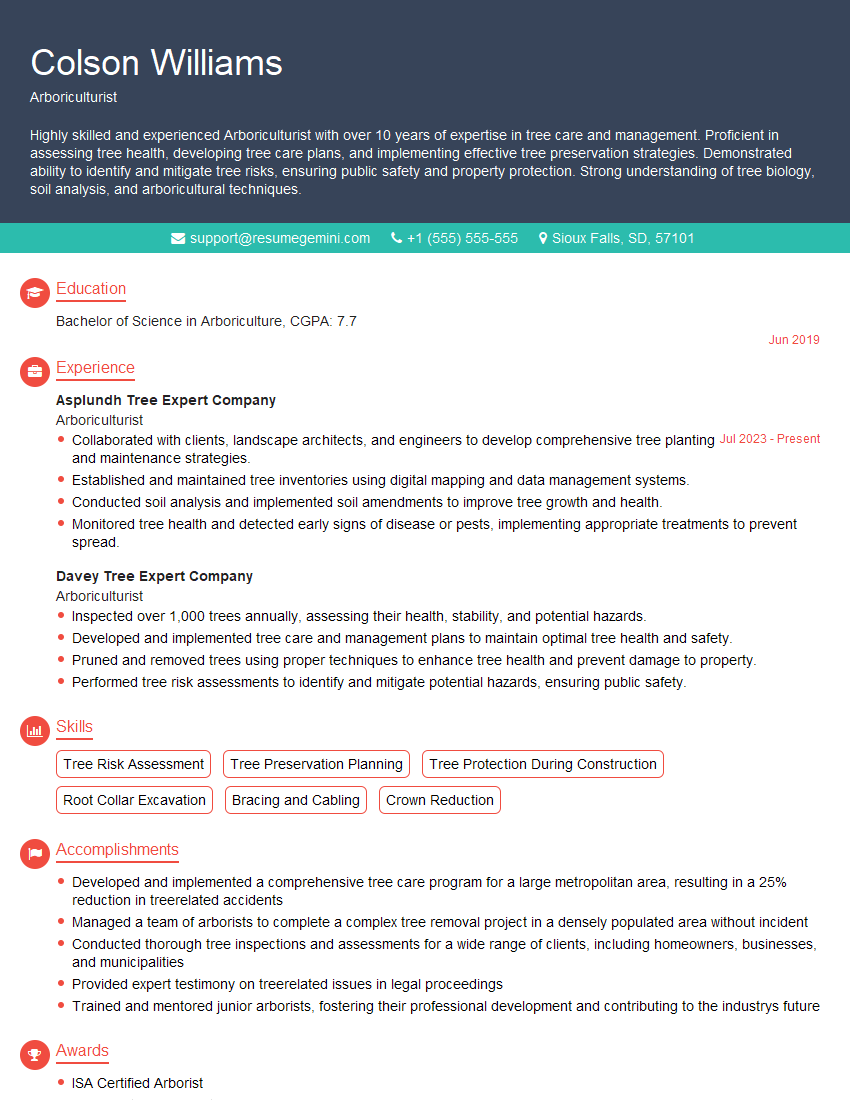
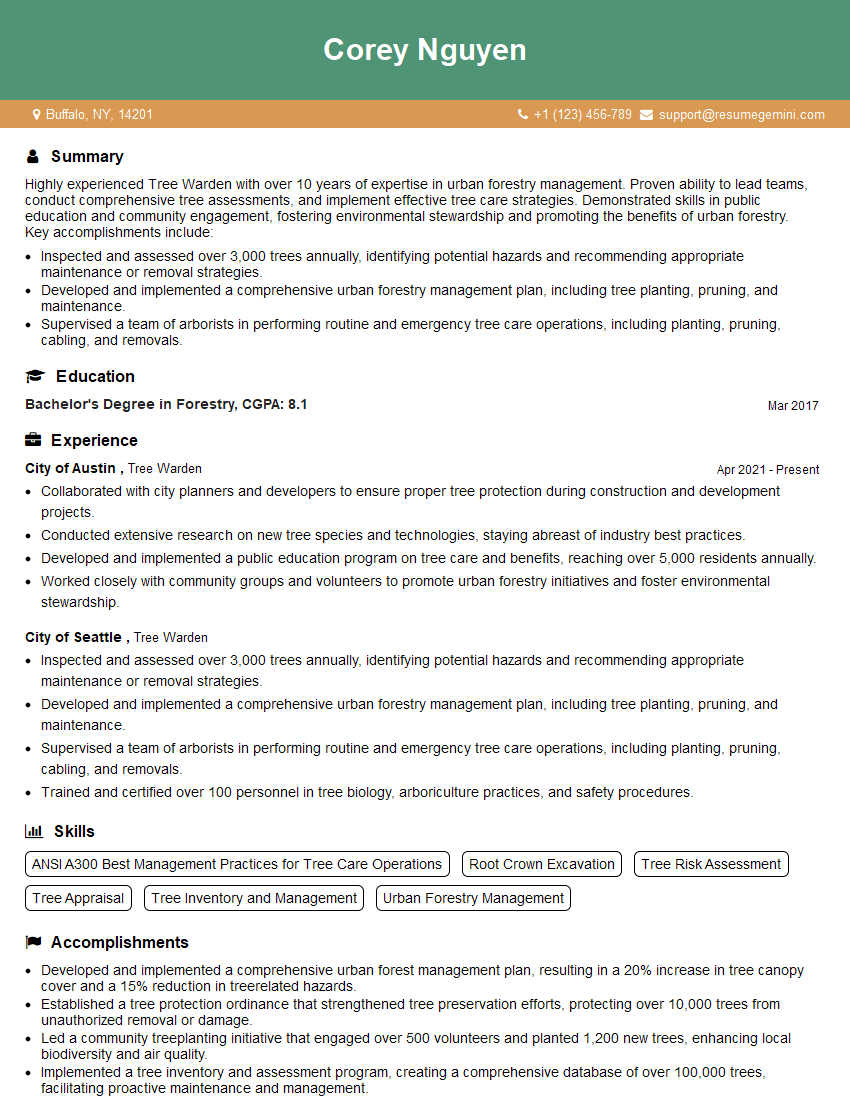
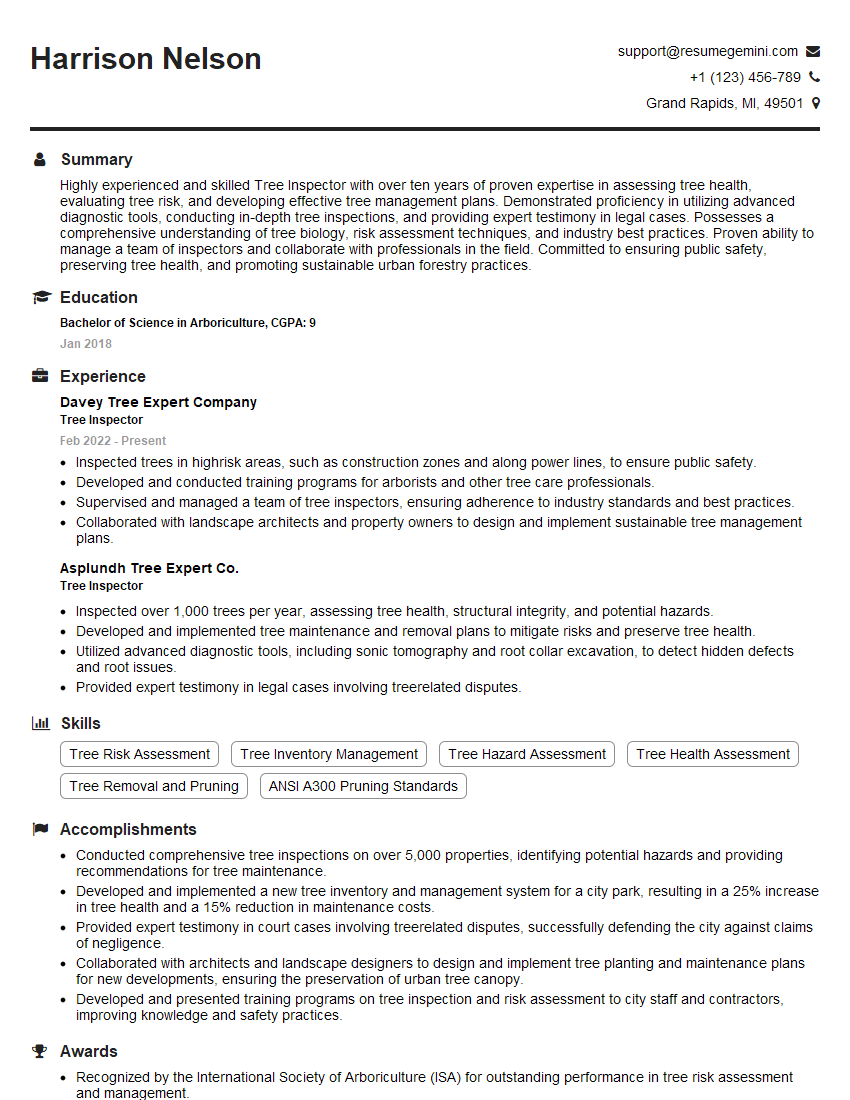
Mastering tree risk assessment techniques is crucial for career advancement in arboriculture, landscaping, and related fields. A strong understanding of these techniques demonstrates competence and professionalism, opening doors to higher-paying positions and greater responsibility. To maximize your job prospects, it’s vital to create a compelling, ATS-friendly resume that highlights your skills and experience effectively. ResumeGemini is a trusted resource that can help you build a professional resume tailored to your specific experience. Examples of resumes tailored to showcasing experience in tree risk assessment techniques are available – use them to guide your own resume creation and significantly improve your chances of landing your dream job.


Explore more articles
Users Rating of Our Blogs
Share Your Experience
We value your feedback! Please rate our content and share your thoughts (optional).
What Readers Say About Our Blog
Very informative content, great job.
good