Interviews are opportunities to demonstrate your expertise, and this guide is here to help you shine. Explore the essential Experience with Failure Mode and Effects Analysis (FMEA) interview questions that employers frequently ask, paired with strategies for crafting responses that set you apart from the competition.
Questions Asked in Experience with Failure Mode and Effects Analysis (FMEA) Interview
Q 1. Explain the purpose and benefits of conducting an FMEA.
Failure Mode and Effects Analysis (FMEA) is a systematic, proactive method used to identify potential failures in a system or process, analyze their potential effects, and recommend actions to mitigate risks. Its purpose is to prevent problems *before* they occur, saving time, money, and reputational damage.
The benefits are numerous. FMEA helps organizations:
- Proactive risk management: Identifying and addressing potential failures early in the design or process development stage.
- Improved product/process reliability: Reducing the likelihood of failures and improving overall quality.
- Reduced costs: Preventing costly recalls, rework, and downtime.
- Enhanced safety: Identifying and mitigating hazards that could lead to accidents or injuries.
- Better design and process decisions: Providing data-driven insights to optimize design and processes.
Imagine building a house without considering potential problems like leaky roofs or faulty wiring. FMEA is like a blueprint for preventing such issues, resulting in a stronger, more reliable structure.
Q 2. Describe the different types of FMEA (e.g., System, Design, Process).
There are several types of FMEA, each tailored to a specific application:
- System FMEA (SFMEA): Focuses on the overall system and its interactions, identifying potential failures at the system level. This is often used in complex systems like automobiles or aircraft.
- Design FMEA (DFMEA): Analyzes potential failures during the design phase of a product or process. It helps identify design flaws that could lead to failures and allows for corrections before manufacturing begins. Imagine designing a new phone; a DFMEA would examine potential failures related to the battery, screen, or software.
- Process FMEA (PFMEA): Examines potential failures in a manufacturing or operational process. It focuses on identifying and mitigating risks associated with steps in a process, such as a production line or a customer service interaction. A PFMEA for a coffee shop might assess risks related to ingredient spoilage or barista errors.
The choice of FMEA type depends on the context and stage of development. Often, multiple types are used in a cascading manner, with SFMEA informing DFMEA and PFMEA, for example.
Q 3. What are the key steps involved in performing an FMEA?
Performing an FMEA generally involves these key steps:
- Planning: Define the scope, team members, and resources.
- System/Process Description: Clearly document the system or process to be analyzed.
- Potential Failure Modes Identification: Brainstorm potential ways the system or process could fail (e.g., brainstorming sessions, checklists, historical data).
- Potential Effects of Failure: Describe the consequences of each failure mode on the system, process, customer, or environment.
- Severity Rating: Assign a severity rating to each potential effect of failure (typically on a scale of 1-10).
- Potential Causes of Failure: Identify the root causes for each failure mode.
- Occurrence Rating: Assign an occurrence rating to the likelihood of each cause of failure (typically on a scale of 1-10).
- Current Controls: Describe the existing controls in place to detect or prevent each failure mode.
- Detection Rating: Assign a detection rating reflecting the effectiveness of the current controls in detecting each failure mode (typically on a scale of 1-10).
- Risk Priority Number (RPN) Calculation: Calculate the RPN for each failure mode (Severity x Occurrence x Detection).
- Recommended Actions: Develop and prioritize actions to reduce the RPN.
- Responsibility and Timeline: Assign responsibility and timelines for implementing recommended actions.
- FMEA Review and Update: Regularly review and update the FMEA to reflect changes in the system, process, or controls.
Q 4. How do you identify potential failure modes in a system or process?
Identifying potential failure modes requires a combination of techniques, including:
- Brainstorming: A group discussion to generate a comprehensive list of potential failures. This often involves diverse perspectives to avoid overlooking critical issues.
- Checklists: Using pre-defined lists of potential failure modes specific to the type of system or process being analyzed.
- Process maps: Visually representing the process steps to identify vulnerabilities at each stage.
- Historical data analysis: Examining past failures to identify recurring patterns and potential future failures.
- Fault tree analysis (FTA): A top-down approach that systematically decomposes a top-level failure event into its contributing causes.
- Failure mode effects and diagnostic analysis (FMEDA): A more advanced technique used for safety-critical systems, adding diagnostic coverage analysis.
For example, if analyzing a coffee machine, brainstorming might reveal failure modes like ‘brewing unit malfunction,’ ‘water pump failure,’ or ‘power supply issues.’ Checklists provide a framework, while process maps help to visually understand the sequential order of steps and where problems may arise.
Q 5. Explain the severity, occurrence, and detection ratings in an FMEA.
The severity, occurrence, and detection ratings are crucial components of the FMEA process. They are typically scored on a scale of 1 to 10, where 1 represents the lowest and 10 represents the highest value.
- Severity (S): Rates the seriousness of the effect of a failure. A score of 10 signifies a catastrophic failure (e.g., death, major environmental damage), while 1 means a minor inconvenience.
- Occurrence (O): Rates the likelihood of a specific cause of failure happening. A score of 10 indicates a very high probability of occurrence, while 1 means it’s very unlikely.
- Detection (D): Rates the likelihood that current controls will detect the failure *before* it reaches the customer or causes harm. A score of 10 signifies a very low probability of detection, while 1 indicates almost certain detection.
These ratings are subjective and based on expert judgment. Consistency among team members is important to ensure reliable results.
Q 6. How do you calculate the Risk Priority Number (RPN)?
The Risk Priority Number (RPN) is calculated by multiplying the Severity, Occurrence, and Detection ratings: RPN = Severity (S) x Occurrence (O) x Detection (D)
For example:
- Severity (S) = 7
- Occurrence (O) = 3
- Detection (D) = 5
RPN = 7 x 3 x 5 = 105
The RPN provides a numerical representation of the risk associated with each failure mode. Higher RPN values indicate higher-priority risks that require immediate attention.
Q 7. What are some common techniques for mitigating risks identified in an FMEA?
Risk mitigation strategies aim to reduce the RPN by addressing the severity, occurrence, or detection aspects of a failure mode. Common techniques include:
- Design changes: Modifying the design to eliminate or reduce the likelihood of failure.
- Process improvements: Enhancing the manufacturing or operational process to prevent failures.
- Improved controls: Implementing more effective detection or prevention methods (e.g., adding sensors, implementing quality checks).
- Redundancy: Incorporating backup systems or processes to mitigate the impact of failures.
- Training: Educating personnel to properly operate and maintain the system or process.
- Warning systems: Developing systems to alert operators of potential failures.
- Error-proofing: Designing the system to prevent errors from occurring (e.g., using Poka-Yoke techniques).
The best mitigation strategy depends on the specific failure mode and its root causes. For instance, if the occurrence rating is high, focus on process improvements; if detection is low, improve controls. After implementing changes, the FMEA should be updated to reflect the revised RPN.
Q 8. How do you prioritize actions based on RPN values?
Prioritizing actions in FMEA is done by analyzing the Risk Priority Number (RPN). The RPN is a product of three factors: Severity (S), Occurrence (O), and Detection (D). A higher RPN indicates a higher risk. We prioritize actions based on the magnitude of the RPN, addressing those with the highest RPN values first. This ensures we focus our resources on the most critical potential failures.
For example, let’s say we have three potential failures with RPNs of 10, 50, and 100. We would prioritize the failure with an RPN of 100, followed by 50, and then 10. However, simply using RPN isn’t always sufficient. We might consider other factors like project timelines, resource availability, and regulatory requirements when making final decisions. Sometimes a lower RPN item might require immediate attention due to regulatory mandates or safety concerns even if another item has a higher RPN.
A common practice is to create a prioritized list ranking items from highest to lowest RPN. Then, a risk mitigation strategy should be devised for each item, along with assigned owners and deadlines for completion and review.
Q 9. How do you document and track FMEA findings and corrective actions?
We meticulously document FMEA findings and corrective actions using a dedicated FMEA register, often a spreadsheet or a database within a project management software. This register typically includes columns for the failure mode, potential effects, severity, occurrence, detection, RPN, recommended actions, responsible parties, target completion dates, actual completion dates, and verification/validation results. This provides a complete audit trail of the entire process.
For instance, we might use a spreadsheet software like Microsoft Excel or Google Sheets, or a dedicated FMEA software (mentioned in a later response). Each corrective action has a unique identifier, allowing easy tracking and reporting. Regular updates are crucial, and the register should be reviewed and updated during periodic FMEA reviews, typically following completion of the corrective actions and verification of their effectiveness.
Clear communication of updates is essential. We use regular project meetings and email updates to maintain transparency across the team. The register itself becomes a live document reflecting the current state of all identified risks and their mitigation status.
Q 10. How do you ensure the effectiveness of implemented corrective actions?
Ensuring the effectiveness of corrective actions is paramount. We don’t simply implement changes and move on; we verify their impact. This usually involves a post-implementation review which can include data analysis, process monitoring, and potentially even design verification testing. The goal is to demonstrate that the implemented action truly reduced the severity, occurrence, or detection of the identified failure mode, thereby lowering the RPN.
For example, if a corrective action was to improve a machine’s lubrication system to reduce the frequency of breakdowns (reducing ‘Occurrence’), we would monitor the machine’s performance over a defined period. We would collect data on the number of breakdowns before and after the implementation and perform a statistical analysis to demonstrate the improvement and the extent of reduction in the RPN. This data is then documented within our FMEA register.
Depending on the severity, a formal verification test (like a Design Verification Test or a Process Verification Test) might be warranted. Sometimes, simple visual inspections or operator feedback can suffice. The key is to have a pre-defined method of verification aligned with the criticality of the failure mode and the implemented solution.
Q 11. How do you involve cross-functional teams in the FMEA process?
Cross-functional team involvement is critical for a successful FMEA. We ensure representation from all relevant departments, including design engineering, manufacturing, quality assurance, operations, and even marketing (depending on the context). This approach brings diverse perspectives and expertise to the process, leading to a more comprehensive identification of potential failure modes and the development of effective corrective actions.
For instance, when performing a FMEA for a new product, we’d include design engineers to explain the design choices, manufacturing engineers to highlight potential production challenges, quality assurance engineers to discuss testing and inspection methods, and operations personnel to describe how the product will be used in the field. This collaboration fosters a sense of shared ownership and responsibility for risk mitigation.
A well-facilitated meeting is key. The facilitator ensures all voices are heard and that the team remains focused on the objective of identifying and mitigating risks. The use of collaborative online tools (like Google Docs or Microsoft Teams) can further facilitate cross-functional collaboration, enabling real-time input and documentation.
Q 12. Explain the difference between a Design FMEA and a Process FMEA.
The key difference lies in their focus: Design FMEA (DFMEA) analyzes potential failures in a product’s design before it’s manufactured, whereas Process FMEA (PFMEA) analyzes potential failures in a manufacturing process. Both use the same basic methodology (Severity, Occurrence, Detection, and RPN), but their applications and the expertise needed in the team differ significantly.
A DFMEA would focus on potential design flaws like material weaknesses, component failures, or ergonomic issues. For example, in designing a new phone, a DFMEA would examine the potential for the screen to crack easily, the battery to overheat, or the software to crash.
In contrast, a PFMEA would focus on potential failures in the manufacturing process, such as a faulty welding process, incorrect assembly steps, or inconsistent material quality. For the same phone example, a PFMEA would consider the potential for defects in the screen manufacturing process, inconsistencies in battery assembly, or errors in software installation during manufacturing.
Q 13. What software or tools are you familiar with for conducting FMEA?
I’m proficient with several software tools for conducting FMEA. Microsoft Excel and Google Sheets are frequently used, particularly for simpler FMEAs. However, for larger, more complex projects or when collaboration is paramount, dedicated FMEA software offers advantages. I have experience with tools like Minitab, ReliaSoft Weibull++, and some specialized project management software that includes FMEA functionality.
These dedicated tools often provide features like automated RPN calculations, collaborative editing, reporting capabilities, and data visualization, making the entire FMEA process more efficient and manageable. The choice of software ultimately depends on the project’s complexity, team size, and available resources. The ability to seamlessly integrate FMEA data with other project management tools is a crucial factor in my selection.
Q 14. How do you handle conflicting priorities among different stakeholders during an FMEA?
Handling conflicting priorities among stakeholders requires skillful facilitation and clear communication. The first step involves openly discussing each stakeholder’s concerns and understanding the rationale behind their priorities. We then use a structured approach to prioritize actions, considering factors beyond just the RPN, such as cost, time constraints, regulatory compliance, and potential safety impacts.
A useful technique is to create a weighted scoring system that considers all relevant factors, allowing for a more objective prioritization. For instance, we might assign weights to RPN, cost, and regulatory compliance, then calculate a weighted score for each action. This provides a more holistic view and helps justify decisions to all stakeholders. Transparent communication and clear documentation of the decision-making process are crucial in building consensus and buy-in.
In cases where complete consensus cannot be reached, it might be necessary to involve senior management to mediate and make a final decision. The goal is always to arrive at a solution that balances the different priorities while minimizing overall risk.
Q 15. Describe a situation where you successfully used FMEA to prevent a failure.
In my previous role at a medical device company, we were developing a new insulin pump. Using FMEA, we proactively identified a potential failure mode: the battery could overheat and malfunction due to a design flaw in the charging circuit. This was a critical failure as it could lead to inaccurate insulin delivery and endanger patients. Through the FMEA process, we systematically analyzed the potential causes (e.g., insufficient thermal dissipation, faulty charging circuitry), their effects (e.g., inaccurate insulin delivery, device shutdown, potential fire hazard), and the severity, occurrence, and detection ratings. This led us to implement several preventative actions: redesigning the charging circuit to include a better heatsink, adding over-temperature sensors, and incorporating robust software-based safeguards that trigger alerts and shut down the device if overheating occurs. This comprehensive approach, stemming directly from the FMEA, prevented a potentially catastrophic failure and ensured patient safety. The revised design was then rigorously tested, validating the effectiveness of our preventative actions.
Career Expert Tips:
- Ace those interviews! Prepare effectively by reviewing the Top 50 Most Common Interview Questions on ResumeGemini.
- Navigate your job search with confidence! Explore a wide range of Career Tips on ResumeGemini. Learn about common challenges and recommendations to overcome them.
- Craft the perfect resume! Master the Art of Resume Writing with ResumeGemini’s guide. Showcase your unique qualifications and achievements effectively.
- Don’t miss out on holiday savings! Build your dream resume with ResumeGemini’s ATS optimized templates.
Q 16. What are some common challenges encountered during FMEA implementation?
Common challenges in FMEA implementation include:
- Time Constraints: Conducting a thorough FMEA requires dedicated time and resources, which can be scarce, particularly in fast-paced environments.
- Data Availability: Obtaining accurate and reliable data on failure rates, severity, and detection is sometimes challenging, especially for new products or processes.
- Team Collaboration: Effective FMEA relies on the participation of cross-functional teams with diverse expertise. It can be challenging to coordinate these teams and foster effective collaboration.
- Subjectivity in RPN Scores: The Risk Priority Number (RPN) is subjective and can vary widely depending on individual team members’ interpretations. This can lead to inconsistencies in prioritizing actions.
- Maintaining Momentum: After the initial FMEA, it’s crucial to maintain momentum and regularly review and update the analysis. This can be difficult if there’s a lack of ongoing support or if other priorities take precedence.
Overcoming these challenges involves careful planning, resource allocation, employing robust data collection methods, and emphasizing training to ensure consistent understanding and interpretation within the team. Using facilitation techniques to guide discussions and leveraging historical data or expert opinions can also mitigate the impact of data limitations.
Q 17. How do you ensure that an FMEA remains relevant and updated over time?
To ensure an FMEA remains relevant, it’s crucial to establish a regular review and update process. This isn’t a ‘set it and forget it’ exercise. Think of it as a living document that evolves with the product or process. This involves:
- Scheduled Reviews: Conducting periodic reviews (e.g., annually or after significant design changes or process improvements) to assess whether the identified failure modes, causes, and effects are still accurate and relevant.
- Triggered Updates: Updating the FMEA whenever a significant incident occurs (near miss or actual failure) or a change is made to the product, process, or operating environment. This ensures that the analysis reflects the current reality.
- Documentation and Communication: Maintain clear documentation of all updates and changes, and communicate these changes effectively to all relevant stakeholders. This ensures everyone is working with the most current information.
- Using a Version Control System: Implementing a version control system will help track changes, allow for easy comparison of previous versions and maintain audit trails.
The frequency of reviews should be tailored to the risk level associated with the product or process. High-risk systems warrant more frequent review cycles.
Q 18. How do you deal with incomplete or uncertain data during an FMEA?
Dealing with incomplete or uncertain data during an FMEA requires a structured approach. You can’t simply ignore it. Instead:
- Document the Uncertainty: Clearly document the areas where data is incomplete or uncertain. This transparency helps others understand the limitations of the analysis.
- Use Expert Judgment: Leverage the knowledge and experience of subject matter experts to estimate missing data points. It’s important to document the basis for these estimations to maintain traceability and transparency.
- Sensitivity Analysis: Conduct a sensitivity analysis to understand how variations in the uncertain data points affect the RPN scores. This can help identify areas where more data is needed or where the uncertainty has a minimal impact on the overall risk assessment.
- Prioritize Data Collection: Identify the most critical areas of uncertainty and prioritize the collection of additional data in those areas.
- Use Qualitative Descriptions: If quantitative data is unavailable, use qualitative descriptions (e.g., low, medium, high) to characterize the severity, occurrence, and detection of failure modes.
Remember, the goal is to make informed decisions despite the limitations. Transparency and well-documented assumptions are key to managing uncertainty effectively.
Q 19. What are the limitations of using RPN as a risk assessment metric?
While the Risk Priority Number (RPN) is a widely used metric in FMEA, it has limitations:
- Oversimplification: RPN simplifies a complex risk assessment into a single number, potentially masking important nuances and subtle differences between failure modes.
- Subjectivity: The assignment of severity, occurrence, and detection ratings is subjective and can vary depending on the assessor’s experience and interpretation. This can lead to inconsistencies and potentially inaccurate risk prioritization.
- Non-Linearity: The multiplicative nature of the RPN formula means that a small change in one parameter can significantly impact the RPN, even if the change is not necessarily significant in the real world.
- Lack of Context: RPN does not explicitly consider the potential consequences of failures, such as environmental impact or regulatory penalties.
To mitigate these limitations, consider supplementing the RPN with qualitative risk assessments, using more sophisticated risk matrices, or employing additional techniques like Failure Mode, Effects, and Criticality Analysis (FMECA), which incorporates criticality analysis into the process.
Q 20. How do you communicate FMEA results to different audiences (e.g., technical, management)?
Communicating FMEA results effectively requires tailoring the message to the audience.
- Technical Audience: For engineers and technical staff, focus on detailed explanations of failure modes, causes, effects, and preventative actions. Use technical terminology and include diagrams, charts, and data tables to support your findings.
- Management Audience: For management, emphasize the business implications of the identified risks, such as potential cost overruns, production delays, or safety risks. Present a summary of the key findings, focusing on the prioritized actions and their associated costs and benefits. Use high-level visualizations and key performance indicators (KPIs) to illustrate the impact.
Regardless of the audience, ensure your communication is clear, concise, and easy to understand. Using visuals such as charts, graphs, and heat maps can help simplify complex information. Involve the audience in the process – presenting your findings and discussing them openly invites feedback and strengthens buy-in.
Q 21. What are some alternative risk assessment techniques besides FMEA?
Several alternative risk assessment techniques exist alongside FMEA, each with its own strengths and weaknesses:
- Fault Tree Analysis (FTA): A top-down, deductive approach that models system failures by identifying the combination of events that could lead to a specific undesired event.
- Event Tree Analysis (ETA): A bottom-up, inductive approach used to analyze the possible consequences of an initiating event.
- Hazard and Operability Study (HAZOP): A systematic and comprehensive technique used to identify potential hazards and operability problems during the design and operation of processes.
- Bow-Tie Analysis: Combines aspects of FTA and ETA to provide a holistic view of risks, showing both the causes and consequences of an event, along with preventative and mitigative controls.
The choice of technique depends on the specific context, the complexity of the system being analyzed, and the available resources. Often, a combination of techniques is employed for a more robust and comprehensive risk assessment.
Q 22. How does FMEA relate to other quality management tools (e.g., Control Plans, 5 Whys)?
FMEA is a proactive risk assessment tool, but it works synergistically with other quality management tools to ensure comprehensive risk mitigation. It’s not a standalone solution.
Control Plans: FMEA identifies potential failure modes and their effects. Control plans then detail the specific controls (processes, inspections, etc.) to prevent or detect these failures. Think of FMEA as identifying the problems, and the control plan as outlining the solutions and how to implement them. For example, an FMEA might identify a potential failure mode of ‘incorrect assembly’ in a product. The control plan would specify steps like using visual aids, checklists, or operator training to prevent this.
5 Whys: The 5 Whys is a root cause analysis technique. FMEA helps identify potential problems, but if a failure occurs, the 5 Whys can be used to delve deeper into the underlying causes of that failure. This deeper understanding can inform improvements to the FMEA itself, making it more accurate and effective in future iterations. For example, after an assembly failure, applying the 5 Whys might reveal a lack of proper tooling as the root cause, which would then be addressed in updated FMEA and control plans.
In essence, FMEA helps identify risks, control plans define how to manage those risks, and the 5 Whys helps pinpoint root causes when failures do occur, creating a closed-loop improvement cycle.
Q 23. Explain the concept of ‘Potential Failure Mode’.
A ‘Potential Failure Mode’ is any way in which a process, product, or service could fail to meet its intended function. It’s not about actual failures, but rather the *possibility* of failures. It’s a proactive approach, anticipating problems *before* they occur.
Think of it like this: Imagine you’re baking a cake. Potential failure modes could be: the oven not heating properly, incorrect ingredient measurements, the cake batter being over-mixed, or the cake sticking to the pan. These are all potential ways the cake could fail to be delicious and properly baked; they haven’t happened yet, but they *could* happen.
Identifying potential failure modes requires a thorough understanding of the process or product and considering all possible points of failure. Brainstorming sessions with cross-functional teams are often used to identify a wide range of potential failure modes.
Q 24. Describe the concept of ‘Effects Analysis’ in FMEA.
‘Effects Analysis’ in FMEA is the process of determining the consequences of each potential failure mode. It involves tracing the failure through its effects on the overall system, product, or process, and identifying the downstream impact.
Let’s return to the cake example. If the oven doesn’t heat properly (failure mode), the effect might be an undercooked cake (direct effect). This could further lead to customer dissatisfaction, return of the product, and potential damage to the brand’s reputation (indirect effects). Effects analysis aims to thoroughly document all these consequences, both immediate and long-term.
A thorough effects analysis is crucial for prioritizing the most serious potential failure modes. This prioritization guides resource allocation to implement appropriate preventative actions.
Q 25. How do you determine the ‘Severity’ of a potential failure mode?
Severity is a rating that reflects the impact of a potential failure mode if it were to occur. It’s typically rated on a scale (e.g., 1-10), where 10 represents catastrophic failure and 1 represents a minor inconvenience. The rating should consider the effects outlined in the effects analysis.
Determining Severity: Consider factors like:
- Safety: Does the failure pose a risk to human life or health?
- Environmental impact: Does the failure harm the environment?
- Financial impact: What are the costs associated with the failure (repair, replacement, lost sales)?
- Reputation: How will the failure impact the organization’s reputation?
- Legal implications: Are there legal liabilities associated with the failure?
For example, a failure mode of a car’s braking system failing would receive a high severity rating (e.g., 9-10) because it directly impacts safety. On the other hand, a minor cosmetic defect on a product would have a low severity rating (e.g., 1-2).
Q 26. How do you determine the ‘Occurrence’ of a potential failure mode?
Occurrence is a rating that estimates how likely a potential failure mode is to occur. Similar to severity, it’s usually rated on a scale (e.g., 1-10), with 10 being extremely likely and 1 being extremely unlikely. This rating is based on historical data, testing results, process capability, and engineering judgment.
Determining Occurrence: Consider factors like:
- Historical data: How frequently has this failure occurred in the past?
- Process capability: How well-controlled is the process?
- Component reliability: How reliable are the components involved?
- Environmental factors: Do environmental conditions increase the likelihood of failure?
- Operator error: How likely is operator error to cause this failure?
For instance, a failure mode caused by a poorly designed component with a known weakness would have a high occurrence rating. A failure mode stemming from a rare and unpredictable event would have a low occurrence rating.
Q 27. How do you determine the ‘Detection’ of a potential failure mode?
Detection refers to the likelihood that a potential failure mode will be detected *before* it reaches the customer or causes significant harm. It’s again rated on a scale (e.g., 1-10), with 10 representing almost certain detection and 1 representing virtually no chance of detection.
Determining Detection: Consider factors like:
- Inspection methods: Are there effective inspections in place to detect the failure?
- Testing procedures: Do testing procedures effectively identify the failure?
- Automated controls: Are there automated controls that prevent or detect the failure?
- Redundancy: Are there redundant systems or components to mitigate the failure?
- Customer feedback: How quickly and effectively is customer feedback collected and acted upon?
For example, a manufacturing process with multiple checkpoints and automated quality control measures will likely have a high detection rating. Conversely, a failure mode that occurs silently without any noticeable symptoms would have a low detection rating.
Key Topics to Learn for Experience with Failure Mode and Effects Analysis (FMEA) Interview
- Understanding FMEA Fundamentals: Grasp the core principles of FMEA, including its purpose, benefits, and the different types of FMEA (e.g., system, design, process).
- FMEA Process Steps: Master the stages involved in conducting a thorough FMEA, from planning and defining the system to risk prioritization and implementation of corrective actions. Practice outlining each step in detail and explaining your role in each.
- Identifying Potential Failure Modes: Develop your skills in brainstorming and systematically identifying potential failure modes within a system or process. Practice using various techniques to uncover hidden risks.
- Severity, Occurrence, and Detection (SOD): Thoroughly understand the criticality of assigning severity, occurrence, and detection ratings and how these contribute to the Risk Priority Number (RPN). Be prepared to discuss how you’ve used these ratings to prioritize corrective actions.
- Risk Prioritization and Mitigation: Explain your approach to prioritizing risks based on RPN and describe effective strategies for mitigating identified risks. Provide examples of successful risk mitigation strategies you have implemented.
- FMEA Documentation and Reporting: Understand the importance of clear and concise FMEA documentation and be able to explain how you’ve presented FMEA results to stakeholders. Practice presenting your findings in a clear, understandable manner.
- Software and Tools: Familiarize yourself with common FMEA software and tools, and be prepared to discuss your experience using them (if any). Highlight your ability to adapt to different software.
- Practical Application Examples: Prepare examples from your past experiences where you have applied FMEA principles to solve real-world problems. Be ready to discuss the challenges faced and the successful outcomes achieved.
- Continuous Improvement: Demonstrate your understanding of how FMEA contributes to continuous improvement processes and how you actively participate in iterative improvements based on FMEA findings.
Next Steps
Mastering FMEA significantly enhances your problem-solving and risk management skills, making you a highly valuable asset in any industry. This expertise opens doors to more challenging and rewarding roles, leading to accelerated career growth. To maximize your job prospects, creating a strong, ATS-friendly resume is crucial. ResumeGemini is a trusted resource to help you build a professional and impactful resume that showcases your FMEA skills effectively. Examples of resumes tailored to highlight Experience with Failure Mode and Effects Analysis (FMEA) are available, enabling you to craft a document that truly reflects your capabilities and experience. Take the next step towards your dream job – build a compelling resume with ResumeGemini today!
Program Manager Resume Sample

Operations Manager Resume Sample
Product Manager Resume Sample
Maintenance Manager Resume Sample
Quality Manager Resume Sample
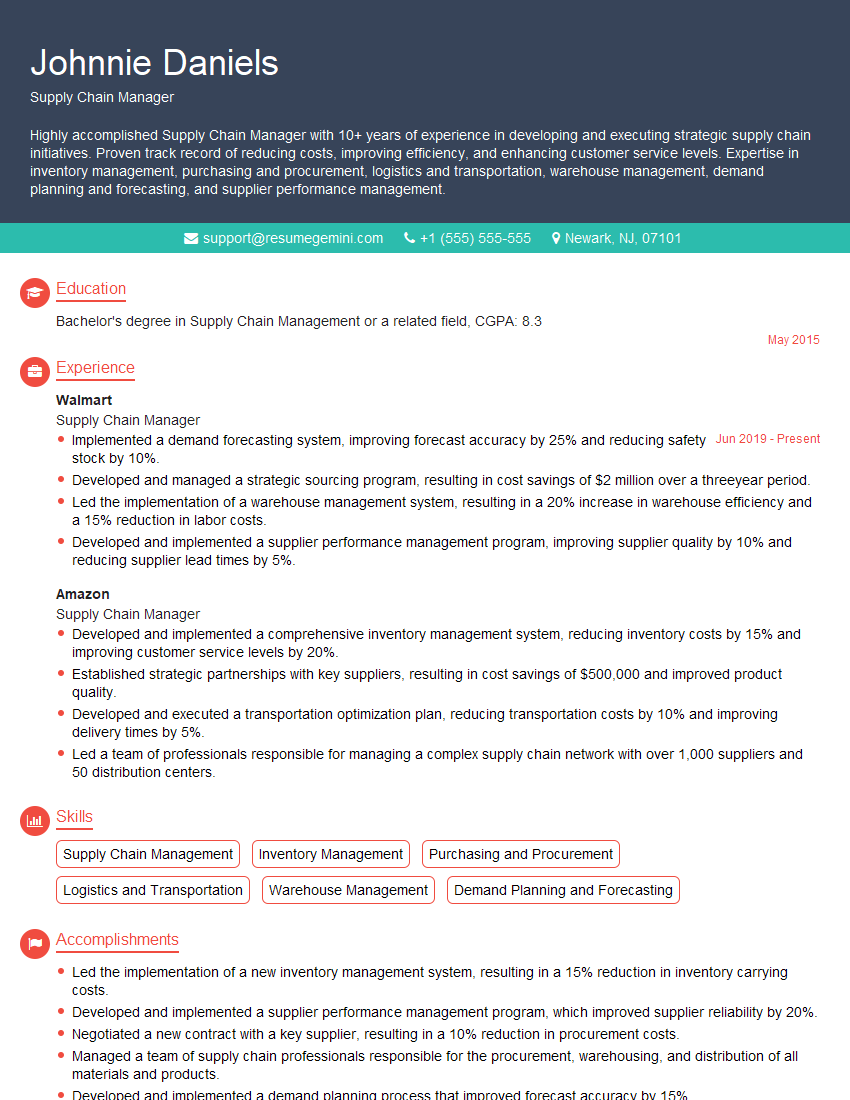
Supply Chain Manager Resume Sample
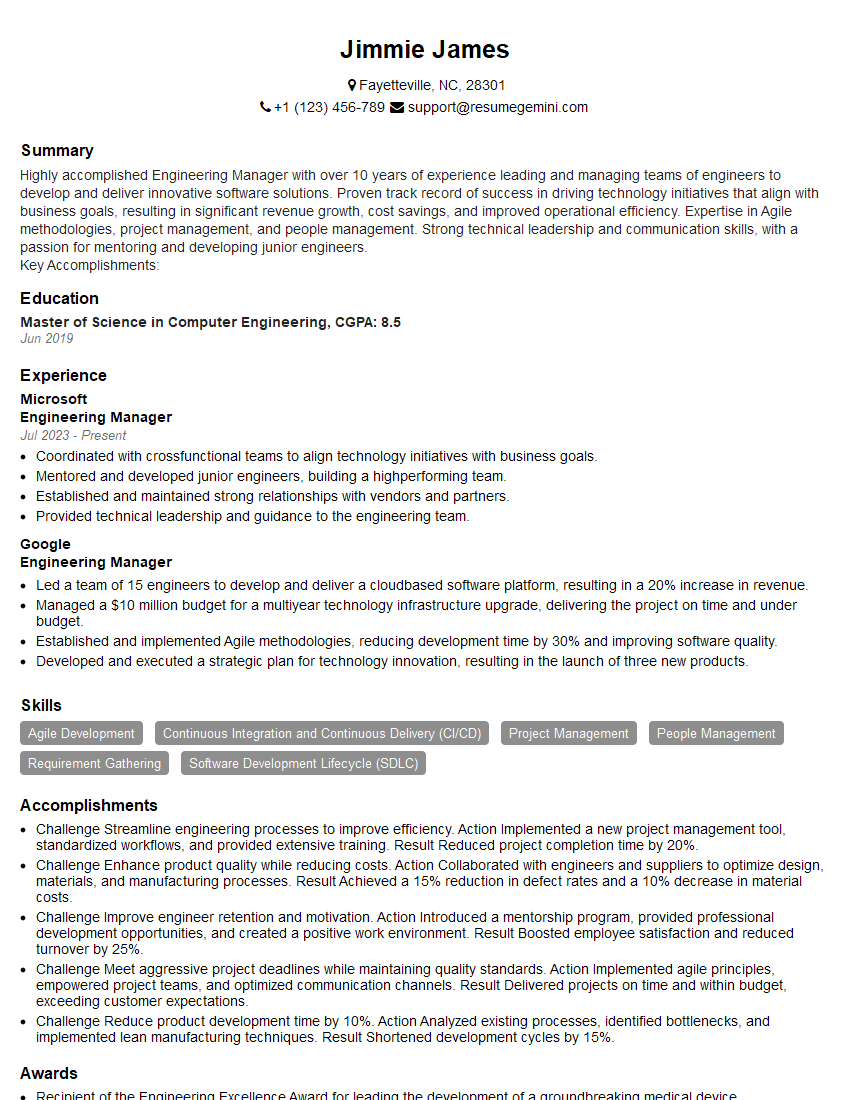
Engineering Manager Resume Sample

Project Engineer Resume Sample
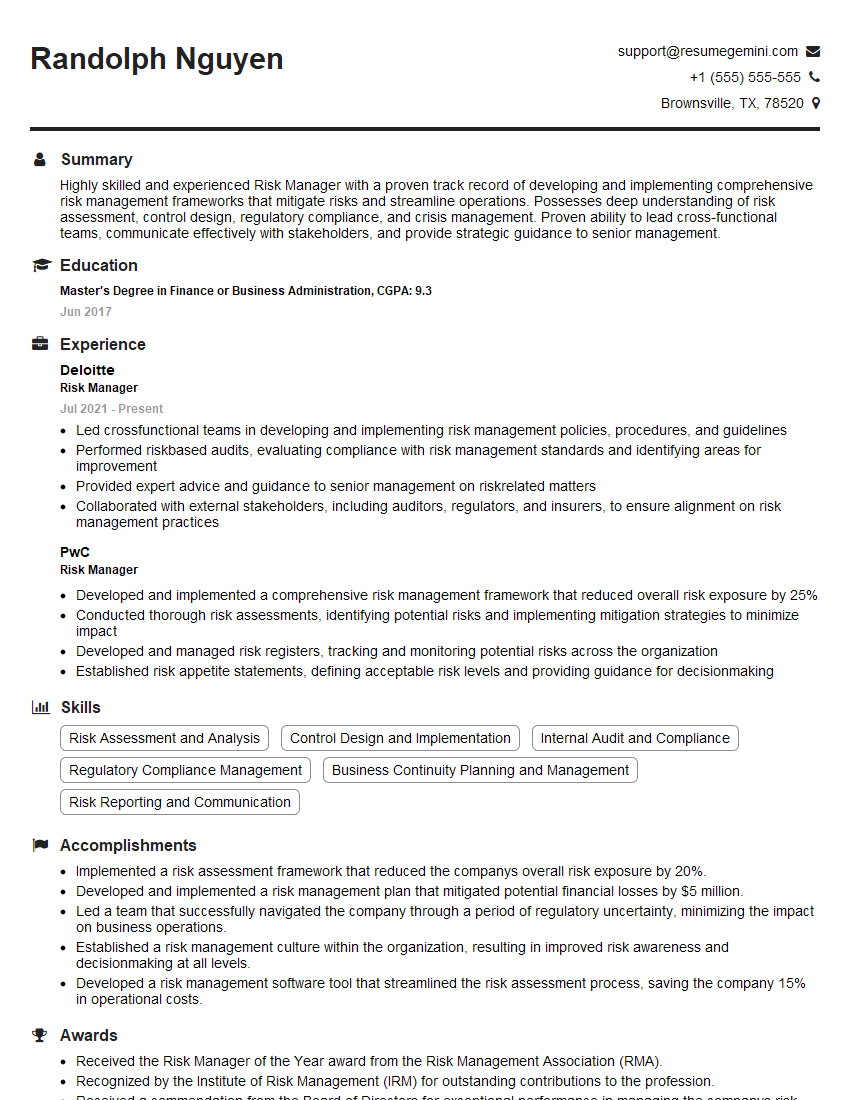
Risk Manager Resume Sample
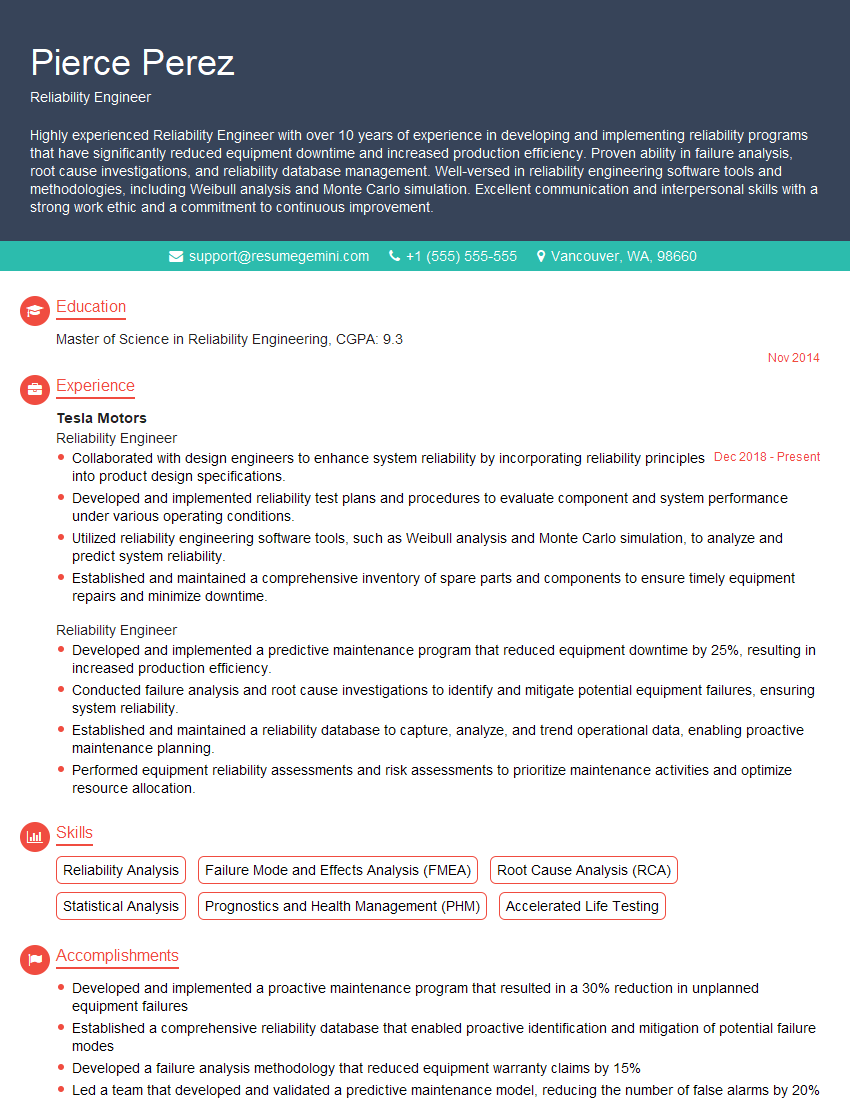
Reliability Engineer Resume Sample
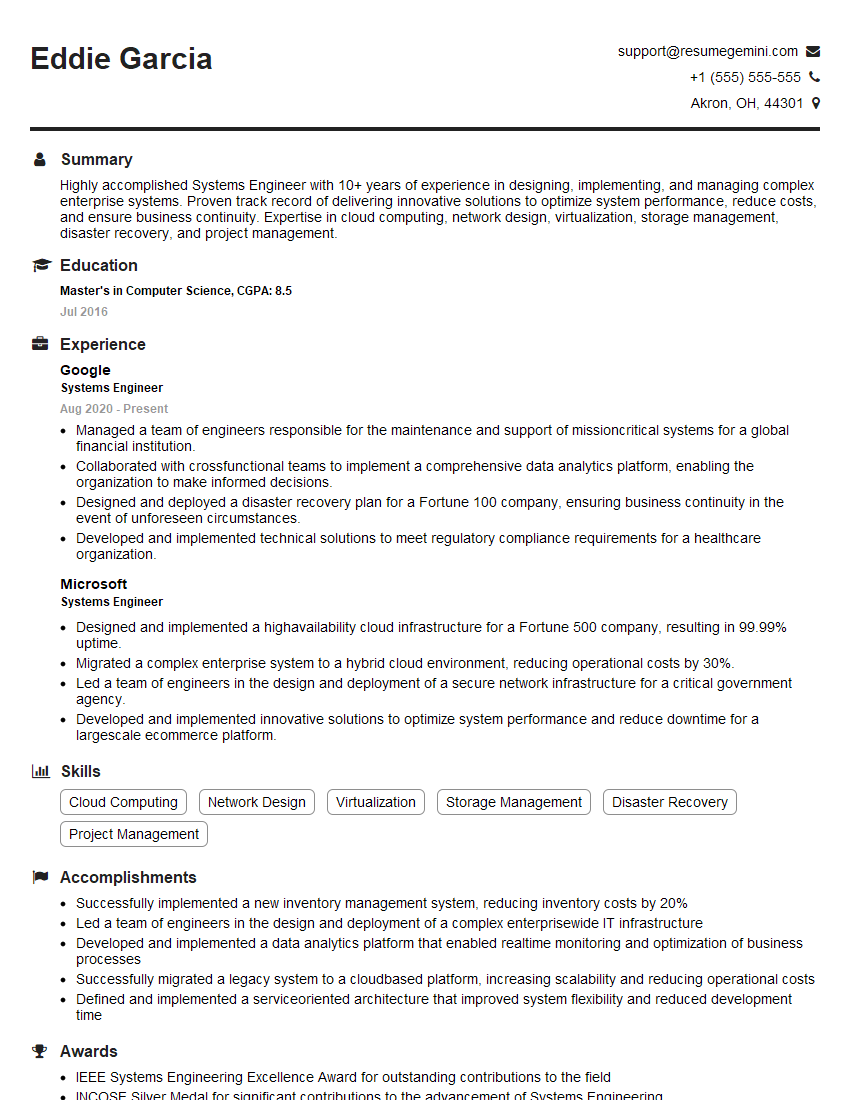
Systems Engineer Resume Sample
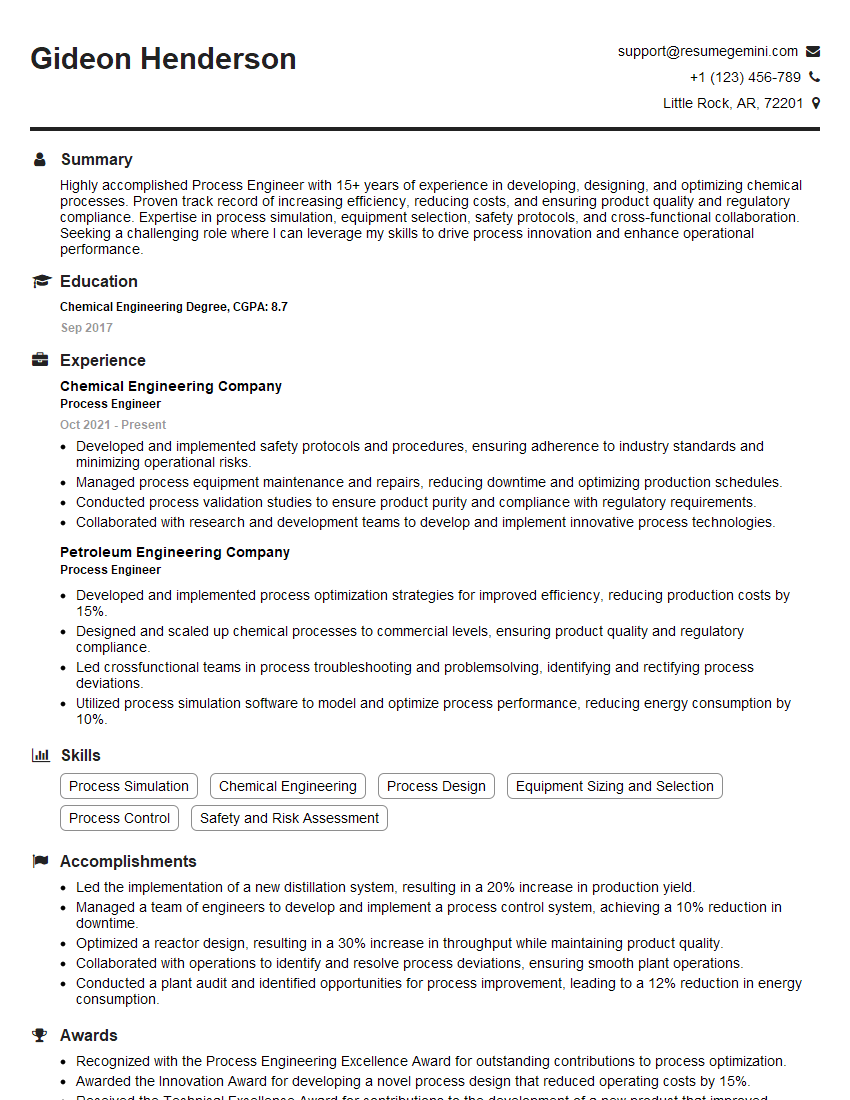
Process Engineer Resume Sample
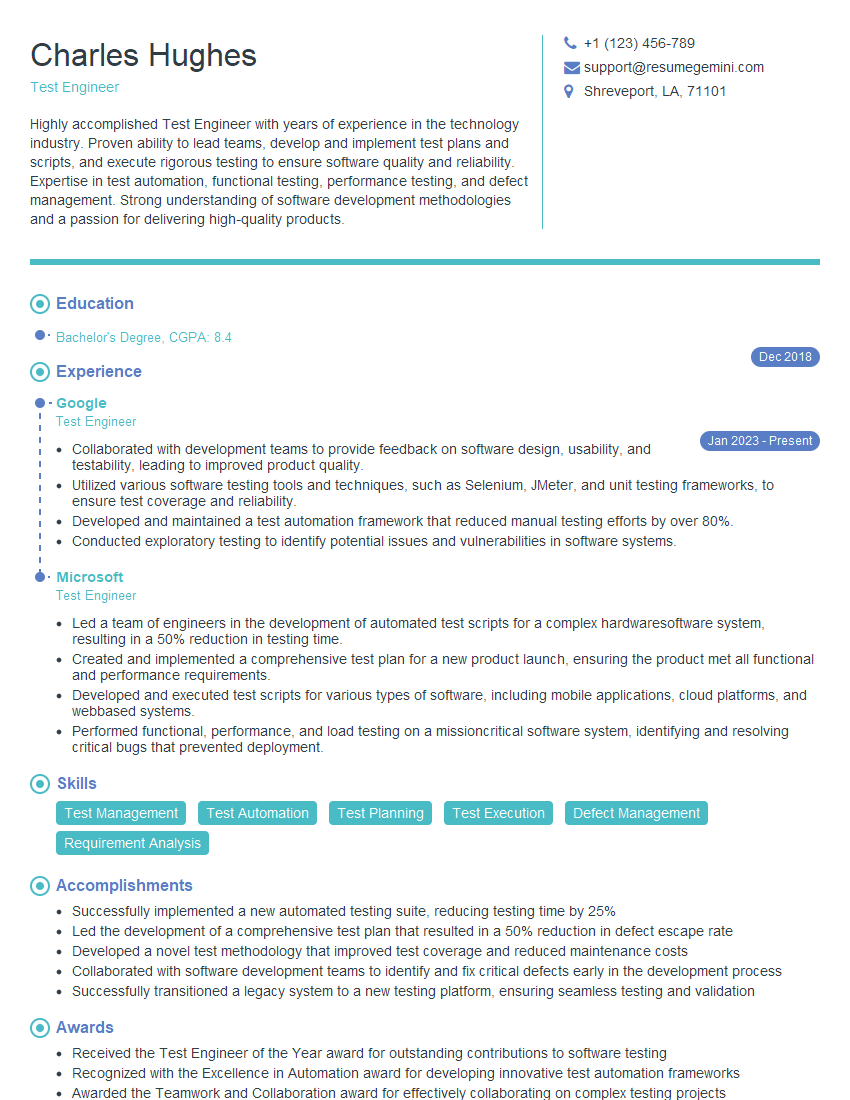
Test Engineer Resume Sample
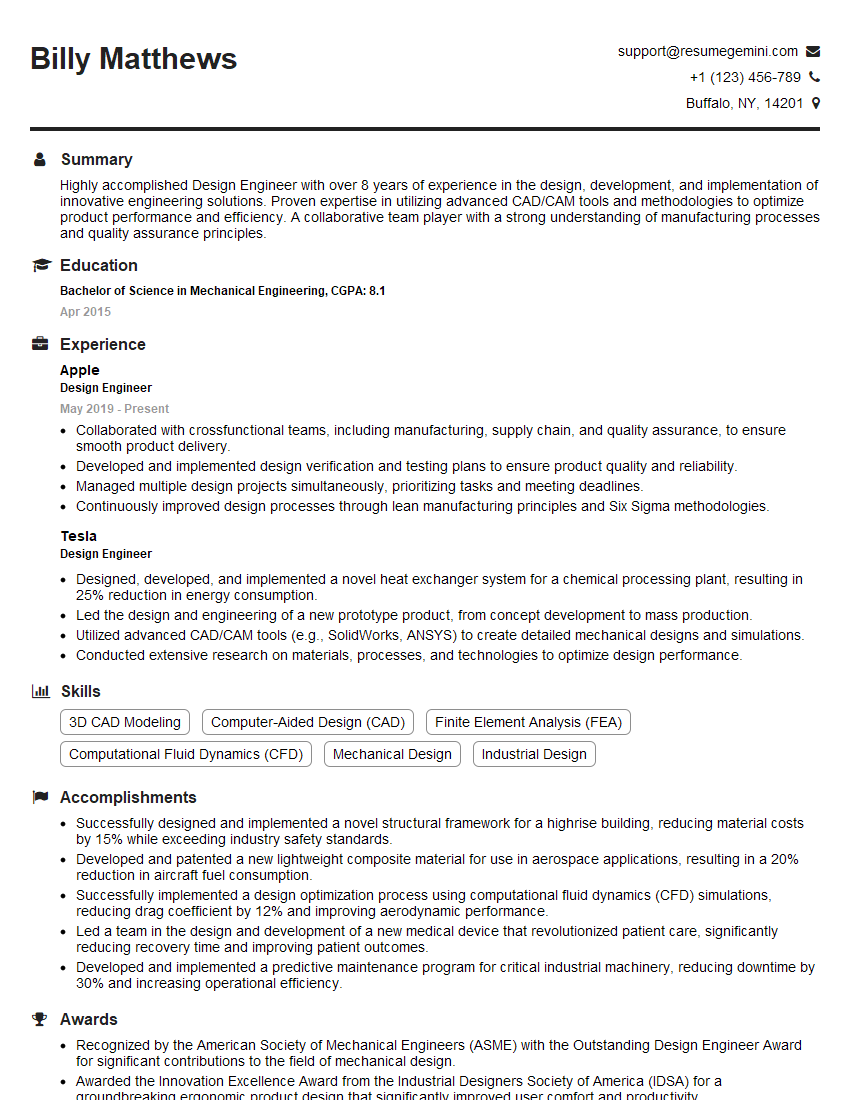
Design Engineer Resume Sample
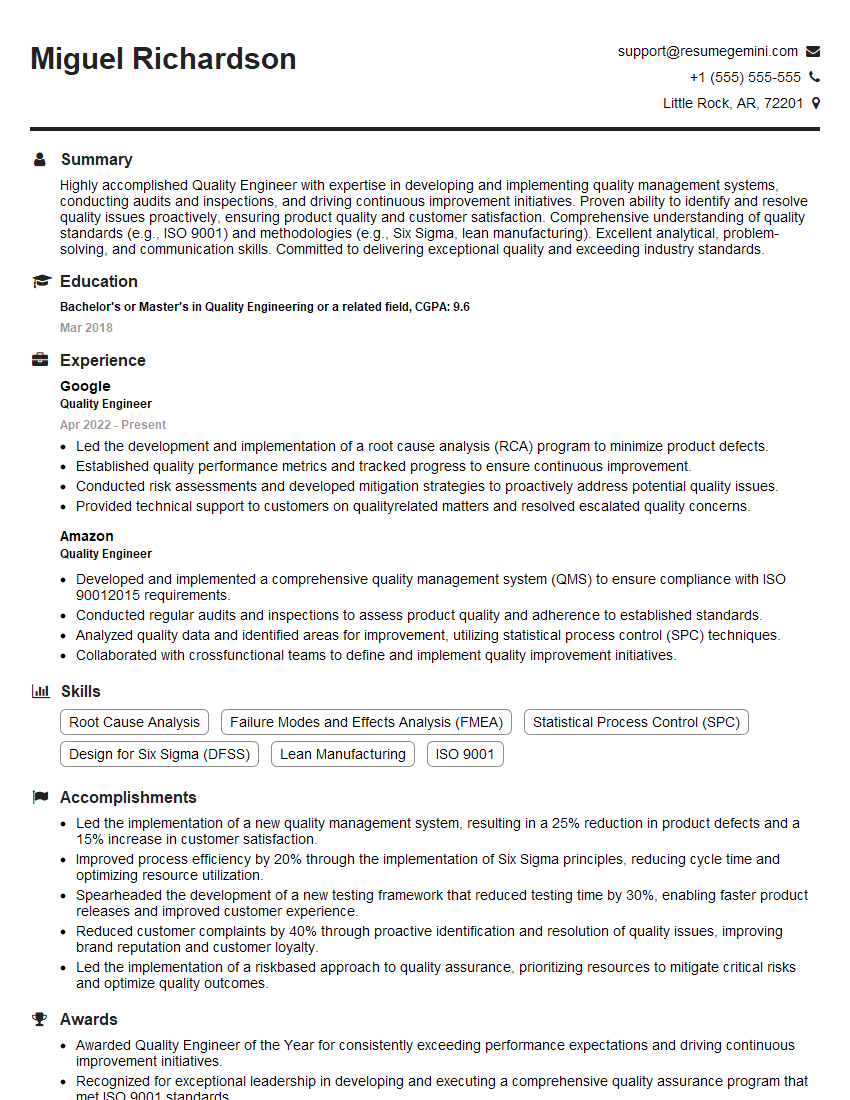
Quality Engineer Resume Sample
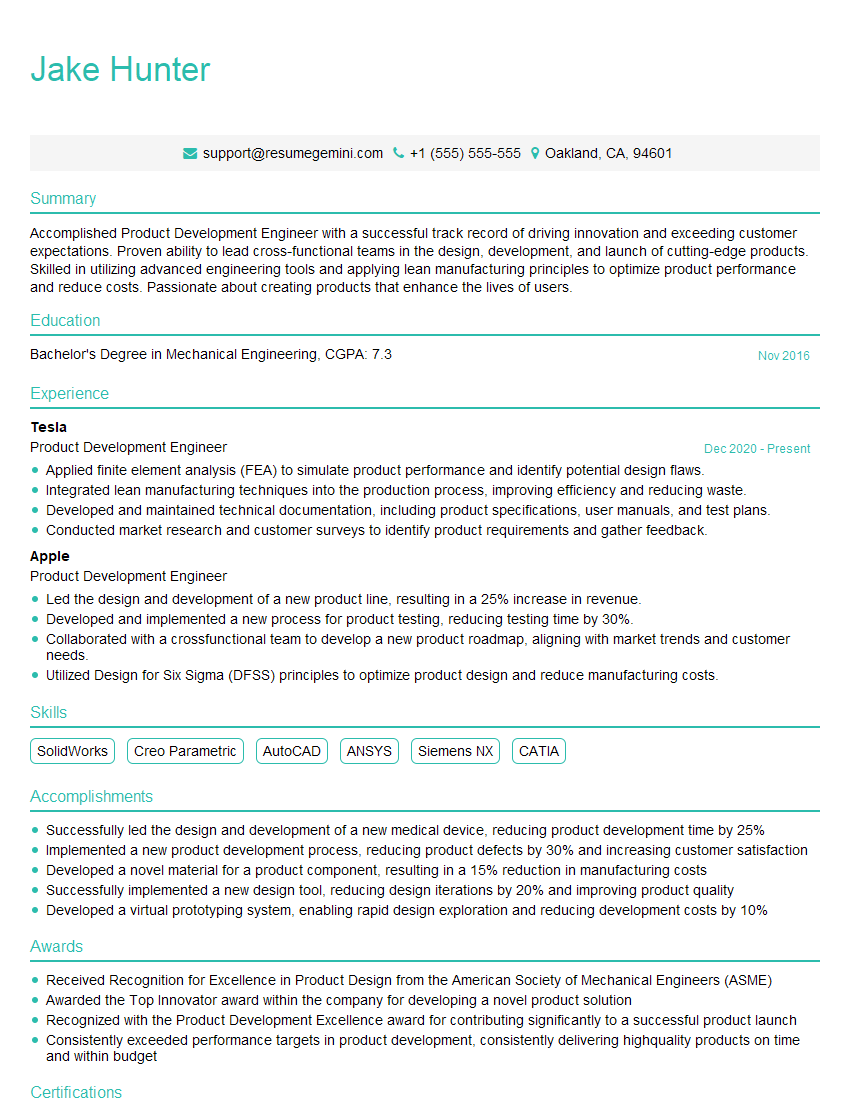
Product Development Engineer Resume Sample
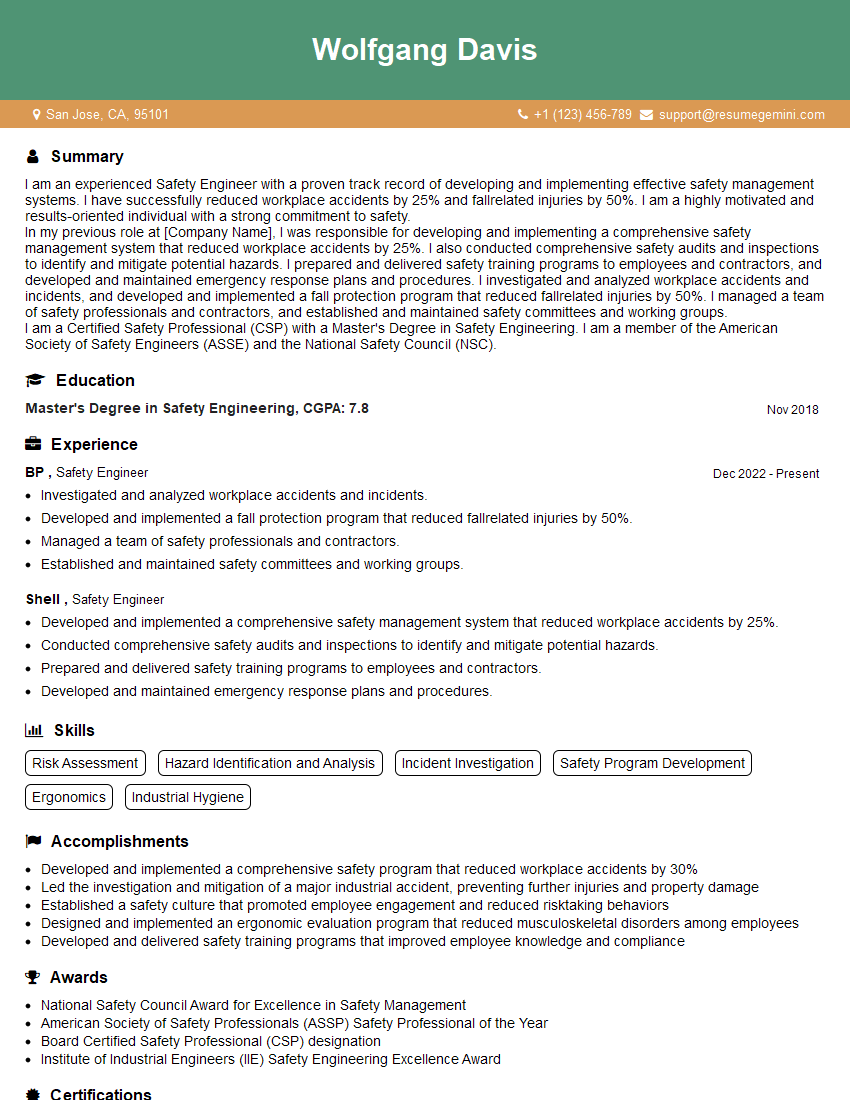
Safety Engineer Resume Sample
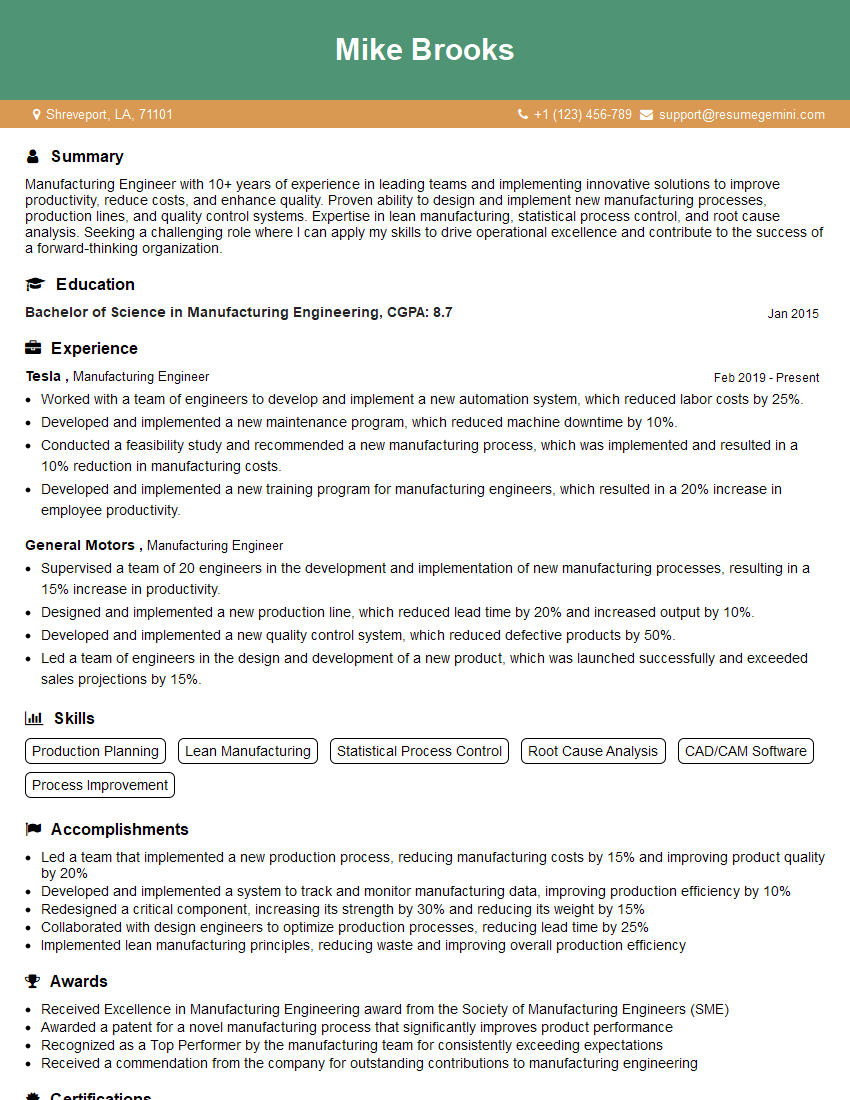
Manufacturing Engineer Resume Sample

Technical Writer Resume Sample
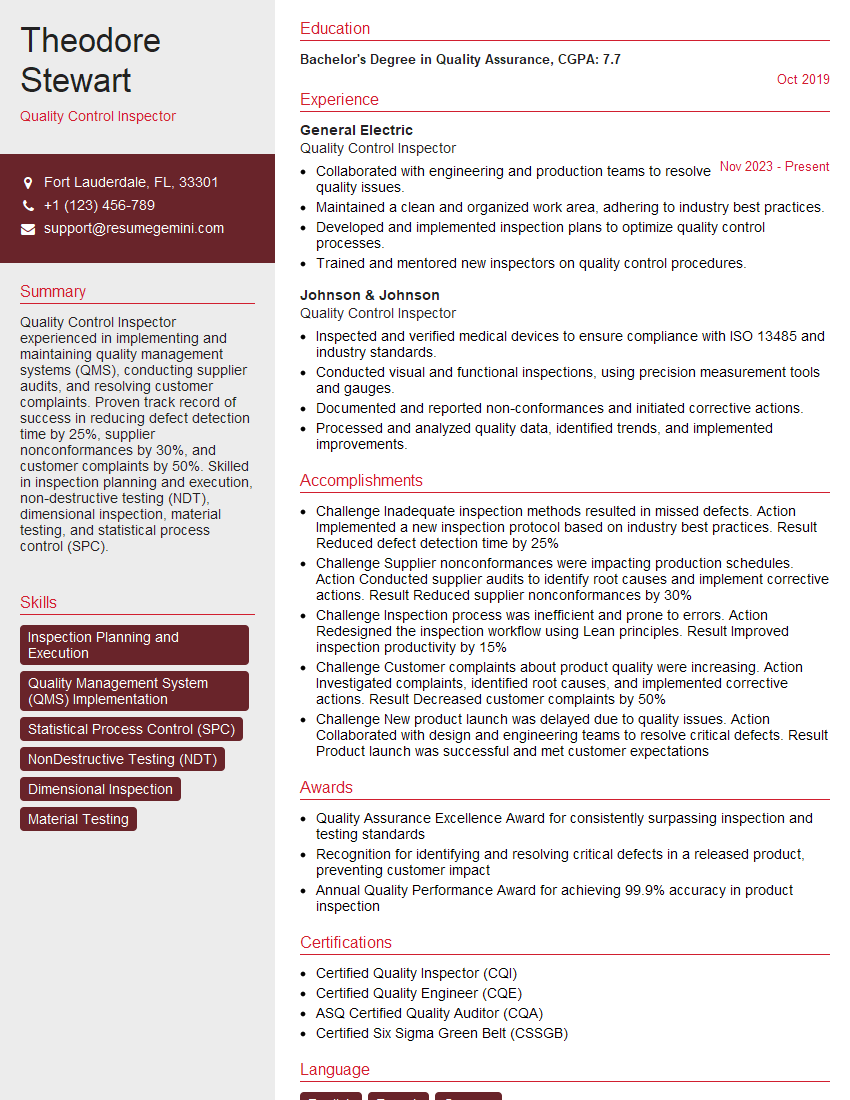
Quality Control Inspector Resume Sample
- Program Manager
- Operations Manager
- Product Manager
- Maintenance Manager
- Quality Manager
- Supply Chain Manager
- Engineering Manager
- Project Engineer
- Risk Manager
- Reliability Engineer
- Systems Engineer
- Process Engineer
- Test Engineer
- Design Engineer
- Quality Engineer
- Product Development Engineer
- Safety Engineer
- Manufacturing Engineer
- Technical Writer
- Quality Control Inspector
Explore more articles
Users Rating of Our Blogs
Share Your Experience
We value your feedback! Please rate our content and share your thoughts (optional).
What Readers Say About Our Blog
Very informative content, great job.
good