Cracking a skill-specific interview, like one for experience with offset printing on a variety of printing equipment, requires understanding the nuances of the role. In this blog, we present the questions you’re most likely to encounter, along with insights into how to answer them effectively. Let’s ensure you’re ready to make a strong impression.
Questions Asked in experience with offset printing on a variety of printing equipment Interview
Q 1. Describe your experience with different types of offset printing presses (e.g., sheetfed, web, perfector).
My experience encompasses a wide range of offset printing presses. I’ve worked extensively with sheetfed presses, primarily Heidelberg Speedmaster and Komori Lithrone models, handling various sheet sizes and configurations. These presses are ideal for high-quality, short-to-medium run jobs, offering excellent color consistency and registration accuracy. I’m also proficient with web offset presses, having experience on a Goss Sunday 2000. Web presses are suited for high-volume, long-run jobs like newspapers and magazines, prioritizing speed and efficiency. Finally, I’ve operated perfector presses (which print both sides of the sheet in a single pass), significantly increasing productivity for double-sided projects. Each press type requires a different approach to makeready and operation, necessitating a deep understanding of its unique capabilities and limitations.
For example, while a sheetfed press allows for greater control over individual sheets and intricate designs, a web press demands a more streamlined workflow to handle the continuous flow of paper. My experience allows me to adapt my skills to any press type, ensuring optimal results.
Q 2. Explain the process of setting up a job on an offset press, including makeready.
Setting up a job on an offset press, including makeready, is a multi-stage process demanding precision and attention to detail. It begins with a thorough review of the job specifications, including the artwork, paper stock, and desired ink colors. Next, we mount the printing plates (either manually or via automated plate changers) onto the press cylinders, ensuring perfect registration. This is followed by ink and water adjustments – finding the optimal balance is crucial for achieving sharp, well-defined images and preventing problems like mottle or slurring.
Makeready itself involves several steps: we’ll run a series of test prints (often called ‘proofs’) to assess the color balance, registration, and overall print quality. Adjustments are made iteratively, focusing on ink density, fountain solution levels, and roller settings, until the desired results are achieved. We carefully monitor the paper feed and sheet handling to prevent jams or misfeeds. The entire process requires a keen eye for detail and a systematic approach. It’s like fine-tuning a complex instrument; each component plays a crucial role in the final output. Once everything aligns, we proceed to the full print run, continuously monitoring the quality to ensure consistency throughout.
Q 3. How do you ensure accurate color matching on an offset press?
Accurate color matching in offset printing is a critical aspect of delivering high-quality prints. It involves a combination of pre-press preparation and press-side adjustments. We start by using a color management system (CMS) during the pre-press stage, ensuring that the digital artwork accurately represents the final printed colors. This usually involves color profiling of the press and the specific paper being used. On the press, we use color measurement devices such as spectrophotometers or densitometers to compare the printed colors against the target values from the proof or standard.
We adjust the ink balance (the amount of each CMYK ink) and the fountain solution (which controls ink absorption) to achieve a precise match. This is an iterative process, involving multiple test prints and adjustments until we reach the target color within acceptable tolerances. For critical color matching jobs, we often rely on color standards like Pantone, ensuring consistent colors across different projects and runs. Experience is vital here, as skilled press operators can identify and correct color deviations quickly and efficiently.
Q 4. What are the common causes of printing defects in offset printing, and how do you troubleshoot them?
Common printing defects in offset printing can stem from various sources. For example, slurring can be caused by improper ink-water balance, while mottle (uneven ink distribution) can result from insufficient ink viscosity or roller problems. Hickies (small specks of dirt or debris) often indicate insufficient cleaning or contamination. Set-off (ink transferring to the back of the next sheet) happens when the ink is too wet or the paper is too absorbent.
Troubleshooting these issues requires a systematic approach. We begin by carefully examining the printed sheets to identify the type and location of the defect. Then, we systematically investigate the potential causes, making adjustments based on our understanding of the printing process. For instance, to address slurring, we might adjust the ink-water balance by increasing the fountain solution. If we see hickies, we thoroughly clean the press and inspect rollers and blankets. Experience allows me to quickly pinpoint the likely cause and implement effective solutions, minimizing downtime and waste. A detailed understanding of the offset printing process is essential to troubleshoot effectively.
Q 5. Describe your experience with different types of printing plates (e.g., PS plates, CTP plates).
I have extensive experience with various types of printing plates, including both traditional photosensitive (PS) plates and computer-to-plate (CTP) plates. PS plates, while more cost-effective, involve a chemical processing step. They’re suitable for smaller print shops or projects with less stringent turnaround times. CTP plates, however, offer significant advantages in terms of efficiency and accuracy. They’re created directly from digital files, eliminating the need for film and chemical processing, resulting in faster turnaround times and enhanced precision.
My experience includes working with different plate materials and manufacturers, allowing me to select the most appropriate plate type for each specific job. Factors influencing this choice include the print run length, image complexity, and budget. For example, for long print runs with intricate detail, high-resolution CTP plates would be preferred for their durability and consistency. In contrast, for short runs, PS plates might suffice, providing a cost-effective solution.
Q 6. How do you maintain the quality of the printed product throughout the production process?
Maintaining print quality throughout the production process requires constant vigilance and a proactive approach. This starts with careful pre-press preparation, ensuring accurate color profiles and high-resolution artwork. During the press run, we continuously monitor the print quality, using color measurement devices and visual inspection to catch any deviations from the target. We regularly check the condition of the printing plates, rollers, and blankets, replacing them as needed to maintain optimal performance.
Regular press maintenance is also crucial, including cleaning and lubrication of moving parts. This minimizes the risk of mechanical issues impacting print quality. Finally, we carefully manage the paper feed and handling to prevent jams or misfeeds, which could lead to inconsistencies. Maintaining a clean and organized pressroom further minimizes the risk of defects. It’s like tending a garden; constant care and attention to detail are essential to harvest a bountiful crop. In this case, our harvest is high-quality, consistent prints.
Q 7. What is your experience with ink adjustments and color management systems?
Ink adjustments and color management systems are crucial components of my workflow. I’m proficient in making fine adjustments to ink density and color balance on the press using various methods, including adjusting ink keys, fountain solution levels and roller settings. This often involves using spectrophotometers to accurately measure and control ink values. I’ve used a variety of color management systems (CMS), ranging from simple densitometers to sophisticated software-based systems, to maintain color consistency across different projects and print runs. My experience with color management includes creating and applying ICC profiles to ensure accurate color reproduction from screen to press.
For example, I’ve successfully implemented profile-based workflow to achieve Pantone-matched color on various jobs. I’m comfortable working with both standard CMYK color spaces and spot color systems, ensuring accurate color replication regardless of the color model. Proficiency in ink adjustments and CMS is crucial for ensuring that the final printed output meets client expectations and industry standards. It’s like being a conductor of an orchestra; each instrument (ink, water, paper) must be perfectly balanced to produce harmonious music.
Q 8. How familiar are you with prepress processes and their impact on press performance?
Prepress is the crucial stage before actual printing, encompassing all steps from design to platemaking. My experience shows that a meticulous prepress process directly impacts press performance, efficiency, and print quality. Errors here can lead to costly reprints and delays. For example, incorrect color profiles can result in mismatched colors on the final print, while improper image resolution leads to blurry or pixelated output. I’m proficient in using various prepress software like Adobe Creative Suite and color management tools to ensure accurate color reproduction and optimal file preparation for different printing presses. I meticulously check for trapping issues, ensuring proper registration marks are present, and validating the final proof against the client’s requirements before proceeding to the printing stage. This proactive approach minimizes press downtime and ensures consistent, high-quality results.
Q 9. Describe your experience with different types of paper and their impact on printing quality.
Paper selection significantly impacts printing quality. My experience spans working with a wide array of papers, from coated stocks for vibrant color reproduction (like glossy magazine paper) to uncoated stocks (like book paper) that offer a more natural feel and are ideal for text-heavy projects. I’m familiar with different paper weights (grammage), finishes (matte, gloss, textured), and their suitability for various printing techniques. For instance, heavier stocks can handle more complex designs and embellishments, while lighter stocks are better suited for leaflets and brochures where cost-effectiveness is important. Understanding paper properties like absorbency, opacity, and surface smoothness is crucial. A paper with high absorbency might lead to ink bleeding, while low opacity can result in ‘show-through’ on the reverse side. I always discuss paper options with clients, considering their budget, intended use, and desired aesthetic outcome to select the most appropriate paper for the job.
Q 10. How do you ensure the safety of yourself and others while operating a printing press?
Safety is paramount in any printing environment. My experience includes rigorous adherence to safety protocols while operating printing presses. This starts with regular machine inspections to identify and address potential hazards like worn parts or loose components. Before starting any operation, I ensure all safety guards are in place, emergency stop buttons are readily accessible, and appropriate personal protective equipment (PPE) – including eye protection, gloves, and hearing protection – is worn. Proper handling of heavy paper rolls and ink containers is crucial, using equipment like forklifts and pallet jacks safely and according to procedures. I’ve also received and regularly update my training on emergency procedures, including fire safety and dealing with ink spills or machine malfunctions. Furthermore, I actively participate in safety briefings and encourage a collaborative safety culture within the team.
Q 11. What are your experiences with various paper feeding mechanisms?
I have experience with various paper feeding mechanisms, including sheet-fed and roll-fed systems. Sheet-fed presses use individual sheets, and their feeding mechanism is critical for accurate paper alignment and preventing jams. I’ve worked with different feeder types, including friction feeders and vacuum feeders, each with its strengths and limitations concerning paper weight and size. Roll-fed systems process paper from large rolls, requiring precise tension control to avoid wrinkles and ensure continuous feeding. Understanding the intricacies of these mechanisms is vital for efficient production. For instance, I troubleshoot paper jams by analyzing the cause—whether it’s a misaligned feeder, incorrect paper settings, or static electricity—and then implement corrective actions, such as adjusting feeder guides or using anti-static solutions. My practical experience enables me to optimize the feeding process for different paper types and sizes, minimizing downtime and maximizing productivity.
Q 12. Explain your experience with different types of printing inks (e.g., UV, vegetable-based).
My experience encompasses a range of printing inks, each with its unique properties and applications. Traditional oil-based inks are cost-effective but require longer drying times. UV (ultraviolet) inks cure instantly upon exposure to UV light, offering faster turnaround times and enhanced durability. They’re excellent for applications requiring immediate finishing or high-resistance to scratching. Vegetable-based inks are a more environmentally friendly alternative, using renewable resources and producing lower emissions. However, they may have limitations in terms of color vibrancy and drying time. I’ve also worked with other types such as metallic inks for special effects. Choosing the right ink depends on several factors, including the desired print quality, substrate (paper type), budget, and environmental considerations. My expertise lies in selecting and managing different inks to meet specific project requirements, ensuring optimal color consistency and print performance.
Q 13. How do you manage waste and ensure environmentally responsible printing practices?
Responsible waste management is a top priority. We minimize waste by accurately estimating print quantities, optimizing layout design to reduce paper usage, and employing efficient color management to avoid reprints due to color discrepancies. Ink waste is minimized by proper ink management, cleaning procedures, and regular maintenance of printing equipment. We recycle paper and cardboard diligently, following established procedures for waste segregation and disposal. We also use inks and other printing supplies from manufacturers committed to sustainability, using vegetable-based and low-VOC (Volatile Organic Compounds) inks whenever possible. Tracking our waste generation and implementing continuous improvement measures are vital to environmental responsibility. We aim to reduce our environmental footprint while maintaining high-quality printing standards.
Q 14. What is your understanding of different finishing techniques and their applications?
Finishing techniques significantly enhance the final product’s presentation and durability. My experience includes various finishing options, such as die-cutting (creating custom shapes), embossing/debossing (adding texture), lamination (adding a protective layer), and folding (creating brochures or leaflets). I’m also familiar with techniques like UV coating (adding a glossy or matte finish) and varnishing (providing a protective coating). The choice of finishing depends on the project’s specifications and desired outcome. For instance, lamination adds durability to a product, while embossing elevates its visual appeal. Understanding the capabilities and limitations of each technique allows me to recommend the most appropriate options to achieve the client’s vision, resulting in high-quality, professional-looking end products.
Q 15. Explain your experience with print quality control and inspection methods.
Print quality control is paramount in offset printing. It’s a multi-stage process ensuring the final product meets the client’s specifications and quality standards. My experience encompasses visual inspection, using tools like densitometers and spectrophotometers for precise color measurement, and examining the print for defects like dot gain, mottle, and slur.
- Visual Inspection: This is the first and often most crucial step. I meticulously check for issues such as color consistency, sharpness, registration (alignment of colors), and the presence of any defects like scratches or smudges. I’ve found that a keen eye and years of experience are invaluable here. For instance, I once spotted a subtle misregistration on a large-format poster only visible under specific lighting – a problem that would have gone unnoticed without careful scrutiny.
- Instrumental Measurement: Densitometers measure the density of ink, ensuring it matches the design specifications. Spectrophotometers provide a more precise color measurement, expressed in specific color spaces like CIE LAB, vital for color matching and consistency across different print runs. I use these instruments regularly to check if the color values align with the provided proof, making necessary adjustments during the press run to maintain consistency.
- Defect Analysis: Identifying and addressing print defects requires understanding their root causes. For example, dot gain (ink spreading beyond its intended area) can stem from incorrect ink viscosity, improper paper choice, or incorrect press settings. Similarly, slur (fuzzy edges) can be caused by incorrect impression pressure or worn rollers. By systematically analyzing defects, I can pinpoint the source of the issue and implement corrective measures.
Career Expert Tips:
- Ace those interviews! Prepare effectively by reviewing the Top 50 Most Common Interview Questions on ResumeGemini.
- Navigate your job search with confidence! Explore a wide range of Career Tips on ResumeGemini. Learn about common challenges and recommendations to overcome them.
- Craft the perfect resume! Master the Art of Resume Writing with ResumeGemini’s guide. Showcase your unique qualifications and achievements effectively.
- Don’t miss out on holiday savings! Build your dream resume with ResumeGemini’s ATS optimized templates.
Q 16. How do you handle press downtime and troubleshoot mechanical issues?
Press downtime is costly, so proactive maintenance and efficient troubleshooting are essential. My approach involves a systematic process:
- Identify the problem: This often starts with listening – unusual sounds from the press can be a significant clue. I also observe the press operation for any visible signs of malfunction.
- Consult documentation: I always refer to the press’s manuals and maintenance logs. This often helps pinpoint the issue and suggests solutions or troubleshooting steps.
- Systematic troubleshooting: If it’s a mechanical issue, I’ll methodically check components like rollers, dampening system, and the grippers. I utilize testing procedures to identify faulty parts. For example, checking ink viscosity and ensuring the dampening rollers are consistently applying the correct amount of water to the plates is crucial.
- Seek expert assistance if needed: Sometimes, the problem requires specialized knowledge or tools. I know when to call for professional support. For instance, for complex electrical problems, I wouldn’t hesitate to contact the equipment manufacturer’s service team.
- Preventative maintenance: Regular cleaning and lubrication of the press components are key to preventing downtime. I follow a detailed maintenance schedule, regularly cleaning ink and water systems, replacing worn parts proactively, and documenting all actions.
For example, during a recent run, I noticed a consistent misregistration. Through systematic checks, I determined it was due to wear on the grippers. Replacing the grippers immediately resolved the problem, avoiding further delays and waste.
Q 17. Describe your experience working with different types of substrates (e.g., cardstock, coated paper).
My experience encompasses a wide range of substrates, including various types of cardstock, coated and uncoated papers, and specialty stocks. Each substrate requires a different press setup. The understanding of how different substrates absorb ink and react to the printing process is critical.
- Cardstock: Thicker and more rigid than standard paper, cardstock requires adjustments in the press’s impression pressure to avoid damaging the rollers or creating unwanted indentations. The ink may also require adjustments due to the slower absorption rate.
- Coated Paper: Coated paper provides a smoother surface, resulting in sharper images and vibrant colors. However, it is more susceptible to scratches and scuffs, necessitating careful handling and adjustments to the press settings.
- Uncoated Paper: This type of paper has a more porous surface, absorbing ink more readily and possibly resulting in greater dot gain. Adjustments to ink viscosity and press settings are necessary to optimize the print quality.
- Specialty Stocks: Working with textured papers, synthetic materials, or metallic papers requires specialized knowledge of the substrate’s properties and corresponding press configurations. Each substrate has its own peculiarities and requires careful consideration to achieve the desired print quality.
Understanding the unique properties of each substrate is crucial for achieving consistent and high-quality results. For example, when printing on a textured paper, I would adjust the impression pressure and potentially the ink viscosity to ensure proper ink transfer and to avoid damaging the delicate texture of the paper.
Q 18. What is your experience with pre-flighting and proofing?
Preflighting and proofing are critical steps before a job goes to press. Preflighting involves checking the digital file for potential issues that could cause problems during printing. Proofing involves creating a physical or soft proof to verify color accuracy and overall design.
- Preflighting: I utilize preflight software to check for issues such as missing fonts, incorrect color profiles, low-resolution images, and improper bleeds. This software helps catch errors before they reach the press, saving time and materials. For instance, a missing font would cause the job to fail mid-print, creating significant delays and potentially additional costs.
- Proofing: Soft proofs (digital proofs) provide a preview of the final print on screen, allowing for last-minute adjustments. Hard proofs (printed proofs), often using a proofing system that simulates the final print process, ensure color accuracy and provide a physical representation of the printed product. I carefully compare the proofs to the client’s expectations, making necessary adjustments before the main printing run begins.
I’ve found that thorough preflighting and proofing prevent costly errors and ensure that the final product closely resembles the client’s vision. A recent project involving a complex multi-color design benefited significantly from these steps; preflighting revealed an issue with image resolution, and proofing caught a slight color deviation that we were able to correct before the full-scale print run.
Q 19. How do you interpret and follow job tickets and instructions?
Job tickets are the roadmap for each printing job. They contain crucial information, including the client’s specifications, quantity, paper type, ink colors, and finishing instructions. I meticulously review each job ticket before beginning the print run.
My process involves:
- Verifying all information: This includes double-checking the client’s specifications against the provided digital files and proofs.
- Setting up the press according to the job ticket: This involves selecting the correct paper, inks, and press settings.
- Monitoring the printing process: I constantly monitor the press during the run, making necessary adjustments to ensure that the output matches the job ticket’s specifications.
- Documenting any deviations or challenges: If any unexpected issues arise, I meticulously document the problem, my solution, and the resulting outcome.
Accurate interpretation of job tickets is crucial for efficient production. A misunderstanding could result in wasted materials and delays. I’ve trained myself to be meticulous and thorough in reviewing these tickets; each detail is crucial to ensure flawless execution.
Q 20. Describe your experience with press maintenance and cleaning procedures.
Press maintenance and cleaning are crucial for maintaining print quality and minimizing downtime. My experience includes daily, weekly, and monthly maintenance procedures. I follow a rigorous cleaning schedule to ensure the press remains in optimal condition.
- Daily Cleaning: This involves cleaning the ink and water systems, removing any excess ink or debris from rollers and blankets, and checking for any signs of wear and tear.
- Weekly Cleaning: A more thorough cleaning of the press, often including cleaning difficult-to-reach areas. This could also involve checking and cleaning the dampening system, crucial for maintaining even ink distribution.
- Monthly Maintenance: More extensive procedures, such as a full inspection of the rollers, plates, and other key components, may be carried out. This often involves lubrication of moving parts and replacing worn components proactively.
Regular maintenance prevents problems before they arise. Ignoring maintenance can lead to costly repairs and significant downtime. I regularly document all maintenance activities to ensure proper tracking and prevent future issues. I see press maintenance not just as a chore, but as a critical aspect of ensuring high-quality output and efficient production.
Q 21. What is your experience with different types of imposition and layout?
Imposition refers to the arrangement of pages on a sheet before printing to optimize the printing process and reduce waste. Layout involves the overall design and arrangement of elements on each page. My experience spans a range of imposition and layout techniques, including those suited for different printing presses and finishing requirements.
- Sheet-fed imposition: I am proficient in various imposition strategies for sheet-fed presses, optimizing page arrangements to minimize paper waste and maximize efficiency. This often involves using specialized software to create imposition layouts, taking into account factors such as sheet size, number of pages, and finishing requirements (folding, binding).
- Roll-fed imposition: I have experience working with roll-fed presses, where imposition is crucial for managing the continuous paper flow and optimizing printing efficiency. This often involves designing layouts for large-format printing such as posters or banners.
- Different binding methods: Imposition changes based on the final binding. For example, the imposition for a saddle-stitched booklet will differ from that of a perfect-bound book. My experience helps me choose and optimize the imposition to be compatible with the chosen binding method.
Understanding imposition and layout is vital for efficient printing. Incorrect imposition can lead to significant waste and potential errors. My understanding of these concepts ensures I create efficient layouts for various projects, optimizing both production speed and minimizing material waste.
Q 22. How do you manage and prioritize multiple printing jobs simultaneously?
Managing multiple offset printing jobs effectively requires a systematic approach. I prioritize jobs based on several factors: deadlines, client priority, and the complexity of the print. I typically use a job scheduling system, either digital or a physical Kanban board, to visualize the workflow. This allows me to see at a glance which jobs are urgent and which have more flexibility. For example, if I have a rush job with a tight deadline alongside a larger, less time-sensitive project, I’ll allocate my resources – personnel, presses, and materials – accordingly. The rush job gets priority access to the press, while we prepare the elements for the larger job in the background. This includes tasks such as pre-press checks, platemaking, and ink mixing. Careful planning and efficient resource allocation are crucial to avoid delays and maintain quality across all projects.
- Deadline Prioritization: Jobs with imminent deadlines are always tackled first.
- Client Importance: High-value clients or those with a history of demanding schedules receive preferential treatment.
- Job Complexity: Jobs requiring intricate setups or specialized techniques are planned to minimize downtime and resource conflicts.
Q 23. What are your skills in using different types of printing software?
My proficiency in printing software is extensive. I’m highly skilled in Adobe Creative Suite (Photoshop, Illustrator, InDesign), which are essential for pre-press preparation. I also have experience with RIP software such as EFI Fiery and Kodak Prinergy, crucial for controlling color accuracy and managing the output to the printing press. Furthermore, my experience encompasses various prepress workflow management systems, including those that integrate with MIS (Management Information Systems) to track job progress, costs, and deadlines. I am comfortable working with various file formats, including PDF, TIFF, and EPS. I’m also familiar with color management tools to ensure consistent color reproduction across different devices and mediums.
For instance, in a recent project, using Fiery software, I identified a minor color profile mismatch that could have resulted in significant off-color printing. By adjusting the profile settings, I saved the client a costly reprint and ensured the project was delivered on time and to spec.
Q 24. How do you communicate effectively with colleagues and supervisors?
Effective communication is paramount in a print shop environment. I believe in proactive and transparent communication with both colleagues and supervisors. This includes regular updates on job progress, promptly addressing any challenges, and contributing actively in team discussions. I utilize a variety of communication methods depending on the situation: face-to-face conversations for complex issues, email for routine updates, and instant messaging for quick clarifications. I am always careful to maintain a professional and respectful tone, ensuring clear and concise messaging to avoid misinterpretations.
For example, if a problem arises during a print run, I’ll immediately inform my supervisor and propose potential solutions. This allows for timely intervention and prevents delays from escalating.
Q 25. What are your experience with quality control systems and standards (e.g., ISO)?
I have extensive experience with quality control systems and standards, including ISO 9001 principles. My approach is multifaceted, focusing on preventing defects rather than merely detecting them. This involves rigorous pre-press checks, including careful inspection of artwork for resolution, color accuracy, and trapping. During the printing process, I conduct regular checks on color consistency, ink density, and register. Post-press quality checks include verifying final output for defects such as smudging, misregistration, or paper imperfections. I meticulously document all checks and findings to maintain a clear audit trail. My experience encompasses the use of colorimeters and densitometers to objectively measure and ensure consistent color across the print run. I am also familiar with different quality control metrics relevant to the offset printing industry, contributing to overall efficiency and minimizing waste.
Q 26. How do you stay updated on the latest advancements in offset printing technology?
Staying updated on advancements in offset printing is crucial for maintaining competitiveness. I achieve this through several methods. I regularly read industry publications, such as trade magazines and online journals. I actively participate in industry conferences and workshops to learn about new technologies and best practices. I’m also a member of relevant professional organizations which provides access to webinars, training materials, and networking opportunities with other professionals. Furthermore, I closely monitor the websites and announcements of major equipment manufacturers to be aware of the latest innovations in press technology, automation, and workflow solutions. I also actively experiment with new software and techniques on smaller projects to assess their practical application in real-world scenarios.
Q 27. Describe a time you solved a complex problem related to offset printing.
One particularly challenging situation involved a rush order for a high-profile client requiring a metallic ink application. During the run, we encountered unexpected issues with the metallic ink, causing inconsistent coverage and shimmering effects. Initially, we tried adjusting the ink viscosity and press settings, but the problem persisted. After a thorough examination, I realized that the substrate, a specialized paper, was reacting differently to the metallic ink than anticipated. We then consulted with the paper supplier, who suggested using a specific printing temperature. Following their recommendation and after adjusting the press temperature, we successfully completed the job to the client’s satisfaction, and in time for the deadline. It taught me the importance of thorough substrate analysis and effective collaboration with suppliers to resolve unforeseen printing complications.
Q 28. What are your salary expectations for this role?
Based on my experience and skills, and considering the specifics of this role and the industry standards in this region, my salary expectations are in the range of [Insert Salary Range Here]. I am flexible and open to discussing this further based on a detailed review of the job description and the comprehensive benefits package offered.
Key Topics to Learn for Offset Printing Equipment Interview Success
- Understanding Offset Printing Principles: Grasp the fundamental mechanics of offset lithography – from image transfer to ink distribution. Be prepared to discuss the four-color process (CMYK) and its implications.
- Experience with Various Printing Presses: Detail your experience with different types of offset presses (e.g., sheetfed, web, perfecting). Highlight your proficiency with specific machine models and their unique features.
- Pre-Press Preparation: Discuss your familiarity with file preparation, color management (including ICC profiles), and imposition techniques. Explain how you ensure print-ready files meet quality standards.
- Press Operation and Maintenance: Describe your practical experience in operating offset presses, including makeready, color registration, and troubleshooting common issues (e.g., slurring, ghosting, dot gain). Highlight any preventative maintenance tasks you’ve performed.
- Quality Control and Troubleshooting: Detail your methods for identifying and correcting print defects. Explain your approach to problem-solving and your ability to maintain consistent print quality across different jobs and equipment.
- Different Paper Stocks and Ink Types: Discuss your experience working with various paper types (coated, uncoated, specialty papers) and ink types (UV, vegetable-based, etc.). Explain how these choices impact print quality and the overall process.
- Production Workflow and Scheduling: Show your understanding of efficient production workflows, job scheduling, and managing deadlines within a printing environment. Highlight your experience collaborating with other team members.
- Safety Procedures and Regulations: Demonstrate your awareness and adherence to safety protocols in a printing press environment. This includes proper handling of chemicals and equipment.
Next Steps: Boost Your Career Prospects
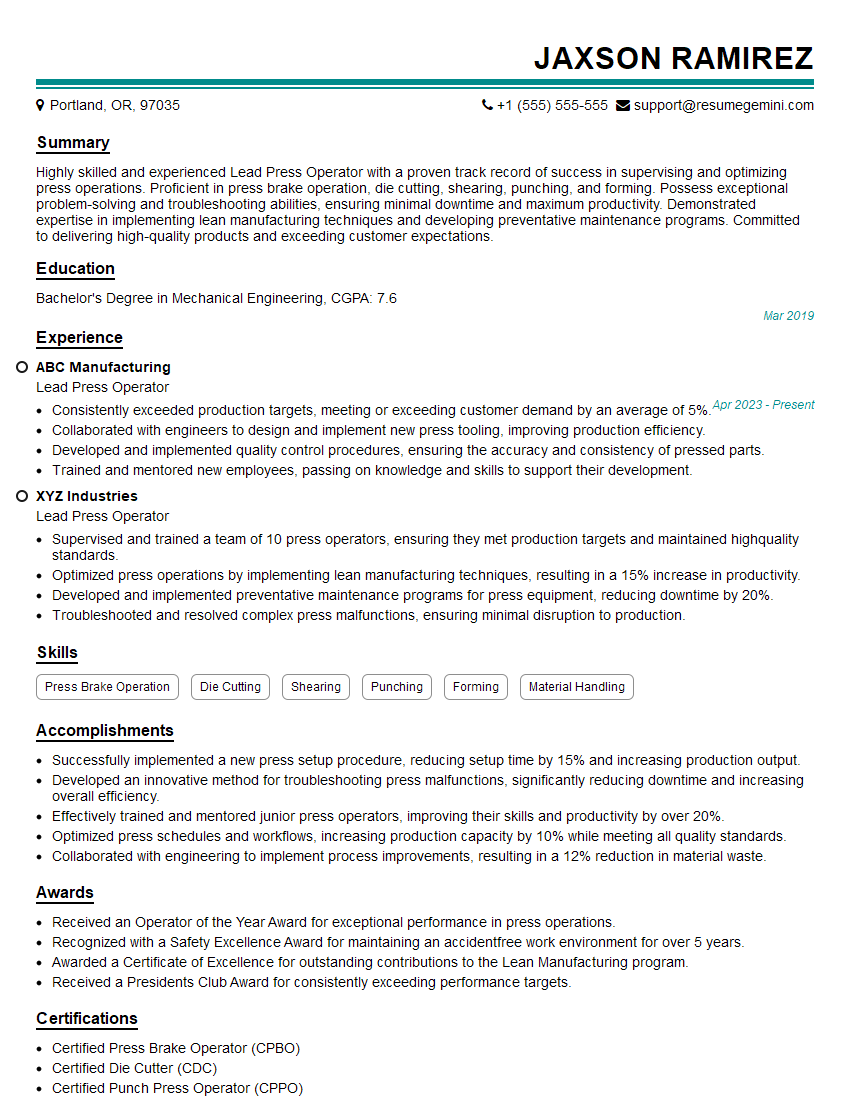
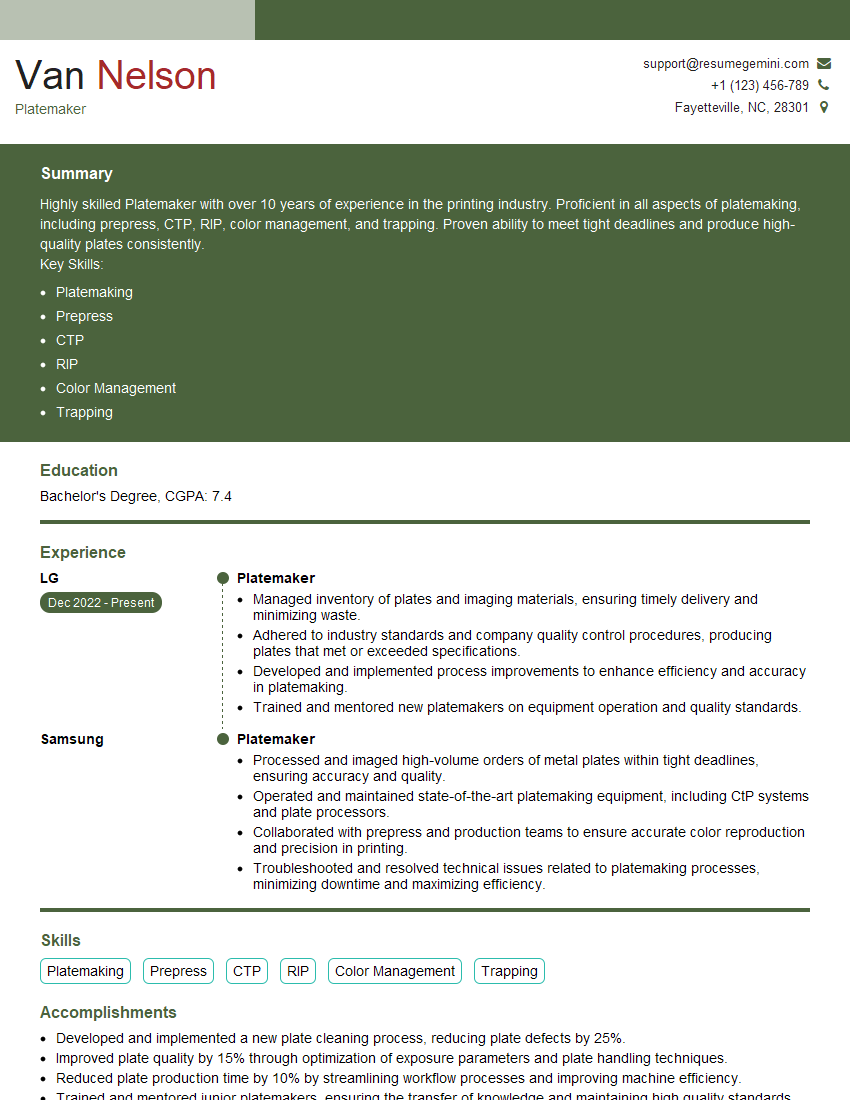
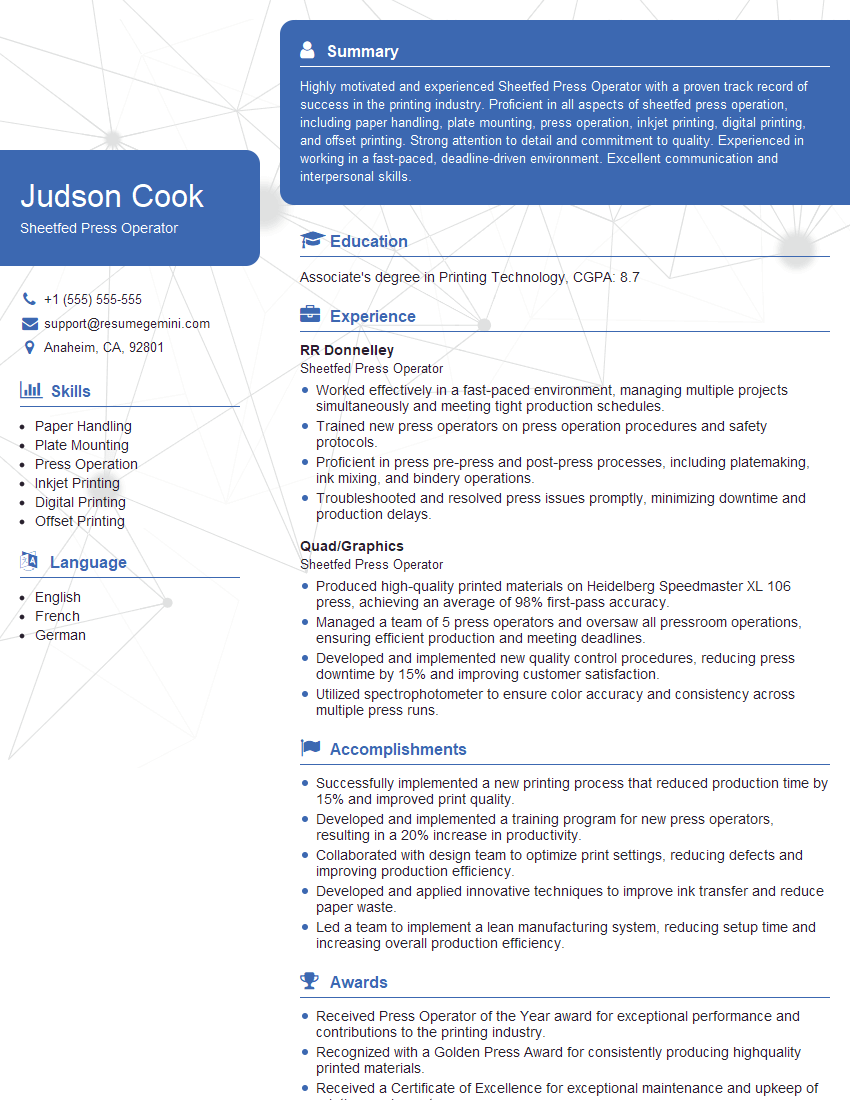
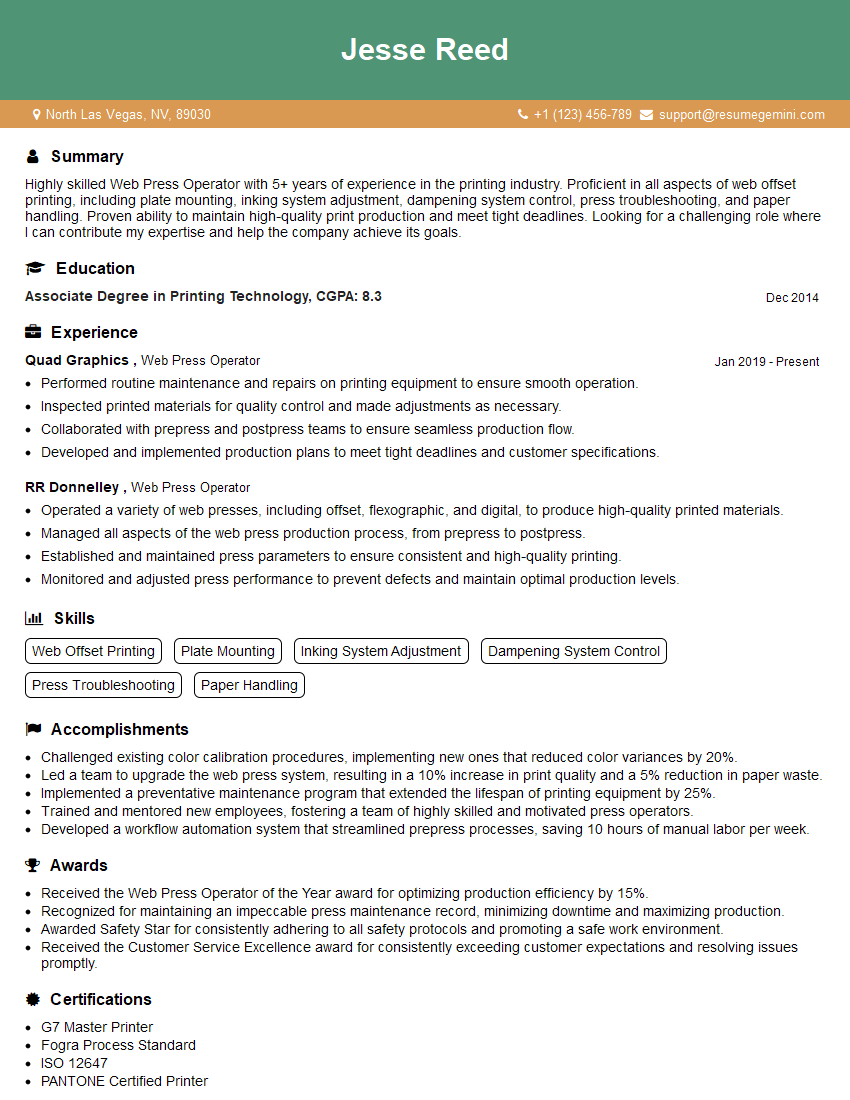
Mastering offset printing techniques and demonstrating a versatile skill set with various printing equipment is crucial for career advancement in the graphic arts industry. It opens doors to more senior roles with increased responsibility and higher earning potential. To maximize your job search success, create a compelling and ATS-friendly resume that effectively highlights your skills and experience. ResumeGemini is a trusted resource to help you build a professional resume that stands out. We provide examples of resumes tailored to showcasing experience with offset printing on a variety of equipment, helping you present your qualifications in the best possible light.



Explore more articles
Users Rating of Our Blogs
Share Your Experience
We value your feedback! Please rate our content and share your thoughts (optional).
What Readers Say About Our Blog
Very informative content, great job.
good