Unlock your full potential by mastering the most common Experience with recycling and waste reduction programs interview questions. This blog offers a deep dive into the critical topics, ensuring you’re not only prepared to answer but to excel. With these insights, you’ll approach your interview with clarity and confidence.
Questions Asked in Experience with recycling and waste reduction programs Interview
Q 1. What are the main components of a successful recycling program?
A successful recycling program hinges on several key components working in harmony. Think of it like a well-oiled machine – each part is crucial for optimal function. These components include:
- Public Awareness and Education: A well-informed public is the cornerstone. Effective communication campaigns are essential to educate residents about what materials are recyclable, how to properly sort them, and the importance of participating. This might involve flyers, social media campaigns, workshops, and community events.
- Convenient Collection Systems: Easy access to recycling bins is critical. This includes readily available curbside pickup, drop-off centers strategically located throughout the community, and clear labeling of bins. The system needs to be user-friendly to encourage participation.
- Material Processing and Market Development: The program must have a robust system for collecting, sorting, processing, and ultimately selling the recycled materials. Strong market demand for recycled materials is vital to the program’s financial sustainability. Without buyers, the whole system grinds to a halt.
- Monitoring and Evaluation: Regularly tracking key metrics such as recycling rates, contamination levels, and program costs is crucial for assessing effectiveness and making necessary adjustments. Data-driven decision-making helps optimize the program over time.
- Strong Partnerships and Collaboration: Effective recycling programs require collaboration between government agencies, waste management companies, businesses, and community organizations. This ensures resources are effectively allocated, and responsibilities are clearly defined.
For example, a program might partner with local schools to educate children about recycling, creating a ripple effect of environmentally conscious behavior within families.
Q 2. Describe different waste sorting methods and their effectiveness.
Waste sorting methods vary greatly in complexity and effectiveness. They range from simple manual sorting to highly automated systems. Let’s explore a few:
- Manual Sorting: This is the most basic method, typically involving workers sorting waste by hand on a conveyor belt. It’s labor-intensive and prone to human error, leading to lower efficiency and higher contamination rates. It’s often used in smaller facilities or as a supplementary method.
- Automated Sorting: Advanced technologies like optical sorters use sensors to identify different materials based on their properties (e.g., color, shape, size). These systems are more efficient and accurate than manual sorting, resulting in higher purity of recycled materials. Magnetic and eddy current separators are also used to separate ferrous and non-ferrous metals, respectively.
- Source Separated Collection: This involves residents separating their waste at the source – their homes or businesses – into different bins for various materials (paper, plastic, glass, etc.). This is generally considered the most effective method, as it minimizes contamination and maximizes the value of recovered materials.
The effectiveness of each method depends on factors like the volume of waste, the available budget, the desired purity of recycled materials, and the overall infrastructure of the recycling system. Automated systems are generally more expensive upfront but offer higher efficiency and purity in the long run.
Q 3. Explain the concept of ‘zero waste’ and its practical implementation.
Zero waste is a philosophy and a set of practices aimed at eliminating waste sent to landfills, incinerators, or the environment. It’s about designing and managing materials and products to minimize waste at every stage of their lifecycle, from sourcing raw materials to disposal. It isn’t about achieving absolute zero waste, but striving for a continuous reduction.
Practical implementation involves a multi-pronged approach:
- Reduce: Minimizing consumption and prioritizing reusable items over disposables.
- Reuse: Finding alternative uses for items instead of discarding them.
- Recycle: Processing materials to create new products.
- Recover: Converting waste into energy or compost.
- Reject: Avoiding products with excessive packaging or unsustainable materials.
A community might achieve this through composting programs, promoting reusable shopping bags, implementing a robust recycling program, and encouraging businesses to adopt sustainable practices. A company might implement zero waste by optimizing packaging, using recycled materials in their production process, and designing products for durability and ease of repair.
Q 4. How do you measure the success of a waste reduction initiative?
Measuring the success of a waste reduction initiative requires a comprehensive approach that goes beyond simply tracking the amount of waste diverted from landfills. Key metrics include:
- Recycling Rate: The percentage of waste that is successfully recycled. This is a widely used indicator, but it needs to be considered alongside other factors.
- Waste Diversion Rate: The percentage of waste that is diverted from landfills through recycling, composting, or other methods. This offers a broader view of waste management success.
- Contamination Rate: The percentage of recyclable materials contaminated with non-recyclable items. High contamination rates significantly reduce the value and marketability of recycled materials.
- Cost-Effectiveness: Analyzing the costs associated with the program compared to the environmental and economic benefits. This evaluates the program’s fiscal efficiency.
- Public Participation Rate: The percentage of residents or businesses participating in the program. This measures the program’s reach and engagement within the community.
- Greenhouse Gas Emission Reductions: Quantifying the reduction in greenhouse gas emissions achieved by diverting waste from landfills.
By tracking these metrics over time, we can gain valuable insights into program effectiveness, identify areas for improvement, and justify continued investment in waste reduction efforts. For instance, a decrease in contamination rates might indicate a successful public awareness campaign.
Q 5. What are the key challenges in implementing a comprehensive recycling program?
Implementing a comprehensive recycling program faces numerous challenges:
- Contamination: Improper sorting and the inclusion of non-recyclable materials significantly reduce the value of recycled materials and can even contaminate entire batches, rendering them unusable.
- Lack of Public Awareness and Participation: Many people are unaware of what materials are recyclable or how to properly sort them. This reduces participation and efficiency.
- Market Fluctuations: The demand and price for recycled materials vary widely depending on global markets. Fluctuations can affect the financial viability of recycling programs.
- Infrastructure Costs: Setting up and maintaining the necessary infrastructure, including collection systems, sorting facilities, and processing plants, can be expensive.
- Technological Limitations: Some materials are difficult or costly to recycle using current technologies.
- Economic Factors: Recycling programs may require ongoing funding and support from local governments and other stakeholders. Economic downturns can compromise funding and limit capacity.
Addressing these challenges requires a multi-faceted approach involving public education, technological advancements, market development, and robust policy frameworks to create financial incentives and regulations that support a sustainable recycling sector.
Q 6. Discuss different recycling technologies and their applications.
Recycling technologies are constantly evolving to improve efficiency and expand the range of recyclable materials. Some key examples include:
- Mechanical Recycling: This involves physically separating and processing materials, often using processes like shredding, sorting, and washing. This is commonly used for paper, plastic, and metals.
- Chemical Recycling: This uses chemical processes to break down polymers into their building blocks, allowing for the creation of new plastics with different properties. It can handle materials that are difficult to recycle mechanically.
- Thermal Recycling: This involves using heat to recover energy from waste materials through incineration or gasification. The resulting energy can be used for electricity generation or heating.
- Bio-Recycling: This uses biological processes like composting or anaerobic digestion to break down organic waste, producing compost or biogas. It’s crucial for processing food scraps and yard waste.
The application of these technologies depends on the type of material being recycled and the overall goals of the recycling system. For example, mechanical recycling is widely used for common plastics like PET bottles, while chemical recycling is still developing but offers the potential to recycle more complex plastics.
Q 7. How do you handle contamination in recycling streams?
Contamination in recycling streams is a major issue that significantly reduces the value and usability of recycled materials. Effective management strategies include:
- Public Education: Clearly communicating what materials are acceptable for recycling and how to properly sort them. This often involves providing visual aids and simple guidelines.
- Improved Collection Systems: Using clearly labeled bins and providing separate containers for different materials helps minimize cross-contamination. Automated sorting systems can also help identify and remove contaminants more efficiently.
- Source Separation Programs: Encouraging residents and businesses to separate their waste at the source before collection improves the purity of recyclable materials.
- Quality Control at Processing Facilities: Implementing effective sorting and quality control measures at processing facilities can remove contaminants before they impact the final product.
- Contamination Tracking and Feedback: Monitoring contamination rates and providing feedback to communities about specific types of contaminants helps identify areas for improvement in public education and waste management strategies.
For instance, if a high percentage of plastic bags are found in the recycling stream, the program can focus educational efforts on explaining why plastic bags are not recyclable in that particular system and what alternatives are available.
Q 8. Explain the importance of waste audits in improving recycling rates.
Waste audits are crucial for boosting recycling rates because they provide a clear picture of what materials are actually being disposed of and where improvements can be made. Think of it like a health check for your waste stream. By meticulously analyzing the contents of waste bins, both before and after recycling programs are implemented, we can identify areas where education is needed, contamination rates are high, or the collection system is inefficient.
For example, a waste audit might reveal that a significant portion of recyclable plastic is contaminated with food residue, making it unrecyclable. This finding would then inform targeted educational campaigns focusing on proper rinsing and sorting techniques. Another example might show a lack of sufficient recycling bins in certain areas, leading to increased landfill waste. The solution would then be to increase the number and visibility of those bins. Essentially, a waste audit allows for data-driven decision-making, enabling program adjustments for optimal results.
Q 9. What are the environmental impacts of improper waste disposal?
Improper waste disposal has devastating environmental consequences. Landfills generate methane, a potent greenhouse gas, contributing significantly to climate change. Leaking landfills contaminate soil and groundwater with toxins, harming ecosystems and potentially human health. Littering pollutes our oceans and landscapes, harming wildlife and impacting the aesthetics of our communities. Improperly disposed plastics, in particular, persist in the environment for centuries, breaking down into microplastics that enter the food chain.
For instance, the uncontrolled dumping of electronic waste (e-waste) releases hazardous substances like lead and mercury into the soil and water, causing severe environmental damage and health risks. The accumulation of non-biodegradable waste in landfills reduces available land and requires significant resources for management. In essence, responsible waste disposal is paramount for environmental sustainability.
Q 10. Describe your experience with different types of waste (e.g., plastics, paper, organics).
My experience spans a wide range of waste types. With plastics, I’ve worked extensively on improving recycling rates by focusing on source separation and the reduction of contamination. This involves not just educating residents on proper sorting but also collaborating with manufacturers to design more easily recyclable packaging. For paper, the focus is often on maximizing recovery through efficient collection systems and partnering with paper mills to ensure material quality. Organics present a unique challenge and opportunity. I have experience implementing composting programs, both large-scale municipal composting facilities and smaller-scale community composting initiatives. The key is to reduce food waste at the source through public awareness campaigns and education programs.
One memorable project involved implementing a comprehensive food waste diversion program for a large university campus. This involved installing specialized compost bins, educating students and staff, and partnering with a local farm to use the compost for agricultural purposes. This project not only reduced landfill waste significantly but also promoted a sense of community and environmental responsibility.
Q 11. How do you educate and engage stakeholders in waste reduction efforts?
Engaging stakeholders is critical for successful waste reduction. My approach involves a multi-pronged strategy combining education, incentives, and community engagement. Educational campaigns can range from simple flyers and social media posts to interactive workshops and school programs tailored to different age groups and knowledge levels.
Incentives, such as reward programs for recycling or discounts for businesses employing sustainable waste practices, can also motivate participation. Community engagement involves collaborating with local leaders, community organizations, and businesses to build a collective sense of responsibility towards waste reduction. This can involve community cleanups, workshops on sustainable practices, and creating partnerships to promote local recycling and composting initiatives.
Q 12. What are your strategies for reducing landfill waste?
Strategies for reducing landfill waste focus on three key areas: reduce, reuse, recycle. ‘Reduce’ involves minimizing waste generation at its source through measures like promoting reusable products, reducing packaging, and implementing mindful consumption habits. ‘Reuse’ focuses on extending the lifespan of items through repairing, repurposing, and donating. ‘Recycle’ focuses on efficiently collecting, processing, and reusing materials whenever possible.
Beyond these core principles, innovative solutions like anaerobic digestion for organic waste (converting it to biogas) and advanced recycling technologies for plastics are crucial. This includes technologies that break down complex polymers into more easily recycled building blocks. Another crucial aspect is waste-to-energy programs which recover energy from non-recyclable waste through incineration.
Q 13. What are the economic benefits of effective waste management?
Effective waste management offers significant economic benefits. Recycling creates jobs in collection, processing, and manufacturing of recycled products. Reduced landfill space saves on operational costs associated with landfill maintenance and expansion. Furthermore, resource recovery from waste can create new revenue streams, such as the sale of recovered materials or energy production from waste-to-energy facilities. Efficient waste management systems can also attract businesses and investments that prioritize environmental sustainability.
For instance, the sale of recovered metals from recycling operations can generate significant revenue. Furthermore, reducing landfill costs frees up taxpayer money for other community programs. By reducing reliance on virgin materials, we support domestic industries and reduce our dependence on imports. The economic benefits can be substantial, both on a community and national level.
Q 14. How do you stay updated on the latest advancements in recycling and waste reduction?
Staying current in the ever-evolving field of recycling and waste reduction requires a multifaceted approach. I regularly attend conferences and workshops organized by organizations such as the EPA and industry associations. I actively follow industry publications, peer-reviewed research, and online resources that provide the latest advancements in technologies and best practices.
I also actively participate in professional networks and engage with experts in the field through online forums and collaborations on research projects. Staying connected to the global community of professionals ensures I’m aware of innovative solutions and new challenges in the field. This continuous learning approach allows me to constantly adapt my strategies and remain at the forefront of sustainable waste management practices.
Q 15. What are the regulatory requirements related to waste management in your region?
Waste management regulations in my region are quite comprehensive, focusing on minimizing environmental impact and promoting resource recovery. Key aspects include stringent regulations on landfill operations, aiming to reduce leachate and methane emissions. This often involves liner requirements, groundwater monitoring, and gas collection systems. There are also strict rules surrounding hazardous waste disposal, mandating proper handling, transportation, and treatment at licensed facilities. Furthermore, we have extended producer responsibility (EPR) programs for certain materials like packaging and electronics, holding producers accountable for the end-of-life management of their products. Finally, there are regulations governing recycling programs, often dictating minimum recycling rates for municipalities and providing guidelines for material sorting and processing. These regulations are regularly updated to reflect advancements in technology and scientific understanding of environmental best practices.
For example, our region’s recent updates to the landfill regulations include stricter limits on the amount of organic waste allowed, pushing for increased composting and anaerobic digestion. The EPR program for electronics mandates recycling rates for different components, such as circuit boards and batteries, promoting more efficient resource recovery and reducing electronic waste in landfills.
Career Expert Tips:
- Ace those interviews! Prepare effectively by reviewing the Top 50 Most Common Interview Questions on ResumeGemini.
- Navigate your job search with confidence! Explore a wide range of Career Tips on ResumeGemini. Learn about common challenges and recommendations to overcome them.
- Craft the perfect resume! Master the Art of Resume Writing with ResumeGemini’s guide. Showcase your unique qualifications and achievements effectively.
- Don’t miss out on holiday savings! Build your dream resume with ResumeGemini’s ATS optimized templates.
Q 16. Describe your experience with developing and implementing waste reduction policies.
In my previous role, I led the development and implementation of a city-wide waste reduction program. This involved a multi-faceted approach combining policy changes, public education, and infrastructural improvements. First, we implemented a comprehensive source separation program, providing residents with detailed guidelines and specialized bins for different waste streams (recycling, compost, trash). Alongside this, we rolled out a robust public awareness campaign, utilizing social media, community events, and educational materials to inform residents about proper waste sorting and the benefits of waste reduction. Simultaneously, we invested in upgrading our municipal composting and recycling facilities to handle increased volumes of materials. We also introduced financial incentives, such as discounts on waste collection fees for households with high recycling rates. The results were impressive: within three years, we saw a 25% increase in recycling rates and a 15% reduction in landfill waste.
A key challenge was overcoming initial resistance from residents unfamiliar with the new source separation system. We tackled this by offering personalized support, including home visits and tailored educational materials in multiple languages. Data analysis played a critical role, monitoring the effectiveness of our strategies and identifying areas requiring adjustment. For instance, we initially underestimated the volume of food waste, leading to adjustments in our composting infrastructure and public awareness campaigns.
Q 17. Explain the differences between recycling, composting, and landfilling.
Recycling, composting, and landfilling represent different approaches to managing waste, each with distinct characteristics. Recycling involves processing used materials into new products, conserving resources and reducing the need for virgin materials. Think of aluminum cans being melted down and reformed into new cans. Composting is a natural process that decomposes organic materials like food scraps and yard waste, producing a nutrient-rich soil amendment. This reduces landfill volume and creates a valuable resource for agriculture and landscaping. Landfilling, in contrast, involves disposing of waste in designated sites, often after some initial processing. While necessary for some materials, landfilling poses environmental challenges, including methane emissions and groundwater contamination. Ideally, we prioritize recycling and composting to minimize the need for landfilling.
- Recycling: Conserves resources, reduces pollution.
- Composting: Creates valuable soil amendment, reduces landfill burden.
- Landfilling: Least desirable option, potential environmental problems.
Q 18. How do you evaluate the cost-effectiveness of different waste management strategies?
Evaluating the cost-effectiveness of different waste management strategies requires a comprehensive approach. We typically use a life-cycle cost analysis (LCCA), considering all costs associated with each strategy, from collection and processing to disposal and potential environmental impacts. This includes factors such as infrastructure investment, operational costs, labor, transportation, and potential fines for non-compliance with regulations. We also factor in potential revenues from the sale of recycled materials. For example, we might compare the cost of expanding a recycling facility to accommodate increased volumes of plastics versus the cost of continued landfilling. The LCCA would include the capital costs of the facility upgrade, operating expenses, revenue from recycled plastic sales, and the avoided costs of landfilling (e.g., landfill fees, environmental remediation). By comparing the total life-cycle costs of different strategies, we can identify the most economically viable and environmentally sound option.
Q 19. What are your skills in data analysis related to waste management?
My data analysis skills are crucial to effective waste management. I’m proficient in using statistical software (like R or SPSS) and data visualization tools (like Tableau or Power BI) to analyze waste generation data, track recycling rates, identify trends, and evaluate the effectiveness of various programs. For example, I regularly use regression analysis to model the relationship between public awareness campaigns and recycling rates, allowing us to optimize campaign strategies. I also use spatial analysis to map waste generation hotspots, helping target resource allocation and improve collection efficiency. Furthermore, I use time series analysis to predict future waste generation based on historical data, facilitating better planning and resource allocation. This data-driven approach enables informed decision-making, optimization of resources, and continuous improvement of our waste management systems. I am also comfortable working with large datasets and performing data cleaning and preprocessing before analysis.
Q 20. How do you prioritize waste reduction initiatives based on their impact?
Prioritizing waste reduction initiatives requires a strategic approach that balances environmental impact with feasibility and cost-effectiveness. I use a multi-criteria decision analysis (MCDA) framework, considering factors such as environmental impact (e.g., greenhouse gas emissions reduction, resource conservation), economic benefits (e.g., cost savings, revenue generation), social equity (e.g., community engagement, access to services), and technical feasibility (e.g., availability of technology, infrastructure requirements). Each initiative is scored based on these criteria, allowing for a quantitative comparison and prioritization. For instance, a program that significantly reduces greenhouse gas emissions but requires substantial upfront investment might be prioritized over a less impactful but more affordable program. This framework enables a transparent and data-driven approach to decision-making, ensuring that resources are allocated to initiatives with the highest overall benefit.
Q 21. Describe your experience with different types of recycling facilities.
My experience encompasses various recycling facilities, including material recovery facilities (MRFs), composting facilities, and specialized facilities for hazardous waste. MRFs are large-scale operations that sort and process recyclables, often using automated equipment. I’ve worked with MRFs utilizing different technologies, such as optical sorters and eddy current separators, each with varying levels of efficiency and cost-effectiveness. Composting facilities range from small-scale community composters to large industrial facilities using different methods, including aerated static piles and in-vessel composting. I’ve also worked with facilities dedicated to hazardous waste treatment, including incineration, chemical stabilization, and landfilling, adhering to strict regulations and safety protocols. This diverse experience has given me a thorough understanding of the challenges and opportunities associated with different recycling technologies and operational strategies.
Q 22. What is your experience with waste tracking and reporting systems?
Waste tracking and reporting systems are crucial for effective waste management. They provide the data needed to understand waste generation patterns, identify areas for improvement, and demonstrate the success of implemented programs. My experience encompasses using various systems, from simple spreadsheets to sophisticated software platforms.
For example, in a previous role, we used a cloud-based system to track waste diversion rates across multiple facilities. This system allowed us to input data on the weight and type of waste collected, recycled, and sent to landfill. The system then generated reports showing diversion rates, material-specific data (e.g., tons of plastic recycled), and comparisons across different sites and time periods. This allowed us to identify underperforming areas and tailor interventions accordingly. We also integrated the system with our operational database to automatically capture data from weighing scales and optimize collection routes. Another project involved building a customized reporting system using Python and SQL to visualize waste data and create interactive dashboards for stakeholders.
The key features I look for in a waste tracking system are: real-time data entry, robust data validation capabilities to ensure accuracy, reporting and visualization tools capable of generating various chart types (bar charts, pie charts, line graphs) and customizable dashboards, integration capabilities with other operational systems, and secure data storage and access control.
Q 23. How do you handle conflict or disagreement within a waste management team?
Conflict within a team is inevitable, but effective conflict resolution is vital for a productive work environment. My approach focuses on open communication and collaborative problem-solving. I believe in fostering a culture of respect where everyone feels comfortable expressing their opinions and concerns.
When conflicts arise, I first strive to understand the root cause of the disagreement. I facilitate open dialogue, actively listening to all perspectives, and ensuring that everyone feels heard. I might use techniques like active listening, summarizing perspectives, and reframing negative statements. The goal is to transform a conflict into a collaborative problem-solving session.
If the disagreement involves differing technical approaches, I would encourage data-driven discussions. For example, we might analyze the performance data of different recycling technologies to support the best approach. In instances where personality clashes hinder progress, I mediate by focusing on shared goals, emphasizing the importance of teamwork, and helping team members find common ground. I also ensure that our team has access to resources that promote team building and effective communication strategies. In more severe cases, I would escalate the conflict to the appropriate management personnel and initiate a formal mediation process.
Q 24. How do you adapt recycling and waste reduction strategies to different contexts?
Adapting recycling and waste reduction strategies requires understanding the unique context of each situation. This includes factors such as the community’s socioeconomic characteristics, available infrastructure, existing waste management systems, and local regulations.
For example, in a low-income community, a program focused on maximizing the reuse and repair of existing items might be more effective than one centered around expensive recycling technologies. In a densely populated urban area, a comprehensive curbside recycling program is likely more feasible than in a sparsely populated rural area, where a community-based drop-off center might be a more appropriate approach.
My approach involves a thorough needs assessment to understand the specific challenges and opportunities. This includes engagement with the community, businesses, and local authorities. I then tailor strategies, selecting the most appropriate waste diversion techniques, considering access to facilities, education needs, and economic factors. For example, I’ve used a variety of approaches, including public awareness campaigns, educational workshops, and financial incentives to drive participation. The key is flexibility and responsiveness to the needs and limitations of each setting.
Q 25. What is your experience with life-cycle assessments (LCAs)?
Life-cycle assessments (LCAs) are crucial for evaluating the environmental impacts of products and processes throughout their entire life cycle, from raw material extraction to disposal. My experience involves conducting and interpreting LCAs to inform waste management decisions.
In one project, we conducted an LCA to compare the environmental impact of different packaging materials. This involved quantifying the energy consumption, greenhouse gas emissions, and waste generation associated with each material, from production to end-of-life. The results helped us select more environmentally friendly packaging options for our products. We used SimaPro software to perform the LCA, following ISO 14040 and 14044 standards. The LCA output included a detailed inventory of environmental impacts and a concise environmental profile for each packaging material that helped us make data-driven decisions.
LCAs are complex and require specialized skills and software. The key is understanding the scope of the assessment, selecting appropriate impact categories, and interpreting the results carefully. They are powerful tools for promoting sustainable waste management practices, helping to minimize environmental burden throughout a product’s entire lifecycle.
Q 26. Explain your understanding of circular economy principles.
The circular economy is a model that aims to minimize waste and maximize resource utilization by keeping materials in use for as long as possible. It contrasts with the traditional linear ‘take-make-dispose’ model. The circular economy focuses on three core principles:
- Design out waste and pollution: Designing products and processes that minimize waste and pollution from the outset.
- Keep products and materials in use: Extending the lifespan of products through reuse, repair, refurbishment, and recycling.
- Regenerate natural systems: Restoring and regenerating natural systems to support resource flows and maintain biodiversity.
My understanding of the circular economy informs my approach to waste management. I aim to design waste reduction strategies that align with these principles. For instance, I focus on promoting reuse initiatives, developing effective recycling programs, and supporting innovative technologies that allow for the recovery and reuse of valuable materials. Furthermore, I advocate for policies that incentivize the adoption of circular economy principles.
Q 27. Describe your experience working with different stakeholders (e.g., communities, businesses).
Working effectively with diverse stakeholders is essential for successful waste management initiatives. My experience includes collaboration with communities, businesses, and government agencies.
I’ve successfully engaged communities through public forums, surveys, and educational outreach programs. For example, in a community composting program, I worked closely with residents to address concerns, provide training, and build a sense of ownership. With businesses, I’ve developed tailored waste reduction plans, identifying opportunities for waste minimization and improving recycling practices. This often involved working directly with operations managers and procurement teams. And with government agencies, I’ve worked to secure funding, navigate regulatory requirements, and ensure compliance with environmental regulations.
Effective stakeholder engagement requires clear communication, empathy, and a willingness to find mutually beneficial solutions. It requires tailoring your approach to the different needs and perspectives of each stakeholder group, and effectively using methods such as open forums, surveys, and formal presentations to disseminate information and gather input.
Q 28. How do you measure and track key performance indicators (KPIs) related to recycling and waste reduction?
Measuring and tracking KPIs is critical for evaluating the effectiveness of recycling and waste reduction programs. The specific KPIs will vary depending on the program’s objectives, but common examples include:
- Waste diversion rate: The percentage of waste diverted from landfills through recycling, composting, and other methods. Formula:
(Total waste recycled + Total waste composted) / Total waste generated * 100 - Recycling rate: The percentage of recyclable materials actually recycled. Formula:
(Total weight of materials recycled) / (Total weight of recyclable materials generated) * 100 - Tons of waste per capita: The amount of waste generated per person in a given area.
- Landfill avoidance rate: The percentage of waste that is avoided through reduction and reuse.
- Cost savings associated with waste reduction: The monetary savings achieved through decreased waste disposal costs.
We use a combination of data collection methods, including manual data entry, automated data feeds from waste tracking systems, and data from waste haulers. Data is analyzed regularly, and reports are generated to track progress towards targets and identify areas needing improvement. We regularly review our KPI selection to make sure they are effectively tracking our progress towards overall sustainability goals.
Key Topics to Learn for Experience with Recycling and Waste Reduction Programs Interview
- Waste Stream Analysis: Understanding the composition of waste generated, identifying recyclable materials, and analyzing opportunities for reduction.
- Recycling Program Design & Implementation: Developing and executing effective recycling programs, including collection strategies, sorting methods, and processing techniques. Consider practical challenges like contamination rates and public engagement.
- Waste Reduction Strategies: Exploring methods to minimize waste generation, such as source reduction, reuse, and composting. Discuss the implementation of these strategies in various settings (residential, commercial, industrial).
- Composting and Anaerobic Digestion: Knowledge of composting processes, anaerobic digestion, and their role in sustainable waste management. Analyze the benefits and limitations of each method.
- Legislation and Regulations: Familiarity with relevant environmental regulations and policies related to waste management and recycling. Discuss how these regulations impact program design and implementation.
- Data Analysis and Reporting: Ability to collect, analyze, and interpret data related to waste generation, recycling rates, and program effectiveness. Demonstrate experience with reporting metrics and identifying areas for improvement.
- Stakeholder Engagement and Communication: Understanding the importance of effective communication with various stakeholders, including residents, businesses, and government agencies, to promote participation and achieve program goals.
- Sustainability Metrics and Reporting: Knowledge of key performance indicators (KPIs) used to measure the environmental and economic impacts of recycling and waste reduction programs.
- Technological Advancements: Awareness of emerging technologies in waste management, such as automated sorting systems and advanced recycling processes.
- Cost-Benefit Analysis: Ability to evaluate the economic feasibility of different waste management strategies and justify program investments.
Next Steps
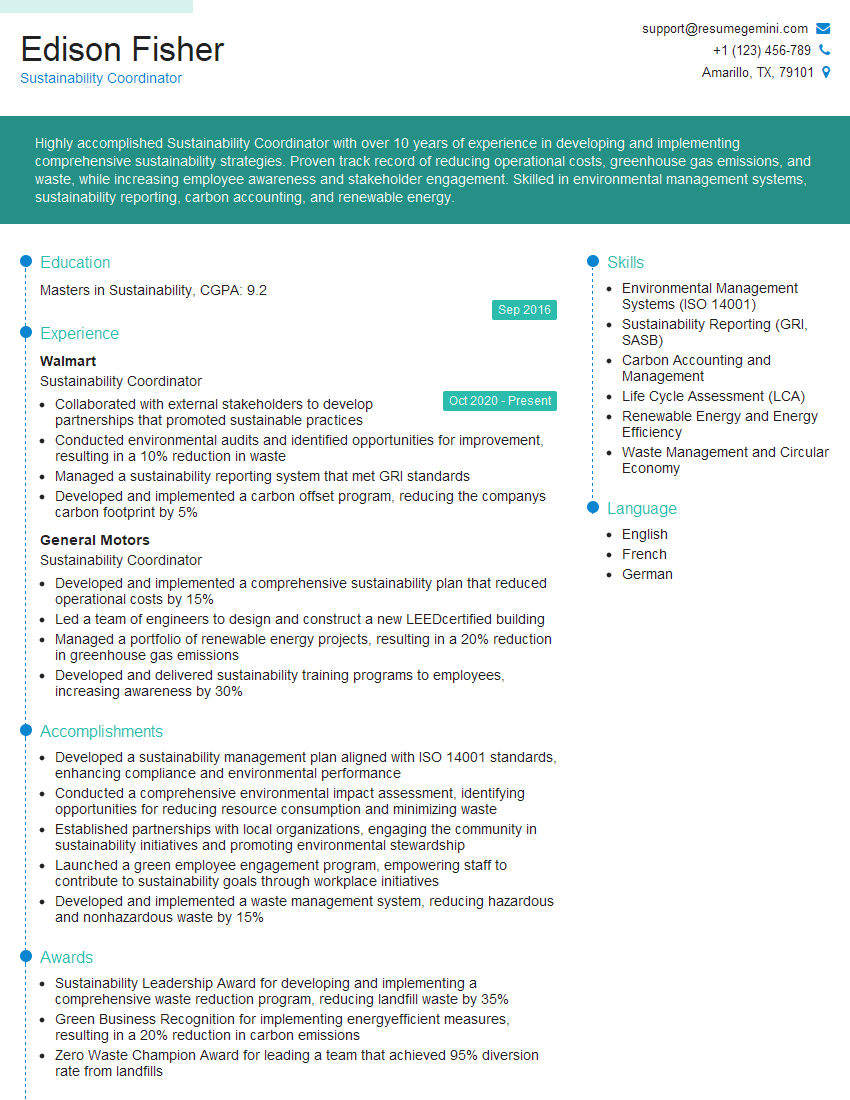
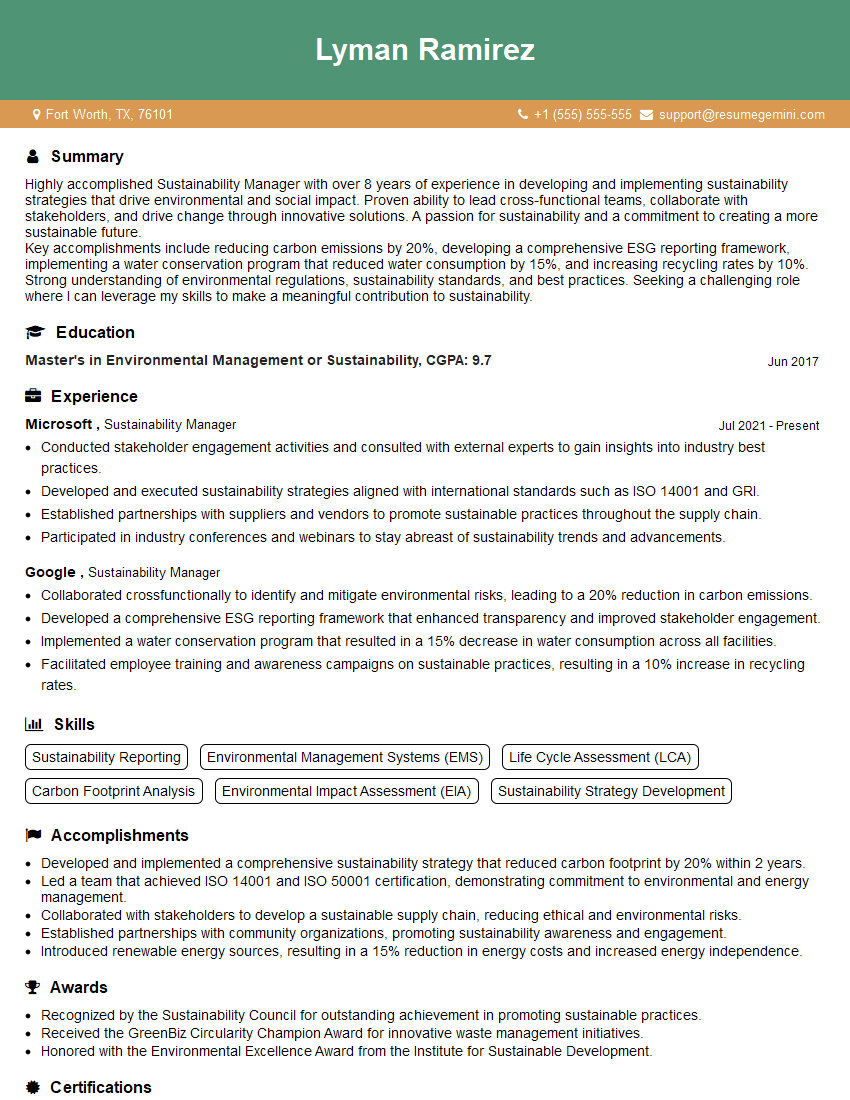
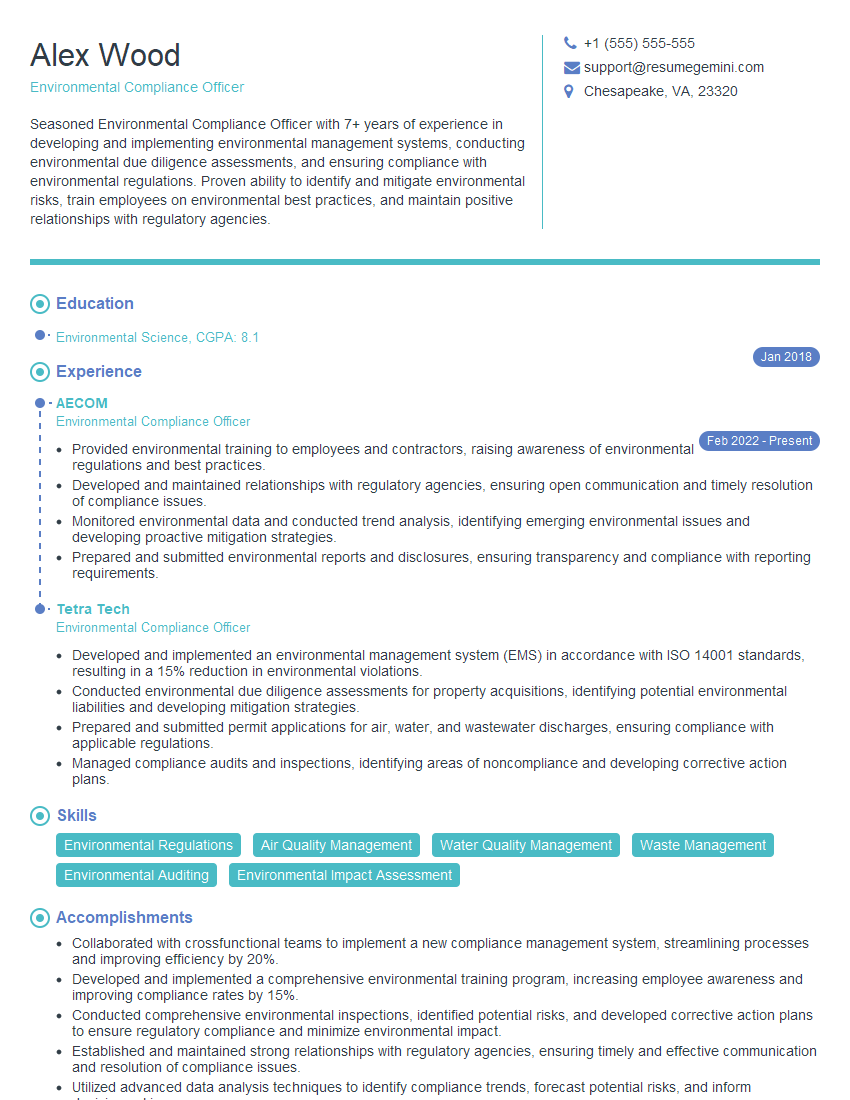
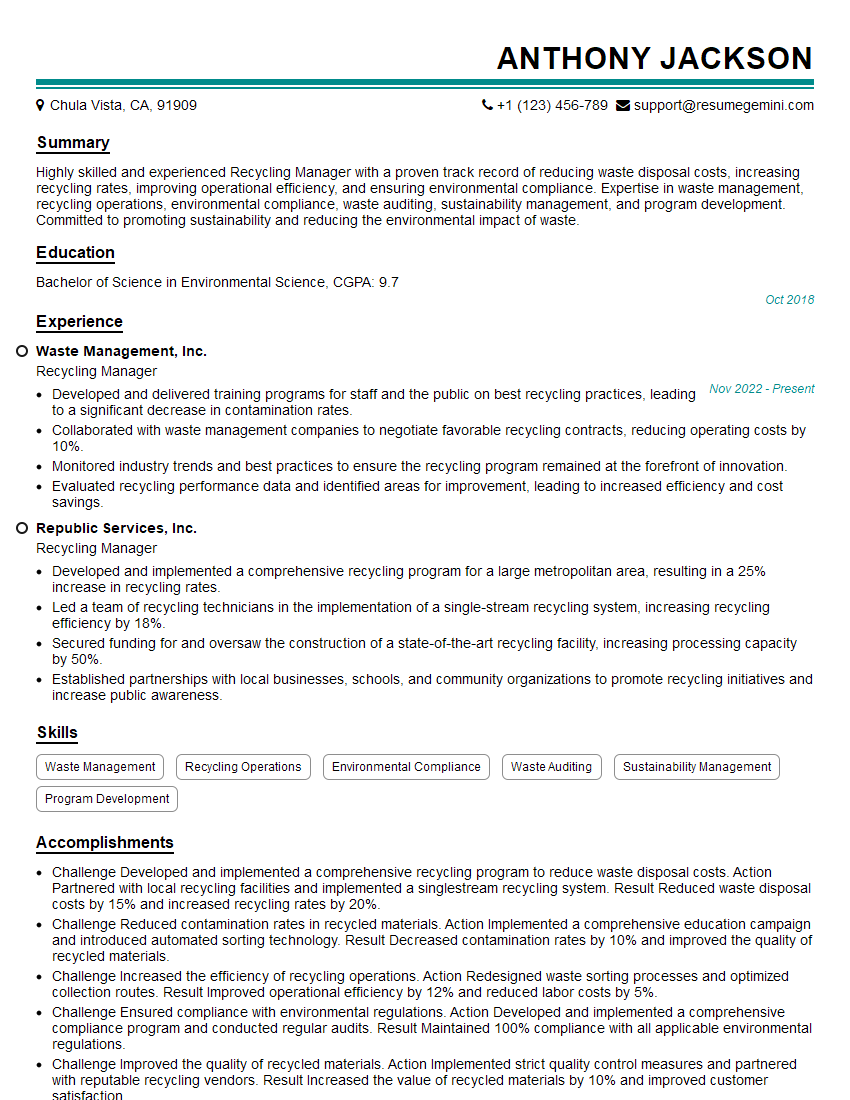
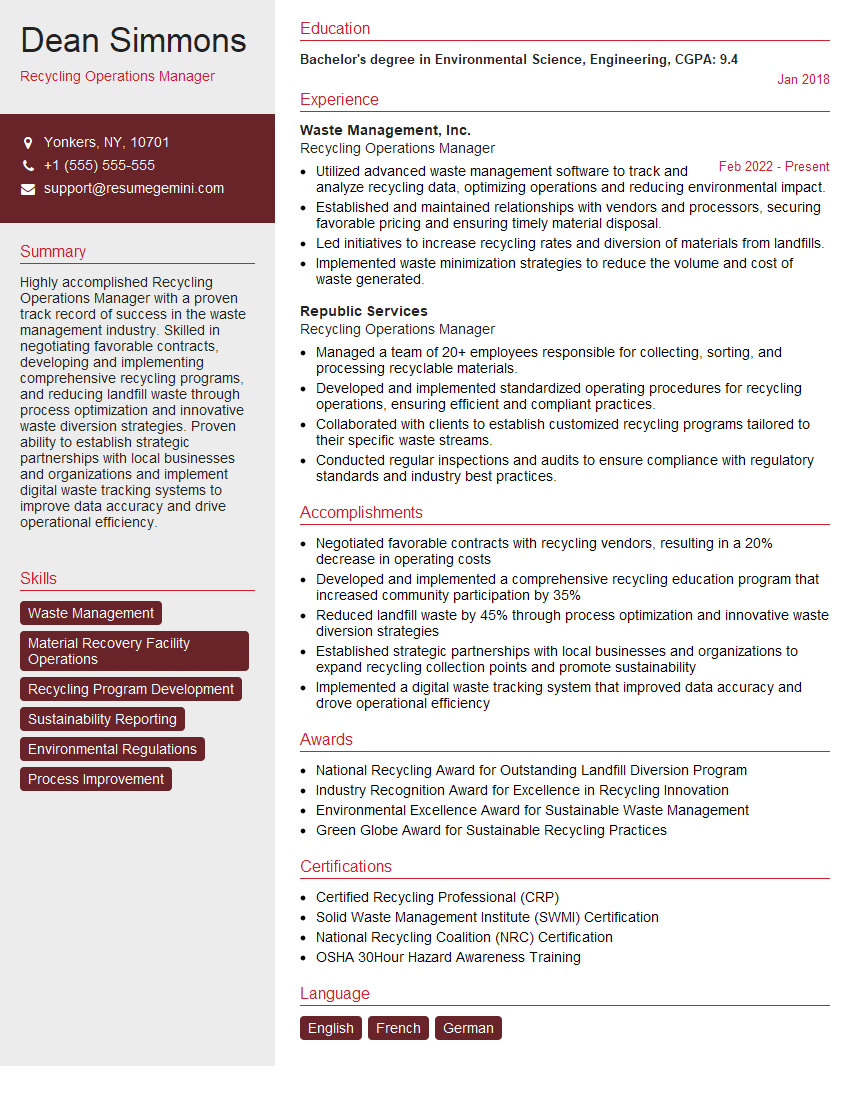
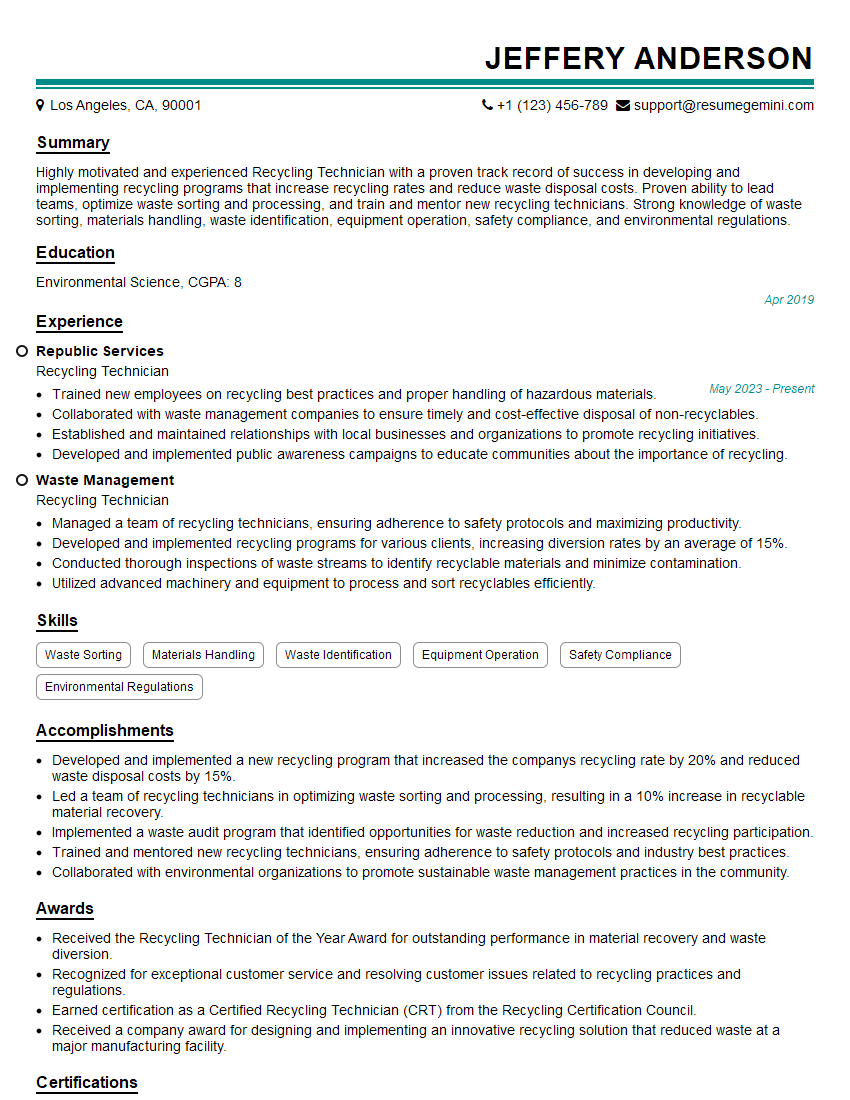
Mastering these concepts related to experience with recycling and waste reduction programs is crucial for career advancement in the environmental sector and related fields. A strong understanding of these topics will significantly enhance your interview performance and showcase your expertise. To maximize your job prospects, create an ATS-friendly resume that highlights your skills and experience effectively. ResumeGemini is a trusted resource that can help you build a professional and impactful resume. We offer examples of resumes tailored to Experience with recycling and waste reduction programs to guide you in creating your own compelling application materials.

Explore more articles
Users Rating of Our Blogs
Share Your Experience
We value your feedback! Please rate our content and share your thoughts (optional).
What Readers Say About Our Blog
Very informative content, great job.
good