Feeling uncertain about what to expect in your upcoming interview? We’ve got you covered! This blog highlights the most important Expert in Navigation and Pilotage interview questions and provides actionable advice to help you stand out as the ideal candidate. Let’s pave the way for your success.
Questions Asked in Expert in Navigation and Pilotage Interview
Q 1. Explain the difference between compass error and deviation.
Both compass error and deviation affect the accuracy of a magnetic compass, but they stem from different sources. Compass error is the total error, encompassing both deviation and variation. Think of it as the overall inaccuracy of your compass reading compared to true north. Deviation, on the other hand, is the error caused by magnetic interference on board the vessel itself. This interference can be from metal objects, electrical equipment, or even the vessel’s structure. Variation, a component of compass error, is the difference between magnetic north and true north, caused by the Earth’s magnetic field.
For example, imagine you’re sailing and your compass shows 30 degrees, but you know your true heading is 33 degrees. That 3-degree difference is the compass error. If 2 degrees of that error are due to deviation (from your ship’s iron), then 1 degree would be from variation (the difference between true and magnetic north in your location).
Q 2. Describe the process of calculating a vessel’s position using GPS.
Calculating a vessel’s position using GPS involves the receiver triangulating its position from signals received from multiple satellites. The GPS receiver measures the time it takes for signals to travel from each satellite to the receiver. Knowing the speed of light and the satellites’ precise locations (broadcast by the satellites themselves), the receiver can calculate the distance to each satellite.
This distance forms a sphere around each satellite. The intersection of at least three of these spheres provides two possible points where the receiver could be located. The receiver usually uses additional information, such as altitude or a fourth satellite, to resolve the ambiguity and determine the precise location. The latitude, longitude, and sometimes altitude are then calculated and displayed. Sophisticated GPS systems incorporate error correction techniques like Differential GPS (DGPS) or Wide Area Augmentation System (WAAS) to increase accuracy.
Q 3. How do you correct for magnetic variation?
Correcting for magnetic variation involves adjusting your compass reading to account for the difference between magnetic north and true north. This is done using a variation chart or the variation information found on your chart. Variation changes with location and over time. It is often shown on nautical charts as lines of equal variation called isogonic lines.
The process involves either adding or subtracting the variation to the magnetic heading, depending on whether the magnetic north is to the east or west of true north. For instance, if the variation is 10° East and your magnetic compass reading is 090°, the true heading is 080° (090° – 10°).
To illustrate, imagine a navigator finding their compass heading to be 100 degrees magnetic but a chart showing 10 degrees east variation. This means their True Heading is 90 degrees (100 degrees -10 degrees).
Q 4. What are the different types of charts used in navigation?
Many types of charts are used in navigation, each serving a specific purpose. Some common examples include:
- Nautical Charts: These are the most common charts used for marine navigation, showing water depths, coastline features, aids to navigation, and other navigational information. They’re crucial for planning routes and safe navigation.
- Electronic Charts (ECDIS): These are digital versions of nautical charts, offering numerous advantages such as integration with other navigation systems, easier updating, and advanced data display options.
- General Charts: Larger-scale charts that focus on a particular area but may not have the detail of a nautical chart. They’re often used for planning longer voyages or for general situational awareness.
- Harbor Charts: Detailed charts focusing on harbors, providing information about docking areas, berths, and other harbor-specific details.
- Air Charts: Charts designed for air navigation, containing data for airways, airports, and other airspace information.
Q 5. Explain the concept of dead reckoning.
Dead reckoning (DR) is a method of estimating a vessel’s position by using its known starting point, course, speed, and time elapsed. It’s like guessing where you are based on how far and in what direction you’ve traveled. While it’s not very accurate on its own, it’s valuable for keeping track of position between fixes and assisting in navigation.
Imagine starting at a known location and sailing due north at 10 knots for two hours. In theory, you’ve traveled 20 nautical miles north. This estimation is your dead reckoning position. However, currents, wind, and errors in course and speed estimates can cause deviations.
DR is not a primary method for determining position but provides crucial information for voyage planning and verifying other positioning systems. Think of it as a crucial backup tool that can help you in emergency situations.
Q 6. Describe the procedure for conducting a parallel index correction.
A parallel index correction is done to ensure that the pelorus or azimuth circle is aligned correctly with the vessel’s heading. This is critical for taking accurate bearings. The process involves comparing a bearing taken on a known landmark with its plotted position on the chart.
Here’s the process: 1. Observe a known landmark and take a bearing with the pelorus. 2. Plot the landmark’s position on your chart. 3. Draw a line of position (LOP) through the landmark’s position using the bearing you just took. 4. Compare the LOP with the ship’s position on the chart. 5. If the LOP doesn’t intersect with the ship’s position, correct the pelorus by the angle between the two points. This correction aligns the pelorus’s index to accurately reflect the ship’s heading, improving future bearing measurements.
Q 7. What are the limitations of GPS?
GPS, despite its accuracy, has several limitations:
- Signal Blockage: Buildings, trees, and even heavy weather can block GPS signals, resulting in loss of position information.
- Atmospheric Effects: Ionospheric and tropospheric delays can affect signal timing, causing errors in position calculations.
- Multipath Errors: Signals can bounce off surfaces before reaching the receiver, causing inaccurate measurements.
- Satellite Geometry: Poor satellite geometry (few satellites in view) can lead to less precise position fixes.
- Selective Availability (SA): Though mostly disabled, SA was a deliberate degradation of GPS accuracy implemented for national security purposes. Although this is largely not a problem anymore, similar limitations might emerge in the future.
- Receiver Errors: The quality of the GPS receiver itself can contribute to error in determining the position.
Understanding these limitations is crucial for effective navigation and the utilization of backup systems.
Q 8. How do you handle a GPS failure?
A GPS failure is a serious event, but thankfully, we have redundant systems in place. The first step is to remain calm and systematically switch to backup navigation methods. This typically involves reverting to traditional piloting techniques.
Paper Charts and Parallel Indexing: Immediately consult paper charts, ensuring they are up-to-date. We’ll use parallel indexing – comparing our estimated position from dead reckoning with features on the chart to refine our location.
Celestial Navigation: If conditions permit (clear sky and visible celestial bodies), celestial navigation provides a highly accurate position fix, though it requires some time and skill to calculate.
Visual Bearings: Taking bearings on prominent landmarks using a compass provides a line of position (LOP). By taking bearings on multiple landmarks, we can triangulate our position.
Depth Soundings: Comparing the depth readings from our echo sounder with those on the chart can help confirm our position, particularly in shallower waters.
Other Vessels’ Positions: Observing the courses and positions of other vessels might give some contextual clues if we are familiar with their likely destinations.
Dead Reckoning: While not as accurate, dead reckoning (using speed, course, and time) can provide an estimate of position, which is improved using any available fixes from the methods above.
The key is to use multiple methods to cross-check and increase the accuracy of our position estimate. Regular position checks and careful course plotting are crucial until the GPS is restored or a suitable replacement navigational system is employed.
Q 9. Explain the principles of celestial navigation.
Celestial navigation leverages the predictable positions of celestial bodies – the sun, moon, stars, and planets – to determine latitude and longitude. It’s based on spherical trigonometry and relies on precise measurements of the altitude and azimuth of these bodies above the horizon.
Measuring Altitude: A sextant is used to measure the angular height (altitude) of a celestial body above the horizon. This altitude is then corrected for several factors including refraction (bending of light), dip (horizon depression), and parallax (apparent shift due to observer’s position).
Determining Local Apparent Noon (LAN): For sun sights, finding the time of Local Apparent Noon (when the sun is at its highest point) allows for a very accurate latitude determination.
Using Nautical Almanac: A Nautical Almanac provides the declination (angular distance from celestial equator) and Greenwich Hour Angle (GHA) for celestial bodies at any given time.
Sight Reduction: Using these corrected altitudes, GHA, and declination, we use sight reduction tables or calculators to determine a line of position (LOP). Multiple LOPs from different celestial bodies create an intersection giving our position.
While technologically surpassed by GPS, celestial navigation remains a vital skill, especially in the case of electronic failures or for emergency situations far from shore.
Q 10. How do you determine the vessel’s speed and course?
Determining a vessel’s speed and course involves a combination of instruments and techniques.
GPS: The most common method now is using a GPS receiver, which provides accurate speed over ground (SOG) and course over ground (COG).
Log: A traditional ship’s log (either a mechanical or electronic device) measures the speed through the water (STW). This is distinct from SOG, as currents will affect SOG.
Gyrocompass: A gyrocompass provides the vessel’s heading (the direction it’s pointing) relatively accurately. The course over ground (COG) accounts for the effects of wind and currents on the actual movement through the water.
Magnetic Compass: While less accurate than a gyrocompass, a magnetic compass gives heading. However, this must be corrected for compass deviation (errors specific to the ship’s magnetic field) and variation (magnetic north compared to true north).
Dead Reckoning: In the absence of GPS, we can use dead reckoning, an estimated position determined by combining the vessel’s speed (STW) and course, adjusted for the effects of currents and wind.
Calculating the course to steer (CTS) involves factoring in the effects of wind and currents on our desired track. This requires knowledge of current charts and weather forecasts.
Q 11. What are the safety regulations for entering a port?
Entering a port safely requires adherence to strict regulations. These are primarily to avoid collisions and prevent damage to the vessel and port infrastructure. Regulations vary by port, but some key aspects include:
Pilot Boarding: Many ports mandate a harbor pilot’s assistance for navigating into the port. The pilot’s expertise helps to safely navigate the restricted waters.
Traffic Separation Schemes (TSS): Ports usually have designated traffic separation schemes to organize vessel traffic flow and avoid collisions. These schemes must be followed carefully.
Channel Marking: Navigating within the designated channels is crucial, paying close attention to channel markers (buoys, lights) that indicate the safe path.
Speed Restrictions: Ports typically enforce strict speed limits, especially within confined areas or close to other vessels.
Bridge-to-Bridge Communication: Maintaining constant communication with the port authority or other vessels through VHF radio is essential to coordinate movements and ensure safety.
Pre-Arrival Notices (PAN): Submitting a PAN to the port authority in advance informs them of our arrival, allowing them to plan and allocate resources.
Regulations Specific to the Port: We must obtain the necessary port information and abide by all specific rules and regulations of that port.
Failure to follow these regulations can result in serious consequences, including accidents, fines, and even legal action.
Q 12. Describe the use of radar in navigation.
Radar is a crucial navigational tool, providing information about the surrounding environment regardless of visibility. It works by transmitting radio waves and receiving the reflections from objects.
Target Detection: Radar displays detected objects as blips or echoes on a screen, showing their range, bearing, and sometimes even speed.
Collision Avoidance: Radar is instrumental in avoiding collisions with other vessels, landmasses, and floating objects (icebergs, debris). By monitoring the relative movement of targets, we can predict potential courses of action.
Navigation in Poor Visibility: Radar allows for navigation in fog, heavy rain, or darkness, when visual observations are impossible.
Sea State Assessment: Radar can help assess sea state (wave height and direction) and weather conditions by interpreting sea clutter patterns.
Range and Bearing Measurement: Radar provides accurate range (distance) and bearing (direction) information to objects detected.
It’s important to understand the limitations of radar, including range resolution and the potential for false echoes caused by sea clutter or weather phenomena. Proper training and interpretation of radar information is essential.
Q 13. Explain the concept of tidal currents and their impact on navigation.
Tidal currents are the horizontal movement of water caused by the rise and fall of tides. Understanding their impact on navigation is critical, as they can significantly affect vessel speed and course.
Velocity and Direction: Tidal currents have varying velocities and directions, often indicated on nautical charts using tidal current atlases or streamlines.
Impact on Speed and Course: Currents can push a vessel faster or slower depending on the current’s direction relative to the vessel’s heading. A current in the same direction will increase speed, whereas a current in the opposite direction will reduce it. It affects our course over ground (COG) as well.
Timing and Planning: Knowing the time of slack water (when the current is minimal) is vital for safe and efficient navigation through narrow channels or around obstacles.
Current Charts: Nautical charts typically include information about the speed and direction of tidal currents at various locations and times. Utilizing these charts is crucial for voyage planning and determining the course to steer (CTS).
Set and Drift: ‘Set’ refers to the direction of the current, and ‘drift’ refers to the speed of the current. These are key factors considered in determining the course to steer and the time needed for a transit.
Ignoring tidal currents can lead to delays, inaccurate ETA, and even dangerous situations, especially in areas with strong currents or restricted waterways.
Q 14. How do you interpret weather forecasts and their impact on voyage planning?
Interpreting weather forecasts is paramount for safe and efficient voyage planning. Meteorological information impacts decisions on routing, speed, and the overall safety of a voyage.
Wind: Wind speed and direction are critical, influencing fuel consumption and course deviations. Strong winds may require a change in route or speed reduction.
Waves: Wave height, period, and direction can severely impact a vessel’s stability and speed, especially for smaller ships. Significant wave heights might lead to voyage delays or route changes.
Visibility: Reduced visibility due to fog, rain, or snow necessitates changes in navigation techniques and increased vigilance. Radar use becomes critical.
Sea Ice: In polar regions, sea ice conditions dictate the navigable areas and require specialized navigation strategies and icebreaker assistance if needed.
Currents: Weather patterns often influence currents, so we must incorporate weather forecasts into our calculations of current set and drift.
Storms: Severe storms require careful consideration. We need to assess the potential risks and plan a safe course, including seeking shelter or delaying the voyage.
We use various sources, including meteorological bulletins, weather satellites, and weather routing software, to gather the most accurate and up-to-date forecast information. The interpretation and subsequent adaptation of our voyage plan based on this information is an essential part of our profession.
Q 15. Describe the procedures for using an ECDIS.
Using an Electronic Chart Display and Information System (ECDIS) involves several key procedures. Think of it as a highly advanced, digital nautical chart. It’s not just a display; it’s a sophisticated navigation tool requiring careful handling.
- Chart Management: Regularly update your charts with the latest corrections and ensure you have the correct chart for your planned route. Imagine neglecting to update your maps – you wouldn’t want to drive into a dead end! ECDIS is similar; outdated charts lead to navigation errors.
- Route Planning: Plan your route using the ECDIS’s route planning tools. You’ll input waypoints (like landmarks or coordinates) and the system will calculate the most efficient route, avoiding hazards. It’s like using a GPS, but far more detailed and specific to maritime navigation.
- Safety Contours: Pay close attention to the safety contours displayed, such as depth contours, to ensure you maintain safe water depths. This is like checking your altitude when flying – keeping track of the depth is crucial for avoiding grounding.
- Alarm Settings: Configure appropriate alarms for various events, such as approaching a hazard or deviating from your planned route. These alerts are your early warning system, much like a car’s warning lights alerting you to potential problems.
- Data Backup: Regularly back up your ECDIS data. Imagine losing all your data! Backup procedures help to mitigate data loss, ensuring you always have access to your crucial navigation information.
- System Checks: Regularly check the system’s performance and ensure that it’s functioning correctly. Like checking the air pressure in your car tires, regular system checks are essential for safe navigation.
Remember, ECDIS is a powerful tool, but it’s not a replacement for good seamanship and proper watchkeeping. It’s a supplement, and human judgment remains crucial.
Career Expert Tips:
- Ace those interviews! Prepare effectively by reviewing the Top 50 Most Common Interview Questions on ResumeGemini.
- Navigate your job search with confidence! Explore a wide range of Career Tips on ResumeGemini. Learn about common challenges and recommendations to overcome them.
- Craft the perfect resume! Master the Art of Resume Writing with ResumeGemini’s guide. Showcase your unique qualifications and achievements effectively.
- Don’t miss out on holiday savings! Build your dream resume with ResumeGemini’s ATS optimized templates.
Q 16. What are the responsibilities of a pilot during harbor entry and departure?
The harbor pilot’s responsibilities during harbor entry and departure are paramount for safe navigation. They act as an expert guide, intimately familiar with the local waters, navigational hazards, and traffic patterns. Their responsibilities include:
- Safe Navigation: Guiding the vessel through the harbor, ensuring safe passage, and avoiding collisions. This involves navigating narrow channels, restricted waters, and potentially high traffic areas. It’s like a specialized driving instructor guiding you through a complex city.
- Communication: Maintaining clear communication with the vessel’s master, crew, and harbor authorities. This is absolutely critical in coordinating movements and resolving any issues quickly and effectively. It is like a carefully coordinated dance between all parties involved.
- Compliance: Ensuring compliance with all harbor regulations, including speed limits, traffic separation schemes, and environmental protection measures. It’s essential to adhere to the rules, protecting the integrity of the environment and the safety of all vessels.
- Berthing/Unberthing: Supervising the safe and efficient berthing and unberthing of the vessel. This is a delicate process that requires expert knowledge of vessel maneuvering and local conditions. Think of it like carefully parking a large truck in a tight spot.
- Risk Assessment: Continuously assessing and mitigating risks associated with the vessel’s transit through the harbor. This could include factors like weather conditions, vessel traffic, and potential hazards within the area. Similar to an emergency preparedness plan, the harbor pilot actively identifies and mitigates potential problems.
The pilot is a crucial link between the vessel and the port, ensuring a safe and efficient passage.
Q 17. How do you communicate with other vessels and port authorities?
Communication is essential for safe navigation. We utilize a variety of methods to communicate with other vessels and port authorities:
- VHF Radio: This is the primary means of communication, using established channels for different purposes (e.g., distress calls, traffic updates). Think of it as your primary way of talking to others on the sea, very important for safety and efficient navigation.
- AIS (Automatic Identification System): AIS automatically transmits vessel information (position, course, speed, etc.), improving situational awareness. It’s a sort of digital ‘see and be seen’ system, making navigation safer.
- GMDSS (Global Maritime Distress and Safety System): This system handles distress calls and safety-related communications, utilizing various technologies like EPIRB (Emergency Position-Indicating Radio Beacon) and Inmarsat. This is like an international, maritime emergency call system that is vital for search and rescue.
- Port Authority Contacts: We can use dedicated communication channels to contact port authorities for specific information (e.g., berthing instructions, pilot requests). It’s essential to be in direct contact with those that oversee the port.
- Bridge-to-Bridge Radio: Used for short-range communications between vessels in close proximity to coordinate movements and prevent collisions, like a quick chat between pilots of two vessels.
Effective communication is vital to prevent accidents and ensure efficient movement of vessels.
Q 18. Explain the COLREGs (International Regulations for Preventing Collisions at Sea).
The International Regulations for Preventing Collisions at Sea (COLREGs) are a set of rules designed to prevent collisions and enhance safety at sea. They’re fundamental to safe navigation, and every mariner must understand them completely. Think of COLREGs as the ‘rules of the road’ for ships.
- Rules of the Road: COLREGs establish rules of the road, outlining responsibilities for vessels based on their types and courses, for example, right-of-way rules at crossings, in overtaking situations, and when navigating narrow channels.
- Lights and Shapes: They dictate the use of navigation lights and shapes, enabling vessels to identify each other’s position, course, and type at night or in reduced visibility. These are the visual equivalents of traffic lights for ships.
- Sound Signals: They dictate the use of sound signals (horns, whistles) to warn other vessels of a ship’s presence, especially in poor visibility. It’s the audible part of navigation communication.
- Distress Signals: COLREGs define distress signals (e.g., flares, Mayday calls), which are universally understood as requests for immediate assistance. They are the equivalent of a 911 emergency call at sea.
- Responsibilities: The regulations also outline the responsibilities of the vessels involved in a potential collision situation, ensuring every vessel takes the appropriate action to avoid a collision.
Non-compliance with COLREGs can have serious consequences, and thorough knowledge of these rules is essential for every mariner.
Q 19. How do you manage risk during a navigation emergency?
Managing risk during a navigation emergency requires a calm, decisive, and systematic approach. The key is to maintain situational awareness and act promptly, but carefully, to prevent or minimize damage and loss of life. This often involves adapting to the unpredictable nature of the sea.
- Assess the Situation: Quickly and accurately assess the nature of the emergency (e.g., fire, grounding, collision, man overboard). Accurate assessment is the first step in forming a plan.
- Prioritize Actions: Prioritize actions based on the urgency and severity of the situation. Think of the priority system used in disaster management. Some actions are more urgent than others.
- Implement Emergency Procedures: Initiate appropriate emergency procedures, following established protocols, checklists, and safety plans. It’s vital to follow protocol for best outcome.
- Alert Authorities: Alert relevant authorities (coast guard, port authorities) about the emergency using appropriate communication channels. This is your lifeline, ensuring support in the event of emergencies.
- Damage Control: Take immediate action to control any damage and mitigate further harm, involving skilled crew and resources as needed. Damage control is essential in minimizing the impact of the incident.
- Post-Incident Review: After the event, conduct a thorough post-incident review to identify contributing factors and implement measures to prevent similar incidents in the future. This is a crucial stage to learn and improve.
Effective risk management is a continuous process, not a one-time event. Regular drills and training are essential to ensure a proper response.
Q 20. What are the different types of navigational aids?
Navigational aids are essential tools for safe navigation, providing information about position, course, and potential hazards. They’re like signposts for ships, guiding us across the vast ocean.
- Lighthouses: Fixed structures emitting beams of light to mark geographic features, channels, and warn of hazards. They are the oldest form of navigational aids, still essential in many areas.
- Buoys: Floating markers of different shapes, colors, and lights to define channels, show hazards, or indicate safety lanes. They’re like floating markers that guide vessels through specific waterways.
- Beacons: Fixed or floating structures that emit lights or radio signals to aid in navigation. Often used to mark specific features in areas where buoys may not be suitable.
- GPS (Global Positioning System): Satellite-based system providing accurate location information. It is the most modern form of navigational aid.
- LORAN (Long Range Navigation): Radio navigation system providing precise positioning, especially in coastal areas. While being replaced by GPS, it remains important in some regions.
- ECDIS (Electronic Chart Display and Information System): Digital navigation system displaying charts, navigational data, and safety information.
- Radar: Uses radio waves to detect and display nearby objects and weather conditions, especially important in reduced visibility.
The types of navigational aids used depend on location, technology availability, and the specific needs of the mariner.
Q 21. Describe the process of preparing a voyage plan.
Preparing a voyage plan is a crucial step in ensuring a safe and efficient voyage. It’s like planning a road trip but with far more variables. Thorough planning minimizes risks and maximizes efficiency.
- Destination and Route: Determine the destination and select the most appropriate route, considering factors like weather, currents, traffic, and potential hazards. Chart your course carefully and choose the best route.
- Weather Forecasting: Obtain accurate weather forecasts for the entire voyage, accounting for potential changes in conditions. Weather is an unpredictable factor that needs close attention.
- Navigation Data: Gather necessary navigational data, including charts, publications, and other relevant information, such as tidal predictions. Always have the right chart and relevant information.
- Contingency Planning: Develop contingency plans for unexpected events, such as equipment failure, adverse weather, or medical emergencies. Always have a backup plan.
- Vessel Checks: Ensure the vessel is in good working order and all necessary equipment is functioning correctly. Inspect and prepare the ship for the journey.
- Legal Requirements: Verify compliance with all relevant legal and regulatory requirements, such as port entry procedures and crew documentation. Maintain all documentation according to the law.
- Review and Approval: Review the voyage plan carefully and obtain approval from the appropriate authority (e.g., master, company). Formal approvals are important for accountability.
A well-prepared voyage plan is essential for safe and efficient operations, minimizing risks and ensuring a successful voyage.
Q 22. How do you ensure the accuracy of the ship’s position?
Ensuring accurate ship position is paramount for safe navigation. It relies on a multi-layered approach, combining different positioning systems and constant cross-checking. Think of it like triangulation – using multiple sources to pinpoint your location precisely.
GPS (Global Positioning System): This is the primary source, providing latitude and longitude coordinates. However, GPS signals can be affected by atmospheric conditions and interference, leading to minor inaccuracies.
ECDIS (Electronic Chart Display and Information System): ECDIS integrates GPS data with electronic charts, providing a visual representation of the ship’s position relative to charted features. This helps identify potential hazards.
Gyrocompass: This provides accurate heading information, crucial for determining the ship’s course and for dead reckoning calculations. Dead reckoning involves estimating position based on known speed, course, and time.
Celestial Navigation (for backup): While less common now, celestial navigation using sextant and nautical almanac measurements still provides an independent means of determining position, especially useful in GPS signal outages.
Cross-checking: Constantly comparing readings from different systems is crucial. Discrepancies must be investigated immediately, and we would use established procedures to isolate and resolve the problem.
For example, during a recent voyage, a minor discrepancy was identified between the GPS position and the position derived from range and bearing to a known landmark. By carefully analyzing the data and considering the effects of currents, we were able to pinpoint the source of the minor difference, reassuring that our ship was navigating safely.
Q 23. Explain the importance of maintaining accurate navigational records.
Maintaining accurate navigational records is not just a legal requirement; it’s fundamental for safety and efficient voyage management. These records provide a chronological account of the ship’s journey, invaluable for post-voyage analysis, incident investigation, and demonstrating compliance with regulations.
Legal Compliance: Accurate records are necessary to meet international maritime regulations (SOLAS, etc.), which mandate the maintenance of logs detailing position, course, speed, and significant events. Failure to maintain these records can have severe legal and financial repercussions.
Safety and Incident Investigation: In case of accidents or incidents, detailed navigational records become crucial evidence for investigations, allowing us to understand the sequence of events and identify contributing factors.
Performance Monitoring and Optimization: Analyzing voyage data helps optimize routes, fuel consumption, and overall efficiency, contributing to both profitability and environmental responsibility.
Evidence for insurance claims: Accurate records provide valuable documentation for insurance claims in case of accidents or damages.
Imagine a situation where a collision occurs; a meticulous record of the ship’s position and speed leading up to the incident could significantly influence legal and insurance outcomes. Without these records, it can become challenging to reconstruct the events and prove compliance with regulations.
Q 24. Describe your experience with various types of navigation equipment.
Throughout my career, I have extensively used a wide range of navigational equipment. My experience encompasses both traditional and modern technologies.
Traditional Navigation Equipment: I’m proficient with traditional instruments like the sextant, magnetic compass, paper charts, and parallel rules. While less frequently used now, understanding these methods provides a deeper appreciation for the principles of navigation and serves as a valuable backup.
Modern Navigation Systems: I’m highly skilled in operating GPS receivers, gyrocompasses, ECDIS, radar, Automatic Identification Systems (AIS), and various types of depth sounders.
Integrated Navigation Systems: I’m comfortable working with integrated navigation systems that combine multiple sensors and data sources to provide a comprehensive picture of the ship’s position and surroundings. Such systems provide enhanced situational awareness.
For instance, during a passage through a dense shipping lane, radar helped monitor the movements of other vessels, enabling timely maneuvers to avoid close-quarters situations. Simultaneously, AIS provided information about the identities and courses of nearby ships, further enhancing situational awareness.
Q 25. What are the challenges of navigating in restricted waters?
Navigating restricted waters presents unique challenges that demand heightened vigilance and precise execution of navigational procedures.
Reduced Maneuvering Space: The proximity of land, shallow waters, and other obstacles significantly limits the ship’s maneuvering options, demanding careful planning and precise execution of maneuvers.
Increased Risk of Grounding or Collision: The narrow channels and confined spaces increase the risk of grounding or collision, particularly in adverse weather conditions or with high vessel traffic.
Complex Charting and Regulations: Restricted waters often have complex chart details, numerous navigational aids, and stringent traffic separation schemes that require meticulous study and adherence.
Environmental Factors: Strong currents, tidal variations, and restricted visibility can further complicate navigation in these areas.
One example from my experience was navigating a large container ship through the Panama Canal. The narrow channels, intricate locks, and specific operational procedures demanded flawless planning and coordination between the bridge team and canal pilots.
Q 26. How do you handle a navigational discrepancy?
A navigational discrepancy is any difference between expected and actual position. Handling this requires a systematic approach to identify the source and correct the issue.
Identify the Discrepancy: First, carefully compare position readings from multiple sources (GPS, ECDIS, gyrocompass, etc.) to determine the magnitude and nature of the discrepancy.
Analyze Potential Causes: Consider various factors that might be contributing to the discrepancy, such as GPS signal errors, inaccurate gyrocompass readings, current effects, or incorrect data entry.
Verify Data Integrity: Check the accuracy and reliability of all data sources involved. Are the systems functioning correctly? Is the input data (e.g., speed, course) accurate?
Take Corrective Action: Once the cause is identified, take appropriate corrective action. This could involve recalibrating equipment, adjusting the course, or taking further bearings to refine the position.
Document the Event: Thoroughly document the entire process, including the discrepancy, the investigation steps, and the corrective actions taken. This documentation is essential for later analysis and safety reporting.
For example, if a significant discrepancy arises, I would immediately alert the master and bridge team. We would then systematically evaluate the data from all available systems, checking for malfunctions or errors and adopting a conservative course of action, such as slowing down and taking additional bearings until the discrepancy is resolved.
Q 27. What is your experience with electronic charting systems?
Electronic Chart Display and Information Systems (ECDIS) have revolutionized navigation. My experience with ECDIS is extensive, covering various manufacturers and functionalities.
Chart Management: I’m proficient in updating charts, managing chart data, and utilizing various chart display options. Regular updates are critical to ensure we have the latest information on navigational hazards and aids.
Route Planning: ECDIS allows for efficient route planning, considering factors such as depth, proximity to hazards, and traffic separation schemes. It facilitates the creation of safe and optimal routes.
Safety Features: ECDIS incorporates safety features like automatic alarm functions for proximity to hazards, shallow water warnings, and collision avoidance alerts. These features significantly enhance situational awareness and safety.
Data Integration: ECDIS seamlessly integrates with other navigational systems, such as GPS and AIS, providing a comprehensive picture of the vessel’s position and surroundings.
In a recent voyage, the ECDIS’s shallow water alarm prevented a potential grounding incident by alerting the bridge team to a previously uncharted shoal. This highlighted the importance of using up-to-date electronic charts and relying on the safety features offered by the system.
Q 28. Describe your experience with bridge resource management (BRM).
Bridge Resource Management (BRM) is a crucial aspect of modern navigation, emphasizing teamwork, communication, and efficient use of resources to enhance safety and operational efficiency. It’s all about maximizing the effectiveness of the entire bridge team.
Teamwork and Communication: BRM promotes effective communication and teamwork amongst the bridge team. It involves clear procedures for information exchange, decision-making, and task allocation.
Situational Awareness: BRM emphasizes maintaining a thorough understanding of the ship’s position, surroundings, and operational status, constantly monitoring for potential hazards.
Risk Management: BRM encourages proactive risk identification and mitigation. Potential hazards are analyzed, and appropriate strategies are implemented to minimize risk.
Decision-Making: BRM promotes a structured approach to decision-making, involving all relevant team members in the process. It’s a collaborative effort, not a one-man show.
For example, during a challenging docking maneuver in heavy winds, the BRM approach allowed the team to communicate effectively, assigning tasks to individuals, and anticipate potential problems. This collaborative approach resulted in a safe and efficient docking operation.
Key Topics to Learn for Expert in Navigation and Pilotage Interview
- Chartwork and Navigation Techniques: Mastering various chart types, plotting positions, calculating courses and distances, and understanding different navigation systems (e.g., GPS, electronic charts).
- Rules of the Road (COLREGs): Thorough understanding of International Regulations for Preventing Collisions at Sea, including their practical application in various scenarios and decision-making under pressure.
- Meteorology and Oceanography: Interpreting weather forecasts, understanding tidal currents and their impact on navigation, and recognizing potential hazards related to weather and sea conditions.
- Ship Handling and Maneuvering: Demonstrating knowledge of ship characteristics, understanding the effects of wind, current, and tide on maneuverability, and applying safe and efficient ship-handling techniques.
- Emergency Procedures: Familiarity with emergency response protocols, including man overboard procedures, fire fighting, and search and rescue operations.
- Communication and Teamwork: Effective communication skills, ability to work collaboratively within a team, and understanding of proper radio communication procedures.
- Passage Planning: Developing safe and efficient voyage plans, considering factors like weather, tides, currents, traffic density, and vessel limitations.
- Bridge Resource Management (BRM): Understanding and applying principles of BRM to improve teamwork, decision-making, and safety on the bridge.
- Advanced Navigation Systems: Familiarity with advanced navigation technologies, such as ECDIS (Electronic Chart Display and Information System) and its functionalities.
- Problem-Solving and Decision-Making: Ability to analyze complex situations, identify potential risks, and make sound, timely decisions under pressure.
Next Steps
Mastering Expert in Navigation and Pilotage opens doors to exciting career advancements and higher earning potential within the maritime industry. A well-crafted resume is crucial for showcasing your skills and experience effectively to potential employers. An ATS-friendly resume, optimized for applicant tracking systems, significantly increases your chances of getting your application noticed. To build a strong, professional resume that highlights your expertise in navigation and pilotage, we recommend using ResumeGemini. ResumeGemini provides a streamlined process and valuable tools to create a compelling document. Examples of resumes tailored to Expert in Navigation and Pilotage are available to help guide you.
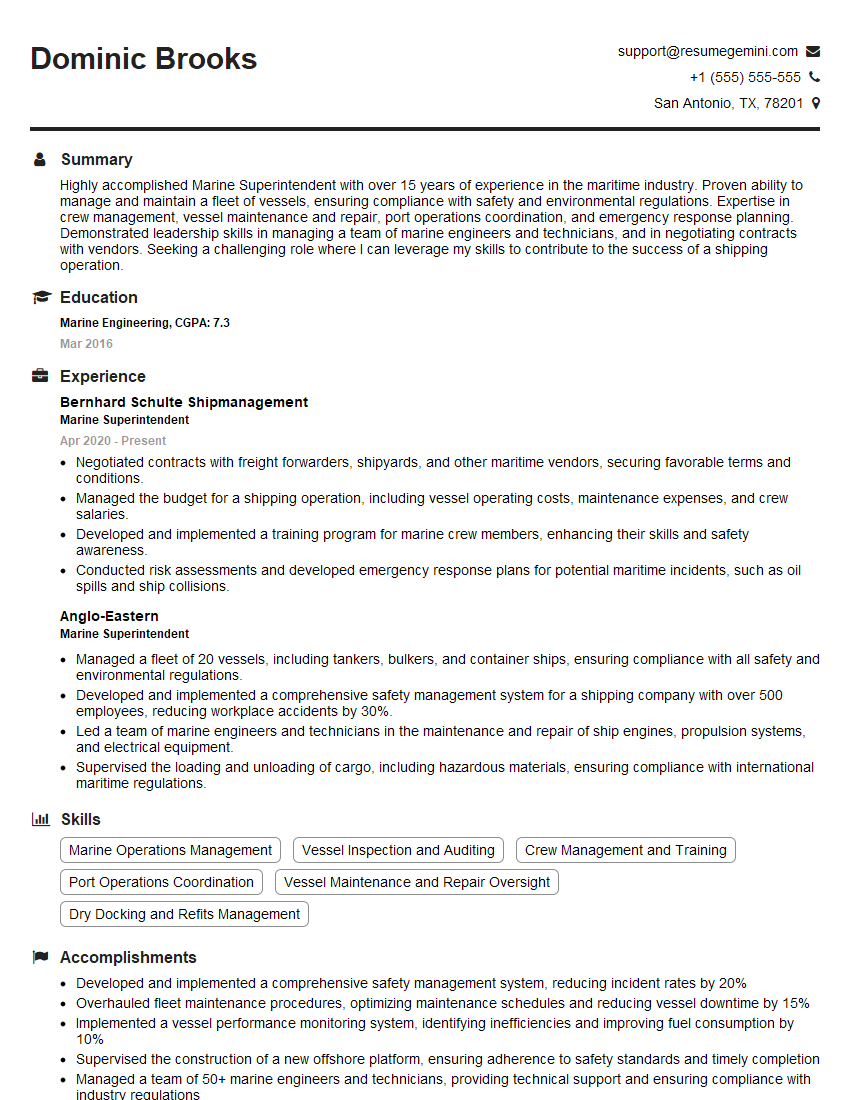
Marine Superintendent Resume Sample
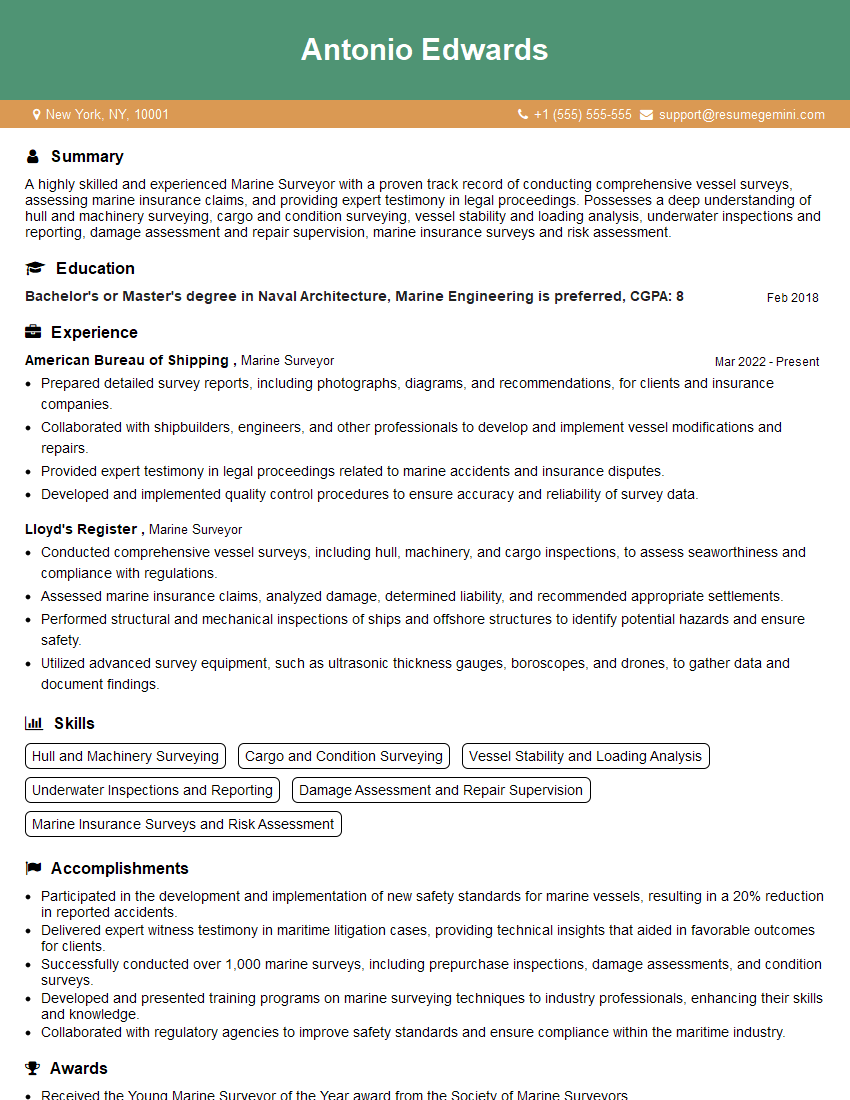
Marine Surveyor Resume Sample
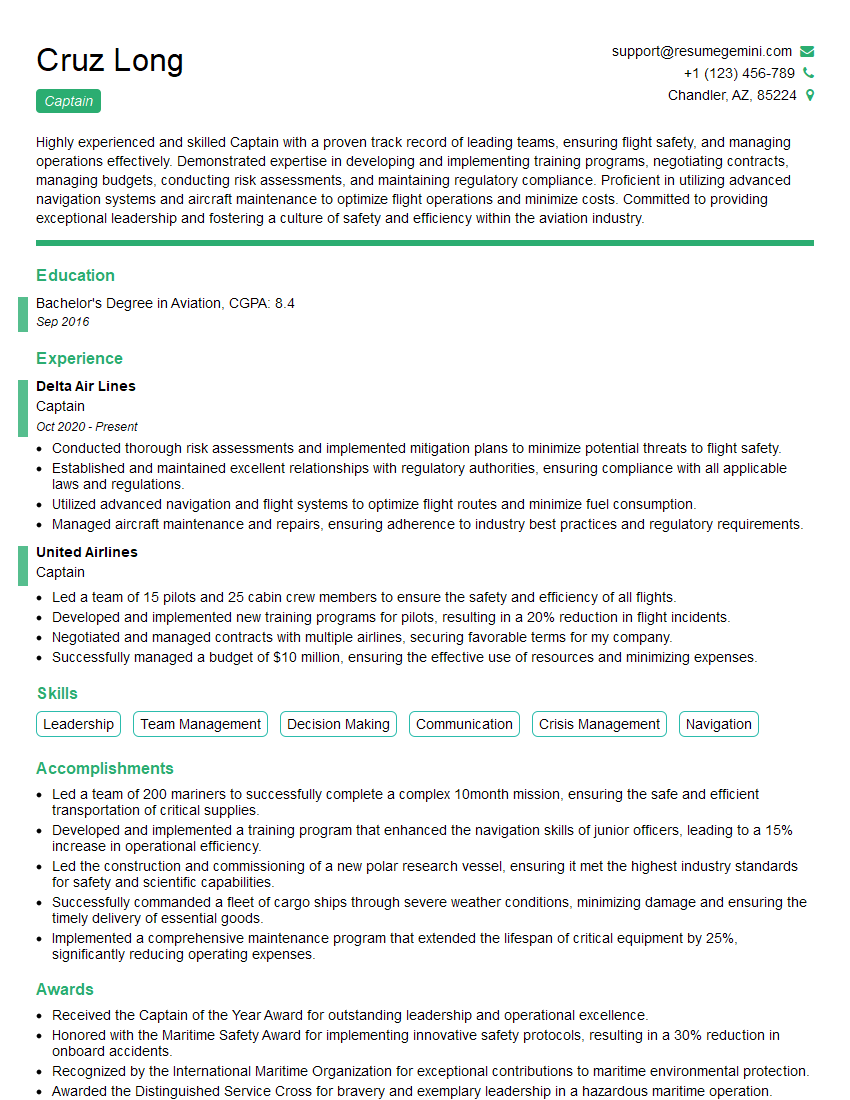
Captain Resume Sample
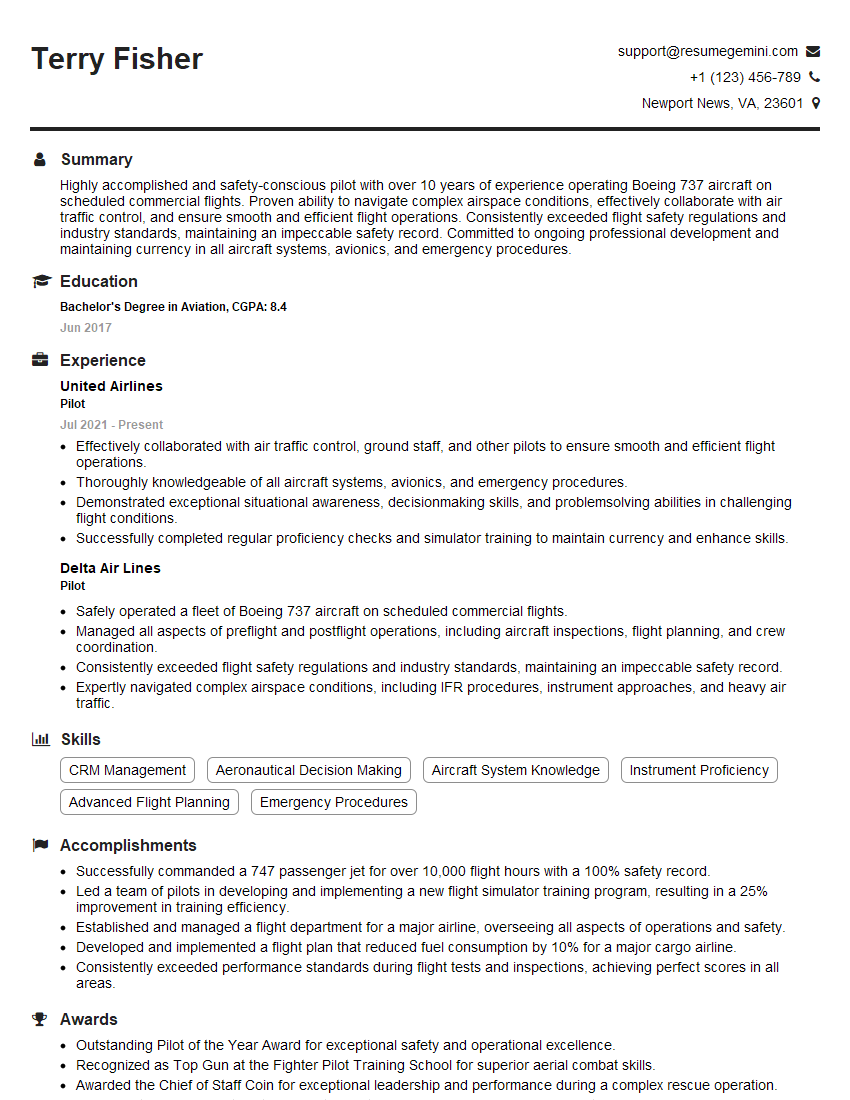
Pilot Resume Sample
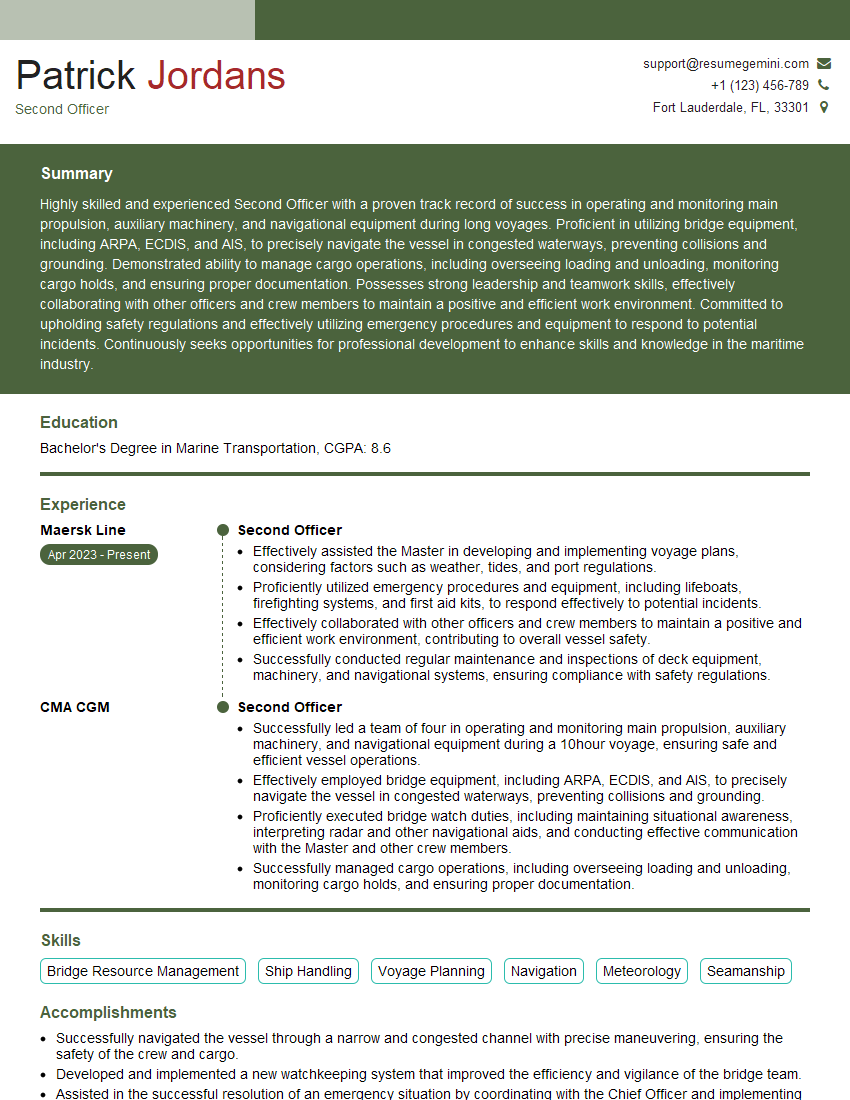
Second Officer Resume Sample
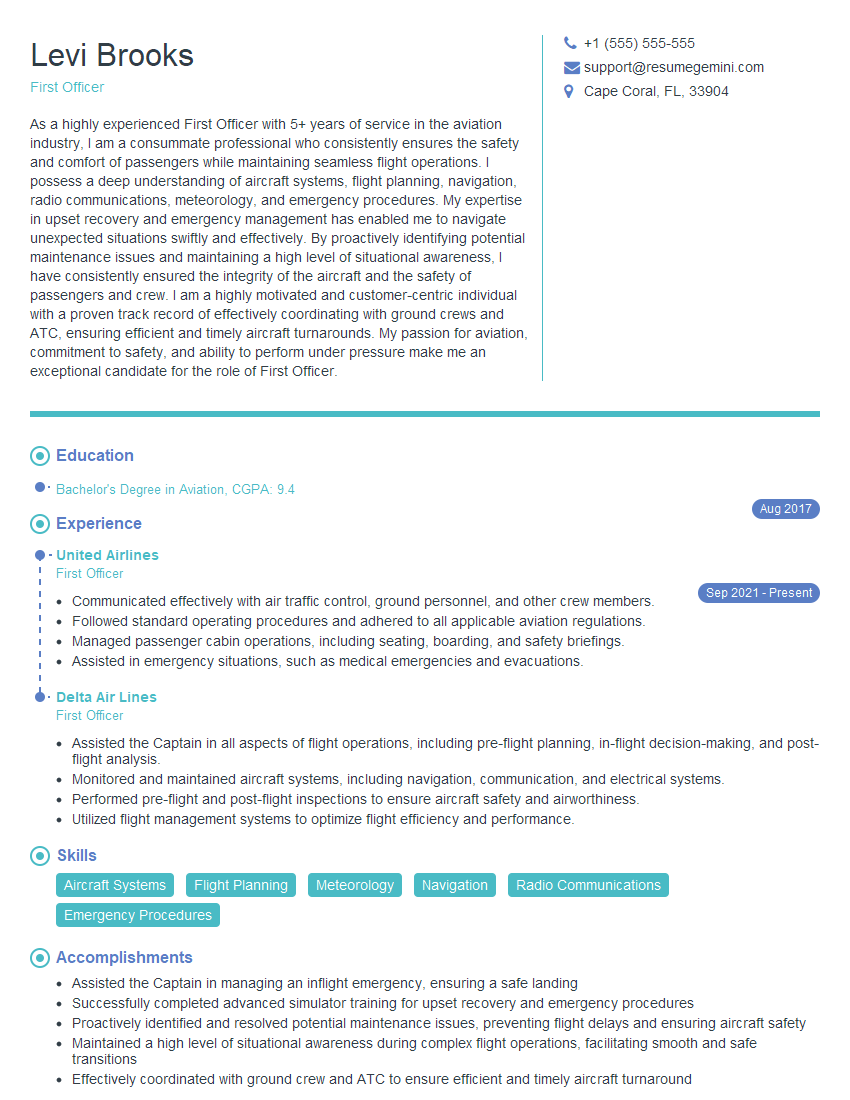
First Officer Resume Sample
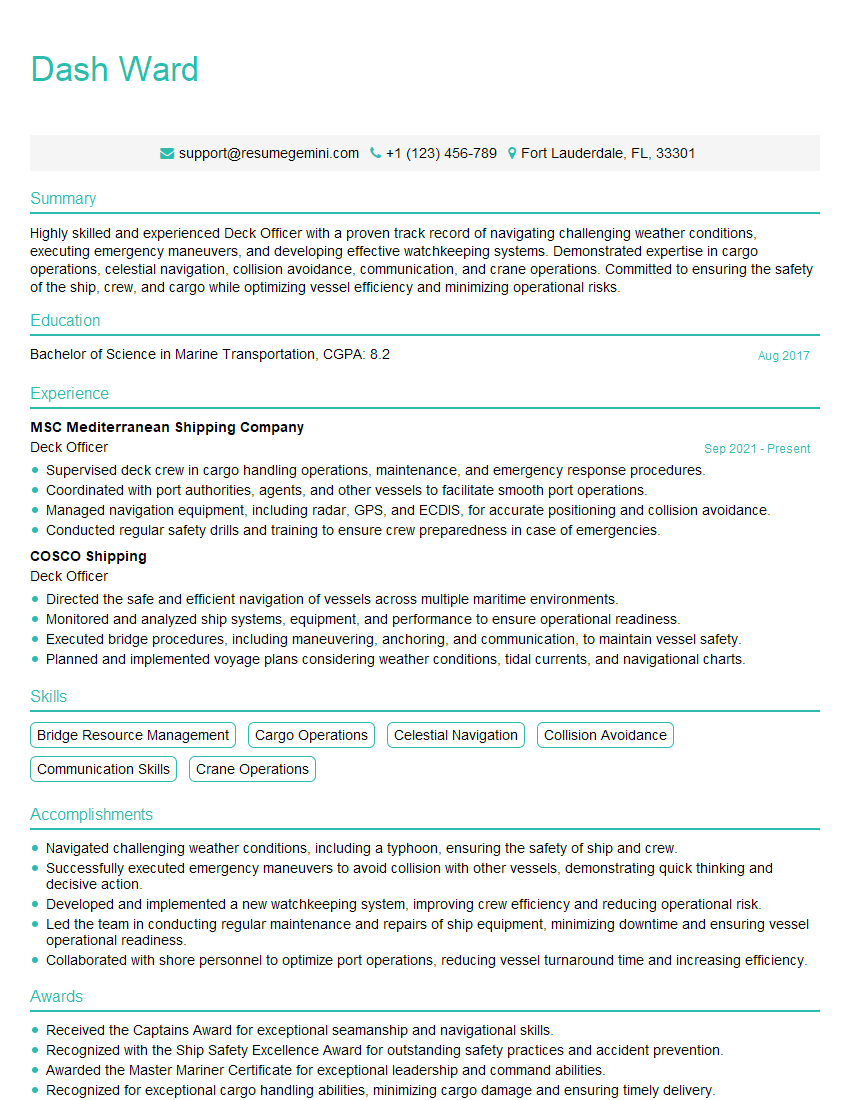
Deck Officer Resume Sample
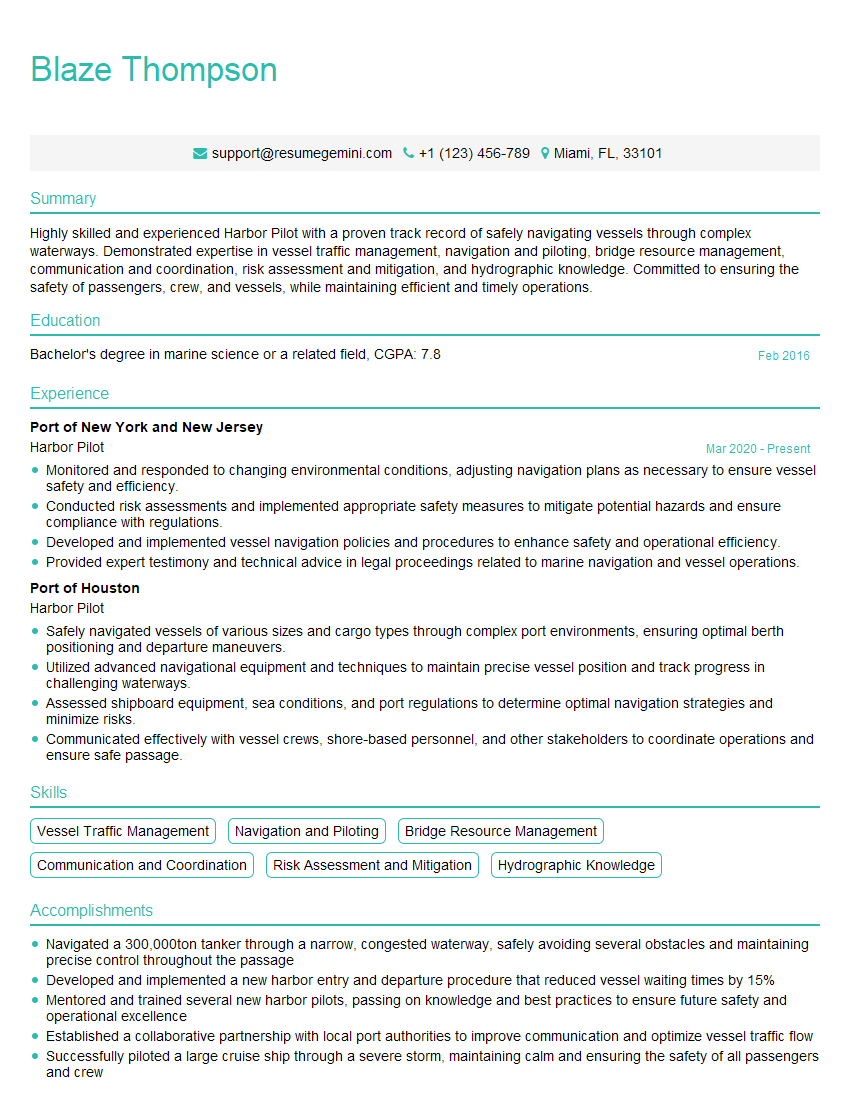
Harbor Pilot Resume Sample
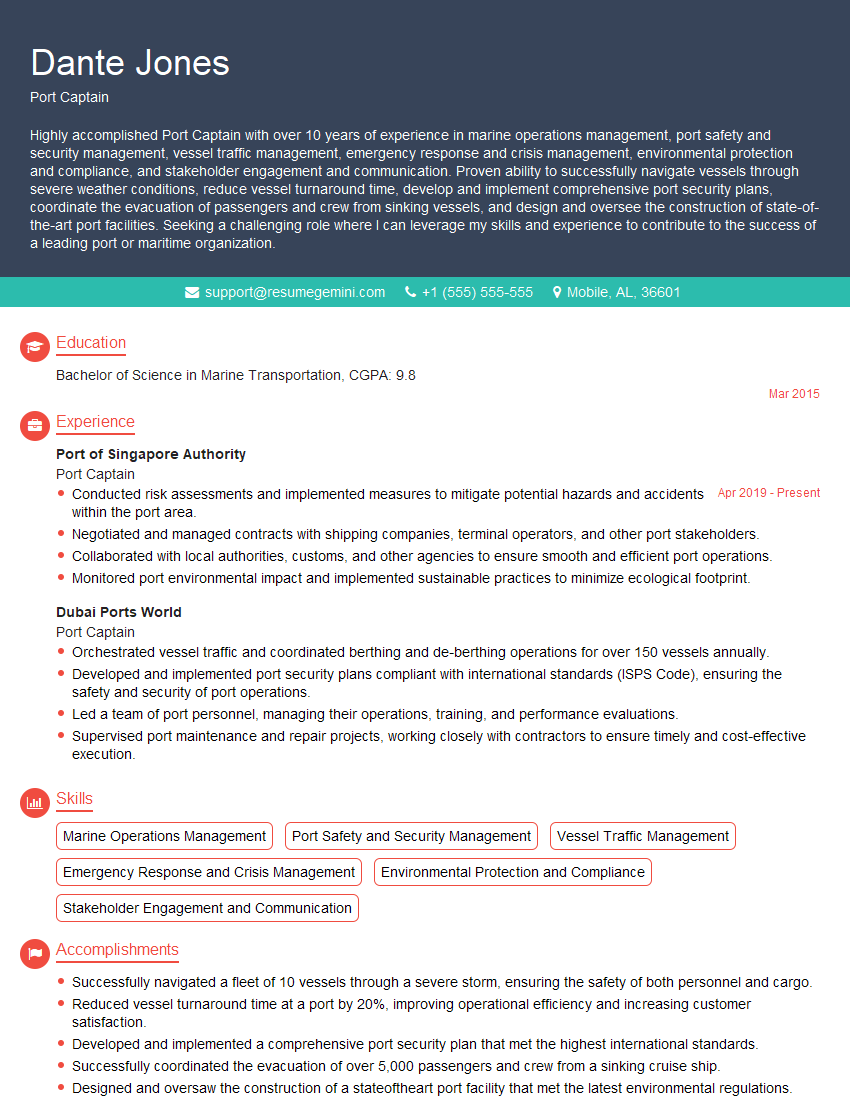
Port Captain Resume Sample
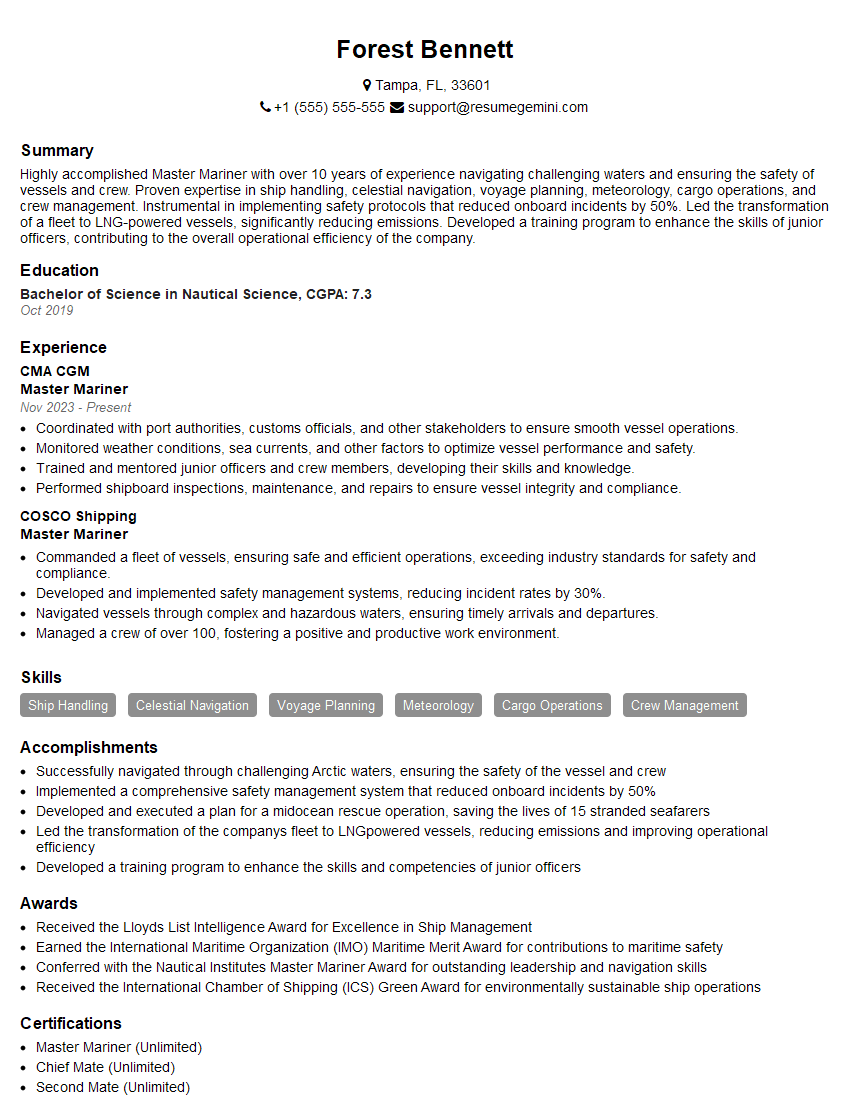
Master Mariner Resume Sample
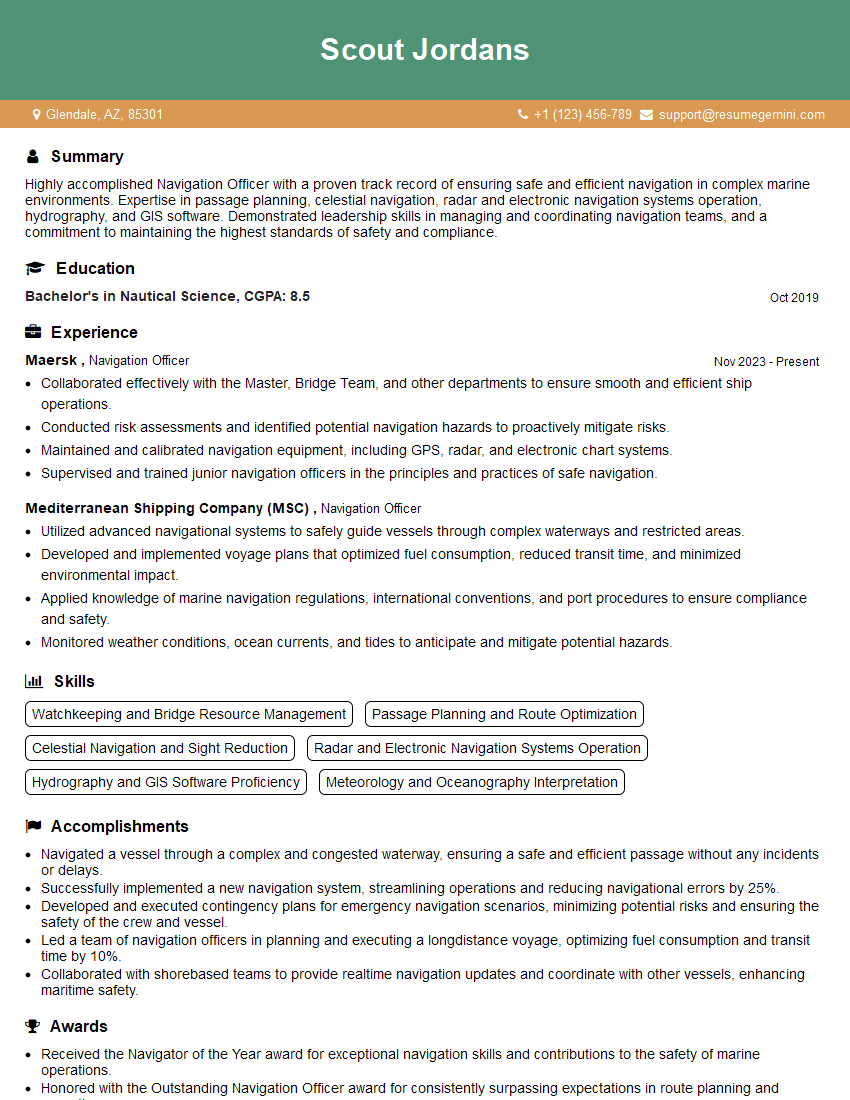
Navigation Officer Resume Sample
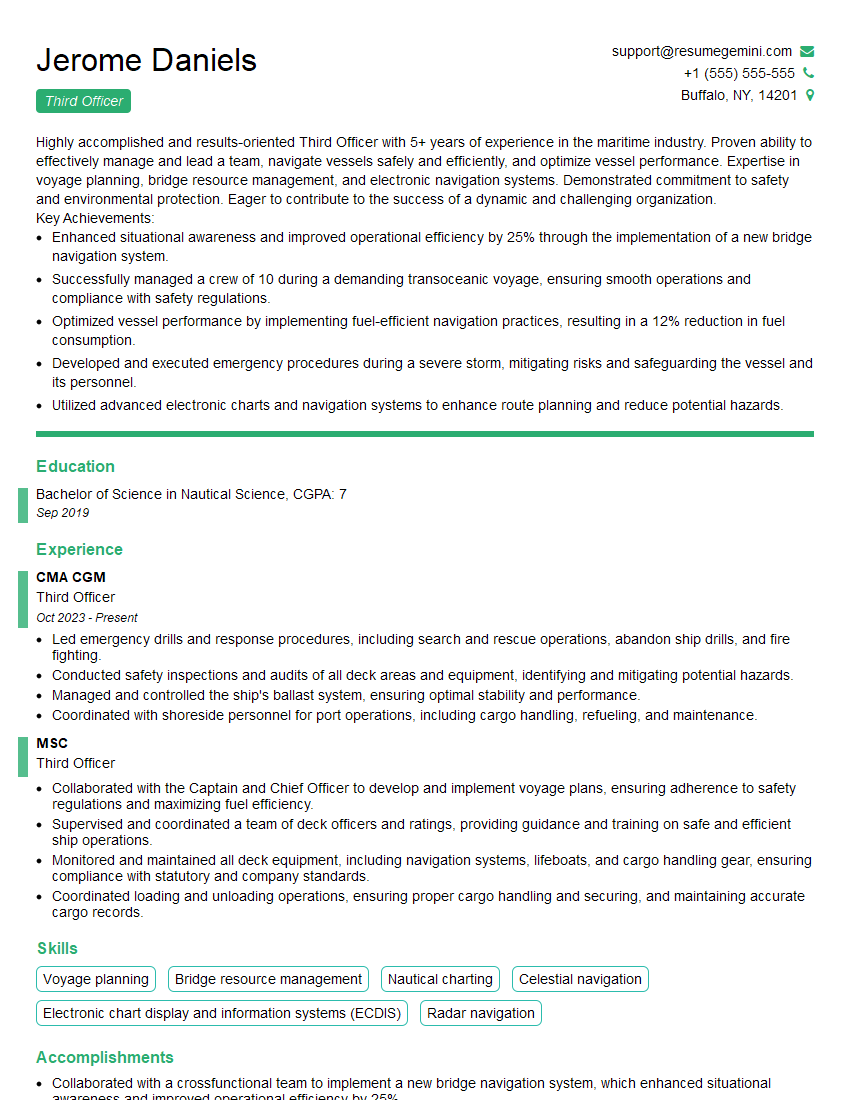
Third Officer Resume Sample
Explore more articles
Users Rating of Our Blogs
Share Your Experience
We value your feedback! Please rate our content and share your thoughts (optional).
What Readers Say About Our Blog
Very informative content, great job.
good