Interviews are more than just a Q&A session—they’re a chance to prove your worth. This blog dives into essential Expertise in Material Analysis and Testing interview questions and expert tips to help you align your answers with what hiring managers are looking for. Start preparing to shine!
Questions Asked in Expertise in Material Analysis and Testing Interview
Q 1. Explain the difference between tensile strength and yield strength.
Tensile strength and yield strength are both crucial measures of a material’s ability to withstand stress, but they represent different points on the material’s stress-strain curve. Tensile strength represents the maximum stress a material can withstand before it breaks or fractures. It’s the highest point on the curve. Yield strength, on the other hand, signifies the stress at which the material begins to deform permanently. This is the point where the material transitions from elastic deformation (where it returns to its original shape after the stress is removed) to plastic deformation (permanent deformation). Think of it like stretching a rubber band: yield strength is the point where the rubber band starts to stretch permanently, while tensile strength is the point where it finally snaps.
For example, a steel bar with a high tensile strength can withstand a significant load before breaking, while a steel bar with a high yield strength will resist permanent deformation under heavy loads. Understanding both is critical in engineering design, ensuring components don’t deform beyond acceptable limits or fail catastrophically.
Q 2. Describe the process of conducting a hardness test.
A hardness test measures a material’s resistance to indentation or scratching. Several methods exist, but the most common are Brinell, Rockwell, and Vickers. These tests involve indenting the material’s surface using a standardized indenter (a hard ball or diamond pyramid) under a specific load. The size or depth of the resulting indentation is then measured, and a hardness number is calculated based on pre-defined formulas that vary with the test method and the indenter used. The harder the material, the smaller the indentation.
For example, in the Rockwell hardness test, a minor load is applied initially to seat the indenter, followed by a major load. The difference in penetration depth is measured to determine the hardness value. The choice of test method depends on the material’s hardness range and thickness. For very hard materials like ceramics, the Vickers test is preferred due to its use of a diamond indenter. Soft metals might be tested using the Brinell method.
Q 3. What are the common methods used for material characterization?
Material characterization involves identifying and quantifying the physical, chemical, and mechanical properties of a material. Many methods are employed, depending on the specific information needed. Common techniques include:
- Mechanical testing: Tensile testing, compression testing, hardness testing, impact testing (e.g., Charpy, Izod), fatigue testing – to determine strength, ductility, toughness, and other mechanical properties.
- Chemical analysis: X-ray diffraction (XRD), X-ray fluorescence (XRF), inductively coupled plasma mass spectrometry (ICP-MS), chemical etching – to identify chemical composition, phase identification, and elemental analysis.
- Microscopic analysis: Optical microscopy, scanning electron microscopy (SEM), transmission electron microscopy (TEM) – to examine the material’s microstructure, including grain size, phase distribution, defects, and surface morphology.
- Thermal analysis: Differential scanning calorimetry (DSC), thermogravimetric analysis (TGA) – to study the material’s thermal behavior, including phase transitions, melting points, and thermal stability.
The choice of method depends on the application and the properties of interest. For example, if we need to understand the grain structure of a metal, microscopy would be the appropriate method, while if the chemical composition is crucial, we might employ XRF or ICP-MS.
Q 4. How would you identify the cause of a material failure?
Identifying the cause of material failure requires a systematic approach. It starts with a detailed examination of the failed component, including visual inspection to identify the fracture surface, the type of fracture (ductile vs. brittle), and the location of the failure. Then, based on this initial assessment, appropriate material characterization techniques are employed.
The process might involve microscopic analysis (SEM) to study the fracture surface for clues like crack initiation sites, propagation paths, or evidence of specific failure mechanisms (e.g., fatigue cracks, stress corrosion cracking). Mechanical testing on similar material samples can help determine if the material’s properties met specifications. Chemical analysis can reveal if degradation or contamination played a role. This combined approach allows us to reconstruct the failure sequence and pinpoint the root cause – whether it’s a material defect, design flaw, manufacturing error, or operational issue.
For example, a brittle fracture in a steel component might indicate the presence of microstructural defects or a low impact toughness at the operating temperature, whereas a fatigue failure will show characteristic beach marks on the fracture surface indicating repeated cyclic loading. A thorough investigation is crucial to prevent future failures.
Q 5. Explain the principles of non-destructive testing (NDT).
Non-destructive testing (NDT) encompasses a variety of techniques used to evaluate the properties of a material, component, or system without causing damage. The goal is to detect internal flaws, measure dimensions, or assess the material’s integrity. NDT methods rely on various physical phenomena, such as the propagation of sound waves, electromagnetic waves, or thermal energy. The results are used to determine the suitability of the material for its intended use and prevent catastrophic failures.
For instance, inspecting a weld in a pipeline for cracks without destroying the pipeline itself would involve using an NDT method such as ultrasonic testing or radiographic testing. The key principle is to obtain information about the internal structure and properties without altering or compromising the sample’s integrity.
Q 6. What are the different types of NDT methods and their applications?
Many NDT methods exist, each with its own strengths and applications:
- Visual Inspection (VT): The simplest method, involving visual examination for surface defects. Used for initial assessment and often in conjunction with other methods.
- Liquid Penetrant Testing (PT): Detects surface-breaking defects by applying a dye that penetrates the crack and is then revealed by a developer. Useful for detecting cracks in castings and welds.
- Magnetic Particle Testing (MT): Detects surface and near-surface flaws in ferromagnetic materials by applying a magnetic field and then sprinkling ferromagnetic particles. Effective for finding cracks and discontinuities in welds and castings.
- Ultrasonic Testing (UT): Uses high-frequency sound waves to detect internal flaws. Versatile and widely used for detecting internal cracks, inclusions, and delaminations in metals, composites, and other materials.
- Radiographic Testing (RT): Employs X-rays or gamma rays to produce images of internal structures. Useful for detecting internal flaws, but requires specialized safety procedures.
- Eddy Current Testing (ECT): Uses electromagnetic induction to detect surface and near-surface flaws in conductive materials. Widely used in aerospace and automotive industries for inspecting tubing and wires.
The selection of the appropriate NDT method depends on the material type, the size and type of defect expected, the access to the test area, and the level of detail required. Often, a combination of methods is used to obtain a comprehensive assessment.
Q 7. Describe your experience with fracture toughness testing.
Fracture toughness testing measures a material’s resistance to crack propagation. I have extensive experience conducting fracture toughness tests using various methods, including the standard fracture mechanics techniques, such as the compact tension (CT) and three-point bend (3PB) specimens. These tests involve introducing a pre-crack into a specimen and then subjecting it to a controlled load until fracture occurs. The critical stress intensity factor (KIC) is then calculated, representing the material’s resistance to crack growth. This value is crucial for designing components operating under conditions where cracks might be present.
In my experience, proper specimen preparation and precise load application are paramount for obtaining reliable and accurate results. I’ve worked with a range of materials, from metals to polymers and composites, utilizing different test setups and data analysis techniques to determine the KIC values, which are subsequently used in the design and assessment of structural components to avoid unexpected fracture.
For example, in one project involving the assessment of a high-strength steel used in aerospace components, we performed extensive fracture toughness tests to ensure that it meets the rigorous requirements for safe operation. The obtained KIC values were critical in validating the design and ensuring the structural integrity of the aircraft parts.
Q 8. How do you interpret a stress-strain curve?
A stress-strain curve is a graphical representation of a material’s response to an applied force. It plots stress (force per unit area) on the y-axis against strain (deformation per unit length) on the x-axis. The curve provides crucial information about the material’s mechanical properties, such as its strength, ductility, and elasticity.
The initial linear portion of the curve represents the elastic region. In this region, the material deforms elastically, meaning it returns to its original shape once the stress is removed. The slope of this linear region is the Young’s modulus (E), a measure of the material’s stiffness. Beyond the elastic region, the material enters the plastic region, where permanent deformation occurs. The yield strength is the stress at which plastic deformation begins. The ultimate tensile strength is the maximum stress the material can withstand before failure. After the ultimate tensile strength, the material starts to neck down (reduction in cross-sectional area) before eventually fracturing. The area under the curve represents the material’s toughness, indicating its ability to absorb energy before fracture. A ductile material will exhibit a large plastic region before failure, while a brittle material will show a small or almost non-existent plastic region.
For example, a steel stress-strain curve will show a distinct yield point and a significant plastic region before fracture, indicative of its ductility. Conversely, a ceramic material’s curve will typically show little to no plastic deformation before failure, indicating its brittle nature.
Q 9. Explain the concept of fatigue failure.
Fatigue failure occurs when a material fails under cyclic loading, even if the maximum stress applied is below the material’s yield strength. Imagine repeatedly bending a paper clip back and forth; eventually, it will break, even though a single bend wouldn’t cause failure. This is fatigue. It’s a progressive, localized structural damage that accumulates over many cycles of stress. The process typically involves crack initiation at stress concentration points (like surface imperfections or notches), crack propagation, and ultimately, catastrophic failure.
Several factors influence fatigue failure, including the magnitude of the applied stress, the number of cycles, the material properties (like fatigue strength and endurance limit), surface finish, and the presence of defects. Fatigue failure is a major concern in many engineering applications, especially those involving rotating machinery, aircraft structures, and bridges, and requires careful design and material selection to mitigate.
A common method to study fatigue is through S-N curves (Stress-Number of cycles to failure). These curves show the relationship between the applied stress amplitude and the number of cycles to failure. The endurance limit, if it exists, represents the stress level below which the material will not fail even after an infinite number of cycles.
Q 10. What are the different types of corrosion and how can they be prevented?
Corrosion is the deterioration of a material due to its reaction with its environment. There are many types, broadly classified into:
- Uniform Corrosion: This is a relatively even attack across the material’s surface. Think of a rusty nail – the rust develops relatively uniformly across the nail’s surface.
- Galvanic Corrosion: Occurs when two dissimilar metals are in electrical contact in the presence of an electrolyte (like seawater). The more active metal corrodes preferentially. For instance, connecting steel and copper in a marine environment will lead to accelerated steel corrosion.
- Pitting Corrosion: Localized attack resulting in small holes or pits. It is particularly damaging because it can lead to premature failure even with minimal material loss.
- Crevice Corrosion: Corrosion concentrated in crevices or gaps where stagnant solutions can accumulate. Think of the corrosion under a bolt head.
- Stress Corrosion Cracking (SCC): A combination of tensile stress and a corrosive environment. Cracks propagate through the material, leading to sudden failure. This is a significant concern in high-stress applications.
- Intergranular Corrosion: Corrosion occurs along grain boundaries, weakening the material. This is often seen in stainless steel due to chromium carbide precipitation at grain boundaries.
Corrosion prevention involves various techniques, including material selection (using corrosion-resistant materials like stainless steel or titanium), coatings (paints, galvanizing, anodizing), cathodic protection (using a sacrificial anode), and controlling the environment (reducing humidity, controlling pH).
Q 11. How do you select an appropriate material for a specific application?
Selecting the right material for a specific application requires a systematic approach considering several factors:
- Required Properties: Identify the key properties needed, such as strength, hardness, ductility, corrosion resistance, thermal conductivity, electrical conductivity, and cost.
- Operating Conditions: Understand the environmental conditions the material will face (temperature, pressure, humidity, corrosive chemicals).
- Manufacturing Processes: Consider the feasibility of manufacturing the part from the chosen material using available techniques.
- Cost: Balance performance requirements with cost considerations.
- Safety: Ensure the material’s safety and compliance with relevant regulations.
For example, selecting a material for a high-temperature application in a gas turbine might involve considering materials like nickel-based superalloys or ceramics due to their high-temperature strength and creep resistance. Conversely, selecting a material for a biocompatible implant would require considering biocompatibility, corrosion resistance, and mechanical properties.
Material selection charts and databases can be extremely useful in this process. These provide information on material properties and allow for efficient comparison and selection.
Q 12. What is the difference between ductile and brittle materials?
Ductile and brittle materials differ significantly in their response to deformation and fracture.
- Ductile Materials: These materials undergo significant plastic deformation before fracture. They exhibit large elongation and reduction in area before failure. Examples include mild steel, aluminum, and copper. Think of a piece of taffy stretching before breaking.
- Brittle Materials: These materials exhibit little or no plastic deformation before fracture. They fail suddenly with little warning. Examples include ceramics, glass, and cast iron. Think of a glass breaking—it doesn’t bend much before it shatters.
The difference stems from the microscopic mechanisms of deformation. Ductile materials deform through dislocation motion, allowing for significant plastic flow. Brittle materials lack extensive dislocation mobility, leading to crack propagation and fracture with minimal plastic deformation. This difference is critical in designing structures and selecting materials for different applications. Ductile materials are preferred in applications where significant deformation is acceptable before failure, while brittle materials might be suitable where high stiffness or hardness is more important.
Q 13. Describe your experience with microscopy techniques (SEM, TEM, etc.).
I have extensive experience with various microscopy techniques, including Scanning Electron Microscopy (SEM) and Transmission Electron Microscopy (TEM). SEM provides high-resolution images of the material’s surface topography and morphology. I’ve used SEM extensively for analyzing fracture surfaces to understand failure mechanisms, examining surface coatings for defects, and characterizing the microstructure of various materials. In my previous role, for example, I used SEM to analyze the failure of a weld in a pressure vessel. The SEM images revealed micro-cracks originating from inclusions in the weld metal, which led us to improve the welding procedure and material selection.
TEM provides even higher magnification and allows for the characterization of the material’s crystal structure and defects at the atomic level. I’ve used TEM to investigate the crystal structure of nanomaterials, study dislocation arrangements, and analyze the distribution of precipitates in alloys. A recent project involved using TEM to determine the reasons for reduced strength in a particular alloy, ultimately pinpointing the size and distribution of precipitates as the root cause.
I am also familiar with other techniques, such as optical microscopy, which is useful for lower magnification observations of microstructure, and Focused Ion Beam (FIB) microscopy, which is valuable for site-specific sample preparation for TEM analysis.
Q 14. How do you interpret data from X-ray diffraction (XRD)?
X-ray diffraction (XRD) is a powerful technique for identifying crystalline phases in a material and determining its crystal structure. XRD data is typically presented as a diffraction pattern—a plot of intensity versus 2θ (the angle of diffraction). Each peak in the diffraction pattern corresponds to a specific set of crystallographic planes within the material.
Interpreting XRD data involves several steps:
- Peak Identification: Identifying the positions (2θ values) and intensities of the diffraction peaks.
- Phase Identification: Comparing the observed diffraction pattern to known patterns in a database (like the International Centre for Diffraction Data (ICDD) database) to identify the crystalline phases present.
- Crystal Structure Determination: Determining the unit cell parameters (lattice constants, angles) and space group of the crystalline phases from the peak positions and intensities.
- Quantitative Analysis: Determining the relative amounts of different phases present in a mixture using Rietveld refinement.
- Crystallite Size and Strain Analysis: Determining the average crystallite size and microstrain from peak broadening.
For example, I used XRD to identify the presence of unwanted phases in a ceramic material. The XRD analysis revealed the presence of a secondary phase, which correlated with undesirable mechanical properties. This allowed us to adjust the synthesis process to eliminate the secondary phase and improve the material’s performance.
Q 15. Explain the principles of thermal analysis (TGA, DSC).
Thermal analysis encompasses techniques that measure the physical and chemical properties of materials as a function of temperature. Thermogravimetric analysis (TGA) and Differential Scanning Calorimetry (DSC) are two prominent methods.
TGA measures changes in mass of a sample as it is heated or cooled. This is incredibly useful for determining the composition of a material, identifying volatile components, and studying decomposition processes. Imagine baking a cake – TGA would tell you exactly how much water evaporates during the baking process. The resulting curve, showing weight loss versus temperature, can be analyzed to identify individual weight loss steps, corresponding to specific events like dehydration or decomposition.
DSC, on the other hand, measures the heat flow associated with phase transitions or chemical reactions in a material as it’s heated or cooled. It detects events like melting, crystallization, glass transitions, and curing. Think of melting chocolate: DSC would accurately measure the temperature and the amount of heat absorbed during the melting process. The characteristic peaks on a DSC curve provide information about the transition temperatures and enthalpy changes associated with these processes.
Both TGA and DSC are complementary techniques, often used together to provide a comprehensive understanding of a material’s thermal behavior. For example, observing a weight loss in TGA could be further investigated by analyzing the endothermic peak in DSC, identifying the corresponding phase transition or reaction responsible for the mass change.
Career Expert Tips:
- Ace those interviews! Prepare effectively by reviewing the Top 50 Most Common Interview Questions on ResumeGemini.
- Navigate your job search with confidence! Explore a wide range of Career Tips on ResumeGemini. Learn about common challenges and recommendations to overcome them.
- Craft the perfect resume! Master the Art of Resume Writing with ResumeGemini’s guide. Showcase your unique qualifications and achievements effectively.
- Don’t miss out on holiday savings! Build your dream resume with ResumeGemini’s ATS optimized templates.
Q 16. Describe your experience with spectroscopic techniques (FTIR, Raman).
I have extensive experience with both FTIR (Fourier Transform Infrared Spectroscopy) and Raman spectroscopy. These are vibrational spectroscopic techniques that provide molecular fingerprints of materials, allowing for identification and characterization. They are invaluable for both qualitative and quantitative analysis.
FTIR analyzes the absorption of infrared light by a sample. Different functional groups in a molecule absorb light at specific frequencies, producing a unique spectrum. Think of it like a barcode for each molecule. This is exceptionally useful in polymer identification and studying material degradation. For instance, I used FTIR to identify the presence of oxidation products in a degraded polymer sample, directly linking the degradation process to environmental factors.
Raman spectroscopy, conversely, measures the inelastic scattering of light by molecular vibrations. It’s highly complementary to FTIR, as it is sensitive to different vibrational modes. It’s particularly useful for analyzing crystalline structures and identifying polymorphs (different crystalline forms of the same material). In one project, I used Raman spectroscopy to distinguish between different allotropes of carbon, such as graphite and diamond, based on the unique vibrational patterns observed.
My experience encompasses both sample preparation techniques and data interpretation, including spectral deconvolution and peak assignment to identify specific components and quantify their concentrations in a complex mixture. This involves using specialized software to process the spectral data and interpret the results.
Q 17. What are the limitations of different material testing methods?
Every material testing method has limitations, and it’s crucial to understand these when choosing the appropriate technique and interpreting the results. For example, tensile testing, while useful for determining strength and elasticity, is limited to simple geometries and doesn’t always reflect real-world performance under complex stress conditions. Imagine testing a plastic bottle – tensile testing would show its strength, but it wouldn’t capture the effect of impact or pressure.
- Tensile Testing: Limited to simple geometries, may not reflect real-world complex stress states.
- Impact Testing: Sensitive to test parameters (e.g., specimen shape, temperature), might not be representative of all failure modes.
- Hardness Testing: Provides relative hardness, not absolute strength, and can be affected by surface conditions.
- Microscopy (SEM, TEM): Expensive, time consuming, sample preparation can be complex, requires high level of expertise.
- Spectroscopic techniques (FTIR, Raman): Can be affected by sample preparation and instrument parameters, may not be able to distinguish between all components.
It’s essential to consider the limitations of each technique, select the most appropriate methods for the specific material and application, and use multiple techniques to cross-validate the results and obtain a complete picture of the material’s properties.
Q 18. How do you ensure the accuracy and reliability of testing results?
Ensuring accurate and reliable test results is paramount. This begins with meticulous planning and control of all aspects of the testing process.
My approach involves a multi-pronged strategy:
- Proper Calibration and Validation: All equipment undergoes regular calibration using traceable standards. Validation procedures, following established protocols, ensure the accuracy and precision of the instruments.
- Standardized Procedures: Adherence to established standards (e.g., ASTM, ISO) ensures consistency and comparability of results.
- Sample Preparation: Careful sample preparation, ensuring representative samples and minimizing artifacts, is critical. This includes proper cleaning, sectioning, and mounting of samples.
- Control Samples: Inclusion of control samples with known properties helps assess the accuracy and reproducibility of the test methods.
- Statistical Analysis: Statistical methods, such as calculating means, standard deviations, and confidence intervals, are used to evaluate data variability and identify outliers.
- Documentation: Meticulous documentation of procedures, observations, and results is crucial for traceability and audit purposes.
By implementing these measures, we can minimize errors, enhance the reliability of our results, and ensure the data’s integrity.
Q 19. Describe your experience with data analysis and reporting in materials testing.
My experience in data analysis and reporting is extensive. It’s not simply about generating numbers; it’s about extracting meaningful information and presenting it clearly and effectively.
My approach includes:
- Data Acquisition: Using appropriate software to acquire and manage large datasets from various testing instruments.
- Data Cleaning and Preprocessing: Identifying and handling outliers or errors, correcting for instrumental drift or background noise.
- Statistical Analysis: Applying statistical tools (e.g., ANOVA, regression analysis) to analyze the data, identify trends, and draw conclusions.
- Data Visualization: Creating graphs, charts, and tables to present the data visually and clearly. I strive to use visuals that effectively communicate complex information to a broad audience.
- Report Writing: Producing comprehensive, well-structured reports that include all relevant information: objectives, methodology, results, discussion, and conclusions. The reports are tailored to the specific audience (e.g., engineers, researchers, clients).
For example, in a recent project, I used statistical modeling to predict the long-term performance of a composite material based on accelerated testing data. The resulting report, with clear visualizations of the model’s predictions, proved crucial for material selection in a high-stakes engineering project.
Q 20. How do you handle discrepancies in test results?
Discrepancies in test results are inevitable, and addressing them systematically is vital. My approach involves a thorough investigation to pinpoint the root cause.
The process typically follows these steps:
- Review Procedures: Re-examine the testing procedures, checking for deviations from the established protocols.
- Check Data Quality: Scrutinize the raw data for outliers or errors, and verify data integrity.
- Re-test Samples: Repeat the tests with fresh samples to verify the initial results.
- Investigate Equipment: Check the calibration and functionality of the instruments used.
- Analyze Potential Sources of Error: Consider all possible sources of error, including sample preparation, environmental conditions, and operator variations.
- Consult with Experts: If necessary, consult with other experts in the field to seek further insights.
Documenting each step of this investigation is critical, not just to resolve the immediate discrepancy but also to prevent similar issues in future tests and improve quality control protocols.
Q 21. Explain your experience with quality control procedures in materials testing.
Quality control (QC) is fundamental to reliable materials testing. It ensures consistency and accuracy throughout the entire process, from sample preparation to result reporting.
My experience encompasses the implementation and oversight of various QC procedures, including:
- Instrument Calibration and Maintenance: Regular calibration and preventive maintenance schedules for all testing equipment.
- Standard Operating Procedures (SOPs): Development and implementation of clear, detailed SOPs for all testing procedures, ensuring uniformity across all personnel.
- Internal Audits: Regular internal audits assess compliance with QC procedures and identify areas for improvement.
- Quality Control Charts: Using statistical process control charts (e.g., Shewhart charts) to monitor testing parameters and identify trends that may indicate process drift or problems.
- Personnel Training: Providing regular training to personnel to maintain their skills and knowledge of QC procedures.
- External Proficiency Testing: Participating in external proficiency testing programs to assess the laboratory’s performance against industry benchmarks.
By maintaining rigorous QC practices, we ensure that our testing results are accurate, reliable, and meet the highest standards of quality.
Q 22. Describe your familiarity with relevant safety regulations in a materials testing lab.
Safety is paramount in a materials testing lab. My familiarity with relevant regulations encompasses several key areas, including OSHA (Occupational Safety and Health Administration) guidelines, which dictate safe handling of hazardous materials like chemicals and biological samples. I’m proficient in understanding and adhering to specific safety data sheets (SDS) for each material under test. This includes knowing proper personal protective equipment (PPE) such as gloves, eye protection, and lab coats for different experiments. I also understand the importance of proper ventilation, waste disposal procedures, and emergency response protocols. For example, I know the procedures for handling a chemical spill, including immediate containment, notification, and cleanup using appropriate absorbents. Additionally, I’m experienced in operating and maintaining equipment safely, including regular inspections and calibrations to prevent accidents. Understanding and implementing lockout/tagout procedures for machinery maintenance is also crucial to preventing injury.
Q 23. How do you stay updated with the latest advancements in materials science and testing?
Staying current in materials science and testing is critical. I achieve this through a multi-pronged approach. I regularly read peer-reviewed journals like ‘Materials Science and Engineering’ and ‘Journal of Materials Research’. Attending conferences, such as the Materials Research Society (MRS) meetings, allows me to network with other professionals and learn about cutting-edge research. Professional memberships, like those offered by ASM International (formerly the American Society for Metals), provide access to webinars, online resources, and training courses on new techniques and standards. I also actively participate in online communities and forums dedicated to materials science, and I frequently search for and review relevant industry reports and publications. This combination of active learning and networking ensures I’m always abreast of the latest advancements.
Q 24. Describe a challenging materials testing project and how you overcame it.
One challenging project involved characterizing the fatigue behavior of a novel polymer composite designed for aerospace applications. The challenge stemmed from the material’s highly complex microstructure, which made it difficult to predict its fatigue life accurately using standard testing methods. Initially, our fatigue tests yielded inconsistent results. To overcome this, we implemented a multi-faceted approach. First, we used advanced microscopy techniques, such as scanning electron microscopy (SEM) and transmission electron microscopy (TEM), to meticulously examine the material’s microstructure and identify potential failure mechanisms. Second, we refined our testing methodology, carefully controlling environmental factors and ensuring consistent specimen preparation. Third, we employed sophisticated statistical analysis techniques to account for the inherent variability in the material’s properties. By combining these methods, we successfully characterized the fatigue behavior, leading to accurate predictions of the composite’s service life and ultimately contributing to a safer and more reliable design.
Q 25. How would you troubleshoot a malfunctioning testing instrument?
Troubleshooting a malfunctioning testing instrument requires a systematic approach. I begin with a visual inspection, checking for any obvious issues like loose connections or damaged components. Then I consult the instrument’s operational manual, reviewing troubleshooting guides for common problems and error codes. If the problem persists, I’ll verify the calibration of the instrument, as an inaccurate calibration can lead to erroneous results. If the issue is still unresolved, I’ll check the power supply and other peripherals to rule out external factors. For example, if using a tensile testing machine, I might check the hydraulic system for leaks or the load cell for proper functioning. If the problem remains, I’ll contact the manufacturer’s technical support or a qualified service technician for expert assistance. Documenting each step of the troubleshooting process is essential for efficiency and future reference.
Q 26. What software packages are you proficient in for materials data analysis?
I’m proficient in several software packages for materials data analysis. My expertise includes using MATLAB for complex data processing, statistical analysis, and creating visualizations. I’m also adept at using Python with libraries like NumPy, SciPy, and Pandas for data manipulation, statistical modeling, and custom script development. Furthermore, I’m familiar with specialized software packages like ABAQUS and ANSYS for finite element analysis (FEA) simulations, enabling me to model material behavior under various conditions. I also have experience with commercial software such as OriginPro for data analysis and visualization, and specialized software provided by our equipment manufacturers.
Q 27. Explain your understanding of statistical analysis in the context of materials testing.
Statistical analysis is crucial in materials testing for interpreting experimental data and drawing meaningful conclusions. It helps quantify the variability inherent in materials and manufacturing processes. We use descriptive statistics to summarize data (mean, standard deviation, etc.), inferential statistics to make generalizations about populations based on samples (t-tests, ANOVA), and regression analysis to model relationships between variables (e.g., stress-strain curves). For example, in a tensile test, statistical analysis helps determine whether the observed differences in strength between two batches of material are statistically significant or due to random variation. Understanding the principles of statistical process control (SPC) is essential for maintaining consistent material quality and identifying potential issues early in the production process. I routinely use these techniques to ensure reliability and validity in my results.
Q 28. Describe your experience working with different material types (metals, polymers, ceramics).
My experience spans a wide range of material types. With metals, I’ve worked extensively on characterizing mechanical properties like tensile strength, yield strength, and fatigue life for various alloys, including steel, aluminum, and titanium, using techniques like tensile testing, hardness testing, and impact testing. With polymers, I’ve explored the viscoelastic behavior, thermal properties, and chemical resistance of numerous plastics and composites using techniques like dynamic mechanical analysis (DMA) and differential scanning calorimetry (DSC). Finally, with ceramics, I’ve analyzed their fracture toughness, strength, and microstructural features using techniques like three-point bending tests and fractography. Understanding the unique characteristics and testing methods for each material type is essential to obtain reliable and meaningful results. This broad experience allows me to approach each material with an appropriate set of analytical strategies.
Key Topics to Learn for Expertise in Material Analysis and Testing Interview
- Mechanical Testing: Understanding tensile, compressive, flexural, and impact testing; interpreting stress-strain curves; and applying knowledge to material selection.
- Practical Application (Mechanical Testing): Analyzing test results to determine material properties like yield strength, ultimate tensile strength, and modulus of elasticity; troubleshooting testing procedures and equipment.
- Thermal Analysis: Familiarity with techniques like Differential Scanning Calorimetry (DSC) and Thermogravimetric Analysis (TGA); interpreting thermal transitions and degradation behavior.
- Practical Application (Thermal Analysis): Determining glass transition temperatures, melting points, and decomposition temperatures; using thermal data for material characterization and quality control.
- Microscopy Techniques: Understanding optical microscopy, scanning electron microscopy (SEM), and transmission electron microscopy (TEM); interpreting microstructures and identifying defects.
- Practical Application (Microscopy Techniques): Analyzing fracture surfaces to determine failure mechanisms; identifying phases and inclusions in materials; assessing surface roughness and topography.
- Spectroscopic Techniques: Knowledge of techniques like X-ray diffraction (XRD), X-ray fluorescence (XRF), and Fourier-transform infrared spectroscopy (FTIR); interpreting compositional and structural information.
- Practical Application (Spectroscopic Techniques): Identifying crystalline phases and their percentages; determining elemental composition; analyzing molecular structure and functional groups.
- Data Analysis and Interpretation: Proficiency in statistical analysis and data interpretation; effectively communicating findings through reports and presentations.
- Problem-solving and Troubleshooting: Ability to identify and resolve issues in testing procedures; critically evaluating results and proposing solutions to experimental challenges.
- Material Selection and Design: Applying material properties and test data to select appropriate materials for specific applications; understanding the relationship between material properties and performance.
Next Steps
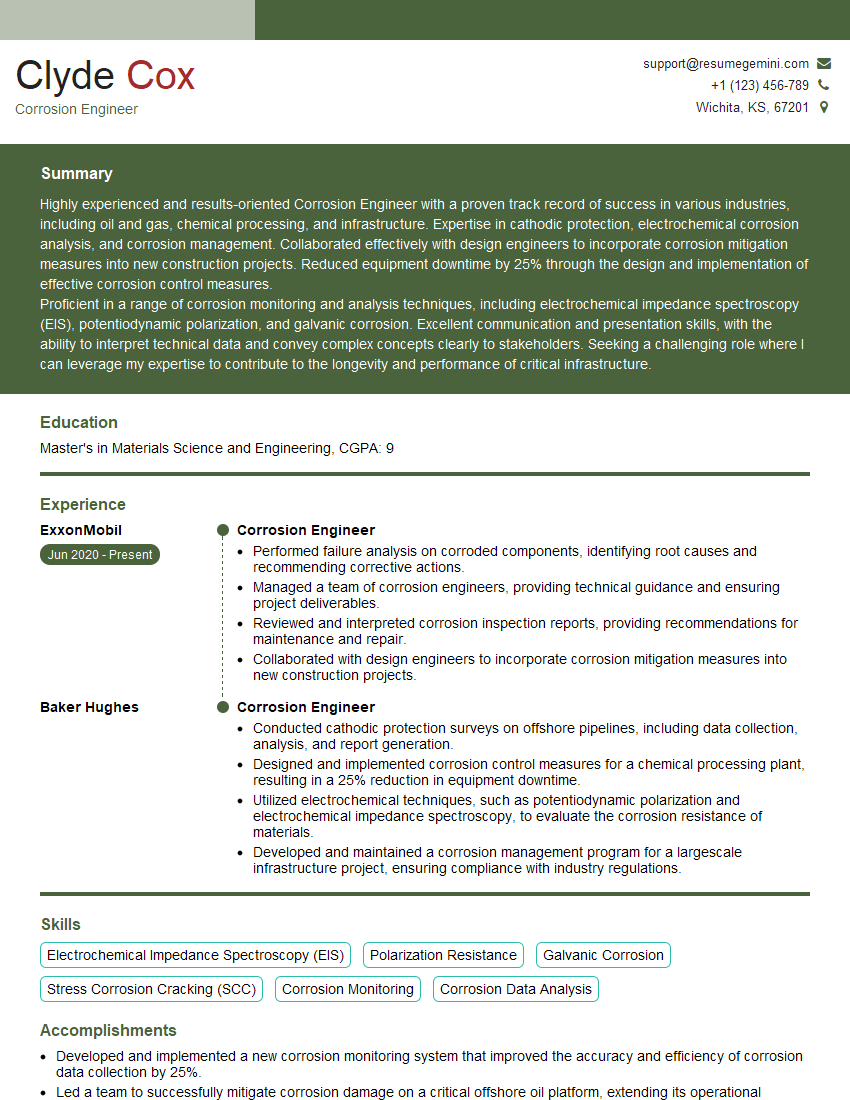
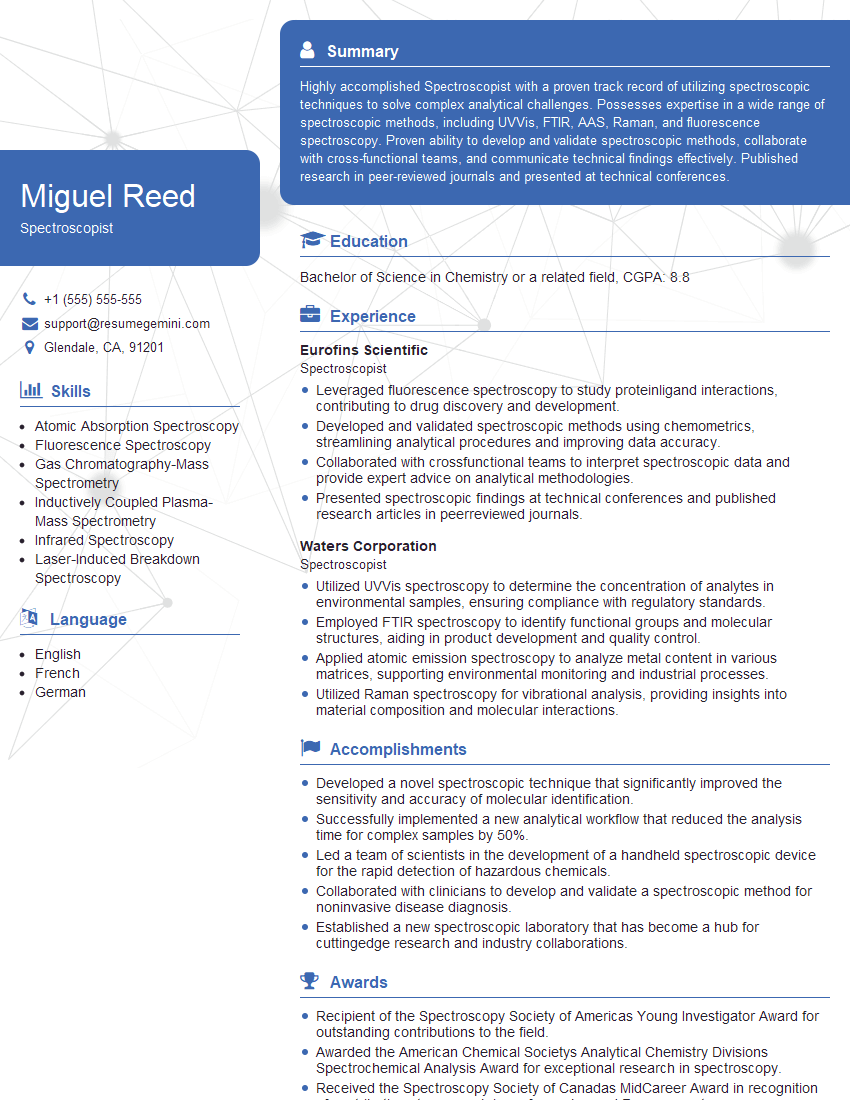
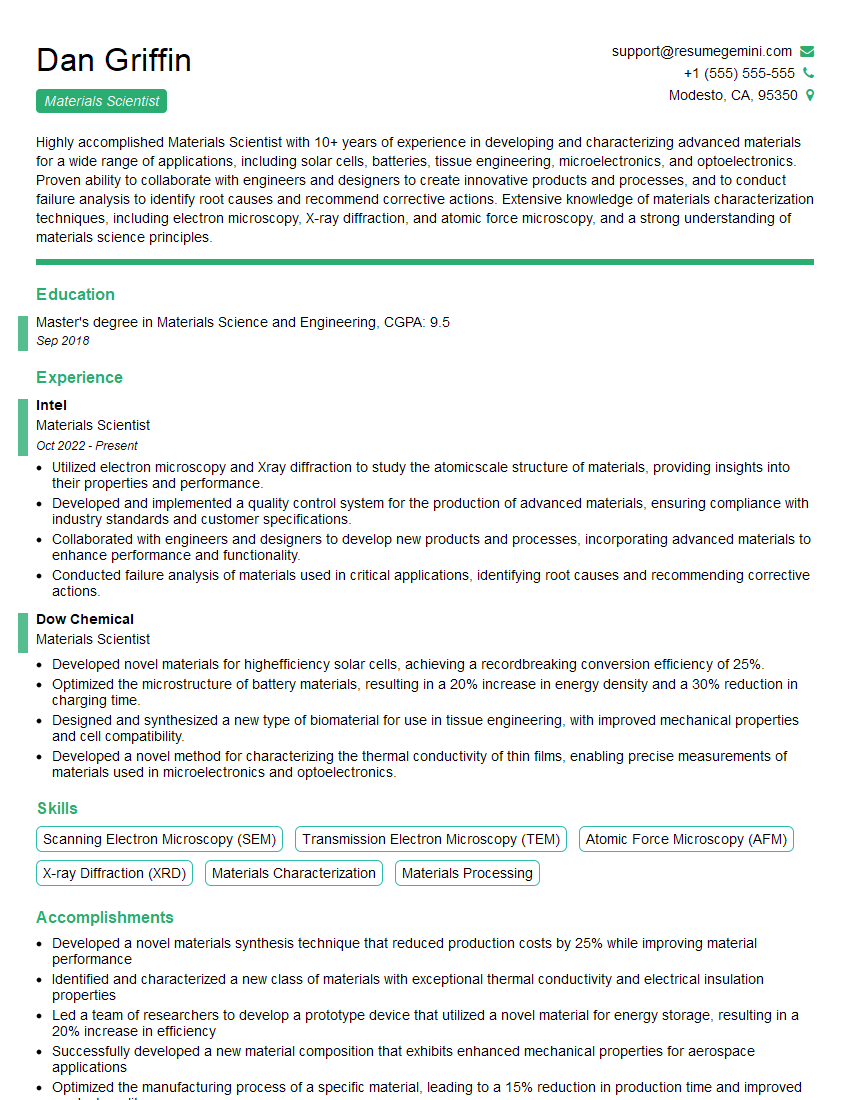
Mastering Expertise in Material Analysis and Testing opens doors to exciting career opportunities in various industries. A strong understanding of these principles is crucial for career advancement and securing your dream role. To maximize your job prospects, it’s vital to create an ATS-friendly resume that highlights your skills and experience effectively. ResumeGemini is a trusted resource to help you build a professional and impactful resume that catches the eye of recruiters. ResumeGemini provides examples of resumes tailored to Expertise in Material Analysis and Testing to guide you through the process. Take the next step towards your successful career today!



Explore more articles
Users Rating of Our Blogs
Share Your Experience
We value your feedback! Please rate our content and share your thoughts (optional).
What Readers Say About Our Blog
Very informative content, great job.
good