Interviews are opportunities to demonstrate your expertise, and this guide is here to help you shine. Explore the essential Expertise in Materials Testing and Characterization Techniques interview questions that employers frequently ask, paired with strategies for crafting responses that set you apart from the competition.
Questions Asked in Expertise in Materials Testing and Characterization Techniques Interview
Q 1. Explain the principles of tensile testing.
Tensile testing is a fundamental materials characterization technique used to determine a material’s mechanical properties under uniaxial tensile loading. Imagine pulling on a rubber band until it breaks – tensile testing is a more precise and controlled version of this. A standardized specimen is gripped at both ends and subjected to a controlled, increasing tensile force. The machine continuously measures the applied force (load) and the resulting elongation (strain) of the material.
The resulting stress-strain curve provides crucial information such as:
- Yield Strength: The stress at which the material begins to deform plastically (permanently).
- Tensile Strength (Ultimate Tensile Strength): The maximum stress the material can withstand before failure.
- Young’s Modulus (Elastic Modulus): A measure of the material’s stiffness or resistance to elastic deformation. It’s the slope of the linear portion of the stress-strain curve.
- Ductility: The material’s ability to deform plastically before fracture, often expressed as percent elongation or reduction in area.
- Toughness: The material’s ability to absorb energy before fracture, represented by the area under the stress-strain curve.
This data is critical in selecting appropriate materials for various applications. For example, a bridge cable needs high tensile strength and low ductility to withstand high loads without stretching excessively, whereas a car bumper requires high toughness to absorb impact energy effectively.
Q 2. Describe different types of microscopy techniques (SEM, TEM, optical) and their applications.
Microscopy techniques offer powerful tools for visualizing the microstructure of materials at different scales. They provide insights into the material’s composition, morphology, and defects, which directly influence its properties.
- Optical Microscopy: This is the simplest and most widely accessible technique. It uses visible light to illuminate the sample and magnify its image. Its resolution is limited, but it’s perfect for observing larger features like grain boundaries in metals or phases in alloys. Imagine using a magnifying glass to observe the surface texture of a coin.
- Scanning Electron Microscopy (SEM): SEM utilizes a focused beam of electrons to scan the sample’s surface. The electrons interact with the sample, producing various signals (secondary electrons, backscattered electrons) that are used to create high-resolution images. SEM provides exceptional surface detail, allowing us to visualize nanoscale features, surface roughness, and even elemental composition through Energy Dispersive X-ray Spectroscopy (EDS).
- Transmission Electron Microscopy (TEM): TEM uses a beam of electrons that passes through a very thin sample. The electrons interact with the sample’s internal structure, revealing crystallographic features, defects like dislocations, and even the arrangement of atoms in some cases. TEM provides the highest resolution among the three techniques and is essential for nanoscale structural analysis.
Choosing the right microscopy technique depends on the application. For example, optical microscopy would be suitable for examining the overall microstructure of a steel sample, while SEM is better for analyzing surface cracks in a fractured component, and TEM is needed for high-resolution imaging of nanomaterials.
Q 3. How does X-ray diffraction (XRD) work, and what information can it provide?
X-ray diffraction (XRD) is a non-destructive technique used to identify crystalline materials and determine their crystal structure. It’s based on the principle of constructive interference of X-rays scattered by the atoms in a crystalline lattice. Think of it like waves interfering with each other – sometimes they amplify (constructive), sometimes they cancel (destructive).
When a monochromatic X-ray beam hits a crystalline sample, it’s scattered by the atoms in the crystal lattice. If the path difference between the scattered waves is an integer multiple of the X-ray wavelength, constructive interference occurs, resulting in a diffracted beam. The angles at which these diffracted beams are observed are related to the spacing between crystallographic planes, which is unique to each crystalline material.
The resulting diffraction pattern, typically a plot of intensity versus diffraction angle (2θ), provides the following information:
- Phase identification: By comparing the diffraction pattern with a database (like the International Centre for Diffraction Data – ICDD), we can identify the crystalline phases present in the material.
- Crystal structure determination: The positions and intensities of the diffraction peaks provide information on the crystallographic unit cell dimensions and symmetry.
- Crystallite size and strain: Peak broadening can reveal information on the average size of the crystallites and the presence of internal strain within the crystal lattice.
- Orientation of crystals (texture): The preferred orientation of crystals can also be determined.
XRD is crucial in identifying the crystalline phases in alloys, studying the effects of heat treatment on materials, and characterizing thin films.
Q 4. What are the common techniques used for thermal analysis (TGA, DSC)?
Thermal analysis techniques are used to study the changes in the physical and chemical properties of materials as a function of temperature. Two common methods are Thermogravimetric Analysis (TGA) and Differential Scanning Calorimetry (DSC).
- Thermogravimetric Analysis (TGA): TGA measures the change in mass of a sample as a function of temperature or time. This is useful for determining the amount of volatile components in a material, such as moisture or organic matter. For example, TGA can determine the moisture content in a polymer or the weight loss of a material during thermal decomposition. The TGA curve shows the weight loss percentage against the temperature.
- Differential Scanning Calorimetry (DSC): DSC measures the heat flow associated with phase transitions (like melting, crystallization, or glass transitions) and chemical reactions. By comparing the heat flow of a sample with that of a reference material, DSC can detect exothermic and endothermic transitions, which are indicative of various physical or chemical changes. For instance, DSC can determine the glass transition temperature of a polymer or the melting point of a crystalline material. The DSC curve plots the heat flow against temperature, showing peaks for exothermic and endothermic events.
Both TGA and DSC are indispensable for understanding the thermal stability and behavior of materials, and they are widely used in polymer science, materials science and the pharmaceutical industry.
Q 5. Explain the concept of hardness testing and its different methods (e.g., Rockwell, Vickers).
Hardness testing measures a material’s resistance to indentation. Imagine pushing a thumbtack into different materials – some will dent easily, others will resist. Hardness testing quantifies this resistance.
Different methods employ different indenters and loading mechanisms:
- Rockwell Hardness Test: This is a widely used method that measures the depth of indentation made by an indenter (diamond cone or hardened steel ball) under a specific load. The hardness value is determined directly from the depth of indentation, making it a simple and fast technique.
- Vickers Hardness Test: This method uses a square-based diamond pyramid indenter to produce a square indentation. The hardness value is calculated from the diagonal length of the indentation, making it highly sensitive to small changes in hardness and suitable for a wide range of materials.
- Brinell Hardness Test: This method uses a hardened steel ball as an indenter, and the hardness is calculated from the diameter of the indentation.
The choice of hardness testing method depends on the material’s hardness range and the required accuracy. Hardness values provide a good estimate of a material’s strength and wear resistance and are often used for quality control and material selection in many engineering applications. For instance, a high Rockwell hardness is desirable for cutting tools while a lower hardness might be preferable for materials requiring flexibility.
Q 6. Describe the principles of fatigue testing.
Fatigue testing evaluates a material’s response to repeated cyclic loading. Imagine bending a paperclip back and forth repeatedly – eventually, it will fracture, even though the stress applied in a single cycle is far below the material’s yield strength. Fatigue is a major cause of failure in many engineering components.
In fatigue testing, a specimen is subjected to a controlled cyclic loading pattern (e.g., sinusoidal, trapezoidal) at a specific frequency and stress amplitude. The number of cycles to failure (fatigue life) is measured. This fatigue life is plotted against stress amplitude to generate an S-N (stress-number of cycles) curve. This curve shows the relationship between stress amplitude and fatigue life.
Several factors influence fatigue behavior, including the material’s microstructure, surface finish, and the presence of stress raisers (like cracks or notches). Fatigue testing is crucial in predicting the lifespan of components subject to cyclical loading, such as aircraft wings, bridge components and engine parts.
Q 7. How is fracture toughness measured?
Fracture toughness is a measure of a material’s resistance to brittle fracture. It quantifies how much energy a material can absorb before propagating a crack. Materials with high fracture toughness are more resistant to crack propagation and are more ductile.
The most common method for measuring fracture toughness is the KIC test (Plane Strain Fracture Toughness). In this test, a pre-cracked specimen is subjected to a tensile load. The critical stress intensity factor (KIC) is determined at the point of crack propagation. The KIC value is a material property that represents the material’s resistance to crack propagation under plane strain conditions (a condition where the strain in the thickness direction is negligible).
The KIC test requires precise specimen preparation and controlled loading conditions. The test is important for evaluating the integrity and safety of structural components, especially in applications where cracks may be present, such as pipelines, pressure vessels, and aircraft components.
Q 8. Explain the difference between destructive and non-destructive testing methods.
The core difference between destructive and non-destructive testing lies in whether the testing process damages the material being examined. Destructive testing involves techniques that permanently alter or destroy the sample to obtain data about its properties. Non-destructive testing (NDT), on the other hand, allows for evaluation without causing damage, enabling repeated testing or preservation of the sample for future use. Think of it like this: destructive testing is like breaking open a toy to see how it works, while NDT is like using a magnifying glass to examine its details without dismantling it.
For example, a tensile test, where a material is pulled until it breaks, is destructive. Conversely, using ultrasound to detect internal flaws is non-destructive.
Q 9. What are some common non-destructive testing techniques (NDT)?
Many common NDT techniques exist, each suited to specific applications. Some popular methods include:
- Visual Inspection: The simplest method, involving a visual examination for surface defects.
- Ultrasonic Testing (UT): Uses high-frequency sound waves to detect internal flaws; think of it like sonar for materials.
- Radiographic Testing (RT): Employs X-rays or gamma rays to penetrate the material and reveal internal structures and defects; similar to medical X-rays.
- Magnetic Particle Testing (MT): Uses magnetic fields to detect surface and near-surface cracks in ferromagnetic materials.
- Liquid Penetrant Testing (PT): A dye penetrant is applied to highlight surface-breaking defects.
- Eddy Current Testing (ECT): Uses electromagnetic induction to detect surface and subsurface flaws in conductive materials.
The choice of NDT method depends on factors like the material type, the type of defect expected, and the accessibility of the component.
Q 10. Describe the principles of spectroscopic techniques (FTIR, Raman).
Both FTIR (Fourier Transform Infrared Spectroscopy) and Raman spectroscopy are vibrational spectroscopic techniques that provide information about the molecular structure and composition of a material. However, they probe different vibrational modes.
FTIR measures the absorption of infrared light by a sample. Different molecules absorb infrared light at characteristic frequencies, corresponding to their vibrational modes. The resulting spectrum shows peaks at specific wavenumbers, which can be used to identify functional groups and the overall molecular structure. Think of it as a fingerprint for molecules.
Raman spectroscopy, on the other hand, measures the inelastic scattering of light by a sample. When light interacts with a molecule, it can cause a change in the vibrational energy of the molecule. This change in energy is detected as a shift in the frequency of the scattered light. The resulting Raman spectrum also shows peaks at specific frequencies, providing information about molecular vibrations. While both provide vibrational information, Raman is often more sensitive to certain types of bonds, complementing FTIR data.
Q 11. How do you interpret a stress-strain curve?
A stress-strain curve is a graphical representation of a material’s response to an applied load. The x-axis represents strain (deformation) and the y-axis represents stress (force per unit area). Interpreting this curve allows us to understand several key material properties.
- Elastic Region: The initial linear portion shows elastic deformation, where the material returns to its original shape after the load is removed. The slope of this region gives Young’s modulus (a measure of stiffness).
- Yield Strength: The point where the curve deviates from linearity indicates the yield strength, the stress at which permanent deformation begins.
- Ultimate Tensile Strength: The highest point on the curve represents the ultimate tensile strength, the maximum stress the material can withstand before failure.
- Fracture Strength: The point where the curve ends marks the fracture strength, the stress at which the material breaks.
- Ductility: The ability of a material to deform plastically before fracture is represented by the elongation to fracture (the amount of strain at fracture).
By analyzing these parameters, we can assess a material’s suitability for a given application. For example, a material with high yield strength is ideal for structural components, whereas a material with high ductility is preferred for applications requiring formability.
Q 12. Explain the concept of creep and stress relaxation.
Creep and stress relaxation are time-dependent material behaviors observed under sustained stress.
Creep refers to the slow, continuous deformation of a material under constant stress at elevated temperatures. Imagine a metal beam supporting a heavy load over a long period; it will gradually deform due to creep. This is important to consider in high-temperature applications, like gas turbines or nuclear reactors, where even small deformations can have significant consequences.
Stress relaxation is the gradual decrease in stress in a material under constant strain. For instance, consider a plastic strap tightly wrapped around a package. Over time, the tension in the strap will decrease due to stress relaxation. This phenomenon is relevant in scenarios involving sealed joints or components under constant deformation.
Q 13. What is the significance of grain size in material properties?
Grain size plays a significant role in determining material properties. Smaller grain sizes generally lead to:
- Increased strength and hardness: Grain boundaries act as barriers to dislocation movement (defects in the crystal structure that cause deformation), resulting in greater resistance to deformation.
- Improved toughness: Smaller grains create more grain boundaries, hindering crack propagation, thus improving resistance to fracture.
- Enhanced fatigue resistance: The increased number of grain boundaries reduces the rate of fatigue crack growth.
- Improved creep resistance: Smaller grains have a higher density of grain boundaries, which inhibits grain boundary sliding, leading to improved creep resistance.
However, excessively small grain sizes can lead to reduced ductility. Controlling grain size during manufacturing is crucial for achieving desired material properties.
Q 14. How does microstructure affect material properties?
Microstructure, the arrangement of phases and structural features at a microscopic level, profoundly influences a material’s properties. The phases present (e.g., different crystalline forms or precipitates), their distribution, and grain size all contribute to the overall behavior.
For example, a material with a uniform microstructure will typically exhibit more consistent and predictable properties compared to one with a heterogeneous microstructure. The presence of precipitates can strengthen a material by impeding dislocation motion. Similarly, the orientation of grains can affect properties such as anisotropy (direction-dependent properties). Techniques like electron microscopy are used to examine microstructures, providing vital information for material design and selection.
Understanding the relationship between microstructure and properties is key for tailoring materials to specific applications. For instance, heat treatments can be used to modify microstructure and improve strength or ductility.
Q 15. Explain the concept of yield strength and ultimate tensile strength.
Yield strength and ultimate tensile strength are crucial mechanical properties describing a material’s response to tensile loading. Think of it like pulling on a rubber band. Yield strength represents the point at which the material begins to deform permanently; it’s the stress at which the material transitions from elastic to plastic deformation. Beyond this point, even if you release the force, the rubber band won’t return to its original shape. Ultimate tensile strength, on the other hand, is the maximum stress the material can withstand before it fractures or breaks. It’s the highest point on the stress-strain curve. Imagine stretching the rubber band until it snaps; that represents the ultimate tensile strength.
For example, a steel component in a bridge needs to have a high yield strength to resist permanent deformation under load, ensuring the bridge maintains its structural integrity. The ultimate tensile strength is also crucial, guaranteeing the bridge won’t fail catastrophically.
Career Expert Tips:
- Ace those interviews! Prepare effectively by reviewing the Top 50 Most Common Interview Questions on ResumeGemini.
- Navigate your job search with confidence! Explore a wide range of Career Tips on ResumeGemini. Learn about common challenges and recommendations to overcome them.
- Craft the perfect resume! Master the Art of Resume Writing with ResumeGemini’s guide. Showcase your unique qualifications and achievements effectively.
- Don’t miss out on holiday savings! Build your dream resume with ResumeGemini’s ATS optimized templates.
Q 16. Describe different types of material failures (e.g., ductile, brittle).
Materials can fail in different ways depending on their properties and the loading conditions. Ductile failure is characterized by significant plastic deformation before fracture. Think of pulling taffy – it stretches considerably before breaking. The fracture surface is typically cup-and-cone shaped. This indicates a slow crack propagation. Brittle failure, conversely, involves little to no plastic deformation before fracture. Imagine snapping a dry twig – it breaks suddenly without much stretching. The fracture surface is usually flat and perpendicular to the direction of the load. This signifies a rapid crack propagation. Other failure modes include fatigue (failure due to cyclic loading), creep (deformation under sustained stress at elevated temperatures), and stress corrosion cracking (failure due to a combination of stress and corrosive environment).
Consider designing a car chassis: for its safety, ductile materials are preferred so they will deform rather than shatter in an impact. Brittle materials, however, might be chosen for certain applications where high stiffness is paramount, but the risk of brittle failure needs to be mitigated through careful design.
Q 17. How do you analyze a fracture surface?
Analyzing a fracture surface is crucial for determining the cause of failure. We use a combination of techniques, including visual inspection with a stereo microscope, scanning electron microscopy (SEM), and energy-dispersive X-ray spectroscopy (EDS). Visual inspection helps to identify the overall fracture mode (ductile, brittle, fatigue). SEM provides high-resolution images to examine the details of the fracture surface, revealing features such as crack initiation sites, propagation paths, and the presence of secondary cracks. EDS helps determine the elemental composition of different areas on the fracture surface, which can provide valuable insights into the cause of failure – for example, identifying corrosive elements contributing to stress corrosion cracking.
Imagine a failed turbine blade in a jet engine. Analyzing the fracture surface using these techniques could pinpoint the cause, whether it was material fatigue, improper manufacturing, or a foreign object damage.
Q 18. Explain the difference between elastic and plastic deformation.
Elastic and plastic deformation describe how a material responds to stress. Elastic deformation is reversible – when the stress is removed, the material returns to its original shape. It’s like stretching a spring; when you release it, it snaps back. Plastic deformation, on the other hand, is permanent; even after the stress is removed, the material remains deformed. It’s like bending a paperclip – it doesn’t go back to its original straight shape. The yield strength is the boundary between these two types of deformation.
In structural engineering, understanding this difference is crucial. We need to ensure that structures only experience elastic deformation under normal operating conditions. Permanent plastic deformation can lead to permanent changes in the structure’s dimensions and compromise its functionality.
Q 19. What are the common methods for determining the composition of a material?
Determining the composition of a material is fundamental in materials science. Common methods include:
- Chemical analysis: Techniques like wet chemical analysis, inductively coupled plasma optical emission spectrometry (ICP-OES), and atomic absorption spectroscopy (AAS) can precisely quantify the elemental composition.
- X-ray fluorescence (XRF): A non-destructive technique used to identify and quantify elements present in a sample by analyzing the X-rays emitted after excitation with an X-ray source.
- Electron probe microanalysis (EPMA): Combines electron microscopy with X-ray analysis for high-resolution compositional mapping.
- Spectroscopy (various techniques like FTIR, Raman): This method provides information on the molecular structure and composition of materials.
For instance, in the semiconductor industry, knowing the precise doping level in silicon wafers is critical for device performance. These techniques allow for accurate determination of impurity concentrations.
Q 20. How do you identify phases in a material using XRD?
X-ray diffraction (XRD) is a powerful technique for identifying phases in a material. It relies on the principle of constructive interference of X-rays scattered by the crystalline planes within the material. Each crystalline phase has a unique crystal structure resulting in a distinct diffraction pattern. By comparing the obtained diffraction pattern with standard diffraction databases (like the International Centre for Diffraction Data – ICDD), we can identify the different phases present in the material and their relative proportions.
For example, in metallurgy, XRD is used to identify different phases in steel alloys, such as austenite, ferrite, and cementite. This information is crucial for understanding the material’s mechanical properties.
Q 21. What is the importance of sample preparation in materials characterization?
Sample preparation is a critical step that significantly impacts the accuracy and reliability of materials characterization. Improper sample preparation can lead to misleading or erroneous results. The preparation method depends on the chosen characterization technique and the material’s properties. It often involves steps like sectioning (cutting), mounting (embedding the sample in resin), grinding (removing surface irregularities), polishing (creating a smooth surface), and etching (revealing microstructural features). For instance, preparing a metal sample for SEM requires polishing to a mirror finish to avoid artifacts and provide clear images. Poor preparation can lead to scratches or deformation, obscuring the true microstructure.
Think about analyzing a composite material. If you don’t prepare the sample correctly – perhaps by not properly embedding the fibers in resin before sectioning – your results from SEM or other techniques will not accurately reflect the fiber distribution and the material’s actual properties.
Q 22. Explain the challenges in testing composite materials.
Testing composite materials presents unique challenges due to their heterogeneous nature, combining two or more distinct materials with different properties. This heterogeneity leads to complex behavior under stress, making accurate prediction and characterization difficult. Let’s break down some key challenges:
- Anisotropy: Composite properties vary significantly depending on the direction of the applied load. This means testing must be performed in multiple directions to fully characterize the material.
- Microstructural Complexity: The internal structure of a composite, including fiber orientation, matrix type, and interfacial bonding, influences its mechanical properties. Understanding and controlling these factors is crucial for reliable testing.
- Damage Mechanisms: Composites can fail through various mechanisms, such as fiber breakage, matrix cracking, delamination, and fiber-matrix debonding. Identifying these mechanisms requires advanced techniques.
- Specimen Preparation: Preparing representative samples from composites can be challenging due to their layered structure and potential for damage during preparation. Precise cutting and polishing techniques are essential.
- Non-Linear Behavior: Composites often exhibit non-linear stress-strain relationships, requiring sophisticated testing methods and data analysis to accurately determine material properties.
For example, consider a carbon fiber reinforced polymer (CFRP) composite. Its strength and stiffness will differ significantly depending on whether the load is applied parallel or perpendicular to the carbon fibers. This anisotropy necessitates testing in multiple orientations to develop a comprehensive understanding of its mechanical behavior.
Q 23. How do you ensure the accuracy and reliability of your test results?
Ensuring accurate and reliable test results in materials testing relies on a multi-pronged approach that starts even before the testing begins. Here are some key strategies:
- Proper Calibration and Maintenance of Equipment: Regular calibration using traceable standards is paramount. Any equipment malfunction or drift can lead to significant errors. Maintenance schedules should be rigorously followed.
- Rigorous Specimen Preparation: Precisely machined specimens, free from defects and representative of the material, are essential. Any flaw introduced during specimen preparation will skew the results.
- Controlled Testing Environment: Environmental factors like temperature and humidity can significantly influence test results. Maintaining a controlled environment is crucial, especially for sensitive materials.
- Appropriate Test Methods: Selecting the correct test method and standard (e.g., ASTM, ISO) based on the material type and application is vital. Incorrect methodology can lead to inaccurate data.
- Statistical Analysis: Multiple specimens should be tested, and statistical analysis (e.g., calculating mean, standard deviation) should be applied to quantify the variability and uncertainty associated with the results. This provides a more reliable representation of material properties.
- Data Quality Checks: Implementing rigorous data quality checks, including outlier detection and systematic error analysis, will identify and handle anomalies during the testing process.
Imagine testing the tensile strength of a metal alloy. If the testing machine isn’t properly calibrated, the measured force will be incorrect, leading to an inaccurate tensile strength value. Similarly, if the specimen has a significant surface flaw, the measured strength will be lower than the material’s intrinsic strength.
Q 24. Describe your experience with data analysis and interpretation in materials testing.
Data analysis and interpretation are critical in materials testing. My experience spans a range of techniques, including:
- Stress-Strain Curve Analysis: Determining material properties like Young’s modulus, yield strength, tensile strength, and ductility from stress-strain curves using appropriate fitting techniques. This often involves recognizing and accounting for non-linear behavior.
- Fracture Surface Analysis: Examining fracture surfaces using microscopy (optical and electron) to determine failure mechanisms. This requires knowledge of fracture mechanics and the ability to correlate microscopic observations with macroscopic test data.
- Statistical Data Analysis: Using statistical methods such as ANOVA, t-tests, and regression analysis to evaluate the significance of experimental results, quantify uncertainty, and compare the properties of different materials.
- Digital Image Correlation (DIC): Analyzing digital images to measure strain fields and deformation patterns during testing. This provides valuable insights into the material’s behavior under load, especially in complex scenarios.
- Finite Element Analysis (FEA) Correlation: Comparing experimental data with FEA simulations to validate models and understand the limitations of both experimental and computational approaches.
For example, I once analyzed the fracture surface of a ceramic component that failed prematurely. Using scanning electron microscopy, I identified micro-cracks originating from internal flaws, which helped us redesign the component and improve its reliability.
Q 25. What software packages are you proficient in for data analysis and materials characterization?
I am proficient in several software packages relevant to materials characterization and data analysis:
- OriginPro: For data analysis, curve fitting, and graphical representation of experimental data.
- MATLAB: For advanced data processing, statistical analysis, and algorithm development.
- ImageJ/Fiji: For image processing and analysis, particularly in microscopy.
- ABAQUS/ANSYS: For Finite Element Analysis (FEA) modeling and simulation.
- Specific software packages associated with individual testing equipment: Many instruments come with dedicated software for data acquisition and analysis.
I am comfortable writing custom scripts and macros to automate data processing and analysis workflows, increasing efficiency and reducing manual errors.
Q 26. Explain your experience with specific material testing equipment.
My experience with materials testing equipment is extensive. I have hands-on experience with:
- Universal Testing Machines (UTMs): For tensile, compression, flexural, and fatigue testing of various materials.
- Hardness Testers (Brinell, Rockwell, Vickers): For determining the hardness of metals and other materials.
- Dynamic Mechanical Analyzers (DMAs): For studying the viscoelastic properties of polymers and composites over a wide range of temperatures and frequencies.
- Scanning Electron Microscopes (SEMs): For high-resolution imaging of material microstructures and fracture surfaces.
- Optical Microscopes: For lower-magnification imaging and analysis.
- X-ray Diffraction (XRD) systems: For identifying crystal structures and determining the phase composition of materials.
I am familiar with the operating principles, calibration procedures, and limitations of these instruments, and I have a good understanding of how to select the appropriate equipment for a specific testing task. I am adept at troubleshooting and maintaining these machines to ensure accurate and reliable results.
Q 27. Describe a challenging materials testing project you’ve worked on and how you overcame the challenges.
One challenging project involved characterizing the fatigue behavior of a novel titanium alloy for aerospace applications. The initial tests showed highly variable fatigue life, far exceeding the anticipated range.
To overcome this, we implemented a systematic approach:
- Detailed Microstructural Analysis: We utilized SEM and XRD to examine the microstructure, revealing variations in grain size and precipitate distribution across different samples. This variability explained the inconsistent fatigue life.
- Improved Specimen Preparation: We refined our specimen preparation techniques to minimize surface defects and ensure consistency in geometry, which significantly reduced variability.
- Advanced Statistical Analysis: Instead of relying solely on average fatigue life, we employed Weibull analysis to model the distribution of fatigue life and quantify the variability, providing a more accurate representation of the material’s behavior.
- Collaboration with Material Scientists: We collaborated with material scientists to develop a better understanding of the alloy’s underlying mechanisms of fatigue, which informed improved processing techniques.
Ultimately, this multi-faceted approach helped us develop a more complete understanding of the alloy’s behavior and enabled us to provide reliable fatigue life predictions, ensuring the successful use of the material in the intended aerospace application. This experience highlighted the importance of integrating various characterization techniques and sophisticated data analysis for solving challenging materials problems.
Q 28. How do you stay up-to-date with the latest advancements in materials testing and characterization techniques?
Staying current in this rapidly evolving field requires a commitment to continuous learning. Here’s how I stay informed:
- Reading Peer-Reviewed Journals and Conference Proceedings: I regularly review journals such as Materials Science and Engineering, Acta Materialia, and others relevant to my area of expertise, attending relevant conferences and workshops.
- Attending Industry Conferences and Workshops: Networking with other professionals and learning about new techniques and applications during workshops and conferences is incredibly valuable.
- Online Courses and Webinars: Many platforms offer specialized training and webinars on advanced materials testing methods and software.
- Following Industry Experts and Organizations: Following researchers and organizations on social media and through their publications helps me stay informed about the latest developments.
- Engaging in Continuing Education: Participating in professional development courses and workshops to refresh my knowledge and acquire new skills, especially regarding new instruments and techniques.
By proactively engaging in these activities, I ensure that my knowledge and skills remain current and relevant, allowing me to tackle new challenges effectively and contribute meaningfully to materials science research and development.
Key Topics to Learn for Expertise in Materials Testing and Characterization Techniques Interview
- Mechanical Testing: Understanding tensile, compressive, shear, fatigue, and impact testing; interpreting stress-strain curves and failure mechanisms; familiarity with relevant standards (ASTM, ISO).
- Practical Application (Mechanical Testing): Analyzing experimental data to determine material properties (yield strength, ultimate tensile strength, modulus of elasticity, etc.) and assess material suitability for specific applications. Troubleshooting test procedures and equipment malfunctions.
- Thermal Analysis: Knowledge of Differential Scanning Calorimetry (DSC), Thermogravimetric Analysis (TGA), and dilatometry; interpreting thermal transitions and degradation behavior.
- Practical Application (Thermal Analysis): Determining glass transition temperature (Tg), melting point (Tm), crystallization behavior, and thermal stability of materials; using this data to predict material performance at elevated or reduced temperatures.
- Microscopy Techniques: Familiarity with optical microscopy, scanning electron microscopy (SEM), transmission electron microscopy (TEM), and atomic force microscopy (AFM); image interpretation and analysis.
- Practical Application (Microscopy): Identifying microstructural features (grain size, precipitates, defects); correlating microstructure with mechanical properties; performing failure analysis using microscopy techniques.
- Spectroscopic Techniques: Understanding X-ray diffraction (XRD), X-ray fluorescence (XRF), Fourier-transform infrared spectroscopy (FTIR), and Raman spectroscopy; interpreting spectral data for compositional and structural analysis.
- Practical Application (Spectroscopic Techniques): Identifying phases and crystalline structures; determining chemical composition; analyzing surface coatings and thin films.
- Data Analysis and Interpretation: Proficiency in statistical analysis, data visualization, and report writing; ability to draw meaningful conclusions from experimental data and present findings clearly and concisely.
- Problem-Solving: Ability to troubleshoot experimental problems, identify sources of error, and propose solutions; familiarity with experimental design and quality control.
Next Steps
Mastering Expertise in Materials Testing and Characterization Techniques is crucial for career advancement in various industries, opening doors to specialized roles and leadership opportunities. An ATS-friendly resume is your key to unlocking these opportunities. To ensure your skills and experience shine, consider using ResumeGemini to build a professional and impactful resume. ResumeGemini provides tools and examples tailored to highlight expertise in Materials Testing and Characterization Techniques, helping you stand out from the competition. Examples of resumes tailored to this field are available within ResumeGemini.

Laboratory Manager Resume Sample

Quality Control Manager Resume Sample

Research Scientist Resume Sample
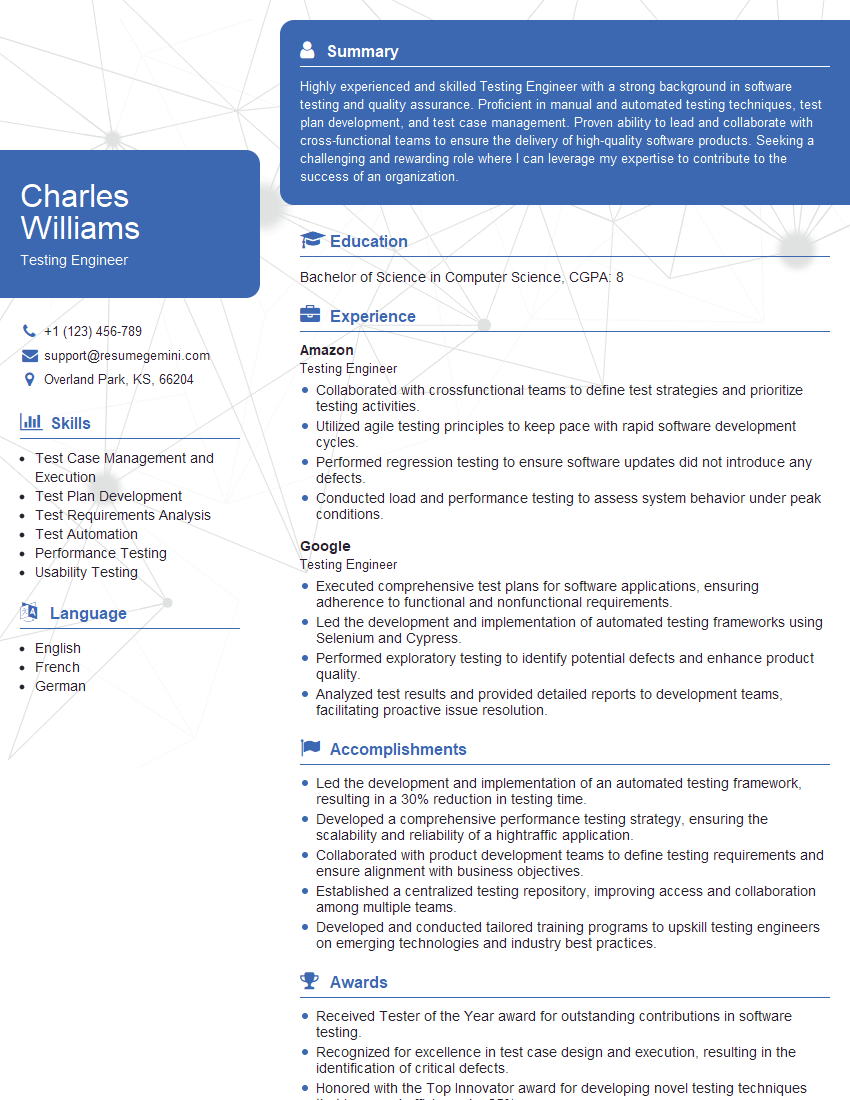
Testing Engineer Resume Sample

Quality Control Engineer Resume Sample

Corrosion Engineer Resume Sample

Materials Engineer Resume Sample

Metallurgist Resume Sample
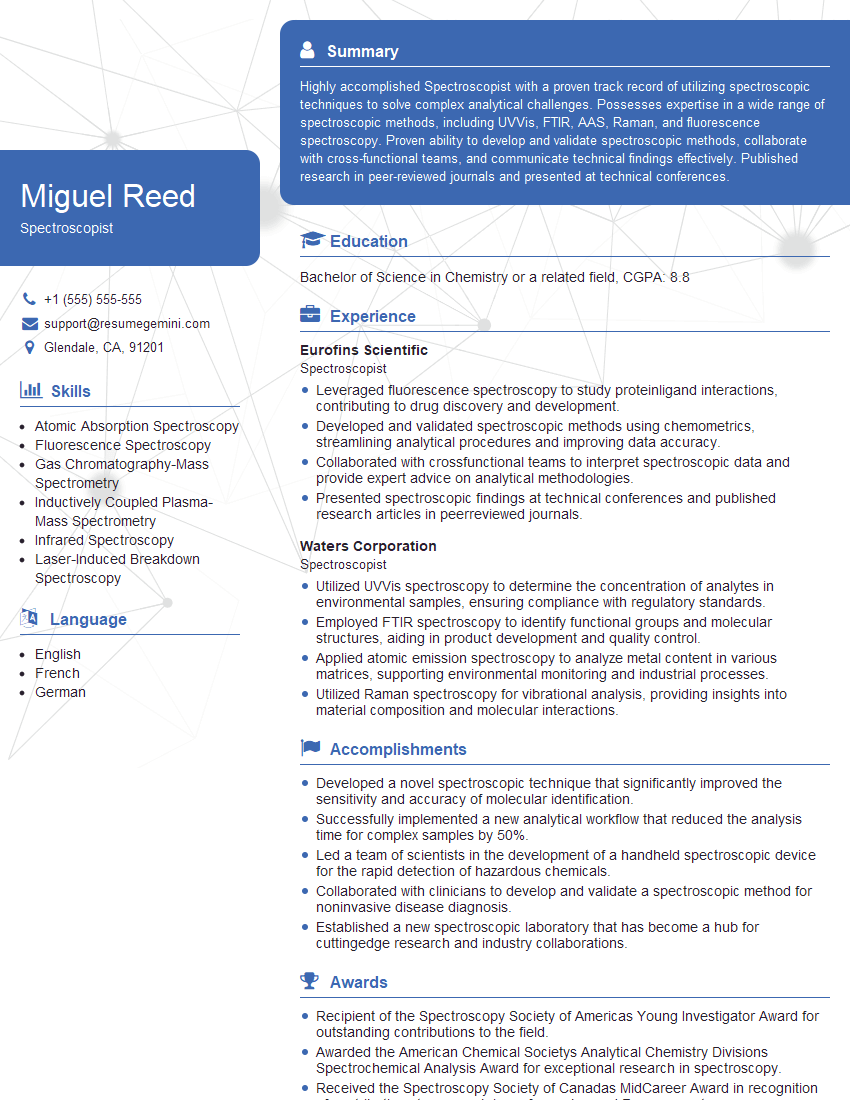
Spectroscopist Resume Sample

Materials Scientist Resume Sample

Senior Materials Scientist Resume Sample
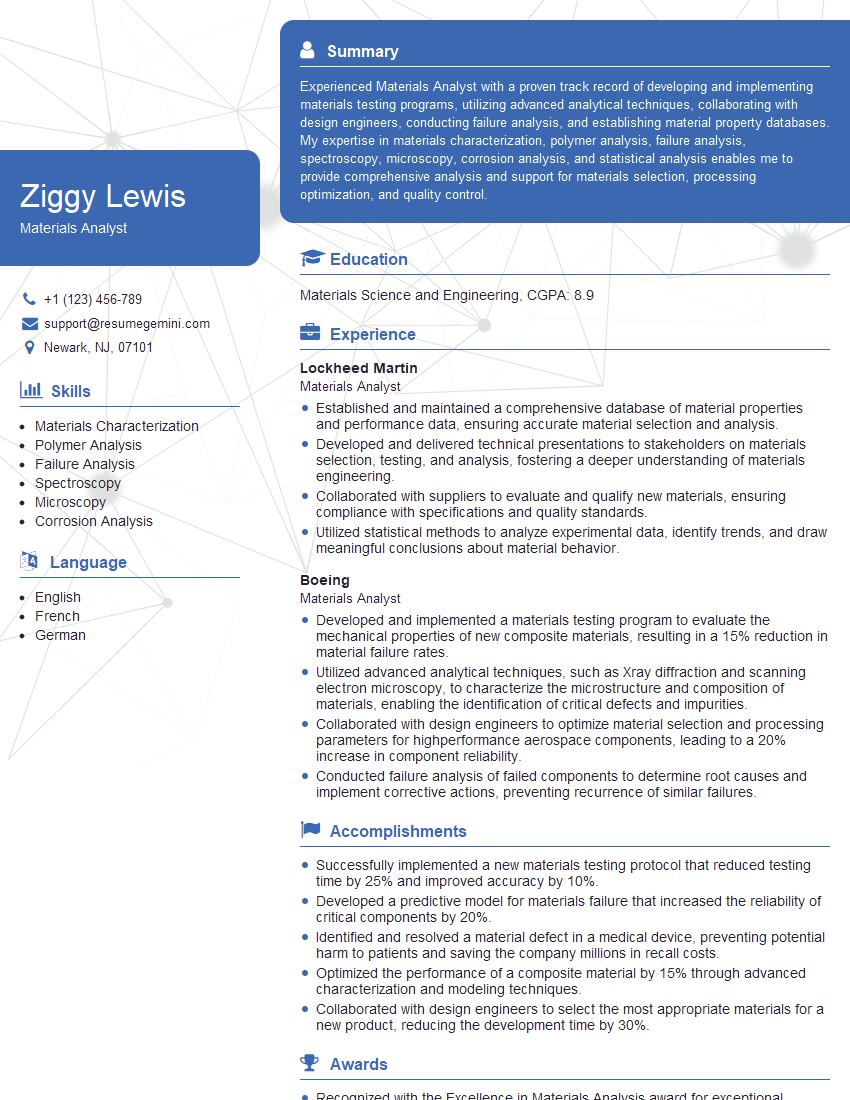
Materials Analyst Resume Sample
Explore more articles
Users Rating of Our Blogs
Share Your Experience
We value your feedback! Please rate our content and share your thoughts (optional).
What Readers Say About Our Blog
Very informative content, great job.
good