Feeling uncertain about what to expect in your upcoming interview? We’ve got you covered! This blog highlights the most important Expertise in Shrimping Gear Deployment and Retrieval interview questions and provides actionable advice to help you stand out as the ideal candidate. Let’s pave the way for your success.
Questions Asked in Expertise in Shrimping Gear Deployment and Retrieval Interview
Q 1. Describe the different types of shrimping gear used in your experience.
Shrimping gear varies depending on the target species, fishing grounds, and vessel size. In my experience, the most common types include trawl nets, otter trawls, and beam trawls. Otter trawls are the workhorse of the shrimping industry, using two otter boards to spread the net opening wide. Beam trawls, which use a rigid beam to keep the net open, are often used in shallower waters. Then we have different types of nets within those categories, varying in mesh size, length, and construction, tailored to the specific shrimp species and fishing conditions.
- Otter Trawl: This is the most widely used, utilizing two boards to keep the net mouth open, ideal for larger vessels and deeper waters.
- Beam Trawl: Suitable for shallower waters, it uses a rigid beam to maintain the net’s opening.
- Seine Nets: These encircle the shrimp, often used in inshore, shallower areas, and usually involve more manual labor.
The choice of gear is a crucial decision impacting efficiency and selectivity. A poorly chosen net can lead to reduced catches or high bycatch (unwanted species).
Q 2. Explain the step-by-step process of deploying a shrimp trawl net.
Deploying an otter trawl is a coordinated operation. Imagine it like carefully laying out a giant butterfly net underwater. First, the net is meticulously checked for any damage or snags. Then, the process unfolds as follows:
- Prepare the Net: The net is carefully loaded onto the net roller, ensuring it’s correctly folded and free of knots. Think of it like carefully preparing fishing line before casting.
- Shooting the Boards: The otter boards, which are heavy metal plates, are lowered into the water, creating the spread of the net mouth. This is often done using hydraulic winches controlled from the bridge.
- Paying Out the Net: As the boards are lowered and spread, the net is gradually paid out from the roller, ensuring a smooth and even deployment. This requires careful monitoring of the net’s position and tension.
- Reaching Target Depth: Using various sensors and monitoring equipment, the net is gradually lowered to the desired depth. Maintaining the correct depth is critical for effective shrimping.
- Towing: Once at the desired depth, the vessel begins towing the trawl, which is driven by the vessel’s propulsion system.
The entire process demands careful teamwork and precise coordination between the captain, the crew and the winch operator. An error at any stage can significantly impact the fishing outcome.
Q 3. How do you ensure the proper tension and depth of your gear during deployment?
Maintaining proper tension and depth is essential for efficient shrimping and preventing gear damage. We use several techniques:
- Warp Tension Meters: These instruments precisely measure the tension on the trawl warp (the cable connecting the vessel to the net). Maintaining optimal tension prevents slack, which could allow the net to become entangled, and it also ensures that the net isn’t over-stressed, which could lead to damage.
- Depth Sensors: These are incorporated into the gear to provide real-time depth readings. These often use sound waves, acoustic signals to measure the depth of the net in the water column.
- GPS and Sonar: Modern vessels utilize GPS to track the vessel’s position, and sonar to map the seafloor and locate shrimp beds. This ensures that the net is deployed at the correct depth for optimal shrimp capture.
- Experienced Crew: The skipper and crew also use their years of experience, watching the winches, the feel of the vessel, and the readings on the equipment, to make real-time adjustments to the deployment. It’s a complex process that combines both technology and human expertise.
Think of it like a tightrope walker; too loose and you fall, too tight and you break the rope. The same principle applies to maintaining the proper tension and depth of the shrimp trawl.
Q 4. What are the common problems encountered during shrimp gear deployment, and how do you troubleshoot them?
Many issues can arise during deployment. Some common problems include:
- Net Fouling: The net can become entangled on rocks, debris, or other underwater obstructions. This usually requires a temporary halt to the operation while the crew works to free the net.
- Board Failure: Otter boards can sometimes malfunction, causing the net to drag unevenly or close prematurely. Immediate action might involve raising the boards for inspection and repair.
- Warp Breakage: The trawl warp can break under stress, leading to the loss of the net. This requires assessing the damage and implementing necessary safety procedures.
- Uneven Deployment: This may occur if the net is not properly payed out, leading to damage or ineffective fishing.
Troubleshooting usually involves using sonar to assess the problem, using the winch to try to reposition or recover the gear and making careful observations. Prevention is always better than cure, and regular maintenance and careful pre-deployment checks significantly reduce the likelihood of these issues.
Q 5. Describe the procedure for retrieving a shrimp trawl net.
Retrieving the shrimp trawl is the reverse process of deployment, but with its own set of challenges. It’s a careful, coordinated process:
- Hauling In the Net: The trawl is slowly hauled aboard using the winches. This is done gradually and methodically to avoid damaging the gear or the catch.
- Shooting the Boards: The otter boards are retrieved first. They are usually quite heavy and require careful handling.
- Hauling the Net: The rest of the net is brought onboard, usually onto the net roller. The crew needs to carefully manage the catch and the net simultaneously.
- Sorting the Catch: Upon retrieval, the shrimp is carefully sorted from the bycatch, ensuring sustainable fishing practices.
- Cleaning the Gear: The gear is then cleaned to remove debris and any remaining catch. This helps to avoid problems during the next deployment and also ensures proper hygiene.
Imagine reeling in a very large, heavy fishing line, except it is underwater and contains your hard-earned catch. That’s the careful approach we take during retrieval.
Q 6. How do you handle tangled or damaged gear during retrieval?
Tangled or damaged gear is a common occurrence. The response depends on the severity of the situation:
- Minor Tangles: Often, these can be untangled on deck using knives and other tools. It requires patience and careful maneuvering to avoid further damage.
- Major Tangles or Damage: Severe tangles may necessitate using underwater cameras or divers to assess the problem and implement a recovery plan. Damaged nets often require on-board repairs or, in severe cases, replacement.
- Prevention: Regular inspections, proactive maintenance, and carefully selecting fishing grounds are crucial for reducing the occurrence of tangles and damage.
Dealing with entangled gear can take considerable time and effort, illustrating the value of preventative maintenance and choosing appropriate fishing grounds.
Q 7. What safety precautions do you take during gear deployment and retrieval?
Safety is paramount during gear deployment and retrieval. We adhere to strict safety protocols, including:
- Personal Protective Equipment (PPE): All crew members wear appropriate safety gear, including life jackets, safety harnesses, and gloves. These protect against injuries from sharp objects or heavy equipment.
- Emergency Procedures: Clear emergency procedures are established and practiced regularly to handle unexpected situations, such as man overboard scenarios or gear malfunctions.
- Communication: Constant communication between the captain, crew, and winch operator is vital, to coordinate movements, avoid collisions, and maintain safety. This also allows for an efficient and effective process.
- Regular Checks of Equipment: Before every operation, equipment undergoes a thorough inspection to identify and fix potential problems. A faulty winch, for example, can lead to serious injuries.
- Weather Monitoring: We constantly monitor weather conditions to ensure safe operations. Severe weather can lead to dangerous situations.
Safety is non-negotiable. We operate under the principle that a safe operation is a productive operation. We always prioritize the well-being of our crew.
Q 8. Explain the importance of proper gear maintenance to prevent loss or damage.
Proper shrimping gear maintenance is paramount to prevent losses – both financial and in terms of safety. A well-maintained net means less wear and tear, resulting in fewer rips, tears, and lost catches. Neglecting maintenance leads to increased risk of gear failure mid-operation, potentially causing damage to the vessel or even injury to the crew. Think of it like this: a car needs regular servicing to avoid breakdowns; similarly, shrimping gear requires consistent upkeep to ensure smooth and efficient operation.
This includes regular cleaning to remove encrusted organisms that weaken the net’s fibers, inspecting for frayed or damaged sections, and repairing them promptly. Proper storage, away from harsh weather elements and UV exposure, also significantly prolongs the gear’s lifespan.
Q 9. How do you inspect shrimping gear for wear and tear before deployment?
Before deploying any shrimping gear, a thorough inspection is non-negotiable. We start by visually examining every inch of the net, paying close attention to areas prone to wear, such as the cod end (the bag at the end of the net) and the area near the headline (the top of the net). We carefully check for any holes, rips, or weakened sections. I use my hands to feel for any broken or frayed lines. If there are any signs of significant wear, I would immediately replace the damaged section or the entire net to prevent losses at sea.
We also examine the floats and sinkers, checking for damage or deterioration. Finally, all the ropes and connections are checked for knots and proper function – a weak knot can mean losing the entire haul. This pre-deployment inspection is a crucial step in ensuring a successful and safe operation. One time, a small unnoticed hole in a net cost us a significant portion of our catch because it allowed the shrimp to escape. That experience reinforced the importance of meticulous pre-deployment checks.
Q 10. What are the different types of knots used in securing and deploying shrimping gear?
Several knots are crucial for securing and deploying shrimping gear. The choice of knot often depends on the specific application and the type of line being used. However, some of the most common include:
- Bowline: Forms a fixed loop that doesn’t slip, excellent for attaching floats or other gear.
- Clove Hitch: A quick and easy knot for temporary attachments, used for securing the net to the vessel.
- Figure Eight Knot: Used as a stopper knot at the end of a line to prevent it from running through a block or pulley.
- Sheet Bend: Used to join two ropes of different diameters. This is essential when connecting different parts of the shrimping gear.
Mastering these knots is critical for a shrimper, as the security and efficiency of the entire operation depend on strong, reliable knots. A poorly tied knot can lead to gear failure and substantial financial losses.
Q 11. Describe your experience with different types of winches and their operation in shrimping.
My experience encompasses various types of winches, from hydraulic winches found on larger vessels to smaller, manually operated winches on smaller boats. Hydraulic winches offer significantly more power and speed, allowing for efficient deployment and retrieval, especially in rough seas or when dealing with heavy gear. They are safer and reduce the physical strain on the crew. However, they require regular maintenance and expertise to operate effectively.
Manually operated winches are more common on smaller vessels. These require more physical effort but have the advantage of simplicity and lower maintenance costs. The choice of winch depends largely on the size and type of vessel, the size of the net being used, and the overall fishing operation. Understanding the strengths and limitations of each type is key to choosing the right tool for the job. On larger vessels, the winch is typically integrated into a more sophisticated gear handling system.
Q 12. How do you manage gear deployment and retrieval in various weather conditions?
Managing gear deployment and retrieval in variable weather conditions is a critical skill. In calm conditions, the process is relatively straightforward. However, in rough seas, safety is the primary concern. We use a variety of techniques, ranging from modifying our deployment strategies to prioritizing crew safety and sometimes opting to postpone deployment altogether until conditions improve.
In high winds and heavy seas, we would slow the deployment and retrieval processes to prevent damage to the gear and the vessel. We might also adjust the net’s configuration by reducing its size or adjusting the number of floats and sinkers based on the intensity of currents and waves. Safety protocols, including wearing proper safety gear and following established communication procedures, are rigorously enforced in adverse conditions. The safety and well-being of my crew always comes first.
Q 13. What is your experience with different types of shrimping vessels and their gear handling capabilities?
Throughout my career, I’ve worked with various shrimping vessels, ranging from small, family-owned boats to large, industrial trawlers. Smaller boats typically utilize simpler gear handling systems, often requiring more manual labor. Larger vessels, on the other hand, employ advanced technology, including sophisticated hydraulic winches, automated gear-handling systems, and onboard sensors for monitoring sea conditions and net performance.
The capabilities of the vessel directly impact the type and quantity of gear that can be effectively deployed. A larger vessel with a powerful winch and advanced handling systems can manage larger and heavier nets than a smaller boat. Understanding the limitations and capabilities of each vessel is essential for planning successful and safe operations. For example, a small boat might only be suitable for deploying smaller nets, whereas a large trawler could handle massive nets and several kilometers of ropes and cables.
Q 14. How do you calculate the appropriate amount of gear for a given fishing operation?
Calculating the appropriate amount of gear for a fishing operation involves several factors: the size of the target shrimp, the fishing grounds, the type of net, and the anticipated duration of the operation. There’s no single formula. Experience plays a crucial role. However, we usually base our calculations on past catches and historical data for the specific area. We’ll factor in the vessel’s capacity, the handling capabilities of the winches, and the crew’s ability to manage the gear.
For instance, if we’re targeting larger shrimp, we might use a net with a larger mesh size and increase the length of the net to cover a broader area. In deep waters, we would need more rope to reach the desired depth. Using too little gear means underperforming. Conversely, using too much gear can lead to inefficiencies, potential damage, and unnecessary strain on both the equipment and crew.
Q 15. Describe your experience with navigating and positioning a shrimping vessel.
Navigating and positioning a shrimping vessel requires a blend of navigational skills, understanding of the fishing grounds, and awareness of environmental factors. It’s like conducting a precise dance on the water.
Firstly, we rely on chartplotters, GPS systems, and echo sounders to pinpoint our target locations. These tools help us identify suitable seabed topography—for example, we look for areas with sandy bottoms ideal for shrimping, avoiding rocky areas that could damage our gear. We also constantly monitor our vessel’s position relative to other vessels, buoys, and potential hazards, using radar and AIS (Automatic Identification System).
Secondly, understanding currents and tides is crucial. Shrimp distribution is influenced by these factors, and inaccurate positioning can lead to a poor catch. We use tidal charts and current predictions to adjust our position and optimize our trawling patterns.
Lastly, weather conditions significantly impact operations. Strong winds and rough seas can make precise positioning difficult and even dangerous. We constantly monitor weather forecasts and adjust our plans accordingly; sometimes, the safest decision is to delay deployment or return to port.
Career Expert Tips:
- Ace those interviews! Prepare effectively by reviewing the Top 50 Most Common Interview Questions on ResumeGemini.
- Navigate your job search with confidence! Explore a wide range of Career Tips on ResumeGemini. Learn about common challenges and recommendations to overcome them.
- Craft the perfect resume! Master the Art of Resume Writing with ResumeGemini’s guide. Showcase your unique qualifications and achievements effectively.
- Don’t miss out on holiday savings! Build your dream resume with ResumeGemini’s ATS optimized templates.
Q 16. How do you handle communication with the crew during gear deployment and retrieval?
Clear and concise communication is paramount during gear deployment and retrieval. Think of it as a well-orchestrated ballet, where everyone needs to know their part and timing. We primarily use a combination of visual signals, verbal communication, and hand signals, which are especially important in noisy environments.
Before deployment, a detailed plan outlining each crew member’s role is discussed. During deployment, we use hand signals to coordinate the net’s release, ensuring the wings and doors open correctly. While trawling, continuous monitoring ensures the net remains functioning as expected. Regular updates on the gear’s position and any observed anomalies are shared verbally, often with a dedicated lookout.
During retrieval, we use a similar system, communicating hauling speed, net position, and any potential snags or problems. This prevents damage to the gear and ensures crew safety. We utilize radios for longer-range communications, especially when communicating with other vessels or the port.
Q 17. What are the legal regulations and safety standards related to shrimping gear deployment and retrieval in your region?
Legal regulations and safety standards related to shrimping vary by region, but generally cover aspects like vessel licensing, gear restrictions, bycatch limits, and safety protocols. In my region, we’re bound by regulations set forth by the [Insert relevant regional authority/organisation, e.g., National Marine Fisheries Service].
These regulations specify permitted fishing zones, gear types, and mesh sizes to minimize bycatch (unintentional capture of non-target species). There are strict limits on the amount of shrimp that can be caught per trip, alongside measures to protect endangered or threatened species. Safety regulations require appropriate safety equipment on board, such as life jackets, fire extinguishers, and emergency communication systems. Detailed crew training and safety drills are mandatory.
Regular inspections ensure compliance, and non-compliance can lead to severe penalties, including fines and license suspension. It is crucial to meticulously follow these regulations, not only to avoid legal repercussions but also to ensure environmental protection and the long-term sustainability of the shrimping industry.
Q 18. Explain the different methods for sorting and handling the catch after retrieval.
Sorting and handling the catch after retrieval is a critical process that ensures product quality and efficiency. It’s like carefully harvesting a precious crop. We initially remove any bycatch—other fish and marine life unintentionally caught in the net—returning these to the ocean whenever possible. This is done to minimize environmental impact and comply with regulations.
Next, the shrimp are sorted by size, using graded sieves or manual sorting. This separation ensures different market demands are met, as different sizes are preferred for various uses. After sorting, the shrimp are typically iced immediately to preserve their quality and extend their shelf life. This rapid cooling prevents bacterial growth and maintains freshness.
Finally, the shrimp are often further processed, either on board or at a processing facility on land. This might involve washing, grading, and potentially even freezing or further value-added processing, such as peeling and deveining. This whole process demands a lot of attention to detail, which is critical for both the quality and the value of the final product.
Q 19. How do you monitor and maintain the performance of the gear during a fishing operation?
Monitoring and maintaining gear performance is continuous throughout the fishing operation. Think of it as regular checkups for a sophisticated machine. We regularly inspect the nets for wear and tear, looking for holes, tears, or signs of abrasion. We check the net’s rigging, paying close attention to ropes, cables, and other components. This helps prevent gear failures and lost catches.
During trawling, we monitor the net’s behavior via the vessel’s sensors and visual observation. We monitor the net’s position, ensuring it’s maintaining the proper depth and shape. Any unusual sensations or variations in the tension of the warps (tow ropes) signal potential problems. The amount of shrimp caught in the net and its consistency over time can indicate overall gear performance.
Regular maintenance is performed between trips, which involves thoroughly inspecting and repairing any damage, replacing worn parts, and ensuring the gear is ready for the next fishing operation. This preventative approach dramatically reduces downtime and maintains the optimal performance of expensive gear.
Q 20. What are the signs of impending gear failure and how do you react to them?
Recognizing impending gear failure is a crucial skill. It’s like reading subtle symptoms in a complex system. Signs can include unusual vibrations or noises from the net, a sudden increase or decrease in warp tension, the net pulling to one side (indicating a potential snag), and an unusual amount of resistance, or conversely, an unexpectedly easy pull. We might also observe changes in the amount of shrimp caught or altered net behavior on the vessel’s sonar.
Our reaction depends on the severity of the issue. A minor issue might involve adjusting the net’s position or slightly modifying the trawling speed. More severe problems necessitate immediate action, potentially including hauling the net in for repairs or abandoning the trawl altogether. Prioritizing safety is paramount. Hauling in a damaged net, if done incorrectly, can pose safety risks to the crew. Knowing the limitations of our gear and when to halt operations is crucial to preventing damage and injury.
Q 21. Describe your experience with different types of nets (e.g., otter trawl, beam trawl).
I’ve extensive experience with both otter trawls and beam trawls, each with its own advantages and disadvantages. Otter trawls use two otter boards (large, flat boards) to keep the net open as it’s towed. This type of net is effective in deeper waters and allows for larger fishing areas. They are often used for shrimping, but are also capable of catching other species.
Beam trawls, on the other hand, use a beam (a rigid structure) to keep the net open. These are typically used in shallower waters and are well-suited for targeting shrimp concentrated in specific areas. Beam trawls are generally considered less disruptive to the seabed compared to otter trawls, but their fishing range is more limited.
The choice between the two depends greatly on water depth, seabed conditions, and the desired target species. Factors like fishing regulations also impact the type of net utilized. Each net type has its unique operational requirements, influencing deployment, handling, and retrieval techniques. A deep understanding of their mechanics and suitability for different conditions is critical to efficient and sustainable shrimping operations.
Q 22. How do you adjust gear deployment strategies based on the seafloor conditions?
Adapting shrimping gear deployment strategies to seafloor conditions is crucial for maximizing catch and minimizing gear loss. Imagine trying to fish with a fine-mesh net in a rocky area – you’d likely tear it! The key is understanding the bottom type and adjusting your gear accordingly.
- Soft bottoms (mud, sand): We can use otter trawls with longer sweeps, allowing the net to cover a larger area. We might also use heavier weights to ensure the net stays close to the bottom.
- Hard bottoms (rocky, shelly): Here, we’d opt for nets with reinforced panels to prevent damage. We might also use lighter weights or even switch to a different gear type, such as a beam trawl which sits higher above the bottom, minimizing contact with the rough seafloor.
- Mixed bottoms: This requires careful navigation and potentially a combination of techniques. We might use sonar to map the bottom and deploy gear selectively in suitable areas, avoiding particularly rough patches.
For instance, on a recent trip, we encountered a patch of unexpected rocks in an otherwise sandy area. By quickly adjusting our weight configuration and slowing our speed, we successfully avoided damaging our net and continued our operation efficiently.
Q 23. What are the environmental considerations related to shrimping gear deployment and retrieval?
Environmental considerations are paramount in shrimping. We have a responsibility to minimize our impact on the marine ecosystem.
- Bycatch reduction: Using gear with bycatch reduction devices (BRDs) like turtle excluder devices (TEDs) is essential to minimize the capture of non-target species, such as sea turtles and marine mammals. Regular inspections and maintenance of these devices are crucial.
- Habitat protection: Avoiding sensitive habitats like coral reefs and seagrass beds is vital. Sonar mapping helps us identify and navigate around these areas. We also need to be mindful of the impact of our gear on the seabed itself. Excessive dragging can damage fragile habitats.
- Water quality: We need to be aware of water quality regulations and avoid areas with high pollution levels. This protects both the shrimp population and the health of the ocean.
- Sustainable fishing practices: Adhering to fishing quotas and regulations helps maintain healthy shrimp populations for the future.
We always strive to operate within environmentally sound parameters. For example, we participated in a research project last year aimed at evaluating the effectiveness of different BRDs. This improved our efficiency while reducing our environmental footprint.
Q 24. Describe your experience with using GPS and sonar technology in shrimping operations.
GPS and sonar are indispensable tools in modern shrimping. GPS provides precise location data, enabling us to accurately mark fishing grounds, track our vessel’s path, and return to previously successful locations. Sonar, on the other hand, provides a picture of the seafloor, allowing us to assess bottom type, depth, and identify potential hazards.
We use GPS to navigate to designated fishing areas, ensuring we stay within legal boundaries. The sonar helps us identify the best areas to deploy our gear. It’s like having a map of the ocean floor. For instance, we might see a patch of sand surrounded by rock, indicating an ideal location. We would then use the GPS to mark this area for future reference.
Imagine trying to find a specific area in the vast ocean without these technologies! It would be incredibly difficult and inefficient. GPS and sonar allow for precise targeting and improved overall effectiveness, minimizing fuel consumption and maximizing fishing time.
Q 25. How do you handle emergencies during gear deployment or retrieval?
Emergencies can occur during shrimping operations. Preparation and a well-defined emergency response plan are crucial.
- Gear entanglement: If our gear becomes entangled, we would immediately stop operations and attempt to free it carefully. If this is not possible, we might have to cut the gear loose to prevent further damage or risk. We also document the location and circumstances of the incident.
- Mechanical failure: We have a checklist for troubleshooting common equipment failures on board. For more serious issues, we may need to contact a repair facility. In the case of an emergency at sea that might require support from other vessels, we immediately use our emergency radio beacons.
- Severe weather: We always monitor weather forecasts. If a storm approaches, we’ll immediately return to port to ensure the safety of our crew and vessel.
For example, once our trawl doors became entangled with some old fishing net. We used a specialized cutting tool to carefully free our equipment while minimizing damage. Following the event, we reviewed our procedures to see how we might prevent such entanglements in the future.
Q 26. Explain the importance of proper documentation of gear deployment and retrieval procedures.
Proper documentation of gear deployment and retrieval procedures is essential for several reasons.
- Compliance: Accurate records are needed to comply with various regulations and reporting requirements. This includes details about fishing locations, gear used, catch amounts, and any bycatch. This can avoid legal issues and penalties.
- Safety: Detailed logs help in identifying areas with a high risk of gear loss or entanglement, allowing us to adjust our strategies and improve safety. They also help during emergencies.
- Efficiency: Keeping thorough records of successful fishing spots aids in identifying productive areas, optimizing future trips, and increasing overall efficiency.
- Research and improvement: Data collected helps in long-term analysis and can contribute to the broader understanding of shrimp populations, habitat conditions, and the impacts of shrimping techniques.
We maintain digital and physical logs of each trip, including GPS coordinates, seafloor conditions, gear type, and any issues encountered. This information is invaluable for improving our practices and ensuring sustainability.
Q 27. Describe your experience with different types of fishing licenses and permits.
Different regions have their own regulations, thus different types of fishing licenses and permits are required for shrimping operations. For instance, we require a commercial fishing license, a specific permit for shrimping, and potentially additional permits depending on the area and the type of gear we use.
- Commercial fishing license: This is a general license to operate commercially.
- Shrimping permit: This authorizes shrimp fishing, often with restrictions on species, gear types, and fishing seasons.
- Gear-specific permits: These might be required for specific gear types, such as otter trawls or beam trawls, possibly requiring additional certifications or training.
- Area-specific permits: Some areas may have restricted access, requiring specific permits for fishing within those boundaries.
It’s vital to be fully aware of all regulations in the areas we intend to fish, because non-compliance can lead to significant penalties. We are diligent in keeping our licenses and permits up-to-date and ensuring we adhere to all regulations.
Q 28. How do you stay up-to-date on best practices and new technologies related to shrimping gear?
Staying up-to-date is crucial in the ever-evolving field of shrimping. We employ a multi-pronged approach:
- Industry publications and journals: We regularly read specialized magazines and journals that discuss new technologies, research findings, and best practices.
- Conferences and workshops: Attending industry events is invaluable to learn from other shrimpers and experts. We often learn about new gear designs, techniques, and management strategies.
- Government agencies and research institutions: We stay in close contact with government agencies responsible for fisheries management and with research institutions working on shrimp aquaculture and fisheries sustainability.
- Online resources and networks: We actively participate in online forums and networks to learn from peers and access the latest information.
For example, recently I attended a workshop on improving the efficiency of shrimp trawls. I implemented a new gear modification we learned about at that workshop; it has greatly reduced fuel consumption and increased the quality of our catch.
Key Topics to Learn for Expertise in Shrimping Gear Deployment and Retrieval Interview
- Types of Shrimping Gear: Understanding the different types of nets, traps, and trawls used in shrimping, their functionalities, and suitability for various environments.
- Deployment Techniques: Mastering the practical skills and strategies for efficient and safe deployment of shrimping gear, considering factors like water depth, currents, and seafloor conditions.
- Retrieval Methods: Developing expertise in efficient and safe retrieval techniques, minimizing damage to gear and maximizing catch preservation. This includes understanding hauling mechanisms and procedures.
- Gear Maintenance and Repair: Knowing how to inspect, maintain, and repair shrimping gear to ensure optimal performance and longevity, reducing downtime and costs.
- Safety Procedures: Prioritizing safety during all stages of deployment and retrieval, adhering to industry best practices and regulations to prevent accidents and injuries.
- Troubleshooting and Problem Solving: Developing the ability to diagnose and resolve issues encountered during deployment and retrieval, such as gear entanglement, malfunctions, and adverse weather conditions.
- Environmental Considerations: Understanding and complying with environmental regulations and best practices to minimize the impact of shrimping on marine ecosystems.
- Technological Advancements: Familiarizing yourself with modern technologies used in shrimping, such as GPS navigation, sonar, and automated hauling systems.
Next Steps
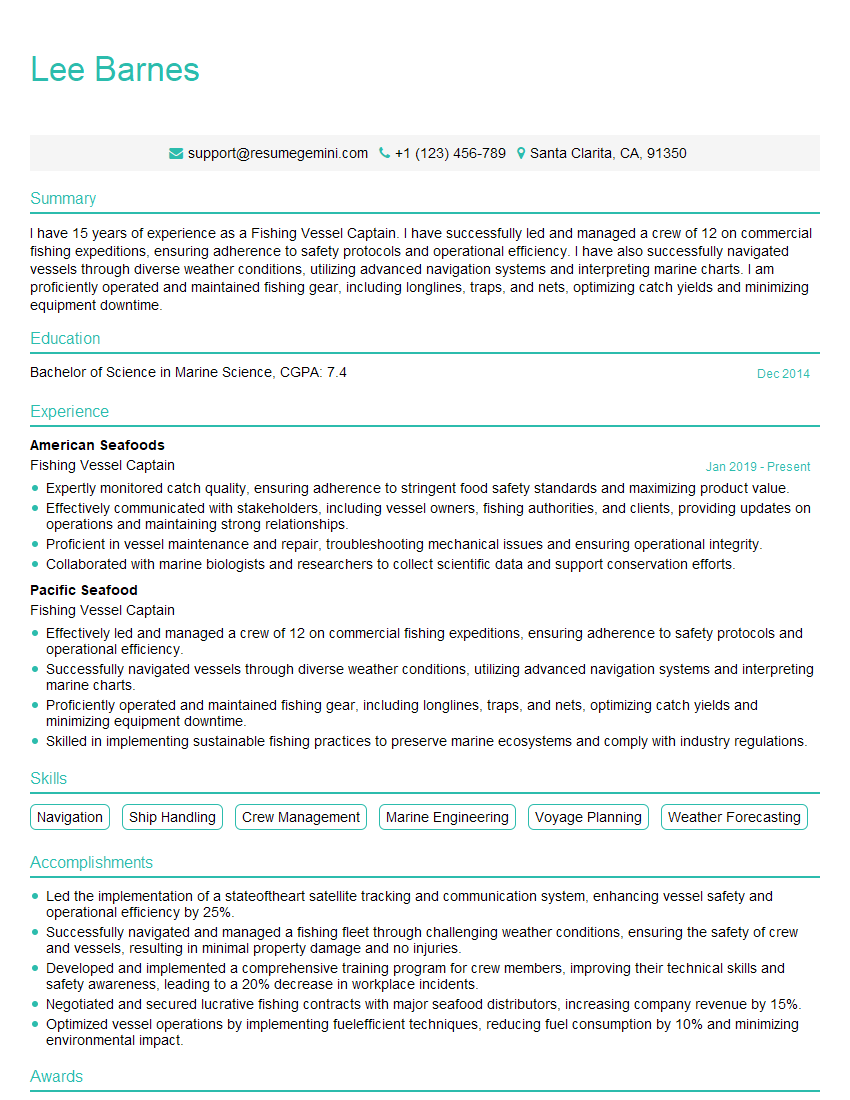
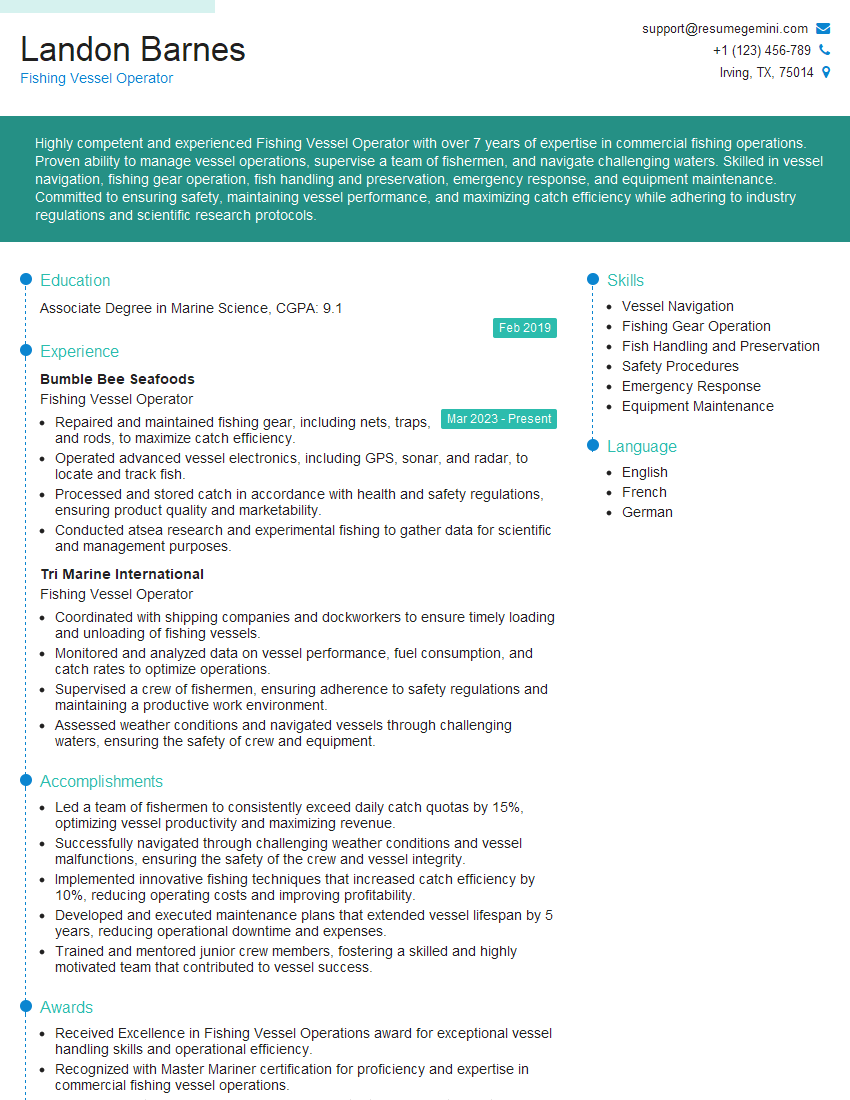
Mastering Expertise in Shrimping Gear Deployment and Retrieval is crucial for career advancement in the fishing industry. It demonstrates practical skills and a deep understanding of efficient and sustainable shrimping practices. To significantly boost your job prospects, create an ATS-friendly resume that highlights your abilities clearly. ResumeGemini is a trusted resource that can help you build a professional and impactful resume. Examples of resumes tailored specifically to highlight Expertise in Shrimping Gear Deployment and Retrieval are available to guide you. Invest time in crafting a compelling resume—it’s your first impression on potential employers.
Explore more articles
Users Rating of Our Blogs
Share Your Experience
We value your feedback! Please rate our content and share your thoughts (optional).
What Readers Say About Our Blog
Very informative content, great job.
good