The thought of an interview can be nerve-wracking, but the right preparation can make all the difference. Explore this comprehensive guide to Explosives Investigation and Analysis interview questions and gain the confidence you need to showcase your abilities and secure the role.
Questions Asked in Explosives Investigation and Analysis Interview
Q 1. Describe the different types of explosive materials and their characteristics.
Explosive materials are broadly classified into high explosives and low explosives, based on their detonation velocity. High explosives detonate rapidly, producing a supersonic shockwave, while low explosives deflagrate (burn rapidly) at subsonic speeds.
- High Explosives: These are further categorized.
- Primary High Explosives: Extremely sensitive to shock, friction, or heat; used as detonators to initiate less sensitive explosives. Examples include mercury fulminate (Hg(ONC)2) and lead azide (Pb(N3)2).
- Secondary High Explosives: Relatively insensitive to initiation and require a primary explosive to detonate. They are more powerful and stable than primary explosives. Examples include TNT (trinitrotoluene), RDX (cyclotrimethylenetrinitramine), and PETN (pentaerythritol tetranitrate). These are often found in military-grade explosives and improvised explosive devices (IEDs).
- Low Explosives: These burn rapidly, producing large volumes of gas.
- Black Powder: A mixture of charcoal, sulfur, and potassium nitrate; historically significant but less powerful than modern explosives.
- Smokeless Powder: A nitrocellulose-based propellant; commonly used in firearms and some fireworks.
Q 2. Explain the process of collecting and preserving explosive residue evidence at a crime scene.
Collecting and preserving explosive residue evidence requires meticulous care to avoid contamination and loss of evidence. The process starts with securing the scene and establishing a perimeter to prevent unauthorized access. Every step needs to be documented meticulously.
- Initial Survey: Carefully photograph and video record the scene before touching anything. Note the location of any potential explosive remnants, crater formation, or unusual debris.
- Evidence Collection: Use appropriate personal protective equipment (PPE), including gloves, respirators, and protective suits. Carefully collect potential residue samples using sterile tools like forceps, spatulas, and vacuum cleaners with special filters. Samples should be collected from various locations, including the blast crater, surrounding areas, and any suspected explosive device remnants.
- Packaging and Labeling: Each sample must be individually packaged in airtight, tamper-evident containers, clearly labeled with the location, date, time, and case number. Chain of custody documentation is essential, recording everyone who handles the evidence.
- Transportation and Storage: Samples should be transported and stored in a cool, dry, and secure location to prevent degradation or contamination. Appropriate transportation methods that minimize the risk of accidental detonation should be selected.
Remember, even seemingly insignificant debris can provide crucial evidence. This requires a thorough and systematic approach throughout the process.
Q 3. What are the common methods used to detect and identify explosive materials?
Detecting and identifying explosive materials involves a combination of field-testing methods and laboratory analysis. Field tests offer quick, preliminary identification while lab analysis provides definitive results.
- Field Tests: These include colorimetric tests (e.g., using specific reagents that change color in the presence of certain explosives) and handheld detectors that utilize ion mobility spectrometry (IMS) or Raman spectroscopy to analyze the chemical composition of samples. However, these methods are often presumptive and require confirmation through lab analysis.
- Laboratory Analysis: This involves more sophisticated techniques such as gas chromatography-mass spectrometry (GC-MS), high-performance liquid chromatography (HPLC), and X-ray diffraction (XRD). GC-MS separates and identifies the components of a sample based on their different boiling points and mass-to-charge ratios. HPLC is used to separate and quantify explosives in complex matrices. XRD identifies crystalline materials based on their diffraction patterns. These methods provide more definitive identification and quantification of the explosive materials present.
The choice of method depends on the type of explosive suspected and the available resources. Many cases utilize a combination of both field and lab techniques.
Q 4. How do you interpret blast patterns to determine the type and location of an explosive device?
Blast patterns provide critical information about the explosive device’s characteristics and placement. Analyzing blast damage helps determine the type of explosive used (high vs. low), the amount of explosive, and the location of the detonation.
- Crater Size and Shape: The size and shape of the crater can indicate the amount of explosive used and the type of confinement. A larger crater generally indicates a larger charge. The shape might hint at the direction of the blast.
- Damage Patterns: The direction and extent of damage to surrounding structures can help determine the blast epicenter (the point of detonation). Heavier damage closer to the epicenter gradually decreases as distance increases. Fragmentation patterns can provide clues about the type of casing used.
- Pressure Effects: The pressure wave generated by the blast causes distinct damage patterns. The degree of damage to windows, walls, and other structures helps determine the magnitude of the blast. The presence of debris patterns can reveal the direction of the blast wave.
Combining observations from all these aspects— along with evidence of the explosive itself —allows investigators to reconstruct the event and create a comprehensive report.
Q 5. Explain the safety precautions necessary when handling and analyzing explosive materials.
Handling and analyzing explosive materials demand strict adherence to safety protocols to prevent accidents. This involves a multi-layered approach.
- Personal Protective Equipment (PPE): Appropriate PPE, including gloves, respirators, eye protection, and protective suits, is essential to prevent exposure to hazardous materials.
- Controlled Environment: All work should be carried out in a controlled environment, such as a specialized laboratory equipped with blast-resistant walls, proper ventilation, and safety equipment. Remote handling tools are often used to minimize direct contact.
- Proper Procedures: Strict adherence to established procedures, including the use of appropriate tools and techniques, is crucial. Work should be carried out methodically, with each step documented meticulously.
- Training and Certification: Personnel handling explosive materials must undergo thorough training and certification, ensuring they are familiar with relevant safety procedures and emergency response protocols. Only properly trained professionals should conduct analyses.
- Emergency Procedures: Clear emergency procedures must be in place in case of accidental detonation or exposure to hazardous materials. Emergency responders should be well-versed in handling such events.
Safety is paramount in this field. A single mistake can have devastating consequences.
Q 6. What are the legal and ethical considerations in explosives investigation?
Explosives investigations involve significant legal and ethical considerations.
- Chain of Custody: Maintaining an unbroken chain of custody is critical for the admissibility of evidence in court. This ensures that the evidence has not been tampered with or compromised.
- Search Warrants: Proper legal authority (e.g., search warrants) is essential to access and search locations suspected of containing explosives or related materials. This ensures that the investigation remains within the bounds of the law.
- Data Privacy: Collected data must be handled responsibly, respecting the privacy rights of individuals involved. The handling of sensitive information must adhere to all relevant privacy laws and regulations.
- Confidentiality: Information related to the investigation should be treated confidentially, and released only to authorized personnel. This protects the integrity of the investigation and prevents the compromise of sensitive information.
- Impartiality and Objectivity: Investigators must maintain impartiality and objectivity throughout the investigation, ensuring that their findings are unbiased and based solely on evidence. Personal biases should not influence the investigation.
Legal compliance and ethical conduct are fundamental to ensuring the credibility and integrity of the investigation.
Q 7. Describe the different types of explosive devices and their construction.
Explosive devices vary widely in design and complexity, ranging from simple improvised devices to sophisticated military ordnance.
- Improvised Explosive Devices (IEDs): These devices are constructed from readily available materials and often lack sophisticated engineering. They can range from simple pipe bombs to more complex devices using various triggering mechanisms. Examples include pressure-activated devices, timer-activated devices, and remote-controlled devices.
- Military Ordnance: Military ordnance includes a wide range of devices with varying levels of sophistication, from grenades and landmines to sophisticated guided missiles. These are designed for specific military purposes and are often equipped with advanced features such as fuses, detonators, and guidance systems.
- Commercial Explosives: Commercial explosives, such as those used in mining and construction, are typically sold and used under strict regulations. These materials, while having legitimate uses, can also be misused in illicit activities.
The construction of an explosive device generally involves a combination of explosive material, a detonator or fuse, and a casing or container. Understanding the device’s construction is vital for investigators in determining the device’s function, capabilities, and potential level of sophistication.
Q 8. How do you determine the origin and source of explosive materials?
Determining the origin and source of explosive materials is a crucial aspect of explosives investigation. It involves a multi-faceted approach combining trace evidence analysis, chemical composition analysis, and manufacturing process identification. We start by analyzing the chemical composition of the explosive itself. This often involves techniques like Gas Chromatography-Mass Spectrometry (GC-MS) and High-Performance Liquid Chromatography (HPLC) to identify the specific explosive type and any unique additives or impurities. These impurities, like trace metals or unusual chemicals, can act as fingerprints, potentially linking the explosive to a specific manufacturing batch or location. For example, the presence of a particular stabilizer might point to a specific manufacturer known to use it. Then, we examine the physical characteristics of the device itself – its construction, the type of casing used, the presence of any unique markings or inscriptions. All of this information is meticulously documented and compared against known manufacturing processes and supply chains.
Furthermore, we examine the context of the explosion. Where was it found? What other materials were present? The surrounding environment can provide valuable clues. For instance, soil samples near an improvised explosive device (IED) might contain trace amounts of components from the device’s construction, aiding in establishing its place of assembly. This detailed investigation allows us to build a picture of how the explosive was made, where the materials came from, and ultimately, who might be responsible.
Q 9. What are the limitations of different explosive detection methods?
Different explosive detection methods each have limitations. For example, while Ion Mobility Spectrometry (IMS) is rapid and portable, ideal for screening, it suffers from false positives due to its sensitivity to various interfering substances. Think of it like trying to find a specific scent in a crowded room – other scents can mask it or create false alarms. Similarly, X-ray diffraction (XRD) is excellent for identifying crystalline explosives but is less effective for detecting plastic explosives or those in a poorly crystalline state. Canine detection, although highly sensitive and reliable in trained hands, is subjective and affected by environmental factors like temperature or the presence of interfering odors. Finally, trace detection methods such as GC-MS require a sample of explosive residue, which may be absent or severely degraded following a blast. Understanding these limitations is crucial for effective investigation; we need to employ a combination of methods for accurate results, selecting techniques best suited for the specific situation and available evidence.
Q 10. Explain the process of analyzing explosive residues using chromatography and spectroscopy.
Analyzing explosive residues using chromatography and spectroscopy is a cornerstone of explosives investigation. Chromatography, such as GC-MS or HPLC, separates the complex mixture of explosive residues into its individual components based on their different physical and chemical properties. Imagine it like sorting a bag of colorful candies; each candy is separated by size and color, allowing us to identify each individual one. GC-MS is particularly useful because after separation, a mass spectrometer identifies each component by its mass-to-charge ratio. This provides a unique fingerprint for each chemical compound, identifying not only the explosive but also potential manufacturing impurities.
Spectroscopy, such as Infrared (IR) or Raman spectroscopy, provides complementary information by analyzing the vibrational and rotational energy levels of molecules. It is essentially like ‘listening’ to the molecules; different molecules vibrate at different frequencies, thus yielding unique spectral signatures. Think of it like each molecule having a unique musical note. This allows for the quick identification of explosives even in complex mixtures or small samples. By combining chromatography and spectroscopy data, we get a comprehensive profile of the explosive material, providing a more robust and reliable identification, even with limited samples. This combination allows us to confidently link the residue to a specific explosive and potentially trace its origin.
Q 11. Describe the different types of post-blast investigations.
Post-blast investigations are categorized based on the scale and nature of the event. Crime scene investigation focuses on securing the site, collecting physical evidence (debris, unexploded material, witness statements), and documenting the scene meticulously. This often involves meticulous mapping and photography, using techniques to capture three-dimensional models of the blast area. Forensic examination focuses on detailed laboratory analysis of collected evidence – explosive residues, fragments of the device, and any trace evidence. Engineering analysis examines the structural damage caused by the explosion, helping to determine the type and amount of explosive used, the location of the blast origin, and the direction of the blast wave. This often involves computational fluid dynamics (CFD) modeling to simulate blast scenarios. Finally, intelligence analysis integrates all the evidence from the other phases to establish a timeline of events, identifying suspects and motives. Each type of investigation provides vital pieces of the puzzle, leading to a comprehensive understanding of the blast event.
Q 12. How do you assess the risk associated with a suspected explosive device?
Assessing the risk associated with a suspected explosive device is a critical and potentially life-threatening task. The process requires a methodical approach, starting with a careful visual inspection to determine the device’s characteristics – size, shape, construction materials, presence of any obvious triggering mechanisms. We then consider the potential explosive materials, basing our assessment on the known properties of various explosives (e.g., TNT, C4, improvised explosives). Consideration of the environment is also crucial; is the device in a densely populated area? Is there infrastructure nearby that could be damaged? Risk assessment also involves estimating the potential blast radius and the likely extent of damage, which often uses specialized software and databases. We also account for the potential presence of secondary devices and the capabilities and intentions of the perpetrator. Finally, based on the collected information, we develop mitigation strategies ranging from controlled detonation to careful disposal depending on the circumstances and expertise available.
Q 13. What is your experience with different explosive detection technologies (e.g., ion mobility spectrometry, X-ray diffraction)?
My experience encompasses a wide range of explosive detection technologies. I’ve extensively used Ion Mobility Spectrometry (IMS) in field operations for rapid screening and have a strong understanding of its limitations, especially concerning false positives. I am proficient in interpreting X-ray diffraction (XRD) data to identify crystalline explosives. I’ve also worked with advanced techniques like Gas Chromatography-Mass Spectrometry (GC-MS) and High-Performance Liquid Chromatography (HPLC) for detailed analysis of explosive residues. Furthermore, I have experience with canine detection teams, understanding the training protocols and limitations of this powerful tool. My experience spans both laboratory settings and practical field investigations, making me adept at choosing the appropriate technology for a specific scenario and interpreting the results accurately and effectively. I am also familiar with newer technologies emerging in the field and their potential applications in investigations.
Q 14. Explain your understanding of the chemical reactions involved in explosive detonation.
Explosive detonation involves rapid exothermic chemical reactions, resulting in the near-instantaneous release of a large volume of gas. The reaction is driven by the rapid oxidation of a fuel source, usually a carbon-rich compound, with an oxidizer, such as nitrates or perchlorates. For example, in TNT (trinitrotoluene), the nitrogen-oxygen bonds in the nitro groups (-NO2) readily release oxygen, oxidizing the carbon and hydrogen atoms in the toluene molecule. This process releases a vast amount of energy, resulting in a pressure increase exceeding the strength of the surrounding environment. The speed of the reaction is critical; the shockwave generated propagates outward, causing the destructive effects observed in explosions. Different explosives exhibit varying reaction rates and sensitivities, significantly influencing the blast effects. Understanding the specific chemical reactions of various explosives is key to interpreting evidence, determining the explosive type involved in a particular event, and ultimately, solving the case.
Q 15. Describe your experience with bomb disposal procedures and techniques.
My experience in bomb disposal encompasses a wide range of procedures and techniques, honed over years of practical work and advanced training. It begins with a thorough risk assessment, carefully evaluating the type of explosive suspected, its condition, and the surrounding environment. This dictates the approach, whether it’s a controlled detonation, mechanical disarmament, or a combination.
For instance, dealing with a suspected improvised explosive device (IED) often involves using specialized robots equipped with cameras and manipulators for safe inspection and potential neutralization. These robots allow for remote manipulation, minimizing risk to personnel. In scenarios where a robot can’t reach the device or the risk remains too high, a controlled detonation is necessary. This requires careful planning, including establishing a safe perimeter, selecting the appropriate explosive charge, and predicting the blast radius to ensure minimal damage and injury. Each situation presents unique challenges, demanding adaptability, precision, and unwavering adherence to safety protocols.
I’ve also had extensive experience with the disposal of military-grade ordnance, which requires a different set of procedures. These often involve highly specialized tools and a deeper understanding of the device’s specific mechanisms. For instance, a landmine might require a different approach than a military-grade shell. The key to successful bomb disposal is meticulous preparation, understanding the device, using the appropriate tools, and maintaining calm under pressure.
Career Expert Tips:
- Ace those interviews! Prepare effectively by reviewing the Top 50 Most Common Interview Questions on ResumeGemini.
- Navigate your job search with confidence! Explore a wide range of Career Tips on ResumeGemini. Learn about common challenges and recommendations to overcome them.
- Craft the perfect resume! Master the Art of Resume Writing with ResumeGemini’s guide. Showcase your unique qualifications and achievements effectively.
- Don’t miss out on holiday savings! Build your dream resume with ResumeGemini’s ATS optimized templates.
Q 16. How do you manage a crime scene involving explosives?
Managing a crime scene involving explosives demands a methodical and multi-phased approach, prioritizing safety above all else. The first step is securing a wide perimeter to prevent unauthorized access and protect potential victims and first responders. This involves establishing clear boundaries and controlling access points. Then, a preliminary survey is conducted to assess the immediate dangers and identify potential explosive remnants. This often involves using specialized detection equipment like x-ray machines and sniffer dogs.
Once the scene is secured, a detailed documentation process begins, meticulously recording the scene’s condition through photography, videography, and detailed sketches. The location, orientation, and condition of each piece of evidence, including any suspected explosive materials or devices, are carefully recorded. Evidence collection is done using strict protocols to maintain chain of custody and avoid contamination. This typically involves careful packaging of potentially hazardous materials in specialized containers, labeled and sealed properly.
Careful removal and transportation of explosives is vital. It often involves the use of bomb squads or specialized Hazmat teams, which will safely transport the explosives to a controlled environment for further investigation. The entire process is documented meticulously, creating a comprehensive record that supports further analysis and legal proceedings.
Q 17. What are the potential hazards associated with different types of explosives?
Different types of explosives present unique hazards. High explosives, such as dynamite and C4, pose the immediate danger of powerful blasts and fragmentation. The blast wave can cause significant structural damage, severe injuries, and fatalities over a considerable radius, while the fragments can be lethal projectiles. Low explosives, like black powder and smokeless powder, present slower burning rates but produce significant fire hazards and can still cause serious burns or damage confined spaces.
Improvised explosive devices (IEDs) are particularly hazardous because their composition and construction are unpredictable. They may contain various chemicals and components, increasing the possibility of unexpected reactions and adding to the difficulty of safe disposal. The potential hazards also include the presence of toxins or other harmful chemicals, secondary explosive effects (e.g., fire following detonation), and the release of toxic fumes and gases.
Understanding the specific properties of the explosives involved—including sensitivity, volatility, and detonation velocity—is paramount to mitigating the risks. Proper training and safety precautions, such as using appropriate personal protective equipment (PPE), are absolutely essential when working with any type of explosive material.
Q 18. Describe your experience in testifying in court as an explosives expert.
Testifying in court as an explosives expert requires a high level of preparation and clarity. My experience involves meticulously reviewing all relevant documentation, including crime scene reports, laboratory analysis, and any other supporting evidence. My testimony centers on providing clear, concise, and objective explanations of my findings, free from bias and speculation.
I am prepared to explain complex technical concepts in a way that is understandable for a jury and the judge, using simple analogies where appropriate. I am also ready to defend my methodology and analysis rigorously under cross-examination. Building credibility as an expert witness relies on demonstrating a deep understanding of explosives, forensic techniques, and the ability to translate complex scientific data into easily digestible information. I focus on presenting my findings and conclusions in a way that is both informative and persuasive. For example, I might use diagrams or models to illustrate the mechanisms of an explosion or the effects of specific explosive materials.
Maintaining professional ethics and objectivity is crucial. My primary goal is to present factual information, leaving it to the court to make judgments about the case.
Q 19. How do you collaborate with other investigators and experts in a multidisciplinary team?
Collaboration in a multidisciplinary team is critical in explosives investigations. I routinely work with fire investigators, forensic scientists, law enforcement officers, and other specialists. Effective collaboration requires clear communication, a shared understanding of the investigation’s goals, and a willingness to share expertise. We often work from a central incident command system that promotes clear communication.
For example, I might collaborate with a fire investigator to determine the ignition source in a case involving arson, or with a forensic scientist to analyze trace evidence found on explosive devices. The team approach ensures that all aspects of the case are thoroughly investigated, and that any findings are interpreted within the broader context of the crime scene. Regular briefings and shared communication channels are crucial to maintain coordination and ensure everyone is up-to-date on the progress of the investigation.
Sharing data and findings transparently, respecting differing perspectives, and proactively addressing any conflicts is key to the success of a multi-disciplinary team.
Q 20. Explain your understanding of relevant safety regulations and procedures for handling explosives.
My understanding of safety regulations and procedures for handling explosives is comprehensive and rigorously adhered to. This begins with a complete understanding of relevant local, state, and federal regulations governing the storage, transportation, use, and disposal of explosives. These regulations vary widely, and strict adherence is paramount to prevent accidents and ensure compliance with the law.
Safety procedures involve a layered approach. This includes using proper personal protective equipment (PPE), which might include specialized suits, gloves, eye protection, and respiratory protection depending on the task. Proper training is another critical component. It covers the safe handling of various explosives and the potential hazards associated with them. Safe work practices are also extremely important, including ensuring proper ventilation in handling areas, using appropriate tools, and following established protocols. Proper documentation throughout the process is also essential, including detailed logs of all activities, materials handled, and any potential hazards encountered.
Understanding the potential risks and taking appropriate precautions are essential for preventing accidents. Regular safety audits and reviews ensure that procedures remain effective and that personnel are fully aware of all safety protocols.
Q 21. Describe your proficiency in using specialized equipment for explosive investigation.
My proficiency in using specialized equipment for explosive investigations is extensive. I’m experienced in using a wide range of tools and technologies, from basic instruments like microscopes and scales for evidence analysis to advanced technologies such as gas chromatographs and mass spectrometers for chemical analysis. These tools help identify the types of explosives used, their origin, and any potential traces left at the scene.
I am also skilled in using explosive detection devices, including handheld detectors, sniffer dogs, and x-ray systems for locating and identifying explosive materials. My expertise extends to operating and interpreting data from advanced imaging technologies, such as X-ray diffraction and scanning electron microscopy. These can aid in determining the structural properties of explosives, aiding in identification. I regularly undergo training to maintain my proficiency and stay current with the latest advancements in the field.
Data analysis and interpretation are equally important. The ability to utilize software for analyzing spectral data and comparing it with known explosive signatures is crucial for reaching accurate conclusions. The combination of practical skills and data analysis is key to effective explosive investigation.
Q 22. How do you ensure the chain of custody for explosive evidence?
Maintaining the chain of custody for explosive evidence is paramount to ensuring its admissibility in court. It’s a meticulous process that starts the moment the evidence is discovered. Every individual who handles the evidence must be meticulously documented. Think of it like a relay race; each runner (person) must accurately pass the baton (evidence) to the next, with a documented record of the transfer.
- Initial Discovery and Documentation: The location, time, and circumstances of discovery are recorded. Photographs and videos are taken. A unique identification number is assigned.
- Secure Packaging and Transportation: The evidence is carefully packaged to prevent contamination or alteration. A tamper-evident seal is used. Transportation is logged, with details of who transported it, when, and how.
- Laboratory Analysis: Each step in the lab, from initial examination to analysis using techniques like Gas Chromatography-Mass Spectrometry (GC-MS), is meticulously documented, including the identities of analysts and the specific procedures followed.
- Storage: Evidence is stored in secure, controlled environments, with access strictly controlled and recorded.
- Chain of Custody Documentation: A detailed chain of custody form accompanies the evidence throughout the entire process. This form lists everyone who has handled the evidence, the dates and times of each transfer, and a description of any changes made.
A break in the chain of custody can render the evidence inadmissible, so maintaining complete and accurate records is crucial.
Q 23. Describe a challenging case involving explosives that you have worked on and how you approached it.
One particularly challenging case involved a series of seemingly unrelated bombings targeting small businesses in a rural area. The explosive devices were sophisticated improvised explosive devices (IEDs), differing slightly in design but using a consistent, unfamiliar explosive mixture. The initial challenge was connecting the seemingly disparate events.
My approach involved a multi-pronged strategy:
- Detailed Forensic Analysis: We meticulously examined the remnants of each device, focusing on trace evidence, explosive residues, and components. This allowed us to identify consistent patterns in construction and components.
- Comparative Analysis: We compared the explosive residues using advanced analytical techniques such as GC-MS and High-Performance Liquid Chromatography (HPLC) to identify the exact explosive composition and any potential precursors.
- Investigative Collaboration: We worked closely with local law enforcement, sharing information and coordinating investigations. This collaborative approach helped us connect the dots between seemingly unrelated incidents and identify commonalities in the target selection process.
- Profiling and Intelligence Gathering: We analyzed the target selection, the timing of the bombings, and other circumstantial evidence to create a profile of the potential perpetrator or group. This helped to narrow the investigation and focus on potential suspects.
The careful comparison of forensic evidence coupled with strong investigative work ultimately led to the identification of a disgruntled former employee, whose past grievances and access to explosive materials provided a clear motive.
Q 24. How do you stay updated on the latest advancements in explosives technology and detection methods?
Staying current in the field of explosives investigation requires a multifaceted approach. The technology is constantly evolving, with new explosives and detection methods emerging regularly.
- Professional Organizations: Active membership in organizations like the American Society of Crime Laboratory Directors (ASCLD) and attending their conferences provide opportunities to learn about the latest research and innovations.
- Scientific Literature: I regularly review scientific journals, such as the Journal of Forensic Sciences, for peer-reviewed research on explosive analysis and detection.
- Workshops and Training: Participation in specialized workshops and training courses offered by governmental agencies and private organizations keeps my skills sharp and updated on new techniques.
- Networking: Collaboration and networking with other experts in the field, both nationally and internationally, facilitates the exchange of information and best practices.
- Technology Monitoring: Staying abreast of the latest advancements in instrument technology, such as improved GC-MS and handheld Raman spectroscopy devices, is also crucial.
Continuous learning is essential in this field to stay ahead of evolving threats and ensure the most accurate and effective analyses.
Q 25. What are the key differences between high and low explosives?
The primary difference between high and low explosives lies in their detonation velocity and the manner in which they decompose.
- High explosives detonate, meaning they decompose extremely rapidly, producing a supersonic shock wave. This rapid decomposition generates a high-pressure blast wave. Examples include TNT (trinitrotoluene), RDX (cyclotrimethylenetrinitramine), and PETN (pentaerythritol tetranitrate). They require a strong shock to initiate detonation.
- Low explosives deflagrate, meaning they burn rapidly, producing a subsonic pressure wave. The decomposition is much slower than in high explosives. Examples include black powder and smokeless powder. They are typically initiated by a flame or spark.
Think of it like this: a high explosive is like a controlled explosion, generating immense power in a tiny space; a low explosive is more like a rapid burn, spreading its energy over a larger area. This difference impacts their applications; high explosives are used in demolition and military munitions, while low explosives are used in fireworks and propellants.
Q 26. Explain your understanding of different types of detonators and initiation systems.
Detonators and initiation systems are crucial components in initiating the explosion of high explosives. Different types cater to various needs and sensitivities.
- Electric Detonators: These are activated by an electrical current, offering precise timing and remote initiation capabilities. They are widely used in controlled demolitions and mining. Safety features like shorting plugs protect against accidental detonation.
- Non-electric Detonators: These use shock waves to initiate the explosive charge. They are more robust in harsh environments and are less susceptible to electromagnetic interference. Common types include shock tube detonators.
- Fuse Detonators: These are simple, inexpensive detonators that use a burning fuse to transmit the ignition to the explosive charge. While simple, they are less precise in timing compared to electronic detonators.
- Initiation Systems: An initiation system comprises various components working together to safely and effectively initiate the detonation of a primary explosive within the detonator, which then triggers the main explosive charge. This system often includes boosters which amplify the initiation signal.
The choice of detonator and initiation system depends on factors such as safety requirements, environmental conditions, and the specific application. Understanding their diverse capabilities is essential for proper explosive handling and investigation.
Q 27. Describe your experience with analyzing improvised explosive devices (IEDs).
Analyzing IEDs requires a highly cautious and methodical approach due to their inherent danger. Safety is the absolute top priority. My experience involves working within a bomb squad or specialized unit, following strict safety protocols.
The process typically involves:
- Initial Assessment and Scene Security: This involves securing the area, assessing the threat level, and deciding on the safest approach to the IED.
- X-ray and Visual Examination: Initial examination often employs x-ray techniques to assess the device’s internal components without direct handling.
- Controlled Disassembly: Once the risk is assessed, the IED is carefully disassembled in a controlled environment using specialized tools and robotics to minimize the risk of accidental detonation.
- Forensic Examination of Components: Each component is meticulously examined for trace evidence, fingerprints, and other identifying information.
- Explosive Residue Analysis: Samples are collected and analyzed using techniques like GC-MS and HPLC to determine the type and amount of explosives used.
- Circuitry Analysis: If electronic components are present, circuit analysis helps understand the triggering mechanism.
Documenting each step with photos and videos is critical. The goal is not only to understand how the IED functioned but also to gather intelligence on its construction and potential source.
Q 28. How do you utilize different analytical techniques to confirm the presence of specific explosive compounds?
Confirming the presence of specific explosive compounds requires a combination of analytical techniques to ensure accuracy and provide comprehensive data. The choice of technique depends on the suspected explosive and available resources.
- Gas Chromatography-Mass Spectrometry (GC-MS): A very common technique that separates volatile compounds and identifies them based on their mass-to-charge ratio. It’s exceptionally effective for identifying explosive residues.
- High-Performance Liquid Chromatography (HPLC): This technique is particularly useful for analyzing non-volatile or less volatile explosive compounds that may not be suitable for GC-MS.
- Thin-Layer Chromatography (TLC): A simpler, less expensive technique used for preliminary screening and comparing samples. While less definitive than GC-MS or HPLC, it offers a quick indication of potential explosive compounds.
- Infrared Spectroscopy (IR): IR spectroscopy provides a fingerprint of the molecular structure of a compound, which can be used for identification.
- Raman Spectroscopy: A non-destructive technique that is increasingly useful for field analysis of explosives and can be used on various types of surfaces.
Often, a combination of these techniques is used to confirm the identification. For example, TLC might be used for initial screening, followed by GC-MS for confirmatory analysis. The results from multiple techniques provide greater confidence in the identification of specific explosives present.
Key Topics to Learn for Explosives Investigation and Analysis Interview
- Explosive Chemistry: Understanding the chemical composition, properties, and behavior of various explosives (high explosives, low explosives, improvised explosive devices).
- Blast Effects Analysis: Interpreting crater dimensions, damage patterns, and witness accounts to reconstruct explosive events and determine explosive type and quantity.
- Trace Evidence Analysis: Identifying and analyzing microscopic particles (explosive residues, detonation products) using techniques like microscopy and chromatography.
- Forensic Examination of Explosive Devices: Proper handling, documentation, and analysis of recovered explosive devices, including the identification of components and construction methods.
- Post-Blast Investigation Techniques: Applying established protocols and methodologies for safe and effective on-site investigation of explosive incidents.
- Legal and Regulatory Aspects: Familiarity with relevant laws, regulations, and safety procedures related to explosives handling, investigation, and disposal.
- Data Analysis and Reporting: Compiling and interpreting collected data, generating comprehensive reports, and presenting findings clearly and concisely.
- Problem-Solving and Critical Thinking: Developing analytical skills to deduce the sequence of events, identify potential causes, and draw accurate conclusions from incomplete or ambiguous data.
- Safety Procedures and Protocols: Demonstrating thorough understanding and adherence to safety regulations and best practices in handling explosives and conducting investigations.
Next Steps
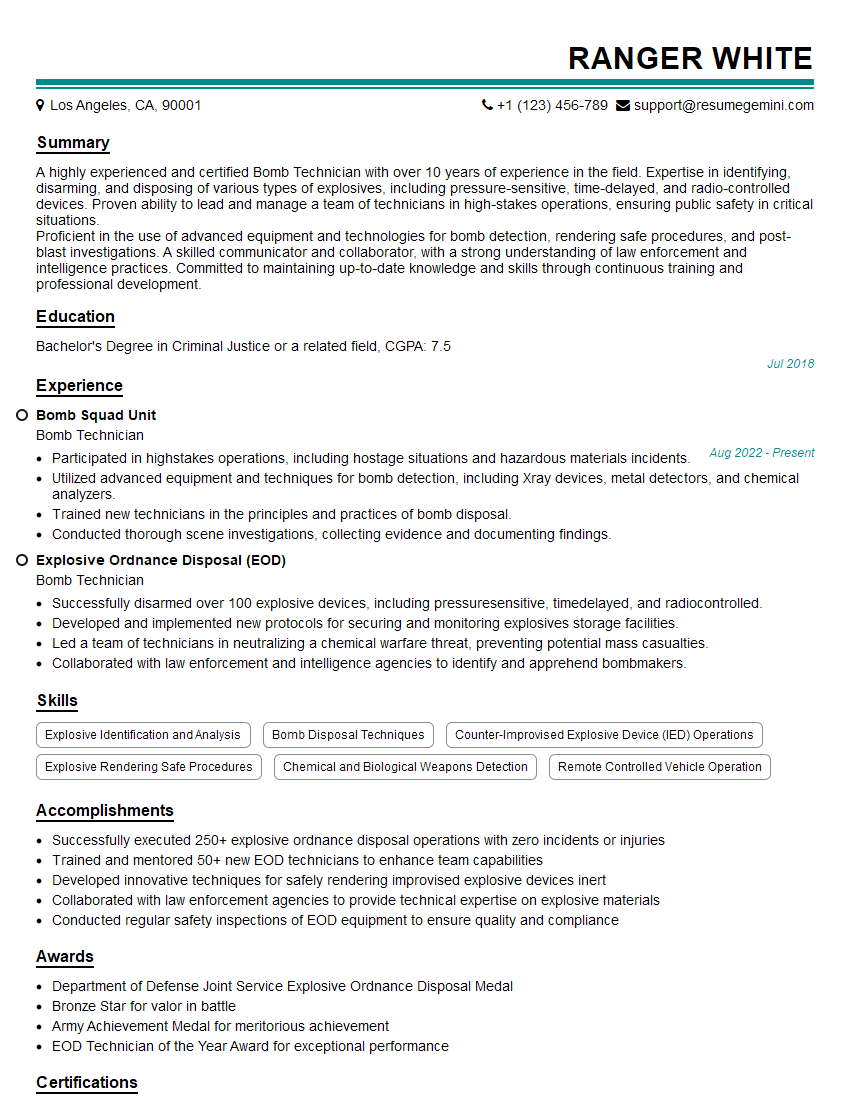
Mastering Explosives Investigation and Analysis opens doors to a rewarding career with significant impact. This specialized field demands meticulous attention to detail, strong analytical skills, and a commitment to safety. To maximize your job prospects, creating a compelling and ATS-friendly resume is crucial. This ensures your qualifications are effectively highlighted to potential employers. ResumeGemini is a trusted resource that can help you build a professional and impactful resume tailored to your skills and experience. Examples of resumes specifically designed for Explosives Investigation and Analysis professionals are available to guide you. Invest the time to craft a strong resume – it’s a critical step in launching your career in this exciting field.
Explore more articles
Users Rating of Our Blogs
Share Your Experience
We value your feedback! Please rate our content and share your thoughts (optional).
What Readers Say About Our Blog
Very informative content, great job.
good