Unlock your full potential by mastering the most common Fabric Cutting and Preparation interview questions. This blog offers a deep dive into the critical topics, ensuring you’re not only prepared to answer but to excel. With these insights, you’ll approach your interview with clarity and confidence.
Questions Asked in Fabric Cutting and Preparation Interview
Q 1. Explain the different methods of fabric cutting.
Fabric cutting methods depend largely on the fabric type, volume, and desired precision. We primarily use two main approaches: manual cutting and automated cutting.
- Manual Cutting: This involves using hand-held tools like shears, rotary cutters, and pattern knives. It’s ideal for smaller production runs, intricate designs, or when working with delicate fabrics. Think of a bespoke tailor crafting a unique garment – manual cutting allows for great precision and flexibility. Different shears are used depending on the fabric – smaller shears for intricate details and larger shears for cutting straight lines.
- Automated Cutting: This utilizes specialized machinery such as computer-controlled cutting machines (e.g., laser cutters, die cutters, and automated knife plotters). These are perfect for high-volume production, achieving consistent accuracy and significantly reducing labor costs. Imagine a large clothing manufacturer – automated cutting ensures uniformity across thousands of garments.
Beyond these core methods, we also consider techniques like ‘layering’ fabrics for cutting multiple pieces simultaneously (reducing material handling and increasing efficiency) and using templates or patterns to maintain uniformity.
Q 2. Describe your experience with various cutting tools and machinery.
My experience spans a wide range of cutting tools and machinery. I’m proficient with various shears – from heavy-duty pinking shears for preventing fraying to smaller, more precise embroidery scissors – and rotary cutters for efficient straight-line cutting on multiple layers. I’ve extensively used industrial-grade automated cutting tables equipped with various knives, optimizing cutting speed and precision for different fabrics. I also have experience with laser cutting machines, ideal for intricate designs and delicate fabrics.
My proficiency extends to maintaining and troubleshooting these machines. I understand the importance of blade sharpness, proper pressure settings, and appropriate material handling to prevent machine damage and maintain high-quality cuts.
Q 3. How do you ensure accurate fabric cutting to minimize waste?
Accurate fabric cutting is paramount for minimizing waste and maximizing efficiency. This begins with meticulous pattern making and grading to ensure proper sizing and efficient nesting of patterns on the fabric.
- Precise Marking: We utilize chalk, tailor’s marking pencils, or even laser marking systems to ensure accurate placement of pattern pieces. Double checking measurements is crucial at each stage.
- Efficient Nesting: Using computer-aided design (CAD) software, we optimize pattern placement to minimize fabric waste. This software considers fabric width, pattern orientation, and grain direction to achieve the best possible yield.
- Regular Calibration: Automated cutting machines require regular calibration and maintenance to ensure accurate cutting. We conduct routine checks and adjustments to ensure the machine is performing within specified tolerances.
- Quality Control: Post-cutting inspection is crucial. We meticulously review cut pieces for any discrepancies or errors, addressing any inconsistencies before moving to the next stage of production.
By implementing these strategies, we consistently achieve high cutting accuracy and significantly reduce material waste, saving both money and resources.
Q 4. What are the different types of fabric spread layouts and when would you use each?
Fabric spread layouts determine how efficiently we place patterns on the fabric to minimize waste. The choice depends on the fabric type, pattern complexity, and the quantity required.
- Single-Ply Layouts: Suitable for small production runs, delicate fabrics, or complex patterns requiring careful handling and individual attention. Each layer is cut separately.
- Multiple-Ply Layouts: Ideal for high-volume production, when cutting simple patterns from sturdy fabrics that can withstand layering. Many layers are cut simultaneously, increasing efficiency.
- Crosswise Layouts: Efficient for fabric that has a definite grain line. Laying fabric with the lengthwise grain running across the width of the cutting table may provide more efficient usage of the fabric
- Nesting: We use specialized software to optimize the arrangement of pattern pieces on the fabric, reducing waste through efficient packing of patterns
The choice of layout is a crucial decision that directly impacts the overall cost and efficiency of the production process. Experience allows me to select the optimal layout for any given project, balancing speed and minimizing waste.
Q 5. How do you identify and address fabric defects before cutting?
Identifying fabric defects before cutting is essential for preventing costly mistakes later in the process. We implement a rigorous inspection process at several stages:
- Incoming Inspection: Upon receiving the fabric, we conduct a thorough examination for weaving flaws, color variations, stains, holes, and other defects. This often involves using specialized lighting to highlight imperfections.
- Pre-Cutting Inspection: Before spreading the fabric, we carefully check the roll for any consistent defects or irregularities that might affect the entire run. This allows us to plan accordingly and potentially re-orient the fabric to minimize the impact of the defects.
- Manual Inspection: We inspect the fabric as it is spread, looking for flaws or inconsistencies. Using templates to plan the layout helps highlight any potential issues.
Addressing defects involves either removing the affected areas, adjusting the pattern placement to avoid the imperfections, or, in severe cases, rejecting the entire roll. This meticulous approach ensures that only defect-free fabrics are used, contributing to the quality of the finished product.
Q 6. Explain the importance of pre-cutting fabric preparation.
Pre-cutting fabric preparation is crucial for achieving accurate and efficient cutting. It impacts the final product’s quality and the overall production process’s effectiveness.
- Pre-washing: Many fabrics shrink after washing, so pre-washing helps account for shrinkage, especially for natural fibers like cotton or linen. This prevents sizing inconsistencies and ensures the garment maintains its shape after washing.
- Straightening: Fabric often arrives slightly skewed. Straightening ensures that grain lines are aligned, which is crucial for achieving consistent shape and drape in the final garment. This process involves carefully pulling the fabric to align the lengthwise and crosswise yarns.
- Inspecting: As previously mentioned, this step identifies and addresses defects like stains, holes, or inconsistencies in weave or color.
- Laying and Spreading: Properly laying and spreading the fabric ensures that it is smooth and free of wrinkles, enabling accurate cutting. This is particularly important for multiple-ply cutting.
These steps improve the quality of the final product, reduce waste by ensuring that all cut pieces match, reduce the occurrence of mistakes, and improve the efficiency of the cutting process.
Q 7. How do you maintain the sharpness and efficiency of cutting tools?
Maintaining sharp and efficient cutting tools is crucial for ensuring accuracy, safety, and longevity. This requires a combination of preventative maintenance and regular sharpening.
- Regular Cleaning: After each use, tools should be thoroughly cleaned to remove fabric remnants, preventing dulling and buildup.
- Proper Storage: Shears and rotary cutters should be stored properly in protective sheaths or cases to avoid accidental damage and maintain their sharpness.
- Sharpening: Regular sharpening is vital. The frequency depends on usage, but dull tools will cause inaccurate cuts, increase effort, and eventually damage the fabric. We use both professional sharpening services for specialized tools and utilize honing steel to keep blades at their best performance. For rotary blades, there are specific sharpening tools used for that purpose.
- Lubrication: Some cutting tools benefit from lubrication. This is particularly true for industrial-grade machines, where proper lubrication ensures smooth operation and prevents premature wear and tear.
By following these procedures, we ensure that our cutting tools remain sharp and efficient, contributing to the quality and consistency of our work.
Q 8. Describe your experience with automated cutting systems.
My experience with automated cutting systems spans over ten years, encompassing various technologies from simple automated knives to fully integrated Computer-Aided Manufacturing (CAM) systems. I’ve worked extensively with Gerber Cutter systems, Zünd cutters, and various laser cutting machines. My expertise includes not just operating these systems but also programming them, optimizing cutting parameters for different fabrics, and troubleshooting any malfunctions. For example, in a recent project involving a high-volume order of denim jackets, I optimized the Gerber cutter’s nesting algorithm to reduce material waste by 8%, significantly impacting our production costs. This involved understanding the specific cutting characteristics of the denim – its thickness, stretch, and tendency to fray – and adjusting the cutting pressure, speed, and blade type accordingly. I’m also proficient in using CAD software to create and manage cutting patterns, ensuring efficient utilization of the automated cutting systems.
Q 9. What quality control measures do you implement during fabric cutting?
Quality control during fabric cutting is paramount. It’s a multi-stage process starting even before the cutting begins. We meticulously inspect the fabric rolls for defects like flaws, inconsistencies in weave or knit structure, and color variations. This pre-cutting inspection is crucial for preventing defective garments. During the cutting process itself, we implement checks at several points: Regular blade sharpness checks are performed to maintain precision and prevent jagged edges. We conduct frequent audits of the cut pieces to identify any discrepancies between the cut parts and the marker. This involves checking for accurate dimensions, proper alignment, and the absence of any cuts that deviate from the planned pattern. Finally, a post-cutting inspection ensures that the cut components are properly bundled and labelled, prepared for the next stage of production. Any rejected pieces are meticulously documented, enabling us to pinpoint issues in the process and improve our overall quality control measures.
Q 10. How do you handle different fabric types (e.g., knits, wovens) during cutting?
Handling different fabric types requires a nuanced approach. Woven fabrics, like cotton or linen, generally behave predictably, requiring precise cutting for clean edges. Knits, on the other hand, possess elasticity and can stretch during cutting, necessitating adjustments to the cutting pressure and speed to avoid distortion. Delicate fabrics like silk require specialized blades and cutting settings to minimize damage. For instance, when cutting stretch fabrics, we use a special knife with a rounded edge to prevent snagging. For delicate fabrics, we may even use a laser cutter to minimize physical stress on the material. The choice of cutting method and blade type is directly influenced by the fabric’s properties. This requires both practical experience and a solid understanding of textile technology.
Q 11. Explain the process of marker making and its impact on efficiency.
Marker making is the crucial step of arranging garment patterns onto fabric in a way that minimizes waste and maximizes efficiency. It’s essentially a digital puzzle where we arrange multiple pattern pieces onto a virtual representation of the fabric roll. We use specialized CAD software to create markers, which are then sent to the automated cutting system. Efficient marker making is vital for cost reduction. A well-designed marker significantly reduces fabric waste, impacting the bottom line of the production. For example, optimizing a marker can mean the difference between using 10 rolls of fabric versus 8 rolls, resulting in significant savings. Factors like fabric width, pattern piece orientation, and minimizing the number of layers all affect marker efficiency. We regularly analyze marker efficiency data to identify areas of improvement and optimize our processes.
Q 12. How do you calculate fabric yield and minimize waste?
Calculating fabric yield involves determining the amount of usable fabric obtained from a given quantity of material. It’s expressed as a percentage – the higher the yield, the lower the waste. Minimizing waste requires skillful marker making, precise cutting, and efficient material handling. We use specialized software to calculate the yield, factoring in the pattern layout, fabric width, and any necessary allowances for seam allowances and cutting tolerances. We constantly strive to improve yield through marker optimization and innovative techniques. For example, we might experiment with different pattern orientations or explore the use of more advanced nesting algorithms to further reduce waste. Regularly reviewing our yield data and tracking waste helps us identify bottlenecks and optimize our fabric utilization.
Q 13. What are the safety precautions you take when operating cutting machinery?
Safety is paramount when operating cutting machinery. Before operating any machinery, we always ensure that all safety guards are in place and functioning correctly. We adhere strictly to lockout/tagout procedures during maintenance or repairs. Employees are required to wear appropriate personal protective equipment (PPE), including cut-resistant gloves, safety glasses, and hearing protection. Regular machine inspections and maintenance are carried out to prevent malfunctions and minimize risks. We provide regular safety training to employees, covering emergency procedures and safe operating practices. This commitment to safety is not just a regulatory requirement; it’s fundamental to our operational ethos. A safe workplace is a productive workplace.
Q 14. Describe your experience with different types of cutting patterns.
My experience encompasses a wide variety of cutting patterns, ranging from simple shapes for basic garments to complex, multi-piece patterns for intricate designs. I’ve worked with patterns for various types of apparel, including woven and knit garments, outerwear, and accessories. I’m proficient in interpreting technical specifications and creating cutting patterns from various sources – such as original designs, digitized patterns, or patterns provided by clients. Each pattern presents unique challenges, requiring an understanding of fabric drape, grainlines, and the garment’s construction methods. This proficiency is essential for optimizing the cutting process, minimizing waste, and ensuring high-quality output. Understanding how the patterns are constructed allows for efficient nesting and error-free cutting.
Q 15. How do you ensure consistent quality throughout the cutting process?
Maintaining consistent quality in fabric cutting relies on a multi-faceted approach. It begins with meticulous preparation: ensuring the cutting tables are clean and properly calibrated, using sharp blades, and having a well-maintained cutting machine (whether automated or manual). We must also adhere strictly to the cutting layouts generated by our pattern-making team, ensuring each piece is accurately positioned and marked. Regular checks throughout the process are crucial. This involves spot-checking the cut pieces against the specifications to catch any errors early on. Finally, a robust quality control system at the end of each cutting run, employing visual inspection and sometimes measuring critical dimensions, is indispensable. For example, if we’re cutting a batch of shirt panels, I’d randomly select a few and compare their measurements against the pattern specifications to ensure consistency in size and shape.
Think of it like baking a cake – you need precise measurements and consistent techniques to get a consistently delicious result. In fabric cutting, this translates to accurate measurements, consistent blade pressure, and a rigorous quality control process.
Career Expert Tips:
- Ace those interviews! Prepare effectively by reviewing the Top 50 Most Common Interview Questions on ResumeGemini.
- Navigate your job search with confidence! Explore a wide range of Career Tips on ResumeGemini. Learn about common challenges and recommendations to overcome them.
- Craft the perfect resume! Master the Art of Resume Writing with ResumeGemini’s guide. Showcase your unique qualifications and achievements effectively.
- Don’t miss out on holiday savings! Build your dream resume with ResumeGemini’s ATS optimized templates.
Q 16. How do you handle urgent or unexpected cutting demands?
Handling urgent cutting demands involves prioritizing tasks efficiently and effectively. We utilize a combination of strategies depending on the situation. For instance, if it’s a smaller, less complex order, we might re-prioritize our cutting schedule, potentially pulling experienced cutters off other tasks to expedite production. If the volume is significant, we might consider employing overtime or even reaching out to trusted subcontractors. Clear communication with the production team is paramount; we’ll brief them on the urgency, emphasizing the importance of speed without compromising quality. To avoid such situations in the future, we maintain a buffer in our schedules, anticipating potential surges in demand. Once the urgent order is complete, we assess our workflow to see if we can improve our planning and resource allocation in order to prevent similar crises in the future.
Imagine a sudden rush order for a popular dress; we might have to work extra hours to fulfill it on time, while still ensuring the quality of each cut piece is perfect.
Q 17. What is your experience with fabric grading and its importance?
Fabric grading is the process of adjusting the pattern pieces to create different sizes of a garment. My experience with this involves using grading software to efficiently scale patterns up or down while maintaining proportions. It’s critical because it ensures that a well-fitting garment is achievable in a range of sizes. Without proper grading, garments may fit poorly in certain sizes, impacting the final product’s quality and the customer’s satisfaction. I’ve worked with both manual and digital grading methods, and now prefer digital solutions for the increased efficiency and accuracy. Digital grading allows for precise adjustments and minimizes errors that can easily occur with manual grading, which was more time consuming and prone to inaccuracies, particularly for complex patterns. For instance, in grading a dress pattern, we need to proportionally increase the width and length of each piece as we move up in size, ensuring that the final garment will still look as designed across different sizes.
Q 18. How do you manage and organize the cutting room effectively?
Effective cutting room management hinges on organization and workflow optimization. This involves clearly defined work areas for cutting, marking, and quality control, along with efficient storage for fabric rolls and cut pieces. Using a well-defined layout ensures smooth workflow and minimizes the risk of fabric damage or misplacement. Implementing a robust inventory management system is critical, tracking the amount of fabric used and the status of each order. Additionally, regular maintenance of the cutting equipment and training of the team on safety procedures and best practices are important aspects of cutting room management. Finally, a system for tracking production metrics, such as cutting speed and waste, helps to identify areas for improvement and optimize efficiency. We use a combination of visual aids (such as color-coded bins and labels) and a digital tracking system to ensure efficiency and organization in the cutting room. This keeps things running smoothly, especially when dealing with multiple orders simultaneously.
Q 19. Describe your experience with different types of cutting tables and their functions.
My experience encompasses a variety of cutting tables, each with its specific function. I’ve worked with traditional flatbed cutting tables, used for manual cutting with patterns and shears. These tables are essential for smaller production runs or intricate designs requiring precision hand-cutting. I also have extensive experience with automated cutting tables using computerized systems. These tables are invaluable for high-volume production, offering speed and accuracy. For example, a laser cutting system offers precision and speed, while a plotter cutter is often used for smaller projects or softer fabrics. The choice depends on the project’s size, the type of fabric, and the required level of precision. The selection of the right cutting table directly impacts the efficiency and quality of the production process.
Q 20. How do you deal with fabric slippage during the cutting process?
Fabric slippage during cutting is a common challenge, often caused by factors such as the fabric type, its condition (e.g., moisture content), or the cutting table surface. Several strategies mitigate this. Firstly, we use specialized non-slip surfaces on our cutting tables, including rubberized mats or specialized cutting table coverings. Secondly, we utilize weights or clamps to hold the fabric securely in place, preventing shifts during the cutting process. Thirdly, we use appropriate cutting techniques. For particularly slippery fabrics, we may consider layering the fabric or using spray adhesives (carefully and appropriately for the fabric type) to create a more stable cutting surface. For instance, using a spray adhesive specifically designed for fabric prevents excessive glue buildup. We always aim to minimize pressure applied to reduce stretching, as stretching can significantly disrupt the accurate alignment and dimensions of the cut pieces. Proper preparation and cautious cutting techniques are key to minimizing fabric slippage.
Q 21. What is your understanding of fabric grainlines and their importance?
Fabric grainlines are the lengthwise and crosswise yarns in woven fabrics. The lengthwise grain runs parallel to the selvage (the finished edge of the fabric), and the crosswise grain is perpendicular to it. Understanding and utilizing grainlines is crucial because they influence the drape, hang, and stability of the garment. Cutting pieces on the bias (at a 45-degree angle to the grain) creates different draping properties. Cutting pieces against the grain can lead to distortion and poor fit, while cutting with the grain ensures a more stable and aesthetically pleasing garment. Always following the grainlines indicated on the pattern pieces is essential for accurate garment construction and a professional finish. Imagine cutting a skirt – if you don’t follow the grain, the skirt might hang unevenly and look distorted.
Q 22. How do you maintain accurate cutting measurements?
Maintaining accurate cutting measurements is paramount in fabric cutting. Inaccuracy leads to wasted fabric, ill-fitting garments, and ultimately, financial losses. My approach involves a multi-pronged strategy focusing on precision tools, meticulous processes, and regular checks.
- Precise Measuring Tools: I exclusively use calibrated measuring tapes, rulers, and cutting tables. Regularly checking their accuracy against a master standard is vital. This ensures consistency across all cutting operations.
- Accurate Marking: I utilize sharp pencils or tailor’s chalk to mark cutting lines clearly and precisely. Using templates or digital cutting patterns guarantees consistent shape and size.
- Double-Checking: Before any cutting commences, I always double-check the marked measurements against the pattern specifications. This eliminates errors before they impact the entire process. A second pair of eyes can also be invaluable for this step, especially for complex patterns.
- Consistent Handling: Maintaining proper fabric handling techniques is crucial. Fabric stretching, twisting, or misalignment will distort measurements. Ensuring the fabric lies flat and tension-free on the cutting table before cutting is paramount.
For example, when working with delicate silks, I employ extra care to prevent stretching, using a gentle hand and ensuring the fabric is properly supported throughout the cutting process. With heavier materials like denim, I ensure the fabric is properly aligned and weighted down to avoid shifting during the cut.
Q 23. Describe your experience with different types of cutting knives and blades.
My experience encompasses a range of cutting knives and blades, each suited to different fabric types and cutting styles. Choosing the right tool is as important as the cutting technique itself.
- Rotary Cutters: These are my go-to for cutting large quantities of fabric quickly and efficiently. Their circular blades make smooth, clean cuts, ideal for lightweight to medium-weight fabrics. Regular blade changes are crucial to maintain sharpness and precision, preventing ragged edges and fabric damage. Different blade sizes are selected depending on the pattern’s complexity and the fabric type.
- Electric Rotary Cutters: These are particularly useful for large-scale projects and offer increased efficiency compared to manual rotary cutters. They are particularly helpful when cutting multiple layers of fabric.
- Straight Shear Cutters: For precise cuts on finer fabrics or those prone to fraying, I prefer straight shears or pinking shears. Their sharp blades minimize fabric damage and deliver cleaner cuts. Regular sharpening and oiling ensure optimum performance and blade longevity.
- Band Knives: While less common for everyday use, band knives are invaluable for cutting large quantities of heavy fabrics efficiently and accurately. Appropriate safety precautions are crucial when operating these powerful tools.
In choosing the right blade, I consider the fabric’s weight, texture, and structure. For instance, a very sharp blade is necessary for cutting delicate materials like chiffon, to prevent damage and ensure a clean cut. Heavier fabrics like canvas, however, benefit from a more robust blade capable of cleanly cutting through the dense material.
Q 24. How do you troubleshoot common problems that arise during fabric cutting?
Troubleshooting is a critical skill in fabric cutting. Problems can range from simple inaccuracies to significant equipment malfunctions. My approach follows a systematic process:
- Identify the Problem: Carefully examine the cut pieces to pinpoint the exact nature of the issue. Is the cut inaccurate? Are there frayed edges? Is the fabric damaged?
- Analyze the Cause: Once the problem is identified, I investigate the potential causes. This might involve checking the cutting tools for sharpness and alignment, inspecting the fabric for defects (like inconsistent weave), or assessing the cutting table for stability and evenness.
- Implement the Solution: Based on the cause, I take corrective action. This might include sharpening or replacing a dull blade, adjusting the cutting table, or checking the accuracy of marking tools. For fabric defects, I might need to consult with the fabric supplier or select a different roll of fabric.
- Prevent Recurrence: After resolving the issue, I take steps to prevent it from happening again. This might involve implementing a more rigorous quality control check, changing cutting techniques, or adjusting equipment settings.
For example, if I consistently encounter frayed edges when cutting silk, I would check the sharpness of my shears, try a different cutting technique (such as using a rotary cutter with a fresh blade), and perhaps even switch to a specialized fabric shear designed for delicate materials. Preventing such problems before they happen is always my top priority.
Q 25. What is your experience with different cutting software?
My experience with cutting software includes proficiency with several industry-standard programs designed for pattern making and automated cutting. These tools significantly improve efficiency and accuracy.
- Gerber AccuMark: This software is widely used for creating and grading patterns, optimizing fabric layouts (nesting), and generating cutting instructions for automated cutting machines. I’m proficient in using this system to create and manage complex patterns for various garment styles.
- Lectra Modaris: Similar to AccuMark, Lectra Modaris is a powerful CAD software for pattern design, grading, and marker making. It offers advanced features for 3D visualization and simulation of the garment, ensuring a more accurate and efficient cutting process.
- Other Cutting Software Packages: I have exposure to various other software packages focused on specific aspects of the cutting process, such as nesting optimization software and production management software.
Using these systems, I can create highly accurate cutting plans, minimize fabric waste, and manage complex cutting orders efficiently. The ability to digitally manipulate and analyze patterns significantly reduces errors and allows for more effective production planning.
Q 26. How do you ensure the smooth flow of materials through the cutting process?
Ensuring smooth material flow is essential for maintaining productivity and minimizing bottlenecks in the cutting process. My approach focuses on efficient organization, clear communication, and optimized workflow.
- Organized Fabric Storage: I ensure that fabrics are stored neatly and labeled clearly, allowing for easy retrieval and preventing mix-ups. Proper storage techniques prevent fabric damage or soiling.
- Efficient Material Handling: I use appropriate material handling equipment such as carts and conveyors to move large quantities of fabric efficiently and safely. This reduces manual handling and prevents damage.
- Sequential Workflow: I establish a clear and logical sequence of operations, ensuring that fabric is moved smoothly through the cutting process without delays or bottlenecks. This includes establishing clear lines for fabric movement, appropriate staging areas, and well-defined roles for each team member.
- Communication and Coordination: Effective communication with other teams, such as the sewing and logistics teams, is essential to ensure the smooth flow of materials. This includes providing timely updates and coordinating schedules to maintain a consistent workflow.
For example, in a busy cutting room, I would utilize a Kanban system or similar visual management tool to ensure that each cutting station has the right amount of fabric ready for processing without creating excess inventory or causing delays.
Q 27. Explain your understanding of different fabric ply counts and their impact on cutting.
Ply count refers to the number of yarns per inch in a fabric, both in the warp (lengthwise) and weft (widthwise) directions. Understanding ply count is crucial because it directly affects the fabric’s drape, weight, and overall cutting behavior.
- Impact on Cutting: Higher ply count fabrics (more yarns per inch) are generally denser and stronger, but can be more difficult to cut cleanly. They may require sharper blades and more careful handling to prevent fraying or distortion.
- Fabric Drape and Handling: Ply count also influences fabric drape and stiffness. High-ply count fabrics often have less drape and may require additional support during cutting to prevent shifting or stretching.
- Blade Selection: The optimal blade type and sharpness must be chosen based on the ply count. Dull blades on high-ply count fabrics result in more frayed edges. Low-ply count fabrics, conversely, require blades that won’t damage or cut through thin layers.
For instance, a high-ply count denim will require a very sharp, robust blade, while a low-ply count silk might be best cut with very sharp, fine shears. Understanding these nuances is critical for achieving clean, precise cuts while minimizing fabric waste.
Q 28. How do you document and track cutting room production data?
Accurate documentation and tracking of cutting room production data are vital for optimizing efficiency, identifying areas for improvement, and ensuring accurate cost accounting.
- Production Tracking Software: I use specialized software to record and track key metrics, such as the number of garments cut, fabric consumption, cutting time, and defect rates. This allows for real-time monitoring of production performance.
- Detailed Records: Each cutting job is meticulously documented, including fabric type, pattern number, quantity cut, and any notable issues encountered. This data is logged for audit trails and future analysis.
- Data Analysis and Reporting: I regularly analyze the collected data to identify trends, pinpoint bottlenecks, and measure overall productivity. This information is utilized for continuous improvement, and for generating reports for management.
- Quality Control Checks: Documentation also includes detailed records of quality control checks, highlighting defects and deviations from specifications. This provides crucial feedback for optimizing the cutting process and improving overall product quality.
For instance, by tracking fabric waste for each pattern, we identified an area for significant improvement in material nesting, leading to a 10% reduction in fabric consumption. These insights demonstrate the crucial role of data tracking in driving efficiency and cost savings in the cutting room.
Key Topics to Learn for Fabric Cutting and Preparation Interview
- Fabric Properties & Selection: Understanding different fabric types (woven, knit, non-woven), their drape, weight, and suitability for various garment styles. Practical application: Knowing which fabric is best for a specific pattern and production method.
- Pattern Making & Grading: Knowledge of pattern construction techniques, grading patterns for various sizes, and understanding the impact of pattern adjustments on the final garment. Practical application: Troubleshooting pattern issues and making necessary alterations for optimal fit and production efficiency.
- Cutting Techniques & Equipment: Familiarity with various cutting methods (manual, automated), understanding the operation and maintenance of cutting machinery (e.g., cutting tables, laser cutters), and safety procedures. Practical application: Optimizing cutting layouts for minimal fabric waste and efficient production flow.
- Marker Making & Layout Planning: Creating efficient marker layouts to minimize fabric waste, understanding different marker-making software, and applying knowledge of fabric grain and bias. Practical application: Calculating fabric requirements accurately and reducing material costs.
- Pre-Cutting Preparation: Understanding the importance of fabric inspection, pre-washing, and pre-shrinking techniques. Practical application: Identifying and addressing fabric defects before cutting to avoid costly errors later in the process.
- Quality Control & Troubleshooting: Identifying defects in cut fabric, understanding quality control processes, and problem-solving techniques related to cutting and preparation issues. Practical application: Implementing solutions to reduce errors and improve overall product quality.
- Sustainability & Efficiency: Understanding sustainable practices in fabric cutting and preparation, including minimizing waste and optimizing resource utilization. Practical application: Implementing strategies to reduce environmental impact and improve operational efficiency.
Next Steps
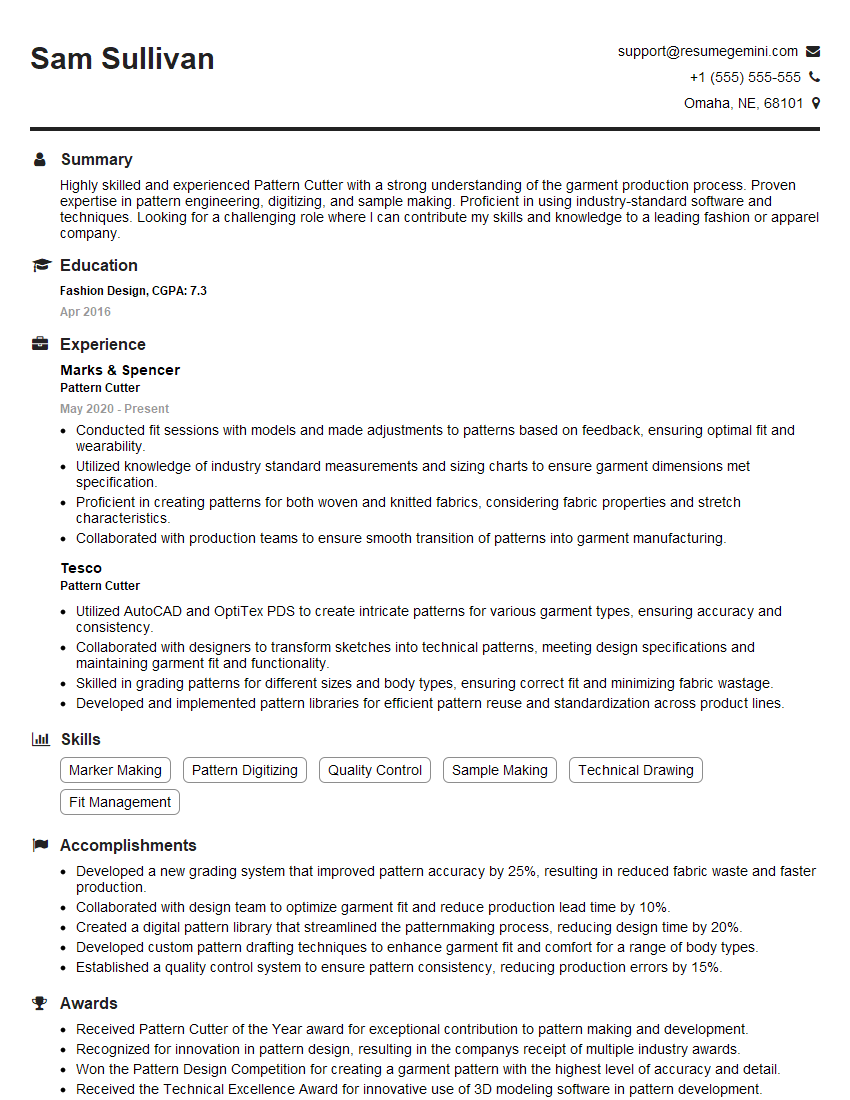
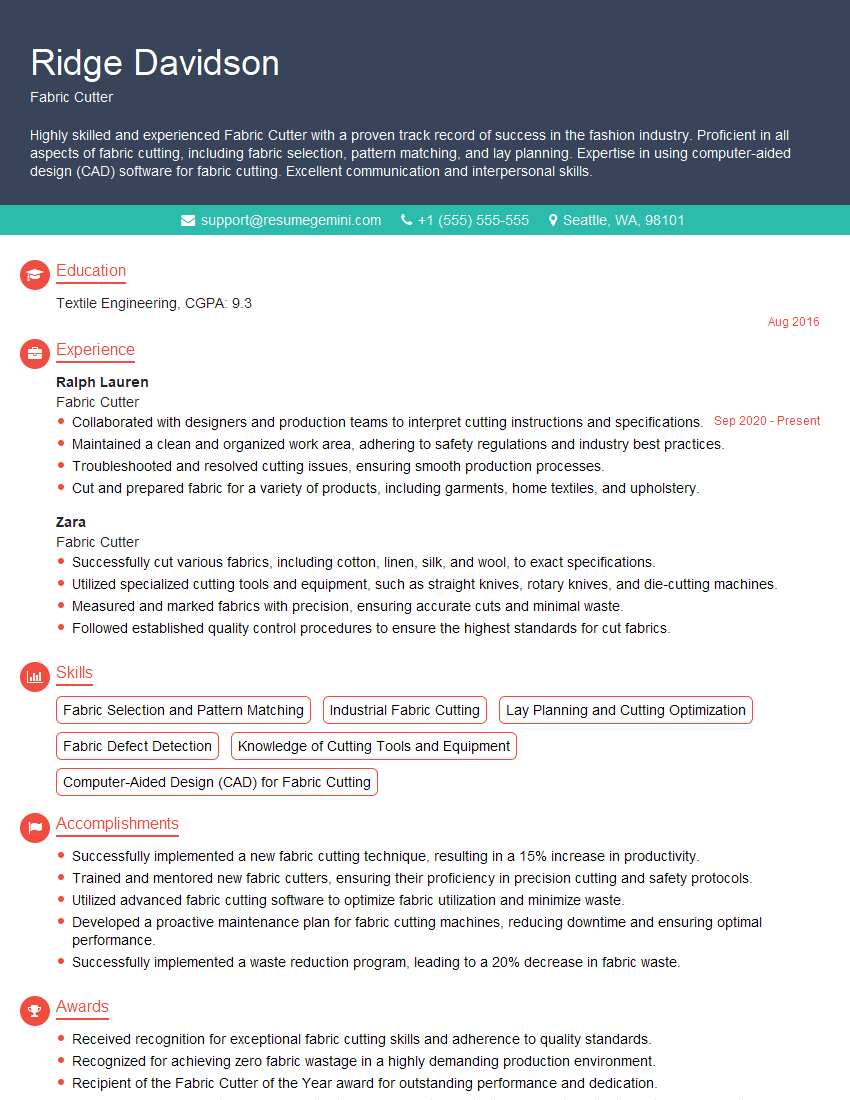
Mastering Fabric Cutting and Preparation is crucial for career advancement in the apparel industry. It demonstrates a strong understanding of production processes, leading to increased responsibility and higher earning potential. To enhance your job prospects, create an ATS-friendly resume that highlights your skills and experience effectively. We strongly recommend using ResumeGemini to build a professional resume that showcases your abilities. ResumeGemini provides examples of resumes tailored specifically to Fabric Cutting and Preparation roles, helping you present yourself in the best possible light to potential employers.

Explore more articles
Users Rating of Our Blogs
Share Your Experience
We value your feedback! Please rate our content and share your thoughts (optional).
What Readers Say About Our Blog
Very informative content, great job.
good