Interviews are opportunities to demonstrate your expertise, and this guide is here to help you shine. Explore the essential Fabric Handling and Manipulation interview questions that employers frequently ask, paired with strategies for crafting responses that set you apart from the competition.
Questions Asked in Fabric Handling and Manipulation Interview
Q 1. Describe your experience with various fabric types (e.g., cotton, silk, synthetics).
My experience encompasses a wide range of fabric types, from natural fibers like cotton and silk to various synthetics such as polyester, nylon, and blends. Cotton, known for its breathability and absorbency, requires different handling than silk, which is delicate and prone to snagging. Synthetics, with their diverse properties – some wrinkle-resistant, others stretchy – each demand specific approaches. For example, I’ve worked extensively with high-count cotton for fine shirting, requiring meticulous care to avoid wrinkles and damage during processing. Conversely, I’ve handled heavy-duty polyester fabrics used in outdoor gear, demanding robust techniques to ensure durability and prevent tearing. Understanding the unique characteristics of each fiber, including its strength, drape, and susceptibility to damage, is crucial for effective handling and processing.
- Cotton: Highly absorbent, prone to wrinkling, can shrink.
- Silk: Delicate, luxurious drape, sensitive to heat and friction.
- Polyester: Durable, wrinkle-resistant, can be static-prone.
- Nylon: Strong, stretchy, resistant to abrasion.
Q 2. Explain different fabric handling techniques for delicate vs. heavy fabrics.
Handling delicate fabrics like silk or chiffon requires gentle techniques. Think of it like handling a precious painting – you wouldn’t scrub it! This involves using soft gloves, avoiding harsh pulling or twisting, and employing specialized tools. Heavy fabrics, such as denim or canvas, require more robust handling. While less prone to damage from gentle force, excessive stretching or bending can lead to imperfections. For delicate fabrics, I would recommend using soft brushes for cleaning and using specialized cutting tools to avoid snagging. For heavy fabrics, robust tools and potentially heavier machinery might be necessary, but precision remains key to avoid unnecessary stress on the material.
- Delicate Fabrics: Use soft gloves, gentle folds, avoid sharp bends.
- Heavy Fabrics: Use strong tools, but be mindful of potential stress points.
Q 3. How do you identify fabric defects during inspection?
Identifying fabric defects requires a keen eye and thorough inspection. This process typically involves checking for irregularities in weave, color variations, broken or missing yarns, holes, stains, and inconsistencies in texture. I use a combination of visual inspection under good lighting and tactile examination to detect subtle flaws. For instance, a slub in a woven fabric might be acceptable depending on the fabric’s intended use, but a significant hole or broken yarn will be considered a major defect. I often use magnifying glasses to spot minute imperfections, and in high-volume inspection, automated systems can assist in identifying consistent defects.
- Visual Inspection: Checking for color variations, holes, stains.
- Tactile Examination: Feeling for texture irregularities, broken yarns.
- Magnification: Using tools to spot minute imperfections.
Q 4. What are the common causes of fabric damage during handling and storage?
Fabric damage during handling and storage stems from various causes. Improper storage conditions, such as excessive humidity or direct sunlight, can lead to mildew, fading, and weakening of fibers. Rough handling, including dragging or dropping fabrics, can cause tears, snags, and abrasion. Pests like moths can also damage natural fibers. Incorrect folding or stacking can lead to creasing and permanent wrinkles. For instance, leaving cotton fabrics damp in a tightly closed container can lead to mildew growth. Similarly, storing silk garments under direct sunlight will cause fading and damage. Preventing damage requires a comprehensive approach encompassing appropriate storage, proper handling, and pest control measures.
- Improper Storage: Humidity, sunlight, improper folding.
- Rough Handling: Dragging, dropping, excessive friction.
- Pests: Moths, insects damaging natural fibers.
Q 5. Describe your experience with fabric cutting and spreading techniques.
My experience includes various fabric cutting and spreading techniques, adapted to the fabric type and project requirements. For precise cuts on delicate materials, I use sharp shears and cutting mats to ensure clean lines and prevent fraying. For larger-scale projects, automated cutting systems are employed for efficiency and consistency. Spreading techniques vary depending on the fabric’s characteristics. Heavy fabrics need to be spread evenly to minimize tension and prevent distortions, often using specialized spreading machines. Delicate fabrics, however, require more gentle handling and may necessitate hand-spreading to avoid damage. I am proficient in using both manual and automated techniques to maximize efficiency while maintaining the integrity of the fabric.
- Manual Cutting: Sharp shears, cutting mats, precision.
- Automated Cutting: Efficiency, consistency, suitable for large volumes.
- Fabric Spreading: Even distribution to prevent tension, varying techniques for different weights.
Q 6. How do you ensure efficient fabric utilization to minimize waste?
Efficient fabric utilization is crucial for minimizing waste and controlling costs. This involves careful planning and precise cutting techniques. I utilize computer-aided design (CAD) software to optimize cutting patterns and reduce material waste. This allows me to nest patterns efficiently, minimizing the leftover fabric scraps. Additionally, I’m experienced in using remnant management strategies to utilize smaller pieces of fabric for secondary projects or samples. By adopting these approaches, we can significantly reduce the amount of fabric discarded, contributing to both cost savings and environmental sustainability.
- CAD Software: Optimized pattern nesting for minimal waste.
- Remnant Management: Utilizing scraps for other purposes.
- Precise Cutting: Minimizes errors and reduces waste.
Q 7. Explain your understanding of fabric pre-treatment processes.
Fabric pre-treatment processes are essential for preparing the fabric for subsequent operations such as dyeing, printing, or sewing. These processes often include cleaning to remove impurities, desizing to remove sizing agents applied during weaving, and scouring to remove natural impurities from fibers. Pre-treatment also includes bleaching to whiten the fabric and mercerization to enhance luster and strength in cotton. The specific pre-treatment steps are chosen based on the fabric type and the intended finish. For instance, delicate silks might require gentler cleaning methods, while heavy-duty cotton might necessitate more aggressive pre-treatment processes. Proper pre-treatment ensures consistent dyeing, enhances the fabric’s quality, and contributes to a superior final product.
- Cleaning: Removing impurities and contaminants.
- Desizing: Removing weaving sizing agents.
- Scouring: Removing natural impurities from fibers.
- Bleaching: Whitening the fabric.
- Mercerization: Enhancing luster and strength (cotton).
Q 8. What are the safety precautions you take when handling fabrics?
Fabric handling safety is paramount. It begins with understanding the inherent properties of the fabric – its flammability, potential for sharp edges (e.g., raw silk), or the presence of any chemicals. My safety protocols involve several key steps:
- Personal Protective Equipment (PPE): Always wearing appropriate PPE, such as safety glasses to protect against flying debris, gloves to prevent skin irritation or chemical exposure (depending on the fabric treatment), and a dust mask when handling materials that produce airborne particles.
- Proper Handling Techniques: Lifting heavy rolls of fabric correctly to avoid strain, using appropriate carts and dollies for transport, and carefully unfolding and storing fabrics to prevent damage and snags.
- Machine Safety: Ensuring all sewing machines are properly maintained and in good working order, using safety guards where applicable, and following the manufacturer’s safety instructions meticulously. This includes regular checks of needles, presser feet, and power cords.
- Clean and Organized Workspace: Maintaining a clean and organized workspace minimizes tripping hazards and reduces the risk of accidents. Proper storage and labeling of materials are essential.
- Emergency Preparedness: Knowing the location of safety equipment, such as fire extinguishers and first-aid kits, and understanding emergency procedures are crucial.
For example, when working with delicate silks, I use soft, clean gloves to prevent snags and oils from my skin transferring to the fabric. With heavier fabrics like canvas, using a proper lifting technique prevents back injuries.
Q 9. Describe your experience with different types of sewing machines.
My experience encompasses a wide range of sewing machines, from basic domestic machines to industrial models. I’m proficient with both mechanical and computerized machines, including:
- Domestic Sewing Machines: I’ve worked extensively with various brands, mastering their individual features and capabilities. This includes adjusting stitch length, tension, and utilizing different presser feet for specialized tasks like zippers and buttons. For example, I can efficiently use a walking foot on a domestic machine to stitch multiple layers of heavy fabric.
- Industrial Sewing Machines: My experience includes using industrial straight stitch machines, overlock machines (sergers), and coverstitch machines for various construction tasks, including high-speed production runs. I understand the nuances of each machine’s operation, including needle selection, speed control, and tension adjustments for optimal results. For instance, I’m comfortable adjusting the differential feed on an overlock machine to prevent stretching or puckering in delicate fabrics.
- Computerized Sewing Machines: I am familiar with computerized machines that offer programmable stitches, automatic features, and needle positioning capabilities. This allows for increased accuracy and precision, especially when working with intricate patterns or complex designs. For example, I can utilize the built-in embroidery functions on such machines for customized embellishment.
Understanding the strengths and limitations of each machine type allows me to choose the most appropriate tool for the task at hand, maximizing efficiency and producing high-quality results.
Q 10. How do you troubleshoot common sewing machine issues?
Troubleshooting sewing machine issues is a critical skill. My approach is systematic, starting with the simplest solutions before progressing to more complex repairs:
- Check the Obvious: Begin by checking the power supply, bobbin winding, and thread tension. Often, the problem lies in a simple oversight.
- Inspect the Needle and Thread: A bent needle, damaged thread, or improper threading can cause numerous problems. Replace the needle and rethread the machine meticulously.
- Clean the Machine: Lint and dust buildup can affect the machine’s performance. Carefully clean the feed dogs, bobbin area, and shuttle race with a soft brush and compressed air.
- Check the Timing: If the stitch is skipping or uneven, the machine’s timing might be off. This usually requires professional assistance.
- Examine the Presser Foot and Feed Dogs: Ensure the presser foot is correctly positioned and that the feed dogs are moving smoothly. Check for any obstructions.
- Test Different Fabrics: Try sewing on different fabrics to determine if the issue is fabric-specific (e.g., too heavy or too slippery).
For example, if a machine is skipping stitches, I would first check the needle, then the thread, and finally examine the feed dogs for any obstructions. If the problem persists, I would consult the machine’s manual or seek professional help.
Q 11. How do you maintain quality control throughout the fabric handling process?
Maintaining quality control throughout the fabric handling process requires a multi-faceted approach:
- Incoming Inspection: Carefully inspecting all incoming fabrics for defects like flaws, inconsistencies in color, or damage during shipment. This ensures only high-quality materials are used.
- Pre-Cutting Inspection: Inspecting the fabric before cutting to identify any defects that may not have been noticed earlier. This prevents wasted material and ensures consistent quality in the finished product.
- Regular Machine Maintenance: Ensuring all sewing and cutting machines are properly maintained and calibrated, reducing the risk of errors or inconsistencies during production.
- Sampling and Spot Checks: Regularly taking samples and conducting spot checks throughout the production process to monitor quality and identify any potential issues before they become widespread.
- Documentation: Maintaining detailed records of fabric batches, cutting layouts, and production processes to facilitate traceability and problem-solving if needed.
For instance, if a consistent flaw is detected in a particular batch of fabric, that batch is immediately flagged and isolated, preventing its use in production. The issue is documented, communicated to the supplier, and steps are taken to avoid similar problems in the future.
Q 12. Explain your experience with pattern making and grading.
My experience in pattern making and grading is extensive. I’m proficient in using both traditional methods and computer-aided design (CAD) software:
- Drafting Patterns: I can create patterns from scratch using various methods, including draping, flat pattern design, and using slopers (basic block patterns). I understand the principles of fit, balance, and proportion crucial for garment construction.
- Grading Patterns: I am skilled in grading patterns to accommodate different sizes. This involves systematically adjusting pattern pieces to create a range of sizes, ensuring consistent proportions and fit across the size spectrum. I understand the nuances of grading different types of garments, such as those with curves or sharp angles.
- Using CAD Software: I’m proficient with industry-standard CAD software for pattern making, allowing for precise adjustments, efficient grading, and seamless integration with other manufacturing processes.
- Pattern Adjustments: I can effectively make adjustments to existing patterns to improve fit, enhance design features, or accommodate specific body types.
For example, if a particular pattern fits poorly across the shoulders, I’d use my understanding of pattern drafting to adjust the shoulder slope and armhole depth. In grading, my experience allows for precise adjustments to maintain the original design aesthetic across multiple sizes.
Q 13. Describe your experience with different fabric dyeing techniques.
My experience encompasses several fabric dyeing techniques:
- Vat Dyeing: I understand the process of vat dyeing, which produces very fast, durable colors, often used for cotton and other cellulosic fibers. This includes managing the reduction and oxidation stages of this technique.
- Reactive Dyeing: I’m familiar with reactive dyeing, a method that bonds directly to the fiber, resulting in excellent washfastness. This process involves precise control of pH and temperature.
- Direct Dyeing: I have experience with direct dyeing, which is a simpler method suitable for various fibers but often results in less washfast colors. This requires a good understanding of dye solubility and fiber affinity.
- Disperse Dyeing: I am aware of the application of disperse dyes to polyester and other synthetic fibers. This technique often necessitates high temperatures and pressures.
Choosing the right technique depends on the fabric type, desired colorfastness, and environmental considerations. For example, reactive dyeing is preferred for cotton garments intended for frequent washing, while direct dyeing might be suitable for items with lower washfastness requirements.
Q 14. How do you manage inventory and track fabric usage?
Efficient inventory management and fabric usage tracking are crucial for cost control and production planning. My approach involves:
- Barcoding or RFID Tagging: Utilizing barcoding or RFID tagging to track fabrics from the moment they enter the facility until they’re used in production. This ensures accurate inventory counts and minimizes waste.
- Database Management: Using a database system to record all fabric information, including type, quantity, dye lot, supplier, and date of purchase. This provides a centralized, accessible record of inventory.
- Cutting Optimization Software: Employing cutting optimization software to minimize fabric waste during pattern cutting. This software analyzes the patterns and fabric layout to maximize material utilization.
- First-In, First-Out (FIFO): Utilizing FIFO inventory management to ensure that older fabrics are used before newer ones, preventing the spoilage of materials.
For instance, the database allows us to track the exact quantity of a specific fabric used in a particular order, which is invaluable for costing and managing production runs. By using cutting optimization software, we can significantly reduce fabric waste, leading to cost savings.
Q 15. What is your experience with automated fabric handling systems?
My experience with automated fabric handling systems spans over 10 years, encompassing design, implementation, and troubleshooting. I’ve worked extensively with systems ranging from simple conveyor belts and robotic arms for material transport to sophisticated automated cutting and sewing machines integrated with warehouse management systems (WMS). I’m familiar with various automation technologies, including Programmable Logic Controllers (PLCs), vision systems for fabric inspection, and software for optimizing material flow and minimizing waste. For instance, at my previous role, I led the implementation of a new automated cutting system that reduced fabric waste by 15% and increased production efficiency by 20%. This involved not only the technical aspects of integrating the machinery but also the crucial process of training personnel and optimizing workflow to maximize the system’s potential.
Career Expert Tips:
- Ace those interviews! Prepare effectively by reviewing the Top 50 Most Common Interview Questions on ResumeGemini.
- Navigate your job search with confidence! Explore a wide range of Career Tips on ResumeGemini. Learn about common challenges and recommendations to overcome them.
- Craft the perfect resume! Master the Art of Resume Writing with ResumeGemini’s guide. Showcase your unique qualifications and achievements effectively.
- Don’t miss out on holiday savings! Build your dream resume with ResumeGemini’s ATS optimized templates.
Q 16. Describe a time you had to solve a problem related to fabric handling.
During a large-scale production run of a high-end silk garment, we encountered significant issues with fabric wrinkling during the automated cutting process. The wrinkles led to inconsistencies in the cut pieces and increased the reject rate significantly. Initially, we suspected a problem with the cutting machine itself. However, after a thorough investigation, we discovered the root cause was the improper tensioning of the fabric on the feed rollers. The silk, being a delicate material, required a specific tension level to prevent creasing. We solved this by installing a new tension control system, precisely calibrated for silk, which included sensors monitoring the fabric’s tension and an automated adjustment mechanism. This not only reduced fabric waste but also eliminated the production bottlenecks caused by the rejections.
Q 17. How do you ensure the proper storage and handling of different fabrics?
Proper storage and handling of different fabrics are crucial to maintaining their quality and preventing damage. This involves understanding the specific needs of each fabric type. For example, delicate materials like silk or lace require cool, dark, and dry storage conditions to prevent fading, moisture damage, and mildew. They should be stored folded or rolled loosely, avoiding harsh creases. Conversely, sturdy fabrics like cotton or linen can tolerate slightly less stringent conditions, but even these should be protected from direct sunlight and excessive humidity. Specific storage methods also vary. Some fabrics benefit from being stored on hanging racks while others should be folded and stacked carefully. We also utilise specialized storage containers, such as acid-free boxes for archival fabrics, to further protect against damage. Proper labelling and inventory management are critical for ensuring that fabrics are easily identifiable and that their storage conditions are optimized throughout their lifespan.
Q 18. Explain your understanding of fabric shrinkage and its prevention.
Fabric shrinkage is the reduction in fabric dimensions due to relaxation of fibers after weaving or knitting, or from exposure to moisture and heat. It is caused by a number of factors, including the type of fiber (natural fibers like wool and cotton shrink more than synthetics), the yarn construction, and the finishing processes applied to the fabric. Preventing shrinkage involves pre-shrinking the fabric during manufacturing. This is done through processes like scouring (cleaning), setting (heat treatment), and decating (steam treatment). The effectiveness of these treatments depends on the fiber type and the desired level of shrinkage control. For instance, wool fabrics often undergo a specialized process called ‘fulling’ to control shrinkage. Furthermore, careful attention should be paid to the washing instructions provided for the garment, with instructions typically suggesting gentle washing and air drying, which can significantly reduce shrinkage.
Q 19. What are the different methods of fabric finishing?
Fabric finishing encompasses a wide range of processes designed to enhance the appearance, feel, and performance of a fabric. These processes can be broadly classified into:
- Mechanical Finishes: These involve mechanical treatments to alter fabric properties, such as calendaring (producing a smooth or glossy finish), embossing (creating patterns), and shearing (removing surface fibers).
- Chemical Finishes: These utilize chemical agents to modify the fabric’s characteristics. Examples include bleaching (removing color), dyeing (adding color), mercerization (improving luster and strength of cotton), and flame retardant treatments.
- Other Finishes: This category includes water-repellent treatments, wrinkle-resistant treatments, and anti-microbial treatments.
The specific finishing processes used depend heavily on the fabric type, its intended use, and the desired final product quality.
Q 20. How do you ensure the consistent quality of finished products?
Ensuring consistent quality in finished products requires a multi-faceted approach encompassing quality control at every stage of production. This begins with strict quality checks on the incoming raw materials, verifying their properties conform to specifications. During the manufacturing process, regular in-line inspections are essential to identify and rectify defects early on. This might include visual inspections, mechanical testing for strength and durability, and chemical analysis to ensure dye fixation and proper treatment application. Statistical Process Control (SPC) techniques are invaluable in monitoring production parameters and identifying trends that could indicate quality issues. Finally, thorough quality control inspections are performed on the finished products before they are shipped, checking for defects, sizing accuracy, and compliance with relevant standards. Documentation at every stage is critical to tracking and tracing potential problems and improving future processes.
Q 21. Explain your experience with different types of fabric measuring tools.
My experience with fabric measuring tools is extensive, ranging from basic measuring tapes and rulers to advanced digital instruments. I’m proficient in using various types, including:
- Measuring Tapes: Essential for taking linear measurements of fabric rolls and garments. I’ve utilized both standard cloth tapes and those with metric and imperial markings.
- Rulers and Squares: Crucial for precise measurements in pattern making and cutting. Different types include metal rulers for accurate cutting lines and transparent rulers for pattern tracing.
- Digital Calipers: Used for highly accurate measurements of fabric thickness and other dimensional parameters.
- Laser Measuring Devices: These advanced tools provide non-contact measurements of fabric lengths, particularly useful for large rolls.
The choice of instrument always depends on the specific application and the required precision level. Proper calibration and maintenance of these tools are crucial to obtaining reliable and consistent measurements.
Q 22. How do you work within a team environment during fabric handling processes?
Effective fabric handling in a team environment relies heavily on clear communication, collaboration, and a shared understanding of goals. I thrive in team settings, believing that diverse perspectives enhance efficiency and problem-solving.
- Clear Communication: Before starting any process, I ensure that all team members understand their roles, responsibilities, and the specific requirements for each fabric. This includes discussing potential challenges and developing contingency plans.
- Collaboration: I actively participate in brainstorming sessions, offering my expertise on fabric handling techniques and potential issues. For example, if we’re dealing with a delicate silk, I’ll suggest specific handling procedures to avoid damage, ensuring everyone is on board.
- Shared Goals: I focus on contributing to the overall team objective, prioritizing tasks based on urgency and impact, and always willing to assist colleagues when needed. This might involve helping a colleague with a complex fabric fold or troubleshooting a machine malfunction.
- Respectful Feedback: I believe in open and constructive feedback. I’m comfortable both giving and receiving feedback to ensure consistent high quality in our work and continuous improvement.
For instance, in a recent project involving multiple fabric types for a high-end fashion house, my proactive communication and collaborative spirit ensured seamless transitions between different stages of the production process, contributing to on-time delivery and client satisfaction.
Q 23. What is your experience with fabric testing equipment?
My experience with fabric testing equipment is extensive, encompassing a range of instruments used to assess various fabric properties. This includes tensile strength testers, bursting strength testers, abrasion testers, and colorfastness testing equipment.
- Tensile Strength Testers: I’m proficient in using these to determine the fabric’s resistance to breaking under tension, crucial for determining its durability and suitability for specific applications.
- Bursting Strength Testers: I understand how these machines measure the pressure required to rupture a fabric sample, which is particularly important for applications requiring high resistance to pressure, such as airbags or protective gear.
- Abrasion Testers: I’ve used these extensively to evaluate a fabric’s resistance to wear and tear, providing valuable insights into its longevity and suitability for various applications, like upholstery or workwear.
- Colorfastness Testing: I’m experienced in using equipment to assess the fabric’s resistance to fading when exposed to light, washing, or rubbing – essential for quality control and meeting customer expectations.
I also have experience interpreting the results obtained from these tests, using them to inform decisions regarding fabric selection, processing, and quality control. I’m familiar with industry standards and regulatory requirements for these tests.
Q 24. How do you maintain a clean and organized work environment?
Maintaining a clean and organized work environment is paramount for safety, efficiency, and quality control in fabric handling. My approach is based on a proactive and systematic method.
- 5S Methodology: I apply the 5S methodology (Sort, Set in Order, Shine, Standardize, Sustain) to organize my workspace. This involves regularly decluttering, establishing clear storage systems, maintaining cleanliness, and implementing consistent procedures for material handling and waste disposal.
- Designated Areas: I ensure that different fabric types are stored separately to prevent cross-contamination and accidental damage. Delicate fabrics, for instance, are stored separately from heavier, coarser materials.
- Regular Cleaning: I perform regular cleaning of work surfaces and equipment to remove dust, lint, and other debris that could compromise fabric quality or create safety hazards.
- Proper Disposal: I adhere strictly to company procedures for waste disposal, ensuring that scraps and other waste materials are handled responsibly and efficiently.
This approach not only reduces the risk of accidents and contamination but also improves workflow efficiency by making it easier to locate and access materials. A clean and organized environment helps minimize errors and promotes a more productive and safer workplace.
Q 25. Describe your understanding of different fabric weaves and their properties.
My understanding of fabric weaves is comprehensive, encompassing various structures and their resulting properties. The weave of a fabric significantly impacts its drape, strength, texture, and overall appearance.
- Plain Weave: The simplest weave, characterized by alternating warp and weft yarns. It’s durable and versatile, used in many applications.
- Twill Weave: Creates a diagonal pattern, resulting in a stronger and more durable fabric with good drape. Denim is a classic example.
- Satin Weave: Produces a smooth, lustrous surface with a beautiful sheen. The long floats of warp or weft yarns make it less durable than other weaves.
- Jacquard Weave: A complex weave capable of producing intricate patterns, often used in high-end textiles.
- Knit Fabrics: These are formed by interlocking loops of yarn, resulting in a more flexible and stretchy fabric than woven fabrics.
Understanding these weaves and their properties is crucial for selecting the right fabric for a particular application. For example, a twill weave would be ideal for a durable pair of trousers, while a satin weave might be better suited for a luxurious evening gown. Knowledge of these properties also informs the best handling methods, ensuring proper care and minimizing damage during processing.
Q 26. How do you prioritize tasks when handling multiple fabric types simultaneously?
Prioritizing tasks when handling multiple fabric types simultaneously requires a well-defined strategy. My approach involves a combination of factors to ensure efficiency and avoid errors.
- Urgency: I prioritize tasks based on their deadlines and the potential impact of delays. Urgent orders or those with tight deadlines take precedence.
- Fabric Type: I consider the specific requirements and sensitivities of each fabric type. Delicate fabrics requiring specialized handling will often be prioritized to avoid damage.
- Production Capacity: I assess available resources, including personnel and equipment, to optimize the workflow and prevent bottlenecks.
- Process Sequencing: I organize tasks to minimize downtime and maximize efficiency. For example, I might group similar processes together to streamline workflow.
I utilize project management tools like Kanban boards to visually track progress and prioritize tasks effectively. This allows for a clear overview of ongoing projects and facilitates proactive adjustments to the schedule as needed. This systematic approach ensures smooth handling of multiple fabric types, minimizing errors and maximizing output.
Q 27. Explain your experience with using Computer Aided Design (CAD) software in textile design.
My experience with Computer-Aided Design (CAD) software in textile design is significant. I’m proficient in using industry-standard software to create and manipulate textile designs, patterns, and technical specifications.
- Design Creation: I use CAD software to create original designs, experimenting with colors, patterns, and textures.
- Pattern Making: I utilize CAD software for pattern grading, adjusting designs to different sizes, and generating cutting instructions.
- Technical Specifications: I’m capable of generating technical drawings and specifications for production, ensuring accuracy and consistency.
- Collaboration: CAD software enhances team collaboration. I can easily share designs and technical specifications with colleagues and clients.
For example, I recently used CAD software to create a complex jacquard weave design for a high-end upholstery fabric. The software allowed me to precisely control the pattern’s intricacy and ensure it was feasible for production. This demonstrates my ability to leverage technology to translate creative visions into realistic, manufacturable products.
Q 28. How do you adapt to changing production demands and fabric requirements?
Adapting to changing production demands and fabric requirements is a key aspect of my role. I approach these changes with a flexible and proactive mindset.
- Communication: I maintain open communication with production management and clients to understand the changes and their implications.
- Problem-Solving: I identify potential challenges posed by the changes and develop solutions to mitigate risks.
- Training and Upskilling: I’m always willing to learn new techniques and acquire new skills to meet the demands of changing fabric types and processes.
- Process Optimization: I adjust existing workflows to accommodate the changes while maintaining efficiency and quality.
For instance, when our production shifted from primarily cotton fabrics to incorporating more delicate silks, I quickly adapted my handling techniques and trained my team accordingly. This included acquiring knowledge of silk specific care and handling guidelines, implementing appropriate equipment, and adjusting our workflow to maintain high quality standards and minimize risk of damage. My ability to adapt ensures efficient and seamless transitions despite fluctuating demands.
Key Topics to Learn for Fabric Handling and Manipulation Interview
- Fabric Properties: Understanding fiber types (natural vs. synthetic), fabric weight, drape, and texture. Practical application: Selecting appropriate fabrics for different garment types and manufacturing processes.
- Fabric Defects: Identifying common fabric flaws (e.g., holes, stains, inconsistencies in weave) and their impact on garment quality. Practical application: Implementing quality control measures during production.
- Pre-Production Processes: Familiarizing yourself with fabric inspection, pre-treatment (e.g., washing, shrinking), and cutting techniques. Practical application: Optimizing fabric utilization and minimizing waste.
- Sewing & Assembly Techniques: Understanding various stitching methods, seam finishes, and their suitability for different fabrics. Practical application: Troubleshooting sewing machine issues and improving stitch quality.
- Fabric Finishing & Treatments: Knowledge of dyeing, printing, and other finishing processes that affect fabric properties and aesthetics. Practical application: Understanding the impact of finishing on fabric handling and durability.
- Safety Procedures: Adherence to safety regulations and best practices for handling potentially hazardous materials and machinery. Practical application: Maintaining a safe and efficient work environment.
- Problem-solving in Fabric Handling: Analyzing issues related to fabric shrinkage, stretching, and other challenges during production. Practical application: Developing strategies for minimizing defects and improving efficiency.
- Sustainable Practices: Understanding environmentally friendly fabric sourcing, processing, and waste management techniques. Practical application: Contributing to a more sustainable textile industry.
Next Steps
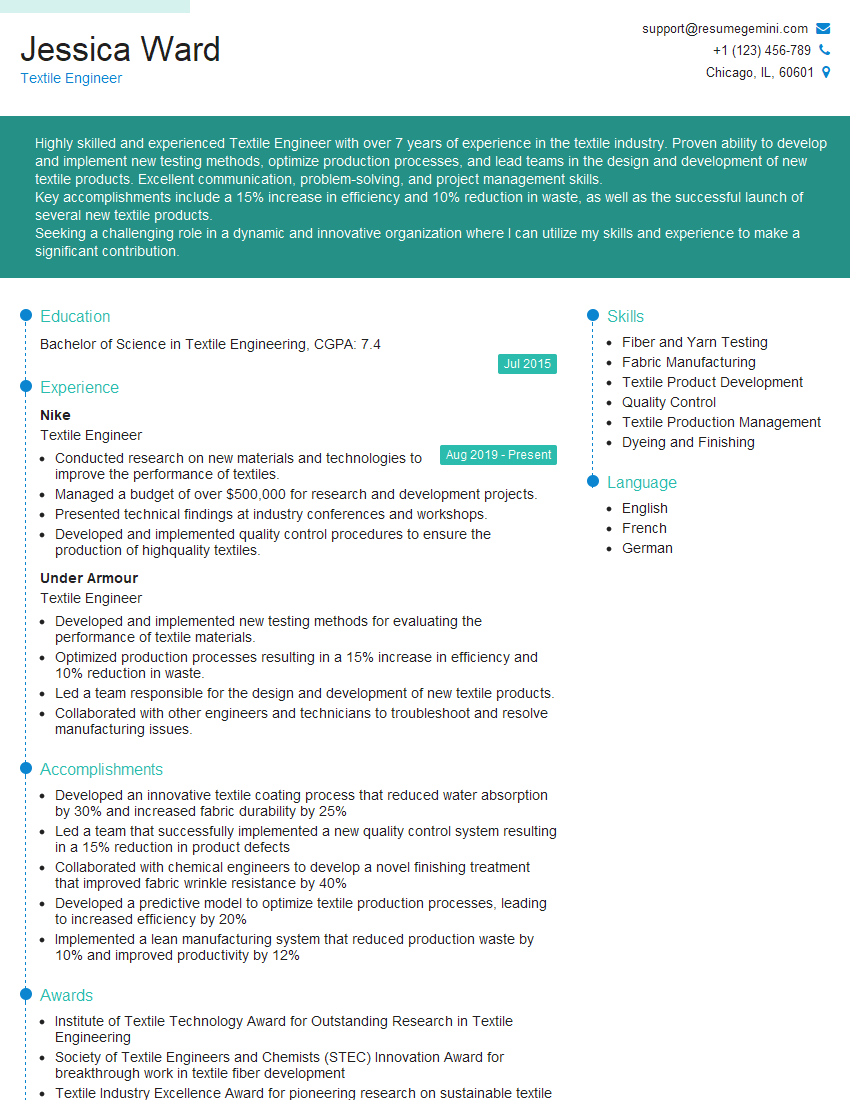
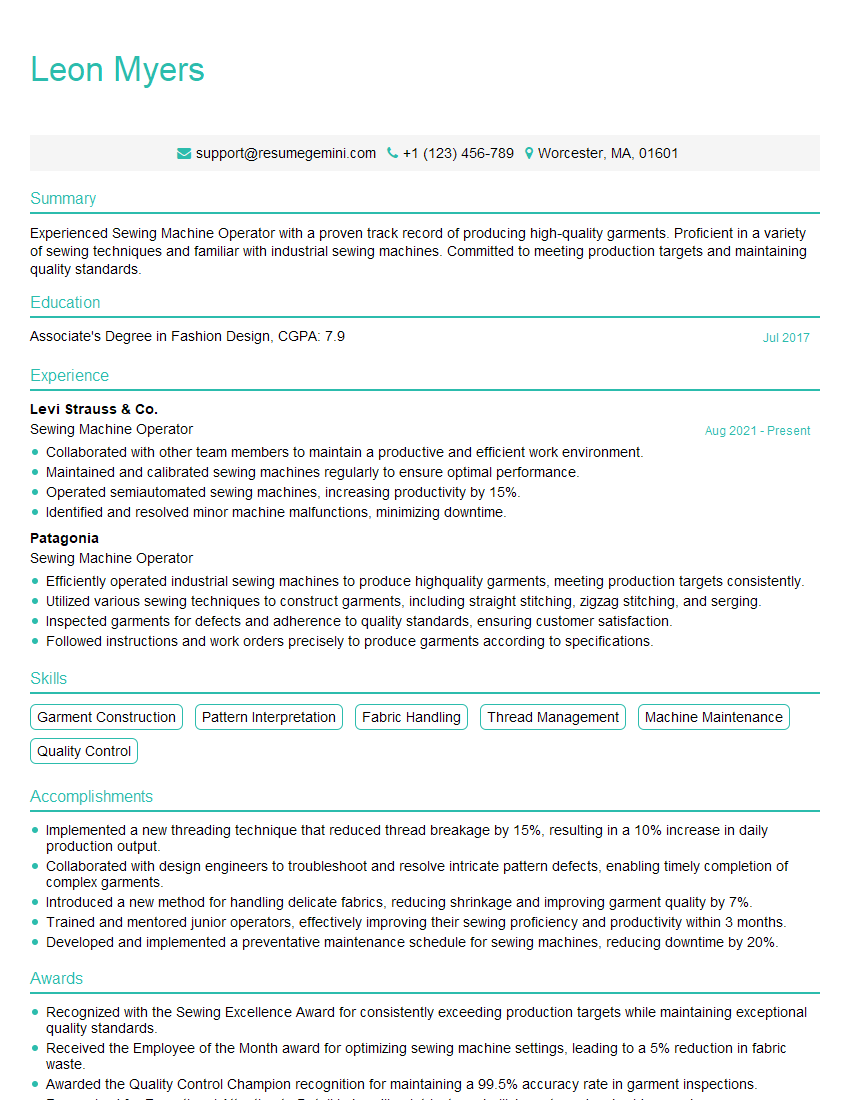
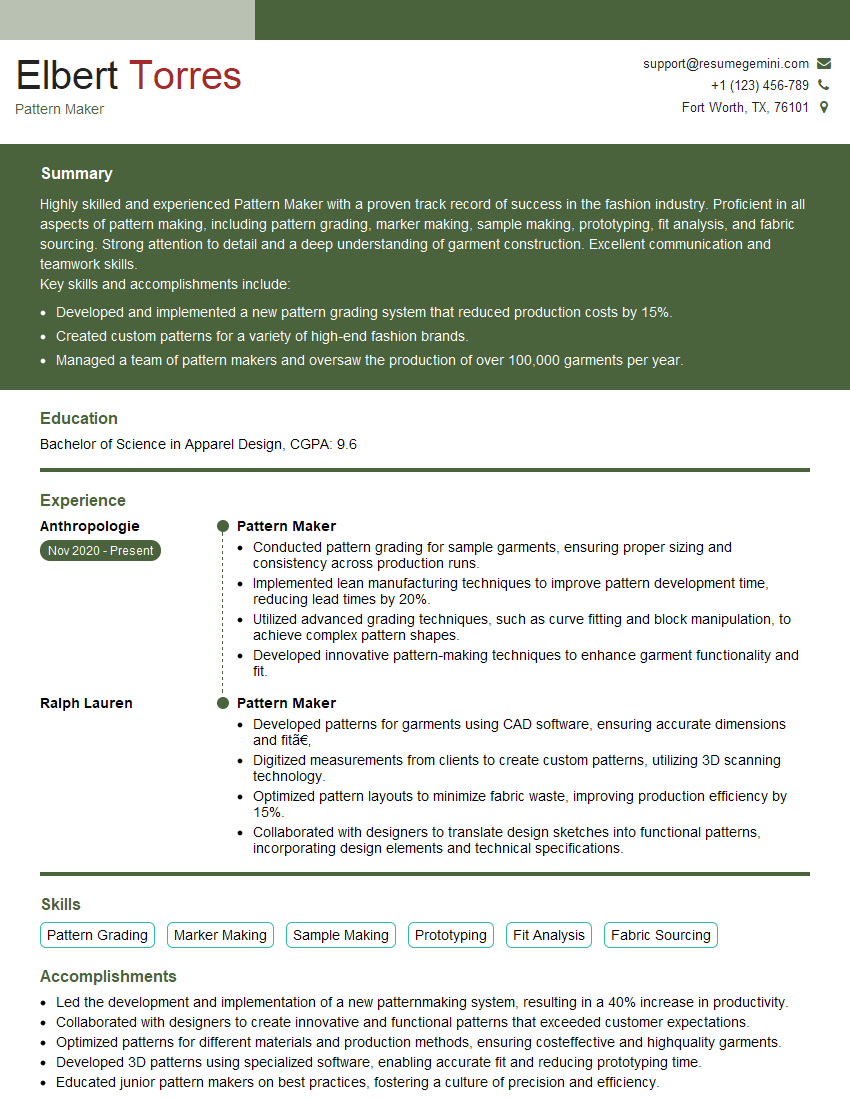
Mastering Fabric Handling and Manipulation is crucial for career advancement in the textile industry, opening doors to specialized roles and higher earning potential. An ATS-friendly resume is essential for getting your application noticed by recruiters. To significantly improve your job prospects, we highly recommend using ResumeGemini to craft a professional and impactful resume. ResumeGemini provides tools and resources to create a standout document, and examples of resumes tailored to Fabric Handling and Manipulation are available to guide you.





Explore more articles
Users Rating of Our Blogs
Share Your Experience
We value your feedback! Please rate our content and share your thoughts (optional).
What Readers Say About Our Blog
Very informative content, great job.
good