Every successful interview starts with knowing what to expect. In this blog, we’ll take you through the top Fabric selection and cutting interview questions, breaking them down with expert tips to help you deliver impactful answers. Step into your next interview fully prepared and ready to succeed.
Questions Asked in Fabric selection and cutting Interview
Q 1. What are the key factors to consider when selecting fabric for a specific garment?
Fabric selection is paramount in garment production. It’s not just about aesthetics; it’s about ensuring the final product meets the design brief, performs well, and is cost-effective. Key factors include:
- End Use: A delicate silk wouldn’t suit a workwear jumpsuit, while sturdy canvas is unsuitable for an evening gown. Consider the garment’s intended use and the level of wear and tear it will endure.
- Fiber Content: Different fibers (cotton, wool, silk, polyester, etc.) offer varying properties like drape, breathability, durability, and wrinkle resistance. Understanding fiber properties is crucial for selecting the right fabric.
- Weight and Drape: Heavier fabrics are better suited for coats and jackets, while lighter fabrics are preferred for blouses and dresses. Drape refers to how the fabric falls; a stiff fabric needs a different design than one with excellent flow.
- Color and Pattern: The color and pattern must align with the design aesthetic, and you need to consider potential issues like colorfastness (resistance to fading) and pattern matching for seamless garments.
- Cost: The fabric’s price impacts the final garment’s cost. Balancing quality and budget is essential for profitability.
- Sustainability and Ethical Sourcing: Increasingly, consumers are conscious of the environmental and social impact of their purchases. Selecting sustainable fabrics is becoming a key factor.
For instance, designing a summer dress, I’d prioritize lightweight, breathable fabrics like linen or cotton voile for comfort and air circulation. For a winter coat, I’d choose a heavier, warmer fabric like wool or a wool blend for insulation and protection from the elements.
Q 2. Explain the difference between woven and knitted fabrics and their suitability for various garments.
Woven and knitted fabrics differ significantly in their construction and properties, influencing their suitability for various garments.
Woven fabrics are made by interlacing two sets of yarns at right angles (warp and weft). This creates a strong, stable structure. They tend to be more durable and hold their shape better. Examples include cotton twill, linen canvas, and silk charmeuse. They are ideal for structured garments like jackets, trousers, and tailored dresses.
Knitted fabrics are made by interlocking loops of yarn. This creates a more flexible and stretchy fabric. Knitted fabrics often drape well and are more comfortable against the skin. Examples include jersey, rib knit, and double knit. They are often used for T-shirts, sweaters, leggings, and other comfortable garments.
The choice between woven and knit depends on the garment’s design and intended function. A tailored suit requires the strength and structure of a woven fabric, whereas a comfortable T-shirt benefits from the elasticity and drape of a knit fabric.
Q 3. Describe your experience with different fabric finishes and their impact on garment performance.
Fabric finishes significantly impact a garment’s performance and appearance. I have extensive experience with various finishes, including:
- Pre-shrinking: Reduces shrinkage after washing, preventing garment distortion. This is crucial, especially for natural fibers like cotton and wool.
- Dyeing: Adds color and can enhance the fabric’s aesthetic appeal. Different dyeing methods affect color vibrancy and fastness.
- Printing: Allows for intricate designs and patterns. The print’s durability and wash resistance vary depending on the printing technique.
- Water-repellent finishes: Enhance the fabric’s resistance to water and stains, particularly useful for outerwear.
- Softening finishes: Improve the fabric’s hand feel, making it softer and more comfortable against the skin.
- Anti-wrinkle finishes: Reduce the fabric’s tendency to wrinkle, making garments easier to care for.
For example, a wrinkle-resistant finish is essential for shirts meant for frequent wear, while a water-repellent finish is critical for rain jackets. Choosing the right finish improves the garment’s quality, longevity, and wearer satisfaction.
Q 4. How do you determine the appropriate fabric quantity for a given order, considering waste and shrinkage?
Accurately calculating fabric quantity is vital for efficient production and cost control. This requires considering:
- Pattern Pieces: Measure each pattern piece’s length and width.
- Grainlines: Ensure the fabric is cut according to the pattern’s grainlines for proper drape and fit.
- Layout: Optimize the fabric layout to minimize waste. Marker making software helps in this process.
- Shrinkage: Account for fabric shrinkage during washing. Pre-shrinking fabric reduces this issue.
- Waste: Account for inevitable waste during cutting, typically 5-15% depending on the fabric and pattern complexity.
- Seam Allowance: Add seam allowance to each pattern piece.
The formula I typically use is: Total Fabric = (Sum of all pattern piece areas + Waste + Seam Allowance) / Fabric Width. I always add a safety margin (usually 10-15%) to cover unexpected issues.
For example, if the total area of all pattern pieces is 10 square meters, considering 10% waste and 2cm seam allowance per piece, I might require 1.2 square meters more. If the fabric width is 1.5 meters, my calculation may look like: (10 + 1) / 1.5 = 7.33 meters of fabric, then rounded up to account for additional margin.
Q 5. Explain your knowledge of various cutting methods (e.g., manual, automated).
I have experience with both manual and automated cutting methods. Manual cutting involves using hand-held cutting tools like shears or rotary cutters on individual layers of fabric. It’s suitable for smaller orders and more complex patterns requiring precision. This demands a great deal of skill and precision.
Automated cutting, using cutting plotters, is more efficient for large orders. The plotter cuts through multiple layers of fabric simultaneously guided by a digital marker. This method ensures consistency, accuracy, and greatly reduces labor time. However, it requires a higher initial investment and is less flexible for intricate or smaller-scale projects.
My expertise lies in selecting the appropriate cutting method based on the order size, pattern complexity, and budget constraints. I understand the limitations and advantages of each approach and can effectively manage both.
Q 6. How do you ensure accurate pattern placement for optimal fabric utilization?
Accurate pattern placement is crucial for maximizing fabric utilization and minimizing waste. I use a combination of techniques to achieve this:
- Understanding Fabric Grain: Placement needs to respect the fabric’s lengthwise (warp) and crosswise (weft) grainlines. Incorrect placement can lead to distortion and poor fit.
- Marker Making: Creating efficient markers (layouts of pattern pieces on fabric) minimizes waste. This involves strategically arranging pieces to maximize fabric utilization and reduce material loss.
- Nesting: Efficiently nesting pattern pieces reduces waste. This means positioning pattern pieces so that gaps are minimized.
- Symmetry and Pattern Matching: Placing pieces for symmetrical patterns (like plaids or stripes) is crucial for consistent aesthetics. Careful consideration of pattern matching is needed to avoid misalignment of patterns.
I often use software to optimize marker making, but I always double-check the layout manually to ensure accuracy and catch any potential issues before cutting.
Q 7. Describe your experience with marker making software and techniques.
I’m proficient in using various marker making software packages, including [Mention Specific Software e.g., Lectra, Gerber]. These programs allow for optimized fabric placement, reducing waste and improving efficiency. My skills encompass:
- Creating and Editing Markers: I can create efficient marker layouts, adjusting piece placement and orientation to minimize material usage.
- Generating Cutting Instructions: The software generates precise cutting instructions for automated cutting machines, ensuring accuracy and consistency.
- Working with Different Fabric Types: I understand how to adapt marker making techniques for different fabric types and their inherent properties, such as stretch or drape.
- Cost Analysis and Reporting: The software provides cost analysis reports, showing fabric usage and waste percentages, allowing for informed decision-making.
Proficiency in marker making software significantly improves the efficiency and profitability of garment production. I am always up-to-date on the latest software and techniques to maximize material utilization and reduce costs.
Q 8. How do you manage fabric defects and inconsistencies during the cutting process?
Managing fabric defects and inconsistencies during cutting requires a multi-pronged approach starting with thorough inspection. We meticulously check each roll of fabric for flaws like holes, stains, weaving irregularities, and inconsistencies in color or weight. This initial inspection allows us to identify and segregate defective areas. During cutting, we carefully plan the layout to minimize waste and avoid placing critical pattern pieces over flawed sections whenever possible. For minor defects, we might employ techniques such as strategically placing them in non-visible areas or using patchwork if the fabric allows. Major defects, however, often necessitate discarding the affected section or the entire roll, depending on severity and the overall quantity. Think of it like baking – you wouldn’t use a cracked egg in a delicate cake. Similarly, major flaws can ruin the final product. Documentation of all defects and actions taken is crucial for traceability and quality control.
Q 9. What quality control measures do you implement during fabric selection and cutting?
Quality control is paramount. It begins with the selection of raw materials. We use standardized grading systems to assess fabric quality, testing for tensile strength, colorfastness, and shrinkage. We carefully check the supplier’s certifications and test reports. During the cutting process, regular checks are conducted to ensure the cutting tools are sharp and the cutting parameters (pressure, speed) are accurately maintained. We use automated measuring devices to validate cut sizes and frequently inspect cut pieces against templates to ensure accuracy and consistency. Statistical Process Control (SPC) charts help track key metrics and identify trends that could indicate potential problems. A random sample of cut pieces is inspected for defects, and any deviations from the standard are addressed immediately. This continuous monitoring ensures that we maintain high quality throughout the entire process. For example, regular calibration of our cutting machines prevents discrepancies in size due to wear and tear.
Q 10. Explain your experience with different types of cutting tools and equipment.
My experience encompasses a wide range of cutting tools and equipment. I’m proficient with both manual cutting methods, such as using shears for intricate designs or delicate fabrics, and automated systems like computer-controlled cutting machines (CNC cutters) for high-volume production runs. I’ve worked extensively with various types of knives, including straight knives, rotary knives, and oscillating knives, each suited to specific fabric types and cutting styles. I understand the importance of proper knife maintenance – sharpening, cleaning, and storage – to ensure precision and longevity. My experience with automated systems includes programming and operating different software packages, troubleshooting malfunctions, and conducting regular maintenance checks to minimize downtime. For instance, I’ve optimized CNC cutter settings to achieve efficient and precise cuts for different fabric weights and thicknesses, resulting in significant improvements in productivity and material savings.
Q 11. How do you ensure the accuracy and efficiency of the cutting process?
Accuracy and efficiency in cutting are ensured through several key strategies. Precise pre-cutting preparation, including accurate spreading and nesting of patterns, is essential. We use sophisticated nesting software to optimize fabric usage and minimize waste. Regular calibration of cutting machines is critical to maintain accuracy. Furthermore, we employ well-trained and experienced personnel who adhere to strict operating procedures. Properly maintained tools are crucial; dull blades can lead to inaccurate cuts and material waste. Regular quality checks throughout the process, involving both manual inspection and automated measurements, help catch and correct any errors promptly. For example, we use digital measuring tools to double-check the dimensions of critical pattern pieces, and any discrepancy necessitates re-cutting. Efficient workflow optimization, through proper organization of the cutting room and materials handling, also improves productivity. Visual aids like color-coded markers help prevent mistakes.
Q 12. How do you handle fabric shrinkage and stretching during cutting?
Handling fabric shrinkage and stretching is crucial for producing accurate garments. We begin by pre-shrinking the fabric before cutting, either through washing or steaming, following the manufacturer’s recommendations. This process minimizes dimensional changes during subsequent garment production. The cutting layout takes into account the grain direction of the fabric, ensuring that the material is cut along the lengthwise or crosswise grain to minimize stretching or distortion. We use pattern templates that account for potential shrinkage or stretch. For fabrics prone to significant shrinkage, we might add extra seam allowances to compensate for shrinkage after garment construction. In some cases, we may need to use specialized techniques like pre-tensioning the fabric during cutting to reduce stretching. Precise knowledge of fabric properties is key. For example, knowing that a particular silk will shrink more than a cotton fabric, informs us of how much allowance to add to our pattern pieces.
Q 13. Describe your experience working with different fabric weights and drapability.
Experience with different fabric weights and drapability is fundamental. Lightweight fabrics, such as chiffon or silk, require delicate handling and specialized cutting techniques to avoid damage. Heavier fabrics, like denim or canvas, require different cutting tools and greater pressure to ensure clean cuts. The drapability of a fabric – its ability to hang and fall – influences how we spread it and arrange the pattern pieces. Flowy fabrics might require more careful spreading to avoid bunching, while stiffer fabrics need different support methods. Different cutting tools are used for various weights; a rotary cutter might be suitable for lightweight fabrics, while a straight knife may be better for heavier materials. Understanding the drape and weight is not merely about the tool; it also affects the layout, as tightly nested patterns might not be possible for materials that don’t lie flat. I’ve worked with everything from fine lace to heavy upholstery fabrics, adapting my techniques to the specific characteristics of each.
Q 14. How do you maintain the cleanliness and organization of the cutting room?
Maintaining a clean and organized cutting room is crucial for efficiency and safety. We implement a strict cleaning schedule, including regular sweeping, vacuuming, and mopping to remove fabric scraps and dust. All cutting tools are stored properly, keeping sharp blades safely sheathed to prevent accidents. Fabric rolls are neatly stacked and organized to prevent damage and improve accessibility. Designated areas are created for different types of fabric to avoid cross-contamination. Regular maintenance checks are done on cutting equipment and the entire workspace is organized to improve workflow and prevent unnecessary movement. This systematic approach helps to eliminate hazards, increases efficiency, and promotes a professional work environment. A designated waste disposal system ensures prompt removal of scrap materials, keeping the cutting room clean and clutter-free. We conduct regular safety briefings to educate staff on maintaining a safe and organized environment.
Q 15. Explain your experience with different types of cutting layouts (e.g., spread, block).
Cutting layouts are crucial for maximizing fabric yield and minimizing waste. I have extensive experience with various methods, including spread and block layouts. A spread layout involves laying out the pattern pieces directly onto the fabric, often using a marker to trace around each piece. This is best for smaller runs or unique fabrics where precise placement is crucial. I’m proficient in optimizing spread layouts to minimize waste, considering factors like fabric width and pattern piece orientation. For example, with a patterned fabric, careful arrangement ensures that the pattern is aligned correctly on the final garments.
A block layout, on the other hand, is more efficient for larger production runs. Here, multiple layers of fabric are cut simultaneously, using a cutting machine. The pattern pieces are pre-arranged on a large cutting table, creating a ‘block’ that’s then cut. My experience includes creating efficient block layouts using computer-aided design (CAD) software, optimizing the nesting of pattern pieces to reduce fabric consumption. I’m skilled at balancing the need for speed with minimal waste, often experimenting with different nesting algorithms and adjusting them based on the specific fabric and pattern complexities.
I’m also familiar with hybrid approaches, combining elements of spread and block layouts to optimize for different parts of a production run.
Career Expert Tips:
- Ace those interviews! Prepare effectively by reviewing the Top 50 Most Common Interview Questions on ResumeGemini.
- Navigate your job search with confidence! Explore a wide range of Career Tips on ResumeGemini. Learn about common challenges and recommendations to overcome them.
- Craft the perfect resume! Master the Art of Resume Writing with ResumeGemini’s guide. Showcase your unique qualifications and achievements effectively.
- Don’t miss out on holiday savings! Build your dream resume with ResumeGemini’s ATS optimized templates.
Q 16. How do you troubleshoot issues that arise during the cutting process?
Troubleshooting during cutting is vital for maintaining production efficiency. Issues can arise from various sources, including fabric defects (holes, stains, inconsistencies in weave), machine malfunctions, and human error (incorrect pattern placement, inaccurate cutting). My approach is systematic. First, I visually inspect the fabric for any flaws before cutting. Then, I thoroughly examine the cutting equipment – checking blades for sharpness and ensuring the machine’s settings are correct.
If a defect is found in the fabric during cutting, I immediately halt the process, assess the damage, and decide on the best course of action – re-laying out the pattern to avoid the defect, rejecting the affected fabric section, or potentially adapting the design slightly to accommodate a smaller cut.
In case of machine malfunction, I follow the established troubleshooting protocols, which often involve checking power connections, blade alignment, and potentially seeking assistance from a technician. I’m adept at identifying the root cause quickly, taking appropriate safety measures, and minimizing downtime. Documentation is key; I meticulously record each incident, including the type of problem, solution, and actions taken to prevent recurrence. For human error, retraining or providing further guidance is often the solution.
Q 17. What are the common challenges in fabric selection and cutting, and how do you overcome them?
Common challenges in fabric selection and cutting include: selecting the right fabric for the design and its intended use, handling fabric with varying drape and stretch, managing fabric shrinkage, and minimizing waste. Fabric selection needs to consider the final garment’s properties, the intended production scale, and the budget. For instance, choosing a linen fabric for a delicate blouse needs careful consideration of its wrinkle propensity and potential for shrinkage.
Overcoming these challenges requires a comprehensive understanding of fabric properties, knowledge of different cutting techniques, and use of appropriate tools. For example, to handle stretch fabrics, I use specialized cutting tables and adjust cutting settings to minimize distortion. To mitigate shrinkage, pre-shrinking the fabric is a necessary step, followed by accurate measurements and appropriate seam allowances.
Waste minimization involves efficient layout planning, using software tools for pattern nesting, and adopting techniques like ‘zero-waste’ pattern cutting where possible. I constantly research and stay updated on new technologies and methods to optimize efficiency and minimize waste, helping to reduce the overall production costs and increase profitability.
Q 18. How do you prioritize tasks and manage time effectively in a fast-paced cutting environment?
In a fast-paced environment, effective task prioritization and time management are crucial. My approach involves a combination of planning, flexibility, and efficient workflow. Before starting a cutting project, I assess the order of operations, considering factors like urgency, fabric type, and machine availability. I break down larger tasks into smaller, more manageable units, setting realistic deadlines for each.
Utilizing technology aids efficiency. For instance, cutting lists are prepared in advance, ensuring that all materials are readily available. This prevents unnecessary downtime. A Kanban-style system for monitoring cutting progress can help keep everyone informed, and also helps to catch and resolve any bottlenecks quickly. I maintain open communication with colleagues to share updates and address challenges promptly. Being flexible is also vital. If unexpected issues arise (e.g., machine breakdown, fabric defect), I re-prioritize tasks based on the situation, maintaining a balance between meeting deadlines and minimizing disruption. Regular review and adjustment of my schedule ensure smooth operations and optimal time utilization.
Q 19. Describe your experience with fabric inspection and grading.
Fabric inspection and grading are integral aspects of the cutting process. Fabric inspection involves carefully examining each roll of fabric for defects like holes, stains, inconsistencies in color or weave, and damage to the edges. I use a systematic approach: inspecting the entire roll, noting the location and type of defects, and recording them meticulously, often with photographic documentation. This ensures that any faulty fabric is removed before cutting, preventing costly rework or rejected garments.
Grading involves adjusting the pattern pieces to accommodate different garment sizes. My experience includes using both manual and computer-aided grading methods. Manual grading involves mathematically adjusting pattern pieces based on predetermined size increments. Computer-aided grading uses specialized software, making the process much faster and less prone to error. I am proficient in using both methods, choosing the most appropriate one depending on the project’s requirements and the available resources.
Q 20. What safety procedures do you follow in the cutting room?
Safety is paramount in the cutting room. I strictly adhere to all safety procedures, including wearing appropriate personal protective equipment (PPE) such as cut-resistant gloves, safety glasses, and closed-toe shoes. I ensure that the cutting machines are regularly inspected and maintained, following the manufacturer’s instructions for operation and safety. Before starting any cutting operation, I double-check the machine’s settings, and always clear the work area of any obstructions.
I also prioritize a clean and organized workspace, ensuring that fabric scraps are properly disposed of and cords are kept safely away from the machines. I am always mindful of the sharp cutting blades and take all necessary precautions to prevent injuries. In case of any accident or near-miss, I immediately report it to my supervisor and follow the company’s accident reporting procedures. I am familiar with the emergency procedures and locations of safety equipment, such as fire extinguishers and first-aid kits. Regular safety training keeps me informed of the latest safety standards and practices.
Q 21. Explain your understanding of fabric costing and its impact on garment pricing.
Fabric costing is a critical aspect of garment production, directly impacting the final garment price. It involves calculating the cost of fabric per unit, considering factors such as fabric type, quantity purchased, and any discounts or surcharges. Accurate fabric costing is essential for profitability.
I understand how fabric cost is calculated, taking into account the fabric’s price per meter, the fabric consumption per garment (determined by the cutting layout and pattern pieces), and any additional costs such as transportation and handling. I am adept at using costing formulas to determine the fabric cost per garment, contributing to a precise estimation of the total manufacturing cost. I can also help identify areas where cost savings are possible without compromising quality, such as optimizing fabric layout to reduce waste or negotiating favorable prices with suppliers. This expertise allows me to make informed decisions about fabric selection that balance quality, design requirements, and cost-effectiveness. Accurate fabric costing ensures that the final garment price reflects both the cost of production and the desired profit margin.
Q 22. How do you communicate effectively with other departments regarding fabric selection and cutting?
Effective communication across departments is crucial for seamless fabric selection and cutting. I believe in proactive, multi-channel communication. For example, I use regular meetings with the design team to discuss fabric choices early in the process, ensuring feasibility and aligning aesthetics with production capabilities. This prevents costly surprises later. I also utilize email for detailed specifications and updates, project management software for tracking progress and potential issues, and even quick chats with the cutting room team for immediate clarification on pressing matters. Transparency is key; I make sure everyone understands the implications of fabric choices – cost, drape, durability, etc. – on the overall project timeline and budget.
Q 23. Describe your experience with managing a team in a cutting environment.
In my previous role, I managed a team of 10 cutters and 5 fabric handlers. My management style focuses on empowering the team. I delegate tasks based on individual strengths and provide regular training to upskill them. For example, I introduced a new cutting technique using laser technology and provided hands-on training to everyone, resulting in a 15% increase in efficiency and a reduction in fabric waste. I fostered a collaborative environment where everyone feels comfortable sharing ideas and voicing concerns. Regular team meetings served as a platform to address challenges, discuss improvements, and acknowledge achievements. Open communication and a clear understanding of individual roles and responsibilities were crucial in maintaining a productive and harmonious work environment. I also implemented a system for tracking individual performance and offering constructive feedback.
Q 24. How do you stay up-to-date with the latest trends and technologies in fabric selection and cutting?
Staying updated on trends and technologies is paramount in this dynamic field. I actively subscribe to industry publications like Textile World and attend trade shows like Première Vision. These events provide firsthand exposure to new fabrics, cutting-edge technologies (e.g., automated cutting systems, 3D fabric printing), and innovative solutions for waste reduction. I also participate in online forums and webinars, network with other professionals, and follow key influencers on social media. Moreover, I encourage continuous learning within my team, promoting experimentation with new materials and technologies in a controlled environment.
Q 25. How do you ensure compliance with industry standards and regulations?
Compliance with industry standards and regulations is non-negotiable. We adhere strictly to safety regulations for machinery operation and handling of chemicals. This includes regular safety checks, providing personal protective equipment (PPE) to the team, and conducting mandatory safety training. We ensure that all fabrics used meet the required certifications for flammability, toxicity, and ethical sourcing. We maintain detailed records of all fabric batches and their certifications, ensuring traceability throughout the production process. I am also well-versed in relevant legislation regarding waste disposal and environmental impact, minimizing our ecological footprint through sustainable practices.
Q 26. What are your strengths and weaknesses related to fabric selection and cutting?
My strengths lie in my meticulous attention to detail, problem-solving abilities, and my proactive approach to process optimization. I excel at identifying potential issues and developing strategies to mitigate risks. For example, my ability to anticipate potential fabric shortages based on market trends and adjust cutting plans accordingly has saved the company significant losses. One area I am continuously working on is delegating tasks more effectively, learning to trust team members to manage their responsibilities independently. I recognize the importance of empowering my team and am actively seeking training in leadership and delegation skills to enhance this aspect of my expertise.
Q 27. Describe a time you had to solve a challenging problem related to fabric selection or cutting.
We once faced a significant challenge with a new, complex fabric that was prone to fraying during the cutting process. The initial cutting patterns resulted in high levels of waste and product defects. My approach involved a systematic problem-solving strategy: First, I collaborated with the design team to examine the fabric’s properties more thoroughly. Then, we analyzed the cutting parameters, experimented with different blade types and cutting speeds, and consulted fabric specialists. We ultimately developed a modified cutting pattern and implemented a new technique using a specialized laser cutter, effectively minimizing waste and ensuring superior product quality. This experience taught me the importance of collaborative problem-solving, patience, and thorough testing before implementing new processes.
Q 28. How do you adapt to changes in fabric availability and production schedules?
Adaptability is crucial in this field. I employ several strategies to manage changes in fabric availability and production schedules. First, I maintain strong relationships with our fabric suppliers to get advance notice of potential shortages or delays. Secondly, I have developed a system for prioritizing production orders based on urgency and fabric availability. This prioritization often involves close communication with design and sales teams to adjust timelines if necessary. Finally, I regularly review and update our inventory management systems, keeping a close eye on fabric stock levels and anticipating future needs. Having alternative fabric options available, when possible, also allows for greater flexibility when dealing with unexpected changes.
Key Topics to Learn for Fabric Selection and Cutting Interviews
- Fabric Properties: Understanding fiber content (natural vs. synthetic), yarn structure, fabric weight, drape, and hand feel. Practical application: Choosing the right fabric for a garment based on its intended use and desired aesthetic.
- Fabric Selection Criteria: Evaluating fabric suitability based on design specifications, budget constraints, and manufacturing capabilities. Practical application: Justifying fabric choices based on cost-effectiveness and quality.
- Cutting Techniques: Mastering different cutting methods (manual vs. automated), understanding the importance of accurate pattern placement and efficient material utilization. Practical application: Minimizing fabric waste and ensuring consistent garment quality.
- Pattern Making & Grading: Understanding the principles of pattern construction and the process of grading patterns for different sizes. Practical application: Adapting patterns to meet specific design requirements and production needs.
- Quality Control in Cutting: Identifying and addressing fabric defects, ensuring accurate cutting dimensions, and maintaining consistent quality throughout the cutting process. Practical application: Implementing quality control checks to minimize errors and rework.
- Material Handling & Storage: Proper storage and handling techniques to maintain fabric quality and prevent damage. Practical application: Understanding the impact of environmental factors on fabric and implementing preventative measures.
- Sustainability in Fabric Selection: Exploring eco-friendly fabrics and sustainable sourcing practices. Practical application: Making informed choices that align with ethical and environmental concerns.
- Troubleshooting Cutting Issues: Identifying and resolving common problems encountered during the cutting process, such as fabric slippage or inaccurate cuts. Practical application: Implementing problem-solving strategies to ensure efficient and accurate cutting.
Next Steps
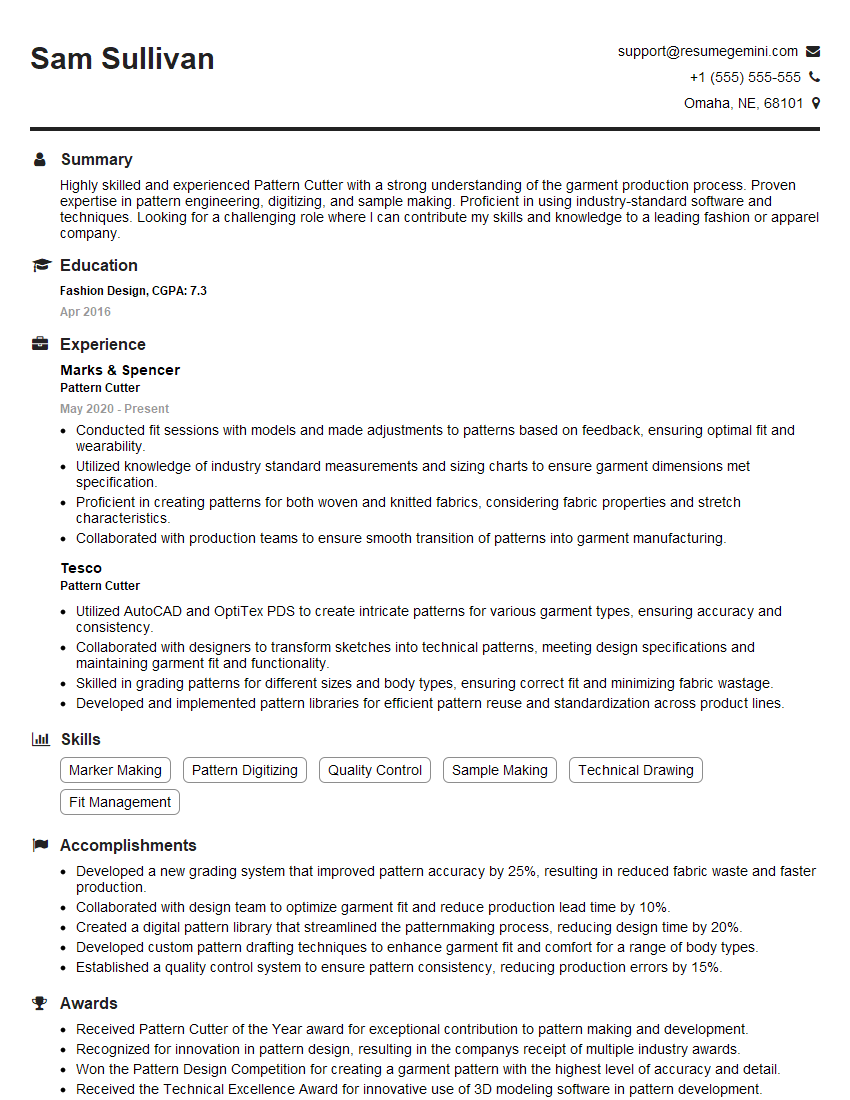
Mastering fabric selection and cutting is crucial for advancement in the apparel industry, opening doors to specialized roles and higher earning potential. An ATS-friendly resume is your key to unlocking these opportunities. To create a powerful resume that highlights your skills and experience in fabric selection and cutting, we recommend using ResumeGemini. ResumeGemini provides a streamlined process and helps you build a professional resume that gets noticed. Examples of resumes tailored specifically to fabric selection and cutting roles are available to help guide you.


Explore more articles
Users Rating of Our Blogs
Share Your Experience
We value your feedback! Please rate our content and share your thoughts (optional).
What Readers Say About Our Blog
Very informative content, great job.
good